EP4149352B1 - Verfahren zur überwachung des blutdrucks eines benutzers mit einer manschettenlosen überwachungsvorrichtung - Google Patents
Verfahren zur überwachung des blutdrucks eines benutzers mit einer manschettenlosen überwachungsvorrichtung Download PDFInfo
- Publication number
- EP4149352B1 EP4149352B1 EP20726961.4A EP20726961A EP4149352B1 EP 4149352 B1 EP4149352 B1 EP 4149352B1 EP 20726961 A EP20726961 A EP 20726961A EP 4149352 B1 EP4149352 B1 EP 4149352B1
- Authority
- EP
- European Patent Office
- Prior art keywords
- pulsatility
- value
- waveform
- reliability
- measuring device
- Prior art date
- Legal status (The legal status is an assumption and is not a legal conclusion. Google has not performed a legal analysis and makes no representation as to the accuracy of the status listed.)
- Active
Links
Images



Classifications
-
- A—HUMAN NECESSITIES
- A61—MEDICAL OR VETERINARY SCIENCE; HYGIENE
- A61B—DIAGNOSIS; SURGERY; IDENTIFICATION
- A61B5/00—Measuring for diagnostic purposes; Identification of persons
- A61B5/02—Detecting, measuring or recording for evaluating the cardiovascular system, e.g. pulse, heart rate, blood pressure or blood flow
- A61B5/021—Measuring pressure in heart or blood vessels
- A61B5/02108—Measuring pressure in heart or blood vessels from analysis of pulse wave characteristics
- A61B5/02116—Measuring pressure in heart or blood vessels from analysis of pulse wave characteristics of pulse wave amplitude
-
- A—HUMAN NECESSITIES
- A61—MEDICAL OR VETERINARY SCIENCE; HYGIENE
- A61B—DIAGNOSIS; SURGERY; IDENTIFICATION
- A61B5/00—Measuring for diagnostic purposes; Identification of persons
- A61B5/02—Detecting, measuring or recording for evaluating the cardiovascular system, e.g. pulse, heart rate, blood pressure or blood flow
- A61B5/021—Measuring pressure in heart or blood vessels
- A61B5/02108—Measuring pressure in heart or blood vessels from analysis of pulse wave characteristics
-
- A—HUMAN NECESSITIES
- A61—MEDICAL OR VETERINARY SCIENCE; HYGIENE
- A61B—DIAGNOSIS; SURGERY; IDENTIFICATION
- A61B5/00—Measuring for diagnostic purposes; Identification of persons
- A61B5/72—Signal processing specially adapted for physiological signals or for diagnostic purposes
- A61B5/7221—Determining signal validity, reliability or quality
-
- A—HUMAN NECESSITIES
- A61—MEDICAL OR VETERINARY SCIENCE; HYGIENE
- A61B—DIAGNOSIS; SURGERY; IDENTIFICATION
- A61B2560/00—Constructional details of operational features of apparatus; Accessories for medical measuring apparatus
- A61B2560/02—Operational features
- A61B2560/0223—Operational features of calibration, e.g. protocols for calibrating sensors
-
- A—HUMAN NECESSITIES
- A61—MEDICAL OR VETERINARY SCIENCE; HYGIENE
- A61B—DIAGNOSIS; SURGERY; IDENTIFICATION
- A61B2562/00—Details of sensors; Constructional details of sensor housings or probes; Accessories for sensors
- A61B2562/06—Arrangements of multiple sensors of different types
-
- A—HUMAN NECESSITIES
- A61—MEDICAL OR VETERINARY SCIENCE; HYGIENE
- A61B—DIAGNOSIS; SURGERY; IDENTIFICATION
- A61B5/00—Measuring for diagnostic purposes; Identification of persons
- A61B5/02—Detecting, measuring or recording for evaluating the cardiovascular system, e.g. pulse, heart rate, blood pressure or blood flow
- A61B5/024—Measuring pulse rate or heart rate
- A61B5/02416—Measuring pulse rate or heart rate using photoplethysmograph signals, e.g. generated by infrared radiation
- A61B5/02427—Details of sensor
-
- A—HUMAN NECESSITIES
- A61—MEDICAL OR VETERINARY SCIENCE; HYGIENE
- A61B—DIAGNOSIS; SURGERY; IDENTIFICATION
- A61B5/00—Measuring for diagnostic purposes; Identification of persons
- A61B5/145—Measuring characteristics of blood in vivo, e.g. gas concentration or pH-value ; Measuring characteristics of body fluids or tissues, e.g. interstitial fluid or cerebral tissue
- A61B5/1455—Measuring characteristics of blood in vivo, e.g. gas concentration or pH-value ; Measuring characteristics of body fluids or tissues, e.g. interstitial fluid or cerebral tissue using optical sensors, e.g. spectral photometrical oximeters
- A61B5/14551—Measuring characteristics of blood in vivo, e.g. gas concentration or pH-value ; Measuring characteristics of body fluids or tissues, e.g. interstitial fluid or cerebral tissue using optical sensors, e.g. spectral photometrical oximeters for measuring blood gases
Definitions
- the present invention concerns a method for monitoring blood pressure (BP) of a user using a cuffless monitoring system.
- BP blood pressure
- Cuffless BP monitors determine BP avoiding the need to apply physical forces to the body.
- the main advantage of this approach is that by being "pressure-less" they allow more comfortable measurement experiences and are more prone to be implemented in ambulatory setups, by instance at home and during sleep.
- these monitors typically requires a step of transforming the measured physical quantity towards a BP estimated value (in mmHg).
- a cuffless BP monitor For a cuffless BP monitor one can differentiate between 1) the phase of initialization (or determination of the calibration parameters of a user that allow to transform the measured physical quantities towards BP estimated values), and 2) the phase of monitoring BP (or applying these calibration parameters to determine a BP reading). Note that for some devices and/or users the determination of the initialization parameters can be performed at the beginning and repeated after a given period of time.
- cuffless BP monitors require a three-step procedure to determine a BP value (see Reference 1: Sola et al, "The Handbook of Cuffless Blood Pressure Monitoring", ISBN 978-3-030-24701-0 ).
- Cuffless BP monitors rely on information related to arterial pulsatility, that is, the change of diameter of an artery or arterial bed occurring during a cardiac cycle.
- arterial pulsatility that is, the change of diameter of an artery or arterial bed occurring during a cardiac cycle.
- the pulsatility energy can be captured from the skin surface by a variety of sensors.
- the common feature of these sensors is a generation of an electrical signal that encodes a pulsatility waveform whose contour describes the change of diameter of the underlying arterial bed.
- PWA Pulse Wave Analysis
- This final step of a cuffless BP monitor is intended to transform the uncalibrated BP values (expressed in arbitrary units) into systolic and diastolic BP values (expressed in mmHg units) that can be interpreted according to established clinical practices (see Reference 2: Williams et al, "2018 ESC/ESH Guidelines for the management of arterial hypertension: The Task Force for the management of arterial hypertension of the European Society of Cardiology (ESC) and the European Society of Hypertension (ESH)", https://doi.org/10.1093/eurheartj/ehy339 ).
- This calibration step utilizes as inputs the uncalibrated BP values, and a set of calibration parameters that characterize the transformation for a given subject. Examples of calibration parameters include a) population-wise parameters, and b) user-dependent parameters.
- Population-wise calibration parameters characterize the transformation towards calibrated BP values by taking into consideration morphometric information (age, size, weight, gender, ethnicity, ...) of the user and applying a pre-calculated model of initialization (see Reference 1).
- User-dependent calibration parameters characterize the transformation towards calibrated BP values by performing at least one measurement of absolute BP on the user by means of an external method or device.
- a combined initialization process including population-wise and user-dependent calibration parameters is also possible.
- Other initialization processes are also possible based on evolutive learning on user data (see Reference 1).
- the phase of initialization can be implemented by performing at least a simultaneous reading of 1) a pulsatility waveform by means of a pulsatility waveform measuring device and 2) an absolute BP value of the user by means of an absolute BP measuring device.
- US7544168B2 discloses simultaneously measuring the pulsatility waveform signals of a user by using a pulsatility waveform device, measuring an absolute BP value of a user using an absolute BP measuring device and further obtaining a calibration parameter of the user.
- US 2019/0274553 A1 discloses a BP monitoring system that allows the simultaneous use of a pulsatility waveform measuring device and an absolute BP measuring device (all-in-one system), as well as non-simultaneous pulsatility waveform measuring device and an absolute BP measuring device (retro-fit system, allowing a manual calibration process where the user enters reference BP values into a user interface).
- US 2019/0274553 A1 also discloses an initialization phase that detects if an incorrect position and / or change in position and / or too much movement is present during measurement, and further instructs the user to restart the measurement step via a user interface
- US 7,455,643 B1 discloses methods to automatically decide when to perform an initialization step, and how and when to update the calibration parameters of a user.
- US 2019/0274553 A1 discloses an initialization phase that instructs the user to start the initializing when predetermined conditions have been met. For example, after a predetermined time has elapsed or by monitoring other parameters such as the heart rate of the user.
- US2019380580 discloses a biological information measuring apparatus includes a detector, a measuring unit, a calculator, and a determining unit.
- the detector detects pulse waves continuously.
- the measuring unit measures first biological information.
- the calculator calculates second biological information from the pulse waves based on the first biological information.
- the measuring unit suspends the measurement and resumes the measurement after a lapse of a period in a case where the determining unit does not determine that the result of measurement is normal, and the measuring unit continues the measurement in other cases where the body motion is not generated, the pulse waves are not irregular or the blood pressure value fails to vary.
- US2019387986 discloses a blood pressure measurement apparatus which includes: a blood pressure meter configured to obtain blood pressure data including a blood pressure value for each heartbeat by detecting a pressure pulse wave using one or more sensors; an extraction unit configured to extract one or more feature amounts of the blood pressure data; and a calculation unit configured to calculate a degree of reliability indicating how accurately the blood pressure data indicates the blood pressure values, based on the feature amount.
- pulsatility waveform signals are not always adequate or reliable for processing (noisy signals, signals corrupted by motion, signals corrupted by ambient light interferences, device wrongly set on the user), and cuff-based measurements are not always reliable (because of bad placement of the cuff, or successive cuff measurements provide non-repeatable readings).
- the user must wait until the full procedure is performed before obtaining a feedback whether the initialization was successful or not. This may result in a very poor user experience. This is particularly important for devices and methods to be used out of the clinical environment (for instance at home).
- a method for monitoring BP of a user using a cuffless monitoring system comprising a pulsatility waveform measuring device configured to measure a pulsatility waveform signal of the user, the method comprising: an initialization routine comprising providing an absolute BP measuring device configured to measure an absolute BP value of the user and measuring the absolute BP value, and using the measured absolute BP value to calculate a calibration parameter; and a monitoring routine comprising setting the pulsatility waveform measuring device on the user, measuring the pulsatility waveform signal, generating an uncalibrated blood pressure value from the measured pulsatility waveform, and calculating a calibrated blood pressure value from the uncalibrated blood pressure value and the calibration parameter.
- the initialization routine further comprises: generating guiding information instructing how to set the pulsatility waveform measuring device on the user; setting the pulsatility waveform measuring device on the user according to the first guiding information; performing an adequacy routine wherein said adequacy routine comprises the steps of, adjusting the measurement parameters of the pulsatility waveform measuring device, measuring a first segment of the pulsatility waveform signal for a first time period, determining an adequacy value of the measured first segment of pulsatility waveform by determining an amplitude of a baseline value or by determining an amplitude of pulsation of the first segment of the pulsatility waveform signal; if the adequacy value is smaller than an adequacy threshold value then repeating the adequacy routine; if the adequacy value is equal or greater than an adequacy threshold value then, performing a reliability test, wherein said reliability test comprises the steps of, measuring a second segment of the
- the method disclosed herein provides "real-time” and incremental feedback of the adequacy of the acquired signals, the reliability of pulsatility waveforms, and the repeatability of the absolute BP values while the initialization is on-going in order to save user's time and useless efforts.
- the method allows to interactively correct any deviation.
- the method disclosed herein can be used when the phase of initialization is performed by using an absolute BP measuring device in the form of an automated upper-arm or wrist cuff-based BP monitor reference device.
- the method can also be used by using a manual measurement performed by a skilled person.
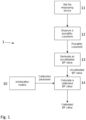
- Fig. 1 refers to a method for monitoring blood pressure (BP) of a user using a cuffless monitoring system.
- the cuffless monitoring system schematically shown in Fig. 2 , comprises a pulsatility waveform measuring device 1 configured to measure a pulsatility waveform signal of the user, according to an embodiment.
- the method comprises an initialization routine 10 including the steps of providing an absolute BP measuring device 2 configured to measure an absolute BP value of the user and measuring the absolute BP value, and using the measured absolute BP value to calculate a calibration parameter.
- the method comprises a monitoring routine that comprises the steps of setting the pulsatility waveform measuring device on the user 11, measuring the pulsatility waveform signal 12, generating an uncalibrated blood pressure value 13 from the measured pulsatility waveform, and calculating a calibrated blood pressure value 14 from the uncalibrated blood pressure value and the calibration parameter.
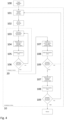
- the initialization routine 10 can be initiated (triggered) 100 by the user or can be automatically triggered. In the latter case, the initialization routine 10 can be triggered at regular time interval, for instance every hour, once a week or once a month.
- the initialization routine 10 comprises: generating guiding information 101 instructing how to set the pulsatility waveform measuring device on the user, and setting the pulsatility waveform measuring device 102 on the user.
- the guiding information can further instruct how to connect the pulsatility waveform measuring device and/or the absolute BP measuring device, how to charge or switch on the devices, how to set the devices on the user, how to take an adequate body posture, how to position a limb, how to position the body part where the measuring devices are situated, how to relax before and/or during a measurement, how to perform a maneuver or exercise before and/or a measurement, how to breath before and/or during a measurement including an interactive guiding of the breathing pace and depth, a countdown from 5 to 1 sec before a new measurement of the measuring device will start, a countdown from 5 to 1 sec before a new measurement of the absolute BP device will start, the status and/or outcomes of any of the routines of the initialization phase, the number of performed iterations of the initialization routine, the number remaining measurements, and the reasons why the initialization routine is not successful, including but not only a low adequacy of the pulsatility waveform signal, a low reliability of the pulsatility
- the initialization routine 10 further comprises performing an adequacy routine 20 including the steps of: adjusting the measurement parameters of the pulsatility waveform measuring device 103, measuring a first segment of the pulsatility waveform signal for a first time period 104, and determining an adequacy value of the measured first segment of pulsatility waveform 105.
- the adequacy routine is iterated 106 if the adequacy value is smaller than an adequacy threshold value.
- the initialization routine 10 further comprises performing a reliability test comprising the steps of: measuring a second segment of the pulsatility waveform signal 107 for a second time period; and determining a first reliability value 108 of the measured second segment of pulsatility waveform; wherein the initialization routine is iterated 109 if the reliability value is smaller than a reliability threshold value.
- the initialization routine is iterated 109 if the reliability value is smaller than a reliability threshold value. In other words, the steps 101 to 108 are repeated until the reliability value is equal or greater than the reliability threshold value. When the reliability value is equal or greater than the reliability threshold value, the initialization routine 10 is completed, and the monitoring routine can be started in an automated fashion.
- the adequacy and reliability threshold values can comprise predefined value that has been determined in a training set of data.
- the second reliability value can be varied at each iteration of the initialization routine 10.
- the adequacy and reliability threshold values are adjustable in depending on the number of iterations of the initialization routine 10.
- the adequacy and reliability threshold values can decrease for increasing number of iterations of the initialization routine.
- An advantage of decreasing the reliability threshold values with increasing number of iterations allows for make the initialization routine iteration less selective that the subsequent initialization routines such that avoid a user to become blocked in the initialization procedure. For instance, during the first iteration of the initialization routine a selective reliability threshold value allows for insuring that the pulsatility waveform measuring device is properly worn before allowing the user to continue the routine. At later iterations, the initialization routine need not be reiterated for a small movement of the pulsatility waveform measuring device.
- the duration of the second time period is adjustable in accordance with the user's heart rate, such that the second time period include at least three heart beats.
- the duration of the second time period is shorter for a user having a fast heart rate.
- the method can comprise a step of inputting subject-dependent information.
- the reliability threshold value can then be adjusted in accordance with the subject-dependent information. This step provides a reliability threshold value that is user dependent.
- the reliability test 107-109 can be performed once (only once), after performing an adequacy routine 20.
- the initialization routine 10 is repeated if the reliability value is smaller than the reliability threshold value.
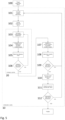
- Fig. 4 shows the method according to another embodiment wherein said performing a reliability test can be repeated once or a plurality of times. For example, once the reliability test 107-109 has been performed and the reliability value is equal or greater than the reliability threshold value, instead of starting the monitoring routine, another reliability test is performed. In other words, the reliability test 107-109 can be performed a plurality of times within a single iteration of the initialization routine 10. As a result, another second segment of the pulsatility waveform signal 107 is measured that can be added to the previously measured second segment of the pulsatility waveform signal 107, allowing for improved determination of the reliability value 108.
- the reliability threshold value used in this second reliability test can be varied when performing the supplemental reliability tests.
- the second reliability threshold value can be increased between two subsequent reliability tests such as to increase the selectivity of the test at each supplemental reliability test.
- the second time period can be varied when performing the supplemental reliability tests.
- the second time period can be increased between two subsequent reliability tests such as to increases the accuracy of the determined reliability value 108 at each supplemental reliability test.
- the second time period can be between 1 s to 30 s.
- the second time period can have a duration of 2, 5, 8, 10, 15 or 30 seconds.
- the pulsatility waveform measuring device is destined to be in contact with the user, for example a photoplethysmographic (PPG) sensor destined to contact a tissue (such as skin) of the user
- PPG photoplethysmographic
- the reliability value of the measured second segment of pulsatility waveform can depend on the contact.
- the contact in turn can depend on the proper positioning and/or attachment of the pulsatility waveform measuring device on the user.
- the pulsatility waveform measuring device comprising a PPG sensor arranged in a wrist band or chest band, the contact is affected by the tension in the band.
- the reliability value can depend on the focusing and/or direction of the radiating signal emitted by the contact-less sensor. The reliability value will further reflect whether the pulsatility waveform measuring device is properly worn by the user and/or attached to the suitable part of the user.
- the reliability value can be determined by analyzing the measured second segment of pulsatility waveform. For instance, determining the reliability value can comprises an amplitude of the second segment of pulsatility waveform.
- the amplitude of the second segment of pulsatility waveform can correspond to the amount of optical radiation reaching the sensor after having penetrated the tissue (DC component) and to an indication of if the pulsatility waveform measuring device is worn or not worn.
- the reliability value can be indicative of a worn/not worn.
- the reliability value can correspond to the absence of measurement of the pulsatility waveform signal by the pulsatility waveform measuring device.
- the reliability value can be determined from the morphology of the measured second segment of pulsatility waveform (shape or waveform). For instance, the reliability value can be determined from how the second segment of pulsatility waveform is representative of a cardiovascular signal (good quality signal).
- the reliability value can be determined from time or amplitude-related features, for example obtained by a pulse-wave analysis of the second segment of pulsatility waveform.
- the features can be calculated in the time or the frequency domain, or any other transformed domain.
- Such features can include amplitude of the signal, repeatability of the signal, features representative of a cardiovascular signal.
- the features can be identified for each pulse of the measured pulsatility waveform signal or in an averaged pulse. Statistics on the repeatability across pulses of the measured pulsatility waveform signal can also be determined.
- the reliability value can be determined by determining whether the measured pulsatility waveform signal contains detectable information on blood pressure.
- the determination of the reliability value can comprise quantifying the presence and/or reliability of information comprised in the measured second segment of pulsatility waveform that is used for BP determination.
- the determination of the reliability value can comprise determining the reliability of detection of the foot of the waveform.
- the determination of the reliability value can comprise whether the analysis can be successfully performed (for instance, whether relevant pulse wave analysis features can be detected).
- the pulsatility waveform measuring device can comprises a local processing module 3.
- the determination of reliability value can be performed in the local processing module 3.
- the calculation power and/or memory size of the local processing module 3 can be limited.
- the code and/or calculations performed in local processing module may also become available to third parties (by acquiring the wearable pulsatility waveform measuring device.
- the cuffless monitoring system comprises a remote processing module 4 remote from the pulsatility waveform measuring device.
- the remote processing module 4 can be used for performing the determination of reliability value.
- the pulsatility waveform signal device can comprise a transfer module 5 configured to transfer the measured second segment of the pulsatility waveform signal to the remote processing module 4.
- the remote processing module can be a remote server or any other device with processing capabilities such a smartphone or a PC. The remote processing module allows for performing complex calculations and the risk of the code and/or calculations performed in the remote processing module becoming available to third parties is limited.
- the determination of the adequacy value is performed in the local processing module 3.
- the determination of the reliability value can be performed in the local processing module 3 for at least the initial reliability test 107-109, the determination of the reliability value for the subsequent reliability tests 107-109 being done in the remote processing module 4.
- An advantage of this procedure is that the calculations performed in the local processing module can provide a fast feedback to the user and more complex and critical calculations can be performed on the remote processing module.
- the determination of the reliability value for the one or plurality of initial reliability tests 107-109 can use few data and thus require less calculation power.
- the determination of the reliability value for the subsequent reliability tests 107-109 use more data (longer measurement time period) and require more calculation power. The latter determinations are more accurate.
- the cuffless monitoring system comprises an additional measuring device configured to measure an additional signal.
- the method can further comprise a step of measuring the additional signal.
- the reliability value can then be determined by using the measured additional signal.
- the additional signal can comprise any one of: a motion signal, a signal representative of a pressure between the pulsatility waveform measuring device and a tissue of the user, a bioimpedance or biopotential signal, an optical signal characterizing the interface between the pulsatility waveform measuring device and a tissue of the user.
- the additional signal can further comprise a tension signal, for example for measuring a tension of the band when the waveform measuring device comprises an optical sensor in a wrist or chest band.
- the additional signal can further comprise an optical signal, for example for characterizing the interface between the sensor and a tissue (skin).
- the pulsatility waveform measuring device comprises a PPG device comprising at least a light source and a light detector and an analog-to-digital converter (ADC).
- Said adjusting the measurement parameters comprises adjusting the emission power of the light source and/or the sensitivity of the light detector and/or ambient light suppression characteristics and/or the gain and bandwidth of the ADC.
- the measurement parameters can further be adjusted by adjusting analog filtering and/or the ambient light suppression characteristics.
- the first segment of pulsatility waveform sign can be measured for a first time period of 10 ms, 100 ms, or 1000 ms.
- the adequacy value of the measured first segment can be determined by determining the amplitude of the baseline value of the signal (DC value) and/or by determining the amplitude of the pulsation of the signal (AC value).
- the adequacy value is determined by determining an amplitude of a baseline value or determining an amplitude of pulsation of the first segment of the pulsatility waveform signal.
- the adequacy threshold value can be a predefined value that has been determined in a training set of data.
- the adequacy threshold value can be adjustable as a function of the number repetition of the adequacy routine, i.e., the steps of adjusting the measurement parameters 103, measuring a first segment 104 and determining an adequacy value 105.
- the adequacy threshold value decreases with the number repetition of the steps 103, 104 105.
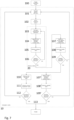
- the absolute BP routine 110-112 can be performed after performing the reliability test 107-109. In another embodiment shown in Fig. 6 , the absolute BP routine 110-112 can be performed in parallel with the reliability test 107-109.
- the absolute BP routine 110-112 can be performed in parallel with performing the reliability test 107-109 only after the reliability test has been performed at least once. As shown in the example of Fig. 7 , a first the reliability test 107-109 is performed after performing the adequacy routine 20. When the reliability value is equal or larger than the reliability threshold value, at least an additional reliability test 107-109 is performed in parallel with the absolute BP routine 110-112.
- the repeatability of the measure absolute BP values can be determined by any of, or a combination of: calculating the difference between the measured absolute BP values, by calculating the spread across the measured BP values, or by calculating the difference between the measured absolute BP values and previously measured BP values on the same user.
- the repeatability value is calculated as the inverse of the exemplified calculations, so that very different absolute BP values will generate a very low repeatability value.
- the initialization routine 10 is completed, and the monitoring routine can be started, when reliability value is equal or greater than the reliability threshold value and when the repeatability of the measure absolute BP values equal or greater than the repeatability threshold value 112.
- completing the initialization routine 10 can be decided upon a combination 113 (see Figs 5 and 6 ) of the repeatability of the measure absolute BP values with the reliability value.
- Example of such combinations can include: determine whether two calculated reliability values remain stable during two measurements of absolute BP values, determine whether uncalibrated blood pressure values stay stable during two measurements of absolute BP values, determine whether two obtained calibration parameters stay stable during two measurements of absolute BP values, determine whether calibration parameters and absolute BP values vary on the same or on different directions, determine whether the obtained calibration parameters are comparable to calibration parameters previously obtained on the same user.
- the repeatability threshold value can be between 4 and 10 mmHg or 8 and 10 mmHg or 8 mmHg.
- calculating a calibration parameter can comprise: measuring the pulsatility waveform signal, generating an uncalibrated blood pressure value from the measured pulsatility waveform, calculating a function that transforms the uncalibrated blood pressure value into the measured absolute BP, and defining the calibration parameter as the characterization of the calculated function.
- the pulsatility waveform measuring device can comprise an optical sensor destined to be worn on the wrist, upper arm, ear lobe, inside ear canal, chest, at the forehead, under the skin, fingertip, finger phalanx, inside the body, e.g. in a natural orifice or implanted (for instance, under the skin).
- the pulsatility waveform measuring device can comprise an optical sensor, distance sensor, RF sensor, acoustic sensor, temperature sensor, pressure sensor, ultrasound sensor, bio-impedance sensor, electric sensor, tonometer sensor, cuff-based sensor, strain sensor.
- the absolute BP measuring device can comprise an upper arm cuff, a wrist cuff, a finger cuff, or any other automated cuff.
- the absolute BP measuring device can be any of a manual measurement performed by a skilled person via the so-called auscultation method, an automated measurement performed by an upper-arm or a wrist cuff via the so-called oscillometric method, an automated measurement performed by a finger cuff via the so-called volume-clamp method, an automated measurement performed by an invasive arterial line catheter, or any other means to obtain an absolute reading of the BP of a user.
- the absolute BP measurements can be used to calculate a user-dependent model of calibration that will be stored in a database, and further used every time that the method for monitoring BP is used to obtain a calibrated BP reading for that particular user. Examples of user-dependent model of calibration are given in Reference 1.
- Performing a plurality of absolute BP measurements 110 can include limiting the maximum amount of allowable inflations of a cuff. This is important for security and comfort reasons. For instance, during the initialization routine, a maximum of 3, 4, or 5 uses of the absolute BP measuring device can be allowed.
- a minimum allowed time between two consecutive iteration of the initialization routine can be also introduced.
- the time elapsed between two initialization iterations can be longer than 10 min, 30 min or 60 min.
- the cuffless monitoring system can comprise a user interface (see Fig. 2 ).
- the user interface can comprise a smartphone (smartphone application), a computer program, a website, etc.
- the user interface can be used to manually or automatically input the measured absolute BP values.
- the measured absolute BP values can be automatically input by establishing a connection (wireless such as Bluetooth or WiFi, or wired via a serial or a parallel communication bus) between the absolute BP measuring device and the local processing module.
- the measured absolute BP values can be manually input from an external measuring device or by a skilled operator.
- the user interface can be used to display (possibly visually and/or audibly) the guiding information 101, for example by means of a video, images, interactive learning, a user manual, a phone call, or a video conference.
- the user interface can further be used to remind the user to restart (trigger) the initialization routine 10 after a certain time period and/or when changes in signal quality or other information is detected, for instance, if changes in the pulsatility waveforms are detected, or changes any cardiovascular parameter is detected (heart rate).
- a new initialization routine 10 may be performed for the reasons above.
- the cuffless monitoring system can be configured to start the monitoring routine when the initialization routine 10 is completed.
Landscapes
- Health & Medical Sciences (AREA)
- Life Sciences & Earth Sciences (AREA)
- Engineering & Computer Science (AREA)
- Surgery (AREA)
- Animal Behavior & Ethology (AREA)
- Cardiology (AREA)
- Veterinary Medicine (AREA)
- Physics & Mathematics (AREA)
- Public Health (AREA)
- Biophysics (AREA)
- Pathology (AREA)
- Biomedical Technology (AREA)
- Heart & Thoracic Surgery (AREA)
- Medical Informatics (AREA)
- Molecular Biology (AREA)
- General Health & Medical Sciences (AREA)
- Physiology (AREA)
- Artificial Intelligence (AREA)
- Computer Vision & Pattern Recognition (AREA)
- Signal Processing (AREA)
- Psychiatry (AREA)
- Vascular Medicine (AREA)
- Measuring Pulse, Heart Rate, Blood Pressure Or Blood Flow (AREA)
Claims (16)
- Verfahren zur Überwachung des Blutdrucks eines Benutzers unter Verwendung eines manschettenlosen Überwachungssystems umfassend eine Pulsatilitätswellenform-Messvorrichtung, die so konfiguriert ist, dass sie ein Pulsatilitätswellenformsignal des Benutzers misst, wobei das Verfahren Folgendes umfasst:eine Initialisierungsroutine (10), die das Bereitstellen einer absoluten Blutdruckmessvorrichtung, die zum Messen eines absoluten Blutdruckwerts des Benutzers konfiguriert ist, und das Messen des absoluten Blutdruckwerts, sowie das Verwenden des gemessenen absoluten Blutdruckwerts zum Berechnen eines Kalibrierungsparameters umfasst; undeine Überwachungsroutine, die das Anlegen der Pulsatilitätswellenform-Messvorrichtung an den Benutzer (11), das Messen des Pulsatilitätswellenformsignals (12), das Erzeugen eines unkalibrierten Blutdruckwertes (13) aus der gemessenen Pulsatilitätswellenform und das Berechnen eines kalibrierten Blutdruckwertes (14) aus dem unkalibrierten Blutdruckwert und dem Kalibrierungsparameter umfasst;dadurch gekennzeichnet, dass die Initialisierungsroutine (10) weiterhin umfasst:Generieren von Führungsinformationen (101), die anweisen, wie das Gerät zur Messung der Pulsatilitätswellenform auf den Benutzer einzustellen ist;Einstellen des Pulsatilitätswellenform-Messgeräts (102) auf den Benutzer entsprechend der ersten Führungsinformation;Durchführen einer Angemessenheitsroutine (20), die das Einstellen der Messparameter der Pulsatilitätswellenform-Messvorrichtung (103), das Messen eines ersten Segments des Pulsatilitätswellenformsignals für eine erste Zeitspanne (104), das Bestimmen eines Angemessenheitswertes des gemessenen ersten Segments der Pulsatilitätswellenform (105) durch Bestimmen einer Amplitude eines Basiswerts oder durch Bestimmen einer Amplitude der Pulsation des ersten Segments des Pulsatilitätswellenformsignals, wenn der Angemessenheitswert kleiner als ein Angemessenheitsschwellenwert ist (20), dann Wiederholen der Angemessenheitsroutine;wenn der Angemessenheitswert gleich oder größer als ein Angemessenheitsschwellenwert ist, dann Durchführen eines Zuverlässigkeitstests, wobei der Zuverlässigkeitstest die folgenden Schritte umfasst: Messen eines zweiten Segments des Pulsatilitätswellenformsignals (107) für eine zweite Zeitspanne, wobei die zweite Zeitspanne zu einer Zeit verläuft, die nach der ersten Zeitspanne liegt, und Bestimmen eines ersten Zuverlässigkeitswertes (108) durch Analysieren des gemessenen zweiten Segments der Pulsatilitätswellenform;wenn der erste Zuverlässigkeitswert kleiner ist als ein Zuverlässigkeitsschwellenwert, dann Wiederholen der Initialisierungsroutine (10);wenn der erste Zuverlässigkeitswert gleich oder größer ist als der Zuverlässigkeitsschwellenwert, dann Durchführen der Schritte des Messens des absoluten Blutdruckwerts, und Verwenden des gemessenen absoluten Blutdruckwerts um einen Kalibrierungsparameter zu bestimmen.
- Verfahren nach Anspruch 1, wobei der Zuverlässigkeitswert des gemessenen zweiten Segments der Pulsatilitätswellenform aus zeit- oder amplitudenbezogenen Merkmalen des zweiten Segments der Pulsatilitätswellenform bestimmt wird.
- Verfahren nach Anspruch 1 oder 2, wobei diePulsatilitätswellenform-Messvorrichtung ein lokales Verarbeitungsmodul umfasst; undwobei die Bestimmung des Zuverlässigkeitswertes in dem lokalen Verarbeitungsmodul durchgeführt wird.
- Verfahren nach einem der Ansprüche 1 bis 3, wobei dasmanschettenlose Überwachungssystem ein von der Pulsatilitätswellenform-Messvorrichtung entferntes Fernverarbeitungsmodul umfasst; und wobei die Bestimmung des Zuverlässigkeitswertes und/oder desAngemessenheitswertes in dem Fernverarbeitungsmodul durchgeführt wird.
- Verfahren nach einem der Ansprüche 1 bis 4, wobei die Durchführung des Zuverlässigkeitstests (107 - 109) ein mehrmaliges Durchführen des Zuverlässigkeitstests (107 - 109) umfasst, wobei die Pulsatilitätswellenform-Messvorrichtung ein lokales Verarbeitungsmodul umfasst und das manschettenlose Überwachungssystem ein von der Pulsatilitätswellenform-Messvorrichtung entferntes Fernverarbeitungsmodul umfasst; wobei das Bestimmen des Zuverlässigkeitswertes für mindestens einen ersten der Zuverlässigkeitstests (107-109) in dem lokalen Verarbeitungsmodul (3) und für nachfolgende Zuverlässigkeitstests (107-109) in dem Fernverarbeitungsmodul (4) durchgeführt wird.
- Verfahren nach Anspruch 5, wobei die Bestimmung des Angemessenheitswertes im lokalen Verarbeitungsmodul durchgeführt wird.
- Verfahren nach einem der Ansprüche 1 bis 6, wobei die vordefinierte Dauer der zweiten Zeitspanne in Abhängigkeit von der Herzfrequenz des Benutzers einstellbar ist, so dass die zweite Zeitspanne mindestens drei Herzschläge umfasst.
- Verfahren nach einem der Ansprüche 1 bis 7, wobei die die Angemessenheits- und Zuverlässigkeitsschwellenwerte vordefinierte Werte sind, die in einem Trainingsdatensatz ermittelt wurden; und wobei die Angemessenheits- und Zuverlässigkeitsschwellenwerte in Abhängigkeit von der Anzahl der Iterationen der Initialisierungsroutine (10) einstellbar sind.
- Verfahren nach einem der Ansprüche 1 bis 8, umfassend einen Schritt der Eingabe von subjektabhängigen Informationen; und Anpassen der Angemessenheits- und Zuverlässigkeitsschwellenwerte in Übereinstimmung mit den subjektabhängigen Informationen.
- Verfahren nach einem der Ansprüche 1 bis 9, wobei das manschettenlose Überwachungssystem eine zusätzliche Messvorrichtung umfasst, die konfiguriert ist, ein zusätzliches Signal zu messen; und wobei das Verfahren ferner einen Schritt zum Messen des zusätzlichen Signals umfasst.
- Verfahren nach Anspruch 10, wobei der Zuverlässigkeitswert unter Verwendung des gemessenen Zusatzsignals bestimmt wird.
- Verfahren nach einem der Ansprüche 1 bis 11 wobei dieVorrichtung zur Messung der Pulsatilitätswellenform eine PPG-Vorrichtung umfasst, die mindestens einen Lichtquellenkanal, einen Lichtdetektor und einen Analog-Digital-Wandler (ADC)umfasst; und wobei das Einstellen der Messparameter das Einstellen der Emissionsleistung der Lichtquelle und/oder der Empfindlichkeit des Lichtdetektors und/oder der Umgebungslicht-Unterdrückungseigenschaften und/oder der Verstärkung und Bandbreite des ADC umfasst.
- Verfahren nach Anspruch 12, wobei diePulsatilitätswellenform-Messvorrichtung eine Vielzahl von Lichtquellenkanälen umfasst; undwobei die Einstellung der Messparameter die Auswahl eines Lichtquellenkanals umfasst, oder wobei die Pulsatilitätswellenform-Messvorrichtung eine Vielzahl von Lichtdetektoren umfasst; und wobei die Einstellung der Messparameter die Auswahl eines Lichtdetektorkanals umfasst
- Verfahren nach einem der Ansprüche 1 bis 13, wobei die Initialisierungsroutine (10) ferner eine Blutdruckroutine umfasst, die die Durchführung einer Vielzahl von absoluten Blutdruckmessungen (110) umfasst, um eine Vielzahl von gemessenen absoluten Blutdruckwerten zu erhalten, und die Bestimmung einer Wiederholbarkeit der gemessenen absoluten Blutdruckwerte; wobei die Initialisierungsroutine (10) iteriert wird, wenn der Wiederholbarkeitswert kleiner als ein Wiederholbarkeitsschwellenwert (112) ist; und wobei die Blutdruckroutine nach der Durchführung eines Wiederholbarkeitstests (107-109) durchgeführt wird, oder wobei die Blutdruckroutine parallel zur Durchführung eines Zuverlässigkeitstests (107-109) durchgeführt wird.
- Verfahren nach Anspruch 14, wobei die Blutdruck parallel zur Durchführung eines Zuverlässigkeitstests erst durchgeführt wird, nachdem der Zuverlässigkeitstest (107 - 109) mindestens einmal durchgeführt worden ist.
- Verfahren nach einem der Ansprüche 1 bis 15, wobei die Berechnung eines Kalibrierungsparameters Folgendes umfasst: Messen des Pulsatilitätswellenformsignals, Erzeugen eines unkalibrierten Blutdruckwerts aus der gemessenen Pulsatilitätswellenform, Berechnen einer Funktion, die den unkalibrierten Blutdruckwert in den gemessenen absoluten Blutdruck transformiert, und Definieren des Kalibrierungsparameters als die Charakterisierung der berechneten Funktion.
Applications Claiming Priority (1)
| Application Number | Priority Date | Filing Date | Title |
|---|---|---|---|
| PCT/IB2020/054636 WO2021229276A1 (en) | 2020-05-15 | 2020-05-15 | Method for monitoring blood pressure of a user using a cuffless monitoring device |
Publications (3)
| Publication Number | Publication Date |
|---|---|
| EP4149352A1 EP4149352A1 (de) | 2023-03-22 |
| EP4149352B1 true EP4149352B1 (de) | 2024-10-23 |
| EP4149352C0 EP4149352C0 (de) | 2024-10-23 |
Family
ID=70775452
Family Applications (1)
| Application Number | Title | Priority Date | Filing Date |
|---|---|---|---|
| EP20726961.4A Active EP4149352B1 (de) | 2020-05-15 | 2020-05-15 | Verfahren zur überwachung des blutdrucks eines benutzers mit einer manschettenlosen überwachungsvorrichtung |
Country Status (6)
| Country | Link |
|---|---|
| US (1) | US12502087B2 (de) |
| EP (1) | EP4149352B1 (de) |
| JP (1) | JP7586929B2 (de) |
| CN (1) | CN115988986B (de) |
| ES (1) | ES3010170T3 (de) |
| WO (1) | WO2021229276A1 (de) |
Families Citing this family (6)
| Publication number | Priority date | Publication date | Assignee | Title |
|---|---|---|---|---|
| US12527483B2 (en) | 2020-01-08 | 2026-01-20 | Therabody, Inc. | Wearable devices and methods for providing therapy to a user and/or for measuring physiological parameters of the user |
| US11478606B1 (en) | 2020-01-08 | 2022-10-25 | New Heights Energy, LLC | Wearable devices and methods for providing therapy to a user and/or for measuring physiological parameters of the user |
| US12419529B2 (en) * | 2021-06-21 | 2025-09-23 | GE Precision Healthcare LLC | Noninvasive blood pressure monitoring system and method |
| WO2023172676A2 (en) | 2022-03-10 | 2023-09-14 | New Heights Energy, LLC | Wearable devices, systems, and methods for providing therapy to a user and/or for measuring physiological parameters of the user |
| WO2024146753A1 (en) | 2023-01-03 | 2024-07-11 | Bayer Aktiengesellschaft | Monitoring intake of antihypertensive drugs |
| WO2025125960A1 (en) * | 2023-12-15 | 2025-06-19 | Medtronic, Inc. | System to calibrate blood pressure values optically derived using an implantable medical device |
Family Cites Families (20)
| Publication number | Priority date | Publication date | Assignee | Title |
|---|---|---|---|---|
| JP4462257B2 (ja) | 2000-11-14 | 2010-05-12 | オムロンヘルスケア株式会社 | 電子血圧計 |
| US6510329B2 (en) * | 2001-01-24 | 2003-01-21 | Datex-Ohmeda, Inc. | Detection of sensor off conditions in a pulse oximeter |
| US7455643B1 (en) | 2003-07-07 | 2008-11-25 | Nellcor Puritan Bennett Ireland | Continuous non-invasive blood pressure measurement apparatus and methods providing automatic recalibration |
| US7544168B2 (en) | 2004-09-30 | 2009-06-09 | Jerusalem College Of Technology | Measuring systolic blood pressure by photoplethysmography |
| US8506498B2 (en) * | 2008-07-15 | 2013-08-13 | Nellcor Puritan Bennett Ireland | Systems and methods using induced perturbation to determine physiological parameters |
| US8410951B2 (en) * | 2008-09-30 | 2013-04-02 | Covidien Lp | Detecting a signal quality decrease in a measurement system |
| US20190142286A1 (en) | 2014-03-31 | 2019-05-16 | Sensogram Technologies, Inc. | Photoplethysmographic wearable blood pressure monitoring system and methods |
| CN107106054B (zh) * | 2014-09-08 | 2021-11-02 | 苹果公司 | 使用多功能腕戴式设备进行血压监测 |
| KR20160042191A (ko) * | 2014-10-02 | 2016-04-19 | 순천향대학교 산학협력단 | 자동 혈압계 교정 장치 |
| CN105455798A (zh) * | 2015-10-19 | 2016-04-06 | 东南大学 | 基于Android手机端的连续血压测量系统和校准测量方法 |
| US11589758B2 (en) * | 2016-01-25 | 2023-02-28 | Fitbit, Inc. | Calibration of pulse-transit-time to blood pressure model using multiple physiological sensors and various methods for blood pressure variation |
| WO2017147609A1 (en) * | 2016-02-25 | 2017-08-31 | Echo Labs, Inc. | Systems and methods for modified pulse transit time measurement |
| EP3522778B1 (de) * | 2016-10-10 | 2022-03-30 | Koninklijke Philips N.V. | Vorrichtung und verfahren zur bestimmung eines kalibrierungsparameters für eine blutdruckmessvorrichtung |
| AU2018227095B2 (en) * | 2017-03-02 | 2023-10-19 | Atcor Medical Pty Ltd | Non-invasive brachial blood pressure measurement |
| CN110430807B (zh) | 2017-03-15 | 2022-08-23 | 欧姆龙株式会社 | 生物体信息测定装置、方法以及记录介质 |
| JP6766710B2 (ja) * | 2017-03-15 | 2020-10-14 | オムロンヘルスケア株式会社 | 血圧測定装置、方法及びプログラム |
| WO2019010423A1 (en) * | 2017-07-07 | 2019-01-10 | The Texas A&M University System | SYSTEM AND METHOD FOR MONITORING SLEEP-FREE ARTERIAL PRESSURE |
| US11185237B2 (en) | 2018-03-06 | 2021-11-30 | Robert Bosch Gmbh | Calibration methods for blood pressure devices |
| JP7049895B2 (ja) * | 2018-04-05 | 2022-04-07 | オムロンヘルスケア株式会社 | 血圧測定装置 |
| WO2019216417A1 (ja) | 2018-05-10 | 2019-11-14 | シャープ株式会社 | モデル設定装置、血圧測定装置、およびモデル設定方法 |
-
2020
- 2020-05-15 JP JP2022569095A patent/JP7586929B2/ja active Active
- 2020-05-15 ES ES20726961T patent/ES3010170T3/es active Active
- 2020-05-15 US US17/925,258 patent/US12502087B2/en active Active
- 2020-05-15 CN CN202080103005.0A patent/CN115988986B/zh active Active
- 2020-05-15 WO PCT/IB2020/054636 patent/WO2021229276A1/en not_active Ceased
- 2020-05-15 EP EP20726961.4A patent/EP4149352B1/de active Active
Also Published As
| Publication number | Publication date |
|---|---|
| US20230225624A1 (en) | 2023-07-20 |
| ES3010170T3 (en) | 2025-04-01 |
| WO2021229276A1 (en) | 2021-11-18 |
| JP2023525148A (ja) | 2023-06-14 |
| CN115988986B (zh) | 2025-04-22 |
| CN115988986A (zh) | 2023-04-18 |
| JP7586929B2 (ja) | 2024-11-19 |
| EP4149352C0 (de) | 2024-10-23 |
| EP4149352A1 (de) | 2023-03-22 |
| US12502087B2 (en) | 2025-12-23 |
Similar Documents
| Publication | Publication Date | Title |
|---|---|---|
| US12502087B2 (en) | Method for monitoring blood pressure of a user using a cuffless monitoring device | |
| RU2719952C2 (ru) | Приборы для неинвазивного мониторинга кровяного давления, способы и компьютерный программный продукт для работы с ними | |
| EP3551059B1 (de) | Vorrichtung und verfahren zur bestimmung eines kalibrierungsparameters für eine blutdruckmessvorrichtung | |
| US20170360314A1 (en) | Method, apparatus and computer program for determining a blood pressure value | |
| US11185237B2 (en) | Calibration methods for blood pressure devices | |
| CN114504310A (zh) | 用于检测用户的心率的变化的系统和方法 | |
| JP2024502997A (ja) | 血圧の測定のための方法およびシステム | |
| EP4422482B1 (de) | Vorrichtung, system und verfahren zur kalibrierung eines blutdrucksurrogats zur verwendung bei der überwachung des blutdrucks eines patienten | |
| US12059234B2 (en) | Method and a system for estimating a measure of cardiovascular health of a subject | |
| CN112272534A (zh) | 用于估计血压替代物趋势的方法和装置 | |
| CN116636821B (zh) | 一种血压管理系统及方法 | |
| US20250221628A1 (en) | Device, system and method for calibrating a blood pressure surrogate for use in monitoring a subject's blood pressure | |
| EP4613185A1 (de) | Vorrichtung, system und verfahren zur kalibrierung einer blutdruckmessfunktion | |
| US20260123841A1 (en) | Computer-implemented method, computer program product, computer-readable medium, system, and method for determining cardiovascular performance | |
| US20250204796A1 (en) | Photoplethysmography-based Blood Pressure Monitoring Device | |
| RU2782412C2 (ru) | Способ и устройство для количественной оценки тенденции в суррогатном показателе кровяного давления | |
| US12588824B2 (en) | Cardiac pulse wave retrieval from an electrical signal | |
| JP2026516171A (ja) | フォトプレチスモグラフィに基づく血圧モニタリングデバイス | |
| KR20260008106A (ko) | 광혈류측정법 기반 혈압 모니터링 디바이스 | |
| EP3533390A1 (de) | Rehabilitationssystem und verfahren |
Legal Events
| Date | Code | Title | Description |
|---|---|---|---|
| STAA | Information on the status of an ep patent application or granted ep patent |
Free format text: STATUS: UNKNOWN |
|
| STAA | Information on the status of an ep patent application or granted ep patent |
Free format text: STATUS: THE INTERNATIONAL PUBLICATION HAS BEEN MADE |
|
| PUAI | Public reference made under article 153(3) epc to a published international application that has entered the european phase |
Free format text: ORIGINAL CODE: 0009012 |
|
| STAA | Information on the status of an ep patent application or granted ep patent |
Free format text: STATUS: REQUEST FOR EXAMINATION WAS MADE |
|
| 17P | Request for examination filed |
Effective date: 20221122 |
|
| AK | Designated contracting states |
Kind code of ref document: A1 Designated state(s): AL AT BE BG CH CY CZ DE DK EE ES FI FR GB GR HR HU IE IS IT LI LT LU LV MC MK MT NL NO PL PT RO RS SE SI SK SM TR |
|
| DAV | Request for validation of the european patent (deleted) | ||
| DAX | Request for extension of the european patent (deleted) | ||
| GRAP | Despatch of communication of intention to grant a patent |
Free format text: ORIGINAL CODE: EPIDOSNIGR1 |
|
| STAA | Information on the status of an ep patent application or granted ep patent |
Free format text: STATUS: GRANT OF PATENT IS INTENDED |
|
| INTG | Intention to grant announced |
Effective date: 20240809 |
|
| GRAS | Grant fee paid |
Free format text: ORIGINAL CODE: EPIDOSNIGR3 |
|
| GRAA | (expected) grant |
Free format text: ORIGINAL CODE: 0009210 |
|
| STAA | Information on the status of an ep patent application or granted ep patent |
Free format text: STATUS: THE PATENT HAS BEEN GRANTED |
|
| AK | Designated contracting states |
Kind code of ref document: B1 Designated state(s): AL AT BE BG CH CY CZ DE DK EE ES FI FR GB GR HR HU IE IS IT LI LT LU LV MC MK MT NL NO PL PT RO RS SE SI SK SM TR |
|
| REG | Reference to a national code |
Ref country code: GB Ref legal event code: FG4D |
|
| REG | Reference to a national code |
Ref country code: CH Ref legal event code: EP |
|
| REG | Reference to a national code |
Ref country code: DE Ref legal event code: R096 Ref document number: 602020039867 Country of ref document: DE |
|
| REG | Reference to a national code |
Ref country code: IE Ref legal event code: FG4D |
|
| U01 | Request for unitary effect filed |
Effective date: 20241113 |
|
| U07 | Unitary effect registered |
Designated state(s): AT BE BG DE DK EE FI FR IT LT LU LV MT NL PT RO SE SI Effective date: 20241218 |
|
| REG | Reference to a national code |
Ref country code: ES Ref legal event code: FG2A Ref document number: 3010170 Country of ref document: ES Kind code of ref document: T3 Effective date: 20250401 |
|
| PG25 | Lapsed in a contracting state [announced via postgrant information from national office to epo] |
Ref country code: IS Free format text: LAPSE BECAUSE OF FAILURE TO SUBMIT A TRANSLATION OF THE DESCRIPTION OR TO PAY THE FEE WITHIN THE PRESCRIBED TIME-LIMIT Effective date: 20250223 Ref country code: HR Free format text: LAPSE BECAUSE OF FAILURE TO SUBMIT A TRANSLATION OF THE DESCRIPTION OR TO PAY THE FEE WITHIN THE PRESCRIBED TIME-LIMIT Effective date: 20241023 |
|
| PG25 | Lapsed in a contracting state [announced via postgrant information from national office to epo] |
Ref country code: GR Free format text: LAPSE BECAUSE OF FAILURE TO SUBMIT A TRANSLATION OF THE DESCRIPTION OR TO PAY THE FEE WITHIN THE PRESCRIBED TIME-LIMIT Effective date: 20250124 |
|
| PG25 | Lapsed in a contracting state [announced via postgrant information from national office to epo] |
Ref country code: PL Free format text: LAPSE BECAUSE OF FAILURE TO SUBMIT A TRANSLATION OF THE DESCRIPTION OR TO PAY THE FEE WITHIN THE PRESCRIBED TIME-LIMIT Effective date: 20241023 |
|
| PG25 | Lapsed in a contracting state [announced via postgrant information from national office to epo] |
Ref country code: RS Free format text: LAPSE BECAUSE OF FAILURE TO SUBMIT A TRANSLATION OF THE DESCRIPTION OR TO PAY THE FEE WITHIN THE PRESCRIBED TIME-LIMIT Effective date: 20250123 |
|
| U20 | Renewal fee for the european patent with unitary effect paid |
Year of fee payment: 6 Effective date: 20250528 |
|
| PG25 | Lapsed in a contracting state [announced via postgrant information from national office to epo] |
Ref country code: SM Free format text: LAPSE BECAUSE OF FAILURE TO SUBMIT A TRANSLATION OF THE DESCRIPTION OR TO PAY THE FEE WITHIN THE PRESCRIBED TIME-LIMIT Effective date: 20241023 |
|
| PGFP | Annual fee paid to national office [announced via postgrant information from national office to epo] |
Ref country code: GB Payment date: 20250527 Year of fee payment: 6 |
|
| PGFP | Annual fee paid to national office [announced via postgrant information from national office to epo] |
Ref country code: NO Payment date: 20250523 Year of fee payment: 6 |
|
| PGFP | Annual fee paid to national office [announced via postgrant information from national office to epo] |
Ref country code: CH Payment date: 20250601 Year of fee payment: 6 |
|
| PG25 | Lapsed in a contracting state [announced via postgrant information from national office to epo] |
Ref country code: SK Free format text: LAPSE BECAUSE OF FAILURE TO SUBMIT A TRANSLATION OF THE DESCRIPTION OR TO PAY THE FEE WITHIN THE PRESCRIBED TIME-LIMIT Effective date: 20241023 |
|
| PG25 | Lapsed in a contracting state [announced via postgrant information from national office to epo] |
Ref country code: CZ Free format text: LAPSE BECAUSE OF FAILURE TO SUBMIT A TRANSLATION OF THE DESCRIPTION OR TO PAY THE FEE WITHIN THE PRESCRIBED TIME-LIMIT Effective date: 20241023 |
|
| PLBE | No opposition filed within time limit |
Free format text: ORIGINAL CODE: 0009261 |
|
| STAA | Information on the status of an ep patent application or granted ep patent |
Free format text: STATUS: NO OPPOSITION FILED WITHIN TIME LIMIT |
|
| 26N | No opposition filed |
Effective date: 20250724 |
|
| PGFP | Annual fee paid to national office [announced via postgrant information from national office to epo] |
Ref country code: ES Payment date: 20250630 Year of fee payment: 6 |
|
| PG25 | Lapsed in a contracting state [announced via postgrant information from national office to epo] |
Ref country code: MC Free format text: LAPSE BECAUSE OF FAILURE TO SUBMIT A TRANSLATION OF THE DESCRIPTION OR TO PAY THE FEE WITHIN THE PRESCRIBED TIME-LIMIT Effective date: 20241023 |
|
| PG25 | Lapsed in a contracting state [announced via postgrant information from national office to epo] |
Ref country code: IE Free format text: LAPSE BECAUSE OF NON-PAYMENT OF DUE FEES Effective date: 20250515 |