EP4142983B1 - Vorrichtung zum erfassen eines kritischen sturzes - Google Patents
Vorrichtung zum erfassen eines kritischen sturzes Download PDFInfo
- Publication number
- EP4142983B1 EP4142983B1 EP21719913.2A EP21719913A EP4142983B1 EP 4142983 B1 EP4142983 B1 EP 4142983B1 EP 21719913 A EP21719913 A EP 21719913A EP 4142983 B1 EP4142983 B1 EP 4142983B1
- Authority
- EP
- European Patent Office
- Prior art keywords
- sensor
- accumulator
- rechargeable battery
- detecting
- fall
- Prior art date
- Legal status (The legal status is an assumption and is not a legal conclusion. Google has not performed a legal analysis and makes no representation as to the accuracy of the status listed.)
- Active
Links
Images


Classifications
-
- H—ELECTRICITY
- H01—ELECTRIC ELEMENTS
- H01M—PROCESSES OR MEANS, e.g. BATTERIES, FOR THE DIRECT CONVERSION OF CHEMICAL ENERGY INTO ELECTRICAL ENERGY
- H01M10/00—Secondary cells; Manufacture thereof
- H01M10/42—Methods or arrangements for servicing or maintenance of secondary cells or secondary half-cells
- H01M10/48—Accumulators combined with arrangements for measuring, testing or indicating the condition of cells, e.g. the level or density of the electrolyte
-
- B—PERFORMING OPERATIONS; TRANSPORTING
- B25—HAND TOOLS; PORTABLE POWER-DRIVEN TOOLS; MANIPULATORS
- B25F—COMBINATION OR MULTI-PURPOSE TOOLS NOT OTHERWISE PROVIDED FOR; DETAILS OR COMPONENTS OF PORTABLE POWER-DRIVEN TOOLS NOT PARTICULARLY RELATED TO THE OPERATIONS PERFORMED AND NOT OTHERWISE PROVIDED FOR
- B25F5/00—Details or components of portable power-driven tools not particularly related to the operations performed and not otherwise provided for
- B25F5/02—Construction of casings, bodies or handles
-
- G—PHYSICS
- G01—MEASURING; TESTING
- G01P—MEASURING LINEAR OR ANGULAR SPEED, ACCELERATION, DECELERATION, OR SHOCK; INDICATING PRESENCE, ABSENCE, OR DIRECTION, OF MOVEMENT
- G01P1/00—Details of instruments
- G01P1/02—Housings
- G01P1/023—Housings for acceleration measuring devices
-
- H—ELECTRICITY
- H01—ELECTRIC ELEMENTS
- H01M—PROCESSES OR MEANS, e.g. BATTERIES, FOR THE DIRECT CONVERSION OF CHEMICAL ENERGY INTO ELECTRICAL ENERGY
- H01M10/00—Secondary cells; Manufacture thereof
- H01M10/42—Methods or arrangements for servicing or maintenance of secondary cells or secondary half-cells
- H01M10/425—Structural combination with electronic components, e.g. electronic circuits integrated to the outside of the casing
-
- H—ELECTRICITY
- H01—ELECTRIC ELEMENTS
- H01M—PROCESSES OR MEANS, e.g. BATTERIES, FOR THE DIRECT CONVERSION OF CHEMICAL ENERGY INTO ELECTRICAL ENERGY
- H01M10/00—Secondary cells; Manufacture thereof
- H01M10/42—Methods or arrangements for servicing or maintenance of secondary cells or secondary half-cells
- H01M10/44—Methods for charging or discharging
-
- H—ELECTRICITY
- H02—GENERATION; CONVERSION OR DISTRIBUTION OF ELECTRIC POWER
- H02J—ELECTRIC POWER NETWORKS; CIRCUIT ARRANGEMENTS OR SYSTEMS FOR SUPPLYING OR DISTRIBUTING ELECTRIC POWER; SYSTEMS FOR STORING ELECTRIC ENERGY
- H02J7/00—Circuit arrangements for charging or discharging batteries or for supplying loads from batteries
- H02J7/90—Regulation of charging or discharging current or voltage
- H02J7/971—Regulation of charging or discharging current or voltage the charge cycle being controlled or terminated in response to non-electric parameters
-
- B—PERFORMING OPERATIONS; TRANSPORTING
- B25—HAND TOOLS; PORTABLE POWER-DRIVEN TOOLS; MANIPULATORS
- B25F—COMBINATION OR MULTI-PURPOSE TOOLS NOT OTHERWISE PROVIDED FOR; DETAILS OR COMPONENTS OF PORTABLE POWER-DRIVEN TOOLS NOT PARTICULARLY RELATED TO THE OPERATIONS PERFORMED AND NOT OTHERWISE PROVIDED FOR
- B25F5/00—Details or components of portable power-driven tools not particularly related to the operations performed and not otherwise provided for
-
- H—ELECTRICITY
- H01—ELECTRIC ELEMENTS
- H01M—PROCESSES OR MEANS, e.g. BATTERIES, FOR THE DIRECT CONVERSION OF CHEMICAL ENERGY INTO ELECTRICAL ENERGY
- H01M2220/00—Batteries for particular applications
- H01M2220/30—Batteries in portable systems, e.g. mobile phone, laptop
-
- Y—GENERAL TAGGING OF NEW TECHNOLOGICAL DEVELOPMENTS; GENERAL TAGGING OF CROSS-SECTIONAL TECHNOLOGIES SPANNING OVER SEVERAL SECTIONS OF THE IPC; TECHNICAL SUBJECTS COVERED BY FORMER USPC CROSS-REFERENCE ART COLLECTIONS [XRACs] AND DIGESTS
- Y02—TECHNOLOGIES OR APPLICATIONS FOR MITIGATION OR ADAPTATION AGAINST CLIMATE CHANGE
- Y02E—REDUCTION OF GREENHOUSE GAS [GHG] EMISSIONS, RELATED TO ENERGY GENERATION, TRANSMISSION OR DISTRIBUTION
- Y02E60/00—Enabling technologies; Technologies with a potential or indirect contribution to GHG emissions mitigation
- Y02E60/10—Energy storage using batteries
Definitions
- the present invention relates to a device for detecting a critical fall of an accumulator.
- the present invention relates to an accumulator with a device for detecting a critical fall, the accumulator containing a control device with a discharging device and at least one energy storage device.
- Modern machine tools such as hammer drills, saws, grinders or the like, as well as accumulators that can be connected to the machine tools as a power supply, are usually very robust and show little damage after a fall or mistreatment.
- damage to the machine tool and/or an accumulator can occur. This damage may not be directly visible or noticeable to a user of the machine tool and/or the battery. However, damage to the machine tool and/or the accumulator that is not visible or not noticeable to a user can pose a problem because the functionality or functioning of the machine tool and/or the accumulator may no longer be present. However, it is not always possible for the user to clearly determine whether a fall or fall of one of the machine tools and/or the accumulator has caused damage and whether further use of the machine tool and/or the accumulator is still sufficiently safe.
- Devices available on the market or already known from the prior art for detecting a critical fall often use acceleration sensors to measure acceleration values, which serve as an indicator of a fall of the accumulator. Depending on the measured acceleration value, a fall of the accumulator can be assessed as critical or non-critical.
- the object of the present invention is therefore to provide a device for detecting a critical fall of an accumulator and an accumulator with a device for detecting a critical fall, with which the above-mentioned problem can be solved and a critical fall or fall can be clearly detected.
- the task is solved in particular by a device for detecting a critical fall of an accumulator.
- the device contains at least one sensor for detecting an acceleration value in a predetermined direction, control electronics which is designed to control at least one function of the accumulator and a fastening element for the at least one sensor, whereby the at least one sensor can be pivoted about a pivot point relative to the accumulator is stored and is essentially held in a predetermined spatial position relative to the accumulator when the accumulator rotates about at least one axis of rotation.
- This can ensure that the sensor always records acceleration values in a single direction.
- the amount of data and values recorded can be reduced and an evaluation of the criticality of a fall can be made easier.
- a fall from a critical (i.e. large) height results in a sudden and relatively strong braking of the falling object against the ground on which the device impacts. This braking on the ground corresponds to a strong acceleration of the falling device. The deeper the fall, the greater the acceleration of the device.
- control electronics may be designed to send at least one signal to the control electronics when a predetermined acceleration threshold is detected by the at least one sensor.
- the signal sent can ensure that the accumulator is blocked and no more electrical energy can be delivered. Furthermore, the signal sent can mean that it is no longer possible to recharge the battery with electrical energy.
- the signal sent by the control electronics reaches a control device of the accumulator.
- an accumulator with a device for detecting a critical fall, the accumulator containing a control device with a discharge device and at least one energy storage device.
- the device for detecting a critical fall contains at least one sensor for detecting an acceleration value in a predetermined direction, control electronics which is designed to control at least one function of the accumulator and a fastening element for the at least one sensor, wherein the fastening element is designed so that the at least one sensor is pivotally mounted about a pivot point relative to the accumulator and is essentially held in a predetermined spatial position relative to the accumulator when the accumulator rotates about at least one axis of rotation.
- the sensor can be an acceleration sensor, gyro sensor or the like, with which an acceleration or acceleration values can be detected.
- the sensor can be designed in such a way that only acceleration values in a single direction are recorded. However, it is also possible for the sensor to be designed to detect acceleration values in three directional axes that are orthogonal to one another.
- the at least one energy storage device may be at least partially discharged by the discharging device when a predetermined acceleration threshold is detected by the at least one sensor. This can increase the safety in handling a possibly damaged battery due to a critical fall.
- the discharge device can be designed by at least one capacitor, at least one transistor and/or at least one electrical resistor.
- control electronics and/or control device may be designed to prevent charging of the at least one energy storage device with electrical energy when a predetermined acceleration threshold is detected by the at least one sensor. This can prevent a potential risk from charging a possibly damaged accumulator with electrical energy.
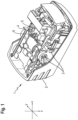
- an accumulator 1 is shown.
- the accumulator 1 can, for example, be removably connected to a machine tool in order to supply the machine tool with electrical energy.
- the machine tool is not shown in the figures.
- the machine tool can be a drill, a saw, a grinder or the like.
- the accumulator 1 essentially contains a housing 2, a number of energy storage cells 3, a discharge device 4 and a control device 5.
- the energy storage cells 3 are used to record, store and indicate electrical energy or electrical voltage.
- the discharging device 4 is designed in the form of a powerful capacitor and is used for the controlled discharging of the energy storage cells 3, i.e. the removal of electrical energy from the energy storage cells 3.
- the control device 5 is used to control and regulate various functions of the individual components of the accumulator 1 or the entire Accumulator 1.
- the energy storage cells 3 can also be referred to as battery cells and are based on lithium-ion technology.
- the accumulator 1 contains a device 6 for detecting a critical fall.
- the device 6 for detecting a critical fall is connected to the control device 5 of the accumulator 1.
- the control device 5 is connected to the energy storage cells 3 in such a way that electrical energy can pass from the energy storage cells 3 to the control device 5.
- the device 6 is supplied with electrical voltage or electrical energy from the energy storage cells 3.
- data and information in the form of signals can be exchanged between the device 6 and the control device 5 of the accumulator 1.
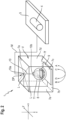
- Figure 2 the device 6 for detecting a critical fall is shown in an exemplary embodiment.
- the device 6 essentially contains a frame 7, a sensor 8, control electronics 9, a fastening element 10 and a support device 11.
- the frame 7 essentially has a top 7a, a bottom 7b, a front 7c, a back 7d, a left side wall 7e and a right side wall 7f.
- the frame 7 thereby forms an interior space or an interior volume V.
- the fastening element 10 is in the form of a rod with a first end 10a and a second end 10b.
- the sensor 8 is designed in the form of an acceleration sensor.
- the acceleration sensor is designed to detect accelerations in the form of acceleration values in the z direction.
- the carrier device 11 is designed in the form of a hollow sphere with an interior space or an interior volume W. As in Figure 4 shown, the sensor 8 is firmly attached in the interior W of the carrier device 11 designed as a ball. As also in Figure 4 It can be seen that a weight element 11a is attached to an underside of the carrier device 11 designed as a ball. The additional weight element 11a serves to increase the inertia of the carrier device 11. In addition, an elastic coupling element 11b is positioned between the second end 10b of the fastening element 10 and the carrier device 11. The coupling element 11b serves to compensate for relative movements between the second end 10b of the fastening element 10 and the carrier device 11.
- the control electronics 9 is designed in the form of a flat circuit board and is attached to the underside 7b in the interior V of the frame 7.
- the control electronics 9 serves, among other things, to store and process the acceleration values recorded by the sensor and to send signals and other data derived from the acceleration values.
- a line L leads from the sensor 8 to the control electronics 9, whereby the acceleration values detected by the sensor 8 are sent to the control electronics 9. Because the control electronics 9 and the control device 5 of the accumulator 1 are connected to one another via lines M, data and information can also be exchanged between the control electronics 9 and the control device 5.
- the fastening element 10 is fastened inside the frame 7 or within the internal volume V of the frame 7 with the first end 10a on the top 7a of the frame 7.
- the carrier device 11 designed as a ball is attached to the second or free end 10b of the fastening element 10.
- the first end 10a of the fastening element 10 is movably attached to the top 7a of the frame 7 in such a way that the carrier device 11 can swing freely in the internal volume V of the frame 7 with the aid of the fastening element 10 as a pendulum.
- the first end 10a of the fastening element 10 thus serves as a pivot point DP for sensor 8.
- the dimensions or side lengths of the frame 7 and the length of the fastening element 10 are selected so that when the frame 7 rotates in the direction of rotation A, B, C or D the carrier device 11 designed as a ball does not extend to a side wall of the frame 7.
- the senor 8 is mounted in the carrier device 11 in a freely swinging manner in the frame 7 by the fastening element 10 as a pendulum, so that rotating or pivoting the frame 7 in the direction of rotation A, B, C or D does not result in a change the spatial position of the sensor 8 leads.
- the spatial position or orientation of the sensor 8 remains stationary, even if the accumulator or the frame 7 rotates. This makes it possible for the sensor 8 to always detect acceleration values in one and the same direction z.
- the accumulator 1 falls and rotates in free fall about one or more of its three axes x, y or z
- the sensor 8 suspended as a pendulum remains consistently aligned inside the device 6 and always records the acceleration values in the direction e.g.
- control electronics 9 can be used to evaluate whether a predetermined threshold value for the acceleration was reached due to the fall.
- threshold values for acceleration are stored in a memory of the control electronics 9.
- the memory of the control electronics 9 is not shown in the figures.
- the control electronics 9 then sends a corresponding signal to the control device 5.
- the control device 5 then initiates the controlled discharging of the energy storage cells 3 with the aid of the discharging device 4.
- control device 5 it is also possible for the control device 5 to cause a renewed charging of the energy storage cells 3 with electrical energy to be blocked by sending out a signal when the accumulator 1 is connected to a charging device.
- the loading device is not shown in the figures.
Landscapes
- Engineering & Computer Science (AREA)
- General Chemical & Material Sciences (AREA)
- Manufacturing & Machinery (AREA)
- Chemical & Material Sciences (AREA)
- Chemical Kinetics & Catalysis (AREA)
- Electrochemistry (AREA)
- Microelectronics & Electronic Packaging (AREA)
- Physics & Mathematics (AREA)
- General Physics & Mathematics (AREA)
- Power Engineering (AREA)
- Mechanical Engineering (AREA)
- Charge And Discharge Circuits For Batteries Or The Like (AREA)
- Secondary Cells (AREA)
- Battery Mounting, Suspending (AREA)
Description
- Die vorliegende Erfindung betrifft eine Vorrichtung zum Erfassen eines kritischen Sturzes eines Akkumulators.
- Darüber hinaus betrifft die vorliegende Erfindung einen Akkumulator mit einer Vorrichtung zum Erfassen eines kritischen Sturzes, wobei der Akkumulator eine Steuerungseinrichtung mit einer Entladeeinrichtung sowie wenigstens eine Energiespeichereinrichtung enthält.
- Moderne Werkzeugmaschinen, wie beispielsweise Bohrhämmer, Sägen, Schleifgeräte oder dergleichen, sowie Akkumulatoren, die als Energieversorgung mit den Werkzeugmaschinen verbunden werden können, sind üblicherweise sehr robust gestaltet und weisen kaum Beschädigungen nach einem Sturz oder Misshandlung auf.
- Nach einem tiefen Sturz aus einer besonders hohen Höhe auf einen harten bzw. nicht elastischen Boden können jedoch durchaus Beschädigungen an der Werkzeugmaschine und/oder einem Akkumulator entstehen. Diese Beschädigungen sind ggf. für einen Anwender der Werkzeugmaschine und/oder des Akkumulators nicht direkt sichtbar oder bemerkbar. Eine von einem Anwender nicht sichtbare oder nicht merkbare Beschädigung an der Werkzeugmaschine und/oder des Akkumulators kann jedoch ein Problem darstellen, da die Funktionalität bzw. Funktionsweise der Werkzeugmaschine und/oder des Akkumulators möglicherweise nicht mehr gegeben ist. Für den Anwender ist es jedoch nicht immer einwandfrei feststellbar, ob ein Sturz bzw. ein Herunterfallen einer der Werkzeugmaschine und/oder des Akkumulators eine Beschädigung verursacht hat und ob die weitere Benutzung der Werkzeugmaschine und/oder des Akkumulators nach wie vor ausreichend sicher ist.
- Auf dem Markt erhältliche bzw. aus dem Stand der Technik bereits bekannte Vorrichtungen zum Erfassen eines kritischen Sturzes verwenden oftmals Beschleunigungssensoren zum Messen von Beschleunigungswerten, die als Indikator eines Sturzes des Akkumulators dienen. Je nach gemessenen Beschleunigungswert kann ein Sturz des Akkumulators als kritisch oder unkritisch bewertet werden.
- Probleme bestehen jedoch bei Vorrichtungen mit mehreren Beschleunigungssensoren bzw. mehreren Sensoren, die Beschleunigungen in unterschiedlichen Richtungen messen, da die Menge an gemessenen und zu verarbeitenden Beschleunigungswerten oftmals keine eindeutigen Messergebnisse mit verlässlichen Aussagen über die Kritikalität eines Sturzes eines Akkumulators zu lassen. Aus der
DE 10 2017 204643 A ist eine Vorrichtung gemäß dem Oberbegriff des Anspruchs 1 bekannt. - Aufgabe der vorliegenden Erfindung ist es daher, eine Vorrichtung zum Erfassen eines kritischen Sturzes eines Akkumulators sowie einen Akkumulator mit einer Vorrichtung zum Erfassen eines kritischen Sturzes bereitzustellen, mit dem das vorstehend genannte Problem gelöst und ein kritischer Sturz bzw. ein Herunterfallen eindeutig erfasst werden kann.
- Die Aufgabe wird jeweils gelöst durch den Gegenstand des unabhängigen Anspruchs 1 und 3. Weitere vorteilhafte Ausgestaltungsformen der Erfindung finden sich in den entsprechenden Unteransprüchen.
- Die Aufgabe wird insbesondere gelöst durch eine Vorrichtung zum Erfassen eines kritischen Sturzes eines Akkumulators.
- Erfindungsgemäß enthält die Vorrichtung wenigstens einen Sensor zum Erfassen eines Beschleunigungswerts in einer vorbestimmten Richtung, eine Steuerungselektronik, welche ausgestaltet ist mindestens eine Funktion des Akkumulators zu steuern sowie ein Befestigungselement für den wenigstens einen Sensor, wodurch der wenigstens eine Sensor um einen Drehpunkt relativ zum Akkumulator schwenkbar gelagert ist und im Wesentlichen in einer vorbestimmten Raumlage zum Akkumulator gehalten wird, wenn der Akkumulator um wenigstens eine Drehachse rotiert. Hierdurch kann sichergestellt werden, dass der Sensor stets Beschleunigungswerte in einer einzigen Richtung erfasst. Die Menge an erfassten Daten und Werten kann damit reduziert und eine Evaluierung der Kritikalität eines Sturzes erleichtert werden. Ein Sturz aus einer kritischen (d.h. großen) Höhe führt zu einem plötzlichen und relativ starken Abbremsen des fallenden Objekts am Untergrund, auf den die Vorrichtung aufschlägt. Dieses Abbremsen am Untergrund entspricht einer starken Beschleunigung der fallenden Vorrichtung. Je tiefer der Sturz, desto größer die Beschleunigung der Vorrichtung.
- Gemäß einer vorteilhaften Ausführungsform der vorliegenden Erfindung kann es möglich sein, dass die Steuerungselektronik ausgestaltet ist beim Erfassen eines vorbestimmten Beschleunigungsschwellwerts durch den wenigstens einen Sensor wenigstens ein Signal an die Steuerungselektronik zu senden. Mit dem gesendeten Signal kann erreicht werden, dass der Akkumulator gesperrt wird und keine elektrische Energie mehr abgegeben werden kann. Des Weiteren kann das gesendete Signal dazu führen, dass kein erneutes Laden des Akkumulators mit elektrischer Energie mehr möglich ist. Hierzu gelangt das von der Steuerungselektronik gesendet Signal zu einer Steuerungseinrichtung des Akkumulators.
- Darüber hinaus wird die Aufgabe gelöst durch einen Akkumulator mit einer Vorrichtung zum Erfassen eines kritischen Sturzes, wobei der Akkumulator eine Steuerungseinrichtung mit einer Entladeeinrichtung sowie wenigstens eine Energiespeichereinrichtung enthält.
- Erfindungsgemäß ist vorgesehen, dass die Vorrichtung zum Erfassen eines kritischen Sturzes wenigstens einen Sensor zum Erfassen eines Beschleunigungswerts in einer vorbestimmten Richtung, eine Steuerungselektronik, welche ausgestaltet ist mindestens eine Funktion des Akkumulators zu steuern sowie ein Befestigungselement für den wenigstens einen Sensor enthält, wobei das Befestigungselement so ausgestaltet ist, dass der wenigstens eine Sensor um einen Drehpunkt relativ zum Akkumulator schwenkbar gelagert ist und im Wesentlichen in einer vorbestimmten Raumlage zum Akkumulator gehalten wird, wenn der Akkumulator um wenigstens eine Drehachse rotiert.
- Bei dem Sensor kann es sich um einen Beschleunigungssensor, Gyro-Sensor oder dergleichen handeln, mit dem eine Beschleunigung bzw. Beschleunigungswerte erfasst werden können. Der Sensor kann dabei so ausgestaltet sein, dass lediglich Beschleunigungswerte in einer einzigen Richtung erfasst werden. Es ist jedoch auch möglich, dass der Sensor ausgestaltet ist, um Beschleunigungswerte in drei orthogonal aufeinander stehenden Richtungsachsen zu erfassen.
- Gemäß einer vorteilhaften Ausführungsform der vorliegenden Erfindung kann es möglich sein, dass die wenigstens eine Energiespeichereinrichtung durch die Entladeeinrichtung wenigstens teilweise entladen wird, wenn ein vorbestimmter Beschleunigungsschwellwert durch den wenigstens einen Sensor erfasst wird. Hierdurch kann die Sicherheit in der Handhabung eines möglicherweise beschädigten Akkumulators aufgrund eines kritischen Sturzes erhöht werden.
- Die Entladevorrichtung kann durch wenigstens einen Kondensator, wenigstens einen Transistor und/oder wenigstens einen elektrischen Widerstand ausgestaltet sein.
- Entsprechend einer weiteren vorteilhaften Ausführungsform der vorliegenden Erfindung kann es möglich sein, dass die Steuerungselektronik und/oder Steuerungseinrichtung ausgestaltet ist, dass ein Laden der wenigstens einen Energiespeichereinrichtung mit elektrischer Energie verhindert wird, wenn ein vorbestimmter Beschleunigungsschwellwert durch den wenigstens einen Sensor erfasst wird. Hierdurch kann ein potentielles Risiko durch das Laden eines möglicherweise beschädigten Akkumulators mit elektrischer Energie verhindert werden.
- Weitere Vorteile ergeben sich aus der folgenden Figurenbeschreibung. In den Figuren sind verschiedene Ausführungsbeispiele der vorliegenden Erfindung dargestellt. Die Figuren, die Beschreibung und die Ansprüche enthalten zahlreiche Merkmale in Kombination. Der Fachmann wird die Merkmale zweckmässigerweise auch einzeln betrachten und zu sinnvollen weiteren Kombinationen zusammenfassen.
- Es zeigen:
- Figur 1
- eine perspektivische Ansicht auf einen Akkumulator mit einer Vorrichtung zum Erfassen eines kritischen Sturzes eines Akkumulators;
- Figur 2
- eine perspektivische Ansicht auf die Vorrichtung zum Erfassen eines kritischen Sturzes eines Akkumulators in einer ersten Raumlage bzw. Ausrichtung verbunden mit einer Steuerungseinrichtung des Akkumulators;
- Figur 3
- eine perspektivische Ansicht auf die Vorrichtung zum Erfassen eines kritischen Sturzes eines Akkumulators in einer zweiten Raumlage bzw. Ausrichtung verbunden mit der Steuerungseinrichtung des Akkumulators; und
- Figur 4
- die Detailansicht auf einen Sensor mit einer Befestigungselement für den Sensor.
- In
Figur 1 ist ein Akkumulator 1 dargestellt. Der Akkumulator 1 kann beispielsweise mit einer Werkzeugmaschine wiederlösbar verbunden werden, um die Werkzeugmaschine mit elektrischer Energie zu versorgen. Die Werkzeugmaschine ist in den Figuren nicht dargestellt. Bei der Werkzeugmaschine kann es sich um eine Bohrmaschine, eine Säge, ein Schleifgerät oder dergleichen sein. - Der Akkumulator 1 enthält dabei im Wesentlichen ein Gehäuse 2, eine Anzahl an Energiespeicherzellen 3, eine Entladeeinrichtung 4 sowie eine Steuerungseinrichtung 5. Die Energiespeicherzellen 3 dienen zum Aufnahmen, Speichern und Angeben von elektrischer Energie bzw. elektrischer Spannung. Die Entladeeinrichtung 4 ist in Form eines leistungsstarken Kondensators ausgestaltet und dient zum kontrollierten Entladen der Energiespeicherzellen 3, d.h. das Entfernen der elektrischen Energie aus den Energiespeicherzellen 3. Die Steuerungseinrichtung 5 dient zum Steuern und Regeln verschiedener Funktionen der einzelnen Komponenten des Akkumulators 1 bzw. des gesamten Akkumulators 1.
- Die Energiespeicherzellen 3 können auch als Akku-Zellen bezeichnet werden und basieren auf einer Lithium-lonen-Technologie.
- Darüber hinaus enthält der Akkumulator 1 eine Vorrichtung 6 zum Erfassen eines kritischen Sturzes. Wie in
Figur 2 und3 angedeutet ist die Vorrichtung 6 zum Erfassen eines kritischen Sturzes mit der Steuerungseinrichtung 5 des Akkumulators 1 verbunden. Die Steuerungseinrichtung 5 ist so mit den Energiespeicherzellen 3 verbunden, dass elektrische Energie von den Energiespeicherzellen 3 zu der Steuerungseinrichtung 5 gelangen kann. Durch die Verbindung mit der Steuerungseinrichtung 5 wird die Vorrichtung 6 mit elektrischer Spannung bzw. elektrische Energie aus den Energiespeicherzellen 3 versorgt. Darüber hinaus können Daten und Informationen in Form von Signalen zwischen der Vorrichtung 6 und der Steuerungseinrichtung 5 des Akkumulators 1 ausgetauscht werden. - In
Figur 2 ist die Vorrichtung 6 zum Erfassen eines kritischen Sturzes in einem beispielhaften Ausführungsbeispiel dargestellt. - Die Vorrichtung 6 enthält dabei im Wesentlichen einen Rahmen 7, einen Sensor 8, Steuerungselektronik 9, eine Befestigungselement 10 und eine Trägereinrichtung 11.
- Der Rahmen 7 weist im Wesentlichen eine Oberseite 7a, eine Unterseite 7b, eine Vorderseite 7c, eine Rückseite 7d, eine linke Seitenwand 7e und eine rechte Seitenwand 7f. Der Rahmen 7 bildet dadurch einen Innenraum bzw. ein Innenvolumen V.
- Das Befestigungselement 10 ist in Form eines Stabes mit einem ersten Ende 10a und einem zweiten Ende 10b ausgebildet.
- Der Sensor 8 ist in Form eines Beschleunigungssensors ausgestaltet. Der Beschleunigungssensor ist ausgestaltet, um Beschleunigungen in Form von Beschleunigungswerten in Richtung z zu erfassen.
- Die Trägereinrichtung 11 ist in Form einer hohlen Kugel mit einem Innenraum bzw. ein Innenvolumen W ausgestaltet. Wie in
Figur 4 gezeigt, ist der Sensor 8 fest im Innenraum W der als Kugel ausgestalteten Trägereinrichtung 11 befestigt. Wie ebenfalls inFigur 4 ersichtlich ist an einer Unterseite der als Kugel ausgestalteten Trägereinrichtung 11 eine Gewichtselement 11a befestigt. Das zusätzliche Gewichtselement 11 a dient dazu, die Trägheit der Trägereinrichtung 11 zu erhöhen. Zusätzlich ist zwischen dem zweiten Ende 10b des Befestigungselements 10 und der Trägereinrichtung 11 ein elastisches Kupplungselement 11b positioniert. Das Kupplungselement 11b dient zum Ausgleich von Relativbewegungen zwischen dem zweiten Ende 10b des Befestigungselements 10 und der Trägereinrichtung 11. - Die Steuerungselektronik 9 ist in Form einer flachen Leiterplatte ausgestaltet und an der Unterseite 7b im Innenraum V des Rahmens 7 befestigt. Die Steuerungselektronik 9 dient unter anderem dazu die von dem Sensor erfassten Beschleunigungswerte zu speichern, zu verarbeiten sowie aus den Beschleunigungswerte abgeleitete Signale und anderen Daten auszusenden.
- Wie ebenfalls in
Figur 2 ,3 und4 ersichtlich führt eine Leitung L von dem Sensor 8 zu der Steuerungselektronik 9, wodurch die von dem Sensor 8 erfassten Beschleunigungswerte an die Steuerungselektronik 9 gesendet werden. Dadurch, dass die Steuerungselektronik 9 und die Steuerungseinrichtung 5 des Akkumulators 1 miteinander über Leitungen M verbunden sind, können ebenfalls Daten und Informationen zwischen der Steuerungselektronik 9 und der Steuerungseinrichtung 5 ausgetauscht werden. - Das Befestigungselement 10 ist im Inneren des Rahmens 7 bzw. innerhalb des Innenvolumens V des Rahmens 7 mit dem ersten Ende 10a an der Oberseite 7a des Rahmens 7 befestigt. An dem zweiten bzw. freien Ende 10b des Befestigungselements 10 ist die als Kugel ausgestaltete Trägereinrichtung 11 befestigt. Das erste Ende 10a des Befestigungselements 10 ist so mit der Oberseite 7a des Rahmens 7 beweglich befestigt, dass die Trägereinrichtung 11 mit Hilfe des Befestigungselements 10 als Pendel frei in dem Innenvolumen V des Rahmens 7 schwingen kann. Das erste Ende 10a des Befestigungselements 10 dient damit als Drehpunkt DP für Sensor 8. Die Ausmaße bzw. Seitenlängen des Rahmens 7 sowie die Länge des Befestigungselements 10 sind so gewählt, dass bei einer Rotation des Rahmens 7 in die Drehrichtung A, B, C oder D die als Kugel ausgestaltete Trägereinrichtung 11 nicht bis an eine Seitenwand des Rahmens 7 reicht.
- Wie vorstehend beschrieben ist der Sensor 8 in der Trägereinrichtung 11 so durch das Befestigungselement 10 als Pendel frei schwingend in dem Rahmen 7 angebracht, dass eine Rotieren bzw. Schwenken des Rahmens 7 um in die Drehrichtung A, B, C oder D nicht zu einer Veränderung der Raumlage des Sensors 8 führt. Wie in
Figur 3 dargestellt, bleibt die Raumlage bzw. Ausrichtung des Sensors 8 stationär, auch wenn sich der Akkumulator bzw. der Rahmen 7 dreht. Hierdurch ist es für den Sensor 8 möglich stets Beschleunigungswerte in ein und derselben Richtung z zu erfassen. - In dem Falle, dass der Akkumulator 1 stürzt und sich im freien Fall um eine oder mehrere seiner drei Achsen x, y oder z dreht, bleibt der als Pendel aufgehängte Sensor 8 im Inneren der der Vorrichtung 6 gleichbleibend ausgerichtet und erfasst stets die Beschleunigungswerte in Richtung z.
- Aufgrund der von dem Sensor 8 erfassten Beschleunigungswerte in Richtung z kann mit Hilfe der Steuerungselektronik 9 bewertet werden, ob wegen des Sturzes ein vorbestimmter Schwellwert für die Beschleunigung erreicht wurde. In einem Speicher der Steuerungselektronik 9 sind hierzu Schwellwerte für die Beschleunigung gespeichert. Der Speicher der Steuerungselektronik 9 ist in den Figuren nicht gezeigt.
- Wenn ein Schwellwert für die Beschleunigung in Richtung z aufgrund eines Sturzes des Akkumulators 1 erreicht wurde, kann angenommen werden, dass es sich aufgrund der relativ hohen Beschleunigung beim Aufprall des Akkumulators 1 auf den Boden um einen kritischen Sturz gehandelt hat. Bei einem kritischen Sturz ist eine Beschädigung des Akkumulators 1 und dessen Komponenten nicht ausgeschlossen.
- Die Steuerungselektronik 9 sendet daraufhin ein entsprechendes Signal an die Steuerungseinrichtung 5.
- Die Steuerungseinrichtung 5 veranlasst daraufhin das kontrollierte Entladen der Energiespeicherzellen 3 mit Hilfe der Entladeeinrichtung 4.
- Darüber hinaus ist es auch möglich, dass die Steuerungseinrichtung 5 durch Aussenden eines Signals veranlasst, dass ein erneutes Laden der Energiespeicherzellen 3 mit elektrischer Energie blockiert wird, wenn der Akkumulator 1 mit einer Ladevorrichtung verbunden ist.
- Die Ladevorrichtung ist in den Figuren nicht gezeigt.
-
- 1
- Akkumulator
- 2
- Gehäuse des Akkumulators
- 3
- Energiespeicherzellen
- 4
- Entladeeinrichtung
- 5
- Steuerungseinrichtung
- 6
- Vorrichtung zum Erfassen eines kritischen Sturzes eines Akkumulators
- 7
- Rahmen
- 7a
- Oberseite des Rahmens
- 7b
- Unterseite des Rahmens
- 7c
- Vorderseite des Rahmens
- 7d
- Rückerseite des Rahmens
- 7e
- linke Seitenwand des Rahmens
- 7f
- rechte Seitenwand des Rahmens
- 8
- Sensor
- 9
- Steuerungselektronik
- 10
- Befestigungselement
- 10a
- erstes Ende des Befestigungselements
- 10b
- zweites Ende des Befestigungselements
- 11
- Trägereinrichtung
- 11a
- Gewichtselement
- 11b
- Kupplungselement
- DP
- Drehpunkt
- V
- Innenvolumen des Rahmens
- W
- Innenvolumen der Trägereinrichtung
Claims (5)
- Vorrichtung (6) zum Erfassen eines kritischen Sturzes eines Akkumulators (1), mit wenigstens einem Sensor (8) zum Erfassen eines Beschleunigungswerts in einer vorbestimmten Richtung (x, y, z), eine Steuerungselektronik (9), welche ausgestaltet ist mindestens eine Funktion des Akkumulators (1) zu steuern sowie ein Befestigungselement (10) für den wenigstens einen Sensor (8),
dadurch gekennzeichnet, dass der wenigstens eine Sensor (8) um einen Drehpunkt (DP) relativ zum Akkumulator (1) schwenkbar gelagert ist und im Wesentlichen in einer vorbestimmten Raumlage zum Akkumulator (1) gehalten wird, wenn der Akkumulator (1) um wenigstens eine Drehachse (x, y, z) rotiert. - Vorrichtung (6) nach Anspruch 1,
dadurch gekennzeichnet, dass die Steuerungselektronik (9) ausgestaltet ist beim Erfassen eines vorbestimmten Beschleunigungsschwellwerts durch den wenigstens einen Sensor (8) wenigstens ein Signal an die Steuerungselektronik (9) zu senden. - Akkumulator (1) mit einer Vorrichtung (6) nach Anspruch 1 oder 2 zum Erfassen eines kritischen Sturzes, wobei der Akkumulator (1) eine Steuerungseinrichtung (5) mit einer Entladeeinrichtung (4) sowie wenigstens eine Energiespeichereinrichtung (3) enthält.
- Akkumulator (1) nach Anspruch 3,
dadurch gekennzeichnet, dass die wenigstens eine Energiespeichereinrichtung (3) durch die Entladeeinrichtung (4) wenigstens teilweise entladen wird, wenn ein vorbestimmter Beschleunigungsschwellwert durch den wenigstens einen Sensor (8) erfasst wird. - Akkumulator (1) nach Anspruch 3 oder 4,
dadurch gekennzeichnet, dass die Steuerungselektronik (9) und/oder Steuerungseinrichtung (5) ausgestaltet ist, dass ein Laden der wenigstens einen Energiespeichereinrichtung (3) mit elektrischer Energie verhindert wird, wenn ein vorbestimmter Beschleunigungsschwellwert durch den wenigstens einen Sensor (8) erfasst wird.
Applications Claiming Priority (2)
| Application Number | Priority Date | Filing Date | Title |
|---|---|---|---|
| EP20171710.5A EP3904012A1 (de) | 2020-04-28 | 2020-04-28 | Vorrichtung zum erfassen eines kritischen sturzes |
| PCT/EP2021/060208 WO2021219432A1 (de) | 2020-04-28 | 2021-04-20 | Vorrichtung zum erfassen eines kritischen sturzes |
Publications (2)
| Publication Number | Publication Date |
|---|---|
| EP4142983A1 EP4142983A1 (de) | 2023-03-08 |
| EP4142983B1 true EP4142983B1 (de) | 2024-02-28 |
Family
ID=70470963
Family Applications (2)
| Application Number | Title | Priority Date | Filing Date |
|---|---|---|---|
| EP20171710.5A Withdrawn EP3904012A1 (de) | 2020-04-28 | 2020-04-28 | Vorrichtung zum erfassen eines kritischen sturzes |
| EP21719913.2A Active EP4142983B1 (de) | 2020-04-28 | 2021-04-20 | Vorrichtung zum erfassen eines kritischen sturzes |
Family Applications Before (1)
| Application Number | Title | Priority Date | Filing Date |
|---|---|---|---|
| EP20171710.5A Withdrawn EP3904012A1 (de) | 2020-04-28 | 2020-04-28 | Vorrichtung zum erfassen eines kritischen sturzes |
Country Status (4)
| Country | Link |
|---|---|
| US (1) | US20230135298A1 (de) |
| EP (2) | EP3904012A1 (de) |
| CN (1) | CN115348914B (de) |
| WO (1) | WO2021219432A1 (de) |
Families Citing this family (1)
| Publication number | Priority date | Publication date | Assignee | Title |
|---|---|---|---|---|
| US12134155B2 (en) * | 2022-02-28 | 2024-11-05 | Milwaukee Electric Tool Corporation | Power tool including fall detection and autostop |
Family Cites Families (14)
| Publication number | Priority date | Publication date | Assignee | Title |
|---|---|---|---|---|
| DE3604216C2 (de) * | 1986-02-11 | 1994-11-17 | Bosch Gmbh Robert | Sensor zum selbsttätigen Auslösen von Insassenschutzvorrichtungen bei einem Unfall |
| JP2005278241A (ja) * | 2004-03-23 | 2005-10-06 | Nissan Motor Co Ltd | 組電池の容量調整装置および容量調整方法 |
| US7762133B2 (en) * | 2007-07-17 | 2010-07-27 | Honeywell International Inc. | Inertial measurement unit with gas plenums |
| DE102009045942A1 (de) * | 2009-10-23 | 2011-04-28 | Robert Bosch Gmbh | Handgehaltene Elektrowerkzeugmaschine |
| CN201804122U (zh) * | 2010-10-15 | 2011-04-20 | 中国地震局地球物理研究所 | 多通道一体化数字地震仪 |
| DE102013013754A1 (de) * | 2013-08-17 | 2014-08-21 | Daimler Ag | Hochvolt-Batterie mit Beschleunigungssensor |
| CN204044299U (zh) * | 2014-08-21 | 2014-12-24 | 华北电力大学(保定) | 变压器局部放电定位用矢量传感器 |
| DE102015208252A1 (de) * | 2015-05-05 | 2016-11-10 | Robert Bosch Gmbh | Akkupack für eine Handwerkzeugmaschine |
| WO2017180979A1 (en) * | 2016-04-15 | 2017-10-19 | Msa Technology, Llc | Fall detection system |
| DE102017204643A1 (de) * | 2016-05-03 | 2017-11-09 | Robert Bosch Gmbh | Vorrichtung und Verfahren zum Entladen von mindestens einer Akkuzelle einer Handwerkzeugmaschine |
| DE202017102423U1 (de) * | 2017-04-25 | 2018-07-26 | Ems Gmbh Emergency Medical Systems | Beschleunigungssensor |
| JP7000843B2 (ja) * | 2017-12-22 | 2022-01-19 | Tdk株式会社 | 電池パック |
| MX2019009277A (es) * | 2018-08-06 | 2020-02-07 | Tti Macao Commercial Offshore Ltd | Bateria que incluye una caja negra de bateria. |
| JP7145013B2 (ja) * | 2018-09-10 | 2022-09-30 | 株式会社マキタ | 電動工具 |
-
2020
- 2020-04-28 EP EP20171710.5A patent/EP3904012A1/de not_active Withdrawn
-
2021
- 2021-04-20 EP EP21719913.2A patent/EP4142983B1/de active Active
- 2021-04-20 CN CN202180024608.6A patent/CN115348914B/zh active Active
- 2021-04-20 US US17/918,395 patent/US20230135298A1/en active Pending
- 2021-04-20 WO PCT/EP2021/060208 patent/WO2021219432A1/de not_active Ceased
Also Published As
| Publication number | Publication date |
|---|---|
| EP4142983A1 (de) | 2023-03-08 |
| CN115348914A (zh) | 2022-11-15 |
| WO2021219432A1 (de) | 2021-11-04 |
| US20230135298A1 (en) | 2023-05-04 |
| EP3904012A1 (de) | 2021-11-03 |
| CN115348914B (zh) | 2025-07-04 |
Similar Documents
| Publication | Publication Date | Title |
|---|---|---|
| DE102013200602B4 (de) | Elektrowerkzeug mit verbesserter Bedienbarkeit | |
| DE19857061C2 (de) | Verfahren und Einrichtung zur Vermeidung von Unfällen bei handgeführten Werkzeugmaschinen durch Werkzeugblockieren | |
| DE102016106380B4 (de) | Werkzeugtransfervorrichtung, umfassend eine Greifkraft-Messeinheit für eine Werkzeughalteeinheit eines Werkzeugmagazins, und maschinelles Bearbeitungssystem | |
| DE102020105752B4 (de) | Werkzeugmaschine, Bearbeitungssystem und Verwaltungssystem | |
| EP4142983B1 (de) | Vorrichtung zum erfassen eines kritischen sturzes | |
| DE4022038A1 (de) | Einrichtung zur ermittlung der schusszahl und/oder sonstiger kenndaten von schusswaffen | |
| DE102011076131A1 (de) | System zur Bereitstellung von einen Vibrationszustand repräsentierenden Informationen für den Betrieb vibrationsemittierender Maschinen, insbesondere Baumaschinen | |
| EP2126525A1 (de) | Vibrationsdosimeter zur ermittlung der vibrationsbelastung | |
| DE102015208252A1 (de) | Akkupack für eine Handwerkzeugmaschine | |
| EP2656977A2 (de) | Elektrowerkzeug und Verfahren zu seinem Betrieb | |
| DE102018200197A1 (de) | Elektrisch angetriebenes Werkzeug mit mindestens einem intelligenten Bremsaktuator und Verfahren zum Betreiben eines Werkzeugs | |
| EP3538324A1 (de) | Akku-aufnahme | |
| DE3505408A1 (de) | Verfahren zum feststellen des verschleisses von schraemmeisseln einer schraemwalze | |
| EP1645230A2 (de) | Expositionsmessvorrichtung für ein Arbeitsgerät | |
| EP3340364A1 (de) | Ladezustandserkennung von akkus | |
| WO2018114264A1 (de) | Gesundheitszustandserkennung von akkus | |
| EP4015766A1 (de) | Tiefbauwerkzeug und tiefbauverfahren | |
| WO2022063642A1 (de) | Verfahren zum schützen eines akkumulators | |
| DE102008041580A1 (de) | Vorrichtung zum Schutz einer Festplatte eines stürzenden tragbaren Computers | |
| EP4286609A1 (de) | System aus mehreren imus | |
| DE102020216556A1 (de) | Elektrowerkzeug | |
| EP3800721A1 (de) | Vorrichtung zum erfassen eines kritischen sturzes | |
| DE102018102345A1 (de) | Stuhl, insbesondere Bürostuhl | |
| EP3610990A1 (de) | Steuerungsverfahren für eine handwerkzeugmaschine, handwerkzeugmaschine und system mit der handwerkzeugmaschine und einem ständer | |
| DE102011082296A1 (de) | Fahrzeug mit einem elektrochemischen Energiespeicher |
Legal Events
| Date | Code | Title | Description |
|---|---|---|---|
| STAA | Information on the status of an ep patent application or granted ep patent |
Free format text: STATUS: UNKNOWN |
|
| STAA | Information on the status of an ep patent application or granted ep patent |
Free format text: STATUS: THE INTERNATIONAL PUBLICATION HAS BEEN MADE |
|
| PUAI | Public reference made under article 153(3) epc to a published international application that has entered the european phase |
Free format text: ORIGINAL CODE: 0009012 |
|
| STAA | Information on the status of an ep patent application or granted ep patent |
Free format text: STATUS: REQUEST FOR EXAMINATION WAS MADE |
|
| 17P | Request for examination filed |
Effective date: 20221128 |
|
| AK | Designated contracting states |
Kind code of ref document: A1 Designated state(s): AL AT BE BG CH CY CZ DE DK EE ES FI FR GB GR HR HU IE IS IT LI LT LU LV MC MK MT NL NO PL PT RO RS SE SI SK SM TR |
|
| DAV | Request for validation of the european patent (deleted) | ||
| DAX | Request for extension of the european patent (deleted) | ||
| GRAP | Despatch of communication of intention to grant a patent |
Free format text: ORIGINAL CODE: EPIDOSNIGR1 |
|
| STAA | Information on the status of an ep patent application or granted ep patent |
Free format text: STATUS: GRANT OF PATENT IS INTENDED |
|
| INTG | Intention to grant announced |
Effective date: 20231219 |
|
| GRAS | Grant fee paid |
Free format text: ORIGINAL CODE: EPIDOSNIGR3 |
|
| GRAA | (expected) grant |
Free format text: ORIGINAL CODE: 0009210 |
|
| STAA | Information on the status of an ep patent application or granted ep patent |
Free format text: STATUS: THE PATENT HAS BEEN GRANTED |
|
| AK | Designated contracting states |
Kind code of ref document: B1 Designated state(s): AL AT BE BG CH CY CZ DE DK EE ES FI FR GB GR HR HU IE IS IT LI LT LU LV MC MK MT NL NO PL PT RO RS SE SI SK SM TR |
|
| REG | Reference to a national code |
Ref country code: GB Ref legal event code: FG4D Free format text: NOT ENGLISH |
|
| REG | Reference to a national code |
Ref country code: CH Ref legal event code: EP |
|
| REG | Reference to a national code |
Ref country code: DE Ref legal event code: R096 Ref document number: 502021002834 Country of ref document: DE |
|
| REG | Reference to a national code |
Ref country code: IE Ref legal event code: FG4D Free format text: LANGUAGE OF EP DOCUMENT: GERMAN |
|
| REG | Reference to a national code |
Ref country code: LT Ref legal event code: MG9D |
|
| PG25 | Lapsed in a contracting state [announced via postgrant information from national office to epo] |
Ref country code: IS Free format text: LAPSE BECAUSE OF FAILURE TO SUBMIT A TRANSLATION OF THE DESCRIPTION OR TO PAY THE FEE WITHIN THE PRESCRIBED TIME-LIMIT Effective date: 20240628 |
|
| REG | Reference to a national code |
Ref country code: NL Ref legal event code: MP Effective date: 20240228 |
|
| PG25 | Lapsed in a contracting state [announced via postgrant information from national office to epo] |
Ref country code: LT Free format text: LAPSE BECAUSE OF FAILURE TO SUBMIT A TRANSLATION OF THE DESCRIPTION OR TO PAY THE FEE WITHIN THE PRESCRIBED TIME-LIMIT Effective date: 20240228 |
|
| PG25 | Lapsed in a contracting state [announced via postgrant information from national office to epo] |
Ref country code: GR Free format text: LAPSE BECAUSE OF FAILURE TO SUBMIT A TRANSLATION OF THE DESCRIPTION OR TO PAY THE FEE WITHIN THE PRESCRIBED TIME-LIMIT Effective date: 20240529 |
|
| PG25 | Lapsed in a contracting state [announced via postgrant information from national office to epo] |
Ref country code: HR Free format text: LAPSE BECAUSE OF FAILURE TO SUBMIT A TRANSLATION OF THE DESCRIPTION OR TO PAY THE FEE WITHIN THE PRESCRIBED TIME-LIMIT Effective date: 20240228 Ref country code: RS Free format text: LAPSE BECAUSE OF FAILURE TO SUBMIT A TRANSLATION OF THE DESCRIPTION OR TO PAY THE FEE WITHIN THE PRESCRIBED TIME-LIMIT Effective date: 20240528 Ref country code: NL Free format text: LAPSE BECAUSE OF FAILURE TO SUBMIT A TRANSLATION OF THE DESCRIPTION OR TO PAY THE FEE WITHIN THE PRESCRIBED TIME-LIMIT Effective date: 20240228 |
|
| PG25 | Lapsed in a contracting state [announced via postgrant information from national office to epo] |
Ref country code: ES Free format text: LAPSE BECAUSE OF FAILURE TO SUBMIT A TRANSLATION OF THE DESCRIPTION OR TO PAY THE FEE WITHIN THE PRESCRIBED TIME-LIMIT Effective date: 20240228 |
|
| PG25 | Lapsed in a contracting state [announced via postgrant information from national office to epo] |
Ref country code: RS Free format text: LAPSE BECAUSE OF FAILURE TO SUBMIT A TRANSLATION OF THE DESCRIPTION OR TO PAY THE FEE WITHIN THE PRESCRIBED TIME-LIMIT Effective date: 20240528 Ref country code: NO Free format text: LAPSE BECAUSE OF FAILURE TO SUBMIT A TRANSLATION OF THE DESCRIPTION OR TO PAY THE FEE WITHIN THE PRESCRIBED TIME-LIMIT Effective date: 20240528 Ref country code: NL Free format text: LAPSE BECAUSE OF FAILURE TO SUBMIT A TRANSLATION OF THE DESCRIPTION OR TO PAY THE FEE WITHIN THE PRESCRIBED TIME-LIMIT Effective date: 20240228 Ref country code: LT Free format text: LAPSE BECAUSE OF FAILURE TO SUBMIT A TRANSLATION OF THE DESCRIPTION OR TO PAY THE FEE WITHIN THE PRESCRIBED TIME-LIMIT Effective date: 20240228 Ref country code: IS Free format text: LAPSE BECAUSE OF FAILURE TO SUBMIT A TRANSLATION OF THE DESCRIPTION OR TO PAY THE FEE WITHIN THE PRESCRIBED TIME-LIMIT Effective date: 20240628 Ref country code: HR Free format text: LAPSE BECAUSE OF FAILURE TO SUBMIT A TRANSLATION OF THE DESCRIPTION OR TO PAY THE FEE WITHIN THE PRESCRIBED TIME-LIMIT Effective date: 20240228 Ref country code: GR Free format text: LAPSE BECAUSE OF FAILURE TO SUBMIT A TRANSLATION OF THE DESCRIPTION OR TO PAY THE FEE WITHIN THE PRESCRIBED TIME-LIMIT Effective date: 20240529 Ref country code: FI Free format text: LAPSE BECAUSE OF FAILURE TO SUBMIT A TRANSLATION OF THE DESCRIPTION OR TO PAY THE FEE WITHIN THE PRESCRIBED TIME-LIMIT Effective date: 20240228 Ref country code: ES Free format text: LAPSE BECAUSE OF FAILURE TO SUBMIT A TRANSLATION OF THE DESCRIPTION OR TO PAY THE FEE WITHIN THE PRESCRIBED TIME-LIMIT Effective date: 20240228 Ref country code: BG Free format text: LAPSE BECAUSE OF FAILURE TO SUBMIT A TRANSLATION OF THE DESCRIPTION OR TO PAY THE FEE WITHIN THE PRESCRIBED TIME-LIMIT Effective date: 20240228 |
|
| PG25 | Lapsed in a contracting state [announced via postgrant information from national office to epo] |
Ref country code: PT Free format text: LAPSE BECAUSE OF FAILURE TO SUBMIT A TRANSLATION OF THE DESCRIPTION OR TO PAY THE FEE WITHIN THE PRESCRIBED TIME-LIMIT Effective date: 20240628 Ref country code: PL Free format text: LAPSE BECAUSE OF FAILURE TO SUBMIT A TRANSLATION OF THE DESCRIPTION OR TO PAY THE FEE WITHIN THE PRESCRIBED TIME-LIMIT Effective date: 20240228 |
|
| P01 | Opt-out of the competence of the unified patent court (upc) registered |
Free format text: CASE NUMBER: APP_41793/2024 Effective date: 20240716 |
|
| PG25 | Lapsed in a contracting state [announced via postgrant information from national office to epo] |
Ref country code: SE Free format text: LAPSE BECAUSE OF FAILURE TO SUBMIT A TRANSLATION OF THE DESCRIPTION OR TO PAY THE FEE WITHIN THE PRESCRIBED TIME-LIMIT Effective date: 20240228 Ref country code: PT Free format text: LAPSE BECAUSE OF FAILURE TO SUBMIT A TRANSLATION OF THE DESCRIPTION OR TO PAY THE FEE WITHIN THE PRESCRIBED TIME-LIMIT Effective date: 20240628 Ref country code: PL Free format text: LAPSE BECAUSE OF FAILURE TO SUBMIT A TRANSLATION OF THE DESCRIPTION OR TO PAY THE FEE WITHIN THE PRESCRIBED TIME-LIMIT Effective date: 20240228 Ref country code: LV Free format text: LAPSE BECAUSE OF FAILURE TO SUBMIT A TRANSLATION OF THE DESCRIPTION OR TO PAY THE FEE WITHIN THE PRESCRIBED TIME-LIMIT Effective date: 20240228 |
|
| PG25 | Lapsed in a contracting state [announced via postgrant information from national office to epo] |
Ref country code: DK Free format text: LAPSE BECAUSE OF FAILURE TO SUBMIT A TRANSLATION OF THE DESCRIPTION OR TO PAY THE FEE WITHIN THE PRESCRIBED TIME-LIMIT Effective date: 20240228 |
|
| PG25 | Lapsed in a contracting state [announced via postgrant information from national office to epo] |
Ref country code: SM Free format text: LAPSE BECAUSE OF FAILURE TO SUBMIT A TRANSLATION OF THE DESCRIPTION OR TO PAY THE FEE WITHIN THE PRESCRIBED TIME-LIMIT Effective date: 20240228 |
|
| PG25 | Lapsed in a contracting state [announced via postgrant information from national office to epo] |
Ref country code: CZ Free format text: LAPSE BECAUSE OF FAILURE TO SUBMIT A TRANSLATION OF THE DESCRIPTION OR TO PAY THE FEE WITHIN THE PRESCRIBED TIME-LIMIT Effective date: 20240228 Ref country code: EE Free format text: LAPSE BECAUSE OF FAILURE TO SUBMIT A TRANSLATION OF THE DESCRIPTION OR TO PAY THE FEE WITHIN THE PRESCRIBED TIME-LIMIT Effective date: 20240228 |
|
| PG25 | Lapsed in a contracting state [announced via postgrant information from national office to epo] |
Ref country code: SK Free format text: LAPSE BECAUSE OF FAILURE TO SUBMIT A TRANSLATION OF THE DESCRIPTION OR TO PAY THE FEE WITHIN THE PRESCRIBED TIME-LIMIT Effective date: 20240228 |
|
| PG25 | Lapsed in a contracting state [announced via postgrant information from national office to epo] |
Ref country code: SM Free format text: LAPSE BECAUSE OF FAILURE TO SUBMIT A TRANSLATION OF THE DESCRIPTION OR TO PAY THE FEE WITHIN THE PRESCRIBED TIME-LIMIT Effective date: 20240228 Ref country code: SK Free format text: LAPSE BECAUSE OF FAILURE TO SUBMIT A TRANSLATION OF THE DESCRIPTION OR TO PAY THE FEE WITHIN THE PRESCRIBED TIME-LIMIT Effective date: 20240228 Ref country code: RO Free format text: LAPSE BECAUSE OF FAILURE TO SUBMIT A TRANSLATION OF THE DESCRIPTION OR TO PAY THE FEE WITHIN THE PRESCRIBED TIME-LIMIT Effective date: 20240228 Ref country code: EE Free format text: LAPSE BECAUSE OF FAILURE TO SUBMIT A TRANSLATION OF THE DESCRIPTION OR TO PAY THE FEE WITHIN THE PRESCRIBED TIME-LIMIT Effective date: 20240228 Ref country code: DK Free format text: LAPSE BECAUSE OF FAILURE TO SUBMIT A TRANSLATION OF THE DESCRIPTION OR TO PAY THE FEE WITHIN THE PRESCRIBED TIME-LIMIT Effective date: 20240228 Ref country code: CZ Free format text: LAPSE BECAUSE OF FAILURE TO SUBMIT A TRANSLATION OF THE DESCRIPTION OR TO PAY THE FEE WITHIN THE PRESCRIBED TIME-LIMIT Effective date: 20240228 |
|
| PG25 | Lapsed in a contracting state [announced via postgrant information from national office to epo] |
Ref country code: MC Free format text: LAPSE BECAUSE OF FAILURE TO SUBMIT A TRANSLATION OF THE DESCRIPTION OR TO PAY THE FEE WITHIN THE PRESCRIBED TIME-LIMIT Effective date: 20240228 |
|
| PG25 | Lapsed in a contracting state [announced via postgrant information from national office to epo] |
Ref country code: MC Free format text: LAPSE BECAUSE OF FAILURE TO SUBMIT A TRANSLATION OF THE DESCRIPTION OR TO PAY THE FEE WITHIN THE PRESCRIBED TIME-LIMIT Effective date: 20240228 |
|
| REG | Reference to a national code |
Ref country code: DE Ref legal event code: R097 Ref document number: 502021002834 Country of ref document: DE Ref country code: CH Ref legal event code: PL |
|
| PG25 | Lapsed in a contracting state [announced via postgrant information from national office to epo] |
Ref country code: IT Free format text: LAPSE BECAUSE OF FAILURE TO SUBMIT A TRANSLATION OF THE DESCRIPTION OR TO PAY THE FEE WITHIN THE PRESCRIBED TIME-LIMIT Effective date: 20240228 |
|
| PG25 | Lapsed in a contracting state [announced via postgrant information from national office to epo] |
Ref country code: LU Free format text: LAPSE BECAUSE OF NON-PAYMENT OF DUE FEES Effective date: 20240420 |
|
| REG | Reference to a national code |
Ref country code: BE Ref legal event code: MM Effective date: 20240430 |
|
| PG25 | Lapsed in a contracting state [announced via postgrant information from national office to epo] |
Ref country code: LU Free format text: LAPSE BECAUSE OF NON-PAYMENT OF DUE FEES Effective date: 20240420 Ref country code: IT Free format text: LAPSE BECAUSE OF FAILURE TO SUBMIT A TRANSLATION OF THE DESCRIPTION OR TO PAY THE FEE WITHIN THE PRESCRIBED TIME-LIMIT Effective date: 20240228 |
|
| PLBE | No opposition filed within time limit |
Free format text: ORIGINAL CODE: 0009261 |
|
| STAA | Information on the status of an ep patent application or granted ep patent |
Free format text: STATUS: NO OPPOSITION FILED WITHIN TIME LIMIT |
|
| PG25 | Lapsed in a contracting state [announced via postgrant information from national office to epo] |
Ref country code: BE Free format text: LAPSE BECAUSE OF NON-PAYMENT OF DUE FEES Effective date: 20240430 |
|
| PG25 | Lapsed in a contracting state [announced via postgrant information from national office to epo] |
Ref country code: BE Free format text: LAPSE BECAUSE OF NON-PAYMENT OF DUE FEES Effective date: 20240430 Ref country code: CH Free format text: LAPSE BECAUSE OF NON-PAYMENT OF DUE FEES Effective date: 20240430 |
|
| 26N | No opposition filed |
Effective date: 20241129 |
|
| PG25 | Lapsed in a contracting state [announced via postgrant information from national office to epo] |
Ref country code: IE Free format text: LAPSE BECAUSE OF NON-PAYMENT OF DUE FEES Effective date: 20240420 |
|
| PG25 | Lapsed in a contracting state [announced via postgrant information from national office to epo] |
Ref country code: SI Free format text: LAPSE BECAUSE OF FAILURE TO SUBMIT A TRANSLATION OF THE DESCRIPTION OR TO PAY THE FEE WITHIN THE PRESCRIBED TIME-LIMIT Effective date: 20240228 |
|
| PGFP | Annual fee paid to national office [announced via postgrant information from national office to epo] |
Ref country code: DE Payment date: 20250422 Year of fee payment: 5 |
|
| PGFP | Annual fee paid to national office [announced via postgrant information from national office to epo] |
Ref country code: GB Payment date: 20250423 Year of fee payment: 5 |
|
| PGFP | Annual fee paid to national office [announced via postgrant information from national office to epo] |
Ref country code: FR Payment date: 20250425 Year of fee payment: 5 |
|
| PGFP | Annual fee paid to national office [announced via postgrant information from national office to epo] |
Ref country code: AT Payment date: 20250721 Year of fee payment: 5 |
|
| PG25 | Lapsed in a contracting state [announced via postgrant information from national office to epo] |
Ref country code: CY Free format text: LAPSE BECAUSE OF FAILURE TO SUBMIT A TRANSLATION OF THE DESCRIPTION OR TO PAY THE FEE WITHIN THE PRESCRIBED TIME-LIMIT; INVALID AB INITIO Effective date: 20210420 |
|
| PG25 | Lapsed in a contracting state [announced via postgrant information from national office to epo] |
Ref country code: HU Free format text: LAPSE BECAUSE OF FAILURE TO SUBMIT A TRANSLATION OF THE DESCRIPTION OR TO PAY THE FEE WITHIN THE PRESCRIBED TIME-LIMIT; INVALID AB INITIO Effective date: 20210420 |