EP4140380B1 - Docking station, mobile robot, and mobile robot management system for controlling docking station and mobile robot - Google Patents
Docking station, mobile robot, and mobile robot management system for controlling docking station and mobile robot Download PDFInfo
- Publication number
- EP4140380B1 EP4140380B1 EP21829366.0A EP21829366A EP4140380B1 EP 4140380 B1 EP4140380 B1 EP 4140380B1 EP 21829366 A EP21829366 A EP 21829366A EP 4140380 B1 EP4140380 B1 EP 4140380B1
- Authority
- EP
- European Patent Office
- Prior art keywords
- mobile robot
- docking station
- information
- dust
- transmit
- Prior art date
- Legal status (The legal status is an assumption and is not a legal conclusion. Google has not performed a legal analysis and makes no representation as to the accuracy of the status listed.)
- Active
Links
Images




Classifications
-
- A—HUMAN NECESSITIES
- A47—FURNITURE; DOMESTIC ARTICLES OR APPLIANCES; COFFEE MILLS; SPICE MILLS; SUCTION CLEANERS IN GENERAL
- A47L—DOMESTIC WASHING OR CLEANING; SUCTION CLEANERS IN GENERAL
- A47L9/00—Details or accessories of suction cleaners, e.g. mechanical means for controlling the suction or for effecting pulsating action; Storing devices specially adapted to suction cleaners or parts thereof; Carrying-vehicles specially adapted for suction cleaners
- A47L9/28—Installation of the electric equipment, e.g. adaptation or attachment to the suction cleaner; Controlling suction cleaners by electric means
- A47L9/2836—Installation of the electric equipment, e.g. adaptation or attachment to the suction cleaner; Controlling suction cleaners by electric means characterised by the parts which are controlled
- A47L9/2852—Elements for displacement of the vacuum cleaner or the accessories therefor, e.g. wheels, casters or nozzles
-
- A—HUMAN NECESSITIES
- A47—FURNITURE; DOMESTIC ARTICLES OR APPLIANCES; COFFEE MILLS; SPICE MILLS; SUCTION CLEANERS IN GENERAL
- A47L—DOMESTIC WASHING OR CLEANING; SUCTION CLEANERS IN GENERAL
- A47L11/00—Machines for cleaning floors, carpets, furniture, walls, or wall coverings
- A47L11/40—Parts or details of machines not provided for in groups A47L11/02 - A47L11/38, or not restricted to one of these groups, e.g. handles, arrangements of switches, skirts, buffers, levers
- A47L11/4011—Regulation of the cleaning machine by electric means; Control systems and remote control systems therefor
-
- A—HUMAN NECESSITIES
- A47—FURNITURE; DOMESTIC ARTICLES OR APPLIANCES; COFFEE MILLS; SPICE MILLS; SUCTION CLEANERS IN GENERAL
- A47L—DOMESTIC WASHING OR CLEANING; SUCTION CLEANERS IN GENERAL
- A47L9/00—Details or accessories of suction cleaners, e.g. mechanical means for controlling the suction or for effecting pulsating action; Storing devices specially adapted to suction cleaners or parts thereof; Carrying-vehicles specially adapted for suction cleaners
- A47L9/28—Installation of the electric equipment, e.g. adaptation or attachment to the suction cleaner; Controlling suction cleaners by electric means
- A47L9/2868—Arrangements for power supply of vacuum cleaners or the accessories thereof
- A47L9/2873—Docking units or charging stations
-
- A—HUMAN NECESSITIES
- A47—FURNITURE; DOMESTIC ARTICLES OR APPLIANCES; COFFEE MILLS; SPICE MILLS; SUCTION CLEANERS IN GENERAL
- A47L—DOMESTIC WASHING OR CLEANING; SUCTION CLEANERS IN GENERAL
- A47L9/00—Details or accessories of suction cleaners, e.g. mechanical means for controlling the suction or for effecting pulsating action; Storing devices specially adapted to suction cleaners or parts thereof; Carrying-vehicles specially adapted for suction cleaners
- A47L9/28—Installation of the electric equipment, e.g. adaptation or attachment to the suction cleaner; Controlling suction cleaners by electric means
- A47L9/2894—Details related to signal transmission in suction cleaners
-
- B—PERFORMING OPERATIONS; TRANSPORTING
- B25—HAND TOOLS; PORTABLE POWER-DRIVEN TOOLS; MANIPULATORS
- B25J—MANIPULATORS; CHAMBERS PROVIDED WITH MANIPULATION DEVICES
- B25J19/00—Accessories fitted to manipulators, e.g. for monitoring, for viewing; Safety devices combined with or specially adapted for use in connection with manipulators
- B25J19/005—Accessories fitted to manipulators, e.g. for monitoring, for viewing; Safety devices combined with or specially adapted for use in connection with manipulators using batteries, e.g. as a back-up power source
-
- B—PERFORMING OPERATIONS; TRANSPORTING
- B25—HAND TOOLS; PORTABLE POWER-DRIVEN TOOLS; MANIPULATORS
- B25J—MANIPULATORS; CHAMBERS PROVIDED WITH MANIPULATION DEVICES
- B25J19/00—Accessories fitted to manipulators, e.g. for monitoring, for viewing; Safety devices combined with or specially adapted for use in connection with manipulators
- B25J19/0058—Means for cleaning manipulators, e.g. dust removing means
-
- B—PERFORMING OPERATIONS; TRANSPORTING
- B25—HAND TOOLS; PORTABLE POWER-DRIVEN TOOLS; MANIPULATORS
- B25J—MANIPULATORS; CHAMBERS PROVIDED WITH MANIPULATION DEVICES
- B25J19/00—Accessories fitted to manipulators, e.g. for monitoring, for viewing; Safety devices combined with or specially adapted for use in connection with manipulators
- B25J19/06—Safety devices
- B25J19/061—Safety devices with audible signals
-
- B—PERFORMING OPERATIONS; TRANSPORTING
- B25—HAND TOOLS; PORTABLE POWER-DRIVEN TOOLS; MANIPULATORS
- B25J—MANIPULATORS; CHAMBERS PROVIDED WITH MANIPULATION DEVICES
- B25J9/00—Program-controlled manipulators
- B25J9/16—Program controls
- B25J9/1602—Program controls characterised by the control system, structure, architecture
- B25J9/161—Hardware, e.g. neural networks, fuzzy logic, interfaces, processor
-
- B—PERFORMING OPERATIONS; TRANSPORTING
- B25—HAND TOOLS; PORTABLE POWER-DRIVEN TOOLS; MANIPULATORS
- B25J—MANIPULATORS; CHAMBERS PROVIDED WITH MANIPULATION DEVICES
- B25J9/00—Program-controlled manipulators
- B25J9/16—Program controls
- B25J9/1679—Program controls characterised by the tasks executed
-
- H—ELECTRICITY
- H04—ELECTRIC COMMUNICATION TECHNIQUE
- H04W—WIRELESS COMMUNICATION NETWORKS
- H04W4/00—Services specially adapted for wireless communication networks; Facilities therefor
- H04W4/30—Services specially adapted for particular environments, situations or purposes
- H04W4/40—Services specially adapted for particular environments, situations or purposes for vehicles, e.g. vehicle-to-pedestrians [V2P]
-
- H—ELECTRICITY
- H04—ELECTRIC COMMUNICATION TECHNIQUE
- H04W—WIRELESS COMMUNICATION NETWORKS
- H04W4/00—Services specially adapted for wireless communication networks; Facilities therefor
- H04W4/80—Services using short range communication, e.g. near-field communication [NFC], radio-frequency identification [RFID] or low energy communication
-
- A—HUMAN NECESSITIES
- A47—FURNITURE; DOMESTIC ARTICLES OR APPLIANCES; COFFEE MILLS; SPICE MILLS; SUCTION CLEANERS IN GENERAL
- A47L—DOMESTIC WASHING OR CLEANING; SUCTION CLEANERS IN GENERAL
- A47L2201/00—Robotic cleaning machines, i.e. with automatic control of the travelling movement or the cleaning operation
- A47L2201/02—Docking stations; Docking operations
-
- A—HUMAN NECESSITIES
- A47—FURNITURE; DOMESTIC ARTICLES OR APPLIANCES; COFFEE MILLS; SPICE MILLS; SUCTION CLEANERS IN GENERAL
- A47L—DOMESTIC WASHING OR CLEANING; SUCTION CLEANERS IN GENERAL
- A47L2201/00—Robotic cleaning machines, i.e. with automatic control of the travelling movement or the cleaning operation
- A47L2201/02—Docking stations; Docking operations
- A47L2201/022—Recharging of batteries
-
- A—HUMAN NECESSITIES
- A47—FURNITURE; DOMESTIC ARTICLES OR APPLIANCES; COFFEE MILLS; SPICE MILLS; SUCTION CLEANERS IN GENERAL
- A47L—DOMESTIC WASHING OR CLEANING; SUCTION CLEANERS IN GENERAL
- A47L2201/00—Robotic cleaning machines, i.e. with automatic control of the travelling movement or the cleaning operation
- A47L2201/02—Docking stations; Docking operations
- A47L2201/024—Emptying dust or waste liquid containers
-
- A—HUMAN NECESSITIES
- A47—FURNITURE; DOMESTIC ARTICLES OR APPLIANCES; COFFEE MILLS; SPICE MILLS; SUCTION CLEANERS IN GENERAL
- A47L—DOMESTIC WASHING OR CLEANING; SUCTION CLEANERS IN GENERAL
- A47L2201/00—Robotic cleaning machines, i.e. with automatic control of the travelling movement or the cleaning operation
- A47L2201/04—Automatic control of the travelling movement; Automatic obstacle detection
Definitions
- the present invention relates to a mobile robot management system.
- a docking station of a related-art mobile robot In the case of a docking station of a related-art mobile robot, only a fractional function such as charging of a mobile robot has been performed, and thus, a docking station does not require a separate component such as a display or a speaker.
- functions of the docking station that performs various functions for the mobile robot have also increased when the mobile robot is docked.
- KR20200022764A , KR1020190003159A , KR1020090111170A , and JP2017536938A are relevant prior art.
- the present invention relates to a mobile robot management method in which the mobile robot transmits the information received from the docking station to the user terminal device in order to display the information associated with the docking station to the output device of the mobile robot or transmit the same to the user terminal device connected with the mobile robot.
- a mobile robot management system is provided as defined in claim 1.
- the processor may identify whether a numeral value corresponding to the obtained information related to the dust discharge operation exceeds a threshold range, and based on identification that the numeral value exceeds the threshold range, control the near-field communicator to transmit the information related to the dust discharge operation to the mobile robot.
- the information related to the dust discharge operation may include information about a component to discharge dust included in the mobile robot, and the component to discharge the dust included in the mobile robot may include at least one of a dust bag, a filter, or a motor for sucking dust.
- the processor may, while performing an operation to discharge dust included in the mobile robot, obtain the information about the dust bag, filter, and the motor, respectively, and control the near-field communicator to transmit the obtained information about the dust bag, filter, and motor, respectively, to the mobile robot.
- the processor may, based on receiving a wake-up signal from the mobile robot while the docking station is operating in a stand-by mode, switch an operation mode of the docking station from a standby mode to a normal mode, control the near-field communicator so that the docking station transmits a docking guide signal to the mobile robot while the docking station is operating in the normal mode.
- the processor may, based on receiving a command to discharge dust included in the mobile robot from the mobile robot, determine whether to perform the dust discharge operation, and based on determination that the dust discharge operation is not performed, control the near-field communicator to transmit the information related to the dust discharge operation to the mobile robot.
- the processor may, based on the mobile robot being docked on the docking station, control the near-field communicator to transmit the information about the type of the docking station to the mobile robot, and receive at least one command corresponding to the information about the type of the docking station from the mobile robot through the near-field communicator.
- the processor may, based on receiving a command to charge power of the mobile robot from the mobile robot through the near-field communicator, obtain information about at least one of a power storage device, a power transmission device, or a power generation device included in the docking station, and control the near-field communicator to transmit the obtained information about at least one of the power storage device, power transmission device, or power generation device to the mobile robot.
- the near-field communicator may include at least one of an infrared communication module or a radio frequency module.
- a mobile robot includes a communicator comprising a circuitry; a memory; and a processor configured to, based on docking on the docking station, control a near-field communicator, among the communicators, to transmit a command to discharge dust included in the mobile robot to the docking station, receive information related to the dust discharge operation from the docking station through the near-field communicator, and control the communicator to transmit the received information about the dust discharge operation to a user terminal device.
- the processor may control the near-field communicator to periodically transmit a wake-up signal that enables to switch an operation mode of the docking station from a standby mode to a normal mode.
- the processor may, based on the mobile robot being docked on the docking station, control the near-field communicator to transmit a signal requesting information about a type of the docking station to the mobile robot.
- the processor may, based on receiving information about the type of the docking station from the mobile robot, control the near-field communicator to transmit at least one command corresponding to the information about the type of docking station to the docking station.
- the processor may, based on identification that the docking station is a model of a type of charging power of the mobile robot based on the information about the type of the docking station, control the near-field communicator to transmit a command to charge power to the docking station.
- the processor may, based on identification that the docking station is a model of a type to discharge dust included in the mobile robot based on the information about the type of the docking station, control the near-field communicator to transmit the command to discharge dust to the docking station.
- the mobile robot may further include a speaker, and the processor may control the speaker to output a message corresponding to the received information about the dust discharge operation in a voice format.
- the processor may, in order to transmit the obtained information related to the dust discharge operation to a user terminal device connected to the mobile robot, control the near-field communicator to transmit the information related to the dust discharge operation to the mobile robot.
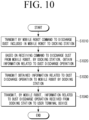
- a mobile robot management method including a docking station and a mobile robot includes transmitting a command to discharge dust included in the mobile robot to the docking station by the mobile robot, based on receiving a command to discharge dust from the mobile robot by the docking station, obtaining information related to the dust discharge operation, transmitting the obtained information related to the dust discharge operation to the mobile robot by the docking station, and transmitting the information related to the dust discharge operation received from the docking station by the mobile robot to the user terminal device.
- a user may be provided with a docking station of a mobile robot capable of reducing a price by minimizing and optimizing components while providing the same interface and convenience.
- the expressions "have,” “may have,” “including,” or “may include” may be used to denote the presence of a feature (e.g., a component, such as a numerical value, a function, an operation, a part, or the like), and does not exclude the presence of additional features.
- a or B “at least one of A and / or B,” or “one or more of A and / or B,” and the like include all possible combinations of the listed items.
- “A or B,” “at least one of A and B,” or “at least one of A or B” includes (1) at least one A, (2) at least one B, (3) at least one A and at least one B all together.
- first”, “second”, or the like, used in the present invention may indicate various components regardless of a sequence and/or importance of the components, will be used only in order to distinguish one component from the other components, and do not limit the corresponding components.
- an element e.g., a first element
- another element e.g., a second element
- any such element may be directly connected to the other element or may be connected via another element (e.g., a third element).
- an element e.g., a first element
- another element e.g., a second element
- there is no other element e.g., a third element between the other elements.
- the expression “configured to” may be used interchangeably with, for example, “suitable for,” “having the capacity to,” “designed to,” “adapted to,” “made to,” or “capable of.”
- the expression “configured to” does not necessarily mean “specifically designed to” in a hardware sense.
- a device configured to may indicate that such a device can perform an action along with another device or part.
- a processor configured to perform A, B, and C may indicate an exclusive processor (e.g., an embedded processor) to perform the corresponding action, or a generic-purpose processor (e.g., a central processor (CPU) or application processor (AP)) that can perform the corresponding actions by executing one or more software programs stored in the memory device.
- an exclusive processor e.g., an embedded processor
- a generic-purpose processor e.g., a central processor (CPU) or application processor (AP)
- module means, “unit,” “part”, and so on are used to refer to an element that performs at least one function or operation, and such element may be implemented as hardware or software, or a combination of hardware and software. Further, except for when each of a plurality of “modules”, “units”, “parts”, and the like needs to be realized in an individual hardware, the components may be integrated in at least one module or chip and be realized in at least one processor (not shown).
- the present invention relates to a mobile robot management system and method in which a docking station and a mobile robot communicate bi-directionally and share various information and signals, and the mobile robot transmits information received from a docking station to a user terminal device.
- Various information e.g., state information of the docking station or information related to a specific operation
- the state information of the docking station or the information related to the specific operation may be sufficient information even the user of the user terminal device may identify when the mobile robot is docked on the docking station.
- the docking station may transmit various information to the mobile robot without having to include a separate long-range communication module, and the mobile robot may transmit information obtained from the docking station to the user terminal device, so that the user of the user terminal device may identify information transmitted by the docking station.
- FIG. 1 is a diagram illustrating an operation of the docking station 100, the mobile robot 200, and the user terminal device 300 included in the mobile robot management system 10 according to an embodiment.
- the mobile robot 200 is implemented as a cleaning robot for performing a task such as cleaning, air purification, and security guard while traveling in a space in a building, but this is merely an example, and the mobile robot 200 may be implemented as various mobile robots, such as a housework robot for performing housework while traveling a space in a home, a military robot for performing a task by being placed in a dangerous area that a person cannot access, and the like, but is not limited to the above-described example.
- the user terminal device 300 is implemented as a smartphone, but this is merely an example, and the user terminal device 300 may be implemented as various terminal devices such as a tablet PC, a desktop PC, a laptop PC, a netbook computer, a server, a medical device, or a wearable device, but is not limited thereto.
- the docking station 100 may selectively operate in one of a normal mode or a standby mode.
- the normal mode may refer to an operation mode in which the docking station 100 may transmit a docking guide signal to the mobile robot 200 or perform various functions with respect to the docked mobile robot 200.
- various components and modules included in the docking station 100 may be activated.
- the standby mode refers to an operation mode in which the docking station 100 maintains minimum power without performing a specific function, and may be expressed as a sleep mode. Accordingly, when the docking station 100 operates in the standby mode, various components and modules included in the docking station 100 may be deactivated. However, even when the docking station 100 operates in the standby mode, a near field communicator 110 may be activated to receive the wake-up signal from the mobile robot 200. An embodiment related thereto will be described later.
- the docking station 100 may perform at least one operation corresponding to the received command. Specifically, the docking station 100 may receive a command for performing at least one operation from the mobile robot 200 through the near field communicator.
- the near field communicator may include at least one of an infrared communication module or a radio frequency (RF) module.
- the docking station 100 may receive a command to perform at least one operation from the mobile robot 200 through a docking terminal connected when the mobile robot is docked or a separate wired terminal.
- the docking station 100 may transmit information about the type of the docking station 100 to the mobile robot 200.
- the mobile robot 200 may transmit a command to perform at least one operation corresponding to the type of the docking station 100 to the docking station 100 based on the information on the type of the docking station 100.
- the operation corresponding to the command received from the mobile robot 200 may include an operation corresponding to at least one of a type, a model, and a serial number of the docking station.
- the docking station 100 is a device (or model) capable of performing only a function of charging a power storage device such as a battery of the mobile robot 200 through information about a type of the docking station 100, the mobile robot 200 may transmit a command to perform a battery charge function to the docking station 100.
- the mobile robot 200 may transmit a command to charge power to the docking station 100 and a command to perform a function of suctioning the dust collected in the mobile robot 200 to the mobile robot 200.
- the type of the docking station 100 is not limited to the above-described example, and may be variously classified according to a function that may be performed by the docking station.
- the docking station 100 may obtain information related to a specific operation simultaneously when receiving a command or within a threshold time. As another example, the docking station 100 may obtain information related to a specific operation while performing a specific operation. As another example, the docking station 100 may obtain information related to a specific operation after terminating the performance of a specific operation.
- the docking station 100 is a model of a type capable of discharging (or suctioning) dust collected in the mobile robot 200.
- the docking station 100 may obtain information related to the dust discharge operation.
- the information related to the dust discharge operation may include information about components (for example, a dust bag, a filter, a dust bin including a dust bag, etc.) used to discharge dust included in the mobile robot 200 by the docking station 100.
- the dust bag means an envelope in which dust is contained when the dust collected in the mobile robot 200 is suctioned to the docking station 100
- the filter may include a dust container filter, an exhaust filter, a motor filter, and the like.
- the docking station 100 may obtain information related to the dust discharge operation (for example, information about each motor capable of sucking dust bag, filter, and dust).
- the information about the dust bag may include at least one of information on the available space of the dust bag, information on whether the dust bag is mounted, information about opening and closing of the dust container on which the dust bag is mounted, information about at least one of the type of the filter, and the like, and the information about the filter may include information about the times of use of the filter, whether the filter is mounted, and type of the filter, and the information about a motor may include at least one of the operation efficiency of the motor, the failure of the motor, the type of the motor, and the information on the usage time of the motor.
- this is merely an example, and the information on each component may be variously added/modified/deleted in a user's setting or manufacturing step.
- the docking station 100 may immediately obtain information related to the dust discharge operation. That is, even if the docking station 100 does not receive a command from the mobile robot 200, the docking station 100 may obtain information related to the dust discharge operation at the same time or within a threshold time. If it is identified that the mobile robot 200 is located in a region where the communication connection may be performed even though the mobile robot 200 does not receive a command to discharge dust from the mobile robot 200, the docking station 100 may obtain information related to the dust discharge operation from the mobile robot 200.
- the docking station 100 is a model of a type capable of performing a function of charging the mobile robot 200.
- the docking station 100 may obtain information about components related to the operation of charging the power of the mobile robot 200 (e.g., a power storage device of the docking station 100, a power generation device, and a power transmission device).
- the power generation device may refer to a component that generates power to operate the docking station 100 and stores the power in the power storage device, and may include, but is not limited to, a generator or the like.
- the power transmitter may transmit power to the mobile robot 200 to charge the mobile robot 200, and may charge the mobile robot 200 in a wireless or wired manner.
- the power storage device may refer to a component that stores power so that the docking station 100 operates, and may include, for example, at least one of a battery, a fuel cell, and a secondary battery.
- the information on the power storage device of the docking station 100 may include information on the charging state of the power storage device and information on the charging efficiency of the power storage device.
- the information on the power transmission device may include information on the charging efficiency of the mobile robot 200 of the power transmission device.
- the docking station 100 may determine whether at least one operation may be performed. If it is determined that at least one operation may not be performed, the docking station 100 may transmit information related to at least one operation or state information of the docking station 100 to the mobile robot 200. The mobile robot 200 may transmit information related to the received at least one operation or state information of the docking station 100 to the user terminal device 300. This embodiment will be described in detail with reference to FIG. 6 .
- the docking station 100 may transmit information (for example, information related to a dust discharge operation, information related to a power charging operation of the mobile robot 200, etc.) related to a specific operation obtained in various manners to the mobile robot 200.
- the docking station 100 may transmit information related to an operation performed by the mobile robot 200 or an operation performed by the docking station 100 obtained at the same time or within a threshold time to the mobile robot 200.
- the docking station 100 may periodically transmit information related to an operation after the mobile robot 200 is docked on the mobile robot 200 according to a predetermined period.
- the docking station 100 may transmit the obtained information to the mobile robot 200 in real time.
- the docking station 100 may transmit various information to the mobile robot 200.
- the docking station 100 may identify whether a numerical value corresponding to information related to various operations (e.g., information related to a dust discharge operation) exceeds a threshold range. When it is identified that the numerical value corresponding to the various types of information exceeds the threshold range, the docking station 100 may transmit various information to the mobile robot 200. This embodiment will be described in detail with reference to FIG. 5 .
- the mobile robot 200 may transmit information related to various operations received from the docking station 100 and state information of the docking station 100 to the user terminal device 300 or may provide the state information to the user.
- the mobile robot 200 may output information related to operation and state information of the docking station 100 as a message in a voice form or display a UI including information on a component. Accordingly, the user may identify the information related to the operation or the state of the docking station through the voice message or the UI output by the mobile robot 200.
- the mobile robot 200 may transmit information related to various operations and state information of the docking station 100 to the user terminal device 300.
- the mobile robot 200 may transmit information about various operations and status information to the user terminal device 300.
- the mobile robot 200 may transmit information related to various operations and status information received from the docking station 100 to the user terminal device 300. In this case, the mobile robot 200 may transmit a signal indicating that the charged power state is less than a threshold value to the user terminal device 300.
- the mobile robot 200 may transmit information related to various operations to the user terminal device 300 or may transmit information related to various operations to a pre-registered device (e.g., another terminal device of the user of the user terminal device 300).
- the user terminal device 300 may display the UI based on the information on the component received from the mobile robot 200. Accordingly, the user may identify a state of a consumable of the docking station through the user terminal device 300.
- FIG. 2 is a diagram illustrating a configuration of the docking station 100, the mobile robot 200, the user terminal device 300, and the server 400 included in the mobile robot management system 10 according to an embodiment.
- the docking station 100 includes a near field communicator 110, a memory 120, a processor 140, and a function performer 160.
- the docking station 100 may further include an inputter 130 and a sensor 150.
- the configuration illustrated in FIG. 2 is an example for implementing embodiments of the present invention, and appropriate hardware and software configurations that are obvious to a person skilled in the art may be additionally included in the docking station 100.
- the near field communicator 110 may include a circuit, and may communicate with a near field communicator 210-1 included in the mobile robot 200 or a near field communicator included in another device.
- the near field communicator 110 may transmit and receive various signals or information between the mobile robot 200 or the near field communicator included in various devices.
- the near field communicator 110 may receive a command to perform at least one operation transmitted from the near field communicator 210-1 of the mobile robot 200.
- the command to perform at least one operation may be a command directly generated by the mobile robot 200, and may be a command instructing the user terminal device 300 to transmit the mobile robot 200 to the docking station 100.
- the near field communicator 110 may transmit information related to an operation performed by the docking station 100 (for example, information related to an operation of discharging dust included in the mobile robot 200) to the mobile robot 200.
- the near field communicator 110 may receive a wake-up signal transmitted by the near field communicator 210-1 of the mobile robot 200 and transmit a docking guide signal to the mobile robot 200.
- the wake-up signal is a signal for switching the operation mode of the docking station 100 from the power saving mode to the normal mode, and a detailed description thereof will be described later.
- the docking guide signal periodically transmitted to the mobile robot 200 by the near field communicator 110 may include a preset idle time period.
- the mobile robot 200 may transmit a wake-up signal within an idle time period included in the docking guide signal transmitted by the near field communicator 110. Accordingly, the mobile robot 200 may minimize or reduce signal interference by transmitting a wake-up signal within an idle time period included in the docking guide signal.
- the near field communicator 110 may include at least one of an infrared communication module or RF module.
- the infrared communication module may include an infrared transmitting/receiving circuit, or a photo transistor, or the like.
- the near field communicator 110 may be activated in a state in which the power of the docking station 100 is turned on. That is, even when the docking station 100 is operating in the standby mode, the near field communicator 110 may receive the wake-up signal transmitted from the near field communicator 210-1 of the mobile robot 200.
- the memory 120 may be implemented as a non-volatile memory, a volatile memory, a flash-memory, a hard disk drive (HDD), a solid state drive (SSD), or the like.
- the memory 120 may be accessed by the processor 140, and read/write/modify/update, etc. of data by the processor 140 may be performed.
- the term memory in the present invention may include the memory 120, a read-only memory (ROM) (not shown) in the processor 140, a random access memory (RAM) (not shown), or a memory card (not shown) (e.g., a micro secure digital (SD) card, a memory stick) mounted on the stacked docking station 100.
- ROM read-only memory
- RAM random access memory
- memory card not shown
- SD micro secure digital
- the memory 120 may store information related to various operations performed by the docking station 100 and state information of the docking station 100. Specifically, the memory 120 may store information related to an operation obtained while the processor 140 performs an operation corresponding to a command received from the mobile robot 200. The memory 120 may store state information of the current docking station.
- the inputter 130 may receive various user inputs and transmit the user inputs to the processor 140.
- the inputter 130 may include at least one of a touch sensor, a button, and a key.
- the inputter 130 may be implemented as a button for switching an operation mode of the docking station 100. For example, when a command to switch the operation mode from the normal mode to the standby mode is input through the inputter 130, the processor 140 may switch the operation mode of the docking station 100 from the normal mode to the standby mode.
- the processor 140 may be electrically connected to the memory 120 to control overall operations and functions of the docking station 100.
- the processor 140 may control the near field communicator 110 to transmit the docking guide signal to the mobile robot 200.
- the mobile robot 200 Upon receiving the docking guide signal, the mobile robot 200 may move to the docking station 100 by moving in a direction in which the docking station 100 is located.
- the processor 140 may switch the operation mode of the docking station to the normal mode.
- the processor 140 may transmit the docking guide signal to the mobile robot 200 while operating in the normal mode.
- the processor 140 may receive a command to perform at least one operation through the near field communicator 110 from the mobile robot 200.
- the processor 140 may obtain information related to at least one operation.
- at least one operation may be an operation corresponding to the type of the docking station 200.
- the processor 140 may transmit information about the type of the docking station to the mobile robot 200 through the near field communicator 110.
- the information about the type of the docking station may include, for example, information about whether the docking station is a model of a type capable of charging the mobile robot 200 or a model of a type capable of sucking dust collected in the robot 200.
- the mobile robot 200 may transmit a command corresponding to each type to the docking station 100.
- the processor 140 may receive a command to perform at least one operation from the mobile robot 200 or obtain information related to at least one operation within a threshold time. As another example, the processor 140 may obtain information related to at least one operation while performing at least one operation. As another example, after the processor 140 finishes at least one operation, the processor 140 may obtain information related to at least one operation. As another example, if it is detected that the mobile robot 200 is located in an area where the mobile robot 200 is capable of communicating even without receiving a command from the mobile robot 200, the processor 140 may obtain information related to an operation that the docking station 100 may perform.
- the processor 140 may receive a command for removing dust included (or collected) in the mobile robot 200 from the mobile robot 200 through the near field communicator 110.
- the processor 140 may obtain information related to an operation related to the dust discharge operation.
- the information related to the dust discharge operation may include information about components (e.g., a dust bag, a filter, and a motor for suctioning dust) used to discharge dust.
- the processor 140 may obtain information about a motor for suctioning the dust bag, the filter, and the dust.
- the processor 140 may obtain information about the spare space of the dust bag through the sensor 150 capable of detecting the spare space of the dust bag. As another example, the processor 140 may obtain information on whether the dust bag is mounted on the dust container through the various sensors 150 and information on the type of the dust bag (e.g., information on the unique model number, size, specification, and the like of the dust bag).
- the processor 140 may obtain information on the usage count of the filter and the usage time based on the time when the filter is replaced. As another example, the processor 140 may obtain information on whether the filter is mounted in the docking station 100 through the various sensors 150 and information on the type of the filter (e.g., the unique model number of the filter, the function performed by the filter, the standard information of the filter, and the like).
- the type of the filter e.g., the unique model number of the filter, the function performed by the filter, the standard information of the filter, and the like.
- the processor 140 may obtain information on the operation efficiency of the motor through a sensor capable of detecting the operation efficiency of the motor or foreign matter stuck on the motor.
- the processor 140 may obtain information on the use time of the motor based on the motor replacement time.
- the processor 140 may obtain information on whether the motor has failed. For example, the processor 140 may identify whether the motor operates normally based on at least one of a rotation speed, whether the motor operates, and an operation efficiency of the motor.
- the standard of the normal operation of the motor may be determined in the manufacturing step and may be modified by the user.
- the processor 140 may receive a command for charging the mobile robot 200 from the mobile robot 200 through the near field communicator 110.
- the processor 140 may obtain information related to the operation of charging the mobile robot 200.
- the information related to the operation of charging the mobile robot 200 may include information on the power storage device, the power generation device, and the power transmission device.
- the processor 140 may obtain information on the charging state of the power storage device and information on the charging efficiency of the power storage device.
- the processor 140 may obtain information on the charging efficiency of the mobile robot 200 through the power transmitted from the power transmitter to the mobile robot 200.
- the processor 140 may generate power using the power generating device to supply power from the power storage device. Accordingly, the processor 140 may obtain information on the power production efficiency of the power storage device while charging the mobile robot 200.
- the processor 140 may determine whether at least one operation may be performed. In one embodiment, when receiving a command to charge the power of the mobile robot 200 from the mobile robot 200, the processor 140 may determine whether the mobile robot 200 may be charged based on whether the docking station 200 is in a state capable of transmitting power to the mobile robot 200. For example, the processor 140 may determine whether the power of the mobile robot 200 may be transmitted based on whether the power storage device is charged enough to transmit power to the mobile robot 200 when the docking station is in a wireless state.
- the processor 140 may determine whether a dust discharge operation may be performed. The processor 140 may determine whether to perform the dust discharge operation based on whether there is surplus space in the dust bag of the docking station, whether the dust bag exists in the dust bin at the docking station, and whether the usage time of the filter or motor exceeds a threshold time based on the time of replacement.
- the processor 140 may control the near field communicator 110 to transmit status information of the docking station related to at least one operation to the mobile robot 200 in order to transmit state information of the docking station 100 related to the at least one operation to the user terminal device 300 connected to the mobile robot 100. For example, if it is determined that the dust discharging operation may not be performed, the processor 140 may control the near field communicator 110 to transmit state information of the docking station related to the dust discharging operation to the mobile robot 200. In addition, the mobile robot 200 may transmit state information of the docking station related to the dust discharge operation received from the docking station 100 to the user terminal device 300.
- the processor 140 may control the near field communicator 110 to transmit the obtained information related to the at least one operation (e.g., information related to dust discharging operation, etc.) to the mobile robot 200.
- the processor 140 may control the near field communicator 110 to transmit the obtained information to the mobile robot 200 in real time or periodically when information related to at least one operation is obtained.
- the processor 140 may transmit the information related to the at least one operation to the mobile robot 200 based on whether a value corresponding to the information related to the at least one operation exceeds a threshold range.
- the processor 140 may identify whether a value corresponding to the at least one operation-related information exceeds a threshold range by using the obtained information related to the at least one operation.
- the processor 140 may control the near field communicator 110 to transmit the at least one operation-related information to the mobile robot 200.
- the processor 140 may include, for example, and without limitation, one or more from among a central processing unit (CPU), a micro controller unit (MCU), a micro processing unit (MPU), a controller, an application processor (AP), a communication processor (CP), an ARM processor, or the like, or may be defined by the corresponding term.
- the processor 140 may be implemented as a System on Chip (SoC) or large scale integration (LSI) embedded with a processing algorithm, and may be implemented in the form of a field programmable gate array (FPGA).
- SoC System on Chip
- LSI large scale integration
- FPGA field programmable gate array
- the processor 140 may perform various functions by executing computer executable instructions stored in the memory 120.
- the sensor 150 may detect various state information of the docking station 100.
- the sensor 150 may include a pressure sensor capable of detecting the surplus space of the dust bag included in the docking station 100.
- the sensor 150 may be implemented as a sensor for detecting the operational efficiency of a motor for sucking the dust collected by the mobile robot 100 and a sensor for detecting whether a dust bag is provided in the dust bin.
- the sensor 150 may be implemented as a sensor that calculates and detects power efficiency based on the power transmitted by the power transmitter to the mobile robot 200 .
- the function performer 160 is a component capable of performing various functions of the docking station 100.
- the function performer 160 is a component capable of charging the mobile robot 200 and may include a power transmission device, or the like.
- the function performer 160 may include a motor, a filter, etc. capable of removing dust collected in the mobile robot 200.
- the mobile robot 200 may include a communicator 210, a processor 220, a memory 230, a traveling unit 240, and a speaker 250.
- the mobile robot 200 may additionally include appropriate hardware and software configurations that are obvious to those skilled in the art.
- the communicator 210 may communicate with the docking station 100, the mobile robot 200, the user terminal device 300, the server 400, and various devices.
- the communicator 210 may include a near field communicator 210-1 and a wireless communication module 210-2, and may also include various wired communication modules (not shown).
- the near field communicator 210-1 may include at least one of an infrared communication module and an RF module.
- the near field communicator 210-1 may transmit/receive various signals or information between the near field communicators 110 included in the docking station 100. For example, the near field communicator 210-1 may transmit at least one command corresponding to the information on the type of the docking station 100 to the docking station 100.
- the near field communicator 210-1 may receive information about the type of the docking station 100, state information of the docking station 100, or information related to specific operation from the docking station 100. As another example, the near field communicator 210-1 may transmit a wake-up signal to the docking station 100 and may receive a docking guidance signal from the docking station 100.
- the communication module 210-2 may include a cellular communication module using any one of long-term evolution (LTE), LTE advanced (LTE-A), a code division multiple access (CDMA), a wideband CDMA (WCDMA), and a universal mobile telecommunications system (UMTS), a wireless broadband (WiBro), or a global system for mobile communications (GSM), and the like.
- the wireless communication may include, for example, any one or any combination of wireless fidelity (Wi-Fi), Bluetooth, Bluetooth low energy (BLE), Zigbee, and near field communication (NFC).
- the wireless communication module 210-2 may communicate with the user terminal device 300 and the server 400 on the mobile robot management system 10, and may transmit/receive various signals or information. That wireless communication module 210-2 performs communication may include communicating via a third device (e.g., a repeater, a hub, an access point, the server 400 or a gateway, etc.).
- a third device e.g., a repeater, a hub, an access point, the server 400 or a gateway, etc.
- the processor 220 may be electrically connected to the memory to control the overall operation and function of the mobile robot 200.
- the processor 220 may control the near field communicator 210-1 to transmit a command to discharge the dust included (or collected) in the mobile robot 200 to the docking station 100.
- the information related to a dust discharge operation may be received from the docking station 100 through the near field communicator 210-1.
- the processor 220 when docked on the docking station 100, may control the near field communicator 210-1 to transmit a signal for requesting information on the type of the docking station 100 to the mobile robot 200.
- the processor 220 may control the near field communicator 210-1 to transmit at least one command corresponding to the information about the type of the docking station 100 to the docking station 100.
- the processor 220 may control the near field communicator 210-1 to transmit a command to charge power to the docking station 100.
- the processor 220 may control the near field communicator 210-1 to transmit a command to discharge dust to the docking station 100.
- the processor 220 may control the wireless communication module 210-2 to transmit information related to various operations received from the docking station 100 (for example, information related to a dust discharge operation or information related to a power charging operation) to the user terminal device 300.
- the processor 220 may directly transmit information related to various operations to the user terminal device 300, or may control the wireless communication module 210-2 to transmit the information to the user terminal device 300 through the server 400.
- the server 400 may include a server of the manufacturer of the mobile robot 200 or the docking station 100, a server of the application store, or a relay server.
- the processor 220 may control the speaker 250 to output a message corresponding to information related to various operations received from the docking station 100 in a voice form.
- the processor 220 may control a display (not shown) to display a UI including a message corresponding to information related to various operations received from the docking station 100.
- the processor 220 may control the near field communicator 210-1 to periodically emit a wake-up signal for switching the operation mode of the docking station 100 from the standby mode to the normal mode.
- the processor 220 may receive the docking guide signal from the docking station 100 operating in the normal mode, through the near field communicator 210-1.
- the processor 220 may control the traveling unit 240 to move in the direction of the docking station 100 for docking to the docking station 100.
- the memory 230 may store instructions or data related to at least one other component of the mobile robot 200.
- the memory 230 may be accessed by the processor 220, and read/write/modify/update, etc. of data by the processor 220 may be performed.
- the term memory in the present invention may include the memory 230, a read-only memory (ROM) (not shown) in the processor 220, a random access memory (RAM) (not shown), or a memory card (not shown) (e.g., a micro secure digital (SD) card, a memory stick) mounted on the stacked mobile robot 200.
- ROM read-only memory
- RAM random access memory
- SD micro secure digital
- the memory 230 may store information about the type of the docking station 100 received from the docking station 100 and status information. As another example, the memory 230 may store information related to various operations received from the docking station 100. The memory 230 may store instructions or data for displaying various UIs on a display.
- the traveling unit 240 is a device that helps the mobile robot 200 to move, and may be configured as a wheel, or may be configured as a device capable of moving in a non-standard moving form such as an N-foot walking.
- the traveling unit 240 may be configured to perform rotations in front, rear, left, and right, and rotation. That is, the traveling unit 240 may be variously configured according to the type and characteristics of the mobile robot device 200.
- the speaker 250 is configured to output various notification sounds or voice messages as well as various audio data on which various processing operations such as decoding, amplification, and noise filtering are performed by the audio processor.
- the speaker 250 may output a message corresponding to information related to various operations in a voice form under the control of the processor 220.
- the user terminal device 300 may include a memory 310, a display 320, a speaker 330, a communicator 340, and a processor 350.
- a memory 310 may be included in the user terminal device 300.
- the user terminal device 300 may additionally include hardware and software configurations obvious to those skilled in the art.
- the memory 310 may store instructions or data related to at least one other component of the user terminal device 300.
- the memory 310 may be accessed by the processor 350, and read/write/modify/update, etc. of data by the processor 350 may be performed.
- the term memory in the present invention may include the memory 310, a read-only memory (ROM) (not shown) in the processor 350, a random access memory (RAM) (not shown), or a memory card (not shown) (e.g., a micro secure digital (SD) card, a memory stick) mounted on the stacked user terminal device 300.
- the memory 310 may store information related to various operations performed by the docking station 100 received from the mobile robot 200 (or received through the server 400).
- the memory 310 may store programs, data, or the like, to configure various screens to be displayed on a display region of the display 320.
- the display 320 may display various information under the control of the processor 350.
- the display 320 may display a UI capable of checking state information or information related to operation of the docking station or a UI capable of controlling the docking station 100.
- the display 320 may display an application screen capable of controlling the docking station 100 or the mobile robot 200.
- the related embodiment will be described with reference to FIGS. 8A, 8B, and 8C.
- the display 320 may be implemented as a touch screen together with a touch panel, or may be implemented in the form of a flexible display.
- the speaker 330 is a configuration to output not only various audio data processed as decoding, amplification, and noise filtering but also various notification sounds or speech message.
- the speaker 330 may output a message corresponding to information related to various operations performed by the docking station 100 in a voice format.
- the communicator 340 may communicate with the mobile robot 200, the server 400, and various external devices. Communication of the communicator 340 with the mobile robot 200 or an external device, etc. may include communication through a third device (e.g., a relay, a hub, an access point, the server 400, a gateway, etc.).
- a third device e.g., a relay, a hub, an access point, the server 400, a gateway, etc.
- the communicator 340 may include various communication modules to communicate with an external device.
- the communicator 340 may include a wireless communication module, such as the wireless communication module 210-2 of the mobile robot 200, and may include a cellular communication module.
- the communicator 340 may also include various wired communication modules.
- the communicator 340 may receive information related to various operations performed by the docking station 100 from the mobile robot 200, and may receive the corresponding information through the server 400.
- the communicator 340 may transmit a command for performing a specific operation to the docking station 100 to the mobile robot 200.
- the processor 220 of the mobile robot may control the near field communicator 210-1 to transmit the received command to the docking station 100.
- the communicator 340 may transmit a command for performing a specific operation to the mobile robot 200.
- the processor 350 may be electrically connected to the memory 310 to control various operations and functions of the user terminal device 300.
- the processor 350 may receive information related to various operations performed by the docking station from the mobile robot 200 through the communicator 340.
- the processor 350 may update information related to an operation that the pre-stored docking station 100 may perform as information related to the received operation.
- the processor 350 may receive information related to operation directly from the mobile robot 200, but may receive the information through the server 400.
- the processor 350 may control the display 320 to display an application screen including a UI indicating received information related to various operations performed by the docking station. As another example, the processor 350 may control the display 320 to display an application screen including a control UI capable of controlling the mobile robot 200 or the docking station 100. As another example, the processor 350 may control the speaker 330 to output a message corresponding to information related to various operations performed by the received docking station in a voice form.
- the server 400 may include a communicator 410, a memory 420, and a processor 430.
- the communicator 410 may include a circuit and may include various wireless communication modules.
- the memory 420 may store instructions or data related to at least one other component included in the server 400.
- the memory 420 may store identification information for identifying each of the mobile robot 200 or the docking station 100 that may be controlled by the user terminal device 300.
- the memory 420 may store data related to an application capable of controlling the mobile robot 200 or the docking station 100.
- the processor 430 may be electrically connected to the memory 420 to control the operation of the server 400.
- the processor 430 may control the communicator 410 to transmit various information received from the mobile robot 200 to the user terminal device 300.
- the processor 430 may control the communicator 410 to transmit various information received from the user terminal device 300 to the mobile robot 200.
- the processor 410 may store various information received from the mobile robot 200 and the user terminal device 300 in the memory 420.
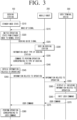
- FIG. 3 is a sequence diagram illustrating an operation of the docking station 100, mobile robot 200, and user terminal device 300 according to an embodiment.
- the docking station 100 may operate in a standby mode in operation S310. Specifically, the docking station 100 may operate in the standby mode by a user command. For example, a user command may be input to an inputter included in the docking station 100 to operate in a standby mode. As another example, when a command to operate in the standby mode from the user terminal device 300 through the mobile robot 200 is received through the near field communicator 110, the docking station 100 may operate in the standby mode.
- the docking station 100 may turn on power with minimum power while operating in the standby mode. Accordingly, while the docking station 100 is operating in the standby mode, the docking station 100 may not transmit the docking guide signal to the mobile robot 200.
- the mobile robot 200 may transmit a wake-up signal to the docking station 100.
- the mobile robot 200 may transmit a wake-up signal capable of switching the operation mode of the docking station 100 from the standby mode to the normal mode to the mobile robot 200 through a near field communication module such as an infrared transmission module.
- the mobile robot 200 may periodically transmit the wake-up signal to the docking station 100 through the near field communication module.
- the mobile robot 200 may transmit a wake-up signal to the docking station 100 when a value corresponding to the battery or various components required to perform or the cleaning of the mobile robot 200 exceeds a threshold range.
- the mobile robot 200 may transmit a wake-up signal to the docking station 100 when the remaining capacity of the dust bag collecting the dust or various contaminants of the mobile robot 200 is less than a predetermined value.
- the mobile robot 200 may transmit a wake-up signal to the docking station 100 when an error occurs in a component included in the mobile robot 200.
- the docking station 100 may switch the operation state from the standby mode to the normal mode in operation S320.
- the docking station 100 may transmit the docking guide signal through the near field communicator 110 while operating in the normal mode in operation S325.
- the mobile robot 200 may move to the direction of the docking station 100 and dock on the docking station 100, and when the docking guide signal is less than a predetermined value, the mobile robot 200 may transmit the wake-up signal to the docking station 100 in operation S330.
- Inference may occur between the docking guide signal transmitted by the docking station 100 while operating in the normal mode and the wake-up signal transmitted by the mobile robot 200. Accordingly, an idle time interval may be included on the docking guide signal transmitted by the docking station 100.
- the mobile robot 200 may transmit the wake-up signal in the idle time period on the docking guide signal. The interference between signals transmitted by each of the docking station 100 and the mobile robot 200 may be minimized or reduced.
- the docking station 100 may transmit information about the type of the docking station to the mobile robot 200 through the near field communicator in operation S335.
- the information about the type of the docking station may correspond to at least one of information about a function that the docking station may perform, docking station model information, and a unique number of the docking station.
- the mobile robot 200 may transmit a signal requesting information on the type of the docking station 100 to the docking station 100 after docking on the docking station 100.
- the docking station 100 may transmit information about the type of the docking station 100 to the mobile robot 200 in response to the request signal.
- the mobile robot 200 may transmit a command for performing an operation corresponding to at least one of the type and the unique number of the docking station 100 to the docking station 100 based on the received information on the type of the docking station 100 in operation S340.
- the type of the docking station may be variously classified according to a function that the docking station 100 may perform. Accordingly, the operation corresponding to the type of the docking station may mean a command to perform an operation that the docking station may perform.
- the docking station 100 is a type of model capable of performing a function of discharging (or suctioning) dust included (or collected) in the mobile robot 200
- the mobile robot 200 may transmit a command to perform an operation of discharging dust included in the mobile robot 200 to the docking station 100.
- the docking station 100 may obtain information related to an operation corresponding to the command received from the mobile robot 200 in operation S345.
- the docking station 100 may receive a command for discharging dust included in the mobile robot 200.
- the docking station 100 may obtain information related to a dust discharge operation (for example, information about a dust bag, a filter, and a motor).
- the docking station 100 may receive a command to charge the power of the mobile robot 200
- the docking station 100 may obtain information related to the operation of charging the power of the mobile robot 200 (for example, information on the charging state of the power storage device, information on the charging efficiency of the power storage device, and information on the charging efficiency of the power transmission device, etc.). Since the related embodiment has been described above, a redundant description thereof will be omitted.
- the docking station 100 may obtain information related to a specific operation at the same time or within a threshold time. As another example, the docking station 100 may obtain information related to a specific operation while performing a specific operation. As another example, the docking station 100 may obtain information related to a specific operation after terminating the performance of a specific operation.
- the docking station 100 receives a command to perform at least one operation from the mobile robot 200 and obtains information related to an operation corresponding to the received command has been described with reference to S320 to S340, but this is merely an example. In another embodiment, even if the docking station 100 does not receive a command from the mobile robot 200, the docking station 100 may obtain information related to the dust discharge operation at the same time or within a threshold time from docking of the mobile robot 200 to docking station 100.
- the docking station 100 may transmit information related to the obtained operation to the mobile robot 200 in operation S350.
- the docking station 100 may transmit information related to an operation to the mobile robot 200 using a near field communicator such as an infrared transmission module or an RF transmission module.
- the mobile robot 200 may output information about components received from the docking station 100 as a message in a voice form. This embodiment will be described in detail with reference to FIGS. 8A, 8B, and 8C.
- the user terminal device 300 may display a UI including information related to an operation based on received information related to the operation in operation S360, and the user terminal device 300 may receive a command from the user in operation S365.
- the user terminal device 300 may transmit the input command to the mobile robot 200 in operation S370.
- the command input from the user may be a command for performing a specific operation to the mobile robot 200, but may be a command for performing a specific operation to the docking station 100.
- the command may indicate that user terminal device 300 gives a command to the mobile robot 200 to transmit the user command to the docking station 100.
- the mobile robot 200 may transmit a user command to the docking station 100 in operation S375. Accordingly, the docking station 100 may perform an operation corresponding to the user command in operation S380.
- FIG. 3 is only an example of the present invention, and the user terminal device 300 may receive a command from a user at any point in time. The user terminal device 300 may transmit the received command to the mobile robot 200, and the mobile robot 200 may perform an operation corresponding to the received command.
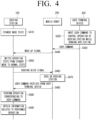
- FIG. 4 is a sequence diagram illustrating an operation of the docking station 100, mobile robot 200, and user terminal device 300 according to an embodiment. A description overlapping with FIG. 3 will be omitted.
- the docking station 100 may operate in a standby mode in operation S410. While executing the application 420 capable of controlling the mobile robot 200 or the docking station 100, the user terminal device 300 may receive a user command for controlling the operation of the docking station 100 in operation S420. For example, the user terminal device 300 may receive a user command for discharging dust collected in the mobile robot 200 or charging the mobile robot 200 from the docking station 100 on the application execution screen. The user terminal device 300 may transmit the input user command to the mobile robot 200.
- the mobile robot 200 may transmit the wake-up signal to the docking station 100 through the near field communication module in operation S440.
- the docking station 100 may switch the operation state from the standby mode to the normal mode in operation S450.
- the docking station 100 may transmit the docking guide signal to the mobile robot 200 through the near field communication module in operation S460.
- the mobile robot 200 receiving the docking guide signal may dock to the docking station 100 in operation S470.
- the mobile robot 200 docked on the docking station 100 may transmit the user command received from the user terminal device 300 to the docking station 100 in operation S480.
- the docking station 100 may perform an operation corresponding to the user command received from the mobile robot 200 in operation S490.
- operation S 495 the docking station 100 may obtain information related to an operation to be performed.
- Operation S495 of FIG. 4 may be the same as operation S345 of FIG. 3 . Accordingly, since steps after the operation S495 of FIG. 4 are the same as steps after step S345 of FIG. 3 , redundant descriptions will be omitted.
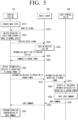
- FIG. 5 is a flowchart illustrating an operation of the docking station 100 according to an embodiment of the present invention. Specifically, FIG. 5 illustrates an embodiment in which the docking station 100 is a model of a type capable of charging the power of the mobile robot 200. Since S510 to S555 of FIG. 5 are the same as operations S310 to S335 of FIG. 3 , redundant descriptions will be omitted.
- the mobile robot 200 may transmit at least one command corresponding to the information on the type of the docking station 100 received from the docking station 100 to the docking station 100. If the docking station 100 is a model of a type of charging power of the mobile robot 200, the mobile robot 200 may transmit a command to charge power to the docking station 100 in operation S560. Upon receiving a command to charge the power, the docking station 100 may obtain information related to the power charging operation in operation S565. In an embodiment, the docking station 100 may obtain information related to the power charging operation while performing the operation of charging the mobile robot 200. As another example, the docking station 100 may receive a command to charge power or obtain information related to power charging within a threshold error range. As another example, the docking station 100 may obtain information related to the power charging operation after terminating the operation of charging the mobile robot 200. Since the information related to the power charging operation has been described above, a redundant description thereof will be omitted.
- the docking station 100 may control the near field communicator 110 to transmit information related to the power charging operation obtained to the mobile robot 200 in operation S570.
- the mobile robot 200 may transmit received information related to the power charging operation to the user terminal device 300 in operation S575.
- the user terminal device 300 may display a UI including information related to the power charging operation based on the information received from the mobile robot 200 in operation S580. Since the operations S585 to S597 are the same as the operations S365 to S380, a repeated description thereof will be omitted.
- FIG. 6 is a flowchart illustrating an operation of the docking station 100 according to an embodiment of the present invention. Specifically, FIG. 6 illustrates an embodiment in which the docking station 100 may charge the power of the mobile robot 200 and may discharge the dust collected in the mobile robot 200. Since the operations S610 through S655 of FIG. 6 are the same as operations S310 through S335 of FIG. 3 , redundant descriptions will be omitted.
- the mobile robot 200 may transmit at least one command corresponding to the information on the type of the docking station 100 received from the docking station 100 to the docking station 100.
- the docking station 100 is a type of model capable of charging the power of the mobile robot 200 and discharging the dust collected in the mobile robot 200
- the mobile robot 200 may transmit a command to charge the power and a command to discharge dust to the docking station 100 in operation S660.
- the mobile robot 200 may simultaneously transmit a command to charge power and a command to discharge dust, but this is merely an example and may be transmitted with a time difference.
- the mobile robot 200 may transmit each command according to a priority corresponding to the states of the mobile robot 200.
- the mobile robot 200 may first transmit a command to discharge dust to the docking station 100.
- the mobile robot 200 may first transmit a command to charge power to the docking station 100.
- the docking station 100 may obtain information related to each of the power charging operation and the dust discharge operation in operation S665.
- the docking station 100 may obtain information related to each operation after performing all operations.
- the docking station 100 may obtain information related to each operation while each operation is performed.
- the docking station 100 may control the near field communicator 110 to transmit information related to the power charging operation obtained and an operation related to the dust discharge operation to the mobile robot 200 in operation S670.
- the mobile robot 200 may transmit information related to the received power charging operation and information related to the dust discharge operation to the user terminal device 300 in operation S675.
- the user terminal device 300 may display a UI including information related to the power charging operation and information related to the dust discharge operation based on the received information in operation S680. Since the operations S685 to S697 are the same as the operations S365 to S380, duplicated descriptions will be omitted.
- FIG. 7 is a flowchart illustrating an operation of the docking station 100 according to an embodiment.
- S710 of FIG. 7 is the same as S340 of FIG. 3 , a description related to the operations S310 to S335 which are previous operations will be omitted.
- the docking station 100 may receive a command for performing an operation corresponding to the type of the docking station from the mobile robot 200.
- the docking station 100 may determine whether it is possible to perform an operation in operation S720.
- the docking station 100 may determine whether to perform an operation to discharge the dust included in the mobile robot 200. For example, the docking station 100 may identify whether power is sufficient enough to suck dust, whether the available space in the dust bag is greater than or equal to a threshold range, whether the dust bag is provided in the dust container in the docking station 100, whether the filter or the motor has exceeded the threshold based on the replacement time point. In another embodiment, when a command to charge the mobile robot 200 is input from the mobile robot 200, the docking station 100 may identify whether to perform an operation of charging the mobile robot 200.
- the docking station 100 may identify whether power is sufficient to charge the mobile robot 200 and whether the efficiency of the power transmission device is equal to or greater than a threshold value.
- the docking station 100 may identify the state information of the docking station 100 related to the dust discharge operation to determine whether to discharge the dust included in the mobile robot 200 as described above.
- the docking station 100 may transmit information about the docking station related to the operation to the mobile robot 200 through the near field communicator in operation S730.
- the state information of the docking station associated with the operation may include information on the identified reason that the operation may not be performed.
- the mobile robot 200 may transmit information received from the docking station 100 to the user terminal device 300 or may transmit information received from the docking station 100 to the pre-registered terminal device of the user.
- the mobile robot 200 may output a message for the reason that the docking station 100 cannot perform a specific operation in a voice form. Accordingly, the user may recognize the reason why the docking station does not perform the specific operation through the user terminal device 300 or the mobile robot 200.
- the docking station 100 may perform an operation corresponding to the command.
- the docking station 100 may obtain information related to an operation corresponding to the command in operation S740.
- the docking station 100 may transmit the obtained information to the mobile robot 200 in operation S750. Since operations S740 and S750 have been described above, redundant descriptions thereof will be omitted.
- FIG. 8 is a flowchart illustrating a process in which the docking station 100 transmits information related to an operation to a mobile robot according to an embodiment of the present invention.
- S810 of FIG. 8 is the same as operation S345 of FIG. 3 . Since the operation of FIG. S810 is the same as the operations S310 to S340 of FIG. 3 , redundant descriptions will be omitted.
- the docking station 100 may obtain information related to an operation corresponding to the command received from the mobile robot 200.
- the docking station 100 may identify whether the numerical value corresponding to the information related to the operation exceeds the threshold range based on the information related to the obtained operation in operation S820.
- the docking station 100 may identify whether a numerical value corresponding to information related to dust discharge exceeds a threshold range.
- the docking station 100 may identify whether a space filled with dust in the dust bag exceeds a threshold.
- the docking station 100 may identify whether a motor or a filter has been used in excess of a threshold number of times or a threshold time based on a replacement time point.
- the docking station 100 may identify whether the operating efficiency of the motor exceeds a threshold.
- That the numerical value corresponding to the information related to the operation does not exceed the threshold range may mean that the state of the component necessary to perform the operation is normal. Accordingly, when the numerical value corresponding to the information related to the operation does not exceed the threshold range, the docking station may obtain information related to the operation. If it is identified that the numerical value corresponding to the operation related to the operation exceeds the threshold range, the docking station 100 may transmit the information related to the operation to the mobile robot 200 in operation S830.
- the docking station 100 may transmit information related to operation to the mobile robot 200 periodically or in real time. As described with reference to FIG. 6 , when the numerical value corresponding to the information related to the operation exceeds the threshold range, the docking station 100 may transmit information related to the operation to the mobile robot 200.
- the docking station 100 may recognize the detachment of the component through the sensor or identify the replacement of the component by checking the serial number of the replaced component. As another example, the docking station 100 may obtain information indicating that the component is replaced through the user terminal device 300 or the mobile robot 200. When checking the replacement of the components, the docking station 100 may initialize or reset a numerical value or a threshold range corresponding to the component state.
- FIG. 9A is a diagram illustrating an operation of the mobile robot 200 and the user terminal device 300 according to an embodiment.
- the mobile robot 200 may transmit, to the user terminal device 300, information related to an operation (e.g., a dust discharge operation or a power charging operation) that may be performed by the docking station 100 received from the docking station 100, or may output the information in various ways.
- the mobile robot 200 may provide status information or an operation of the docking station 100 received from the docking station 100 as a message 910 in the form of a voice.
- the mobile robot 100 may output the message 910 indicating that the dust bag of the current docking station is filled by 80% in a voice form.
- the user terminal device 300 may display information on the state of the docking station 100 through various displays (e.g., LED, 7-SEG LCD, TFT-LCD, etc.) included in the user terminal device 300. Accordingly, the user may identify the state of the component of the docking station 100 through information output by the mobile robot 200.
- various displays e.g., LED, 7-SEG LCD, TFT-LCD, etc.
- the mobile robot 200 may transmit the state information or information related to the operation of the docking station 100 received from the docking station 100 to the user terminal device 300.
- the user terminal device 300 may execute an application capable of controlling the docking station 100 or the mobile robot 200 by a user command.
- the application execution screen executed by the user terminal device 300 may include a UI capable of checking information or state information related to an operation performed by the docking station 100.
- the user terminal device 300 may display an application execution screen including a UI 920 capable of checking information related to state information or operation of the docking station 100 based on the received information.
- the user terminal device 300 may display a notification window including a UI 920 capable of checking information related to state information or operation of the docking station 100.
- the notification window displayed by the user terminal device 300 may also display a control UI capable of controlling the docking station 100.
- the user terminal device 300 may display the notification window as a push notification, and may display the notification window on a quick panel or a lock screen.
- the user terminal device 300 may include a control UI 930 for controlling the operation of the docking station 100 on the application execution screen.
- a command to perform a specific operation of the docking station is input from the user through the control UI 930, the user terminal device 300 may transmit a command to send the corresponding command to the docking station 100 to the mobile robot 200.
- the control UI 930 illustrated in FIG. 9A is merely an example, and may be implemented as a UI that may require various operations to the docking station 100.
- the user terminal device 300 may transmit a command for requesting the mobile robot 200 to transmit a command to terminate the power supply to the docking station 100.
- the mobile robot 200 may transmit a command to terminate power to the docking station 100 through an infrared transmission module or the like.
- a command to terminate the power supply is received through a near field communication module (e.g., an infrared receiving module, etc.)
- the docking station 100 may terminate the power supply.
- the user terminal device 300 may output information related to state information and operation of the docking station 100 received from the mobile robot 200 in a voice form. Accordingly, the user may identify various information related to the state and operation of the docking station 100 through the user terminal device 300.
- the user terminal device 300 may execute an application capable of checking a state of the docking station 100 according to a user command and controlling an operation.
- the mobile robot 200 may transmit information and status information related to the operation received from the docking station 100 to the server 400 capable of managing or controlling the application.
- the server 400 may transmit information received from the mobile robot 300 to the user terminal device 300.
- the user terminal device 300 may update information and state information related to an operation performed by the docking station 100, which is previously stored, by using information related to the operation performed by the docking station 100 received from the server 400 and state information.
- the user terminal device 300 may display an application execution screen including a UI indicating information related to an operation performed by the updated docking station 100 and state information. Accordingly, the user may easily recognize information related to the operation of the docking station or the current state information of the docking station through the user terminal device 300.
- FIGS. 9B and 9C are diagrams illustrating an operation of a docking station, a mobile robot, a user terminal device, and a sever according to an embodiment.
- FIGS. 8B and 8C assume that the docking station 100 is a model of a type capable of performing a dust discharge operation.
- the docking station 100 may transmit information related to the dust discharge operation to the mobile robot 200 using the IR module.
- the docking station 100 may transmit various information to the mobile robot 200 using various near field communicators such as an RF module.
- the mobile robot 200 may transmit information related to the dust discharge operation to the server 400.
- the server 400 may be at least one of a server of a manufacturer of a mobile robot or a docking station, a server for managing and controlling an application capable of controlling a mobile robot or a docking station, and a relay server.
- the mobile robot 200 may transmit various information to the server 400 using a Wi-Fi module, but this is merely an example and various information may be transmitted to the server 400 using various wireless communication modules.
- the server 400 may transmit received information related to the dust discharge operation to the user terminal device 300.
- the user terminal device 300 may display an application screen including a UI indicating information related to a dust discharge operation. For example, when information indicating that the dust container of the docking station is not closed among the information related to the dust discharge operation is received, the user terminal device 300 may provide an application screen displaying a UI including the notification window 940 to close the dust container.
- FIG. 9B illustrates that the notification window 840 is displayed on the application screen, this is merely an example, and the user terminal device 400 may display the notification window 840 in various regions such as a push notification, a quick panel, and a lock screen.
- the user terminal device 300 may receive a command to perform various operations from a user on an application capable of controlling a docking station or a mobile robot, as shown in FIG. 9C .
- the user terminal device 300 may display an application screen including a control UI 950 capable of controlling the docking station 100.
- the user terminal device 300 may transmit a command to perform an operation of automatically discharging dust to the server 400.
- the server 400 may transmit a command instructing to automatically discharge dust to the mobile robot 200 pre-registered by the user.
- the mobile robot 200 may transmit a command received from the server 400 to the docking station 100 using the near field communicator 210-1.
- the docking station 100 may automatically discharge dust included in the docked mobile robot 200 in response to the received command.
- FIG. 10 is a flowchart illustrating a mobile robot management method including the docking station 100 and the mobile robot 200 according to an embodiment of the present invention.
- the mobile robot 200 may transmit a command for discharging dust included in the mobile robot 200 to the docking station 100 in operation S1010. Specifically, if docked on the docking station 100, the mobile robot 200 may transmit a command to discharge dust to the docking station 100 through the near field communicator.
- the mobile robot 200 when the mobile robot 200 is docked on the docking station 100, the mobile robot 200 may immediately transmit a command for discharging dust to the docking station 100. In another embodiment, if the mobile robot 200 is docked on the docking station 100, the docking station 100 may transmit information about the type of the docking station 100 to the mobile robot 200. If it is identified that the docking station 100 is a type of device for discharging dust of the mobile robot through the information on the type of the docking station 100, the mobile robot 200 may transmit a command for discharging dust to the docking station 100.
- the docking station 100 may obtain information related to the dust discharge operation from the mobile robot 200 in operation S1020. In order to transmit information related to the obtained operation to the user terminal device 300 connected to the mobile robot 200, the docking station 100 may transmit information related to the obtained dust discharge operation to the mobile robot 200 in operation S1030.
- the docking station 100 may transmit information related to the obtained operation to the mobile robot 200 through a near field communicator (e.g., an infrared transmission module, or the like).
- the mobile robot 200 may transmit information related to the dust discharge operation received from the docking station 100 to the user terminal device 300 in operation S1040. Accordingly, the user may recognize information related to the state information or operation of the docking station through the user terminal device 300 or the like.
- Embodiments may be implemented as software that includes instructions stored in machine-readable storage media readable by a machine (e.g., a computer).
- a device may call instructions from a storage medium and that is operable in accordance with the called instructions, including an electronic device (e.g., the electronic device 100).
- the processor may perform the function corresponding to the instruction, either directly or under the control of the processor, using other components.
- the instructions may include a code generated by a compiler or a code executed by an interpreter.
- the machine-readable storage medium may be provided in the form of a non-transitory storage medium.
- non-transitory storage medium may not include a signal and is tangible, but does not distinguish whether data is permanently or temporarily stored in a storage medium.
- the “non-transitory storage medium” may include a buffer in which data is temporarily stored.
- a method disclosed herein may be provided in a computer program product.
- a computer program product may be traded between a seller and a purchaser as a commodity.
- a computer program product may be distributed in the form of a machine readable storage medium (e.g., compact disc ROM (CD-ROM)) or distributed online through an application store (e.g., PlayStore TM ) or distributed (e.g., download or upload) online between two user devices (e.g., smartphones) directly.
- a machine readable storage medium e.g., compact disc ROM (CD-ROM)
- an application store e.g., PlayStore TM
- distributed e.g., download or upload
- At least a portion of the computer program product may be stored temporarily or at least temporarily in a storage medium such as a manufacturer's server, a server in an application store, or a memory in a relay server.
- each of the components may include a single entity or a plurality of entities, and some sub-components of the sub-components described above may be omitted, or other sub-components may be further included in the various embodiments.
- some components e.g., modules or programs
- the operations performed by the module, the program, or other component, in accordance with various embodiments may be performed in a sequential, parallel, iterative, or heuristic manner, or at least some operations may be executed in a different order or omitted, or other operations may be added.
Landscapes
- Engineering & Computer Science (AREA)
- Mechanical Engineering (AREA)
- Robotics (AREA)
- Computer Networks & Wireless Communication (AREA)
- Signal Processing (AREA)
- Automation & Control Theory (AREA)
- Physics & Mathematics (AREA)
- Artificial Intelligence (AREA)
- Multimedia (AREA)
- Evolutionary Computation (AREA)
- Fuzzy Systems (AREA)
- Mathematical Physics (AREA)
- Software Systems (AREA)
- Electric Vacuum Cleaner (AREA)
- Control Of Position, Course, Altitude, Or Attitude Of Moving Bodies (AREA)
Description
- The present invention relates to a mobile robot management system.
- In the case of a docking station of a related-art mobile robot, only a fractional function such as charging of a mobile robot has been performed, and thus, a docking station does not require a separate component such as a display or a speaker. However, as demand for mobile robots and research and development are increasing, functions of the docking station that performs various functions for the mobile robot have also increased when the mobile robot is docked.
- However, as various functions of the docking station have been developed, a user has to check the state of the docking station, but in the case of an interface method of the related-art docking station, there is a limitation in that a user may not smoothly check the state of the docking station. Accordingly, in order to improve the interface between the docking station and the user, various wireless communication modules or output modules are included in the docking station, but there is a limitation in that the device of the docking station becomes complicated and the price increases.
-
KR20200022764A KR1020190003159A KR1020090111170A JP2017536938A - As the present invention addresses the above-described necessity, the present invention relates to a mobile robot management method in which the mobile robot transmits the information received from the docking station to the user terminal device in order to display the information associated with the docking station to the output device of the mobile robot or transmit the same to the user terminal device connected with the mobile robot.
- A mobile robot management system is provided as defined in
claim 1. - The processor may identify whether a numeral value corresponding to the obtained information related to the dust discharge operation exceeds a threshold range, and based on identification that the numeral value exceeds the threshold range, control the near-field communicator to transmit the information related to the dust discharge operation to the mobile robot.
- The information related to the dust discharge operation may include information about a component to discharge dust included in the mobile robot, and the component to discharge the dust included in the mobile robot may include at least one of a dust bag, a filter, or a motor for sucking dust.
- The information about the dust bag may include a surplus space of the dust bag, whether the dust bag is mounted, and a type of the dust bag, wherein the information about the filter may a number of uses of the filter, a use time, whether a filter is mounted, and a type of a filter, and the information about the motor may include an operation efficiency use time, a failure state, and a type of the motor.
- The processor may, while performing an operation to discharge dust included in the mobile robot, obtain the information about the dust bag, filter, and the motor, respectively, and control the near-field communicator to transmit the obtained information about the dust bag, filter, and motor, respectively, to the mobile robot.
- The processor may, based on receiving a wake-up signal from the mobile robot while the docking station is operating in a stand-by mode, switch an operation mode of the docking station from a standby mode to a normal mode, control the near-field communicator so that the docking station transmits a docking guide signal to the mobile robot while the docking station is operating in the normal mode.
- The processor may, based on receiving a command to discharge dust included in the mobile robot from the mobile robot, determine whether to perform the dust discharge operation, and based on determination that the dust discharge operation is not performed, control the near-field communicator to transmit the information related to the dust discharge operation to the mobile robot.
- The processor may, based on the mobile robot being docked on the docking station, control the near-field communicator to transmit the information about the type of the docking station to the mobile robot, and receive at least one command corresponding to the information about the type of the docking station from the mobile robot through the near-field communicator.
- The processor may, based on receiving a command to charge power of the mobile robot from the mobile robot through the near-field communicator, obtain information about at least one of a power storage device, a power transmission device, or a power generation device included in the docking station, and control the near-field communicator to transmit the obtained information about at least one of the power storage device, power transmission device, or power generation device to the mobile robot.
- The near-field communicator may include at least one of an infrared communication module or a radio frequency module.
- A mobile robot according to an embodiment includes a communicator comprising a circuitry; a memory; and a processor configured to, based on docking on the docking station, control a near-field communicator, among the communicators, to transmit a command to discharge dust included in the mobile robot to the docking station, receive information related to the dust discharge operation from the docking station through the near-field communicator, and control the communicator to transmit the received information about the dust discharge operation to a user terminal device.
- The processor may control the near-field communicator to periodically transmit a wake-up signal that enables to switch an operation mode of the docking station from a standby mode to a normal mode.
- The processor may, based on the mobile robot being docked on the docking station, control the near-field communicator to transmit a signal requesting information about a type of the docking station to the mobile robot.
- The processor may, based on receiving information about the type of the docking station from the mobile robot, control the near-field communicator to transmit at least one command corresponding to the information about the type of docking station to the docking station.
- The processor may, based on identification that the docking station is a model of a type of charging power of the mobile robot based on the information about the type of the docking station, control the near-field communicator to transmit a command to charge power to the docking station.
- The processor may, based on identification that the docking station is a model of a type to discharge dust included in the mobile robot based on the information about the type of the docking station, control the near-field communicator to transmit the command to discharge dust to the docking station.
- The mobile robot may further include a speaker, and the processor may control the speaker to output a message corresponding to the received information about the dust discharge operation in a voice format.
- The processor may, in order to transmit the obtained information related to the dust discharge operation to a user terminal device connected to the mobile robot, control the near-field communicator to transmit the information related to the dust discharge operation to the mobile robot.
- As an embodiment to achieve the objective of the invention, a mobile robot management method including a docking station and a mobile robot includes transmitting a command to discharge dust included in the mobile robot to the docking station by the mobile robot, based on receiving a command to discharge dust from the mobile robot by the docking station, obtaining information related to the dust discharge operation, transmitting the obtained information related to the dust discharge operation to the mobile robot by the docking station, and transmitting the information related to the dust discharge operation received from the docking station by the mobile robot to the user terminal device.
- As described above, according to various embodiments of the present invention, a user may be provided with a docking station of a mobile robot capable of reducing a price by minimizing and optimizing components while providing the same interface and convenience.
-
-
FIG. 1 is a diagram illustrating an operation of a docking station, a mobile robot, and a user terminal device according to an embodiment; -
FIG. 2 is a diagram illustrating a configuration of a docking station, a mobile robot, a user terminal device, and a server according to an embodiment; -
FIGS. 3 ,4 ,5 , and6 are sequence diagrams to illustrate an operation of a docking station, a mobile robot, and a user terminal device according to an embodiment; -
FIG. 7 is a flowchart illustrating transmission of various information to a mobile robot by a docking station according to an embodiment; -
FIG. 8 is a flowchart illustrating an operation of a docking station and a mobile robot according to an embodiment; -
FIG. 9A is a diagram illustrating an operation of a mobile robot and a user terminal device according to an embodiment; -
FIGS. 9B and9C are diagrams illustrating an operation of a docking station, a mobile robot, a user terminal device, and a sever according to an embodiment; and -
FIG. 10 is a flowchart illustrating a mobile robot management method capable of controlling a docking station and a mobile robot according to an embodiment. - The present invention includes various embodiments, some of which are illustrated in the drawings and described in detail in the detailed description. However, the present invention is not intended to limit the embodiments described herein but includes various modifications, equivalents, and / or alternatives. In the context of the description of the drawings, like reference numerals may be used for similar components.
- In addition, the embodiments described below may be modified in various different formsThe embodiments are provided so that the present invention will be thorough and complete, and will fully convey the scope of the present invention to those skilled in the art.
- The terms used in the present invention are used merely to describe a particular embodiment, and are not intended to limit the scope of the claims. The expression of a singular includes a plurality of representations, unless the context clearly indicates otherwise.
- In this document, the expressions "have," "may have," "including," or "may include" may be used to denote the presence of a feature (e.g., a component, such as a numerical value, a function, an operation, a part, or the like), and does not exclude the presence of additional features.
- The expressions "A or B," "at least one of A and / or B," or "one or more of A and / or B," and the like include all possible combinations of the listed items. For example, "A or B," "at least one of A and B," or "at least one of A or B" includes (1) at least one A, (2) at least one B, (3) at least one A and at least one B all together.
- In addition, expressions "first", "second", or the like, used in the present invention may indicate various components regardless of a sequence and/or importance of the components, will be used only in order to distinguish one component from the other components, and do not limit the corresponding components.
- It is to be understood that an element (e.g., a first element) is "operatively or communicatively coupled with / to" another element (e.g., a second element) is that any such element may be directly connected to the other element or may be connected via another element (e.g., a third element). On the other hand, when an element (e.g., a first element) is "directly connected" or "directly accessed" to another element (e.g., a second element), it may be understood that there is no other element (e.g., a third element) between the other elements.
- Herein, the expression "configured to" may be used interchangeably with, for example, "suitable for," "having the capacity to," "designed to," "adapted to," "made to," or "capable of." The expression "configured to" does not necessarily mean "specifically designed to" in a hardware sense.
- Instead, under some circumstances, "a device configured to" may indicate that such a device can perform an action along with another device or part. For example, the expression "a processor configured to perform A, B, and C" may indicate an exclusive processor (e.g., an embedded processor) to perform the corresponding action, or a generic-purpose processor (e.g., a central processor (CPU) or application processor (AP)) that can perform the corresponding actions by executing one or more software programs stored in the memory device.
- The terms such as "module," "unit," "part", and so on are used to refer to an element that performs at least one function or operation, and such element may be implemented as hardware or software, or a combination of hardware and software. Further, except for when each of a plurality of "modules", "units", "parts", and the like needs to be realized in an individual hardware, the components may be integrated in at least one module or chip and be realized in at least one processor (not shown).
- The present invention relates to a mobile robot management system and method in which a docking station and a mobile robot communicate bi-directionally and share various information and signals, and the mobile robot transmits information received from a docking station to a user terminal device. Various information (e.g., state information of the docking station or information related to a specific operation) to be transmitted to the user terminal device through the mobile robot by the docking station may not be information that the user of the user terminal device should identify in real time or frequently. The state information of the docking station or the information related to the specific operation may be sufficient information even the user of the user terminal device may identify when the mobile robot is docked on the docking station. Accordingly, the docking station may transmit various information to the mobile robot without having to include a separate long-range communication module, and the mobile robot may transmit information obtained from the docking station to the user terminal device, so that the user of the user terminal device may identify information transmitted by the docking station.
- Hereinafter, with reference to the attached drawings, embodiments will be described in detail so that those skilled in the art to which the present invention belongs to can easily make and use the embodiments.
-
FIG. 1 is a diagram illustrating an operation of thedocking station 100, themobile robot 200, and theuser terminal device 300 included in the mobilerobot management system 10 according to an embodiment. - Referring to
FIG. 1 , themobile robot 200 is implemented as a cleaning robot for performing a task such as cleaning, air purification, and security guard while traveling in a space in a building, but this is merely an example, and themobile robot 200 may be implemented as various mobile robots, such as a housework robot for performing housework while traveling a space in a home, a military robot for performing a task by being placed in a dangerous area that a person cannot access, and the like, but is not limited to the above-described example. - The
user terminal device 300 is implemented as a smartphone, but this is merely an example, and theuser terminal device 300 may be implemented as various terminal devices such as a tablet PC, a desktop PC, a laptop PC, a netbook computer, a server, a medical device, or a wearable device, but is not limited thereto. - The
docking station 100 may selectively operate in one of a normal mode or a standby mode. The normal mode may refer to an operation mode in which thedocking station 100 may transmit a docking guide signal to themobile robot 200 or perform various functions with respect to the dockedmobile robot 200. When thedocking station 100 operates in the normal mode, various components and modules included in thedocking station 100 may be activated. The standby mode refers to an operation mode in which thedocking station 100 maintains minimum power without performing a specific function, and may be expressed as a sleep mode. Accordingly, when thedocking station 100 operates in the standby mode, various components and modules included in thedocking station 100 may be deactivated. However, even when thedocking station 100 operates in the standby mode, anear field communicator 110 may be activated to receive the wake-up signal from themobile robot 200. An embodiment related thereto will be described later. - When receiving a command to perform at least one operation from the
mobile robot 200 while operating in the normal mode, thedocking station 100 may perform at least one operation corresponding to the received command. Specifically, thedocking station 100 may receive a command for performing at least one operation from themobile robot 200 through the near field communicator. The near field communicator may include at least one of an infrared communication module or a radio frequency (RF) module. In another embodiment, thedocking station 100 may receive a command to perform at least one operation from themobile robot 200 through a docking terminal connected when the mobile robot is docked or a separate wired terminal. - If the
mobile robot 200 is docked on thedocking station 100, thedocking station 100 may transmit information about the type of thedocking station 100 to themobile robot 200. Themobile robot 200 may transmit a command to perform at least one operation corresponding to the type of thedocking station 100 to thedocking station 100 based on the information on the type of thedocking station 100. For example, the operation corresponding to the command received from themobile robot 200 may include an operation corresponding to at least one of a type, a model, and a serial number of the docking station. - For example, if it is identified that the
docking station 100 is a device (or model) capable of performing only a function of charging a power storage device such as a battery of themobile robot 200 through information about a type of thedocking station 100, themobile robot 200 may transmit a command to perform a battery charge function to thedocking station 100. - As another example, when the
docking station 100 is identified as a type of device capable of charging the battery of themobile robot 200 through the information on the type of thedocking station 100 and sucking and discharging the dust collected in themobile robot 200, themobile robot 200 may transmit a command to charge power to thedocking station 100 and a command to perform a function of suctioning the dust collected in themobile robot 200 to themobile robot 200. The type of thedocking station 100 is not limited to the above-described example, and may be variously classified according to a function that may be performed by the docking station. - When a command to perform a specific operation is received from the
mobile robot 200, thedocking station 100 may obtain information related to a specific operation simultaneously when receiving a command or within a threshold time. As another example, thedocking station 100 may obtain information related to a specific operation while performing a specific operation. As another example, thedocking station 100 may obtain information related to a specific operation after terminating the performance of a specific operation. - According to an embodiment of the present invention, it is assumed that the
docking station 100 is a model of a type capable of discharging (or suctioning) dust collected in themobile robot 200. When a command to perform an operation of discharging (or suctioning) dust included (or collected) in themobile robot 200 is received from themobile robot 200, thedocking station 100 may obtain information related to the dust discharge operation. The information related to the dust discharge operation may include information about components (for example, a dust bag, a filter, a dust bin including a dust bag, etc.) used to discharge dust included in themobile robot 200 by thedocking station 100. In this case, the dust bag means an envelope in which dust is contained when the dust collected in themobile robot 200 is suctioned to thedocking station 100, and the filter may include a dust container filter, an exhaust filter, a motor filter, and the like. When thedocking station 100 receives a command for discharging dust included in themobile robot 200 from themobile robot 200, thedocking station 100 may obtain information related to the dust discharge operation (for example, information about each motor capable of sucking dust bag, filter, and dust). - The information about the dust bag may include at least one of information on the available space of the dust bag, information on whether the dust bag is mounted, information about opening and closing of the dust container on which the dust bag is mounted, information about at least one of the type of the filter, and the like, and the information about the filter may include information about the times of use of the filter, whether the filter is mounted, and type of the filter, and the information about a motor may include at least one of the operation efficiency of the motor, the failure of the motor, the type of the motor, and the information on the usage time of the motor. However, this is merely an example, and the information on each component may be variously added/modified/deleted in a user's setting or manufacturing step.
- According to another embodiment of the present invention, when the
mobile robot 200 is docked on thedocking station 100, thedocking station 100 may immediately obtain information related to the dust discharge operation. That is, even if thedocking station 100 does not receive a command from themobile robot 200, thedocking station 100 may obtain information related to the dust discharge operation at the same time or within a threshold time. If it is identified that themobile robot 200 is located in a region where the communication connection may be performed even though themobile robot 200 does not receive a command to discharge dust from themobile robot 200, thedocking station 100 may obtain information related to the dust discharge operation from themobile robot 200. - According to another embodiment of the present invention, it is assumed that the
docking station 100 is a model of a type capable of performing a function of charging themobile robot 200. When a command to perform a function of charging power from themobile robot 200 is received, thedocking station 100 may obtain information about components related to the operation of charging the power of the mobile robot 200 (e.g., a power storage device of thedocking station 100, a power generation device, and a power transmission device). The power generation device may refer to a component that generates power to operate thedocking station 100 and stores the power in the power storage device, and may include, but is not limited to, a generator or the like. The power transmitter may transmit power to themobile robot 200 to charge themobile robot 200, and may charge themobile robot 200 in a wireless or wired manner. The power storage device may refer to a component that stores power so that thedocking station 100 operates, and may include, for example, at least one of a battery, a fuel cell, and a secondary battery. - The information on the power storage device of the
docking station 100 may include information on the charging state of the power storage device and information on the charging efficiency of the power storage device. The information on the power transmission device may include information on the charging efficiency of themobile robot 200 of the power transmission device. - Upon receiving a command to perform at least one operation from the
mobile robot 200, thedocking station 100 may determine whether at least one operation may be performed. If it is determined that at least one operation may not be performed, thedocking station 100 may transmit information related to at least one operation or state information of thedocking station 100 to themobile robot 200. Themobile robot 200 may transmit information related to the received at least one operation or state information of thedocking station 100 to theuser terminal device 300. This embodiment will be described in detail with reference toFIG. 6 . - Meanwhile, the
docking station 100 may transmit information (for example, information related to a dust discharge operation, information related to a power charging operation of themobile robot 200, etc.) related to a specific operation obtained in various manners to themobile robot 200. In an embodiment, thedocking station 100 may transmit information related to an operation performed by themobile robot 200 or an operation performed by thedocking station 100 obtained at the same time or within a threshold time to themobile robot 200. As another example, thedocking station 100 may periodically transmit information related to an operation after themobile robot 200 is docked on themobile robot 200 according to a predetermined period. As another example, when information related to an operation to be performed is obtained, thedocking station 100 may transmit the obtained information to themobile robot 200 in real time. As another example, when a user command to transmit various information from theuser terminal device 300 is received from themobile robot 200, thedocking station 100 may transmit various information to themobile robot 200. - As another example, the
docking station 100 may identify whether a numerical value corresponding to information related to various operations (e.g., information related to a dust discharge operation) exceeds a threshold range. When it is identified that the numerical value corresponding to the various types of information exceeds the threshold range, thedocking station 100 may transmit various information to themobile robot 200. This embodiment will be described in detail with reference toFIG. 5 . - The
mobile robot 200 may transmit information related to various operations received from thedocking station 100 and state information of thedocking station 100 to theuser terminal device 300 or may provide the state information to the user. For example, themobile robot 200 may output information related to operation and state information of thedocking station 100 as a message in a voice form or display a UI including information on a component. Accordingly, the user may identify the information related to the operation or the state of the docking station through the voice message or the UI output by themobile robot 200. - When a specific operation (e.g., a power charging operation of the
mobile robot 200 or an operation of discharging dust collected in the mobile robot 200) performed by thedocking station 100 to themobile robot 200 is completed, themobile robot 200 may transmit information related to various operations and state information of thedocking station 100 to theuser terminal device 300. In another embodiment, when it is identified that the numerical value corresponding to the information associated with various operations and the state information received from thedocking station 100 exceeds a threshold range, themobile robot 200 may transmit information about various operations and status information to theuser terminal device 300. In another embodiment, when the power of themobile robot 200 is less than the threshold value, themobile robot 200 may transmit information related to various operations and status information received from thedocking station 100 to theuser terminal device 300. In this case, themobile robot 200 may transmit a signal indicating that the charged power state is less than a threshold value to theuser terminal device 300. - The
mobile robot 200 may transmit information related to various operations to theuser terminal device 300 or may transmit information related to various operations to a pre-registered device (e.g., another terminal device of the user of the user terminal device 300). Theuser terminal device 300 may display the UI based on the information on the component received from themobile robot 200. Accordingly, the user may identify a state of a consumable of the docking station through theuser terminal device 300. -
FIG. 2 is a diagram illustrating a configuration of thedocking station 100, themobile robot 200, theuser terminal device 300, and theserver 400 included in the mobilerobot management system 10 according to an embodiment. - As shown in
FIG. 2 , thedocking station 100 includes anear field communicator 110, amemory 120, aprocessor 140, and afunction performer 160. Thedocking station 100 may further include aninputter 130 and asensor 150. However, the configuration illustrated inFIG. 2 is an example for implementing embodiments of the present invention, and appropriate hardware and software configurations that are obvious to a person skilled in the art may be additionally included in thedocking station 100. - The
near field communicator 110 may include a circuit, and may communicate with a near field communicator 210-1 included in themobile robot 200 or a near field communicator included in another device. Thenear field communicator 110 may transmit and receive various signals or information between themobile robot 200 or the near field communicator included in various devices. For example, thenear field communicator 110 may receive a command to perform at least one operation transmitted from the near field communicator 210-1 of themobile robot 200. In this case, the command to perform at least one operation may be a command directly generated by themobile robot 200, and may be a command instructing theuser terminal device 300 to transmit themobile robot 200 to thedocking station 100. - The
near field communicator 110 may transmit information related to an operation performed by the docking station 100 (for example, information related to an operation of discharging dust included in the mobile robot 200) to themobile robot 200. Thenear field communicator 110 may receive a wake-up signal transmitted by the near field communicator 210-1 of themobile robot 200 and transmit a docking guide signal to themobile robot 200. The wake-up signal is a signal for switching the operation mode of thedocking station 100 from the power saving mode to the normal mode, and a detailed description thereof will be described later. - The docking guide signal periodically transmitted to the
mobile robot 200 by thenear field communicator 110 may include a preset idle time period. Themobile robot 200 may transmit a wake-up signal within an idle time period included in the docking guide signal transmitted by thenear field communicator 110. Accordingly, themobile robot 200 may minimize or reduce signal interference by transmitting a wake-up signal within an idle time period included in the docking guide signal. - The
near field communicator 110 may include at least one of an infrared communication module or RF module. The infrared communication module may include an infrared transmitting/receiving circuit, or a photo transistor, or the like. - The
near field communicator 110 may be activated in a state in which the power of thedocking station 100 is turned on. That is, even when thedocking station 100 is operating in the standby mode, thenear field communicator 110 may receive the wake-up signal transmitted from the near field communicator 210-1 of themobile robot 200. - The
memory 120 may store at least one instruction or data related to at least one another element. The instruction is one action statement for theprocessor 140 as a programming language, and is a minimum unit of programs that theprocessor 140 may execute directly. - According to an embodiment, the
memory 120 may be implemented as a non-volatile memory, a volatile memory, a flash-memory, a hard disk drive (HDD), a solid state drive (SSD), or the like. Thememory 120 may be accessed by theprocessor 140, and read/write/modify/update, etc. of data by theprocessor 140 may be performed. The term memory in the present invention may include thememory 120, a read-only memory (ROM) (not shown) in theprocessor 140, a random access memory (RAM) (not shown), or a memory card (not shown) (e.g., a micro secure digital (SD) card, a memory stick) mounted on the stackeddocking station 100. - The
memory 120 may store information related to various operations performed by thedocking station 100 and state information of thedocking station 100. Specifically, thememory 120 may store information related to an operation obtained while theprocessor 140 performs an operation corresponding to a command received from themobile robot 200. Thememory 120 may store state information of the current docking station. - The
inputter 130 may receive various user inputs and transmit the user inputs to theprocessor 140. In particular, theinputter 130 may include at least one of a touch sensor, a button, and a key. Theinputter 130 may be implemented as a button for switching an operation mode of thedocking station 100. For example, when a command to switch the operation mode from the normal mode to the standby mode is input through theinputter 130, theprocessor 140 may switch the operation mode of thedocking station 100 from the normal mode to the standby mode. - The
processor 140 may be electrically connected to thememory 120 to control overall operations and functions of thedocking station 100. Theprocessor 140 may control thenear field communicator 110 to transmit the docking guide signal to themobile robot 200. Upon receiving the docking guide signal, themobile robot 200 may move to thedocking station 100 by moving in a direction in which thedocking station 100 is located. - When the wake-up signal is received from the
mobile robot 200 through thenear field communicator 110 while thedocking station 100 is operating in the standby mode, theprocessor 140 may switch the operation mode of the docking station to the normal mode. Theprocessor 140 may transmit the docking guide signal to themobile robot 200 while operating in the normal mode. - If the
mobile robot 200 is docked on thedocking station 100, theprocessor 140 may receive a command to perform at least one operation through thenear field communicator 110 from themobile robot 200. When a command to perform at least one operation from themobile robot 200 is received through thenear field communicator 110, theprocessor 140 may obtain information related to at least one operation. At this time, at least one operation may be an operation corresponding to the type of thedocking station 200. Specifically, when themobile robot 200 is docked on thedocking station 100, theprocessor 140 may transmit information about the type of the docking station to themobile robot 200 through thenear field communicator 110. The information about the type of the docking station may include, for example, information about whether the docking station is a model of a type capable of charging themobile robot 200 or a model of a type capable of sucking dust collected in therobot 200. Themobile robot 200 may transmit a command corresponding to each type to thedocking station 100. - The
processor 140 may receive a command to perform at least one operation from themobile robot 200 or obtain information related to at least one operation within a threshold time. As another example, theprocessor 140 may obtain information related to at least one operation while performing at least one operation. As another example, after theprocessor 140 finishes at least one operation, theprocessor 140 may obtain information related to at least one operation. As another example, if it is detected that themobile robot 200 is located in an area where themobile robot 200 is capable of communicating even without receiving a command from themobile robot 200, theprocessor 140 may obtain information related to an operation that thedocking station 100 may perform. - In an embodiment, when the
docking station 100 is a model of a type capable of suctioning and discharging dust collected in themobile robot 200, theprocessor 140 may receive a command for removing dust included (or collected) in themobile robot 200 from themobile robot 200 through thenear field communicator 110. When receiving a command to discharge the dust included in the mobilenational robot 200, theprocessor 140 may obtain information related to an operation related to the dust discharge operation. The information related to the dust discharge operation may include information about components (e.g., a dust bag, a filter, and a motor for suctioning dust) used to discharge dust. Theprocessor 140 may obtain information about a motor for suctioning the dust bag, the filter, and the dust. - The
processor 140 may obtain information about the spare space of the dust bag through thesensor 150 capable of detecting the spare space of the dust bag. As another example, theprocessor 140 may obtain information on whether the dust bag is mounted on the dust container through thevarious sensors 150 and information on the type of the dust bag (e.g., information on the unique model number, size, specification, and the like of the dust bag). - The
processor 140 may obtain information on the usage count of the filter and the usage time based on the time when the filter is replaced. As another example, theprocessor 140 may obtain information on whether the filter is mounted in thedocking station 100 through thevarious sensors 150 and information on the type of the filter (e.g., the unique model number of the filter, the function performed by the filter, the standard information of the filter, and the like). - The
processor 140 may obtain information on the operation efficiency of the motor through a sensor capable of detecting the operation efficiency of the motor or foreign matter stuck on the motor. Theprocessor 140 may obtain information on the use time of the motor based on the motor replacement time. In another embodiment, theprocessor 140 may obtain information on whether the motor has failed. For example, theprocessor 140 may identify whether the motor operates normally based on at least one of a rotation speed, whether the motor operates, and an operation efficiency of the motor. The standard of the normal operation of the motor may be determined in the manufacturing step and may be modified by the user. - According to another embodiment of the present invention, when the
docking station 100 is a model of a type capable of charging themobile robot 200, theprocessor 140 may receive a command for charging themobile robot 200 from themobile robot 200 through thenear field communicator 110. When receiving a command to charge themobile robot 200, theprocessor 140 may obtain information related to the operation of charging themobile robot 200. The information related to the operation of charging themobile robot 200 may include information on the power storage device, the power generation device, and the power transmission device. - The
processor 140 may obtain information on the charging state of the power storage device and information on the charging efficiency of the power storage device. Theprocessor 140 may obtain information on the charging efficiency of themobile robot 200 through the power transmitted from the power transmitter to themobile robot 200. In another embodiment, while charging themobile robot 200 through the power transmitting device or in the standby mode, theprocessor 140 may generate power using the power generating device to supply power from the power storage device. Accordingly, theprocessor 140 may obtain information on the power production efficiency of the power storage device while charging themobile robot 200. - Upon receiving a command to perform at least one operation from the
mobile robot 200 through thenear field communicator 110, theprocessor 140 may determine whether at least one operation may be performed. In one embodiment, when receiving a command to charge the power of themobile robot 200 from themobile robot 200, theprocessor 140 may determine whether themobile robot 200 may be charged based on whether thedocking station 200 is in a state capable of transmitting power to themobile robot 200. For example, theprocessor 140 may determine whether the power of themobile robot 200 may be transmitted based on whether the power storage device is charged enough to transmit power to themobile robot 200 when the docking station is in a wireless state. - In another embodiment, when a command to discharge (or suck) dust contained (or collected) in the
mobile robot 200 is received from themobile robot 200 through thenear field communicator 110, theprocessor 140 may determine whether a dust discharge operation may be performed. Theprocessor 140 may determine whether to perform the dust discharge operation based on whether there is surplus space in the dust bag of the docking station, whether the dust bag exists in the dust bin at the docking station, and whether the usage time of the filter or motor exceeds a threshold time based on the time of replacement. - If it is determined that at least one operation may not be performed, the
processor 140 may control thenear field communicator 110 to transmit status information of the docking station related to at least one operation to themobile robot 200 in order to transmit state information of thedocking station 100 related to the at least one operation to theuser terminal device 300 connected to themobile robot 100. For example, if it is determined that the dust discharging operation may not be performed, theprocessor 140 may control thenear field communicator 110 to transmit state information of the docking station related to the dust discharging operation to themobile robot 200. In addition, themobile robot 200 may transmit state information of the docking station related to the dust discharge operation received from thedocking station 100 to theuser terminal device 300. - In order to transmit the obtained information related to the at least one operation to the
user terminal device 300 connected to themobile robot 200, theprocessor 140 may control thenear field communicator 110 to transmit the obtained information related to the at least one operation (e.g., information related to dust discharging operation, etc.) to themobile robot 200. In an embodiment, theprocessor 140 may control thenear field communicator 110 to transmit the obtained information to themobile robot 200 in real time or periodically when information related to at least one operation is obtained. - In another embodiment, the
processor 140 may transmit the information related to the at least one operation to themobile robot 200 based on whether a value corresponding to the information related to the at least one operation exceeds a threshold range. Theprocessor 140 may identify whether a value corresponding to the at least one operation-related information exceeds a threshold range by using the obtained information related to the at least one operation. When it is identified that the value corresponding to the at least one operation-related information exceeds the threshold range, theprocessor 140 may control thenear field communicator 110 to transmit the at least one operation-related information to themobile robot 200. - However, the
processor 140 may include, for example, and without limitation, one or more from among a central processing unit (CPU), a micro controller unit (MCU), a micro processing unit (MPU), a controller, an application processor (AP), a communication processor (CP), an ARM processor, or the like, or may be defined by the corresponding term. In addition, theprocessor 140 may be implemented as a System on Chip (SoC) or large scale integration (LSI) embedded with a processing algorithm, and may be implemented in the form of a field programmable gate array (FPGA). Theprocessor 140 may perform various functions by executing computer executable instructions stored in thememory 120. - The
sensor 150 may detect various state information of thedocking station 100. Thesensor 150 may include a pressure sensor capable of detecting the surplus space of the dust bag included in thedocking station 100. Thesensor 150 may be implemented as a sensor for detecting the operational efficiency of a motor for sucking the dust collected by themobile robot 100 and a sensor for detecting whether a dust bag is provided in the dust bin. In addition, thesensor 150 may be implemented as a sensor that calculates and detects power efficiency based on the power transmitted by the power transmitter to themobile robot 200 . - The
function performer 160 is a component capable of performing various functions of thedocking station 100. For example, thefunction performer 160 is a component capable of charging themobile robot 200 and may include a power transmission device, or the like. As another example, thefunction performer 160 may include a motor, a filter, etc. capable of removing dust collected in themobile robot 200. - As illustrated in
FIG. 2 , themobile robot 200 may include acommunicator 210, aprocessor 220, amemory 230, a travelingunit 240, and aspeaker 250. However, this is only an embodiment, and themobile robot 200 may additionally include appropriate hardware and software configurations that are obvious to those skilled in the art. - The
communicator 210 may communicate with thedocking station 100, themobile robot 200, theuser terminal device 300, theserver 400, and various devices. Thecommunicator 210 may include a near field communicator 210-1 and a wireless communication module 210-2, and may also include various wired communication modules (not shown). The near field communicator 210-1 may include at least one of an infrared communication module and an RF module. The near field communicator 210-1 may transmit/receive various signals or information between thenear field communicators 110 included in thedocking station 100. For example, the near field communicator 210-1 may transmit at least one command corresponding to the information on the type of thedocking station 100 to thedocking station 100. As another example, the near field communicator 210-1 may receive information about the type of thedocking station 100, state information of thedocking station 100, or information related to specific operation from thedocking station 100. As another example, the near field communicator 210-1 may transmit a wake-up signal to thedocking station 100 and may receive a docking guidance signal from thedocking station 100. - The communication module 210-2 may include a cellular communication module using any one of long-term evolution (LTE), LTE advanced (LTE-A), a code division multiple access (CDMA), a wideband CDMA (WCDMA), and a universal mobile telecommunications system (UMTS), a wireless broadband (WiBro), or a global system for mobile communications (GSM), and the like. According to another embodiment, the wireless communication may include, for example, any one or any combination of wireless fidelity (Wi-Fi), Bluetooth, Bluetooth low energy (BLE), Zigbee, and near field communication (NFC).
- The wireless communication module 210-2 may communicate with the
user terminal device 300 and theserver 400 on the mobilerobot management system 10, and may transmit/receive various signals or information. That wireless communication module 210-2 performs communication may include communicating via a third device (e.g., a repeater, a hub, an access point, theserver 400 or a gateway, etc.). - The
processor 220 may be electrically connected to the memory to control the overall operation and function of themobile robot 200. In particular, when docked on thedocking station 100, theprocessor 220 may control the near field communicator 210-1 to transmit a command to discharge the dust included (or collected) in themobile robot 200 to thedocking station 100. The information related to a dust discharge operation may be received from thedocking station 100 through the near field communicator 210-1. - According to another embodiment of the present invention, when docked on the
docking station 100, theprocessor 220 may control the near field communicator 210-1 to transmit a signal for requesting information on the type of thedocking station 100 to themobile robot 200. When receiving information on the type of thedocking station 100 through the near field communicator 210-1, theprocessor 220 may control the near field communicator 210-1 to transmit at least one command corresponding to the information about the type of thedocking station 100 to thedocking station 100. For example, when it is identified that thedocking station 100 is a type of model capable of charging the mobile robot based on the information on the type of thedocking station 100, theprocessor 220 may control the near field communicator 210-1 to transmit a command to charge power to thedocking station 100. As another example, when it is identified that thedocking station 100 is a type of model capable of discharging dust included in themobile robot 200 based on the information on the type of thedocking station 100, theprocessor 220 may control the near field communicator 210-1 to transmit a command to discharge dust to thedocking station 100. - The
processor 220 may control the wireless communication module 210-2 to transmit information related to various operations received from the docking station 100 (for example, information related to a dust discharge operation or information related to a power charging operation) to theuser terminal device 300. Theprocessor 220 may directly transmit information related to various operations to theuser terminal device 300, or may control the wireless communication module 210-2 to transmit the information to theuser terminal device 300 through theserver 400. In this case, theserver 400 may include a server of the manufacturer of themobile robot 200 or thedocking station 100, a server of the application store, or a relay server. - The
processor 220 may control thespeaker 250 to output a message corresponding to information related to various operations received from thedocking station 100 in a voice form. As another example, theprocessor 220 may control a display (not shown) to display a UI including a message corresponding to information related to various operations received from thedocking station 100. - The
processor 220 may control the near field communicator 210-1 to periodically emit a wake-up signal for switching the operation mode of thedocking station 100 from the standby mode to the normal mode. Theprocessor 220 may receive the docking guide signal from thedocking station 100 operating in the normal mode, through the near field communicator 210-1. Upon receiving the docking guide signal, theprocessor 220 may control the travelingunit 240 to move in the direction of thedocking station 100 for docking to thedocking station 100. - The
memory 230 may store instructions or data related to at least one other component of themobile robot 200. Thememory 230 may be accessed by theprocessor 220, and read/write/modify/update, etc. of data by theprocessor 220 may be performed. The term memory in the present invention may include thememory 230, a read-only memory (ROM) (not shown) in theprocessor 220, a random access memory (RAM) (not shown), or a memory card (not shown) (e.g., a micro secure digital (SD) card, a memory stick) mounted on the stackedmobile robot 200. - The
memory 230 may store information about the type of thedocking station 100 received from thedocking station 100 and status information. As another example, thememory 230 may store information related to various operations received from thedocking station 100. Thememory 230 may store instructions or data for displaying various UIs on a display. - The traveling
unit 240 is a device that helps themobile robot 200 to move, and may be configured as a wheel, or may be configured as a device capable of moving in a non-standard moving form such as an N-foot walking. The travelingunit 240 may be configured to perform rotations in front, rear, left, and right, and rotation. That is, the travelingunit 240 may be variously configured according to the type and characteristics of themobile robot device 200. - The
speaker 250 is configured to output various notification sounds or voice messages as well as various audio data on which various processing operations such as decoding, amplification, and noise filtering are performed by the audio processor. In particular, thespeaker 250 may output a message corresponding to information related to various operations in a voice form under the control of theprocessor 220. - As illustrated in
FIG. 2 , theuser terminal device 300 may include amemory 310, adisplay 320, aspeaker 330, acommunicator 340, and aprocessor 350. This is merely exemplary, and theuser terminal device 300 may additionally include hardware and software configurations obvious to those skilled in the art. - The
memory 310 may store instructions or data related to at least one other component of theuser terminal device 300. Thememory 310 may be accessed by theprocessor 350, and read/write/modify/update, etc. of data by theprocessor 350 may be performed. The term memory in the present invention may include thememory 310, a read-only memory (ROM) (not shown) in theprocessor 350, a random access memory (RAM) (not shown), or a memory card (not shown) (e.g., a micro secure digital (SD) card, a memory stick) mounted on the stackeduser terminal device 300. Thememory 310 may store information related to various operations performed by thedocking station 100 received from the mobile robot 200 (or received through the server 400). Thememory 310 may store programs, data, or the like, to configure various screens to be displayed on a display region of thedisplay 320. - The
display 320 may display various information under the control of theprocessor 350. Thedisplay 320 may display a UI capable of checking state information or information related to operation of the docking station or a UI capable of controlling thedocking station 100. As another example, thedisplay 320 may display an application screen capable of controlling thedocking station 100 or themobile robot 200. The related embodiment will be described with reference to FIGS. 8A, 8B, and 8C. Thedisplay 320 may be implemented as a touch screen together with a touch panel, or may be implemented in the form of a flexible display. - The
speaker 330 is a configuration to output not only various audio data processed as decoding, amplification, and noise filtering but also various notification sounds or speech message. Thespeaker 330 may output a message corresponding to information related to various operations performed by thedocking station 100 in a voice format. - The
communicator 340 may communicate with themobile robot 200, theserver 400, and various external devices. Communication of thecommunicator 340 with themobile robot 200 or an external device, etc. may include communication through a third device (e.g., a relay, a hub, an access point, theserver 400, a gateway, etc.). - The
communicator 340 may include various communication modules to communicate with an external device. For example, thecommunicator 340 may include a wireless communication module, such as the wireless communication module 210-2 of themobile robot 200, and may include a cellular communication module. Thecommunicator 340 may also include various wired communication modules. Thecommunicator 340 may receive information related to various operations performed by thedocking station 100 from themobile robot 200, and may receive the corresponding information through theserver 400. Thecommunicator 340 may transmit a command for performing a specific operation to thedocking station 100 to themobile robot 200. In this case, theprocessor 220 of the mobile robot may control the near field communicator 210-1 to transmit the received command to thedocking station 100. Thecommunicator 340 may transmit a command for performing a specific operation to themobile robot 200. - The
processor 350 may be electrically connected to thememory 310 to control various operations and functions of theuser terminal device 300. In particular, theprocessor 350 may receive information related to various operations performed by the docking station from themobile robot 200 through thecommunicator 340. Theprocessor 350 may update information related to an operation that thepre-stored docking station 100 may perform as information related to the received operation. Theprocessor 350 may receive information related to operation directly from themobile robot 200, but may receive the information through theserver 400. - The
processor 350 may control thedisplay 320 to display an application screen including a UI indicating received information related to various operations performed by the docking station. As another example, theprocessor 350 may control thedisplay 320 to display an application screen including a control UI capable of controlling themobile robot 200 or thedocking station 100. As another example, theprocessor 350 may control thespeaker 330 to output a message corresponding to information related to various operations performed by the received docking station in a voice form. - As shown in
FIG. 2 , theserver 400 may include acommunicator 410, amemory 420, and aprocessor 430. Thecommunicator 410 may include a circuit and may include various wireless communication modules. Thememory 420 may store instructions or data related to at least one other component included in theserver 400. Thememory 420 may store identification information for identifying each of themobile robot 200 or thedocking station 100 that may be controlled by theuser terminal device 300. Thememory 420 may store data related to an application capable of controlling themobile robot 200 or thedocking station 100. - The
processor 430 may be electrically connected to thememory 420 to control the operation of theserver 400. Theprocessor 430 may control thecommunicator 410 to transmit various information received from themobile robot 200 to theuser terminal device 300. - The
processor 430 may control thecommunicator 410 to transmit various information received from theuser terminal device 300 to themobile robot 200. Theprocessor 410 may store various information received from themobile robot 200 and theuser terminal device 300 in thememory 420. -
FIG. 3 is a sequence diagram illustrating an operation of thedocking station 100,mobile robot 200, anduser terminal device 300 according to an embodiment. - First, the
docking station 100 may operate in a standby mode in operation S310. Specifically, thedocking station 100 may operate in the standby mode by a user command. For example, a user command may be input to an inputter included in thedocking station 100 to operate in a standby mode. As another example, when a command to operate in the standby mode from theuser terminal device 300 through themobile robot 200 is received through thenear field communicator 110, thedocking station 100 may operate in the standby mode. - The
docking station 100 may turn on power with minimum power while operating in the standby mode. Accordingly, while thedocking station 100 is operating in the standby mode, thedocking station 100 may not transmit the docking guide signal to themobile robot 200. - In operation S315, the
mobile robot 200 may transmit a wake-up signal to thedocking station 100. Specifically, themobile robot 200 may transmit a wake-up signal capable of switching the operation mode of thedocking station 100 from the standby mode to the normal mode to themobile robot 200 through a near field communication module such as an infrared transmission module. In an embodiment, themobile robot 200 may periodically transmit the wake-up signal to thedocking station 100 through the near field communication module. In another embodiment, themobile robot 200 may transmit a wake-up signal to thedocking station 100 when a value corresponding to the battery or various components required to perform or the cleaning of themobile robot 200 exceeds a threshold range. For example, themobile robot 200 may transmit a wake-up signal to thedocking station 100 when the remaining capacity of the dust bag collecting the dust or various contaminants of themobile robot 200 is less than a predetermined value. As another example, themobile robot 200 may transmit a wake-up signal to thedocking station 100 when an error occurs in a component included in themobile robot 200. When the wake-up signal is received through the near field communication module, thedocking station 100 may switch the operation state from the standby mode to the normal mode in operation S320. Thedocking station 100 may transmit the docking guide signal through thenear field communicator 110 while operating in the normal mode in operation S325. Upon receiving the docking guide signal, themobile robot 200 may move to the direction of thedocking station 100 and dock on thedocking station 100, and when the docking guide signal is less than a predetermined value, themobile robot 200 may transmit the wake-up signal to thedocking station 100 in operation S330. - Inference may occur between the docking guide signal transmitted by the
docking station 100 while operating in the normal mode and the wake-up signal transmitted by themobile robot 200. Accordingly, an idle time interval may be included on the docking guide signal transmitted by thedocking station 100. Themobile robot 200 may transmit the wake-up signal in the idle time period on the docking guide signal. The interference between signals transmitted by each of thedocking station 100 and themobile robot 200 may be minimized or reduced. - When the
mobile robot 200 is docked, thedocking station 100 may transmit information about the type of the docking station to themobile robot 200 through the near field communicator in operation S335. The information about the type of the docking station may correspond to at least one of information about a function that the docking station may perform, docking station model information, and a unique number of the docking station. In another embodiment, themobile robot 200 may transmit a signal requesting information on the type of thedocking station 100 to thedocking station 100 after docking on thedocking station 100. Thedocking station 100 may transmit information about the type of thedocking station 100 to themobile robot 200 in response to the request signal. - The
mobile robot 200 may transmit a command for performing an operation corresponding to at least one of the type and the unique number of thedocking station 100 to thedocking station 100 based on the received information on the type of thedocking station 100 in operation S340. The type of the docking station may be variously classified according to a function that thedocking station 100 may perform. Accordingly, the operation corresponding to the type of the docking station may mean a command to perform an operation that the docking station may perform. For example, when thedocking station 100 is a type of model capable of performing a function of discharging (or suctioning) dust included (or collected) in themobile robot 200, themobile robot 200 may transmit a command to perform an operation of discharging dust included in themobile robot 200 to thedocking station 100. - The
docking station 100 may obtain information related to an operation corresponding to the command received from themobile robot 200 in operation S345. For example, thedocking station 100 may receive a command for discharging dust included in themobile robot 200. In this case, thedocking station 100 may obtain information related to a dust discharge operation (for example, information about a dust bag, a filter, and a motor). As another example, thedocking station 100 may receive a command to charge the power of themobile robot 200 In this case, thedocking station 100 may obtain information related to the operation of charging the power of the mobile robot 200 (for example, information on the charging state of the power storage device, information on the charging efficiency of the power storage device, and information on the charging efficiency of the power transmission device, etc.). Since the related embodiment has been described above, a redundant description thereof will be omitted. - When receiving a command to perform a specific operation from the mobile robot, the
docking station 100 may obtain information related to a specific operation at the same time or within a threshold time. As another example, thedocking station 100 may obtain information related to a specific operation while performing a specific operation. As another example, thedocking station 100 may obtain information related to a specific operation after terminating the performance of a specific operation. - An embodiment in which the
docking station 100 receives a command to perform at least one operation from themobile robot 200 and obtains information related to an operation corresponding to the received command has been described with reference to S320 to S340, but this is merely an example. In another embodiment, even if thedocking station 100 does not receive a command from themobile robot 200, thedocking station 100 may obtain information related to the dust discharge operation at the same time or within a threshold time from docking of themobile robot 200 todocking station 100. - The
docking station 100 may transmit information related to the obtained operation to themobile robot 200 in operation S350. For example, thedocking station 100 may transmit information related to an operation to themobile robot 200 using a near field communicator such as an infrared transmission module or an RF transmission module. - The
mobile robot 200 may transmit information related to the operation received from thedocking station 100 to theuser terminal device 300 using various communication modules in operation S355. Since themobile robot 200 may include various wireless communication modules, even if thedocking station 100 includes only a near field communicator having a relatively low price and is simple, theuser terminal device 300 may identify information related to the operation through themobile robot 200. Themobile robot 200 may directly transmit information related to an operation to theuser terminal device 300, but this is merely an example, and a server of a manufacturer, a server of an application store, or a relay server may be used. Specifically, themobile robot 200 may transmit information related to an operation to at least one of a manufacturer's server (or a cloud), a server of an application store, or a relay server. At least one of the manufacturer's server (or cloud), the server of the application store, or the relay server may transmit information related to the operation received from themobile robot 200 to theuser terminal device 300. - According to another embodiment of the present invention, the
mobile robot 200 may output information about components received from thedocking station 100 as a message in a voice form. This embodiment will be described in detail with reference to FIGS. 8A, 8B, and 8C. - The
user terminal device 300 may display a UI including information related to an operation based on received information related to the operation in operation S360, and theuser terminal device 300 may receive a command from the user in operation S365. Theuser terminal device 300 may transmit the input command to themobile robot 200 in operation S370. In this example, the command input from the user may be a command for performing a specific operation to themobile robot 200, but may be a command for performing a specific operation to thedocking station 100. When the command input from the user is a command for performing a specific operation to thedocking station 100, the command may indicate thatuser terminal device 300 gives a command to themobile robot 200 to transmit the user command to thedocking station 100. - When the command input from the user is a command to make the
docking station 100 perform a specific operation, themobile robot 200 may transmit a user command to thedocking station 100 in operation S375. Accordingly, thedocking station 100 may perform an operation corresponding to the user command in operation S380. However,FIG. 3 is only an example of the present invention, and theuser terminal device 300 may receive a command from a user at any point in time. Theuser terminal device 300 may transmit the received command to themobile robot 200, and themobile robot 200 may perform an operation corresponding to the received command. -
FIG. 4 is a sequence diagram illustrating an operation of thedocking station 100,mobile robot 200, anduser terminal device 300 according to an embodiment. A description overlapping withFIG. 3 will be omitted. - The
docking station 100 may operate in a standby mode in operation S410. While executing theapplication 420 capable of controlling themobile robot 200 or thedocking station 100, theuser terminal device 300 may receive a user command for controlling the operation of thedocking station 100 in operation S420. For example, theuser terminal device 300 may receive a user command for discharging dust collected in themobile robot 200 or charging themobile robot 200 from thedocking station 100 on the application execution screen. Theuser terminal device 300 may transmit the input user command to themobile robot 200. - When the user command is received from the
user terminal device 300, themobile robot 200 may transmit the wake-up signal to thedocking station 100 through the near field communication module in operation S440. Upon receiving the wake-up signal, thedocking station 100 may switch the operation state from the standby mode to the normal mode in operation S450. Thedocking station 100 may transmit the docking guide signal to themobile robot 200 through the near field communication module in operation S460. Themobile robot 200 receiving the docking guide signal may dock to thedocking station 100 in operation S470. Themobile robot 200 docked on thedocking station 100 may transmit the user command received from theuser terminal device 300 to thedocking station 100 in operation S480. Thedocking station 100 may perform an operation corresponding to the user command received from themobile robot 200 in operation S490. Inoperation S 495, thedocking station 100 may obtain information related to an operation to be performed. Operation S495 ofFIG. 4 may be the same as operation S345 ofFIG. 3 . Accordingly, since steps after the operation S495 ofFIG. 4 are the same as steps after step S345 ofFIG. 3 , redundant descriptions will be omitted. -
FIG. 5 is a flowchart illustrating an operation of thedocking station 100 according to an embodiment of the present invention. Specifically,FIG. 5 illustrates an embodiment in which thedocking station 100 is a model of a type capable of charging the power of themobile robot 200. Since S510 to S555 ofFIG. 5 are the same as operations S310 to S335 ofFIG. 3 , redundant descriptions will be omitted. - The
mobile robot 200 may transmit at least one command corresponding to the information on the type of thedocking station 100 received from thedocking station 100 to thedocking station 100. If thedocking station 100 is a model of a type of charging power of themobile robot 200, themobile robot 200 may transmit a command to charge power to thedocking station 100 in operation S560. Upon receiving a command to charge the power, thedocking station 100 may obtain information related to the power charging operation in operation S565. In an embodiment, thedocking station 100 may obtain information related to the power charging operation while performing the operation of charging themobile robot 200. As another example, thedocking station 100 may receive a command to charge power or obtain information related to power charging within a threshold error range. As another example, thedocking station 100 may obtain information related to the power charging operation after terminating the operation of charging themobile robot 200. Since the information related to the power charging operation has been described above, a redundant description thereof will be omitted. - The
docking station 100 may control thenear field communicator 110 to transmit information related to the power charging operation obtained to themobile robot 200 in operation S570. Themobile robot 200 may transmit received information related to the power charging operation to theuser terminal device 300 in operation S575. Theuser terminal device 300 may display a UI including information related to the power charging operation based on the information received from themobile robot 200 in operation S580. Since the operations S585 to S597 are the same as the operations S365 to S380, a repeated description thereof will be omitted. -
FIG. 6 is a flowchart illustrating an operation of thedocking station 100 according to an embodiment of the present invention. Specifically,FIG. 6 illustrates an embodiment in which thedocking station 100 may charge the power of themobile robot 200 and may discharge the dust collected in themobile robot 200. Since the operations S610 through S655 ofFIG. 6 are the same as operations S310 through S335 ofFIG. 3 , redundant descriptions will be omitted. - The
mobile robot 200 may transmit at least one command corresponding to the information on the type of thedocking station 100 received from thedocking station 100 to thedocking station 100. When thedocking station 100 is a type of model capable of charging the power of themobile robot 200 and discharging the dust collected in themobile robot 200, themobile robot 200 may transmit a command to charge the power and a command to discharge dust to thedocking station 100 in operation S660. Themobile robot 200 may simultaneously transmit a command to charge power and a command to discharge dust, but this is merely an example and may be transmitted with a time difference. As another example, themobile robot 200 may transmit each command according to a priority corresponding to the states of themobile robot 200. For example, when the dust collected in the dust bag of themobile robot 200 exceeds a threshold, themobile robot 200 may first transmit a command to discharge dust to thedocking station 100. When the power of themobile robot 200 is less than the threshold value, themobile robot 200 may first transmit a command to charge power to thedocking station 100. - When each command is received, the
docking station 100 may obtain information related to each of the power charging operation and the dust discharge operation in operation S665. Thedocking station 100 may obtain information related to each operation after performing all operations. As another example, thedocking station 100 may obtain information related to each operation while each operation is performed. - The
docking station 100 may control thenear field communicator 110 to transmit information related to the power charging operation obtained and an operation related to the dust discharge operation to themobile robot 200 in operation S670. Themobile robot 200 may transmit information related to the received power charging operation and information related to the dust discharge operation to theuser terminal device 300 in operation S675. Theuser terminal device 300 may display a UI including information related to the power charging operation and information related to the dust discharge operation based on the received information in operation S680. Since the operations S685 to S697 are the same as the operations S365 to S380, duplicated descriptions will be omitted. -
FIG. 7 is a flowchart illustrating an operation of thedocking station 100 according to an embodiment. S710 ofFIG. 7 is the same as S340 ofFIG. 3 , a description related to the operations S310 to S335 which are previous operations will be omitted. - In operation S710, the
docking station 100 may receive a command for performing an operation corresponding to the type of the docking station from themobile robot 200. Thedocking station 100 may determine whether it is possible to perform an operation in operation S720. - In an embodiment, when a command for discharging dust included in the
mobile robot 200 is received from themobile robot 200, thedocking station 100 may determine whether to perform an operation to discharge the dust included in themobile robot 200. For example, thedocking station 100 may identify whether power is sufficient enough to suck dust, whether the available space in the dust bag is greater than or equal to a threshold range, whether the dust bag is provided in the dust container in thedocking station 100, whether the filter or the motor has exceeded the threshold based on the replacement time point. In another embodiment, when a command to charge themobile robot 200 is input from themobile robot 200, thedocking station 100 may identify whether to perform an operation of charging themobile robot 200. For example, thedocking station 100 may identify whether power is sufficient to charge themobile robot 200 and whether the efficiency of the power transmission device is equal to or greater than a threshold value. Thedocking station 100 may identify the state information of thedocking station 100 related to the dust discharge operation to determine whether to discharge the dust included in themobile robot 200 as described above. - When it is identified that the operation of the
mobile robot 200 is not performed to perform themobile robot 200, thedocking station 100 may transmit information about the docking station related to the operation to themobile robot 200 through the near field communicator in operation S730. The state information of the docking station associated with the operation may include information on the identified reason that the operation may not be performed. Themobile robot 200 may transmit information received from thedocking station 100 to theuser terminal device 300 or may transmit information received from thedocking station 100 to the pre-registered terminal device of the user. As another example, themobile robot 200 may output a message for the reason that thedocking station 100 cannot perform a specific operation in a voice form. Accordingly, the user may recognize the reason why the docking station does not perform the specific operation through theuser terminal device 300 or themobile robot 200. - When it is identified that the operation corresponding to the command received from the
mobile robot 200 may be performed, thedocking station 100 may perform an operation corresponding to the command. Thedocking station 100 may obtain information related to an operation corresponding to the command in operation S740. Thedocking station 100 may transmit the obtained information to themobile robot 200 in operation S750. Since operations S740 and S750 have been described above, redundant descriptions thereof will be omitted. -
FIG. 8 is a flowchart illustrating a process in which thedocking station 100 transmits information related to an operation to a mobile robot according to an embodiment of the present invention. Meanwhile, S810 ofFIG. 8 is the same as operation S345 ofFIG. 3 . Since the operation of FIG. S810 is the same as the operations S310 to S340 ofFIG. 3 , redundant descriptions will be omitted. - In operation S810, the
docking station 100 may obtain information related to an operation corresponding to the command received from themobile robot 200. Thedocking station 100 may identify whether the numerical value corresponding to the information related to the operation exceeds the threshold range based on the information related to the obtained operation in operation S820. For example, thedocking station 100 may identify whether a numerical value corresponding to information related to dust discharge exceeds a threshold range. Thedocking station 100 may identify whether a space filled with dust in the dust bag exceeds a threshold. As another example, thedocking station 100 may identify whether a motor or a filter has been used in excess of a threshold number of times or a threshold time based on a replacement time point. As another example, thedocking station 100 may identify whether the operating efficiency of the motor exceeds a threshold. - That the numerical value corresponding to the information related to the operation does not exceed the threshold range may mean that the state of the component necessary to perform the operation is normal. Accordingly, when the numerical value corresponding to the information related to the operation does not exceed the threshold range, the docking station may obtain information related to the operation. If it is identified that the numerical value corresponding to the operation related to the operation exceeds the threshold range, the
docking station 100 may transmit the information related to the operation to themobile robot 200 in operation S830. - The
docking station 100 may transmit information related to operation to themobile robot 200 periodically or in real time. As described with reference toFIG. 6 , when the numerical value corresponding to the information related to the operation exceeds the threshold range, thedocking station 100 may transmit information related to the operation to themobile robot 200. - When the component on the
docking station 100 is replaced from the user, thedocking station 100 may recognize the detachment of the component through the sensor or identify the replacement of the component by checking the serial number of the replaced component. As another example, thedocking station 100 may obtain information indicating that the component is replaced through theuser terminal device 300 or themobile robot 200. When checking the replacement of the components, thedocking station 100 may initialize or reset a numerical value or a threshold range corresponding to the component state. -
FIG. 9A is a diagram illustrating an operation of themobile robot 200 and theuser terminal device 300 according to an embodiment. - The
mobile robot 200 may transmit, to theuser terminal device 300, information related to an operation (e.g., a dust discharge operation or a power charging operation) that may be performed by thedocking station 100 received from thedocking station 100, or may output the information in various ways. For example, themobile robot 200 may provide status information or an operation of thedocking station 100 received from thedocking station 100 as amessage 910 in the form of a voice. For example, as illustrated inFIG. 9A , when thedocking station 100 receives information indicating that the available space of the dust bag remains 20%, themobile robot 100 may output themessage 910 indicating that the dust bag of the current docking station is filled by 80% in a voice form. - In another embodiment, the
user terminal device 300 may display information on the state of thedocking station 100 through various displays (e.g., LED, 7-SEG LCD, TFT-LCD, etc.) included in theuser terminal device 300. Accordingly, the user may identify the state of the component of thedocking station 100 through information output by themobile robot 200. - As still another embodiment, the
mobile robot 200 may transmit the state information or information related to the operation of thedocking station 100 received from thedocking station 100 to theuser terminal device 300. - The
user terminal device 300 may execute an application capable of controlling thedocking station 100 or themobile robot 200 by a user command. The application execution screen executed by theuser terminal device 300 may include a UI capable of checking information or state information related to an operation performed by thedocking station 100. For example, when information related to an operation performed by thedocking station 100 is received from themobile robot 200, theuser terminal device 300 may display an application execution screen including aUI 920 capable of checking information related to state information or operation of thedocking station 100 based on the received information. - The
user terminal device 300 may display a notification window including aUI 920 capable of checking information related to state information or operation of thedocking station 100. In this case, the notification window displayed by theuser terminal device 300 may also display a control UI capable of controlling thedocking station 100. Theuser terminal device 300 may display the notification window as a push notification, and may display the notification window on a quick panel or a lock screen. - As illustrated in
FIG. 9A , theuser terminal device 300 may include acontrol UI 930 for controlling the operation of thedocking station 100 on the application execution screen. When a command to perform a specific operation of the docking station is input from the user through thecontrol UI 930, theuser terminal device 300 may transmit a command to send the corresponding command to thedocking station 100 to themobile robot 200. Thecontrol UI 930 illustrated inFIG. 9A is merely an example, and may be implemented as a UI that may require various operations to thedocking station 100. - For example, when a command to terminate the power of the
docking station 100 is input from the user through a control UI 830, theuser terminal device 300 may transmit a command for requesting themobile robot 200 to transmit a command to terminate the power supply to thedocking station 100. Upon receiving the command, themobile robot 200 may transmit a command to terminate power to thedocking station 100 through an infrared transmission module or the like. When a command to terminate the power supply is received through a near field communication module (e.g., an infrared receiving module, etc.), thedocking station 100 may terminate the power supply. In another embodiment, theuser terminal device 300 may output information related to state information and operation of thedocking station 100 received from themobile robot 200 in a voice form. Accordingly, the user may identify various information related to the state and operation of thedocking station 100 through theuser terminal device 300. - According to another embodiment, the
user terminal device 300 may execute an application capable of checking a state of thedocking station 100 according to a user command and controlling an operation. Themobile robot 200 may transmit information and status information related to the operation received from thedocking station 100 to theserver 400 capable of managing or controlling the application. Theserver 400 may transmit information received from themobile robot 300 to theuser terminal device 300. Theuser terminal device 300 may update information and state information related to an operation performed by thedocking station 100, which is previously stored, by using information related to the operation performed by thedocking station 100 received from theserver 400 and state information. When a user command for executing an application is input, theuser terminal device 300 may display an application execution screen including a UI indicating information related to an operation performed by the updateddocking station 100 and state information. Accordingly, the user may easily recognize information related to the operation of the docking station or the current state information of the docking station through theuser terminal device 300. -
FIGS. 9B and9C are diagrams illustrating an operation of a docking station, a mobile robot, a user terminal device, and a sever according to an embodiment. FIGS. 8B and 8C assume that thedocking station 100 is a model of a type capable of performing a dust discharge operation. - As shown in
FIG. 9B , thedocking station 100 may transmit information related to the dust discharge operation to themobile robot 200 using the IR module. However, this is merely an example, and thedocking station 100 may transmit various information to themobile robot 200 using various near field communicators such as an RF module. Themobile robot 200 may transmit information related to the dust discharge operation to theserver 400. In this case, theserver 400 may be at least one of a server of a manufacturer of a mobile robot or a docking station, a server for managing and controlling an application capable of controlling a mobile robot or a docking station, and a relay server. As illustrated inFIG. 9B , themobile robot 200 may transmit various information to theserver 400 using a Wi-Fi module, but this is merely an example and various information may be transmitted to theserver 400 using various wireless communication modules. - The
server 400 may transmit received information related to the dust discharge operation to theuser terminal device 300. Theuser terminal device 300 may display an application screen including a UI indicating information related to a dust discharge operation. For example, when information indicating that the dust container of the docking station is not closed among the information related to the dust discharge operation is received, theuser terminal device 300 may provide an application screen displaying a UI including thenotification window 940 to close the dust container. AlthoughFIG. 9B illustrates that the notification window 840 is displayed on the application screen, this is merely an example, and theuser terminal device 400 may display the notification window 840 in various regions such as a push notification, a quick panel, and a lock screen. - As illustrated in
FIG. 9C , theuser terminal device 300 may receive a command to perform various operations from a user on an application capable of controlling a docking station or a mobile robot, as shown inFIG. 9C . For example, theuser terminal device 300 may display an application screen including acontrol UI 950 capable of controlling thedocking station 100. When a toggle button for automatically discharging dust collected in themobile robot 200 is input from the user, theuser terminal device 300 may transmit a command to perform an operation of automatically discharging dust to theserver 400. Theserver 400 may transmit a command instructing to automatically discharge dust to themobile robot 200 pre-registered by the user. If docked on thedocking station 100, themobile robot 200 may transmit a command received from theserver 400 to thedocking station 100 using the near field communicator 210-1. Thedocking station 100 may automatically discharge dust included in the dockedmobile robot 200 in response to the received command. -
FIG. 10 is a flowchart illustrating a mobile robot management method including thedocking station 100 and themobile robot 200 according to an embodiment of the present invention. Themobile robot 200 may transmit a command for discharging dust included in themobile robot 200 to thedocking station 100 in operation S1010. Specifically, if docked on thedocking station 100, themobile robot 200 may transmit a command to discharge dust to thedocking station 100 through the near field communicator. - In an embodiment, when the
mobile robot 200 is docked on thedocking station 100, themobile robot 200 may immediately transmit a command for discharging dust to thedocking station 100. In another embodiment, if themobile robot 200 is docked on thedocking station 100, thedocking station 100 may transmit information about the type of thedocking station 100 to themobile robot 200. If it is identified that thedocking station 100 is a type of device for discharging dust of the mobile robot through the information on the type of thedocking station 100, themobile robot 200 may transmit a command for discharging dust to thedocking station 100. - When a command for discharging dust from the
mobile robot 200 is received from themobile robot 200, thedocking station 100 may obtain information related to the dust discharge operation from themobile robot 200 in operation S1020. In order to transmit information related to the obtained operation to theuser terminal device 300 connected to themobile robot 200, thedocking station 100 may transmit information related to the obtained dust discharge operation to themobile robot 200 in operation S1030. Thedocking station 100 may transmit information related to the obtained operation to themobile robot 200 through a near field communicator (e.g., an infrared transmission module, or the like). Themobile robot 200 may transmit information related to the dust discharge operation received from thedocking station 100 to theuser terminal device 300 in operation S1040. Accordingly, the user may recognize information related to the state information or operation of the docking station through theuser terminal device 300 or the like. - Embodiments may be implemented as software that includes instructions stored in machine-readable storage media readable by a machine (e.g., a computer). A device may call instructions from a storage medium and that is operable in accordance with the called instructions, including an electronic device (e.g., the electronic device 100). When the instruction is executed by a processor, the processor may perform the function corresponding to the instruction, either directly or under the control of the processor, using other components. The instructions may include a code generated by a compiler or a code executed by an interpreter. The machine-readable storage medium may be provided in the form of a non-transitory storage medium. The, "non-transitory" storage medium may not include a signal and is tangible, but does not distinguish whether data is permanently or temporarily stored in a storage medium. For example, the "non-transitory storage medium" may include a buffer in which data is temporarily stored.
- According to various embodiments, a method disclosed herein may be provided in a computer program product. A computer program product may be traded between a seller and a purchaser as a commodity. A computer program product may be distributed in the form of a machine readable storage medium (e.g., compact disc ROM (CD-ROM)) or distributed online through an application store (e.g., PlayStore™) or distributed (e.g., download or upload) online between two user devices (e.g., smartphones) directly. In the case of on-line distribution, at least a portion of the computer program product (e.g., a downloadable app) may be stored temporarily or at least temporarily in a storage medium such as a manufacturer's server, a server in an application store, or a memory in a relay server.
- In addition, each of the components (e.g., modules or programs) according to various embodiments may include a single entity or a plurality of entities, and some sub-components of the sub-components described above may be omitted, or other sub-components may be further included in the various embodiments. Alternatively or additionally, some components (e.g., modules or programs) may be integrated into one entity to perform the same or similar functions performed by the respective components prior to the integration. The operations performed by the module, the program, or other component, in accordance with various embodiments may be performed in a sequential, parallel, iterative, or heuristic manner, or at least some operations may be executed in a different order or omitted, or other operations may be added.
Claims (15)
- A mobile robot management system comprising:a mobile robot (200): anda docking station (100),wherein the docking station (100) comprises:a memory (120);a near-field communicator (110) to communicate with the mobile robot;a function performer (160) to remove dust collected in the mobile robot;a processor (140) characterized in that the processor is configured to:based on receiving a command to discharge dust from the mobile robot through the near-field communicator (110), obtain information related to dust discharge operation,controlling the function performer (160) to remove the dust in the mobile robot, andin order to transmit the obtained information related to the dust discharge operation to a user terminal device connected to the mobile robot, control the near-field communicator (110) to transmit the information related to the dust discharge operation to the mobile robot.
- The mobile robot management system of claim 1, wherein the processor (140) is further configured to:identify whether a numeral value corresponding to the obtained information related to the dust discharge operation exceeds a threshold range, andbased on identification that the numeral value exceeds the threshold range, control the near-field communicator (110) to transmit the information related to the dust discharge operation to the mobile robot.
- The mobile robot management system of claim 1, wherein the information related to the dust discharge operation comprises information about a component to discharge dust included in the mobile robot, and
wherein the component to discharge the dust included in the mobile robot comprises at least one of a dust bag, a filter, or a motor for sucking dust. - The mobile robot management system of claim 3, wherein the information about the dust bag comprises a surplus space of the dust bag, whether the dust bag is mounted, and a type of the dust bag,wherein the information about the filter comprises a number of uses of the filter, a use time, whether a filter is mounted, and a type of a filter, andwherein the information about the motor comprises an operation efficiency use time, a failure state, and a type of the motor.
- The mobile robot management system of claim 4, wherein the processor (140) is further configured to:while performing an operation to discharge dust included in the mobile robot, obtain the information about the dust bag, filter, and the motor, respectively, andcontrol the near-field communicator (110) to transmit the obtained information about the dust bag, filter, and motor, respectively, to the mobile robot.
- The mobile robot management system of claim 1, wherein the processor (140) is further configured to:based on receiving a wake-up signal from the mobile robot while the docking station is operating in a stand-by mode, switch an operation mode of the docking station from a standby mode to a normal mode, andcontrol the near-field communicator (110) so that the docking station transmits a docking guide signal to the mobile robot while the docking station is operating in the normal mode.
- The mobile robot management system of claim 1, wherein the processor (140) is further configured to:based on receiving a command to discharge dust included in the mobile robot from the mobile robot, determine whether to perform the dust discharge operation, andbased on determination that the dust discharge operation is not performed, control the near-field communicator (110) to transmit the information related to the dust discharge operation to the mobile robot.
- The mobile robot management system of claim 1, wherein the processor (140) is further configured to:based on the mobile robot being docked on the docking station, control the near-field communicator (110) to transmit the information about a type of the docking station to the mobile robot, andreceive at least one command corresponding to the information about the type of the docking station from the mobile robot through the near-field communicator (110).
- The mobile robot management system of claim 8, wherein the processor (140) is further configured to:based on receiving a command to charge power of the mobile robot from the mobile robot through the near-field communicator (110), obtain information about at least one of a power storage device, a power transmission device, or a power generation device included in the docking station, andcontrol the near-field communicator (110) to transmit the obtained information about at least one of the power storage device, power transmission device, or power generation device to the mobile robot.
- The mobile robot management system of claim 1, wherein the near-field communicator (110-1) comprises at least one of an infrared communication module (110-2) or a radio frequency module.
- The mobile robot management system of claim 1,
wherein the mobile robot comprising:a communicator (210) comprising a circuitry; anda memory (230);characterized ina processor (220) configured to:based on docking on the docking station, control a near-field communicator (210-1), among the communicators (210), to transmit a command to discharge dust included in the mobile robot to the docking station,receive information related to dust discharge operation from the docking station through the near-field communicator, andcontrol the communicator to transmit the received information about the dust discharge operation to a user terminal device. - The mobile robot management system of claim 11, wherein the processor is further configured to control the near-field communicator to periodically transmit a wake-up signal that enables to switch an operation mode of the docking station from a standby mode to a normal mode.
- The mobile robot management system of claim 11, wherein the processor (220) is further configured to, based on the mobile robot being docked on the docking station, control the near-field communicator (210-1) to transmit a signal requesting information about a type of the docking station to the mobile robot.
- The mobile robot management system of claim 13, wherein the processor (220) is further configured to, based on receiving information about the type of the docking station from the mobile robot, control the near-field communicator (210-1) to transmit at least one command corresponding to the information about the type of docking station to the docking station.
- The mobile robot management system of claim 14, wherein the processor (220) is further configured to, based on identification that the docking station is a model of a type of charging power of the mobile robot based on the information about the type of the docking station, control the near-field communicator (210-1) to transmit a command to charge power to the docking station.
Applications Claiming Priority (2)
| Application Number | Priority Date | Filing Date | Title |
|---|---|---|---|
| KR1020200078073A KR20220000297A (en) | 2020-06-25 | 2020-06-25 | Docking station, mobile robot and mobile robot management system for controlling the docking station and the mobile robot |
| PCT/KR2021/003868 WO2021261716A1 (en) | 2020-06-25 | 2021-03-29 | Docking station, mobile robot, and mobile robot management system for controlling docking station and mobile robot |
Publications (4)
| Publication Number | Publication Date |
|---|---|
| EP4140380A1 EP4140380A1 (en) | 2023-03-01 |
| EP4140380A4 EP4140380A4 (en) | 2023-09-06 |
| EP4140380B1 true EP4140380B1 (en) | 2025-04-30 |
| EP4140380C0 EP4140380C0 (en) | 2025-04-30 |
Family
ID=79281482
Family Applications (1)
| Application Number | Title | Priority Date | Filing Date |
|---|---|---|---|
| EP21829366.0A Active EP4140380B1 (en) | 2020-06-25 | 2021-03-29 | Docking station, mobile robot, and mobile robot management system for controlling docking station and mobile robot |
Country Status (5)
| Country | Link |
|---|---|
| US (1) | US20230055824A1 (en) |
| EP (1) | EP4140380B1 (en) |
| KR (1) | KR20220000297A (en) |
| CN (1) | CN115734849A (en) |
| WO (1) | WO2021261716A1 (en) |
Families Citing this family (9)
| Publication number | Priority date | Publication date | Assignee | Title |
|---|---|---|---|---|
| CA212101S (en) * | 2021-12-07 | 2023-02-07 | Beijing Roborock Technology Co Ltd | Docking station for cleaning robot |
| CN114711666B (en) * | 2022-03-23 | 2023-12-15 | 北京石头创新科技有限公司 | Cleaning robot and method and device for returning and moving out of base thereof |
| CN114887960A (en) * | 2022-04-14 | 2022-08-12 | 深圳创动科技有限公司 | Cleaning equipment, cleaning system and control method for photovoltaic robot |
| DE102022205782B3 (en) * | 2022-06-07 | 2023-07-27 | BSH Hausgeräte GmbH | Long-term storage of a robot with a battery |
| CN119522061A (en) * | 2022-07-08 | 2025-02-25 | 三星电子株式会社 | Method for activating a battery-powered cleaner body by back electromotive force and a cordless cleaner device using the method |
| WO2024049173A1 (en) * | 2022-08-30 | 2024-03-07 | 삼성전자 주식회사 | Station device and method for operating station device |
| KR102782020B1 (en) * | 2022-09-23 | 2025-03-13 | 엘지전자 주식회사 | A robot cleaner system having the different types of charge stations and control method thereof |
| USD1060909S1 (en) * | 2022-12-30 | 2025-02-04 | Beijing Roborock Technology Co., Ltd. | Docking station with dust collector for cleaning robot |
| DE102024204643A1 (en) * | 2024-05-17 | 2025-11-20 | BSH Hausgeräte GmbH | Method for operating a mobile, self-driving device |
Family Cites Families (138)
| Publication number | Priority date | Publication date | Assignee | Title |
|---|---|---|---|---|
| US2770825A (en) * | 1951-09-10 | 1956-11-20 | Bissell Carpet Sweeper Co | Carpet sweeper and brush cleaning combs therefor |
| US5345649A (en) * | 1993-04-21 | 1994-09-13 | Whitlow William T | Fan brake for textile cleaning machine |
| BE1008470A3 (en) * | 1994-07-04 | 1996-05-07 | Colens Andre | Device and automatic system and equipment dedusting sol y adapted. |
| JPH08335112A (en) * | 1995-06-08 | 1996-12-17 | Minolta Co Ltd | Mobile work robot system |
| US6076226A (en) * | 1997-01-27 | 2000-06-20 | Robert J. Schaap | Controlled self operated vacuum cleaning system |
| DE19708955A1 (en) * | 1997-03-05 | 1998-09-10 | Bosch Siemens Hausgeraete | Multifunctional suction cleaning device |
| US5995884A (en) * | 1997-03-07 | 1999-11-30 | Allen; Timothy P. | Computer peripheral floor cleaning system and navigation method |
| US6532404B2 (en) * | 1997-11-27 | 2003-03-11 | Colens Andre | Mobile robots and their control system |
| WO1999028800A1 (en) * | 1997-11-27 | 1999-06-10 | Solar & Robotics | Improvements to mobile robots and their control system |
| US6263989B1 (en) * | 1998-03-27 | 2001-07-24 | Irobot Corporation | Robotic platform |
| US6552729B1 (en) * | 1999-01-08 | 2003-04-22 | California Institute Of Technology | Automatic generation of animation of synthetic characters |
| WO2000078410A1 (en) * | 1999-06-17 | 2000-12-28 | Solar & Robotics S.A. | Device for automatically picking up objects |
| US7155308B2 (en) * | 2000-01-24 | 2006-12-26 | Irobot Corporation | Robot obstacle detection system |
| US6594844B2 (en) * | 2000-01-24 | 2003-07-22 | Irobot Corporation | Robot obstacle detection system |
| US7571511B2 (en) * | 2002-01-03 | 2009-08-11 | Irobot Corporation | Autonomous floor-cleaning robot |
| US6690134B1 (en) * | 2001-01-24 | 2004-02-10 | Irobot Corporation | Method and system for robot localization and confinement |
| US6883201B2 (en) * | 2002-01-03 | 2005-04-26 | Irobot Corporation | Autonomous floor-cleaning robot |
| WO2002096184A1 (en) * | 2001-05-28 | 2002-12-05 | Solar & Robotics Sa | Improvement to a robotic lawnmower |
| ES2660836T3 (en) * | 2001-06-12 | 2018-03-26 | Irobot Corporation | Multi-code coverage method and system for an autonomous robot |
| US7429843B2 (en) * | 2001-06-12 | 2008-09-30 | Irobot Corporation | Method and system for multi-mode coverage for an autonomous robot |
| US20050150519A1 (en) * | 2002-07-08 | 2005-07-14 | Alfred Kaercher Gmbh & Co. Kg | Method for operating a floor cleaning system, and floor cleaning system for use of the method |
| DE10231388A1 (en) * | 2002-07-08 | 2004-02-05 | Alfred Kärcher Gmbh & Co. Kg | Tillage system |
| EP1547361B1 (en) * | 2002-09-13 | 2016-04-06 | iRobot Corporation | A navigational control system for a robotic device |
| JP2004267236A (en) * | 2003-03-05 | 2004-09-30 | Hitachi Ltd | Self-propelled vacuum cleaner and charging device used for it |
| US7805220B2 (en) * | 2003-03-14 | 2010-09-28 | Sharper Image Acquisition Llc | Robot vacuum with internal mapping system |
| US7801645B2 (en) * | 2003-03-14 | 2010-09-21 | Sharper Image Acquisition Llc | Robotic vacuum cleaner with edge and object detection system |
| AU2004202836B2 (en) * | 2003-07-24 | 2006-03-09 | Samsung Gwangju Electronics Co., Ltd. | Dust Receptacle of Robot Cleaner |
| US7313461B2 (en) * | 2003-11-26 | 2007-12-25 | Hewlett-Packard Development Company, L.P. | Data connectivity with a robotic device |
| US7201786B2 (en) * | 2003-12-19 | 2007-04-10 | The Hoover Company | Dust bin and filter for robotic vacuum cleaner |
| US7332890B2 (en) * | 2004-01-21 | 2008-02-19 | Irobot Corporation | Autonomous robot auto-docking and energy management systems and methods |
| JP2005211493A (en) * | 2004-01-30 | 2005-08-11 | Funai Electric Co Ltd | Self-propelled cleaner |
| DE112005000738T5 (en) * | 2004-03-29 | 2007-04-26 | Evolution Robotics, Inc., Pasadena | Method and device for determining position using reflected light sources |
| KR101214723B1 (en) * | 2004-06-24 | 2012-12-24 | 아이로보트 코퍼레이션 | Remote control scheduler and method for autonomous robotic device |
| US7706917B1 (en) * | 2004-07-07 | 2010-04-27 | Irobot Corporation | Celestial navigation system for an autonomous robot |
| ES2346343T3 (en) * | 2005-02-18 | 2010-10-14 | Irobot Corporation | AUTONOMOUS SURFACE CLEANING ROBOT FOR DRY AND WET CLEANING. |
| US7389156B2 (en) * | 2005-02-18 | 2008-06-17 | Irobot Corporation | Autonomous surface cleaning robot for wet and dry cleaning |
| CN1751650A (en) * | 2005-09-22 | 2006-03-29 | 浙江大学 | Charging device for automatic vacuum cleaner, and connecting method therefor |
| KR101300492B1 (en) * | 2005-12-02 | 2013-09-02 | 아이로보트 코퍼레이션 | Coverage robot mobility |
| EP2829939B1 (en) * | 2005-12-02 | 2019-11-13 | iRobot Corporation | Autonomous coverage robot navigation system |
| US8584305B2 (en) * | 2005-12-02 | 2013-11-19 | Irobot Corporation | Modular robot |
| EP2533120B1 (en) * | 2005-12-02 | 2019-01-16 | iRobot Corporation | Robot system |
| KR20070074146A (en) * | 2006-01-06 | 2007-07-12 | 삼성전자주식회사 | Cleaner system |
| KR20070074147A (en) * | 2006-01-06 | 2007-07-12 | 삼성전자주식회사 | Cleaner system |
| US7861366B2 (en) * | 2006-04-04 | 2011-01-04 | Samsung Electronics Co., Ltd. | Robot cleaner system having robot cleaner and docking station |
| KR20070104989A (en) * | 2006-04-24 | 2007-10-30 | 삼성전자주식회사 | Robot vacuum cleaner system and its dust removal method |
| US8528157B2 (en) * | 2006-05-19 | 2013-09-10 | Irobot Corporation | Coverage robots and associated cleaning bins |
| EP1980188B1 (en) * | 2007-03-27 | 2012-11-14 | Samsung Electronics Co., Ltd. | Robot cleaner with improved dust collector |
| ES2559128T3 (en) * | 2007-05-09 | 2016-02-10 | Irobot Corporation | Autonomous compact covering robot |
| KR101330734B1 (en) * | 2007-08-24 | 2013-11-20 | 삼성전자주식회사 | Robot cleaner system having robot cleaner and docking station |
| US20090082879A1 (en) * | 2007-09-20 | 2009-03-26 | Evolution Robotics | Transferable intelligent control device |
| KR101330735B1 (en) * | 2007-10-17 | 2013-11-20 | 삼성전자주식회사 | Robot cleaner |
| KR101442110B1 (en) * | 2008-04-21 | 2014-09-18 | 엘지전자 주식회사 | Robot system and operating method thereof |
| US20100125968A1 (en) * | 2008-11-26 | 2010-05-27 | Howard Ho | Automated apparatus and equipped trashcan |
| KR101672787B1 (en) * | 2009-06-19 | 2016-11-17 | 삼성전자주식회사 | Robot cleaner and docking station and robot cleaner system having the same and control method thereof |
| WO2011002114A1 (en) * | 2009-06-30 | 2011-01-06 | 엘지전자 주식회사 | Robot cleaner |
| KR101483541B1 (en) * | 2010-07-15 | 2015-01-19 | 삼성전자주식회사 | Autonomous cleaning device, maintenance station and cleaning system having them |
| KR101496913B1 (en) * | 2010-11-03 | 2015-03-02 | 삼성전자 주식회사 | Robot cleaner, automatic exhaust station and robot cleaner system having the same |
| KR101192540B1 (en) * | 2010-12-20 | 2012-10-17 | (주)마미로봇 | Multifunction charger for wireless cleaner |
| WO2012092565A1 (en) * | 2010-12-30 | 2012-07-05 | Irobot Corporation | Debris monitoring |
| US8741013B2 (en) * | 2010-12-30 | 2014-06-03 | Irobot Corporation | Dust bin for a robotic vacuum |
| EP2661208B1 (en) * | 2011-01-07 | 2014-10-08 | iRobot Corporation | Evacuation station system |
| US9192272B2 (en) * | 2011-08-01 | 2015-11-24 | Life Labo Corp. | Robot cleaner and dust discharge station |
| KR101970584B1 (en) * | 2011-09-01 | 2019-08-27 | 삼성전자주식회사 | Cleaning system and maintenance station thereof |
| US9480379B2 (en) * | 2011-10-21 | 2016-11-01 | Samsung Electronics Co., Ltd. | Robot cleaner and control method for the same |
| GB2502132B (en) * | 2012-05-17 | 2014-11-05 | Dyson Technology Ltd | Autonomous vacuum cleaner |
| CN109965778B (en) * | 2013-01-18 | 2022-08-16 | 艾罗伯特公司 | Environment management system including mobile robot and method of using the same |
| US9233472B2 (en) * | 2013-01-18 | 2016-01-12 | Irobot Corporation | Mobile robot providing environmental mapping for household environmental control |
| KR101771869B1 (en) * | 2013-12-13 | 2017-08-25 | 도시바 라이프스타일 가부시키가이샤 | Traveling body device |
| JP6411794B2 (en) * | 2014-07-04 | 2018-10-24 | 東芝ライフスタイル株式会社 | Electric vacuum cleaner |
| JP6335050B2 (en) * | 2014-07-04 | 2018-05-30 | 東芝ライフスタイル株式会社 | Electric vacuum cleaner |
| JP6522905B2 (en) * | 2014-08-20 | 2019-05-29 | 東芝ライフスタイル株式会社 | Electric vacuum cleaner |
| JP6325946B2 (en) * | 2014-08-27 | 2018-05-16 | 東芝ライフスタイル株式会社 | Autonomous vehicle |
| JP2017213009A (en) * | 2014-10-10 | 2017-12-07 | パナソニックIpマネジメント株式会社 | Autonomous traveling vacuum cleaner |
| US9788698B2 (en) * | 2014-12-10 | 2017-10-17 | Irobot Corporation | Debris evacuation for cleaning robots |
| CA2972252C (en) * | 2014-12-24 | 2023-02-28 | Irobot Corporation | Evacuation station |
| US9757004B2 (en) * | 2015-02-12 | 2017-09-12 | Irobot Corporation | Liquid management for floor-traversing robots |
| KR20160123613A (en) * | 2015-04-16 | 2016-10-26 | 엘지전자 주식회사 | Robot cleaner |
| US9462920B1 (en) * | 2015-06-25 | 2016-10-11 | Irobot Corporation | Evacuation station |
| WO2017047291A1 (en) * | 2015-09-14 | 2017-03-23 | 東芝ライフスタイル株式会社 | Electric cleaning device |
| JP6974931B2 (en) * | 2015-12-18 | 2021-12-01 | 東芝ライフスタイル株式会社 | Dust collector |
| US11163311B2 (en) * | 2015-12-24 | 2021-11-02 | Partnering 3.0 | Robotic equipment including a mobile robot, method for recharging a battery of such mobile robot, and mobile robot docking station |
| US11449061B2 (en) * | 2016-02-29 | 2022-09-20 | AI Incorporated | Obstacle recognition method for autonomous robots |
| US11927965B2 (en) * | 2016-02-29 | 2024-03-12 | AI Incorporated | Obstacle recognition method for autonomous robots |
| JP6995770B2 (en) * | 2016-06-15 | 2022-01-17 | アイロボット・コーポレーション | Systems and methods for controlling autonomous mobile robots |
| US20210147150A1 (en) * | 2016-10-08 | 2021-05-20 | Zhejiang Guozi Robot Technology Co., Ltd. | Position and orientation deviation detection method and system for shelf based on graphic with feature information |
| US10464746B2 (en) * | 2016-12-28 | 2019-11-05 | Omachron Intellectual Property Inc. | Dust and allergen control for surface cleaning apparatus |
| KR101984101B1 (en) * | 2017-03-06 | 2019-05-30 | 엘지전자 주식회사 | Cleaner and controlling method thereof |
| US10394246B2 (en) * | 2017-03-31 | 2019-08-27 | Neato Robotics, Inc. | Robot with automatic styles |
| US10664502B2 (en) * | 2017-05-05 | 2020-05-26 | Irobot Corporation | Methods, systems, and devices for mapping wireless communication signals for mobile robot guidance |
| JP2018196511A (en) * | 2017-05-23 | 2018-12-13 | 東芝ライフスタイル株式会社 | Electric vacuum cleaner |
| KR102444251B1 (en) * | 2017-06-30 | 2022-09-19 | 엘지전자 주식회사 | Robot vacuum cleaner and robot cleaning system |
| US11348269B1 (en) * | 2017-07-27 | 2022-05-31 | AI Incorporated | Method and apparatus for combining data to construct a floor plan |
| CN108852174B (en) * | 2017-09-25 | 2022-02-25 | 北京石头创新科技有限公司 | Autonomous mobile robot and its pile finding method, control device and intelligent cleaning system |
| US10737395B2 (en) * | 2017-12-29 | 2020-08-11 | Irobot Corporation | Mobile robot docking systems and methods |
| US11556125B2 (en) * | 2018-01-05 | 2023-01-17 | Irobot Corporation | Mapping, controlling, and displaying networked devices with a mobile cleaning robot |
| KR20190088824A (en) * | 2018-01-19 | 2019-07-29 | 삼성전자주식회사 | Robotic vacuum cleaner and method for controlling thereof |
| CN112004449B (en) * | 2018-05-01 | 2021-05-25 | 尚科宁家运营有限公司 | Docking station for robotic cleaners |
| CN111246786B (en) * | 2018-07-20 | 2022-07-29 | 尚科宁家运营有限公司 | Robot cleaner debris removal docking station |
| KR102559985B1 (en) * | 2018-08-23 | 2023-07-26 | 삼성전자주식회사 | Autonomous moving device and docking station thereof |
| EP4249103B1 (en) * | 2018-08-30 | 2026-03-04 | iRobot Corporation | Control of evacuation stations |
| US11039725B2 (en) * | 2018-09-05 | 2021-06-22 | Irobot Corporation | Interface for robot cleaner evacuation |
| KR102252034B1 (en) * | 2018-09-06 | 2021-05-14 | 엘지전자 주식회사 | A robot cleaner and a controlling method for the same |
| KR102599876B1 (en) * | 2018-09-21 | 2023-11-08 | 삼성전자주식회사 | Robot cleaner, charging apparatus and charging system |
| US11202545B2 (en) * | 2018-10-04 | 2021-12-21 | Toyota Research Institute, Inc. | Lifting robot devices, systems, and methods |
| JP7252359B2 (en) * | 2018-10-22 | 2023-04-04 | オマクロン・インテレクチュアル・プロパティ・インコーポレイテッド | air treatment equipment |
| KR102620360B1 (en) * | 2018-12-14 | 2024-01-04 | 삼성전자주식회사 | Robot cleaner, station and cleaning system |
| KR20200073966A (en) * | 2018-12-14 | 2020-06-24 | 삼성전자주식회사 | Cleaning device having vacuum cleaner and docking station |
| DE102019105936A1 (en) * | 2019-03-08 | 2020-09-10 | Vorwerk & Co. Interholding Gesellschaft mit beschränkter Haftung | Suction material collecting station, system consisting of a suction material collecting station and a suction cleaning device as well as processes for it |
| DE102019105935A1 (en) * | 2019-03-08 | 2020-09-10 | Vorwerk & Co. Interholding Gesellschaft mit beschränkter Haftung | Suction material collecting station, suction cleaning device as well as a system consisting of a suction material collecting station and a suction cleaning device |
| KR102729100B1 (en) * | 2019-03-13 | 2024-11-13 | 엘지전자 주식회사 | Robot |
| CN114072032B (en) * | 2019-05-01 | 2023-04-14 | 尚科宁家运营有限公司 | Vacuum cleaners and docking stations for use with vacuum cleaners |
| KR102309898B1 (en) * | 2019-07-08 | 2021-10-06 | 엘지전자 주식회사 | Docking equipment and Moving robot system |
| KR102877692B1 (en) * | 2019-09-04 | 2025-10-30 | 엘지전자 주식회사 | Mobile robot and method for operating the same |
| KR102208334B1 (en) * | 2019-09-05 | 2021-01-28 | 삼성전자주식회사 | Cleaning device having vacuum cleaner and docking station and control method thereof |
| CN110754991B (en) * | 2019-11-05 | 2025-06-10 | 深圳银星智能集团股份有限公司 | A cleaning system |
| US11730329B2 (en) * | 2019-12-06 | 2023-08-22 | Bissell Inc. | Autonomous floor cleaner and docking station |
| KR102825290B1 (en) * | 2019-12-10 | 2025-06-26 | 엘지전자 주식회사 | Charging device |
| KR102355630B1 (en) * | 2020-01-14 | 2022-01-26 | 엘지전자 주식회사 | Robot Cleaner and Controlling Method for the same |
| WO2021194945A1 (en) * | 2020-03-22 | 2021-09-30 | Ecolab Usa Inc. | Docking station with undercarriage cleaning functionality for floor cleaning machine |
| KR102431982B1 (en) * | 2020-04-08 | 2022-08-12 | 엘지전자 주식회사 | A plurality of robot cleaner and A controlling method for the same |
| US11607099B2 (en) * | 2020-04-22 | 2023-03-21 | Omachron Intellectual Property Inc. | Robotic vacuum cleaner and docking station for a robotic vacuum cleaner |
| US20210330157A1 (en) * | 2020-04-22 | 2021-10-28 | Omachron Intellectual Property Inc. | Robotic vacuum cleaner with dirt enclosing member and method of using the same |
| US12395906B2 (en) * | 2020-05-14 | 2025-08-19 | Huawei Technologies Co., Ltd. | Cell selection method and terminal device |
| US11893714B2 (en) * | 2020-06-02 | 2024-02-06 | Objectvideo Labs, Llc | Precipitation removal from video |
| KR102566393B1 (en) * | 2020-07-03 | 2023-08-14 | 삼성전자주식회사 | Cleaning device having vacuum cleaner and docking station |
| US11717124B2 (en) * | 2020-07-20 | 2023-08-08 | Omachron Intellectual Property Inc. | Evacuation station for a mobile floor cleaning robot |
| US11529034B2 (en) * | 2020-07-20 | 2022-12-20 | Omachron lntellectual Property Inca | Evacuation station for a mobile floor cleaning robot |
| EP4169428B1 (en) * | 2020-11-24 | 2025-02-19 | Samsung Electronics Co., Ltd. | Cleaning apparatus including vacuum cleaner and docking station, and control method therefor |
| KR20220077608A (en) * | 2020-12-02 | 2022-06-09 | 삼성전자주식회사 | Cleaning device having vacuum cleaner and docking station |
| US11737625B2 (en) * | 2020-12-04 | 2023-08-29 | Omachron Intellectual Property Inc. | Evacuation station for a mobile floor cleaning robot |
| US11964580B2 (en) * | 2021-01-12 | 2024-04-23 | SMP Robotics Systems Corp. | Robot docking stations |
| KR20230012368A (en) * | 2021-07-15 | 2023-01-26 | 삼성전자주식회사 | The electronic device controlling cleaning robot and the method for operating the same |
| KR20230029427A (en) * | 2021-08-24 | 2023-03-03 | 삼성전자주식회사 | Cleaning robot and method for identifying a position of the cleaning robot |
| KR20230041918A (en) * | 2021-09-17 | 2023-03-27 | 삼성전자주식회사 | Robotic vacuum cleaner using UWB communication and method for controlling the same |
| US12082768B2 (en) * | 2021-10-28 | 2024-09-10 | Snap Inc. | Point and clean |
| US20230346184A1 (en) * | 2022-04-29 | 2023-11-02 | Irobot Corporation | Settings for mobile robot control |
| EP4434425A4 (en) * | 2022-05-31 | 2025-10-22 | Samsung Electronics Co Ltd | Station device and operating method of the station device |
| WO2024055224A1 (en) * | 2022-09-15 | 2024-03-21 | Sharkninja Operating Llc | Vacuum cleaner and docking station configured to cooperate with the same |
-
2020
- 2020-06-25 KR KR1020200078073A patent/KR20220000297A/en active Pending
-
2021
- 2021-03-29 WO PCT/KR2021/003868 patent/WO2021261716A1/en not_active Ceased
- 2021-03-29 CN CN202180045134.3A patent/CN115734849A/en not_active Withdrawn
- 2021-03-29 EP EP21829366.0A patent/EP4140380B1/en active Active
-
2022
- 2022-11-02 US US17/979,352 patent/US20230055824A1/en active Pending
Also Published As
| Publication number | Publication date |
|---|---|
| CN115734849A (en) | 2023-03-03 |
| EP4140380C0 (en) | 2025-04-30 |
| WO2021261716A1 (en) | 2021-12-30 |
| EP4140380A4 (en) | 2023-09-06 |
| EP4140380A1 (en) | 2023-03-01 |
| KR20220000297A (en) | 2022-01-03 |
| US20230055824A1 (en) | 2023-02-23 |
Similar Documents
| Publication | Publication Date | Title |
|---|---|---|
| EP4140380A1 (en) | Docking station, mobile robot, and mobile robot management system for controlling docking station and mobile robot | |
| KR102644030B1 (en) | Wireless audio output devices | |
| CN102760067B (en) | Method and system for performing actions with an onboard computer | |
| EP3010015B1 (en) | Electronic device and method for spoken interaction thereof | |
| JP6076501B2 (en) | Method, apparatus, facility, system, program, and recording medium for controlling on / off of wireless network | |
| US10921870B2 (en) | System and method for hybrid power supply | |
| US20140191712A1 (en) | Power delivery including out-of-band communication | |
| KR20170042156A (en) | Electronic device and method for implementing of service thereof | |
| CN106020962B (en) | A kind of course control method and terminal device | |
| US20180108368A1 (en) | Method for Locating Sound Emitting Position and Terminal Device | |
| CN110032266B (en) | Information processing method, apparatus, computer device, and computer-readable storage medium | |
| US10219134B2 (en) | Bluetooth low energy based emergency backup and recovery solution in an industrial controller | |
| US11947481B2 (en) | Terminal and type C interface anti-corrosion method | |
| JP2014029619A (en) | Control system and program update method | |
| CN110413497A (en) | Abnormal monitoring method, device, terminal device and computer-readable storage medium | |
| WO2019015051A1 (en) | Method and apparatus for switching operating modes | |
| CN111400080B (en) | Method and device for setting shipping mode of electronic product and electronic equipment | |
| CN107566156B (en) | Method and device for switching power saving mode | |
| US11239678B2 (en) | Low-cost task specific device scheduling system | |
| WO2019019285A1 (en) | Resource control method and apparatus | |
| CN107918517B (en) | Response method, device, mobile terminal and storage medium for screen rotation | |
| CN111432387A (en) | Many-to-many switching module, multi-machine wireless communication system and communication method thereof | |
| US20170294690A1 (en) | Terminal device and charge control method | |
| CN106643883A (en) | Portable transportation state monitor based on near field communication, and operation method of portable transportation state monitor | |
| CN206258137U (en) | A kind of portable transport state monitor based on near-field communication |
Legal Events
| Date | Code | Title | Description |
|---|---|---|---|
| STAA | Information on the status of an ep patent application or granted ep patent |
Free format text: STATUS: THE INTERNATIONAL PUBLICATION HAS BEEN MADE |
|
| PUAI | Public reference made under article 153(3) epc to a published international application that has entered the european phase |
Free format text: ORIGINAL CODE: 0009012 |
|
| STAA | Information on the status of an ep patent application or granted ep patent |
Free format text: STATUS: REQUEST FOR EXAMINATION WAS MADE |
|
| 17P | Request for examination filed |
Effective date: 20221123 |
|
| AK | Designated contracting states |
Kind code of ref document: A1 Designated state(s): AL AT BE BG CH CY CZ DE DK EE ES FI FR GB GR HR HU IE IS IT LI LT LU LV MC MK MT NL NO PL PT RO RS SE SI SK SM TR |
|
| A4 | Supplementary search report drawn up and despatched |
Effective date: 20230807 |
|
| RIC1 | Information provided on ipc code assigned before grant |
Ipc: B25J 19/06 20060101ALI20230801BHEP Ipc: B25J 9/16 20060101ALI20230801BHEP Ipc: B25J 19/00 20060101ALI20230801BHEP Ipc: A47L 9/28 20060101AFI20230801BHEP |
|
| DAV | Request for validation of the european patent (deleted) | ||
| DAX | Request for extension of the european patent (deleted) | ||
| STAA | Information on the status of an ep patent application or granted ep patent |
Free format text: STATUS: EXAMINATION IS IN PROGRESS |
|
| 17Q | First examination report despatched |
Effective date: 20240219 |
|
| GRAP | Despatch of communication of intention to grant a patent |
Free format text: ORIGINAL CODE: EPIDOSNIGR1 |
|
| STAA | Information on the status of an ep patent application or granted ep patent |
Free format text: STATUS: GRANT OF PATENT IS INTENDED |
|
| INTG | Intention to grant announced |
Effective date: 20241029 |
|
| GRAS | Grant fee paid |
Free format text: ORIGINAL CODE: EPIDOSNIGR3 |
|
| GRAA | (expected) grant |
Free format text: ORIGINAL CODE: 0009210 |
|
| STAA | Information on the status of an ep patent application or granted ep patent |
Free format text: STATUS: THE PATENT HAS BEEN GRANTED |
|
| AK | Designated contracting states |
Kind code of ref document: B1 Designated state(s): AL AT BE BG CH CY CZ DE DK EE ES FI FR GB GR HR HU IE IS IT LI LT LU LV MC MK MT NL NO PL PT RO RS SE SI SK SM TR |
|
| REG | Reference to a national code |
Ref country code: CH Ref legal event code: EP Ref country code: GB Ref legal event code: FG4D |
|
| REG | Reference to a national code |
Ref country code: IE Ref legal event code: FG4D |
|
| REG | Reference to a national code |
Ref country code: DE Ref legal event code: R096 Ref document number: 602021030139 Country of ref document: DE |
|
| U01 | Request for unitary effect filed |
Effective date: 20250521 |
|
| U07 | Unitary effect registered |
Designated state(s): AT BE BG DE DK EE FI FR IT LT LU LV MT NL PT RO SE SI Effective date: 20250528 |
|
| PG25 | Lapsed in a contracting state [announced via postgrant information from national office to epo] |
Ref country code: ES Free format text: LAPSE BECAUSE OF FAILURE TO SUBMIT A TRANSLATION OF THE DESCRIPTION OR TO PAY THE FEE WITHIN THE PRESCRIBED TIME-LIMIT Effective date: 20250430 |
|
| PG25 | Lapsed in a contracting state [announced via postgrant information from national office to epo] |
Ref country code: GR Free format text: LAPSE BECAUSE OF FAILURE TO SUBMIT A TRANSLATION OF THE DESCRIPTION OR TO PAY THE FEE WITHIN THE PRESCRIBED TIME-LIMIT Effective date: 20250731 Ref country code: NO Free format text: LAPSE BECAUSE OF FAILURE TO SUBMIT A TRANSLATION OF THE DESCRIPTION OR TO PAY THE FEE WITHIN THE PRESCRIBED TIME-LIMIT Effective date: 20250730 |
|
| PG25 | Lapsed in a contracting state [announced via postgrant information from national office to epo] |
Ref country code: PL Free format text: LAPSE BECAUSE OF FAILURE TO SUBMIT A TRANSLATION OF THE DESCRIPTION OR TO PAY THE FEE WITHIN THE PRESCRIBED TIME-LIMIT Effective date: 20250430 |
|
| PG25 | Lapsed in a contracting state [announced via postgrant information from national office to epo] |
Ref country code: HR Free format text: LAPSE BECAUSE OF FAILURE TO SUBMIT A TRANSLATION OF THE DESCRIPTION OR TO PAY THE FEE WITHIN THE PRESCRIBED TIME-LIMIT Effective date: 20250430 |
|
| PG25 | Lapsed in a contracting state [announced via postgrant information from national office to epo] |
Ref country code: RS Free format text: LAPSE BECAUSE OF FAILURE TO SUBMIT A TRANSLATION OF THE DESCRIPTION OR TO PAY THE FEE WITHIN THE PRESCRIBED TIME-LIMIT Effective date: 20250731 |
|
| PG25 | Lapsed in a contracting state [announced via postgrant information from national office to epo] |
Ref country code: IS Free format text: LAPSE BECAUSE OF FAILURE TO SUBMIT A TRANSLATION OF THE DESCRIPTION OR TO PAY THE FEE WITHIN THE PRESCRIBED TIME-LIMIT Effective date: 20250830 |
|
| PG25 | Lapsed in a contracting state [announced via postgrant information from national office to epo] |
Ref country code: SM Free format text: LAPSE BECAUSE OF FAILURE TO SUBMIT A TRANSLATION OF THE DESCRIPTION OR TO PAY THE FEE WITHIN THE PRESCRIBED TIME-LIMIT Effective date: 20250430 |
|
| PG25 | Lapsed in a contracting state [announced via postgrant information from national office to epo] |
Ref country code: CZ Free format text: LAPSE BECAUSE OF FAILURE TO SUBMIT A TRANSLATION OF THE DESCRIPTION OR TO PAY THE FEE WITHIN THE PRESCRIBED TIME-LIMIT Effective date: 20250430 |
|
| PG25 | Lapsed in a contracting state [announced via postgrant information from national office to epo] |
Ref country code: SK Free format text: LAPSE BECAUSE OF FAILURE TO SUBMIT A TRANSLATION OF THE DESCRIPTION OR TO PAY THE FEE WITHIN THE PRESCRIBED TIME-LIMIT Effective date: 20250430 |
|
| PLBE | No opposition filed within time limit |
Free format text: ORIGINAL CODE: 0009261 |
|
| STAA | Information on the status of an ep patent application or granted ep patent |
Free format text: STATUS: NO OPPOSITION FILED WITHIN TIME LIMIT |
|
| REG | Reference to a national code |
Ref country code: CH Ref legal event code: L10 Free format text: ST27 STATUS EVENT CODE: U-0-0-L10-L00 (AS PROVIDED BY THE NATIONAL OFFICE) Effective date: 20260311 |
|
| 26N | No opposition filed |
Effective date: 20260202 |
|
| PGFP | Annual fee paid to national office [announced via postgrant information from national office to epo] |
Ref country code: GB Payment date: 20260224 Year of fee payment: 6 |
|
| U20 | Renewal fee for the european patent with unitary effect paid |
Year of fee payment: 6 Effective date: 20260323 |