EP4138731B1 - System for expanding implants - Google Patents
System for expanding implants Download PDFInfo
- Publication number
- EP4138731B1 EP4138731B1 EP21736904.0A EP21736904A EP4138731B1 EP 4138731 B1 EP4138731 B1 EP 4138731B1 EP 21736904 A EP21736904 A EP 21736904A EP 4138731 B1 EP4138731 B1 EP 4138731B1
- Authority
- EP
- European Patent Office
- Prior art keywords
- inflatable body
- implant
- inflatable
- expandable implant
- elongate shaft
- Prior art date
- Legal status (The legal status is an assumption and is not a legal conclusion. Google has not performed a legal analysis and makes no representation as to the accuracy of the status listed.)
- Active
Links
Images




Classifications
-
- A—HUMAN NECESSITIES
- A61—MEDICAL OR VETERINARY SCIENCE; HYGIENE
- A61F—FILTERS IMPLANTABLE INTO BLOOD VESSELS; PROSTHESES; DEVICES PROVIDING PATENCY TO, OR PREVENTING COLLAPSING OF, TUBULAR STRUCTURES OF THE BODY, e.g. STENTS; ORTHOPAEDIC, NURSING OR CONTRACEPTIVE DEVICES; FOMENTATION; TREATMENT OR PROTECTION OF EYES OR EARS; BANDAGES, DRESSINGS OR ABSORBENT PADS; FIRST-AID KITS
- A61F2/00—Filters implantable into blood vessels; Prostheses, i.e. artificial substitutes or replacements for parts of the body; Appliances for connecting them with the body; Devices providing patency to, or preventing collapsing of, tubular structures of the body, e.g. stents
- A61F2/02—Prostheses implantable into the body
- A61F2/24—Heart valves ; Vascular valves, e.g. venous valves; Heart implants, e.g. passive devices for improving the function of the native valve or the heart muscle; Transmyocardial revascularisation [TMR] devices; Valves implantable in the body
- A61F2/2427—Devices for manipulating or deploying heart valves during implantation
- A61F2/243—Deployment by mechanical expansion
- A61F2/2433—Deployment by mechanical expansion using balloon catheter
-
- A—HUMAN NECESSITIES
- A61—MEDICAL OR VETERINARY SCIENCE; HYGIENE
- A61F—FILTERS IMPLANTABLE INTO BLOOD VESSELS; PROSTHESES; DEVICES PROVIDING PATENCY TO, OR PREVENTING COLLAPSING OF, TUBULAR STRUCTURES OF THE BODY, e.g. STENTS; ORTHOPAEDIC, NURSING OR CONTRACEPTIVE DEVICES; FOMENTATION; TREATMENT OR PROTECTION OF EYES OR EARS; BANDAGES, DRESSINGS OR ABSORBENT PADS; FIRST-AID KITS
- A61F2/00—Filters implantable into blood vessels; Prostheses, i.e. artificial substitutes or replacements for parts of the body; Appliances for connecting them with the body; Devices providing patency to, or preventing collapsing of, tubular structures of the body, e.g. stents
- A61F2/95—Instruments specially adapted for placement or removal of stents or stent-grafts
- A61F2/958—Inflatable balloons for placing stents or stent-grafts
-
- A—HUMAN NECESSITIES
- A61—MEDICAL OR VETERINARY SCIENCE; HYGIENE
- A61F—FILTERS IMPLANTABLE INTO BLOOD VESSELS; PROSTHESES; DEVICES PROVIDING PATENCY TO, OR PREVENTING COLLAPSING OF, TUBULAR STRUCTURES OF THE BODY, e.g. STENTS; ORTHOPAEDIC, NURSING OR CONTRACEPTIVE DEVICES; FOMENTATION; TREATMENT OR PROTECTION OF EYES OR EARS; BANDAGES, DRESSINGS OR ABSORBENT PADS; FIRST-AID KITS
- A61F2/00—Filters implantable into blood vessels; Prostheses, i.e. artificial substitutes or replacements for parts of the body; Appliances for connecting them with the body; Devices providing patency to, or preventing collapsing of, tubular structures of the body, e.g. stents
- A61F2/02—Prostheses implantable into the body
- A61F2/24—Heart valves ; Vascular valves, e.g. venous valves; Heart implants, e.g. passive devices for improving the function of the native valve or the heart muscle; Transmyocardial revascularisation [TMR] devices; Valves implantable in the body
- A61F2/2412—Heart valves ; Vascular valves, e.g. venous valves; Heart implants, e.g. passive devices for improving the function of the native valve or the heart muscle; Transmyocardial revascularisation [TMR] devices; Valves implantable in the body with soft flexible valve members, e.g. tissue valves shaped like natural valves
- A61F2/2418—Scaffolds therefor, e.g. support stents
-
- A—HUMAN NECESSITIES
- A61—MEDICAL OR VETERINARY SCIENCE; HYGIENE
- A61F—FILTERS IMPLANTABLE INTO BLOOD VESSELS; PROSTHESES; DEVICES PROVIDING PATENCY TO, OR PREVENTING COLLAPSING OF, TUBULAR STRUCTURES OF THE BODY, e.g. STENTS; ORTHOPAEDIC, NURSING OR CONTRACEPTIVE DEVICES; FOMENTATION; TREATMENT OR PROTECTION OF EYES OR EARS; BANDAGES, DRESSINGS OR ABSORBENT PADS; FIRST-AID KITS
- A61F2/00—Filters implantable into blood vessels; Prostheses, i.e. artificial substitutes or replacements for parts of the body; Appliances for connecting them with the body; Devices providing patency to, or preventing collapsing of, tubular structures of the body, e.g. stents
- A61F2/95—Instruments specially adapted for placement or removal of stents or stent-grafts
- A61F2/958—Inflatable balloons for placing stents or stent-grafts
- A61F2002/9583—Means for holding the stent on the balloon, e.g. using protrusions, adhesives or an outer sleeve
-
- A—HUMAN NECESSITIES
- A61—MEDICAL OR VETERINARY SCIENCE; HYGIENE
- A61F—FILTERS IMPLANTABLE INTO BLOOD VESSELS; PROSTHESES; DEVICES PROVIDING PATENCY TO, OR PREVENTING COLLAPSING OF, TUBULAR STRUCTURES OF THE BODY, e.g. STENTS; ORTHOPAEDIC, NURSING OR CONTRACEPTIVE DEVICES; FOMENTATION; TREATMENT OR PROTECTION OF EYES OR EARS; BANDAGES, DRESSINGS OR ABSORBENT PADS; FIRST-AID KITS
- A61F2230/00—Geometry of prostheses classified in groups A61F2/00 - A61F2/26 or A61F2/82 or A61F9/00 or A61F11/00 or subgroups thereof
- A61F2230/0063—Three-dimensional shapes
- A61F2230/0067—Three-dimensional shapes conical
-
- A—HUMAN NECESSITIES
- A61—MEDICAL OR VETERINARY SCIENCE; HYGIENE
- A61F—FILTERS IMPLANTABLE INTO BLOOD VESSELS; PROSTHESES; DEVICES PROVIDING PATENCY TO, OR PREVENTING COLLAPSING OF, TUBULAR STRUCTURES OF THE BODY, e.g. STENTS; ORTHOPAEDIC, NURSING OR CONTRACEPTIVE DEVICES; FOMENTATION; TREATMENT OR PROTECTION OF EYES OR EARS; BANDAGES, DRESSINGS OR ABSORBENT PADS; FIRST-AID KITS
- A61F2250/00—Special features of prostheses classified in groups A61F2/00 - A61F2/26 or A61F2/82 or A61F9/00 or A61F11/00 or subgroups thereof
- A61F2250/0014—Special features of prostheses classified in groups A61F2/00 - A61F2/26 or A61F2/82 or A61F9/00 or A61F11/00 or subgroups thereof having different values of a given property or geometrical feature, e.g. mechanical property or material property, at different locations within the same prosthesis
- A61F2250/0039—Special features of prostheses classified in groups A61F2/00 - A61F2/26 or A61F2/82 or A61F9/00 or A61F11/00 or subgroups thereof having different values of a given property or geometrical feature, e.g. mechanical property or material property, at different locations within the same prosthesis differing in diameter
-
- A—HUMAN NECESSITIES
- A61—MEDICAL OR VETERINARY SCIENCE; HYGIENE
- A61M—DEVICES FOR INTRODUCING MEDIA INTO, OR ONTO, THE BODY; DEVICES FOR TRANSDUCING BODY MEDIA OR FOR TAKING MEDIA FROM THE BODY; DEVICES FOR PRODUCING OR ENDING SLEEP OR STUPOR
- A61M25/00—Catheters; Hollow probes
- A61M25/10—Balloon catheters
- A61M25/1002—Balloon catheters characterised by balloon shape
-
- A—HUMAN NECESSITIES
- A61—MEDICAL OR VETERINARY SCIENCE; HYGIENE
- A61M—DEVICES FOR INTRODUCING MEDIA INTO, OR ONTO, THE BODY; DEVICES FOR TRANSDUCING BODY MEDIA OR FOR TAKING MEDIA FROM THE BODY; DEVICES FOR PRODUCING OR ENDING SLEEP OR STUPOR
- A61M25/00—Catheters; Hollow probes
- A61M25/10—Balloon catheters
- A61M25/1011—Multiple balloon catheters
Definitions
- maladies may affect an individual's body.
- Such maladies may be of the individual's heart, and may include maladies of the individual's heart valves, including the aortic, mitral, tricuspid, and pulmonary valves.
- Stenosis for example, is a common and serious valve disease that may affect the operation of the heart valves and an individual's overall well-being.
- Implants may be provided that may replace or repair portions of a patient's heart.
- Prosthetic implants such as prosthetic heart valves, may be provided to replace a portion of a patient's heart.
- Prosthetic aortic, mitral, tricuspid, and even pulmonary valves may be provided.
- Implants may be deployed to the desired portion of the patient's body percutaneously, in a minimally invasive manner. Such deployment may occur transcatheter, in which a catheter may be deployed through the vasculature of an individual.
- the implants During deployment of such implants, the implants must be expanded to provide an expanded configuration for such implant. Care must be taken to properly expand the implants to a desired implantation site, and to avoid over expansion or under expansion of such implants.
- JP 2011200589 A relates to a balloon catheter for mounting a stent on a balloon, preventing damage, and improving the passage and sliding properties of the balloon with the stent mounted thereon.
- the balloon catheter includes: a first balloon and a second balloon sequentially arranged from the distal end to the proximal end; a first tubular shaft having a first dilation lumen communicating with the first balloon; a second tubular shaft which has a second dilation lumen 34 communicating with the second balloon and where the first tubular shaft 25 is internally inserted therein; and a stent mounted on the second balloon.
- US 2006/0265041 A1 relates to apparatus and methods for delivering a stent into an ostium.
- the apparatus includes a catheter including a proximal end, a distal end, and proximal and distal balloons disposed adjacent one another on the distal end.
- the balloons are expandable independently of one another, and a stent is provided surrounding the balloons.
- the distal end of the catheter is introduced into a main lumen, and the proximal balloon is inflated to flare a proximal portion of the stent.
- the distal end is then advanced into the ostium until the flared proximal portion contacts a wall of the main lumen surrounding the ostium.
- the distal balloon is inflated to expand a distal portion of the stent, e.g., to dilate a lesion within the branch and/or ostium.
- Expandable implants may be expanded by inflatable bodies, which may comprise balloons or another form of inflatable body. Upon expansion of the expandable implants by the inflatable bodies, care must be taken to assure that the expandable implant is positioned in the desired location upon the inflatable body, to provide the desired implantation location and expansion size of the expandable implant. These concerns may be increased with “V” shaped implants, as “V” shaped implants might slip upon the inflatable body and produce an undesired position of the implant upon the inflatable body. Further, "V" shaped implants may have an expansion size that depends on the position of the implant upon an inflatable body.
- Embodiments disclosed herein may be directed to improved positioning of an expandable implant upon one or more inflatable bodies upon expansion of the inflatable bodies.
- Embodiments may be utilized with a "V" shaped implant.
- the invention is directed to a system according to claim 1.
- the system includes a first inflatable body having a first outer diameter when in an inflated state.
- the system includes a second inflatable body positioned adjacent to the first inflatable body and having an outer surface configured to apply an expansion force to the expandable implant and having a shape that tapers downward in a direction towards the first inflatable body to a narrow portion having a second outer diameter that is less than the first outer diameter when the second inflatable body is in an inflated state.
- Embodiments as disclosed herein may include a delivery system for an expandable implant.
- the delivery system may include a delivery apparatus configured to deliver the expandable implant to a location in a patient's body.
- the delivery apparatus may include an elongate shaft and a first inflatable body coupled to the elongate shaft and having a first outer diameter when in an inflated state.
- the delivery apparatus may include a second inflatable body coupled to the elongate shaft adjacent to the first inflatable body and having an outer surface configured to apply an expansion force to the expandable implant and having a shape that tapers downward in a direction towards the first inflatable body to a narrow portion having a second outer diameter that is less than the first outer diameter when the second inflatable body is in an inflated state.
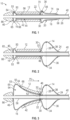
- the inflatable body 14 may be configured to have a rounded profile when in an inflated state. Such a profile is shown for example in FIGS. 2-4 .
- the inflatable body 14 may extend radially outward from the elongate shaft 26 when in an inflated state, and may extend around the axis of the elongate shaft 26.
- the inflatable body 14 may have a bulb shape as shown in FIG. 5 for example when in an inflated state, or may have another shape as desired.
- the inflatable body 14 may have an outer diameter 28 (as shown in FIGS. 2-4 ) when in an inflated state.
- the inflatable body 14 has a shoulder portion 30.
- the shoulder portion 30 may be positioned proximate to a narrow portion 32 of the second inflatable body 16 (as marked in FIGS. 3 and 4 ).
- the shoulder portion 30 may comprise a bump formed by the outer wall 18 of the inflatable body 14.
- the bump may be formed by the outer wall 18 being a folded portion, as shown in FIG. 1 , or the outer wall 18 may include a thicker portion at the shoulder portion 30 to form the bump in embodiments as desired. As shown in FIGS.
- An inflation lumen 40 may be provided for passing fluid into the interior chamber 38 of the inflatable body 14.
- the inflation lumen 40 may extend along the elongate shaft 26 and may have a proximal end that couples to a port 92 (as shown in FIG. 10 ) for passing fluid into and out of the inflation lumen 40, and may have a distal end with an opening for passing fluid into and out of the interior chamber 38 of the inflatable body 14.
- the configuration of the inflation lumen 40 may be varied in other embodiments.
- the inflatable body 16 (or second or distal inflatable body), similar to the inflatable body 14, includes an outer wall 42 forming an outer surface 44 of the inflatable body 16.
- the outer surface 44 of the inflatable body 16 is configured to apply an expansion force to the expandable implant 12.
- the inflatable body 16 may have a first end 46 and a second end 48.
- the first end 46 and second end 48 may each be coupled to the elongate shaft 26 of the delivery apparatus for the expandable implant 12.
- the inflatable body 16 may extend axially along the length of the elongate shaft 26 of the delivery apparatus in both a deflated state as shown in FIGS. 1-2 and in an inflated state as shown in FIGS. 3-4 .
- the inflatable body 16 may extend radially outward from the elongate shaft 26 when in an inflated state, and may extend around the axis of the elongate shaft 26.
- the inflatable body 16 may have a conical frustum shape as shown in FIG. 5 for example when in an inflated state, or may have another shape as desired.
- the inflatable body 16 may include a shoulder portion 50 that may be positioned proximate the first end 46 of the inflatable body 16.
- the shoulder portion 50 may comprise a bump formed by the outer wall 42 of the inflatable body 16.
- the bump may be formed by the outer wall 42 being a folded portion, as shown in FIG. 1 , or the outer wall 42 may include a thicker portion at the shoulder portion 50 to form the bump in embodiments as desired.
- the shoulder portion 50 may form an outwardly extending and curved surface that is positioned offset from the expandable implant 12.
- the shoulder portion 50 may include a surface extending from an apex 53 of the inflatable body 16 in a direction towards the second end 48 of the inflatable body 16.
- the inflatable body 16 may include a downwardly tapering portion 65 on the opposite side of the apex 53, extending downward to the first end 46 of the inflatable body 16.
- the outer surface 44 of the inflatable body has a shape that tapers downward in a direction towards the inflatable body 14 to a narrow portion 32 (as marked in FIGS. 3 and 4 ) when the inflatable body 16 is in an inflated state.
- the narrow portion 32 has have an outer diameter 52 (as shown in FIGS. 3 and 4 ) when in an inflated state.
- the outer diameter 52 of the narrow portion 32 is less than the outer diameter 28 of the inflatable body 14.
- the outer wall 42 of the inflatable body 16 may surround an interior chamber 54 of the inflatable body 16 that may be configured to hold fluid (for example, a liquid or other fluid in embodiments) for inflating the inflatable body 16.
- the interior chamber 54 may comprise a single chamber as shown in FIGS. 1-4 , or a plurality of chambers utilized to hold fluid for inflating the inflatable body 16.
- the interior chamber 54 may be sealed from outside of the inflatable body 16 and from the interior chamber 38 of the inflatable body 14 by the coupling of the ends 46, 48 of the inflatable body 16 to the shaft 26.
- An inflation lumen 56 may be provided for passing fluid into the interior chamber 54 of the inflatable body 16.
- the inflation lumen 56 may extend along the elongate shaft 26 and may have a proximal end that couples to a port 92 (as shown in FIG. 10 ) for passing fluid into and out of the inflation lumen, and may have a distal end with an opening for passing fluid into and out of the interior chamber 54 of the inflatable body 16.
- the inflation lumen 56 may be configured to extend around an interior shaft 58 (e.g., a guide wire lumen) of the elongate shaft 26, with the inflation lumen 40 extending around and concentric with the inflation lumen 56.
- the configuration of the inflation lumen 56 may be varied in other embodiments.
- Each inflatable body 14, 16 may be configured to be inflated by fluid passing into the respective chambers 38, 54 and may be configured to be deflated by fluid passing out of the respective chambers 38, 54.
- the inflatable bodies 14, 16 may be configured to be separately inflated and deflated as desired.
- the inflatable bodies 14, 16 in embodiments may comprise balloons, which may be non-compliant in embodiments.
- the inflatable bodies 14, 16 may be pre-formed to have the shapes in an inflated state as shown in FIGS. 4 and 5 for example, and may then be inflated to that shape.
- the inflatable bodies 14, 16 may be semi-compliant or compliant as desired.
- the inflatable bodies 14, 16 may be pre-formed with the shapes shown in the inflated state as shown in FIGS. 4 and 5 or may otherwise be configured to form the shapes shown in FIGS. 4 and 5 .
- the inflatable bodies 14, 16 may be positioned adjacent to each other.
- the inflatable bodies 14, 16 may be positioned adjacent to each other axially along the length of the elongate shaft 26.
- the inflatable bodies 14, 16 may be positioned with the first inflatable body 14 positioned proximal along the length of the elongate shaft 26 and the second inflatable body 16 positioned distal along the length of the elongate shaft 26 as shown in FIGS. 1-5 for example.
- the inflatable bodies 14, 16 may be positioned with the first inflatable body 14 positioned distal along the length of the elongate shaft 26 and the second inflatable body 16 positioned proximal along the length of the elongate shaft 26 as shown in FIG. 8 for example.
- the inflatable bodies 14, 16 may positioned adjacent to each other and may be in contact with each other, or a gap may be positioned between the inflatable bodies 14, 16, or another device may be positioned between the inflatable bodies 14, 16.
- a portion of one of the inflatable bodies 14, 16 may overlap a portion of another of the inflatable bodies 14, 16.
- the first end 22 of the first inflatable body 14 may comprise an overlap portion that overlaps the second inflatable body 16.
- the first end 22 overlaps and couples to the narrow portion 32 of the second inflatable body 16.
- the shoulder portion 30 of the first inflatable body 14 further comprises an overlap portion that overlaps the second end 48 of the second inflatable body 16.
- the overlap of the first inflatable body 14 over the second inflatable body 16 may allow the first inflatable body 14 to increase in size along with the inflation of the second inflatable body 16. For example, as shown in FIGS.
- the first end 22 of the first inflatable body 14 is coupled to the narrow portion 32 of the second inflatable body 16 such that an inflation of the narrow portion 32 causes the first end 22 of the first inflatable body 14 to increase in size.
- the inflatable bodies may not be coupled to each other.
- the expandable implant 12 may comprise an implant 12 configured to be radially expanded outward via an expansion force applied by the inflatable body 16.
- FIG. 6 illustrates a side view of such an implant 12, including a frame 60 that is configured to allow the expandable implant 12 to expand.
- the frame 60 may be configured as a plurality of struts coupled to each other with spaces between the struts.
- the frame 60 may be configured such that as the implant 12 is expanded radially outward (for example in a direction shown by the arrows 62 extending outward from the implant axis 64) the length 66 of the implant 12 may shorten.
- the frame 60 may be configured such that as the implant 12 is radially compressed, the length 66 of the implant 12 may increase.
- the implant 12 may be configured to shorten in a direction.
- the implant 12 as shown in FIG. 6 may include a first end 68 and a second end 70.
- the second end 70 for example, being maintained in a position and the first end 68 being free to move, an expansion force against the implant 12 will cause the length 66 of the implant 12 to shorten in a direction towards the second end 70 (with the first end 68 moving towards the second end 70).
- an expansion force against the implant 12 will cause the length 66 of the implant 12 to shorten in a direction towards the first end 68 (with the second end 70 moving towards the first end 68).
- the expandable implant 12 may have a variety of forms.
- the expandable implant 12 may be utilized as a prosthetic heart valve, which may be utilized for implantation in the native aortic, mitral, tricuspid, or pulmonary valves.
- Other forms of expandable implants may be utilized, including stents or other implants.
- the expandable implant 12 may be configured to have a tapered profile.
- FIG. 7 illustrates a cross sectional view of the implant 12.
- the implant 12 has an angled interior profile that faces an interior cavity 72 of the implant 12.
- the second end 70 is narrower than the first end 68 and the implant 12 has an inner surface 74 forming an angled interior profile from the first end 68 to the second end 70.
- the implant 12 may be considered a "V" shaped implant or otherwise an implant having a conical frustum interior shape, or may comprise another form of frustum in other embodiments (e.g., pyramidal or another shape).
- the implant may have an outer profile that is the same as the interior profile, or may be different in other embodiments.
- An implant 12 comprising a "V" shaped implant may have a variety of benefits, including having the prosthetic heart valve leaflets open in a direction towards the wide end (e.g., first end 68) of the implant 12.
- the prosthetic heart valve leaflets accordingly may have a reduced possibility of contacting the inner surface 74 of the implant 12 upon the leaflets moving to the open state.
- Other benefits may be provided as desired.
- implants other than "V" shaped implants may be utilized.
- a cylindrical shaped implant or other shape of implant may be utilized, which may be expanded to a tapered profile via use of the system 10 shown in FIG. 1 .
- An issue that may arise upon expanding expandable implants, particularly implants that are expandable with an inflatable body, is producing desired positioning of the expandable implants upon the inflatable body. This issue may produce difficulties in positioning the implant relative to the desired implantation site, and may produce difficulties in producing a desired size of expansion of the expandable implant. This issue may be enhanced with "V" shaped implants, as the "V" shaped implants may slip upon the inflatable body and produce an undesired position of the implant upon the inflatable body. Further, "V" shaped implants may have an expansion size that depends on the position of the implant upon the inflatable body. The system 10 as disclosed herein may reduce the possibility of such issues arising, and may improve the positioning of the expandable implants upon one or more inflatable bodies.
- the inflatable bodies 14, 16 are shown in a deflated state.
- the expandable implant 12 is shown crimped onto the outer surface 44 of the inflatable body 16 and positioned around the outer surface 44.
- the expandable implant 12 may extend longitudinally along the axis of the elongate shaft 26 and over the inflatable body 16.
- the expandable implant 12 may be crimped upon the inflatable body 16 with a cylindrical outer shape, and with the first end 68 (the wide end as shown in FIG. 6 ) of the implant 12 positioned proximate the shoulder portion 50 of the second inflatable body 16 and the second end 70 (the narrow end as shown in FIG. 6 ) of the implant 12 positioned proximate the shoulder portion 30 of the first inflatable body 14.
- the expandable implant 12 may be in a compressed state and thus may have a length that is greater than a length of the expandable implant 12 in an expanded state.
- the first inflatable body 14 may be positioned axially offset from the expandable implant 12.
- the first end 22 of the first inflatable body 14 may however be sandwiched between the second end 70 of the expandable implant 12 and the second inflatable body 16 as shown in FIG. 1 .
- the shoulder portion 50 of the second inflatable body 16 may be axially offset from the expandable implant 12.
- the implant 12 may not cover a portion of the first inflatable body 14 or the second inflatable body 16 in embodiments, with a portion of the first inflatable body 14 or the second inflatable body 16 being axially offset from the implant 12.
- the shoulder portion 30 of the first inflatable body 14 is positioned adjacent to the second end 70 of the expandable implant 12.
- the shoulder portion 30 may comprise a protrusion extending radially outward from the elongate shaft 26 of the delivery apparatus.
- the shoulder portion 30 may accordingly maintain the position of the second end 70 of the expandable implant 12, with the second end 70 of the expandable implant 12 impeded from sliding in a direction towards the inflatable body 14.
- the shoulder portion 30 is configured to contact the second end 70 of the expandable implant 12 to impede movement in the direction towards the inflatable body 14.
- the shoulder portion 30 may have a diameter that is greater than a diameter of the implant 12 as shown in FIG. 1 .
- the shoulder portion 50 of the second inflatable body 16 may be positioned adjacent to the first end 68 of the expandable implant 12.
- the shoulder portion 50 may comprise a protrusion extending radially outward from the elongate shaft 26 of the delivery apparatus.
- the shoulder portion 50 may accordingly impede the first end 68 of the expandable implant 12 from sliding in a direction away from the first inflatable body 14.
- the shoulder portion 50 may contact the first end 68 of the expandable implant 12 to impede movement in the direction away from the first inflatable body 14.
- the shoulder portion 50 may have a diameter that is greater than a diameter of the implant 12 as shown in FIG. 1 .
- the expandable implant 12 may be delivered to a desired location within a patient's body such as an implantation site while being positioned upon the second inflatable body 16, and with the system 10 in the configuration shown in FIG. 1 .
- the elongate shaft 26 may be moved to the desired implantation site as shown, for example in FIGS. 11-13 , or via another method as desired.
- the first inflatable body 14 may be inflated as shown in FIG. 2 .
- fluid may be passed through the inflation lumen 40 and into the interior chamber 38 of the first inflatable body 14.
- the first inflatable body 14 may be in an inflated state, and may have an increased outer diameter 28 of the inflatable body 14.
- the size of the shoulder portion 30 may further increase.
- the shoulder portion 30 may continue to maintain the position of the second end 70 of the expandable implant 12, by continuing to impede movement of the second end 70 of the expandable implant 12 in a direction towards the first inflatable body 14.
- the second end 70 of the expandable implant 12 may remain in contact with the surface of the shoulder portion 30.
- the second inflatable body 16 may be at least partially inflated.
- FIG. 3 illustrates the second inflatable body 16 in an inflated state, being partially inflated. Fluid may be passed through the inflation lumen 56 and into the interior chamber 54 of the second inflatable body 16 to inflate the second inflatable body 16.
- the shoulder portion 50 of the second inflatable body 16 may be configured to first inflate, with inflation continuing in a direction towards the first inflatable body 14. The increased diameter of the shoulder portion 50 may impede movement of the first end 68 of the expandable implant 12 in a direction away from the first inflatable body 14. Further, the tapered shape of the outer surface 44 of the second inflatable body 16 may cause the outer surface 44 to apply an expansion force against the expandable implant 12 causing the first end 68 of the expandable implant 12 to move towards the first inflatable body 14.
- the shoulder portion 30 may continue to maintain the position of the second end 70 of the expandable implant 12, by continuing to impede movement of the second end 70 of the expandable implant 12 in a direction (as indicated with arrow 75 in FIG. 3 ) towards the first inflatable body 14.
- the outer surface 44 of the first inflatable body 14 may continue to apply a force to the expandable implant 12, with the shoulder portion 30 providing a resistive counter force that maintains the position of the second end 70 of the expandable implant 12.
- the first inflatable body 14 accordingly may comprise a stopper to impede movement of the second end 70 of the expandable implant 12.
- the inflatable bodies 14, 16 may be deflated in a reverse sequence than shown in FIGS. 2-4 .
- the inflatable bodies 14, 16 and the elongate shaft 26 may be removed from the implantation site, with the deployed implant 12 remaining in position.
- FIG. 8 illustrates a side cross sectional view of an embodiment of the system in which the positions of the first inflatable body 14 and the second inflatable body 16 are reversed from the positions shown in FIG. 1 upon the elongate shaft 26 of the delivery apparatus.
- the second inflatable body 16 may be positioned proximal and the first inflatable body 14 may be positioned distal.
- Such a reversed configuration may allow for a different delivery orientation of the expandable implant 12 to the desired implantation site.
- the wide end 68 of the expandable implant 12 may be positioned proximal and the narrow end 70 may be positioned distal.
- Such a reversed configuration may also allow for a different direction of delivery approach to the implantation site.
- one configuration may allow for a transvascular approach (e.g., over the aortic arch) and another reversed configuration may allow for a transapical approach.
- Various other approaches may be utilized for an implantation site as desired.
- FIG. 9 illustrates an embodiment in which an inflatable body 76 is not coupled to an adjacent inflatable body 78.
- the inflatable body 76 may otherwise be configured similarly as the first inflatable body 14 shown in FIG. 1
- the inflatable body 78 may otherwise be configured similarly as the second inflatable body 16 shown in FIG. 1 .
- the inflation lumen may include a valve or other device that may allow for selective inflation of the inflatable bodies.
- One or more inflation lumens may extend along the elongate shaft 26 and may be configured to inflate one or more of the first inflatable body or second inflatable body.
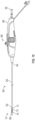
- the interior shaft 58 may comprise a guide wire lumen for a guide wire to extend through as the delivery apparatus 80 approaches an implantation site.
- the nose cone 86 may be positioned distal of the inflatable bodies 14, 16.
- the second inflatable body 16 may be positioned adjacent to the nose cone 86 (or the first inflatable body 14 may be positioned adjacent to the nose cone 86 in an embodiment as shown in FIG. 8 ).
- the proximal portion 84 of the elongate shaft 26 may be coupled to a housing in the form of a handle 88.
- the handle 88 may be configured to be gripped by a user to control movement of the elongate shaft 26.
- the delivery apparatus 80 may include an actuation mechanism 90 for actuating operation of the delivery apparatus 80, which may include deflecting the elongate shaft 26 into a desired orientation.
- the elongate shaft 26 may be configured to be flexible to deflect to the desired portion of the patient's body, and may be steerable with operation of the actuation mechanism 90.
- a proximal end of the delivery apparatus 80 may include a port 92 for passing fluid into and out of one or more of the inflation lumens 40, 56.
- the configuration of the delivery apparatus may vary from the configuration shown in FIG. 10 .
- Other types of delivery apparatuses may be utilized than shown in FIG. 10 .
- FIGS. 11-14 illustrate an exemplary method of utilizing systems disclosed herein. Methods disclosed herein may vary from the steps shown in FIGS. 11-14 .
- the systems may be utilized in the deployment of an expandable implant 12 that is a prosthetic heart valve.
- the prosthetic heart valve may comprise a prosthetic aortic heart valve, or in other embodiments may comprise another form of prosthetic heart valve such as a mitral, tricuspid, or pulmonary heart valve.
- the implant in other embodiments may be utilized for repair, which may comprise repair of a portion of a heart, including heart valve repair.
- the implant may comprise a "V" shaped implant as shown in FIGS. 6 and 7 .
- the implant in other embodiments may comprise other forms of medical implants including stents, among others.
- FIG. 11 illustrates a step in a method of replacing an aortic heart valve.
- a delivery apparatus 80 for example as shown in FIG. 10 may be utilized to approach the native aortic heart valve 94.
- the elongate shaft 26 may be deflected to allow the "V" shaped implant 12 to approach the native aortic heart valve 94 through the aortic arch.
- the inflatable bodies 14, 16 may be in an orientation relative to each other as shown in FIG. 8 , with the first inflatable body 14 being positioned distal and the second inflatable body 16 being positioned proximal. Such an orientation may allow for an expansion of the implant 12 with the wide end of the "V" shaped implant positioned proximal and the narrow end of the implant positioned distal.
- the inflatable bodies 14, 16 may be in a deflated state, for example as shown in FIG. 1 .
- the system may be advanced to position the expandable implant 12 in the desired implantation location.
- the first inflatable body 14 may first be inflated to a diameter as described in regard to FIG. 2 .
- the first inflatable body 14 may include the shoulder portion 30 that may impede movement of the narrow end 70 of the implant 12 in the distal direction. As such, the narrow end 70 of the implant 12 may be aligned and positioned with a desired implantation location for the implant 12.
- the second inflatable body 16 may then be subsequently inflated in a process as described in FIGS. 3 and 4 .
- the implant 12 may be expanded and deployed to the implantation site, which is the native aortic valve 94 as shown in FIG. 13 .
- the implant 12 may be positioned between the leaflets of the native aortic valve 94.
- the wide end 68 of the implant 12 may be positioned proximal and the narrow end 70 of the implant may be positioned distal.
- the inflatable bodies 14, 16 may then be deflated and removed from the patient's body.
- the expandable implant 12 may remain deployed within the patient's body at the implantation site as shown in FIG. 14 .
- the steps of the method disclosed herein may be varied as desired. The steps may be utilized with other embodiments of systems disclosed herein.
- the delivery apparatus shown in FIG. 10 is disclosed as being utilized, however, other forms of delivery apparatuses may be utilized.
- the delivery apparatuses may be configured to deploy implants in the form of prosthetic heart valves, or may be configured to deploy the other forms of implants such as stents or filters, or diagnostic devices, among others.
- implants such as stents or filters, among others, may be configured similarly as the implants disclosed herein.
- the implants utilized according to embodiments herein may have an angled interior profile as discussed herein, or may have other profiles as desired.
- the implants may be cylindrical and may have a uniform interior profile in embodiments, for example.
- the implants may be configured to expand radially outward from an axis that the implant surrounds, for example a longitudinal axis of the implant.
- the delivery apparatus and apparatuses and the systems disclosed herein may be used in a variety of procedures, which may include transcatheter aortic valve implantation (TAVI).
- TAVI transcatheter aortic valve implantation
- the delivery apparatus and the systems disclosed herein may be utilized for transarterial access, including transfemoral access, to a patient's heart.
- the delivery apparatus may be utilized for mitral, tricuspid, and pulmonary replacement and repair as well.
- the delivery systems may be utilized in transcatheter percutaneous procedures, including transarterial procedures, which may be transfemoral or transjugular. Transapical procedures, among others, may also be utilized.
- Methods as disclosed herein may be utilized in locations that do not utilize native valves, including a pulmonary artery and in the vena cava, among other locations (other arteries, blood vessels, or other vasculature of a patient's body, among other portions of a patient's body).
- An implant such as a stent or other form of implant may be delivered to such portions of the patient's body.
- the user as disclosed herein may comprise a surgeon, physician, or other medical professional, among other users.
- the methods herein are not limited to the methods specifically described, and may include methods of utilizing the systems and apparatuses disclosed herein.
Landscapes
- Health & Medical Sciences (AREA)
- Engineering & Computer Science (AREA)
- Cardiology (AREA)
- Biomedical Technology (AREA)
- Life Sciences & Earth Sciences (AREA)
- Transplantation (AREA)
- Heart & Thoracic Surgery (AREA)
- Vascular Medicine (AREA)
- Oral & Maxillofacial Surgery (AREA)
- Animal Behavior & Ethology (AREA)
- General Health & Medical Sciences (AREA)
- Public Health (AREA)
- Veterinary Medicine (AREA)
- Mechanical Engineering (AREA)
- Prostheses (AREA)
- Media Introduction/Drainage Providing Device (AREA)
Priority Applications (1)
| Application Number | Priority Date | Filing Date | Title |
|---|---|---|---|
| EP24215434.2A EP4537887A3 (en) | 2020-06-11 | 2021-06-10 | System for expanding implants |
Applications Claiming Priority (2)
| Application Number | Priority Date | Filing Date | Title |
|---|---|---|---|
| US202063038035P | 2020-06-11 | 2020-06-11 | |
| PCT/US2021/036743 WO2021252720A1 (en) | 2020-06-11 | 2021-06-10 | Inflatable bodies, systems, and methods for expanding implants |
Related Child Applications (1)
| Application Number | Title | Priority Date | Filing Date |
|---|---|---|---|
| EP24215434.2A Division EP4537887A3 (en) | 2020-06-11 | 2021-06-10 | System for expanding implants |
Publications (2)
| Publication Number | Publication Date |
|---|---|
| EP4138731A1 EP4138731A1 (en) | 2023-03-01 |
| EP4138731B1 true EP4138731B1 (en) | 2024-11-27 |
Family
ID=76731107
Family Applications (2)
| Application Number | Title | Priority Date | Filing Date |
|---|---|---|---|
| EP21736904.0A Active EP4138731B1 (en) | 2020-06-11 | 2021-06-10 | System for expanding implants |
| EP24215434.2A Pending EP4537887A3 (en) | 2020-06-11 | 2021-06-10 | System for expanding implants |
Family Applications After (1)
| Application Number | Title | Priority Date | Filing Date |
|---|---|---|---|
| EP24215434.2A Pending EP4537887A3 (en) | 2020-06-11 | 2021-06-10 | System for expanding implants |
Country Status (6)
| Country | Link |
|---|---|
| US (1) | US20230104835A1 (https=) |
| EP (2) | EP4138731B1 (https=) |
| JP (1) | JP2023530646A (https=) |
| CN (1) | CN115701957A (https=) |
| CA (1) | CA3185009A1 (https=) |
| WO (1) | WO2021252720A1 (https=) |
Families Citing this family (3)
| Publication number | Priority date | Publication date | Assignee | Title |
|---|---|---|---|---|
| WO2023224786A1 (en) * | 2022-05-18 | 2023-11-23 | St. Jude Medical, Cardiology Division, Inc. | Paravalvular leak protection for balloon expandable valves |
| WO2024158617A1 (en) * | 2023-01-27 | 2024-08-02 | Medtronic, Inc. | Prosthetic heart valve dilatation apparatus |
| WO2025085327A1 (en) * | 2023-10-20 | 2025-04-24 | St. Jude Medical, Cardiology Division, Inc. | Multi-balloon inflation with individual pressure sensors |
Citations (5)
| Publication number | Priority date | Publication date | Assignee | Title |
|---|---|---|---|---|
| US5295958A (en) * | 1991-04-04 | 1994-03-22 | Shturman Cardiology Systems, Inc. | Method and apparatus for in vivo heart valve decalcification |
| US20040039436A1 (en) * | 2001-10-11 | 2004-02-26 | Benjamin Spenser | Implantable prosthetic valve |
| US20050090846A1 (en) * | 2003-07-18 | 2005-04-28 | Wesley Pedersen | Valvuloplasty devices and methods |
| US20100004740A1 (en) * | 1999-11-17 | 2010-01-07 | Jacques Seguin | Prosthetic Valve for Transluminal Delivery |
| US7766951B2 (en) * | 2004-03-04 | 2010-08-03 | Y Med, Inc. | Vessel treatment devices |
Family Cites Families (3)
| Publication number | Priority date | Publication date | Assignee | Title |
|---|---|---|---|---|
| IL153753A0 (en) * | 2002-12-30 | 2003-07-06 | Neovasc Medical Ltd | Varying-diameter vascular implant and balloon |
| US7862601B2 (en) * | 2005-05-23 | 2011-01-04 | Incept Llc | Apparatus and methods for delivering a stent into an ostium |
| JP2011200589A (ja) * | 2010-03-26 | 2011-10-13 | Terumo Corp | バルーンカテーテル |
-
2021
- 2021-06-10 JP JP2022576174A patent/JP2023530646A/ja active Pending
- 2021-06-10 CA CA3185009A patent/CA3185009A1/en active Pending
- 2021-06-10 WO PCT/US2021/036743 patent/WO2021252720A1/en not_active Ceased
- 2021-06-10 EP EP21736904.0A patent/EP4138731B1/en active Active
- 2021-06-10 CN CN202180041512.0A patent/CN115701957A/zh active Pending
- 2021-06-10 EP EP24215434.2A patent/EP4537887A3/en active Pending
-
2022
- 2022-12-09 US US18/063,863 patent/US20230104835A1/en active Pending
Patent Citations (5)
| Publication number | Priority date | Publication date | Assignee | Title |
|---|---|---|---|---|
| US5295958A (en) * | 1991-04-04 | 1994-03-22 | Shturman Cardiology Systems, Inc. | Method and apparatus for in vivo heart valve decalcification |
| US20100004740A1 (en) * | 1999-11-17 | 2010-01-07 | Jacques Seguin | Prosthetic Valve for Transluminal Delivery |
| US20040039436A1 (en) * | 2001-10-11 | 2004-02-26 | Benjamin Spenser | Implantable prosthetic valve |
| US20050090846A1 (en) * | 2003-07-18 | 2005-04-28 | Wesley Pedersen | Valvuloplasty devices and methods |
| US7766951B2 (en) * | 2004-03-04 | 2010-08-03 | Y Med, Inc. | Vessel treatment devices |
Also Published As
| Publication number | Publication date |
|---|---|
| CN115701957A (zh) | 2023-02-14 |
| EP4537887A3 (en) | 2025-07-16 |
| EP4537887A2 (en) | 2025-04-16 |
| US20230104835A1 (en) | 2023-04-06 |
| WO2021252720A1 (en) | 2021-12-16 |
| EP4138731A1 (en) | 2023-03-01 |
| CA3185009A1 (en) | 2021-12-16 |
| JP2023530646A (ja) | 2023-07-19 |
Similar Documents
| Publication | Publication Date | Title |
|---|---|---|
| US11833043B2 (en) | Heart valve prostheses including torque anchoring mechanisms and delivery devices for the heart valve prostheses | |
| US20230104835A1 (en) | Inflatable bodies, systems, and methods for expanding implants | |
| RU2741563C2 (ru) | Катетерное устройство для неокклюзионного расширения и раскрытия | |
| EP2344090B1 (en) | A stent deployment device | |
| EP2370138B1 (en) | Apparatus for in situ expansion of prosthetic device | |
| US10251766B2 (en) | Balloon catheters and systems and methods for delivering stents using such catheters | |
| US9480823B2 (en) | Perfusion dilation catheter system and methods of use | |
| JP6868020B2 (ja) | 選択的に作動可能なバルブを有する灌流バルーン | |
| CN101489504A (zh) | 用于布置可膨胀球囊心脏瓣膜的系统 | |
| US20220362016A1 (en) | Dilation devices, systems, and methods for implants | |
| US20130338698A1 (en) | Transcatheter aortic valvuloplasty device | |
| EP4237064B1 (en) | Protected pressure-safe balloons | |
| US20230263629A1 (en) | Protected pressure-safe balloons | |
| US20240315843A1 (en) | Prosthetic heart valve delivery assembly | |
| WO2024158617A1 (en) | Prosthetic heart valve dilatation apparatus | |
| WO2025158365A1 (en) | Prosthetic heart valve inflation apparatus | |
| WO2025165822A1 (en) | Delivery cathethers with reduced retrieval forces |
Legal Events
| Date | Code | Title | Description |
|---|---|---|---|
| STAA | Information on the status of an ep patent application or granted ep patent |
Free format text: STATUS: UNKNOWN |
|
| STAA | Information on the status of an ep patent application or granted ep patent |
Free format text: STATUS: THE INTERNATIONAL PUBLICATION HAS BEEN MADE |
|
| PUAI | Public reference made under article 153(3) epc to a published international application that has entered the european phase |
Free format text: ORIGINAL CODE: 0009012 |
|
| STAA | Information on the status of an ep patent application or granted ep patent |
Free format text: STATUS: REQUEST FOR EXAMINATION WAS MADE |
|
| 17P | Request for examination filed |
Effective date: 20221124 |
|
| AK | Designated contracting states |
Kind code of ref document: A1 Designated state(s): AL AT BE BG CH CY CZ DE DK EE ES FI FR GB GR HR HU IE IS IT LI LT LU LV MC MK MT NL NO PL PT RO RS SE SI SK SM TR |
|
| P01 | Opt-out of the competence of the unified patent court (upc) registered |
Effective date: 20230529 |
|
| DAV | Request for validation of the european patent (deleted) | ||
| DAX | Request for extension of the european patent (deleted) | ||
| RIC1 | Information provided on ipc code assigned before grant |
Ipc: A61M 25/10 20130101ALI20231208BHEP Ipc: A61F 2/24 20060101AFI20231208BHEP |
|
| GRAP | Despatch of communication of intention to grant a patent |
Free format text: ORIGINAL CODE: EPIDOSNIGR1 |
|
| STAA | Information on the status of an ep patent application or granted ep patent |
Free format text: STATUS: GRANT OF PATENT IS INTENDED |
|
| INTG | Intention to grant announced |
Effective date: 20240201 |
|
| RAP3 | Party data changed (applicant data changed or rights of an application transferred) |
Owner name: EDWARDS LIFESCIENCES CORPORATION |
|
| RIN1 | Information on inventor provided before grant (corrected) |
Inventor name: LEVI, TAMIR S. |
|
| GRAJ | Information related to disapproval of communication of intention to grant by the applicant or resumption of examination proceedings by the epo deleted |
Free format text: ORIGINAL CODE: EPIDOSDIGR1 |
|
| STAA | Information on the status of an ep patent application or granted ep patent |
Free format text: STATUS: REQUEST FOR EXAMINATION WAS MADE |
|
| GRAP | Despatch of communication of intention to grant a patent |
Free format text: ORIGINAL CODE: EPIDOSNIGR1 |
|
| STAA | Information on the status of an ep patent application or granted ep patent |
Free format text: STATUS: GRANT OF PATENT IS INTENDED |
|
| INTC | Intention to grant announced (deleted) | ||
| INTG | Intention to grant announced |
Effective date: 20240617 |
|
| GRAS | Grant fee paid |
Free format text: ORIGINAL CODE: EPIDOSNIGR3 |
|
| GRAA | (expected) grant |
Free format text: ORIGINAL CODE: 0009210 |
|
| STAA | Information on the status of an ep patent application or granted ep patent |
Free format text: STATUS: THE PATENT HAS BEEN GRANTED |
|
| AK | Designated contracting states |
Kind code of ref document: B1 Designated state(s): AL AT BE BG CH CY CZ DE DK EE ES FI FR GB GR HR HU IE IS IT LI LT LU LV MC MK MT NL NO PL PT RO RS SE SI SK SM TR |
|
| REG | Reference to a national code |
Ref country code: GB Ref legal event code: FG4D |
|
| REG | Reference to a national code |
Ref country code: CH Ref legal event code: EP |
|
| REG | Reference to a national code |
Ref country code: IE Ref legal event code: FG4D |
|
| REG | Reference to a national code |
Ref country code: DE Ref legal event code: R096 Ref document number: 602021022466 Country of ref document: DE |
|
| REG | Reference to a national code |
Ref country code: LT Ref legal event code: MG9D |
|
| REG | Reference to a national code |
Ref country code: NL Ref legal event code: MP Effective date: 20241127 |
|
| PG25 | Lapsed in a contracting state [announced via postgrant information from national office to epo] |
Ref country code: IS Free format text: LAPSE BECAUSE OF FAILURE TO SUBMIT A TRANSLATION OF THE DESCRIPTION OR TO PAY THE FEE WITHIN THE PRESCRIBED TIME-LIMIT Effective date: 20250327 Ref country code: HR Free format text: LAPSE BECAUSE OF FAILURE TO SUBMIT A TRANSLATION OF THE DESCRIPTION OR TO PAY THE FEE WITHIN THE PRESCRIBED TIME-LIMIT Effective date: 20241127 Ref country code: PT Free format text: LAPSE BECAUSE OF FAILURE TO SUBMIT A TRANSLATION OF THE DESCRIPTION OR TO PAY THE FEE WITHIN THE PRESCRIBED TIME-LIMIT Effective date: 20250327 |
|
| PG25 | Lapsed in a contracting state [announced via postgrant information from national office to epo] |
Ref country code: FI Free format text: LAPSE BECAUSE OF FAILURE TO SUBMIT A TRANSLATION OF THE DESCRIPTION OR TO PAY THE FEE WITHIN THE PRESCRIBED TIME-LIMIT Effective date: 20241127 Ref country code: NL Free format text: LAPSE BECAUSE OF FAILURE TO SUBMIT A TRANSLATION OF THE DESCRIPTION OR TO PAY THE FEE WITHIN THE PRESCRIBED TIME-LIMIT Effective date: 20241127 |
|
| REG | Reference to a national code |
Ref country code: AT Ref legal event code: MK05 Ref document number: 1745005 Country of ref document: AT Kind code of ref document: T Effective date: 20241127 |
|
| PG25 | Lapsed in a contracting state [announced via postgrant information from national office to epo] |
Ref country code: BG Free format text: LAPSE BECAUSE OF FAILURE TO SUBMIT A TRANSLATION OF THE DESCRIPTION OR TO PAY THE FEE WITHIN THE PRESCRIBED TIME-LIMIT Effective date: 20241127 |
|
| PG25 | Lapsed in a contracting state [announced via postgrant information from national office to epo] |
Ref country code: ES Free format text: LAPSE BECAUSE OF FAILURE TO SUBMIT A TRANSLATION OF THE DESCRIPTION OR TO PAY THE FEE WITHIN THE PRESCRIBED TIME-LIMIT Effective date: 20241127 |
|
| PG25 | Lapsed in a contracting state [announced via postgrant information from national office to epo] |
Ref country code: NO Free format text: LAPSE BECAUSE OF FAILURE TO SUBMIT A TRANSLATION OF THE DESCRIPTION OR TO PAY THE FEE WITHIN THE PRESCRIBED TIME-LIMIT Effective date: 20250227 |
|
| PG25 | Lapsed in a contracting state [announced via postgrant information from national office to epo] |
Ref country code: LV Free format text: LAPSE BECAUSE OF FAILURE TO SUBMIT A TRANSLATION OF THE DESCRIPTION OR TO PAY THE FEE WITHIN THE PRESCRIBED TIME-LIMIT Effective date: 20241127 Ref country code: GR Free format text: LAPSE BECAUSE OF FAILURE TO SUBMIT A TRANSLATION OF THE DESCRIPTION OR TO PAY THE FEE WITHIN THE PRESCRIBED TIME-LIMIT Effective date: 20250228 Ref country code: AT Free format text: LAPSE BECAUSE OF FAILURE TO SUBMIT A TRANSLATION OF THE DESCRIPTION OR TO PAY THE FEE WITHIN THE PRESCRIBED TIME-LIMIT Effective date: 20241127 |
|
| PG25 | Lapsed in a contracting state [announced via postgrant information from national office to epo] |
Ref country code: PL Free format text: LAPSE BECAUSE OF FAILURE TO SUBMIT A TRANSLATION OF THE DESCRIPTION OR TO PAY THE FEE WITHIN THE PRESCRIBED TIME-LIMIT Effective date: 20241127 |
|
| PG25 | Lapsed in a contracting state [announced via postgrant information from national office to epo] |
Ref country code: RS Free format text: LAPSE BECAUSE OF FAILURE TO SUBMIT A TRANSLATION OF THE DESCRIPTION OR TO PAY THE FEE WITHIN THE PRESCRIBED TIME-LIMIT Effective date: 20250227 |
|
| PG25 | Lapsed in a contracting state [announced via postgrant information from national office to epo] |
Ref country code: SM Free format text: LAPSE BECAUSE OF FAILURE TO SUBMIT A TRANSLATION OF THE DESCRIPTION OR TO PAY THE FEE WITHIN THE PRESCRIBED TIME-LIMIT Effective date: 20241127 |
|
| PGFP | Annual fee paid to national office [announced via postgrant information from national office to epo] |
Ref country code: DE Payment date: 20250402 Year of fee payment: 5 |
|
| PG25 | Lapsed in a contracting state [announced via postgrant information from national office to epo] |
Ref country code: DK Free format text: LAPSE BECAUSE OF FAILURE TO SUBMIT A TRANSLATION OF THE DESCRIPTION OR TO PAY THE FEE WITHIN THE PRESCRIBED TIME-LIMIT Effective date: 20241127 |
|
| PGFP | Annual fee paid to national office [announced via postgrant information from national office to epo] |
Ref country code: GB Payment date: 20250401 Year of fee payment: 5 |
|
| PG25 | Lapsed in a contracting state [announced via postgrant information from national office to epo] |
Ref country code: EE Free format text: LAPSE BECAUSE OF FAILURE TO SUBMIT A TRANSLATION OF THE DESCRIPTION OR TO PAY THE FEE WITHIN THE PRESCRIBED TIME-LIMIT Effective date: 20241127 |
|
| PG25 | Lapsed in a contracting state [announced via postgrant information from national office to epo] |
Ref country code: RO Free format text: LAPSE BECAUSE OF FAILURE TO SUBMIT A TRANSLATION OF THE DESCRIPTION OR TO PAY THE FEE WITHIN THE PRESCRIBED TIME-LIMIT Effective date: 20241127 |
|
| PG25 | Lapsed in a contracting state [announced via postgrant information from national office to epo] |
Ref country code: SK Free format text: LAPSE BECAUSE OF FAILURE TO SUBMIT A TRANSLATION OF THE DESCRIPTION OR TO PAY THE FEE WITHIN THE PRESCRIBED TIME-LIMIT Effective date: 20241127 |
|
| PG25 | Lapsed in a contracting state [announced via postgrant information from national office to epo] |
Ref country code: CZ Free format text: LAPSE BECAUSE OF FAILURE TO SUBMIT A TRANSLATION OF THE DESCRIPTION OR TO PAY THE FEE WITHIN THE PRESCRIBED TIME-LIMIT Effective date: 20241127 |
|
| PG25 | Lapsed in a contracting state [announced via postgrant information from national office to epo] |
Ref country code: IT Free format text: LAPSE BECAUSE OF FAILURE TO SUBMIT A TRANSLATION OF THE DESCRIPTION OR TO PAY THE FEE WITHIN THE PRESCRIBED TIME-LIMIT Effective date: 20241127 |
|
| REG | Reference to a national code |
Ref country code: DE Ref legal event code: R097 Ref document number: 602021022466 Country of ref document: DE |
|
| PG25 | Lapsed in a contracting state [announced via postgrant information from national office to epo] |
Ref country code: SE Free format text: LAPSE BECAUSE OF FAILURE TO SUBMIT A TRANSLATION OF THE DESCRIPTION OR TO PAY THE FEE WITHIN THE PRESCRIBED TIME-LIMIT Effective date: 20241127 |
|
| PLBE | No opposition filed within time limit |
Free format text: ORIGINAL CODE: 0009261 |
|
| STAA | Information on the status of an ep patent application or granted ep patent |
Free format text: STATUS: NO OPPOSITION FILED WITHIN TIME LIMIT |
|
| REG | Reference to a national code |
Ref country code: CH Ref legal event code: L10 Free format text: ST27 STATUS EVENT CODE: U-0-0-L10-L00 (AS PROVIDED BY THE NATIONAL OFFICE) Effective date: 20251008 |
|
| 26N | No opposition filed |
Effective date: 20250828 |
|
| REG | Reference to a national code |
Ref country code: CH Ref legal event code: H13 Free format text: ST27 STATUS EVENT CODE: U-0-0-H10-H13 (AS PROVIDED BY THE NATIONAL OFFICE) Effective date: 20260127 |
|
| PG25 | Lapsed in a contracting state [announced via postgrant information from national office to epo] |
Ref country code: MC Free format text: LAPSE BECAUSE OF FAILURE TO SUBMIT A TRANSLATION OF THE DESCRIPTION OR TO PAY THE FEE WITHIN THE PRESCRIBED TIME-LIMIT Effective date: 20241127 |
|
| PG25 | Lapsed in a contracting state [announced via postgrant information from national office to epo] |
Ref country code: LU Free format text: LAPSE BECAUSE OF NON-PAYMENT OF DUE FEES Effective date: 20250610 |
|
| REG | Reference to a national code |
Ref country code: BE Ref legal event code: MM Effective date: 20250630 |
|
| PG25 | Lapsed in a contracting state [announced via postgrant information from national office to epo] |
Ref country code: IE Free format text: LAPSE BECAUSE OF NON-PAYMENT OF DUE FEES Effective date: 20250610 |
|
| PG25 | Lapsed in a contracting state [announced via postgrant information from national office to epo] |
Ref country code: BE Free format text: LAPSE BECAUSE OF NON-PAYMENT OF DUE FEES Effective date: 20250630 |
|
| PG25 | Lapsed in a contracting state [announced via postgrant information from national office to epo] |
Ref country code: FR Free format text: LAPSE BECAUSE OF NON-PAYMENT OF DUE FEES Effective date: 20250630 |
|
| PG25 | Lapsed in a contracting state [announced via postgrant information from national office to epo] |
Ref country code: CH Free format text: LAPSE BECAUSE OF NON-PAYMENT OF DUE FEES Effective date: 20250630 |