EP4138261B1 - Ladeverfahren, ladegerät und ladesystem - Google Patents
Ladeverfahren, ladegerät und ladesystem Download PDFInfo
- Publication number
- EP4138261B1 EP4138261B1 EP22190771.0A EP22190771A EP4138261B1 EP 4138261 B1 EP4138261 B1 EP 4138261B1 EP 22190771 A EP22190771 A EP 22190771A EP 4138261 B1 EP4138261 B1 EP 4138261B1
- Authority
- EP
- European Patent Office
- Prior art keywords
- charging
- link
- charging apparatus
- module
- control module
- Prior art date
- Legal status (The legal status is an assumption and is not a legal conclusion. Google has not performed a legal analysis and makes no representation as to the accuracy of the status listed.)
- Active
Links
Images





Classifications
-
- H—ELECTRICITY
- H02—GENERATION; CONVERSION OR DISTRIBUTION OF ELECTRIC POWER
- H02J—ELECTRIC POWER NETWORKS; CIRCUIT ARRANGEMENTS OR SYSTEMS FOR SUPPLYING OR DISTRIBUTING ELECTRIC POWER; SYSTEMS FOR STORING ELECTRIC ENERGY
- H02J7/00—Circuit arrangements for charging or discharging batteries or for supplying loads from batteries
- H02J7/50—Circuit arrangements for charging or discharging batteries or for supplying loads from batteries acting upon multiple batteries simultaneously or sequentially
-
- B—PERFORMING OPERATIONS; TRANSPORTING
- B60—VEHICLES IN GENERAL
- B60L—PROPULSION OF ELECTRICALLY-PROPELLED VEHICLES; SUPPLYING ELECTRIC POWER FOR AUXILIARY EQUIPMENT OF ELECTRICALLY-PROPELLED VEHICLES; ELECTRODYNAMIC BRAKE SYSTEMS FOR VEHICLES IN GENERAL; MAGNETIC SUSPENSION OR LEVITATION FOR VEHICLES; MONITORING OPERATING VARIABLES OF ELECTRICALLY-PROPELLED VEHICLES; ELECTRIC SAFETY DEVICES FOR ELECTRICALLY-PROPELLED VEHICLES
- B60L53/00—Methods of charging batteries, specially adapted for electric vehicles; Charging stations or on-board charging equipment therefor; Exchange of energy storage elements in electric vehicles
- B60L53/10—Methods of charging batteries, specially adapted for electric vehicles; Charging stations or on-board charging equipment therefor; Exchange of energy storage elements in electric vehicles characterised by the energy transfer between the charging station and the vehicle
- B60L53/14—Conductive energy transfer
-
- B—PERFORMING OPERATIONS; TRANSPORTING
- B60—VEHICLES IN GENERAL
- B60L—PROPULSION OF ELECTRICALLY-PROPELLED VEHICLES; SUPPLYING ELECTRIC POWER FOR AUXILIARY EQUIPMENT OF ELECTRICALLY-PROPELLED VEHICLES; ELECTRODYNAMIC BRAKE SYSTEMS FOR VEHICLES IN GENERAL; MAGNETIC SUSPENSION OR LEVITATION FOR VEHICLES; MONITORING OPERATING VARIABLES OF ELECTRICALLY-PROPELLED VEHICLES; ELECTRIC SAFETY DEVICES FOR ELECTRICALLY-PROPELLED VEHICLES
- B60L53/00—Methods of charging batteries, specially adapted for electric vehicles; Charging stations or on-board charging equipment therefor; Exchange of energy storage elements in electric vehicles
- B60L53/30—Constructional details of charging stations
- B60L53/31—Charging columns specially adapted for electric vehicles
-
- B—PERFORMING OPERATIONS; TRANSPORTING
- B60—VEHICLES IN GENERAL
- B60L—PROPULSION OF ELECTRICALLY-PROPELLED VEHICLES; SUPPLYING ELECTRIC POWER FOR AUXILIARY EQUIPMENT OF ELECTRICALLY-PROPELLED VEHICLES; ELECTRODYNAMIC BRAKE SYSTEMS FOR VEHICLES IN GENERAL; MAGNETIC SUSPENSION OR LEVITATION FOR VEHICLES; MONITORING OPERATING VARIABLES OF ELECTRICALLY-PROPELLED VEHICLES; ELECTRIC SAFETY DEVICES FOR ELECTRICALLY-PROPELLED VEHICLES
- B60L53/00—Methods of charging batteries, specially adapted for electric vehicles; Charging stations or on-board charging equipment therefor; Exchange of energy storage elements in electric vehicles
- B60L53/50—Charging stations characterised by energy-storage or power-generation means
- B60L53/51—Photovoltaic means
-
- B—PERFORMING OPERATIONS; TRANSPORTING
- B60—VEHICLES IN GENERAL
- B60L—PROPULSION OF ELECTRICALLY-PROPELLED VEHICLES; SUPPLYING ELECTRIC POWER FOR AUXILIARY EQUIPMENT OF ELECTRICALLY-PROPELLED VEHICLES; ELECTRODYNAMIC BRAKE SYSTEMS FOR VEHICLES IN GENERAL; MAGNETIC SUSPENSION OR LEVITATION FOR VEHICLES; MONITORING OPERATING VARIABLES OF ELECTRICALLY-PROPELLED VEHICLES; ELECTRIC SAFETY DEVICES FOR ELECTRICALLY-PROPELLED VEHICLES
- B60L53/00—Methods of charging batteries, specially adapted for electric vehicles; Charging stations or on-board charging equipment therefor; Exchange of energy storage elements in electric vehicles
- B60L53/60—Monitoring or controlling charging stations
-
- B—PERFORMING OPERATIONS; TRANSPORTING
- B60—VEHICLES IN GENERAL
- B60L—PROPULSION OF ELECTRICALLY-PROPELLED VEHICLES; SUPPLYING ELECTRIC POWER FOR AUXILIARY EQUIPMENT OF ELECTRICALLY-PROPELLED VEHICLES; ELECTRODYNAMIC BRAKE SYSTEMS FOR VEHICLES IN GENERAL; MAGNETIC SUSPENSION OR LEVITATION FOR VEHICLES; MONITORING OPERATING VARIABLES OF ELECTRICALLY-PROPELLED VEHICLES; ELECTRIC SAFETY DEVICES FOR ELECTRICALLY-PROPELLED VEHICLES
- B60L53/00—Methods of charging batteries, specially adapted for electric vehicles; Charging stations or on-board charging equipment therefor; Exchange of energy storage elements in electric vehicles
- B60L53/60—Monitoring or controlling charging stations
- B60L53/62—Monitoring or controlling charging stations in response to charging parameters, e.g. current, voltage or electrical charge
-
- B—PERFORMING OPERATIONS; TRANSPORTING
- B60—VEHICLES IN GENERAL
- B60L—PROPULSION OF ELECTRICALLY-PROPELLED VEHICLES; SUPPLYING ELECTRIC POWER FOR AUXILIARY EQUIPMENT OF ELECTRICALLY-PROPELLED VEHICLES; ELECTRODYNAMIC BRAKE SYSTEMS FOR VEHICLES IN GENERAL; MAGNETIC SUSPENSION OR LEVITATION FOR VEHICLES; MONITORING OPERATING VARIABLES OF ELECTRICALLY-PROPELLED VEHICLES; ELECTRIC SAFETY DEVICES FOR ELECTRICALLY-PROPELLED VEHICLES
- B60L53/00—Methods of charging batteries, specially adapted for electric vehicles; Charging stations or on-board charging equipment therefor; Exchange of energy storage elements in electric vehicles
- B60L53/60—Monitoring or controlling charging stations
- B60L53/63—Monitoring or controlling charging stations in response to network capacity
-
- B—PERFORMING OPERATIONS; TRANSPORTING
- B60—VEHICLES IN GENERAL
- B60L—PROPULSION OF ELECTRICALLY-PROPELLED VEHICLES; SUPPLYING ELECTRIC POWER FOR AUXILIARY EQUIPMENT OF ELECTRICALLY-PROPELLED VEHICLES; ELECTRODYNAMIC BRAKE SYSTEMS FOR VEHICLES IN GENERAL; MAGNETIC SUSPENSION OR LEVITATION FOR VEHICLES; MONITORING OPERATING VARIABLES OF ELECTRICALLY-PROPELLED VEHICLES; ELECTRIC SAFETY DEVICES FOR ELECTRICALLY-PROPELLED VEHICLES
- B60L53/00—Methods of charging batteries, specially adapted for electric vehicles; Charging stations or on-board charging equipment therefor; Exchange of energy storage elements in electric vehicles
- B60L53/60—Monitoring or controlling charging stations
- B60L53/67—Controlling two or more charging stations
-
- H—ELECTRICITY
- H02—GENERATION; CONVERSION OR DISTRIBUTION OF ELECTRIC POWER
- H02J—ELECTRIC POWER NETWORKS; CIRCUIT ARRANGEMENTS OR SYSTEMS FOR SUPPLYING OR DISTRIBUTING ELECTRIC POWER; SYSTEMS FOR STORING ELECTRIC ENERGY
- H02J7/00—Circuit arrangements for charging or discharging batteries or for supplying loads from batteries
- H02J7/02—Circuit arrangements for charging or discharging batteries or for supplying loads from batteries for charging batteries from AC mains by converters
-
- H—ELECTRICITY
- H02—GENERATION; CONVERSION OR DISTRIBUTION OF ELECTRIC POWER
- H02J—ELECTRIC POWER NETWORKS; CIRCUIT ARRANGEMENTS OR SYSTEMS FOR SUPPLYING OR DISTRIBUTING ELECTRIC POWER; SYSTEMS FOR STORING ELECTRIC ENERGY
- H02J7/00—Circuit arrangements for charging or discharging batteries or for supplying loads from batteries
- H02J7/34—Parallel operation in networks using both storage and other DC sources, e.g. providing buffering
-
- H—ELECTRICITY
- H02—GENERATION; CONVERSION OR DISTRIBUTION OF ELECTRIC POWER
- H02J—ELECTRIC POWER NETWORKS; CIRCUIT ARRANGEMENTS OR SYSTEMS FOR SUPPLYING OR DISTRIBUTING ELECTRIC POWER; SYSTEMS FOR STORING ELECTRIC ENERGY
- H02J7/00—Circuit arrangements for charging or discharging batteries or for supplying loads from batteries
- H02J7/34—Parallel operation in networks using both storage and other DC sources, e.g. providing buffering
- H02J7/35—Parallel operation in networks using both storage and other DC sources, e.g. providing buffering with light sensitive cells
-
- H—ELECTRICITY
- H02—GENERATION; CONVERSION OR DISTRIBUTION OF ELECTRIC POWER
- H02J—ELECTRIC POWER NETWORKS; CIRCUIT ARRANGEMENTS OR SYSTEMS FOR SUPPLYING OR DISTRIBUTING ELECTRIC POWER; SYSTEMS FOR STORING ELECTRIC ENERGY
- H02J7/00—Circuit arrangements for charging or discharging batteries or for supplying loads from batteries
- H02J7/40—Circuit arrangements for charging or discharging batteries or for supplying loads from batteries characterised by the exchange of charge or discharge related data
-
- H—ELECTRICITY
- H02—GENERATION; CONVERSION OR DISTRIBUTION OF ELECTRIC POWER
- H02J—ELECTRIC POWER NETWORKS; CIRCUIT ARRANGEMENTS OR SYSTEMS FOR SUPPLYING OR DISTRIBUTING ELECTRIC POWER; SYSTEMS FOR STORING ELECTRIC ENERGY
- H02J7/00—Circuit arrangements for charging or discharging batteries or for supplying loads from batteries
- H02J7/80—Circuit arrangements for charging or discharging batteries or for supplying loads from batteries including monitoring or indicating arrangements
- H02J7/82—Control of state of charge [SOC]
-
- H—ELECTRICITY
- H02—GENERATION; CONVERSION OR DISTRIBUTION OF ELECTRIC POWER
- H02J—ELECTRIC POWER NETWORKS; CIRCUIT ARRANGEMENTS OR SYSTEMS FOR SUPPLYING OR DISTRIBUTING ELECTRIC POWER; SYSTEMS FOR STORING ELECTRIC ENERGY
- H02J7/00—Circuit arrangements for charging or discharging batteries or for supplying loads from batteries
- H02J7/90—Regulation of charging or discharging current or voltage
- H02J7/933—Regulation of charging or discharging current or voltage the cycle being controlled or terminated in response to electric parameters
-
- B—PERFORMING OPERATIONS; TRANSPORTING
- B60—VEHICLES IN GENERAL
- B60L—PROPULSION OF ELECTRICALLY-PROPELLED VEHICLES; SUPPLYING ELECTRIC POWER FOR AUXILIARY EQUIPMENT OF ELECTRICALLY-PROPELLED VEHICLES; ELECTRODYNAMIC BRAKE SYSTEMS FOR VEHICLES IN GENERAL; MAGNETIC SUSPENSION OR LEVITATION FOR VEHICLES; MONITORING OPERATING VARIABLES OF ELECTRICALLY-PROPELLED VEHICLES; ELECTRIC SAFETY DEVICES FOR ELECTRICALLY-PROPELLED VEHICLES
- B60L2210/00—Converter types
- B60L2210/30—AC to DC converters
-
- B—PERFORMING OPERATIONS; TRANSPORTING
- B60—VEHICLES IN GENERAL
- B60L—PROPULSION OF ELECTRICALLY-PROPELLED VEHICLES; SUPPLYING ELECTRIC POWER FOR AUXILIARY EQUIPMENT OF ELECTRICALLY-PROPELLED VEHICLES; ELECTRODYNAMIC BRAKE SYSTEMS FOR VEHICLES IN GENERAL; MAGNETIC SUSPENSION OR LEVITATION FOR VEHICLES; MONITORING OPERATING VARIABLES OF ELECTRICALLY-PROPELLED VEHICLES; ELECTRIC SAFETY DEVICES FOR ELECTRICALLY-PROPELLED VEHICLES
- B60L2210/00—Converter types
- B60L2210/40—DC to AC converters
-
- H—ELECTRICITY
- H02—GENERATION; CONVERSION OR DISTRIBUTION OF ELECTRIC POWER
- H02J—ELECTRIC POWER NETWORKS; CIRCUIT ARRANGEMENTS OR SYSTEMS FOR SUPPLYING OR DISTRIBUTING ELECTRIC POWER; SYSTEMS FOR STORING ELECTRIC ENERGY
- H02J2207/00—Details of circuit arrangements for charging or discharging batteries or supplying loads from batteries
- H02J2207/20—Charging or discharging characterised by the power electronics converter
-
- Y—GENERAL TAGGING OF NEW TECHNOLOGICAL DEVELOPMENTS; GENERAL TAGGING OF CROSS-SECTIONAL TECHNOLOGIES SPANNING OVER SEVERAL SECTIONS OF THE IPC; TECHNICAL SUBJECTS COVERED BY FORMER USPC CROSS-REFERENCE ART COLLECTIONS [XRACs] AND DIGESTS
- Y02—TECHNOLOGIES OR APPLICATIONS FOR MITIGATION OR ADAPTATION AGAINST CLIMATE CHANGE
- Y02T—CLIMATE CHANGE MITIGATION TECHNOLOGIES RELATED TO TRANSPORTATION
- Y02T10/00—Road transport of goods or passengers
- Y02T10/60—Other road transportation technologies with climate change mitigation effect
- Y02T10/70—Energy storage systems for electromobility, e.g. batteries
-
- Y—GENERAL TAGGING OF NEW TECHNOLOGICAL DEVELOPMENTS; GENERAL TAGGING OF CROSS-SECTIONAL TECHNOLOGIES SPANNING OVER SEVERAL SECTIONS OF THE IPC; TECHNICAL SUBJECTS COVERED BY FORMER USPC CROSS-REFERENCE ART COLLECTIONS [XRACs] AND DIGESTS
- Y02—TECHNOLOGIES OR APPLICATIONS FOR MITIGATION OR ADAPTATION AGAINST CLIMATE CHANGE
- Y02T—CLIMATE CHANGE MITIGATION TECHNOLOGIES RELATED TO TRANSPORTATION
- Y02T10/00—Road transport of goods or passengers
- Y02T10/60—Other road transportation technologies with climate change mitigation effect
- Y02T10/7072—Electromobility specific charging systems or methods for batteries, ultracapacitors, supercapacitors or double-layer capacitors
-
- Y—GENERAL TAGGING OF NEW TECHNOLOGICAL DEVELOPMENTS; GENERAL TAGGING OF CROSS-SECTIONAL TECHNOLOGIES SPANNING OVER SEVERAL SECTIONS OF THE IPC; TECHNICAL SUBJECTS COVERED BY FORMER USPC CROSS-REFERENCE ART COLLECTIONS [XRACs] AND DIGESTS
- Y02—TECHNOLOGIES OR APPLICATIONS FOR MITIGATION OR ADAPTATION AGAINST CLIMATE CHANGE
- Y02T—CLIMATE CHANGE MITIGATION TECHNOLOGIES RELATED TO TRANSPORTATION
- Y02T90/00—Enabling technologies or technologies with a potential or indirect contribution to GHG emissions mitigation
- Y02T90/10—Technologies relating to charging of electric vehicles
- Y02T90/12—Electric charging stations
-
- Y—GENERAL TAGGING OF NEW TECHNOLOGICAL DEVELOPMENTS; GENERAL TAGGING OF CROSS-SECTIONAL TECHNOLOGIES SPANNING OVER SEVERAL SECTIONS OF THE IPC; TECHNICAL SUBJECTS COVERED BY FORMER USPC CROSS-REFERENCE ART COLLECTIONS [XRACs] AND DIGESTS
- Y02—TECHNOLOGIES OR APPLICATIONS FOR MITIGATION OR ADAPTATION AGAINST CLIMATE CHANGE
- Y02T—CLIMATE CHANGE MITIGATION TECHNOLOGIES RELATED TO TRANSPORTATION
- Y02T90/00—Enabling technologies or technologies with a potential or indirect contribution to GHG emissions mitigation
- Y02T90/10—Technologies relating to charging of electric vehicles
- Y02T90/14—Plug-in electric vehicles
Definitions
- This application relates to the field of charging technologies, and in particular, to a charging method, a charging apparatus, and a charging system.
- a charging station can quickly, efficiently, economically, and safely provide electric energy required for running various electric vehicles.
- a charging module in a charging pile corresponds to a fixed parking space or is shared by a limited quantity of parking spaces, and inflexibly responds to a charging power requirement of a nearby parking space. Therefore, a scheduling range of the charging module is limited, and a problem of insufficient utilization exists.
- a charging system according to claim 1 is provided.
- a plurality of charging apparatuses are connected to share an electric energy reserve, so that utilization of the electric energy reserve in the charging apparatus can be improved, a charging requirement can be met in a timely manner, and charging experience can be improved.
- a charging method according to claim 5 is provided.
- a control apparatus according to claim 9 is provided.
- a computer-readable storage medium according to claim 10 is provided.
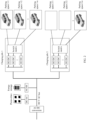
- FIG. 1 is a schematic diagram of a conventional charging system.
- a conventional charging system 100 includes a transformer 10, an alternating current distribution cabinet 11, an alternating current bus 12, a charging pile A (13), a charging pile B (14), and to-be-charged apparatuses 15 to 18.
- the to-be-charged apparatus may be an electric vehicle.
- a power supply and distribution system of a medium-and-large electric vehicle charging station usually starts from obtaining electric energy from a medium-voltage power grid.
- the transformer 10 transforms the electric energy into a low-voltage alternating current, and then the low-voltage alternating current converges into the alternating current distribution cabinet 11 for electric energy distribution.
- the alternating current enters an input side of the charging piles (13 and 14) in the station from the distribution cabinet.
- a power conversion unit integrating alternating current to direct current (alternating current to direct current, AC/DC) and direct current to direct current (direct current to direct current, DC/DC) converts, for charging a battery, electric energy into a direct current required by an electric vehicle.
- Electric energy may be provided by photovoltaic power or an energy storage battery. Both the photovoltaic power and the energy storage battery are direct current power supplies. The electric energy needs to be converted into an alternating current by using a DC/AC converter, and then transferred to the battery of the electric vehicle through AC/DC conversion and DC/DC conversion.
- a charging module in the charging pile corresponds to a fixed parking space or is shared by a limited quantity of parking spaces, and inflexibly responds to a charging power requirement of a nearby parking space. For example, when parking spaces 1-1 and 1-2 require high charging power, and parking spaces 2-1 and 2-2 require low charging power, a module of a charging pile 2 cannot be used for a corresponding parking space of a charging pile 1 through cross-pile sharing, causing insufficient utilization of the charging module.
- FIG. 2 is a schematic diagram of an example direct current charging apparatus. Electricity of an alternating current power grid passes through an alternating current to direct current conversion unit to form a direct current, and electric energy is distributed to an integrated pile of direct current input by using a direct current bus.
- DC/DC charging modules connected in parallel exist in the direct current pile, and the module can charge an electric vehicle connected to a gun head.
- the DC/DC module can be scheduled, within the pile by using a switch matrix, for a charged terminal connected to the charging pile, to implement an increase or a reduction in charging power of the charged terminal.
- the charging pile system with the direct current bus architecture and the switch matrix within the pile cannot schedule power of the DC/DC module from one pile to a charged terminal on another pile, and can perform scheduling only within the pile. Therefore, a scheduling range is limited.
- the scheduling range of the charging module can be expanded by increasing a quantity of charged terminals in one pile.
- a volume and rated power of a single pile are quite large, and networking and expansion cannot be flexibly implemented based on a deployment status of the charging pile.
- main power supplies and loads for example, energy storage batteries, a photovoltaic panel, and wind power
- main power supplies and loads provide electric energy in the form of a direct current, and the electric energy is converged and distributed in the form of an alternating current, causing excessive alternating current-direct current conversion. This reduces efficiency and increases costs.
- various types of vehicles in a common charging site and charging power requirements of charging guns in different time periods are different. Due to a fixed connection between a charging module and a charging gun, low utilization is caused in a case of over-provisioning of charging modules, or charging experience is reduced in a case of under-provisioning of charging modules.
- the charging apparatus corresponds to fixed charging parking spaces 301 and 302, and the charging apparatus may include a plurality of charging modules 303 and 304, and may include an intra-pile sharing unit 305.
- the charging module may transfer photovoltaic power or power of an energy storage battery to a to-be-charged apparatus 306, and the charging module may be a DC/DC.
- the charging module may be connected to the to-be-charged apparatus 306 by using a bus 307.
- the intra-pile sharing unit is configured to share an electric energy reserve inside the charging apparatus.
- the intra-pile sharing unit may include a plurality of switches (also referred to as switch modules), and the plurality of switches correspond to the charging modules, and are configured to control connections between the corresponding charging modules and the bus to be enabled or disabled.
- the charging apparatus may further include an inter-pile sharing unit 308, configured to share an electric energy reserve between a plurality of charging apparatuses, and the intra-pile sharing unit may include a plurality of switches (also referred to as switch modules), configured to enable or disable a connection between different charging apparatuses.
- an inter-pile sharing unit 308 configured to share an electric energy reserve between a plurality of charging apparatuses
- the intra-pile sharing unit may include a plurality of switches (also referred to as switch modules), configured to enable or disable a connection between different charging apparatuses.
- the charging apparatus may further include a control module 309.
- the control module is configured to control the intra-pile sharing unit and/or the inter-pile sharing unit to be used or disabled. Further, the control module may be configured to control the switches in the intra-pile sharing unit and/or the switches in the inter-pile sharing unit to be opened or closed.
- the charging apparatus may be connected to a to-be-charged apparatus by using a port, for example, a port shown in FIG. 3 .
- the charging apparatus may be connected to the charging parking space 301 by using a port A1
- the charging apparatus may be connected to the charging parking space 302 by using a port A2
- inter-pile sharing units of different charging piles may be connected by using ports B1 and B2.
- the ports are merely used as examples but do not constitute a limitation, and a quantity of ports of the charging apparatus is not limited in this application.
- a function of the port may also be flexibly configured.
- the ports A1 and A2 may be alternatively configured to connect the charging apparatus to another charging apparatus, and the ports B1 and B2 may be alternatively configured to connect the charging apparatus to a charging parking space.
- a function or a purpose of each port is not limited in this application.
- the intra-pile sharing unit is configured, so that electric energy inside a charging apparatus can be flexibly scheduled to meet charging requirements of different to-be-charged apparatuses.
- the inter-pile sharing unit may be further configured, and a connection interface between different charging apparatuses may be provided, so that electric energy between different charging apparatuses can be flexibly scheduled to meet a high-power charging requirement, improve utilization of the charging apparatus, and improve charging efficiency.
- the following uses an example in which the charging apparatus is a charging pile and the to-be-charged apparatus is an electric vehicle to describe the solutions of this application.
- the charging station may include a plurality of charging piles.
- the charging pile is similar to the foregoing charging apparatus, and details are not described herein again.
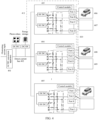
- the charging station may include a two-way AC/DC converter 401, configured to connect alternating current input and a direct current bus 402.
- a plurality of charging piles 403 to 405 are connected to the direct current bus 402.
- the charging piles are connected to to-be-charged electric vehicles 406 to 409 on charging parking spaces.
- the alternating current input in FIG. 4 may be alternatively directly connected to a charging apparatus.
- an AC/DC module is configured inside the charging apparatus, and the AC/DC module may convert the alternating current input into a direct current, to charge the to-be-charged electric vehicle.
- the charging pile and the electric vehicle may be connected by using a charging gun, and a port configured to connect to the charging gun is configured in the charging pile.
- the charging station may further include a control module 406, configured to control, based on a charging requirement of the to-be-charged electric vehicle, an intra-pile sharing unit and/or an inter-pile sharing unit to be enabled or disabled, in other words, control switches to be closed or opened.
- a control module 406 configured to control, based on a charging requirement of the to-be-charged electric vehicle, an intra-pile sharing unit and/or an inter-pile sharing unit to be enabled or disabled, in other words, control switches to be closed or opened.
- charging pile 403 and the charging pile 405 may be connected by using a direct current cable 410.
- a port configured to connect to the cable is configured in the charging pile.
- a port A in the charging pile 403 is configured to connect the charging pile to the parking space 406
- a port B is configured to connect the charging pile to the parking space 407
- a port C is configured to connect an inter-pile sharing unit of the charging pile 403 to an inter-pile sharing unit of the charging pile 404
- a port D is configured to connect the inter-pile sharing unit of the charging pile 403 to an inter-pile sharing unit of the charging pile 405.
- a port E in the charging pile 404 is configured to connect the charging pile to the parking space 408.
- the ports A, B, C, and D are connected by using internal connection lines
- ports E, F, G, and H are connected by using internal connection lines.
- corresponding ports are also configured in the charging pile 405.
- a photovoltaic panel, an energy storage battery, the charging pile, and the like may be connected to the direct current bus through level-1 DC/DC power conversion, to implement efficient photovoltaic-energy storage conversion and storage system to charging station conversion.
- the charging module of the charging pile can implement power sharing between piles to meet different charging power requirements on parking spaces.
- the port configured in the charging apparatus may be further configured to connect to an energy storage module.
- an energy storage module in the figure may be a photovoltaic component or may be an energy storage component.
- the energy storage module is directly connected to the port A by using a link 411, and the port A is further connected to the charging apparatus 406. Electric energy in the energy storage module can be directly provided for the charging apparatus for use. This is not limited in this application.
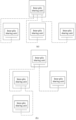
- topology structure such as a chain shape shown in (a) in FIG. 5 , a star shape shown in (b) in FIG. 5 , or a dual-ring shape shown in (c) in FIG. 5 may be used.
- Different topology structures can provide different inter-pile sharing control policies and sharing flexibility, and the inter-pile sharing control policies and sharing flexibility may be flexibly selected based on an actual requirement.
- Another implementation of this application provides a charging method, applied to the foregoing charging station, as shown in FIG. 6 .
- a control module determines, based on a charging power requirement of a to-be-charged apparatus, whether electric energy sharing is required.
- control module controls an inter-pile sharing unit to be enabled.
- a charging station charges the to-be-charged apparatus at shared charging power.
- the control module may perform the determining based on target charging power and real-time charging power of a charging pile, where for example, sharing is enabled when the real-time charging power of the charging pile cannot meet a charging power requirement of an electric vehicle; or may perform the determining based on target charging power and a power threshold of a charging pile, where for example, when the target charging power is greater than the threshold of the charging pile, the control module determines that sharing needs to be enabled.
- control module when determining to enable sharing, the control module further needs to determine, based on a position of the to-be-charged apparatus and a real-time charging status of each charging apparatus, to close a corresponding switch to enable a connection.
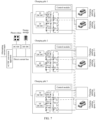
- an electric vehicle on a charging parking space 1-1 needs to be charged.
- the charging parking space is correspondingly connected to a charging pile 1.
- Charging power of the charging pile 1 is less than charging power required by the electric vehicle, and the control module determines that sharing needs to be enabled. Then the control module determines, based on a position of the parking space and a charging status of each charging pile, a switch that needs to be closed.
- both the charging pile 2 and a charging pile 3 need to be shared.
- S3-1 and S3-7 in the charging pile 3, S2-1 and S2-6 in the charging pile 2, and S1-7 and S1-2 in the charging pile 1 are opened.
- a 3# module of the charging pile 2 and a 5# module of the charging pile 3 can charge the charging parking space 1-1 together with a 1# module of the charging pile 1 by using the three links.
- control module may be configured in each charging pile to obtain a charging status of another charging pile through real-time communication, or a main control module may be configured in the charging station. This is not limited in this application.
- ports in the charging pile are not shown in FIG. 7 .
- the ports are similar to the foregoing ports, and therefore details are not described herein again.
- inter-pile sharing unit may also be flexibly configured as required. DC/DC modules in other piles are combined by using the inter-pile sharing unit, to implement fast charging of some super-high-power to-be-charged vehicles, thereby greatly improving output power of a single pile.
- this application may be applied to other charging fields, for example, an electric vehicle swap station that simultaneously charges a plurality of batteries.
- a network device or a terminal device may include a hardware structure and/or a software module, to implement the foregoing functions in a form of a hardware structure, a software module, or a hardware structure and a software module. Whether one of the foregoing functions is performed in a manner of a hardware structure, a software module, or a hardware structure and a software module depends on a specific application and design constraints of technical solutions.
- module division is an example, and is merely a logical function division. In an actual implementation, another division manner may be used.
- functional modules in this application may be integrated into one processor, or each of the modules may exist alone physically, or two or more modules may be integrated into one module.
- the integrated module may be implemented in a form of hardware, or may be implemented in a form of a software functional module.
- an implementation of this application further provides an apparatus 800, configured to implement functions of the control module in the foregoing method.
- the apparatus may be a software module or a chip system.
- the chip system may include a chip, or may include a chip and another discrete component.
- the apparatus 800 may include a processing unit 810 and a communications unit 820.
- the communications unit may also be referred to as a transceiver unit, and the transceiver unit may include a sending unit and/or a receiving unit, respectively configured to perform sending and receiving steps of the control module in the foregoing method implementation.
- the communications unit may also be referred to as a transceiver, a transceiver apparatus, or the like.
- the processing unit may also be referred to as a processor, a processing board, a processing module, a processing apparatus, or the like.
- a component that is in the communications unit 820 and that is configured to implement a receiving function may be considered as a receiving unit
- a component that is in the communications unit 820 and that is configured to implement a sending function may be considered as a sending unit, in other words, the communications unit 820 includes a receiving unit and a sending unit.
- the communications unit sometimes may also be referred to as a transceiver, an interface circuit, or the like.
- the receiving unit sometimes may also be referred to as a receiver machine, a receiver, a receiver circuit, or the like.
- the sending unit may also be sometimes referred to as a transmitter machine, a transmitter, a transmit circuit, or the like.
- the processing unit 810 and the communications unit 820 may further perform other functions.
- the processing unit 810 and the communications unit 820 may further perform other functions.
- the processing unit 810 and the communications unit 820 may further perform other functions.
- FIG. 9 shows an apparatus 900 according to an implementation of this application.
- the apparatus shown in FIG. 9 may be an implementation of a hardware circuit of the apparatus shown in FIG. 8 .
- the control apparatus may perform functions of the control module in the foregoing method implementation.
- FIG. 9 shows only main components of the control apparatus.
- the communications apparatus 900 includes a processor 910 and an interface circuit 920.
- the processor 910 is coupled to the interface circuit 920.
- the interface circuit 920 may be a transceiver or an input/output interface.
- the communications apparatus 900 may further include a memory 930, configured to store instructions to be executed by the processor 910, store input data required by the processor 910 to run instructions, or store data generated after the processor 910 runs instructions.
- the processor 910 is configured to implement functions of the processing unit 810
- the interface circuit 920 is configured to implement functions of the communications unit 820.
- the processor in implementations of this application may be a central processing unit (Central Processing Unit, CPU), or may be another general-purpose processor, a digital signal processor (Digital Signal Processor, DSP), an application-specific integrated circuit (Application-Specific Integrated Circuit, ASIC), a field programmable gate array (Field Programmable Gate Array, FPGA) or another programmable logic device, a transistor logic device, a hardware component, or any combination thereof.
- the general-purpose processor may be a microprocessor or any regular processor or the like.
- the processor in implementations of this application may be a random access memory (Random Access Memory, RAM), a flash memory, a read-only memory (Read-Only Memory, ROM), a programmable read-only memory (Programmable ROM, PROM), an erasable programmable read-only memory (Erasable PROM, EPROM), an electrically erasable programmable read-only memory (Electrically EPROM, EEPROM), a register, a hard disk, a removable hard disk, a CD-ROM, or a storage medium in any other form well-known in the art.
- a storage medium is coupled to a processor, so that the processor can read information from the storage medium or write information into the storage medium.
- the storage medium may be a component of the processor.
- the processor and the storage medium may be disposed in an ASIC.
- the ASIC may be located in a network device or a terminal device.
- the processor and the storage medium may exist in the network device or the terminal device as discrete components.
- this application may be provided as a method, a system, or a computer program product. Therefore, this application may use a form of hardware only implementations, software only implementations, or implementations with a combination of software and hardware. Moreover, this application may use a form of a computer program product that is implemented on one or more computer-usable storage media (including but not limited to a disk memory, an optical memory, and the like) that include computer-usable program code.
- a computer-usable storage media including but not limited to a disk memory, an optical memory, and the like
- These computer program instructions may be provided for a general-purpose computer, a dedicated computer, an embedded processor, or a processor of any other programmable data processing device to generate a machine, so that the instructions executed by a computer or a processor of any other programmable data processing device generate an apparatus for implementing a specific function in one or more processes in the flowcharts and/or in one or more blocks in the block diagrams.
- These computer program instructions may be stored in a computer-readable memory that can instruct the computer or any other programmable data processing device to work in a specific manner, so that the instructions stored in the computer-readable memory generate an artifact that includes an instruction apparatus.
- the instruction apparatus implements a specific function in one or more processes in the flowcharts and/or in one or more blocks in the block diagrams.
Landscapes
- Engineering & Computer Science (AREA)
- Power Engineering (AREA)
- Transportation (AREA)
- Mechanical Engineering (AREA)
- Charge And Discharge Circuits For Batteries Or The Like (AREA)
Claims (10)
- Ladesystem, wobei das Ladesystem mindestens eine erste Ladevorrichtung (403) und mehrere zweite Ladevorrichtungen (404, 405) umfasst, wobei die erste Ladevorrichtung Folgendes umfasst: mindestens einen ersten Ausgangsanschluss und mindestens zwei zweite Ausgangsanschlüsse, und wobei jede zweite Ladevorrichtung mindestens einen dritten Ausgangsanschluss und einen vierten Ausgangsanschluss umfasst,wobei der erste Ausgangsanschluss mit einer ersten zu ladenden Vorrichtung verbindbar ist, die sich in einem ersten Ladeparkplatz befindet, der der ersten Ladevorrichtung entspricht, der dritte Ausgangsanschluss mit dem vierten Ausgangsanschluss von mindestens zwei zweiten Ladevorrichtungen verbindbar ist, und der vierte Anschluss mit einer zweiten zu ladenden Vorrichtung verbindbar ist, die sich in einem zweiten Ladeparkplatz befindet, der der jeweiligen zweiten Ladevorrichtung entspricht, und wobei die mindestens zwei zweiten Ausgangsanschlüsse mit den dritten Ausgangsanschlüssen von mindestens zwei zweiten Ladevorrichtungen in einer Eins-zu-Eins-Übereinstimmungsart über ein jeweiliges erstes Verbindungsglied verbindbar sind,wobei die erste Ladevorrichtung ferner ein erstes Steuermodul umfasst und jede zweite Ladevorrichtung ein zweites Steuermodul umfasst,wobei das zweite Steuermodul dazu konfiguriert ist, erste Anzeigeinformationen zu senden, und die ersten Anzeigeinformationen dazu konfiguriert sind, eine Echtzeit-Ladeleistung der zweiten Ladevorrichtung anzuzeigen; unddas erste Steuermodul ferner dazu konfiguriert ist, die ersten Anzeigeinformationen zu empfangen;wobei das erste Steuermodul ferner zu Folgendem konfiguriert ist:Bestimmen, ob das erste Verbindungsglied aktiviert werden soll, basierend auf einer Ladeleistungsanforderung der ersten zu ladenden Vorrichtung und einer Ladeleistung der ersten Ladevorrichtung, wobei, wenn das erste Verbindungsglied aktiviert wird, die erste Ladevorrichtung dazu konfiguriert ist, die erste zu ladende Vorrichtung bei einer ersten gemeinsamen Ladeleistung zu laden, und die erste gemeinsame Ladeleistung eine Echtzeit-Ladeleistung der ersten Ladevorrichtung und der entsprechenden zweiten Ladevorrichtung umfasst;Auswählen einer oder mehrerer der mehreren zweiten Ladevorrichtungen basierend auf der Echtzeit-Ladeleistung der zweiten Ladevorrichtung; undAktivieren des ersten Verbindungsglieds, das jeder ausgewählten zweiten Ladevorrichtung entspricht.
- Ladesystem nach Anspruch 1, wobeidas erste Steuermodul insbesondere zu Folgendem konfiguriert ist: wenn die Ladeleistungsanforderung der ersten zu ladenden Vorrichtung größer als eine Echtzeit-Ladeleistung der ersten Ladevorrichtung ist, Bestimmen, dass das erste Verbindungsglied aktiviert werden soll; oderwenn die Ladeleistungsanforderung der ersten zu ladenden Vorrichtung größer als ein Ladeleistungsschwellenwert der ersten Ladevorrichtung ist, Bestimmen, dass das erste Verbindungsglied aktiviert werden soll.
- Ladesystem nach Anspruch 1 oder 2, wobei jede zweite Ladevorrichtung ein zweites Lademodul umfasst und jedes zweite Steuermodul dazu konfiguriert ist, ein entsprechendes erstes Unterverbindungsglied basierend auf der Echtzeit-Ladeleistung der zweiten Ladevorrichtung auszuwählen, wobei das erste Unterverbindungsglied eine Verbindung zwischen dem zweiten Lademodul und dem dritten Anschluss umfasst.
- Ladesystem nach einem der Ansprüche 1 bis 3, wobei die erste Ladevorrichtung ein erstes Schaltmodul umfasst und die zweite Ladevorrichtung ein zweites Schaltmodul umfasst, und das erste Steuermodul insbesondere dazu konfiguriert ist, das erste Schaltmodul zu steuern, um eine Verbindung zu aktivieren oder zu deaktivieren, und das zweite Steuermodul insbesondere dazu konfiguriert ist, das zweite Schaltmodul zu steuern, um eine Verbindung zu aktivieren oder zu deaktivieren.
- Ladeverfahren, wobei das Ladeverfahren durch ein Ladesystem nach einem der Ansprüche 1 bis 4 durchgeführt wird und das Verfahren Folgendes umfasst:Senden, durch jedes zweite Steuermodul, der ersten Anzeigeinformationen, wobei die ersten Anzeigeinformationen dazu konfiguriert sind, die Echtzeit-Ladeleistung der entsprechenden zweiten Ladevorrichtung anzuzeigen; undEmpfangen, durch das erste Steuermodul, der ersten Anzeigeinformationen;wobei das Verfahren ferner Folgendes umfasst:Bestimmen, ob das erste Verbindungsglied aktiviert werden soll, basierend auf einer Ladeleistungsanforderung der ersten zu ladenden Vorrichtung und einer Ladeleistung der ersten Ladevorrichtung, wobei, wenn das erste Verbindungsglied aktiviert wird, die erste zu ladende Vorrichtung bei einer ersten gemeinsamen Ladeleistung geladen wird, und die erste gemeinsame Ladeleistung eine Echtzeit-Ladeleistung der ersten Ladevorrichtung und der entsprechenden zweiten Ladevorrichtung umfasst;Auswählen einer oder mehrerer der mehreren zweiten Ladevorrichtungen basierend auf der Echtzeit-Ladeleistung der zweiten Ladevorrichtung; undAktivieren des ersten Verbindungsglieds, das jeder ausgewählten zweiten Ladevorrichtung entspricht.
- Verfahren nach Anspruch 5, wobei das Bestimmen, durch das erste Steuermodul basierend auf der Ladeleistungsanforderung der ersten zu ladenden Vorrichtung und der Ladeleistung der ersten Ladevorrichtung, dass das erste Verbindungsglied aktiviert werden soll, Folgendes umfasst:wenn die Ladeleistungsanforderung der ersten zu ladenden Vorrichtung größer als eine Echtzeit-Ladeleistung der ersten Ladevorrichtung ist, Bestimmen, dass das erste Verbindungsglied aktiviert werden soll; oderwenn die Ladeleistungsanforderung der ersten zu ladenden Vorrichtung größer als ein Ladeleistungsschwellenwert der ersten Ladevorrichtung ist, Bestimmen, dass das erste Verbindungsglied aktiviert werden soll.
- Verfahren nach Anspruch 6, wobei jede zweite Ladevorrichtung ein zweites Lademodul umfasst und das Verfahren ferner Folgendes umfasst: Auswählen, durch das zweite Steuermodul, eines entsprechenden ersten Unterverbindungsglieds basierend auf der Echtzeit-Ladeleistung der zweiten Ladevorrichtung, wobei das erste Unterverbindungsglied eine Verbindung zwischen dem zweiten Lademodul und dem dritten Anschluss umfasst.
- Verfahren nach einem der Ansprüche 5 bis 7, wobei die erste Ladevorrichtung ein erstes Schaltmodul umfasst und die zweite Ladevorrichtung ein zweites Schaltmodul umfasst, und das Verfahren Folgendes umfasst:
Steuern, durch das erste Steuermodul, des ersten Schaltmoduls, um eine Verbindung zu aktivieren oder zu deaktivieren, und Steuern, durch das zweite Steuermodul, des zweiten Schaltmoduls, um eine Verbindung zu aktivieren oder zu deaktivieren. - Steuervorrichtung zur Verwendung in einem Ladesystem nach einem der Ansprüche 1 bis 4, die einen Prozessor und einen Speicher umfasst, wobei, wenn ein in dem Speicher gespeicherter Satz von Anweisungen durch den Prozessor ausgeführt wird, die Steuervorrichtung aktiviert wird, um die entsprechenden Schritte nach einem der Ansprüche 5 bis 8 durchzuführen.
- Computerlesbares Speichermedium, das Anweisungen umfasst, die, wenn sie durch eine Steuervorrichtung nach Anspruch 9 ausgeführt werden, die Steuervorrichtung veranlassen, das Verfahren nach einem der Ansprüche 5 bis 8 durchzuführen.
Applications Claiming Priority (1)
| Application Number | Priority Date | Filing Date | Title |
|---|---|---|---|
| CN202110944977.9A CN113733956B (zh) | 2021-08-17 | 2021-08-17 | 一种充电方法、一种充电装置、一种充电系统 |
Publications (2)
| Publication Number | Publication Date |
|---|---|
| EP4138261A1 EP4138261A1 (de) | 2023-02-22 |
| EP4138261B1 true EP4138261B1 (de) | 2025-01-29 |
Family
ID=78731441
Family Applications (1)
| Application Number | Title | Priority Date | Filing Date |
|---|---|---|---|
| EP22190771.0A Active EP4138261B1 (de) | 2021-08-17 | 2022-08-17 | Ladeverfahren, ladegerät und ladesystem |
Country Status (3)
| Country | Link |
|---|---|
| US (1) | US20230059677A1 (de) |
| EP (1) | EP4138261B1 (de) |
| CN (2) | CN113733956B (de) |
Families Citing this family (16)
| Publication number | Priority date | Publication date | Assignee | Title |
|---|---|---|---|---|
| FR3095992B1 (fr) * | 2019-05-14 | 2022-01-21 | Hadi Moussavi | Systeme et procede de charge en energie electrique de vehicules automobiles |
| US11964584B2 (en) * | 2020-09-16 | 2024-04-23 | Apple Inc. | Accessory power pack |
| CN114084017A (zh) * | 2021-12-17 | 2022-02-25 | 阳光电源股份有限公司 | 一种直流充电桩系统 |
| CN114228552A (zh) * | 2021-12-17 | 2022-03-25 | 华为数字能源技术有限公司 | 一种充电系统、充电站、供电方法及计算机可读存储介质 |
| CN115782662B (zh) * | 2022-09-28 | 2025-11-18 | 华为数字能源技术有限公司 | 充电装置、基于功率匹配的充电方法以及充电桩 |
| CN116080449A (zh) * | 2022-10-13 | 2023-05-09 | 湖南华自卓创智能技术有限责任公司 | 一种新型智能柔性充电网系统 |
| CN116001629B (zh) * | 2023-02-22 | 2025-11-25 | 深圳市道通合创数字能源有限公司 | 功率分配方法、装置、设备及存储介质 |
| CN116714467A (zh) * | 2023-06-07 | 2023-09-08 | 山东硕睿智能设备有限公司 | 一种基于充电桩调度分配的三角集多倍率模块调度方法 |
| CN117067970B (zh) * | 2023-07-14 | 2025-02-18 | 福建时代星云科技有限公司 | 一种基于矩阵式控制的充电堆功率分配系统及方法 |
| WO2025026533A1 (en) * | 2023-07-28 | 2025-02-06 | Hitachi Energy Ltd | Charging system with selective distributed redundancy for powering electric vehicles |
| CN116834602B (zh) * | 2023-09-01 | 2023-11-28 | 深圳市海梁科技有限公司 | 基于微电网接入控制的充电管理方法、装置、设备及介质 |
| CN117681717A (zh) * | 2023-11-15 | 2024-03-12 | 华为数字能源技术有限公司 | 充电设备和功率分配装置 |
| CN117485183A (zh) * | 2023-11-17 | 2024-02-02 | 华为数字能源技术有限公司 | 功率分配装置和充电设备 |
| CN118438915B (zh) * | 2024-07-08 | 2025-02-18 | 宁德时代新能源科技股份有限公司 | 充电方法及储能充电设备 |
| EP4708605A1 (de) * | 2024-07-08 | 2026-03-11 | Contemporary Amperex Technology Co., Limited | Ladeverfahren und energiespeicherladevorrichtung |
| TWI902436B (zh) * | 2024-09-04 | 2025-10-21 | 台達電子工業股份有限公司 | 電動車直流充電系統 |
Family Cites Families (14)
| Publication number | Priority date | Publication date | Assignee | Title |
|---|---|---|---|---|
| US8698451B2 (en) * | 2009-12-18 | 2014-04-15 | General Electric Company | Apparatus and method for rapid charging using shared power electronics |
| CN104810894B (zh) * | 2015-05-08 | 2017-04-05 | 山东鲁能智能技术有限公司 | 一种电动汽车分体式直流充电桩、系统及方法 |
| CN106364348B (zh) * | 2016-09-26 | 2019-08-27 | 华为技术有限公司 | 一种充电桩 |
| CN106803690B (zh) * | 2017-03-13 | 2019-05-17 | 深圳市丁旺科技有限公司 | 一种功率自动分配直流充电桩群 |
| CN107394839A (zh) * | 2017-07-24 | 2017-11-24 | 深圳市丁旺科技有限公司 | 一种双枪桩间智能调度直流充电桩群及其控制方法 |
| CN107834627A (zh) * | 2017-11-02 | 2018-03-23 | 深圳市科华恒盛科技有限公司 | 一种功率分配器及充电控制回路的控制方法 |
| CN107994654A (zh) * | 2017-12-29 | 2018-05-04 | 长园深瑞继保自动化有限公司 | 充电桩集群控制自适应功率分配方法 |
| CN108879850B (zh) * | 2018-07-11 | 2022-04-08 | 西安特来电智能充电科技有限公司 | 功率分配装置与方法 |
| CN111516539A (zh) * | 2020-03-13 | 2020-08-11 | 南方电网电动汽车服务有限公司 | 功率分配方法和装置、计算机可读存储介质 |
| CN212889900U (zh) * | 2020-04-07 | 2021-04-06 | 深圳市科华恒盛科技有限公司 | 一种多枪直流充电系统 |
| CN112224081A (zh) * | 2020-10-15 | 2021-01-15 | 阳光电源股份有限公司 | 一种多枪的充电桩及充电桩电路 |
| CN112606717B (zh) * | 2020-11-30 | 2022-08-12 | 国网北京市电力公司 | 共享充电桩的控制方法、装置、存储介质及处理器 |
| CN112937342A (zh) * | 2021-03-10 | 2021-06-11 | 上海电机学院 | 一种电动汽车功率共享群充系统及其方法 |
| CN112918288A (zh) * | 2021-04-16 | 2021-06-08 | 阳光电源股份有限公司 | 一种集成充电模块和充电桩及其控制方法 |
-
2021
- 2021-08-17 CN CN202110944977.9A patent/CN113733956B/zh active Active
- 2021-08-17 CN CN202311095165.7A patent/CN117360287A/zh active Pending
-
2022
- 2022-08-17 US US17/890,018 patent/US20230059677A1/en active Pending
- 2022-08-17 EP EP22190771.0A patent/EP4138261B1/de active Active
Also Published As
| Publication number | Publication date |
|---|---|
| CN113733956A (zh) | 2021-12-03 |
| CN117360287A (zh) | 2024-01-09 |
| US20230059677A1 (en) | 2023-02-23 |
| CN113733956B (zh) | 2023-09-08 |
| EP4138261A1 (de) | 2023-02-22 |
Similar Documents
| Publication | Publication Date | Title |
|---|---|---|
| EP4138261B1 (de) | Ladeverfahren, ladegerät und ladesystem | |
| US11260763B2 (en) | Charging pile system of parallel charging piles and method | |
| US20130088084A1 (en) | Networklized DC Power System | |
| CN105379048B (zh) | 电力转换装置、电力转换系统以及电力转换方法 | |
| CN103633717A (zh) | 电动汽车充电站的充电系统 | |
| WO2021017508A1 (zh) | 一种储能充电桩 | |
| US20150183330A1 (en) | Modular reconfigurable medium voltage transformer for data centers, volt/var control, ac and dc charging, and vehicle-to-grid applications | |
| EP4112362A1 (de) | Endgerät zum laden von elektrofahrzeugen mit elektrochemischer energiespeicherung | |
| CN118124441A (zh) | 功率共享充电系统及充电站场 | |
| EP3641099A1 (de) | Energiespeichersystem | |
| CN108270263A (zh) | 一种能任意功率调度的多枪直流充电机及其充电控制方法 | |
| US12103423B2 (en) | Resilient charging station | |
| EP4106140A1 (de) | Ladesystem mit verstärkung durch energiespeicher | |
| CN113615030A (zh) | 一种电源转换装置及电源系统 | |
| US12558984B2 (en) | Resilient charging station | |
| CN117922347B (zh) | 功率分配装置、充电设备、储能设备和充电系统 | |
| CN210309975U (zh) | 一种储能充电桩 | |
| CN210007410U (zh) | 基于固态变压器的充电站系统 | |
| CN208290994U (zh) | 一种交流充电桩 | |
| CN117811130A (zh) | 充电连接装置和充电系统 | |
| CN211417016U (zh) | 一种集中式储能充电桩 | |
| US20250353391A1 (en) | Efficient Operation of a Four-Switch Buck-Boost Converter | |
| US20240317103A1 (en) | Energy Sharing Among Battery-Based Chargers for Electric Vehicles | |
| CN217486212U (zh) | 船舶超级电容能量管理装置 | |
| CN210608606U (zh) | 一种级联电池系统 |
Legal Events
| Date | Code | Title | Description |
|---|---|---|---|
| PUAI | Public reference made under article 153(3) epc to a published international application that has entered the european phase |
Free format text: ORIGINAL CODE: 0009012 |
|
| STAA | Information on the status of an ep patent application or granted ep patent |
Free format text: STATUS: THE APPLICATION HAS BEEN PUBLISHED |
|
| AK | Designated contracting states |
Kind code of ref document: A1 Designated state(s): AL AT BE BG CH CY CZ DE DK EE ES FI FR GB GR HR HU IE IS IT LI LT LU LV MC MK MT NL NO PL PT RO RS SE SI SK SM TR |
|
| STAA | Information on the status of an ep patent application or granted ep patent |
Free format text: STATUS: REQUEST FOR EXAMINATION WAS MADE |
|
| 17P | Request for examination filed |
Effective date: 20230607 |
|
| RBV | Designated contracting states (corrected) |
Designated state(s): AL AT BE BG CH CY CZ DE DK EE ES FI FR GB GR HR HU IE IS IT LI LT LU LV MC MK MT NL NO PL PT RO RS SE SI SK SM TR |
|
| STAA | Information on the status of an ep patent application or granted ep patent |
Free format text: STATUS: EXAMINATION IS IN PROGRESS |
|
| 17Q | First examination report despatched |
Effective date: 20230915 |
|
| GRAP | Despatch of communication of intention to grant a patent |
Free format text: ORIGINAL CODE: EPIDOSNIGR1 |
|
| STAA | Information on the status of an ep patent application or granted ep patent |
Free format text: STATUS: GRANT OF PATENT IS INTENDED |
|
| RIC1 | Information provided on ipc code assigned before grant |
Ipc: B60L 53/63 20190101ALI20240802BHEP Ipc: B60L 53/62 20190101ALI20240802BHEP Ipc: B60L 53/51 20190101ALI20240802BHEP Ipc: B60L 53/31 20190101ALI20240802BHEP Ipc: B60L 53/14 20190101ALI20240802BHEP Ipc: B60L 53/67 20190101ALI20240802BHEP Ipc: H02J 7/02 20160101ALI20240802BHEP Ipc: H02J 7/34 20060101ALI20240802BHEP Ipc: H02J 7/35 20060101ALI20240802BHEP Ipc: H02J 7/00 20060101AFI20240802BHEP |
|
| INTG | Intention to grant announced |
Effective date: 20240903 |
|
| P01 | Opt-out of the competence of the unified patent court (upc) registered |
Free format text: CASE NUMBER: APP_59305/2024 Effective date: 20241031 |
|
| GRAS | Grant fee paid |
Free format text: ORIGINAL CODE: EPIDOSNIGR3 |
|
| GRAA | (expected) grant |
Free format text: ORIGINAL CODE: 0009210 |
|
| STAA | Information on the status of an ep patent application or granted ep patent |
Free format text: STATUS: THE PATENT HAS BEEN GRANTED |
|
| AK | Designated contracting states |
Kind code of ref document: B1 Designated state(s): AL AT BE BG CH CY CZ DE DK EE ES FI FR GB GR HR HU IE IS IT LI LT LU LV MC MK MT NL NO PL PT RO RS SE SI SK SM TR |
|
| REG | Reference to a national code |
Ref country code: GB Ref legal event code: FG4D |
|
| REG | Reference to a national code |
Ref country code: CH Ref legal event code: EP |
|
| REG | Reference to a national code |
Ref country code: DE Ref legal event code: R096 Ref document number: 602022010018 Country of ref document: DE |
|
| REG | Reference to a national code |
Ref country code: IE Ref legal event code: FG4D |
|
| REG | Reference to a national code |
Ref country code: NL Ref legal event code: MP Effective date: 20250129 |
|
| PG25 | Lapsed in a contracting state [announced via postgrant information from national office to epo] |
Ref country code: NL Free format text: LAPSE BECAUSE OF FAILURE TO SUBMIT A TRANSLATION OF THE DESCRIPTION OR TO PAY THE FEE WITHIN THE PRESCRIBED TIME-LIMIT Effective date: 20250129 |
|
| PG25 | Lapsed in a contracting state [announced via postgrant information from national office to epo] |
Ref country code: RS Free format text: LAPSE BECAUSE OF FAILURE TO SUBMIT A TRANSLATION OF THE DESCRIPTION OR TO PAY THE FEE WITHIN THE PRESCRIBED TIME-LIMIT Effective date: 20250429 |
|
| PG25 | Lapsed in a contracting state [announced via postgrant information from national office to epo] |
Ref country code: FI Free format text: LAPSE BECAUSE OF FAILURE TO SUBMIT A TRANSLATION OF THE DESCRIPTION OR TO PAY THE FEE WITHIN THE PRESCRIBED TIME-LIMIT Effective date: 20250129 |
|
| PG25 | Lapsed in a contracting state [announced via postgrant information from national office to epo] |
Ref country code: PL Free format text: LAPSE BECAUSE OF FAILURE TO SUBMIT A TRANSLATION OF THE DESCRIPTION OR TO PAY THE FEE WITHIN THE PRESCRIBED TIME-LIMIT Effective date: 20250129 |
|
| PG25 | Lapsed in a contracting state [announced via postgrant information from national office to epo] |
Ref country code: ES Free format text: LAPSE BECAUSE OF FAILURE TO SUBMIT A TRANSLATION OF THE DESCRIPTION OR TO PAY THE FEE WITHIN THE PRESCRIBED TIME-LIMIT Effective date: 20250129 |
|
| REG | Reference to a national code |
Ref country code: LT Ref legal event code: MG9D |
|
| PG25 | Lapsed in a contracting state [announced via postgrant information from national office to epo] |
Ref country code: IS Free format text: LAPSE BECAUSE OF FAILURE TO SUBMIT A TRANSLATION OF THE DESCRIPTION OR TO PAY THE FEE WITHIN THE PRESCRIBED TIME-LIMIT Effective date: 20250529 Ref country code: NO Free format text: LAPSE BECAUSE OF FAILURE TO SUBMIT A TRANSLATION OF THE DESCRIPTION OR TO PAY THE FEE WITHIN THE PRESCRIBED TIME-LIMIT Effective date: 20250429 |
|
| REG | Reference to a national code |
Ref country code: AT Ref legal event code: MK05 Ref document number: 1764450 Country of ref document: AT Kind code of ref document: T Effective date: 20250129 |
|
| PG25 | Lapsed in a contracting state [announced via postgrant information from national office to epo] |
Ref country code: HR Free format text: LAPSE BECAUSE OF FAILURE TO SUBMIT A TRANSLATION OF THE DESCRIPTION OR TO PAY THE FEE WITHIN THE PRESCRIBED TIME-LIMIT Effective date: 20250129 |
|
| PG25 | Lapsed in a contracting state [announced via postgrant information from national office to epo] |
Ref country code: LV Free format text: LAPSE BECAUSE OF FAILURE TO SUBMIT A TRANSLATION OF THE DESCRIPTION OR TO PAY THE FEE WITHIN THE PRESCRIBED TIME-LIMIT Effective date: 20250129 Ref country code: PT Free format text: LAPSE BECAUSE OF FAILURE TO SUBMIT A TRANSLATION OF THE DESCRIPTION OR TO PAY THE FEE WITHIN THE PRESCRIBED TIME-LIMIT Effective date: 20250529 |
|
| PG25 | Lapsed in a contracting state [announced via postgrant information from national office to epo] |
Ref country code: BG Free format text: LAPSE BECAUSE OF FAILURE TO SUBMIT A TRANSLATION OF THE DESCRIPTION OR TO PAY THE FEE WITHIN THE PRESCRIBED TIME-LIMIT Effective date: 20250129 Ref country code: GR Free format text: LAPSE BECAUSE OF FAILURE TO SUBMIT A TRANSLATION OF THE DESCRIPTION OR TO PAY THE FEE WITHIN THE PRESCRIBED TIME-LIMIT Effective date: 20250430 |
|
| PG25 | Lapsed in a contracting state [announced via postgrant information from national office to epo] |
Ref country code: AT Free format text: LAPSE BECAUSE OF FAILURE TO SUBMIT A TRANSLATION OF THE DESCRIPTION OR TO PAY THE FEE WITHIN THE PRESCRIBED TIME-LIMIT Effective date: 20250129 |
|
| PG25 | Lapsed in a contracting state [announced via postgrant information from national office to epo] |
Ref country code: SE Free format text: LAPSE BECAUSE OF FAILURE TO SUBMIT A TRANSLATION OF THE DESCRIPTION OR TO PAY THE FEE WITHIN THE PRESCRIBED TIME-LIMIT Effective date: 20250129 |
|
| PG25 | Lapsed in a contracting state [announced via postgrant information from national office to epo] |
Ref country code: SM Free format text: LAPSE BECAUSE OF FAILURE TO SUBMIT A TRANSLATION OF THE DESCRIPTION OR TO PAY THE FEE WITHIN THE PRESCRIBED TIME-LIMIT Effective date: 20250129 |
|
| PG25 | Lapsed in a contracting state [announced via postgrant information from national office to epo] |
Ref country code: DK Free format text: LAPSE BECAUSE OF FAILURE TO SUBMIT A TRANSLATION OF THE DESCRIPTION OR TO PAY THE FEE WITHIN THE PRESCRIBED TIME-LIMIT Effective date: 20250129 |
|
| PGFP | Annual fee paid to national office [announced via postgrant information from national office to epo] |
Ref country code: DE Payment date: 20250702 Year of fee payment: 4 |
|
| PG25 | Lapsed in a contracting state [announced via postgrant information from national office to epo] |
Ref country code: IT Free format text: LAPSE BECAUSE OF FAILURE TO SUBMIT A TRANSLATION OF THE DESCRIPTION OR TO PAY THE FEE WITHIN THE PRESCRIBED TIME-LIMIT Effective date: 20250129 |
|
| PG25 | Lapsed in a contracting state [announced via postgrant information from national office to epo] |
Ref country code: EE Free format text: LAPSE BECAUSE OF FAILURE TO SUBMIT A TRANSLATION OF THE DESCRIPTION OR TO PAY THE FEE WITHIN THE PRESCRIBED TIME-LIMIT Effective date: 20250129 Ref country code: CZ Free format text: LAPSE BECAUSE OF FAILURE TO SUBMIT A TRANSLATION OF THE DESCRIPTION OR TO PAY THE FEE WITHIN THE PRESCRIBED TIME-LIMIT Effective date: 20250129 |
|
| PG25 | Lapsed in a contracting state [announced via postgrant information from national office to epo] |
Ref country code: RO Free format text: LAPSE BECAUSE OF FAILURE TO SUBMIT A TRANSLATION OF THE DESCRIPTION OR TO PAY THE FEE WITHIN THE PRESCRIBED TIME-LIMIT Effective date: 20250129 |
|
| PG25 | Lapsed in a contracting state [announced via postgrant information from national office to epo] |
Ref country code: SK Free format text: LAPSE BECAUSE OF FAILURE TO SUBMIT A TRANSLATION OF THE DESCRIPTION OR TO PAY THE FEE WITHIN THE PRESCRIBED TIME-LIMIT Effective date: 20250129 |
|
| REG | Reference to a national code |
Ref country code: DE Ref legal event code: R097 Ref document number: 602022010018 Country of ref document: DE |
|
| PLBE | No opposition filed within time limit |
Free format text: ORIGINAL CODE: 0009261 |
|
| STAA | Information on the status of an ep patent application or granted ep patent |
Free format text: STATUS: NO OPPOSITION FILED WITHIN TIME LIMIT |
|
| REG | Reference to a national code |
Ref country code: CH Ref legal event code: L10 Free format text: ST27 STATUS EVENT CODE: U-0-0-L10-L00 (AS PROVIDED BY THE NATIONAL OFFICE) Effective date: 20251210 |
|
| 26N | No opposition filed |
Effective date: 20251030 |
|
| REG | Reference to a national code |
Ref country code: CH Ref legal event code: H13 Free format text: ST27 STATUS EVENT CODE: U-0-0-H10-H13 (AS PROVIDED BY THE NATIONAL OFFICE) Effective date: 20260324 |
|
| PG25 | Lapsed in a contracting state [announced via postgrant information from national office to epo] |
Ref country code: MC Free format text: LAPSE BECAUSE OF FAILURE TO SUBMIT A TRANSLATION OF THE DESCRIPTION OR TO PAY THE FEE WITHIN THE PRESCRIBED TIME-LIMIT Effective date: 20250129 |
|
| PG25 | Lapsed in a contracting state [announced via postgrant information from national office to epo] |
Ref country code: LU Free format text: LAPSE BECAUSE OF NON-PAYMENT OF DUE FEES Effective date: 20250817 |
|
| PG25 | Lapsed in a contracting state [announced via postgrant information from national office to epo] |
Ref country code: CH Free format text: LAPSE BECAUSE OF NON-PAYMENT OF DUE FEES Effective date: 20250831 |