EP4138097A1 - Cover for a cable harness with different color layers - Google Patents
Cover for a cable harness with different color layers Download PDFInfo
- Publication number
- EP4138097A1 EP4138097A1 EP22191215.7A EP22191215A EP4138097A1 EP 4138097 A1 EP4138097 A1 EP 4138097A1 EP 22191215 A EP22191215 A EP 22191215A EP 4138097 A1 EP4138097 A1 EP 4138097A1
- Authority
- EP
- European Patent Office
- Prior art keywords
- layer
- color
- cover
- cable harness
- cables
- Prior art date
- Legal status (The legal status is an assumption and is not a legal conclusion. Google has not performed a legal analysis and makes no representation as to the accuracy of the status listed.)
- Withdrawn
Links
Images



Classifications
-
- H—ELECTRICITY
- H01—ELECTRIC ELEMENTS
- H01B—CABLES; CONDUCTORS; INSULATORS; SELECTION OF MATERIALS FOR THEIR CONDUCTIVE, INSULATING OR DIELECTRIC PROPERTIES
- H01B7/00—Insulated conductors or cables characterised by their form
- H01B7/36—Insulated conductors or cables characterised by their form with distinguishing or length marks
- H01B7/361—Insulated conductors or cables characterised by their form with distinguishing or length marks being the colour of the insulation or conductor
-
- H—ELECTRICITY
- H01—ELECTRIC ELEMENTS
- H01B—CABLES; CONDUCTORS; INSULATORS; SELECTION OF MATERIALS FOR THEIR CONDUCTIVE, INSULATING OR DIELECTRIC PROPERTIES
- H01B13/00—Apparatus or processes specially adapted for manufacturing conductors or cables
- H01B13/012—Apparatus or processes specially adapted for manufacturing conductors or cables for manufacturing wire harnesses
- H01B13/01263—Tying, wrapping, binding, lacing, strapping or sheathing harnesses
-
- B—PERFORMING OPERATIONS; TRANSPORTING
- B32—LAYERED PRODUCTS
- B32B—LAYERED PRODUCTS, i.e. PRODUCTS BUILT-UP OF STRATA OF FLAT OR NON-FLAT, e.g. CELLULAR OR HONEYCOMB, FORM
- B32B1/00—Layered products having a non-planar shape
- B32B1/08—Tubular products
-
- B—PERFORMING OPERATIONS; TRANSPORTING
- B32—LAYERED PRODUCTS
- B32B—LAYERED PRODUCTS, i.e. PRODUCTS BUILT-UP OF STRATA OF FLAT OR NON-FLAT, e.g. CELLULAR OR HONEYCOMB, FORM
- B32B27/00—Layered products comprising a layer of synthetic resin
- B32B27/34—Layered products comprising a layer of synthetic resin comprising polyamides
-
- B—PERFORMING OPERATIONS; TRANSPORTING
- B32—LAYERED PRODUCTS
- B32B—LAYERED PRODUCTS, i.e. PRODUCTS BUILT-UP OF STRATA OF FLAT OR NON-FLAT, e.g. CELLULAR OR HONEYCOMB, FORM
- B32B27/00—Layered products comprising a layer of synthetic resin
- B32B27/36—Layered products comprising a layer of synthetic resin comprising polyesters
-
- B—PERFORMING OPERATIONS; TRANSPORTING
- B32—LAYERED PRODUCTS
- B32B—LAYERED PRODUCTS, i.e. PRODUCTS BUILT-UP OF STRATA OF FLAT OR NON-FLAT, e.g. CELLULAR OR HONEYCOMB, FORM
- B32B5/00—Layered products characterised by the non- homogeneity or physical structure, i.e. comprising a fibrous, filamentary, particulate or foam layer; Layered products characterised by having a layer differing constitutionally or physically in different parts
- B32B5/02—Layered products characterised by the non- homogeneity or physical structure, i.e. comprising a fibrous, filamentary, particulate or foam layer; Layered products characterised by having a layer differing constitutionally or physically in different parts characterised by structural features of a fibrous or filamentary layer
- B32B5/022—Non-woven fabric
-
- B—PERFORMING OPERATIONS; TRANSPORTING
- B32—LAYERED PRODUCTS
- B32B—LAYERED PRODUCTS, i.e. PRODUCTS BUILT-UP OF STRATA OF FLAT OR NON-FLAT, e.g. CELLULAR OR HONEYCOMB, FORM
- B32B5/00—Layered products characterised by the non- homogeneity or physical structure, i.e. comprising a fibrous, filamentary, particulate or foam layer; Layered products characterised by having a layer differing constitutionally or physically in different parts
- B32B5/02—Layered products characterised by the non- homogeneity or physical structure, i.e. comprising a fibrous, filamentary, particulate or foam layer; Layered products characterised by having a layer differing constitutionally or physically in different parts characterised by structural features of a fibrous or filamentary layer
- B32B5/024—Woven fabric
-
- B—PERFORMING OPERATIONS; TRANSPORTING
- B32—LAYERED PRODUCTS
- B32B—LAYERED PRODUCTS, i.e. PRODUCTS BUILT-UP OF STRATA OF FLAT OR NON-FLAT, e.g. CELLULAR OR HONEYCOMB, FORM
- B32B5/00—Layered products characterised by the non- homogeneity or physical structure, i.e. comprising a fibrous, filamentary, particulate or foam layer; Layered products characterised by having a layer differing constitutionally or physically in different parts
- B32B5/22—Layered products characterised by the non- homogeneity or physical structure, i.e. comprising a fibrous, filamentary, particulate or foam layer; Layered products characterised by having a layer differing constitutionally or physically in different parts characterised by the presence of two or more layers which are next to each other and are fibrous, filamentary, formed of particles or foamed
- B32B5/24—Layered products characterised by the non- homogeneity or physical structure, i.e. comprising a fibrous, filamentary, particulate or foam layer; Layered products characterised by having a layer differing constitutionally or physically in different parts characterised by the presence of two or more layers which are next to each other and are fibrous, filamentary, formed of particles or foamed one layer being a fibrous or filamentary layer
- B32B5/26—Layered products characterised by the non- homogeneity or physical structure, i.e. comprising a fibrous, filamentary, particulate or foam layer; Layered products characterised by having a layer differing constitutionally or physically in different parts characterised by the presence of two or more layers which are next to each other and are fibrous, filamentary, formed of particles or foamed one layer being a fibrous or filamentary layer another layer next to it also being fibrous or filamentary
-
- B—PERFORMING OPERATIONS; TRANSPORTING
- B32—LAYERED PRODUCTS
- B32B—LAYERED PRODUCTS, i.e. PRODUCTS BUILT-UP OF STRATA OF FLAT OR NON-FLAT, e.g. CELLULAR OR HONEYCOMB, FORM
- B32B7/00—Layered products characterised by the relation between layers; Layered products characterised by the relative orientation of features between layers, or by the relative values of a measurable parameter between layers, i.e. products comprising layers having different physical, chemical or physicochemical properties; Layered products characterised by the interconnection of layers
- B32B7/04—Interconnection of layers
- B32B7/12—Interconnection of layers using interposed adhesives or interposed materials with bonding properties
-
- H—ELECTRICITY
- H01—ELECTRIC ELEMENTS
- H01B—CABLES; CONDUCTORS; INSULATORS; SELECTION OF MATERIALS FOR THEIR CONDUCTIVE, INSULATING OR DIELECTRIC PROPERTIES
- H01B11/00—Communication cables or conductors
- H01B11/18—Coaxial cables; Analogous cables having more than one inner conductor within a common outer conductor
- H01B11/20—Cables having a multiplicity of coaxial lines
- H01B11/206—Tri-conductor coaxial cables
-
- H—ELECTRICITY
- H01—ELECTRIC ELEMENTS
- H01B—CABLES; CONDUCTORS; INSULATORS; SELECTION OF MATERIALS FOR THEIR CONDUCTIVE, INSULATING OR DIELECTRIC PROPERTIES
- H01B3/00—Insulators or insulating bodies characterised by the insulating materials; Selection of materials for their insulating or dielectric properties
- H01B3/18—Insulators or insulating bodies characterised by the insulating materials; Selection of materials for their insulating or dielectric properties mainly consisting of organic substances
- H01B3/30—Insulators or insulating bodies characterised by the insulating materials; Selection of materials for their insulating or dielectric properties mainly consisting of organic substances plastics; resins; waxes
- H01B3/303—Macromolecular compounds obtained by reactions forming a linkage containing nitrogen with or without oxygen or carbon in the main chain of the macromolecule, not provided for in groups H01B3/38 or H01B3/302
- H01B3/305—Polyamides or polyesteramides
-
- H—ELECTRICITY
- H01—ELECTRIC ELEMENTS
- H01B—CABLES; CONDUCTORS; INSULATORS; SELECTION OF MATERIALS FOR THEIR CONDUCTIVE, INSULATING OR DIELECTRIC PROPERTIES
- H01B3/00—Insulators or insulating bodies characterised by the insulating materials; Selection of materials for their insulating or dielectric properties
- H01B3/18—Insulators or insulating bodies characterised by the insulating materials; Selection of materials for their insulating or dielectric properties mainly consisting of organic substances
- H01B3/30—Insulators or insulating bodies characterised by the insulating materials; Selection of materials for their insulating or dielectric properties mainly consisting of organic substances plastics; resins; waxes
- H01B3/42—Insulators or insulating bodies characterised by the insulating materials; Selection of materials for their insulating or dielectric properties mainly consisting of organic substances plastics; resins; waxes polyesters; polyethers; polyacetals
- H01B3/421—Polyesters
-
- H—ELECTRICITY
- H01—ELECTRIC ELEMENTS
- H01B—CABLES; CONDUCTORS; INSULATORS; SELECTION OF MATERIALS FOR THEIR CONDUCTIVE, INSULATING OR DIELECTRIC PROPERTIES
- H01B7/00—Insulated conductors or cables characterised by their form
- H01B7/0045—Cable-harnesses
-
- H—ELECTRICITY
- H01—ELECTRIC ELEMENTS
- H01B—CABLES; CONDUCTORS; INSULATORS; SELECTION OF MATERIALS FOR THEIR CONDUCTIVE, INSULATING OR DIELECTRIC PROPERTIES
- H01B7/00—Insulated conductors or cables characterised by their form
- H01B7/17—Protection against damage caused by external factors, e.g. sheaths or armouring
- H01B7/18—Protection against damage caused by wear, mechanical force or pressure; Sheaths; Armouring
- H01B7/1805—Protections not provided for in groups H01B7/182 - H01B7/26
-
- H—ELECTRICITY
- H01—ELECTRIC ELEMENTS
- H01B—CABLES; CONDUCTORS; INSULATORS; SELECTION OF MATERIALS FOR THEIR CONDUCTIVE, INSULATING OR DIELECTRIC PROPERTIES
- H01B7/00—Insulated conductors or cables characterised by their form
- H01B7/17—Protection against damage caused by external factors, e.g. sheaths or armouring
- H01B7/18—Protection against damage caused by wear, mechanical force or pressure; Sheaths; Armouring
- H01B7/1875—Multi-layer sheaths
- H01B7/188—Inter-layer adherence promoting means
-
- B—PERFORMING OPERATIONS; TRANSPORTING
- B32—LAYERED PRODUCTS
- B32B—LAYERED PRODUCTS, i.e. PRODUCTS BUILT-UP OF STRATA OF FLAT OR NON-FLAT, e.g. CELLULAR OR HONEYCOMB, FORM
- B32B2262/00—Composition or structural features of fibres which form a fibrous or filamentary layer or are present as additives
- B32B2262/02—Synthetic macromolecular fibres
- B32B2262/0261—Polyamide fibres
-
- B—PERFORMING OPERATIONS; TRANSPORTING
- B32—LAYERED PRODUCTS
- B32B—LAYERED PRODUCTS, i.e. PRODUCTS BUILT-UP OF STRATA OF FLAT OR NON-FLAT, e.g. CELLULAR OR HONEYCOMB, FORM
- B32B2262/00—Composition or structural features of fibres which form a fibrous or filamentary layer or are present as additives
- B32B2262/02—Synthetic macromolecular fibres
- B32B2262/0276—Polyester fibres
-
- B—PERFORMING OPERATIONS; TRANSPORTING
- B32—LAYERED PRODUCTS
- B32B—LAYERED PRODUCTS, i.e. PRODUCTS BUILT-UP OF STRATA OF FLAT OR NON-FLAT, e.g. CELLULAR OR HONEYCOMB, FORM
- B32B2307/00—Properties of the layers or laminate
- B32B2307/40—Properties of the layers or laminate having particular optical properties
- B32B2307/402—Coloured
-
- B—PERFORMING OPERATIONS; TRANSPORTING
- B32—LAYERED PRODUCTS
- B32B—LAYERED PRODUCTS, i.e. PRODUCTS BUILT-UP OF STRATA OF FLAT OR NON-FLAT, e.g. CELLULAR OR HONEYCOMB, FORM
- B32B2597/00—Tubular articles, e.g. hoses, pipes
Definitions
- Some vehicles include cables for a variety of purposes, such as to conduct electricity, transfer data, and manipulate actuable components. Sometimes these cables are bundled together into a cable harness to minimize the space that the cables occupy and to reduce interaction of the cables with other components of the vehicle. Sometimes a cover covers the cable harness to protect the disparate cables from wear caused by contacting other components of the vehicle. Such wear could cause one or more of the cables to fail and, thus, cause the vehicle to operate less optimally. However, there is a problem in that the cover sometimes contacts other components of the vehicle and eventually an area of the cover is abraded away, leaving one or more of the cables subject to contacting the other components and subsequently abrading until failure.
- the present disclosure addresses that problem with a cover for a cable harness that includes a first layer and a second layer disposed closer to the cable harness than the first layer.
- the second layer has a color that is different than a color of the first layer.
- the second layer of the cover remains to protect the cable harness from abrasion.
- the color of the second layer is different than the color of the first layer, the second layer is visible to a viewer external to the vehicle. The viewer sees the color of the second layer through the portion of the first layer that has been abraded away.
- the cover of the present disclosure has a built-in wear indicator that warns the viewer that abrasion of the cover is occurring long before abrasion causes failure of one or more cables of the cable harness.
- a cover for a cable harness comprises: (i) a first layer comprising a first color; (ii) a second layer layered adjacent to the first layer, the second layer comprising a second color that is different than the first color; and (iii) an adhesive layer adhered to the first layer, at least a portion of the adhesive is not covered by the second layer.
- the first aspect is presented, wherein (i) the first color is black; and (ii) the second color is white.
- any one of the first through second aspects is presented, wherein the second color has CIELAB color space values within the following ranges: L*, 70 to 100; a*, -10 to 10; and b*, -10 to 10.
- any one of the first through third aspects is presented, wherein the first color has CIELAB color space values within the following ranges: L*, 0 to 30; a*, -10 to 10; and b*, -10 to 10.
- any one of the first through fourth aspects is presented, wherein the second layer comprises fibers that are substantially free of dye.
- any one of the first through fifth aspects is presented, wherein the second color, but not the first color, has CIELAB color space values within the following ranges: L*, 70 to 100; a*, -3 to 3; and b*, -3 to 3.
- any one of the first through sixth aspects is presented, wherein the second color, but not the first color, has CIE LAB color space values within the following ranges: L*, 80 to 100; a*, -4 to 4; and b*, -4 to 4.
- any one of the first through seventh aspects is presented, wherein the second color, but not the first color, has CIELAB color space values within the following ranges: L*, 90 to 100; a*, -6 to 6; and b*, -6 to 6.
- any one of the first through eighth aspects is presented, wherein at least one of the first layer and the second layer comprises polyethylene terephthalate.
- any one of the first through ninth aspects is presented, wherein at least one of the first layer and the second layer comprise a polyamide.
- a covered cable harness comprises: (I) a plurality of cables; and (II) a cover covering at least a portion of the plurality of cables, the cover comprising: (a) a first layer comprising a first color, an outer surface facing away from the plurality of cables, and an inner surface facing toward the plurality of cables; and (b) a second layer layered adjacent to the first layer and facing the inner surface of the first layer, the second layer (i) disposed radially closer to the plurality of cables than the first layer and (ii) comprising a second color that is different than the first color.
- the eleventh aspect is presented, wherein (i) the cover further comprises an adhesive adhered to the inner surface of the first layer; and (ii) at least a portion of the adhesive is not covered by the second layer and is adhered to the inner surface of the first layer to at least partially secure the cover around the plurality of cables.
- any one of the eleventh through twelfth aspects is presented, wherein (i) the first layer further comprises a hole; and (ii) the second color of the second layer is visible from an environment external to the covered cable harness through the hole through the first layer.
- any one of the eleventh through thirteenth aspects is presented, wherein (i) the first color is black; and (ii) the second color is white.
- any one of the eleventh through fourteenth aspects is presented, wherein the second color has CIELAB color space values within the following ranges: L*, 70 to 100; a*, -10 to 10; and b*, -10 to 10.
- any one of the eleventh through fifteenth aspects is presented, wherein the first color has CIELAB color space values within the following ranges: L* , 0 to 30; a*, -10 to 10; and b*, -10 to 10.
- any one of the eleventh through sixteenth aspects is presented, wherein the second color, but not the first color, has CIELAB color space values within the following ranges: L*, 80 to 100; a*, -4 to 4; and b*, -4 to 4.
- any one of the eleventh through seventeenth aspects is presented, wherein the second color, but not the first color, has CIELAB color space values within the following ranges: L*, 90 to 100; a*, -6 to 6; and b*, -6 to 6.
- any one of the eleventh through eighteenth aspects is presented, wherein the second layer comprises fibers that are substantially free of dye.
- any one of the eleventh through nineteenth aspects is presented, wherein at least one of the first layer and the second layer comprise polyethylene terephthalate or a polyamide.
- a cover 10A for a cable harness 12 includes a first layer 14A, a second layer 16, and an adhesive layer 18.
- the second layer 16 is layered adjacent to the first layer 14A.
- the first layer 14A and the second layer 16 are sheets of material.
- the first layer 14A has a length 20 (representing essentially the length 20 of the cover 10A) and a width 22 greater than a thickness 24 thereof.
- the second layer 16 has a length 26 (typically coextensive with the length 20 of the first layer 14A) and a width 28 greater than a thickness 30 thereof.
- the adhesive layer 18 is adhered to the first layer 14A.
- the adhesive layer 18 is applied with a thickness 32 on the first layer 14A, and the second layer 16 is then applied over the adhesive layer 18, thus adhering the first layer 14A and the second layer 16 together.
- the second layer 16 can additionally or alternatively be sewn to the first layer 14A.
- the second layer 16 does not cover at least a first portion 34 of the adhesive layer 18.
- the second layer 16 does not cover 10A at least a second portion 36 of the adhesive layer 18.
- the width 28 of the second layer 16 is narrower than the width 22 of the first layer 14A, and second layer 16 is layered offset relative to the first layer 14A so that the first portion 34 of the adhesive layer 18 remaining exposed is disposed to one side 38 of the second layer 16 and the second portion 36 of the adhesive layer 18 remaining exposed is disposed to another side 40 of the second layer 16.
- the one side 38 and the other side 40 generally face in opposite directions.
- the cover 10B includes a first layer 14B, the second layer 16, and the adhesive layer 18 like the first layer 14A of cover 10A of FIG. 1A ,
- the first layer 14B of the cover 10B is bifurcated into a first portion 14B1 and a second portion 14B2.
- a gap 15 separates the first portion 14B1 and the second portion 14B2.
- the bifurcation of the first layer 14B into the first portion 14B1 and the second portion 14B2 leaves a third portion 37 of the adhesive layer 18 exposed at the side of the first layer 14B between the first portion 14B1 and the second portion 14B2.
- the first portion 14B1 has a width 22B1.
- the second portion 14B2 has a width 22B2.
- the width 22B2 of the second portion 14B2 is greater than the width 22B1 of the first portion 14B1.
- the width 22B1 and the width 22B2 span across a width 22B of the first layer 14B.
- adhesive is applied to the first portion 14B1, the second portion 14B2, and the second layer 16. Then the first portion 14B1 with adhesive and the second portion 14B2 with adhesive are applied to the second layer 16 with adhesive, with the gap 15 separating the first portion 14B1 and the second portion 14B2.
- the adhesives from the first portion 14B1, the second portion 14B2, and the second layer 16 collectively form the adhesive layer 18 of the cover 10B.
- the first portion 14B1 is applied to the second layer 16 so that the first portion 14B1 overhangs the second layer 16 leaving the first portion 34 of the adhesive layer 18 exposed.
- the second portion 14B2 is applied to the second layer 16 so that the second portion 14B2 overhangs the second layer 16 leaving the second portion 36 of the adhesive layer 18 exposed.
- the gap 15 in the first layer 14B exposing the third portion 37 of the adhesive layer 18 is disposed above the second layer 16.
- the cover 10B is otherwise the same as the cover 10A, and like numbers refer to like features.
- a covered cable harness 42 includes the cable harness 12, which includes a plurality of cables 44a, 44b, 44c, ... 44n.
- the cover 10A ( FIG. 3A ) or the cover 10B ( FIG. 3B ) covers at least a portion of the plurality of cables 44a, 44b, 44c, ... 44n.
- the first layer 14A, 14B has an outer surface 46 that faces away from the plurality of cables 44a, 44b, 44c, . . . 44n.
- the first layer 14A, 14B has an inner surface 48 that faces toward the plurality of cables 44a, 44b, 44c, . . . 44 n .
- the adhesive layer 18 is adhered to the inner surface 48 of the first layer 14, 14B.
- the second layer 16 faces the inner surface 48 of the first layer 14, 14B.
- the second layer 16 is disposed radially closer the plurality of cables 44a, 44b, 44c, . . . 44n than the first layer 14A, 14B, when a radius would extend through all of the second layer 16, the adhesive layer 18, and the first layer 14A, 14A.
- the adhesive layer 18 at least partially secures the cover 10A, 10B around the plurality of cables 44a, 44b, 44c, . . . 44n.
- the width 22 of the first layer 14A, 14B is wrapped radially around the plurality of cables 44a, 44b, 44c, . . . 44 n with the second layer 16 facing the plurality of cables 44a, 44b, 44c, . . . 44 n .
- the first portion 34 of the adhesive layer 18 that is not covered by the second layer 16 adheres to one or more cables of the plurality of cables 44a, 44b, 44c, . . . 44 n .
- the second portion 36 of the adhesive layer 18 that is not covered by the second layer 16 overlaps the first layer 14A and adheres to the outer surface 46 of the first layer 14A, thus securing the cover 10A radially around the plurality of cables 44a, 44b, 44c, . . . 44 n throughout the length 20 of the cover 10A.
- the second portion 36 of the adhesive layer 18 that is not covered by the second layer 16 overlaps the first layer 14B and adheres to one or more of (i) the outer surface 46 of the first layer 14B and (ii) the third portion 37 of the adhesive layer 18, thus securing the cover 10B radially around the plurality of cables 44a, 44b, 44c, . . . 44n throughout the length 20 of the cover 10B.
- the first layer 14A, 14B has a first color.
- the second layer 16 has a second color. The second color is different than the first color.
- something contacts the covered cable harness 42 and creates a hole 50 through the first layer 14A, 14B to the second layer 16.
- the second layer 16 is the second color, which is different than the first color of the first layer 14A, 14B
- a person 52 in an environment 54 external to the covered cable harness 42 can see that the hole 50 exists. More particularly, the person 52 sees the second color of the second layer 16 through the hole 50 through the first layer 14A, 14B. The person 52 then deduces that the first layer 14A, 14B has the hole 50. The person 52 thus knows that something is causing the covered cable harness 42 to wear.
- the person 52 can then take remedial action to prevent the wear, replace the covered cable harness 42, or both, before the something wears entirely through the cover 10A, 10B to one or more of the plurality of cables 44a, 44b, 44c, . . . 44 n .
- the cover 10A, 10B thus operates as a wear indicator and warns of potential failure of the plurality of cables 44a, 44b, 44c, . . . 44 n before such failure occurs.
- the second color of the second layer 16 is white.
- the second color has CIELAB color space values within following ranges: L*, 70 to 100; a*, -10 to 10; and b*, -10 to 10.
- the second color has CIELAB color space values within following ranges: L*, 70 to 100; a*, -3 to 3; and b*, -3 to 3.
- the second color has CIELAB color space values within the following ranges: L*, 80 to 100; a*, -4 to 4; and b*, -4 to 4.
- the second color has CIELAB color space values within the following ranges: L*, 90 to 100; a*, -6 to 6; and b*, -6 to 6.
- the first color of the first layer 14A, 14B does not have CIELAB color space values within the same ranges.
- the second color has CIELAB color space values within any of the aforementioned ranges
- the first color of the first layer 14A, 14B has CIELAB color space values outside of the same ranges.
- the second layer 16 comprises fibers that are substantially free of dye. In embodiments, the second layer 16 comprises fibers that are substantially free of dye and formed from recycled polymer(s). In embodiments, the second layer 16 comprises fibers that are substantially free of dye and formed from recycled polyethylene terephthalate.
- the first color of the first layer 14A, 14B is black.
- the first color has CIELAB color space values within the following ranges: L*, 0 to 30; a*, -10 to 10; and b*, -10 to 10.
- the first color has CIELAB color space values within the following ranges: L*, 0 to 20; a*,-20 to 20; and b*, -20 to 20.
- the first color has CIELAB color space values within the following ranges: L*, 0 to 10; and any value for a* and b*.
- first layer 14A, 14B and the second layer 16 comprise a polymeric or organic textile.
- the textile can be woven or non-woven.
- the textile can comprise a polyester such as polyethylene terephthalate, a polyamide, a polyolefin, or a combination of those polymers.
- the textile can further include fillers, reinforcements, and the like such as glass fibers, carbon fibers or other high elastic modulus polymeric fibers.
- the textile can be considered to be a cloth, a velour, or a fleece.
- the first layer 14A, 14B comprises a polyamide textile
- the second layer 16 comprises a polyethylene terephthalate textile.
- the first layer 14A, 14B comprises a polyamide textile
- the second layer 16 comprises a textile characterized as velour.
- the first layer 14A, 14B and the second layer 16 comprise different polymeric or organic textiles. Without being bound by theory, it is believed that the utilization of different materials for the first layer 14A, 14B and the second layer 16 imbues the cover 10A, 10B with improved abrasion resistance and sound damping than if the first layer 14A, 14B and the second layer 16 utilized identical materials.
- the polymeric textiles of the first layer 14A, 14B and the second layer 16 are configured to have certain densities (also referred to herein as "basis weight").
- the basis weight of the first layer 14A, 14B and the second layer 16 is within a range of 50 g/m 2 to 1000 g/m 2 .
- the basis weight of the first layer 14 and the second layer 16 is 50 g/m 2 , 100 g/m 2 , 200 g/m 2 , 300 g/m 2 , 400 g/m 2 , 500 g/m 2 , 600 g/m 2 , 700 g/m 2 , 800 g/m 2 , 900 g/m 2 , or 1000 g/m 2 , or within any range defined by any two of those values (e.g., 100 g/m 2 to 500 g/m 2 , 300 g/m 2 to 700 g/m 2 ).
- the basis weight of the first layer 14A, 14B is within a range of 100 g/m 2 to 400 g/m 2
- the basis weight of the second layer 16 is within a range of 50 g/m 2 to 250 g/m 2 .
- the thicknesses 24, 30 of the first layer 14A, 14B and the second layer 16 are each within a range of 50 ⁇ m to 2000 ⁇ m. In embodiments, the thicknesses 24, 30 of the first layer 14A, 14B and the second layer 16 are 50 ⁇ m, 100 ⁇ m, 200 ⁇ m, 300 ⁇ m, 400 ⁇ m, 500 ⁇ m, 600 ⁇ m, 700 ⁇ m, 800 ⁇ m, 900 ⁇ m, 1000 ⁇ m, 1100 ⁇ m, 1200 ⁇ m, 1300 ⁇ m, 1400 ⁇ m, 1500 ⁇ m, 1600 ⁇ m, 1700 ⁇ m, 1800 ⁇ m, 1900 ⁇ m, or 2000 ⁇ m, or within any range defined by any two of those values (e.g.
- the thickness 24 of the first layer 14A, 14B is within a range of 150 ⁇ m to 350 ⁇ m, while the thickness 30 of the second layer 16 is 150 ⁇ m to 600 ⁇ m.
- the adhesive layer 18 is or comprises an acrylate-based adhesive, an acrylate-based adhesive, a polyacrylate-based adhesive, a silicone-based adhesive, a rubber-based adhesive, a natural rubber-based adhesive or a combination of these adhesives.
- the adhesive layer 18 is a pressure-sensitive adhesive.
- the pressure-sensitive adhesive is made from: (a) 70.0 to 90.0 wt% of n-butyl acrylate and/or 2-ethylhexyl acrylate; (b) 10.0 to 20.0 wt% of one or more ethylenically unsaturated monomers, where at least 50.0 wt% of the ethylenically unsaturated monomers (monomer (b)) comprises methyl methacrylate; (c) 0 to 10.0 wt% of a further ethylenically unsaturated monomer, different from monomer (b); and (d) 0 to 5.0 wt% of an ethylenically unsaturated monomer having an acid or acid-anhydride function.
- the cover 10A, 10B further comprises a backing layer (not illustrated) disposed over the first portion 34 and the second portion 36 of the adhesive layer 18.
- the backing layer can comprise one or more polymeric materials such as polyvinyl chloride (PVC), polyethylene, polypropylene, and polyester.
- the adhesive layer 18 comprises the thickness 32.
- the thickness 32 of the adhesive layer 18 is within a range of 50 ⁇ m to 1000 ⁇ m.
- the thickness 32 of the adhesive layer 18 is 50 ⁇ m, 100 ⁇ m, 200 ⁇ m, 300 ⁇ m, 400 ⁇ m, 500 ⁇ m, 600 ⁇ m, 700 ⁇ m, 800 ⁇ m, 900 ⁇ m, or 1000 ⁇ m, or within any range defined by any two of those values (e.g., 100 ⁇ m to 800 ⁇ m, 200 ⁇ m to 300 ⁇ m, etc.).
- the cover 10A, 10B is characterized by an abrasion resistance of at least 1000 abrasion strokes according to the LV 312 Standard, "Adhesive tapes for cable sets in motor vehicles” (January 2005), employed by various automakers (e.g., Audi, BMW, Volkswagen, etc.) ("LV 312 Standard”), and as measured by the ISO 6722 Standard.
- the cover 10A, 10B is characterized by an abrasion resistance of Class D (1000-4999 abrasion strokes), Class E (5000-14999 abrasion strokes), Class F (15000-29999 abrasion strokes), or Class G ( ⁇ 30000 abrasion strokes), according to the LV 312 Standard, and as measured by the ISO 6722 Standard. More particularly, abrasion is tested according to the ISO 6722 Standard by scraping a mandrel with a diameter of 5 mm across a multilayer tape sample until failure of the sample.
- Each scrape back and forth is defined as a stroke and can be grouped according to various Classes (e.g., Class A, Class B, etc.), according to the LV 312 Standard. Further, unless otherwise noted, all abrasion resistance values reported in this disclosure refer to an average number of abrasion strokes before failure for a particular sample configuration.
- the cover 10A, 10B is characterized by a sound damping of at least 2 dB according to the LV 312 Standard. Further, in some aspects, the sound damping of the multilayer wrap 100 can be characterized as being in Class B, Class C, Class D, or Class E, according to the LV 312 Standards.
- the cover 10A, 10B is characterized by a sound damping of 2 dB, 3 dB, 4 dB, 5 dB, 10 dB, 15 dB, 20 dB, 25 dB, 30 dB, 35 dB, 40 dB, 45 dB, or 50 dB, or within a range defined by any two of those values (e.g., 4 dB to 35 dB, 20 dB to 50 dB, etc.), as measured according to the LV 312 Standard.
- “sound damping” is measured according to the LV 312 Standard, and referenced in that standard as “acoustic insulation” or “noise attenuation”.
Landscapes
- Physics & Mathematics (AREA)
- Spectroscopy & Molecular Physics (AREA)
- Engineering & Computer Science (AREA)
- Textile Engineering (AREA)
- Chemical & Material Sciences (AREA)
- Chemical Kinetics & Catalysis (AREA)
- Mechanical Engineering (AREA)
- Manufacturing & Machinery (AREA)
- Insulated Conductors (AREA)
Abstract
Description
- Some vehicles include cables for a variety of purposes, such as to conduct electricity, transfer data, and manipulate actuable components. Sometimes these cables are bundled together into a cable harness to minimize the space that the cables occupy and to reduce interaction of the cables with other components of the vehicle. Sometimes a cover covers the cable harness to protect the disparate cables from wear caused by contacting other components of the vehicle. Such wear could cause one or more of the cables to fail and, thus, cause the vehicle to operate less optimally. However, there is a problem in that the cover sometimes contacts other components of the vehicle and eventually an area of the cover is abraded away, leaving one or more of the cables subject to contacting the other components and subsequently abrading until failure.
- The present disclosure addresses that problem with a cover for a cable harness that includes a first layer and a second layer disposed closer to the cable harness than the first layer. The second layer has a color that is different than a color of the first layer. In the event that other components of the vehicle removes a portion of the first layer, such as abrading the portion of the first layer, the second layer of the cover remains to protect the cable harness from abrasion. However, because the color of the second layer is different than the color of the first layer, the second layer is visible to a viewer external to the vehicle. The viewer sees the color of the second layer through the portion of the first layer that has been abraded away. The viewer thus then knows that remedial action can be taken to prevent the abrasion or to replace a worn portion of the cover, before the second layer and one or more of the cables are additionally abraded away, In short, the cover of the present disclosure has a built-in wear indicator that warns the viewer that abrasion of the cover is occurring long before abrasion causes failure of one or more cables of the cable harness.
- According to a first aspect of the present disclosure, a cover for a cable harness comprises: (i) a first layer comprising a first color; (ii) a second layer layered adjacent to the first layer, the second layer comprising a second color that is different than the first color; and (iii) an adhesive layer adhered to the first layer, at least a portion of the adhesive is not covered by the second layer.
- According to a second aspect of the present disclosure, the first aspect is presented, wherein (i) the first color is black; and (ii) the second color is white.
- According to a third aspect of the present disclosure, any one of the first through second aspects is presented, wherein the second color has CIELAB color space values within the following ranges: L*, 70 to 100; a*, -10 to 10; and b*, -10 to 10.
- According to a fourth aspect of the present disclosure, any one of the first through third aspects is presented, wherein the first color has CIELAB color space values within the following ranges: L*, 0 to 30; a*, -10 to 10; and b*, -10 to 10.
- According to a fifth aspect of the present disclosure, any one of the first through fourth aspects is presented, wherein the second layer comprises fibers that are substantially free of dye.
- According to a sixth aspect of the present disclosure, any one of the first through fifth aspects is presented, wherein the second color, but not the first color, has CIELAB color space values within the following ranges: L*, 70 to 100; a*, -3 to 3; and b*, -3 to 3.
- According to a seventh aspect of the present disclosure, any one of the first through sixth aspects is presented, wherein the second color, but not the first color, has CIE LAB color space values within the following ranges: L*, 80 to 100; a*, -4 to 4; and b*, -4 to 4.
- According to an eighth aspect of the present disclosure, any one of the first through seventh aspects is presented, wherein the second color, but not the first color, has CIELAB color space values within the following ranges: L*, 90 to 100; a*, -6 to 6; and b*, -6 to 6.
- According to a ninth aspect of the present disclosure, any one of the first through eighth aspects is presented, wherein at least one of the first layer and the second layer comprises polyethylene terephthalate.
- According to a tenth aspect of the present disclosure, any one of the first through ninth aspects is presented, wherein at least one of the first layer and the second layer comprise a polyamide.
- According to an eleventh aspect of the present disclosure, a covered cable harness comprises: (I) a plurality of cables; and (II) a cover covering at least a portion of the plurality of cables, the cover comprising: (a) a first layer comprising a first color, an outer surface facing away from the plurality of cables, and an inner surface facing toward the plurality of cables; and (b) a second layer layered adjacent to the first layer and facing the inner surface of the first layer, the second layer (i) disposed radially closer to the plurality of cables than the first layer and (ii) comprising a second color that is different than the first color.
- According to a twelfth aspect of the present disclosure, the eleventh aspect is presented, wherein (i) the cover further comprises an adhesive adhered to the inner surface of the first layer; and (ii) at least a portion of the adhesive is not covered by the second layer and is adhered to the inner surface of the first layer to at least partially secure the cover around the plurality of cables.
- According to a thirteenth aspect of the present disclosure, any one of the eleventh through twelfth aspects is presented, wherein (i) the first layer further comprises a hole; and (ii) the second color of the second layer is visible from an environment external to the covered cable harness through the hole through the first layer.
- According to a fourteenth aspect of the present disclosure, any one of the eleventh through thirteenth aspects is presented, wherein (i) the first color is black; and (ii) the second color is white.
- According to a fifteenth aspect of the present disclosure, any one of the eleventh through fourteenth aspects is presented, wherein the second color has CIELAB color space values within the following ranges: L*, 70 to 100; a*, -10 to 10; and b*, -10 to 10.
- According to a sixteenth aspect of the present disclosure, any one of the eleventh through fifteenth aspects is presented, wherein the first color has CIELAB color space values within the following ranges: L* , 0 to 30; a*, -10 to 10; and b*, -10 to 10.
- According to a seventeenth aspect of the present disclosure, any one of the eleventh through sixteenth aspects is presented, wherein the second color, but not the first color, has CIELAB color space values within the following ranges: L*, 80 to 100; a*, -4 to 4; and b*, -4 to 4.
- According to a eighteenth aspect of the present disclosure, any one of the eleventh through seventeenth aspects is presented, wherein the second color, but not the first color, has CIELAB color space values within the following ranges: L*, 90 to 100; a*, -6 to 6; and b*, -6 to 6.
- According to a nineteenth aspect of the present disclosure, any one of the eleventh through eighteenth aspects is presented, wherein the second layer comprises fibers that are substantially free of dye.
- According to a twentieth aspect of the present disclosure, any one of the eleventh through nineteenth aspects is presented, wherein at least one of the first layer and the second layer comprise polyethylene terephthalate or a polyamide.
- In the figures:
-
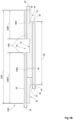
FIG. 1A is an elevation view of an embodiment of a cover for a cable harness of the present disclosure, illustrating a second layer disposed adjacent to a first layer and an adhesive layer disposed between the second layer and the first layer with portions of the adhesive layer left uncovered in order to adhere the cover around the cable harness; -
FIG. 1B is an elevation view of another embodiment of a cover for a cable harness of the present disclosure, illustrating a second layer disposed adjacent a first layer, which is bifurcated into a first portion and a second portion, and an adhesive layer disposed between the second layer and the first layer, with portions of the adhesive layer left uncovered by both the first layer and the second layer; -
FIG. 2 is a slight perspective view of a covered cable harness with the cover ofFIG. 1A covering a plurality of cables of the cable harness in a lengthwise, longitudinal, fashion, illustrating a hole disposed through the first layer (such as caused by something abrading the first layer away) thus making the second layer visible through the first layer; and -
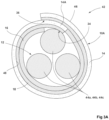
FIG. 3 is an elevation view of a cross-section of the covered cable harness ofFIG. 2 taken through line III-III ofFIG. 2 , illustrating one of the portions of the adhesive layer left uncovered by the second layer overlapping an outer surface of the first layer thus adhering the cover to itself to secure the cover around the cable harness. - Referring to
FIG. 1A , acover 10A for acable harness 12 includes afirst layer 14A, asecond layer 16, and anadhesive layer 18. Thesecond layer 16 is layered adjacent to thefirst layer 14A. Thefirst layer 14A and thesecond layer 16 are sheets of material. Thefirst layer 14A has a length 20 (representing essentially the length 20 of thecover 10A) and awidth 22 greater than athickness 24 thereof. Likewise, thesecond layer 16 has a length 26 (typically coextensive with the length 20 of thefirst layer 14A) and awidth 28 greater than athickness 30 thereof. Theadhesive layer 18 is adhered to thefirst layer 14A. In embodiments, theadhesive layer 18 is applied with athickness 32 on thefirst layer 14A, and thesecond layer 16 is then applied over theadhesive layer 18, thus adhering thefirst layer 14A and thesecond layer 16 together. Thesecond layer 16 can additionally or alternatively be sewn to thefirst layer 14A. - The
second layer 16 does not cover at least afirst portion 34 of theadhesive layer 18. In embodiments, thesecond layer 16 does not cover 10A at least asecond portion 36 of theadhesive layer 18. In those embodiments, thewidth 28 of thesecond layer 16 is narrower than thewidth 22 of thefirst layer 14A, andsecond layer 16 is layered offset relative to thefirst layer 14A so that thefirst portion 34 of theadhesive layer 18 remaining exposed is disposed to oneside 38 of thesecond layer 16 and thesecond portion 36 of theadhesive layer 18 remaining exposed is disposed to anotherside 40 of thesecond layer 16. The oneside 38 and theother side 40 generally face in opposite directions. - Referring to
FIG. 1B , another embodiment of acover 10B for thecable harness 12 is herein described. Thecover 10B includes afirst layer 14B, thesecond layer 16, and theadhesive layer 18 like thefirst layer 14A ofcover 10A ofFIG. 1A , However, thefirst layer 14B of thecover 10B is bifurcated into a first portion 14B1 and a second portion 14B2. Agap 15 separates the first portion 14B1 and the second portion 14B2. The bifurcation of thefirst layer 14B into the first portion 14B1 and the second portion 14B2 leaves athird portion 37 of theadhesive layer 18 exposed at the side of thefirst layer 14B between the first portion 14B1 and the second portion 14B2. The first portion 14B1 has a width 22B1. The second portion 14B2 has a width 22B2. In embodiments, the width 22B2 of the second portion 14B2 is greater than the width 22B1 of the first portion 14B1. The width 22B1 and the width 22B2 span across awidth 22B of thefirst layer 14B. In embodiments, adhesive is applied to the first portion 14B1, the second portion 14B2, and thesecond layer 16. Then the first portion 14B1 with adhesive and the second portion 14B2 with adhesive are applied to thesecond layer 16 with adhesive, with thegap 15 separating the first portion 14B1 and the second portion 14B2. The adhesives from the first portion 14B1, the second portion 14B2, and thesecond layer 16 collectively form theadhesive layer 18 of thecover 10B. The first portion 14B1 is applied to thesecond layer 16 so that the first portion 14B1 overhangs thesecond layer 16 leaving thefirst portion 34 of theadhesive layer 18 exposed. The second portion 14B2 is applied to thesecond layer 16 so that the second portion 14B2 overhangs thesecond layer 16 leaving thesecond portion 36 of theadhesive layer 18 exposed. Thegap 15 in thefirst layer 14B exposing thethird portion 37 of theadhesive layer 18 is disposed above thesecond layer 16. Thecover 10B is otherwise the same as thecover 10A, and like numbers refer to like features. - Referring now additionally to
FIGS. 2 ,3A , and3B , a coveredcable harness 42 includes thecable harness 12, which includes a plurality ofcables cover 10A (FIG. 3A ) or thecover 10B (FIG. 3B ) covers at least a portion of the plurality ofcables first layer outer surface 46 that faces away from the plurality ofcables first layer inner surface 48 that faces toward the plurality ofcables adhesive layer 18 is adhered to theinner surface 48 of thefirst layer second layer 16 faces theinner surface 48 of thefirst layer second layer 16 is disposed radially closer the plurality ofcables first layer second layer 16, theadhesive layer 18, and thefirst layer - The
adhesive layer 18 at least partially secures thecover cables FIGS. 3A ,3B , thewidth 22 of thefirst layer cables second layer 16 facing the plurality ofcables first portion 34 of theadhesive layer 18 that is not covered by thesecond layer 16 adheres to one or more cables of the plurality ofcables cover 10A ofFIG. 3A , thesecond portion 36 of theadhesive layer 18 that is not covered by thesecond layer 16 overlaps thefirst layer 14A and adheres to theouter surface 46 of thefirst layer 14A, thus securing thecover 10A radially around the plurality ofcables cover 10A. With thecover 10B ofFIG. 3B , thesecond portion 36 of theadhesive layer 18 that is not covered by thesecond layer 16 overlaps thefirst layer 14B and adheres to one or more of (i) theouter surface 46 of thefirst layer 14B and (ii) thethird portion 37 of theadhesive layer 18, thus securing thecover 10B radially around the plurality ofcables cover 10B. - The
first layer second layer 16 has a second color. The second color is different than the first color. - During use, something contacts the covered
cable harness 42 and creates ahole 50 through thefirst layer second layer 16. Because thesecond layer 16 is the second color, which is different than the first color of thefirst layer person 52 in anenvironment 54 external to the coveredcable harness 42 can see that thehole 50 exists. More particularly, theperson 52 sees the second color of thesecond layer 16 through thehole 50 through thefirst layer person 52 then deduces that thefirst layer hole 50. Theperson 52 thus knows that something is causing the coveredcable harness 42 to wear. Theperson 52 can then take remedial action to prevent the wear, replace the coveredcable harness 42, or both, before the something wears entirely through thecover cables cover cables - In embodiments, the second color of the
second layer 16 is white. In embodiments, the second color has CIELAB color space values within following ranges: L*, 70 to 100; a*, -10 to 10; and b*, -10 to 10. In embodiments, the second color has CIELAB color space values within following ranges: L*, 70 to 100; a*, -3 to 3; and b*, -3 to 3. In embodiments, the second color has CIELAB color space values within the following ranges: L*, 80 to 100; a*, -4 to 4; and b*, -4 to 4. In embodiments, the second color has CIELAB color space values within the following ranges: L*, 90 to 100; a*, -6 to 6; and b*, -6 to 6. In embodiments, while the second color has CIELAB color space values within any of the aforementioned ranges, the first color of thefirst layer first layer - In embodiments, the
second layer 16 comprises fibers that are substantially free of dye. In embodiments, thesecond layer 16 comprises fibers that are substantially free of dye and formed from recycled polymer(s). In embodiments, thesecond layer 16 comprises fibers that are substantially free of dye and formed from recycled polyethylene terephthalate. - In embodiments, the first color of the
first layer - In embodiments, either one or both the
first layer second layer 16 comprise a polymeric or organic textile. The textile can be woven or non-woven. In embodiments where the textile is polymeric, the textile can comprise a polyester such as polyethylene terephthalate, a polyamide, a polyolefin, or a combination of those polymers. The textile can further include fillers, reinforcements, and the like such as glass fibers, carbon fibers or other high elastic modulus polymeric fibers. The textile can be considered to be a cloth, a velour, or a fleece. In embodiments, thefirst layer second layer 16 comprises a polyethylene terephthalate textile. In embodiments, thefirst layer second layer 16 comprises a textile characterized as velour. - In embodiments, the
first layer second layer 16 comprise different polymeric or organic textiles. Without being bound by theory, it is believed that the utilization of different materials for thefirst layer second layer 16 imbues thecover first layer second layer 16 utilized identical materials. - In embodiments, the polymeric textiles of the
first layer second layer 16 are configured to have certain densities (also referred to herein as "basis weight"). In embodiments, the basis weight of thefirst layer second layer 16 is within a range of 50 g/m2 to 1000 g/m2. In embodiments, the basis weight of thefirst layer 14 and thesecond layer 16 is 50 g/m2, 100 g/m2, 200 g/m2, 300 g/m2, 400 g/m2, 500 g/m2, 600 g/m2, 700 g/m2, 800 g/m2, 900 g/m2, or 1000 g/m2, or within any range defined by any two of those values (e.g., 100 g/m2 to 500 g/m2, 300 g/m2 to 700 g/m2). In embodiments of thecover first layer second layer 16 is within a range of 50 g/m2 to 250 g/m2. - In embodiments, the
thicknesses first layer second layer 16 are each within a range of 50 µm to 2000 µm. In embodiments, thethicknesses first layer second layer 16 are 50 µm, 100 µm, 200 µm, 300 µm, 400 µm, 500 µm, 600 µm, 700 µm, 800 µm, 900 µm, 1000 µm, 1100 µm, 1200 µm, 1300 µm, 1400 µm, 1500 µm, 1600 µm, 1700 µm, 1800 µm, 1900 µm, or 2000 µm, or within any range defined by any two of those values (e.g. ,100 µm to 500 µm, 300 µm to 1400 µm, etc.). In embodiments, thethickness 24 of thefirst layer thickness 30 of thesecond layer 16 is 150 µm to 600 µm. - In embodiments, the
adhesive layer 18 is or comprises an acrylate-based adhesive, an acrylate-based adhesive, a polyacrylate-based adhesive, a silicone-based adhesive, a rubber-based adhesive, a natural rubber-based adhesive or a combination of these adhesives. In embodiments, theadhesive layer 18 is a pressure-sensitive adhesive. In embodiments, the pressure-sensitive adhesive is made from: (a) 70.0 to 90.0 wt% of n-butyl acrylate and/or 2-ethylhexyl acrylate; (b) 10.0 to 20.0 wt% of one or more ethylenically unsaturated monomers, where at least 50.0 wt% of the ethylenically unsaturated monomers (monomer (b)) comprises methyl methacrylate; (c) 0 to 10.0 wt% of a further ethylenically unsaturated monomer, different from monomer (b); and (d) 0 to 5.0 wt% of an ethylenically unsaturated monomer having an acid or acid-anhydride function. - In embodiments, the
cover first portion 34 and thesecond portion 36 of theadhesive layer 18. The backing layer can comprise one or more polymeric materials such as polyvinyl chloride (PVC), polyethylene, polypropylene, and polyester. - As mentioned, in embodiments, the
adhesive layer 18 comprises thethickness 32. In embodiments, thethickness 32 of theadhesive layer 18 is within a range of 50 µm to 1000 µm. In embodiments, thethickness 32 of theadhesive layer 18 is 50 µm, 100 µm, 200 µm, 300 µm, 400 µm, 500 µm, 600 µm, 700 µm, 800 µm, 900 µm, or 1000 µm, or within any range defined by any two of those values (e.g., 100 µm to 800 µm, 200 µm to 300 µm, etc.). - According to some embodiments, the
cover cover - In embodiments, the
cover cover
Claims (20)
- A cover for a cable harness comprising:a first layer comprising a first color;a second layer layered adjacent to the first layer, the second layer comprising a second color that is different than the first color; andan adhesive layer adhered to the first layer, at least a portion of the adhesive is not covered by the second layer.
- The cover of claim 1, whereinthe first color is black; andthe second color is white.
- The cover of claim 1, wherein
the second color has CIELAB color space values within the following ranges:L*, 70 to 100;a*, -10 to 10; andb*, -10 to 10. - The cover of claim 3, wherein
the first color has CIELAB color space values within the following ranges:L*, 0 to 30;a*, -10 to 10; andb*, -10 to 10. - The cover of claim 1, wherein
the second layer comprises fibers that are substantially free of dye. - The cover of claim 1, wherein
the second color, but not the first color, has CIELAB color space values within the following ranges:L*, 70 to 100;a*, -3 to 3; andb*, -3 to 3. - The cover of claim 1, wherein
the second color, but not the first color, has CIE LAB color space values within the following ranges:L*, 80 to 100;a*, -4 to 4; andb*, -4 to 4. - The cover of claim 1, wherein
the second color, but not the first color, has CIELAB color space values within the following ranges:L*, 90 to 100;a*, -6 to 6; andb*, -6 to 6. - The cover of claim 1, wherein
at least one of the first layer and the second layer comprises polyethylene terephthalate. - The cover of claim 1, wherein
at least one of the first layer and the second layer comprise a polyamide. - A covered cable harness comprising:a plurality of cables; anda cover covering at least a portion of the plurality of cables, the cover comprising:a first layer comprising a first color, an outer surface facing away from the plurality of cables, and an inner surface facing toward the plurality of cables; anda second layer layered adjacent to the first layer and facing the inner surface of the first layer, the second layer (i) disposed radially closer to the plurality of cables than the first layer and (ii) comprising a second color that is different than the first color.
- The covered cable harness of claim 11, whereinthe cover further comprises an adhesive adhered to the inner surface of the first layer; andat least a portion of the adhesive is not covered by the second layer and is adhered to the inner surface of the first layer to at least partially secure the cover around the plurality of cables.
- The covered cable harness of claim 11, whereinthe first layer further comprises a hole; andthe second color of the second layer is visible from an environment external to the covered cable harness through the hole through the first layer.
- The covered cable harness of claim 11, whereinthe first color is black; andthe second color is white.
- The covered cable harness of claim 11, wherein
the second color has CIELAB color space values within the following ranges:L*, 70 to 100;a*, -10 to 10; andb*, -10 to 10. - The covered cable harness of claim 15, wherein
the first color has CIELAB color space values within the following ranges:L* , 0 to 30;a*, -10 to 10; andb*, -10 to 10. - The covered cable harness of claim 11, wherein
the second color, but not the first color, has CIELAB color space values within the following ranges:L*, 80 to 100;a*, -4 to 4; andb*, -4 to 4. - The covered cable harness of claim 11, wherein
the second color, but not the first color, has CIELAB color space values within the following ranges:L*, 90 to 100;a*, -6 to 6; andb*, -6 to 6. - The covered cable harness of claim 11, wherein
the second layer comprises fibers that are substantially free of dye. - The covered cable harness of claim 11, wherein
at least one of the first layer and the second layer comprise polyethylene terephthalate or a polyamide.
Applications Claiming Priority (1)
| Application Number | Priority Date | Filing Date | Title |
|---|---|---|---|
| US17/407,505 US11569006B1 (en) | 2021-08-20 | 2021-08-20 | Cover for a cable harness with different color layers |
Publications (1)
| Publication Number | Publication Date |
|---|---|
| EP4138097A1 true EP4138097A1 (en) | 2023-02-22 |
Family
ID=83004950
Family Applications (1)
| Application Number | Title | Priority Date | Filing Date |
|---|---|---|---|
| EP22191215.7A Withdrawn EP4138097A1 (en) | 2021-08-20 | 2022-08-19 | Cover for a cable harness with different color layers |
Country Status (2)
| Country | Link |
|---|---|
| US (1) | US11569006B1 (en) |
| EP (1) | EP4138097A1 (en) |
Citations (8)
| Publication number | Priority date | Publication date | Assignee | Title |
|---|---|---|---|---|
| DE10101051A1 (en) * | 2000-01-12 | 2001-08-30 | Delphi Tech Inc | Laminate used for electrically screening a cable harness comprise a carrier layer, an adhesive and a conducting layer |
| US20070154684A1 (en) * | 2005-12-30 | 2007-07-05 | Baer Angela L | Self-adhesive protective substrate |
| DE102008056554A1 (en) * | 2008-11-10 | 2010-05-20 | Tesa Se | Sheath for wrapping elongated goods e.g. cables, has adhesive tape overlapping and protruding from edge of covering, where tape and/or covering includes color marks that are optically and/or haptically differentiated from each other |
| WO2011149463A1 (en) * | 2010-05-27 | 2011-12-01 | Prysmian Power Cables And Systems Usa, Llc | Electrical cable with semi-conductive outer layer distinguishable from jacket |
| US20130017746A1 (en) * | 2011-07-14 | 2013-01-17 | Tesa Se | Adhesive Tape with Textile Carrier for Cable Bandaging |
| US20160168427A1 (en) * | 2012-10-17 | 2016-06-16 | Coroplast Fritz Muller Gmbh & Co. Kg | Highly Abrasion-Resistant Technical Adhesive Tape With Double-Layer Liner |
| EP3552816A1 (en) * | 2018-04-13 | 2019-10-16 | tesa SE | Multilayer wrap for bundling of cable and bundled cable |
| US20210229343A1 (en) * | 2017-12-20 | 2021-07-29 | Certoplast Technische Klebebänder Gmbh | Apparatus for wrapping cable |
Family Cites Families (46)
| Publication number | Priority date | Publication date | Assignee | Title |
|---|---|---|---|---|
| DE4209210A1 (en) | 1992-03-21 | 1993-09-23 | Certoplast Vorwerk & Sohn Gmbh | Adhesive tape, esp. for prodn. of cable forms - has fabric substrate treated with fire retardants and coated with rubber-based adhesive contg. antimony tri:oxide and deca:bromo:di:phenyl oxide |
| FR2758647B1 (en) | 1997-01-22 | 1999-02-26 | Plasto Sa | SHEATH FOR WIRE HARNESSES |
| WO1998058032A1 (en) | 1997-06-18 | 1998-12-23 | Sliontec Corporation | Adhesive tape for binding wire harnesses |
| WO1999050943A1 (en) | 1998-03-31 | 1999-10-07 | Hänsel Verbundtechnik Gmbh & Co. Kg | Protective sheath |
| JP3311672B2 (en) | 1998-05-27 | 2002-08-05 | 株式会社スリオンテック | Cloth adhesive tape for binding wire harness |
| DE19846901A1 (en) | 1998-10-12 | 2000-04-13 | Beiersdorf Ag | Process for the production of adhesive tapes, adhesive tapes coated on one side being subjected to radiation-chemical crosslinking, and use of the adhesive tapes |
| FR2797268B1 (en) | 1999-08-02 | 2002-03-22 | Scapa Tapes France S A | ADHESIVE TAPE ON HAND-TEARABLE POLYESTER FABRIC |
| DE10036805A1 (en) * | 2000-07-28 | 2002-02-07 | Tesa Ag | Process for sheathing elongated goods, such as cable sets in particular |
| FR2833965B1 (en) | 2001-12-21 | 2005-10-28 | Scapa France | ADHESIVE TAPE RESISTANT TO HIGH TEMPERATURES |
| DE20306801U1 (en) | 2003-04-30 | 2003-07-17 | Certoplast Vorwerk & Sohn GmbH, 42285 Wuppertal | Adhesive tape useful in the automobile industry comprises an adhesive coating on a polyurethane film support |
| DE102004028825B4 (en) | 2004-06-15 | 2022-07-14 | Coroplast Fritz Müller Gmbh & Co. Kg | Wiring harness and use of a technical tape |
| DE102004058283A1 (en) | 2004-12-02 | 2006-06-08 | Tesa Ag | Double-sided pressure-sensitive adhesive tapes for the production of LC displays with light-reflecting and absorbing properties |
| DE102005037662A1 (en) | 2005-08-05 | 2007-02-08 | Tesa Ag | Adhesive tape with a carrier made of a spunbonded nonwoven, which is at least partially coated on one side with a pressure-sensitive adhesive |
| DE102005037663A1 (en) | 2005-08-05 | 2007-02-08 | Tesa Ag | Use of an adhesive tape with a carrier made of a spunbonded nonwoven, which is at least partially coated on one side with a pressure-sensitive adhesive |
| DE102005060231A1 (en) | 2005-12-14 | 2007-06-21 | Tesa Ag | Wrap tape made of a TPU film |
| DE102006025473A1 (en) | 2006-05-30 | 2007-12-06 | Tesa Ag | Device for dispensing an agent from a carrier tape and supply reel for such a carrier tape |
| DE102007018381A1 (en) | 2007-04-17 | 2008-10-23 | Tesa Ag | Heat-reflecting adhesive tape |
| EP2045303A1 (en) | 2007-10-05 | 2009-04-08 | Scapa France | Abrasion-resistant adhesive tape |
| US20110067799A1 (en) | 2008-04-30 | 2011-03-24 | Tesa Se | Adhesive tape |
| US20140065377A1 (en) | 2012-09-04 | 2014-03-06 | Berry Plastics Corporation | Abrasuib-resistant, hand-tearable adhesive tape |
| JP2014054137A (en) * | 2012-09-10 | 2014-03-20 | Yazaki Corp | Wire harness |
| DE202012103442U1 (en) | 2012-09-10 | 2012-09-28 | Certoplast Vorwerk & Sohn Gmbh | Adhesive tape, in particular winding tape for bundling cables in automobiles |
| EP2746341B2 (en) * | 2012-12-21 | 2018-11-14 | Ems-Patent Ag | Stain-resistant articles and their use |
| DE202013102969U1 (en) | 2013-07-05 | 2014-10-22 | Coroplast Fritz Müller Gmbh & Co. Kg | duct tape |
| EP2821453B1 (en) | 2013-07-05 | 2016-04-27 | Coroplast Fritz Müller GmbH & Co. KG | Adhesive tape |
| EP2824153B1 (en) | 2013-07-08 | 2016-10-26 | Coroplast Fritz Müller GmbH & Co. KG | Cable wrapping tape |
| US10858546B2 (en) | 2013-07-08 | 2020-12-08 | Coroplast Fritz Müller Gmbh & Co. Kg | Cable wrapping tape |
| DE102013107157A1 (en) | 2013-07-08 | 2015-01-08 | Coroplast Fritz Müller Gmbh & Co. Kg | "Cable wrap" |
| DE102014206349A1 (en) | 2014-04-02 | 2015-10-08 | Tesa Se | duct tape |
| DE202015100125U1 (en) | 2015-01-13 | 2015-02-04 | Certoplast Technische Klebebänder Gmbh | Adhesive tape, in particular winding tape |
| JP2016152651A (en) | 2015-02-16 | 2016-08-22 | 住友電装株式会社 | Wire harness |
| US10361015B1 (en) | 2015-12-10 | 2019-07-23 | Encore Wire Corporation | Metal-clad multi-circuit electrical cable assembly |
| DE102015121562B4 (en) | 2015-12-10 | 2021-05-06 | Coroplast Fritz Müller Gmbh & Co. Kg | High-temperature-resistant colored, in particular orange-colored, adhesive tape, method for its production, use of a carrier for its production and use of the adhesive tape for production of cable harnesses |
| DE102016124608B4 (en) | 2016-01-07 | 2021-04-29 | Coroplast Fritz Müller Gmbh & Co. Kg | High-temperature and flame-resistant colored adhesive tape and wiring harness with such an adhesive tape |
| JP2018076409A (en) | 2016-11-08 | 2018-05-17 | 矢崎総業株式会社 | Adhesive tape and wire harness having the adhesive tape |
| WO2018201115A2 (en) * | 2017-04-28 | 2018-11-01 | Melior Innovations, Inc. | High temperature boron ceramic additives, pigments, and formulations |
| DE102017114266B9 (en) | 2017-06-27 | 2020-09-17 | Certoplast Technische Klebebänder Gmbh | Process for the production of a wrapping tape |
| DE202017105607U1 (en) | 2017-09-15 | 2018-12-19 | Mattes & Ammann Gmbh & Co. Kg | Textile tape |
| DE202017107156U1 (en) | 2017-11-24 | 2017-12-05 | Certoplast Technische Klebebänder Gmbh | Orange stain taking into account transition metal based pigments |
| DE202018101649U1 (en) | 2018-03-23 | 2018-04-05 | Certoplast Technische Klebebänder Gmbh | duct tape |
| DE202018103986U1 (en) | 2018-07-11 | 2018-07-20 | Certoplast Technische Klebebänder Gmbh | duct tape |
| DE102018213969A1 (en) | 2018-08-20 | 2020-02-20 | Tesa Se | Adhesive tape for sheathing elongated goods such as, in particular, cable sets and processes for sheathing |
| CN109698044B (en) | 2018-12-29 | 2021-01-15 | 上海神勇机械技术有限公司 | Preformed armor protective line |
| US20200335242A1 (en) * | 2019-04-17 | 2020-10-22 | Raul Caperon | Multiple Circuits Wiring Assembly |
| CN110105891A (en) | 2019-05-13 | 2019-08-09 | 湖南省普瑞达内装材料有限公司 | A kind of automotive wire bundle adhesive tape that wear-resisting property is good |
| US20210040355A1 (en) | 2019-08-07 | 2021-02-11 | Tesa Se | Adhesive tape for jacketing elongate items such as especially cable hamesses and method for jacketing |
-
2021
- 2021-08-20 US US17/407,505 patent/US11569006B1/en active Active
-
2022
- 2022-08-19 EP EP22191215.7A patent/EP4138097A1/en not_active Withdrawn
Patent Citations (8)
| Publication number | Priority date | Publication date | Assignee | Title |
|---|---|---|---|---|
| DE10101051A1 (en) * | 2000-01-12 | 2001-08-30 | Delphi Tech Inc | Laminate used for electrically screening a cable harness comprise a carrier layer, an adhesive and a conducting layer |
| US20070154684A1 (en) * | 2005-12-30 | 2007-07-05 | Baer Angela L | Self-adhesive protective substrate |
| DE102008056554A1 (en) * | 2008-11-10 | 2010-05-20 | Tesa Se | Sheath for wrapping elongated goods e.g. cables, has adhesive tape overlapping and protruding from edge of covering, where tape and/or covering includes color marks that are optically and/or haptically differentiated from each other |
| WO2011149463A1 (en) * | 2010-05-27 | 2011-12-01 | Prysmian Power Cables And Systems Usa, Llc | Electrical cable with semi-conductive outer layer distinguishable from jacket |
| US20130017746A1 (en) * | 2011-07-14 | 2013-01-17 | Tesa Se | Adhesive Tape with Textile Carrier for Cable Bandaging |
| US20160168427A1 (en) * | 2012-10-17 | 2016-06-16 | Coroplast Fritz Muller Gmbh & Co. Kg | Highly Abrasion-Resistant Technical Adhesive Tape With Double-Layer Liner |
| US20210229343A1 (en) * | 2017-12-20 | 2021-07-29 | Certoplast Technische Klebebänder Gmbh | Apparatus for wrapping cable |
| EP3552816A1 (en) * | 2018-04-13 | 2019-10-16 | tesa SE | Multilayer wrap for bundling of cable and bundled cable |
Also Published As
| Publication number | Publication date |
|---|---|
| US11569006B1 (en) | 2023-01-31 |
Similar Documents
| Publication | Publication Date | Title |
|---|---|---|
| CN1946549B (en) | Highly abrasionproof strip for armouring cable harnesses in motorcars | |
| CN102163475B (en) | High voltage cabtire cable | |
| CN103814320A (en) | Optical fiber ribbon cable with enhanced ribbon stack coupling and method thereof | |
| KR20040068177A (en) | Rope for elevator | |
| RU2447630C1 (en) | Electromagnetic interference suppression sheet comprising pressure-sensitive adhesive layer with structured surface | |
| US20020098311A1 (en) | Protective sheathing | |
| CN110371342B (en) | Multi-layer winding for bundling cables and bundled cable | |
| US11569006B1 (en) | Cover for a cable harness with different color layers | |
| US10204714B2 (en) | Sheathing for an elongated product and use thereof | |
| US5122919A (en) | Liner for floppy disk jacket | |
| CN112969875A (en) | Sealing member and composite sealing structure | |
| US20200407599A1 (en) | Adhesive cable-wrapping tape | |
| EP0916710A1 (en) | Adhesive tape for binding wire harnesses | |
| EP1498260A1 (en) | Protective member for protecting electric wires | |
| JP2018068025A (en) | Electric wire protection material and wire harness including the same | |
| JP2003272447A (en) | Armoring structure of wire harness | |
| JP2014141606A (en) | Fire protection tape | |
| US11993738B2 (en) | Adhesive tape cross-tearable by hand, with a carrier comprising a woven fabric and a stitchbonded nonwoven | |
| JP3220854U (en) | Branch protection sheet for wire bundle or wire harness | |
| CN1141082A (en) | Water-barrier material for layer twisted communication cable and layer twisted communication cable using it | |
| JP4602531B2 (en) | Conveyor belt and method for joining the conveyor belt | |
| JPS60116437A (en) | Electrical and electromagnetic trouble preventive flexible sheet | |
| JP3481514B2 (en) | Multi-layer slot type optical cable | |
| JPH102379A (en) | Toothed belt | |
| US20250092286A1 (en) | Laminated Conductive Fabric Tape |
Legal Events
| Date | Code | Title | Description |
|---|---|---|---|
| PUAI | Public reference made under article 153(3) epc to a published international application that has entered the european phase |
Free format text: ORIGINAL CODE: 0009012 |
|
| STAA | Information on the status of an ep patent application or granted ep patent |
Free format text: STATUS: THE APPLICATION HAS BEEN PUBLISHED |
|
| AK | Designated contracting states |
Kind code of ref document: A1 Designated state(s): AL AT BE BG CH CY CZ DE DK EE ES FI FR GB GR HR HU IE IS IT LI LT LU LV MC MK MT NL NO PL PT RO RS SE SI SK SM TR |
|
| STAA | Information on the status of an ep patent application or granted ep patent |
Free format text: STATUS: REQUEST FOR EXAMINATION WAS MADE |
|
| 17P | Request for examination filed |
Effective date: 20230822 |
|
| RBV | Designated contracting states (corrected) |
Designated state(s): AL AT BE BG CH CY CZ DE DK EE ES FI FR GB GR HR HU IE IS IT LI LT LU LV MC MK MT NL NO PL PT RO RS SE SI SK SM TR |
|
| TPAC | Observations filed by third parties |
Free format text: ORIGINAL CODE: EPIDOSNTIPA |
|
| TPAC | Observations filed by third parties |
Free format text: ORIGINAL CODE: EPIDOSNTIPA |
|
| TPAC | Observations filed by third parties |
Free format text: ORIGINAL CODE: EPIDOSNTIPA |
|
| STAA | Information on the status of an ep patent application or granted ep patent |
Free format text: STATUS: EXAMINATION IS IN PROGRESS |
|
| 17Q | First examination report despatched |
Effective date: 20250320 |
|
| STAA | Information on the status of an ep patent application or granted ep patent |
Free format text: STATUS: THE APPLICATION IS DEEMED TO BE WITHDRAWN |
|
| 18D | Application deemed to be withdrawn |
Effective date: 20250722 |