EP4136559B1 - System und verfahren für datenschutzbewahrendes verteiltes training von maschinenlernmodellen auf verteilten datensätzen - Google Patents
System und verfahren für datenschutzbewahrendes verteiltes training von maschinenlernmodellen auf verteilten datensätzen Download PDFInfo
- Publication number
- EP4136559B1 EP4136559B1 EP20725150.5A EP20725150A EP4136559B1 EP 4136559 B1 EP4136559 B1 EP 4136559B1 EP 20725150 A EP20725150 A EP 20725150A EP 4136559 B1 EP4136559 B1 EP 4136559B1
- Authority
- EP
- European Patent Office
- Prior art keywords
- model
- local
- data
- global
- encrypted
- Prior art date
- Legal status (The legal status is an assumption and is not a legal conclusion. Google has not performed a legal analysis and makes no representation as to the accuracy of the status listed.)
- Active
Links
Images


Classifications
-
- G—PHYSICS
- G06—COMPUTING OR CALCULATING; COUNTING
- G06F—ELECTRIC DIGITAL DATA PROCESSING
- G06F21/00—Security arrangements for protecting computers, components thereof, programs or data against unauthorised activity
- G06F21/60—Protecting data
- G06F21/62—Protecting access to data via a platform, e.g. using keys or access control rules
- G06F21/6218—Protecting access to data via a platform, e.g. using keys or access control rules to a system of files or objects, e.g. local or distributed file system or database
- G06F21/6245—Protecting personal data, e.g. for financial or medical purposes
-
- G—PHYSICS
- G06—COMPUTING OR CALCULATING; COUNTING
- G06F—ELECTRIC DIGITAL DATA PROCESSING
- G06F7/00—Methods or arrangements for processing data by operating upon the order or content of the data handled
- G06F7/38—Methods or arrangements for performing computations using exclusively denominational number representation, e.g. using binary, ternary, decimal representation
- G06F7/48—Methods or arrangements for performing computations using exclusively denominational number representation, e.g. using binary, ternary, decimal representation using non-contact-making devices, e.g. tube, solid state device; using unspecified devices
- G06F7/544—Methods or arrangements for performing computations using exclusively denominational number representation, e.g. using binary, ternary, decimal representation using non-contact-making devices, e.g. tube, solid state device; using unspecified devices for evaluating functions by calculation
-
- G—PHYSICS
- G06—COMPUTING OR CALCULATING; COUNTING
- G06N—COMPUTING ARRANGEMENTS BASED ON SPECIFIC COMPUTATIONAL MODELS
- G06N20/00—Machine learning
-
- G—PHYSICS
- G06—COMPUTING OR CALCULATING; COUNTING
- G06N—COMPUTING ARRANGEMENTS BASED ON SPECIFIC COMPUTATIONAL MODELS
- G06N3/00—Computing arrangements based on biological models
- G06N3/02—Neural networks
- G06N3/04—Architecture, e.g. interconnection topology
- G06N3/045—Combinations of networks
-
- G—PHYSICS
- G06—COMPUTING OR CALCULATING; COUNTING
- G06N—COMPUTING ARRANGEMENTS BASED ON SPECIFIC COMPUTATIONAL MODELS
- G06N3/00—Computing arrangements based on biological models
- G06N3/02—Neural networks
- G06N3/04—Architecture, e.g. interconnection topology
- G06N3/0499—Feedforward networks
-
- G—PHYSICS
- G06—COMPUTING OR CALCULATING; COUNTING
- G06N—COMPUTING ARRANGEMENTS BASED ON SPECIFIC COMPUTATIONAL MODELS
- G06N3/00—Computing arrangements based on biological models
- G06N3/02—Neural networks
- G06N3/08—Learning methods
-
- G—PHYSICS
- G06—COMPUTING OR CALCULATING; COUNTING
- G06N—COMPUTING ARRANGEMENTS BASED ON SPECIFIC COMPUTATIONAL MODELS
- G06N3/00—Computing arrangements based on biological models
- G06N3/02—Neural networks
- G06N3/08—Learning methods
- G06N3/09—Supervised learning
-
- G—PHYSICS
- G06—COMPUTING OR CALCULATING; COUNTING
- G06N—COMPUTING ARRANGEMENTS BASED ON SPECIFIC COMPUTATIONAL MODELS
- G06N3/00—Computing arrangements based on biological models
- G06N3/02—Neural networks
- G06N3/08—Learning methods
- G06N3/098—Distributed learning, e.g. federated learning
-
- H—ELECTRICITY
- H04—ELECTRIC COMMUNICATION TECHNIQUE
- H04L—TRANSMISSION OF DIGITAL INFORMATION, e.g. TELEGRAPHIC COMMUNICATION
- H04L9/00—Cryptographic mechanisms or cryptographic arrangements for secret or secure communications; Network security protocols
- H04L9/008—Cryptographic mechanisms or cryptographic arrangements for secret or secure communications; Network security protocols involving homomorphic encryption
-
- G—PHYSICS
- G06—COMPUTING OR CALCULATING; COUNTING
- G06F—ELECTRIC DIGITAL DATA PROCESSING
- G06F2207/00—Indexing scheme relating to methods or arrangements for processing data by operating upon the order or content of the data handled
- G06F2207/38—Indexing scheme relating to groups G06F7/38 - G06F7/575
- G06F2207/48—Indexing scheme relating to groups G06F7/48 - G06F7/575
- G06F2207/4802—Special implementations
- G06F2207/4818—Threshold devices
- G06F2207/4824—Neural networks
Definitions
- the present invention generally relates to electronic data processing, and more particularly, relates to methods, computer program products and systems for improving data input by a user to modify configuration settings for physical entities.
- HE homomorphic encryption-based
- SMC hybrid
- Anytrust model in D. Wolinsky, H. Corrigan-Gibbs, B. Ford, and A. Johnson. Scalable anonymous group communication in the anytrust model. 2012 focus on limited ML operations (e.g., the training of regularized linear models with low number of features) and are not quantum-secure.
- W. Zheng, R. A. Popa, J. E. Gonzalez, and I. Stoica. Helen Maliciously secure coopetitive learning for linear models.
- the aforementioned distributed approaches are practical only with a small number of parties and focus either on training or prediction. Moreover, they do not consider the complete ML workflow, nor enable the training of a model that remains secret and enables oblivious prediction on secret data.
- the trained model is as sensitive as the data on which it is trained, and the use of the model after the training has to be tightly controlled. For example, entities that collaborate to train a ML model should all equally benefit from the resulting model, and its usage has to be controlled.
- MapReduce defines parallel and distributed algorithms in the following abstraction: PREPARE (data preparation), MAP (distributed computations executed independently by multiple nodes or machines), COMBINE (combination of the MAP results, e.g., aggregation) and REDUCE (computation on the combined results).
- the herein disclosed approach determines and delimits which information, e.g., MAP outputs, have to be protected to design a decentralized privacy-preserving system for ML training and prediction.
- the model is locally trained by the DPs (MAP) (i.e. the DPs locally perform some number of training iterations of the model learning process) and the results are iteratively combined (COMBINE) to update the global model (REDUCE).
- MAP DPs
- COMPINE global model
- the partitioned (distributed) data is leveraged to enable DPs to keep control of their respective data, and the computation is distributed to provide an efficient solution for the training of ML models on confidential/secret data.
- the model is kept secret from all entities and is obliviously and collectively used to provide predictions on confidential/secret data that are known only to the entity requesting the prediction (that is, to the data consumer).
- a system for scalable privacy-preserving distributed learning is proposed that enables the privacy-preserving training of machine learning models such as so-called feed-forward neural networks.
- Feed-forward neural networks are composed of a pipeline of layers in which the first layer is called the Input Layer, the last one is the Output Layer and all the in-between layers are Hidden Layers (as their values are not observed in the training set).
- Feed-forward neural networks with more than one hidden layer are often referred to as deep neural networks.
- the layers are vectors of neurons, the input and output neurons simply input and output values respectively, whereas the neurons in the hidden layers define an activation function that processes the inputs and produces one scalar output per neuron.
- the feed-forward neural networks use hidden layers comprising only activation functions that can be approximated by a polynomial function.
- the neurons are connected by weighted links; the weight of a link multiplies the value that is sent from one neuron to the other.
- the goal of the neural network is to adapt these weights to capture a (possibly complex) relation between the input and the output. This can be done by training the neural network by using a training (labelled) dataset in which the outputs for specific inputs are known.
- the weights are iteratively adapted to capture this input-output relation while minimizing the error such that the network can then be used to predict outputs for non-labelled inputs.
- this iterative algorithm aims at reducing the error (the difference between the obtained output and the true (label) output) by finding the weights that correspond to the minimum of a loss function depending on this error. This is done by calculating the update on the weights based on the variation of the loss function. For example, this can be done efficiently by computing the gradient of the loss function and using the chain rule that links the layers backwards, from the output layer to the input layer.
- a Generalized Linear Model can be defined as a neural network that comprises a single hidden layer made of one node that defines the activation function according to the GLM's type.
- GLMs capture complex non-linear relations (e.g., logistic regression), and are widely-used in different domains such as engineering, healthcare, etc.
- building SPINDLE on SGD provides a widely-applicable system that can be further extended to other ML models using SGD for training the respective ML models. Examples of such other ML models are described in:
- SPINDLE can efficiently train a logistic regression model in less than a minute, achieving an accuracy of 83.9% (i.e., the trained model predicted the correct label for 83.9% percent of the unlabeled data samples that it processed), comparable to a non-secure centralized solution.
- the distribution of the workload enables SPINDLE to efficiently cope with a large number of DPs (parties), as its execution time is practically independent of it. Moreover, it accommodates a large number of features, by optimizing the use of the cryptosystem's packing capabilities, leveraging single-instruction-multiple-data (SIMD) operations.
- SIMD single-instruction-multiple-data
- the various training datasets are provided by a plurality of data providers which are communicatively coupled.
- the communicative coupling is implemented such that each data provider can exchange information with each other data provider of the plurality. However, this does not require a direct communication channel between a particular data provider and all remaining data providers. Rather, it is sufficient when two data providers can communicate via one or more of the other data providers.
- each of the data providers has a respective local machine learning model, referred to as local model herein.
- the respective local training dataset of the data provider is used for training the local model by using an iterative training algorithm (IA).
- IA iterative training algorithm
- the machine learning models may be implemented by feed-forward neural networks with one or more hidden layers wherein the one or more hidden layers comprise only activation functions that can be approximated by a polynomial function.
- the used encryption scheme may limit the activation functions to polynomial functions.
- “Clear-text" systems i.e. systems without encryption
- the system can approximate the "clear-text" activations by polynomials.
- each of the data providers has a portion of a cryptographic distributed secret key and a corresponding collective cryptographic public key of a multiparty fully homomorphic encryption scheme.
- the local models of all data providers and the global model are encrypted with the collective public key.
- also local training datasets may be encrypted with the collective public key.
- the cryptographic keys are collectively initialized by the plurality of data providers.
- the distributed secret key ensures that no data provider can ever decrypt any of the models if not all data providers having portions of the secret key provide their consent in accordance with the fully homomorphic encryption scheme.
- each data provider has already agreed on a structure and data formats to which all the local models and the local training datasets adhere.
- Each data provider also has initialized its local model (e.g., with a random initialization).
- the plurality of data providers may receive a request of a querying entity including the type of model to train, the set of features, and the label definition.
- the (protected) global model P ( W G ) trained on the data providers' local training datasets is to be provided.
- each data provider may store a copy of the global model, or the global model is stored at a predefined storage location which can be accessed by each of the data providers.
- the current local model of a particular data provider reflects the training status of the local model of this particular data provider after the predefined number of local iterations.
- the local iterations may be performed by the various data providers in parallel substantially simultaneously. However, there is no requirement to execute the local training iterations in parallel.
- each data provider Once each data provider has executed the respective local iterations to arrive at the current local model, it provides its current local model to at least a subset of the data providers.
- each data provider can broadcast its current local model to all other data providers which would enable any data provider to perform the following steps for updating the global model, or the current local model is only sent to a subset of data providers performing the global model updating activities, which - in the extreme case - can be even a single data provider.
- the plurality of data providers being in possession of one or more destination public keys of one or more respective destination entities can collectively switch the global model (encrypted with the collective public key) to the one or more destination public keys and then provide the resulting one or more switched global models to the respective destination entities.
- Each destination entity can decrypt the received global model with the secret-key related to its own destination public key and thus obtain the corresponding decrypted global model.
- a destination entity can then use the clear text global model in its own secure environment by feeding clear text input data into the model to retrieve clear text prediction results from the model. No encrypted query needs to be sent to any of the data providers. Nevertheless, the local models of the various data providers (and their respective local training datasets) remain entirely hidden from the destination entity.
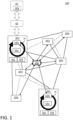
- FIG. 3B illustrates homomorphic combination 1400 of the current local models LM*c by DP3 into a combined model CM1. That is, the protection mechanism used by SPINDLE relies on a distributed (or multiparty) fully-homomorphic encryption scheme [cf. C. Mouchet, J. R. Troncoso-Pastoriza, and J. P. Hubaux. Multiparty homomorphic encryption: From theory to practice. In Technical Report 816 https://eprint.iacr.org/2020/304, 2019 ] in which the secret key is distributed among the parties while the corresponding collective public key pk is known to all of them.
- a distributed (or multiparty) fully-homomorphic encryption scheme [cf. C. Mouchet, J. R. Troncoso-Pastoriza, and J. P. Hubaux. Multiparty homomorphic encryption: From theory to practice. In Technical Report 816 https://eprint.iacr.org/2020/304, 2019 ] in which the secret key is distributed among
- each DP for each feature, locally computes the sum of its value, the sum of its squared values, and the number of samples. These values are encrypted and then aggregated among all DPs. Then, the DPs collectively and obliviously add randomly sampled noise from a deviation. This differentially private mechanism ensures that the computed statistics leak limited information about the DPs' inputs even in the Anytrust model. The result is then shared with all DPs that locally standardize their dataset. Finally, the DPs initialize their local weights and pre-compute operations that involve only their input data ( ⁇ X (i) I(y (i) ) and ⁇ X (i)T ).
- a ciphertext is only rescaled when ⁇ is close to q ⁇ .
- a rescaling operation (ReScale( ⁇ )) is only performed if this condition is met, after a series of consecutive operations.
- a Relin( ⁇ ) operation is performed after each ciphertext-ciphertext multiplication. This Relin( ⁇ ) operation can be deferred if doing so incurs in a lower computational complexity (e.g., if additions performed after the ciphertext-ciphertext multiplications reduce the number of ciphertexts to relinearize).
- each local iteration in MAP involves two sequential matrix-multiplications on encrypted data (Protocol 2, lines 4 and 5).
- Packets is useful to reduce the number of vector multiplications and rotations needed to perform these vector-matrix-multiplications.
- two packing approaches can be integrated which can be chosen depending on the setting.
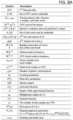
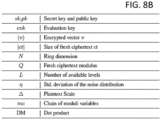
- the SPINDLE system relies on the configuration of (a) cryptographic parameters, that determine its security level, (b) learning parameters, that affect the accuracy of the training and evaluation of the models. Both are tightly linked, and these relations are illustrated in the graph-based model of FIG. 7 , where vertices and edges represent the parameters and their interdependence, respectively. For simplicity, a directed graph is presented that depicts an empirical method for choosing the parameters. It is to be noted that the corresponding non-directed graph is more generic and simply captures the main relations among the parameters.
- Q ciphertext modulus
- ⁇ fresh encryption noise
- the scale ⁇ is configured to provide enough precision for the input data X , and mc (moduli chain) and L (number of levels) are set accordingly.
- the intervals [ a i ,g i ] used for the approximations of the activation functions are defined according to X.
- the approximation degrees d are then set depending on these intervals and the available number of levels L.
- the remaining learning parameters ( ⁇ , p, b, g, m ) are agreed upon by the data providers based on their observation of their part of the dataset.
- the minimum values for the learning rate ⁇ and elastic rate ⁇ are limited by the scale ⁇ , and if they are too small the system might not have enough precision to handle their multiplication with the input data.
- SPINDLE's protocols work seamlessly with data providers that have their input data X in cleartext, and with DPs that obtain data ⁇ X > pk encrypted under the public collective key from their respective data owners.
- SPINDLE enables data storage and computation outsourcing to untrusted cloud providers that offer strong computation capabilities and that are always available.
- PREPARE preparation phase
- the preparation phase PREPARE
- the remaining training phases are executed by the entities that obtain the out-sourced data.
- PREPARE preparation phase
- the remaining training phases are executed by the entities that obtain the out-sourced data.
- operating on encrypted input data impacts the complexity of MAP, as all the multiplication operations (Protocol 2) would happen between ciphertexts, and would therefore require a relinearization operation (Relin( ⁇ )).
- the trained global model in SPINDLE is kept secret from any entity and still enables privacy-preserving predictions on (private) evaluation data input by the querier (offering end-to-end model confidentiality). Nonetheless, if required by the application setting, SPINDLE can enable the revelation of the trained model to the querier or a set of entities. This is achieved by performing a DKeySwitch( ⁇ ).
- the data providers can collaborate to obliviously re-encrypt the trained model weights (which are encrypted under their collective key) with a different public key, e.g., the querier's key.
- the data providers can collectively decrypt (DDec( ⁇ )) the trained model and publicly release it. In such cases, model confidentiality is only assured until the end of the training.
Landscapes
- Engineering & Computer Science (AREA)
- Theoretical Computer Science (AREA)
- Physics & Mathematics (AREA)
- General Physics & Mathematics (AREA)
- Software Systems (AREA)
- General Engineering & Computer Science (AREA)
- General Health & Medical Sciences (AREA)
- Health & Medical Sciences (AREA)
- Computing Systems (AREA)
- Mathematical Physics (AREA)
- Evolutionary Computation (AREA)
- Data Mining & Analysis (AREA)
- Artificial Intelligence (AREA)
- Computational Linguistics (AREA)
- Molecular Biology (AREA)
- Biophysics (AREA)
- Biomedical Technology (AREA)
- Life Sciences & Earth Sciences (AREA)
- Computer Security & Cryptography (AREA)
- Computer Networks & Wireless Communication (AREA)
- Signal Processing (AREA)
- Medical Informatics (AREA)
- Bioethics (AREA)
- Mathematical Analysis (AREA)
- Mathematical Optimization (AREA)
- Pure & Applied Mathematics (AREA)
- Computer Vision & Pattern Recognition (AREA)
- Computational Mathematics (AREA)
- Databases & Information Systems (AREA)
- Computer Hardware Design (AREA)
- Information Retrieval, Db Structures And Fs Structures Therefor (AREA)
Claims (15)
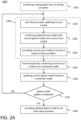
- Computerimplementiertes Verfahren (1000) zum datenschutzwahrenden verteilten Training eines globalen maschinellen Lernmodells - als globales Modell bezeichnet - auf verteilten Datensätzen (DS1 bis DSn), wobei eine Vielzahl von Datenbereitstellern (DP1 bis DPn) kommunikativ gekoppelt sind, so dass jeder Datenbereitsteller Informationen mit jedem anderen Datenbereitsteller austauschen kann,wobei jeder Datenbereitsteller aufweist:ein jeweiliges lokales maschinelles Lernmodell (LM1 bis LMn) - als lokales Modell bezeichnet - und einen jeweiligen lokalen Trainingsdatensatz (DS1 bis DSn) zum Trainieren des lokalen Modells unter Verwendung eines iterativen Trainingsalgorithmus (IA), undeinen Abschnitt eines kryptographischen verteilten geheimen Schlüssels (SKI bis SKn) und einen entsprechenden kryptographischen kollektiven öffentlichen Schlüssel (CPK) eines vollständig homomorphen Mehrparteienverschlüsselungssystems, wobei das lokale Modell mit dem kollektiven öffentlichen Schlüssel verschlüsselt wird,wobei die kryptographischen Schlüssel (SK1 bis SKn, CPK) kollektiv von der Vielzahl von Datenbereitstellern (DS1 bis DSn) initialisiert werden, und die lokalen Modelle (LM1 bis LMn) und lokalen Trainingsdatensätze (DS1 bis DSn) aller Datenbereitstellersysteme die gleiche Struktur und die gleichen Datenformate einhalten und die gleichen Trainingsparameter verwenden, und die Vielzahl aller lokalen Trainingsdatensätze einen globalen Trainingsdatensatz für das globale Modell (GM) darstellt, und das globale Modell auch mit dem kollektiven öffentlichen Schlüssel (CPK) verschlüsselt wird, wobei das Verfahren umfasst:
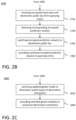
für eine vordefinierte maximale Anzahl von globalen Iterationen:Trainieren (1300) seines lokalen Modells (LM1) durch jeden Datenbereitsteller (DP1) unter Verwendung des jeweiligen lokalen Trainingsdatensatzes (DS1) durch Ausführen (1320) einer vordefinierten Anzahl von lokalen Iterationen eines iterativen Trainingsalgorithmus für sein lokales Modell (LM1) unter homomorpher Verschlüsselung, und Kombinieren (1340) des aktualisierten lokalen Modells (LM1') mit dem aktuellen verschlüsselten globalen Modell (GM) in ein aktuelles lokales Modell (LM1c) und Bereitstellen (1360) des aktuellen lokalen Modells (LM1c) an mindestens eine Teilmenge der Datenbereitsteller (DP2, DP3);homomorphes Kombinieren (1400) mindestens einer Teilmenge der aktuellen lokalen Modelle durch mindestens einen (DP3) der Teilmenge der Datenbereitsteller zu einem kombinierten Modell (CM1); undAktualisieren (1500) des aktuellen globalen Modells (GM) durch den mindestens einen Datenbereitsteller (DP3) auf der Grundlage des kombinierten Modells (CM1);Bereitstellen (1600) des aktualisierten globalen Modells (GM') durch den mindestens einen Datenbereitsteller für mindestens eine Teilmenge der anderen Datenbereitsteller der Vielzahl von Datenbereitstellern. - Verfahren nach Anspruch 1, ferner umfassend:Empfangen (1720) von Eingabedaten, die mit dem kollektiven öffentlichen Schlüssel verschlüsselt sind, von einer abfragenden Entität durch einen bestimmten Datenbereitsteller der Vielzahl von Datenbereitstellern, und Empfangen eines öffentlichen Schlüssels des Ziels einer Zielentität, wobei die Zielentität der Empfänger eines Vorhersageergebnisses ist, das in Reaktion auf die Eingabedaten bereitgestellt werden soll;in Reaktion auf die Eingabedaten, Erhalten (1740) eines oder mehrerer entsprechender verschlüsselter Vorhersagewerte durch Anwenden des verschlüsselten globalen Modells auf die verschlüsselten Eingabedaten; undUmschalten (1760) des einen oder der mehreren verschlüsselten Vorhersagewerte auf den öffentlichen Schlüssel des Ziels durch die Datenbereitsteller, die kollektiv den aktuellen Verschlüsselungsschlüssel der vorhergesagten Vorhersagewerte auf den öffentlichen Schlüssel des Ziels umschalten, ohne zu entschlüsseln, und Bereitstellen (1780) des umgeschalteten einen oder der mehreren verschlüsselten Vorhersagewerte an die abfragende Entität, so dass nur die Zielentität den einen oder die mehreren verschlüsselten Vorhersagewerte entschlüsseln kann.
- Verfahren nach Anspruch 1, ferner umfassend:
Umschalten (1820) des aktualisierten globalen Modells auf einen oder mehrere öffentliche Schlüssel des Ziels einer oder mehrerer Zielentitäten durch die Datenbereitsteller, die kollektiv den aktuellen Verschlüsselungsschlüssel des aktualisierten globalen Modells auf den einen oder die mehreren öffentlichen Schlüssel des Ziels einer oder mehrerer Zielentitäten umschalten, ohne zu entschlüsseln, und Bereitstellen (1840) des einen oder der mehreren umgeschalteten globalen Modelle für die jeweiligen Zielentitäten, um das entsprechende entschlüsselte globale Modell zu erhalten. - Verfahren nach einem der vorhergehenden Ansprüche, wobei die lokalen und globalen maschinellen Lernmodelle (LM*, GM) durch Feed-Forward-Neuronalnetze mit einer oder mehreren versteckten Schichten implementiert werden, wobei die eine oder mehreren versteckten Schichten nur Aktivierungsfunktionen umfassen, die durch eine Polynomfunktion approximiert werden können.
- Verfahren nach Anspruch 4, wobei jedes maschinelle Lernmodell eine einzelne versteckte Schicht umfasst, die aus einem Knoten besteht, der eine Aktivierungsfunktion gemäß einem verallgemeinerten linearen Modell definiert, wobei die Kombination einer Merkmalsmatrix X und eines Gewichtungsvektors w mit einem Vektor von Klassenetiketten y durch die Aktivierungsfunktion σ in Beziehung steht, so dass E(y)= -σ1(XW), wobei E(y) der Mittelwert von y ist.
- Verfahren nach Anspruch 5, wobei der Typ des verallgemeinerten linearen Modells einer der folgenden ist: lineare Regression, logistische Regression und multinomiale logistische Regression.
- Verfahren nach einem der vorhergehenden Ansprüche, wobei das vollständig homomorphe Mehrparteienverschlüsselungsschema ein quantenresistentes kryptographisches Schema ist, das sich auf parallele Berechnungen, SIMD-Operationen (Single Instruction Multiple Data) und optimierte polynomiale Approximationen der Aktivierungsfunktionen der maschinellen Lernmodelle stützt.
- Verfahren nach einem der vorhergehenden Ansprüche, wobei mindestens eine Teilmenge der lokalen Trainingsdatensätze ebenfalls mit dem kollektiven öffentlichen Schlüssel verschlüsselt wird.
- Verfahren nach einem der vorhergehenden Ansprüche, wobei das homomorphe Kombinieren der aktuellen lokalen Modelle aufsteigend in einer Baumstruktur durchgeführt wird, so dass jeder Datenbereitsteller sein aktuelles lokales Modell mit den aktuellen lokalen Modellen seiner Kinder aggregiert und das aggregierte Ergebnis an seine Eltern sendet, so dass der Datenbereitsteller an der Wurzel der Baumstruktur - der Wurzeldatenbereitsteller - das aktualisierte globale Modell erhält, das aus allen aktuellen lokalen Modellen kombiniert ist; und
wobei das Aktualisieren durch den Wurzeldatenbereitsteller durchgeführt wird. - Verteiltes Computersystem (100) zum datenschutzwahrenden verteilten Training eines globalen maschinellen Lernmodells - auf das als globales Modell Bezug genommen wird - auf verteilten Datensätzen (DS1 bis DSn), wobei das System umfasst:eine Vielzahl von Datenbereitstellern (DPI bis DPn), die kommunikativ gekoppelt sind, so dass jeder Datenbereitsteller Informationen mit jedem anderen Datenbereitsteller austauschen kann, wobei jeder Datenbereitsteller ein jeweiliges lokales maschinelles Lernmodell (LM1 bis LMn) - als lokales Modell bezeichnet - und einen jeweiligen lokalen Trainingsdatensatz (DS1 bis DSn) zum Trainieren des lokalen Modells unter Verwendung eines iterativen Trainingsalgorithmus (IA) aufweist, und einen Abschnitt eines kryptographischen verteilten geheimen Schlüssels (SK1 bis SKn) und einen entsprechenden kollektiven kryptographischen öffentlichen Schlüssel (CPK) eines mehrteiligen vollständig homomorphen Verschlüsselungsverfahrens aufweist, wobei das lokale Modell mit dem kollektiven öffentlichen Schlüssel verschlüsselt wird, die kryptographischen Schlüssel (SK1 bis SKn, CPK) von der Vielzahl der Datenbereitsteller (DS1 bis DSn) gemeinsam initialisiert werden und die lokalen Modelle (LM1 bis LMn) und lokalen Trainingsdatensätze (DS1 bis DSn) aller Datenbereitstellersysteme die gleiche Struktur und die gleichen Datenformate einhalten und die gleichen Trainingsparameter verwenden, und die Vielzahl aller lokalen Trainingsdatensätze einen globalen Trainingsdatensatz für das globale Modell (GM) darstellt, wobei das globale Modell ebenfalls mit dem kollektiven öffentlichen Schlüssel (CPK) verschlüsselt ist;wobei jeder Datenbereitsteller (DP1) so konfiguriert ist, dass er sein lokales Modell (LM1) unter Verwendung des jeweiligen lokalen Trainingsdatensatzes (DS1) trainiert, indem er eine vordefinierte Anzahl von lokalen Iterationen eines iterativen Trainingsalgorithmus für sein lokales Modell (LM1) unter homomorpher Verschlüsselung ausführt, und das aktualisierte lokale Modell (LM1') mit dem aktuellen globalen Modell (GM) in ein aktuelles lokales Modell (LM1c) kombiniert (1340), und das aktuelle verschlüsselte lokale Modell (LM1c) für mindestens eine Teilmenge der Datenbereitsteller (DP2, DPS) bereitstellt; undwobei mindestens ein Datenbereitsteller (DP3) der Teilmenge von Datenbereitstellern so konfiguriert ist, dass er mindestens eine Teilmenge der aktuellen lokalen Modelle homomorph zu einem kombinierten Modell (CM1) kombiniert und das aktuelle globale Modell (GM) auf der Grundlage des kombinierten Modells (CM1) aktualisiert und das aktualisierte globale Modell (GM') mindestens einer Teilmenge der anderen Datenbereitsteller der Vielzahl von Datenbereitstellern nach einer Anzahl globaler Iterationen globaler Modellaktualisierungen bereitstellt, die eine vordefinierte maximale Anzahl globaler Iterationen nicht überschreitet.
- System nach Anspruch 10, wobei
ein bestimmter Datenbereitsteller (DP1) der Vielzahl von Datenbereitstellern konfiguriert ist, um:von einer abfragenden Entität (QE) Eingabedaten zu empfangen, die mit dem kollektiven öffentlichen Schlüssel verschlüsselt sind, und um einen öffentlichen Schlüssel des Ziels (DPK) einer Zielentität (DE) zu empfangen, wobei die Zielentität der Empfänger eines Vorhersageergebnisses ist, das als Reaktion auf die Eingabedaten bereitgestellt werden soll; undin Reaktion auf die Eingabedaten einen oder mehrere entsprechende verschlüsselte Vorhersagewerte durch Anwenden des verschlüsselten globalen Modells auf die verschlüsselten Eingabedaten zu erhalten; undden einen oder die mehreren verschlüsselten Vorhersagewerte auf den öffentlichen Schlüssel des Ziels durch die Datenbereitsteller umzuschalten, die kollektiv den aktuellen Verschlüsselungsschlüssel der vorhergesagten Vorhersagewerte auf den öffentlichen Schlüssel des Ziels umschalten, ohne zu entschlüsseln, und den umgeschalteten einen oder die mehreren verschlüsselten Vorhersagewerte an die abfragende Entität bereitzustellen, so dass nur die Zielentität den einen oder die mehreren verschlüsselten Vorhersagewerte entschlüsseln kann. - System nach Anspruch 10, wobei
mindestens eine Teilmenge der Vielzahl von Datenbereitstellern konfiguriert ist, um:
das aktualisierte globale Modell kollektiv auf einen oder mehrere öffentliche Schlüssel des Ziels (DPK) einer oder mehrerer Zielentitäten (DE) umzuschalten, indem die Datenbereitsteller den aktuellen Verschlüsselungsschlüssel des aktualisierten globalen Modells kollektiv auf den einen oder die mehreren öffentlichen Schlüssel des Ziels einer oder mehrerer Zielentitäten umschalten, ohne zu entschlüsseln, und das eine oder die mehreren umgeschalteten globalen Modelle den jeweiligen Zielentitäten bereitzustellen, um das entsprechende entschlüsselte globale Modell zu erhalten. - System nach einem der Ansprüche 10 bis 12, wobei die Modelle des maschinellen Lernens (LM*, GM) durch neuronale Feed-Forward-Netze mit einer oder mehreren versteckten Schichten implementiert werden, wobei die eine oder die mehreren versteckten Schichten nur Aktivierungsfunktionen umfassen, die durch eine polynomiale Funktion approximiert werden können.
- System nach Anspruch 13, wobei jedes maschinelle Lernmodell eine einzelne versteckte Schicht umfasst, die aus einem Knoten besteht, der eine Aktivierungsfunktion gemäß einem verallgemeinerten linearen Modell definiert, wobei die Kombination einer Merkmalsmatrix X und eines Gewichtungsvektors w mit einem Vektor von Klassenetiketten y durch die Aktivierungsfunktion σ in Beziehung steht, so dass E(y)= σ-1(Xw), wobei E(y) der Mittelwert von y ist, wobei der Typ des verallgemeinerten linearen Modells einer der folgenden ist: lineare Regression, logistische Regression und multinomiale logistische Regression.
- System nach einem der Ansprüche 10 bis 14, wobei das vollständig homomorphe Mehrparteienverschlüsselungsschema ein quantenresistentes kryptographisches Schema ist, das sich auf parallele Berechnungen, SIMD-Operationen (Single Instruction Multiple Data) und optimierte polynomiale Approximationen der Aktivierungsfunktionen der maschinellen Lernmodelle stützt.
Applications Claiming Priority (1)
| Application Number | Priority Date | Filing Date | Title |
|---|---|---|---|
| PCT/EP2020/062810 WO2021223873A1 (en) | 2020-05-08 | 2020-05-08 | System and method for privacy-preserving distributed training of machine learning models on distributed datasets |
Publications (3)
| Publication Number | Publication Date |
|---|---|
| EP4136559A1 EP4136559A1 (de) | 2023-02-22 |
| EP4136559C0 EP4136559C0 (de) | 2024-07-10 |
| EP4136559B1 true EP4136559B1 (de) | 2024-07-10 |
Family
ID=70680502
Family Applications (1)
| Application Number | Title | Priority Date | Filing Date |
|---|---|---|---|
| EP20725150.5A Active EP4136559B1 (de) | 2020-05-08 | 2020-05-08 | System und verfahren für datenschutzbewahrendes verteiltes training von maschinenlernmodellen auf verteilten datensätzen |
Country Status (4)
| Country | Link |
|---|---|
| US (1) | US12206758B2 (de) |
| EP (1) | EP4136559B1 (de) |
| ES (1) | ES2986960T3 (de) |
| WO (1) | WO2021223873A1 (de) |
Families Citing this family (30)
| Publication number | Priority date | Publication date | Assignee | Title |
|---|---|---|---|---|
| US11681923B2 (en) * | 2019-04-19 | 2023-06-20 | Samsung Electronics Co., Ltd. | Multi-model structures for classification and intent determination |
| CN110990871B (zh) * | 2019-11-29 | 2023-04-07 | 腾讯云计算(北京)有限责任公司 | 基于人工智能的机器学习模型训练方法、预测方法及装置 |
| WO2021247066A1 (en) * | 2020-06-05 | 2021-12-09 | Google Llc | Server efficient enhancement of privacy in federated learning |
| US11756112B2 (en) * | 2020-06-10 | 2023-09-12 | Bank Of America Corporation | Settings optimization engine using artificial intelligence to enhance client privacy |
| US20200320206A1 (en) * | 2020-06-24 | 2020-10-08 | Intel Corporation | Systems, methods, apparatus and articles of manufacture to prevent unauthorized release of information associated with a function as a service |
| US12244711B2 (en) * | 2020-07-31 | 2025-03-04 | Ntt Research, Inc. | Secure massively parallel computation for dishonest majority |
| KR102478613B1 (ko) * | 2020-08-24 | 2022-12-16 | 경희대학교 산학협력단 | 스마트 헬스케어 의사결정 지원 시스템을 위한 진화 가능한 증상-질병 예측 시스템 |
| EP4205344A1 (de) * | 2020-08-27 | 2023-07-05 | Ecole Polytechnique Federale De Lausanne (Epfl) | System und verfahren für datenschutzbewahrendes verteiltes training von neuronalen netzwerkmodellen auf verteilten datensätzen |
| US12400122B2 (en) * | 2021-02-09 | 2025-08-26 | RivetAI, Inc. | Narrative-based content discovery employing artificial intelligence |
| US12229280B2 (en) * | 2021-03-16 | 2025-02-18 | Accenture Global Solutions Limited | Privacy preserving cooperative learning in untrusted environments |
| US20210264274A1 (en) * | 2021-05-06 | 2021-08-26 | Intel Corporation | Secret sharing with a neural cryptosystem |
| US12137158B2 (en) * | 2021-05-07 | 2024-11-05 | Duality Technologies, Inc. | Large-word approximate homomorphic encryption |
| US12248601B2 (en) * | 2021-07-22 | 2025-03-11 | Accenture Global Solutions Limited | Privacy-preserving machine learning training based on homomorphic encryption using executable file packages in an untrusted environment |
| US20250119296A1 (en) * | 2021-09-03 | 2025-04-10 | Telefonaktiebolaget Lm Ericsson (Publ) | Methods and Apparatuses for Performing Federated Learning |
| CN113537516B (zh) * | 2021-09-15 | 2021-12-14 | 北京百度网讯科技有限公司 | 分布式机器学习模型的训练方法、装置、设备和介质 |
| US20230094940A1 (en) * | 2021-09-27 | 2023-03-30 | GE Precision Healthcare LLC | System and method for deep learning based continuous federated learning |
| CN114186669B (zh) * | 2021-12-10 | 2023-08-18 | 北京百度网讯科技有限公司 | 神经网络模型的训练方法、装置、设备和存储介质 |
| CN114611722B (zh) * | 2022-03-16 | 2024-05-24 | 中南民族大学 | 一种基于聚类分析的安全横向联邦学习方法 |
| CN115150068B (zh) * | 2022-06-10 | 2024-10-22 | 上海大学 | 量子自动驾驶车联网中安全联邦学习系统及方法 |
| CN115271033B (zh) * | 2022-07-05 | 2023-11-21 | 西南财经大学 | 基于联邦知识蒸馏医学图像处理模型构建及其处理方法 |
| CN115276947B (zh) * | 2022-07-13 | 2023-08-22 | 北京绪方科技有限公司 | 隐私数据处理方法、装置、系统及存储介质 |
| US20240039691A1 (en) * | 2022-07-26 | 2024-02-01 | International Business Machines Corporation | Management of accurate scales in fully-homomorphic encryption schemes |
| CN115600383B (zh) * | 2022-09-27 | 2023-06-02 | 大连理工大学宁波研究院 | 一种不确定性数据驱动计算力学方法、存储介质及产品 |
| CN115859184A (zh) * | 2022-11-24 | 2023-03-28 | 武汉理工大学 | 基于联合学习的船舶故障诊断模型系统及其训练方法 |
| CN115782334B (zh) * | 2022-12-13 | 2023-08-18 | 乐清裕丰新材料有限公司 | 以纤维、金属或塑料为基材的有机硅复合材料及制备方法 |
| CN116415339A (zh) * | 2023-06-06 | 2023-07-11 | 四川名人居门窗有限公司 | 基于结构应力跟踪的门窗风险预测方法、系统及设备 |
| KR20250055133A (ko) * | 2023-10-17 | 2025-04-24 | 한국전자통신연구원 | 그룹키 관리 기반 연합 학습 장치 및 방법 |
| CN118364503B (zh) * | 2024-03-28 | 2025-01-07 | 北京市农林科学院 | 农业科研模型训练方法、装置、电子设备及存储介质 |
| CN118760031B (zh) * | 2024-09-05 | 2025-02-07 | 天目山实验室 | 一种基于同态加密的卫星编队隐私保护控制系统 |
| CN120633886A (zh) * | 2025-05-29 | 2025-09-12 | 北京邮电大学 | 一种用于隐私保护的纵向逻辑回归模型训练方法及系统 |
Family Cites Families (35)
| Publication number | Priority date | Publication date | Assignee | Title |
|---|---|---|---|---|
| US11914674B2 (en) * | 2011-09-24 | 2024-02-27 | Z Advanced Computing, Inc. | System and method for extremely efficient image and pattern recognition and artificial intelligence platform |
| US9563854B2 (en) * | 2014-01-06 | 2017-02-07 | Cisco Technology, Inc. | Distributed model training |
| US10628403B2 (en) * | 2016-01-27 | 2020-04-21 | Oracle International Corporation | Annotation system for extracting attributes from electronic data structures |
| US11698990B2 (en) * | 2016-04-29 | 2023-07-11 | Privitar Limited | Computer-implemented privacy engineering system and method |
| EP3958158B1 (de) * | 2017-03-22 | 2023-04-26 | Visa International Service Association | Maschinelles lernen mit bewahrung des datenschutzes |
| US11443226B2 (en) * | 2017-05-17 | 2022-09-13 | International Business Machines Corporation | Training a machine learning model in a distributed privacy-preserving environment |
| EP3493456A1 (de) * | 2017-12-01 | 2019-06-05 | Gemalto Sa | Kryptographievorrichtung mit verbesserter sicherheit gegen seitenkanalangriffe |
| US11265168B2 (en) * | 2018-03-07 | 2022-03-01 | Private Identity Llc | Systems and methods for privacy-enabled biometric processing |
| US11443228B2 (en) * | 2018-06-21 | 2022-09-13 | International Business Machines Corporation | Job merging for machine and deep learning hyperparameter tuning |
| US11521090B2 (en) * | 2018-08-09 | 2022-12-06 | International Business Machines Corporation | Collaborative distributed machine learning |
| US10970402B2 (en) * | 2018-10-19 | 2021-04-06 | International Business Machines Corporation | Distributed learning preserving model security |
| EP3899797A1 (de) * | 2019-01-24 | 2021-10-27 | DeepMind Technologies Limited | Mehragentenverstärkungslernen mit kontaktvermittlungsrichtlinien |
| US11139961B2 (en) * | 2019-05-07 | 2021-10-05 | International Business Machines Corporation | Private and federated learning |
| US11521091B2 (en) * | 2019-05-22 | 2022-12-06 | International Business Machines Corporation | Leveraging correlation across agents for enhanced distributed machine learning |
| FR3097353B1 (fr) * | 2019-06-12 | 2021-07-02 | Commissariat Energie Atomique | Méthode d’apprentissage collaboratif d’un réseau de neurones artificiels sans divulgation des données d’apprentissage |
| US11601468B2 (en) * | 2019-06-25 | 2023-03-07 | International Business Machines Corporation | Detection of an adversarial backdoor attack on a trained model at inference time |
| US12093837B2 (en) * | 2019-08-09 | 2024-09-17 | International Business Machines Corporation | Building a federated learning framework |
| US11551119B2 (en) * | 2019-08-29 | 2023-01-10 | S20.ai, Inc. | Machine learning based ranking of private distributed data, models and compute resources |
| US11455573B2 (en) * | 2019-09-30 | 2022-09-27 | International Business Machines Corporation | Data protection distributed learning |
| US12052260B2 (en) * | 2019-09-30 | 2024-07-30 | International Business Machines Corporation | Scalable and dynamic transfer learning mechanism |
| US11861674B1 (en) * | 2019-10-18 | 2024-01-02 | Meta Platforms Technologies, Llc | Method, one or more computer-readable non-transitory storage media, and a system for generating comprehensive information for products of interest by assistant systems |
| WO2021087073A1 (en) * | 2019-10-30 | 2021-05-06 | Via Science, Inc. | Secure outsourcing of a multiplication |
| US11669780B2 (en) * | 2019-11-06 | 2023-06-06 | International Business Machines Corporation | Asynchronous multiple scheme meta learning |
| US20210141940A1 (en) * | 2019-11-13 | 2021-05-13 | Sensoriant, Inc. | Method and system for enhancing the integrity of computing with shared data and algorithms |
| US20210150037A1 (en) * | 2019-11-15 | 2021-05-20 | International Business Machines Corporation | Secure Federation of Distributed Stochastic Gradient Descent |
| US11188791B2 (en) * | 2019-11-18 | 2021-11-30 | International Business Machines Corporation | Anonymizing data for preserving privacy during use for federated machine learning |
| US11461593B2 (en) * | 2019-11-26 | 2022-10-04 | International Business Machines Corporation | Federated learning of clients |
| US11599671B1 (en) * | 2019-12-13 | 2023-03-07 | TripleBlind, Inc. | Systems and methods for finding a value in a combined list of private values |
| US11429434B2 (en) * | 2019-12-23 | 2022-08-30 | International Business Machines Corporation | Elastic execution of machine learning workloads using application based profiling |
| US11645582B2 (en) * | 2020-03-27 | 2023-05-09 | International Business Machines Corporation | Parameter sharing in federated learning |
| US20210312336A1 (en) * | 2020-04-03 | 2021-10-07 | International Business Machines Corporation | Federated learning of machine learning model features |
| EP4135438A4 (de) * | 2020-04-10 | 2023-06-07 | Guangdong Oppo Mobile Telecommunications Corp., Ltd. | Ressourcenzuweisungsverfahren, vorrichtung, gerät und speichermedium |
| US11861405B2 (en) * | 2020-04-29 | 2024-01-02 | Kyndryl, Inc. | Multi-cluster container orchestration |
| WO2021219869A2 (en) * | 2020-05-01 | 2021-11-04 | UMNAI Limited | Architecture for a hardware based explainable neural network |
| US11256975B2 (en) * | 2020-05-07 | 2022-02-22 | UMNAI Limited | Distributed architecture for explainable AI models |
-
2020
- 2020-05-08 WO PCT/EP2020/062810 patent/WO2021223873A1/en not_active Ceased
- 2020-05-08 EP EP20725150.5A patent/EP4136559B1/de active Active
- 2020-05-08 US US17/998,120 patent/US12206758B2/en active Active
- 2020-05-08 ES ES20725150T patent/ES2986960T3/es active Active
Also Published As
| Publication number | Publication date |
|---|---|
| US12206758B2 (en) | 2025-01-21 |
| EP4136559A1 (de) | 2023-02-22 |
| ES2986960T3 (es) | 2024-11-13 |
| WO2021223873A1 (en) | 2021-11-11 |
| US20230188319A1 (en) | 2023-06-15 |
| EP4136559C0 (de) | 2024-07-10 |
| CA3177895A1 (en) | 2021-11-11 |
Similar Documents
| Publication | Publication Date | Title |
|---|---|---|
| EP4136559B1 (de) | System und verfahren für datenschutzbewahrendes verteiltes training von maschinenlernmodellen auf verteilten datensätzen | |
| US12488141B2 (en) | System and method for privacy-preserving distributed training of neural network models on distributed datasets | |
| Froelicher et al. | Scalable privacy-preserving distributed learning | |
| Koti et al. | {SWIFT}: Super-fast and robust {Privacy-Preserving} machine learning | |
| Alexandru et al. | Cloud-based MPC with encrypted data | |
| US11449753B2 (en) | Method for collaborative learning of an artificial neural network without disclosing training data | |
| Mouchet | Multiparty homomorphic encryption: From theory to practice | |
| Froelicher et al. | Scalable and privacy-preserving federated principal component analysis | |
| Baryalai et al. | Towards privacy-preserving classification in neural networks | |
| Zhang et al. | Practical and efficient attribute-based encryption with constant-size ciphertexts in outsourced verifiable computation | |
| Chen et al. | Lightweight privacy-preserving training and evaluation for discretized neural networks | |
| Suresh | MPCLeague: robust MPC platform for privacy-preserving machine learning | |
| Lu et al. | SCALR: Communication-efficient secure multi-party logistic regression | |
| Sakuma et al. | Privacy-preserving reinforcement learning | |
| Ciucanu et al. | Secure cumulative reward maximization in linear stochastic bandits | |
| Li et al. | UEFL: Universal and efficient privacy-preserving federated learning | |
| Zhao et al. | ePMLF: Efficient and Privacy‐Preserving Machine Learning Framework Based on Fog Computing | |
| Ugwuoke et al. | Secure fixed-point division for homomorphically encrypted operands | |
| CA3177895C (en) | System and method for privacy-preserving distributed training of machine learning models on distributed datasets | |
| Stypiński et al. | Impact of nonbinary input vectors on security of tree parity machine | |
| Zhou et al. | Efficient and privacy-preserving artificial neural network model training with separated data in iot | |
| Garge et al. | Neural networks for encrypted data using homomorphic encryption | |
| Varalakshmi et al. | Huddle hierarchy based group key management protocol using gray code | |
| Bitan et al. | Optimal-round preprocessing-MPC of polynomials over non-zero inputs via distributed random matrix | |
| Wei et al. | Practical server-aided k-out-of-n oblivious transfer protocol |
Legal Events
| Date | Code | Title | Description |
|---|---|---|---|
| STAA | Information on the status of an ep patent application or granted ep patent |
Free format text: STATUS: UNKNOWN |
|
| STAA | Information on the status of an ep patent application or granted ep patent |
Free format text: STATUS: THE INTERNATIONAL PUBLICATION HAS BEEN MADE |
|
| PUAI | Public reference made under article 153(3) epc to a published international application that has entered the european phase |
Free format text: ORIGINAL CODE: 0009012 |
|
| STAA | Information on the status of an ep patent application or granted ep patent |
Free format text: STATUS: REQUEST FOR EXAMINATION WAS MADE |
|
| 17P | Request for examination filed |
Effective date: 20221113 |
|
| AK | Designated contracting states |
Kind code of ref document: A1 Designated state(s): AL AT BE BG CH CY CZ DE DK EE ES FI FR GB GR HR HU IE IS IT LI LT LU LV MC MK MT NL NO PL PT RO RS SE SI SK SM TR |
|
| DAV | Request for validation of the european patent (deleted) | ||
| DAX | Request for extension of the european patent (deleted) | ||
| GRAP | Despatch of communication of intention to grant a patent |
Free format text: ORIGINAL CODE: EPIDOSNIGR1 |
|
| STAA | Information on the status of an ep patent application or granted ep patent |
Free format text: STATUS: GRANT OF PATENT IS INTENDED |
|
| GRAS | Grant fee paid |
Free format text: ORIGINAL CODE: EPIDOSNIGR3 |
|
| RIC1 | Information provided on ipc code assigned before grant |
Ipc: H04L 9/00 20060101ALI20240430BHEP Ipc: G06N 20/00 20190101ALI20240430BHEP Ipc: G06N 3/08 20060101ALI20240430BHEP Ipc: G06N 3/045 20230101ALI20240430BHEP Ipc: G06F 7/544 20060101ALI20240430BHEP Ipc: G06N 3/04 20060101ALI20240430BHEP Ipc: G06F 21/62 20130101AFI20240430BHEP |
|
| GRAA | (expected) grant |
Free format text: ORIGINAL CODE: 0009210 |
|
| STAA | Information on the status of an ep patent application or granted ep patent |
Free format text: STATUS: THE PATENT HAS BEEN GRANTED |
|
| INTG | Intention to grant announced |
Effective date: 20240523 |
|
| AK | Designated contracting states |
Kind code of ref document: B1 Designated state(s): AL AT BE BG CH CY CZ DE DK EE ES FI FR GB GR HR HU IE IS IT LI LT LU LV MC MK MT NL NO PL PT RO RS SE SI SK SM TR |
|
| REG | Reference to a national code |
Ref country code: CH Ref legal event code: EP |
|
| REG | Reference to a national code |
Ref country code: DE Ref legal event code: R096 Ref document number: 602020033734 Country of ref document: DE |
|
| U01 | Request for unitary effect filed |
Effective date: 20240722 |
|
| U07 | Unitary effect registered |
Designated state(s): AT BE BG DE DK EE FI FR IT LT LU LV MT NL PT SE SI Effective date: 20240801 |
|
| REG | Reference to a national code |
Ref country code: ES Ref legal event code: FG2A Ref document number: 2986960 Country of ref document: ES Kind code of ref document: T3 Effective date: 20241113 |
|
| PG25 | Lapsed in a contracting state [announced via postgrant information from national office to epo] |
Ref country code: NO Free format text: LAPSE BECAUSE OF FAILURE TO SUBMIT A TRANSLATION OF THE DESCRIPTION OR TO PAY THE FEE WITHIN THE PRESCRIBED TIME-LIMIT Effective date: 20241010 |
|
| PG25 | Lapsed in a contracting state [announced via postgrant information from national office to epo] |
Ref country code: GR Free format text: LAPSE BECAUSE OF FAILURE TO SUBMIT A TRANSLATION OF THE DESCRIPTION OR TO PAY THE FEE WITHIN THE PRESCRIBED TIME-LIMIT Effective date: 20241011 Ref country code: PL Free format text: LAPSE BECAUSE OF FAILURE TO SUBMIT A TRANSLATION OF THE DESCRIPTION OR TO PAY THE FEE WITHIN THE PRESCRIBED TIME-LIMIT Effective date: 20240710 |
|
| PG25 | Lapsed in a contracting state [announced via postgrant information from national office to epo] |
Ref country code: IS Free format text: LAPSE BECAUSE OF FAILURE TO SUBMIT A TRANSLATION OF THE DESCRIPTION OR TO PAY THE FEE WITHIN THE PRESCRIBED TIME-LIMIT Effective date: 20241110 |
|
| PG25 | Lapsed in a contracting state [announced via postgrant information from national office to epo] |
Ref country code: HR Free format text: LAPSE BECAUSE OF FAILURE TO SUBMIT A TRANSLATION OF THE DESCRIPTION OR TO PAY THE FEE WITHIN THE PRESCRIBED TIME-LIMIT Effective date: 20240710 |
|
| PG25 | Lapsed in a contracting state [announced via postgrant information from national office to epo] |
Ref country code: RS Free format text: LAPSE BECAUSE OF FAILURE TO SUBMIT A TRANSLATION OF THE DESCRIPTION OR TO PAY THE FEE WITHIN THE PRESCRIBED TIME-LIMIT Effective date: 20241010 |
|
| PG25 | Lapsed in a contracting state [announced via postgrant information from national office to epo] |
Ref country code: RS Free format text: LAPSE BECAUSE OF FAILURE TO SUBMIT A TRANSLATION OF THE DESCRIPTION OR TO PAY THE FEE WITHIN THE PRESCRIBED TIME-LIMIT Effective date: 20241010 Ref country code: PL Free format text: LAPSE BECAUSE OF FAILURE TO SUBMIT A TRANSLATION OF THE DESCRIPTION OR TO PAY THE FEE WITHIN THE PRESCRIBED TIME-LIMIT Effective date: 20240710 Ref country code: NO Free format text: LAPSE BECAUSE OF FAILURE TO SUBMIT A TRANSLATION OF THE DESCRIPTION OR TO PAY THE FEE WITHIN THE PRESCRIBED TIME-LIMIT Effective date: 20241010 Ref country code: IS Free format text: LAPSE BECAUSE OF FAILURE TO SUBMIT A TRANSLATION OF THE DESCRIPTION OR TO PAY THE FEE WITHIN THE PRESCRIBED TIME-LIMIT Effective date: 20241110 Ref country code: HR Free format text: LAPSE BECAUSE OF FAILURE TO SUBMIT A TRANSLATION OF THE DESCRIPTION OR TO PAY THE FEE WITHIN THE PRESCRIBED TIME-LIMIT Effective date: 20240710 Ref country code: GR Free format text: LAPSE BECAUSE OF FAILURE TO SUBMIT A TRANSLATION OF THE DESCRIPTION OR TO PAY THE FEE WITHIN THE PRESCRIBED TIME-LIMIT Effective date: 20241011 |
|
| PG25 | Lapsed in a contracting state [announced via postgrant information from national office to epo] |
Ref country code: SM Free format text: LAPSE BECAUSE OF FAILURE TO SUBMIT A TRANSLATION OF THE DESCRIPTION OR TO PAY THE FEE WITHIN THE PRESCRIBED TIME-LIMIT Effective date: 20240710 |
|
| PG25 | Lapsed in a contracting state [announced via postgrant information from national office to epo] |
Ref country code: CZ Free format text: LAPSE BECAUSE OF FAILURE TO SUBMIT A TRANSLATION OF THE DESCRIPTION OR TO PAY THE FEE WITHIN THE PRESCRIBED TIME-LIMIT Effective date: 20240710 |
|
| PG25 | Lapsed in a contracting state [announced via postgrant information from national office to epo] |
Ref country code: SK Free format text: LAPSE BECAUSE OF FAILURE TO SUBMIT A TRANSLATION OF THE DESCRIPTION OR TO PAY THE FEE WITHIN THE PRESCRIBED TIME-LIMIT Effective date: 20240710 |
|
| PLBE | No opposition filed within time limit |
Free format text: ORIGINAL CODE: 0009261 |
|
| STAA | Information on the status of an ep patent application or granted ep patent |
Free format text: STATUS: NO OPPOSITION FILED WITHIN TIME LIMIT |
|
| U20 | Renewal fee for the european patent with unitary effect paid |
Year of fee payment: 6 Effective date: 20250417 |
|
| 26N | No opposition filed |
Effective date: 20250411 |
|
| PGFP | Annual fee paid to national office [announced via postgrant information from national office to epo] |
Ref country code: GB Payment date: 20250522 Year of fee payment: 6 Ref country code: ES Payment date: 20250616 Year of fee payment: 6 |
|
| PGFP | Annual fee paid to national office [announced via postgrant information from national office to epo] |
Ref country code: CH Payment date: 20250601 Year of fee payment: 6 |
|
| PG25 | Lapsed in a contracting state [announced via postgrant information from national office to epo] |
Ref country code: MC Free format text: LAPSE BECAUSE OF FAILURE TO SUBMIT A TRANSLATION OF THE DESCRIPTION OR TO PAY THE FEE WITHIN THE PRESCRIBED TIME-LIMIT Effective date: 20240710 |