EP4135417B1 - Verfahren und vorrichtung zum empfangen eines sidelink-neuübertragungspakets in nr v2x - Google Patents
Verfahren und vorrichtung zum empfangen eines sidelink-neuübertragungspakets in nr v2x Download PDFInfo
- Publication number
- EP4135417B1 EP4135417B1 EP21803103.7A EP21803103A EP4135417B1 EP 4135417 B1 EP4135417 B1 EP 4135417B1 EP 21803103 A EP21803103 A EP 21803103A EP 4135417 B1 EP4135417 B1 EP 4135417B1
- Authority
- EP
- European Patent Office
- Prior art keywords
- sidelink
- timer
- harq
- pssch
- communication
- Prior art date
- Legal status (The legal status is an assumption and is not a legal conclusion. Google has not performed a legal analysis and makes no representation as to the accuracy of the status listed.)
- Active
Links
Images










Classifications
-
- H—ELECTRICITY
- H04—ELECTRIC COMMUNICATION TECHNIQUE
- H04W—WIRELESS COMMUNICATION NETWORKS
- H04W72/00—Local resource management
- H04W72/12—Wireless traffic scheduling
- H04W72/1263—Mapping of traffic onto schedule, e.g. scheduled allocation or multiplexing of flows
-
- H—ELECTRICITY
- H04—ELECTRIC COMMUNICATION TECHNIQUE
- H04W—WIRELESS COMMUNICATION NETWORKS
- H04W76/00—Connection management
- H04W76/10—Connection setup
- H04W76/14—Direct-mode setup
-
- H—ELECTRICITY
- H04—ELECTRIC COMMUNICATION TECHNIQUE
- H04L—TRANSMISSION OF DIGITAL INFORMATION, e.g. TELEGRAPHIC COMMUNICATION
- H04L1/00—Arrangements for detecting or preventing errors in the information received
- H04L1/12—Arrangements for detecting or preventing errors in the information received by using return channel
- H04L1/16—Arrangements for detecting or preventing errors in the information received by using return channel in which the return channel carries supervisory signals, e.g. repetition request signals
- H04L1/18—Automatic repetition systems, e.g. Van Duuren systems
- H04L1/1812—Hybrid protocols; Hybrid automatic repeat request [HARQ]
-
- H—ELECTRICITY
- H04—ELECTRIC COMMUNICATION TECHNIQUE
- H04L—TRANSMISSION OF DIGITAL INFORMATION, e.g. TELEGRAPHIC COMMUNICATION
- H04L1/00—Arrangements for detecting or preventing errors in the information received
- H04L1/12—Arrangements for detecting or preventing errors in the information received by using return channel
- H04L1/16—Arrangements for detecting or preventing errors in the information received by using return channel in which the return channel carries supervisory signals, e.g. repetition request signals
- H04L1/18—Automatic repetition systems, e.g. Van Duuren systems
- H04L1/1829—Arrangements specially adapted for the receiver end
- H04L1/1848—Time-out mechanisms
-
- H—ELECTRICITY
- H04—ELECTRIC COMMUNICATION TECHNIQUE
- H04L—TRANSMISSION OF DIGITAL INFORMATION, e.g. TELEGRAPHIC COMMUNICATION
- H04L1/00—Arrangements for detecting or preventing errors in the information received
- H04L1/12—Arrangements for detecting or preventing errors in the information received by using return channel
- H04L1/16—Arrangements for detecting or preventing errors in the information received by using return channel in which the return channel carries supervisory signals, e.g. repetition request signals
- H04L1/18—Automatic repetition systems, e.g. Van Duuren systems
- H04L1/1829—Arrangements specially adapted for the receiver end
- H04L1/1848—Time-out mechanisms
- H04L1/1851—Time-out mechanisms using multiple timers
-
- H—ELECTRICITY
- H04—ELECTRIC COMMUNICATION TECHNIQUE
- H04L—TRANSMISSION OF DIGITAL INFORMATION, e.g. TELEGRAPHIC COMMUNICATION
- H04L1/00—Arrangements for detecting or preventing errors in the information received
- H04L1/12—Arrangements for detecting or preventing errors in the information received by using return channel
- H04L1/16—Arrangements for detecting or preventing errors in the information received by using return channel in which the return channel carries supervisory signals, e.g. repetition request signals
- H04L1/18—Automatic repetition systems, e.g. Van Duuren systems
- H04L1/1829—Arrangements specially adapted for the receiver end
- H04L1/1854—Scheduling and prioritising arrangements
-
- H—ELECTRICITY
- H04—ELECTRIC COMMUNICATION TECHNIQUE
- H04L—TRANSMISSION OF DIGITAL INFORMATION, e.g. TELEGRAPHIC COMMUNICATION
- H04L1/00—Arrangements for detecting or preventing errors in the information received
- H04L1/12—Arrangements for detecting or preventing errors in the information received by using return channel
- H04L1/16—Arrangements for detecting or preventing errors in the information received by using return channel in which the return channel carries supervisory signals, e.g. repetition request signals
- H04L1/18—Automatic repetition systems, e.g. Van Duuren systems
- H04L1/1867—Arrangements specially adapted for the transmitter end
- H04L1/1887—Scheduling and prioritising arrangements
-
- H—ELECTRICITY
- H04—ELECTRIC COMMUNICATION TECHNIQUE
- H04L—TRANSMISSION OF DIGITAL INFORMATION, e.g. TELEGRAPHIC COMMUNICATION
- H04L1/00—Arrangements for detecting or preventing errors in the information received
- H04L1/12—Arrangements for detecting or preventing errors in the information received by using return channel
- H04L1/16—Arrangements for detecting or preventing errors in the information received by using return channel in which the return channel carries supervisory signals, e.g. repetition request signals
- H04L1/18—Automatic repetition systems, e.g. Van Duuren systems
- H04L1/1867—Arrangements specially adapted for the transmitter end
- H04L1/1896—ARQ related signaling
-
- H—ELECTRICITY
- H04—ELECTRIC COMMUNICATION TECHNIQUE
- H04W—WIRELESS COMMUNICATION NETWORKS
- H04W4/00—Services specially adapted for wireless communication networks; Facilities therefor
- H04W4/30—Services specially adapted for particular environments, situations or purposes
- H04W4/40—Services specially adapted for particular environments, situations or purposes for vehicles, e.g. vehicle-to-pedestrians [V2P]
-
- H—ELECTRICITY
- H04—ELECTRIC COMMUNICATION TECHNIQUE
- H04W—WIRELESS COMMUNICATION NETWORKS
- H04W52/00—Power management, e.g. Transmission Power Control [TPC] or power classes
- H04W52/02—Power saving arrangements
- H04W52/0209—Power saving arrangements in terminal devices
-
- H—ELECTRICITY
- H04—ELECTRIC COMMUNICATION TECHNIQUE
- H04W—WIRELESS COMMUNICATION NETWORKS
- H04W72/00—Local resource management
- H04W72/04—Wireless resource allocation
- H04W72/044—Wireless resource allocation based on the type of the allocated resource
- H04W72/0446—Resources in time domain, e.g. slots or frames
-
- H—ELECTRICITY
- H04—ELECTRIC COMMUNICATION TECHNIQUE
- H04W—WIRELESS COMMUNICATION NETWORKS
- H04W72/00—Local resource management
- H04W72/20—Control channels or signalling for resource management
- H04W72/25—Control channels or signalling for resource management between terminals via a wireless link, e.g. sidelink
-
- H—ELECTRICITY
- H04—ELECTRIC COMMUNICATION TECHNIQUE
- H04W—WIRELESS COMMUNICATION NETWORKS
- H04W72/00—Local resource management
- H04W72/50—Allocation or scheduling criteria for wireless resources
- H04W72/56—Allocation or scheduling criteria for wireless resources based on priority criteria
- H04W72/566—Allocation or scheduling criteria for wireless resources based on priority criteria of the information or information source or recipient
-
- H—ELECTRICITY
- H04—ELECTRIC COMMUNICATION TECHNIQUE
- H04W—WIRELESS COMMUNICATION NETWORKS
- H04W72/00—Local resource management
- H04W72/50—Allocation or scheduling criteria for wireless resources
- H04W72/56—Allocation or scheduling criteria for wireless resources based on priority criteria
- H04W72/566—Allocation or scheduling criteria for wireless resources based on priority criteria of the information or information source or recipient
- H04W72/569—Allocation or scheduling criteria for wireless resources based on priority criteria of the information or information source or recipient of the traffic information
-
- H—ELECTRICITY
- H04—ELECTRIC COMMUNICATION TECHNIQUE
- H04W—WIRELESS COMMUNICATION NETWORKS
- H04W76/00—Connection management
- H04W76/20—Manipulation of established connections
- H04W76/28—Discontinuous transmission [DTX]; Discontinuous reception [DRX]
-
- H—ELECTRICITY
- H04—ELECTRIC COMMUNICATION TECHNIQUE
- H04W—WIRELESS COMMUNICATION NETWORKS
- H04W88/00—Devices specially adapted for wireless communication networks, e.g. terminals, base stations or access point devices
- H04W88/02—Terminal devices
- H04W88/06—Terminal devices adapted for operation in multiple networks or having at least two operational modes, e.g. multi-mode terminals
-
- H—ELECTRICITY
- H04—ELECTRIC COMMUNICATION TECHNIQUE
- H04W—WIRELESS COMMUNICATION NETWORKS
- H04W92/00—Interfaces specially adapted for wireless communication networks
- H04W92/16—Interfaces between hierarchically similar devices
- H04W92/18—Interfaces between hierarchically similar devices between terminal devices
-
- H—ELECTRICITY
- H04—ELECTRIC COMMUNICATION TECHNIQUE
- H04L—TRANSMISSION OF DIGITAL INFORMATION, e.g. TELEGRAPHIC COMMUNICATION
- H04L1/00—Arrangements for detecting or preventing errors in the information received
- H04L1/12—Arrangements for detecting or preventing errors in the information received by using return channel
- H04L1/16—Arrangements for detecting or preventing errors in the information received by using return channel in which the return channel carries supervisory signals, e.g. repetition request signals
- H04L1/18—Automatic repetition systems, e.g. Van Duuren systems
- H04L1/1822—Automatic repetition systems, e.g. Van Duuren systems involving configuration of automatic repeat request [ARQ] with parallel processes
-
- H—ELECTRICITY
- H04—ELECTRIC COMMUNICATION TECHNIQUE
- H04W—WIRELESS COMMUNICATION NETWORKS
- H04W52/00—Power management, e.g. Transmission Power Control [TPC] or power classes
- H04W52/02—Power saving arrangements
- H04W52/0209—Power saving arrangements in terminal devices
- H04W52/0212—Power saving arrangements in terminal devices managed by the network, e.g. network or access point is leader and terminal is follower
- H04W52/0216—Power saving arrangements in terminal devices managed by the network, e.g. network or access point is leader and terminal is follower using a pre-established activity schedule, e.g. traffic indication frame
-
- H—ELECTRICITY
- H04—ELECTRIC COMMUNICATION TECHNIQUE
- H04W—WIRELESS COMMUNICATION NETWORKS
- H04W72/00—Local resource management
- H04W72/40—Resource management for direct mode communication, e.g. D2D or sidelink
-
- Y—GENERAL TAGGING OF NEW TECHNOLOGICAL DEVELOPMENTS; GENERAL TAGGING OF CROSS-SECTIONAL TECHNOLOGIES SPANNING OVER SEVERAL SECTIONS OF THE IPC; TECHNICAL SUBJECTS COVERED BY FORMER USPC CROSS-REFERENCE ART COLLECTIONS [XRACs] AND DIGESTS
- Y02—TECHNOLOGIES OR APPLICATIONS FOR MITIGATION OR ADAPTATION AGAINST CLIMATE CHANGE
- Y02D—CLIMATE CHANGE MITIGATION TECHNOLOGIES IN INFORMATION AND COMMUNICATION TECHNOLOGIES [ICT], I.E. INFORMATION AND COMMUNICATION TECHNOLOGIES AIMING AT THE REDUCTION OF THEIR OWN ENERGY USE
- Y02D30/00—Reducing energy consumption in communication networks
- Y02D30/70—Reducing energy consumption in communication networks in wireless communication networks
Definitions
- the V2X may be divided into 4 types, such as vehicle-to-vehicle (V2V), vehicle-to-infrastructure (V2I), vehicle-to-network (V2N), and vehicle-to-pedestrian (V2P).
- V2V vehicle-to-vehicle
- V2I vehicle-to-infrastructure
- V2N vehicle-to-network
- V2P vehicle-to-pedestrian
- the V2X communication may be provided via a PC5 interface and/or Uu interface.
- RAT Radio Access Technology
- V2X vehicle-to-everything
- V2X communication a scheme of providing a safety service, based on a V2X message such as Basic Safety Message (BSM), Cooperative Awareness Message (CAM), and Decentralized Environmental Notification Message (DENM) is focused in the discussion on the RAT used before the NR.
- the V2X message may include position information, dynamic information, attribute information, or the like.
- a UE may transmit a periodic message type CAM and/or an event triggered message type DENM to another UE.
- a UE can efficiently perform SL communication.
- a or B may mean “only A”, “only B” or “both A and B.”
- a or B may be interpreted as “A and/or B”.
- A, B, or C may mean “only A”, “only B”, “only C”, or "any combination of A, B, C”.
- a slash (/) or comma used in the present specification may mean “and/or”.
- A/B may mean “A and/or B”.
- A/B may mean “only A”, “only B”, or “both A and B”.
- A, B, C may mean “A, B, or C”.
- At least one of A and B may mean “only A”, “only B”, or “both A and B”.
- the expression “at least one of A or B” or “at least one of A and/or B” may be interpreted as "at least one of A and B”.
- At least one of A, B, and C may mean “only A”, “only B”, “only C”, or “any combination of A, B, and C”.
- at least one of A, B, or C or “at least one of A, B, and/or C” may mean “at least one of A, B, and C”.
- a parenthesis used in the present specification may mean “for example”.
- control information PDCCH
- PDCCH PDCCH
- PDCCH PDCCH
- a technical feature described individually in one figure in the present specification may be individually implemented, or may be simultaneously implemented.
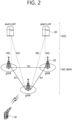
- FIG. 2 shows a structure of an NR system, in accordance with an embodiment of the present disclosure.
- the embodiment of FIG. 2 may be combined with various embodiments of the present disclosure.
- a next generation-radio access network may include a BS 20 providing a UE 10 with a user plane and control plane protocol termination.
- the BS 20 may include a next generation-Node B (gNB) and/or an evolved-NodeB (eNB).
- the UE 10 may be fixed or mobile and may be referred to as other terms, such as a mobile station (MS), a user terminal (UT), a subscriber station (SS), a mobile terminal (MT), wireless device, and so on.
- the BS may be referred to as a fixed station which communicates with the UE 10 and may be referred to as other terms, such as a base transceiver system (BTS), an access point (AP), and so on.
- BTS base transceiver system
- AP access point
- Layers of a radio interface protocol between the UE and the network can be classified into a first layer (layer 1, L1), a second layer (layer 2, L2), and a third layer (layer 3, L3) based on the lower three layers of the open system interconnection (OSI) model that is well-known in the communication system.
- a physical (PHY) layer belonging to the first layer provides an information transfer service by using a physical channel
- a radio resource control (RRC) layer belonging to the third layer serves to control a radio resource between the UE and the network.
- the RRC layer exchanges an RRC message between the UE and the BS.
- a physical layer provides an upper layer with an information transfer service through a physical channel.
- the physical layer is connected to a medium access control (MAC) layer which is an upper layer of the physical layer through a transport channel.
- MAC medium access control
- Data is transferred between the MAC layer and the physical layer through the transport channel.
- the transport channel is classified according to how and with what characteristics data is transmitted through a radio interface.
- the physical channel is modulated using an orthogonal frequency division multiplexing (OFDM) scheme, and utilizes time and frequency as a radio resource.
- OFDM orthogonal frequency division multiplexing
- the MAC layer provides services to a radio link control (RLC) layer, which is a higher layer of the MAC layer, via a logical channel.
- RLC radio link control
- the MAC layer provides a function of mapping multiple logical channels to multiple transport channels.
- the MAC layer also provides a function of logical channel multiplexing by mapping multiple logical channels to a single transport channel.
- the MAC layer provides data transfer services over logical channels.
- the RLC layer performs concatenation, segmentation, and reassembly of Radio Link Control Service Data Unit (RLC SDU).
- RLC SDU Radio Link Control Service Data Unit
- TM transparent mode
- UM unacknowledged mode
- AM acknowledged mode
- An AM RLC provides error correction through an automatic repeat request (ARQ).
- a radio resource control (RRC) layer is defined only in the control plane.
- the RRC layer serves to control the logical channel, the transport channel, and the physical channel in association with configuration, reconfiguration and release of RBs.
- the RB is a logical path provided by the first layer (i.e., the physical layer or the PHY layer) and the second layer (i.e., a MAC layer, an RLC layer, a packet data convergence protocol (PDCP) layer, and a service data adaptation protocol (SDAP) layer) for data delivery between the UE and the network.
- the first layer i.e., the physical layer or the PHY layer
- the second layer i.e., a MAC layer, an RLC layer, a packet data convergence protocol (PDCP) layer, and a service data adaptation protocol (SDAP) layer
- Functions of a packet data convergence protocol (PDCP) layer in the user plane include user data delivery, header compression, and ciphering.
- Functions of a PDCP layer in the control plane include control-plane data delivery and ciphering/integrity protection.
- PDCP packet data convergence protocol
- SDAP service data adaptation protocol
- QoS Quality of Service
- DRB data radio bearer
- QFI QoS flow ID
- the configuration of the RB implies a process for specifying a radio protocol layer and channel properties to provide a particular service and for determining respective detailed parameters and operations.
- the RB can be classified into two types, i.e., a signaling RB (SRB) and a data RB (DRB).
- SRB signaling RB
- DRB data RB
- the SRB is used as a path for transmitting an RRC message in the control plane.
- the DRB is used as a path for transmitting user data in the user plane.
- Examples of logical channels belonging to a higher channel of the transport channel and mapped onto the transport channels include a broadcast channel (BCCH), a paging control channel (PCCH), a common control channel (CCCH), a multicast control channel (MCCH), a multicast traffic channel (MTCH), etc.
- BCCH broadcast channel
- PCCH paging control channel
- CCCH common control channel
- MCCH multicast control channel
- MTCH multicast traffic channel
- Table 2 shows an example of a number of symbols per slot, a number of slots per frame, and a number of slots per subframe in accordance with the SCS, in a case where an extended CP is used.
- multiple numerologies or SCSs for supporting diverse 5G services may be supported.
- an SCS is 15kHz
- a wide area of the conventional cellular bands may be supported, and, in case an SCS is 30kHz/60kHz a dense-urban, lower latency, wider carrier bandwidth may be supported.
- the SCS is 60kHz or higher, a bandwidth that is greater than 24.25GHz may be used in order to overcome phase noise.
- An NR frequency band may be defined as two different types of frequency ranges.
- the two different types of frequency ranges may be FR1 and FR2.
- the values of the frequency ranges may be changed (or varied), and, for example, the two different types of frequency ranges may be as shown below in Table 3.
- FR1 may mean a "sub 6GHz range”
- FR2 may mean an "above 6GHz range” and may also be referred to as a millimeter wave (mmW).
- mmW millimeter wave
- FR1 may include a band within a range of 410MHz to 7125MHz. More specifically, FR1 may include a frequency band of 6GHz (or 5850, 5900, 5925 MHz, and so on) and higher. For example, a frequency band of 6GHz (or 5850, 5900, 5925 MHz, and so on) and higher being included in FR1 mat include an unlicensed band. The unlicensed band may be used for diverse purposes, e.g., the unlicensed band for vehicle-specific communication (e.g., automated driving).
- SCS Corresponding frequency range Subcarrier Spacing
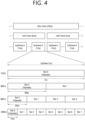
- FIG. 5 shows a structure of a slot of an NR frame, in accordance with an embodiment of the present disclosure.
- the embodiment of FIG. 5 may be combined with various embodiments of the present disclosure.
- a slot includes a plurality of symbols in a time domain.
- one slot may include 14 symbols.
- one slot may include 12 symbols.
- one slot may include 7 symbols.
- one slot may include 6 symbols.
- a carrier includes a plurality of subcarriers in a frequency domain.
- a Resource Block (RB) may be defined as a plurality of consecutive subcarriers (e.g., 12 subcarriers) in the frequency domain.
- a Bandwidth Part (BWP) may be defined as a plurality of consecutive (Physical) Resource Blocks ((P)RBs) in the frequency domain, and the BWP may correspond to one numerology (e.g., SCS, CP length, and so on).
- a carrier may include a maximum of N number BWPs (e.g., 5 BWPs). Data communication may be performed via an activated BWP.
- Each element may be referred to as a Resource Element (RE) within a resource grid and one complex symbol may be mapped to each element.
- RE Resource Element
- bandwidth part BWP
- carrier a bandwidth part (BWP) and a carrier
- the BWP may be a set of consecutive physical resource blocks (PRBs) in a given numerology.
- the PRB may be selected from consecutive sub-sets of common resource blocks (CRBs) for the given numerology on a given carrier
- the BWP may be at least any one of an active BWP, an initial BWP, and/or a default BWP.
- the UE may not monitor downlink radio link quality in a DL BWP other than an active DL BWP on a primary cell (PCell).
- the UE may not receive PDCCH, physical downlink shared channel (PDSCH), or channel state information - reference signal (CSI-RS) (excluding RRM) outside the active DL BWP.
- the UE may not trigger a channel state information (CSI) report for the inactive DL BWP.
- the UE may not transmit physical uplink control channel (PUCCH) or physical uplink shared channel (PUSCH) outside an active UL BWP.
- PUCCH physical uplink control channel
- PUSCH physical uplink shared channel
- the initial BWP may be given as a consecutive RB set for a remaining minimum system information (RMSI) control resource set (CORESET) (configured by physical broadcast channel (PBCH)).
- RMSI remaining minimum system information
- CORESET control resource set
- PBCH physical broadcast channel
- SIB system information block
- the default BWP may be configured by a higher layer.
- an initial value of the default BWP may be an initial DL BWP.
- DCI downlink control information
- the BWP may be defined for SL.
- the same SL BWP may be used in transmission and reception.
- a transmitting UE may transmit an SL channel or an SL signal on a specific BWP
- a receiving UE may receive the SL channel or the SL signal on the specific BWP.
- the SL BWP may be defined separately from a Uu BWP, and the SL BWP may have configuration signaling separate from the Uu BWP.
- the UE may receive a configuration for the SL BWP from the BS/network.
- the UE may receive a configuration for the Uu BWP from the BS/network.
- the SL BWP may be (pre-)configured in a carrier with respect to an out-of-coverage NR V2X UE and an RRC_IDLE UE. For the UE in the RRC_CONNECTED mode, at least one SL BWP may be activated in the carrier.
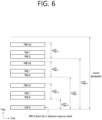
- FIG. 6 shows an example of a BWP, in accordance with an embodiment of the present disclosure.
- the embodiment of FIG. 6 may be combined with various embodiments of the present disclosure. It is assumed in the embodiment of FIG. 6 that the number of BWPs is 3.
- a common resource block may be a carrier resource block numbered from one end of a carrier band to the other end thereof.
- the PRB may be a resource block numbered within each BWP.
- a point A may indicate a common reference point for a resource block grid.
- the BWP may be configured by a point A, an offset N start BWP from the point A, and a bandwidth N size BWP .
- the point A may be an external reference point of a PRB of a carrier in which a subcarrier 0 of all numerologies (e.g., all numerologies supported by a network on that carrier) is aligned.
- the offset may be a PRB interval between a lowest subcarrier and the point A in a given numerology.
- the bandwidth may be the number of PRBs in the given numerology.
- V2X or SL communication will be described.
- a sidelink synchronization signal may include a primary sidelink synchronization signal (PSSS) and a secondary sidelink synchronization signal (SSSS), as an SL-specific sequence.
- PSSS primary sidelink synchronization signal
- SSSS secondary sidelink synchronization signal
- the PSSS may be referred to as a sidelink primary synchronization signal (S-PSS)
- S-SSS sidelink secondary synchronization signal
- S-SSS sidelink secondary synchronization signal
- length-127 M-sequences may be used for the S-PSS
- length-127 gold sequences may be used for the S-SSS.
- a UE may use the S-PSS for initial signal detection and for synchronization acquisition.
- the UE may use the S-PSS and the S-SSS for acquisition of detailed synchronization and for detection of a synchronization signal ID.
- a physical sidelink broadcast channel may be a (broadcast) channel for transmitting default (system) information which must be first known by the UE before SL signal transmission/reception.
- the default information may be information related to SLSS, a duplex mode (DM), a time division duplex (TDD) uplink/downlink (UL/DL) configuration, information related to a resource pool, a type of an application related to the SLSS, a subframe offset, broadcast information, or the like.
- DM duplex mode
- TDD time division duplex
- UL/DL uplink/downlink
- a payload size of the PSBCH may be 56 bits including 24-bit cyclic redundancy check (CRC).
- an RX UE may not transmit an ACK to a TX UE even if decoding for a PSSCH related to a HARQ disabled packet is successful, and may start Sidelink (SL) HARQ-RTT-Timer-RX and/or SL drx-RetransmissionTimer-RX related to the HARQ disabled packet.
- SL Sidelink
- the RX UE when an RX UE succeeds in decoding a PSCCH (SCI) transmitted by a TX UE and fails to decode a PSSCH (SL data), the RX UE should transmit SL HARQ NACK to the TX UE, but if it cannot transmit due to the following reasons, it may start an Sidelink HARQ-RTT-Timer-RX timer and transition to sleep mode (since the TX UE can send the SL HARQ retransmission packet to the RX UE even if the SL HARQ NACK is not transmitted to the TX UE, the Sidelink HARQ-RTT-Timer-RX timer must be started).
- SCI PSCCH
- SL data PSSCH
- the RX UE should transmit SL HARQ NACK to the TX UE, but if it cannot transmit due to the following reasons, it may start an Sidelink HARQ-RTT-Timer-RX timer and transition to sleep mode (since the TX UE can
- an RX UE may start an SL drx-RetransmissionTimer-RX timer by transitioning back to an active state to receive a PSCCH and PSSCH for SL HARQ retransmission that a TX UE retransmits.
- the RX UE may stop an SL drx-RetransmissionTimer.
- an operation of an RTT/Retransmission Timer (or SL DRX operation) due to PSFCH dropping of an Rx UE due to prioritization between SL and UL or prioritization between LTE SL and NR SL
- a receiving UE should be able to monitor a reception of a retransmission packet of a Tx UE by starting an RTT/Retransmission timer if SL data is successfully received (decoding succeeded), since the transmitting UE may misjudgment it as a decoding failure even though a PSFCH has not actually been transmitted.
- a receiving UE fails to receive SL data (decoding failure) if a receiving UE fails to receive SL data (decoding failure), it should be able to monitor whether a Tx UE's retransmission packet is received by starting an RTT/Retransmission timer, since the transmitting UE may misjudgment it as a decoding failure even though a PSFCH has not actually been transmitted.
- the RX UE determines the symbol/slot/subframe associated with the start of the DRX cycle using t he configured si-drx-Cycle, sl-drx-StartOffset. FFS on details.
- the TX UE behaviors should be specified to keep aligned with the RX UE regarding t he DRX Active time.
- FFS the specific Spec impacts needed at the TX side. 6.
- the RX UE For unicast, the RX UE (restarts the inactivity timer based on information in SCI (SCI1+SCI2). F FS if the MAC layer can stop the inactivity timer. 11: For unicast, the RX UE (re)starts the inactivity timer in the first slot after SCI (SCI1+SCI2) recepti on. 12. For unicast, the TX UE maintains a timer corresponding to the SL inactivity timer in the RX UE to r each pair of src/dest L2 ID, and uses the timer as part of criterion for determining the allowable tran smission time for the RX UE.
- an SL drx-HARQ-RTT-Timer-RX and/or an SL drx-RetransmissionTimer-RX may operate based on the contents of Table 7 below.
- Table 7 16: The RX UE is active on sidelink (monitors SCI1+SCI2) as long as at least one of the SL inactivity timers associated with unicast or groupcast (if supported) is running. 17: As a baseline, agreements 7-13 inclusive are applied to SL inactivity timer for groupcast, with the difference that "src/dest L2 ID pair" is replaced with "groupcast L2 destination ID or src/dest L2 id pair" (dependent on the conclusion of proposal 17).
- any specific handling which may be needed for synchr onization of inactivity timers for the groupcast case is FFS.
- Retransmission timer can be started upon expiry of the HARQ RTT timer.
- the value(s) of the SL retransmission timer can be determined by UE or NW implementation.
- the SL active time of the RX UE includes the time in which any of its applicable sl-drx-OnDuratio n(s), sl-DRXInactivityTimer(s), or sl-drx-RetransmissionTimer(s) are running.
- Working assumption The slots when the UE is expected CSI report following a CSI request is co nsidered as SL active time.
- RAN2 assumes LCP enhancements for ensuring a TX UE transmits data in the active time of an RX UE are needed. FFS on the resource (re)selection enhancements (e.g. limiting the resources to the active time for peer UE).
- an SL drx-HARQ-RTT-Timer-RX and/or an SL drx-RetransmissionTimer-RX may operate based on the contents of Table 9 below.
- Table 9 ⁇ If the RX UE does not transmit PSFCH for a HARQ enabled transmission (e.g. due to UL / SL prioritization) the RX UE still starts the HARQ RTT timer. ⁇ If SL HARQ RTT timer is supported for HARQ disabled transmissions, the RX UE starts the SL HARQ RTT timer in the symbol / slot following SCI (SCI1+SCI2) reception.
- SL HARQ RTT timer and SL HARQ retransmission timer are maintained per SL HARQ process at the RX UE.
- Sidelink HARQ RTT and sidelink retransmission timers are supported for HARQ disabled transmissions.
- FIG. 11 shows an example of when a first timer is started.
- an RX UE (in an example, may correspond to a first device to be described later in FIGS. 13 and 14 ) that has received sidelink data through a PSSCH from a TX UE (in an example, may correspond to a second device to be described later in FIGS. 13 and 14 ) may determine a PSFCH resource 1110 for transmitting sidelink HARQ feedback information related to the data to the second device, based on an index of a slot and an index of a subchannel related to a PSSCH.
- An RX UE may start an SL DRX HARQ RTT timer (or a first timer), at a slot and/or symbol 1130 following the end time 1120 of a PSFCH resource 1110.
- an RX UE may start an SL DRX HARQ RTT timer (or first timer) related to the PSFCH resource 1110, based on sidelink HARQ feedback information being not transmitted from (RX UE) to TX UE through the PSFCH resource 1110.
- sidelink HARQ feedback information may not be transmitted to the TX UE through the PSFCH resource 1110 based on a first priority value related to the sidelink HARQ feedback information.
- the sidelink HARQ feedback information may not be transmitted to the TX UE, based on the first priority value being greater than a second priority value related to an uplink transmission to a base station.
- the RX UE may start an SL DRX Retransmission timer (or a second timer), after a time point 1150 when an SL DRX HARQ RTT timer (or a first timer) expires after the operation period 1140 of the SL DRX HARQ RTT timer (or the first timer) has elapsed.
- an RX UE may receive a sidelink HARQ retransmission packet from a TX UE after the SL DRX Retransmission timer (or second timer) is started.
- FIG. 12 shows an example of a method for an RX UE to save power consumption for sidelink communication according to an embodiment.
- FIG. 12 shows an embodiment of a method for an RX UE to save power based on an operation of an RX SL HARQ RTT Timer-RX operation and an SL DRX retransmission timer-RX operation proposed by some of the embodiments of the present disclosure.
- an RX UE when an RX UE successfully decodes a PSCCH (sidelink control information) transmitted by a TX UE, but fails to decode the PSSCH and transmits a HARQ NACK to the TX UE, an RX UE may start a Sidelink HARQ-RTT-Timer-RX timer and transition to sleep mode.
- a PSCCH sidelink control information
- an RX UE may transition to the active mode to receive a PSCCH and PSSCH for an SL HARQ retransmission packet transmitted by a TX UE, may start an SL drx-RetransmissionTimer-RX timer, and may receive the PSCCH and PSSCH transmitted by the TX UE.
- an RX UE may stop an SL drx-RetransmissionTimer-RX timer.
- Some of the various embodiments of the present disclosure provide a method for enabling an RX UE operating in sidelink DRX to efficiently receive a PSCCH and a PSSCH for sidelink HARQ retransmission transmitted by a TX UE through switching between sleep mode and active mode. That is, it was intended to ensure that an RX UE receives a PSCCH and a PSSCH transmitted by a TX UE while operating in a power saving mode.
- Various embodiments of the present disclosure may be combined with at least one of a power control operation of a UE, a congestion control operation of a UE, a channel coding operation of a UE, and/or an SL HARQ feedback operation of a UE.
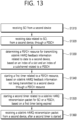
- FIG. 13 is a flowchart showing a method for a first device to perform sidelink communication according to an embodiment of the present disclosure.
- Operations disclosed in the flowchart of FIG. 13 may be performed in combination with various embodiments of the present disclosure. In one example, the operations disclosed in the flowchart of FIG. 13 may be performed based on at least one of the devices illustrated in FIGS. 15 to 20 .
- the first device of FIG. 13 may correspond to the first wireless device 100 of FIG. 16 to be described later, and the second device may correspond to the second wireless device 200 of FIG. 16 .
- the first device of FIG. 13 may correspond to the second wireless device 200 of FIG. 16 to be described later, and the second device may correspond to the first wireless device 100.
- a first device receives sidelink control information, SCI, from a second device.
- a first device receives data related to the SCI, from the second device, through a physical sidelink shared channel, PSSCH.
- a first device determines a physical sidelink feedback channel, PSFCH, resource for transmitting sidelink hybrid automatic repeat request, HARQ, feedback information related to the data to the second device, based on an index of a slot and an index of a subchannel related to the PSSCH.
- PSFCH physical sidelink feedback channel
- HARQ sidelink hybrid automatic repeat request
- a first device starts a first timer related to the PSFCH resource, based on the sidelink HARQ feedback information not being transmitted to the second device through the PSFCH resource.
- a first device starts a second timer related to a sidelink HARQ retransmission packet for the SCI or the PSSCH, based on the first timer being expired.
- a first device receives the sidelink HARQ retransmission packet from the second device, after the second timer is started.
- the first timer may correspond/be same/be similar to the above-described SL drx-HARQ-RTT-Timer-RX
- the second timer may correspond/be same/be similar to the above-described SL drx-RetransmissionTimer-RX.
- the sidelink HARQ feedback information may be not transmitted to the second device through the PSFCH resource, based on a first priority related to the sidelink HARQ feedback information.
- the sidelink HARQ feedback information may be not transmitted to the second device, based on the first priority being lower than a second priority related to an uplink transmission to a base station.
- the first device may give priority to UL when the priority value of UL data is less than a UL threshold, by comparing a priority value of UL data for uplink transmission to the base station with a UL threshold value for prioritization. In other words, it may be determined that the second priority is higher than the first priority. In this case, SL transmission for transmitting the sidelink HARQ feedback information may be dropped and UL transmission may be performed.
- the first device may compare the priority of the SL data and the SL threshold for prioritization.
- the first device may give priority to SL. In other words, it may be determined that the first priority is higher than the second priority. In this case, the UL transmission may be dropped and SL transmission may be performed.
- priority may be given to the UL (In other words, it may be determined that the second priority is higher than the first priority.).
- the first timer may be started at a symbol or a slot following the end time of the PSFCH resource.
- the first device may start the first timer based on the sidelink HARQ feedback information being transmitted to the second device through the PSFCH resource.
- the first timer may be started at a symbol or slot subsequent to the end time of PSFCH transmission based on the sidelink HARQ feedback information.
- the first timer and the second timer are maintained per sidelink HARQ process of the first device.
- the sidelink HARQ feedback information may not be transmitted to the second device, based on the first priority being lower than a third priority related to a sidelink transmission to a third device or a sidelink reception from the third device.
- sidelink communication based on a first wireless radio access technology, RAT may be performed between the first device and the second device
- sidelink communication based on a second wireless RAT may be performed between the first device and the third device.
- the LTE-M technology may be implemented as at least any one of various standards such as 1) LTE CAT 0, 2) LTE Cat M1, 3) LTE Cat M2, 4) LTE non-Bandwidth Limited (non-BL), 5) LTE-MTC, 6) LTE Machine Type Communication, and/or 7) LTE M, and is not limited to the name described above.
- the wireless communication technology implemented in the wireless devices 100a to 100f of the present disclosure may include at least one of Bluetooth, Low Power Wide Area Network (LPWAN), and ZigBee considering the low-power communication, and is not limited to the name described above.
- the ZigBee technology may generate personal area networks (PAN) related to small/low-power digital communication based on various standards including IEEE 802.15.4, and the like, and may be called by various names.
- PAN personal area networks
- a first wireless device 100 and a second wireless device 200 may transmit radio signals through a variety of RATs (e.g., LTE and NR).
- ⁇ the first wireless device 100 and the second wireless device 200 ⁇ may correspond to ⁇ the wireless device 100x and the BS 200 ⁇ and/or ⁇ the wireless device 100x and the wireless device 100x ⁇ of FIG. 15 .
- the first wireless device 100 may include one or more processors 102 and one or more memories 104 and additionally further include one or more transceivers 106 and/or one or more antennas 108.
- the processor(s) 102 may control the memory(s) 104 and/or the transceiver(s) 106 and may be configured to implement the descriptions, functions, procedures, proposals, methods, and/or operational flowcharts disclosed in this document.
- the processor(s) 102 may process information within the memory(s) 104 to generate first information/signals and then transmit radio signals including the first information/signals through the transceiver(s) 106.
- the processor(s) 102 may receive radio signals including second information/signals through the transceiver 106 and then store information obtained by processing the second information/signals in the memory(s) 104.
- the memory(s) 104 may be connected to the processor(s) 102 and may store a variety of information related to operations of the processor(s) 102.
- the memory(s) 104 may store software code including commands for performing a part or the entirety of processes controlled by the processor(s) 102 or for performing the descriptions, functions, procedures, proposals, methods, and/or operational flowcharts disclosed in this document.
- the processor(s) 102 and the memory(s) 104 may be a part of a communication modem/circuit/chip designed to implement RAT (e.g., LTE or NR).
- the transceiver(s) 106 may be connected to the processor(s) 102 and transmit and/or receive radio signals through one or more antennas 108.
- Each of the transceiver(s) 106 may include a transmitter and/or a receiver.
- the transceiver(s) 106 may be interchangeably used with Radio Frequency (RF) unit(s).
- the wireless device may represent a communication modem/circuit/chip.
- the second wireless device 200 may include one or more processors 202 and one or more memories 204 and additionally further include one or more transceivers 206 and/or one or more antennas 208.
- the processor(s) 202 may control the memory(s) 204 and/or the transceiver(s) 206 and may be configured to implement the descriptions, functions, procedures, proposals, methods, and/or operational flowcharts disclosed in this document.
- the processor(s) 202 may process information within the memory(s) 204 to generate third information/signals and then transmit radio signals including the third information/signals through the transceiver(s) 206.
- the processor(s) 202 and the memory(s) 204 may be a part of a communication modem/circuit/chip designed to implement RAT (e.g., LTE or NR).
- the transceiver(s) 206 may be connected to the processor(s) 202 and transmit and/or receive radio signals through one or more antennas 208.
- Each of the transceiver(s) 206 may include a transmitter and/or a receiver.
- the transceiver(s) 206 may be interchangeably used with RF unit(s).
- the wireless device may represent a communication modem/circuit/chip.
- One or more protocol layers may be implemented by, without being limited to, one or more processors 102 and 202.
- the one or more processors 102 and 202 may implement one or more layers (e.g., functional layers such as PHY, MAC, RLC, PDCP, RRC, and SDAP).
- the one or more processors 102 and 202 may generate one or more Protocol Data Units (PDUs) and/or one or more Service Data Unit (SDUs) according to the descriptions, functions, procedures, proposals, methods, and/or operational flowcharts disclosed in this document.
- PDUs Protocol Data Units
- SDUs Service Data Unit
- the one or more processors 102 and 202 may generate messages, control information, data, or information according to the descriptions, functions, procedures, proposals, methods, and/or operational flowcharts disclosed in this document.
- the one or more processors 102 and 202 may generate signals (e.g., baseband signals) including PDUs, SDUs, messages, control information, data, or information according to the descriptions, functions, procedures, proposals, methods, and/or operational flowcharts disclosed in this document and provide the generated signals to the one or more transceivers 106 and 206.
- the one or more processors 102 and 202 may receive the signals (e.g., baseband signals) from the one or more transceivers 106 and 206 and acquire the PDUs, SDUs, messages, control information, data, or information according to the descriptions, functions, procedures, proposals, methods, and/or operational flowcharts disclosed in this document.
- signals e.g., baseband signals
- the one or more processors 102 and 202 may be referred to as controllers, microcontrollers, microprocessors, or microcomputers.
- the one or more processors 102 and 202 may be implemented by hardware, firmware, software, or a combination thereof.
- ASICs Application Specific Integrated Circuits
- DSPs Digital Signal Processors
- DSPDs Digital Signal Processing Devices
- PLDs Programmable Logic Devices
- FPGAs Field Programmable Gate Arrays
- the descriptions, functions, procedures, proposals, methods, and/or operational flowcharts disclosed in this document may be implemented using firmware or software and the firmware or software may be configured to include the modules, procedures, or functions.
- Firmware or software configured to perform the descriptions, functions, procedures, proposals, methods, and/or operational flowcharts disclosed in this document may be included in the one or more processors 102 and 202 or stored in the one or more memories 104 and 204 so as to be driven by the one or more processors 102 and 202.
- the descriptions, functions, procedures, proposals, methods, and/or operational flowcharts disclosed in this document may be implemented using firmware or software in the form of code, commands, and/or a set of commands.
- the one or more memories 104 and 204 may be connected to the one or more processors 102 and 202 and store various types of data, signals, messages, information, programs, code, instructions, and/or commands.
- the one or more memories 104 and 204 may be configured by Read-Only Memories (ROMs), Random Access Memories (RAMs), Electrically Erasable Programmable Read-Only Memories (EPROMs), flash memories, hard drives, registers, cash memories, computer-readable storage media, and/or combinations thereof.
- the one or more memories 104 and 204 may be located at the interior and/or exterior of the one or more processors 102 and 202.
- the one or more memories 104 and 204 may be connected to the one or more processors 102 and 202 through various technologies such as wired or wireless connection.
- the one or more transceivers 106 and 206 may transmit user data, control information, and/or radio signals/channels, mentioned in the methods and/or operational flowcharts of this document, to one or more other devices.
- the one or more transceivers 106 and 206 may receive user data, control information, and/or radio signals/channels, mentioned in the descriptions, functions, procedures, proposals, methods, and/or operational flowcharts disclosed in this document, from one or more other devices.
- the one or more transceivers 106 and 206 may be connected to the one or more processors 102 and 202 and transmit and receive radio signals.
- the one or more processors 102 and 202 may perform control so that the one or more transceivers 106 and 206 may transmit user data, control information, or radio signals to one or more other devices.
- the one or more processors 102 and 202 may perform control so that the one or more transceivers 106 and 206 may receive user data, control information, or radio signals from one or more other devices.
- the one or more transceivers 106 and 206 may be connected to the one or more antennas 108 and 208 and the one or more transceivers 106 and 206 may be configured to transmit and receive user data, control information, and/or radio signals/channels, mentioned in the descriptions, functions, procedures, proposals, methods, and/or operational flowcharts disclosed in this document, through the one or more antennas 108 and 208.
- the one or more antennas may be a plurality of physical antennas or a plurality of logical antennas (e.g., antenna ports).
- the one or more transceivers 106 and 206 may convert received radio signals/channels etc.
- the one or more transceivers 106 and 206 may convert the user data, control information, radio signals/channels, etc. processed using the one or more processors 102 and 202 from the base band signals into the RF band signals.
- the one or more transceivers 106 and 206 may include (analog) oscillators and/or filters.
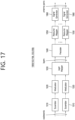
- FIG. 17 shows a signal process circuit for a transmission signal, in accordance with an embodiment of the present disclosure.
- a signal processing circuit 1000 may include scramblers 1010, modulators 1020, a layer mapper 1030, a precoder 1040, resource mappers 1050, and signal generators 1060.
- An operation/function of FIG. 17 may be performed, without being limited to, the processors 102 and 202 and/or the transceivers 106 and 206 of FIG. 16 .
- Hardware elements of FIG. 17 may be implemented by the processors 102 and 202 and/or the transceivers 106 and 206 of FIG. 16 .
- blocks 1010 to 1060 may be implemented by the processors 102 and 202 of FIG. 16 .
- the blocks 1010 to 1050 may be implemented by the processors 102 and 202 of FIG. 16 and the block 1060 may be implemented by the transceivers 106 and 206 of FIG. 16 .
- Codewords may be converted into radio signals via the signal processing circuit 1000 of FIG. 17 .
- the codewords are encoded bit sequences of information blocks.
- the information blocks may include transport blocks (e.g., a UL-SCH transport block, a DL-SCH transport block).
- the radio signals may be transmitted through various physical channels (e.g., a PUSCH and a PDSCH).
- the codewords may be converted into scrambled bit sequences by the scramblers 1010.
- Scramble sequences used for scrambling may be generated based on an initialization value, and the initialization value may include ID information of a wireless device.
- the scrambled bit sequences may be modulated to modulation symbol sequences by the modulators 1020.
- a modulation scheme may include pi/2-Binary Phase Shift Keying (pi/2-BPSK), m-Phase Shift Keying (m-PSK), and m-Quadrature Amplitude Modulation (m-QAM).
- Complex modulation symbol sequences may be mapped to one or more transport layers by the layer mapper 1030.
- Modulation symbols of each transport layer may be mapped (precoded) to corresponding antenna port(s) by the precoder 1040.
- Outputs z of the precoder 1040 may be obtained by multiplying outputs y of the layer mapper 1030 by an N*M precoding matrix W.
- N is the number of antenna ports and M is the number of transport layers.
- the precoder 1040 may perform precoding after performing transform precoding (e.g., DFT) for complex modulation symbols. Alternatively, the precoder 1040 may perform precoding without performing transform precoding.
- transform precoding e.g., DFT
- the resource mappers 1050 may map modulation symbols of each antenna port to time-frequency resources.
- the time-frequency resources may include a plurality of symbols (e.g., a CP-OFDMA symbols and DFT-s-OFDMA symbols) in the time domain and a plurality of subcarriers in the frequency domain.
- the signal generators 1060 may generate radio signals from the mapped modulation symbols and the generated radio signals may be transmitted to other devices through each antenna.
- the signal generators 1060 may include Inverse Fast Fourier Transform (IFFT) modules, Cyclic Prefix (CP) inserters, Digital-to-Analog Converters (DACs), and frequency up-converters.
- IFFT Inverse Fast Fourier Transform
- CP Cyclic Prefix
- DACs Digital-to-Analog Converters
- Signal processing procedures for a signal received in the wireless device may be configured in a reverse manner of the signal processing procedures 1010 to 1060 of FIG. 17 .
- the wireless devices e.g., 100 and 200 of FIG. 16
- the received radio signals may be converted into baseband signals through signal restorers.
- the signal restorers may include frequency downlink converters, Analog-to-Digital Converters (ADCs), CP remover, and Fast Fourier Transform (FFT) modules.
- ADCs Analog-to-Digital Converters
- FFT Fast Fourier Transform
- the baseband signals may be restored to codewords through a resource demapping procedure, a postcoding procedure, a demodulation processor, and a descrambling procedure.
- a signal processing circuit for a reception signal may include signal restorers, resource demappers, a postcoder, demodulators, descramblers, and decoders.
- FIG. 18 shows another example of a wireless device, in accordance with an embodiment of the present disclosure.
- the wireless device may be implemented in various forms according to a use-case/service (refer to FIG. 15 ).
- wireless devices 100 and 200 may correspond to the wireless devices 100 and 200 of FIG. 16 and may be configured by various elements, components, units/portions, and/or modules.
- each of the wireless devices 100 and 200 may include a communication unit 110, a control unit 120, a memory unit 130, and additional components 140.
- the communication unit may include a communication circuit 112 and transceiver(s) 114.
- the communication circuit 112 may include the one or more processors 102 and 202 and/or the one or more memories 104 and 204 of FIG. 16 .
- the transceiver(s) 114 may include the one or more transceivers 106 and 206 and/or the one or more antennas 108 and 208 of FIG. 16 .
- the control unit 120 is electrically connected to the communication unit 110, the memory 130, and the additional components 140 and controls overall operation of the wireless devices. For example, the control unit 120 may control an electric/mechanical operation of the wireless device based on programs/code/commands/information stored in the memory unit 130.
- the control unit 120 may transmit the information stored in the memory unit 130 to the exterior (e.g., other communication devices) via the communication unit 110 through a wireless/wired interface or store, in the memory unit 130, information received through the wireless/wired interface from the exterior (e.g., other communication devices) via the communication unit 110.
- the additional components 140 may be variously configured according to types of wireless devices.
- the additional components 140 may include at least one of a power unit/battery, input/output (I/O) unit, a driving unit, and a computing unit.
- the wireless device may be implemented in the form of, without being limited to, the robot (100a of FIG. 15 ), the vehicles (100b-1 and 100b-2 of FIG. 15 ), the XR device (100c of FIG. 15 ), the hand-held device (100d of FIG. 15 ), the home appliance (100e of FIG. 15 ), the IoT device (100f of FIG.
- the wireless device may be used in a mobile or fixed place according to a use-example/service.
- the entirety of the various elements, components, units/portions, and/or modules in the wireless devices 100 and 200 may be connected to each other through a wired interface or at least a part thereof may be wirelessly connected through the communication unit 110.
- the control unit 120 and the communication unit 110 may be connected by wire and the control unit 120 and first units (e.g., 130 and 140) may be wirelessly connected through the communication unit 110.
- Each element, component, unit/portion, and/or module within the wireless devices 100 and 200 may further include one or more elements.
- the control unit 120 may be configured by a set of one or more processors.
- control unit 120 may be configured by a set of a communication control processor, an application processor, an Electronic Control Unit (ECU), a graphical processing unit, and a memory control processor.
- memory 130 may be configured by a Random Access Memory (RAM), a Dynamic RAM (DRAM), a Read Only Memory (ROM)), a flash memory, a volatile memory, a non-volatile memory, and/or a combination thereof.
- RAM Random Access Memory
- DRAM Dynamic RAM
- ROM Read Only Memory
- flash memory a volatile memory
- non-volatile memory and/or a combination thereof.
- FIG. 18 An example of implementing FIG. 18 will be described in detail with reference to the drawings.
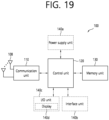
- FIG. 19 shows a hand-held device, in accordance with an embodiment of the present disclosure.
- the hand-held device may include a smartphone, a smartpad, a wearable device (e.g., a smartwatch or a smartglasses), or a portable computer (e.g., a notebook).
- the hand-held device may be referred to as a mobile station (MS), a user terminal (UT), a Mobile Subscriber Station (MSS), a Subscriber Station (SS), an Advanced Mobile Station (AMS), or a Wireless Terminal (WT).
- MS mobile station
- UT user terminal
- MSS Mobile Subscriber Station
- SS Subscriber Station
- AMS Advanced Mobile Station
- WT Wireless Terminal
- a hand-held device 100 may include an antenna unit 108, a communication unit 110, a control unit 120, a memory unit 130, a power supply unit 140a, an interface unit 140b, and an I/O unit 140c.
- the antenna unit 108 may be configured as a part of the communication unit 110.
- Blocks 110 to 130/140a to140c correspond to the blocks 110 to 130/140 of FIG. 18 , respectively.
- the communication unit 110 may transmit and receive signals (e.g., data and control signals) to and from other wireless devices or BSs.
- the control unit 120 may perform various operations by controlling constituent elements of the hand-held device 100.
- the control unit 120 may include an Application Processor (AP).
- the memory unit 130 may store data/parameters/programs/code/commands needed to drive the hand-held device 100.
- the memory unit 130 may store input/output data/information.
- the power supply unit 140a may supply power to the hand-held device 100 and include a wired/wireless charging circuit, a battery, etc.
- the interface unit 140b may support connection of the hand-held device 100 to other external devices.
- the interface unit 140b may include various ports (e.g., an audio I/O port and a video I/O port) for connection with external devices.
- the I/O unit 140c may input or output video information/signals, audio information/signals, data, and/or information input by a user.
- the I/O unit 140c may include a camera, a microphone, a user input unit, a display unit 140d, a speaker, and/or a haptic module.
- the I/O unit 140c may acquire information/signals (e.g., touch, text, voice, images, or video) input by a user and the acquired information/signals may be stored in the memory unit 130.
- the communication unit 110 may convert the information/signals stored in the memory into radio signals and transmit the converted radio signals to other wireless devices directly or to a BS.
- the communication unit 110 may receive radio signals from other wireless devices or the BS and then restore the received radio signals into original information/signals.
- the restored information/signals may be stored in the memory unit 130 and may be output as various types (e.g., text, voice, images, video, or haptic) through the I/O unit 140c.
- FIG. 20 shows a vehicle or an autonomous vehicle, in accordance with an embodiment of the present disclosure.
- the vehicle or autonomous vehicle may be implemented by a mobile robot, a car, a train, a manned/unmanned Aerial Vehicle (AV), a ship, etc.
- AV Aerial Vehicle
- a vehicle or autonomous vehicle 100 may include an antenna unit 108, a communication unit 110, a control unit 120, a driving unit 140a, a power supply unit 140b, a sensor unit 140c, and an autonomous driving unit 140d.
- the antenna unit 108 may be configured as a part of the communication unit 110.
- the blocks 110/130/140a to 140d correspond to the blocks 110/130/140 of FIG. 18 , respectively.
- the communication unit 110 may transmit and receive signals (e.g., data and control signals) to and from external devices such as other vehicles, BSs (e.g., gNBs and road side units), and servers.
- the control unit 120 may perform various operations by controlling elements of the vehicle or the autonomous vehicle 100.
- the control unit 120 may include an Electronic Control Unit (ECU).
- the driving unit 140a may cause the vehicle or the autonomous vehicle 100 to drive on a road.
- the driving unit 140a may include an engine, a motor, a powertrain, a wheel, a brake, a steering device, etc.
- the power supply unit 140b may supply power to the vehicle or the autonomous vehicle 100 and include a wired/wireless charging circuit, a battery, etc.
- the sensor unit 140c may acquire a vehicle state, ambient environment information, user information, etc.
- the sensor unit 140c may include an Inertial Measurement Unit (IMU) sensor, a collision sensor, a wheel sensor, a speed sensor, a slope sensor, a weight sensor, a heading sensor, a position module, a vehicle forward/backward sensor, a battery sensor, a fuel sensor, a tire sensor, a steering sensor, a temperature sensor, a humidity sensor, an ultrasonic sensor, an illumination sensor, a pedal position sensor, etc.
- IMU Inertial Measurement Unit
- the autonomous driving unit 140d may implement technology for maintaining a lane on which a vehicle is driving, technology for automatically adjusting speed, such as adaptive cruise control, technology for autonomously driving along a determined path, technology for driving by automatically setting a path if a destination is set, and the like.
- the communication unit 110 may receive map data, traffic information data, etc. from an external server.
- the autonomous driving unit 140d may generate an autonomous driving path and a driving plan from the obtained data.
- the control unit 120 may control the driving unit 140a such that the vehicle or the autonomous vehicle 100 may move along the autonomous driving path according to the driving plan (e.g., speed/direction control).
- the communication unit 110 may aperiodically/periodically acquire recent traffic information data from the external server and acquire surrounding traffic information data from neighboring vehicles.
- the sensor unit 140c may obtain a vehicle state and/or surrounding environment information.
- the autonomous driving unit 140d may update the autonomous driving path and the driving plan based on the newly obtained data/information.
- the communication unit 110 may transfer information about a vehicle position, the autonomous driving path, and/or the driving plan to the external server.
- the external server may predict traffic information data using AI technology, etc., based on the information collected from vehicles or autonomous vehicles and provide the predicted traffic information data to the vehicles or the autonomous vehicles.
Landscapes
- Engineering & Computer Science (AREA)
- Computer Networks & Wireless Communication (AREA)
- Signal Processing (AREA)
- Mobile Radio Communication Systems (AREA)
Claims (13)
- Verfahren zum Durchführen einer Sidelink-Kommunikation durch ein erstes Gerät (100), wobei das Verfahren umfasst:Empfangen (S1310) erster Sidelink-Steuerinformationen, SCI, zum Planen eines gemeinsamen physischen Sidelink-Kanals, PSSCH, über einen physischen Sidelink-Steuerkanal, PSCCH, von einem zweiten Gerät;Empfangen (S1320) von Sidelink-Daten mit Bezug auf die ersten SCI über den PSSCH vom zweiten Gerät;Bestimmen (S1330) einer physischen Sidelink-Rückmeldungskanal-, PSFCH, Ressource zum Senden von hybriden automatischen Wiederholungsanforderungs-, HARQ, Sidelink-Rückmeldungsinformationen mit Bezug auf die empfangenen Sidelink-Daten über den PSSCH basierend auf einem Schlitzindex und einem Index eines Unterkanals mit Bezug auf den PSSCH;Starten (S1340) eines ersten Zeitgebers basierend darauf, dass die Sidelink-HARQ-Rückmeldungsinformationen nicht über die PSFCH-Ressource gesendet werden;Starten (S1350) eines zweiten Zeitgebers für eine Neuübertragung der ersten SCI oder der Sidelink-Daten basierend auf einem Ablauf des ersten Zeitgebers undEmpfangen (S1360) der Sidelink-Neuübertragung vom zweiten Gerät basierend darauf, dass der zweite Zeitgeber läuft.
- Verfahren nach Anspruch 1, wobei die Sidelink-HARQ-Rückmeldungsinformationen basierend darauf, dass eine erste Priorität mit Bezug auf die Sidelink-HARQ-Rückmeldungsinformationen niedriger ist als eine zweite Priorität mit Bezug auf eine Uplink-Übertragung an eine Basisstation bei Priorisierung zwischen Sidelink-Kommunikation und Uplink-Kommunikation, nicht an das zweite Gerät gesendet werden.
- Verfahren nach Anspruch 1, wobei der erste Zeitgeber bei einem Symbol oder einem Schlitz nach einer Endzeit der PFSCH-Ressource gestartet wird.
- Verfahren nach Anspruch 1, wobei der erste Zeitgeber und der zweite Zeitgeber pro Sidelink-HARQ-Vorgang des ersten Geräts (100) aufrechterhalten werden.
- Verfahren nach Anspruch 1, wobei die Sidelink-HARQ-Rückmeldungsinformationen basierend darauf, dass eine erste Priorität niedriger ist als eine dritte Priorität mit Bezug auf eine Sidelink-Übertragung an ein drittes Gerät oder einen Sidelink-Empfang von dem dritten Gerät, nicht an das zweite Gerät gesendet werden.
- Verfahren nach Anspruch 5, wobei eine Sidelink-Kommunikation basierend auf einer ersten drahtlosen Funkzugangstechnologie, RAT, zwischen dem ersten Gerät (100) und dem zweiten Gerät durchgeführt wird und eine Sidelink-Kommunikation basierend auf einer zweiten drahtlosen RAT zwischen dem ersten Gerät (100) und dem dritten Gerät durchgeführt wird.
- Verfahren nach Anspruch 1, wobei die Sidelink-HARQ-Rückmeldungsinformationen nicht gesendet werden, da eine Priorität der Sidelink-HARQ-Rückmeldungsinformationen niedriger ist als eine Priorität einer Uplink-Kommunikation.
- Verfahren nach Anspruch 1, wobei eine Überwachung zum Empfangen der Sidelink-Neuübertragung von dem zweiten Gerät in einem Zeitintervall, während dessen der erste Zeitgeber arbeitet, nicht durchgeführt wird.
- Verfahren nach Anspruch 8, wobei eine Überwachung zum Empfangen der Sidelink-Neuübertragung vom zweiten Gerät in einem Zeitintervall, in dem der zweite Zeitgeber arbeitet, durchgeführt wird.
- Verfahren nach Anspruch 9, wobei sich das erste Gerät (100) in einem aktiven Zustand mit diskontinuierlichem Empfang, DRX, befindet und in dem Zeitintervall, in dem der zweite Zeitgeber arbeitet, ein Signal vom zweiten Gerät empfangen kann.
- Verfahren nach Anspruch 1, wobei der zweite Zeitgeber basierend darauf, dass die Sidelink-Daten über eine HARQ-deaktivierte Übertragung des zweiten Geräts empfangen werden, gestartet wird.
- Erstes Gerät (100) zum Durchführen einer Sidelink-Kommunikation, wobei das erste Gerät (100) umfasst:einen oder mehrere Speicher (104), die Anweisungen speichern; undeinen oder mehrere Prozessoren (102), die mit dem einen oder den mehreren Speichern (104) verbunden sind, wobei der eine oder die mehreren Prozessoren (102) die Anweisungen ausführen zum:Empfangen erster Sidelink-Steuerinformationen, SCI, zum Planen eines gemeinsamen physischen Sidelink-Kanals, PSSCH, über einen physischen Sidelink-Steuerkanal, PSCCH, von einem zweiten Gerät;Empfangen von Sidelink-Daten mit Bezug auf die ersten SCI über den PSSCH vom zweiten Gerät;Bestimmen einer physischen Sidelink-Rückmeldungskanal-, PSFCH, Ressource zum Senden von hybriden automatischen Wiederholungsanforderungs-, HARQ, Sidelink-Rückmeldungsinformationen mit Bezug auf die empfangenen Sidelink-Daten über den PSSCH basierend auf einem Schlitzindex und einem Index eines Unterkanals mit Bezug auf den PSSCH;Starten eines ersten Zeitgebers basierend darauf, dass die Sidelink-HARQ-Rückmeldungsinformationen nicht über die PSFCH-Ressource gesendet werden;Starten eines zweiten Zeitgebers für eine Neuübertragung der ersten SCI oder der Sidelink-Daten basierend auf einem Ablauf des ersten Zeitgebers undEmpfangen der Sidelink-Neuübertragung vom zweiten Gerät basierend darauf, dass der zweite Zeitgeber läuft.
- Erstes Gerät (100) nach Anspruch 12, wobei das erste Gerät (100) weiterhin einen oder mehrere Transceiver (106) umfasst, die von dem einen oder den mehreren Prozessoren (102) gesteuert werden, um die Empfangsvorgänge auszuführen.
Applications Claiming Priority (2)
| Application Number | Priority Date | Filing Date | Title |
|---|---|---|---|
| KR20200057975 | 2020-05-14 | ||
| PCT/KR2021/006057 WO2021230700A1 (ko) | 2020-05-14 | 2021-05-14 | Nr v2x에서 사이드링크 재전송 패킷을 수신하는 방법 및 장치 |
Publications (3)
| Publication Number | Publication Date |
|---|---|
| EP4135417A1 EP4135417A1 (de) | 2023-02-15 |
| EP4135417A4 EP4135417A4 (de) | 2023-08-16 |
| EP4135417B1 true EP4135417B1 (de) | 2025-03-12 |
Family
ID=78524695
Family Applications (1)
| Application Number | Title | Priority Date | Filing Date |
|---|---|---|---|
| EP21803103.7A Active EP4135417B1 (de) | 2020-05-14 | 2021-05-14 | Verfahren und vorrichtung zum empfangen eines sidelink-neuübertragungspakets in nr v2x |
Country Status (5)
| Country | Link |
|---|---|
| US (1) | US12593331B2 (de) |
| EP (1) | EP4135417B1 (de) |
| KR (1) | KR102637718B1 (de) |
| CN (1) | CN115552981A (de) |
| WO (1) | WO2021230700A1 (de) |
Cited By (1)
| Publication number | Priority date | Publication date | Assignee | Title |
|---|---|---|---|---|
| EP4482068A4 (de) * | 2022-02-14 | 2025-11-12 | Beijing Xiaomi Mobile Software Co Ltd | Timer-startverfahren und -vorrichtung, vorrichtung und speichermedium |
Families Citing this family (16)
| Publication number | Priority date | Publication date | Assignee | Title |
|---|---|---|---|---|
| CN115314980A (zh) * | 2020-02-10 | 2022-11-08 | 大唐移动通信设备有限公司 | 一种非连续接收定时器管理方法及终端 |
| US12446006B2 (en) * | 2020-05-21 | 2025-10-14 | Sharp Kabushiki Kaisha | Method and user equipment for performing sidelink communication |
| US11997744B2 (en) * | 2020-07-08 | 2024-05-28 | Samsung Electronics Co., Ltd. | Method and apparatus for sidelink DRX operations in a wireless communication system |
| KR20220011444A (ko) * | 2020-07-21 | 2022-01-28 | 삼성전자주식회사 | 무선 통신 시스템에서 사이드링크의 비연속적 수신을 지원하기 위한 방법 및 장치 |
| US11985514B2 (en) * | 2020-08-13 | 2024-05-14 | Qualcomm Incorporated | Discontinuous reception configuration in sidelink communication deployments |
| WO2022042705A1 (zh) * | 2020-08-29 | 2022-03-03 | 华为技术有限公司 | 一种非连续接收drx方法及装置 |
| JP7632648B2 (ja) * | 2021-01-13 | 2025-02-19 | 富士通株式会社 | データ受信方法、装置及びシステム |
| CN114916048B (zh) * | 2021-02-10 | 2024-10-15 | 华为技术有限公司 | 一种侧行链路通信方法及装置 |
| US20240163962A1 (en) * | 2021-03-11 | 2024-05-16 | Idac Holdings, Inc. | Methods, architectures, apparatuses and systems for performing discontinuous reception on sidelink |
| US12335849B2 (en) * | 2021-04-21 | 2025-06-17 | Samsung Electronics Co., Ltd. | Electronic device and method for receiving system information in electronic device |
| US12213008B2 (en) * | 2021-05-06 | 2025-01-28 | Qualcomm Incorporated | Discontinuous reception operation for sidelink communications |
| US11653300B2 (en) * | 2021-07-27 | 2023-05-16 | Qualcomm Incorporated | Handling of HARQ and retransmission timers for sidelink DRX operations |
| US12207247B2 (en) * | 2021-09-30 | 2025-01-21 | Qualcomm Incorporated | Sidelink and uplink prioritization |
| WO2023080692A1 (ko) * | 2021-11-08 | 2023-05-11 | 삼성전자 주식회사 | 무선 통신 시스템에서 사이드링크 discontinuous reception (drx) 운용에서 hybrid automatic repeat request (harq) round trip time (rtt) 타이머를 처리하기 위한 장치 및 방법 |
| US12207245B2 (en) * | 2021-12-15 | 2025-01-21 | Qualcomm Incorporated | Packet expiry information signaling for sidelink communications |
| US20230209647A1 (en) * | 2021-12-29 | 2023-06-29 | Ofinno, Llc | Discontinuous Reception in Non-Terrestrial Network |
Family Cites Families (14)
| Publication number | Priority date | Publication date | Assignee | Title |
|---|---|---|---|---|
| CN107995605B (zh) | 2016-10-27 | 2020-07-10 | 工业和信息化部电信研究院 | 一种移动通信系统及终端直通单播发送控制方法 |
| US10863447B2 (en) * | 2018-07-11 | 2020-12-08 | Samsung Electronics Co., Ltd. | Method and apparatus for multi-antenna transmission in vehicle to vehicle communication |
| US20210329598A1 (en) * | 2018-08-24 | 2021-10-21 | Nec Corporation | A method, device and computer readable media for sidelink configuration transmission and reception |
| US11405144B2 (en) * | 2018-09-21 | 2022-08-02 | Kt Corporation | Method and apparatus for transmitting sidelink HARQ feedback information |
| KR102338792B1 (ko) * | 2018-09-21 | 2021-12-15 | 주식회사 케이티 | 사이드링크 harq 피드백 정보를 전송하는 방법 및 장치 |
| CN112806081B (zh) * | 2018-10-02 | 2023-08-18 | 鸿颖创新有限公司 | 配置用户设备交换侧链路分组的方法和用户设备 |
| KR102868568B1 (ko) * | 2018-11-02 | 2025-10-10 | 주식회사 아이티엘 | Nr v2x 시스템에서 harq 피드백 절차 수행 방법 및 그 장치 |
| WO2020194049A1 (en) * | 2019-03-22 | 2020-10-01 | Lenovo (Singapore) Pte. Ltd. | Aggregating harq feedback |
| US11456826B2 (en) * | 2019-04-08 | 2022-09-27 | Huawei Technologies Co., Ltd. | HARQ feedback and retransmission mechanism for sidelink transmission |
| TWI786389B (zh) * | 2019-04-09 | 2022-12-11 | 美商Idac控股公司 | 用於nr sl psfch傳輸及監視的裝置及方法 |
| US11356979B2 (en) * | 2019-04-24 | 2022-06-07 | Samsung Electronics Co., Ltd. | Method and apparatus for NR V2X sidelink HARQ procedure |
| US11706721B2 (en) * | 2019-06-17 | 2023-07-18 | Ofinno, Llc | Power control of sidelink operation |
| US11678361B2 (en) * | 2019-10-03 | 2023-06-13 | Mediatek Inc. | Transmission prioritization mechanism for determining between sidelink transmissions and uplink transmissions in wireless communication system |
| KR20210118542A (ko) * | 2020-03-23 | 2021-10-01 | 주식회사 아이티엘 | 무선 통신 시스템에서 단말간 통신에 기초한 네트워크와 단말간 링크에 대한 drx 방법 및 장치 |
-
2021
- 2021-05-14 EP EP21803103.7A patent/EP4135417B1/de active Active
- 2021-05-14 US US17/920,994 patent/US12593331B2/en active Active
- 2021-05-14 WO PCT/KR2021/006057 patent/WO2021230700A1/ko not_active Ceased
- 2021-05-14 CN CN202180034624.3A patent/CN115552981A/zh active Pending
- 2021-05-14 KR KR1020227036692A patent/KR102637718B1/ko active Active
Cited By (1)
| Publication number | Priority date | Publication date | Assignee | Title |
|---|---|---|---|---|
| EP4482068A4 (de) * | 2022-02-14 | 2025-11-12 | Beijing Xiaomi Mobile Software Co Ltd | Timer-startverfahren und -vorrichtung, vorrichtung und speichermedium |
Also Published As
| Publication number | Publication date |
|---|---|
| US20230164768A1 (en) | 2023-05-25 |
| CN115552981A (zh) | 2022-12-30 |
| EP4135417A4 (de) | 2023-08-16 |
| KR102637718B1 (ko) | 2024-02-20 |
| WO2021230700A1 (ko) | 2021-11-18 |
| EP4135417A1 (de) | 2023-02-15 |
| KR20220160037A (ko) | 2022-12-05 |
| US12593331B2 (en) | 2026-03-31 |
Similar Documents
| Publication | Publication Date | Title |
|---|---|---|
| EP4135417B1 (de) | Verfahren und vorrichtung zum empfangen eines sidelink-neuübertragungspakets in nr v2x | |
| US12356327B2 (en) | Method and device for saving power for sidelink communication in NR V2X | |
| US11902962B2 (en) | Method and device for performing SL DRX operation on basis of HARQ feedback in NR V2X | |
| EP4266762A1 (de) | Verfahren und vorrichtung zur durchführung eines drx-betriebs auf basis von ressourcenzuweisungsinformationen in nr v2x | |
| EP3952431A1 (de) | Verfahren und vorrichtung zur durchführung von verbesserter kommunikation in einem drahtloskommunikationssystem | |
| EP4277410A1 (de) | Verfahren und vorrichtung zur durchführung eines drx-betriebs auf basis von ressourcenzuweisungsinformationen in nr v2x | |
| EP4102924B1 (de) | Verfahren und vorrichtung zur durchführung von sidelink-neuübertragungen in nr v2x | |
| US20250374184A1 (en) | Method and device for carrying out timer-based power saving in nr v2x | |
| US20240357702A1 (en) | Method and apparatus for carrying out wireless communication related to mac reset in nr v2x | |
| EP4221396A1 (de) | Verfahren und vorrichtung zur planung von sidelink-drx durch sidelink-ressourcenpoolkonfiguration in nr v2x | |
| EP4274330A1 (de) | Verfahren und vorrichtung zum betreiben von sl-drx gemäss dem endgerätetyp in nr v2x | |
| EP4277415A1 (de) | Sl-drx-betriebsverfahren und vorrichtung auf der basis einer ressourcenreservierungsperiode in nr v2x | |
| EP4224946A1 (de) | Verfahren und vorrichtung für sl-drx-betrieb mit standard-sdrx-konfiguration in nr v2x | |
| EP4216637A1 (de) | Verfahren und vorrichtung zur synchronisierung von drx zwischen endgeräten in nr v2x | |
| EP4228363A1 (de) | Verfahren und vorrichtung zur steuerung der interferenz durch sldrx-betriebsbedingte umschaltung eines hf-moduls in nr v2x | |
| EP4358626A1 (de) | Verfahren und vorrichtung zur durchführung eines sl-drx-betriebs in nr v2x | |
| KR20230093254A (ko) | Nr v2x에서 sl drx 활성 시간을 정렬하는 방법 및 장치 | |
| EP4325994A1 (de) | Verfahren und vorrichtung zur durchführung eines sl-drx-betriebs in nr v2x | |
| EP4543058A2 (de) | Verfahren zur auswahl einer ressource unter berücksichtigung der aktiven zeit im zusammenhang mit sldrx in nr v2x | |
| EP4199591B1 (de) | Verfahren und vorrichtung zur neuauswahl eines heterogenen netzwerks bei sidelink-weiterleitung | |
| EP4415445A1 (de) | Verfahren und vorrichtung zur auswahl einer ressource in nr v2x unter berücksichtigung der aktiven sl-drx-zeit | |
| EP4351252A1 (de) | Verfahren und vorrichtung zum effizienten betrieb von sldrx in nr v2x | |
| EP4329384A1 (de) | Verfahren und vorrichtung zum senden oder empfangen von informationen im zusammenhang mit sl-drx-aktivzeit in nr v2x | |
| KR20230175209A (ko) | Nr v2x에서 sl drx 재전송 타이머 기반의 전송 자원재선택 동작을 수행하는 방법 및 장치 | |
| EP4333522A1 (de) | Verfahren und vorrichtung zum senden oder empfangen von informationen auf der basis von ressourcen in nr v2x |
Legal Events
| Date | Code | Title | Description |
|---|---|---|---|
| STAA | Information on the status of an ep patent application or granted ep patent |
Free format text: STATUS: THE INTERNATIONAL PUBLICATION HAS BEEN MADE |
|
| PUAI | Public reference made under article 153(3) epc to a published international application that has entered the european phase |
Free format text: ORIGINAL CODE: 0009012 |
|
| STAA | Information on the status of an ep patent application or granted ep patent |
Free format text: STATUS: REQUEST FOR EXAMINATION WAS MADE |
|
| 17P | Request for examination filed |
Effective date: 20221109 |
|
| AK | Designated contracting states |
Kind code of ref document: A1 Designated state(s): AL AT BE BG CH CY CZ DE DK EE ES FI FR GB GR HR HU IE IS IT LI LT LU LV MC MK MT NL NO PL PT RO RS SE SI SK SM TR |
|
| REG | Reference to a national code |
Ref legal event code: R079 Ipc: H04L0001180000 Ref country code: DE Ref document number: 602021027592 Country of ref document: DE Free format text: PREVIOUS MAIN CLASS: H04W0052020000 |
|
| A4 | Supplementary search report drawn up and despatched |
Effective date: 20230719 |
|
| RIC1 | Information provided on ipc code assigned before grant |
Ipc: H04L 1/1867 20230101ALI20230713BHEP Ipc: H04L 1/1829 20230101ALI20230713BHEP Ipc: H04W 4/40 20180101ALI20230713BHEP Ipc: H04W 76/28 20180101ALI20230713BHEP Ipc: H04W 76/27 20180101ALI20230713BHEP Ipc: H04W 52/02 20090101ALI20230713BHEP Ipc: H04L 1/18 20230101AFI20230713BHEP |
|
| DAV | Request for validation of the european patent (deleted) | ||
| DAX | Request for extension of the european patent (deleted) | ||
| STAA | Information on the status of an ep patent application or granted ep patent |
Free format text: STATUS: EXAMINATION IS IN PROGRESS |
|
| 17Q | First examination report despatched |
Effective date: 20240322 |
|
| GRAP | Despatch of communication of intention to grant a patent |
Free format text: ORIGINAL CODE: EPIDOSNIGR1 |
|
| STAA | Information on the status of an ep patent application or granted ep patent |
Free format text: STATUS: GRANT OF PATENT IS INTENDED |
|
| INTG | Intention to grant announced |
Effective date: 20241018 |
|
| GRAS | Grant fee paid |
Free format text: ORIGINAL CODE: EPIDOSNIGR3 |
|
| GRAA | (expected) grant |
Free format text: ORIGINAL CODE: 0009210 |
|
| STAA | Information on the status of an ep patent application or granted ep patent |
Free format text: STATUS: THE PATENT HAS BEEN GRANTED |
|
| AK | Designated contracting states |
Kind code of ref document: B1 Designated state(s): AL AT BE BG CH CY CZ DE DK EE ES FI FR GB GR HR HU IE IS IT LI LT LU LV MC MK MT NL NO PL PT RO RS SE SI SK SM TR |
|
| REG | Reference to a national code |
Ref country code: GB Ref legal event code: FG4D |
|
| REG | Reference to a national code |
Ref country code: CH Ref legal event code: EP |
|
| REG | Reference to a national code |
Ref country code: DE Ref legal event code: R096 Ref document number: 602021027592 Country of ref document: DE |
|
| REG | Reference to a national code |
Ref country code: IE Ref legal event code: FG4D |
|
| PG25 | Lapsed in a contracting state [announced via postgrant information from national office to epo] |
Ref country code: RS Free format text: LAPSE BECAUSE OF FAILURE TO SUBMIT A TRANSLATION OF THE DESCRIPTION OR TO PAY THE FEE WITHIN THE PRESCRIBED TIME-LIMIT Effective date: 20250612 |
|
| PG25 | Lapsed in a contracting state [announced via postgrant information from national office to epo] |
Ref country code: FI Free format text: LAPSE BECAUSE OF FAILURE TO SUBMIT A TRANSLATION OF THE DESCRIPTION OR TO PAY THE FEE WITHIN THE PRESCRIBED TIME-LIMIT Effective date: 20250312 |
|
| PGFP | Annual fee paid to national office [announced via postgrant information from national office to epo] |
Ref country code: DE Payment date: 20250609 Year of fee payment: 5 |
|
| PG25 | Lapsed in a contracting state [announced via postgrant information from national office to epo] |
Ref country code: ES Free format text: LAPSE BECAUSE OF FAILURE TO SUBMIT A TRANSLATION OF THE DESCRIPTION OR TO PAY THE FEE WITHIN THE PRESCRIBED TIME-LIMIT Effective date: 20250312 |
|
| REG | Reference to a national code |
Ref country code: LT Ref legal event code: MG9D |
|
| PG25 | Lapsed in a contracting state [announced via postgrant information from national office to epo] |
Ref country code: NO Free format text: LAPSE BECAUSE OF FAILURE TO SUBMIT A TRANSLATION OF THE DESCRIPTION OR TO PAY THE FEE WITHIN THE PRESCRIBED TIME-LIMIT Effective date: 20250612 |
|
| PG25 | Lapsed in a contracting state [announced via postgrant information from national office to epo] |
Ref country code: HR Free format text: LAPSE BECAUSE OF FAILURE TO SUBMIT A TRANSLATION OF THE DESCRIPTION OR TO PAY THE FEE WITHIN THE PRESCRIBED TIME-LIMIT Effective date: 20250312 |
|
| REG | Reference to a national code |
Ref country code: NL Ref legal event code: MP Effective date: 20250312 |
|
| PG25 | Lapsed in a contracting state [announced via postgrant information from national office to epo] |
Ref country code: LV Free format text: LAPSE BECAUSE OF FAILURE TO SUBMIT A TRANSLATION OF THE DESCRIPTION OR TO PAY THE FEE WITHIN THE PRESCRIBED TIME-LIMIT Effective date: 20250312 |
|
| PGFP | Annual fee paid to national office [announced via postgrant information from national office to epo] |
Ref country code: FR Payment date: 20250611 Year of fee payment: 5 |
|
| PG25 | Lapsed in a contracting state [announced via postgrant information from national office to epo] |
Ref country code: BG Free format text: LAPSE BECAUSE OF FAILURE TO SUBMIT A TRANSLATION OF THE DESCRIPTION OR TO PAY THE FEE WITHIN THE PRESCRIBED TIME-LIMIT Effective date: 20250312 Ref country code: GR Free format text: LAPSE BECAUSE OF FAILURE TO SUBMIT A TRANSLATION OF THE DESCRIPTION OR TO PAY THE FEE WITHIN THE PRESCRIBED TIME-LIMIT Effective date: 20250613 |
|
| REG | Reference to a national code |
Ref country code: AT Ref legal event code: MK05 Ref document number: 1775927 Country of ref document: AT Kind code of ref document: T Effective date: 20250312 |
|
| PG25 | Lapsed in a contracting state [announced via postgrant information from national office to epo] |
Ref country code: NL Free format text: LAPSE BECAUSE OF FAILURE TO SUBMIT A TRANSLATION OF THE DESCRIPTION OR TO PAY THE FEE WITHIN THE PRESCRIBED TIME-LIMIT Effective date: 20250312 |
|
| PG25 | Lapsed in a contracting state [announced via postgrant information from national office to epo] |
Ref country code: SE Free format text: LAPSE BECAUSE OF FAILURE TO SUBMIT A TRANSLATION OF THE DESCRIPTION OR TO PAY THE FEE WITHIN THE PRESCRIBED TIME-LIMIT Effective date: 20250312 |
|
| PG25 | Lapsed in a contracting state [announced via postgrant information from national office to epo] |
Ref country code: SM Free format text: LAPSE BECAUSE OF FAILURE TO SUBMIT A TRANSLATION OF THE DESCRIPTION OR TO PAY THE FEE WITHIN THE PRESCRIBED TIME-LIMIT Effective date: 20250312 |
|
| PG25 | Lapsed in a contracting state [announced via postgrant information from national office to epo] |
Ref country code: PT Free format text: LAPSE BECAUSE OF FAILURE TO SUBMIT A TRANSLATION OF THE DESCRIPTION OR TO PAY THE FEE WITHIN THE PRESCRIBED TIME-LIMIT Effective date: 20250714 |
|
| PG25 | Lapsed in a contracting state [announced via postgrant information from national office to epo] |
Ref country code: IT Free format text: LAPSE BECAUSE OF FAILURE TO SUBMIT A TRANSLATION OF THE DESCRIPTION OR TO PAY THE FEE WITHIN THE PRESCRIBED TIME-LIMIT Effective date: 20250312 Ref country code: PL Free format text: LAPSE BECAUSE OF FAILURE TO SUBMIT A TRANSLATION OF THE DESCRIPTION OR TO PAY THE FEE WITHIN THE PRESCRIBED TIME-LIMIT Effective date: 20250312 |
|
| PG25 | Lapsed in a contracting state [announced via postgrant information from national office to epo] |
Ref country code: AT Free format text: LAPSE BECAUSE OF FAILURE TO SUBMIT A TRANSLATION OF THE DESCRIPTION OR TO PAY THE FEE WITHIN THE PRESCRIBED TIME-LIMIT Effective date: 20250312 |
|
| PG25 | Lapsed in a contracting state [announced via postgrant information from national office to epo] |
Ref country code: CZ Free format text: LAPSE BECAUSE OF FAILURE TO SUBMIT A TRANSLATION OF THE DESCRIPTION OR TO PAY THE FEE WITHIN THE PRESCRIBED TIME-LIMIT Effective date: 20250312 Ref country code: EE Free format text: LAPSE BECAUSE OF FAILURE TO SUBMIT A TRANSLATION OF THE DESCRIPTION OR TO PAY THE FEE WITHIN THE PRESCRIBED TIME-LIMIT Effective date: 20250312 |
|
| PG25 | Lapsed in a contracting state [announced via postgrant information from national office to epo] |
Ref country code: RO Free format text: LAPSE BECAUSE OF FAILURE TO SUBMIT A TRANSLATION OF THE DESCRIPTION OR TO PAY THE FEE WITHIN THE PRESCRIBED TIME-LIMIT Effective date: 20250312 |
|
| PG25 | Lapsed in a contracting state [announced via postgrant information from national office to epo] |
Ref country code: SK Free format text: LAPSE BECAUSE OF FAILURE TO SUBMIT A TRANSLATION OF THE DESCRIPTION OR TO PAY THE FEE WITHIN THE PRESCRIBED TIME-LIMIT Effective date: 20250312 |
|
| PG25 | Lapsed in a contracting state [announced via postgrant information from national office to epo] |
Ref country code: IS Free format text: LAPSE BECAUSE OF FAILURE TO SUBMIT A TRANSLATION OF THE DESCRIPTION OR TO PAY THE FEE WITHIN THE PRESCRIBED TIME-LIMIT Effective date: 20250712 |
|
| REG | Reference to a national code |
Ref country code: DE Ref legal event code: R097 Ref document number: 602021027592 Country of ref document: DE |
|
| REG | Reference to a national code |
Ref country code: CH Ref legal event code: H13 Free format text: ST27 STATUS EVENT CODE: U-0-0-H10-H13 (AS PROVIDED BY THE NATIONAL OFFICE) Effective date: 20251223 |
|
| PG25 | Lapsed in a contracting state [announced via postgrant information from national office to epo] |
Ref country code: DK Free format text: LAPSE BECAUSE OF FAILURE TO SUBMIT A TRANSLATION OF THE DESCRIPTION OR TO PAY THE FEE WITHIN THE PRESCRIBED TIME-LIMIT Effective date: 20250312 |
|
| PG25 | Lapsed in a contracting state [announced via postgrant information from national office to epo] |
Ref country code: LU Free format text: LAPSE BECAUSE OF NON-PAYMENT OF DUE FEES Effective date: 20250514 |
|
| PLBE | No opposition filed within time limit |
Free format text: ORIGINAL CODE: 0009261 |
|
| STAA | Information on the status of an ep patent application or granted ep patent |
Free format text: STATUS: NO OPPOSITION FILED WITHIN TIME LIMIT |
|
| PG25 | Lapsed in a contracting state [announced via postgrant information from national office to epo] |
Ref country code: CH Free format text: LAPSE BECAUSE OF NON-PAYMENT OF DUE FEES Effective date: 20250531 |
|
| REG | Reference to a national code |
Ref country code: CH Ref legal event code: L10 Free format text: ST27 STATUS EVENT CODE: U-0-0-L10-L00 (AS PROVIDED BY THE NATIONAL OFFICE) Effective date: 20260121 |
|
| REG | Reference to a national code |
Ref country code: BE Ref legal event code: MM Effective date: 20250531 |
|
| PG25 | Lapsed in a contracting state [announced via postgrant information from national office to epo] |
Ref country code: MC Free format text: LAPSE BECAUSE OF FAILURE TO SUBMIT A TRANSLATION OF THE DESCRIPTION OR TO PAY THE FEE WITHIN THE PRESCRIBED TIME-LIMIT Effective date: 20250312 |
|
| 26N | No opposition filed |
Effective date: 20251215 |
|
| PGFP | Annual fee paid to national office [announced via postgrant information from national office to epo] |
Ref country code: GB Payment date: 20260309 Year of fee payment: 6 |
|
| PG25 | Lapsed in a contracting state [announced via postgrant information from national office to epo] |
Ref country code: IE Free format text: LAPSE BECAUSE OF NON-PAYMENT OF DUE FEES Effective date: 20250514 |
|
| PG25 | Lapsed in a contracting state [announced via postgrant information from national office to epo] |
Ref country code: BE Free format text: LAPSE BECAUSE OF NON-PAYMENT OF DUE FEES Effective date: 20250531 |