EP4134877A1 - Trainingsverfahren und -vorrichtung für fehlererkennungsmodell, fehlererkennungsverfahren und -vorrichtung sowie elektronische vorrichtung - Google Patents
Trainingsverfahren und -vorrichtung für fehlererkennungsmodell, fehlererkennungsverfahren und -vorrichtung sowie elektronische vorrichtung Download PDFInfo
- Publication number
- EP4134877A1 EP4134877A1 EP22187028.0A EP22187028A EP4134877A1 EP 4134877 A1 EP4134877 A1 EP 4134877A1 EP 22187028 A EP22187028 A EP 22187028A EP 4134877 A1 EP4134877 A1 EP 4134877A1
- Authority
- EP
- European Patent Office
- Prior art keywords
- fault
- recognition model
- sample
- label
- data set
- Prior art date
- Legal status (The legal status is an assumption and is not a legal conclusion. Google has not performed a legal analysis and makes no representation as to the accuracy of the status listed.)
- Pending
Links
Images


Classifications
-
- G—PHYSICS
- G06—COMPUTING OR CALCULATING; COUNTING
- G06N—COMPUTING ARRANGEMENTS BASED ON SPECIFIC COMPUTATIONAL MODELS
- G06N3/00—Computing arrangements based on biological models
- G06N3/02—Neural networks
- G06N3/08—Learning methods
-
- G—PHYSICS
- G06—COMPUTING OR CALCULATING; COUNTING
- G06F—ELECTRIC DIGITAL DATA PROCESSING
- G06F11/00—Error detection; Error correction; Monitoring
- G06F11/07—Responding to the occurrence of a fault, e.g. fault tolerance
- G06F11/0703—Error or fault processing not based on redundancy, i.e. by taking additional measures to deal with the error or fault not making use of redundancy in operation, in hardware, or in data representation
- G06F11/079—Root cause analysis, i.e. error or fault diagnosis
-
- G—PHYSICS
- G06—COMPUTING OR CALCULATING; COUNTING
- G06Q—INFORMATION AND COMMUNICATION TECHNOLOGY [ICT] SPECIALLY ADAPTED FOR ADMINISTRATIVE, COMMERCIAL, FINANCIAL, MANAGERIAL OR SUPERVISORY PURPOSES; SYSTEMS OR METHODS SPECIALLY ADAPTED FOR ADMINISTRATIVE, COMMERCIAL, FINANCIAL, MANAGERIAL OR SUPERVISORY PURPOSES, NOT OTHERWISE PROVIDED FOR
- G06Q10/00—Administration; Management
- G06Q10/06—Resources, workflows, human or project management; Enterprise or organisation planning; Enterprise or organisation modelling
- G06Q10/063—Operations research, analysis or management
- G06Q10/0631—Resource planning, allocation, distributing or scheduling for enterprises or organisations
- G06Q10/06311—Scheduling, planning or task assignment for a person or group
-
- G—PHYSICS
- G06—COMPUTING OR CALCULATING; COUNTING
- G06F—ELECTRIC DIGITAL DATA PROCESSING
- G06F11/00—Error detection; Error correction; Monitoring
- G06F11/07—Responding to the occurrence of a fault, e.g. fault tolerance
- G06F11/0703—Error or fault processing not based on redundancy, i.e. by taking additional measures to deal with the error or fault not making use of redundancy in operation, in hardware, or in data representation
- G06F11/0706—Error or fault processing not based on redundancy, i.e. by taking additional measures to deal with the error or fault not making use of redundancy in operation, in hardware, or in data representation the processing taking place on a specific hardware platform or in a specific software environment
- G06F11/0709—Error or fault processing not based on redundancy, i.e. by taking additional measures to deal with the error or fault not making use of redundancy in operation, in hardware, or in data representation the processing taking place on a specific hardware platform or in a specific software environment in a distributed system consisting of a plurality of standalone computer nodes, e.g. clusters, client-server systems
-
- G—PHYSICS
- G06—COMPUTING OR CALCULATING; COUNTING
- G06F—ELECTRIC DIGITAL DATA PROCESSING
- G06F18/00—Pattern recognition
- G06F18/20—Analysing
- G06F18/21—Design or setup of recognition systems or techniques; Extraction of features in feature space; Blind source separation
- G06F18/214—Generating training patterns; Bootstrap methods, e.g. bagging or boosting
-
- G—PHYSICS
- G06—COMPUTING OR CALCULATING; COUNTING
- G06F—ELECTRIC DIGITAL DATA PROCESSING
- G06F18/00—Pattern recognition
- G06F18/20—Analysing
- G06F18/24—Classification techniques
- G06F18/241—Classification techniques relating to the classification model, e.g. parametric or non-parametric approaches
-
- G—PHYSICS
- G06—COMPUTING OR CALCULATING; COUNTING
- G06F—ELECTRIC DIGITAL DATA PROCESSING
- G06F40/00—Handling natural language data
- G06F40/10—Text processing
- G06F40/12—Use of codes for handling textual entities
- G06F40/151—Transformation
- G06F40/157—Transformation using dictionaries or tables
-
- G—PHYSICS
- G06—COMPUTING OR CALCULATING; COUNTING
- G06F—ELECTRIC DIGITAL DATA PROCESSING
- G06F40/00—Handling natural language data
- G06F40/20—Natural language analysis
-
- G—PHYSICS
- G06—COMPUTING OR CALCULATING; COUNTING
- G06F—ELECTRIC DIGITAL DATA PROCESSING
- G06F40/00—Handling natural language data
- G06F40/20—Natural language analysis
- G06F40/205—Parsing
- G06F40/216—Parsing using statistical methods
-
- G—PHYSICS
- G06—COMPUTING OR CALCULATING; COUNTING
- G06F—ELECTRIC DIGITAL DATA PROCESSING
- G06F40/00—Handling natural language data
- G06F40/20—Natural language analysis
- G06F40/237—Lexical tools
- G06F40/247—Thesauruses; Synonyms
-
- G—PHYSICS
- G06—COMPUTING OR CALCULATING; COUNTING
- G06F—ELECTRIC DIGITAL DATA PROCESSING
- G06F40/00—Handling natural language data
- G06F40/30—Semantic analysis
-
- G—PHYSICS
- G06—COMPUTING OR CALCULATING; COUNTING
- G06F—ELECTRIC DIGITAL DATA PROCESSING
- G06F40/00—Handling natural language data
- G06F40/40—Processing or translation of natural language
- G06F40/58—Use of machine translation, e.g. for multi-lingual retrieval, for server-side translation for client devices or for real-time translation
-
- G—PHYSICS
- G06—COMPUTING OR CALCULATING; COUNTING
- G06N—COMPUTING ARRANGEMENTS BASED ON SPECIFIC COMPUTATIONAL MODELS
- G06N20/00—Machine learning
-
- G—PHYSICS
- G06—COMPUTING OR CALCULATING; COUNTING
- G06N—COMPUTING ARRANGEMENTS BASED ON SPECIFIC COMPUTATIONAL MODELS
- G06N3/00—Computing arrangements based on biological models
- G06N3/02—Neural networks
- G06N3/04—Architecture, e.g. interconnection topology
- G06N3/0499—Feedforward networks
-
- G—PHYSICS
- G06—COMPUTING OR CALCULATING; COUNTING
- G06N—COMPUTING ARRANGEMENTS BASED ON SPECIFIC COMPUTATIONAL MODELS
- G06N3/00—Computing arrangements based on biological models
- G06N3/02—Neural networks
- G06N3/08—Learning methods
- G06N3/09—Supervised learning
-
- G—PHYSICS
- G06—COMPUTING OR CALCULATING; COUNTING
- G06Q—INFORMATION AND COMMUNICATION TECHNOLOGY [ICT] SPECIALLY ADAPTED FOR ADMINISTRATIVE, COMMERCIAL, FINANCIAL, MANAGERIAL OR SUPERVISORY PURPOSES; SYSTEMS OR METHODS SPECIALLY ADAPTED FOR ADMINISTRATIVE, COMMERCIAL, FINANCIAL, MANAGERIAL OR SUPERVISORY PURPOSES, NOT OTHERWISE PROVIDED FOR
- G06Q10/00—Administration; Management
- G06Q10/06—Resources, workflows, human or project management; Enterprise or organisation planning; Enterprise or organisation modelling
- G06Q10/063—Operations research, analysis or management
- G06Q10/0639—Performance analysis of employees; Performance analysis of enterprise or organisation operations
- G06Q10/06395—Quality analysis or management
-
- G—PHYSICS
- G06—COMPUTING OR CALCULATING; COUNTING
- G06Q—INFORMATION AND COMMUNICATION TECHNOLOGY [ICT] SPECIALLY ADAPTED FOR ADMINISTRATIVE, COMMERCIAL, FINANCIAL, MANAGERIAL OR SUPERVISORY PURPOSES; SYSTEMS OR METHODS SPECIALLY ADAPTED FOR ADMINISTRATIVE, COMMERCIAL, FINANCIAL, MANAGERIAL OR SUPERVISORY PURPOSES, NOT OTHERWISE PROVIDED FOR
- G06Q10/00—Administration; Management
- G06Q10/10—Office automation; Time management
- G06Q10/103—Workflow collaboration or project management
-
- G—PHYSICS
- G06—COMPUTING OR CALCULATING; COUNTING
- G06Q—INFORMATION AND COMMUNICATION TECHNOLOGY [ICT] SPECIALLY ADAPTED FOR ADMINISTRATIVE, COMMERCIAL, FINANCIAL, MANAGERIAL OR SUPERVISORY PURPOSES; SYSTEMS OR METHODS SPECIALLY ADAPTED FOR ADMINISTRATIVE, COMMERCIAL, FINANCIAL, MANAGERIAL OR SUPERVISORY PURPOSES, NOT OTHERWISE PROVIDED FOR
- G06Q10/00—Administration; Management
- G06Q10/20—Administration of product repair or maintenance
Definitions
- the present disclosure relates to the technical field of artificial intelligence, especially relates to deep learning, and in particular to a training method and apparatus for a fault recognition model, a fault recognition method and apparatus, an electronic device, a computer-readable storage medium, and a computer program product.
- Artificial intelligence is a subject on making a computer simulate some thinking processes and intelligent behaviors (such as learning, reasoning, thinking, and planning) of a human, and involves both hardware-level technologies and software-level technologies.
- Artificial intelligence hardware technologies generally include technologies such as sensors, dedicated artificial intelligence chips, cloud computing, distributed storage, and big data processing.
- Artificial intelligence software technologies mainly include the following several general directions: computer vision technologies, speech recognition technologies, natural language processing technologies, machine learning/deep learning, big data processing technologies, and knowledge graph technologies.
- a method for recognizing a fault type by using an artificial intelligence technology is expected, to enable technical personnel to less depend on manual recognition of a device fault.
- the present disclosure provides a training method and apparatus for a fault recognition model, a fault recognition method and apparatus, an electronic device, a computer-readable storage medium, and a computer program product.
- a training method for a fault recognition model including: obtaining a first fault data set, where each piece of fault data in the first fault data set includes at least a fault phenomenon and a fault recognition result; generating a first sample set based on the first fault data set, where each sample in the first sample set includes a fault description text, a corresponding faulty part, and a corresponding fault type; and training a fault recognition model by using a subset of the first sample set to obtain the following fault recognition model, where the fault recognition model can output a first label and a second label as results when a first text is received as an input, where the first label is a faulty part corresponding to the first text, and the second label is a fault type corresponding to the faulty part.
- a fault recognition method including: obtaining a first text, where the first text is a text for describing a fault phenomenon; and inputting the first text to the fault recognition model trained by using the training method for a fault recognition model according to an aspect of the present disclosure, to obtain an output result, where the output result includes a faulty part and a fault type corresponding to the faulty part.
- a training apparatus for a fault recognition model including: a work order obtaining unit for obtaining a first fault data set; a sample generation unit for generating a first sample set based on the first fault data set, where each sample in the first sample set includes a fault description text, a corresponding faulty part, and a corresponding fault type; and a model training unit for training a fault recognition model by using a subset of the first sample set to obtain the following fault recognition model, where the fault recognition model can output a first label and a second label as results when a first text is received as an input, where the first label is a faulty part corresponding to the first text, and the second label is a fault type corresponding to the faulty part.
- a fault recognition apparatus including: a text obtaining unit for obtaining a first text, where the first text is a text for describing a fault phenomenon; and a fault recognition unit for inputting the first text to the fault recognition model trained by using the apparatus according to an aspect of the present disclosure, to obtain an output result, where the output result includes a faulty part and a fault type corresponding to the faulty part.
- a non-transitory computer-readable storage medium storing computer instructions, where the computer instructions are used to cause the computer to perform the training method for a fault recognition model according to an aspect of the present disclosure or the fault recognition method according to an aspect of the present disclosure.
- a computer program product including a computer program, where when the computer program is executed by a processor, the training method for a fault recognition model according to an aspect of the present disclosure or the fault recognition method according to an aspect of the present disclosure is implemented.
- a fault can be effectively recognized based on description of a fault phenomenon, and an output result may be a faulty part and a fault type belonging to or corresponding to the faulty part.
- first, second, etc. used to describe various elements are not intended to limit the positional, temporal or importance relationship of these elements, but rather only to distinguish one component from another.
- first element and the second element may refer to the same instance of the element, and in some cases, based on contextual descriptions, the first element and the second element may also refer to different instances.
- Fig. 1 is a schematic diagram of an exemplary system 100 in which various methods and apparatuses described herein can be implemented according to an aspect of the present disclosure.
- the system 100 includes one or more client devices 101, 102, 103, 104, 105, and 106, a server 120, and one or more communications networks 110 that couple the one or more client devices to the server 120.
- the client devices 101, 102, 103, 104, 105, and 106 may be configured to execute one or more application programs.
- the server 120 can run one or more services or software applications that enable a training method for a fault recognition model or a fault recognition method to be performed.
- the server 120 may further provide other services or software applications that may include a non-virtual environment and a virtual environment.
- these services may be provided as web-based services or cloud services, for example, provided to a user of the client device 101, 102, 103, 104, 105, and/or 106 in a software as a service (SaaS) model.
- SaaS software as a service
- the server 120 may include one or more components that implement functions performed by the server 120. These components may include software components, hardware components, or a combination thereof that can be executed by one or more processors. A user operating the client device 101, 102, 103, 104, 105, and/or 106 may sequentially use one or more client application programs to interact with the server 120, thereby utilizing the services provided by these components. It should be understood that various system configurations are possible, which may be different from the system 100. Therefore, Fig. 1 is an example of the system for implementing various methods described herein, and is not intended to be limiting.
- the user may use the client device 101, 102, 103, 104, 105, and/or 106 to input training data such as work orders, train the fault recognition model, perform fault recognition, check a recognition result, adjust or feed back the result, and so on.
- the client device may provide an interface that enables the user of the client device to interact with the client device.
- the client device may also output information to the user via the interface.
- Fig. 1 depicts only six types of client devices, those skilled in the art will understand that any number of client devices are possible in the present disclosure.
- the client device 101, 102, 103, 104, 105, and/or 106 may include various types of computer devices, such as a portable handheld device, a general-purpose computer (such as a personal computer and a laptop computer), a workstation computer, a wearable device, a gaming system, a thin client, various messaging devices, and a sensor or other sensing devices.
- These computer devices can run various types and versions of software application programs and operating systems, such as Microsoft Windows, Apple iOS, a UNIX-like operating system, and a Linux or Linux-like operating system (e.g., Google Chrome OS); or include various mobile operating systems, such as Microsoft Windows Mobile OS, iOS, Windows Phone, and Android.
- the portable handheld device may include a cellular phone, a smartphone, a tablet computer, a personal digital assistant (PDA), etc.
- the wearable device may include a head-mounted display and other devices.
- the gaming system may include various handheld gaming devices, Internet-enabled gaming devices, etc.
- the client device can execute various application programs, such as various Internet-related application programs, communication application programs (e.g., email application programs), and short message service (SMS) application programs, and can use various communication protocols.
- application programs such as various Internet-related application programs, communication application programs (e.g., email application programs), and short message service (SMS) application programs, and can use various communication protocols.
- communication application programs e.g., email application programs
- SMS short message service
- the network 110 may be any type of network well known to those skilled in the art, and it may use any one of a plurality of available protocols (including but not limited to TCP/IP, SNA, IPX, etc.) to support data communication.
- the one or more networks 110 may be a local area network (LAN), an Ethernet-based network, a token ring, a wide area network (WAN), the Internet, a virtual network, a virtual private network (VPN), an intranet, an extranet, a public switched telephone network (PSTN), an infrared network, a wireless network (such as Bluetooth or Wi-Fi), and/or any combination of these and/or other networks.
- the server 120 may include one or more general-purpose computers, a dedicated server computer (e.g., a personal computer (PC) server, a UNIX server, or a terminal server), a blade server, a mainframe computer, a server cluster, or any other suitable arrangement and/or combination.
- the server 120 may include one or more virtual machines running a virtual operating system, or other computing architectures relating to virtualization (e.g., one or more flexible pools of logical storage devices that can be virtualized to maintain virtual storage devices of a server).
- the server 120 can run one or more services or software applications that provide functions described below.
- a computing unit in the server 120 can run one or more operating systems including any of the above-mentioned operating systems and any commercially available server operating system.
- the server 120 can also run any one of various additional server application programs and/or middle-tier application programs, including an HTTP server, an FTP server, a CGI server, a JAVA server, a database server, etc.
- the server 120 may include one or more application programs to analyze and merge data feeds and/or event updates received from users of the client devices 101, 102, 103, 104, 105, and 106.
- the server 120 may further include one or more application programs to display the data feeds and/or real-time events via one or more display devices of the client devices 101, 102, 103, 104, 105, and 106.
- the server 120 may be a server in a distributed system, or a server combined with a blockchain.
- the server 120 may alternatively be a cloud server, or an intelligent cloud computing server or intelligent cloud host with artificial intelligence technologies.
- the cloud server is a host product in a cloud computing service system, to overcome the shortcomings of difficult management and weak service scalability in conventional physical host and virtual private server (VPS) services.
- the system 100 may further include one or more databases 130.
- these databases can be used to store data and other information.
- one or more of the databases 130 can be used to store information such as an audio file and a video file.
- the data repository 130 may reside in various locations.
- a data repository used by the server 120 may be locally in the server 120, or may be remote from the server 120 and may communicate with the server 120 via a network-based or dedicated connection.
- the data repository 130 may be of different types.
- the data repository used by the server 120 may be a database, such as a relational database.
- One or more of these databases can store, update, and retrieve data from or to the database, in response to a command.
- one or more of the databases 130 may also be used by an application program to store application program data.
- the database used by the application program may be of different types, for example, may be a key-value repository, an object repository, or a regular repository backed by a file system.
- the system 100 of Fig. 1 may be configured and operated in various manners, such that the various methods and apparatuses described according to the present disclosure can be applied.
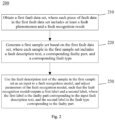
- a training method 200 for a fault recognition model according to an aspect of the present disclosure.
- a first fault data set is obtained.
- Each piece of fault data in the first fault data set includes at least a fault phenomenon and a fault recognition result.
- a first sample set is generated based on the first fault data set.
- Each sample in the first sample set includes a fault description text, a corresponding faulty part, and a corresponding fault type.
- a fault description text of at least one sample in the first sample set and at least one sample in the second sample set is used as an input to a fault recognition model, and parameters of the fault recognition model are adjusted again.
- a fault can be effectively recognized based on description of a fault phenomenon, and an output result may be a faulty part and a fault type belonging to or corresponding to the faulty part.
- the following fault recognition model can be obtained, where the fault recognition model can output a first label and a second label as results when a first text is received as an input, where the first label is a faulty part corresponding to the first text, and the second label is a fault type corresponding to the faulty part.
- the first fault data set may be a historical work order data set, including, for example, a maintenance work order, an overhaul work order, a device warranty bill, and an error reporting phenomenon record list, etc.
- a large amount of work order information is usually accumulated in maintenance overhaul scenarios for a device (for example, a power plant device).
- a faulty part and a fault phenomenon of a specific type of device are recorded, an overhaul and experimental record, a real fault cause, and a final solution of the device are indicated, and even overhaul time, overhaul personnel, device number, and the like are recorded in detail.
- each piece of data (for example, work orders) in the first fault data set may be a data record with a fault phenomenon and a fault result that have been determined.
- Such determination may be performed by operation and maintenance processing personnel on a production line, work order recording parties, fault handling specialists, or other technical personnel by experience, or performed in other ways, and it can be understood that the present disclosure is not limited thereto.
- Table 1 shows part names and corresponding fault types (or failure modes) of some examples in an example scenario of a power plant device.
- the first label and the second label may respectively correspond to "electric motor - stall", “transmission mechanism - jamming", “valve rod - deformation", or the like.
- the first label and the second label may alternatively be referred to as a parent label and a child label, the first label and the second label may be collectively referred to as a "two-level label structure" or the like. It can be understood that the foregoing is an example, and the present disclosure is not limited thereto.
- the operation and maintenance processing personnel on a production line send a fault phenomenon and an experimental record on site to a system (for example, in a form of fault data or work orders) and then store the same, and the fault handling specialists or technical personnel analyze the work order information sent by the operation and maintenance processing personnel on a production line and locate a faulty part by experience, and finally provide a standard fault cause and a solution.
- the operation and maintenance personnel on a production line cannot directly handle with a fault condition on site, they need to contact with the corresponding fault handling specialists or technical personnel online and describe the on-site condition orally or in writing. This consumes a large amount of time and labor, greatly reduces fault handling efficiency, and prolongs an entire fault solution period.
- Similar part faults may occur in the same type of devices from different users (for example, on different sites) and are usually described by overhaul personnel in a similar way, leaving many repeated work orders in the system.
- personnel on a production line still need to strongly depend on specialists doing background processing, and this repeated process is very labor-consuming.
- the operation and maintenance processing personnel on a production line do not have excellent summarization ability, there are usually various oral descriptions of phenomena in a work order library, data records for the same type of phenomena are repeated several times, and a final processing result quite depends on expression ability of the personnel on a production line.
- existing fault data for example, the existing historical work order library
- determination time can be saved for technical personnel, solutions are more accurately provided, and non-professional personnel conveniently and rapidly locate the problems.
- a fault phenomenon text is an oral text
- a faulty part and a fault type can still be accurately recognized.
- the following describes a variant example of a training method for a fault recognition model according to an aspect of the present disclosure.
- training a fault recognition model may include: training the fault recognition model by using at least a first loss function and a second loss function, where the first loss function is used to identify a difference between a label that is output by the model and a real label, and the second loss function is used to identify difference between parameters of the first label and a second label that are output by the model.
- the first loss function is used to identify a difference between a label that is output by the model and a real label
- the second loss function is used to identify difference between parameters of the first label and a second label that are output by the model.
- an additional loss function is added to ensure parameter similarity between the first label and the second label (for example, the parent label and the child label in the results of the two-level hierarchical structure) that are output. Therefore, it can be ensured that a classification result of the fault type in two-level classification results obtained in this way is a classification result specific to the faulty part, that is, a fault type not specific to the faulty part does not occur in the faulty part.
- the first loss function may be a cross entropy loss function.
- the second loss function may be a mean square error (L2) loss function.
- the cross entropy loss function can make different classification results as discrete as possible and keep same classification results as similar as possible.
- the additional L2 loss function can ensure parameters of the first label and the second label as similar as possible, thereby ensuring orderliness of two-level labels or two-level lists that are output.
- the fault recognition model in this specification may be implemented by various common word processing models and classification models.
- the fault recognition model may be composed of a neural network language model suitable for word processing and a fully connected layer.
- Such a neural network can be trained to obtain a semantic relation among words, for example, an entity class and an entity relationship, so that fault classification can be implemented based on descriptive words.
- generating the first sample set based on the first fault data set includes: determining a plurality of faulty parts and a fault type corresponding to each of the plurality of faulty parts by processing the fault recognition result in the fault data of the first fault data set. For example, a plurality of two-level label structures can be generated, where a parent label of each two-level label structure is a faulty part, and a child label is a fault type specific to the faulty part. Then, the method may include: generating a first sample set by associating the fault description text, the corresponding faulty part, and the corresponding fault type in the fault data of the first fault data set as a sample.
- Processing the fault recognition result in the fault data of the first fault data set may include: performing standardization processing on the faulty part and a fault mode, for example, deduplication and combining of similar expression. In this way, an aggregated list of parts and an aggregated fault mode list can be obtained. After that, a device fault phenomenon is extracted from the fault data and integrated with data such as a real faulty part and the fault mode into training set data (and development set data, test set data, and the like).
- generating the first sample set may further include: providing, in response to the number of samples having a specific faulty part and a specific fault type being less than a threshold, additional associated fault description texts for the specific value by at least one of the following operations: synonym replacement, Chinese-English translation, word sequence exchanging, word insertion, word deletion, and the like. It can be understood that the present disclosure is not limited thereto. Moreover, those skilled in the art will understand that other word processing methods for synonym transformation of words are also applicable to the method according to an aspect of the present disclosure.
- a data augmentation method is used to provide data in a minority class as a supplement. Therefore, each faulty part and a data amount of the fault type corresponding to the corresponding part can meet training requirements.
- a threshold for example, 10, 50, and 100
- processing such as translation, synonym replacement, and word addition and deletion are performed on existing phenomenon descriptions (for example, "sparks occurring") and the like to generate more phenomenon description texts, and the phenomenon description texts are associated with two-level label structures to generate samples to increase the number of samples, thereby increasing data balance of the entire sample set.
- the training method may further include: after training the fault recognition model, obtaining a second fault data set.
- the second fault data set is different from the first fault data set.
- a second sample set is generated based on the second fault data set, and a subset of the first sample set and a subset of the second sample set are used to train the fault recognition model again.
- the model can also be trained and continuously updated based on real-time new data flow fed back by the specialists.
- the model can use a priori knowledge obtained through learning on an existing class and learn a new class while keeping the knowledge of the existing class that has been learned, and finally can well perform on both the new class and the existing class.
- a method for rapidly determining a faulty part and a fault cause involved in an on-site fault work order based on fault data such as a historical work order library can be implemented. Because a large amount of work order library data has been accumulated, the model can be trained without performing manual annotation again.
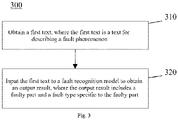
- a fault recognition method 300 according to an aspect of the present disclosure.
- the first text is a text for describing a fault phenomenon.
- the first text may be a fault description text extracted from a work order to be processed, or may be a paraphrased text in another form described by an on-site worker.
- the first text is input to the fault recognition model trained by using the method according to an aspect of the present disclosure, to obtain an output result.
- the output result includes a faulty part and a fault type corresponding to the faulty part.
- a faulty part and a fault mode can be rapidly and automatically recognized, thereby shortening a solution period for a device fault problem, improving problem handling efficiency, shortening human thinking time, and emancipating a large amount of labor.
- the operation and maintenance personnel on a production line can determine a specific faulty part and a specific fault mode as soon as possible based on the device fault condition on site.
- the model may be further trained to be capable of obtaining a historical handling method corresponding to the faulty part and the fault mode.
- the model that has been well trained in the historical work order library can still learn a faulty part or a fault type in new work orders subsequently and successively obtained on site that does not exist in the historical work order library and can learn the new knowledge while keeping the existing learned model capability.
- this method is universally applicable to various scenarios and has high portability among different types of devices and different fault scenarios.
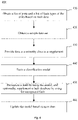
- a list of parts and a list of fault types of the parts are obtained based on fault data.
- a device fault phenomenon record, a faulty part, and a part fault type can be obtained based on historical work order information and aggregated to obtain the list of parts and the list of fault types of the parts.
- the historical work order information may be historical work order information read in a power plant background system.
- the work order information may include a real faulty part and a standard part fault type.
- a sample data set is obtained. For example, data cleaning is performed on device fault phenomenon record description to filter out redundant information such as work order numbers, device IDs, and processing time to obtain a cleaned fault phenomenon record text. Afterwards, the cleaned fault phenomenon record text is integrated with data such as the real faulty part and the part fault type in proportion into a sample data set that may include, for example, training set data, development set data, and test set data.
- data in a minority class is provided as a supplement.
- a data augmentation method such as synonym replacement and Chinese-English translation can be used to provide data in a minority class as a supplement, ensuring that each faulty part and a data amount of the fault type corresponding to the part meet training requirements.
- a classification model is trained.
- a multi-label classification model constructed based on a language recognition model and a fully connected layer can be used, or other suitable classification models can also be used.
- a final classification model is trained, evaluated, and selected for the foregoing training set data and the foregoing development set data.
- a fault is recognized by using the model, and optionally, a fault database is supplemented by using the recognized fault.
- personnel on a production line input a device fault phenomenon obtained in an experiment to the model, and then a part classification result and a fault type classification result of the model can be obtained on site.
- new work order content and a new class can be further input to a system (for example, after being further determined by the specialists or technical personnel) to supplement a work order information library.
- the model is updated based on new data.
- the model can be trained and continuously updated based on real-time new data flow fed back by the specialists.
- response time to on-site problems can be shortened, dependence on the technical personnel is reduced, and fault recognition and removal efficiency is improved.
- a faulty part for example, a battery, a conventional mechanism, and a limit switch
- a fault type for example, insufficient battery level, damage, and failure to operate
- the hierarchical classification model trained according to an aspect of the present disclosure can automatically learn a mapping process from work order description to the faulty part and fault type in the historical work order library based on the fault description and experiment record. In this way, a capability of automatically classifying faulty parts and fault modes is implemented, and a faulty part and a fault type that may cause the phenomenon can be pointed out. Further, the model can also be trained to return to a historical suggested processing method.
- the model can rapidly respond and solve problems, emancipate labor of the specialists, and improve on-site fault handling efficiency while reducing or eliminating dependence on manual processing of the specialists.
- the model can avoid incapability in the case of a part having not appear in the work order library caused by absolute dependence on the historical work order library.
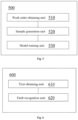
- the apparatus 500 may include a work order obtaining unit 510, a sample generation unit 520, and a model training unit 530.
- the work order obtaining unit 510 may be configured to obtain a first fault data set.
- the sample generation unit 520 may be configured to generate a first sample set based on the first fault data set, where each sample in the first sample set includes a fault description text, a corresponding faulty part, and a corresponding fault type.
- the model training unit 530 may be configured to use fault description texts of at least one sample in the first sample set and at least one sample in the second sample set as inputs to a fault recognition model, and adjust parameters of the fault recognition model again.
- the model training unit 530 may include: a unit for training the fault recognition model by using at least a first loss function and a second loss function, where the first loss function is used to identify a difference between a label that is output by the model and a real label, and the second loss function is used to identify difference between parameters of the first label and a second label that are output by the model.
- the first loss function may be a cross entropy loss function
- the second loss function may be an L2 loss function
- the fault recognition model may include a language recognition model and a fully connected layer.
- the sample generation unit 520 may include: a unit for determining a plurality of faulty parts and a fault type corresponding to each of the plurality of faulty parts by processing the fault recognition result in the fault data of the first fault data set; and a unit for generating a first sample set by associating the fault description text, the corresponding faulty part, and the corresponding fault type in the fault data of the first fault data set as a sample.
- the sample generation unit 520 may further include a unit for providing, in response to the number of samples having a specific faulty part and a specific fault type being less than a threshold, additional associated fault description texts for the specific value by at least one of the following operations: synonym replacement, Chinese-English translation, sequence exchanging, insertion, deletion, and the like.
- the apparatus 500 may further include: a unit for after training the fault recognition model, obtain a second fault data set, where the second fault data set is different from the first fault data set; a unit for generating a second sample set based on the second fault data set; and a unit for using a subset of the first sample set and a subset of the second sample set to train the fault recognition model again.
- the apparatus 600 may include a text obtaining unit 610 and a fault recognition unit 620.
- the text obtaining unit 610 may be configured to obtain a first text, where the first text is a text for describing a fault phenomenon.
- the fault recognition unit 620 may be configured to input the first text to the fault recognition model trained by using the fault recognition model according to an aspect of the present disclosure, to obtain an output result.
- the output result includes a faulty part and a fault type corresponding to the faulty part.
- an electronic device there are further provided an electronic device, a readable storage medium, and a computer program product.
- FIG. 7 a structural block diagram of an electronic device 700 that can serve as a server or a client of the present disclosure is now described, which is an example of a hardware device that can be applied to various aspects of the present disclosure.
- the electronic device is intended to represent various forms of digital electronic computer devices, such as a laptop computer, a desktop computer, a workstation, a personal digital assistant, a server, a blade server, a mainframe computer, and other suitable computers.
- the electronic device may further represent various forms of mobile apparatuses, such as a personal digital assistant, a cellular phone, a smartphone, a wearable device, and other similar computing apparatuses.
- the components shown herein, their connections and relationships, and their functions are merely examples, and are not intended to limit the implementation of the present disclosure described and/or required herein.
- the device 700 includes a computing unit 701, which may perform various appropriate actions and processing according to a computer program stored in a read-only memory (ROM) 702 or a computer program loaded from a storage unit 708 to a random access memory (RAM) 703.
- the RAM 703 may further store various programs and data required for the operation of the device 700.
- the computing unit 701, the ROM 702, and the RAM 703 are connected to each other through a bus 704.
- An input/output (I/O) interface 705 is also connected to the bus 704.
- a plurality of components in the device 700 are connected to the I/O interface 705, including: an input unit 706, an output unit 707, the storage unit 708, and a communication unit 709.
- the input unit 706 may be any type of device capable of entering information to the device 700.
- the input unit 706 can receive entered digit or character information, and generate a key signal input related to user settings and/or function control of the electronic device, and may include, but is not limited to, a mouse, a keyboard, a touchscreen, a trackpad, a trackball, a joystick, a microphone, and/or a remote controller.
- the output unit 707 may be any type of device capable of presenting information, and may include, but is not limited to, a display, a speaker, a video/audio output terminal, a vibrator, and/or a printer.
- the storage unit 708 may include, but is not limited to, a magnetic disk and an optical disc.
- the communication unit 709 allows the device 700 to exchange information/data with other devices via a computer network such as the Internet and/or various telecommunications networks, and may include, but is not limited to, a modem, a network interface card, an infrared communication device, a wireless communication transceiver and/or a chipset, e.g., a Bluetooth TM device, a802.11 device, a Wi-Fi device, a WiMax device, a cellular communication device, and/or the like.
- the computing unit 701 may be various general-purpose and/or special-purpose processing components with processing and computing capabilities. Some examples of the computing unit 701 include, but are not limited to, a central processing unit (CPU), a graphics processing unit (GPU), various dedicated artificial intelligence (AI) computing chips, various computing units that run machine learning model algorithms, a digital signal processor (DSP), and any appropriate processor, controller, microcontroller, etc.
- the computing unit 701 performs the various methods and processing described above, for example, the methods 200, 300, and 400 or other variants.
- the methods 200, 300, and 400 or other variants may be implemented as a computer software program, which is tangibly contained in a machine-readable medium, such as the storage unit 708.
- a part or all of the computer program may be loaded and/or installed onto the device 700 via the ROM 702 and/or the communication unit 709.
- the computer program When the computer program is loaded onto the RAM 703 and executed by the computing unit 701, one or more steps of the methods 200, 300, and 400 or other variants described above may be performed.
- the computing unit 701 may be configured, by any other suitable means (for example, by means of firmware), to perform the methods 200, 300, and 400 or other variants.
- Various implementations of the systems and technologies described herein above can be implemented in a digital electronic circuit system, an integrated circuit system, a field programmable gate array (FPGA), an application-specific integrated circuit (ASIC), an application-specific standard product (ASSP), a system-on-chip (SOC) system, a complex programmable logical device (CPLD), computer hardware, firmware, software, and/or a combination thereof.
- FPGA field programmable gate array
- ASIC application-specific integrated circuit
- ASSP application-specific standard product
- SOC system-on-chip
- CPLD complex programmable logical device
- computer hardware firmware, software, and/or a combination thereof.
- the programmable processor may be a dedicated or general-purpose programmable processor that can receive data and instructions from a storage system, at least one input apparatus, and at least one output apparatus, and transmit data and instructions to the storage system, the at least one input apparatus, and the at least one output apparatus.
- Program codes used to implement the method of the present disclosure can be written in any combination of one or more programming languages. These program codes may be provided for a processor or a controller of a general-purpose computer, a special-purpose computer, or other programmable data processing apparatuses, such that when the program codes are executed by the processor or the controller, the functions/operations specified in the flowcharts and/or block diagrams are implemented.
- the program codes may be completely executed on a machine, or partially executed on a machine, or may be, as an independent software package, partially executed on a machine and partially executed on a remote machine, or completely executed on a remote machine or a server.
- the machine-readable medium may be a tangible medium, which may contain or store a program for use by an instruction execution system, apparatus, or device, or for use in combination with the instruction execution system, apparatus, or device.
- the machine-readable medium may be a machine-readable signal medium or a machine-readable storage medium.
- the machine-readable medium may include, but is not limited to, an electronic, magnetic, optical, electromagnetic, infrared, or semiconductor system, apparatus, or device, or any suitable combination thereof.
- machine-readable storage medium may include an electrical connection based on one or more wires, a portable computer disk, a hard disk, a random access memory (RAM), a read-only memory (ROM), an erasable programmable read-only memory (EPROM or flash memory), an optical fiber, a portable compact disk read-only memory (CD-ROM), an optical storage device, a magnetic storage device, or any suitable combination thereof.
- RAM random access memory
- ROM read-only memory
- EPROM or flash memory erasable programmable read-only memory
- CD-ROM compact disk read-only memory
- magnetic storage device or any suitable combination thereof.
- a computer which has: a display apparatus (for example, a cathode-ray tube (CRT) or a liquid crystal display (LCD) monitor) configured to display information to the user; and a keyboard and a pointing apparatus (for example, a mouse or a trackball) through which the user can provide an input to the computer.
- a display apparatus for example, a cathode-ray tube (CRT) or a liquid crystal display (LCD) monitor
- a keyboard and a pointing apparatus for example, a mouse or a trackball
- Other types of apparatuses can also be used to provide interaction with the user; for example, feedback provided to the user can be any form of sensory feedback (for example, visual feedback, auditory feedback, or tactile feedback), and an input from the user can be received in any form (including an acoustic input, a voice input, or a tactile input).
- the systems and technologies described herein can be implemented in a computing system (for example, as a data server) including a backend component, or a computing system (for example, an application server) including a middleware component, or a computing system (for example, a user computer with a graphical user interface or a web browser through which the user can interact with the implementation of the systems and technologies described herein) including a frontend component, or a computing system including any combination of the backend component, the middleware component, or the frontend component.
- the components of the system can be connected to each other through digital data communication (for example, a communications network) in any form or medium. Examples of the communications network include: a local area network (LAN), a wide area network (WAN), and the Internet.
- a computer system may include a client and a server.
- the client and the server are generally far away from each other and usually interact through a communications network.
- a relationship between the client and the server is generated by computer programs running on respective computers and having a client-server relationship with each other.
- the server may be a cloud server, a server in a distributed system, or a server combined with a blockchain.
- steps may be reordered, added, or deleted based on the various forms of procedures shown above.
- the steps recorded in the present disclosure may be performed in parallel, in order, or in a different order, provided that the desired result of the technical solutions disclosed in the present disclosure can be achieved, which is not limited herein.
Landscapes
- Engineering & Computer Science (AREA)
- Theoretical Computer Science (AREA)
- Physics & Mathematics (AREA)
- General Physics & Mathematics (AREA)
- Business, Economics & Management (AREA)
- General Engineering & Computer Science (AREA)
- Human Resources & Organizations (AREA)
- Artificial Intelligence (AREA)
- Data Mining & Analysis (AREA)
- Health & Medical Sciences (AREA)
- Software Systems (AREA)
- General Health & Medical Sciences (AREA)
- Computational Linguistics (AREA)
- Evolutionary Computation (AREA)
- Strategic Management (AREA)
- Entrepreneurship & Innovation (AREA)
- Quality & Reliability (AREA)
- Computing Systems (AREA)
- Mathematical Physics (AREA)
- Audiology, Speech & Language Pathology (AREA)
- Economics (AREA)
- Computer Vision & Pattern Recognition (AREA)
- Life Sciences & Earth Sciences (AREA)
- Biomedical Technology (AREA)
- Tourism & Hospitality (AREA)
- Marketing (AREA)
- Operations Research (AREA)
- General Business, Economics & Management (AREA)
- Medical Informatics (AREA)
- Development Economics (AREA)
- Molecular Biology (AREA)
- Biophysics (AREA)
- Educational Administration (AREA)
- Bioinformatics & Computational Biology (AREA)
- Evolutionary Biology (AREA)
- Bioinformatics & Cheminformatics (AREA)
- Game Theory and Decision Science (AREA)
- Computer Hardware Design (AREA)
- Probability & Statistics with Applications (AREA)
- Management, Administration, Business Operations System, And Electronic Commerce (AREA)
Applications Claiming Priority (1)
| Application Number | Priority Date | Filing Date | Title |
|---|---|---|---|
| CN202110963367.3A CN113689111B (zh) | 2021-08-20 | 2021-08-20 | 故障识别模型训练方法、故障识别方法、装置和电子设备 |
Publications (1)
| Publication Number | Publication Date |
|---|---|
| EP4134877A1 true EP4134877A1 (de) | 2023-02-15 |
Family
ID=78581102
Family Applications (1)
| Application Number | Title | Priority Date | Filing Date |
|---|---|---|---|
| EP22187028.0A Pending EP4134877A1 (de) | 2021-08-20 | 2022-07-26 | Trainingsverfahren und -vorrichtung für fehlererkennungsmodell, fehlererkennungsverfahren und -vorrichtung sowie elektronische vorrichtung |
Country Status (3)
| Country | Link |
|---|---|
| US (1) | US20220350690A1 (de) |
| EP (1) | EP4134877A1 (de) |
| CN (1) | CN113689111B (de) |
Families Citing this family (17)
| Publication number | Priority date | Publication date | Assignee | Title |
|---|---|---|---|---|
| CN113792155B (zh) * | 2021-08-30 | 2022-12-09 | 北京百度网讯科技有限公司 | 基于知识图谱的文本校验方法、装置、电子设备和介质 |
| CN114253756A (zh) * | 2021-12-16 | 2022-03-29 | 北京云迹科技股份有限公司 | 一种机器人运维方法、装置、电子设备和存储介质 |
| CN114330437B (zh) * | 2021-12-28 | 2025-11-07 | 北京百度网讯科技有限公司 | 一种故障检测方法及故障分类模型的训练方法、装置 |
| CN117218050A (zh) * | 2022-05-31 | 2023-12-12 | 北京罗克维尔斯科技有限公司 | 图像采集设备的故障识别方法及装置 |
| CN115221892B (zh) * | 2022-07-12 | 2024-02-27 | 中国电信股份有限公司 | 工单数据处理方法及装置、存储介质及电子设备 |
| CN116070155A (zh) * | 2022-09-15 | 2023-05-05 | 华能(浙江)能源开发有限公司清洁能源分公司 | 风电变流器的故障识别方法、装置和电子设备 |
| CN115761368B (zh) * | 2022-11-28 | 2026-02-06 | 华润数字科技有限公司 | 故障识别方法、故障识别系统、电子设备及存储介质 |
| CN116089520B (zh) * | 2022-12-04 | 2023-11-10 | 四川九天惯通科技有限公司 | 一种基于区块链和大数据的故障识别方法及通用计算节点 |
| CN116006322A (zh) * | 2022-12-13 | 2023-04-25 | 潍柴动力股份有限公司 | 一种柴油机故障识别方法及装置 |
| CN116089817B (zh) * | 2022-12-29 | 2025-08-26 | 同济大学 | 基于模式识别的发动机故障预警方法、装置及存储介质 |
| CN115973715A (zh) * | 2023-02-16 | 2023-04-18 | 煤炭科学技术研究院有限公司 | 用于带式运输机的托辊故障检测模型的训练方法和装置 |
| CN118898735B (zh) * | 2023-05-05 | 2025-11-25 | 北京字跳网络技术有限公司 | 一种基于增量数据的模型迭代方法、活体检测方法及装置 |
| CN116484262B (zh) * | 2023-05-06 | 2023-12-08 | 南通大学 | 一种基于文本分类对纺织设备故障辅助处理方法 |
| CN116642578A (zh) * | 2023-05-23 | 2023-08-25 | 西安热工研究院有限公司 | 汽轮机故障识别方法、装置、电子设备和介质 |
| CN116881711B (zh) * | 2023-06-15 | 2025-10-17 | 中科云谷科技有限公司 | 用于构建故障诊断语言模型的方法、装置及处理器 |
| CN118350805A (zh) * | 2024-04-29 | 2024-07-16 | 北京怀柔实验室 | 发电设备的故障处理方法、装置、设备及介质 |
| CN118690018A (zh) * | 2024-06-26 | 2024-09-24 | 北京邮电大学 | 一种基于反馈数据增强的安全缺陷自动分类方法 |
Family Cites Families (17)
| Publication number | Priority date | Publication date | Assignee | Title |
|---|---|---|---|---|
| US11551348B2 (en) * | 2019-04-09 | 2023-01-10 | KLA Corp. | Learnable defect detection for semiconductor applications |
| US11507878B2 (en) * | 2019-04-10 | 2022-11-22 | Adobe Inc. | Adversarial training for event sequence analysis |
| CN110245233A (zh) * | 2019-06-19 | 2019-09-17 | 北京航空航天大学 | 一种故障确定方法及装置 |
| US11415438B2 (en) * | 2019-07-17 | 2022-08-16 | ExxonMobil Technology and Engineering Company | Intelligent system for identifying sensor drift |
| US11500370B2 (en) * | 2019-08-21 | 2022-11-15 | Hitachi, Ltd. | System for predictive maintenance using generative adversarial networks for failure prediction |
| US11714878B2 (en) * | 2020-01-28 | 2023-08-01 | Faro Technologies, Inc. | Construction site defect and hazard detection using artificial intelligence |
| US12423592B2 (en) * | 2020-03-05 | 2025-09-23 | Samsung Electronics Co., Ltd. | Hierarchy-preserving learning for multi-label classification |
| US20210295213A1 (en) * | 2020-03-23 | 2021-09-23 | Orbotech Ltd. | Adaptive learning for image classification |
| CN111400930B (zh) * | 2020-04-09 | 2022-04-15 | 武汉大学 | 基于虚实孪生空间的电力设备小样本故障诊断方法及系统 |
| CN111651601B (zh) * | 2020-06-02 | 2023-04-18 | 全球能源互联网研究院有限公司 | 用于电力信息系统的故障分类模型的训练方法及分类方法 |
| CN111428008B (zh) * | 2020-06-11 | 2020-09-29 | 北京百度网讯科技有限公司 | 用于训练模型的方法、装置、设备以及存储介质 |
| US20220058440A1 (en) * | 2020-08-24 | 2022-02-24 | Chevron U.S.A. Inc. | Labeling an unlabeled dataset |
| CN112560912B (zh) * | 2020-12-03 | 2023-09-26 | 北京百度网讯科技有限公司 | 分类模型的训练方法、装置、电子设备和存储介质 |
| CN112560997B (zh) * | 2020-12-29 | 2024-10-18 | 宁波奥克斯电气股份有限公司 | 故障识别模型训练方法、故障识别方法及相关装置 |
| CN112613584A (zh) * | 2021-01-07 | 2021-04-06 | 国网上海市电力公司 | 一种故障诊断方法、装置、设备及存储介质 |
| CN112884018A (zh) * | 2021-01-28 | 2021-06-01 | 广东电网有限责任公司 | 电网线路故障识别模型训练方法和电网线路巡检方法 |
| US12141671B2 (en) * | 2021-03-18 | 2024-11-12 | The Bank Of New York Mellon | Methods and systems for generating predictions based on time series data using an ensemble modeling |
-
2021
- 2021-08-20 CN CN202110963367.3A patent/CN113689111B/zh active Active
-
2022
- 2022-07-18 US US17/867,680 patent/US20220350690A1/en active Pending
- 2022-07-26 EP EP22187028.0A patent/EP4134877A1/de active Pending
Non-Patent Citations (3)
| Title |
|---|
| XI ZIYUE ET AL: "A Novel Ensemble Approach to Multi-label Classification for Electric Power Fault Diagnosis", 2019 IEEE 7TH INTERNATIONAL CONFERENCE ON COMPUTER SCIENCE AND NETWORK TECHNOLOGY (ICCSNT), IEEE, 19 October 2019 (2019-10-19), pages 267 - 271, XP033690960, DOI: 10.1109/ICCSNT47585.2019.8962410 * |
| ZHANG QIANG ET AL: "A TextCNN Based Approach for Multi-label Text Classification of Power Fault Data", 2020 IEEE 5TH INTERNATIONAL CONFERENCE ON CLOUD COMPUTING AND BIG DATA ANALYTICS (ICCCBDA), IEEE, 10 April 2020 (2020-04-10), pages 179 - 183, XP033772953, DOI: 10.1109/ICCCBDA49378.2020.9095584 * |
| ZHOU JUNYU ET AL: "A Classification Model of Power Equipment Defect Texts Based on Convolutional Neural Network", 11 July 2019, ADVANCES IN DATABASES AND INFORMATION SYSTEMS; [LECTURE NOTES IN COMPUTER SCIENCE; LECT.NOTES COMPUTER], SPRINGER INTERNATIONAL PUBLISHING, CHAM, PAGE(S) 475 - 487, ISBN: 978-3-319-10403-4, XP047514720 * |
Also Published As
| Publication number | Publication date |
|---|---|
| CN113689111B (zh) | 2022-11-11 |
| US20220350690A1 (en) | 2022-11-03 |
| CN113689111A (zh) | 2021-11-23 |
Similar Documents
| Publication | Publication Date | Title |
|---|---|---|
| EP4134877A1 (de) | Trainingsverfahren und -vorrichtung für fehlererkennungsmodell, fehlererkennungsverfahren und -vorrichtung sowie elektronische vorrichtung | |
| US10679008B2 (en) | Knowledge base for analysis of text | |
| CN114612749B (zh) | 神经网络模型训练方法及装置、电子设备和介质 | |
| US20220237376A1 (en) | Method, apparatus, electronic device and storage medium for text classification | |
| CN112631887A (zh) | 异常检测方法、装置、电子设备和计算机可读存储介质 | |
| CN115114424A (zh) | 查询请求的应答方法及装置 | |
| US20220318681A1 (en) | System and method for scalable, interactive, collaborative topic identification and tracking | |
| US20250310285A1 (en) | Human-computer interaction method and apparatus based on historical conversation, device and storage medium | |
| CN116028605B (zh) | 逻辑表达式生成方法、模型训练方法、装置及介质 | |
| US12411876B2 (en) | Answer information generation method | |
| CN114443989A (zh) | 排序方法、排序模型的训练方法、装置、电子设备及介质 | |
| CN116450917A (zh) | 信息搜索方法及装置、电子设备和介质 | |
| CN114219046B (zh) | 模型训练方法、匹配方法、装置、系统、电子设备和介质 | |
| CN113918430A (zh) | 服务器硬件运行状态确定方法、相关装置及程序产品 | |
| CN115168545A (zh) | 群组搜索方法、装置、电子设备及介质 | |
| CN112905743A (zh) | 文本对象检测的方法、装置、电子设备和存储介质 | |
| CN116755974A (zh) | 云计算平台运维方法、装置、电子设备及存储介质 | |
| CN113867634B (zh) | 数据读取方法、装置、电子设备及存储介质 | |
| US20250094722A1 (en) | Annotation method for large language model | |
| KR20230006601A (ko) | 정렬 방법, 정렬 모델의 트레이닝 방법, 장치, 전자 기기 및 매체 | |
| CN119621386A (zh) | 一种故障判断方法、装置、电子设备及存储介质 | |
| CN118643139A (zh) | 基于大模型的数据生成方法及装置、设备和介质 | |
| CN112860681B (zh) | 数据清洗方法及装置、计算机设备和介质 | |
| CN115686895A (zh) | 数据库异常诊断方法、装置、设备、介质和程序产品 | |
| CN115146613A (zh) | 文档质量评估方法、装置、电子设备及介质 |
Legal Events
| Date | Code | Title | Description |
|---|---|---|---|
| PUAI | Public reference made under article 153(3) epc to a published international application that has entered the european phase |
Free format text: ORIGINAL CODE: 0009012 |
|
| STAA | Information on the status of an ep patent application or granted ep patent |
Free format text: STATUS: REQUEST FOR EXAMINATION WAS MADE |
|
| 17P | Request for examination filed |
Effective date: 20220726 |
|
| AK | Designated contracting states |
Kind code of ref document: A1 Designated state(s): AL AT BE BG CH CY CZ DE DK EE ES FI FR GB GR HR HU IE IS IT LI LT LU LV MC MK MT NL NO PL PT RO RS SE SI SK SM TR |
|
| STAA | Information on the status of an ep patent application or granted ep patent |
Free format text: STATUS: EXAMINATION IS IN PROGRESS |
|
| 17Q | First examination report despatched |
Effective date: 20250122 |