EP4133348B1 - Verfahren zur künstlichen bestäubung und vorrichtung zur durchführung davon - Google Patents
Verfahren zur künstlichen bestäubung und vorrichtung zur durchführung davon Download PDFInfo
- Publication number
- EP4133348B1 EP4133348B1 EP21783873.9A EP21783873A EP4133348B1 EP 4133348 B1 EP4133348 B1 EP 4133348B1 EP 21783873 A EP21783873 A EP 21783873A EP 4133348 B1 EP4133348 B1 EP 4133348B1
- Authority
- EP
- European Patent Office
- Prior art keywords
- pollen
- data
- pollination
- collecting element
- module
- Prior art date
- Legal status (The legal status is an assumption and is not a legal conclusion. Google has not performed a legal analysis and makes no representation as to the accuracy of the status listed.)
- Active
Links
Images


Classifications
-
- G—PHYSICS
- G06—COMPUTING OR CALCULATING; COUNTING
- G06Q—INFORMATION AND COMMUNICATION TECHNOLOGY [ICT] SPECIALLY ADAPTED FOR ADMINISTRATIVE, COMMERCIAL, FINANCIAL, MANAGERIAL OR SUPERVISORY PURPOSES; SYSTEMS OR METHODS SPECIALLY ADAPTED FOR ADMINISTRATIVE, COMMERCIAL, FINANCIAL, MANAGERIAL OR SUPERVISORY PURPOSES, NOT OTHERWISE PROVIDED FOR
- G06Q10/00—Administration; Management
- G06Q10/06—Resources, workflows, human or project management; Enterprise or organisation planning; Enterprise or organisation modelling
- G06Q10/063—Operations research, analysis or management
- G06Q10/0631—Resource planning, allocation, distributing or scheduling for enterprises or organisations
-
- A—HUMAN NECESSITIES
- A01—AGRICULTURE; FORESTRY; ANIMAL HUSBANDRY; HUNTING; TRAPPING; FISHING
- A01H—NEW PLANTS OR NON-TRANSGENIC PROCESSES FOR OBTAINING THEM; PLANT REPRODUCTION BY TISSUE CULTURE TECHNIQUES
- A01H1/00—Processes for modifying genotypes ; Plants characterised by associated natural traits
- A01H1/02—Methods or apparatus for hybridisation; Artificial pollination ; Fertility
- A01H1/027—Apparatus for pollination
-
- A—HUMAN NECESSITIES
- A01—AGRICULTURE; FORESTRY; ANIMAL HUSBANDRY; HUNTING; TRAPPING; FISHING
- A01B—SOIL WORKING IN AGRICULTURE OR FORESTRY; PARTS, DETAILS, OR ACCESSORIES OF AGRICULTURAL MACHINES OR IMPLEMENTS, IN GENERAL
- A01B79/00—Methods for working soil
- A01B79/005—Precision agriculture
-
- A—HUMAN NECESSITIES
- A01—AGRICULTURE; FORESTRY; ANIMAL HUSBANDRY; HUNTING; TRAPPING; FISHING
- A01B—SOIL WORKING IN AGRICULTURE OR FORESTRY; PARTS, DETAILS, OR ACCESSORIES OF AGRICULTURAL MACHINES OR IMPLEMENTS, IN GENERAL
- A01B79/00—Methods for working soil
- A01B79/02—Methods for working soil combined with other agricultural processing, e.g. fertilising, planting
-
- A—HUMAN NECESSITIES
- A01—AGRICULTURE; FORESTRY; ANIMAL HUSBANDRY; HUNTING; TRAPPING; FISHING
- A01G—HORTICULTURE; CULTIVATION OF VEGETABLES, FLOWERS, RICE, FRUIT, VINES, HOPS OR SEAWEED; FORESTRY; WATERING
- A01G7/00—Botany in general
- A01G7/06—Treatment of growing trees or plants, e.g. for preventing decay of wood, for tingeing flowers or wood, for prolonging the life of plants
-
- G—PHYSICS
- G06—COMPUTING OR CALCULATING; COUNTING
- G06N—COMPUTING ARRANGEMENTS BASED ON SPECIFIC COMPUTATIONAL MODELS
- G06N20/00—Machine learning
-
- G—PHYSICS
- G06—COMPUTING OR CALCULATING; COUNTING
- G06Q—INFORMATION AND COMMUNICATION TECHNOLOGY [ICT] SPECIALLY ADAPTED FOR ADMINISTRATIVE, COMMERCIAL, FINANCIAL, MANAGERIAL OR SUPERVISORY PURPOSES; SYSTEMS OR METHODS SPECIALLY ADAPTED FOR ADMINISTRATIVE, COMMERCIAL, FINANCIAL, MANAGERIAL OR SUPERVISORY PURPOSES, NOT OTHERWISE PROVIDED FOR
- G06Q50/00—Information and communication technology [ICT] specially adapted for implementation of business processes of specific business sectors, e.g. utilities or tourism
- G06Q50/02—Agriculture; Fishing; Forestry; Mining
-
- G—PHYSICS
- G06—COMPUTING OR CALCULATING; COUNTING
- G06Q—INFORMATION AND COMMUNICATION TECHNOLOGY [ICT] SPECIALLY ADAPTED FOR ADMINISTRATIVE, COMMERCIAL, FINANCIAL, MANAGERIAL OR SUPERVISORY PURPOSES; SYSTEMS OR METHODS SPECIALLY ADAPTED FOR ADMINISTRATIVE, COMMERCIAL, FINANCIAL, MANAGERIAL OR SUPERVISORY PURPOSES, NOT OTHERWISE PROVIDED FOR
- G06Q50/00—Information and communication technology [ICT] specially adapted for implementation of business processes of specific business sectors, e.g. utilities or tourism
- G06Q50/10—Services
-
- G—PHYSICS
- G06—COMPUTING OR CALCULATING; COUNTING
- G06T—IMAGE DATA PROCESSING OR GENERATION, IN GENERAL
- G06T7/00—Image analysis
-
- H—ELECTRICITY
- H04—ELECTRIC COMMUNICATION TECHNIQUE
- H04W—WIRELESS COMMUNICATION NETWORKS
- H04W4/00—Services specially adapted for wireless communication networks; Facilities therefor
- H04W4/30—Services specially adapted for particular environments, situations or purposes
- H04W4/38—Services specially adapted for particular environments, situations or purposes for collecting sensor information
-
- G—PHYSICS
- G06—COMPUTING OR CALCULATING; COUNTING
- G06T—IMAGE DATA PROCESSING OR GENERATION, IN GENERAL
- G06T2207/00—Indexing scheme for image analysis or image enhancement
- G06T2207/20—Special algorithmic details
- G06T2207/20081—Training; Learning
-
- G—PHYSICS
- G06—COMPUTING OR CALCULATING; COUNTING
- G06T—IMAGE DATA PROCESSING OR GENERATION, IN GENERAL
- G06T2207/00—Indexing scheme for image analysis or image enhancement
- G06T2207/30—Subject of image; Context of image processing
- G06T2207/30181—Earth observation
- G06T2207/30188—Vegetation; Agriculture
Definitions
- the invention relates to the field of artificial pollination. More specifically, the invention relates to pollen collecting element for pollination management.
- Pollination is a process that involves transferring pollen grains from the male part of a plant to the female part of a plant (stigma). This process is done naturally by wind, small birds, insects (especially bees), and more. This process is crucial for later fertilization, production of seeds and the formation of fruits and vegetables. Disappearance of different natural pollinators, a phenomenon that if exacerbated, will severely harm the production of different crops that rely almost exclusively on insect pollination Moreover, the globalization process has shifted the production of different crops from their natural habitat into different geographies where the natural pollinators that evolved alongside the crop are not present.
- US 2016/0353661 A1 discloses a method of pollinating a plant includes receiving, with a processing circuit, plant data regarding a plant having flowers, and controlling, by the processing circuit, operation of a robotic device to selectively pollinate a portion of the plurality of flowers based on the plant data.
- the robotic device includes sensors configured to acquire plant data, a pollination device configured to pollinate flowers of a plant, a collection device configured to collect pollen, and a pollination prevention device configured prevent a flower from being pollinated.
- CN 108 243 733 A discloses a pollen collecting element specifically configured for collecting and treating pollen as food ingredient. To that end, it comprises a compartment with a collecting chamber, enclosing an electrostatic adsorber and a ultraviolet lamp. This pollen collecting element is not configured to collect pollen grains for release to artificially pollinate an agricultural area.
- the invention is directed to a pollen collecting element according to claim 1.
- the invention provides a pollination management system for an agricultural area comprising:
- the agricultural area is a field.
- the agricultural area is an orchard.
- field is meant to be understood as an area of cleared enclosed land used for cultivation crops.
- crops of the invention includes without limitation crops such as maize, soybean, wheat, rice, oilseeds, cotton, grapes, sugarcane, fruits and vegetables.
- orchard is meant to be understood as an area of land where crop trees are grown, while crop tree refers, without limitation, to trees that produce or have the potential to produce the desired produce.
- a non-limiting list of tree crops of the invention includes apple, avocado, nuts, cacao, kiwi, peach, pear, citrus such as orange, lemon, grapefruit, and tangerine; cherry, plum, apricot, mango, lychee, or any other tree crop that may gain benefit from the management system of the invention.
- the term "portion" refers, without limitation, to a distinct part or a section of the whole, while “whole” is the entire agricultural area.
- the portion can be of any size, shape and geometry. It can be a large part of the area or a small part of the area. The size of the portion of the area can be pre-set, or maybe chosen sporadically.
- the data acquisition module is configured to transmit the acquired data to the server.
- the instructions provided to the pollination module by the controller are based on the data processed by the server.
- the term "acquired data” is meant to be understood as data acquired by the data acquisition module by means of the at least one sensor and/or data received and/or gathered and/or transferred to and/or collected from an external source.
- the data acquired by the data acquisition module is a combination of the data obtained by the at least one sensor and data from an external source.
- the non-limiting list of data received from the external source include field related metadata, climate measurements and climate forecasting data, and field visual data.
- the unlimited list of field metadata may include plant types, planting maps, plants age, natural pollinators mapping beehives, and climate data.
- the climate data may either be obtained by 3 rd party service, from the client's weather station or using the at least one sensor of the data acquisition module.
- visual data could be either obtained by us using an external supplier, collected by image sensors of the data acquisition unit and/or drones and/or by 3 rd parties such as, without limitation, satellite imaging companies.
- the instructions provided the to the pollination module by the controller are based on the data processed by the server.
- the term "sensor" refers, without limitation to a device that detects and responds to some type of input from the physical environment.
- the specific input could be, without limitation, light, heat, motion, moisture, pressure, or any other environmental input.
- the non-limiting list of sensors of the invention includes one or more IR cameras, temperature sensor, humidity sensor, LIDAR, Sound recorder, GNSS, 4D imaging sensor, hyperspectral imaging, IMU, light sensor, or any other applicable sensor, or a combination thereof.
- the data acquisition module comprises a plurality of sensors.
- the data acquisition module comprises a plurality of sensors of the same type.
- the data acquisitions module comprises a plurality of different sensors.
- the data acquisition module comprises on-demand set of sensors.
- the combination of different sensors is defined by the user.
- the data acquisition module comprises a preset combination of sensors.
- the invention provides a pollen collecting element of the pollination module, configured to collect pollen grains for release to artificially pollinate an agricultural area and comprising a high voltage power supply, an electrode, a pollen collection surface, and, optionally, a container.
- the pollen collecting element is configured to generate electric fields that apply electrostatic forces on the pollen grains thereby attracting the pollen grains to the pollen collection surface.
- the pollen collection surface comprises an outer surface of a covering of the electrode and the pollen collecting element exposes the pollen collection surface on an external portion of the pollen management system.
- the pollen collecting element further comprises at least one of an internal control unit, a vibration engine, or a suction unit.
- the server is configured to receive the acquired data, to store the acquired data, to generate a pollination heat map based on the acquired data, or any combination thereof.
- the server further configured to transmit the pollination heat map to the operation module.
- the term "heat map” is meant to be understood, without limitation, as a holistic view on the field and/or orchard, pollination-wise, including, one or more of the following: identifying the flowering ratio in different parts of the fields, assessing pollination efficiency in areas based on environmental data, marking areas to be pollinated based on their needs and on previous pollinations activities and based on other environmental factors (weather, bees activities etc.).
- the data are indicative of the crop status, such as flowering phenological and morphological stages, plant health and the environmental suitability for pollination.
- the data comprise data are indicative of the pollination efficiency.
- the term data refers, without limitation, to any information and/or input related to the state of the environment and the impacts on ecosystems.
- the data maybe acquired by the sensors of the data acquisition module, and/or can be gathered from external sources, such as, without limitation, weather forecast, activity of insects, or any other information that might be of relevance.
- the data acquired by the sensors may include, without limitation, health/disease state, yield estimations, flowering stage, and others.
- the pollination management system of the invention is further configured to process real-time data acquired from the agricultural area and to pollinate the agricultural area based on said real-time data.
- the real-time data are selected from the data acquired by the at least one sensor of the data acquisition module, data received by the data acquisition module from an external source, or a combination thereof.
- the term "real-time” refers, without limitation to relating to a setting in which input data are processed within milliseconds so that it is available virtually immediately as feedback.
- the real-time data are selected from the data acquired by the plurality of sensors, data collected from an external source, or a combination thereof.
- the server is further configured to control at least one of: the area to be pollinated, pollination time, frequency of pollination episodes, number of pollination episodes, duration of each pollination episode, or any combination thereof.
- the pollination of the agricultural area comprises more than one pollination episode.
- the pollination of the agricultural area comprises a preset number of pollination episodes with predefined time intervals.
- each pollination episode is performed based on the real-time data acquired by the data acquisition module.
- the location of the area to be pollinated is determined based on the data and/or real-time data acquired by the data acquisition unit.
- the pollen collecting element and the pollen application element form a single unit configured to collect and release the pollen.
- the pollen is collected using electrostatic forces applied to the pollen grains by the pollen collecting element, optionally, the pollen is stored in a container of a kind that is applicable for storage of pollen grains, and, at the desired timing, the pollen is released by the pollen application element directly and/or indirectly attached to the pollen collecting element, in such way, that the pollen collecting element and pollen application element together constitute a single assembly designed to both collect and release the pollen grains.
- the pollen collecting element and the pollen application element of the pollination module are separate elements.
- the pollen collecting element and the pollen application element of the pollination module are not attached, either directly or indirectly to each other, namely, the pollen grains are collected using electrostatic forces by the pollen collecting element, and then are stored at and/or transferred to the pollen application element of the pollination module.
- Fig.1 illustrating a schematic diagram of an exemplary embodiment of a system 100 containing electrostatic pollination element 8 as part of the pollination module, and other components in order to optimize and improve the entire pollination process.
- the pollination module receives a pollination heat map from the central server in the field and/or orchard where the operator is located and navigates the operator to the relevant plants to be pollinated.
- the pollination element includes a power supply 1, control unit 2 with processing unit 4 is used to process real time data and to combine server inputs into the control of the pollination element and data storage 3 for storage all the data which received from the sensors 6.
- the sensors function is to collect environmental data (such as, without limitation, temperature, humidity, visible/non-visible light, and/or sound) about the plant status.
- the navigation system 9 with GNSS, mems and other navigation sensors can provide data on the current location and the inertial position of the worker on the tree.
- the user interface 5 includes a screen or instruction lights for guiding the operator where to do the pollination.
- a wireless connection 7 is used to send and receive data from the remote server/servers.
- the pollen collecting element further comprises at least one of the units selected from: an internal control unit, a vibration engine, and a suction unit.
- the invention provides a method of artificial pollination of an agricultural area in need of pollination.
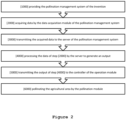
- Fig.2 illustrating a flow chart of an exemplary embodiment of the method of the invention.
- the method comprises: providing the pollination management system according to the embodiments of the invention [1000]; acquiring data by the data acquisition module of the pollination management system [2000]; transmitting the acquired data to the server of the pollination management system [3000]; transmitting the acquired data to the central server of the pollination management system [4000]; processing the data of step [2000] by the server to generate an output [5000]; transmitting the output of step [5000] to the controller of the operation module [6000], and, pollinating the agricultural area by the pollination module [7000].
- the step of pollinating the agricultural area is carried out according to the instructions provided by the controller.
- the instructions provided by the controller are based on the output of step [5000].
- the step of pollinating the agricultural area comprises the steps of collecting the pollen by the pollen collecting element of the pollination module and releasing the pollen by the pollen application element of the pollination module.
- the step of collecting the pollen by the pollen collecting element further comprises generating electric fields that apply electrostatic forces on the pollen grains thereby attracting the pollen grains to the pollen collection surface of the pollen collecting element.
- the step of acquiring data by the data by the acquisition module comprises at least one of acquiring data by the at least one sensor of the data acquisition module, receiving data from an external source, or a combination thereof.
- acquiring data is meant to be understood as at least one action or series of actions performed by one or more components of the data acquisition module, that result in collection of data.
- the data can be acquired by that least one sensor of the data acquisition module and/or the data can be received from an external source.
- the data as well can be obtained by any other means, as long as the data are in a format suitable for the configuration of the data acquisition module.
- data acquired by the at least one sensor of the pollination module may include, without limitation, location data (GPS), IMU data, visual data (e.g. images of crop plants while pollinating), climate related data such as temperature, humidity, wind etc.
- GPS location data
- IMU data IMU data
- visual data e.g. images of crop plants while pollinating
- climate related data such as temperature, humidity, wind etc.
- data acquired by from an external source may include field related metadata, climate measurements and climate forecasting data, and field visual data.
- Field metadata could be plant types, planting maps, plants age, natural pollinators mapping beehives, climate data may either be obtained by 3 rd party service, from the client's weather station or using system's sensors.
- the data a real-time data.
- the step of processing the data and generating output comprises the steps selected from setting the number of pollination episodes, setting the timing of pollination, setting the frequency of pollination, setting the duration of pollination episode, setting the location of pollination, setting the area to be pollinated, or any combination thereof.
- the timing of the pollination is set based on the acquired data.
- the location of the pollination is set based on the acquired data.
- the method comprises more than one pollination episode.
- the method comprises multiple pollination episodes.
- the method comprises a preset number of pollination episodes.
- the acquired data are real-time data, and pollination is a real-time pollination.
- the number of pollination episodes is set in real-time based on the real-time data.
- the pollination episodes are carried out with a preset frequency.
- each pollination episode has a preset duration.
- the method further comprises repeating steps [2000] to [7000] predefined number of times.
- the data are selected from the data acquired by the plurality of sensors of the data acquisition unit, data collected from at least one external source, or a combination thereof.
- the agricultural area is a field of a crop.
- the agricultural area is an orchard.
- the crop is a tree crop.
- the tree crop is selected, without limitation, from avocado, cocoa, nut, citrus, kiwi, peach, mango, lychee, pear, plum, cherry, apricot, or any other tree crop that may benefit from the pollination system and/or methods of the invention.
- the crop is a field crop.
- the list of field crops of the invention includes, without limitation, crops such as maize, soybean, wheat, rice, oilseeds, cereals, cotton, grapes, sugarcane, fruits and vegetables.
- the invention provides a method of increasing a yield of a crop comprising providing an artificial pollination management system, wherein said pollination management system comprises a pollination module; and, wherein said pollination module comprises at least one pollen collecting element; and, wherein said pollen collecting element is configured to apply electrostatic forces to the pollen grains, to thereby attract the pollen grains to the pollen collecting element.
- the pollination management system further comprises a data acquisition module; a server in communication with the data acquisition module; an operation module in communication with the server, the data acquisition module and the pollination module; and a user interface.
- the pollen grains are attracted to the pollen collection surface of the pollen collecting element.
- the agricultural area is an orchard. In another embodiment, the agricultural area is field of a crop.
- yield or “agricultural productivity” or “agricultural output” refers, without limitation, to the measure of the yield of a crop per unit area of land cultivation, and/or the seed generation of the plant itself.
- the increase in the yield can be measured according to any suitable parameter or technique known in the art and/or in-use by growers. For example, number of fruits and/or seeds per crop, size of the fruit, weight of the crop, and other parameters. According to some embodiments of the above method, the yield of the crop may be increased by 5% to 500%.
- the yield of the crop may be increased by 10% to 500%.
- the yield of the crop maybe increased by 5%, 10%, 20%, 30%, 40%, 50%, 60%, 70%, 80%, 90%, 100%, 110%, 120%, 130%, 140%, 150%, 160%, 170%, 180%, 190%, 200%, 210%, 220%, 230%, 240%, 250%,260%, 270%, 280%, 290%, 300%, 310%, 320%, 330%, 340%, 350%,360%, 370%, 830%, 390%, 400%, 410%, 420%, 430%, 440%, 450%,460%, 470%, 480%, 490%, 500%.
- the invention provides a collecting element, configured to collect pollen grains for release to artificially pollinate an agricultural area, comprising a high voltage power supply, an electrode, a pollen collection surface, and, optionally, a container, wherein said high voltage power supply supplies high voltage to the electrode; and wherein said electrode is configured to generate electric fields that apply electrostatic forces on the pollen grains; and wherein said pollen grains are attracted to the pollen collecting surface of the element.
- the pollen collection surface comprises an outer surface of a covering of the electrode and the pollen collecting element exposes the pollen collection surface on an external portion of the pollen management system.
- the pollen collecting element further comprises at least one of an internal control unit, a vibration engine, a blower, or a suction unit.
- a high voltage power supply 20 supplies high voltage to the electrode 30 which generates electric fields that apply electrostatic forces on the pollen grains. The pollen is then attracted to the pollen collection surface 40.
- the invention provides a computer implemented method of artificial pollination of an agricultural area comprising a crop or a portion thereof.
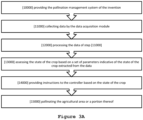
- Fig.3A presenting a flowchart of an exemplary example of the method comprising the steps of: providing the artificial pollination system according to the examples of the invention [10000]; collecting data by the data acquisition module[11000]; processing the data of step [11000], [12000]; assessing the state of the crop based on a set of parameters indicative of the state of the crop extracted from the data [13000]; providing instructions to the controller based on the state of the crop [14000]; and, pollinating the agricultural area or a portion thereof [15000].
- said data are image data.
- said assessing the state of the crop comprises using a trained neural network.
- said step of processing comprises steps of computing said image data using computer implemented algorithm trained to generate output based on the image data.
- the computer implemented algorithm is trained to generate output based on predetermined feature vectors or attributes extracted from the image data.
- said method comprises steps of implementing with said algorithm a training process according to a training dataset comprising a plurality of training images of a plurality of crop plants captured by the at least one imaging sensor, wherein each respective training image of the plurality of training images is associated with the state of said crop plant depicted in the respective training image.
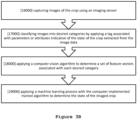
- Fig. 3B representing an exemplary example of the above process wherein said training process comprises steps of capturing images of the crop plants using an imaging sensor [16000]; classifying images into desired categories by applying a tag associated with parameters or attributes indicative of the state of the crop extracted from the image data [17000]; and applying a computer vision algorithm to determine a set of feature vectors associated with each desired category [18000].
- the above process further comprises the step of applying a machine learning process with the computer implemented trained algorithm to determine the state of the imaged crop [19000].
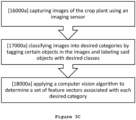
- Fig. 3C representing an exemplary example of the above process wherein said training process comprises steps of capturing images of the crop plant using an imaging sensor [16000a]; classifying images into desired categories by tagging certain objects in the images and labeling said objects with desired classes [17000a]; and applying a computer vision algorithm to determine a set of feature vectors associated with each desired category [18000a].
- the method comprises steps of applying a machine learning process with the computer implemented trained algorithm to determine the state of the imaged flowering plant.
- said algorithm is implemented with a machine learning process using a neural network with the processed data.
- said machine learning process comprises computing by the at least one neural network, a tag of at least one desired category for the at least one flowering plant, wherein the tag of at least one classification category is computed at least according to weights of the at least one neural network, wherein the at least one neural network is trained according to a training dataset comprising a plurality of training images of a plurality of crop plants captured by the at least one imaging sensor, wherein each respective training image of the plurality of training images is associated with said tag of at least one desired category of at least one crop plant depicted in the respective training image; and generating according to the tag of at least one classification category, instructions for execution by the controller.
- machine learning process comprises computing by the at least one neural network, a tag of at least one desired class for the at least one type of crop plant, wherein the tag of at least one class is computed at least according to weights of the at least one neural network, wherein the at least one neural network is trained according to a training dataset comprising a plurality of training images of a plurality of crop plants captured by the at least one imaging sensor, wherein each respective training image of the plurality of training images is associated with said tag of at least one desired class of at least one plant type depicted in the respective training image; and generating according to the tag of at least one class, instructions for execution by the controller.
- crop and/ “crop plant” are interchangeable and both meant to be understood as a whole plant and/or parts of the plant including, without limitation, leaves, fruits, seeds, stem, tree branch, tree trunk, flowers, or any other part not explicitly mentioned here.
- the crop plants of the invention are field crops and/or tree crops, so that the term “crop plant” includes tree or tree crop as well.
- additional purpose of the invention is to disclose a holistic method for in-field/in-orchard pollination process: collection of pollen is performed using the pollen collecting element configured to apply electrostatic forces to the pollen grains; pollen application is performed using different methods such as, without limitation, electrostatic spraying, air pumps or any other application method of the art; data collected using the data acquisition module which is used to collect any data that will later be sent to a remote server using wireless or other connection.
- a server may be a single computer, a network of computers, either in the cloud or on a local machine; the server will process the data and will provide insights to the grower; the server will provide recommendations about necessary future actions for the grower to take, using the device "user interface" (for real time actions) and using the dashboards (for real-time and/or offline actions).
- serving the data could be supplied on different platforms, such as website, mobile application, tablet application and other platforms available in the market or under development.
- the insights and actions that the server may provide include, without limitation, pollination efficiency; recommendation on areas to re-pollinate artificially due to inefficient pollination; reporting on pests and physical damages in orchard/field; water condition; temperature and humidity near the crops, and any other parameter which may influence frequency and/or duration and/or location of pollination.
- the method of the present invention comprises steps of applying a machine learning process with the computer implemented trained algorithm to determine the state of the plant.
- the algorithm or computer readable program
- the algorithm is implemented with a machine learning process using a neural network with the processed data.
- the term "training" in the context of machine learning implemented within the system of the present invention refers to the process of creating a machine learning algorithm. Training involves the use of a deep-learning framework and training dataset. A source of training data can be used to train machine learning models for a variety of use cases, from failure detection to consumer intelligence.
- the neural network may compute a classification category, and/or the embedding, and/or perform clustering, and/or detect objects from trained classes for identifying state of an individual plant in the context of pollination.
- class refers, without limitation, to a set or category of things having some property or attribute in common and differentiated from others by kind, type, or quality.
- the computer readable program instructions may also be loaded onto a computer, other programmable data processing apparatus, or other device to cause a series of operational steps to be performed on the computer, other programmable apparatus or other device to produce a computer implemented process, such that the instructions which execute on the computer, other programmable apparatus, or other device implement the functions/acts.
- the term "classifying” may sometimes be interchanged with the term clustering or tagging, for example, when multiple plant images are analyzed, each image may be classified according to its predefined feature vectors and used to creating clusters, and/or the plant images may be embedded and the embeddings may be clustered.
- the term "desired category” may sometimes be interchanged with the term embedding, for example, the output of the trained neural network in response to an image of a plant may be one or more classification categories, or a vector storing a computed embedding. It is noted that the classification category and the embedding may be outputted by the same trained neural network, for example, the classification category is outputted by the last layer of the neural network, and the embedding is outputted by a hidden embedding layer of the neural network.
- the architecture of the neural network(s) may be implemented, for example, as convolutional, pooling, nonlinearity, locally connected, fully connected layers, and/or combinations of the aforementioned.
- the tagging and classifying of the plants in the images or the plant state characteristic targets may be manually or semi manually entered by a user (e.g., via the GUI, for example, selected from a list of available phenotypic characteristic targets), obtained as predefined values stored in a data storage device, and/or automatically computed.
- feature vector refers hereinafter in the context of machine learning to an individual measurable property or characteristic or parameter or attribute of a phenomenon being observed e.g., detected by a sensor. It is herein apparent that choosing an informative, discriminating and independent feature is a crucial step for effective algorithms in pattern recognition, machine learning, classification and regression. Algorithms using classification from a feature vector include nearest neighbor classification, neural networks, and statistical techniques. In computer vision and image processing, a feature is an information which is relevant for solving the computational task related to a certain application. Features may be specific structures in the image such as points, edges or objects. Features may also be the result of a general neighborhood operation or feature detection applied to the image. When features are defined in terms of local neighborhood operations applied to an image, a procedure commonly referred to as feature extraction is executed.
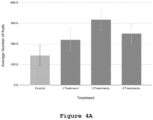
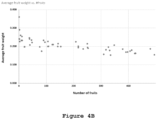
- 40 lychee trees are cross-pollinated between the Floridan variety (pollinator) and Mauritius variety (pollinated). Cross-pollination treatments are performed vs the control group which had not received any artificial pollination treatments and average number of fruits and yield increase are measured. Average fruit weight is measured as well. Other than the indicated treatments, the trees are grown at the same growth conditions.
- Example 4 Artificial Pollination of Mango Trees Mangifera indica.
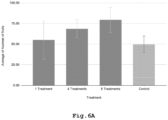
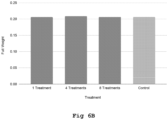
- Treatments are performed vs the control group which had not received any artificial pollination treatments and average number of fruits and yield increase are measured. Average fruit weight is measured as well. Other than the indicated treatments, the trees are grown at the same growth conditions.
- processing may refer to operation(s) and/or process(es) of a computer, a computing platform, a computing system, or other electronic computing device, that manipulates and/or transforms data represented as physical (e.g., electronic) quantities within the computer's registers and/or memories into other data similarly represented as physical quantities within the computer's registers and/or memories or other information non-transitory storage medium that may store instructions to perform operations and/or processes.
- processing may refer to operation(s) and/or process(es) of a computer, a computing platform, a computing system, or other electronic computing device, that manipulates and/or transforms data represented as physical (e.g., electronic) quantities within the computer's registers and/or memories into other data similarly represented as physical quantities within the computer's registers and/or memories or other information non-transitory storage medium that may store instructions to perform operations and/or processes.
- range format is merely for convenience and brevity and should not be construed as an inflexible limitation on the scope of the invention. Accordingly, the description of a range should be considered to have specifically disclosed all the possible subranges as well as individual numerical values within that range. For example, description of a range such as from 1 to 6 should be considered to have specifically disclosed subranges such as from 1 to 3, from 1 to 4, from 1 to 5, from 2 to 4, from 2 to 6, from 3 to 6 etc., as well as individual numbers within that range, for example, 1, 2, 3, 4, 5, and 6. This applies regardless of the breadth of the range.
Landscapes
- Engineering & Computer Science (AREA)
- Business, Economics & Management (AREA)
- Life Sciences & Earth Sciences (AREA)
- Human Resources & Organizations (AREA)
- Theoretical Computer Science (AREA)
- General Physics & Mathematics (AREA)
- Physics & Mathematics (AREA)
- Strategic Management (AREA)
- Economics (AREA)
- Tourism & Hospitality (AREA)
- Marketing (AREA)
- General Business, Economics & Management (AREA)
- General Health & Medical Sciences (AREA)
- Health & Medical Sciences (AREA)
- Environmental Sciences (AREA)
- Primary Health Care (AREA)
- Entrepreneurship & Innovation (AREA)
- Animal Husbandry (AREA)
- Agronomy & Crop Science (AREA)
- Marine Sciences & Fisheries (AREA)
- Mining & Mineral Resources (AREA)
- Ecology (AREA)
- Software Systems (AREA)
- Computer Vision & Pattern Recognition (AREA)
- Forests & Forestry (AREA)
- Biodiversity & Conservation Biology (AREA)
- Soil Sciences (AREA)
- Mechanical Engineering (AREA)
- Botany (AREA)
- Operations Research (AREA)
- Quality & Reliability (AREA)
- Educational Administration (AREA)
- Development Economics (AREA)
- Game Theory and Decision Science (AREA)
- Computing Systems (AREA)
- Computer Networks & Wireless Communication (AREA)
- Mathematical Physics (AREA)
- General Engineering & Computer Science (AREA)
- Signal Processing (AREA)
- Medical Informatics (AREA)
Claims (12)
- Ein Pollensammelelement (200) eines Pollenmanagementsystems (100), das so gestaltet ist, dass es Pollenkörner zur Freisetzung sammelt, um ein landwirtschaftliches Gebiet künstlich zu bestäuben, wobei das Pollensammelelement Folgendes umfasst:eine Hochspannungsstromversorgung (20);eine Elektrode (30); undeine Pollensammelfläche (40); wobei:die Hochspannungsstromversorgung (20) die Elektrode (30) mit Hochspannung versorgt, unddie Elektrode (30) so gestaltet ist, dass sie elektrische Felder erzeugt, die elektrostatische Kräfte auf die Pollenkörner ausüben, unddie Pollenkörner von der Pollensammelfläche (40) des Pollensammelelements (2D) angezogen werden;dadurch gekennzeichnet, dass:die Pollensammelfläche (40) eine Außenfläche einer Abdeckung der Elektrode (30) umfasst; unddas Pollensammelelement (200) die Pollensammelfläche (40) an einem äußeren Teil des Pollenmanagementsystems (100) freilegt.
- Das Pollensammelelement (200) nach Anspruch 1, wobei die Pollensammelfläche (40) einen flachen Oberflächenbereich aufweist.
- Das Pollensammelelement (200) nach Anspruch 1, das zusammen mit dem Pollenmanagementsystem (100) als Bestäubungsmodul arbeitet, und das ferner umfasst:ein Pollenausbringungselement des Bestäubungsmoduls, das so gestaltet ist, dass es den Pollen freisetzt;ein Datenerfassungsmodul, das funktionsfähig mit dem Bestäubungsmodul verbunden ist, wobei das Datenerfassungsmodul mindestens einen Sensor umfasst;einen Server, der mit dem Bestäubungsmodul und dem Datenerfassungsmodul verbunden ist, wobei der Server so gestaltet ist, dass er die von dem Datenerfassungsmodul erfassten Daten verarbeitet;ein Betriebsmodul, das eine Steuerung umfasst, die mit dem Server und dem Bestäubungsmodul in Verbindung steht, wobei die Steuerung so ausgelegt ist, dass sie Anweisungen für das Bestäubungsmodul bereitstellt; undeine Benutzerschnittstelle.
- Das Pollensammelelement (200) und Pollenmanagementsystem (100) nach Anspruch 3, wobei das Datenerfassungsmodul so gestaltet ist, dass es die erfassten Daten an den Server überträgt; und wobei die Anweisungen, die dem Bestäubungsmodul von der Steuerung bereitgestellt werden, auf den vom Server verarbeiteten Daten beruhen.
- Das Pollensammelelement (200) und Pollenmanagementsystem (100) nach einem der Ansprüche 3 und 4, wobei der mindestens eine Sensor aus der Gruppe ausgewählt ist, die aus einer IR-Kamera, einem Temperatursensor, einem Feuchtigkeitssensor, einem LIDAR, einem Tonaufzeichnungsgerät, einem GNSS, einem 4D-Bildsensor, einer hyperspektralen Bildgebung, einer IMU und einem Lichtsensor besteht.
- Das Pollensammelelement (200) und Pollenmanagementsystem (100) nach einem der Ansprüche 3 bis 5, wobei der Server so gestaltet ist, dass er die erfassten Daten empfängt, die erfassten Daten speichert und eine Bestäubungswärmekarte auf der Grundlage der erfassten Daten erzeugt.
- Das Pollensammelelement (200) und Pollenmanagementsystem (100) nach Anspruch 6, wobei der Server ferner so gestaltet ist, dass er die Bestäubungswärmekarte an das Betriebsmodul übermittelt.
- Das Pollensammelelement (200) und Pollenmanagementsystem (100) nach einem der Ansprüche 3 bis 7, wobei die Daten aus Standortdaten (GPS), IMU-Daten, visuellen Daten und klimabezogenen Daten ausgewählt sind; und wobei die Daten Echtzeitdaten sind, die aus den von dem mindestens einen Sensor des Datenerfassungsmoduls erfassten Daten ausgewählt sind.
- Das Pollensammelelement (200) und Pollenmanagementsystem (100) nach einem der Ansprüche 3 bis 8, wobei der Server ferner so gestaltet ist, dass er mindestens eines der folgenden Elemente steuert: ein zu bestäubendes Gebiet, die Bestäubungszeit, die Häufigkeit von Bestäubungsepisoden, die Anzahl von Bestäubungsepisoden und die Dauer jeder Bestäubungsepisode.
- Das Pollensammelelement (200) und Pollenmanagementsystem (100) nach einem der Ansprüche 3 bis 9, wobei die landwirtschaftliche Fläche ein Feld einer Kulturpflanze oder ein Obstgarten ist.
- Das Pollensammelelement (200) nach Anspruch 1 umfasst ferner mindestens eine interne Steuereinheit, einen Vibrationsmotor, ein Gebläse oder eine Saugeinheit.
- Das Pollensammelelement (200) nach Anspruch 1, wobei sich die Elektrode (30) entlang der Pollensammelfläche (40) erstreckt.
Applications Claiming Priority (2)
| Application Number | Priority Date | Filing Date | Title |
|---|---|---|---|
| US202063005677P | 2020-04-06 | 2020-04-06 | |
| PCT/IL2021/050386 WO2021205442A1 (en) | 2020-04-06 | 2021-04-06 | Methods for artificial pollination and apparatus for doing the same |
Publications (4)
| Publication Number | Publication Date |
|---|---|
| EP4133348A1 EP4133348A1 (de) | 2023-02-15 |
| EP4133348A4 EP4133348A4 (de) | 2023-09-13 |
| EP4133348B1 true EP4133348B1 (de) | 2024-11-20 |
| EP4133348C0 EP4133348C0 (de) | 2024-11-20 |
Family
ID=78023916
Family Applications (1)
| Application Number | Title | Priority Date | Filing Date |
|---|---|---|---|
| EP21783873.9A Active EP4133348B1 (de) | 2020-04-06 | 2021-04-06 | Verfahren zur künstlichen bestäubung und vorrichtung zur durchführung davon |
Country Status (16)
| Country | Link |
|---|---|
| US (1) | US20230157231A1 (de) |
| EP (1) | EP4133348B1 (de) |
| JP (1) | JP2023520743A (de) |
| KR (1) | KR20220164544A (de) |
| CN (1) | CN115697040A (de) |
| AU (1) | AU2021252237A1 (de) |
| BR (1) | BR112022020011A2 (de) |
| CA (1) | CA3179024A1 (de) |
| CL (1) | CL2022002716A1 (de) |
| CO (1) | CO2022014282A2 (de) |
| ES (1) | ES2999069T3 (de) |
| IL (1) | IL297175A (de) |
| MX (1) | MX2022012502A (de) |
| PE (1) | PE20230203A1 (de) |
| WO (1) | WO2021205442A1 (de) |
| ZA (1) | ZA202210953B (de) |
Families Citing this family (7)
| Publication number | Priority date | Publication date | Assignee | Title |
|---|---|---|---|---|
| US11653604B2 (en) | 2019-10-01 | 2023-05-23 | Monsanto Technology Llc | Cross pollination through liquid-mediated delivery of pollen to enclosed stigmas of flowers from recipient plants |
| EP4228396A1 (de) * | 2020-10-14 | 2023-08-23 | Accelerated AG Technologies, LLC | Bestäubungsprädiktorsystem und -verfahren |
| US20220400637A1 (en) * | 2021-03-08 | 2022-12-22 | Monsanto Technology Llc | Systems and methods for liquid-mediated delivery of pollen |
| CN116267580B (zh) * | 2023-02-16 | 2024-05-28 | 塔里木大学 | 一种樱花的人工授粉装置 |
| CN117256467A (zh) * | 2023-09-08 | 2023-12-22 | 中国农业科学院都市农业研究所 | 一种猕猴桃光-风耦合催花与辅助授粉系统 |
| WO2025062397A1 (en) * | 2023-09-20 | 2025-03-27 | Tevel Aerobotics Technologies Ltd. | A preemptive fruit thinning method and system |
| CN119949128B (zh) * | 2025-03-14 | 2025-11-18 | 广东省农业科学院果树研究所 | 融合无人机技术的荔枝授粉营养液筛选与应用方法及系统 |
Citations (2)
| Publication number | Priority date | Publication date | Assignee | Title |
|---|---|---|---|---|
| US20160353661A1 (en) * | 2015-06-04 | 2016-12-08 | Elwha Llc | Systems and methods for selective pollination |
| WO2019049155A1 (en) * | 2017-09-07 | 2019-03-14 | Edete Precision Technologies For Agriculture Ltd. | ARTIFICIAL ARTIFICIAL ARTIFICIAL POLLINATION SYSTEM FOR CULTIVATED BY POLLEN TRANSPORTED BY INSECTS AND METHOD FOR PRODUCING THE SAME |
Family Cites Families (15)
| Publication number | Priority date | Publication date | Assignee | Title |
|---|---|---|---|---|
| US2775065A (en) * | 1955-09-09 | 1956-12-25 | John W Chepil | Apparatus for effecting the fecundation of plants |
| US4383389A (en) * | 1981-10-13 | 1983-05-17 | Dave Vradenburg | Pollinating machine |
| WO2010032676A1 (ja) * | 2008-09-17 | 2010-03-25 | 株式会社クリエイティブ テクノロジー | 両面吸着構造体及びこれを用いた展示・掲示装置、集塵装置、及び植物育成装置 |
| JP2011200196A (ja) * | 2010-03-26 | 2011-10-13 | Iseki & Co Ltd | 受粉ロボット |
| CN103929949A (zh) * | 2011-11-11 | 2014-07-16 | 先锋国际良种公司 | 大规模分配花粉粒的方法 |
| US20130305600A1 (en) * | 2012-05-17 | 2013-11-21 | Vegibee, Llc | Handheld vibrating pollinators and pollination methods |
| WO2014129966A1 (en) * | 2013-02-25 | 2014-08-28 | Biomachines Pte Ltd | Data logger and sentinel platform for sensor network |
| US10139279B2 (en) * | 2015-05-12 | 2018-11-27 | BioSensing Systems, LLC | Apparatuses and methods for bio-sensing using unmanned aerial vehicles |
| CN106718851A (zh) * | 2017-01-23 | 2017-05-31 | 东莞理工学院 | 一种自主农业授粉的微型飞行机器人 |
| KR102028956B1 (ko) * | 2017-11-29 | 2019-10-07 | 농업회사법인 대풍꽃가루 주식회사 | 드론을 이용한 인공수분 시스템 |
| CN108243733B (zh) * | 2017-12-23 | 2021-12-07 | 钟三妹 | 一种花粉采集器 |
| WO2019158913A1 (en) * | 2018-02-13 | 2019-08-22 | Sandeep Kumar Chintala | Smart pollination system |
| CN110046707B (zh) * | 2019-04-15 | 2021-08-06 | 清华大学深圳研究生院 | 一种神经网络模型的评估优化方法和系统 |
| CN110352846B (zh) * | 2019-07-19 | 2021-05-11 | 安徽科技学院 | 一种用于草莓设施栽培的无人机授粉装置 |
| CN110506627A (zh) * | 2019-10-11 | 2019-11-29 | 安徽科技学院 | 植物授粉装置及授粉方法 |
-
2021
- 2021-04-06 ES ES21783873T patent/ES2999069T3/es active Active
- 2021-04-06 WO PCT/IL2021/050386 patent/WO2021205442A1/en not_active Ceased
- 2021-04-06 EP EP21783873.9A patent/EP4133348B1/de active Active
- 2021-04-06 BR BR112022020011A patent/BR112022020011A2/pt unknown
- 2021-04-06 CN CN202180040715.8A patent/CN115697040A/zh active Pending
- 2021-04-06 MX MX2022012502A patent/MX2022012502A/es unknown
- 2021-04-06 JP JP2023503527A patent/JP2023520743A/ja active Pending
- 2021-04-06 KR KR1020227038396A patent/KR20220164544A/ko active Pending
- 2021-04-06 IL IL297175A patent/IL297175A/en unknown
- 2021-04-06 US US17/917,280 patent/US20230157231A1/en active Pending
- 2021-04-06 AU AU2021252237A patent/AU2021252237A1/en active Pending
- 2021-04-06 PE PE2022002188A patent/PE20230203A1/es unknown
- 2021-04-06 CA CA3179024A patent/CA3179024A1/en active Pending
-
2022
- 2022-10-03 CL CL2022002716A patent/CL2022002716A1/es unknown
- 2022-10-05 ZA ZA2022/10953A patent/ZA202210953B/en unknown
- 2022-10-05 CO CONC2022/0014282A patent/CO2022014282A2/es unknown
Patent Citations (2)
| Publication number | Priority date | Publication date | Assignee | Title |
|---|---|---|---|---|
| US20160353661A1 (en) * | 2015-06-04 | 2016-12-08 | Elwha Llc | Systems and methods for selective pollination |
| WO2019049155A1 (en) * | 2017-09-07 | 2019-03-14 | Edete Precision Technologies For Agriculture Ltd. | ARTIFICIAL ARTIFICIAL ARTIFICIAL POLLINATION SYSTEM FOR CULTIVATED BY POLLEN TRANSPORTED BY INSECTS AND METHOD FOR PRODUCING THE SAME |
Also Published As
| Publication number | Publication date |
|---|---|
| BR112022020011A2 (pt) | 2022-11-22 |
| ZA202210953B (de) | 2024-02-28 |
| AU2021252237A1 (en) | 2022-11-24 |
| KR20220164544A (ko) | 2022-12-13 |
| US20230157231A1 (en) | 2023-05-25 |
| EP4133348C0 (de) | 2024-11-20 |
| ES2999069T3 (en) | 2025-02-24 |
| JP2023520743A (ja) | 2023-05-18 |
| CN115697040A (zh) | 2023-02-03 |
| CA3179024A1 (en) | 2021-10-14 |
| EP4133348A4 (de) | 2023-09-13 |
| CL2022002716A1 (es) | 2023-03-24 |
| WO2021205442A8 (en) | 2022-11-17 |
| CO2022014282A2 (es) | 2022-11-08 |
| MX2022012502A (es) | 2022-11-14 |
| WO2021205442A1 (en) | 2021-10-14 |
| EP4133348A1 (de) | 2023-02-15 |
| IL297175A (en) | 2022-12-01 |
| PE20230203A1 (es) | 2023-02-03 |
Similar Documents
| Publication | Publication Date | Title |
|---|---|---|
| EP4133348B1 (de) | Verfahren zur künstlichen bestäubung und vorrichtung zur durchführung davon | |
| Costa et al. | Measuring pecan nut growth utilizing machine vision and deep learning for the better understanding of the fruit growth curve | |
| US20150234785A1 (en) | Prediction apparatus and method for yield of agricultural products | |
| US20190286904A1 (en) | Yield prediction for a cornfield | |
| James et al. | High‐throughput phenotyping for breeding targets—Current status and future directions of strawberry trait automation | |
| Khatri et al. | Computer vision and image processing for precision agriculture | |
| EP3422280B1 (de) | Verfahren zur vorhersage der parameter eines phänomens oder der aktivitäten eines objekts, insbesondere animiert, in einem vorgegebenen geografischen gebiet | |
| Okubo et al. | Pear blossom counting system with drones Using YOLO and deep SORT | |
| WO2023021508A1 (en) | Polination device | |
| US12136265B2 (en) | Scouting functionality emergence | |
| CA3193650A1 (en) | Methods for artificial pollination and apparatus for doing the same | |
| CN111122453A (zh) | 信息处理方法、装置和系统 | |
| Negrete | Artificial vision in Mexican agriculture, a new techlogy for increase food security | |
| US20220375239A1 (en) | System and methods to optimize yield in indoor farming | |
| CN114661932A (zh) | 信息处理方法、存储介质和电子设备 | |
| Mazare et al. | Embedded system for real time analysis of thermal images for prevention of water stress on plants | |
| Rajagopal et al. | Technological impacts and challenges of advanced technologies in agriculture | |
| BACIU et al. | PLOT QUALITY RATING AS A RESULT OF INNOVATION MANAGEMENT IN THE ARTIFICIAL INTELLIGENCE SOCIETY. | |
| BUZNA et al. | IMAGING ANALYSIS IN CORN CROP EVALUATION UNDER HYDRIC STRESS CONDITION. | |
| TUĞRUL | ARTIFICIAL INTELLIGENCE AND SMART FARMING APPLICATIONS IN AGRICULTURAL MACHINERY | |
| WO2024190803A1 (ja) | 情報処理装置、情報処理方法、及びプログラム | |
| Parameswari | Artificial Intelligence and IOT Enabled Whiteflies Monitoring and Controlling System | |
| KR20250117934A (ko) | 농작물 융합 데이터 분석 시스템 및 농작물 융합 데이터 분석 시스템의 제어 방법 | |
| Singh | Integrated Publications New Delhi | |
| Mardiana et al. | Integrating YOLOv8 Architecture in a Mango Flowers Detection App Development |
Legal Events
| Date | Code | Title | Description |
|---|---|---|---|
| STAA | Information on the status of an ep patent application or granted ep patent |
Free format text: STATUS: THE INTERNATIONAL PUBLICATION HAS BEEN MADE |
|
| PUAI | Public reference made under article 153(3) epc to a published international application that has entered the european phase |
Free format text: ORIGINAL CODE: 0009012 |
|
| STAA | Information on the status of an ep patent application or granted ep patent |
Free format text: STATUS: REQUEST FOR EXAMINATION WAS MADE |
|
| 17P | Request for examination filed |
Effective date: 20221107 |
|
| AK | Designated contracting states |
Kind code of ref document: A1 Designated state(s): AL AT BE BG CH CY CZ DE DK EE ES FI FR GB GR HR HU IE IS IT LI LT LU LV MC MK MT NL NO PL PT RO RS SE SI SK SM TR |
|
| RAP3 | Party data changed (applicant data changed or rights of an application transferred) |
Owner name: BLOOMX LTD. |
|
| DAV | Request for validation of the european patent (deleted) | ||
| DAX | Request for extension of the european patent (deleted) | ||
| A4 | Supplementary search report drawn up and despatched |
Effective date: 20230814 |
|
| RIC1 | Information provided on ipc code assigned before grant |
Ipc: G06Q 10/00 20230101ALI20230808BHEP Ipc: G05D 1/02 20200101AFI20230808BHEP |
|
| REG | Reference to a national code |
Ref country code: DE Ref legal event code: R079 Free format text: PREVIOUS MAIN CLASS: G05D0001020000 Ipc: G06Q0010000000 Ref document number: 602021022150 Country of ref document: DE |
|
| GRAP | Despatch of communication of intention to grant a patent |
Free format text: ORIGINAL CODE: EPIDOSNIGR1 |
|
| GRAP | Despatch of communication of intention to grant a patent |
Free format text: ORIGINAL CODE: EPIDOSNIGR1 |
|
| STAA | Information on the status of an ep patent application or granted ep patent |
Free format text: STATUS: GRANT OF PATENT IS INTENDED |
|
| INTG | Intention to grant announced |
Effective date: 20240614 |
|
| RIC1 | Information provided on ipc code assigned before grant |
Ipc: G06Q 10/00 20230101AFI20240531BHEP |
|
| GRAS | Grant fee paid |
Free format text: ORIGINAL CODE: EPIDOSNIGR3 |
|
| GRAA | (expected) grant |
Free format text: ORIGINAL CODE: 0009210 |
|
| STAA | Information on the status of an ep patent application or granted ep patent |
Free format text: STATUS: THE PATENT HAS BEEN GRANTED |
|
| AK | Designated contracting states |
Kind code of ref document: B1 Designated state(s): AL AT BE BG CH CY CZ DE DK EE ES FI FR GB GR HR HU IE IS IT LI LT LU LV MC MK MT NL NO PL PT RO RS SE SI SK SM TR |
|
| REG | Reference to a national code |
Ref country code: GB Ref legal event code: FG4D |
|
| REG | Reference to a national code |
Ref country code: CH Ref legal event code: EP |
|
| REG | Reference to a national code |
Ref country code: DE Ref legal event code: R096 Ref document number: 602021022150 Country of ref document: DE |
|
| REG | Reference to a national code |
Ref country code: IE Ref legal event code: FG4D |
|
| U01 | Request for unitary effect filed |
Effective date: 20241210 |
|
| U07 | Unitary effect registered |
Designated state(s): AT BE BG DE DK EE FI FR IT LT LU LV MT NL PT RO SE SI Effective date: 20241219 |
|
| REG | Reference to a national code |
Ref country code: ES Ref legal event code: FG2A Ref document number: 2999069 Country of ref document: ES Kind code of ref document: T3 Effective date: 20250224 |
|
| PG25 | Lapsed in a contracting state [announced via postgrant information from national office to epo] |
Ref country code: IS Free format text: LAPSE BECAUSE OF FAILURE TO SUBMIT A TRANSLATION OF THE DESCRIPTION OR TO PAY THE FEE WITHIN THE PRESCRIBED TIME-LIMIT Effective date: 20250320 Ref country code: HR Free format text: LAPSE BECAUSE OF FAILURE TO SUBMIT A TRANSLATION OF THE DESCRIPTION OR TO PAY THE FEE WITHIN THE PRESCRIBED TIME-LIMIT Effective date: 20241120 |
|
| PG25 | Lapsed in a contracting state [announced via postgrant information from national office to epo] |
Ref country code: NO Free format text: LAPSE BECAUSE OF FAILURE TO SUBMIT A TRANSLATION OF THE DESCRIPTION OR TO PAY THE FEE WITHIN THE PRESCRIBED TIME-LIMIT Effective date: 20250220 |
|
| PG25 | Lapsed in a contracting state [announced via postgrant information from national office to epo] |
Ref country code: GR Free format text: LAPSE BECAUSE OF FAILURE TO SUBMIT A TRANSLATION OF THE DESCRIPTION OR TO PAY THE FEE WITHIN THE PRESCRIBED TIME-LIMIT Effective date: 20250221 |
|
| PG25 | Lapsed in a contracting state [announced via postgrant information from national office to epo] |
Ref country code: PL Free format text: LAPSE BECAUSE OF FAILURE TO SUBMIT A TRANSLATION OF THE DESCRIPTION OR TO PAY THE FEE WITHIN THE PRESCRIBED TIME-LIMIT Effective date: 20241120 |
|
| PG25 | Lapsed in a contracting state [announced via postgrant information from national office to epo] |
Ref country code: RS Free format text: LAPSE BECAUSE OF FAILURE TO SUBMIT A TRANSLATION OF THE DESCRIPTION OR TO PAY THE FEE WITHIN THE PRESCRIBED TIME-LIMIT Effective date: 20250220 |
|
| U20 | Renewal fee for the european patent with unitary effect paid |
Year of fee payment: 5 Effective date: 20250407 |
|
| PG25 | Lapsed in a contracting state [announced via postgrant information from national office to epo] |
Ref country code: SM Free format text: LAPSE BECAUSE OF FAILURE TO SUBMIT A TRANSLATION OF THE DESCRIPTION OR TO PAY THE FEE WITHIN THE PRESCRIBED TIME-LIMIT Effective date: 20241120 |
|
| PGFP | Annual fee paid to national office [announced via postgrant information from national office to epo] |
Ref country code: ES Payment date: 20250508 Year of fee payment: 5 |
|
| PG25 | Lapsed in a contracting state [announced via postgrant information from national office to epo] |
Ref country code: SK Free format text: LAPSE BECAUSE OF FAILURE TO SUBMIT A TRANSLATION OF THE DESCRIPTION OR TO PAY THE FEE WITHIN THE PRESCRIBED TIME-LIMIT Effective date: 20241120 |
|
| PGFP | Annual fee paid to national office [announced via postgrant information from national office to epo] |
Ref country code: TR Payment date: 20250404 Year of fee payment: 5 |
|
| PG25 | Lapsed in a contracting state [announced via postgrant information from national office to epo] |
Ref country code: CZ Free format text: LAPSE BECAUSE OF FAILURE TO SUBMIT A TRANSLATION OF THE DESCRIPTION OR TO PAY THE FEE WITHIN THE PRESCRIBED TIME-LIMIT Effective date: 20241120 |
|
| PLBE | No opposition filed within time limit |
Free format text: ORIGINAL CODE: 0009261 |
|
| STAA | Information on the status of an ep patent application or granted ep patent |
Free format text: STATUS: NO OPPOSITION FILED WITHIN TIME LIMIT |
|
| 26N | No opposition filed |
Effective date: 20250821 |
|
| REG | Reference to a national code |
Ref country code: CH Ref legal event code: H13 Free format text: ST27 STATUS EVENT CODE: U-0-0-H10-H13 (AS PROVIDED BY THE NATIONAL OFFICE) Effective date: 20251125 |