EP4130992B1 - Fahrzeug-benutzer-intraktionssystem und verfahren - Google Patents
Fahrzeug-benutzer-intraktionssystem und verfahren Download PDFInfo
- Publication number
- EP4130992B1 EP4130992B1 EP22188781.3A EP22188781A EP4130992B1 EP 4130992 B1 EP4130992 B1 EP 4130992B1 EP 22188781 A EP22188781 A EP 22188781A EP 4130992 B1 EP4130992 B1 EP 4130992B1
- Authority
- EP
- European Patent Office
- Prior art keywords
- vehicle
- user
- interface
- elements
- sub
- Prior art date
- Legal status (The legal status is an assumption and is not a legal conclusion. Google has not performed a legal analysis and makes no representation as to the accuracy of the status listed.)
- Active
Links
Images



Classifications
-
- G—PHYSICS
- G06—COMPUTING OR CALCULATING; COUNTING
- G06F—ELECTRIC DIGITAL DATA PROCESSING
- G06F9/00—Arrangements for program control, e.g. control units
- G06F9/06—Arrangements for program control, e.g. control units using stored programs, i.e. using an internal store of processing equipment to receive or retain programs
- G06F9/44—Arrangements for executing specific programs
- G06F9/445—Program loading or initiating
- G06F9/44505—Configuring for program initiating, e.g. using registry, configuration files
- G06F9/4451—User profiles; Roaming
-
- B—PERFORMING OPERATIONS; TRANSPORTING
- B60—VEHICLES IN GENERAL
- B60W—CONJOINT CONTROL OF VEHICLE SUB-UNITS OF DIFFERENT TYPE OR DIFFERENT FUNCTION; CONTROL SYSTEMS SPECIALLY ADAPTED FOR HYBRID VEHICLES; ROAD VEHICLE DRIVE CONTROL SYSTEMS FOR PURPOSES NOT RELATED TO THE CONTROL OF A PARTICULAR SUB-UNIT
- B60W50/00—Details of control systems for road vehicle drive control not related to the control of a particular sub-unit, e.g. process diagnostic or vehicle driver interfaces
- B60W50/08—Interaction between the driver and the control system
- B60W50/085—Changing the parameters of the control units, e.g. changing limit values, working points by control input
-
- G—PHYSICS
- G06—COMPUTING OR CALCULATING; COUNTING
- G06F—ELECTRIC DIGITAL DATA PROCESSING
- G06F3/00—Input arrangements for transferring data to be processed into a form capable of being handled by the computer; Output arrangements for transferring data from processing unit to output unit, e.g. interface arrangements
- G06F3/01—Input arrangements or combined input and output arrangements for interaction between user and computer
- G06F3/048—Interaction techniques based on graphical user interfaces [GUI]
- G06F3/0481—Interaction techniques based on graphical user interfaces [GUI] based on specific properties of the displayed interaction object or a metaphor-based environment, e.g. interaction with desktop elements like windows or icons, or assisted by a cursor's changing behaviour or appearance
- G06F3/0482—Interaction with lists of selectable items, e.g. menus
-
- G—PHYSICS
- G06—COMPUTING OR CALCULATING; COUNTING
- G06F—ELECTRIC DIGITAL DATA PROCESSING
- G06F3/00—Input arrangements for transferring data to be processed into a form capable of being handled by the computer; Output arrangements for transferring data from processing unit to output unit, e.g. interface arrangements
- G06F3/01—Input arrangements or combined input and output arrangements for interaction between user and computer
- G06F3/048—Interaction techniques based on graphical user interfaces [GUI]
- G06F3/0484—Interaction techniques based on graphical user interfaces [GUI] for the control of specific functions or operations, e.g. selecting or manipulating an object, an image or a displayed text element, setting a parameter value or selecting a range
- G06F3/04847—Interaction techniques to control parameter settings, e.g. interaction with sliders or dials
-
- G—PHYSICS
- G06—COMPUTING OR CALCULATING; COUNTING
- G06F—ELECTRIC DIGITAL DATA PROCESSING
- G06F40/00—Handling natural language data
- G06F40/20—Natural language analysis
- G06F40/205—Parsing
-
- G—PHYSICS
- G06—COMPUTING OR CALCULATING; COUNTING
- G06F—ELECTRIC DIGITAL DATA PROCESSING
- G06F9/00—Arrangements for program control, e.g. control units
- G06F9/06—Arrangements for program control, e.g. control units using stored programs, i.e. using an internal store of processing equipment to receive or retain programs
- G06F9/44—Arrangements for executing specific programs
- G06F9/451—Execution arrangements for user interfaces
-
- B—PERFORMING OPERATIONS; TRANSPORTING
- B60—VEHICLES IN GENERAL
- B60W—CONJOINT CONTROL OF VEHICLE SUB-UNITS OF DIFFERENT TYPE OR DIFFERENT FUNCTION; CONTROL SYSTEMS SPECIALLY ADAPTED FOR HYBRID VEHICLES; ROAD VEHICLE DRIVE CONTROL SYSTEMS FOR PURPOSES NOT RELATED TO THE CONTROL OF A PARTICULAR SUB-UNIT
- B60W2540/00—Input parameters relating to occupants
- B60W2540/215—Selection or confirmation of options
-
- G—PHYSICS
- G06—COMPUTING OR CALCULATING; COUNTING
- G06F—ELECTRIC DIGITAL DATA PROCESSING
- G06F11/00—Error detection; Error correction; Monitoring
- G06F11/30—Monitoring
- G06F11/3003—Monitoring arrangements specially adapted to the computing system or computing system component being monitored
- G06F11/3013—Monitoring arrangements specially adapted to the computing system or computing system component being monitored where the computing system is an embedded system, i.e. a combination of hardware and software dedicated to perform a certain function in mobile devices, printers, automotive or aircraft systems
-
- G—PHYSICS
- G06—COMPUTING OR CALCULATING; COUNTING
- G06F—ELECTRIC DIGITAL DATA PROCESSING
- G06F11/00—Error detection; Error correction; Monitoring
- G06F11/30—Monitoring
- G06F11/3058—Monitoring arrangements for monitoring environmental properties or parameters of the computing system or of the computing system component, e.g. monitoring of power, currents, temperature, humidity, position, vibrations
Definitions
- the disclosure relates to a vehicle-user interaction system and a vehicle-user interaction method.
- the disclosure also relates to a corresponding machine-readable storage medium.
- UX user experience
- the ongoing research focuses on human-machine interaction technologies and can deliver basic interaction functions between a vehicle and a user of the vehicle, for example, the user can learn vehicle status information and road condition information from an HMI of the vehicle, and also can activate vehicle functions such as cruise control, self-driving in high-way, and automatic parking by interacting with the HMI. There is increased expectation that the vehicle should provide customized services for the user.
- US 2019/176624 A1 and US 2015/217777 A1 both specify an editor executed on an external device for generating rules in a rule-based system (IF condition for state variable THEN action) for a vehicle.
- Examples of the disclosure relate to vehicle-user interaction systems and methods, which are implemented based on an on-board system having an Android operating system such as AAOS (Android Automotive Operation System).
- AAOS Android Automotive Operation System
- a user can program his/her vehicle. For example, the user can edit a custom rule on one or more of a mobile phone, a web page, and an on-board unit (OBU). Then, the rule is synchronized to the on-board system (e.g., the infotainment system of the vehicle). Then, the rule is executed at the on-board system. In this way, the custom rule can be edited inside or outside the vehicle, and then executed inside the vehicle. This allows the vehicle to provide customized services.
- OBU on-board unit
- the user is provided with a visual programming platform such that the user can program the rule on the platform, and on the other hand, the content of the rule that the user can program is controlled.
- the content that the user can input to the visual programming platform is limited due to the consideration of vehicle safety. In this way, the vehicle can provide user-customized services while ensuring vehicle safety, and to a certain extent, customizing a vehicle from the perspective of user experience is realized.
- FIG. 1 schematically illustrates a vehicle-user interaction system 100 for a vehicle V according to an embodiment of the disclosure.
- the vehicle-user interaction system 100 includes an editor 10, a storage unit 20, a parser 30, and an actuator 40.
- the editor 10 is provided in at least one of an electronic device of the user and an infotainment system of the vehicle V.
- the operating system of the electronic device can be either an Android operating system or an IOS operating system (see 10A, 10B, 10C in Figure 1 ). That is to say, the editing process can be performed on an electronic device having an Android operating system or an Apple iOS operating system.
- the electronic device for example, includes one or more of an Android phone, an Apple phone, a laptop computer, an Android or Apple tablet, an Android or Apple wearable device (such as i-watch), and a desktop computer.
- the electronic device refers to an electronic device that is not part of the vehicle V.
- the physical position of the electronic device is not limited.
- the electronic device can be within the vehicle V, for example, the electronic device such as a smartphone is carried by the user who is inside the vehicle V.
- the position of the electronic device also can be outside the vehicle, for example, the electronic device such as a smartphone is carried by the user who is outside the vehicle V.
- the editor 10 receives one or more inputs from the user and edits the inputs into a rule script that includes a user-defined rule.
- the user-defined rule includes a trigger condition and a vehicle operation that will be performed if the trigger condition is satisfied.
- the trigger condition includes environment information and/or vehicle status information
- the vehicle operation includes vehicle functions that will be activated if the trigger condition is met.
- a user-defined rule could be "if an ambient temperature is above 26 °C, close vehicle windows and turn on air conditioning".
- the storage unit 20 is provided in the infotainment system of the vehicle V for storing the rule script which has been edited at the editor.
- the edited rule script is transmitted to the storage unit 20 via a wired or wireless communication link.
- the edited rule script is directly transmitted to the storage unit 20 through a near-field communication link.
- the edited rule script is uploaded to a cloud server and then transferred to the storage unit 20 from the cloud server.
- the parser 30 is provided in the infotainment system.
- the parser 30 acquires the edited rule script from the storage unit 20 and creates a list of monitoring elements and a list of functional elements based on the acquired rule script.
- the list of monitoring elements includes sensor elements for directly and/or indirectly sensing the trigger condition.
- the list of functional elements includes functional elements for executing the vehicle operation.
- the actuator 40 is provided in the infotainment system.
- the actuator 40 monitors sensor detection information associated with the sensor elements. For example, if the trigger condition includes an ambient temperature, the corresponding sensor detection information may include detected ambient temperature information and/or other detected information based on which the ambient temperature can be calculated.
- the actuator 40 determines whether the trigger condition is satisfied based on the sensor detection information. If it is determined the trigger condition is satisfied, the actuator 40 executes corresponding functional elements to implement the user-defined rule in the vehicle V such as turning on air conditioning and closing the windows.
- each of the editor 10, the parser 30, and the actuator 40 is each implemented as an individual software module that communicates with each other.
- the editor 10, the parser 30, and the actuator 40 are combined together to form one integrated software module.
- the editor 10, the parser 30, and the actuator 40 are all be provided in the infotainment system of the vehicle V.
- the editor 10 includes two or more editors provided in the infotainment system and the electronic device respectively.
- the parser 30 is provided in the infotainment system, and the actuator 40 is provided in the infotainment system.
- the operating system of the infotainment system is the Android Automotive OS, i.e., Android Automotive Operation System (AAOS).
- AAOS Android Automotive Operation System
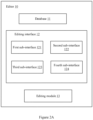
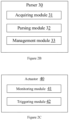
- FIGS 2A-2C schematically illustrate embodiments of the editor 10, the parser 30, and the actuator 40.
- the editor 10 includes a database 11, an editing interface 12, and an editing module 13.
- the database 11 is used to store interface elements.
- the interface elements include elements that will be presented on the editing interface 12 and can receive user inputs.
- the interface elements for example, include elements such as borders, colors, symbols, values, and the like.
- the editing interface 12 includes four sub-interfaces, i.e., a first sub-interface 121, a second sub-interface 122, a third sub-interface 123, and a fourth sub-interface 124.
- interface elements presented on the editing interface 12 can be touch-sensitive, not touch-sensitive, or controlled by voice or hand gestures.
- those elements are capable of understanding finger gestures and actions such as touching, tapping, sliding, touching with handwriting, or combinations thereof.
- those elements can receive an input signal from another device such as a mouse or keyboard.
- an icon on the editing interface 12 that is not touch-sensitive can be selected by receiving a mouse click.
- the user can read out an interface element presented on the editing interface 12 to select that interface element.
- the editing module 13 edits the user inputs into a rule script according to a pre-defined expression rule and a predetermined format.
- the rule script having the predetermined format is transmitted to the storage unit and stored in the storage unit.
- the parser 30 includes an acquiring module 31, a parsing module 32, and a management module 33.
- the acquiring module 31 acquires the rule script from the storage unit 20.
- the parsing module 32 converts the acquired rule script into an expression configured to run on operating system of the infotainment system, such as the AAOS and then inputs the expression into the management module 33.
- the management module 33 creates the list of monitoring elements and the list of functional elements according to the expression.
- the actuator 40 includes a monitoring module 41 and a triggering module 42.
- the monitoring elements created in the management module 33 are registered into the monitoring module 41 so that the monitoring module 41 monitors corresponding sensor detection information.
- the monitoring module 41 determines whether the trigger condition is satisfied based on the sensor detection information. In an example, if the trigger condition is satisfied, the triggering module 42 triggers the management module 33 to make a response, and then the triggering module 42 triggers a corresponding vehicle function to realize the user-defined rule. In another example, if the trigger condition is satisfied, the triggering module 42 triggers the corresponding vehicle function directly without triggering the management module 33 to make a response.
- the editor 10, the parser 30 and the actuator 40 can be implemented by means of hardware or software or a combination of hardware and software, including code stored in a non-transitory computer-readable medium and implemented as instructions executed by a processor.
- it may be implemented in an application-specific integrated circuit (ASIC), a digital signal processor (DSP), a data signal processing device (DSPD), a programmable logic device (PLD), a field programmable gate array (FPGA), a processor, a controller, microcontroller, a microprocessor, an electronic unit, or a combination thereof.
- ASIC application-specific integrated circuit
- DSP digital signal processor
- DSPD data signal processing device
- PLD programmable logic device
- FPGA field programmable gate array
- the implementation by software may include microcode, program code or code segments.
- the software may be stored in a machine-readable storage medium, such as a memory.
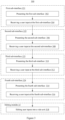
- FIG 3 shows an editing process 300 according to an embodiment of the disclosure.
- This editing process 300 can be implemented by the editor 10.
- an initialization process (not shown) can be performed before performing the process 300.
- an APP in which the editor 10 is disposed is activated in the initialization process.
- a first sub-interface 121 is presented on the editing interface 12.
- the first sub-interface 121 includes a status element window 1211 in which one or more status elements are presented. Those status elements can be implemented by means of one or more visual programming components encapsulated by the AAOS.
- the status element window 1211 one of the one or more status elements is selected by receiving a user input. For example, the user selects a status element of humidity by touching the status element of humidity.
- Each status element represents a class of status.
- the status elements include one or more of the following elements: time, location, alarm time, email, ambient temperature, cabin temperature, calendar, Bluetooth, instant message, IoT device (e.g., a smart home device, a wearable device, or a road-side unit), vehicle status information (e.g., vehicle speed, vehicle acceleration/deceleration, energy consumption, or remaining range), and environmental status information (e.g., rainfall, brightness, visibility, or wind speed).
- a first user input is received via the first sub-interface 121 such that the user selects one of the status elements. For example, the user touches a status element on the first sub-interface 121 to select that status element, or the user reads out a status element on the first sub-interface 121 to select that status element.
- a second user input is received at the second sub-interface 122 so that the user sets the trigger condition.
- user inputs are received at the elements J, S and V, thereby completing the setting of the trigger condition.
- a user input of "T” is received at element J
- " ⁇ " is received at the element S
- another user input of "26°C” is received at the element T
- a trigger condition of "if an ambient temperature being greater than 26°C" is completed.
- the third sub-interface 123 is presented on the editing interface 12.
- the third sub-interface 123 includes an operation element window 1231.
- the operation element window 1231 includes one or more operation elements.
- the one or more operation elements are implemented by means of one or more visual programming components encapsulated by the AAOS. The user can select one of the operation elements by touching or reading out said operation element.
- Each operation element represents a class of vehicle operation/function.
- the operation elements include one or more of the following elements: turning on interior or exterior lighting, turning on air conditioning, locking vehicle doors and windows, controlling the vehicle speed, adjusting the rearview mirror, adjusting the seat position, changing the display on HUD (head-up display) or dashboard, starting navigation, connecting to an IoT device, playing multimedia, and activating lane centering.
- a third user input is received at the third sub-interface 123 for selecting an operation element.
- the user selects an operation element on the third sub-interface 123 by touching or reading out that operation element.
- the fourth sub-interface 124 also includes an "OK" button.
- the "OK” button receives a user input, it indicates the setting of the vehicle operation has been completed, and subsequent operations will be performed.
- the editing module 13 edits the user inputs into a rule script using a predetermined expression rule, for example, a regular expression rule.
- the predetermined expression rule includes an expression consisting of one or more meta-characters and custom characters.
- the expression supports nested functions and recursive functions.
- the one or more meta-characters include operators and factors.
- the operators and factors are predefined in the editing module.
- the one or more custom characters can be defined by the user.
- the operators include one or more of "IF”, “THEN”, “ELSE”, “AND”, “OR”, and “NOT”.
- the factors include one or more visual programming components encapsulated by the AAOS. In some examples, the factors include visual programming components of "Status”, “Action”, and "Preset (e.g., Pre-process)".
- the custom characters include characters input by the user and expression names such as names of other pre-defined expressions.
- the editing module 13 converts the rule script into text information with a predetermined format for transmission.
- the first portion includes two or more fields.
- the first portion sequentially includes a header having a length of 8 bits, an editor version having a length of 8 bits, an AAOS version having a length of 8 bits, and an identification having a length of 8 bits.
- the second portion includes two or more fields.
- the second portion sequentially includes a data packet having a length of 16 bits and a reservation having a length of 16 bits.
- the third portion includes a data portion having a variable length.
- Table 1 illustrates an exemplary format of the expression.
- Table 2 illustrates an exemplary format of the data portion of the expression in Table 1.
- Tables 3-9 illustrate exemplary formats of sub-portions of the data portion in Table 1.
- Table 3 illustrates an exemplary format of the beginning portion of the expression.
- Table 4 illustrates an exemplary format of the ending portion of the expression.
- Table 5 illustrates an exemplary format of operators of the expression.
- Table 6 illustrates an exemplary format of names of the expression, which can be defined by the user.
- Table 7 illustrates an exemplary format of preset operations of the expression, which can be defined by the user.
- Table 8 illustrates an exemplary format of trigger conditions of the expression, which can be defined by the user.
- Table 9 illustrates an exemplary format of actions of the expression, which can be defined by the user.
- Table 1 Exemplary Format of the Expression Head (8) Editor Version (8) AAOS Version (8) Identification (8) Data Packet length (16) Reservation (16) Data (0 - 65535)
- Table 2 Exemplary Format of the Data Portion Type (4) Data length (12) Reservation (16) Data (0 ⁇ 4095)
- Table 3 Exemplary Format of Beginning Portion of the Expression 0x0 Data length (12) Reservation (16)
- Table 4 Exemplary Format of Ending Portion of the Expression 0xF Data length (12) Reservation (16)
- Table 5 Exemplary Format of the Operator 0x1 Data length (12)
- Table 6 Exemplary Format of Expression Name 0x2 Data length (12) Reservation (16) Expression Name (0 ⁇ 4095)
- Table 7 Exemplary Format of Preset 0x3 Data length (12) Reservation (16) Preset Name (0 ⁇ 4095)
- Table 8 Exemplary Format of the Trigger Condition 0x4 Data length (12) Reservation (16) Element ID (8) Status ID (8) Judgment Condition (8) Value (8) Supplementary content (could be null)
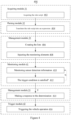
- FIG. 4 illustrates a parsing and execution process 400 according to an embodiment of the disclosure. This process 400 can be implemented by the parser 30 and the actuator 40.
- the rule script having the predetermined format is stored in the storage unit 20. Then, the parser 30 is notified that there is an update in the storage unit 20.
- the acquiring module 31 acquires the edited rule script having the predetermined format from the storage unit 20.
- the parsing module 32 translates the rule script into an expression that can run on the AAOS.
- the management module 33 creates a list of monitoring elements and a list of functional elements based on the expression.
- the list of monitoring elements includes sensor elements that directly or indirectly sensing the user-defined trigger condition.
- the list of functional element includes functional elements associated with the user-defined vehicle operation.
- the management module 33 inputs the monitoring elements into the monitoring module 41.
- the monitoring module 41 monitors sensor detection information.
- the monitoring module 41 determines whether the user-defined trigger condition is satisfied based on the sensor detection information.
- the process 400 turns back to block 410 and continues to monitor the sensor detection information.
- the process 400 proceeds to block 414.
- the management module 33 makes a response to the determination of the trigger condition being satisfied.
- the trigger module 42 triggers the vehicle operation so that the user-defined rule is executed.
- blocks 412-416 is described with an example of "monitoring an ambient temperature and performing operations of closing vehicle windows and turning on the air conditioning.”
- the monitoring module 41 determines whether the user-defined condition is satisfied, i.e., the module 41 determines whether the ambient temperature detected by an environmental sensor is equal to or greater than 26°C. If it is the ambient temperature is below 26°C, the monitoring module 41 continues to monitor the ambient temperature. If it is determined the ambient temperature is equal to or greater than 26°C, the management module 33 makes a response. Then, in response to the response of the management module 33, the trigger module 42 triggers a vehicle operation of closing vehicle windows and turning on the air conditioning.
- Figure 6 shows a flowchart of a vehicle-user interaction method 600 according to an embodiment of present disclosure. The method can be executed by the system 100. Therefore, the above descriptions about the system 100 are also applicable here.
- step S610 one or more inputs are received from a user of the vehicle at the editor 10.
- step S620 the one or more inputs are edited into a rule script at the editor.
- the rule script includes a user-defined rule based on the one or more inputs.
- the user-defined rule has a trigger condition and a vehicle operation performed when the trigger condition is satisfied.
- step S630 a list of monitoring elements and a list of functional elements are created at the parser 30 based on the rule script.
- the list of monitoring elements includes sensor elements that directly or indirectly sense the trigger condition.
- the list of functional elements includes functional elements that are associated with the vehicle operation.
- step S640 sensor detection information associated with the sensor elements is monitored at the actuator 40.
- Step S650 it is determined whether the trigger condition is satisfied at the actuator based on the monitored sensor detection information.
- Step S660 if it is determined the trigger condition is satisfied, the functional elements are executed at the actuator 40, to implement the user-defined rule in the vehicle.
- the disclosure provides a non-transitory computer-readable medium with instructions stored therein which, when executed, causes a processor to carry out the steps of the method 600 described above.
- the processors can be implemented using electronic hardware, computer software, or any combination thereof. Whether these processors are implemented as hardware or software will depend on the specific application and the overall design constraints imposed on the system.
- a processor, any portion of a processor, or any combination of processors presented in this disclosure may be implemented as a microprocessor, a micro-controller, a digital signal processor (DSP), a field programmable gate array (FPGA), a programmable logic device (PLD), a state machine, a gate logic, a discrete hardware circuitry, and other suitable processing components configured to perform the various functions described in this disclosure.
- DSP digital signal processor
- FPGA field programmable gate array
- PLD programmable logic device
- the functions of a processor, any portion of a processor, or any combination of processors presented in this disclosure may be implemented as software executed by a microprocessor, a micro-controller, a DSP, or other suitable platforms.
- Software should be interpreted broadly to represent instructions, instruction sets, code, code segments, program code, programs, subroutines, software modules, applications, software applications, software packages, routines, subroutines, objects, running threads, processes, functions, and the like. Software can reside on a non-transitory computer-readable medium.
- Such non-transitory computer-readable medium may include, for example, a memory, which may be, for example, a magnetic storage device (e.g., a hard disk, a floppy disk, a magnetic strip), an optical disk, a smart card, a flash memory device, a random access memory (RAM), a read only memory (ROM), a programmable ROM (PROM), an erasable PROM (EPROM), an electrically erasable PROM (EEPROM), a register, or a removable disk.
- a memory is shown as being separate from the processor in various aspects presented in this disclosure, a memory may also be internal to the processor (e.g., a cache or a register).
Landscapes
- Engineering & Computer Science (AREA)
- Theoretical Computer Science (AREA)
- General Engineering & Computer Science (AREA)
- Physics & Mathematics (AREA)
- General Physics & Mathematics (AREA)
- Human Computer Interaction (AREA)
- Software Systems (AREA)
- Automation & Control Theory (AREA)
- Mechanical Engineering (AREA)
- Health & Medical Sciences (AREA)
- Artificial Intelligence (AREA)
- Audiology, Speech & Language Pathology (AREA)
- Computational Linguistics (AREA)
- General Health & Medical Sciences (AREA)
- Transportation (AREA)
- User Interface Of Digital Computer (AREA)
Claims (11)
- Ein Fahrzeug-Benutzer-Interaktionssystem für ein Fahrzeug, umfassend:einen Editor (10), der dazu ausgestaltet ist, eine oder mehrere Eingaben von einem Benutzer des Fahrzeugs zu empfangen und die eine oder mehrere Eingaben in ein Regelskript zu bearbeiten, wobei das Regelskript eine benutzerdefinierte Regel basierend auf den einen oder mehreren Eingaben umfasst und die benutzerdefinierte Regel eine Auslösebedingung und einen Fahrzeugvorgang definiert, der ausgeführt wird, wenn die Auslösebedingung erfüllt ist;einen Parser (30), der dazu ausgestaltet ist, eine Liste von Überwachungselementen und eine Liste von Funktionselementen basierend auf dem Regelskript zu erstellen, wobei die Liste der Überwachungselemente Sensorelemente umfasst, die die Auslösebedingung direkt oder indirekt erfassen, und die Liste der Funktionselemente Funktionselemente umfasst, die mit dem Fahrzeugvorgang verknüpft sind; undeinen Aktuator (40), der dazu ausgestaltet ist, mit den Sensorelementen verknüpfte Sensorerkennungsinformationen zu überwachen, basierend auf den überwachten Sensorerkennungsinformationen zu entscheiden, ob die Auslösebedingung erfüllt ist, und die Funktionselemente auszuführen, und um die benutzerdefinierte Regel im Fahrzeug umzusetzen, wenn entschieden wird, dass die Auslösebedingung erfüllt ist,wobei der Editor (10) ein Bearbeitungsmodul umfasst, das zum Bearbeiten der einen oder mehreren Eingaben gemäß einer regulären Ausdrucksregel und einem vorgegebenen Format zum Generieren des Regelskripts ausgestaltet ist,wobei das vorgegebene Format erste und zweite Teile mit jeweils einer festen Datenlänge und einen dritten Teil mit einer variablen Datenlänge umfasst, undwobei der erste Teil nacheinander einen Header mit einer Länge von 8 Bit, eine Editorversion mit einer Länge von 8 Bit, eine Infotainment-Betriebssystemversion mit einer Länge von 8 Bit und eine Identifikation mit einer Länge von 8 Bit beinhaltet;wobei der zweite Teil nacheinander ein Datenpaket mit einer Länge von 16 Bit und ein reserviertes Feld mit einer Länge von 16 Bit beinhaltet; undwobei der dritte Teil ein Datenfeld mit variabler Länge umfasst.
- Das Fahrzeug-Benutzer-Interaktionssystem nach Anspruch 1, wobei der Editor eine Bearbeitungsschnittstelle umfasst, auf der eine erste Unterschnittstelle, eine zweite Unterschnittstelle, eine dritte Unterschnittstelle und eine vierte Unterschnittstelle nacheinander dargestellt werden; undwobei die erste Unterschnittstelle ein Statuselementfenster umfasst, in dem ein oder mehrere Statuselemente dargestellt werden, wobei das eine oder die mehreren Statuselemente mittels einer oder mehrerer visueller Programmierkomponenten implementiert werden, die von einem Betriebssystem des Fahrzeugs gekapselt werden;die zweite Unterschnittstelle umfasst ein Bedingungseinstellungsfenster, in dem ein oder mehrere Schnittstellenelemente angezeigt werden, damit der Benutzer die Auslösebedingung einstellen kann;die dritte Unterschnittstelle umfasst ein Bedienelementfenster, in dem ein oder mehrere Bedienelemente dargestellt werden, wobei das eine oder die mehreren Bedienelemente mittels einer oder mehrerer visueller Programmierkomponenten implementiert werden, die vom Betriebssystem gekapselt sind; unddie vierte Unterschnittstelle umfasst ein Vorgangseinstellungsfenster, in dem ein oder mehrere Schnittstellenelemente angezeigt werden, mit denen der Benutzer den Fahrzeugvorgang einstellen kann.
- Das Fahrzeug-Benutzer-Interaktionssystem nach Anspruch 2, wobei die eine oder mehrere Eingaben Folgendes umfassen:einen ersten Eingang für die erste Unterschnittstelle, sodass eines der einen oder mehreren Statuselemente vom Benutzer ausgewählt werden kann;einen zweiten Eingang zur zweiten Unterschnittstelle, sodass die Auslösebedingung vom Benutzer definiert werden kann,einen dritten Eingang zur dritten Unterschnittstelle, sodass eines der Funktionselemente vom Benutzer ausgewählt werden kann; undeinen vierten Eingang zur vierten Unterschnittstelle, sodass der Fahrzeugvorgang vom Benutzer definiert werden kann.
- Das Fahrzeug-Benutzer-Interaktionssystem nach einem der Ansprüche 1 bis 3, wobei die Auslösebedingung eine Beurteilungsbedingung, ein Gleichungssymbol und einen Schwellwert umfasst.
- Das Fahrzeug-Benutzer-Interaktionssystem nach einem der Ansprüche 1 bis 4, wobei das Fahrzeug-Benutzer-Interaktionssystem außerdem eine im Fahrzeug angeordnete Speichereinheit umfasst, das Regelskript in der Speichereinheit gespeichert wird, nachdem es im Editor bearbeitet wurde, und wobei der Parser das Regelskript von der Speichereinheit abruft, bevor er die Liste der Überwachungselemente und die Liste der Funktionselemente erstellt.
- Das Fahrzeug-Benutzer-Interaktionssystem nach einem der Ansprüche 1 bis 5, wobei der Editor in einem elektronischen Gerät oder in einem Bordsystem des Fahrzeugs oder sowohl im elektronischen Gerät als auch im Bordsystem vorgesehen ist;wobei der Parser im Bordsystem des Fahrzeugs vorgesehen ist; undwobei der Aktuator im Bordsystem des Fahrzeugs vorgesehen ist.
- Das Fahrzeug-Benutzer-Interaktionssystem nach einem der Ansprüche 1 bis 5, wobei der Editor, der Parser und der Aktuator alle in einem Infotainmentsystem des Fahrzeugs bereitgestellt sind; und
wobei ein Betriebssystem des Infotainmentsystems das Android Automotive Operation System (AAOS) ist. - Das Fahrzeug-Benutzer-Interaktionssystem nach Anspruch 1, wobei der Editor zwei oder mehr Editoren beinhaltet, die in einem Infotainmentsystem des Fahrzeugs und einem elektronischen Gerät des Benutzers bereitgestellt sind, sodass das Regelskript auf einer App, einer Webseite und einer On-Board-Unit (OBU) programmiert ist.
- Ein Fahrzeug-Benutzer-Interaktionsverfahren für ein Fahrzeug, umfassend:Empfangen einer oder mehrerer Eingaben von einem Benutzer des Fahrzeugs an einem Editor (10);Bearbeiten der einen oder mehreren Eingaben in ein Regelskript im Editor, wobei das Regelskript eine benutzerdefinierte Regel basierend auf den einen oder mehreren Eingaben umfasst, wobei die benutzerdefinierte Regel eine Auslösebedingung und einen Fahrzeugvorgang aufweist, der ausgeführt wird, wenn die Auslösebedingung erfüllt ist;Erstellen einer Liste von Überwachungselementen und einer Liste von Funktionselementen in einem Parser (30) und basierend auf dem Regelskript, wobei die Liste der Überwachungselemente Sensorelemente umfasst, die die Auslösebedingung direkt oder indirekt erfassen, und die Liste der Funktionselemente Funktionselemente umfasst, die mit dem Fahrzeugvorgang verknüpft sind;Überwachen von Sensorerkennungsinformationen, die mit den Sensorelementen verknüpft sind, in einem Aktuator (40);Bestimmen, ob die Auslösebedingung erfüllt ist, im Aktuator und basierend auf den überwachten Sensorerkennungsinformationen; undAusführen der Funktionselemente im Aktuator, um die benutzerdefinierte Regel im Fahrzeug umzusetzen, wenn festgestellt wird, dass die Auslösebedingung erfüllt ist,wobei das Bearbeiten der einen oder mehreren Eingaben Folgendes umfasst:Bearbeiten der einen oder mehreren Eingaben gemäß einer regulären Ausdrucksregel und einem vorgegebenen Format, um das Regelskript zu generieren,wobei das vorgegebene Format einen ersten Teil und einen zweiten Teil mit jeweils einer festen Datenlänge und einen dritten Teil mit einer variablen Datenlänge umfasst, undwobei der erste Teil nacheinander einen Header mit einer Länge von 8 Bit, eine Editorversion mit einer Länge von 8 Bit, eine Betriebssystemversion mit einer Länge von 8 Bit und eine Identifikation mit einer Länge von 8 Bit beinhaltet;wobei der zweite Teil nacheinander ein Datenpaket mit einer Länge von 16 Bit und ein reserviertes Feld mit einer Länge von 16 Bit beinhaltet; undwobei der dritte Teil ein Datenfeld mit variabler Länge umfasst.
- Das Fahrzeug-Benutzer-Interaktionsverfahren nach Anspruch 9, ferner umfassend:
Präsentieren einer ersten Unterschnittstelle, einer zweiten Unterschnittstelle, einer dritten Unterschnittstelle und einer vierten Unterschnittstelle auf der Bearbeitungsschnittstelle nacheinander auf einer Bearbeitungsschnittstelle des Editors. - Das Fahrzeug-Benutzer-Interaktionsverfahren nach Anspruch 10, wobei das Empfangen der einen oder mehreren Eingaben Folgendes umfasst:
Empfangen der einen oder mehreren Eingaben nacheinander von der ersten, zweiten, dritten und vierten Unterschnittstelle.
Applications Claiming Priority (1)
| Application Number | Priority Date | Filing Date | Title |
|---|---|---|---|
| CN202110901420.7A CN115703475B (zh) | 2021-08-06 | 2021-08-06 | 车辆-用户交互系统和交互方法 |
Publications (2)
| Publication Number | Publication Date |
|---|---|
| EP4130992A1 EP4130992A1 (de) | 2023-02-08 |
| EP4130992B1 true EP4130992B1 (de) | 2025-03-19 |
Family
ID=82932491
Family Applications (1)
| Application Number | Title | Priority Date | Filing Date |
|---|---|---|---|
| EP22188781.3A Active EP4130992B1 (de) | 2021-08-06 | 2022-08-04 | Fahrzeug-benutzer-intraktionssystem und verfahren |
Country Status (3)
| Country | Link |
|---|---|
| US (1) | US12012113B2 (de) |
| EP (1) | EP4130992B1 (de) |
| CN (1) | CN115703475B (de) |
Families Citing this family (4)
| Publication number | Priority date | Publication date | Assignee | Title |
|---|---|---|---|---|
| US20240070258A1 (en) * | 2022-08-30 | 2024-02-29 | Red Hat, Inc. | User-customized vehicle control using serverless functions |
| US20240300327A1 (en) * | 2023-03-08 | 2024-09-12 | Woven By Toyota, Inc. | System and method for applying vehicle operational rules on demand and over the air |
| FR3148484A1 (fr) * | 2023-05-03 | 2024-11-08 | Psa Automobiles Sa | Configuration d’un service automobile par une première application |
| CN119536864B (zh) * | 2023-08-29 | 2025-10-10 | 杭州当虹科技股份有限公司 | 支持安卓车载应用跨进程运行并显示的方法 |
Family Cites Families (21)
| Publication number | Priority date | Publication date | Assignee | Title |
|---|---|---|---|---|
| US7774593B2 (en) * | 2003-04-24 | 2010-08-10 | Panasonic Corporation | Encrypted packet, processing device, method, program, and program recording medium |
| WO2008144576A1 (en) * | 2007-05-17 | 2008-11-27 | Gni International, Inc. | Systems and methods for remotely configuring vehicle alerts and/or controls |
| US20090126020A1 (en) | 2007-11-09 | 2009-05-14 | Norton Richard Elliott | Engine for rule based content filtering |
| US9536197B1 (en) * | 2011-04-22 | 2017-01-03 | Angel A. Penilla | Methods and systems for processing data streams from data producing objects of vehicle and home entities and generating recommendations and settings |
| US20130124009A1 (en) * | 2011-11-14 | 2013-05-16 | Ford Global Technologies, Llc | Method and system for managing personal settings on a vehicle |
| US9349234B2 (en) * | 2012-03-14 | 2016-05-24 | Autoconnect Holdings Llc | Vehicle to vehicle social and business communications |
| DE102012208728B4 (de) * | 2012-05-24 | 2025-10-02 | Bayerische Motoren Werke Aktiengesellschaft | Vorrichtung zur ereignisgesteuerten automatischen Aktivierung von zumindest einem Fahrzeugfunktionssystem eines Fahrzeugs |
| US10042603B2 (en) * | 2012-09-20 | 2018-08-07 | Samsung Electronics Co., Ltd. | Context aware service provision method and apparatus of user device |
| US9308920B2 (en) * | 2014-02-05 | 2016-04-12 | GM Global Technology Operations LLC | Systems and methods of automating driver actions in a vehicle |
| US9306761B2 (en) * | 2014-03-10 | 2016-04-05 | Gazoo, Inc. | Video streaming system and method |
| US9744852B2 (en) * | 2015-09-10 | 2017-08-29 | Ford Global Technologies, Llc | Integration of add-on interior modules into driver user interface |
| US10195940B2 (en) * | 2015-10-15 | 2019-02-05 | GM Global Technology Operations LLC | Vehicle task recommendation system |
| GB2550333B (en) * | 2016-05-12 | 2020-08-19 | Jaguar Land Rover Ltd | Control of vehicle systems |
| US10689014B2 (en) * | 2016-06-30 | 2020-06-23 | Ge Global Sourcing Llc | Vehicle operation control system |
| US11602991B2 (en) * | 2017-08-07 | 2023-03-14 | Arb Corporation Ltd. | System and method for controlling operation of one or more accessories for a vehicle |
| US11014533B2 (en) * | 2018-01-05 | 2021-05-25 | Byton Limited | Platform for automotive personalization |
| US10827326B2 (en) * | 2018-10-22 | 2020-11-03 | GM Global Technology Operations LLC | User-defined vehicle notification |
| US11648621B2 (en) * | 2018-11-02 | 2023-05-16 | Illinois Tool Works Inc. | Systems and methods to design part weld processes using media libraries |
| JP7466319B2 (ja) * | 2019-03-29 | 2024-04-12 | 株式会社キーエンス | プログラマブル表示器及びこれを備えるプログラマブルロジックコントローラシステム |
| US11433742B2 (en) * | 2019-06-11 | 2022-09-06 | Ford Global Technologies, Llc | Automatic control of a heating element in thermal communication with a rear window of a vehicle pursuant to predictive modeling that recalibrates based on occupant manual control of the heating element |
| CN111002996B (zh) * | 2019-12-10 | 2023-08-25 | 广州小鹏汽车科技有限公司 | 车载语音交互方法、服务器、车辆和存储介质 |
-
2021
- 2021-08-06 CN CN202110901420.7A patent/CN115703475B/zh active Active
-
2022
- 2022-08-04 US US17/880,712 patent/US12012113B2/en active Active
- 2022-08-04 EP EP22188781.3A patent/EP4130992B1/de active Active
Also Published As
| Publication number | Publication date |
|---|---|
| CN115703475A (zh) | 2023-02-17 |
| US20230049658A1 (en) | 2023-02-16 |
| US12012113B2 (en) | 2024-06-18 |
| CN115703475B (zh) | 2025-07-04 |
| EP4130992A1 (de) | 2023-02-08 |
Similar Documents
| Publication | Publication Date | Title |
|---|---|---|
| EP4130992B1 (de) | Fahrzeug-benutzer-intraktionssystem und verfahren | |
| US11099812B2 (en) | Device and method for performing functions | |
| CN114564113B (zh) | 电子设备上的手写输入 | |
| CN110083411B (zh) | 用于从模板生成用户界面的设备和方法 | |
| KR102490421B1 (ko) | 터치 감응형 이차 디스플레이에서 사용자 인터페이스 제어부들을 동적으로 제공하기 위한 시스템들, 디바이스들, 및 방법들 | |
| CN108089727B (zh) | 用于屏幕的手写键盘 | |
| EP2608008A2 (de) | Verfahren zur Präsentation digitaler Daten auf einer unter verschiedenen Umgebungsbedingungen funktionierenden elektronischen Vorrichtung | |
| CN106415467A (zh) | 用于调整状态条的内容的装置和方法 | |
| US12112035B2 (en) | Recognition and processing of gestures in a graphical user interface using machine learning | |
| CN103419729A (zh) | 车辆部件控制方法 | |
| CN114429765A (zh) | 交互方法、终端设备及可读存储介质 | |
| CN113093955A (zh) | 表情符号和预设回复 | |
| CN116409333A (zh) | 交互方法、设备和存储介质 | |
| CN106406666A (zh) | 应用程序图标的处理方法及装置 | |
| US11960914B2 (en) | Methods and systems for suggesting an enhanced multimodal interaction | |
| WO2023241508A1 (zh) | 一种面向下车场景的主动服务方法及终端设备 | |
| KR20230103755A (ko) | 차량에 탑재된 전자 장치 및 그 동작 방법 | |
| CN117042997A (zh) | 具有可变外观的用户界面 | |
| CN120085594B (zh) | 基于yts的网联汽车的智能座舱控制方法及装置 | |
| Sivaraj et al. | Customized Touch UI Development for E-Cockpit in Automobile | |
| CN118578870A (zh) | 汽车的人机交互控制方法、计算机装置和存储介质 | |
| CN120481627A (zh) | 用于混合表的用户界面 | |
| KR20250018262A (ko) | 차량용 인포테인먼트의 월페이퍼 편집 장치 및 방법 | |
| CN118349154A (zh) | 用于调整通知的提供的设备、方法和图形用户界面 | |
| CN117501261A (zh) | 用于基于语音的用户简档管理的方法和用户界面 |
Legal Events
| Date | Code | Title | Description |
|---|---|---|---|
| PUAI | Public reference made under article 153(3) epc to a published international application that has entered the european phase |
Free format text: ORIGINAL CODE: 0009012 |
|
| STAA | Information on the status of an ep patent application or granted ep patent |
Free format text: STATUS: THE APPLICATION HAS BEEN PUBLISHED |
|
| AK | Designated contracting states |
Kind code of ref document: A1 Designated state(s): AL AT BE BG CH CY CZ DE DK EE ES FI FR GB GR HR HU IE IS IT LI LT LU LV MC MK MT NL NO PL PT RO RS SE SI SK SM TR |
|
| STAA | Information on the status of an ep patent application or granted ep patent |
Free format text: STATUS: REQUEST FOR EXAMINATION WAS MADE |
|
| 17P | Request for examination filed |
Effective date: 20230718 |
|
| RBV | Designated contracting states (corrected) |
Designated state(s): AL AT BE BG CH CY CZ DE DK EE ES FI FR GB GR HR HU IE IS IT LI LT LU LV MC MK MT NL NO PL PT RO RS SE SI SK SM TR |
|
| REG | Reference to a national code |
Ref country code: DE Ref legal event code: R079 Free format text: PREVIOUS MAIN CLASS: G06F0009445000 Ipc: G06F0003048200 Ref country code: DE Ref legal event code: R079 Ref document number: 602022011894 Country of ref document: DE Free format text: PREVIOUS MAIN CLASS: G06F0009445000 Ipc: G06F0003048200 |
|
| GRAP | Despatch of communication of intention to grant a patent |
Free format text: ORIGINAL CODE: EPIDOSNIGR1 |
|
| STAA | Information on the status of an ep patent application or granted ep patent |
Free format text: STATUS: GRANT OF PATENT IS INTENDED |
|
| RIC1 | Information provided on ipc code assigned before grant |
Ipc: G06F 11/30 20060101ALI20241118BHEP Ipc: G06F 9/451 20180101ALI20241118BHEP Ipc: G06F 9/445 20180101ALI20241118BHEP Ipc: G06F 3/0482 20130101AFI20241118BHEP |
|
| INTG | Intention to grant announced |
Effective date: 20241204 |
|
| GRAS | Grant fee paid |
Free format text: ORIGINAL CODE: EPIDOSNIGR3 |
|
| GRAA | (expected) grant |
Free format text: ORIGINAL CODE: 0009210 |
|
| STAA | Information on the status of an ep patent application or granted ep patent |
Free format text: STATUS: THE PATENT HAS BEEN GRANTED |
|
| AK | Designated contracting states |
Kind code of ref document: B1 Designated state(s): AL AT BE BG CH CY CZ DE DK EE ES FI FR GB GR HR HU IE IS IT LI LT LU LV MC MK MT NL NO PL PT RO RS SE SI SK SM TR |
|
| REG | Reference to a national code |
Ref country code: GB Ref legal event code: FG4D |
|
| REG | Reference to a national code |
Ref country code: CH Ref legal event code: EP |
|
| P01 | Opt-out of the competence of the unified patent court (upc) registered |
Free format text: CASE NUMBER: APP_9181/2025 Effective date: 20250224 |
|
| REG | Reference to a national code |
Ref country code: IE Ref legal event code: FG4D |
|
| REG | Reference to a national code |
Ref country code: DE Ref legal event code: R096 Ref document number: 602022011894 Country of ref document: DE |
|
| PG25 | Lapsed in a contracting state [announced via postgrant information from national office to epo] |
Ref country code: RS Free format text: LAPSE BECAUSE OF FAILURE TO SUBMIT A TRANSLATION OF THE DESCRIPTION OR TO PAY THE FEE WITHIN THE PRESCRIBED TIME-LIMIT Effective date: 20250619 |
|
| PG25 | Lapsed in a contracting state [announced via postgrant information from national office to epo] |
Ref country code: FI Free format text: LAPSE BECAUSE OF FAILURE TO SUBMIT A TRANSLATION OF THE DESCRIPTION OR TO PAY THE FEE WITHIN THE PRESCRIBED TIME-LIMIT Effective date: 20250319 |
|
| REG | Reference to a national code |
Ref country code: LT Ref legal event code: MG9D |
|
| PG25 | Lapsed in a contracting state [announced via postgrant information from national office to epo] |
Ref country code: NO Free format text: LAPSE BECAUSE OF FAILURE TO SUBMIT A TRANSLATION OF THE DESCRIPTION OR TO PAY THE FEE WITHIN THE PRESCRIBED TIME-LIMIT Effective date: 20250619 |
|
| PG25 | Lapsed in a contracting state [announced via postgrant information from national office to epo] |
Ref country code: HR Free format text: LAPSE BECAUSE OF FAILURE TO SUBMIT A TRANSLATION OF THE DESCRIPTION OR TO PAY THE FEE WITHIN THE PRESCRIBED TIME-LIMIT Effective date: 20250319 |
|
| PG25 | Lapsed in a contracting state [announced via postgrant information from national office to epo] |
Ref country code: LV Free format text: LAPSE BECAUSE OF FAILURE TO SUBMIT A TRANSLATION OF THE DESCRIPTION OR TO PAY THE FEE WITHIN THE PRESCRIBED TIME-LIMIT Effective date: 20250319 |
|
| PG25 | Lapsed in a contracting state [announced via postgrant information from national office to epo] |
Ref country code: GR Free format text: LAPSE BECAUSE OF FAILURE TO SUBMIT A TRANSLATION OF THE DESCRIPTION OR TO PAY THE FEE WITHIN THE PRESCRIBED TIME-LIMIT Effective date: 20250620 Ref country code: BG Free format text: LAPSE BECAUSE OF FAILURE TO SUBMIT A TRANSLATION OF THE DESCRIPTION OR TO PAY THE FEE WITHIN THE PRESCRIBED TIME-LIMIT Effective date: 20250319 |
|
| REG | Reference to a national code |
Ref country code: NL Ref legal event code: MP Effective date: 20250319 |
|
| REG | Reference to a national code |
Ref country code: AT Ref legal event code: MK05 Ref document number: 1777479 Country of ref document: AT Kind code of ref document: T Effective date: 20250319 |
|
| PG25 | Lapsed in a contracting state [announced via postgrant information from national office to epo] |
Ref country code: NL Free format text: LAPSE BECAUSE OF FAILURE TO SUBMIT A TRANSLATION OF THE DESCRIPTION OR TO PAY THE FEE WITHIN THE PRESCRIBED TIME-LIMIT Effective date: 20250319 |
|
| PG25 | Lapsed in a contracting state [announced via postgrant information from national office to epo] |
Ref country code: SE Free format text: LAPSE BECAUSE OF FAILURE TO SUBMIT A TRANSLATION OF THE DESCRIPTION OR TO PAY THE FEE WITHIN THE PRESCRIBED TIME-LIMIT Effective date: 20250319 |
|
| PG25 | Lapsed in a contracting state [announced via postgrant information from national office to epo] |
Ref country code: SM Free format text: LAPSE BECAUSE OF FAILURE TO SUBMIT A TRANSLATION OF THE DESCRIPTION OR TO PAY THE FEE WITHIN THE PRESCRIBED TIME-LIMIT Effective date: 20250319 |
|
| PG25 | Lapsed in a contracting state [announced via postgrant information from national office to epo] |
Ref country code: ES Free format text: LAPSE BECAUSE OF FAILURE TO SUBMIT A TRANSLATION OF THE DESCRIPTION OR TO PAY THE FEE WITHIN THE PRESCRIBED TIME-LIMIT Effective date: 20250319 Ref country code: PT Free format text: LAPSE BECAUSE OF FAILURE TO SUBMIT A TRANSLATION OF THE DESCRIPTION OR TO PAY THE FEE WITHIN THE PRESCRIBED TIME-LIMIT Effective date: 20250721 |
|
| PGFP | Annual fee paid to national office [announced via postgrant information from national office to epo] |
Ref country code: DE Payment date: 20250724 Year of fee payment: 4 |
|
| PG25 | Lapsed in a contracting state [announced via postgrant information from national office to epo] |
Ref country code: IT Free format text: LAPSE BECAUSE OF FAILURE TO SUBMIT A TRANSLATION OF THE DESCRIPTION OR TO PAY THE FEE WITHIN THE PRESCRIBED TIME-LIMIT Effective date: 20250319 Ref country code: PL Free format text: LAPSE BECAUSE OF FAILURE TO SUBMIT A TRANSLATION OF THE DESCRIPTION OR TO PAY THE FEE WITHIN THE PRESCRIBED TIME-LIMIT Effective date: 20250319 |
|
| PG25 | Lapsed in a contracting state [announced via postgrant information from national office to epo] |
Ref country code: AT Free format text: LAPSE BECAUSE OF FAILURE TO SUBMIT A TRANSLATION OF THE DESCRIPTION OR TO PAY THE FEE WITHIN THE PRESCRIBED TIME-LIMIT Effective date: 20250319 |
|
| PGFP | Annual fee paid to national office [announced via postgrant information from national office to epo] |
Ref country code: FR Payment date: 20250725 Year of fee payment: 4 |
|
| PG25 | Lapsed in a contracting state [announced via postgrant information from national office to epo] |
Ref country code: CZ Free format text: LAPSE BECAUSE OF FAILURE TO SUBMIT A TRANSLATION OF THE DESCRIPTION OR TO PAY THE FEE WITHIN THE PRESCRIBED TIME-LIMIT Effective date: 20250319 Ref country code: EE Free format text: LAPSE BECAUSE OF FAILURE TO SUBMIT A TRANSLATION OF THE DESCRIPTION OR TO PAY THE FEE WITHIN THE PRESCRIBED TIME-LIMIT Effective date: 20250319 |
|
| PG25 | Lapsed in a contracting state [announced via postgrant information from national office to epo] |
Ref country code: RO Free format text: LAPSE BECAUSE OF FAILURE TO SUBMIT A TRANSLATION OF THE DESCRIPTION OR TO PAY THE FEE WITHIN THE PRESCRIBED TIME-LIMIT Effective date: 20250319 |
|
| PG25 | Lapsed in a contracting state [announced via postgrant information from national office to epo] |
Ref country code: SK Free format text: LAPSE BECAUSE OF FAILURE TO SUBMIT A TRANSLATION OF THE DESCRIPTION OR TO PAY THE FEE WITHIN THE PRESCRIBED TIME-LIMIT Effective date: 20250319 |
|
| PG25 | Lapsed in a contracting state [announced via postgrant information from national office to epo] |
Ref country code: IS Free format text: LAPSE BECAUSE OF FAILURE TO SUBMIT A TRANSLATION OF THE DESCRIPTION OR TO PAY THE FEE WITHIN THE PRESCRIBED TIME-LIMIT Effective date: 20250719 |
|
| REG | Reference to a national code |
Ref country code: DE Ref legal event code: R097 Ref document number: 602022011894 Country of ref document: DE |
|
| PG25 | Lapsed in a contracting state [announced via postgrant information from national office to epo] |
Ref country code: DK Free format text: LAPSE BECAUSE OF FAILURE TO SUBMIT A TRANSLATION OF THE DESCRIPTION OR TO PAY THE FEE WITHIN THE PRESCRIBED TIME-LIMIT Effective date: 20250319 |
|
| PLBE | No opposition filed within time limit |
Free format text: ORIGINAL CODE: 0009261 |
|
| STAA | Information on the status of an ep patent application or granted ep patent |
Free format text: STATUS: NO OPPOSITION FILED WITHIN TIME LIMIT |
|
| REG | Reference to a national code |
Ref country code: CH Ref legal event code: L10 Free format text: ST27 STATUS EVENT CODE: U-0-0-L10-L00 (AS PROVIDED BY THE NATIONAL OFFICE) Effective date: 20260128 |
|
| 26N | No opposition filed |
Effective date: 20251222 |
|
| REG | Reference to a national code |
Ref country code: CH Ref legal event code: H13 Free format text: ST27 STATUS EVENT CODE: U-0-0-H10-H13 (AS PROVIDED BY THE NATIONAL OFFICE) Effective date: 20260324 |
|
| PG25 | Lapsed in a contracting state [announced via postgrant information from national office to epo] |
Ref country code: MC Free format text: LAPSE BECAUSE OF FAILURE TO SUBMIT A TRANSLATION OF THE DESCRIPTION OR TO PAY THE FEE WITHIN THE PRESCRIBED TIME-LIMIT Effective date: 20250319 |
|
| PG25 | Lapsed in a contracting state [announced via postgrant information from national office to epo] |
Ref country code: LU Free format text: LAPSE BECAUSE OF NON-PAYMENT OF DUE FEES Effective date: 20250804 |
|
| PG25 | Lapsed in a contracting state [announced via postgrant information from national office to epo] |
Ref country code: CH Free format text: LAPSE BECAUSE OF NON-PAYMENT OF DUE FEES Effective date: 20250831 |