EP4129995A1 - Novel lactam compound or salt thereof, complex, and fertilizer and plant growth regulator containing said compound or salt and complex - Google Patents
Novel lactam compound or salt thereof, complex, and fertilizer and plant growth regulator containing said compound or salt and complex Download PDFInfo
- Publication number
- EP4129995A1 EP4129995A1 EP20928629.3A EP20928629A EP4129995A1 EP 4129995 A1 EP4129995 A1 EP 4129995A1 EP 20928629 A EP20928629 A EP 20928629A EP 4129995 A1 EP4129995 A1 EP 4129995A1
- Authority
- EP
- European Patent Office
- Prior art keywords
- salt
- complex
- compound
- lactam compound
- group
- Prior art date
- Legal status (The legal status is an assumption and is not a legal conclusion. Google has not performed a legal analysis and makes no representation as to the accuracy of the status listed.)
- Withdrawn
Links
Images

Classifications
-
- A—HUMAN NECESSITIES
- A01—AGRICULTURE; FORESTRY; ANIMAL HUSBANDRY; HUNTING; TRAPPING; FISHING
- A01N—PRESERVATION OF BODIES OF HUMANS OR ANIMALS OR PLANTS OR PARTS THEREOF; BIOCIDES, e.g. AS DISINFECTANTS, AS PESTICIDES OR AS HERBICIDES; PEST REPELLANTS OR ATTRACTANTS; PLANT GROWTH REGULATORS
- A01N43/00—Biocides, pest repellants or attractants, or plant growth regulators containing heterocyclic compounds
- A01N43/34—Biocides, pest repellants or attractants, or plant growth regulators containing heterocyclic compounds having rings with one nitrogen atom as the only ring hetero atom
- A01N43/36—Biocides, pest repellants or attractants, or plant growth regulators containing heterocyclic compounds having rings with one nitrogen atom as the only ring hetero atom five-membered rings
-
- A—HUMAN NECESSITIES
- A01—AGRICULTURE; FORESTRY; ANIMAL HUSBANDRY; HUNTING; TRAPPING; FISHING
- A01P—BIOCIDAL, PEST REPELLANT, PEST ATTRACTANT OR PLANT GROWTH REGULATORY ACTIVITY OF CHEMICAL COMPOUNDS OR PREPARATIONS
- A01P21/00—Plant growth regulators
-
- C—CHEMISTRY; METALLURGY
- C05—FERTILISERS; MANUFACTURE THEREOF
- C05C—NITROGENOUS FERTILISERS
- C05C11/00—Other nitrogenous fertilisers
-
- C—CHEMISTRY; METALLURGY
- C07—ORGANIC CHEMISTRY
- C07D—HETEROCYCLIC COMPOUNDS
- C07D207/00—Heterocyclic compounds containing five-membered rings not condensed with other rings, with one nitrogen atom as the only ring hetero atom
- C07D207/02—Heterocyclic compounds containing five-membered rings not condensed with other rings, with one nitrogen atom as the only ring hetero atom with only hydrogen or carbon atoms directly attached to the ring nitrogen atom
- C07D207/18—Heterocyclic compounds containing five-membered rings not condensed with other rings, with one nitrogen atom as the only ring hetero atom with only hydrogen or carbon atoms directly attached to the ring nitrogen atom having one double bond between ring members or between a ring member and a non-ring member
- C07D207/22—Heterocyclic compounds containing five-membered rings not condensed with other rings, with one nitrogen atom as the only ring hetero atom with only hydrogen or carbon atoms directly attached to the ring nitrogen atom having one double bond between ring members or between a ring member and a non-ring member with hetero atoms or with carbon atoms having three bonds to hetero atoms with at the most one bond to halogen, e.g. ester or nitrile radicals, directly attached to ring carbon atoms
- C07D207/24—Oxygen or sulfur atoms
- C07D207/26—2-Pyrrolidones
- C07D207/273—2-Pyrrolidones with hetero atoms or with carbon atoms having three bonds to hetero atoms with at the most one bond to halogen, e.g. ester or nitrile radicals, directly attached to other ring carbon atoms
-
- C—CHEMISTRY; METALLURGY
- C07—ORGANIC CHEMISTRY
- C07F—ACYCLIC, CARBOCYCLIC OR HETEROCYCLIC COMPOUNDS CONTAINING ELEMENTS OTHER THAN CARBON, HYDROGEN, HALOGEN, OXYGEN, NITROGEN, SULFUR, SELENIUM OR TELLURIUM
- C07F15/00—Compounds containing elements of Groups 8, 9, 10 or 18 of the Periodic Table
- C07F15/02—Iron compounds
-
- Y—GENERAL TAGGING OF NEW TECHNOLOGICAL DEVELOPMENTS; GENERAL TAGGING OF CROSS-SECTIONAL TECHNOLOGIES SPANNING OVER SEVERAL SECTIONS OF THE IPC; TECHNICAL SUBJECTS COVERED BY FORMER USPC CROSS-REFERENCE ART COLLECTIONS [XRACs] AND DIGESTS
- Y02—TECHNOLOGIES OR APPLICATIONS FOR MITIGATION OR ADAPTATION AGAINST CLIMATE CHANGE
- Y02P—CLIMATE CHANGE MITIGATION TECHNOLOGIES IN THE PRODUCTION OR PROCESSING OF GOODS
- Y02P20/00—Technologies relating to chemical industry
- Y02P20/50—Improvements relating to the production of bulk chemicals
- Y02P20/55—Design of synthesis routes, e.g. reducing the use of auxiliary or protecting groups
Definitions
- the present invention relates to a compound that has a metal uptake ability and is suitable as an iron supply material for cultivation using foliar spraying and hydroponics when used as an iron complex; a complex; and a fertilizer and a plant growth regulator that contain the compound or the complex, and are used for plant growth.
- Hydroponics is a method of cultivating plants using nutrients from a culture medium (fertilizers) without using soil.
- a variety of fertilizers are used in hydroponics, and an organic fertilizer containing boiled water obtained in the production process of dried bonito, or an iron compound such as iron chelate of ethylenediaminetetraacetic acid (hereinafter, referred to as "Fe-EDTA”), iron chloride, iron sulfate, and iron pyrophosphate described in Patent Literature 1 is used.
- Fe-EDTA iron chelate of ethylenediaminetetraacetic acid
- the problem of the present invention is to provide a compound which has a metal uptake ability and is suitable as an iron supply material for cultivation using foliar spraying and hydroponics when used as an iron complex; a complex; and a fertilizer and a plant growth regulator containing these.
- the present invention is as follows.
- the lactam compound and salt represented by the general formulae (1) and (2) are stable in a pH range from 1 to 9 since opening of the lactam ring is not occurred, and the compounds easily form metal complexes.
- an iron complex when prepared, it is suitable as an iron supply material for cultivation using foliar spraying and hydroponics.
- the lactam compounds of the present invention are also suitable for plant growth in alkaline soils when used alone or in combination with a divalent or trivalent iron compound. Therefore, the lactam compound and salt of the present invention, and complex of the present invention are suitable as a raw material component for a fertilizer or a plant growth regulator.
- the lactam compound or the salt thereof are represented by the following general formulae (1) and (2).
- the compound of the general formula (2) is a salt of the compound of the general formula (1).
- R 1 and R 2 may be the same or different, and each represent a hydrogen atom, or a protective group of a carboxyl group, and X - is a halogen ion, an organic acid ion, or an inorganic acid ion.
- R 1 and R 2 may be the same or different, and each represent a hydrogen atom, a protective group of a carboxyl group or a cation.
- R 1 and R 2 are protecting groups of a carboxyl group
- the protecting group is not particularly limited, and example thereof includes a linear, branched or cyclic alkyl group having 1-6 carbon atoms, such as methyl group, ethyl group, n-propyl group, iso-propyl group, n-butyl group, iso-butyl group, tert-butyl group, n-hexyl group, and cyclohexyl group; an aralkyl group which may have a substituent, such as benzyl group, p-nitrobenzyl group, o-nitrobenzyl group, m-nitrobenzyl group, 2,4-dinitrobenzyl group, p-chlorobenzyl group, p-bromobenzyl group, and p-methoxybenzyl group; an alkylcarbonyloxy-alkyl group, the alkylcarbonyloxy having 1 to 6 carbon atoms, such as
- n- means normal; "iso-” means iso; "tert-” means tertiary; "o-" means ortho; "m-” means meta; and "p-” means para.
- the cation may be either an inorganic cation or an organic cation.
- the inorganic cation include NH 4 + , Na + , K + , Ag + , and the like.
- X - in the general formula (2) is a halogen ion, an organic acid ion, or an inorganic acid ion, and may be, for example, a halogen ion such as a chlorine ion, a bromine ion and an iodine ion; acetic acid ion, trifluoroacetic acid ion, methanesulfonic acid ion, nitric acid ion, sulfate ion, and the like. Of these, chlorine ion, nitrate ion, sulfate ion, and trifluoroacetate ion are preferred.
- the salt represented by the general formula (2) is not particularly limited, and example thereof includes an inorganic acid salt such as a hydrochloride, a sulfate, and a nitrate; an organic acid salt such as an acetate, and a methanesulfonate; an alkali metal salt such as a sodium salt, and a potassium salt; an alkaline earth metal salt such as a magnesium salt, and a calcium salt; a quaternary ammonium salt such as a dimethylammonium salt, and a triethylammonium salt; and the like. These salts are suitable in the agricultural field.
- an inorganic acid salt such as a hydrochloride, a sulfate, and a nitrate
- an organic acid salt such as an acetate, and a methanesulfonate
- an alkali metal salt such as a sodium salt, and a potassium salt
- an alkaline earth metal salt such as a magnesium salt, and a calcium
- particularly preferred embodiments as a raw material component for a fertilizer or plant growth regulator include a lactam compound or salt thereof wherein both R 1 and R 2 in the general formulae (1) and (2) are hydrogen atoms and are represented by the following formulae (3) and (4).
- R 1 and R 2 may be the same or different, and each represent a hydrogen atom, or a protective group of a carboxyl group, and X - is a halogen ion, an organic acid ion, or an inorganic acid ion.
- the lactam compound and salt thereof in the present invention may have an isomer such as optical isomers, stereoisomers and position isomers.
- an isomer such as optical isomers, stereoisomers and position isomers.
- optical isomers divided from a racemic body are also included in the compound of the present invention.
- the preferred optical isomers as the lactam compound and salt thereof in the present invention are the following compounds represented by general formulae (1A) and (2A). In these formulae, R 1 , R 2 and X- are as described above.
- the production method of the lactam compound and salt thereof in the present invention is not particularly limited.
- R 1 and R 2 are hydrogen atoms in the above formulae (1) and (2) may be produced by the following methods.
- the compound represented by the above formula (4) may be produced by dissolving in an aqueous solution of dilute hydrochloric acid a compound represented by the following formula (6), obtained by the method described in WO2017/082111 , subjecting the solution to concentration to form a hydrochloride salt of a compound represented by the following formula (6), and then heating the hydrochloride salt at a temperature from 40°C to 100°C.
- the compound represented by the above formula (3) may be produced by subjecting the resulting compound represented by the above formula (4) to cation exchange.
- R 1 and R 2 are protecting groups of a carboxyl group, e.g., methyl groups, in the above general formula (2) may be produced by adding the compound represented by the above formula (3) to anhydrous hydrochloric acid - methanol solution, stirring them, and subjecting the resulting reaction solution to concentration.
- ethanol may be used.
- R 1 and R 2 are cations (e.g., NH 4 + ) in the above general formula (1) may be produced by adding the compound represented by the above formula (3) to aqueous ammonia, stirring them, and subjecting the resulting reaction solution to concentration.
- R 1 and R 2 are Na + ions
- an aqueous solution of sodium hydroxide may be used.
- a complex may be produced by mixing an aqueous solution of a lactam compound or salt thereof with an aqueous solution containing a metal ion.
- Each of the above aqueous solutions may be obtained using water or a buffer solution.
- the complexes obtained in this way are compounds containing the lactam compound or salt thereof in the above invention and a metal atom.
- the above metal atom is not particularly limited and example thereof includes magnesium (Mg), calcium (Ca), iron (Fe), manganese (Mn), zinc (Zn), molybdenum (Mo), copper (Cu), and the like. Of these, iron and copper are preferred, and iron is particularly preferred. Iron complex is suitable as an iron supply material for plants in cultivation using foliar spraying and hydroponics.
- a coordination state of the metal atom in the complex of the present invention is not particularly limited. It is usually in a state of metal ion (monovalent, divalent, trivalent, etc.), but it may also be in a state of zero-valent metal.
- the number of the metal atom included may be only one, or be two or more.
- the lactam compound or its salt and the complex are suitable as raw material components for a fertilizer or a plant growth regulator.
- the fertilizer and plant growth regulator in the present invention are composed of the lactam compound or its salt and/or the complex, and other compositions suitable for the agricultural field may further be applied.
- the other compositions are exemplified below.
- pH of the solution is not particularly limited, but is preferably in a range from 1 to 7, and more preferably from 2 to 5.
- a (total) concentration of the lactam compound or its salt and/or the complex is preferably in a range from 10% to 50% by mass, and more preferably from 10% to 30% by mass based on a total liquid from viewpoints of workability and the effect obtained.
- the other compounds may be either inorganic or organic compounds.
- the inorganic compound examples include a magnesium compound such as magnesium hydroxide and magnesium chloride; a calcium compound such as calcium hydroxide, calcium carbonate and calcium chloride; an iron compound such as iron sulfate, iron nitrate, iron oxide (FezOs), ferric chloride (FeCl 3 ) or hydrate thereof; a manganese compound such as manganese dioxide, manganese sulfate pentahydrate, and manganese chloride tetrahydrate; a boron compound such as sodium tetraborate 10 hydrate and boric acid; a zinc compound such as zinc sulfate and zinc oxide; a molybdenum compound such as sodium molybdate and ammonium molybdate; a copper compound such as copper sulfate and copper nitrate; and the like. Of these, an iron compound is preferred. This iron compound may be either divalent or trivalent.
- organic compound examples include a metal salt of EDTA, a metal-EDTA complex, a metal-EDDHA complex, a metal-EDPA complex, proteins, a pesticide active material, sugars, a surfactant (emulsifiers, defoamers, dispersants, etc.), and the like.
- Anionic, cationic, nonionic, and amphoteric surfactants may be used as the surfactant.
- a content ratio of the surfactant is preferably in a range from 0.00001 to 1 part by mass, and more preferably from 0.01 to 0.1 part by mass based on 100 parts by mass of a total of the lactam compound and/or the complex.
- the fertilizer and plant growth regulator in the present invention are suitable for cultivation using foliar spraying and hydroponics. It is also suitable for plant growth in alkaline soils.
- Plants have an ability to absorb nutrients not only from roots but also from the surface of leaves, stems, and fruits. Therefore, foliar application of fertilizer and plant growth regulator in liquid state leads to a nutrient supply effect.
- the flow method NFT, DFT, static method, etc., which are publicly known, may be applied.
- PDMA PDMA
- 1M hydrochloric acid aqueous solution 1M hydrochloric acid aqueous solution
- concentration was then conducted to form a hydrochloride salt.
- the hydrochloride salt was dissolved in 190 mL of water, and the resulting solution was heated to a temperature of 70°C, and stirred for two hours to obtain the following lactam compound (L1) having a hydrochloride type in an amount of 1 gram.
- the hydrochloride type lactam compound (L1) was purified using a cation exchanging resin "DOWEX TM 50WX8" (product name) and developing solvent (from H 2 O to 5% ammonia aqueous solution) to obtain the following lactam compound (L2).
- Komatsuna seeds were seeded in a nursery soil "Hana-chan nursery soil” (trade name) manufactured by Hanagokoro Co., Ltd., and cultivation was started in a greenhouse with natural sunlight. On the 8th day, we thinned out so that their grow would be aligned.
- the aqueous solutions are prepared by diluting 1,000-fold with a surfactant "Dyne” (trade name) manufactured by Sumitomo Chemical Garden Products Inc., and have pH of 4 to 5. SPAD values were measured 24 days later (3 days after the spraying was completed). The results are shown in FIG.2 . It is found from FIG. 2 that when the Fe-lactam compound (L2) was used, superior growth effect was obtained when iron citrate or Fe-PDMA was sprayed on the foliage compared to when only water was sprayed.
- the paddy rice variety "Nipponbare” was seeded in tap water. When roots and buds emerged, seedlings were soaked in a hydroponic solution (formulation in the Horticultural Experiment Station). On the 8th day after sowing, the seedlings were transplanted into a hydroponic solution of a formulation in the Horticultural Experiment Station (without iron). Aqueous solutions of iron sulfate (III), Fe-PDMA, Fe-lactam compound (L2), Fe-EDTA, iron citrate, Fe-DTPA or Fe-EDDHA were further added to each of the hydroponic solution as 90 ⁇ M only once to measure plant heights 7 days after the administration. The results are shown in FIG.3 . It is found from FIG.
- the paddy rice variety "Nipponbare” was seeded in tap water. When roots and buds emerged, seedlings were soaked in a hydroponic solution (formulation in the Horticultural Experiment Station). When the plant height reached about 7 cm, the seedlings were transplanted into fossil shellfish soil having a pH9.
- Aqueous solutions containing 30 ⁇ mol of each of Fe-PDMA, only PDMA, a complex composed of the lactam compound (L2) and iron sulfate (III) hereinafter, referred to as "Fe(III)-lactam compound (L2)
- Fe(III)-lactam compound (L2) a complex composed of the lactam compound (L2) and iron sulfate (II)
- Fe(II)-lactam compound (L2) a complex composed of the lactam compound (L2) and iron sulfate (II)
- lactam compound (L2) lactam compound (L2), disodium ethylenediamine tetraacetate, Fe-EDTA, Fe-EDDHA, iron sulfate (III) or iron sulfate (II).
- lactam compound and salt of the present invention, and complex of the present invention are useful in a fertilizer for plant growth, a plant growth regulating agent, and the like.
Landscapes
- Chemical & Material Sciences (AREA)
- Life Sciences & Earth Sciences (AREA)
- Organic Chemistry (AREA)
- Plant Pathology (AREA)
- Zoology (AREA)
- Environmental Sciences (AREA)
- Engineering & Computer Science (AREA)
- Pest Control & Pesticides (AREA)
- Wood Science & Technology (AREA)
- Botany (AREA)
- General Chemical & Material Sciences (AREA)
- Chemical Kinetics & Catalysis (AREA)
- Agronomy & Crop Science (AREA)
- Health & Medical Sciences (AREA)
- Dentistry (AREA)
- General Health & Medical Sciences (AREA)
- Fertilizers (AREA)
- Agricultural Chemicals And Associated Chemicals (AREA)
- Pyrrole Compounds (AREA)
Abstract
Description
- The present invention relates to a compound that has a metal uptake ability and is suitable as an iron supply material for cultivation using foliar spraying and hydroponics when used as an iron complex; a complex; and a fertilizer and a plant growth regulator that contain the compound or the complex, and are used for plant growth.
- Conventionally, hydroponics is less affected by the season, weather, or the like, and allows for stable cultivation, and is therefore widely used as a plant cultivation method. Hydroponics is a method of cultivating plants using nutrients from a culture medium (fertilizers) without using soil. A variety of fertilizers are used in hydroponics, and an organic fertilizer containing boiled water obtained in the production process of dried bonito, or an iron compound such as iron chelate of ethylenediaminetetraacetic acid (hereinafter, referred to as "Fe-EDTA"), iron chloride, iron sulfate, and iron pyrophosphate described in
Patent Literature 1 is used. - There is a foliar spraying method with chemicals as another method for plant cultivation, because it improves productivity, quality, and the like. Biologically active substances, and liquid fertilizers containing fine powdered seaweed described in
Patent Literature 2 are known as the chemicals. -
- Patent Literature 1:
JP-A 2017-60426 - Patent Literature 2:
JP-A 2017-226548 - The problem of the present invention is to provide a compound which has a metal uptake ability and is suitable as an iron supply material for cultivation using foliar spraying and hydroponics when used as an iron complex; a complex; and a fertilizer and a plant growth regulator containing these.
- The present invention is as follows.
- [1] A lactam compound and a salt thereof, represented by general formulae (1) and (2).


- [2] The lactam compound and a salt thereof according to [1] above,
wherein R1 and R2 in the general formulae (1) and (2) are hydrogen atoms. - [3] The lactam compound and a salt thereof according to [1] above,
wherein R1 and R2 in the general formulae (1) and (2) are protective groups of a carboxyl group, and the protective group is a methyl group or an ethyl group. - [4] The lactam compound and a salt thereof according to [1] above, which is represented by general formulae (1A) and (2A):
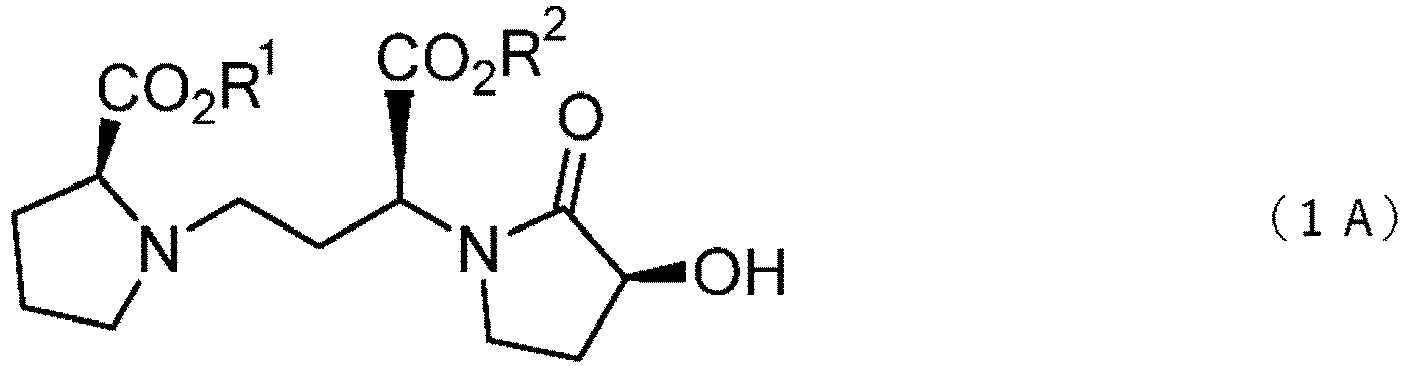

- [5] A complex comprising the lactam compound or salt thereof according to any one of [1] to [4] above, and a metal atom.
- [6] The complex according to [5] above, wherein the metal atom is an iron.
- [7] A fertilizer comprising the lactam compound or salt thereof according to any one of [1] to [4] above, or the complex according to [5] or [6] above.
- [8] A plant growth regulating agent comprising the lactam compound or salt thereof according to any one of [1] to [4] above, or the complex according to [5] or [6] above.
- In the present invention, the lactam compound and salt represented by the general formulae (1) and (2) are stable in a pH range from 1 to 9 since opening of the lactam ring is not occurred, and the compounds easily form metal complexes. For example, when an iron complex is prepared, it is suitable as an iron supply material for cultivation using foliar spraying and hydroponics. The lactam compounds of the present invention are also suitable for plant growth in alkaline soils when used alone or in combination with a divalent or trivalent iron compound. Therefore, the lactam compound and salt of the present invention, and complex of the present invention are suitable as a raw material component for a fertilizer or a plant growth regulator.
-
-
FIG. 1 is a 1H-NMR spectra of the lactam compound (L2) obtained in Example 1, showing results of the stability test in waters with different pH; -
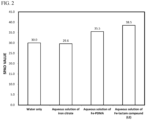
FIG. 2 is a graph showing results of the foliar spraying test; -
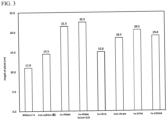
FIG. 3 is a graph showing results of the hydroponic cultivation test; and -
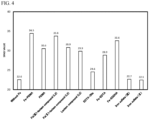
FIG. 4 is a graph showing results of the alkaline soil cultivation test. - The lactam compound or the salt thereof are represented by the following general formulae (1) and (2). The compound of the general formula (2) is a salt of the compound of the general formula (1).


- In the general formulae (1) and (2), R1 and R2 may be the same or different, and each represent a hydrogen atom, a protective group of a carboxyl group or a cation.
- When R1 and R2 are protecting groups of a carboxyl group, the protecting group is not particularly limited, and example thereof includes a linear, branched or cyclic alkyl group having 1-6 carbon atoms, such as methyl group, ethyl group, n-propyl group, iso-propyl group, n-butyl group, iso-butyl group, tert-butyl group, n-hexyl group, and cyclohexyl group; an aralkyl group which may have a substituent, such as benzyl group, p-nitrobenzyl group, o-nitrobenzyl group, m-nitrobenzyl group, 2,4-dinitrobenzyl group, p-chlorobenzyl group, p-bromobenzyl group, and p-methoxybenzyl group; an alkylcarbonyloxy-alkyl group, the alkylcarbonyloxy having 1 to 6 carbon atoms, such as acetoxymethyl group, acetoxyethyl group, propionyloxymethyl group, n-butyryloxymethyl group, iso-butyryloxymethyl group, and pivaloyloxymethyl group; and the like. Among these, methyl group and ethyl group are preferable.
- It is noted that "n-" means normal; "iso-" means iso; "tert-" means tertiary; "o-" means ortho; "m-" means meta; and "p-" means para.
- In case where R1 and R2 are cations, the cation may be either an inorganic cation or an organic cation. Examples of the inorganic cation include NH4 +, Na+, K+, Ag+, and the like.
- X- in the general formula (2) is a halogen ion, an organic acid ion, or an inorganic acid ion, and may be, for example, a halogen ion such as a chlorine ion, a bromine ion and an iodine ion; acetic acid ion, trifluoroacetic acid ion, methanesulfonic acid ion, nitric acid ion, sulfate ion, and the like. Of these, chlorine ion, nitrate ion, sulfate ion, and trifluoroacetate ion are preferred.
- The salt represented by the general formula (2) is not particularly limited, and example thereof includes an inorganic acid salt such as a hydrochloride, a sulfate, and a nitrate; an organic acid salt such as an acetate, and a methanesulfonate; an alkali metal salt such as a sodium salt, and a potassium salt; an alkaline earth metal salt such as a magnesium salt, and a calcium salt; a quaternary ammonium salt such as a dimethylammonium salt, and a triethylammonium salt; and the like. These salts are suitable in the agricultural field.
- In the present invention, particularly preferred embodiments as a raw material component for a fertilizer or plant growth regulator include a lactam compound or salt thereof wherein both R1 and R2 in the general formulae (1) and (2) are hydrogen atoms and are represented by the following formulae (3) and (4).


- The lactam compound and salt thereof in the present invention may have an isomer such as optical isomers, stereoisomers and position isomers. For example, when the lactam compound and salt thereof have optical isomers, optical isomers divided from a racemic body are also included in the compound of the present invention.
- The preferred optical isomers as the lactam compound and salt thereof in the present invention are the following compounds represented by general formulae (1A) and (2A). In these formulae, R1, R2 and X- are as described above.


- The production method of the lactam compound and salt thereof in the present invention is not particularly limited.
- Compounds where R1 and R2 are hydrogen atoms in the above formulae (1) and (2) may be produced by the following methods. For example, the compound represented by the above formula (4) may be produced by dissolving in an aqueous solution of dilute hydrochloric acid a compound represented by the following formula (6), obtained by the method described in
WO2017/082111 , subjecting the solution to concentration to form a hydrochloride salt of a compound represented by the following formula (6), and then heating the hydrochloride salt at a temperature from 40°C to 100°C. The compound represented by the above formula (3) may be produced by subjecting the resulting compound represented by the above formula (4) to cation exchange.
- Compounds in which R1 and R2 are protecting groups of a carboxyl group, e.g., methyl groups, in the above general formula (2) may be produced by adding the compound represented by the above formula (3) to anhydrous hydrochloric acid - methanol solution, stirring them, and subjecting the resulting reaction solution to concentration. In a case where R1 and R2 are ethyl groups, ethanol may be used.
- Further, compounds in which R1 and R2 are cations (e.g., NH4 +) in the above general formula (1) may be produced by adding the compound represented by the above formula (3) to aqueous ammonia, stirring them, and subjecting the resulting reaction solution to concentration. In a case where R1 and R2 are Na+ ions, an aqueous solution of sodium hydroxide may be used.
- In the present invention, a complex may be produced by mixing an aqueous solution of a lactam compound or salt thereof with an aqueous solution containing a metal ion. Each of the above aqueous solutions may be obtained using water or a buffer solution. The complexes obtained in this way are compounds containing the lactam compound or salt thereof in the above invention and a metal atom.
- The above metal atom is not particularly limited and example thereof includes magnesium (Mg), calcium (Ca), iron (Fe), manganese (Mn), zinc (Zn), molybdenum (Mo), copper (Cu), and the like. Of these, iron and copper are preferred, and iron is particularly preferred. Iron complex is suitable as an iron supply material for plants in cultivation using foliar spraying and hydroponics.
- A coordination state of the metal atom in the complex of the present invention is not particularly limited. It is usually in a state of metal ion (monovalent, divalent, trivalent, etc.), but it may also be in a state of zero-valent metal. The number of the metal atom included may be only one, or be two or more.
- In the present invention, the lactam compound or its salt and the complex are suitable as raw material components for a fertilizer or a plant growth regulator.
- The fertilizer and plant growth regulator in the present invention are composed of the lactam compound or its salt and/or the complex, and other compositions suitable for the agricultural field may further be applied. The other compositions are exemplified below.
- (1) Only lactam compound or its salt and/or complex;
- (2) Aqueous solution of lactam compound or its salt and/or complex;
- (3) Mixture consisting of lactam compound or its salt and/or complex, and other compounds; and
- (4) Aqueous solution or aqueous dispersion containing a lactam compound or its salt and/or complex, other compounds, and water.
- In the above configurations (2) and (4), pH of the solution is not particularly limited, but is preferably in a range from 1 to 7, and more preferably from 2 to 5.
- In these cases, a (total) concentration of the lactam compound or its salt and/or the complex is preferably in a range from 10% to 50% by mass, and more preferably from 10% to 30% by mass based on a total liquid from viewpoints of workability and the effect obtained.
- In the above configurations (3) and (4), the other compounds may be either inorganic or organic compounds.
- Examples of the inorganic compound include a magnesium compound such as magnesium hydroxide and magnesium chloride; a calcium compound such as calcium hydroxide, calcium carbonate and calcium chloride; an iron compound such as iron sulfate, iron nitrate, iron oxide (FezOs), ferric chloride (FeCl3) or hydrate thereof; a manganese compound such as manganese dioxide, manganese sulfate pentahydrate, and manganese chloride tetrahydrate; a boron compound such as
sodium tetraborate 10 hydrate and boric acid; a zinc compound such as zinc sulfate and zinc oxide; a molybdenum compound such as sodium molybdate and ammonium molybdate; a copper compound such as copper sulfate and copper nitrate; and the like. Of these, an iron compound is preferred. This iron compound may be either divalent or trivalent. - Examples of the organic compound include a metal salt of EDTA, a metal-EDTA complex, a metal-EDDHA complex, a metal-EDPA complex, proteins, a pesticide active material, sugars, a surfactant (emulsifiers, defoamers, dispersants, etc.), and the like. Anionic, cationic, nonionic, and amphoteric surfactants may be used as the surfactant.
- In the above configuration (4), when a surfactant is contained, a content ratio of the surfactant is preferably in a range from 0.00001 to 1 part by mass, and more preferably from 0.01 to 0.1 part by mass based on 100 parts by mass of a total of the lactam compound and/or the complex.
- The fertilizer and plant growth regulator in the present invention are suitable for cultivation using foliar spraying and hydroponics. It is also suitable for plant growth in alkaline soils.
- Plants have an ability to absorb nutrients not only from roots but also from the surface of leaves, stems, and fruits. Therefore, foliar application of fertilizer and plant growth regulator in liquid state leads to a nutrient supply effect.
- In the hydroponics, the flow method (NFT, DFT), static method, etc., which are publicly known, may be applied.
- Hereinafter, the present invention is specifically described by way of Examples. The present invention is not limited to the Examples.
- One gram of the following compound (hereinafter, referred to as "PDMA") that is represented by the following formula (11) and is obtained by a method described in
WO 2017/082111 was dissolved in 1M hydrochloric acid aqueous solution, and concentration was then conducted to form a hydrochloride salt. Next, the hydrochloride salt was dissolved in 190 mL of water, and the resulting solution was heated to a temperature of 70°C, and stirred for two hours to obtain the following lactam compound (L1) having a hydrochloride type in an amount of 1 gram.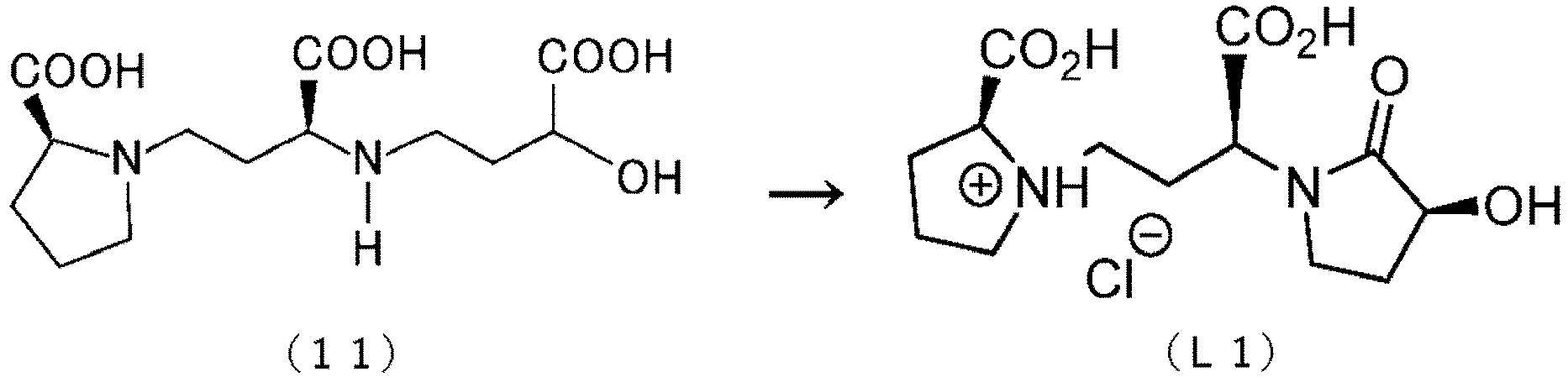
- Data of 1H-NMR spectra of the resulting hydrochloride type lactam compound (L1) is as follows.
- 1H NMR (400 MHz, D2O): δ 4.45 (dd, J=9.4, 5.5Hz, 1H), 4.35 (t, J=8.4Hz, 1H), 4.08 (dd, J=9.4, 7.0Hz, 1H), 3.68 (ddd, J=11.3, 7.2, 4.0Hz, 1H), 3.36-3.22 (m, 3H), 3.14-2.97 (m, 2H), 2.45-2.24 (m, 3H), 2.23-2.09 (m, 1H), 2.09-1.07 (m, 2H), 1.95-1.68 (m, 2H).
- After that, the hydrochloride type lactam compound (L1) was purified using a cation exchanging resin "DOWEX™ 50WX8" (product name) and developing solvent (from H2O to 5% ammonia aqueous solution) to obtain the following lactam compound (L2).

- Data of 1H-NMR spectra of the resulting lactam compound (L2) is as follows.
- 1H NMR (500 MHz, D2O): δ 4.35 (t, J=8.7Hz, 1H), 4.24 (dd, J=9.1, 6.0Hz, 1H), 3.84 (dd, J=9.3, 6.5Hz, 1H), 3.67 (ddd, J=10.6, 6.5, 3.8Hz, 1H), 3.34-3.18 (m, 3H), 3.06-2.91 (m, 2H), 2.45-2.29 (m, 2H), 2.29-2.18 (m, 1H), 2.06-1.92 (m, 3H), 1.90-1.77 (m, 2H).
- Hereinafter, various evaluations were carried out using the above-mentioned lactam compound (L2).
- In order to investigate the stability of the lactam compound (L2) in water having different pH, an aqueous solution having a pH of 1 using hydrochloric acid, an aqueous solution having a pH of 7 in which the lactam compound (L2) was dissolved in water, and an aqueous solution having a pH of 9 using sodium hydrogen carbonate were subjected to 1H-NMR measurement. The results are shown in
FIG. 1 . It can be seen, fromFIG. 1 , that the lactam ring structure is maintained although the peak shift is observed in the 1H-NMR spectrum. - Komatsuna seeds were seeded in a nursery soil "Hana-chan nursery soil" (trade name) manufactured by Hanagokoro Co., Ltd., and cultivation was started in a greenhouse with natural sunlight. On the 8th day, we thinned out so that their grow would be aligned. After thinning, on the 10th, 12th, 14th, 17th, 19th and 21st days, 10 mL of water and aqueous solutions containing 20 µmol of each of iron citrate, a complex composed of PDMA and iron sulfate (III) (hereinafter, referred to as "Fe-PDMA"), or a complex composed of the lactam compound (L2) and iron sulfate (III) (hereinafter, referred to as "Fe-lactam compound (L2)") were used in an amount of 10 mL to conduct foliar application. The aqueous solutions are prepared by diluting 1,000-fold with a surfactant "Dyne" (trade name) manufactured by Sumitomo Chemical Garden Products Inc., and have pH of 4 to 5. SPAD values were measured 24 days later (3 days after the spraying was completed). The results are shown in
FIG.2 . It is found fromFIG. 2 that when the Fe-lactam compound (L2) was used, superior growth effect was obtained when iron citrate or Fe-PDMA was sprayed on the foliage compared to when only water was sprayed. - The paddy rice variety "Nipponbare" was seeded in tap water. When roots and buds emerged, seedlings were soaked in a hydroponic solution (formulation in the Horticultural Experiment Station). On the 8th day after sowing, the seedlings were transplanted into a hydroponic solution of a formulation in the Horticultural Experiment Station (without iron). Aqueous solutions of iron sulfate (III), Fe-PDMA, Fe-lactam compound (L2), Fe-EDTA, iron citrate, Fe-DTPA or Fe-EDDHA were further added to each of the hydroponic solution as 90 µM only once to measure
plant heights 7 days after the administration. The results are shown inFIG.3 . It is found fromFIG. 3 that when the Fe-lactam compound (L2) was used, the growth of the paddy rice was remarkably promoted and superior growth effect was obtained not only when only water was sprayed on the foliage but also when other aqueous solutions of iron citrate or Fe-PDMA were administered. - The paddy rice variety "Nipponbare" was seeded in tap water. When roots and buds emerged, seedlings were soaked in a hydroponic solution (formulation in the Horticultural Experiment Station). When the plant height reached about 7 cm, the seedlings were transplanted into fossil shellfish soil having a pH9. Aqueous solutions containing 30 µmol of each of Fe-PDMA, only PDMA, a complex composed of the lactam compound (L2) and iron sulfate (III) (hereinafter, referred to as "Fe(III)-lactam compound (L2)"), a complex composed of the lactam compound (L2) and iron sulfate (II) (hereinafter, referred to as "Fe(II)-lactam compound (L2)"), lactam compound (L2), disodium ethylenediamine tetraacetate, Fe-EDTA, Fe-EDDHA, iron sulfate (III) or iron sulfate (II). were administered only once to each of the soil to measure
SPAD values 7 days after the administration. The results are shown inFIG.4 . According toFIG. 4 , SPAD values were 33.8 and 30.9, respectively when either the Fe-lactam compound (L2) of divalent and trivalent iron was used. It is found that the growth effect can be obtained even in alkaline soil by administering the lactam compound of the present invention. Moreover, not only the effect can be obtained with the lactam compound (L2) as it is, but further effect can be expected if a complex with Fe and a lactam compound are used. - The lactam compound and salt of the present invention, and complex of the present invention are useful in a fertilizer for plant growth, a plant growth regulating agent, and the like.
Claims (8)
- A lactam compound and a salt thereof, represented by general formulae (1) and (2):


- The lactam compound and a salt thereof according to claim 1,
wherein R1 and R2 in the general formulae (1) and (2) are hydrogen atoms. - The lactam compound and a salt thereof according to claim 1,
wherein R1 and R2 in the general formulae (1) and (2) are protective groups of a carboxyl group, and the protective group is a methyl group or an ethyl group. - The lactam compound and a salt thereof according to claim 1, which is represented by general formulae (3) or (4):


- A complex comprising the lactam compound or salt thereof according to any one of claims 1 to 4, and a metal atom.
- The complex according to claim 5, wherein the metal atom is an iron.
- A fertilizer comprising the lactam compound or salt thereof according to any one of claims 1 to 4, or the complex according to claim 5 or 6.
- A plant growth regulating agent comprising the lactam compound or salt thereof according to any one of claims 1 to 4, or the complex according to claim 5 or 6.
Applications Claiming Priority (2)
| Application Number | Priority Date | Filing Date | Title |
|---|---|---|---|
| JP2020060320A JP7398738B2 (en) | 2020-03-30 | 2020-03-30 | Novel lactam compounds or their salts, complexes, and fertilizers and plant growth regulators containing them |
| PCT/JP2020/046166 WO2021199507A1 (en) | 2020-03-30 | 2020-12-10 | Novel lactam compound or salt thereof, complex, and fertilizer and plant growth regulator containing said compound or salt and complex |
Publications (2)
| Publication Number | Publication Date |
|---|---|
| EP4129995A1 true EP4129995A1 (en) | 2023-02-08 |
| EP4129995A4 EP4129995A4 (en) | 2024-04-10 |
Family
ID=77917168
Family Applications (1)
| Application Number | Title | Priority Date | Filing Date |
|---|---|---|---|
| EP20928629.3A Withdrawn EP4129995A4 (en) | 2020-03-30 | 2020-12-10 | Novel lactam compound or salt thereof, complex, and fertilizer and plant growth regulator containing said compound or salt and complex |
Country Status (9)
| Country | Link |
|---|---|
| US (1) | US12382957B2 (en) |
| EP (1) | EP4129995A4 (en) |
| JP (1) | JP7398738B2 (en) |
| CN (1) | CN115052871B (en) |
| AU (1) | AU2020440536B2 (en) |
| BR (1) | BR112022015131A2 (en) |
| CA (1) | CA3170213A1 (en) |
| MX (1) | MX2022012121A (en) |
| WO (1) | WO2021199507A1 (en) |
Families Citing this family (1)
| Publication number | Priority date | Publication date | Assignee | Title |
|---|---|---|---|---|
| KR20230095148A (en) * | 2021-12-21 | 2023-06-29 | 주식회사 포스코 | Fertilizer composition for promoting seaweed growth |
Family Cites Families (11)
| Publication number | Priority date | Publication date | Assignee | Title |
|---|---|---|---|---|
| US2578526A (en) * | 1948-12-16 | 1951-12-11 | Du Pont | Pyrrolidine compounds and method for preparing same |
| JPS6040418B2 (en) * | 1978-03-26 | 1985-09-11 | サントリー株式会社 | New azetidine compound |
| JPS6040419B2 (en) * | 1979-10-26 | 1985-09-11 | サントリー株式会社 | New mugineic acid compound |
| JP3567121B2 (en) * | 2000-05-02 | 2004-09-22 | 独立行政法人 科学技術振興機構 | "Iron / Mugineic acid analog" foliar spray |
| AU2014222637B2 (en) * | 2013-02-28 | 2017-08-10 | Syngenta Participations Ag | Plant growth regulating compounds |
| JP6487304B2 (en) | 2015-09-25 | 2019-03-20 | 公立大学法人秋田県立大学 | Hydroponic cultivation method, leaf vegetable production method, culture solution, and culture solution production method. |
| EP3375772B1 (en) * | 2015-11-09 | 2021-01-06 | Tokushima University | Novel heterocycle-containing amino acid compound and use thereof |
| JP6534639B2 (en) | 2016-06-20 | 2019-06-26 | 第一製網株式会社 | Fine powder seaweed containing liquid fertilizer |
| JP7059119B2 (en) * | 2017-06-26 | 2022-04-25 | 三洋化成工業株式会社 | Plant growth promoter |
| CN108863580B (en) * | 2018-08-09 | 2021-03-09 | 吴文君 | Leaf fertilizer containing L-pyroglutamic acid and use method thereof |
| US11939290B2 (en) * | 2018-08-29 | 2024-03-26 | Tokushima University | Heterocycle-containing amino acid compound and salt thereof, complex, composition, fertilizer and plant growth regulator |
-
2020
- 2020-03-30 JP JP2020060320A patent/JP7398738B2/en active Active
- 2020-12-10 EP EP20928629.3A patent/EP4129995A4/en not_active Withdrawn
- 2020-12-10 WO PCT/JP2020/046166 patent/WO2021199507A1/en not_active Ceased
- 2020-12-10 US US17/905,238 patent/US12382957B2/en active Active
- 2020-12-10 CN CN202080095557.1A patent/CN115052871B/en active Active
- 2020-12-10 MX MX2022012121A patent/MX2022012121A/en unknown
- 2020-12-10 CA CA3170213A patent/CA3170213A1/en active Pending
- 2020-12-10 BR BR112022015131A patent/BR112022015131A2/en active IP Right Grant
- 2020-12-10 AU AU2020440536A patent/AU2020440536B2/en active Active
Also Published As
| Publication number | Publication date |
|---|---|
| AU2020440536B2 (en) | 2026-05-21 |
| JP2021155390A (en) | 2021-10-07 |
| BR112022015131A2 (en) | 2022-11-29 |
| MX2022012121A (en) | 2022-10-18 |
| WO2021199507A1 (en) | 2021-10-07 |
| JP7398738B2 (en) | 2023-12-15 |
| AU2020440536A1 (en) | 2022-09-08 |
| EP4129995A4 (en) | 2024-04-10 |
| US20230137078A1 (en) | 2023-05-04 |
| CA3170213A1 (en) | 2021-10-07 |
| US12382957B2 (en) | 2025-08-12 |
| CN115052871A (en) | 2022-09-13 |
| CN115052871B (en) | 2024-02-20 |
Similar Documents
| Publication | Publication Date | Title |
|---|---|---|
| AU741916B2 (en) | Plant micronutrient chelating surfactant compounds | |
| WO2014185794A1 (en) | A silicon formulation with plant growth stimulating properties, a method of the preparation of a silicon formulation with plant growth stimulating properties and its use | |
| CN103396188A (en) | Water-soluble leaf fertilizer for tea tree and application of fertilizer | |
| US4699644A (en) | Plant nutrient composition | |
| US12382957B2 (en) | Lactam compound or salt thereof, complex, and fertilizer and plant growth regulator containing said compound or salt and complex | |
| US6870026B1 (en) | Chelation compositions | |
| AU2013395769B2 (en) | A titanium-containing formulation, a method of the preparation of a titanium-containing formulation, and use of the titanium-containing formulation in the cultivation of plants | |
| EP3358955B1 (en) | Managing ethylene in plants using an agricultural formula comprising diformyl urea and cobalt sulfate | |
| EP3044187B1 (en) | Acidic fertilizer compositions containing a metal complex of glutamic acid n,n-diacetic acid or iminodisuccinic acid | |
| JP5805742B2 (en) | Slow-acting liquid fertilizer and method for producing the same | |
| AU2020256299A1 (en) | Fertilizer with Polyamine Additive for Use in Irrigation Environments | |
| JP4719483B2 (en) | Process for producing 5-aminolevulinic acid sulfonate | |
| CN115551820B (en) | Water-soluble fertilizer | |
| JP4630087B2 (en) | 5-Aminolevulinic acid nitrate and process for producing the same | |
| US11352305B2 (en) | Fertilizer with polyamine additive for use in irrigation environments | |
| CN107652094A (en) | The Water soluble fertilizer of a kind of balanced type containing humic acid and preparation method thereof | |
| US5102446A (en) | No-till liquid herbicide and fertilizer suspension | |
| JPH06144975A (en) | Production of liquid fertilizer | |
| SU821440A1 (en) | Concentrated mixture for agricultural crop fertilizer | |
| KR100835890B1 (en) | Phosphate Fertilizer Composition and Preparation Method Using Polymeric Phosphate | |
| CN121377890A (en) | A highly efficient, stable, and high-concentration liquid water-soluble fertilizer containing calcium and magnesium trace elements and its preparation method. | |
| CN113615465A (en) | Method for promoting conversion of mango young leaves from heterotrophic culture to autotrophic culture | |
| JPH0280386A (en) | Trace element for cultivation with nutritious solution | |
| EP3233762B1 (en) | Organic and inorganic fertilizer suitable for irrigated farming and including nitrification inhibitor and boron | |
| SU728228A1 (en) | Method of grape chlorosis control |
Legal Events
| Date | Code | Title | Description |
|---|---|---|---|
| STAA | Information on the status of an ep patent application or granted ep patent |
Free format text: STATUS: THE INTERNATIONAL PUBLICATION HAS BEEN MADE |
|
| PUAI | Public reference made under article 153(3) epc to a published international application that has entered the european phase |
Free format text: ORIGINAL CODE: 0009012 |
|
| STAA | Information on the status of an ep patent application or granted ep patent |
Free format text: STATUS: REQUEST FOR EXAMINATION WAS MADE |
|
| 17P | Request for examination filed |
Effective date: 20220818 |
|
| AK | Designated contracting states |
Kind code of ref document: A1 Designated state(s): AL AT BE BG CH CY CZ DE DK EE ES FI FR GB GR HR HU IE IS IT LI LT LU LV MC MK MT NL NO PL PT RO RS SE SI SK SM TR |
|
| DAV | Request for validation of the european patent (deleted) | ||
| DAX | Request for extension of the european patent (deleted) | ||
| A4 | Supplementary search report drawn up and despatched |
Effective date: 20240312 |
|
| RIC1 | Information provided on ipc code assigned before grant |
Ipc: A01N 43/36 20060101ALI20240305BHEP Ipc: C05C 11/00 20060101ALI20240305BHEP Ipc: A01P 21/00 20060101ALI20240305BHEP Ipc: C07F 15/02 20060101ALI20240305BHEP Ipc: C07D 403/06 20060101AFI20240305BHEP |
|
| GRAP | Despatch of communication of intention to grant a patent |
Free format text: ORIGINAL CODE: EPIDOSNIGR1 |
|
| STAA | Information on the status of an ep patent application or granted ep patent |
Free format text: STATUS: GRANT OF PATENT IS INTENDED |
|
| INTG | Intention to grant announced |
Effective date: 20250627 |
|
| STAA | Information on the status of an ep patent application or granted ep patent |
Free format text: STATUS: THE APPLICATION IS DEEMED TO BE WITHDRAWN |
|
| 18D | Application deemed to be withdrawn |
Effective date: 20251028 |