EP4129457A1 - Polyphenylene-based semipermeable membrane and manufacturing method therefor - Google Patents
Polyphenylene-based semipermeable membrane and manufacturing method therefor Download PDFInfo
- Publication number
- EP4129457A1 EP4129457A1 EP21782001.8A EP21782001A EP4129457A1 EP 4129457 A1 EP4129457 A1 EP 4129457A1 EP 21782001 A EP21782001 A EP 21782001A EP 4129457 A1 EP4129457 A1 EP 4129457A1
- Authority
- EP
- European Patent Office
- Prior art keywords
- semipermeable membrane
- polyphenylene
- membrane
- sulfonated
- ratio
- Prior art date
- Legal status (The legal status is an assumption and is not a legal conclusion. Google has not performed a legal analysis and makes no representation as to the accuracy of the status listed.)
- Granted
Links
Images


Classifications
-
- B—PERFORMING OPERATIONS; TRANSPORTING
- B01—PHYSICAL OR CHEMICAL PROCESSES OR APPARATUS IN GENERAL
- B01D—SEPARATION
- B01D71/00—Semi-permeable membranes for separation processes or apparatus characterised by the material; Manufacturing processes specially adapted therefor
- B01D71/06—Organic material
- B01D71/52—Polyethers
- B01D71/522—Aromatic polyethers
- B01D71/5223—Polyphenylene oxide, phenyl ether polymers or polyphenylethers
-
- B—PERFORMING OPERATIONS; TRANSPORTING
- B01—PHYSICAL OR CHEMICAL PROCESSES OR APPARATUS IN GENERAL
- B01D—SEPARATION
- B01D67/00—Processes specially adapted for manufacturing semi-permeable membranes for separation processes or apparatus
- B01D67/0081—After-treatment of organic or inorganic membranes
- B01D67/0093—Chemical modification
- B01D67/00931—Chemical modification by introduction of specific groups after membrane formation, e.g. by grafting
-
- B—PERFORMING OPERATIONS; TRANSPORTING
- B01—PHYSICAL OR CHEMICAL PROCESSES OR APPARATUS IN GENERAL
- B01D—SEPARATION
- B01D71/00—Semi-permeable membranes for separation processes or apparatus characterised by the material; Manufacturing processes specially adapted therefor
- B01D71/06—Organic material
- B01D71/72—Macromolecular compounds obtained otherwise than by reactions only involving carbon-to-carbon unsaturated bonds, not provided for in a single one of the groups B01D71/46 - B01D71/70 and B01D71/701 - B01D71/702
-
- B—PERFORMING OPERATIONS; TRANSPORTING
- B01—PHYSICAL OR CHEMICAL PROCESSES OR APPARATUS IN GENERAL
- B01D—SEPARATION
- B01D67/00—Processes specially adapted for manufacturing semi-permeable membranes for separation processes or apparatus
- B01D67/0002—Organic membrane manufacture
- B01D67/0009—Organic membrane manufacture by phase separation, sol-gel transition, evaporation or solvent quenching
-
- B—PERFORMING OPERATIONS; TRANSPORTING
- B01—PHYSICAL OR CHEMICAL PROCESSES OR APPARATUS IN GENERAL
- B01D—SEPARATION
- B01D67/00—Processes specially adapted for manufacturing semi-permeable membranes for separation processes or apparatus
- B01D67/0081—After-treatment of organic or inorganic membranes
- B01D67/0093—Chemical modification
-
- B—PERFORMING OPERATIONS; TRANSPORTING
- B01—PHYSICAL OR CHEMICAL PROCESSES OR APPARATUS IN GENERAL
- B01D—SEPARATION
- B01D69/00—Semi-permeable membranes for separation processes or apparatus characterised by their form, structure or properties; Manufacturing processes specially adapted therefor
- B01D69/02—Semi-permeable membranes for separation processes or apparatus characterised by their form, structure or properties; Manufacturing processes specially adapted therefor characterised by their properties
-
- B—PERFORMING OPERATIONS; TRANSPORTING
- B01—PHYSICAL OR CHEMICAL PROCESSES OR APPARATUS IN GENERAL
- B01D—SEPARATION
- B01D69/00—Semi-permeable membranes for separation processes or apparatus characterised by their form, structure or properties; Manufacturing processes specially adapted therefor
- B01D69/08—Hollow fibre membranes
-
- B—PERFORMING OPERATIONS; TRANSPORTING
- B01—PHYSICAL OR CHEMICAL PROCESSES OR APPARATUS IN GENERAL
- B01D—SEPARATION
- B01D71/00—Semi-permeable membranes for separation processes or apparatus characterised by the material; Manufacturing processes specially adapted therefor
- B01D71/06—Organic material
- B01D71/66—Polymers having sulfur in the main chain, with or without nitrogen, oxygen or carbon only
- B01D71/68—Polysulfones; Polyethersulfones
-
- B—PERFORMING OPERATIONS; TRANSPORTING
- B01—PHYSICAL OR CHEMICAL PROCESSES OR APPARATUS IN GENERAL
- B01D—SEPARATION
- B01D71/00—Semi-permeable membranes for separation processes or apparatus characterised by the material; Manufacturing processes specially adapted therefor
- B01D71/06—Organic material
- B01D71/76—Macromolecular material not specifically provided for in a single one of groups B01D71/08 - B01D71/74
- B01D71/82—Macromolecular material not specifically provided for in a single one of groups B01D71/08 - B01D71/74 characterised by the presence of specified groups, e.g. introduced by chemical after-treatment
-
- B—PERFORMING OPERATIONS; TRANSPORTING
- B01—PHYSICAL OR CHEMICAL PROCESSES OR APPARATUS IN GENERAL
- B01D—SEPARATION
- B01D2323/00—Details relating to membrane preparation
- B01D2323/02—Hydrophilization
-
- B—PERFORMING OPERATIONS; TRANSPORTING
- B01—PHYSICAL OR CHEMICAL PROCESSES OR APPARATUS IN GENERAL
- B01D—SEPARATION
- B01D2323/00—Details relating to membrane preparation
- B01D2323/12—Specific ratios of components used
-
- B—PERFORMING OPERATIONS; TRANSPORTING
- B01—PHYSICAL OR CHEMICAL PROCESSES OR APPARATUS IN GENERAL
- B01D—SEPARATION
- B01D2325/00—Details relating to properties of membranes
- B01D2325/14—Membrane materials having negatively charged functional groups
-
- B—PERFORMING OPERATIONS; TRANSPORTING
- B01—PHYSICAL OR CHEMICAL PROCESSES OR APPARATUS IN GENERAL
- B01D—SEPARATION
- B01D2325/00—Details relating to properties of membranes
- B01D2325/24—Mechanical properties, e.g. strength
-
- B—PERFORMING OPERATIONS; TRANSPORTING
- B01—PHYSICAL OR CHEMICAL PROCESSES OR APPARATUS IN GENERAL
- B01D—SEPARATION
- B01D2325/00—Details relating to properties of membranes
- B01D2325/30—Chemical resistance
-
- Y—GENERAL TAGGING OF NEW TECHNOLOGICAL DEVELOPMENTS; GENERAL TAGGING OF CROSS-SECTIONAL TECHNOLOGIES SPANNING OVER SEVERAL SECTIONS OF THE IPC; TECHNICAL SUBJECTS COVERED BY FORMER USPC CROSS-REFERENCE ART COLLECTIONS [XRACs] AND DIGESTS
- Y02—TECHNOLOGIES OR APPLICATIONS FOR MITIGATION OR ADAPTATION AGAINST CLIMATE CHANGE
- Y02A—TECHNOLOGIES FOR ADAPTATION TO CLIMATE CHANGE
- Y02A20/00—Water conservation; Efficient water supply; Efficient water use
- Y02A20/124—Water desalination
- Y02A20/131—Reverse-osmosis
Definitions
- the present invention relates to a polyphenylene-based semipermeable membrane and a production method therefor.
- a nanofiltration method is a membrane separation method that is operated under pressure, and excellent in capturing dissolved molecules, heavy metal ions, and other small particles.
- the nanofiltration method is one of membrane separation technologies included in reverse osmosis processes, but a general term of the membrane separation technology that performs reverse osmosis by using a semipermeable membrane having solute permeability of an intermediate level between a reverse osmosis membrane and an ultrafiltration membrane.
- nanofiltration membranes developed to date are organic membranes or organic and inorganic mixed type membranes. Particularly in the organic membranes, most of them are composite semipermeable membranes, and one having a separation functional layer which crosslinks a gel layer and a polymer on a porous supporting membrane, one having the separation functional layer in which monomers are subjected to polycondensation on the porous supporting membrane, etc. have been known. Above all, the composite semipermeable membrane obtained by coating the separation functional layer composed of a crosslinked polyamide obtained by an interfacial polycondensation reaction of a polyfunctional amine and a polyfunctional acid halide on the porous supporting membrane is widely used as a separating membrane which is high in permeability and selective separation performance.
- Patent Literature 1 Japanese Patent Laying-Open No. 55-147106
- a sheet-like composite that a thin film of polyamide crosslinked by the interfacial polycondensation reaction is formed on a surface of the porous supporting membrane.
- the composite nanofiltration membrane that exhibits high water permeability and high fouling resistance for example, in Patent Literature 2 ( WO 1997/34686 ), disclosed is the nanofiltration membrane composed of a supporting body material having a layer consisting of a polyamide and a separating layer that polyvinyl alcohol is applied on that supporting body material.
- the polyamide-based organic membranes disclosed in Patent Literatures 1 and 2 are widely used for seawater desalination, drainage treatment application, etc.
- Patent Literature 3 Japanese Patent Laying-Open No. 2013-31836
- the sulfonated polyarylene ether sulfone polymer is used as a material for the nanofiltration membrane, and it is found that a sulfonic acid group in the membrane and bound water are well interacted to be able to achieve salt removability and water permeability in a high level, by controlling a position of a peak top derived from the bound water in a water containing state of this membrane to a region of a specific chemical shift. It has been exhibited that the separating membrane of the polymer described above has strong resistance to both of an alkaline chemical and a chlorine chemical.
- An objective of the present invention is to provide a separating membrane that can solve the problem described above.
- the present invention is composed of the following structures.
- the semipermeable membrane achieving chemical resistance chlorine-resistance, acid-resistance, alkali-resistance
- membrane performance and membrane strength can be obtained by sulfonating the polyphenylene-based semipermeable membrane base material on specific conditions.
- a resin itself used as a raw material is excellent in the chemical resistance.
- a resin include a polyphenylene-based resin such as a polyphenylene ether resin, a polyphenylene oxide resin, and a polyphenylene sulfide resin.
- a material containing the polyphenylene oxide resin it is preferable to use a material containing the polyphenylene oxide resin.
- the polyphenylene-based resin is hydrophobic, there is a problem that the membrane produced by the polyphenylene-based resin alone is very low in water permeability.
- hydrophilic treatment to the polyphenylene-based semipermeable membrane.
- hydrophilic treatment are considered introduction of a hydrophilic group (e.g., sulfonic acid group) to the semipermeable membrane and the hydrophilic treatment using alcohol.
- a hydrophilic group e.g., sulfonic acid group
- alcohol e.g., ethanol
- the hydrophilic group is introduced to the whole membrane, there occurs disadvantage of reducing mechanical strength. Therefore, it has been found out that a portion of the semipermeable membrane is sulfonated, to maintain the mechanical strength and to improve water permeability performance.
- a thickness of a sulfonated layer is 50% or less of the whole membrane thickness.
- the thickness of the sulfonated layer is more than 50% of the whole membrane thickness, hydrophilization progresses and balance between the water permeability performance and an ion-rejection rate sometimes becomes worse.
- the thickness of the sulfonated layer is preferably in a range of 40% or less of the whole membrane thickness.
- the thickness of the sulfonated layer is preferably 5% or more. Since there sometimes occur problems such as reduction of the water permeability performance when the thickness of the sulfonated layer is thin, it is preferably 10% or more.
- the thickness of the sulfonated layer is measured by a method of taking a photograph of a cross section of the sulfonated semipermeable membrane embedded in a resin piece by using a Scanning Electron Microscopy (SEM), and detecting elemental sulfur by EDS mapping.
- SEM Scanning Electron Microscopy
- sulfonation degree of the whole semipermeable membrane is 0.1 ⁇ 10 4 meq./m 3 to 9.0 ⁇ 10 4 meq./m 3 .
- the sulfonation degree is small, the sulfonated layer is insufficiently formed, tending to decrease the separation function (particularly, ion-rejection rate).
- the sulfonation degree is large, the strength of the membrane is decreased, not to sometimes secure stability of separation performance.
- the semipermeable membrane to secure the strength of the membrane and also secure sufficient separation function, it is preferably that the sulfonation degree is in a range of 0.5 ⁇ 10 4 meq./m 3 to 4.0 ⁇ 10 4 meq./m 3 . Further, the sulfonation degree of the semipermeable membrane can be measured by a titration method as described later.
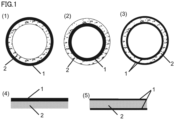
- both surfaces of the semipermeable membrane may be sulfonated, but it is more preferable that a first surface of the semipermeable membrane is sulfonated, and a second surface is not sulfonated ( Fig. 1 ).
- the second surface has elemental sulfur ratio of less than 0.1 atm.%.
- the elemental sulfur ratio can be measured by X-ray photoelectron spectroscopy described later from a membrane surface to a depth of around 10 nm. When the elemental sulfur ratio is high, the strength of the semipermeable membrane sometimes decreases.
- the semipermeable membrane having properties as described above is excellent in the balance of the water permeability performance and the ion-rejection rate, and able to expresses high membrane strength (yield strength).
- production of a hollow fiber type semipermeable membrane base material comprises: dissolving a polyphenylene-based resin in an aprotic solvent to obtain a film-forming solution (dissolving); discharging the film-forming solution in a hollow fiber form at a temperature of a temperature induced phase separation point or more from a spinning nozzle (discharging); bringing the film-forming solution discharged in the hollow fiber form into contact (immersing) with a mixed solution composed of water and an organic solvent to coagulate the film-forming solution (coagulating); washing the coagulated material in the hollow fiber form with warm water to remove excessive solvent and the like (washing); and drying it (drying).
- production of a flat type semipermeable membrane base material comprises: spreading the film-forming solution, which is the same as that described above, on a glass plate and the like to have a uniform thickness by using an applicator, etc.; and after immersing it together with the glass plate in a coagulating liquid, collecting the semipermeable membrane base material from the glass plate.
- the semipermeable membrane base material collected is washed, and dried as needed.
- the semipermeable membrane base material obtained can be easily sulfonated by bringing the first surface of the semipermeable membrane into contact with sulfuric acid. At this time, it is preferable that the second surface side is under the pressure so that the sulfuric acid does not penetrate in the inside of the membrane.
- the pressure applied is preferably 2 MPa or less by using nitrogen gas, etc. When the pressure is high, air bubbles are generated from the first surface to be sometimes partially insufficient in the sulfonation. Also, when the pressure is low, the sulfuric acid penetrates in the inside of the membrane, to be sometimes sulfonated up to the second surface.
- the sulfonation degree of the semipermeable membrane base material can be adjusted by a concentration of the sulfuric acid used and a contact time.
- the concentration of the sulfuric acid is preferably 90 to 98 wt.%, more preferably 93 to 95 wt.%.
- the contact time is preferably 0.5 min. to 60 min., more preferably 30 min.
- concentration of the sulfuric acid is low, it needs a long time to obtain desired sulfonation degree or cannot attain the desired sulfonation degree.
- concentration of the sulfuric acid is high, it becomes difficult to adjust the sulfonation degree.
- the contact time is short, homogeneous sulfonation cannot be sometimes attained.
- the contact time is long, the sulfonation progresses to the inside of the semipermeable membrane, not to be sometimes able to obtain necessary membrane strength.
- the sulfonation degree of the whole semipermeable membranes of Examples and Comparative Examples was measured by the titration method.
- Premeasurement treatment 1.0 g of dry weight was prepared as a sample amount, and the sample was cut into 3 cm square. Sulfuric acid treated semipermeable membrane was washed by pure water of 80°C, continuing until pH change (sulfuric acid residue) disappears, and vacuum drying was performed at 110°C for 5 hours. After that, the sample was immersed in a NaCl aqueous solution of 2.0 M for 24 hours, to substitute H + , which is a counter ion of a sulfonic acid group, to Na + .
- the value of the yield strength was determined to the value of a point of intersection of a linear line for obtaining an initial elastic modulus in the stress-strain curve and a linear line (tangential line) in a linear region (elongation: 10 to 30%) after yielding ( Fig. 2 ).
- the sample was embedded in an epoxy resin (Nacalai Tesque, Inc., LUVEAK-812), and a cross section was produced by using a microtome with a glass knife attached.
- the sample was fixed on a sample stage and deposited with osmium, and elemental analysis was performed by using the above microscope with 10 kV of an acceleration voltage.
- Ratio of Sulfonated Layer % Thickness of Sulfonated Layer ⁇ m / Thickness of Sulfonated Layer Ts ⁇ m + Thickness of Non-Sulfonated Layer Tb ⁇ m ⁇ 100
- An elemental sulfur ratio was calculated through analysis of the elemental sulfur of the semipermeable membrane by XPS measurement (K-Alpha + , produced by Thermo Fisher Scientific Inc.). In case of the hollow fiber type semipermeable membrane, with respect to an outer surface side, it was measured as it was, and with respect to an inner surface side, it was measured by exposing the inner surface side of the hollow fiber membrane by cutting with a knife.
- the elemental sulfur ratio can be measured from the surface to a depth of around 10 nm.
- the module for evaluation was attached to a water permeability testing apparatus for a hollow fiber, and membrane performance evaluation was performed at an operating pressure of 0.5 MPa by using a NaCl aqueous solution of 1500 ppm.
- Ion-Rejection Rate % 1 ⁇ Conductivity of Filtrate ⁇ S / cm / Conductivity of Supplied Aquenous Solution ⁇ S / cm ⁇ 100
- N-methyl-2-pyrolidone Nacalai Tesque, Inc., Extra Pure Reagent
- RO water was discharged by a fixed quantity as an inner liquid, and while inducing phase separation in the inner layer portion of the spinning solution extruded into a hollow shape, drying treatment of the surface layer portion of the spinning solution was performed in an air gap, and then in a coagulation bath, the phase separation progressed completely. After fully rinsing the solidified material in a hollow fiber form, it was winded in a water-containing state.
- the resulting material in the hollow fiber form was cut into 100 cm in length, and subjected to immersion rinsing with the pure water of 60°C and wind drying for one night.
- the modules for evaluation were prepared.
- a semipermeable membrane of Example 2 was obtained in the same manner as Example 1 except that a sulfuric acid solution of 93.5% was brought into contact for 30 minutes.
- the inner diameter of the semipermeable membrane was 240 ⁇ m.
- a semipermeable membrane of Example 3 was obtained in the same manner as Example 1 except that a sulfuric acid solution of 94.5% was brought into contact for 30 minutes.
- the inner diameter of the semipermeable membrane was 240 ⁇ m.
- a semipermeable membrane of Example 4 was obtained in the same manner as Example 1 except that the sulfuric acid solution of 94.5% was brought into contact for 1 minute.
- the inner diameter of the semipermeable membrane was 240 ⁇ m.
- a semipermeable membrane of Example 5 was obtained in the same manner as Example 1 except that the sulfuric acid solution of 94.5% was brought into contact for 5 minutes.
- the inner diameter of the semipermeable membrane was 240 ⁇ m.
- a semipermeable membrane of Example 6 was obtained in the same manner as Example 1 except that the sulfuric acid solution of 94.5% was brought into contact for 10 minutes.
- the inner diameter of the semipermeable membrane was 240 ⁇ m.
- a semipermeable membrane of Comparative Example 1 was obtained in the same manner as Example 1 except that the sulfuric acid solution was not brought into contact.
- a semipermeable membrane of Comparative Example 2 was obtained in the same manner as Example 1 except that a sulfuric acid solution of 95.5% was brought into contact for 30 minutes.
- a semipermeable membrane of Comparative Example 3 was obtained in the same manner as Example 1 except that a sulfuric acid solution of 96.5% was brought into contact for 30 minutes.
- a semipermeable membrane of Comparative Example 4 was obtained in the same manner as Example 1 except that membrane production was performed by using PPO which was subjected to sulfonation treatment at a stage of a raw material, and the sulfonation treatment after the membrane production was not performed.
Landscapes
- Chemical & Material Sciences (AREA)
- Chemical Kinetics & Catalysis (AREA)
- Engineering & Computer Science (AREA)
- Manufacturing & Machinery (AREA)
- Inorganic Chemistry (AREA)
- Health & Medical Sciences (AREA)
- Transplantation (AREA)
- Dispersion Chemistry (AREA)
- Separation Using Semi-Permeable Membranes (AREA)
Abstract
Description
- The present invention relates to a polyphenylene-based semipermeable membrane and a production method therefor.
- A nanofiltration method is a membrane separation method that is operated under pressure, and excellent in capturing dissolved molecules, heavy metal ions, and other small particles. The nanofiltration method is one of membrane separation technologies included in reverse osmosis processes, but a general term of the membrane separation technology that performs reverse osmosis by using a semipermeable membrane having solute permeability of an intermediate level between a reverse osmosis membrane and an ultrafiltration membrane.
- Many nanofiltration membranes developed to date are organic membranes or organic and inorganic mixed type membranes. Particularly in the organic membranes, most of them are composite semipermeable membranes, and one having a separation functional layer which crosslinks a gel layer and a polymer on a porous supporting membrane, one having the separation functional layer in which monomers are subjected to polycondensation on the porous supporting membrane, etc. have been known. Above all, the composite semipermeable membrane obtained by coating the separation functional layer composed of a crosslinked polyamide obtained by an interfacial polycondensation reaction of a polyfunctional amine and a polyfunctional acid halide on the porous supporting membrane is widely used as a separating membrane which is high in permeability and selective separation performance. For example, in Patent Literature 1 (
Japanese Patent Laying-Open No. 55-147106 WO 1997/34686 Patent Literatures - As the nanofiltration membrane excellent in alkali resistance and chlorine resistance, for example, in Patent Literature 3 (
Japanese Patent Laying-Open No. 2013-31836 Patent Literature 3, the sulfonated polyarylene ether sulfone polymer is used as a material for the nanofiltration membrane, and it is found that a sulfonic acid group in the membrane and bound water are well interacted to be able to achieve salt removability and water permeability in a high level, by controlling a position of a peak top derived from the bound water in a water containing state of this membrane to a region of a specific chemical shift. It has been exhibited that the separating membrane of the polymer described above has strong resistance to both of an alkaline chemical and a chlorine chemical. -
- PTL 1:
Japanese Patent Laying-Open No. 55-147106 - PTL 2:
WO 1997/34686 - PTL 3:
Japanese Patent Laying-Open No. 2013-31836 - In recent years, in the fields of treatment of industrial drainage (wastewater), recovery of organic solvents, and production of pharmaceuticals, etc., attempts have been made to reduce cost and improve productivity by using the membrane separation technology. In case that membrane separation is used for such applications, focused is resistance to chemicals and mechanical strength as well as separation characteristics and treatment flow volume. An objective of the present invention is to provide a separating membrane that can solve the problem described above.
- As a result of intensive studies, the present inventors have found that the above problem can be solved by the following measures, to reach the present invention.
- That is, the present invention is composed of the following structures.
- 1. A polyphenylene-based semipermeable membrane that is composed of a material comprising a polyphenylene-based resin,
- wherein the semipermeable membrane has a first surface of which at least a portion is sulfonated, and
- wherein, when concentration distribution of elemental sulfur derived from a sulfonic acid group is measured by elemental analysis in a cross section in a thickness direction of the semipermeable membrane, a ratio of a sulfonated layer obtained by the following expression is 50% or less:

- 2. The polyphenylene-based semipermeable membrane according to 1, wherein the ratio is 5% or more and 40% or less.
- 3. The polyphenylene-based semipermeable membrane according to 1 or 2, wherein a second surface of the semipermeable membrane is not sulfonated.
- 4. The polyphenylene-based semipermeable membrane according to any one of 1 to 3, wherein the second surface of the semipermeable membrane has an elemental sulfur ratio of less than 0.1 atm.%.
- 5. The polyphenylene-based semipermeable membrane according to any one of 1 to 4, wherein sulfonation degree is 0.1×10⁴ meq./m3 to 9.0×10⁴ meq./m3.
- 6. A method for producing the polyphenylene-based semipermeable membrane according to any one of 1 to 5, wherein sulfonation treatment is performed by bringing sulfuric acid into contact with a first surface of a semipermeable membrane base material that is produced from a material comprising a polyphenylene-based resin.
- 7. The method for producing the polyphenylene-based semipermeable membrane according to 6, wherein the sulfuric acid has a concentration of 90 to 98 wt.%.
- 8. The method for producing the polyphenylene-based semipermeable membrane according to 6 or 7, wherein the sulfuric acid is brought into contact with the first surface of the semipermeable membrane base material while a second surface side is under pressure.
- According to the present invention, the semipermeable membrane achieving chemical resistance (chlorine-resistance, acid-resistance, alkali-resistance), membrane performance and membrane strength can be obtained by sulfonating the polyphenylene-based semipermeable membrane base material on specific conditions.
-
-
Fig. 1 is a schematic view showing a sulfonated layer and a non-sulfonated layer. -
Fig. 2 is a schematic view showing a method for determining yield strength from a stress-strain curve in a tensile test. -
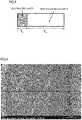
Fig. 3 is a cross section schematic view in a thickness direction of a semipermeable membrane of the present invention. -
Fig. 4 is an example of a SEM image of the cross section in the thickness direction of the semipermeable membrane of the present invention. -
Fig. 5 is a graph showing an example of an analysis result by elemental analysis. - Hereinafter, embodiments of the present invention will be described specifically, but the present invention is not limited to the following embodiments, and it should be understood that an appropriate design change, improvement, etc. may be added based on ordinary knowledge of an ordinary skill in the art, without departing from the scope of the present invention.
- To give chemical resistance to a semipermeable membrane, it is preferable that a resin itself used as a raw material is excellent in the chemical resistance. Examples of such a resin include a polyphenylene-based resin such as a polyphenylene ether resin, a polyphenylene oxide resin, and a polyphenylene sulfide resin. In the present invention, from a point of view of excellent, etc. in heat resistance, shock resistance, strength, and the chemical resistance, it is preferable to use a material containing the polyphenylene oxide resin. However, since the polyphenylene-based resin is hydrophobic, there is a problem that the membrane produced by the polyphenylene-based resin alone is very low in water permeability.
- To improve the above problem, it needs application of hydrophilic treatment to the polyphenylene-based semipermeable membrane. For the hydrophilic treatment are considered introduction of a hydrophilic group (e.g., sulfonic acid group) to the semipermeable membrane and the hydrophilic treatment using alcohol. However, in the case of the introduction of the hydrophilic group to the semipermeable membrane, if the hydrophilic group is introduced to the whole membrane, there occurs disadvantage of reducing mechanical strength. Therefore, it has been found out that a portion of the semipermeable membrane is sulfonated, to maintain the mechanical strength and to improve water permeability performance.
- It is preferable in the semipermeable membrane of the present invention that a thickness of a sulfonated layer is 50% or less of the whole membrane thickness. When the thickness of the sulfonated layer is more than 50% of the whole membrane thickness, hydrophilization progresses and balance between the water permeability performance and an ion-rejection rate sometimes becomes worse. To demonstrate separation functional performance as the semipermeable membrane, the thickness of the sulfonated layer is preferably in a range of 40% or less of the whole membrane thickness. On the other hand, the thickness of the sulfonated layer is preferably 5% or more. Since there sometimes occur problems such as reduction of the water permeability performance when the thickness of the sulfonated layer is thin, it is preferably 10% or more. Here, as described later, the thickness of the sulfonated layer is measured by a method of taking a photograph of a cross section of the sulfonated semipermeable membrane embedded in a resin piece by using a Scanning Electron Microscopy (SEM), and detecting elemental sulfur by EDS mapping.
- In the present invention, it is preferable that sulfonation degree of the whole semipermeable membrane is 0.1×10⁴ meq./m3 to 9.0×10⁴ meq./m3. When the sulfonation degree is small, the sulfonated layer is insufficiently formed, tending to decrease the separation function (particularly, ion-rejection rate). Also, when the sulfonation degree is large, the strength of the membrane is decreased, not to sometimes secure stability of separation performance. Namely, as the semipermeable membrane, to secure the strength of the membrane and also secure sufficient separation function, it is preferably that the sulfonation degree is in a range of 0.5×10⁴ meq./m3 to 4.0×10⁴ meq./m3. Further, the sulfonation degree of the semipermeable membrane can be measured by a titration method as described later.
- In the present invention, if the sulfonation degree of the whole semipermeable membrane meets the range described above, both surfaces of the semipermeable membrane may be sulfonated, but it is more preferable that a first surface of the semipermeable membrane is sulfonated, and a second surface is not sulfonated (
Fig. 1 ). Specifically, it is preferable that the second surface has elemental sulfur ratio of less than 0.1 atm.%. Here, the elemental sulfur ratio can be measured by X-ray photoelectron spectroscopy described later from a membrane surface to a depth of around 10 nm. When the elemental sulfur ratio is high, the strength of the semipermeable membrane sometimes decreases. - The semipermeable membrane having properties as described above is excellent in the balance of the water permeability performance and the ion-rejection rate, and able to expresses high membrane strength (yield strength).
- In the present invention, production of a hollow fiber type semipermeable membrane base material comprises: dissolving a polyphenylene-based resin in an aprotic solvent to obtain a film-forming solution (dissolving); discharging the film-forming solution in a hollow fiber form at a temperature of a temperature induced phase separation point or more from a spinning nozzle (discharging); bringing the film-forming solution discharged in the hollow fiber form into contact (immersing) with a mixed solution composed of water and an organic solvent to coagulate the film-forming solution (coagulating); washing the coagulated material in the hollow fiber form with warm water to remove excessive solvent and the like (washing); and drying it (drying).
- In the present invention, production of a flat type semipermeable membrane base material comprises: spreading the film-forming solution, which is the same as that described above, on a glass plate and the like to have a uniform thickness by using an applicator, etc.; and after immersing it together with the glass plate in a coagulating liquid, collecting the semipermeable membrane base material from the glass plate. The semipermeable membrane base material collected is washed, and dried as needed.
- The semipermeable membrane base material obtained can be easily sulfonated by bringing the first surface of the semipermeable membrane into contact with sulfuric acid. At this time, it is preferable that the second surface side is under the pressure so that the sulfuric acid does not penetrate in the inside of the membrane. The pressure applied is preferably 2 MPa or less by using nitrogen gas, etc. When the pressure is high, air bubbles are generated from the first surface to be sometimes partially insufficient in the sulfonation. Also, when the pressure is low, the sulfuric acid penetrates in the inside of the membrane, to be sometimes sulfonated up to the second surface. The sulfonation degree of the semipermeable membrane base material can be adjusted by a concentration of the sulfuric acid used and a contact time. The concentration of the sulfuric acid is preferably 90 to 98 wt.%, more preferably 93 to 95 wt.%. Further, the contact time is preferably 0.5 min. to 60 min., more preferably 30 min. When the concentration of the sulfuric acid is low, it needs a long time to obtain desired sulfonation degree or cannot attain the desired sulfonation degree. On the other hand, when the concentration of the sulfuric acid is high, it becomes difficult to adjust the sulfonation degree. Also, when the contact time is short, homogeneous sulfonation cannot be sometimes attained. On the other hand, when the contact time is long, the sulfonation progresses to the inside of the semipermeable membrane, not to be sometimes able to obtain necessary membrane strength.
- Hereinafter, the present invention will be described in more detail with reference to examples, but the present invention is not limited to these.
- The sulfonation degree of the whole semipermeable membranes of Examples and Comparative Examples was measured by the titration method.
- Premeasurement treatment: 1.0 g of dry weight was prepared as a sample amount, and the sample was cut into 3 cm square. Sulfuric acid treated semipermeable membrane was washed by pure water of 80°C, continuing until pH change (sulfuric acid residue) disappears, and vacuum drying was performed at 110°C for 5 hours. After that, the sample was immersed in a NaCl aqueous solution of 2.0 M for 24 hours, to substitute H+, which is a counter ion of a sulfonic acid group, to Na+.
- Titration Experiment: by carrying out the titration of the above NaCl aqueous solution by using an automatic titrator (HIRANUMA Co., Ltd., COM-1700) with 0.010 M of NaOH, ion exchange capacity (IEC) was measured. Further, the sulfonation degree was calculated by the following expression.


- Evaluation of the mechanical strength of the semipermeable membranes of Examples and Comparable Examples was measured by using a tensile testing instrument (Shimadzu Corporation, EZ-SX) with respect to the semipermeable membranes prepared. The measurement samples were pretreated by immersion in 25 wt.% ethanol for 30 minutes and subsequent immersion in pure water for 24 hours. The tensile testing was performed at a testing speed of 20 mm/minutes by using a load cell of 50 N with 50 mm of an initial gage length at both ends cramped. An average of 10 measurement values was regarded as a measured value of yield strength. Here, when a clear yield point was present in the stress-strain curve, its value was adopted as the yield strength. When there was no clear yield point peak, the value of the yield strength was determined to the value of a point of intersection of a linear line for obtaining an initial elastic modulus in the stress-strain curve and a linear line (tangential line) in a linear region (elongation: 10 to 30%) after yielding (
Fig. 2 ). - Evaluation of a ratio of a sulfonated region in membrane cross sections of the semipermeable membranes of Examples and Comparative Examples was performed by SEM-EDS measurement (SEM: S4800 produced by Hitachi High-Technologies Corporation, Detector: Energy Dispersive X-ray Spectrometer produced by BRUKER Corporation).
- The sample was embedded in an epoxy resin (Nacalai Tesque, Inc., LUVEAK-812), and a cross section was produced by using a microtome with a glass knife attached. The sample was fixed on a sample stage and deposited with osmium, and elemental analysis was performed by using the above microscope with 10 kV of an acceleration voltage.
- The SEM-EDS measurement was performed, and line-analysis of elemental sulfur was performed with respect to the cross section of the membrane (
Figs. 3-5 ). A baseline was set at 0.01 or less in terms of relative counts (counts /sum of the total counts), and the ratio of the sulfonated region was calculated by the following expression.
- An elemental sulfur ratio was calculated through analysis of the elemental sulfur of the semipermeable membrane by XPS measurement (K-Alpha+, produced by Thermo Fisher Scientific Inc.). In case of the hollow fiber type semipermeable membrane, with respect to an outer surface side, it was measured as it was, and with respect to an inner surface side, it was measured by exposing the inner surface side of the hollow fiber membrane by cutting with a knife.
- Further, in the XPS, the elemental sulfur ratio can be measured from the surface to a depth of around 10 nm.
-
- Excited X-ray: monochromated Al Kα ray
- X-ray output: 12 kV, 2.5 mA
- Angle of emission of photoelectron: 90°
- Spot size: around 200 µm φ
- Path energy: 50 eV
- Step: 0.1 eV
- 400 pieces of semipermeable membranes (hollow fiber type semipermeable membranes) of Examples and Comparative Examples were bundled in a loop, and end points of the loop were adhered by using a 2-part epoxy resin, and after inserting opening end sides of the hollow fiber type semipermeable membranes into a sleeve made of polycarbonate of 5 cm, the 2-part epoxy resin was injected into the sleeve, to be cured and sealed. The end portions of the hollow fiber type semipermeable membranes cured by a thermosetting resin were cut, to obtain opening surfaces of the hollow fiber type semipermeable membranes and to prepare a module for evaluation.
- The module for evaluation was attached to a water permeability testing apparatus for a hollow fiber, and membrane performance evaluation was performed at an operating pressure of 0.5 MPa by using a NaCl aqueous solution of 1500 ppm.
- With respect to the membrane permeated water collected in a water permeability testing and a supplied aqueous solution, conductivity was measured by using an electrical conductivity meter (Horiba Ltd., DS-70), to calculate the ion-rejection rate by the following expression.

- Also, by using the pure water, measurement of pure water Flux was performed at the operating pressure of 0.5 MPa.
- The pure water Flux was calculated by the following expression.

- With respect to polyphenylene oxide (SABIC Innovative Plastics, PPO 646), N-methyl-2-pyrolidone (Nacalai Tesque, Inc., Extra Pure Reagent) was added, up to 30 wt.%, and after preparing homogeneous suspension by kneading, a homogeneous spinning solution was obtained by heating while kneading at a temperature of 100°C. The spinning solution obtained was extruded by a fixed quantity from a slit portion of a double cylindrical tube nozzle. From an inner hole of the double cylindrical tube nozzle, RO water was discharged by a fixed quantity as an inner liquid, and while inducing phase separation in the inner layer portion of the spinning solution extruded into a hollow shape, drying treatment of the surface layer portion of the spinning solution was performed in an air gap, and then in a coagulation bath, the phase separation progressed completely. After fully rinsing the solidified material in a hollow fiber form, it was winded in a water-containing state.
- The resulting material in the hollow fiber form was cut into 100 cm in length, and subjected to immersion rinsing with the pure water of 60°C and wind drying for one night. Using the obtained semipermeable membrane base material, the modules for evaluation were prepared.
- While applying pressure (1.5 MPa) to the inner side of the hollow fiber membrane of the module with the nitrogen gas, a sulfuric acid solution of 92.5% was brought into contact with the outer side of the hollow fiber membrane for 30 minutes, to obtain a semipermeable membrane of Example 1. An inner diameter of the semipermeable membrane was 240 µm.
- A semipermeable membrane of Example 2 was obtained in the same manner as Example 1 except that a sulfuric acid solution of 93.5% was brought into contact for 30 minutes. The inner diameter of the semipermeable membrane was 240 µm.
- A semipermeable membrane of Example 3 was obtained in the same manner as Example 1 except that a sulfuric acid solution of 94.5% was brought into contact for 30 minutes. The inner diameter of the semipermeable membrane was 240 µm.
- A semipermeable membrane of Example 4 was obtained in the same manner as Example 1 except that the sulfuric acid solution of 94.5% was brought into contact for 1 minute. The inner diameter of the semipermeable membrane was 240 µm.
- A semipermeable membrane of Example 5 was obtained in the same manner as Example 1 except that the sulfuric acid solution of 94.5% was brought into contact for 5 minutes. The inner diameter of the semipermeable membrane was 240 µm.
- A semipermeable membrane of Example 6 was obtained in the same manner as Example 1 except that the sulfuric acid solution of 94.5% was brought into contact for 10 minutes. The inner diameter of the semipermeable membrane was 240 µm.
- A semipermeable membrane of Comparative Example 1 was obtained in the same manner as Example 1 except that the sulfuric acid solution was not brought into contact.
- A semipermeable membrane of Comparative Example 2 was obtained in the same manner as Example 1 except that a sulfuric acid solution of 95.5% was brought into contact for 30 minutes.
- A semipermeable membrane of Comparative Example 3 was obtained in the same manner as Example 1 except that a sulfuric acid solution of 96.5% was brought into contact for 30 minutes.
- A semipermeable membrane of Comparative Example 4 was obtained in the same manner as Example 1 except that membrane production was performed by using PPO which was subjected to sulfonation treatment at a stage of a raw material, and the sulfonation treatment after the membrane production was not performed.
[Table 1] Table 1 Sulfonation Degree of Whole Membrane Thickness of Sulfonated Layer Thickness of Non-Sulfonated Layer Ratio of Sulfonated Region Flux Rejectio n Rate Yield Strength Elemental Sulfur Ratio First Surface Second Surface [×104 meq./m3] [µm] [µm] [%] [LMD] [%] [MPa] [atm%] Example 1 0.71 6.8 38.3 15 20 70 16 0.6 <0.1 Example 2 1.2 11.3 33.8 25 60 52 15 1.5 <0.1 Example 3 3.9 15.8 29.3 35 200 48 13.9 1.9 <0.1 Example 4 0.69 5.4 39.6 12 9 77 15.2 0.6 <0.1 Example 5 1.3 8.1 36.9 18 32 67 14.5 1.1 <0.1 Example 6 1.6 13.5 31.5 30 55 54 14.5 1.3 <0.1 Comparative Example 1 Out of Measure 0 45 0 1300 3 15.2 <0.1 <0.1 Comparative Example 2 6.2 45 0 100 310 27 12 3.3 0.1 Comparative Example 3 25 45 0 100 Out of Measure Out of Measure 10 5.2 1.3 Comparative Example 4 2 45 0 100 2200 38 4.8 2 2 - As apparent from Table 1, it has found that the semipermeable membranes of Examples 1 to 6 were appropriate in the ratio of the sulfonation region and therefore excellent in balance of the water permeability, separation characteristics and the mechanical strength. In contrast, it has been seen that the semipermeable membrane of Comparative Example 1 is high in the mechanical strength because of not performing sulfonation treatment, but low in a function as the separating membrane because salt removal rate was only 5%. Further, the semipermeable membranes of Comparative Examples 2 to 3 were low in the mechanical strength because the whole membranes were sulfonated, resulting in unfavorable balance of the water permeability and the separation characteristics. Also, with respect to the semipermeable membrane of Comparative Example 4, it has been found that it is very high in the water permeable performance, but is not good in the balance with the ion-rejection rate and very low in the mechanical strength.
- As described above in detail, according to the present invention, it is possible to achieve the chemical resistance (chlorine resistance, acid resistance, alkali resistance), the membrane performance and the membrane strength, since only portion of the membrane is sulfonated by sulfonating the polyphenylene-based porous base material membrane on the specific conditions.
-
- 1
- sulfonated layer
- 2
- non-sulfonated layer
Claims (8)
- A polyphenylene-based semipermeable membrane that is composed of a material comprising a polyphenylene-based resin,wherein the semipermeable membrane has a first surface of which at least a portion is sulfonated, andwherein, when concentration distribution of elemental sulfur derived from a sulfonic acid group is measured by elemental analysis in a cross section in a thickness direction of the semipermeable membrane, a ratio of a sulfonated layer obtained by the following expression is 50% or less:

- The polyphenylene-based semipermeable membrane according to claim 1, wherein the ratio is 5% or more and 40% or less.
- The polyphenylene-based semipermeable membrane according to claim 1 or 2, wherein a second surface of the semipermeable membrane is not sulfonated.
- The polyphenylene-based semipermeable membrane according to any one of claims 1 to 3, wherein the second surface of the semipermeable membrane has an elemental sulfur ratio of less than 0.1 atm.%.
- The polyphenylene-based semipermeable membrane according to any one of claims 1 to 4, wherein sulfonation degree is 0.1×10⁴ meq./m3 to 9.0×10⁴ meq./m3.
- A method for producing the polyphenylene-based semipermeable membrane according to any one of claims 1 to 5, wherein sulfonation treatment is performed by bringing sulfuric acid into contact with a first surface of a semipermeable membrane base material that is produced from a material comprising a polyphenylene-based resin.
- The method for producing the polyphenylene-based semipermeable membrane according to claim 6, wherein the sulfuric acid has a concentration of 90 to 98 wt.%.
- The method for producing the polyphenylene-based semipermeable membrane according to claim 6 or 7, wherein the sulfuric acid is brought into contact with the first surface of the semipermeable membrane base material while a second surface side is under pressure.
Applications Claiming Priority (2)
| Application Number | Priority Date | Filing Date | Title |
|---|---|---|---|
| JP2020060684A JP7581642B2 (en) | 2020-03-30 | 2020-03-30 | Polyphenylene-based semipermeable membrane and method for producing same |
| PCT/JP2021/013594 WO2021200982A1 (en) | 2020-03-30 | 2021-03-30 | Polyphenylene-based semipermeable membrane and manufacturing method therefor |
Publications (3)
| Publication Number | Publication Date |
|---|---|
| EP4129457A1 true EP4129457A1 (en) | 2023-02-08 |
| EP4129457A4 EP4129457A4 (en) | 2024-04-03 |
| EP4129457B1 EP4129457B1 (en) | 2026-04-29 |
Family
ID=77928927
Family Applications (1)
| Application Number | Title | Priority Date | Filing Date |
|---|---|---|---|
| EP21782001.8A Active EP4129457B1 (en) | 2020-03-30 | 2021-03-30 | Polyphenylene-based semipermeable membrane and manufacturing method therefor |
Country Status (6)
| Country | Link |
|---|---|
| US (1) | US20230149859A1 (en) |
| EP (1) | EP4129457B1 (en) |
| JP (1) | JP7581642B2 (en) |
| KR (1) | KR102833335B1 (en) |
| CN (1) | CN115348894B (en) |
| WO (1) | WO2021200982A1 (en) |
Family Cites Families (28)
| Publication number | Priority date | Publication date | Assignee | Title |
|---|---|---|---|---|
| FR2295979A1 (en) * | 1974-12-26 | 1976-07-23 | Rhone Poulenc Ind | SULPHONATED POLYARYLETHERSULFONES AND THEIR PREPARATION PROCESS |
| JPS5490081A (en) * | 1977-12-28 | 1979-07-17 | Sumitomo Chem Co Ltd | Method of producing semipermeable membrane |
| US4277344A (en) | 1979-02-22 | 1981-07-07 | Filmtec Corporation | Interfacially synthesized reverse osmosis membrane |
| JP2513460B2 (en) * | 1985-10-18 | 1996-07-03 | 日東電工株式会社 | Composite semipermeable membrane and manufacturing method thereof |
| JPS6354452A (en) * | 1986-08-22 | 1988-03-08 | Kanegafuchi Chem Ind Co Ltd | Sulfonated porous material and production thereof |
| JPH0729034B2 (en) * | 1988-07-01 | 1995-04-05 | 通商産業省基礎産業局長 | Hollow fiber composite membrane for organic matter separation |
| US4941893B1 (en) * | 1989-09-19 | 1996-07-30 | Advanced Silicon Materials Inc | Gas separation by semi-permeable membranes |
| JPH06350A (en) * | 1992-06-24 | 1994-01-11 | Tokuyama Soda Co Ltd | Method for manufacturing separation membrane |
| EP0888810B1 (en) | 1996-03-18 | 2006-06-21 | Nitto Denko Corporation | Composite reverse osmosis membrane and method of reverse osmotic treatment of water using the same |
| JP2003080042A (en) * | 2001-09-10 | 2003-03-18 | Nitto Denko Corp | Composite semipermeable membrane and method for producing the same |
| US8110636B1 (en) * | 2009-04-17 | 2012-02-07 | Sandia Corporation | Multi-block sulfonated poly(phenylene) copolymer proton exchange membranes |
| CN101700479B (en) * | 2009-11-17 | 2011-12-14 | 济南开发区星火科学技术研究院 | Method for preparing novel water-coal slurry dispersing agent by utilizing papermaking black liquor |
| WO2011078131A1 (en) * | 2009-12-22 | 2011-06-30 | 東レ株式会社 | Semipermeable membrane and manufacturing method therefor |
| CN103492060B (en) * | 2011-04-01 | 2016-03-30 | 东丽株式会社 | The manufacture method of composite semipermeable membrane, composite semipermeable membrane element and composite semipermeable membrane |
| MY184009A (en) * | 2011-07-04 | 2021-03-17 | Toyo Boseki | Reverse osmosis membrane for wastewater treatment |
| JP5896295B2 (en) | 2011-07-04 | 2016-03-30 | 東洋紡株式会社 | Separation membrane for nanofiltration |
| JP5896294B2 (en) * | 2011-07-04 | 2016-03-30 | 東洋紡株式会社 | Reverse osmosis membrane for brine desalination |
| WO2014054346A1 (en) * | 2012-10-04 | 2014-04-10 | 東洋紡株式会社 | Composite separation membrane |
| JP2014233652A (en) * | 2013-05-31 | 2014-12-15 | 東レ株式会社 | Composite semipermeable membrane |
| CN104548971B (en) * | 2013-10-22 | 2016-08-17 | 中国石油化工股份有限公司 | A kind of reverse osmosis membrane and its preparation method and application |
| EP3238815B1 (en) * | 2014-12-26 | 2026-01-28 | Toray Industries, Inc. | Composite semipermeable membrane |
| WO2017064936A1 (en) * | 2015-10-13 | 2017-04-20 | 東洋紡株式会社 | Composite separation membrane |
| DE102016102782A1 (en) * | 2016-02-17 | 2017-09-14 | B. Braun Avitum Ag | Dialysis membrane and process for its preparation |
| CN109414660A (en) * | 2016-06-29 | 2019-03-01 | 东丽株式会社 | The manufacturing method of composite semipermeable membrane and composite semipermeable membrane |
| JP2018039003A (en) * | 2016-08-31 | 2018-03-15 | 東レ株式会社 | Composite semipermeable membrane and production method of the same |
| JP6780427B2 (en) * | 2016-10-06 | 2020-11-04 | 東洋紡株式会社 | How to regenerate the separation membrane module |
| JP7428127B2 (en) * | 2018-08-03 | 2024-02-06 | 東洋紡エムシー株式会社 | Membrane separation equipment, water production system, membrane separation method and water production method |
| KR20220041614A (en) * | 2020-09-25 | 2022-04-01 | 동우 화인켐 주식회사 | Polarizing Plate for Antireflection and Display Device Comprising the Same |
-
2020
- 2020-03-30 JP JP2020060684A patent/JP7581642B2/en active Active
-
2021
- 2021-03-30 KR KR1020227037353A patent/KR102833335B1/en active Active
- 2021-03-30 US US17/915,823 patent/US20230149859A1/en active Pending
- 2021-03-30 CN CN202180026215.9A patent/CN115348894B/en active Active
- 2021-03-30 EP EP21782001.8A patent/EP4129457B1/en active Active
- 2021-03-30 WO PCT/JP2021/013594 patent/WO2021200982A1/en not_active Ceased
Also Published As
| Publication number | Publication date |
|---|---|
| CN115348894B (en) | 2024-04-09 |
| CN115348894A (en) | 2022-11-15 |
| US20230149859A1 (en) | 2023-05-18 |
| KR102833335B1 (en) | 2025-07-11 |
| WO2021200982A1 (en) | 2021-10-07 |
| EP4129457B1 (en) | 2026-04-29 |
| EP4129457A4 (en) | 2024-04-03 |
| KR20220153089A (en) | 2022-11-17 |
| JP7581642B2 (en) | 2024-11-13 |
| JP2021159784A (en) | 2021-10-11 |
Similar Documents
| Publication | Publication Date | Title |
|---|---|---|
| Liu et al. | One-step enhancement of solvent transport, stability and photocatalytic properties of graphene oxide/polyimide membranes with multifunctional cross-linkers | |
| Zhang et al. | Surface modification of polyamide reverse osmosis membrane with organic-inorganic hybrid material for antifouling | |
| US11731087B2 (en) | Polymer composition containing sulfonated carbon nanotube and sulfonated graphene oxide for fabricating hydrophilic separation membrane | |
| Arockiasamy et al. | Separation of proteins and antifouling properties of polyphenylsulfone based mixed matrix hollow fiber membranes | |
| EP3237101B1 (en) | Method of preparing asymmetric composite membranes, asymmetric composite membranes, and method of producing a permeate by means of asymmetric composite membranes. | |
| JP2017205740A (en) | Composite membrane | |
| Zhu et al. | Fabrication of thin film composite nanofiltration membranes by coating water soluble disulfonated poly (arylene ether sulfone) and in situ crosslinking | |
| JP2016155078A (en) | Forward osmosis processing system | |
| JPWO2013005551A1 (en) | Reverse osmosis membrane for wastewater treatment | |
| CN107106999A (en) | Composite semipermeable membrane | |
| WO2014092107A1 (en) | Composite separation membrane | |
| JP5896295B2 (en) | Separation membrane for nanofiltration | |
| Hu et al. | Chlorination as a simple but effective method to improve the water/salt selectivity of polybenzimidazole for desalination membrane applications | |
| CN114616046B (en) | Composite semipermeable membrane | |
| Febriasari et al. | A direct comparison between poly (vinylidene) flouride and polysulfone flat sheet membrane; characterization and mechanical strength | |
| EP4129457B1 (en) | Polyphenylene-based semipermeable membrane and manufacturing method therefor | |
| JP6620754B2 (en) | Separation membrane and separation membrane element and separation membrane module | |
| Nikita et al. | Uniquely modified polyethersulphone and f-CNTs mixed matrix membranes for enhanced water transport and reduced biofouling | |
| US20010047959A1 (en) | Polyacrylonitrile-based filtration membrane in a hollow fiber state | |
| US10773219B2 (en) | Polymeric water-separation membrance containing sulfonated inorganic particles | |
| Awasthi et al. | Transport through track etched polymeric blend membrane | |
| EP4173699A1 (en) | Composite hollow fiber membrane module and method for producing same | |
| KR101814037B1 (en) | Organic-inorganic complex ion exchange membrane and process for preparing for the same | |
| JP2017144390A (en) | Composite membrane | |
| Oh et al. | Graphene nanoribbon-driven pore engineering in large-area acid-stable polyamide membranes for Li ion battery recycle |
Legal Events
| Date | Code | Title | Description |
|---|---|---|---|
| STAA | Information on the status of an ep patent application or granted ep patent |
Free format text: STATUS: THE INTERNATIONAL PUBLICATION HAS BEEN MADE |
|
| PUAI | Public reference made under article 153(3) epc to a published international application that has entered the european phase |
Free format text: ORIGINAL CODE: 0009012 |
|
| STAA | Information on the status of an ep patent application or granted ep patent |
Free format text: STATUS: REQUEST FOR EXAMINATION WAS MADE |
|
| 17P | Request for examination filed |
Effective date: 20221026 |
|
| AK | Designated contracting states |
Kind code of ref document: A1 Designated state(s): AL AT BE BG CH CY CZ DE DK EE ES FI FR GB GR HR HU IE IS IT LI LT LU LV MC MK MT NL NO PL PT RO RS SE SI SK SM TR |
|
| DAV | Request for validation of the european patent (deleted) | ||
| DAX | Request for extension of the european patent (deleted) | ||
| A4 | Supplementary search report drawn up and despatched |
Effective date: 20240305 |
|
| RIC1 | Information provided on ipc code assigned before grant |
Ipc: B01D 71/82 20060101ALI20240228BHEP Ipc: B01D 71/68 20060101ALI20240228BHEP Ipc: B01D 71/52 20060101AFI20240228BHEP |
|
| GRAP | Despatch of communication of intention to grant a patent |
Free format text: ORIGINAL CODE: EPIDOSNIGR1 |
|
| STAA | Information on the status of an ep patent application or granted ep patent |
Free format text: STATUS: GRANT OF PATENT IS INTENDED |
|
| INTG | Intention to grant announced |
Effective date: 20250917 |
|
| GRAJ | Information related to disapproval of communication of intention to grant by the applicant or resumption of examination proceedings by the epo deleted |
Free format text: ORIGINAL CODE: EPIDOSDIGR1 |
|
| STAA | Information on the status of an ep patent application or granted ep patent |
Free format text: STATUS: REQUEST FOR EXAMINATION WAS MADE |
|
| GRAP | Despatch of communication of intention to grant a patent |
Free format text: ORIGINAL CODE: EPIDOSNIGR1 |
|
| STAA | Information on the status of an ep patent application or granted ep patent |
Free format text: STATUS: GRANT OF PATENT IS INTENDED |
|
| INTC | Intention to grant announced (deleted) | ||
| INTG | Intention to grant announced |
Effective date: 20260102 |
|
| GRAS | Grant fee paid |
Free format text: ORIGINAL CODE: EPIDOSNIGR3 |
|
| GRAA | (expected) grant |
Free format text: ORIGINAL CODE: 0009210 |
|
| STAA | Information on the status of an ep patent application or granted ep patent |
Free format text: STATUS: THE PATENT HAS BEEN GRANTED |
|
| AK | Designated contracting states |
Kind code of ref document: B1 Designated state(s): AL AT BE BG CH CY CZ DE DK EE ES FI FR GB GR HR HU IE IS IT LI LT LU LV MC MK MT NL NO PL PT RO RS SE SI SK SM TR |
|
| REG | Reference to a national code |
Ref country code: CH Ref legal event code: F10 Free format text: ST27 STATUS EVENT CODE: U-0-0-F10-F00 (AS PROVIDED BY THE NATIONAL OFFICE) Effective date: 20260429 Ref country code: GB Ref legal event code: FG4D |