EP4123876B1 - Optical power feed system - Google Patents
Optical power feed system Download PDFInfo
- Publication number
- EP4123876B1 EP4123876B1 EP20926228.6A EP20926228A EP4123876B1 EP 4123876 B1 EP4123876 B1 EP 4123876B1 EP 20926228 A EP20926228 A EP 20926228A EP 4123876 B1 EP4123876 B1 EP 4123876B1
- Authority
- EP
- European Patent Office
- Prior art keywords
- light
- photoelectric conversion
- feed light
- laser
- conversion element
- Prior art date
- Legal status (The legal status is an assumption and is not a legal conclusion. Google has not performed a legal analysis and makes no representation as to the accuracy of the status listed.)
- Active
Links
Images



Classifications
-
- H—ELECTRICITY
- H04—ELECTRIC COMMUNICATION TECHNIQUE
- H04B—TRANSMISSION
- H04B10/00—Transmission systems employing electromagnetic waves other than radio-waves, e.g. infrared, visible or ultraviolet light, or employing corpuscular radiation, e.g. quantum communication
- H04B10/80—Optical aspects relating to the use of optical transmission for specific applications, not provided for in groups H04B10/03 - H04B10/70, e.g. optical power feeding or optical transmission through water
- H04B10/806—Arrangements for feeding power
- H04B10/807—Optical power feeding, i.e. transmitting power using an optical signal
-
- H—ELECTRICITY
- H10—SEMICONDUCTOR DEVICES; ELECTRIC SOLID-STATE DEVICES NOT OTHERWISE PROVIDED FOR
- H10F—INORGANIC SEMICONDUCTOR DEVICES SENSITIVE TO INFRARED RADIATION, LIGHT, ELECTROMAGNETIC RADIATION OF SHORTER WAVELENGTH OR CORPUSCULAR RADIATION
- H10F77/00—Constructional details of devices covered by this subclass
- H10F77/40—Optical elements or arrangements
- H10F77/42—Optical elements or arrangements directly associated or integrated with photovoltaic cells, e.g. light-reflecting means or light-concentrating means
- H10F77/492—Spectrum-splitting means, e.g. dichroic mirrors
-
- H—ELECTRICITY
- H02—GENERATION; CONVERSION OR DISTRIBUTION OF ELECTRIC POWER
- H02J—ELECTRIC POWER NETWORKS; CIRCUIT ARRANGEMENTS OR SYSTEMS FOR SUPPLYING OR DISTRIBUTING ELECTRIC POWER; SYSTEMS FOR STORING ELECTRIC ENERGY
- H02J50/00—Circuit arrangements or systems for wireless supply or distribution of electric power
- H02J50/30—Circuit arrangements or systems for wireless supply or distribution of electric power using light, e.g. lasers
Definitions
- the present disclosure relates to optical power supply.
- feed light converts electric power into light
- feed light transmits the feed light
- converts the feed light into electric energy uses the electric energy as electric power.
- PTL 1 discloses an optical communication device including an optical transmitter, an optical fiber, and an optical receiver.
- the optical transmitter transmits signal light modulated based on an electric signal and feed light for supplying electric power.
- the optical fiber includes a core, a first cladding surrounding the core, and a second cladding surrounding the first cladding.
- the core transmits the signal light.
- the first cladding has a refractive index lower than that of the core and transmits the feed light.
- the second cladding has a refractive index lower than that of the first cladding.
- the optical receiver operates with electric power obtained by converting the feed light transmitted through the first cladding of the optical fiber and converts the signal light transmitted through the core of the optical fiber into the electric signal.
- CN 105 978 445 A discloses an optical fiber energy supply system based on a multi-junction concentrating photovoltaic battery comprising a laser module, an optical fiber coupling module, a light splitting module, and photovoltaic conversion modules, wherein the laser module uses a multiband laser module and laser beams output by the multiband laser module are incident to an energy transmission optical fiber after being merged through the optical fiber coupling module.
- JP 2005 198396 A discloses an optical power supply system wherein energy is transmitted from a center station including a plurality of different light sources.
- WO 2011/158283 A1 discloses an optical transmission system, wherein electrical power from a parent device is transmitted to a child device via an optical transmission line, the parent device comprising an optical amplifier for amplifying main signal light and electrical power supplying light.
- the present invention provides an optical power supply system according to claim 1. Preferred embodiments are described in the dependent claims.
- the powered device of the optical power supply system can perform photoelectric conversion on the feed light without the feed light becoming out of the conversion wavelength ranges of the photoelectric conversion elements and thus can maintain a high power supply efficiency.
- a power-over-fiber (PoF) system 1A includes power sourcing equipment (PSE) 110, an optical fiber cable 200A, and a powered device (PD) 310.
- PSE power sourcing equipment
- PD powered device
- the power sourcing equipment 110 is equipment that converts electric power into optical energy and supplies the optical energy
- the powered device 310 is a device that receives the supplied optical energy and converts the optical energy into electric power.
- the power sourcing equipment 110 includes a semiconductor laser 111 for power supply.
- the optical fiber cable 200A includes an optical fiber 250A that forms a channel of feed light.
- the powered device 310 includes a photoelectric conversion element 311.
- the power sourcing equipment 110 is connected to a power source, which electrically drives the semiconductor laser 111 for power supply and so on.
- the semiconductor laser 111 for power supply oscillates with electric power supplied from the power source to output feed light 112.
- the optical fiber cable 200A has one end 201A connectable to the power sourcing equipment 110 and an other end 202A connectable to the powered device 310, and transmits the feed light 112.
- the feed light 112 from the power sourcing equipment 110 is input to the one end 201A of the optical fiber cable 200A.
- the feed light 112 propagates through the optical fiber 250A and is output from the other end 202A to the powered device 310.
- the photoelectric conversion element 311 converts the feed light 112 transmitted through the optical fiber cable 200A into electric power.
- the electric power obtained by the photoelectric conversion element 311 through the conversion is used as driving electric power needed in the powered device 310.
- the powered device 310 is capable of outputting, for an external device, the electric power obtained by the photoelectric conversion element 311 through the conversion.
- Semiconductor materials comprise semiconductor regions that exhibit a photoelectric effect of the semiconductor laser 111 for power supply and the photoelectric conversion element 311 are semiconductors having a short laser wavelength of 500 nm or shorter.
- Semiconductors having a short laser wavelength have a large band gap and a high photoelectric conversion efficiency.
- the photoelectric conversion efficiency on the power-generating side and the powered side of optical power supply improves, and consequently the optical power supply efficiency improves.
- the semiconductor materials to be used may be, for example, semiconductor materials that are laser media having a laser wavelength (fundamental wave) of 200 to 500 nm such as diamond, gallium oxide, aluminum nitride, and gallium nitride.
- laser wavelength fundamental wave
- the semiconductor materials to be used may be semiconductors having a band gap of 2.4 eV or greater.
- semiconductor materials that are laser media having a band gap of 2.4 to 6.2 eV such as diamond, gallium oxide, aluminum nitride, and gallium nitride may be used.
- Laser light having a longer wavelength tends to have a higher transmission efficiency.
- Laser light having a shorter wavelength tends to have a higher photoelectric conversion efficiency.
- a semiconductor material that is a laser medium having a laser wavelength (fundamental wave) longer than 500 nm may be used.
- a semiconductor material that is a laser medium having a laser wavelength (fundamental wave) shorter than 200 nm may be used.
- These semiconductor materials may be used in either the semiconductor laser 111 for power supply or the photoelectric conversion element 311.
- the photoelectric conversion efficiency is improved on the power-sourcing side or the powered side, and consequently the optical power supply efficiency improves.
- a power-over-fiber (PoF) system 1 is a system including a power supply system and an optical communication system with an optical fiber.
- the power-over-fiber system 1 includes a first data communication device 100 including power sourcing equipment (PSE) 110, an optical fiber cable 200, and a second data communication device 300 including a powered device (PD) 310.
- PSE power sourcing equipment
- PD powered device
- the power sourcing equipment 110 includes a semiconductor laser 111 for power supply.
- the first data communication device 100 includes, in addition to the power sourcing equipment 110, a transmitter 120 and a receiver 130 that perform data communication.
- the first data communication device 100 corresponds to data terminal equipment (DTE), a repeater, or the like.
- the transmitter 120 includes a semiconductor laser 121 for signals and a modulator 122.
- the receiver 130 includes a photodiode 131 for signals.
- the optical fiber cable 200 includes an optical fiber 250 including a core 210 and a cladding 220.
- the core 210 forms a channel of signal light.
- the cladding 220 is arranged to surround the core 210 and forms a channel of feed light.
- the powered device 310 includes a photoelectric conversion element 311.
- the second data communication device 300 includes, in addition to the powered device 310, a transmitter 320, a receiver 330, and a data processor 340.
- the second data communication device 300 corresponds to a power end station or the like.
- the transmitter 320 includes a semiconductor laser 321 for signals and a modulator 322.
- the receiver 330 includes a photodiode 331 for signals.
- the data processor 340 is a unit that processes a received signal.
- the second data communication device 300 is a node in a communication network. Alternatively, the second data communication device 300 may be a node that communicates with another node.
- the first data communication device 100 is connected to a power source, which electrically drives the semiconductor laser 111 for power supply, the semiconductor laser 121 for signals, the modulator 122, the photodiode 131 for signals, and so on.
- the first data communication device 100 is a node in the communication network.
- the first data communication device 100 may be a node that communicates with another node.
- the semiconductor laser 111 for power supply oscillates with electric power supplied from the power source to output feed light 112.
- the photoelectric conversion element 311 converts the feed light 112 transmitted through the optical fiber cable 200 into electric power.
- the electric power obtained by the photoelectric conversion element 311 through the conversion is used as driving electric power for the transmitter 320, the receiver 330, and the data processor 340 and as other driving electric power needed in the second data communication device 300.
- the second data communication device 300 may be capable of outputting, for an external device, the electric power obtained by the photoelectric conversion element 311 through the conversion.
- the modulator 122 of the transmitter 120 modulates laser light 123 output from the semiconductor laser 121 for signals into signal light 125 on the basis of transmission data 124, and outputs the signal light 125.
- the photodiode 331 for signals of the receiver 330 demodulates the signal light 125 transmitted through the optical fiber cable 200 into an electric signal, and outputs the electric signal to the data processor 340.
- the data processor 340 transmits data based on the electric signal to a node.
- the data processor 340 also receives data from the node, and outputs, as transmission data 324, the data to the modulator 322.
- the modulator 322 of the transmitter 320 modulates laser light 323 output from the semiconductor laser 321 for signals into signal light 325 on the basis of the transmission data 324, and outputs the signal light 325.
- the photodiode 131 for signals of the receiver 130 demodulates the signal light 325 transmitted through the optical fiber cable 200 into an electric signal, and outputs the electric signal. Data based on the electric signal is transmitted to a node. On the other hand, data from the node is treated as the transmission data 124.
- the feed light 112 and the signal light 125 output from the first data communication device 100 are input to one end 201 of the optical fiber cable 200.
- the feed light 112 and the signal light 125 propagate through the cladding 220 and the core 210, respectively, and are output from an other end 202 of the optical fiber cable 200 to the second data communication device 300.
- the signal light 325 output from the second data communication device 300 is input to the other end 202 of the optical fiber cable 200, propagates through the core 210, and is output from the one end 201 of the optical fiber cable 200 to the first data communication device 100.
- the first data communication device 100 includes a light input/output part 140 and an optical connector 141 attached to the light input/output part 140.
- the second data communication device 300 includes a light input/output part 350 and an optical connector 351 attached to the light input/output part 350.
- An optical connector 230 at the one end 201 of the optical fiber cable 200 is connected to the optical connector 141.
- An optical connector 240 at the other end 202 of the optical fiber cable 200 is connected to the optical connector 351.
- the light input/output part 140 guides the feed light 112 to the cladding 220, guides the signal light 125 to the core 210, and guides the signal light 325 to the receiver 130.
- the light input/output part 350 guides the feed light 112 to the powered device 310, guides the signal light 125 to the receiver 330, and guides the signal light 325 to the core 210.
- the optical fiber cable 200 has the one end 201 connectable to the first data communication device 100 and the other end 202 connectable to the second data communication device 300, and transmits the feed light 112.
- the optical fiber cable 200 transmits the signal light 125 and the signal light 325 bidirectionally.
- semiconductor materials of semiconductor regions that exhibit a photoelectric effect of the semiconductor laser 111 for power supply and the photoelectric conversion element 311 same and/or similar materials as those mentioned in the first embodiment may be used, so that a high optical power supply efficiency is implemented.
- an optical fiber 260 that transmits signal light and an optical fiber 270 that transmits feed light may be provided separately.
- the optical fiber cable 200B may include a plurality of optical fiber cables.
- Power sourcing equipment 110A illustrated in Fig. 5 is used instead of the power sourcing equipment 110 of the power-over-fiber systems 1A, 1, and 1B described above, and a powered device 310A illustrated in Fig. 5 is used instead of the powered device 310 of the power-over-fiber systems 1A, 1, and 1B described above.
- Fig. 5 is based on Fig. 1 and also illustrates a spectrum of feed light.
- Fig. 5 illustrates a power-over-fiber system 1C according to the present invention.
- the power sourcing equipment 110A includes a fiber laser 111A as a laser light source.
- the fiber laser 111A can achieve high output and thus is suitable for optical power supply of large electric power.
- feed light 112W output by the fiber laser 111A has a spread spectrum as illustrated in Fig. 5 .
- the powered device 310A includes a plurality of photoelectric conversion elements 311a, 311b, and 311c. In this example, three photoelectric conversion elements are used.
- the powered device 310A also includes a beam splitter 312.
- the beam splitter 312 receives the wide-band feed light 112W output from the fiber laser 111A and transmitted through the optical fiber 250.
- the beam splitter 312 splits the feed light 112W into a plurality of feed light and outputs the plurality feed light to the respective photoelectric conversion elements 311a, 311b, and 311c. That is, the beam splitter 312 outputs the plurality of feed light 112a, 112b, and 112c in a plurality of wavelength bands obtained through division of the feed light 112W by wavelength, to the plurality of photoelectric conversion elements 311a, 311b, and 311c respectively in a distributed manner.
- the feed light 112a is input to the photoelectric conversion element 311a.
- the feed light 112b is input to the photoelectric conversion element 311b.
- the feed light 112c is input to the photoelectric conversion element 311c.
- Fig. 5 illustrates divisional wavelength ranges (assigned the same reference signs as the respective feed light 112a, 112b, and 112c) and conversion wavelength ranges (assigned the same reference signs as the respective photoelectric conversion elements 311a, 311b, and 311c) of the respective photoelectric conversion elements over the spectrum of the wide-band feed light 112W.
- the plurality of photoelectric conversion elements 311a, 311b, and 311c respectively correspond to the input plurality of feed light 112a, 112b, and 112c and have the respective conversion wavelength ranges different from each other.
- the conversion wavelength range of the photoelectric conversion element 311a is the same as the wavelength range of the feed light 112a.
- the conversion wavelength range of the photoelectric conversion element 311b is the same as the wavelength range of the feed light 112b.
- the conversion wavelength range of the photoelectric conversion element 311c is the same as the wavelength range of the feed light 112c.
- the conversion wavelength range of the photoelectric conversion element (311a) may be slightly wider than the wavelength range of the input feed light (112a) and may overlap the adjacent conversion wavelength range.
- the conversion wavelength range of any one of the photoelectric conversion elements cannot include the wavelength range of the feed light 112W.
- the photoelectric conversion element 311a converts the input feed light 112a into electric power.
- the photoelectric conversion element 311b converts the input feed light 112b into electric power.
- the photoelectric conversion element 311c converts the input feed light 112c into electric power.
- Fig. 6 illustrates a case where the laser light source is the semiconductor laser 111.
- the wavelength range of the feed light 112 can be dealt with by the conversion wavelength range of the single photoelectric conversion element 311. That is, the feed light 112 output by the semiconductor laser 111 includes almost no light that is out of the conversion wavelength range of the photoelectric conversion element 311.
- the feed light 112W output by the fiber laser 111A is of a wide band. Thus, light that is out of the conversion wavelength range of the photoelectric conversion element 311 is caused, and this light is not converted into electricity.
- the beam splitter 312 splits the wide-band feed light 112W output by the fiber laser 111A by wavelength, and the three photoelectric conversion elements 311a, 311b, and 311c perform photoelectric conversion in a distributed manner.
- no light that is out of the conversion wavelength ranges of the photoelectric conversion elements 311a, 311b, and 311c is caused as illustrated in Fig. 5 , and highly efficient photoelectric conversion can be performed.
- the power-over-fiber system 1C can perform photoelectric conversion on the feed light without the feed light becoming out of the conversion wavelength ranges of the photoelectric conversion elements and thus can maintain a high power supply efficiency.
- Optical power supply of large electric power can be performed using high-energy feed light of the fiber laser.
- the powered device 310A includes three photoelectric conversion elements. However, implementation may be carried out using two photoelectric conversion elements or four or more photoelectric conversion elements.
- the fiber laser is used.
- the implementation is not limited to this, and the present invention can be broadly carried out in the case of a combination in which the wavelength range of the laser used in optical power supply is wider than the conversion wavelength range of a single photoelectric conversion element.
- the present invention can be used for optical power supply.
Landscapes
- Engineering & Computer Science (AREA)
- Physics & Mathematics (AREA)
- Computer Networks & Wireless Communication (AREA)
- Optics & Photonics (AREA)
- Power Engineering (AREA)
- Electromagnetism (AREA)
- Signal Processing (AREA)
- Optical Communication System (AREA)
- Optical Couplings Of Light Guides (AREA)
Description
- The present disclosure relates to optical power supply.
- Recently, an optical power supply system has been studied that converts electric power into light (called feed light), transmits the feed light, converts the feed light into electric energy, and uses the electric energy as electric power.
-
PTL 1 discloses an optical communication device including an optical transmitter, an optical fiber, and an optical receiver. The optical transmitter transmits signal light modulated based on an electric signal and feed light for supplying electric power. The optical fiber includes a core, a first cladding surrounding the core, and a second cladding surrounding the first cladding. The core transmits the signal light. The first cladding has a refractive index lower than that of the core and transmits the feed light. The second cladding has a refractive index lower than that of the first cladding. The optical receiver operates with electric power obtained by converting the feed light transmitted through the first cladding of the optical fiber and converts the signal light transmitted through the core of the optical fiber into the electric signal. - PTL 1:
Japanese Unexamined Patent Application Publication No. 2010-135989 -
CN 105 978 445 A discloses an optical fiber energy supply system based on a multi-junction concentrating photovoltaic battery comprising a laser module, an optical fiber coupling module, a light splitting module, and photovoltaic conversion modules, wherein the laser module uses a multiband laser module and laser beams output by the multiband laser module are incident to an energy transmission optical fiber after being merged through the optical fiber coupling module. -
JP 2005 198396 A -
WO 2011/158283 A1 discloses an optical transmission system, wherein electrical power from a parent device is transmitted to a child device via an optical transmission line, the parent device comprising an optical amplifier for amplifying main signal light and electrical power supplying light. - If a spectrum of feed light spreads beyond a conversion wavelength range of a photoelectric conversion element, the feed light outside the conversion wavelength range is not converted into electric power. Consequently, the power supply efficiency problematically decreases.
- The present invention provides an optical power supply system according to
claim 1. Preferred embodiments are described in the dependent claims. - In the one aspect of the present disclosure, the powered device of the optical power supply system can perform photoelectric conversion on the feed light without the feed light becoming out of the conversion wavelength ranges of the photoelectric conversion elements and thus can maintain a high power supply efficiency.
-
- [
Fig. 1] Fig. 1 is a diagram illustrating a configuration of a power-over-fiber system according to a first embodiment of the present disclosure. - [
Fig. 2] Fig. 2 is a diagram illustrating a configuration of a power-over-fiber system according to a second embodiment of the present disclosure. - [
Fig. 3] Fig. 3 is a diagram illustrating the configuration of the power-over-fiber system according to the second embodiment of the present disclosure, and illustrates optical connectors, etc. - [
Fig. 4] Fig. 4 is a diagram illustrating a configuration of a power-over-fiber system according to another embodiment of the present disclosure. - [
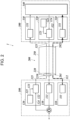
Fig. 5] Fig. 5 is a diagram illustrating a configuration of a power-over-fiber system including a beam splitter and three photoelectric conversion elements having different conversion wavelength ranges, along with an explanatory diagram illustrating a spectrum of wide-band feed light. - [
Fig. 6] Fig. 6 is a diagram illustrating a configuration of a power-over-fiber system including one photoelectric conversion element, along with an explanatory diagram illustrating a spectrum of narrow-band feed light. - [
Fig. 7] Fig. 7 is a diagram illustrating a configuration of a power-over-fiber system including one photoelectric conversion element, along with an explanatory diagram illustrating a spectrum of wide-band feed light. Description of Embodiments - One embodiment of the present disclosure is described below with reference to the drawings.
- As illustrated in
Fig. 1 , a power-over-fiber (PoF) system 1A according to the present embodiment includes power sourcing equipment (PSE) 110, anoptical fiber cable 200A, and a powered device (PD) 310. - In the present disclosure, the
power sourcing equipment 110 is equipment that converts electric power into optical energy and supplies the optical energy, and the powereddevice 310 is a device that receives the supplied optical energy and converts the optical energy into electric power. - The
power sourcing equipment 110 includes asemiconductor laser 111 for power supply. - The
optical fiber cable 200A includes anoptical fiber 250A that forms a channel of feed light. - The powered
device 310 includes aphotoelectric conversion element 311. - The
power sourcing equipment 110 is connected to a power source, which electrically drives thesemiconductor laser 111 for power supply and so on. - The
semiconductor laser 111 for power supply oscillates with electric power supplied from the power source tooutput feed light 112. - The
optical fiber cable 200A has oneend 201A connectable to thepower sourcing equipment 110 and another end 202A connectable to the powereddevice 310, and transmits thefeed light 112. - The
feed light 112 from thepower sourcing equipment 110 is input to the oneend 201A of theoptical fiber cable 200A. Thefeed light 112 propagates through theoptical fiber 250A and is output from theother end 202A to the powereddevice 310. - The
photoelectric conversion element 311 converts thefeed light 112 transmitted through theoptical fiber cable 200A into electric power. The electric power obtained by thephotoelectric conversion element 311 through the conversion is used as driving electric power needed in the powereddevice 310. The powereddevice 310 is capable of outputting, for an external device, the electric power obtained by thephotoelectric conversion element 311 through the conversion. - Semiconductor materials comprise semiconductor regions that exhibit a photoelectric effect of the
semiconductor laser 111 for power supply and thephotoelectric conversion element 311 are semiconductors having a short laser wavelength of 500 nm or shorter. - Semiconductors having a short laser wavelength have a large band gap and a high photoelectric conversion efficiency. Thus, the photoelectric conversion efficiency on the power-generating side and the powered side of optical power supply improves, and consequently the optical power supply efficiency improves.
- Therefore, the semiconductor materials to be used may be, for example, semiconductor materials that are laser media having a laser wavelength (fundamental wave) of 200 to 500 nm such as diamond, gallium oxide, aluminum nitride, and gallium nitride.
- The semiconductor materials to be used may be semiconductors having a band gap of 2.4 eV or greater.
- For example, semiconductor materials that are laser media having a band gap of 2.4 to 6.2 eV such as diamond, gallium oxide, aluminum nitride, and gallium nitride may be used.
- Laser light having a longer wavelength tends to have a higher transmission efficiency. Laser light having a shorter wavelength tends to have a higher photoelectric conversion efficiency. Thus, in the case of long-distance transmission, a semiconductor material that is a laser medium having a laser wavelength (fundamental wave) longer than 500 nm may be used. When the photoelectric conversion efficiency is prioritized, a semiconductor material that is a laser medium having a laser wavelength (fundamental wave) shorter than 200 nm may be used.
- These semiconductor materials may be used in either the
semiconductor laser 111 for power supply or thephotoelectric conversion element 311. The photoelectric conversion efficiency is improved on the power-sourcing side or the powered side, and consequently the optical power supply efficiency improves. - As illustrated in
Fig. 2 , a power-over-fiber (PoF)system 1 according to the present embodiment is a system including a power supply system and an optical communication system with an optical fiber. Specifically, the power-over-fiber system 1 includes a firstdata communication device 100 including power sourcing equipment (PSE) 110, anoptical fiber cable 200, and a seconddata communication device 300 including a powered device (PD) 310. - The
power sourcing equipment 110 includes asemiconductor laser 111 for power supply. The firstdata communication device 100 includes, in addition to thepower sourcing equipment 110, atransmitter 120 and areceiver 130 that perform data communication. The firstdata communication device 100 corresponds to data terminal equipment (DTE), a repeater, or the like. Thetransmitter 120 includes asemiconductor laser 121 for signals and amodulator 122. Thereceiver 130 includes aphotodiode 131 for signals. - The
optical fiber cable 200 includes anoptical fiber 250 including a core 210 and acladding 220. The core 210 forms a channel of signal light. Thecladding 220 is arranged to surround the core 210 and forms a channel of feed light. - The
powered device 310 includes aphotoelectric conversion element 311. The seconddata communication device 300 includes, in addition to thepowered device 310, atransmitter 320, areceiver 330, and adata processor 340. The seconddata communication device 300 corresponds to a power end station or the like. Thetransmitter 320 includes asemiconductor laser 321 for signals and amodulator 322. Thereceiver 330 includes aphotodiode 331 for signals. Thedata processor 340 is a unit that processes a received signal. The seconddata communication device 300 is a node in a communication network. Alternatively, the seconddata communication device 300 may be a node that communicates with another node. - The first
data communication device 100 is connected to a power source, which electrically drives thesemiconductor laser 111 for power supply, thesemiconductor laser 121 for signals, themodulator 122, thephotodiode 131 for signals, and so on. The firstdata communication device 100 is a node in the communication network. Alternatively, the firstdata communication device 100 may be a node that communicates with another node. - The
semiconductor laser 111 for power supply oscillates with electric power supplied from the power source tooutput feed light 112. - The
photoelectric conversion element 311 converts thefeed light 112 transmitted through theoptical fiber cable 200 into electric power. The electric power obtained by thephotoelectric conversion element 311 through the conversion is used as driving electric power for thetransmitter 320, thereceiver 330, and thedata processor 340 and as other driving electric power needed in the seconddata communication device 300. The seconddata communication device 300 may be capable of outputting, for an external device, the electric power obtained by thephotoelectric conversion element 311 through the conversion. - On the other hand, the
modulator 122 of thetransmitter 120 modulateslaser light 123 output from thesemiconductor laser 121 for signals intosignal light 125 on the basis oftransmission data 124, and outputs thesignal light 125. - The
photodiode 331 for signals of thereceiver 330 demodulates thesignal light 125 transmitted through theoptical fiber cable 200 into an electric signal, and outputs the electric signal to thedata processor 340. Thedata processor 340 transmits data based on the electric signal to a node. Thedata processor 340 also receives data from the node, and outputs, astransmission data 324, the data to themodulator 322. - The
modulator 322 of thetransmitter 320 modulateslaser light 323 output from thesemiconductor laser 321 for signals intosignal light 325 on the basis of thetransmission data 324, and outputs thesignal light 325. - The
photodiode 131 for signals of thereceiver 130 demodulates thesignal light 325 transmitted through theoptical fiber cable 200 into an electric signal, and outputs the electric signal. Data based on the electric signal is transmitted to a node. On the other hand, data from the node is treated as thetransmission data 124. - The
feed light 112 and thesignal light 125 output from the firstdata communication device 100 are input to oneend 201 of theoptical fiber cable 200. Thefeed light 112 and thesignal light 125 propagate through thecladding 220 and the core 210, respectively, and are output from another end 202 of theoptical fiber cable 200 to the seconddata communication device 300. - The
signal light 325 output from the seconddata communication device 300 is input to theother end 202 of theoptical fiber cable 200, propagates through the core 210, and is output from the oneend 201 of theoptical fiber cable 200 to the firstdata communication device 100. - As illustrated in
Fig. 3 , the firstdata communication device 100 includes a light input/output part 140 and anoptical connector 141 attached to the light input/output part 140. The seconddata communication device 300 includes a light input/output part 350 and an optical connector 351 attached to the light input/output part 350. Anoptical connector 230 at the oneend 201 of theoptical fiber cable 200 is connected to theoptical connector 141. Anoptical connector 240 at theother end 202 of theoptical fiber cable 200 is connected to the optical connector 351. The light input/output part 140 guides thefeed light 112 to thecladding 220, guides thesignal light 125 to the core 210, and guides thesignal light 325 to thereceiver 130. The light input/output part 350 guides thefeed light 112 to thepowered device 310, guides thesignal light 125 to thereceiver 330, and guides thesignal light 325 to the core 210. - As described above, the
optical fiber cable 200 has the oneend 201 connectable to the firstdata communication device 100 and theother end 202 connectable to the seconddata communication device 300, and transmits thefeed light 112. In the present embodiment, theoptical fiber cable 200 transmits thesignal light 125 and thesignal light 325 bidirectionally. - As semiconductor materials of semiconductor regions that exhibit a photoelectric effect of the
semiconductor laser 111 for power supply and thephotoelectric conversion element 311, same and/or similar materials as those mentioned in the first embodiment may be used, so that a high optical power supply efficiency is implemented. - As in an
optical fiber cable 200B of a power-over-fiber system 1B illustrated inFig. 4 , anoptical fiber 260 that transmits signal light and anoptical fiber 270 that transmits feed light may be provided separately. Theoptical fiber cable 200B may include a plurality of optical fiber cables. -
Power sourcing equipment 110A illustrated inFig. 5 is used instead of thepower sourcing equipment 110 of the power-over-fiber systems powered device 310A illustrated inFig. 5 is used instead of thepowered device 310 of the power-over-fiber systems -
Fig. 5 is based onFig. 1 and also illustrates a spectrum of feed light.Fig. 5 illustrates a power-over-fiber system 1C according to the present invention. - The
power sourcing equipment 110A includes afiber laser 111A as a laser light source. Thefiber laser 111A can achieve high output and thus is suitable for optical power supply of large electric power. However, feed light 112W output by thefiber laser 111A has a spread spectrum as illustrated inFig. 5 . - The
powered device 310A includes a plurality ofphotoelectric conversion elements - The
powered device 310A also includes abeam splitter 312. - The
beam splitter 312 receives the wide-band feed light 112W output from thefiber laser 111A and transmitted through theoptical fiber 250. - The
beam splitter 312 splits the feed light 112W into a plurality of feed light and outputs the plurality feed light to the respectivephotoelectric conversion elements beam splitter 312 outputs the plurality offeed light photoelectric conversion elements feed light 112a is input to thephotoelectric conversion element 311a. Thefeed light 112b is input to thephotoelectric conversion element 311b. Thefeed light 112c is input to thephotoelectric conversion element 311c. -
Fig. 5 illustrates divisional wavelength ranges (assigned the same reference signs as therespective feed light photoelectric conversion elements - The plurality of
photoelectric conversion elements feed light - The conversion wavelength range of the
photoelectric conversion element 311a is the same as the wavelength range of thefeed light 112a. The conversion wavelength range of thephotoelectric conversion element 311b is the same as the wavelength range of thefeed light 112b. The conversion wavelength range of thephotoelectric conversion element 311c is the same as the wavelength range of thefeed light 112c. - However, the conversion wavelength range of the photoelectric conversion element (311a) may be slightly wider than the wavelength range of the input feed light (112a) and may overlap the adjacent conversion wavelength range. The conversion wavelength range of any one of the photoelectric conversion elements cannot include the wavelength range of the feed light 112W.
- The
photoelectric conversion element 311a converts theinput feed light 112a into electric power. Thephotoelectric conversion element 311b converts the input feed light 112b into electric power. Thephotoelectric conversion element 311c converts the input feed light 112c into electric power. -
Fig. 6 illustrates a case where the laser light source is thesemiconductor laser 111. - In the case of the
semiconductor laser 111, a spectrum is narrow. Thus, the wavelength range of thefeed light 112 can be dealt with by the conversion wavelength range of the singlephotoelectric conversion element 311. That is, thefeed light 112 output by thesemiconductor laser 111 includes almost no light that is out of the conversion wavelength range of thephotoelectric conversion element 311. - As illustrated in
Fig. 7 , only the laser light source is replaced with thefiber laser 111A in such a system illustrated inFig. 6 . - The feed light 112W output by the
fiber laser 111A is of a wide band. Thus, light that is out of the conversion wavelength range of thephotoelectric conversion element 311 is caused, and this light is not converted into electricity. - Thus, highly efficient photoelectric conversion cannot be performed.
- On the other hand, in the power-over-fiber system 1C illustrated in
Fig. 5 , thebeam splitter 312 splits the wide-band feed light 112W output by thefiber laser 111A by wavelength, and the threephotoelectric conversion elements photoelectric conversion elements Fig. 5 , and highly efficient photoelectric conversion can be performed. - Thus, the power-over-fiber system 1C can perform photoelectric conversion on the feed light without the feed light becoming out of the conversion wavelength ranges of the photoelectric conversion elements and thus can maintain a high power supply efficiency. Optical power supply of large electric power can be performed using high-energy feed light of the fiber laser.
- While the embodiments of the present disclosure have been described above, these embodiments are merely presented as examples and can be carried out in various other forms. Each component may be omitted, replaced, or modified within a range not departing from the scope of the invention as defined by the appended claims.
- In the power-over-fiber system 1C according to the embodiment described above, the
powered device 310A includes three photoelectric conversion elements. However, implementation may be carried out using two photoelectric conversion elements or four or more photoelectric conversion elements. - In the power-over-fiber system 1C according to the embodiment described above, the fiber laser is used. However, the implementation is not limited to this, and the present invention can be broadly carried out in the case of a combination in which the wavelength range of the laser used in optical power supply is wider than the conversion wavelength range of a single photoelectric conversion element.
- The present invention can be used for optical power supply.
-
- 1A power-over-fiber system
- 1 power-over-fiber system
- 1B power-over-fiber system
- 1C power-over-fiber system
- 100 first data communication device
- 110 power sourcing equipment
- 111 semiconductor laser for power supply
- 111A fiber laser
- 112 feed light
- 120 transmitter
- 125 signal light
- 130 receiver
- 140 light input/output part
- 141 optical connector
- 200A optical fiber cable
- 200 optical fiber cable
- 200B optical fiber cable
- 210 core
- 220 cladding
- 250A optical fiber
- 250 optical fiber
- 260 optical fiber
- 270 optical fiber
- 300 second data communication device
- 310 powered device
- 311 photoelectric conversion element
- 311a photoelectric conversion element
- 311b photoelectric conversion element
- 311c photoelectric conversion element
- 312 beam splitter
- 320 transmitter
- 325 signal light
- 330 receiver
- 350 light input/output part
- 351 optical connector
Claims (3)
- An optical power supply system comprising: power sourcing equipment (110A) including a laser comprising a fiber laser (111A), the laser being configured to oscillate with electric power to output wide-band feed light (112w); and a powered device (310A) configured to receive the feed light (112w),
the powered device (310A) comprising:a beam splitter (312) configured toreceive the feed light (112w) andsplit the feed light (112w) intoa first feed light (112a) having a first wavelength band anda second feed light (112b) having a second wavelength band different from the first wavelength band;a first photoelectric conversion element (311a) configured toreceive the first feed light (112a) from the beam splitter (312) andconvert the first feed light (112a) into electric power by photoelectric effect; anda second photoelectric conversion element (311b) configured toreceive the second light (112b) from the beam splitter (312) andconvert the second light (112b) into electric power by photoelectric effect,wherein the first photoelectric conversion element (311a) and the second photoelectric conversion element (311b) respectively correspond to the received first feed light (112a) and the received second feed light (112b) and have respective conversion wavelength ranges different from each other. - The optical power supply system according to Claim 1, wherein at least one of the first photoelectric conversion element (311a) and the second photoelectric conversion element (311b) comprises a semiconductor material that comprises a semiconductor region that exhibits the photoelectric effect, and the semiconductor material is a laser medium having a laser wavelength of 500 nm or shorter.
- The optical power supply system according to Claim 1 or 2 comprising: an optical fiber cable (200A) having one end connectable to the power sourcing equipment (110A) and another end connectable to the powered device (310A) and configured to transmit the feed light (112w).
Applications Claiming Priority (2)
| Application Number | Priority Date | Filing Date | Title |
|---|---|---|---|
| JP2020044889A JP7060638B2 (en) | 2020-03-16 | 2020-03-16 | Power receiving device of optical power supply system and optical power supply system |
| PCT/JP2020/047609 WO2021186828A1 (en) | 2020-03-16 | 2020-12-21 | Power receiving device for optical power feed system, and optical power feed system |
Publications (3)
| Publication Number | Publication Date |
|---|---|
| EP4123876A1 EP4123876A1 (en) | 2023-01-25 |
| EP4123876A4 EP4123876A4 (en) | 2024-04-17 |
| EP4123876B1 true EP4123876B1 (en) | 2025-05-07 |
Family
ID=77771800
Family Applications (1)
| Application Number | Title | Priority Date | Filing Date |
|---|---|---|---|
| EP20926228.6A Active EP4123876B1 (en) | 2020-03-16 | 2020-12-21 | Optical power feed system |
Country Status (5)
| Country | Link |
|---|---|
| US (1) | US20230130404A1 (en) |
| EP (1) | EP4123876B1 (en) |
| JP (1) | JP7060638B2 (en) |
| CN (1) | CN115244820A (en) |
| WO (1) | WO2021186828A1 (en) |
Families Citing this family (3)
| Publication number | Priority date | Publication date | Assignee | Title |
|---|---|---|---|---|
| WO2023112090A1 (en) * | 2021-12-13 | 2023-06-22 | 株式会社京都セミコンダクター | Optical power supply converter |
| WO2024247607A1 (en) * | 2023-05-26 | 2024-12-05 | 京セラ株式会社 | Power supply device, power reception device, and optical power supply system |
| WO2025106570A1 (en) * | 2023-11-17 | 2025-05-22 | Lasermotive, Inc. | Beam-splitting optics for power beaming |
Citations (1)
| Publication number | Priority date | Publication date | Assignee | Title |
|---|---|---|---|---|
| CN108900141A (en) * | 2018-09-19 | 2018-11-27 | 南京工程学院 | A kind of laser power supply communication equipment and its communication means and method of supplying power to |
Family Cites Families (7)
| Publication number | Priority date | Publication date | Assignee | Title |
|---|---|---|---|---|
| JP4091001B2 (en) | 2004-01-06 | 2008-05-28 | 関西電力株式会社 | Optical power supply system |
| JP2010135989A (en) | 2008-12-03 | 2010-06-17 | Mitsubishi Electric Corp | Optic fiber, optical communication device, and optical communication method |
| WO2011158283A1 (en) * | 2010-06-14 | 2011-12-22 | 富士通テレコムネットワークス株式会社 | Optical transmission system |
| CN104768454B (en) * | 2012-11-08 | 2018-04-24 | 皇家飞利浦有限公司 | Optical probe system |
| JP6116395B2 (en) | 2013-06-18 | 2017-04-19 | 富士機械製造株式会社 | Optically fed sensing system |
| CN105978445B (en) * | 2016-06-20 | 2017-12-15 | 江苏中天科技股份有限公司 | A kind of optical fiber energy supplying system and its energy supply method based on multi-junction condensation photovoltaic cell |
| JP2020194992A (en) * | 2019-05-24 | 2020-12-03 | 京セラ株式会社 | Power supply device and power receiving device of optical power supply system and optical power supply system |
-
2020
- 2020-03-16 JP JP2020044889A patent/JP7060638B2/en active Active
- 2020-12-21 WO PCT/JP2020/047609 patent/WO2021186828A1/en not_active Ceased
- 2020-12-21 EP EP20926228.6A patent/EP4123876B1/en active Active
- 2020-12-21 US US17/906,261 patent/US20230130404A1/en not_active Abandoned
- 2020-12-21 CN CN202080098187.7A patent/CN115244820A/en active Pending
Patent Citations (1)
| Publication number | Priority date | Publication date | Assignee | Title |
|---|---|---|---|---|
| CN108900141A (en) * | 2018-09-19 | 2018-11-27 | 南京工程学院 | A kind of laser power supply communication equipment and its communication means and method of supplying power to |
Also Published As
| Publication number | Publication date |
|---|---|
| US20230130404A1 (en) | 2023-04-27 |
| JP2021150964A (en) | 2021-09-27 |
| JP7060638B2 (en) | 2022-04-26 |
| EP4123876A1 (en) | 2023-01-25 |
| EP4123876A4 (en) | 2024-04-17 |
| CN115244820A (en) | 2022-10-25 |
| WO2021186828A1 (en) | 2021-09-23 |
Similar Documents
| Publication | Publication Date | Title |
|---|---|---|
| EP4123876B1 (en) | Optical power feed system | |
| US11870204B2 (en) | PSE device and powered device of optical power supply system, and optical power supply system | |
| US20220021453A1 (en) | Powered device and power sourcing equipment of optical power supply system, and optical power supply system | |
| US11323186B2 (en) | Power over fiber system and optical fiber cable | |
| US12250087B2 (en) | Power-over-fiber system | |
| EP3829086B1 (en) | Optical fiber power feeding system | |
| JP7344698B2 (en) | Fiber optic power supply system | |
| JP7598985B2 (en) | Photoelectric Adapter | |
| US11381320B2 (en) | Optical transmission system | |
| US11888329B2 (en) | Power over fiber system and feed light visualization lid member | |
| EP3926858B1 (en) | Optical fiber power feeding system | |
| US11888534B2 (en) | Power sourcing equipment of power-over-fiber system and power-over-fiber system |
Legal Events
| Date | Code | Title | Description |
|---|---|---|---|
| STAA | Information on the status of an ep patent application or granted ep patent |
Free format text: STATUS: THE INTERNATIONAL PUBLICATION HAS BEEN MADE |
|
| PUAI | Public reference made under article 153(3) epc to a published international application that has entered the european phase |
Free format text: ORIGINAL CODE: 0009012 |
|
| STAA | Information on the status of an ep patent application or granted ep patent |
Free format text: STATUS: REQUEST FOR EXAMINATION WAS MADE |
|
| 17P | Request for examination filed |
Effective date: 20220906 |
|
| AK | Designated contracting states |
Kind code of ref document: A1 Designated state(s): AL AT BE BG CH CY CZ DE DK EE ES FI FR GB GR HR HU IE IS IT LI LT LU LV MC MK MT NL NO PL PT RO RS SE SI SK SM TR |
|
| P01 | Opt-out of the competence of the unified patent court (upc) registered |
Effective date: 20230508 |
|
| DAV | Request for validation of the european patent (deleted) | ||
| DAX | Request for extension of the european patent (deleted) | ||
| A4 | Supplementary search report drawn up and despatched |
Effective date: 20240318 |
|
| RIC1 | Information provided on ipc code assigned before grant |
Ipc: H04B 10/80 20130101ALI20240312BHEP Ipc: H04J 14/02 20060101ALI20240312BHEP Ipc: H02J 50/80 20160101ALI20240312BHEP Ipc: H02J 50/30 20160101AFI20240312BHEP |
|
| STAA | Information on the status of an ep patent application or granted ep patent |
Free format text: STATUS: EXAMINATION IS IN PROGRESS |
|
| 17Q | First examination report despatched |
Effective date: 20240703 |
|
| GRAP | Despatch of communication of intention to grant a patent |
Free format text: ORIGINAL CODE: EPIDOSNIGR1 |
|
| STAA | Information on the status of an ep patent application or granted ep patent |
Free format text: STATUS: GRANT OF PATENT IS INTENDED |
|
| INTG | Intention to grant announced |
Effective date: 20241126 |
|
| GRAS | Grant fee paid |
Free format text: ORIGINAL CODE: EPIDOSNIGR3 |
|
| GRAA | (expected) grant |
Free format text: ORIGINAL CODE: 0009210 |
|
| STAA | Information on the status of an ep patent application or granted ep patent |
Free format text: STATUS: THE PATENT HAS BEEN GRANTED |
|
| AK | Designated contracting states |
Kind code of ref document: B1 Designated state(s): AL AT BE BG CH CY CZ DE DK EE ES FI FR GB GR HR HU IE IS IT LI LT LU LV MC MK MT NL NO PL PT RO RS SE SI SK SM TR |
|
| REG | Reference to a national code |
Ref country code: GB Ref legal event code: FG4D |
|
| REG | Reference to a national code |
Ref country code: CH Ref legal event code: EP |
|
| REG | Reference to a national code |
Ref country code: DE Ref legal event code: R096 Ref document number: 602020051107 Country of ref document: DE |
|
| REG | Reference to a national code |
Ref country code: IE Ref legal event code: FG4D |
|
| REG | Reference to a national code |
Ref country code: NL Ref legal event code: MP Effective date: 20250507 |
|
| PG25 | Lapsed in a contracting state [announced via postgrant information from national office to epo] |
Ref country code: PT Free format text: LAPSE BECAUSE OF FAILURE TO SUBMIT A TRANSLATION OF THE DESCRIPTION OR TO PAY THE FEE WITHIN THE PRESCRIBED TIME-LIMIT Effective date: 20250908 Ref country code: FI Free format text: LAPSE BECAUSE OF FAILURE TO SUBMIT A TRANSLATION OF THE DESCRIPTION OR TO PAY THE FEE WITHIN THE PRESCRIBED TIME-LIMIT Effective date: 20250507 Ref country code: ES Free format text: LAPSE BECAUSE OF FAILURE TO SUBMIT A TRANSLATION OF THE DESCRIPTION OR TO PAY THE FEE WITHIN THE PRESCRIBED TIME-LIMIT Effective date: 20250507 |
|
| REG | Reference to a national code |
Ref country code: LT Ref legal event code: MG9D |
|
| PG25 | Lapsed in a contracting state [announced via postgrant information from national office to epo] |
Ref country code: NO Free format text: LAPSE BECAUSE OF FAILURE TO SUBMIT A TRANSLATION OF THE DESCRIPTION OR TO PAY THE FEE WITHIN THE PRESCRIBED TIME-LIMIT Effective date: 20250807 Ref country code: GR Free format text: LAPSE BECAUSE OF FAILURE TO SUBMIT A TRANSLATION OF THE DESCRIPTION OR TO PAY THE FEE WITHIN THE PRESCRIBED TIME-LIMIT Effective date: 20250808 |
|
| PG25 | Lapsed in a contracting state [announced via postgrant information from national office to epo] |
Ref country code: NL Free format text: LAPSE BECAUSE OF FAILURE TO SUBMIT A TRANSLATION OF THE DESCRIPTION OR TO PAY THE FEE WITHIN THE PRESCRIBED TIME-LIMIT Effective date: 20250507 Ref country code: PL Free format text: LAPSE BECAUSE OF FAILURE TO SUBMIT A TRANSLATION OF THE DESCRIPTION OR TO PAY THE FEE WITHIN THE PRESCRIBED TIME-LIMIT Effective date: 20250507 |
|
| REG | Reference to a national code |
Ref country code: AT Ref legal event code: MK05 Ref document number: 1793597 Country of ref document: AT Kind code of ref document: T Effective date: 20250507 |
|
| PG25 | Lapsed in a contracting state [announced via postgrant information from national office to epo] |
Ref country code: BG Free format text: LAPSE BECAUSE OF FAILURE TO SUBMIT A TRANSLATION OF THE DESCRIPTION OR TO PAY THE FEE WITHIN THE PRESCRIBED TIME-LIMIT Effective date: 20250507 |
|
| PG25 | Lapsed in a contracting state [announced via postgrant information from national office to epo] |
Ref country code: HR Free format text: LAPSE BECAUSE OF FAILURE TO SUBMIT A TRANSLATION OF THE DESCRIPTION OR TO PAY THE FEE WITHIN THE PRESCRIBED TIME-LIMIT Effective date: 20250507 |
|
| PG25 | Lapsed in a contracting state [announced via postgrant information from national office to epo] |
Ref country code: AT Free format text: LAPSE BECAUSE OF FAILURE TO SUBMIT A TRANSLATION OF THE DESCRIPTION OR TO PAY THE FEE WITHIN THE PRESCRIBED TIME-LIMIT Effective date: 20250507 |
|
| PG25 | Lapsed in a contracting state [announced via postgrant information from national office to epo] |
Ref country code: RS Free format text: LAPSE BECAUSE OF FAILURE TO SUBMIT A TRANSLATION OF THE DESCRIPTION OR TO PAY THE FEE WITHIN THE PRESCRIBED TIME-LIMIT Effective date: 20250807 |
|
| PG25 | Lapsed in a contracting state [announced via postgrant information from national office to epo] |
Ref country code: IS Free format text: LAPSE BECAUSE OF FAILURE TO SUBMIT A TRANSLATION OF THE DESCRIPTION OR TO PAY THE FEE WITHIN THE PRESCRIBED TIME-LIMIT Effective date: 20250907 |
|
| PG25 | Lapsed in a contracting state [announced via postgrant information from national office to epo] |
Ref country code: LV Free format text: LAPSE BECAUSE OF FAILURE TO SUBMIT A TRANSLATION OF THE DESCRIPTION OR TO PAY THE FEE WITHIN THE PRESCRIBED TIME-LIMIT Effective date: 20250507 |
|
| PGFP | Annual fee paid to national office [announced via postgrant information from national office to epo] |
Ref country code: DE Payment date: 20251028 Year of fee payment: 6 |
|
| PG25 | Lapsed in a contracting state [announced via postgrant information from national office to epo] |
Ref country code: SM Free format text: LAPSE BECAUSE OF FAILURE TO SUBMIT A TRANSLATION OF THE DESCRIPTION OR TO PAY THE FEE WITHIN THE PRESCRIBED TIME-LIMIT Effective date: 20250507 Ref country code: DK Free format text: LAPSE BECAUSE OF FAILURE TO SUBMIT A TRANSLATION OF THE DESCRIPTION OR TO PAY THE FEE WITHIN THE PRESCRIBED TIME-LIMIT Effective date: 20250507 |
|
| PG25 | Lapsed in a contracting state [announced via postgrant information from national office to epo] |
Ref country code: CZ Free format text: LAPSE BECAUSE OF FAILURE TO SUBMIT A TRANSLATION OF THE DESCRIPTION OR TO PAY THE FEE WITHIN THE PRESCRIBED TIME-LIMIT Effective date: 20250507 |
|
| PG25 | Lapsed in a contracting state [announced via postgrant information from national office to epo] |
Ref country code: EE Free format text: LAPSE BECAUSE OF FAILURE TO SUBMIT A TRANSLATION OF THE DESCRIPTION OR TO PAY THE FEE WITHIN THE PRESCRIBED TIME-LIMIT Effective date: 20250507 |
|
| PG25 | Lapsed in a contracting state [announced via postgrant information from national office to epo] |
Ref country code: SK Free format text: LAPSE BECAUSE OF FAILURE TO SUBMIT A TRANSLATION OF THE DESCRIPTION OR TO PAY THE FEE WITHIN THE PRESCRIBED TIME-LIMIT Effective date: 20250507 |
|
| PG25 | Lapsed in a contracting state [announced via postgrant information from national office to epo] |
Ref country code: IT Free format text: LAPSE BECAUSE OF FAILURE TO SUBMIT A TRANSLATION OF THE DESCRIPTION OR TO PAY THE FEE WITHIN THE PRESCRIBED TIME-LIMIT Effective date: 20250507 |
|
| PG25 | Lapsed in a contracting state [announced via postgrant information from national office to epo] |
Ref country code: RO Free format text: LAPSE BECAUSE OF FAILURE TO SUBMIT A TRANSLATION OF THE DESCRIPTION OR TO PAY THE FEE WITHIN THE PRESCRIBED TIME-LIMIT Effective date: 20250507 |
|
| REG | Reference to a national code |
Ref country code: DE Ref legal event code: R097 Ref document number: 602020051107 Country of ref document: DE |
|
| PLBE | No opposition filed within time limit |
Free format text: ORIGINAL CODE: 0009261 |
|
| STAA | Information on the status of an ep patent application or granted ep patent |
Free format text: STATUS: NO OPPOSITION FILED WITHIN TIME LIMIT |
|
| REG | Reference to a national code |
Ref country code: CH Ref legal event code: L10 Free format text: ST27 STATUS EVENT CODE: U-0-0-L10-L00 (AS PROVIDED BY THE NATIONAL OFFICE) Effective date: 20260318 |
|
| 26N | No opposition filed |
Effective date: 20260210 |