EP4122573B1 - Post-print vacuum degassing - Google Patents
Post-print vacuum degassing Download PDFInfo
- Publication number
- EP4122573B1 EP4122573B1 EP22182117.6A EP22182117A EP4122573B1 EP 4122573 B1 EP4122573 B1 EP 4122573B1 EP 22182117 A EP22182117 A EP 22182117A EP 4122573 B1 EP4122573 B1 EP 4122573B1
- Authority
- EP
- European Patent Office
- Prior art keywords
- chamber
- workpiece
- reservoir
- vacuum
- degassing
- Prior art date
- Legal status (The legal status is an assumption and is not a legal conclusion. Google has not performed a legal analysis and makes no representation as to the accuracy of the status listed.)
- Active
Links
Images



Classifications
-
- B—PERFORMING OPERATIONS; TRANSPORTING
- B01—PHYSICAL OR CHEMICAL PROCESSES OR APPARATUS IN GENERAL
- B01D—SEPARATION
- B01D19/00—Degasification of liquids
- B01D19/0063—Regulation, control including valves and floats
-
- B—PERFORMING OPERATIONS; TRANSPORTING
- B01—PHYSICAL OR CHEMICAL PROCESSES OR APPARATUS IN GENERAL
- B01D—SEPARATION
- B01D19/00—Degasification of liquids
- B01D19/0036—Flash degasification
-
- B—PERFORMING OPERATIONS; TRANSPORTING
- B41—PRINTING; LINING MACHINES; TYPEWRITERS; STAMPS
- B41F—PRINTING MACHINES OR PRESSES
- B41F15/00—Screen printers
- B41F15/14—Details
- B41F15/16—Printing tables
- B41F15/18—Supports for workpieces
- B41F15/20—Supports for workpieces with suction-operated elements
-
- B—PERFORMING OPERATIONS; TRANSPORTING
- B01—PHYSICAL OR CHEMICAL PROCESSES OR APPARATUS IN GENERAL
- B01D—SEPARATION
- B01D19/00—Degasification of liquids
-
- B—PERFORMING OPERATIONS; TRANSPORTING
- B41—PRINTING; LINING MACHINES; TYPEWRITERS; STAMPS
- B41F—PRINTING MACHINES OR PRESSES
- B41F15/00—Screen printers
- B41F15/08—Machines
- B41F15/0804—Machines for printing sheets
-
- B—PERFORMING OPERATIONS; TRANSPORTING
- B41—PRINTING; LINING MACHINES; TYPEWRITERS; STAMPS
- B41F—PRINTING MACHINES OR PRESSES
- B41F16/00—Transfer printing apparatus
- B41F16/02—Transfer printing apparatus for textile material
-
- H—ELECTRICITY
- H01—ELECTRIC ELEMENTS
- H01M—PROCESSES OR MEANS, e.g. BATTERIES, FOR THE DIRECT CONVERSION OF CHEMICAL ENERGY INTO ELECTRICAL ENERGY
- H01M8/00—Fuel cells; Manufacture thereof
- H01M8/02—Details
- H01M8/0271—Sealing or supporting means around electrodes, matrices or membranes
- H01M8/0286—Processes for forming seals
-
- H—ELECTRICITY
- H05—ELECTRIC TECHNIQUES NOT OTHERWISE PROVIDED FOR
- H05K—PRINTED CIRCUITS; CASINGS OR CONSTRUCTIONAL DETAILS OF ELECTRIC APPARATUS; MANUFACTURE OF ASSEMBLAGES OF ELECTRICAL COMPONENTS
- H05K3/00—Apparatus or processes for manufacturing printed circuits
-
- H—ELECTRICITY
- H10—SEMICONDUCTOR DEVICES; ELECTRIC SOLID-STATE DEVICES NOT OTHERWISE PROVIDED FOR
- H10P—GENERIC PROCESSES OR APPARATUS FOR THE MANUFACTURE OR TREATMENT OF DEVICES COVERED BY CLASS H10
- H10P72/00—Handling or holding of wafers, substrates or devices during manufacture or treatment thereof
- H10P72/04—Apparatus for manufacture or treatment
- H10P72/0451—Apparatus for manufacturing or treating in a plurality of work-stations
-
- H—ELECTRICITY
- H10—SEMICONDUCTOR DEVICES; ELECTRIC SOLID-STATE DEVICES NOT OTHERWISE PROVIDED FOR
- H10P—GENERIC PROCESSES OR APPARATUS FOR THE MANUFACTURE OR TREATMENT OF DEVICES COVERED BY CLASS H10
- H10P72/00—Handling or holding of wafers, substrates or devices during manufacture or treatment thereof
- H10P72/04—Apparatus for manufacture or treatment
- H10P72/0451—Apparatus for manufacturing or treating in a plurality of work-stations
- H10P72/0452—Apparatus for manufacturing or treating in a plurality of work-stations characterised by the layout of the process chambers
-
- H—ELECTRICITY
- H10—SEMICONDUCTOR DEVICES; ELECTRIC SOLID-STATE DEVICES NOT OTHERWISE PROVIDED FOR
- H10P—GENERIC PROCESSES OR APPARATUS FOR THE MANUFACTURE OR TREATMENT OF DEVICES COVERED BY CLASS H10
- H10P72/00—Handling or holding of wafers, substrates or devices during manufacture or treatment thereof
- H10P72/04—Apparatus for manufacture or treatment
- H10P72/0451—Apparatus for manufacturing or treating in a plurality of work-stations
- H10P72/0461—Apparatus for manufacturing or treating in a plurality of work-stations characterised by the presence of two or more transfer chambers
-
- H—ELECTRICITY
- H10—SEMICONDUCTOR DEVICES; ELECTRIC SOLID-STATE DEVICES NOT OTHERWISE PROVIDED FOR
- H10P—GENERIC PROCESSES OR APPARATUS FOR THE MANUFACTURE OR TREATMENT OF DEVICES COVERED BY CLASS H10
- H10P72/00—Handling or holding of wafers, substrates or devices during manufacture or treatment thereof
- H10P72/04—Apparatus for manufacture or treatment
- H10P72/0451—Apparatus for manufacturing or treating in a plurality of work-stations
- H10P72/0464—Apparatus for manufacturing or treating in a plurality of work-stations characterised by the construction of the transfer chamber
-
- H—ELECTRICITY
- H10—SEMICONDUCTOR DEVICES; ELECTRIC SOLID-STATE DEVICES NOT OTHERWISE PROVIDED FOR
- H10P—GENERIC PROCESSES OR APPARATUS FOR THE MANUFACTURE OR TREATMENT OF DEVICES COVERED BY CLASS H10
- H10P72/00—Handling or holding of wafers, substrates or devices during manufacture or treatment thereof
- H10P72/04—Apparatus for manufacture or treatment
- H10P72/0451—Apparatus for manufacturing or treating in a plurality of work-stations
- H10P72/0466—Apparatus for manufacturing or treating in a plurality of work-stations characterised by the construction of the load-lock chamber
-
- H—ELECTRICITY
- H10—SEMICONDUCTOR DEVICES; ELECTRIC SOLID-STATE DEVICES NOT OTHERWISE PROVIDED FOR
- H10P—GENERIC PROCESSES OR APPARATUS FOR THE MANUFACTURE OR TREATMENT OF DEVICES COVERED BY CLASS H10
- H10P72/00—Handling or holding of wafers, substrates or devices during manufacture or treatment thereof
- H10P72/04—Apparatus for manufacture or treatment
- H10P72/0451—Apparatus for manufacturing or treating in a plurality of work-stations
- H10P72/0468—Apparatus for manufacturing or treating in a plurality of work-stations comprising a chamber adapted to a particular process
-
- H—ELECTRICITY
- H10—SEMICONDUCTOR DEVICES; ELECTRIC SOLID-STATE DEVICES NOT OTHERWISE PROVIDED FOR
- H10P—GENERIC PROCESSES OR APPARATUS FOR THE MANUFACTURE OR TREATMENT OF DEVICES COVERED BY CLASS H10
- H10P72/00—Handling or holding of wafers, substrates or devices during manufacture or treatment thereof
- H10P72/30—Handling or holding of wafers, substrates or devices during manufacture or treatment thereof for conveying, e.g. between different workstations
- H10P72/33—Handling or holding of wafers, substrates or devices during manufacture or treatment thereof for conveying, e.g. between different workstations into and out of processing chamber
- H10P72/3314—Continuous loading and unloading into and out of a processing chamber, e.g. transporting belts within processing chambers
-
- B—PERFORMING OPERATIONS; TRANSPORTING
- B41—PRINTING; LINING MACHINES; TYPEWRITERS; STAMPS
- B41F—PRINTING MACHINES OR PRESSES
- B41F15/00—Screen printers
- B41F15/08—Machines
-
- H—ELECTRICITY
- H01—ELECTRIC ELEMENTS
- H01M—PROCESSES OR MEANS, e.g. BATTERIES, FOR THE DIRECT CONVERSION OF CHEMICAL ENERGY INTO ELECTRICAL ENERGY
- H01M8/00—Fuel cells; Manufacture thereof
- H01M8/10—Fuel cells with solid electrolytes
- H01M8/1004—Fuel cells with solid electrolytes characterised by membrane-electrode assemblies [MEA]
-
- H—ELECTRICITY
- H10—SEMICONDUCTOR DEVICES; ELECTRIC SOLID-STATE DEVICES NOT OTHERWISE PROVIDED FOR
- H10P—GENERIC PROCESSES OR APPARATUS FOR THE MANUFACTURE OR TREATMENT OF DEVICES COVERED BY CLASS H10
- H10P72/00—Handling or holding of wafers, substrates or devices during manufacture or treatment thereof
- H10P72/04—Apparatus for manufacture or treatment
- H10P72/0441—Apparatus for sealing, encapsulating, glassing, decapsulating or the like
-
- Y—GENERAL TAGGING OF NEW TECHNOLOGICAL DEVELOPMENTS; GENERAL TAGGING OF CROSS-SECTIONAL TECHNOLOGIES SPANNING OVER SEVERAL SECTIONS OF THE IPC; TECHNICAL SUBJECTS COVERED BY FORMER USPC CROSS-REFERENCE ART COLLECTIONS [XRACs] AND DIGESTS
- Y02—TECHNOLOGIES OR APPLICATIONS FOR MITIGATION OR ADAPTATION AGAINST CLIMATE CHANGE
- Y02E—REDUCTION OF GREENHOUSE GAS [GHG] EMISSIONS, RELATED TO ENERGY GENERATION, TRANSMISSION OR DISTRIBUTION
- Y02E60/00—Enabling technologies; Technologies with a potential or indirect contribution to GHG emissions mitigation
- Y02E60/30—Hydrogen technology
- Y02E60/50—Fuel cells
-
- Y—GENERAL TAGGING OF NEW TECHNOLOGICAL DEVELOPMENTS; GENERAL TAGGING OF CROSS-SECTIONAL TECHNOLOGIES SPANNING OVER SEVERAL SECTIONS OF THE IPC; TECHNICAL SUBJECTS COVERED BY FORMER USPC CROSS-REFERENCE ART COLLECTIONS [XRACs] AND DIGESTS
- Y02—TECHNOLOGIES OR APPLICATIONS FOR MITIGATION OR ADAPTATION AGAINST CLIMATE CHANGE
- Y02P—CLIMATE CHANGE MITIGATION TECHNOLOGIES IN THE PRODUCTION OR PROCESSING OF GOODS
- Y02P70/00—Climate change mitigation technologies in the production process for final industrial or consumer products
- Y02P70/50—Manufacturing or production processes characterised by the final manufactured product
Definitions
- This invention relates to a production line for the production of workpieces and a method of producing a printed workpiece.
- PEM fuel cells which are also known as polymer electrolyte membrane fuel cells (both commonly abbreviated to "PEM fuel cells”), show promise as a viable next-generation fuel cell solution.
- PEM fuel cells typically comprise a plurality of layers or plates which may be assembled together to form a stack. It is advantageous to surround each plate with a suitable gasket to form an edge seal.
- a suitable material for such gaskets is room-temperature vulcanizing (“RTV”) silicone, which has adhesive properties and begins to cure from wet to a strong yet flexible resiliently deformable material as soon as it is exposed to air.
- RTV room-temperature vulcanizing
- wet means that the material is not fully set, but has a sufficiently low viscosity so that bubbles entrained therein are free to move through the material when subjected to a vacuum.
- FIG. 1 schematically shows, in sectional side view, a degassing chamber 1 according to a first embodiment of the present invention.
- the degassing chamber 1 has two main parts, a vacuum reservoir 3 defined by a reservoir chamber 4, and a secondary chamber, in this embodiment a process chamber 5.
- the vacuum reservoir 3 is in fluid communication with a vacuum source 2, such as a high-speed, single-stage, vacuum pump (which are well-known per se), such that operation of the vacuum source 2 produces and maintains an at least partial vacuum or region of reduced pressure within the vacuum reservoir 3, for example at around 50 to 150 Mbar vacuum.
- the vacuum reservoir 3 is larger than the process chamber 5, for example having an internal volume about one hundred times greater than that of the process chamber 5.
- the process chamber 5 defines a processing region in which a workpiece W may be degassed by being exposed to the at least partial vacuum.
- the process chamber 5 is sealable at an end thereof by an input port valve 6, and sealable at another, opposite end thereof by an output port valve 7.
- Each of these port valves 6, 7 is movable between an open position to allow passage of a workpiece W therethrough between the exterior of the degassing chamber 1 and the process chamber 5, and a closed position in which the respective port valve 6, 7 is fluidly sealed.
- Known valves, such as slice valves, may be used as the input and output port valves 6, 7.
- a transport mechanism 8 such as a conveyor belt, rails or the like, is provided in the process chamber 5 and configured to move workpieces W from the exterior of the degassing chamber 1 and position them within the processing region.
- the transport mechanism 8 is operative to carry a workpiece W thereon from the exterior of the degassing chamber 1 (at the left side as shown), through the input port valve 6 when in its open position, into the processing region for degassing, then out through the output port valve 7 to the exterior of the degassing chamber 1 (on the right side as shown), in a linear transport direction T, which is parallel to the X axis as shown.
- the transport mechanism comprises a conveyor belt or similar
- the belt may reside entirely within the process chamber 5, and so not affect the opening/ closing operation of the input and output port valves 6, 7.
- the transport mechanism 8 may cooperate with an externally provided transport mechanism (not shown) to receive or eject a workpiece W as required, noting that the workpiece W is relatively long, and so, when the respective port valve is open, may straddle the external transport mechanism and the transport mechanism 8 to provide safe handover between the respective transport mechanisms.
- All valves i.e. input and output port valves 6, 7 and the reservoir valve
- the transport mechanism 8 may be actuated and controlled by well-known means, for example by respective linear or rotary actuators under the control of a single control means (not shown) such as a computer, processor or the like.
- the vacuum source 2 may also be controlled by the same or a separate control means.
- FIG. 4 schematically shows, in sectional side view, a degassing chamber 20 according to a third embodiment of the present invention, in which a high throughput may be maintained.
- a vacuum source 2 is provided to create an at least partial vacuum, in a vacuum reservoir 21 defined by a process chamber 22 (in this embodiment, the processing region is located within the vacuum reservoir 31).
- Two secondary chambers are connected to the process chamber 22, an input airlock 23 and an output airlock 24.
- a transport mechanism comprising an input transport 29 located in the input airlock 23, a process transport 30 located in the processing chamber 22 and an output transport 31 located in the output airlock 24, is configured to sequentially transport workpieces W from the exterior of the degassing chamber 20, then through the input port valve 25, through the input airlock 23, then through the input reservoir valve 26 into the processing chamber 22, position them within the processing region, and subsequently move them through the output reservoir valve 28 to the output airlock 24, then out through the output port valve 27 to the exterior of the degassing chamber 20, along a transport direction T which is parallel to the X direction shown.
- the transport mechanism can be produced in various ways which are known in the art per se, such as conveyor belts, rails or the like.
- the input airlock 23 and output airlock 24 can each receive a single workpiece (W1 and W3 respectively), while the process chamber 22 can receive three workpieces W2.
- W1 and W3 workpieces
- different numbers of workpieces could be received within each chamber depending on the relative size of the workpieces and the chambers.
- FIG. 5 schematically shows, in sectional side view, a degassing chamber 40 according to a fourth embodiment of the present invention.
- the degassing chamber 40 of this embodiment has many similarities with the degassing chamber 20 shown in FIG. 4 , and so detailed description of the similar parts is not required. Furthermore, reference numerals for similar parts are retained for simplicity.
- the transport mechanism comprises an input transport 41 located in the input airlock 23, a first process transport 42 located in the processing chamber 22, a plurality of transport platforms 43 arranged on the paternoster lift 46, a second process transport 44 located in the processing chamber 22, and an output transport 45 located in the output airlock 24.
- FIG. 6 schematically shows, in perspective view, such a printing machine 50 with an integrated degassing chamber 20, such as that shown in FIG. 4 , according to a further embodiment of the present invention.
- the main parts of printing machine 50 which provide screen-printing functionality are well-known per se and not especially relevant for the purposes of the present invention, and so will not be described in detail.
- the printing machine includes a entry 51 for receiving workpieces to be printed from a preceding part of a production line, and a transport mechanism, here comprising rails 52 for transporting workpieces within the printing machine 50 along a transport direction T, parallel to the X direction shown.
- the transport mechanism is common to the part of the printing machine 50 with printing functionality and the integrated degassing chamber 20.
- the printing machine 50 includes a print head 53 carrying a squeegee 54, operative to sweep print medium, such as RTV silicone, onto underlying workpieces positioned by a positioning mechanism shown generally at 55, through a patterned stencil or screen (not shown).
- the printing machine also includes an exit 56 at its downstream side, through which printed workpieces may be ejected by the transport mechanism, and received by cooperating transport systems of the subsequent production line (not shown).
- FIGs. 7 to 9 schematically show, from above, sections of various production lines each including a degassing chamber, in accordance with the present invention, suitable for manufacturing fuel cells including RTV silicone material printed gaskets.
- Each production line transports workpieces in a direction T parallel to the X axis, using a transport system 64 as is generally known in the art, such as conveyor belts, rails or the like.
- the transport mechanism of each degassing chamber shown integrates within this overall transport system 64.
- production lines may be single-line, in which components of the production line, such as printing machines are only operative to print a single workpiece at a time, or dual-line, in which components are operative to process two separate workpieces in a parallel configuration.
- FIG. 7 and 9 may be single or dual-line, while that shown in FIG. 8 is dual-line only.
- additional or alternative components may be present in production lines, including components both upstream of the printing machines, and downstream of the degassing chamber, and therefore these illustrations are exemplary only. In these figures, for simplicity reference numerals are retained for like components as far as possible.
- FIG. 8 a section of a production line 65 is shown with a dedicated dual-line printing machine 61 is located upstream. Directly or immediately following the printing machine 61 downstream are a plurality (here four) dedicated degassing chambers 66, with two degassing chambers communicating with each lane of the transport system 64 via hubs 67, so that printed workpieces may be selectively passed to a particular degassing chamber 66 after leaving the printing machine 61.
- Each degassing chamber 66 may comprise a degassing chamber similar to that shown in FIG. 1 or 3 , but having only a single input / output port as described previously. Each degassing chamber 66 therefore forms a stub along the production line.
- degassing chambers 66 act to improve throughput of workpieces.
- the degassing chambers 66 are immediately followed in the downstream direction by an inspection machine 62, used for checking the quality of the printed workpieces.
- an inspection machine 62 used for checking the quality of the printed workpieces.
- a processing machine 63 which could, for example, comprise a placement machine, reflow oven or the like. Of course, other processing machines may also be included downstream.
- FIG. 9 a section of a production line 70 is shown with a printing machine 50 with integrated degassing chamber 20, similar to that shown in FIG. 6 , located upstream. This is immediately followed in the downstream direction by an inspection machine 62, used for checking the quality of the printed workpieces. Further downstream is shown a processing machine 63, which could, for example, comprise a placement machine, reflow oven or the like. Of course, other processing machines may also be included downstream.
Landscapes
- Engineering & Computer Science (AREA)
- Chemical & Material Sciences (AREA)
- Chemical Kinetics & Catalysis (AREA)
- Mechanical Engineering (AREA)
- Manufacturing & Machinery (AREA)
- General Chemical & Material Sciences (AREA)
- Sustainable Energy (AREA)
- Electrochemistry (AREA)
- Life Sciences & Earth Sciences (AREA)
- Sustainable Development (AREA)
- Textile Engineering (AREA)
- Microelectronics & Electronic Packaging (AREA)
- Screen Printers (AREA)
- Supply, Installation And Extraction Of Printed Sheets Or Plates (AREA)
- Printing Methods (AREA)
- Fuel Cell (AREA)
- Degasification And Air Bubble Elimination (AREA)
Description
- This invention relates to a production line for the production of workpieces and a method of producing a printed workpiece.
- Proton-exchange membrane fuel cells, which are also known as polymer electrolyte membrane fuel cells (both commonly abbreviated to "PEM fuel cells"), show promise as a viable next-generation fuel cell solution. As is generally know, PEM fuel cells typically comprise a plurality of layers or plates which may be assembled together to form a stack. It is advantageous to surround each plate with a suitable gasket to form an edge seal. A suitable material for such gaskets is room-temperature vulcanizing ("RTV") silicone, which has adhesive properties and begins to cure from wet to a strong yet flexible resiliently deformable material as soon as it is exposed to air.
- In order to achieve efficient and streamlined PEM fuel cell production, it is proposed to produce such gaskets by printing such RTV silicone material (or generally similar materials) directly onto a PEM fuel cell plate, using an industrial screen-printing process. In such a process, a printing machine is used to apply a print medium onto a workpiece by applying the print medium through an aperture or pattern of apertures in a printing screen (sometimes referred to as a mask or stencil) using an angled blade or squeegee.
- However, a problem exists with such an approach in that it has been found that the turbulent nature of the printing process unavoidably introduces air bubbles into the wet gasket material. However, the presence of air bubbles in the gasket material is detrimental to the reliability of operation, and so ideally the gasket material should be bubble-free.
- The present invention seeks to reduce the presence of air bubbles in printed gasket material to operationally acceptable levels.
- In accordance with the present invention this aim is achieved by providing a degassing chamber which can receive freshly-printed workpieces, on which the printed material is still wet, and subject them to an at least partial vacuum, thus removing bubbles from the printed material, using a vacuum reservoir which can maintain the at least partial vacuum despite introduction and removal of workpieces from the degassing chamber. An example of treatment of a work piece in a degassing chamber is provided in
JP2000106376 - For the purposes of the present disclosure, the term "wet" as used here means that the material is not fully set, but has a sufficiently low viscosity so that bubbles entrained therein are free to move through the material when subjected to a vacuum.
- Applicant is not aware of any known process in which freshly-printed articles, not just components of fuel cells by any other workpieces, such as, for example, semiconductor or metallic wafers, boards etc, are subjected to vacuum degassing, nor any known apparatus which is suitable for performing such degassing.
- In accordance with a first aspect of the present invention there is provided a production line for the production of workpieces, comprising a printing machine and a degassing chamber separate to the printing machine for degassing a material located on a workpiece, the degassing chamber being located within the production line so as to receive a workpiece after it has been printed by the printing machine, the degassing chamber comprising: a vacuum source for creating at least a partial vacuum, and
- a vacuum reservoir in fluid communication with the vacuum source such that the at least partial vacuum may be produced and maintained within the vacuum reservoir,
- a secondary chamber,
- a port valve which is movable between an open position to allow passage of a workpiece therethrough between the exterior of the degassing chamber and the secondary chamber and a closed position in which the port valve is fluidly sealed, and
- a reservoir valve which is movable between an open position to provide fluid communication between the secondary chamber and the vacuum reservoir and a closed position in which the reservoir valve is fluidly sealed; and
- wherein the degassing chamber comprises a processing region in which the material of the workpiece may be degassed, and a transport mechanism configured to move the workpiece from the exterior of the degassing chamber and position it within the processing region.
- In accordance with a second aspect of the present invention there is provided a method of producing a printed workpiece, comprising an initial step of providing a production line in accordance with the first aspect, and additionally comprising the steps of:
- i) printing a wet material onto a workpiece,
- ii) while the material remains wet, placing the printed workpiece into a degassing chamber to degas the material.
- Other specific aspects and features of the present invention are set out in the accompanying claims.
- The invention will now be described with reference to the accompanying drawings (not to scale), in which:
-
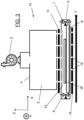
FIG. 1 schematically shows, in sectional side view, a degassing chamber according to a first embodiment of the present invention; -
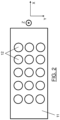
FIG. 2 schematically shows, from above, a valve plate for use in the degassing chambers ofFIG. 1 ; -
FIG. 3 schematically shows, in sectional side view, a degassing chamber according to a second embodiment of the present invention; -
FIG. 4 schematically shows, in sectional side view, a degassing chamber according to a third embodiment of the present invention; -
FIG. 5 schematically shows, in sectional side view, a degassing chamber according to a fourth embodiment of the present invention; -
FIG. 6 schematically shows, in perspective view, a printing machine with an integrated degassing chamber, according to a further embodiment of the present invention; and -
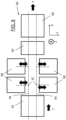
FIGs. 7 to 9 schematically show, from above, production lines including a degassing chamber in accordance with the present invention. -
FIG. 1 schematically shows, in sectional side view, a degassing chamber 1 according to a first embodiment of the present invention. The degassing chamber 1 has two main parts, avacuum reservoir 3 defined by areservoir chamber 4, and a secondary chamber, in this embodiment aprocess chamber 5. Thevacuum reservoir 3 is in fluid communication with avacuum source 2, such as a high-speed, single-stage, vacuum pump (which are well-known per se), such that operation of thevacuum source 2 produces and maintains an at least partial vacuum or region of reduced pressure within thevacuum reservoir 3, for example at around 50 to 150 Mbar vacuum. Thevacuum reservoir 3 is larger than theprocess chamber 5, for example having an internal volume about one hundred times greater than that of theprocess chamber 5. Theprocess chamber 5 defines a processing region in which a workpiece W may be degassed by being exposed to the at least partial vacuum. Theprocess chamber 5 is sealable at an end thereof by aninput port valve 6, and sealable at another, opposite end thereof by anoutput port valve 7. Each of theseport valves process chamber 5, and a closed position in which therespective port valve output port valves transport mechanism 8, such as a conveyor belt, rails or the like, is provided in theprocess chamber 5 and configured to move workpieces W from the exterior of the degassing chamber 1 and position them within the processing region. As shown, thetransport mechanism 8 is operative to carry a workpiece W thereon from the exterior of the degassing chamber 1 (at the left side as shown), through theinput port valve 6 when in its open position, into the processing region for degassing, then out through theoutput port valve 7 to the exterior of the degassing chamber 1 (on the right side as shown), in a linear transport direction T, which is parallel to the X axis as shown. In the case where the transport mechanism comprises a conveyor belt or similar, it will be noted that the belt may reside entirely within theprocess chamber 5, and so not affect the opening/ closing operation of the input andoutput port valves transport mechanism 8 may cooperate with an externally provided transport mechanism (not shown) to receive or eject a workpiece W as required, noting that the workpiece W is relatively long, and so, when the respective port valve is open, may straddle the external transport mechanism and thetransport mechanism 8 to provide safe handover between the respective transport mechanisms. A reservoir valve is also provided, which in this embodiment comprises avalve plate 11, which is movable between an open position to provide fluid communication between theprocess chamber 5 and thevacuum reservoir 3, and a closed position in which the reservoir valve is fluidly sealed. Thevalve plate 11, which is schematically shown from above inFIG. 2 , comprises an array ofthroughbores 12 extending through the entire thickness of thevalve plate 11. Correspondingreservoir openings 9 are located in the lower wall of thereservoir chamber 4, while correspondingprocess chamber openings 10 are located in the upper wall of theprocess chamber 5. Thevalve plate 11 is movably mounted so as to be movable between an open position in which eachthroughbore 12 aligns with a corresponding reservoir opening 9 and a corresponding process chamber opening 10, and a closed position in which eachthroughbore 12 is unaligned with anyreservoir openings 9 orprocess chamber openings 10. Having a two-dimensional array ofthroughbores 12 /openings valve plate 11 to ensure a consistent air speed during evacuation of theprocess chamber 5. - All valves (i.e. input and
output port valves transport mechanism 8, may be actuated and controlled by well-known means, for example by respective linear or rotary actuators under the control of a single control means (not shown) such as a computer, processor or the like. Similarly, thevacuum source 2 may also be controlled by the same or a separate control means. - In a typical operational sequence:
- i)
Vacuum source 2 runs continually; - ii) The
vacuum reservoir 3 is evacuated to low vacuum (for example about 50 mBar) with the reservoir valve closed; - iii) The
input port valve 6 is opened; - iv) A workpiece W enters the
process chamber 5, carried by thetransport mechanism 8; - v)
Input port valve 6 andoutput port valve 7 are closed; - vi) The reservoir valve is opened, so that the pressure very rapidly equalises between the
vacuum reservoir 3 and the process chamber 5 (for example at about 100mBar); - vii) Wet material printed onto the workpiece W in the
process chamber 5 degasses; - viii) The reservoir valve is closed;
- ix) The
output port valve 7 is opened, releasing theprocess chamber 5 to atmosphere; and - x) The workpiece W is transported by the
transport mechanism 8 from theprocess chamber 5 and out through theoutput port valve 7. - The above process may be repeated for each workpiece that requires degassing. With this two-chamber arrangement, an at least partial vacuum can be maintained within the
vacuum reservoir 3, while workpieces W are introduced or removed from theprocess chamber 5, so that when the reservoir valve is opened, an at least partial vacuum is very quickly introduced in theprocess chamber 5. This rapid pressure reduction is essential for enabling an acceptably fast throughput of workpieces W. -
FIG. 3 schematically shows, in sectional side view, adegassing chamber 13 according to a second embodiment of the present invention. Thedegassing chamber 13 of this embodiment has many similarities with the degassing chamber 1 shown inFIG. 1 , and so detailed description of the similar parts is not required. Furthermore, reference numerals for similar parts are retained for simplicity. - The
degassing chamber 13 of this second embodiment includes two significant differences to that shown inFIG. 1 . Firstly, anair diffuser 14 is provided in theprocess chamber 5. Theair diffuser 14 acts to disturb airflow during operation of the reservoir valve (for example the ensuing airflow from the process chamber to thevacuum reservoir 3 when the reservoir valve is opened), to prevent damage to the still-wet printed material (e.g. a printed gasket) on the workpiece W being degassed, and also potentially to reduce or remove resulting forces on the workpiece W itself. The air diffuser could potentially take many forms, such as, for example, a mesh or perforated layer of rigid material, such as a metal or plastics material, or an arrangement of one or more baffles, any of which may be located relative to the reservoir valve as required for the intended application. - Secondly, a vent valve is provided which is controllable to regulate venting, i.e. to control air in-rush into the process chamber during venting, which uncontrolled could disturb the printed material or the workpiece W. As shown, the vent valve comprises a
vent valve plate 15, similar in construction toreservoir valve plate 11 and havingthroughbores 16, which may cooperate with venting openings (not shown) in theprocess chamber 5 in the same manner of operation as the reservoir valve. - The embodiments shown in
FIGs. 1 and3 include a separate input and output for the workpieces, allowing transport of the workpieces along a single direction. However, it should be noted that in alternatives embodiments, a single input / output port may be provided at the process chamber, with a single input / output port valve. With such an arrangement, a workpiece may be loaded into the process chamber through the input / output port valve, degassed as above, then ejected from the process chamber through the same input / output port valve. This type of arrangement is also described below with reference toFIG. 8 . - It has been noted previously that a high throughput of workpieces is desirable. It has also been found that a degassing operation may take longer than a preceding printing operation, for example about 10 - 15 seconds as opposed to about 1 second for a printing operation.
FIG. 4 schematically shows, in sectional side view, adegassing chamber 20 according to a third embodiment of the present invention, in which a high throughput may be maintained. As with previous embodiments, avacuum source 2 is provided to create an at least partial vacuum, in avacuum reservoir 21 defined by a process chamber 22 (in this embodiment, the processing region is located within the vacuum reservoir 31). Two secondary chambers are connected to theprocess chamber 22, aninput airlock 23 and anoutput airlock 24. Each of theseairlocks input airlock 23 comprises aninput port valve 25 and aninput reservoir valve 26 is provided between theinput airlock 23 and theprocess chamber 22, whileoutput airlock 24 comprises anoutput port valve 27 and anoutput reservoir valve 28 is provided between theoutput airlock 24 and theprocess chamber 22. Theinput port valve 25 is movable between an open position to allow passage of a workpiece W therethrough between the exterior of thedegassing chamber 20 and theinput airlock 23 and a closed position in which theinput port valve 25 is fluidly sealed. Theoutput port valve 27 is movable between an open position to allow passage of a workpiece W therethrough between the exterior of thedegassing chamber 20 and theoutput airlock 24 and a closed position in which theoutput port valve 27 is fluidly sealed. Theinput reservoir valve 26 is movable between an open position to provide fluid communication between theinput airlock 23 and thevacuum reservoir 21 and a closed position in which theinput reservoir valve 26 is fluidly sealed. Theoutput reservoir valve 28 is movable between an open position to provide fluid communication between theoutput airlock 24 and thevacuum reservoir 21 and a closed position in which theoutput reservoir valve 28 is fluidly sealed. Various types of valve are known in the art which could be used as these valves, such as slice valves for example. A transport mechanism is provided, comprising aninput transport 29 located in theinput airlock 23, aprocess transport 30 located in theprocessing chamber 22 and anoutput transport 31 located in theoutput airlock 24, is configured to sequentially transport workpieces W from the exterior of thedegassing chamber 20, then through theinput port valve 25, through theinput airlock 23, then through theinput reservoir valve 26 into theprocessing chamber 22, position them within the processing region, and subsequently move them through theoutput reservoir valve 28 to theoutput airlock 24, then out through theoutput port valve 27 to the exterior of thedegassing chamber 20, along a transport direction T which is parallel to the X direction shown. Similarly to previous embodiments, the transport mechanism can be produced in various ways which are known in the art per se, such as conveyor belts, rails or the like. - All valves (i.e. input and
output port valves output reservoir valves 26, 28) as well as the transport mechanism, may be actuated and controlled by well-known means, for example by respective linear or rotary actuators under the control of a single control means (not shown) such as a computer, processor or the like. Similarly, thevacuum source 2 may also be controlled by the same or a separate control means. - In a typical operational sequence:
- i) Vacuum
source 2 runs continually; - ii) The
vacuum reservoir 21 is evacuated to low vacuum (for example about 50 mBar) with the input and output reservoir valves closed; - iii) The
input port valve 25 is opened; - iv) A workpiece W enters the
input airlock 23, carried by theinput transport 29; - v)
Input port valve 25 andoutput port valve 27 are closed; - vi) The
input reservoir valve 26 is opened, so that the pressure very rapidly equalises between thevacuum reservoir 21 and the input airlock 23 (for example at about 100 mBar); - vii) The workpiece W is moved into the processing region of
process chamber 22 by cooperating movement of theinput transport 29 andprocess transport 30. Wet material printed onto the workpiece W begins to degas; - viii) The
input reservoir valve 26 is closed - as soon as this occurs theinput port valve 25 may be opened, a new workpiece received into theinput airlock 23 and theinput port valve 25 closed again; - ix) The workpiece W continues to move in the transport direction T within the
process chamber 22, so that it continues to degas - while this is ongoing, theinput reservoir valve 26 may open and the new workpiece transferred from theinput airlock 23 to theprocess chamber 22, with theinput reservoir valve 26 being closed after this transfer; - x) The
output reservoir valve 28 is opened so that the pressure very rapidly equalises between thevacuum reservoir 21 and the output airlock 24 (for example at about 100 mBar), and the workpiece W is transferred from theprocess chamber 22 to theoutput airlock 24 by cooperation ofprocess transport 30 andoutput transport 31; - xi) The
output reservoir valve 28 is closed; - xii) The
output port valve 27 is opened, releasing theoutput airlock 24 to atmosphere; - xiii) The workpiece W is transported by the
output transport 31 from theoutput airlock 24 and out through theoutput port valve 27 to the exterior of thedegassing chamber 20; and - xiv) The
output port valve 27 is closed. Once closed, theoutput reservoir valve 28 may be opened to allow the new workpiece to enter theoutput airlock 24. - This process may be continued indefinitely, permitting a constant, and high, throughput of degassed workpieces. In
FIG. 4 , theinput airlock 23 andoutput airlock 24 can each receive a single workpiece (W1 and W3 respectively), while theprocess chamber 22 can receive three workpieces W2. However, different numbers of workpieces could be received within each chamber depending on the relative size of the workpieces and the chambers. -
FIG. 5 schematically shows, in sectional side view, adegassing chamber 40 according to a fourth embodiment of the present invention. Thedegassing chamber 40 of this embodiment has many similarities with thedegassing chamber 20 shown inFIG. 4 , and so detailed description of the similar parts is not required. Furthermore, reference numerals for similar parts are retained for simplicity. - The
degassing chamber 40, similarly to thedegassing chamber 20 shown inFIG. 4 , has avacuum reservoir 21 defined by aprocess chamber 22, and input andoutput airlocks process chamber 20 is increased, without adversely affecting throughput. As noted with previous embodiments, thevacuum reservoir 21 is relatively large, and in this embodiment the available space is used more efficiently by increasing the transport path length for each workpiece W within the processing region. In the embodiment shown, this is achieved by providing apaternoster lift 46 within theprocess chamber 22. Thepaternoster lift 56 includes a plurality of spaced-aparttransport platforms 43, each configured to support a single workpiece W thereon, and able to transfer a workpiece between therespective transport platform 43 and aprocess transport paternoster lift 46, in the generally clockwise direction shown, while remaining horizontal throughout the entire range of travel. - In more detail, the transport mechanism comprises an
input transport 41 located in theinput airlock 23, afirst process transport 42 located in theprocessing chamber 22, a plurality oftransport platforms 43 arranged on thepaternoster lift 46, asecond process transport 44 located in theprocessing chamber 22, and anoutput transport 45 located in theoutput airlock 24. This is configured to sequentially transport workpieces W from the exterior of thedegassing chamber 40, then through theinput port valve 25, through theinput airlock 23, then through theinput reservoir valve 26 into theprocessing chamber 22, position them within the processing region, and subsequently move them through theoutput reservoir valve 28 to theoutput airlock 24, then out through theoutput port valve 27 to the exterior of thedegassing chamber 20, along a transport direction T which is generally parallel to the X direction shown, excepting of course the middle section where the workpieces travel on thepaternoster lift 46. It can be seen that in the position shown, the twolowest transport platforms 43 are located at the same height as the first and second process transports 42, 44. In this position, a workpiece W6 can be received onto atransport platform 43 fromfirst process transport 42, while a workpiece W8 can be transferred from atransport platform 43 ontosecond process transport 44. Similarly to previous embodiments, the transport mechanism can be produced in various ways which are known in the art per se, such as conveyor belts, rails or the like. As shown, a single workpiece W4 is carried oninput transport 41, a single workpiece W5 is carried on thefirst process transport 42, a single workpiece W6, W7, W8 may be carried on eachtransport platform 43, a single workpiece W9 is carried on thefirst process transport 44, and a single workpiece W10 is carried on theoutput transport 45. With this type of arrangement, the degassing time may be several times greater than for the linear arrangement of the previous embodiment. - RTV silicone starts setting quickly after printing, and degassing can only be performed while the silicone is sufficiently wet. It is therefore important for such applications that degassing occurs very soon after printing. The quickest way to do this is to provide a degassing chamber integrated within a printing machine.
FIG. 6 schematically shows, in perspective view, such aprinting machine 50 with anintegrated degassing chamber 20, such as that shown inFIG. 4 , according to a further embodiment of the present invention. The main parts of printingmachine 50 which provide screen-printing functionality are well-known per se and not especially relevant for the purposes of the present invention, and so will not be described in detail. However, it will be understood by those skilled in the art that the printing machine includes aentry 51 for receiving workpieces to be printed from a preceding part of a production line, and a transport mechanism, here comprisingrails 52 for transporting workpieces within theprinting machine 50 along a transport direction T, parallel to the X direction shown. With this embodiment, the transport mechanism is common to the part of theprinting machine 50 with printing functionality and theintegrated degassing chamber 20. Theprinting machine 50 includes aprint head 53 carrying asqueegee 54, operative to sweep print medium, such as RTV silicone, onto underlying workpieces positioned by a positioning mechanism shown generally at 55, through a patterned stencil or screen (not shown). The printing machine also includes anexit 56 at its downstream side, through which printed workpieces may be ejected by the transport mechanism, and received by cooperating transport systems of the subsequent production line (not shown). -
FIGs. 7 to 9 schematically show, from above, sections of various production lines each including a degassing chamber, in accordance with the present invention, suitable for manufacturing fuel cells including RTV silicone material printed gaskets. Each production line transports workpieces in a direction T parallel to the X axis, using atransport system 64 as is generally known in the art, such as conveyor belts, rails or the like. The transport mechanism of each degassing chamber shown integrates within thisoverall transport system 64. It should be noted that production lines may be single-line, in which components of the production line, such as printing machines are only operative to print a single workpiece at a time, or dual-line, in which components are operative to process two separate workpieces in a parallel configuration. The production lines shown inFIGs. 7 and 9 may be single or dual-line, while that shown inFIG. 8 is dual-line only. Those skilled in the art will recognise that additional or alternative components may be present in production lines, including components both upstream of the printing machines, and downstream of the degassing chamber, and therefore these illustrations are exemplary only. In these figures, for simplicity reference numerals are retained for like components as far as possible. - In
FIG. 7 , a section of aproduction line 60 is shown with adedicated printing machine 61, i.e. a screen-printing machine, located upstream, which is directly or immediately followed in the downstream direction by adedicated degassing chamber 20, such as that shown inFIG. 4 . Downstream of thedegassing chamber 20 is aninspection machine 62, used for checking the quality of the printed workpieces. Further downstream is shown aprocessing machine 63, which could, for example, comprise a placement machine, reflow oven or the like. Of course, other processing machines may also be included downstream. - In
FIG. 8 , a section of aproduction line 65 is shown with a dedicated dual-line printing machine 61 is located upstream. Directly or immediately following theprinting machine 61 downstream are a plurality (here four)dedicated degassing chambers 66, with two degassing chambers communicating with each lane of thetransport system 64 viahubs 67, so that printed workpieces may be selectively passed to aparticular degassing chamber 66 after leaving theprinting machine 61. Each degassingchamber 66 may comprise a degassing chamber similar to that shown inFIG. 1 or3 , but having only a single input / output port as described previously. Each degassingchamber 66 therefore forms a stub along the production line. Providing a plurality of degassing chambers in this way acts to improve throughput of workpieces. The degassingchambers 66 are immediately followed in the downstream direction by aninspection machine 62, used for checking the quality of the printed workpieces. Further downstream is shown aprocessing machine 63, which could, for example, comprise a placement machine, reflow oven or the like. Of course, other processing machines may also be included downstream. - In
FIG. 9 , a section of aproduction line 70 is shown with aprinting machine 50 withintegrated degassing chamber 20, similar to that shown inFIG. 6 , located upstream. This is immediately followed in the downstream direction by aninspection machine 62, used for checking the quality of the printed workpieces. Further downstream is shown aprocessing machine 63, which could, for example, comprise a placement machine, reflow oven or the like. Of course, other processing machines may also be included downstream. - The above-described embodiments are exemplary only, and other possibilities and alternatives within the scope of the invention will be apparent to those skilled in the art. For example, while the present invention has been described with particular reference to fuel cells and the printing and degassing of RTV silicone, the apparatus described may be used for degassing many different types of wet printed materials, for many different applications.
-
- 1, 13, 20, 40, 66 - Degassing chamber
- 2 - Vacuum source
- 3, 21 - Vacuum reservoir
- 4 - Reservoir chamber
- 5, 22 - Process chamber
- 6 - Input port valve
- 7 - Output port valve
- 8 - Transport mechanism
- 9 - Reservoir opening
- 10 - Process chamber opening
- 11 - Valve plate
- 12 - Throughbore
- 14 - Air diffuser
- 15 - Vent valve plate
- 16 - Throughbore
- 23 - Input airlock
- 24 - Output airlock
- 25 - Input port valve
- 26 - Input reservoir valve
- 27 - Output port valve
- 28 - Output reservoir valve
- 29, 41 - Input transport
- 30, 42, 44 - Process transport
- 31, 45 - Output transport
- 43 - Transport platform
- 46 - Paternoster lift
- 50 - Printing machine
- 51 - Entry
- 52 - Rails
- 53 - Print head
- 54 - Squeegee
- 55 - Positioning mechanism
- 56 - Exit
- 60, 65, 70 - Production line
- 61 - Printing machine
- 62 - Inspection machine
- 63 - Processing machine
- 64 - Transport system
- W, W1-W10 - Workpieces
- T - Transport direction
Claims (9)
- A production line (60, 65, 70) for the production of workpieces (W), comprising a printing machine (61) and a degassing chamber (1, 13, 20, 40, 66) separate to the printing machine (61) for degassing a material located on a workpiece (W), the degassing chamber (1, 13, 20, 40, 66) being located within the production line (60, 65, 70) so as to receive a workpiece (W) after it has been printed by the printing machine (61), the degassing chamber (1, 13, 20, 40, 66) comprising:a vacuum source (2) for creating at least a partial vacuum, anda vacuum reservoir (3, 21) in fluid communication with the vacuum source (2) such that the at least partial vacuum may be produced and maintained within the vacuum reservoir (3, 21),a secondary chamber,a port valve (6, 7, 25, 27) which is movable between an open position to allow passage of a workpiece (W) therethrough between the exterior of the degassing chamber (1, 13, 20, 40, 66) and the secondary chamber and a closed position in which the port valve (6, 7, 25, 27) is fluidly sealed, anda reservoir valve (11, 26, 28) which is movable between an open position to provide fluid communication between the secondary chamber and the vacuum reservoir (3, 21) and a closed position in which the reservoir valve (11, 26, 28) is fluidly sealed; andwherein the degassing chamber (1, 13, 20, 40, 66) comprises a processing region in which the material of the workpiece (W) may be degassed, and a transport mechanism (8, 29, 30, 31, 41, 42, 44, 45) configured to move the workpiece (W) from the exterior of the degassing chamber (1, 13, 20, 40, 66) and position it within the processing region.
- The production line (60, 65, 70) of claim 1, wherein the degassing chamber (20, 40) comprises a process chamber (5, 22) connected to the secondary chamber, the process chamber (5, 22) comprising the vacuum reservoir (21), and with the processing region being located within the process chamber (5, 22); optionally the secondary chamber comprises an airlock (23); optionally the degassing chamber (20, 40) further comprises a second airlock (24), the arrangement being such that the transport mechanism (29, 30, 31, 41, 42, 44, 45) is operative to sequentially transport a workpiece (W) from the exterior of the degassing chamber (20, 40), then through the port valve (25) into the airlock (23), then through the reservoir valve (26) into the processing region of the vacuum reservoir (21), then into the second airlock (24), and then out of the second airlock (24) to the exterior of the degassing chamber (20, 40).
- The production line (60, 65, 70) of claim 1, wherein the processing region is located within the secondary chamber; optionally the reservoir valve (11) comprises a valve plate (11) having a throughbore, the valve plate (11) being movably mounted so as to be movable between an open position in which the throughbore aligns with an opening (9, 10) provided in an outer wall of the vacuum reservoir (3) and / or the secondary chamber, and a closed position in which the throughbore is unaligned with the opening (9, 10).
- The production line (60, 65, 70) of claim 3, wherein the valve plate (11) is mounted between the secondary chamber and the vacuum reservoir (3), and the secondary chamber and the vacuum reservoir (3) each comprise respective openings (9, 10) in an outer wall thereof, the openings (9, 10) being aligned with the throughbore to provide fluid communication therethrough when the valve plate (11) is in the open position.
- The production line (60, 65, 70) of claim 3, wherein the valve plate (11) is mounted in one of the secondary chamber and the vacuum reservoir (3).
- A method of producing a printed workpiece, comprising an initial step of providing a production line in accordance with claim 1, and additionally comprising the steps of:i) printing a wet material onto a workpiece (W),ii) while the material remains wet, placing the printed workpiece (W) into a degassing chamber (1, 13, 20, 40, 66) to degas the material.
- The method of claim 6, wherein step i) is performed using the printing machine (61), and step ii) is performed using the degassing chamber (20, 66) directly following the printing machine in the production line (60, 65, 70).
- The method of claim 6, wherein the printed workpiece (W) comprises a component of a fuel cell, optionally a polymer electrolyte membrane fuel cell; optionally the material comprises a gasket for the component, optionally the material comprises room-temperature vulcanizing silicone.
- The method of claim 6, comprising degassing the material printed onto the workpiece (W), comprising the steps of:iii) using the vacuum source (2) to produce and maintain an at least partial vacuum in the vacuum reservoir (3, 21),iv) inserting the workpiece (W) into the secondary chamber via the port valve (6, 7, 25, 27),v) closing the port valve (6, 7, 25, 27),vi) opening the reservoir valve (11, 26, 28) to increase the vacuum within the secondary chamber, andvii) exposing the workpiece (W) to the at least partial vacuum so that the material printed onto the workpiece (W) is subjected to the at least partial vacuum.
Applications Claiming Priority (1)
| Application Number | Priority Date | Filing Date | Title |
|---|---|---|---|
| GB2110343.7A GB2609025A (en) | 2021-07-19 | 2021-07-19 | Post-print vacuum degassing |
Publications (2)
| Publication Number | Publication Date |
|---|---|
| EP4122573A1 EP4122573A1 (en) | 2023-01-25 |
| EP4122573B1 true EP4122573B1 (en) | 2024-06-26 |
Family
ID=77443431
Family Applications (1)
| Application Number | Title | Priority Date | Filing Date |
|---|---|---|---|
| EP22182117.6A Active EP4122573B1 (en) | 2021-07-19 | 2022-06-30 | Post-print vacuum degassing |
Country Status (5)
| Country | Link |
|---|---|
| US (1) | US12589586B2 (en) |
| EP (1) | EP4122573B1 (en) |
| JP (1) | JP7543347B2 (en) |
| CN (1) | CN115642271A (en) |
| GB (1) | GB2609025A (en) |
Families Citing this family (2)
| Publication number | Priority date | Publication date | Assignee | Title |
|---|---|---|---|---|
| GB2609025A (en) * | 2021-07-19 | 2023-01-25 | Asmpt Smt Singapore Pte Ltd | Post-print vacuum degassing |
| DE102023209187A1 (en) * | 2023-09-21 | 2025-03-27 | Robert Bosch Gesellschaft mit beschränkter Haftung | Method and device for producing a seal on a substrate |
Family Cites Families (24)
| Publication number | Priority date | Publication date | Assignee | Title |
|---|---|---|---|---|
| FR2604378B1 (en) * | 1978-06-30 | 1989-10-27 | Snecma | FOUNDRY APPARATUS FOR THE MANUFACTURE OF MOLDED METAL PARTS WITH ORIENTED STRUCTURE |
| JPH1147668A (en) | 1997-06-06 | 1999-02-23 | Kansai Denshi Kk | Substrate drying equipment |
| US6151796A (en) | 1998-06-04 | 2000-11-28 | Kem-Tec Japan Co., Ltd. | Substrate drying device, drying method and substrate dried by the same |
| JP3223298B2 (en) * | 1998-07-31 | 2001-10-29 | サンユレック株式会社 | Manufacturing method of electronic components |
| US6183564B1 (en) * | 1998-11-12 | 2001-02-06 | Tokyo Electron Limited | Buffer chamber for integrating physical and chemical vapor deposition chambers together in a processing system |
| JP3203345B2 (en) | 1999-01-08 | 2001-08-27 | サンユレック株式会社 | Vacuum printing apparatus and vacuum printing method |
| EP1073138B1 (en) | 1999-07-26 | 2012-05-02 | Tigers Polymer Corporation | Sealing structure of fuel cell and process for molding rubber packing |
| JP4450607B2 (en) | 1999-07-26 | 2010-04-14 | タイガースポリマー株式会社 | Method for sealing fuel cell and forming rubber packing for fuel cell |
| US6497734B1 (en) * | 2002-01-02 | 2002-12-24 | Novellus Systems, Inc. | Apparatus and method for enhanced degassing of semiconductor wafers for increased throughput |
| JP3660626B2 (en) * | 2002-01-15 | 2005-06-15 | 株式会社野田スクリーン | Vacuum printing device |
| JP4198972B2 (en) | 2002-11-18 | 2008-12-17 | ニューロング精密工業株式会社 | Screen printing method using stencil plate |
| CN100509333C (en) * | 2007-09-24 | 2009-07-08 | 天津市天大银泰科技有限公司 | Vacuum degassing device having rough material overflow-resisting function |
| CN102112646A (en) * | 2008-08-05 | 2011-06-29 | 株式会社爱发科 | Vacuum treatment apparatus and vacuum treatment method |
| JP2010201859A (en) | 2009-03-05 | 2010-09-16 | Toppan Printing Co Ltd | Drying method of printed matter and printed matter manufactured by the method |
| JP2011043183A (en) | 2009-08-19 | 2011-03-03 | Toshiba Corp | Valve device and paper sheet takeout device |
| KR101525234B1 (en) * | 2011-03-03 | 2015-06-01 | 파나소닉 주식회사 | Semiconductor Substrate Surface Etching Device, and Method of Manufacturing Semiconductor Substrate Whereon Uneven Shapes Are Formed Upon Surface Using Said Device |
| WO2012135972A1 (en) * | 2011-04-06 | 2012-10-11 | General Electric Company | Method and apparatus for continuous resin degassing |
| US10115608B2 (en) * | 2012-05-25 | 2018-10-30 | Novellus Systems, Inc. | Method and apparatus for rapid pump-down of a high-vacuum loadlock |
| DK2952238T3 (en) * | 2014-06-03 | 2019-06-24 | Siemens Gamesa Renewable Energy As | FITTING AND PROCEDURE FOR EXHAUSTING |
| DE102014213172A1 (en) * | 2014-07-07 | 2016-01-07 | Dürr Ecoclean GmbH | Plant for drying workpieces |
| TWI644383B (en) * | 2016-08-29 | 2018-12-11 | Intevac, Inc. | In-line fanout system |
| JP2019130724A (en) * | 2018-01-30 | 2019-08-08 | コニカミノルタ株式会社 | Deaerator and ink jet recording device |
| DE102018119714B3 (en) * | 2018-08-14 | 2020-01-16 | Hedrich Gmbh | Method and device for inline residual gas and inline residual moisture determination on pasty masses and viscous liquids |
| GB2609025A (en) * | 2021-07-19 | 2023-01-25 | Asmpt Smt Singapore Pte Ltd | Post-print vacuum degassing |
-
2021
- 2021-07-19 GB GB2110343.7A patent/GB2609025A/en active Pending
-
2022
- 2022-06-29 US US17/852,630 patent/US12589586B2/en active Active
- 2022-06-30 EP EP22182117.6A patent/EP4122573B1/en active Active
- 2022-07-15 JP JP2022114156A patent/JP7543347B2/en active Active
- 2022-07-15 CN CN202210830263.XA patent/CN115642271A/en active Pending
Also Published As
| Publication number | Publication date |
|---|---|
| EP4122573A1 (en) | 2023-01-25 |
| US12589586B2 (en) | 2026-03-31 |
| JP2023015016A (en) | 2023-01-31 |
| US20230016091A1 (en) | 2023-01-19 |
| GB202110343D0 (en) | 2021-09-01 |
| JP7543347B2 (en) | 2024-09-02 |
| GB2609025A (en) | 2023-01-25 |
| CN115642271A (en) | 2023-01-24 |
Similar Documents
| Publication | Publication Date | Title |
|---|---|---|
| EP4122573A1 (en) | Post-print vacuum degassing | |
| EP2533279B1 (en) | Support and transport unit for a print substrate for a plant for depositing print tracks, and relative deposition method | |
| JP3243601B2 (en) | Vacuum multi-stage laminating equipment | |
| EP2769923A1 (en) | Deep draw packaging machine with sealing station and method | |
| CN101419409B (en) | Exposure device and rectification device of baseal plate | |
| KR102200250B1 (en) | Load port module provided with a Foup loadlock door, and a method for opening and closing the Load port module door and the Foup loadlock door | |
| US11565471B2 (en) | Three-dimensional printing with diffuser plate | |
| DE102020211724A1 (en) | PROCESSING PROCESS FOR A WORKPIECE | |
| JPS63251207A (en) | Molding method and apparatus for printed-circuit board | |
| KR20130122628A (en) | Device and method for processing wafers | |
| KR20080046479A (en) | Imprint Device and Imprint Method | |
| TWI816472B (en) | Resin sealing device and resin sealing method | |
| CN110366774B (en) | vacuum device | |
| CN108385081B (en) | Automatic coating device in two storehouses | |
| JP6988258B2 (en) | Drying device | |
| EP0109634B1 (en) | Exposure device | |
| CN110856974A (en) | Deep-drawing device and method for deep-drawing a film | |
| US20100195084A1 (en) | Substrate holding platen with high speed vacuum | |
| US20250214786A1 (en) | Substrate transfer equipment and substrate processing system using the same | |
| RU2133521C1 (en) | Device for locking | |
| WO2025247488A1 (en) | Method and device for heating a film, and associated thermoforming system | |
| KR102487102B1 (en) | A system for batch processing of glass bottles inline | |
| TW202320188A (en) | Resin sealing device and resin sealing method | |
| CN120760453A (en) | Sintering equipment and sintering method | |
| JP2014116391A (en) | Substrate processing apparatus and substrate manufacturing method |
Legal Events
| Date | Code | Title | Description |
|---|---|---|---|
| PUAI | Public reference made under article 153(3) epc to a published international application that has entered the european phase |
Free format text: ORIGINAL CODE: 0009012 |
|
| STAA | Information on the status of an ep patent application or granted ep patent |
Free format text: STATUS: THE APPLICATION HAS BEEN PUBLISHED |
|
| AK | Designated contracting states |
Kind code of ref document: A1 Designated state(s): AL AT BE BG CH CY CZ DE DK EE ES FI FR GB GR HR HU IE IS IT LI LT LU LV MC MK MT NL NO PL PT RO RS SE SI SK SM TR |
|
| P01 | Opt-out of the competence of the unified patent court (upc) registered |
Effective date: 20230530 |
|
| STAA | Information on the status of an ep patent application or granted ep patent |
Free format text: STATUS: REQUEST FOR EXAMINATION WAS MADE |
|
| 17P | Request for examination filed |
Effective date: 20230720 |
|
| RBV | Designated contracting states (corrected) |
Designated state(s): AL AT BE BG CH CY CZ DE DK EE ES FI FR GB GR HR HU IE IS IT LI LT LU LV MC MK MT NL NO PL PT RO RS SE SI SK SM TR |
|
| STAA | Information on the status of an ep patent application or granted ep patent |
Free format text: STATUS: EXAMINATION IS IN PROGRESS |
|
| 17Q | First examination report despatched |
Effective date: 20231108 |
|
| GRAP | Despatch of communication of intention to grant a patent |
Free format text: ORIGINAL CODE: EPIDOSNIGR1 |
|
| STAA | Information on the status of an ep patent application or granted ep patent |
Free format text: STATUS: GRANT OF PATENT IS INTENDED |
|
| RAP3 | Party data changed (applicant data changed or rights of an application transferred) |
Owner name: ASMPT SMT SINGAPORE PTE. LTD. |
|
| INTG | Intention to grant announced |
Effective date: 20240417 |
|
| GRAS | Grant fee paid |
Free format text: ORIGINAL CODE: EPIDOSNIGR3 |
|
| GRAA | (expected) grant |
Free format text: ORIGINAL CODE: 0009210 |
|
| STAA | Information on the status of an ep patent application or granted ep patent |
Free format text: STATUS: THE PATENT HAS BEEN GRANTED |
|
| AK | Designated contracting states |
Kind code of ref document: B1 Designated state(s): AL AT BE BG CH CY CZ DE DK EE ES FI FR GB GR HR HU IE IS IT LI LT LU LV MC MK MT NL NO PL PT RO RS SE SI SK SM TR |
|
| REG | Reference to a national code |
Ref country code: GB Ref legal event code: FG4D |
|
| REG | Reference to a national code |
Ref country code: CH Ref legal event code: EP |
|
| REG | Reference to a national code |
Ref country code: DE Ref legal event code: R096 Ref document number: 602022004116 Country of ref document: DE |
|
| PG25 | Lapsed in a contracting state [announced via postgrant information from national office to epo] |
Ref country code: BG Free format text: LAPSE BECAUSE OF FAILURE TO SUBMIT A TRANSLATION OF THE DESCRIPTION OR TO PAY THE FEE WITHIN THE PRESCRIBED TIME-LIMIT Effective date: 20240626 |
|
| PG25 | Lapsed in a contracting state [announced via postgrant information from national office to epo] |
Ref country code: FI Free format text: LAPSE BECAUSE OF FAILURE TO SUBMIT A TRANSLATION OF THE DESCRIPTION OR TO PAY THE FEE WITHIN THE PRESCRIBED TIME-LIMIT Effective date: 20240626 Ref country code: HR Free format text: LAPSE BECAUSE OF FAILURE TO SUBMIT A TRANSLATION OF THE DESCRIPTION OR TO PAY THE FEE WITHIN THE PRESCRIBED TIME-LIMIT Effective date: 20240626 |
|
| REG | Reference to a national code |
Ref country code: LT Ref legal event code: MG9D |
|
| PG25 | Lapsed in a contracting state [announced via postgrant information from national office to epo] |
Ref country code: GR Free format text: LAPSE BECAUSE OF FAILURE TO SUBMIT A TRANSLATION OF THE DESCRIPTION OR TO PAY THE FEE WITHIN THE PRESCRIBED TIME-LIMIT Effective date: 20240927 |
|
| PG25 | Lapsed in a contracting state [announced via postgrant information from national office to epo] |
Ref country code: LV Free format text: LAPSE BECAUSE OF FAILURE TO SUBMIT A TRANSLATION OF THE DESCRIPTION OR TO PAY THE FEE WITHIN THE PRESCRIBED TIME-LIMIT Effective date: 20240626 |
|
| REG | Reference to a national code |
Ref country code: NL Ref legal event code: MP Effective date: 20240626 |
|
| PG25 | Lapsed in a contracting state [announced via postgrant information from national office to epo] |
Ref country code: NO Free format text: LAPSE BECAUSE OF FAILURE TO SUBMIT A TRANSLATION OF THE DESCRIPTION OR TO PAY THE FEE WITHIN THE PRESCRIBED TIME-LIMIT Effective date: 20240926 Ref country code: LV Free format text: LAPSE BECAUSE OF FAILURE TO SUBMIT A TRANSLATION OF THE DESCRIPTION OR TO PAY THE FEE WITHIN THE PRESCRIBED TIME-LIMIT Effective date: 20240626 Ref country code: HR Free format text: LAPSE BECAUSE OF FAILURE TO SUBMIT A TRANSLATION OF THE DESCRIPTION OR TO PAY THE FEE WITHIN THE PRESCRIBED TIME-LIMIT Effective date: 20240626 Ref country code: GR Free format text: LAPSE BECAUSE OF FAILURE TO SUBMIT A TRANSLATION OF THE DESCRIPTION OR TO PAY THE FEE WITHIN THE PRESCRIBED TIME-LIMIT Effective date: 20240927 Ref country code: FI Free format text: LAPSE BECAUSE OF FAILURE TO SUBMIT A TRANSLATION OF THE DESCRIPTION OR TO PAY THE FEE WITHIN THE PRESCRIBED TIME-LIMIT Effective date: 20240626 Ref country code: BG Free format text: LAPSE BECAUSE OF FAILURE TO SUBMIT A TRANSLATION OF THE DESCRIPTION OR TO PAY THE FEE WITHIN THE PRESCRIBED TIME-LIMIT Effective date: 20240626 Ref country code: RS Free format text: LAPSE BECAUSE OF FAILURE TO SUBMIT A TRANSLATION OF THE DESCRIPTION OR TO PAY THE FEE WITHIN THE PRESCRIBED TIME-LIMIT Effective date: 20240926 |
|
| PG25 | Lapsed in a contracting state [announced via postgrant information from national office to epo] |
Ref country code: NL Free format text: LAPSE BECAUSE OF FAILURE TO SUBMIT A TRANSLATION OF THE DESCRIPTION OR TO PAY THE FEE WITHIN THE PRESCRIBED TIME-LIMIT Effective date: 20240626 |
|
| REG | Reference to a national code |
Ref country code: AT Ref legal event code: MK05 Ref document number: 1697241 Country of ref document: AT Kind code of ref document: T Effective date: 20240626 |
|
| PG25 | Lapsed in a contracting state [announced via postgrant information from national office to epo] |
Ref country code: NL Free format text: LAPSE BECAUSE OF FAILURE TO SUBMIT A TRANSLATION OF THE DESCRIPTION OR TO PAY THE FEE WITHIN THE PRESCRIBED TIME-LIMIT Effective date: 20240626 |
|
| PG25 | Lapsed in a contracting state [announced via postgrant information from national office to epo] |
Ref country code: PT Free format text: LAPSE BECAUSE OF FAILURE TO SUBMIT A TRANSLATION OF THE DESCRIPTION OR TO PAY THE FEE WITHIN THE PRESCRIBED TIME-LIMIT Effective date: 20241028 |
|
| PG25 | Lapsed in a contracting state [announced via postgrant information from national office to epo] |
Ref country code: PT Free format text: LAPSE BECAUSE OF FAILURE TO SUBMIT A TRANSLATION OF THE DESCRIPTION OR TO PAY THE FEE WITHIN THE PRESCRIBED TIME-LIMIT Effective date: 20241028 |
|
| PG25 | Lapsed in a contracting state [announced via postgrant information from national office to epo] |
Ref country code: PL Free format text: LAPSE BECAUSE OF FAILURE TO SUBMIT A TRANSLATION OF THE DESCRIPTION OR TO PAY THE FEE WITHIN THE PRESCRIBED TIME-LIMIT Effective date: 20240626 |
|
| PG25 | Lapsed in a contracting state [announced via postgrant information from national office to epo] |
Ref country code: EE Free format text: LAPSE BECAUSE OF FAILURE TO SUBMIT A TRANSLATION OF THE DESCRIPTION OR TO PAY THE FEE WITHIN THE PRESCRIBED TIME-LIMIT Effective date: 20240626 |
|
| PG25 | Lapsed in a contracting state [announced via postgrant information from national office to epo] |
Ref country code: IS Free format text: LAPSE BECAUSE OF FAILURE TO SUBMIT A TRANSLATION OF THE DESCRIPTION OR TO PAY THE FEE WITHIN THE PRESCRIBED TIME-LIMIT Effective date: 20241026 Ref country code: AT Free format text: LAPSE BECAUSE OF FAILURE TO SUBMIT A TRANSLATION OF THE DESCRIPTION OR TO PAY THE FEE WITHIN THE PRESCRIBED TIME-LIMIT Effective date: 20240626 |
|
| PG25 | Lapsed in a contracting state [announced via postgrant information from national office to epo] |
Ref country code: CZ Free format text: LAPSE BECAUSE OF FAILURE TO SUBMIT A TRANSLATION OF THE DESCRIPTION OR TO PAY THE FEE WITHIN THE PRESCRIBED TIME-LIMIT Effective date: 20240626 |
|
| PG25 | Lapsed in a contracting state [announced via postgrant information from national office to epo] |
Ref country code: RO Free format text: LAPSE BECAUSE OF FAILURE TO SUBMIT A TRANSLATION OF THE DESCRIPTION OR TO PAY THE FEE WITHIN THE PRESCRIBED TIME-LIMIT Effective date: 20240626 Ref country code: SK Free format text: LAPSE BECAUSE OF FAILURE TO SUBMIT A TRANSLATION OF THE DESCRIPTION OR TO PAY THE FEE WITHIN THE PRESCRIBED TIME-LIMIT Effective date: 20240626 |
|
| PG25 | Lapsed in a contracting state [announced via postgrant information from national office to epo] |
Ref country code: SM Free format text: LAPSE BECAUSE OF FAILURE TO SUBMIT A TRANSLATION OF THE DESCRIPTION OR TO PAY THE FEE WITHIN THE PRESCRIBED TIME-LIMIT Effective date: 20240626 Ref country code: ES Free format text: LAPSE BECAUSE OF FAILURE TO SUBMIT A TRANSLATION OF THE DESCRIPTION OR TO PAY THE FEE WITHIN THE PRESCRIBED TIME-LIMIT Effective date: 20240626 |
|
| PG25 | Lapsed in a contracting state [announced via postgrant information from national office to epo] |
Ref country code: SM Free format text: LAPSE BECAUSE OF FAILURE TO SUBMIT A TRANSLATION OF THE DESCRIPTION OR TO PAY THE FEE WITHIN THE PRESCRIBED TIME-LIMIT Effective date: 20240626 Ref country code: SK Free format text: LAPSE BECAUSE OF FAILURE TO SUBMIT A TRANSLATION OF THE DESCRIPTION OR TO PAY THE FEE WITHIN THE PRESCRIBED TIME-LIMIT Effective date: 20240626 Ref country code: RO Free format text: LAPSE BECAUSE OF FAILURE TO SUBMIT A TRANSLATION OF THE DESCRIPTION OR TO PAY THE FEE WITHIN THE PRESCRIBED TIME-LIMIT Effective date: 20240626 Ref country code: PL Free format text: LAPSE BECAUSE OF FAILURE TO SUBMIT A TRANSLATION OF THE DESCRIPTION OR TO PAY THE FEE WITHIN THE PRESCRIBED TIME-LIMIT Effective date: 20240626 Ref country code: IS Free format text: LAPSE BECAUSE OF FAILURE TO SUBMIT A TRANSLATION OF THE DESCRIPTION OR TO PAY THE FEE WITHIN THE PRESCRIBED TIME-LIMIT Effective date: 20241026 Ref country code: ES Free format text: LAPSE BECAUSE OF FAILURE TO SUBMIT A TRANSLATION OF THE DESCRIPTION OR TO PAY THE FEE WITHIN THE PRESCRIBED TIME-LIMIT Effective date: 20240626 Ref country code: EE Free format text: LAPSE BECAUSE OF FAILURE TO SUBMIT A TRANSLATION OF THE DESCRIPTION OR TO PAY THE FEE WITHIN THE PRESCRIBED TIME-LIMIT Effective date: 20240626 Ref country code: CZ Free format text: LAPSE BECAUSE OF FAILURE TO SUBMIT A TRANSLATION OF THE DESCRIPTION OR TO PAY THE FEE WITHIN THE PRESCRIBED TIME-LIMIT Effective date: 20240626 Ref country code: AT Free format text: LAPSE BECAUSE OF FAILURE TO SUBMIT A TRANSLATION OF THE DESCRIPTION OR TO PAY THE FEE WITHIN THE PRESCRIBED TIME-LIMIT Effective date: 20240626 |
|
| PG25 | Lapsed in a contracting state [announced via postgrant information from national office to epo] |
Ref country code: LU Free format text: LAPSE BECAUSE OF NON-PAYMENT OF DUE FEES Effective date: 20240630 |
|
| PG25 | Lapsed in a contracting state [announced via postgrant information from national office to epo] |
Ref country code: MC Free format text: LAPSE BECAUSE OF FAILURE TO SUBMIT A TRANSLATION OF THE DESCRIPTION OR TO PAY THE FEE WITHIN THE PRESCRIBED TIME-LIMIT Effective date: 20240626 |
|
| REG | Reference to a national code |
Ref country code: DE Ref legal event code: R097 Ref document number: 602022004116 Country of ref document: DE |
|
| PG25 | Lapsed in a contracting state [announced via postgrant information from national office to epo] |
Ref country code: MC Free format text: LAPSE BECAUSE OF FAILURE TO SUBMIT A TRANSLATION OF THE DESCRIPTION OR TO PAY THE FEE WITHIN THE PRESCRIBED TIME-LIMIT Effective date: 20240626 |
|
| PG25 | Lapsed in a contracting state [announced via postgrant information from national office to epo] |
Ref country code: DK Free format text: LAPSE BECAUSE OF FAILURE TO SUBMIT A TRANSLATION OF THE DESCRIPTION OR TO PAY THE FEE WITHIN THE PRESCRIBED TIME-LIMIT Effective date: 20240626 |
|
| PG25 | Lapsed in a contracting state [announced via postgrant information from national office to epo] |
Ref country code: IE Free format text: LAPSE BECAUSE OF NON-PAYMENT OF DUE FEES Effective date: 20240630 |
|
| PG25 | Lapsed in a contracting state [announced via postgrant information from national office to epo] |
Ref country code: BE Free format text: LAPSE BECAUSE OF NON-PAYMENT OF DUE FEES Effective date: 20240630 |
|
| REG | Reference to a national code |
Ref country code: BE Ref legal event code: MM Effective date: 20240630 |
|
| PLBE | No opposition filed within time limit |
Free format text: ORIGINAL CODE: 0009261 |
|
| STAA | Information on the status of an ep patent application or granted ep patent |
Free format text: STATUS: NO OPPOSITION FILED WITHIN TIME LIMIT |
|
| 26N | No opposition filed |
Effective date: 20250327 |
|
| PGFP | Annual fee paid to national office [announced via postgrant information from national office to epo] |
Ref country code: DE Payment date: 20250618 Year of fee payment: 4 |
|
| PGFP | Annual fee paid to national office [announced via postgrant information from national office to epo] |
Ref country code: FR Payment date: 20250627 Year of fee payment: 4 |
|
| PG25 | Lapsed in a contracting state [announced via postgrant information from national office to epo] |
Ref country code: SE Free format text: LAPSE BECAUSE OF FAILURE TO SUBMIT A TRANSLATION OF THE DESCRIPTION OR TO PAY THE FEE WITHIN THE PRESCRIBED TIME-LIMIT Effective date: 20240626 |
|
| PGFP | Annual fee paid to national office [announced via postgrant information from national office to epo] |
Ref country code: IT Payment date: 20250630 Year of fee payment: 4 |
|
| PG25 | Lapsed in a contracting state [announced via postgrant information from national office to epo] |
Ref country code: CY Free format text: LAPSE BECAUSE OF FAILURE TO SUBMIT A TRANSLATION OF THE DESCRIPTION OR TO PAY THE FEE WITHIN THE PRESCRIBED TIME-LIMIT; INVALID AB INITIO Effective date: 20220630 |
|
| REG | Reference to a national code |
Ref country code: CH Ref legal event code: H13 Free format text: ST27 STATUS EVENT CODE: U-0-0-H10-H13 (AS PROVIDED BY THE NATIONAL OFFICE) Effective date: 20260127 |
|
| PG25 | Lapsed in a contracting state [announced via postgrant information from national office to epo] |
Ref country code: HU Free format text: LAPSE BECAUSE OF FAILURE TO SUBMIT A TRANSLATION OF THE DESCRIPTION OR TO PAY THE FEE WITHIN THE PRESCRIBED TIME-LIMIT; INVALID AB INITIO Effective date: 20220630 |
|
| PG25 | Lapsed in a contracting state [announced via postgrant information from national office to epo] |
Ref country code: CH Free format text: LAPSE BECAUSE OF NON-PAYMENT OF DUE FEES Effective date: 20250630 |