EP4121862B1 - Ungültigkeitserklärung eines speicherzugriffs - Google Patents
Ungültigkeitserklärung eines speicherzugriffs Download PDFInfo
- Publication number
- EP4121862B1 EP4121862B1 EP21700340.9A EP21700340A EP4121862B1 EP 4121862 B1 EP4121862 B1 EP 4121862B1 EP 21700340 A EP21700340 A EP 21700340A EP 4121862 B1 EP4121862 B1 EP 4121862B1
- Authority
- EP
- European Patent Office
- Prior art keywords
- accessors
- given
- memory
- accessor
- equivalent
- Prior art date
- Legal status (The legal status is an assumption and is not a legal conclusion. Google has not performed a legal analysis and makes no representation as to the accuracy of the status listed.)
- Active
Links
Images



Classifications
-
- G—PHYSICS
- G06—COMPUTING OR CALCULATING; COUNTING
- G06F—ELECTRIC DIGITAL DATA PROCESSING
- G06F12/00—Accessing, addressing or allocating within memory systems or architectures
- G06F12/02—Addressing or allocation; Relocation
- G06F12/08—Addressing or allocation; Relocation in hierarchically structured memory systems, e.g. virtual memory systems
- G06F12/0802—Addressing of a memory level in which the access to the desired data or data block requires associative addressing means, e.g. caches
- G06F12/0891—Addressing of a memory level in which the access to the desired data or data block requires associative addressing means, e.g. caches using clearing, invalidating or resetting means
-
- G—PHYSICS
- G06—COMPUTING OR CALCULATING; COUNTING
- G06F—ELECTRIC DIGITAL DATA PROCESSING
- G06F12/00—Accessing, addressing or allocating within memory systems or architectures
- G06F12/02—Addressing or allocation; Relocation
- G06F12/0223—User address space allocation, e.g. contiguous or non contiguous base addressing
- G06F12/023—Free address space management
-
- G—PHYSICS
- G06—COMPUTING OR CALCULATING; COUNTING
- G06F—ELECTRIC DIGITAL DATA PROCESSING
- G06F12/00—Accessing, addressing or allocating within memory systems or architectures
- G06F12/02—Addressing or allocation; Relocation
- G06F12/08—Addressing or allocation; Relocation in hierarchically structured memory systems, e.g. virtual memory systems
- G06F12/0802—Addressing of a memory level in which the access to the desired data or data block requires associative addressing means, e.g. caches
- G06F12/0864—Addressing of a memory level in which the access to the desired data or data block requires associative addressing means, e.g. caches using pseudo-associative means, e.g. set-associative or hashing
-
- G—PHYSICS
- G06—COMPUTING OR CALCULATING; COUNTING
- G06F—ELECTRIC DIGITAL DATA PROCESSING
- G06F12/00—Accessing, addressing or allocating within memory systems or architectures
- G06F12/02—Addressing or allocation; Relocation
- G06F12/08—Addressing or allocation; Relocation in hierarchically structured memory systems, e.g. virtual memory systems
- G06F12/10—Address translation
- G06F12/1027—Address translation using associative or pseudo-associative address translation means, e.g. translation look-aside buffer [TLB]
-
- G—PHYSICS
- G06—COMPUTING OR CALCULATING; COUNTING
- G06F—ELECTRIC DIGITAL DATA PROCESSING
- G06F12/00—Accessing, addressing or allocating within memory systems or architectures
- G06F12/14—Protection against unauthorised use of memory or access to memory
- G06F12/1416—Protection against unauthorised use of memory or access to memory by checking the object accessibility, e.g. type of access defined by the memory independently of subject rights
- G06F12/1425—Protection against unauthorised use of memory or access to memory by checking the object accessibility, e.g. type of access defined by the memory independently of subject rights the protection being physical, e.g. cell, word, block
- G06F12/1441—Protection against unauthorised use of memory or access to memory by checking the object accessibility, e.g. type of access defined by the memory independently of subject rights the protection being physical, e.g. cell, word, block for a range
-
- G—PHYSICS
- G06—COMPUTING OR CALCULATING; COUNTING
- G06F—ELECTRIC DIGITAL DATA PROCESSING
- G06F12/00—Accessing, addressing or allocating within memory systems or architectures
- G06F12/14—Protection against unauthorised use of memory or access to memory
- G06F12/1458—Protection against unauthorised use of memory or access to memory by checking the subject access rights
-
- G—PHYSICS
- G06—COMPUTING OR CALCULATING; COUNTING
- G06F—ELECTRIC DIGITAL DATA PROCESSING
- G06F9/00—Arrangements for program control, e.g. control units
- G06F9/06—Arrangements for program control, e.g. control units using stored programs, i.e. using an internal store of processing equipment to receive or retain programs
- G06F9/30—Arrangements for executing machine instructions, e.g. instruction decode
- G06F9/30003—Arrangements for executing specific machine instructions
- G06F9/30007—Arrangements for executing specific machine instructions to perform operations on data operands
- G06F9/30018—Bit or string instructions
-
- G—PHYSICS
- G06—COMPUTING OR CALCULATING; COUNTING
- G06F—ELECTRIC DIGITAL DATA PROCESSING
- G06F2212/00—Indexing scheme relating to accessing, addressing or allocation within memory systems or architectures
- G06F2212/10—Providing a specific technical effect
- G06F2212/1052—Security improvement
Definitions
- the present technique relates to data processing.
- the present technique has relevance to memory systems.
- memory accessors can be used to control access to particular areas of memory.
- Such accessors can include both a reference to memory, and access restrictions so that the memory reference can only be used in a designated manner.
- the accessor might be invalidated.
- the accessor if the accessor has been copied, then it is important for copies of that accessor to also be invalidated. If this is not done, then the owner of those copies may be able to continue accessing the memory space, even if the memory space has been repurposed.
- scanning through memory to locate copies of the accessors can be very time consuming and/or resource intensive.
- GB 2 565 069 A discloses an address translation cache having a number of cache entries for storing address translation data which depends on one or more page table entries of page tables.
- Control circuitry is responsive to an invalidation request specifying address information to perform an invalidation lookup operation to identify at least one target cache entry to be invalidated.
- Control circuitry selects one of a number of invalidation lookup modes to use for the invalidation lookup operation in dependence on page size information indicating the page size of the target page table entry.
- the accessor comprises a pointer.
- a pointer can be considered to be a reference to a location in memory where further data can be stored.
- the accessor may therefore comprise a pointer, which serves to reference, for instance a byte within one of the memory segments.
- the accessor comprises bounds information that defines the region of the physical address space that the pointer can be used to access. By providing bounds information, it is possible to prevent the pointer from being used to access a location that falls outside the bounds. For instance, if the bounds define a lower address limit of 1000 and an upper address limit of 2000, and if the pointer P points to an address 1999, then the accessor prevents the pointer from being used to access an address equal to the P+5, since this result (2004) would fall outside of the range 1000 to 2000.
- the bounds information can be defined in a number of ways. For instance, the bounds information could include a lower limit and an upper limit as previously described.
- the invalidation circuitry is adapted, when the tracking circuitry indicates that a given memory segment contains one of the accessors, to sweep the given memory segment to determine the equivalent accessors. Having made the assessment that a memory segment may contain an equivalent accessor, it is necessary to scan the memory segment to locate the equivalent accessors (if they exist). In some embodiments, at the same time, the entry of the bloom filter that corresponds with the memory segment that is being swept is rebuilt. In particular, the full set of accessors that are located within the given memory segment can be used to recreate the entry of the bloom filter that is provided for the given memory segment. Note that the size of the memory segments affects the time that will be taken for the scan to occur.
- the invalidation circuitry is adapted, when the tracking circuitry indicates that a given memory segment lacks each of the accessors, to refrain from sweeping the given memory segment. Where the tracking circuitry indicates that a given memory segment does not contain accessors, there is no need for the given memory segment to be swept to determine whether there are any equivalent accessors within that memory segment. Consequently, the tracking circuitry can be used in order to reduce the number of memory segments for which scanning is performed.
- the memory circuitry is further logically divided so as to comprise an active stack region; the tracking circuitry comprises a bit field to track the active stack region; and the tracking circuitry comprises a hash table or bloom filter to track the memory segments.
- an active stack region is used in order for a currently active thread to store temporary data values. The nature of these data values is that they may be periodically modified, added and deleted. Such data values could include accessors. It will therefore be appreciated that for an active stack region, a bloom filter entry would rapidly saturate thereby regularly indicating that an equivalent accessor was present (even if it was not).
- the tracking circuitry is adapted to further track those of the accessors that are stored outside the memory segments.
- simpler tracking can be used for areas of the memory outside the memory segments.
- a series of bits may be used, each corresponding with a different part of the memory that falls outside the memory segments, to indicate whether an accessor is located within that area of the memory.
- the capability can otherwise be treated as a regular data structure in the sense that it can be copied.
- the capability 100 is shown as having been copied to several locations 190a, 190b, 190c within the memory 110.
- this can cause a problem.
- other copies of the capability 190b, 190c must also be located in order to be invalidated. If not, these copies could be used in order to access private information as illustrated with respect to Figures 2A and 2B .
- One way to locate the copies is by scanning the entirety of memory 110. However, this is time consuming and resource intensive. Accordingly, the present technique seeks to reduce the resources that are required in order to invalidate copies of equivalents of the capability to be invalidated.
- FIGS 2A and 2B illustrate a manner in which a capability copy can be used in order to gain access to private information.
- a compartment A (which is the victim) calls a compartment B, which may take the form of an untrusted library (the attacker).
- Compartment A firstly creates a capability C1 that points to an allocated area of memory (shared 0 ). The compartment A then makes a function call to compartment B, passing in the capability C1. Within compartment B, the capability C1 is stored to the heap. The compartment B then performs the requested operation using the capability C1 as is expected. The compartment B then returns back to compartment A. Compartment A then frees the memory shared 0 pointed to by the capability C1.
- the "free" command only invalidates the capability C1 and so the copy that has been kept by compartment B is not invalidated. Instead, the copy that has been kept by compartment B remains a valid capability, which can be used to access the area of memory that was defined by shared 0 (which has now been freed).
- Compartment A now creates a second capability C2, which contains secret data. Due to the way in which memory allocation works, there is a reasonable chance that this memory allocation will use at least some of the memory that was previously allocated to shared 0 . In particular, it is likely that capability C2 will refer to a region of memory that overlaps with capability C1. Compartment A then creates a further capability C3, describing the region shared 1 .
- Compartment A then makes a second call to compartment B, this time passing the capability C3. If compartment B now uses its copy of capability C1, which was stored to the heap, then compartment B would in fact be accessing the area of memory that is referred to by capability C2, which includes the secret data. As illustrated in Figure 2B , this is because the region of memory encompassed by capability C1 overlaps with the area of memory used to store the secret data via C2. In this particular example, it may be the case that compartment B is only able to access part of the secret data since the capability C1 only extends into part of C2. However, there may be situations where the reverse is true and the capability C1 not only covers C2 but also covers C3 as well. Note that throughout this process, none of the restrictions placed on capabilities are violated.
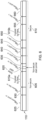
- FIG. 3 illustrates a data processing apparatus 300 in accordance with some embodiments.
- the data processing apparatus 300 includes memory circuitry 110, which defines a physical address space. At least part of this physical address space is logically divided into a number of segments 370a, 370b, 370c, 370d.
- a capability C0 380 is stored within one of the segments 370a.
- Tracking circuitry 310 is provided, which tracks whether a capability is stored within each of the segments 370a, 370b, 370c, 370d.
- the tracking circuitry 310 comprises a bloom filter.
- the bloom filter 310 provides a bit field made up of a number of bit vectors 330, 340, 350, 360.
- Each of the bit vectors 330, 340, 350, 360 corresponds with one of the segments 370a, 370b, 370c, 370d.
- the logical divisions may or may not be consistently sized and the size of each segment can be chosen arbitrarily, e.g. at startup or at runtime by software.
- each of the bit vectors 330, 340, 350, 360 are calculated by hashing the boundaries of each capability within the corresponding memory segment. For instance, if it is assumed that the only capability in the first segment 370a is the capability C0 380, then the corresponding bit vector 330 is produced by hashing the boundaries of capability C0 380. Each time a capability is added or moved to the first segment 370a, a hash of the boundaries of that capability is made and a logical OR is performed on the existing bit vector 330 corresponding with that segment 370a. Note that in the case of the bloom filter, no modification is made to the bit vectors 330, 340, 350, 360 as a consequence of a capability 380 being removed from the corresponding memory segment 370a.
- the bit vector 330 corresponding with the memory segment 370a will saturate. In other words, the corresponding bit vector 330 will become all 1s. This can be resolved by periodically rebuilding the bloom filter.
- the contents of the tracking circuitry are privileged and can therefore only be accessed in a defined manner - e.g. only by hardware or, in some embodiments, via a privileged mode into which the operating system can enter.
- invalidation circuitry 320 consults the tracking circuitry 310 to search for equivalent capabilities in the memory 300. Threads that are able to access the address space currently targeted by the revocation circuitry are halted until revocation completes. Also interrupts pertaining to software potentially able to access said address space are disabled. An equivalent capability cannot therefore be transferred into the part of the memory that has already been considered, which might cause a capability to be missed.. In these examples, a hash of the capability 380 to be invalidated is made. The hash is then compared to each of the bit vectors 330, 340, 350, 360, which have themselves been produced by performing a logical OR of the hashes of capabilities stored within the corresponding memory segment.
- This comparison could be achieved by performing a logical AND operation between the hash of the boundaries of the capability 380 to be invalidated and the bit vector to be tested. If the result is equal to the hash of the boundaries of the capability 380 to be invalidated, then a hit has occurred on that entry of the tracking circuitry 310.
- a capability C1 is equivalent to a capability C0 if the boundaries of C1 fall within the boundaries of C0.
- the least significant '1' and all lower bits, of the upper limit of each capability are set to '1'. For instance, if the upper limit of C0 is 00001000 then this is hashed to 00001111 and if the upper limit of C1 is 00000100 then this is hashed to 00000111. A logical AND between these produces 00000111, which is equal to the hashed upper limit of C1. In other words, the upper limit of C1 is less than or equal to the upper limit of C0.
- the same operation can be performed by checking the result of the AND operation against C0 rather than C1. This shows whether C0 is less than or equal to C1, which implies C1 is greater than or equal to C0.
- a further way of tracking this information is for the tracking circuitry itself to record the bounds information of each capability within the memory segment - either the exact addresses, relevant bits, or a hash. This would decrease the probability of a false positive occurring. However, checking each entry in the tracking circuitry would take longer, and further storage space would be required for the tracking circuitry.
- the tracking circuitry 310 is shown as a distinct element, in other examples, the tracking circuitry could take the form of a series of instructions executing on a Central Processing Unit (CPU) for instance. In these embodiments, the operations associated with tracking could be instigated by, for instance, an operating system or hypervisor. Regardless of whether the tracking circuitry is a distinct unit or not, the data used by the tracking circuitry (the tracking data) could be stored within the memory hierarchy (e.g. in main memory) or could be stored in dedicated storage circuitry.
- the data used by the tracking circuitry could be stored within the memory hierarchy (e.g. in main memory) or could be stored in dedicated storage circuitry.
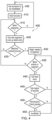
- step 415 determines whether there are more entries in the segment to be swept to be considered.
- Such an entry could consist of a byte or could consist of a block of the memory equal in size to that of the accessor (e.g. capability). For instance, if a capability is 128 bits in length, then the entries that are considered may be a multiple of 128 bits such that a capability will not be spread across a plurality of the entries. If there are no more entries to be considered, then the process returns to step 415.
- each of the entries of the tracking circuitry is tested for a hit. Where a hit occurs, the memory segment corresponding with the entry that hit is swept. Each entry within the memory segments that hit is tested to determine whether they are equivalent accessors or not.
- an accessor is considered to be equivalent if (a) it refers to a sub-region of the boundaries defined by the accessor to be invalidated and (b) the permissions are identical.
- other tests can be provided in order to test equivalence. For instance, the two regions may have to be identical.
- the permissions need not match, or the permissions of one accessor would only be required to be a subset of the permissions of another accessor. Further tests could also be added.
- this example does not explicitly require that the validity tag of an accessor to be tested is set. However, there is no need to invalidate an accessor that is already invalid and consequently a further test that could be carried out is for whether a particular entry contains a currently valid accessor or not. If the accessor to be tested is not valid, then non-equivalence is assumed.
- the process begins at a step 505 when a hit occurs on a particular entry of the bloom filter.
- the corresponding entry of the bloom filter for which a hit occurred is erased.
- a sweep of the corresponding memory segment begins. This also initiates a 'sweep mode' of operation for the invalidation circuitry.
- it is determined whether the entry in the memory segment is a capability.
- step 540 it is determined whether this capability defines a sub-region of the boundaries defined by the capability to be invalidated. If not, the process proceeds to step 555, discussed below. If so, then at step 545 it is determined whether there is equivalence between the permission, as previously described (e.g. a match or a subset in some embodiments). If not, then the process proceeds to step 555. Otherwise, the process proceeds to step 550 where the capability is invalidated due to it being considered to be an equivalent capability. The process then proceeds to step 535 where the validity tag is set for the capability to indicate that the capability is invalid. At step 555, a rewrite of the data is performed.
- the process of rewriting the data is achieved using the existing write mechanism, which because of the sweep mode being engaged, does not actually require the data to be physically rewritten back to memory.
- This makes it possible to use the write mechanism's existing process for updating the bloom filter table entry.
- the write mechanism is invoked, no data is physically written to the memory and the existing contents of the memory location remain the same. This makes it possible to re-use the existing mechanism while reducing an impact on memory bandwidth since the data need not be provided for a write process to occur. Having performed the re-write, the process returns to step 515.
- Figure 6 illustrates a number of improvements that can be made to the presently described technique.
- the address space provided by the memory 110 could be divided into non-secure memory 605 and secure memory 610.
- Different tracking tables e.g. bloom filter tables
- the above description illustrates how multiple tables can be provided for multiple security domains.
- the tracking circuitry could provide one table (e.g. a bloom filter table) for each different thread or privilege level.
- the table to be searched can then be switched as the thread changes. Consequently, the amount of memory to be searched can be reduced to only being the area of memory relevant to the current thread, which allows for finer granularity tracking to occur.
- one table can be provided for each Memory Protection unit (MPU).
- MPU Memory Protection unit
- the amount of memory to be tracked could change, and this can be compensated for.
- One way to do this is to use the above system of 'flags' for areas outside the main tracked region(s) of memory.
- a further possibility is to extend the table (providing sufficient storage is available) to store more entries. If further storage is not available, it is possible to compensate by increasing the 'segment size', e.g. the size of each memory region covered by an entry in the tracking circuitry.
- a buffer can be provided to store frequently accessed entries in the tracking circuitry. This is especially beneficial if the data structure used by the tracking circuitry otherwise has a long latency (e.g. if it is stored in main memory).
- a further possibility is to include an in-memory update instruction. Such an instruction would acquire a value in the memory, perform an operation (such as a logical OR operation between the value in memory and a further value) and write the result back to memory. In this way, an update to the tracking circuitry's data can be performed without the data having to be retrieved from memory, operated upon, and written back in a series of memory transactions that would be time consuming.
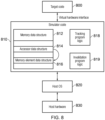
- FIG 8 illustrates a simulator implementation that may be used. Whilst the earlier described embodiments implement the present invention in terms of apparatus and methods for operating specific processing hardware supporting the techniques concerned, it is also possible to provide an instruction execution environment in accordance with the embodiments described herein which is implemented through the use of a computer program. Such computer programs are often referred to as simulators, insofar as they provide a software based implementation of a hardware architecture. Varieties of simulator computer programs include emulators, virtual machines, models, and binary translators, including dynamic binary translators. Typically, a simulator implementation may run on a host processor 830, optionally running a host operating system 820, supporting the simulator program 810.
- the simulator program 810 may be stored on a computer-readable storage medium (which may be a non-transitory medium), and provides a program interface (instruction execution environment) to the target code 800 (which may include applications, operating systems and a hypervisor) which is the same as the interface of the hardware architecture being modelled by the simulator program 810.
- the program instructions of the target code 800 may be executed from within the instruction execution environment using the simulator program 810, so that a host computer 830 which does not actually have the hardware features of the apparatus 300 discussed above can emulate these features.
Landscapes
- Engineering & Computer Science (AREA)
- Theoretical Computer Science (AREA)
- Physics & Mathematics (AREA)
- General Engineering & Computer Science (AREA)
- General Physics & Mathematics (AREA)
- Software Systems (AREA)
- Computer Security & Cryptography (AREA)
- Storage Device Security (AREA)
- Memory System (AREA)
Claims (15)
- Datenverarbeitungsvorrichtung, umfassend:eine Speicherschaltung (110) zum Bereitstellen eines physischen Adressraums, der logisch in eine Vielzahl von Speichersegmenten (370) unterteilt ist, und zum Speichern einer Vielzahl von Akzessoren (100) mit zugeordneten Gültigkeitsindikatoren (140), wobei ein gegebener Akzessor den Zugriff auf einen gegebenen Bereich (180) des physischen Adressraums in Abhängigkeit mindestens seines zugeordneten Gültigkeitsindikators steuert;gekennzeichnet durcheine Verfolgungsschaltung (310), um zu verfolgen, welche der Speichersegmente die Akzessoren enthalten; undeine Invalidierungsschaltung (320) zum Reagieren auf eine Anforderung, den gegebenen Akzessor zu invalidieren, durch ein Bestimmen eines Satzes äquivalenter Akzessoren unter Bezugnahme auf die Verfolgungsschaltung, und den gegebenen Akzessor und die äquivalenten Akzessoren zu invalidieren, durch Festlegen des zugeordneten Gültigkeitsindikators jedes des gegebenen Akzessors und der äquivalenten Akzessoren zum Angeben, dass der gegebene Akzessor und die äquivalenten Akzessoren ungültig sind;wobei die äquivalenten Akzessoren diejenigen der Akzessoren umfassen, die den Zugriff auf den gegebenen Bereich des physischen Adressraums oder einen weiteren Bereich, der den gegebenen Bereich des physischen Adressraums überlappt, steuern.
- Datenverarbeitungsvorrichtung nach Anspruch 1, wobei
die äquivalenten Akzessoren diejenigen der Akzessoren umfassen, die den Zugriff auf den gegebenen Bereich des physischen Adressraums steuern. - Datenverarbeitungsvorrichtung nach einem der vorhergehenden Ansprüche, wobei
der gegebene Akzessor einen Zeiger umfasst. - Datenverarbeitungsvorrichtung nach Anspruch 3, wobei
der gegebene Akzessor Grenzinformationen umfasst, die den gegebenen Bereich des physischen Adressraums, für den der Zeiger für einen Zugriff verwendet werden kann, definieren. - Datenverarbeitungsvorrichtung nach Anspruch 4, wobei
die äquivalenten Akzessoren diejenigen der Akzessoren umfassen, bei denen die Grenzinformationen entweder:mit denen des gegebenen Akzessors übereinstimmen; odereinen Unterbereich des gegebenen Bereichs des physischen Adressraums definieren. - Datenverarbeitungsvorrichtung nach einem der vorhergehenden Ansprüche, wobei
die Verfolgungsschaltung zum Angeben, ob jedes der Speichersegmente einen der Akzessoren enthält, ausgelegt ist. - Datenverarbeitungsvorrichtung nach einem der vorhergehenden Ansprüche, wobeidie Verfolgungsschaltung ein Bitfeld umfasst, das eine Vielzahl von Bits umfasst; unddie Vielzahl von Bits zum Angeben, welches der Speichersegmente einen der Akzessoren enthält, ausgelegt ist.
- Datenverarbeitungsvorrichtung nach einem der vorhergehenden Ansprüche, wobei
die Verfolgungsschaltung eine Hash-Tabelle umfasst; und die Hash-Tabelle als Eingabe einen Hash mindestens eines Teils des gegebenen Akzessors akzeptiert. - Datenverarbeitungsvorrichtung nach einem der vorhergehenden Ansprüche, wobei
die Verfolgungsschaltung ein Bloom-Filter umfasst. - Datenverarbeitungsvorrichtung nach Anspruch 9, wobei
die Invalidierungsschaltung, wenn die Verfolgungsschaltung angibt, dass ein gegebenes Speichersegment einen der Akzessoren enthält, zum Durchführen eines Sweeps des gegebenen Speichersegments und Neuerstellen eines Eintrags des Bloom-Filters, der dem gegebenen Speichersegment entspricht, ausgelegt ist. - Datenverarbeitungsvorrichtung nach Anspruch 10, wobei
die Invalidierungsschaltung zum Neuerstellen des Eintrags des Bloom-Filters, der dem gegebenen Speichersegment entspricht, durch Berücksichtigen des zugeordneten Gültigkeitsindikators jedes der Akzessoren im gegebenen Speichersegment ausgelegt ist. - Datenverarbeitungsvorrichtung nach einem der Ansprüche 10-11, wobeider Eintrag des Bloom-Filters, der dem gegebenen Speichersegment entspricht, durch Durchführen eines Neuschreibvorgangs derjenigen der Akzessoren, die sich im gegebenen Speichersegment befinden, neu erstellt wird; unddie Invalidierungsschaltung zum Betrieb in einem Sweep-Betriebsmodus ausgelegt ist, in dem der Neuschreibvorgang durch ein Verhindern eines physischen Schreibens des Akzessors in den Speicher, wenn der zugeordnete Gültigkeitsindikator eine Gültigkeit angibt, durchgeführt wird.
- Datenverarbeitungsvorrichtung nach einem der Ansprüche 1-12, wobei
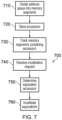
die Invalidierungsschaltung, wenn die Verfolgungsschaltung angibt, dass ein gegebenes Speichersegment einen der Akzessoren enthält, zum Sweepen des gegebenen Speichersegments zum Bestimmen der äquivalenten Akzessoren ausgelegt ist. - Datenverarbeitungsverfahren, umfassend:logisches Teilen (710) eines physischen Adressraums eines Speichers (110) in eine Vielzahl von Speichersegmenten (370);Speichern (720) einer Vielzahl von Akzessoren (100) mit zugeordneten Gültigkeitsindikatoren (140), wobei ein gegebener Akzessor den Zugriff auf einen gegebenen Bereich (180) des physischen Adressraums in Abhängigkeit mindestens seines zugeordneten Gültigkeitsindikators steuert; gekennzeichnet durchVerfolgen (730), welche der Speichersegmente die Akzessoren enthalten;Reagieren auf eine Anforderung zum Invalidieren des gegebenen Akzessors durch Bestimmen (750) eines Satzes äquivalenter Akzessoren unter Bezugnahme auf eine Verfolgungsschaltung (310) undInvalidieren (760) des gegebenen Akzessors und der äquivalenten Akzessoren durch Festlegen des zugehörigen Gültigkeitsindikators jedes des gegebenen Akzessors und der äquivalenten Akzessoren zum Angeben, dass der gegebene Akzessor und die äquivalenten Akzessoren ungültig sind;wobei die äquivalenten Akzessoren diejenigen der Akzessoren umfassen, die den Zugriff auf den gegebenen Bereich des physischen Adressraums oder einen weiteren Bereich, der den gegebenen Bereich des physischen Adressraums überlappt, steuern.
- Computerprogramm, umfassend Anweisungen, die, wenn sie auf einer Host-Datenverarbeitungsvorrichtung ausgeführt werden, die Host-Datenverarbeitungsvorrichtung (830) dazu veranlassen, eine Anweisungsausführungsumgebung(810) bereitzustellen, umfassend:eine Vielzahl von Datenstrukturen (814) zum Speichern einer Vielzahl von Akzessoren (100) mit zugeordneten Gültigkeitsindikatoren (140), wobei ein gegebener Akzessor den Zugriff auf eine gegebene Datenstruktur (816) in Abhängigkeit mindestens seines zugeordneten Gültigkeitsindikators steuert; gekennzeichnet durch Verfolgungsprogrammlogik (818) zum Verfolgen, welche der Datenstrukturen die Akzessoren enthalten; undInvalidierungsprogrammlogik (819) zum Reagieren auf eine Anforderung, den gegebenen Akzessor zu invalidieren, durch ein Bestimmen eines Satzes äquivalenter Akzessoren unter Bezugnahme auf die Verfolgungsprogrammlogik, undden gegebenen Akzessor und die äquivalenten Akzessoren zu invalidieren, durch Festlegen des zugeordneten Gültigkeitsindikators jedes des gegebenen Akzessors und der äquivalenten Akzessoren zum Angeben, dass der gegebene Akzessor und die äquivalenten Akzessoren ungültig sind;wobei die äquivalenten Akzessoren diejenigen der Akzessoren umfassen, die den Zugriff auf die gegebene Datenstruktur steuern.
Applications Claiming Priority (2)
| Application Number | Priority Date | Filing Date | Title |
|---|---|---|---|
| US16/825,021 US11200175B2 (en) | 2020-03-20 | 2020-03-20 | Memory accessor invailidation |
| PCT/GB2021/050044 WO2021186142A1 (en) | 2020-03-20 | 2021-01-08 | Memory accessor invalidation |
Publications (2)
| Publication Number | Publication Date |
|---|---|
| EP4121862A1 EP4121862A1 (de) | 2023-01-25 |
| EP4121862B1 true EP4121862B1 (de) | 2025-02-26 |
Family
ID=74183461
Family Applications (1)
| Application Number | Title | Priority Date | Filing Date |
|---|---|---|---|
| EP21700340.9A Active EP4121862B1 (de) | 2020-03-20 | 2021-01-08 | Ungültigkeitserklärung eines speicherzugriffs |
Country Status (6)
| Country | Link |
|---|---|
| US (1) | US11200175B2 (de) |
| EP (1) | EP4121862B1 (de) |
| JP (1) | JP7649317B2 (de) |
| KR (1) | KR20220156028A (de) |
| CN (1) | CN115398410A (de) |
| WO (1) | WO2021186142A1 (de) |
Families Citing this family (2)
| Publication number | Priority date | Publication date | Assignee | Title |
|---|---|---|---|---|
| GB2611823B (en) * | 2021-10-18 | 2023-10-11 | Advanced Risc Mach Ltd | Technique for handling sealed capabilities |
| US20230342289A1 (en) * | 2022-04-21 | 2023-10-26 | Arm Limited | Apparatus and method for managing capabilities |
Family Cites Families (9)
| Publication number | Priority date | Publication date | Assignee | Title |
|---|---|---|---|---|
| US7287140B1 (en) * | 2003-07-28 | 2007-10-23 | Massachusetts Institute Of Technology | System and technique for fine-grained computer memory protection |
| WO2007101969A1 (en) | 2006-03-06 | 2007-09-13 | Arm Limited | Accessing a cache in a data processing apparatus |
| US9619387B2 (en) * | 2014-02-21 | 2017-04-11 | Arm Limited | Invalidating stored address translations |
| GB2544315B (en) | 2015-11-12 | 2018-02-14 | Advanced Risc Mach Ltd | An apparatus and method for controlling use of bounded pointers |
| CN108701002B (zh) * | 2016-02-29 | 2021-10-29 | 株式会社日立制作所 | 虚拟存储系统 |
| US9772943B1 (en) | 2016-04-01 | 2017-09-26 | Cavium, Inc. | Managing synonyms in virtual-address caches |
| GB2562062B (en) | 2017-05-02 | 2019-08-14 | Advanced Risc Mach Ltd | An apparatus and method for managing capability metadata |
| GB2565069B (en) | 2017-07-31 | 2021-01-06 | Advanced Risc Mach Ltd | Address translation cache |
| JP7184074B2 (ja) | 2018-02-15 | 2022-12-06 | ソニーグループ株式会社 | メモリ管理装置及びメモリ管理方法、並びに情報処理装置 |
-
2020
- 2020-03-20 US US16/825,021 patent/US11200175B2/en active Active
-
2021
- 2021-01-08 CN CN202180027961.XA patent/CN115398410A/zh active Pending
- 2021-01-08 JP JP2022555652A patent/JP7649317B2/ja active Active
- 2021-01-08 WO PCT/GB2021/050044 patent/WO2021186142A1/en not_active Ceased
- 2021-01-08 EP EP21700340.9A patent/EP4121862B1/de active Active
- 2021-01-08 KR KR1020227035803A patent/KR20220156028A/ko active Pending
Also Published As
| Publication number | Publication date |
|---|---|
| EP4121862A1 (de) | 2023-01-25 |
| US20210294748A1 (en) | 2021-09-23 |
| CN115398410A (zh) | 2022-11-25 |
| US11200175B2 (en) | 2021-12-14 |
| JP7649317B2 (ja) | 2025-03-19 |
| KR20220156028A (ko) | 2022-11-24 |
| WO2021186142A1 (en) | 2021-09-23 |
| JP2023518042A (ja) | 2023-04-27 |
Similar Documents
| Publication | Publication Date | Title |
|---|---|---|
| US11474956B2 (en) | Memory protection unit using memory protection table stored in memory system | |
| CA2050834C (en) | Multiple controlled data-space facility | |
| KR100927750B1 (ko) | 무단 변경 방지 방법, 무단 변경 방지 프로세서, 무단 변경방지 제품, 무단 변경 방지 시스템 | |
| JP5581403B2 (ja) | メモリのセキュア領域および非セキュア領域へのセキュアモードページテーブルデータの格納 | |
| US8996814B2 (en) | System and method for providing stealth memory | |
| CN114222981B (zh) | 能力写入地址跟踪 | |
| US7472249B2 (en) | Kernel memory free algorithm | |
| US20060036830A1 (en) | Method for monitoring access to virtual memory pages | |
| KR102894487B1 (ko) | 메모리 액세스를 제어하기 위한 장치 및 방법 | |
| JP2020527777A (ja) | レルム階層における目標レルムの無効化 | |
| JP2023526811A (ja) | タグチェック装置及び方法 | |
| EP4121862B1 (de) | Ungültigkeitserklärung eines speicherzugriffs | |
| JPH0652054A (ja) | 仮想記憶制御装置 | |
| US7500074B2 (en) | Identifying relocatable kernel mappings | |
| US20230342289A1 (en) | Apparatus and method for managing capabilities | |
| JP7369720B2 (ja) | アクションをトリガするための装置及び方法 | |
| RU2623883C1 (ru) | Способ выполнения инструкций в системной памяти | |
| CN120653410A (zh) | 内存资源分配方法、资源分配平台、计算设备及计算机可读存储介质 |
Legal Events
| Date | Code | Title | Description |
|---|---|---|---|
| STAA | Information on the status of an ep patent application or granted ep patent |
Free format text: STATUS: UNKNOWN |
|
| STAA | Information on the status of an ep patent application or granted ep patent |
Free format text: STATUS: THE INTERNATIONAL PUBLICATION HAS BEEN MADE |
|
| PUAI | Public reference made under article 153(3) epc to a published international application that has entered the european phase |
Free format text: ORIGINAL CODE: 0009012 |
|
| STAA | Information on the status of an ep patent application or granted ep patent |
Free format text: STATUS: REQUEST FOR EXAMINATION WAS MADE |
|
| 17P | Request for examination filed |
Effective date: 20221007 |
|
| AK | Designated contracting states |
Kind code of ref document: A1 Designated state(s): AL AT BE BG CH CY CZ DE DK EE ES FI FR GB GR HR HU IE IS IT LI LT LU LV MC MK MT NL NO PL PT RO RS SE SI SK SM TR |
|
| DAV | Request for validation of the european patent (deleted) | ||
| DAX | Request for extension of the european patent (deleted) | ||
| GRAP | Despatch of communication of intention to grant a patent |
Free format text: ORIGINAL CODE: EPIDOSNIGR1 |
|
| STAA | Information on the status of an ep patent application or granted ep patent |
Free format text: STATUS: GRANT OF PATENT IS INTENDED |
|
| INTG | Intention to grant announced |
Effective date: 20240418 |
|
| GRAJ | Information related to disapproval of communication of intention to grant by the applicant or resumption of examination proceedings by the epo deleted |
Free format text: ORIGINAL CODE: EPIDOSDIGR1 |
|
| STAA | Information on the status of an ep patent application or granted ep patent |
Free format text: STATUS: REQUEST FOR EXAMINATION WAS MADE |
|
| GRAP | Despatch of communication of intention to grant a patent |
Free format text: ORIGINAL CODE: EPIDOSNIGR1 |
|
| STAA | Information on the status of an ep patent application or granted ep patent |
Free format text: STATUS: GRANT OF PATENT IS INTENDED |
|
| INTC | Intention to grant announced (deleted) | ||
| INTG | Intention to grant announced |
Effective date: 20240910 |
|
| GRAS | Grant fee paid |
Free format text: ORIGINAL CODE: EPIDOSNIGR3 |
|
| P01 | Opt-out of the competence of the unified patent court (upc) registered |
Free format text: CASE NUMBER: APP_64200/2024 Effective date: 20241204 |
|
| GRAA | (expected) grant |
Free format text: ORIGINAL CODE: 0009210 |
|
| STAA | Information on the status of an ep patent application or granted ep patent |
Free format text: STATUS: THE PATENT HAS BEEN GRANTED |
|
| AK | Designated contracting states |
Kind code of ref document: B1 Designated state(s): AL AT BE BG CH CY CZ DE DK EE ES FI FR GB GR HR HU IE IS IT LI LT LU LV MC MK MT NL NO PL PT RO RS SE SI SK SM TR |
|
| REG | Reference to a national code |
Ref country code: GB Ref legal event code: FG4D |
|
| REG | Reference to a national code |
Ref country code: CH Ref legal event code: EP |
|
| REG | Reference to a national code |
Ref country code: DE Ref legal event code: R096 Ref document number: 602021026733 Country of ref document: DE |
|
| REG | Reference to a national code |
Ref country code: IE Ref legal event code: FG4D |
|
| REG | Reference to a national code |
Ref country code: NL Ref legal event code: MP Effective date: 20250226 |
|
| PG25 | Lapsed in a contracting state [announced via postgrant information from national office to epo] |
Ref country code: RS Free format text: LAPSE BECAUSE OF FAILURE TO SUBMIT A TRANSLATION OF THE DESCRIPTION OR TO PAY THE FEE WITHIN THE PRESCRIBED TIME-LIMIT Effective date: 20250526 |
|
| PG25 | Lapsed in a contracting state [announced via postgrant information from national office to epo] |
Ref country code: FI Free format text: LAPSE BECAUSE OF FAILURE TO SUBMIT A TRANSLATION OF THE DESCRIPTION OR TO PAY THE FEE WITHIN THE PRESCRIBED TIME-LIMIT Effective date: 20250226 |
|
| PG25 | Lapsed in a contracting state [announced via postgrant information from national office to epo] |
Ref country code: PL Free format text: LAPSE BECAUSE OF FAILURE TO SUBMIT A TRANSLATION OF THE DESCRIPTION OR TO PAY THE FEE WITHIN THE PRESCRIBED TIME-LIMIT Effective date: 20250226 |
|
| PG25 | Lapsed in a contracting state [announced via postgrant information from national office to epo] |
Ref country code: ES Free format text: LAPSE BECAUSE OF FAILURE TO SUBMIT A TRANSLATION OF THE DESCRIPTION OR TO PAY THE FEE WITHIN THE PRESCRIBED TIME-LIMIT Effective date: 20250226 |
|
| REG | Reference to a national code |
Ref country code: LT Ref legal event code: MG9D |
|
| PG25 | Lapsed in a contracting state [announced via postgrant information from national office to epo] |
Ref country code: NO Free format text: LAPSE BECAUSE OF FAILURE TO SUBMIT A TRANSLATION OF THE DESCRIPTION OR TO PAY THE FEE WITHIN THE PRESCRIBED TIME-LIMIT Effective date: 20250526 Ref country code: IS Free format text: LAPSE BECAUSE OF FAILURE TO SUBMIT A TRANSLATION OF THE DESCRIPTION OR TO PAY THE FEE WITHIN THE PRESCRIBED TIME-LIMIT Effective date: 20250626 |
|
| PG25 | Lapsed in a contracting state [announced via postgrant information from national office to epo] |
Ref country code: NL Free format text: LAPSE BECAUSE OF FAILURE TO SUBMIT A TRANSLATION OF THE DESCRIPTION OR TO PAY THE FEE WITHIN THE PRESCRIBED TIME-LIMIT Effective date: 20250226 |
|
| PG25 | Lapsed in a contracting state [announced via postgrant information from national office to epo] |
Ref country code: HR Free format text: LAPSE BECAUSE OF FAILURE TO SUBMIT A TRANSLATION OF THE DESCRIPTION OR TO PAY THE FEE WITHIN THE PRESCRIBED TIME-LIMIT Effective date: 20250226 |
|
| PG25 | Lapsed in a contracting state [announced via postgrant information from national office to epo] |
Ref country code: PT Free format text: LAPSE BECAUSE OF FAILURE TO SUBMIT A TRANSLATION OF THE DESCRIPTION OR TO PAY THE FEE WITHIN THE PRESCRIBED TIME-LIMIT Effective date: 20250626 Ref country code: LV Free format text: LAPSE BECAUSE OF FAILURE TO SUBMIT A TRANSLATION OF THE DESCRIPTION OR TO PAY THE FEE WITHIN THE PRESCRIBED TIME-LIMIT Effective date: 20250226 |
|
| PG25 | Lapsed in a contracting state [announced via postgrant information from national office to epo] |
Ref country code: GR Free format text: LAPSE BECAUSE OF FAILURE TO SUBMIT A TRANSLATION OF THE DESCRIPTION OR TO PAY THE FEE WITHIN THE PRESCRIBED TIME-LIMIT Effective date: 20250527 Ref country code: BG Free format text: LAPSE BECAUSE OF FAILURE TO SUBMIT A TRANSLATION OF THE DESCRIPTION OR TO PAY THE FEE WITHIN THE PRESCRIBED TIME-LIMIT Effective date: 20250226 |
|
| REG | Reference to a national code |
Ref country code: AT Ref legal event code: MK05 Ref document number: 1771331 Country of ref document: AT Kind code of ref document: T Effective date: 20250226 |
|
| PG25 | Lapsed in a contracting state [announced via postgrant information from national office to epo] |
Ref country code: SE Free format text: LAPSE BECAUSE OF FAILURE TO SUBMIT A TRANSLATION OF THE DESCRIPTION OR TO PAY THE FEE WITHIN THE PRESCRIBED TIME-LIMIT Effective date: 20250226 |
|
| PG25 | Lapsed in a contracting state [announced via postgrant information from national office to epo] |
Ref country code: SM Free format text: LAPSE BECAUSE OF FAILURE TO SUBMIT A TRANSLATION OF THE DESCRIPTION OR TO PAY THE FEE WITHIN THE PRESCRIBED TIME-LIMIT Effective date: 20250226 |
|
| PG25 | Lapsed in a contracting state [announced via postgrant information from national office to epo] |
Ref country code: DK Free format text: LAPSE BECAUSE OF FAILURE TO SUBMIT A TRANSLATION OF THE DESCRIPTION OR TO PAY THE FEE WITHIN THE PRESCRIBED TIME-LIMIT Effective date: 20250226 |
|
| PG25 | Lapsed in a contracting state [announced via postgrant information from national office to epo] |
Ref country code: IT Free format text: LAPSE BECAUSE OF FAILURE TO SUBMIT A TRANSLATION OF THE DESCRIPTION OR TO PAY THE FEE WITHIN THE PRESCRIBED TIME-LIMIT Effective date: 20250226 |
|
| PG25 | Lapsed in a contracting state [announced via postgrant information from national office to epo] |
Ref country code: AT Free format text: LAPSE BECAUSE OF FAILURE TO SUBMIT A TRANSLATION OF THE DESCRIPTION OR TO PAY THE FEE WITHIN THE PRESCRIBED TIME-LIMIT Effective date: 20250226 |
|
| PG25 | Lapsed in a contracting state [announced via postgrant information from national office to epo] |
Ref country code: CZ Free format text: LAPSE BECAUSE OF FAILURE TO SUBMIT A TRANSLATION OF THE DESCRIPTION OR TO PAY THE FEE WITHIN THE PRESCRIBED TIME-LIMIT Effective date: 20250226 Ref country code: EE Free format text: LAPSE BECAUSE OF FAILURE TO SUBMIT A TRANSLATION OF THE DESCRIPTION OR TO PAY THE FEE WITHIN THE PRESCRIBED TIME-LIMIT Effective date: 20250226 |
|
| PG25 | Lapsed in a contracting state [announced via postgrant information from national office to epo] |
Ref country code: RO Free format text: LAPSE BECAUSE OF FAILURE TO SUBMIT A TRANSLATION OF THE DESCRIPTION OR TO PAY THE FEE WITHIN THE PRESCRIBED TIME-LIMIT Effective date: 20250226 |
|
| PG25 | Lapsed in a contracting state [announced via postgrant information from national office to epo] |
Ref country code: SK Free format text: LAPSE BECAUSE OF FAILURE TO SUBMIT A TRANSLATION OF THE DESCRIPTION OR TO PAY THE FEE WITHIN THE PRESCRIBED TIME-LIMIT Effective date: 20250226 |
|
| REG | Reference to a national code |
Ref country code: DE Ref legal event code: R097 Ref document number: 602021026733 Country of ref document: DE |
|
| PLBE | No opposition filed within time limit |
Free format text: ORIGINAL CODE: 0009261 |
|
| STAA | Information on the status of an ep patent application or granted ep patent |
Free format text: STATUS: NO OPPOSITION FILED WITHIN TIME LIMIT |
|
| PGFP | Annual fee paid to national office [announced via postgrant information from national office to epo] |
Ref country code: GB Payment date: 20251219 Year of fee payment: 6 |
|
| PGFP | Annual fee paid to national office [announced via postgrant information from national office to epo] |
Ref country code: FR Payment date: 20251217 Year of fee payment: 6 |
|
| 26N | No opposition filed |
Effective date: 20251127 |