EP4120784A1 - Procédé et appareil de transmission de données, dispositif de communication et support de stockage - Google Patents
Procédé et appareil de transmission de données, dispositif de communication et support de stockage Download PDFInfo
- Publication number
- EP4120784A1 EP4120784A1 EP20924342.7A EP20924342A EP4120784A1 EP 4120784 A1 EP4120784 A1 EP 4120784A1 EP 20924342 A EP20924342 A EP 20924342A EP 4120784 A1 EP4120784 A1 EP 4120784A1
- Authority
- EP
- European Patent Office
- Prior art keywords
- link
- transmission
- information
- beacon frame
- transmission link
- Prior art date
- Legal status (The legal status is an assumption and is not a legal conclusion. Google has not performed a legal analysis and makes no representation as to the accuracy of the status listed.)
- Pending
Links
- 230000005540 biological transmission Effects 0.000 title claims abstract description 407
- 238000004891 communication Methods 0.000 title claims abstract description 161
- 238000000034 method Methods 0.000 title claims abstract description 57
- 230000004044 response Effects 0.000 claims description 59
- 238000005516 engineering process Methods 0.000 description 14
- 238000012545 processing Methods 0.000 description 11
- 238000005265 energy consumption Methods 0.000 description 9
- 238000010586 diagram Methods 0.000 description 8
- 230000003993 interaction Effects 0.000 description 4
- 230000003287 optical effect Effects 0.000 description 4
- 230000005236 sound signal Effects 0.000 description 4
- 238000007726 management method Methods 0.000 description 3
- 230000008569 process Effects 0.000 description 3
- 230000009471 action Effects 0.000 description 2
- 230000002776 aggregation Effects 0.000 description 2
- 238000004220 aggregation Methods 0.000 description 2
- 230000008859 change Effects 0.000 description 2
- 230000001133 acceleration Effects 0.000 description 1
- 230000006978 adaptation Effects 0.000 description 1
- 238000003491 array Methods 0.000 description 1
- 230000003190 augmentative effect Effects 0.000 description 1
- 238000010276 construction Methods 0.000 description 1
- 238000013500 data storage Methods 0.000 description 1
- 238000003384 imaging method Methods 0.000 description 1
- 239000004973 liquid crystal related substance Substances 0.000 description 1
- 238000012986 modification Methods 0.000 description 1
- 230000004048 modification Effects 0.000 description 1
- 230000002093 peripheral effect Effects 0.000 description 1
- 230000003068 static effect Effects 0.000 description 1
- 238000012546 transfer Methods 0.000 description 1
Images



Classifications
-
- H—ELECTRICITY
- H04—ELECTRIC COMMUNICATION TECHNIQUE
- H04W—WIRELESS COMMUNICATION NETWORKS
- H04W28/00—Network traffic management; Network resource management
- H04W28/02—Traffic management, e.g. flow control or congestion control
- H04W28/0252—Traffic management, e.g. flow control or congestion control per individual bearer or channel
- H04W28/0263—Traffic management, e.g. flow control or congestion control per individual bearer or channel involving mapping traffic to individual bearers or channels, e.g. traffic flow template [TFT]
-
- H—ELECTRICITY
- H04—ELECTRIC COMMUNICATION TECHNIQUE
- H04W—WIRELESS COMMUNICATION NETWORKS
- H04W84/00—Network topologies
- H04W84/02—Hierarchically pre-organised networks, e.g. paging networks, cellular networks, WLAN [Wireless Local Area Network] or WLL [Wireless Local Loop]
- H04W84/10—Small scale networks; Flat hierarchical networks
- H04W84/12—WLAN [Wireless Local Area Networks]
-
- H—ELECTRICITY
- H04—ELECTRIC COMMUNICATION TECHNIQUE
- H04W—WIRELESS COMMUNICATION NETWORKS
- H04W28/00—Network traffic management; Network resource management
- H04W28/02—Traffic management, e.g. flow control or congestion control
- H04W28/10—Flow control between communication endpoints
- H04W28/14—Flow control between communication endpoints using intermediate storage
-
- H—ELECTRICITY
- H04—ELECTRIC COMMUNICATION TECHNIQUE
- H04W—WIRELESS COMMUNICATION NETWORKS
- H04W52/00—Power management, e.g. Transmission Power Control [TPC] or power classes
- H04W52/02—Power saving arrangements
- H04W52/0203—Power saving arrangements in the radio access network or backbone network of wireless communication networks
- H04W52/0206—Power saving arrangements in the radio access network or backbone network of wireless communication networks in access points, e.g. base stations
-
- H—ELECTRICITY
- H04—ELECTRIC COMMUNICATION TECHNIQUE
- H04W—WIRELESS COMMUNICATION NETWORKS
- H04W74/00—Wireless channel access
- H04W74/02—Hybrid access
-
- H—ELECTRICITY
- H04—ELECTRIC COMMUNICATION TECHNIQUE
- H04W—WIRELESS COMMUNICATION NETWORKS
- H04W74/00—Wireless channel access
- H04W74/08—Non-scheduled access, e.g. ALOHA
-
- Y—GENERAL TAGGING OF NEW TECHNOLOGICAL DEVELOPMENTS; GENERAL TAGGING OF CROSS-SECTIONAL TECHNOLOGIES SPANNING OVER SEVERAL SECTIONS OF THE IPC; TECHNICAL SUBJECTS COVERED BY FORMER USPC CROSS-REFERENCE ART COLLECTIONS [XRACs] AND DIGESTS
- Y02—TECHNOLOGIES OR APPLICATIONS FOR MITIGATION OR ADAPTATION AGAINST CLIMATE CHANGE
- Y02D—CLIMATE CHANGE MITIGATION TECHNOLOGIES IN INFORMATION AND COMMUNICATION TECHNOLOGIES [ICT], I.E. INFORMATION AND COMMUNICATION TECHNOLOGIES AIMING AT THE REDUCTION OF THEIR OWN ENERGY USE
- Y02D30/00—Reducing energy consumption in communication networks
- Y02D30/70—Reducing energy consumption in communication networks in wireless communication networks
Definitions
- the disclosure relates to the field of wireless communication technologies but is not limited to the field of wireless communication technologies, and in particular, to a method and an apparatus for transmitting data, a communication device, and a storage medium.
- the institute of electrical and electronics engineers established a study group (SG) to study a next-generation mainstream wireless fidelity (Wi-Fi) technology, namely IEEE802.11be standard.
- the studying scope is Wi-Fi transmission with a maximum bandwidth of 320MHz, aggregation and coordination of multiple frequency bands, and the like.
- the proposed goal is to improve the speed and throughput of the existing 802.11ax by at least four times.
- the scenarios of the new technologies are video transmission, augmented reality (AR), virtual reality (VR) and the like.
- the aggregation and coordination technology of multiple frequency bands refers to simultaneous communication among Wi-Fi devices in transmission links of different frequency bands such as 2.4GHz, 5.8GHz, and 6-7GHz or in transmission links of different bandwidths under the same frequency band.
- STA station
- a dormant state There are two manners for a station (STA) that enters a dormant state to obtain cached data.
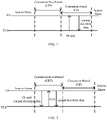
- the STA periodically wakes up and listens to a beacon frame, to determine whether an access point (AP) has cached downlink data. If there is a cached downlink data frame, the STA can transmit a power save poll (PS-poll) during a contention period (CP) to obtain resources to obtain downlink data.
- PS-poll power save poll
- CP contention period
- the STA negotiates a wake-up period with the AP, and the AP transmits a contention free-poll (CF-poll) during a contention-free period (CFP) to transmit the cached downlink data.
- CF-poll contention free-poll
- CCP contention-free period
- Embodiments of the disclosure provide a method and an apparatus for transmitting data, a communication device, and a storage medium.
- a method for transmitting data is provided.
- the method is applied to a first communication device.
- the method includes: selecting one transmission link from a plurality of transmission links to transmit a beacon frame carrying downlink link indication information, in which the downlink link indication information is configured to indicate a transmission link including cached downlink data in the plurality of transmission links; and transmitting the beacon frame through the transmission link that is selected.
- the downlink link indication information includes: traffic indication map (TIM) information and/or identification information, in which the TIM information is configured to indicate a second communication device to which the transmission link including the cached downlink data belongs, and the identification information is configured to indicate the transmission link including the cached downlink data.
- TIM traffic indication map
- identification information is configured to indicate the transmission link including the cached downlink data.
- the beacon frame further includes: contention period indication information, in which the contention period indication information is configured to indicate a time domain position of a contention period of each of the plurality of transmission links.
- the contention period indication information includes: identification information of one or more unselected transmission links in the plurality of transmission links, and first time interval information between a contention period of each of the one or more unselected transmission links and the beacon frame.
- the contention period indication information includes: second time interval information between a contention period of the transmission link that is selected and the beacon frame.
- the transmission link that is selected includes: an initial transmission link used in response to establishing an association relationship with a second communication device.
- the method further includes: transmitting link selection information, in which the link selection information is configured to indicate the transmission link that is selected.
- transmitting the link selection information includes: transmitting an association response frame, in which a predetermined information element of the association response frame or a preset bit of a media access control (MAC) frame header of the association response frame carries the link selection information.
- MAC media access control
- a method for transmitting data is provided.
- the method is applied to a second communication device.
- the method includes: receiving a beacon frame carrying downlink link indication information on a transmission link that is selected from a plurality of transmission links; and determining a transmission link including cached downlink data in the plurality of transmission links based on an indication of the downlink link indication information.
- determining the transmission link including the cached downlink data in the plurality of transmission links based on the indication of the downlink link indication information includes: determining the transmission link including the cached downlink data, of the second communication device, based on TIM information and/or identification information in the beacon frame.
- the method further includes: determining a time domain position of a contention period of each of the plurality of transmission links based on contention period indication information in the beacon frame.
- determining the time domain position of the contention period of each of the plurality of transmission links based on the contention period indication information in the beacon frame includes: determining a time interval between a contention period of each of one or more unselected transmission links in the plurality of transmission links and the beacon frame based on identification information and first time interval information in the beacon frame.
- determining the time domain position of the contention period of each of the plurality of transmission links based on the contention period indication information in the beacon frame includes: determining a time interval between a contention period of the transmission link that is selected and the beacon frame based on second time interval information in the beacon frame.
- receiving the beacon frame carrying the downlink link indication information on the transmission link that is selected from the plurality of transmission links includes: receiving the beacon frame on a transmission link used in response to establishing an association relationship with a first communication device.
- the method further includes: receiving link selection information; and receiving the beacon frame carrying the downlink link indication information on the transmission link that is selected from the plurality of transmission links includes: receiving the beacon frame on a transmission link indicated by the link selection information.
- receiving the link selection information includes: receiving an association response frame, in which a predetermined information element of the association response frame or a preset bit of an MAC frame header of the association response frame carries the link selection information.
- the method further includes: controlling a transmission link including no cached downlink data to enter a first connection state, in which a power consumption of the first connection state is less than a power consumption of a second connection state.
- an apparatus for transmitting data is provided.
- the apparatus is applied to a first communication device.
- the apparatus includes: a first selecting module, configured to select one transmission link from a plurality of transmission links to transmit a beacon frame carrying downlink link indication information, in which the downlink link indication information is configured to indicate a transmission link including cached downlink data in the plurality of transmission links; and a first transmitting module, configured transmit the beacon frame through the transmission link that is selected.
- the downlink link indication information includes: TIM information and/or identification information, in which the TIM information is configured to indicate a second communication device to which the transmission link including the cached downlink data belongs, and the identification information is configured to indicate the transmission link including the cached downlink data.
- the beacon frame further includes: contention period indication information, in which the contention period indication information is configured to indicate a time domain position of a contention period of each of the plurality of transmission links.
- the contention period indication information includes: identification information of one or more unselected transmission links in the plurality of transmission links, and first time interval information between a contention period of each of the one or more unselected transmission links and the beacon frame.
- the contention period indication information includes: second time interval information between a contention period of the transmission link that is selected and the beacon frame.
- the transmission link that is selected includes: an initial transmission link used in response to establishing an association relationship with a second communication device.
- the apparatus further includes: a second transmitting module, configured to transmit link selection information, in which the link selection information is configured to indicate the transmission link that is selected.
- the first transmitting module includes: a transmitting submodule, configured to transmit an association response frame, in which a predetermined information element of the association response frame or a preset bit of an MAC frame header of the association response frame carries the link selection information.
- an apparatus for transmitting data is provided.
- the apparatus is applied to a second communication device.
- the apparatus includes: a first receiving module, configured to receive a beacon frame carrying downlink link indication information on a transmission link that is selected from a plurality of transmission links; and a first determining module, configured to determine a transmission link including cached downlink data in the plurality of transmission links based on an indication of the downlink link indication information.
- the first determining module includes: a first determining submodule, configured to determine the transmission link including the cached downlink data, of the second communication device, based on TIM information and/or identification information in the beacon frame.
- the apparatus further includes: a second determining module, configured to determine a time domain position of a contention period of each of the plurality of transmission links based on contention period indication information in the beacon frame.
- the second determining module includes: a second determining submodule, configured to determine a time interval between a contention period of each of one or more unselected transmission links in the plurality of transmission links and the beacon frame based on identification information and first time interval information in the beacon frame.
- the second determining module includes: a third determining submodule, configured to determine a time interval between a contention period of the transmission link that is selected and the beacon frame based on second time interval information in the beacon frame.
- the first receiving module includes: a first receiving submodule, configured to receive the beacon frame on a transmission link used in response to establishing an association relationship with a first communication device.
- the apparatus further includes: a second receiving module, configured to receive link selection information; and the first receiving module includes: a second receiving submodule, configured to receive the beacon frame on a transmission link indicated by the link selection information.
- the second receiving module includes: a third receiving submodule, configured to receive an association response frame, in which a predetermined information element of the association response frame or a preset bit of an MAC frame header of the association response frame carries the link selection information.
- the apparatus further includes: a control module, configured to control a transmission link including no cached downlink data to enter a first connection state, in which a power consumption of the first connection state is less than a power consumption of a second connection state.
- a control module configured to control a transmission link including no cached downlink data to enter a first connection state, in which a power consumption of the first connection state is less than a power consumption of a second connection state.
- a communication device includes a processor, a transceiver, a memory, and an executable program stored on the memory and capable of being executed by the processor.
- the processor is configured to perform the method for transmitting data as described in the first aspect or the second aspect when executing the executable program.
- a storage medium on which an executable program is stored is provided.
- the executable program is executed by a processor, the method for transmitting data as described in the first aspect or the second aspect is performed.
- one transmission link is selected from the plurality of transmission links to transmit the beacon frame carrying the downlink link indication information, in which the downlink link indication information is configured to indicate the transmission link including cached downlink data in the plurality of transmission links; and the beacon frame is transmitted through the transmission link that is selected.
- one transmission link in the plurality of transmission links is used for transmitting the beacon frame indicating the transmission link including cached downlink data, and the downlink link indication information is concentrated into one transmission link for transmitting, which improves the efficiency of information indication; and it is not necessary for a wireless AP to respectively transmit indications of transmission links including cached downlink data on transmission links including cached downlink data, which saves transmission resources and further saves the energy consumption of the wireless AP.
- first, second, third, and the like are used in embodiments of the disclosure to describe various information, the information is not limited to the terms. These terms are merely used to differentiate information of a same type. For example, without departing from the scope of disclosure of the disclosure, first information is also referred to as second information, and similarly the second information is also referred to as the first information. Depending on the context, for example, the term “if' used herein may be explained as “when” or “while”, or “in response to ..., it is determined that”.
- Executive bodies involved in embodiments of the disclosure include, but are not limited to, communication devices in wireless communication networks, especially in Wi-Fi networks such as IEEE802.11a/b/g/n/ac standard and in next-generation Wi-Fi networks such as IEEE802.11be standard.
- the communication devices include, but are not limited to, wireless APs such as Wi-Fi routers, wireless STAs, user terminals, user nodes, mobile terminals, tablet computers, or the like.
- An application scenario of embodiments of the disclosure is that, currently, there is no perfect solution for indicating on a plurality of transmission links whether each transmission link has cached downlink data.
- the STA needs to clarify which transmission link has cached downlink data and time information of a contention period on each transmission link, so that the STA needs to listen to on the plurality of transmission links, which is not conducive to the power saving of the STA.
- the AP needs to broadcast the beacon frame on each link. For example, the AP needs to establish an association with the conventional STA on each transmission link.
- some embodiments provide a method for transmitting data.
- the method is applied to a first communication device of wireless communication.
- the method includes the following.
- Step 301 one transmission link is selected from a plurality of transmission links to transmit a beacon frame carrying downlink link indication information, in which the downlink link indication information is configured to indicate a transmission link including cached downlink data in the plurality of transmission links.
- Step 302 the beacon frame is transmitted through the transmission link that is selected.
- the wireless communication may be the Wi-Fi communication such as IEEE802.11be standard.
- the first communication device may be a wireless AP in the Wi-Fi communication technology and the second communication device may be a wireless STA in the Wi-Fi communication technology.
- the first communication device and the second communication device may communicate through the plurality of transmission links.
- each transmission link can occupy one transmission frequency band and the plurality of transmission links can occupy the plurality of transmission frequency bands.
- the transmission frequency bands can be a plurality of Wi-Fi working frequency bands, such as 2.4GHz, 5.8GHz and 6-7GHz.
- the bandwidths occupied by the transmission frequency bands of the plurality of transmission links can be the same or different.
- the bandwidths occupied by the plurality of transmission links may be one or more of 20 MHz, 40 MHz, and 80 MHz.
- the frequency range of the bandwidth occupied by each transmission frequency band can belong to the same Wi-Fi working frequency band or different Wi-Fi working frequency bands.
- the first communication device determines that one or more communication links have cached downlink data that needs to be transmitted to the second communication device, it can select one transmission link from the plurality of transmission links established with the second communication device, and transmit the beacon frame carrying the downlink link indication information through this transmission link.
- the downlink link indication information may simultaneously indicate one or more communication links that have cached downlink data.
- the downlink link indication information may indicate the transmission link including cached downlink data by carrying an identifier of the transmission link or the like.
- the second communication device After receiving the beacon frame carrying the downlink link indication information from the communication link selected by the first communication device, the second communication device determines the transmission link that has cached downlink data based on an indication of the downlink link indication information, and receives the downlink data cached by the first communication device on each transmission link that has cached downlink data.
- the transmission link used to transmit the beacon frame carrying the downlink link indication information may be negotiated in advance by the first communication device and the second communication device, or specified by a communication protocol, or selected by the first communication device according to a predetermined selection rule. If the transmission link used to transmit the beacon frame carrying the downlink link indication information is selected by the first communication device, the first communication device may instruct the transmission link that is selected to the second communication device through an instruction or the like.
- one transmission link may be randomly selected to transmit the beacon frame carrying the downlink link indication information, and the second communication device may be instructed with the transmission link that is selected through the indication information.
- one transmission link in the plurality of transmission links is used for transmitting the beacon frame indicating the transmission link including cached downlink data, and the downlink link indication information is concentrated into one transmission link for transmitting, which improves the efficiency of information indication; and it is not necessary for a wireless AP to respectively transmit indications of transmission links including cached downlink data on transmission links including cached downlink data, which saves transmission resources and further saves the energy consumption of the wireless AP. On the other hand, it is not necessary for a wireless STA to monitor the beacon frame indicating the transmission link including cached downlink data on each transmission link, which saves reception resources and further saves the energy consumption of the wireless STA.
- the downlink link indication information includes: TIM information and/or identification information, in which the TIM information is configured to indicate a second communication device to which the transmission link including the cached downlink data belongs, and the identification information is configured to indicate the transmission link including the cached downlink data.
- the TIM can indicate the communication device including cached downlink data in the form of a bitmap or the like, and the identification information can indicate the transmission link including cached downlink data in the communication device indicated by the TIM.
- the wireless AP can assign an association identity (AID) to the wireless STA, and allocate one or more bits for each AID in the TIM to indicate the AID whether cached downlink data exits.
- AID association identity
- a bit in the TIM may be used to indicate the wireless STA whether cached downlink data exits. For example, “1" may be used to indicate the wireless STA that cached downlink data exits, and “0” may be used to indicate the wireless STA that cached downlink data does not exit; or “1” may be used to indicate the wireless STA that cached downlink data does not exit, and “0” may be used to indicate the wireless STA that cached downlink data exits.
- the second communication device After the second communication device detects the beacon frame on the transmission link that is selected, it can parse the TIM in the beacon frame to determine whether cached downlink data exits, and if so, it continues to determine the transmission link including cached downlink data according to the identification information.
- the identification information may include the identification number of one or more transmission links.
- one identification information is set after one TIM, in which one identification information may include the identification number of at least one transmission link. It is also possible to carry the identification number of one transmission link in the identification information.
- the plurality of identification information can be used to indicate the plurality of transmission links, and one TIM can be set before each identification information.
- the beacon frame further includes: contention period indication information, in which the contention period indication information is configured to indicate a time domain position of a contention period of each of the plurality of transmission links.
- the contention period indication information may be used in the beacon frame to indicate the time domain position of the contention period of each of the plurality of transmission links.
- the second communication device may determine the time domain position of the contention period of each transmission link according to an indication of the contention period indication information.
- the second communication device may access in a contention manner based on the time domain position of the contention period of the transmission link including cached downlink data in the beacon frame to receive the cache downlink data. It is no longer necessary to listen to the beacon frame indicating the time domain position of the contention period on the transmission link including the cached downlink data.
- one transmission link in the plurality of transmission links is used to transmit and indicate the time domain position of the contention period of each transmission link.
- the wireless AP does not need to broadcast the beacon frame indicating the time domain position of the contention period on each transmission link, which saves transmission resources and further saves the energy consumption of the wireless AP.
- the wireless STA does not need to monitor the beacon frame indicating the time domain position of the contention period on each transmission link, which saves reception resources and further saves the energy consumption of the wireless STA.
- the wireless AP can indicate both the transmission link including cached downlink data and the time domain position of the contention period of the transmission link in the same beacon frame, which improves the indication efficiency and improves the communication efficiency.
- the contention period indication information includes: identification information of one or more unselected transmission links in the plurality of transmission links, and first time interval information between a contention period of each of the one or more unselected transmission links and the beacon frame.
- the beacon frame usually carries the time domain information indicating the contention period of the transmission link of receiving the beacon frame, that is, it carries the time domain information of the contention period of the transmission link that is selected.
- the first time interval information and the identification information of the transmission link may be combined to indicate the time interval of the contention period of the unselected transmission link relative to the beacon frame.
- the time interval can be expressed in the form of a time offset.
- a time offset combined with a transmission link identifier can be used to indicate the time offset of the contention period of the transmission link relative to the beacon frame. For example, 4 bits may be used to indicate the time offset, and the other 4 bits may be used to indicate the transmission link identifier.
- the contention period indication information includes: second time interval information between a contention period of the transmission link that is selected and the beacon frame.
- the second time interval information may be used to indicate the time interval of the contention period of the transmission link that is selected relative to the beacon frame.
- the time interval can be expressed in the form of a time offset.
- the time offset may be used to indicate the time offset of the contention period of the transmission link that is selected relative to the beacon frame. For example, 4 bits can be used to indicate the time offset.
- the transmission link that is selected includes: an initial transmission link used when establishing an association relationship with the second communication device.
- the transmission link that is selected may be the transmission link used when the first communication device and the second communication device establish an association relationship for the first time.
- the first communication device uses the transmission link used when establishing the association relationship with the second communication device for the first time, to transmit the beacon frame carrying downlink link indication information and/or contention period indication information, and the beacon frame is received by the second communication device.
- Establishing the association relationship refers to a process in which the second communication device accesses the second communication device and obtains the access right.
- the second communication device may request to establish the association relationship by transmitting an association request frame, and the first communication device may determine to establish the association relationship by returning an association response frame.
- the method further includes: transmitting link selection information, in which the link selection information is configured to indicate the transmission link that is selected.
- the first communication device After the first communication device selects the transmission link used to transmit the beacon frame carrying downlink link indication information and/or contention period indication information, it may indicate the transmission link by transmitting an instruction or the like.
- the first communication device may indicate the transmission link by setting the identification number of the transmission link that is selected in the predetermined bit position of the instruction; it may also transmit an instruction with a predetermined identifier on the transmission link that is selected to indicate the transmission link that received the instruction is the transmission link used for transmitting the beacon frame carrying downlink link indication information and/or contention period indication information.
- transmitting the link selection information includes: transmitting an association response frame, in which a predetermined information element of the association response frame or a preset bit of an MAC frame header of the association response frame carries the link selection information.
- the first communication device may indicate the transmission link that is selected through the association response frame.
- An information element can be set in the association response frame to carry transmission link selection information to indicate the transmission link that is selected, or one or more bits in the MAC frame header of the association response frame can be used to carry the transmission link selection information.
- a bit in the MAC frame header of the association response frame may be used to indicate the transmission link that is selected. For example, "1" is used to indicate that the current transmission link is the transmission link that is selected for transmitting the beacon frame carrying downlink link indication information and/or contention period indication information.
- the second communication device may determine the transmission link that is selected according to the link selection information in the association response frame, and receive, on the transmission link, the transmission link for transmitting the beacon frame carrying downlink link indication information and/or contention period indication information.
- some embodiments provide a method for transmitting data.
- the method is applied to a second communication device of wireless communication.
- the method includes the following.
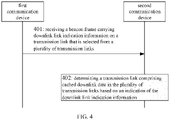
- Step 401 a beacon frame carrying downlink link indication information is received on a transmission link that is selected from a plurality of transmission links.
- Step 402 a transmission link including cached downlink data in the plurality of transmission links is determined based on an indication of the downlink link indication information.
- the wireless communication may be the Wi-Fi communication such as IEEE802.11be standard.
- the first communication device may be a wireless AP in the Wi-Fi communication technology and the second communication device may be a wireless STA in the Wi-Fi communication technology.
- the first communication device and the second communication device may communicate through the plurality of transmission links.
- each transmission link can occupy one transmission frequency band and the plurality of transmission links can occupy the plurality of transmission frequency bands.
- the transmission frequency bands can be a plurality of Wi-Fi working frequency bands, such as 2.4GHz, 5.8GHz and 6-7GHz.
- the bandwidths occupied by the transmission frequency bands of the plurality of transmission links can be the same or different.
- the bandwidths occupied by the plurality of transmission links may be one or more of 20 MHz, 40 MHz, and 80 MHz.
- the frequency range of the bandwidth occupied by each transmission frequency band can belong to the same Wi-Fi working frequency band or different Wi-Fi working frequency bands.
- the first communication device determines that one or more communication links have cached downlink data that needs to be transmitted to the second communication device, it can select one transmission link from the plurality of transmission links established with the second communication device, and transmit the beacon frame carrying the downlink link indication information through this transmission link.
- the downlink link indication information may simultaneously indicate one or more communication links that have cached downlink data.
- the downlink link indication information may indicate the transmission link including cached downlink data by carrying an identifier of the transmission link or the like.
- the second communication device After receiving the beacon frame carrying the downlink link indication information from the communication link selected by the first communication device, the second communication device determines the transmission link that has cached downlink data based on an indication of the downlink link indication information, and receives the downlink data cached by the first communication device on each transmission link that has cached downlink data.
- the transmission link used to transmit the beacon frame carrying the downlink link indication information may be negotiated in advance by the first communication device and the second communication device, or specified by a communication protocol, or selected by the first communication device according to a predetermined selection rule. If the transmission link used to transmit the beacon frame carrying the downlink link indication information is selected by the first communication device, the first communication device may instruct the transmission link that is selected to the second communication device through an instruction or the like.
- one transmission link may be randomly selected to transmit the beacon frame carrying the downlink link indication information, and the second communication device may be instructed with the transmission link that is selected through the indication information.
- one transmission link in the plurality of transmission links is used for transmitting the beacon frame indicating the transmission link including cached downlink data, and the downlink link indication information is concentrated into one transmission link for transmitting, which improves the efficiency of information indication; and it is not necessary for a wireless AP to respectively transmit indications of transmission links including cached downlink data on transmission links including cached downlink data, which saves transmission resources and further saves the energy consumption of the wireless AP. On the other hand, it is not necessary for a wireless STA to monitor the beacon frame indicating the transmission link including cached downlink data on each transmission link, which saves reception resources and further saves the energy consumption of the wireless STA.
- determining the transmission link including the cached downlink data in the plurality of transmission links based on the indication of the downlink link indication information includes: determining the transmission link including the cached downlink data, of the second communication device, based on TIM information and/or identification information in the beacon frame.
- the TIM can indicate the communication device including cached downlink data in the form of a bitmap or the like, and the identification information can indicate the transmission link including cached downlink data in the communication device indicated by the TIM.
- the wireless AP can assign an association identity (AID) to the wireless STA, and allocate one or more bits for each AID in the TIM to indicate the AID whether cached downlink data exits.
- AID association identity
- a bit in the TIM may be used to indicate the wireless STA whether cached downlink data exits. For example, “1" may be used to indicate the wireless STA that cached downlink data exits, and “0” may be used to indicate the wireless STA that cached downlink data does not exit; or “1” may be used to indicate the wireless STA that cached downlink data does not exit, and “0” may be used to indicate the wireless STA that cached downlink data exits.
- the second communication device After the second communication device detects the beacon frame on the transmission link that is selected, it can parse the TIM in the beacon frame to determine whether cached downlink data exits, and if so, it continues to determine the transmission link including cached downlink data according to the identification information.
- the identification information may include the identification number of one or more transmission links.
- one identification information may include the identification number of at least one transmission link. It is also possible to carry the identification number of one transmission link in the identification information.
- the plurality of identification information can be used to indicate the plurality of transmission links, and one TIM can be set before each identification information.
- the method further includes: determining a time domain position of a contention period of each of the plurality of transmission links based on contention period indication information in the beacon frame.
- the contention period indication information may be used in the beacon frame to indicate the time domain position of the contention period of each of the plurality of transmission links.
- the second communication device may determine the time domain position of the contention period of each transmission link according to an indication of the contention period indication information.
- the second communication device may access in a contention manner based on the time domain position of the contention period of the transmission link including cached downlink data in the beacon frame to receive the cache downlink data. It is no longer necessary to listen to the beacon frame indicating the time domain position of the contention period on the transmission link including the cached downlink data.
- one transmission link in the plurality of transmission links is used to transmit and indicate the time domain position of the contention period of each transmission link.
- the wireless AP does not need to broadcast the beacon frame indicating the time domain position of the contention period on each transmission link, which saves transmission resources and further saves the energy consumption of the wireless AP.
- the wireless STA does not need to monitor the beacon frame indicating the time domain position of the contention period on each transmission link, which saves reception resources and further saves the energy consumption of the wireless STA.
- the wireless AP can indicate both the transmission link including cached downlink data and the time domain position of the contention period of the transmission link in the same beacon frame, which improves the indication efficiency and improves the communication efficiency.
- determining the time domain position of the contention period of each of the plurality of transmission links based on the contention period indication information in the beacon frame includes: determining a time interval between a contention period of each of one or more unselected transmission links in the plurality of transmission links and the beacon frame based on identification information and first time interval information in the beacon frame.
- the beacon frame usually carries the time domain information indicating the contention period of the transmission link of receiving the beacon frame, that is, it carries the time domain information of the contention period of the transmission link that is selected.
- the first time interval information and the identification information of the transmission link may be combined to indicate the time interval of the contention period of the unselected transmission link relative to the beacon frame.
- the time interval can be expressed in the form of a time offset.
- a time offset combined with a transmission link identifier can be used to indicate the time offset of the contention period of the transmission link relative to the beacon frame. For example, 4 bits may be used to indicate the time offset, and the other 4 bits may be used to indicate the transmission link identifier.
- determining the time domain position of the contention period of each of the plurality of transmission links based on the contention period indication information in the beacon frame includes: determining a time interval between a contention period of the transmission link that is selected and the beacon frame based on second time interval information in the beacon frame.
- the second time interval information may be used to indicate the time interval of the contention period of the transmission link that is selected relative to the beacon frame.
- the time interval can be expressed in the form of a time offset.
- the time offset may be used to indicate the time offset of the contention period of the transmission link that is selected relative to the beacon frame. For example, 4 bits can be used to indicate the time offset.
- receiving the beacon frame carrying the downlink link indication information on the transmission link that is selected from the plurality of transmission links includes: receiving the beacon frame on a transmission link used when establishing an association relationship with a first communication device.
- the transmission link that is selected may be the transmission link used when the first communication device and the second communication device establish an association relationship for the first time.
- the first communication device uses the transmission link used when establishing the association relationship with the second communication device for the first time, to transmit the beacon frame carrying downlink link indication information and/or contention period indication information, and the beacon frame is received by the second communication device.
- Establishing the association relationship refers to a process in which the second communication device accesses the second communication device and obtains the access right.
- the second communication device may request to establish the association relationship by transmitting an association request frame, and the first communication device may determine to establish the association relationship by returning an association response frame.
- the method further includes: receiving link selection information; and receiving the beacon frame carrying the downlink link indication information on the transmission link that is selected from the plurality of transmission links includes: receiving the beacon frame on a transmission link indicated by the link selection information.
- the first communication device After the first communication device selects the transmission link used to transmit the beacon frame carrying downlink link indication information and/or contention period indication information, it may indicate the transmission link by transmitting an instruction or the like.
- the first communication device may indicate the transmission link by setting the identification number of the transmission link that is selected in the predetermined bit position of the instruction; it may also transmit an instruction with a predetermined identifier on the transmission link that is selected to indicate the transmission link that received the instruction is the transmission link used for transmitting the beacon frame carrying downlink link indication information and/or contention period indication information.
- the second communication device determines the transmission link that is selected on the basis of the link selection information and receives on that transmission link the transmission link for transmitting the beacon frames carrying downlink link indication information and/or contention period indication information.
- receiving the link selection information includes: receiving an association response frame, in which a predetermined information element of the association response frame or a preset bit of an MAC frame header of the association response frame carries the link selection information.
- the first communication device may indicate the transmission link that is selected through the association response frame.
- An information element can be set in the association response frame to carry transmission link selection information to indicate the transmission link that is selected, or one or more bits in the MAC frame header of the association response frame can be used to carry the transmission link selection information.
- a bit in the MAC frame header of the association response frame may be used to indicate the transmission link that is selected. For example, "1" is used to indicate that the current transmission link is the transmission link that is selected for transmitting the beacon frame carrying downlink link indication information and/or contention period indication information.
- the second communication device may determine the transmission link that is selected according to the link selection information in the association response frame, and receive, on the transmission link, the transmission link for transmitting the beacon frame carrying downlink link indication information and/or contention period indication information.
- the method further includes: controlling a transmission link including no cached downlink data to enter a first connection state, in which a power consumption of the first connection state is less than a power consumption of a second connection state.
- the first connection state may be the dormant state of the transmission link
- the second connection state may be the normal working state of the transmission link.
- the power consumption of the transmission link in the normal working state is greater than the power consumption of the transmission link in the dormant state.
- the second communication device may control the transmission link to enter the dormant mode. In this way, the power consumption of the transmission link can be reduced, thereby saving the power of the second communication device.
- the wireless AP can indicate the transmission link to listen to the TIM information to the STA that supports multiple transmission links.
- the AP may determine that the transmission link of receiving the beacon frame carrying the TIM information for the STA is the transmission link for the STA to establish the initial association with the AP.
- the AP may determine the transmission link during the process of establishing the initial association between the STA and the AP. Specifically, it can be determined in the form of an information element of an association response frame, or it can be determined using a bit in the MAC header of the association response frame.
- the AP broadcasts the time domain information of the contention period of each link in the beacon frame.
- the AP broadcasts the beacon frame in the link that establishes the initial association with the STA in the multiple transport links. If cached downlink data frame exists on the multiple transport links for the STA that supports multiple transmission links, the AP sets the TIM information position corresponding to the STA to "1". It is in the form of AID+ transmission link.
- the CP domain information of other links can be carried in the beacon frame transmitted by the initial association link, in which the specific format is time offset + transmission link, which can appear in the form of an information element.
- the time offset may be the time offset between the contention period of the transmission link and the beacon frame.
- the time offset of each transmission link can be different, and there is a time difference.
- the STA that supports multiple transmission links does not need to receive beacon frames under other links. If there is no uncashed downlink data on the transmission link, the STA can go to sleep under this link.
- Embodiments of the disclosure also provide an apparatus for transmitting data.
- the apparatus is applied to a first communication device of wireless communication.
- FIG. 5 is a block diagram of an apparatus 100 for transmitting data according to some embodiments. As illustrated in FIG. 5 , the apparatus 100 includes a first selecting module 110 and a first transmitting module 120.
- the first selecting module 110 is configured to select one transmission link from a plurality of transmission links to transmit a beacon frame carrying downlink link indication information, in which the downlink link indication information is configured to indicate a transmission link including cached downlink data in the plurality of transmission links.
- the first transmitting module 120 is configured transmit the beacon frame through the transmission link that is selected.
- the downlink link indication information includes: TIM information and/or identification information, in which the TIM information is configured to indicate a second communication device to which the transmission link including the cached downlink data belongs, and the identification information is configured to indicate the transmission link including the cached downlink data.
- the beacon frame further includes: contention period indication information, in which the contention period indication information is configured to indicate a time domain position of a contention period of each of the plurality of transmission links.
- the contention period indication information includes: identification information of one or more unselected transmission links in the plurality of transmission links, and first time interval information between a contention period of each of the one or more unselected transmission links and the beacon frame.
- the contention period indication information includes: second time interval information between a contention period of the transmission link that is selected and the beacon frame.
- the transmission link that is selected includes: an initial transmission link used when establishing an association relationship with the second communication device.
- the apparatus 120 further includes: a second transmitting module 130, configured to transmit link selection information, in which the link selection information is configured to indicate the transmission link that is selected.
- the first transmitting module 120 includes: a transmitting submodule 121, configured to transmit an association response frame, in which a predetermined information element of the association response frame or a preset bit of an MAC frame header of the association response frame carries the link selection information.
- Embodiments of the disclosure also provide an apparatus for transmitting data.
- the apparatus is applied to a first communication device of wireless communication.
- FIG. 6 is a block diagram of an apparatus 200 for transmitting data according to some embodiments. As illustrated in FIG. 6 , the apparatus 200 includes a first receiving module 210 and a first determining module 220.
- the first receiving module 210 is configured to receive a beacon frame carrying downlink link indication information on a transmission link that is selected from a plurality of transmission links.
- the first determining module 220 is configured to determine a transmission link including cached downlink data in the plurality of transmission links based on an indication of the downlink link indication information.
- the first determining module 220 includes: a first determining submodule 221, configured to determine the transmission link including the cached downlink data, of the second communication device, based on TIM information and/or identification information in the beacon frame.
- the apparatus 200 further includes: a second determining module 230, configured to determine a time domain position of a contention period of each of the plurality of transmission links based on contention period indication information in the beacon frame.
- the second determining module 230 includes: a second determining submodule 231, configured to determine a time interval between a contention period of each of one or more unselected transmission links in the plurality of transmission links and the beacon frame based on identification information and first time interval information in the beacon frame.
- the second determining module 230 includes: a third determining submodule 232, configured to determine a time interval between a contention period of the transmission link that is selected and the beacon frame based on second time interval information in the beacon frame.
- the first receiving module 210 includes: a first receiving submodule 211, configured to receive the beacon frame on a transmission link used when establishing an association relationship with a first communication device.
- the apparatus 200 further includes: a second receiving module 240, configured to receive link selection information; and the first receiving module 210 includes: a second receiving submodule 212, configured to receive the beacon frame on a transmission link indicated by the link selection information.
- the second receiving module 240 includes: a third receiving submodule 241, configured to receive an association response frame, in which a predetermined information element of the association response frame or a preset bit of an MAC frame header of the association response frame carries the link selection information.
- the apparatus 200 further includes: a control module 250, configured to control a transmission link including no cached downlink data to enter a first connection state, in which a power consumption of the first connection state is less than a power consumption of a second connection state.
- a control module 250 configured to control a transmission link including no cached downlink data to enter a first connection state, in which a power consumption of the first connection state is less than a power consumption of a second connection state.
- the first selecting module 110, the first transmitting module 120, the second transmitting module 130, the first receiving module 210, the first determining module 220, the second determining module 230, the control module 250, the second receiving module 240 and the like can be configured by one or more central processing units (CPU), graphics processing unit (GPU), baseband processor (BP), application specific integrated circuit (ASIC), DSP, programmable logic device (PLD), complex programmable logic device (CPLD), field-programmable gate array (FPGA), general-purpose processor, a controller, a micro controller unit (MCU), a microprocessor (), or other electronic components to implement the foregoing methods.
- CPU central processing units
- GPU graphics processing unit
- BP baseband processor
- ASIC application specific integrated circuit
- DSP digital signal processor
- PLD programmable logic device
- CPLD complex programmable logic device
- FPGA field-programmable gate array
- general-purpose processor a controller, a micro controller unit (MCU), a microprocessor (), or other electronic
- FIG. 7 is a block diagram of a device 3000 for transmitting data or determining transfer block configuration parameters according to some embodiments.
- the device 3000 may be a mobile phone, a computer, a digital broadcast terminal, a messaging device, a gaming console, a tablet, a medical device, exercise equipment, a personal digital assistant, and the like.
- the device 3000 may include one or more of the following components: a processing component 3002, a memory 3004, a power component 3006, a multimedia component 3008, an audio component 3010, an input/output (I/O) interface 3012, a sensor component 3014, and a communication component 3016.
- a processing component 3002 a memory 3004, a power component 3006, a multimedia component 3008, an audio component 3010, an input/output (I/O) interface 3012, a sensor component 3014, and a communication component 3016.
- the processing component 3002 typically controls overall operations of the device 3000, such as the operations associated with display, telephone calls, data communications, camera operations, and recording operations.
- the processing component 3002 may include one or more processors 3020 to execute instructions to perform all or part of the steps in the above described methods.
- the processing component 3002 may include one or more modules which facilitate the interaction between the processing component 3002 and other components.
- the processing component 3002 may include a multimedia module to facilitate the interaction between the multimedia component 3008 and the processing component 3002.
- the memory 3004 is configured to store various types of data to support the operation of the device 3000. Examples of such data include instructions for any applications or methods operated on the device 3000, contact data, phonebook data, messages, pictures, video, etc.
- the memory 3004 may be implemented using any type of volatile or non-volatile memory devices, or a combination thereof, such as a static random access memory (SRAM), an electrically erasable programmable read-only memory (EEPROM), an erasable programmable read-only memory (EPROM), a programmable read-only memory (PROM), a read-only memory (ROM), a magnetic memory, a flash memory, a magnetic or optical disk.
- SRAM static random access memory
- EEPROM electrically erasable programmable read-only memory
- EPROM erasable programmable read-only memory
- PROM programmable read-only memory
- ROM read-only memory
- magnetic memory a magnetic memory
- flash memory a flash memory
- magnetic or optical disk a magnetic
- the power component 3006 provides power to various components of the device 3000.
- the power component 3006 may include a power management system, one or more power sources, and any other components associated with the generation, management, and distribution of power in the device 3000.
- the multimedia component 3008 includes a screen providing an output interface between the device 3000 and the user.
- the screen may include a liquid crystal display (LCD) and a touch panel (TP). If the screen includes the touch panel, the screen may be implemented as a touch screen to receive input signals from the user.
- the touch panel includes one or more touch sensors to sense touches, swipes, and gestures on the touch panel. The touch sensors may not only sense a boundary of a touch or swipe action, but also sense a period of time and a pressure associated with the touch or swipe action.
- the multimedia component 3008 includes a front camera and/or a rear camera. The front camera and the rear camera may receive an external multimedia datum while the device 3000 is in an operation mode, such as a photographing mode or a video mode. Each of the front camera and the rear camera may be a fixed optical lens system or have focus and optical zoom capability.
- the audio component 3010 is configured to output and/or input audio signals.
- the audio component 3010 includes a microphone ("MIC") configured to receive an external audio signal when the device 3000 is in an operation mode, such as a call mode, a recording mode, and a voice recognition mode.
- the received audio signal may be further stored in the memory 3004 or transmitted via the communication component 3016.
- the audio component 3010 further includes a speaker to output audio signals.
- the I/O interface 3012 provides an interface between the processing component 3002 and peripheral interface modules, such as a keyboard, a click wheel, buttons, and the like.
- the buttons may include, but are not limited to, a home button, a volume button, a starting button, and a locking button.
- the sensor component 3014 includes one or more sensors to provide status assessments of various aspects of the device 3000. For instance, the sensor component 3014 may detect an open/closed status of the device 3000, relative positioning of components, e.g., the display and the keypad, of the device 3000, a change in position of the device 3000 or a component of the device 3000, a presence or absence of user contact with the device 3000, an orientation or an acceleration/deceleration of the device 3000, and a change in temperature of the device 3000.
- the sensor component 30114 may include a proximity sensor configured to detect the presence of nearby objects without any physical contact.
- the sensor component 30114 may also include a light sensor, such as a CMOS or CCD image sensor, for use in imaging applications.
- the sensor component 30114 may also include an accelerometer sensor, a gyroscope sensor, a magnetic sensor, a pressure sensor, or a temperature sensor.
- the communication component 30116 is configured to facilitate communication, wired or wirelessly, between the device 3000 and other devices.
- the device 3000 can access a wireless network based on a communication standard, such as Wi-Fi, 2G, or 3G, or a combination thereof.
- the communication component 30116 receives a broadcast signal or broadcast associated information from an external broadcast management system via a broadcast channel.
- the communication component 30116 further includes a near field communication (NFC) module to facilitate short-range communications.
- the NFC module may be implemented based on a radio frequency identification (RFID) technology, an infrared data association (IrDA) technology, an ultra-wideband (UWB) technology, a Bluetooth (BT) technology, and other technologies.
- RFID radio frequency identification
- IrDA infrared data association
- UWB ultra-wideband
- BT Bluetooth
- the device 3000 may be implemented with one or more application specific integrated circuits (ASICs), digital signal processors (DSPs), digital signal processing devices (DSPDs), programmable logic devices (PLDs), field programmable gate arrays (FPGAs), controllers, micro-controllers, microprocessors, or other electronic components, for performing the above described methods.
- ASICs application specific integrated circuits
- DSPs digital signal processors
- DSPDs digital signal processing devices
- PLDs programmable logic devices
- FPGAs field programmable gate arrays
- controllers micro-controllers, microprocessors, or other electronic components, for performing the above described methods.
- non-transitory computer-readable storage medium including instructions, such as included in the memory 3004, executable by the processor 820 in the device 3000, for performing the above-described methods.
- the non-transitory computer-readable storage medium may be a ROM, a RAM, a CD-ROM, a magnetic tape, a floppy disc, an optical data storage device, and the like.
Landscapes
- Engineering & Computer Science (AREA)
- Computer Networks & Wireless Communication (AREA)
- Signal Processing (AREA)
- Mobile Radio Communication Systems (AREA)
Applications Claiming Priority (1)
| Application Number | Priority Date | Filing Date | Title |
|---|---|---|---|
| PCT/CN2020/078613 WO2021179166A1 (fr) | 2020-03-10 | 2020-03-10 | Procédé et appareil de transmission de données, dispositif de communication et support de stockage |
Publications (2)
| Publication Number | Publication Date |
|---|---|
| EP4120784A1 true EP4120784A1 (fr) | 2023-01-18 |
| EP4120784A4 EP4120784A4 (fr) | 2023-03-29 |
Family
ID=77670359
Family Applications (1)
| Application Number | Title | Priority Date | Filing Date |
|---|---|---|---|
| EP20924342.7A Pending EP4120784A4 (fr) | 2020-03-10 | 2020-03-10 | Procédé et appareil de transmission de données, dispositif de communication et support de stockage |
Country Status (4)
| Country | Link |
|---|---|
| US (1) | US12302165B2 (fr) |
| EP (1) | EP4120784A4 (fr) |
| CN (2) | CN118921761B (fr) |
| WO (1) | WO2021179166A1 (fr) |
Family Cites Families (24)
| Publication number | Priority date | Publication date | Assignee | Title |
|---|---|---|---|---|
| US7965681B2 (en) * | 2008-05-16 | 2011-06-21 | Nokia Siemens Networks Oy | Channel allocation procedure in a meshed network |
| JP5816838B2 (ja) * | 2010-06-03 | 2015-11-18 | パナソニックIpマネジメント株式会社 | 通信端末 |
| US9204330B2 (en) * | 2011-03-30 | 2015-12-01 | Lg Electronics Inc. | Method and apparatus for generating traffic indicator map in wireless communication system |
| WO2013012263A1 (fr) * | 2011-07-19 | 2013-01-24 | Lg Electronics Inc. | Procédé de communication dans un système de réseau local sans fil |
| TWI565350B (zh) * | 2011-09-26 | 2017-01-01 | 內數位專利控股公司 | 基於共錨之聚合 |
| CN103166740B (zh) * | 2011-12-19 | 2016-05-25 | 华为技术有限公司 | 一种流量指示图的编码方式及信标帧 |
| CN103298064B (zh) * | 2012-03-02 | 2017-06-27 | 华为终端有限公司 | 下行数据传输方法及相关设备和通信系统 |
| US20130294360A1 (en) * | 2012-05-01 | 2013-11-07 | Futurewei Technologies, Inc. | System and Method for Acknowledging Multiple Frames from Multiple Communications Devices |
| US8824440B2 (en) * | 2012-05-02 | 2014-09-02 | Nokia Corporation | Method, apparatus, and computer program product for efficient TIM compression and decoding |
| US9019874B2 (en) | 2012-06-27 | 2015-04-28 | Nokia Corporation | Method, apparatus, and computer program product for resolving hidden node in synchronized DCF based channel access |
| US9220032B2 (en) * | 2012-08-24 | 2015-12-22 | Intel Corporation | Methods and arrangements for traffic indication mapping in wireless networks |
| US9144072B2 (en) * | 2012-09-07 | 2015-09-22 | Intel Corporation | Methods and arrangements to assign slots in restricted access windows in wireless networks |
| WO2015170942A1 (fr) | 2014-05-09 | 2015-11-12 | 엘지전자 주식회사 | Procédé et appareil pour une utilisation de mode d'économie d'énergie dans un réseau local (lan) sans fil |
| US9560548B2 (en) * | 2014-06-25 | 2017-01-31 | General Electric Company | Dynamic adjustment of a wireless network media access control parameter |
| EP3190853B1 (fr) * | 2014-09-04 | 2019-11-20 | LG Electronics Inc. | Procédé et dispositif pour déclencher une pluralité de trames ps-poll dans un réseau lan sans fil |
| US9955424B2 (en) * | 2014-12-22 | 2018-04-24 | Qualcomm Incorporated | Methods and apparatus for enhanced power save protocol |
| WO2016129766A1 (fr) * | 2015-02-10 | 2016-08-18 | 엘지전자 주식회사 | Procédé et appareil permettant d'augmenter la couverture de transmission d'une sta exécutant un accès initial dans un lan sans fil |
| TWI710272B (zh) * | 2015-09-11 | 2020-11-11 | 美商內數位專利控股公司 | 無線區域網路(wlan)多使用者同時隨機存取方法及裝置 |
| US10609647B2 (en) * | 2016-09-29 | 2020-03-31 | Intel IP Corporation | Multi-band link-aggregation pre-negotiated power save modes |
| CN108880767B (zh) * | 2017-05-11 | 2023-02-24 | 中兴通讯股份有限公司 | 信号发送方法及通信设备 |
| US10798775B2 (en) * | 2017-08-10 | 2020-10-06 | Qualcomm Incorporated | Techniques and apparatuses for duplication bearer management |
| US11234282B2 (en) * | 2018-01-10 | 2022-01-25 | Qualcomm Incorporated | Mechanisms to support secondary channel operation |
| US11019543B2 (en) * | 2018-04-25 | 2021-05-25 | Samsung Electronics Co., Ltd | Methods and system for managing handover procedure in a radio access network |
| CN110830175B (zh) | 2018-08-14 | 2023-03-28 | 华为技术有限公司 | 数据包的确认方法、装置、设备及计算机可读存储介质 |
-
2020
- 2020-03-10 WO PCT/CN2020/078613 patent/WO2021179166A1/fr not_active Ceased
- 2020-03-10 CN CN202410969936.9A patent/CN118921761B/zh active Active
- 2020-03-10 CN CN202080000502.8A patent/CN114271009B/zh active Active
- 2020-03-10 US US17/909,719 patent/US12302165B2/en active Active
- 2020-03-10 EP EP20924342.7A patent/EP4120784A4/fr active Pending
Also Published As
| Publication number | Publication date |
|---|---|
| US20240022951A1 (en) | 2024-01-18 |
| CN118921761B (zh) | 2025-08-26 |
| US12302165B2 (en) | 2025-05-13 |
| EP4120784A4 (fr) | 2023-03-29 |
| CN114271009B (zh) | 2024-08-13 |
| CN114271009A (zh) | 2022-04-01 |
| WO2021179166A1 (fr) | 2021-09-16 |
| CN118921761A (zh) | 2024-11-08 |
Similar Documents
| Publication | Publication Date | Title |
|---|---|---|
| US20180007583A1 (en) | Methods And Devices For Establishing Radio Resource Control (RRC) Connection | |
| CN111919500B (zh) | 用户直连通信方法及装置、用户设备、存储介质 | |
| CN112236977B (zh) | 参数配置方法、装置、通信设备和存储介质 | |
| US20240007248A1 (en) | Method for information transmission and method for parameter determination, communication device, and non-transitory computer-readable storage medium | |
| EP4507436A1 (fr) | Procédé et appareil de détermination de seuil rsrp, et dispositif de communication et support de stockage | |
| US20240389153A1 (en) | Method for reporting terminal capability information, and communication device | |
| CN113841445B (zh) | 数据传输方法、数据传输装置及存储介质 | |
| CN111226457B (zh) | 资源配置方法、装置、通信设备及存储介质 | |
| US20220417903A1 (en) | Paging method and apparatus, communication device and storage medium | |
| US12348998B2 (en) | Transmission measurement method, transmission measurement device and storage medium | |
| EP4057704A1 (fr) | Procédé d'indication, procédé de réception, appareil, dispositif de communication et support de stockage | |
| US20230113756A1 (en) | Method and device for transmitting/receiving data, and computer storage medium | |
| US12302165B2 (en) | Method for transmitting data, communication device, and storage medium | |
| EP4057551B1 (fr) | Procédé et appareil de configuration d'informations de commande de liaison descendante et dispositif de communication et support de stockage | |
| CN113748634B (zh) | 数据传输方法及装置、通信设备及存储介质 | |
| EP4090103B1 (fr) | Procédé et dispositif pour déterminer un vecteur d'attribution de réseau, et support de stockage | |
| US12177764B2 (en) | Method and apparatus for processing basic service set identifier, and computer storage medium | |
| CN117254825A (zh) | 天线切换方法、装置和存储介质 | |
| US20250184841A1 (en) | Method for determining cell reselection priority, user equipment and storage medium | |
| US20250048137A1 (en) | Information processing method and apparatus, and communication device and storage medium | |
| US20250267489A1 (en) | Information processing method and apparatus, communication device, and storage medium | |
| US12471144B2 (en) | Communication method, communication device and storage medium | |
| EP4510749A1 (fr) | Procédé et appareil de transmission sans fil, dispositif de communication et support d'enregistrement | |
| CN112789806B (zh) | 数据传输方法、装置及存储介质 | |
| US20250098026A1 (en) | Link control methods and apparatuses, and storage media |
Legal Events
| Date | Code | Title | Description |
|---|---|---|---|
| STAA | Information on the status of an ep patent application or granted ep patent |
Free format text: STATUS: THE INTERNATIONAL PUBLICATION HAS BEEN MADE |
|
| PUAI | Public reference made under article 153(3) epc to a published international application that has entered the european phase |
Free format text: ORIGINAL CODE: 0009012 |
|
| STAA | Information on the status of an ep patent application or granted ep patent |
Free format text: STATUS: REQUEST FOR EXAMINATION WAS MADE |
|
| 17P | Request for examination filed |
Effective date: 20220930 |
|
| AK | Designated contracting states |
Kind code of ref document: A1 Designated state(s): AL AT BE BG CH CY CZ DE DK EE ES FI FR GB GR HR HU IE IS IT LI LT LU LV MC MK MT NL NO PL PT RO RS SE SI SK SM TR |
|
| A4 | Supplementary search report drawn up and despatched |
Effective date: 20230224 |
|
| RIC1 | Information provided on ipc code assigned before grant |
Ipc: H04B 7/06 20060101ALI20230220BHEP Ipc: H04W 74/02 20090101AFI20230220BHEP |
|
| DAV | Request for validation of the european patent (deleted) | ||
| DAX | Request for extension of the european patent (deleted) | ||
| STAA | Information on the status of an ep patent application or granted ep patent |
Free format text: STATUS: EXAMINATION IS IN PROGRESS |
|
| 17Q | First examination report despatched |
Effective date: 20250327 |