EP4120591B1 - Selbstindizierender parallelisierter datenmodulator und -demodulator für chaotische wellenformen mit hoher momentaner bandbreite, automatischer verstärkungsregelung, erhöhter pfaddiversität und verhinderung von sequenzverriegelungen - Google Patents
Selbstindizierender parallelisierter datenmodulator und -demodulator für chaotische wellenformen mit hoher momentaner bandbreite, automatischer verstärkungsregelung, erhöhter pfaddiversität und verhinderung von sequenzverriegelungen Download PDFInfo
- Publication number
- EP4120591B1 EP4120591B1 EP22176837.7A EP22176837A EP4120591B1 EP 4120591 B1 EP4120591 B1 EP 4120591B1 EP 22176837 A EP22176837 A EP 22176837A EP 4120591 B1 EP4120591 B1 EP 4120591B1
- Authority
- EP
- European Patent Office
- Prior art keywords
- chaos
- sequence
- ram
- indexing
- auto
- Prior art date
- Legal status (The legal status is an assumption and is not a legal conclusion. Google has not performed a legal analysis and makes no representation as to the accuracy of the status listed.)
- Active
Links
Images


Classifications
-
- H—ELECTRICITY
- H04—ELECTRIC COMMUNICATION TECHNIQUE
- H04L—TRANSMISSION OF DIGITAL INFORMATION, e.g. TELEGRAPHIC COMMUNICATION
- H04L27/00—Modulated-carrier systems
- H04L27/001—Modulated-carrier systems using chaotic signals
-
- H—ELECTRICITY
- H04—ELECTRIC COMMUNICATION TECHNIQUE
- H04B—TRANSMISSION
- H04B1/00—Details of transmission systems, not covered by a single one of groups H04B3/00 - H04B13/00; Details of transmission systems not characterised by the medium used for transmission
- H04B1/69—Spread spectrum techniques
-
- H—ELECTRICITY
- H04—ELECTRIC COMMUNICATION TECHNIQUE
- H04J—MULTIPLEX COMMUNICATION
- H04J13/00—Code division multiplex systems
- H04J13/0007—Code type
- H04J13/0018—Chaotic
-
- H—ELECTRICITY
- H04—ELECTRIC COMMUNICATION TECHNIQUE
- H04L—TRANSMISSION OF DIGITAL INFORMATION, e.g. TELEGRAPHIC COMMUNICATION
- H04L9/00—Cryptographic mechanisms or cryptographic arrangements for secret or secure communications; Network security protocols
- H04L9/001—Cryptographic mechanisms or cryptographic arrangements for secret or secure communications; Network security protocols using chaotic signals
-
- H—ELECTRICITY
- H04—ELECTRIC COMMUNICATION TECHNIQUE
- H04B—TRANSMISSION
- H04B1/00—Details of transmission systems, not covered by a single one of groups H04B3/00 - H04B13/00; Details of transmission systems not characterised by the medium used for transmission
- H04B1/69—Spread spectrum techniques
- H04B2001/6904—Spread spectrum techniques using code hopping
Definitions
- This disclosure relates generally to a transmitter for a spread-spectrum or chaos communications system where the transmitter includes chaos generators that perform auto-indexing and, more particularly, to a transmitter for a spread-spectrum or chaos communications system where the transmitter includes chaos generators that perform auto-indexing, temporal automatic gain control, increased path diversity and sequence lock up prevention.
- Digital communications systems typically map or translate a stream of encoded information bits to be transmitted into a constellation of symbols, where each symbol defines a group of the bits.
- a bit mapper may employ M-ary phase shift keying (M-PSK) that provides in-phase and quadrature-phase bits for each symbol that is transmitted.
- M-PSK M-ary phase shift keying
- the mapped symbols are then modulated onto a waveform, filtered and converted/up-converted to an analog signal for transmission.
- the analog signal is received by a receiver, the signal is converted to a digital signal to remove the carrier and the digital signal is demodulated to recover the bit symbols, which requires knowledge of the time and position of the individual symbols in the signal to correctly determine the value of each symbol.
- the information bits are then extracted from the bit symbols.
- LPI/LPD low probability of interception/low probability of detection
- One approach is to spread the energy of the transmitted signal, which would normally be transmitted over a relatively narrow frequency band, over a wide frequency band or spectrum, known in the art as direct-sequence spread-spectrum processing, so that the signal energy is washed out in the background and is not readably detectable.
- PN pseudo-noise
- M-PSK M-PSK
- M-QAM M-ary quadrature amplitude modulation
- a sub-approach for spread-spectrum processing includes spreading the signal with a chaotic sequence to spread out the energy of the transmitted waveform.
- the modulation techniques employed for the chaotic spread signal is typically conventional modulation and coding, such as M-PSK, M-QAM, etc., which allows a straightforward synchronization between the modulated bits transmitted by the transmitter and the bits received by the receiver using conventional demodulation and decoding.
- employing conventional modulation and coding techniques in a digital communications system reduces the effectiveness of a chaotic spreading of the transmitted signal. Therefore, benefits can be obtained by providing all chaotic spreading and modulation of the information signal in these types of communications systems.
- signals with LPI and LPD provide valuable features to communication systems.
- information signals can be transmitted or received without being intercepted or detected.
- DSSS direct sequence spread spectrum
- CDMA code division multiple access
- tens and even hundreds of chaotic signals may share a common RF channel, where each have their own unique chaotic sequence, in order to achieve spectral reuse without any interference.
- signals without cyclostationary properties are essential to yielding LPI/LPD features since these signals cannot be detected with sophisticated detection schemes that look for cyclostationary properties.
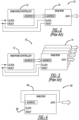
- FIG. 1 is a schematic block diagram of a chaos communications system 10 that includes a transmitter 12 that transmits an encoded data and/or information signal over a communications channel 14, such as a wireless communications channel, that is received by a receiver 16.
- the communications system 10 is intended to be used for any application that can benefit from spread-spectrum signal processing.
- the transmitter 12 includes an encoder 20, such as a forward error correction (FEC) encoder that provides a channel coding scheme, such as convolutional coding, Reed-Solomon coding, low-density parity-check (LDPC) coding, turbo coding, etc., to add redundant bits to the information bits provided on line 18 to be transmitted for error correction purposes and provides a stream of encoded information bits.
- FEC forward error correction
- the encoded information bits are sent to a symbol mapper 22 that translates the bits into a constellation of bit symbols, such as two-bits per symbol, four-bits per symbol, etc., in a manner well understood by those skilled in the art.
- M-CSK M-ary chaotic shift keying
- the modulator 24 employs a separate chaos generator 26 for each of the M symbols. For example, mapping two-bits per symbol provides modulation as 4-CSK and employs four of the chaos generators 26.
- the generator 26 starts with chaos bit (r-1) • L+1, where r is the symbol repetition number. If a symbol is being represented for the first time, then the generator 26 starts with chaos bit or sample 1, if the symbol is represented a second time, then the generator 26 starts with chaos bit or sample L+1, etc.
- the chaotic sequences are selected in such a manner that they will never repeat for a given application.
- the chaos bits or samples are arranged in frames and padded with preamble bits and a synchronization function that aids the receiver 16 to determine the chaos state used for the transmission and hence, helping with symbol synchronization for recovery of the transmitted data. Since the synchronization period is smaller, traditional synchronization techniques can also be employed, if desired, with the low risk of being detected.
- a selector (not shown) selects which of the symbols that has been spread out by the modulation process is output from the modulator 24 at any particular point in time.
- the transmitted signal on the channel 14 is received by an appropriate antenna 40 in the receiver 16, down-converted to a lower frequency, if up-converted in the transmitter 12, and then converted to a digital signal by an analog-to-digital (ADC) converter 42 to extract the symbols that were transmitted.
- the receiver 16 first performs signal acquisition based on a local look-up table and the transmitter ID and then tracking is performed using the receiver ID.
- a despreading and de-modulation operation is performed on the received signal in a correlation processor 44 that includes a number of correlators 46 providing the desired resolution, for example, three or more correlators in parallel for the quick search at the start of the frame.
- transmitter and receiver synchronization and data transmission tracking is required using, for example, chaos state and symbol synchronization 28.
- Synchronization between the DAC 30 and the ADC 42 and hardware clocks is accomplished by transmitting an acquisition or preamble sync pulse from the transmitter 12 to the receiver 16 to phase lock the DAC 30 and the ADC 42 using, for example, clock synchronization 36.
- the preamble sync pulse can be generated by a conventional approach such as by using quadrature-phase shift keying (QPSK) for a short period of time, a chaotic approach such as by using a differential chaos shift keying (DCSK) sync pulse for a short period of time or an inverse chaos approach using an RF analog sync pulse.
- Chaos state synchronization for the chaos generators 26 can be accomplished by transmitting a sync pulse from the transmitter 12 to the receiver 16.
- the correlation processor 44 can use a threshold detector to determine if a signal exists.
- the auto-indexing chaos generation approach significantly improves signal generation timing as compared to the traditional chaos generation approaches.
- the elimination of the controller has high value in highly parallelized architectures by eliminating the latency and throughput limitations associated with controller/RAM/ROM architectures.
- the chaotic sequences do not have detectable cyclostationary features observed in other spread spectrum schemes, such as DSSS or CDMA.
- the output of the chaotic waveform generator produces extremely broad (GHz class) signals that appear as noise to observers without knowledge of the chaotic processing.
- the chaotic waveform generator also provides higher expected system computation look-ahead throughput versus the traditional controller/RAM/ROM architecture and lower expected RAM/ROM footprint due to arbitrary symbol start/stop length.
- the application of a temporal automatic gain control with non-linear chaotic signals to improve received signal power provides improved received signal power of chaotic sequences.
- a fixed-point sequence path diversity optimization provides reduced detectable features and improved chaotic data space usage.
- Sequence lock up prevention prevents fixed-point lock up.
- the first RAM will output X[11,491]
- the second RAM will output X[11,492]
- the third RAM will output X[11,493]
- the fourth RAM will output X[11,494].
- Challenges of implementing a high instantaneous bandwidth, fixed-point chaotic sequences include the ability for the hardware to "look ahead" with the required high parallelization for high instantaneous bandwidths, feature lock up prevention when generating fixed point sequences, path dependent (Trellis) or sequence repetition due to fixed point precision idiosyncrasies, and providing automatic gain control to provide a near constant envelope sequence.
- the auto-indexing provides data trellis path optimization to increase path diversity. Due to fixed-point precision rounding, a particular sequence sub-block may be replayed multiple times in a given chaotic symbol block. By judiciously modifying the quantized data patterns, increased diversity can be achieved, which reduces the potential form small spectral features.
- the auto-indexing has application for temporal automatic gain control with non-linear chaotic signals to improve received signal power. A sequence of N data samples are used to create a chaotic symbol. Due to the chaotic nature of the data, it is possible that the output data has very low power output.
- the temporal automatic gain control can be used to normalize the data to create a higher powered output to improve receive signal-to-noise ratio (SNR).
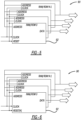
- P unique RAMs operate in parallel to produce the required number of samples per clock.
- the P th RAM (RAMs 1... P) value will be adjusted and copied to a column RAM to have the value for the next clock cycle.
- the rationale behind the P+1 RAM is to prevent rounding path or trellis lock ups, and to expand the usage of the 2 N sample entries.
- the next address for the P group of RAMs will be the value stored in the column RAM.
- K outputs (Kavg) are averaged, and all samples are multiplied by 2 (N-1) /Kavg. If any of the resultant samples exceed 2 N-1 , Kavg is increased by 1, which reduces the AGC value.
- Kavg is increased by 1, which reduces the AGC value.
- the process is continued until all K AGC normalized samples have values equal to or below 2 N-1 .
- generation of the chaotic sequence for transmission can be summarized as follows.
- the system determines that it wants to, for example, transmit two bits.
- the two bits identify which of many chaotic sequences having many samples will be transmitted as the bits.
- the bits also determine which chaos generator will generate the chaotic sequence, where the sequence has been processed to provide automatic gain control, does not have a lock up property and has no continuities.
- Figure 7 is a schematic block diagram of a transmitter circuit 100 that performs the operations discussed above.
- Two sample tables 102 and 104 having a number of chaotic sequence samples 106 each having a certain number of bits and a unique address are stored in a RAM 108.
- a last sample in the table 104 is selectively provided to a multiplexer 110 along with an initial condition 112.
- a controller 116 selects the initial condition 112 at the beginning of the transmission and then selects the last chaotic sequence sample from the table 104 as the auto-indexed chaotic sequence.
- the RAM 108 outputs the auto-indexed chaotic sequence for the symbols 00, 01, 10 and 11 to two multiplexers 118 and 120, where a PN block 122 selects the symbol to be output from the multiplexers 118 and 120 and sends redundant sequences to a multiplexer 124 controlled by the controller 116 to select the desired sequence.
- the gain of the selected sequence is controlled by an AGC 126 and then converted to an analog signal by a DAC 128 for transmission.
- FIG 8 is a schematic block diagram of a receiver circuit 130 including a RAM 132 that is the same or similar to the RAM 108 and stores the chaotic sequence samples.
- the RAM 132 provides the chaotic sequence sample for each of the symbols 00, 01, 10 and 11 to a separate correlator 134 that operates in the same manner as the correlators 46.
- the analog signal from the transmitter is converted to a digital data signal by an ADC (not shown) and the digital data stream is delayed by a delay device 136 and then sent to the correlators 134.
- Each correlator 134 multiplies the data stream and the sample, and a comparator 136 outputs the largest of the multiplied values as the correct sample.
Landscapes
- Engineering & Computer Science (AREA)
- Computer Networks & Wireless Communication (AREA)
- Signal Processing (AREA)
- Computer Security & Cryptography (AREA)
- Digital Transmission Methods That Use Modulated Carrier Waves (AREA)
Claims (13)
- Ein Sender (12) für ein Chaos-Kommunikationssystem (10), wobei der Sender (12) Folgendes umfasst:
einen Symbol-Mapper (22), der eine Reihe von Informationsbits in eine Reihe von Bit-Symbolen umwandelt; und
mindestens einen Chaosgenerator (26), der eine chaotische Sequenz für jedes Bitsymbol bereitstellt, wobei die chaotische Sequenz eine Chaossequenz umfasst, die von einem RAM/ROM (74) ausgegeben wird, der eine automatische Indizierung bereitstellt, wobei die automatische Indizierung eine Rückkopplung der Chaossequenzausgabe zu einem Eingang des RAM/ROM (74) umfasst, von dem der RAM/ROM (74) zu einer nächsten Adresse indiziert, um eine Chaossequenz an dieser Adresse als eine nächste chaotische Sequenz auszugeben - Der Sender (12) nach Anspruch 1, wobei der mindestens eine Chaosgenerator (26) eine Vielzahl von Chaosgeneratoren (26) ist, und/oderwobei der RAM/ROM (74) am Ende jeder RAM-Adresse eine zusätzliche Spalte enthält, die ein Verriegeln der Chaossequenz verhindert, und/oderwobei der mindestens eine Chaosgenerator (26) Gleitkomma-Chaosfolgen in Festkomma-Chaosfolgen umwandelt.
- Der Sender (12) nach Anspruch 1 oder 2, wobei die automatische Indizierung durch einen Anfangszustand gesteuert wird, der durch ein RESET-Signal und/oder wobei die automatische Indizierung mit mehreren Startphasen durchgeführt wird.
- Der Sender (12) nach Anspruch 1, 2 oder 3, wobei der Sender (12) außerdem einen zeitlichen automatischen Verstärkungsregler (AGC) (126) enthält, der die Verstärkung der Chaossequenz für die Übertragung steuert.
- Der Sender (12) nach Anspruch 1, wobei der RAM/ROM (74) eine zusätzliche Spalte am Ende jeder RAM-Adresse enthält, die ein Verriegeln der Chaossequenz verhindert, der mindestens eine Chaosgenerator (26) Gleitkomma-Chaossequenzen in Festkomma-Chaossequenzen umwandelt und der Sender (12) außerdem eine zeitliche automatische Verstärkungssteuerung (AGC) (126) enthält, die die Verstärkung der Chaossequenz für die Übertragung steuert.
- Der Sender (12) nach Anspruch 5, wobei der mindestens eine Chaosgenerator (26) eine Vielzahl von Chaosgeneratoren (26) ist.
- Der Sender (12) nach Anspruch 5, wobei die automatische Indizierung durch einen Anfangszustand gesteuert wird, der durch ein RESET-Signal festgelegt wird, und/oder
wobei die automatische Indizierung mit mehreren Startphasen durchgeführt wird. - Ein Verfahren zur Kommunikation, das Folgendes umfasst: Umwandlung einer Reihe von Informationsbits in eine Reihe von Bitsymbolen; und
Erzeugen einer chaotischen Sequenz zur Übertragung für jedes Bitsymbol, wobei die chaotische Sequenz eine Chaossequenz umfasst, die von einem RAM/ROM (74) ausgegeben wird, der eine automatische Indizierung bereitstellt, wobei die automatische Indizierung eine Rückkopplung der Chaossequenzausgabe zu einem Eingang des RAM/ROM (74) umfasst, von dem das RAM/ROM (74) zu einer nächsten Adresse indiziert, um eine Chaossequenz an dieser Adresse als eine nächste chaotische Sequenz auszugeben. - Das Verfahren nach Anspruch 8, bei dem das RAM/ROM (74) am Ende jeder RAM/ROM-Adresse eine zusätzliche Spalte enthält, die eine chaotische Sequenzverriegelung verhindert.
- Das Verfahren nach Anspruch 8 umfasst ferner die Umwandlung von Gleitkomma-Chaosfolgen in Festkomma-Chaosfolgen.
- Das Verfahren nach Anspruch 8 umfasst ferner die Bereitstellung einer zeitlichen automatischen Verstärkungsregelung (AGC) zur Steuerung der Verstärkung der Chaossequenz.
- Das Verfahren nach Anspruch 8, wobei die automatische Indizierung durch einen Anfangszustand gesteuert wird, der durch ein RESET-Signal festgelegt wird.
- Das Verfahren nach Anspruch 8, wobei die automatische Indizierung mit mehreren Startphasen durchgeführt wird.
Applications Claiming Priority (1)
| Application Number | Priority Date | Filing Date | Title |
|---|---|---|---|
| US17/374,515 US11539558B1 (en) | 2021-07-13 | 2021-07-13 | High instantaneous bandwidth auto-indexing parallelized chaotic waveform data modulator and demodulator with temporal automatic gain control, increased path diversity and sequence lock up prevention |
Publications (2)
| Publication Number | Publication Date |
|---|---|
| EP4120591A1 EP4120591A1 (de) | 2023-01-18 |
| EP4120591B1 true EP4120591B1 (de) | 2025-03-05 |
Family
ID=81878237
Family Applications (1)
| Application Number | Title | Priority Date | Filing Date |
|---|---|---|---|
| EP22176837.7A Active EP4120591B1 (de) | 2021-07-13 | 2022-06-01 | Selbstindizierender parallelisierter datenmodulator und -demodulator für chaotische wellenformen mit hoher momentaner bandbreite, automatischer verstärkungsregelung, erhöhter pfaddiversität und verhinderung von sequenzverriegelungen |
Country Status (2)
| Country | Link |
|---|---|
| US (1) | US11539558B1 (de) |
| EP (1) | EP4120591B1 (de) |
Families Citing this family (1)
| Publication number | Priority date | Publication date | Assignee | Title |
|---|---|---|---|---|
| CN119383051B (zh) * | 2024-09-26 | 2025-08-29 | 广州商学院 | 基于开关索引的符号组集设计的空间调制方法 |
Citations (1)
| Publication number | Priority date | Publication date | Assignee | Title |
|---|---|---|---|---|
| US20180084581A1 (en) * | 2016-09-20 | 2018-03-22 | John David Terry | Method and Apparatus for Dynamic Channel Selection in a Digital Chaos Cooperative Network |
Family Cites Families (4)
| Publication number | Priority date | Publication date | Assignee | Title |
|---|---|---|---|---|
| US6732127B2 (en) * | 2001-01-10 | 2004-05-04 | Hewlett-Packard Development Company, L.P. | Verifiable random number generator using chaos |
| US8351484B2 (en) * | 2008-12-29 | 2013-01-08 | Harris Corporation | Communications system employing chaotic spreading codes with static offsets |
| US10277438B2 (en) * | 2010-07-26 | 2019-04-30 | John David Terry | Method and apparatus for communicating data in a digital chaos communication system |
| CN202395792U (zh) * | 2012-01-13 | 2012-08-22 | 河南科技大学 | 基于fpga的双精度混沌信号发生器 |
-
2021
- 2021-07-13 US US17/374,515 patent/US11539558B1/en active Active
-
2022
- 2022-06-01 EP EP22176837.7A patent/EP4120591B1/de active Active
Patent Citations (1)
| Publication number | Priority date | Publication date | Assignee | Title |
|---|---|---|---|---|
| US20180084581A1 (en) * | 2016-09-20 | 2018-03-22 | John David Terry | Method and Apparatus for Dynamic Channel Selection in a Digital Chaos Cooperative Network |
Also Published As
| Publication number | Publication date |
|---|---|
| EP4120591A1 (de) | 2023-01-18 |
| US20230014489A1 (en) | 2023-01-19 |
| US11539558B1 (en) | 2022-12-27 |
Similar Documents
| Publication | Publication Date | Title |
|---|---|---|
| US5583884A (en) | Spread spectrum modulation and demodulation systems which accelerate data rate without increasing multilevel indexing of primary modulation | |
| US6628667B1 (en) | Variable rate transmitting method and apparatus using bi-orthogonal functions for variable rate transmission rates above a predetermined value | |
| US5097485A (en) | Hf high data rate modem | |
| US6922432B2 (en) | System for spread spectrum communication | |
| US5815526A (en) | Signal comprising binary spreading-code sequences | |
| WO2003003605A1 (en) | Communications system employing differential orthogonal modulation | |
| CN1159872A (zh) | 用于移动无线通信的使用弯曲序列的多址编码 | |
| KR20040067707A (ko) | 정 진폭 이진직교 변조 및 복조장치 | |
| RU99114846A (ru) | Канал поднесущей, кодируемый фазовым сдвигом | |
| JP2007524267A (ja) | 並列スペクトラム拡散通信システムおよび方法 | |
| US20210328840A1 (en) | All digital non-conventional chaotic communication systems for resilient communications and signaling | |
| WO2020047984A1 (zh) | 一种多次重复移相的码移键控调制方法及其解调方法 | |
| CN1502182A (zh) | 并行扩频通信系统和方法 | |
| US6396869B1 (en) | Modulation apparatus and method using zero-crossing detection | |
| CN111181596B (zh) | 一种调制解调方法和系统 | |
| EP4120591A1 (de) | Selbstindizierender parallelisierter datenmodulator und -demodulator für chaotische wellenformen mit hoher momentaner bandbreite, automatischer verstärkungsregelung, erhöhter pfaddiversität und verhinderung von sequenzverriegelungen | |
| TW201724765A (zh) | 通訊接收裝置、其訊號接收方法、訊號處理方法及訊號傳送方法 | |
| EP2524441B1 (de) | Vorrichtung und verfahren zur ultrabreitband-kommunikation | |
| CA2560548A1 (en) | Signal acquisition in peer-to-peer spread-spectrum communications | |
| JPH10294719A (ja) | Cdma(符号分割多重アクセス)網における差分psk(位相偏移キーイング)シグナリング方法およびシステム | |
| US8363690B2 (en) | Codeword synthesizing system and a correlation system, methods of operation thereof and a spread spectrum communications transceiver employing the same | |
| CN114465856A (zh) | 一种基于cdma体制的信号多进制调制方法、解调方法及设备 | |
| JP4818045B2 (ja) | 無線通信装置 | |
| US20070098049A1 (en) | Device and method for encoding a datum, and a device and method for decoding an encoded datum | |
| US11016734B1 (en) | Chip dithering using permuted randomized selection sets to enhance the LPI/LPD characteristics of a waveform |
Legal Events
| Date | Code | Title | Description |
|---|---|---|---|
| PUAI | Public reference made under article 153(3) epc to a published international application that has entered the european phase |
Free format text: ORIGINAL CODE: 0009012 |
|
| STAA | Information on the status of an ep patent application or granted ep patent |
Free format text: STATUS: THE APPLICATION HAS BEEN PUBLISHED |
|
| AK | Designated contracting states |
Kind code of ref document: A1 Designated state(s): AL AT BE BG CH CY CZ DE DK EE ES FI FR GB GR HR HU IE IS IT LI LT LU LV MC MK MT NL NO PL PT RO RS SE SI SK SM TR |
|
| STAA | Information on the status of an ep patent application or granted ep patent |
Free format text: STATUS: REQUEST FOR EXAMINATION WAS MADE |
|
| 17P | Request for examination filed |
Effective date: 20230607 |
|
| P01 | Opt-out of the competence of the unified patent court (upc) registered |
Effective date: 20230607 |
|
| RBV | Designated contracting states (corrected) |
Designated state(s): AL AT BE BG CH CY CZ DE DK EE ES FI FR GB GR HR HU IE IS IT LI LT LU LV MC MK MT NL NO PL PT RO RS SE SI SK SM TR |
|
| GRAP | Despatch of communication of intention to grant a patent |
Free format text: ORIGINAL CODE: EPIDOSNIGR1 |
|
| STAA | Information on the status of an ep patent application or granted ep patent |
Free format text: STATUS: GRANT OF PATENT IS INTENDED |
|
| GRAS | Grant fee paid |
Free format text: ORIGINAL CODE: EPIDOSNIGR3 |
|
| GRAA | (expected) grant |
Free format text: ORIGINAL CODE: 0009210 |
|
| STAA | Information on the status of an ep patent application or granted ep patent |
Free format text: STATUS: THE PATENT HAS BEEN GRANTED |
|
| INTG | Intention to grant announced |
Effective date: 20250110 |
|
| AK | Designated contracting states |
Kind code of ref document: B1 Designated state(s): AL AT BE BG CH CY CZ DE DK EE ES FI FR GB GR HR HU IE IS IT LI LT LU LV MC MK MT NL NO PL PT RO RS SE SI SK SM TR |
|
| REG | Reference to a national code |
Ref country code: GB Ref legal event code: FG4D |
|
| REG | Reference to a national code |
Ref country code: CH Ref legal event code: EP |
|
| REG | Reference to a national code |
Ref country code: IE Ref legal event code: FG4D |
|
| REG | Reference to a national code |
Ref country code: DE Ref legal event code: R096 Ref document number: 602022011320 Country of ref document: DE |
|
| PG25 | Lapsed in a contracting state [announced via postgrant information from national office to epo] |
Ref country code: RS Free format text: LAPSE BECAUSE OF FAILURE TO SUBMIT A TRANSLATION OF THE DESCRIPTION OR TO PAY THE FEE WITHIN THE PRESCRIBED TIME-LIMIT Effective date: 20250605 |
|
| PG25 | Lapsed in a contracting state [announced via postgrant information from national office to epo] |
Ref country code: FI Free format text: LAPSE BECAUSE OF FAILURE TO SUBMIT A TRANSLATION OF THE DESCRIPTION OR TO PAY THE FEE WITHIN THE PRESCRIBED TIME-LIMIT Effective date: 20250305 |
|
| PGFP | Annual fee paid to national office [announced via postgrant information from national office to epo] |
Ref country code: DE Payment date: 20250618 Year of fee payment: 4 |
|
| REG | Reference to a national code |
Ref country code: NL Ref legal event code: MP Effective date: 20250305 |
|
| PG25 | Lapsed in a contracting state [announced via postgrant information from national office to epo] |
Ref country code: ES Free format text: LAPSE BECAUSE OF FAILURE TO SUBMIT A TRANSLATION OF THE DESCRIPTION OR TO PAY THE FEE WITHIN THE PRESCRIBED TIME-LIMIT Effective date: 20250305 |
|
| REG | Reference to a national code |
Ref country code: LT Ref legal event code: MG9D |
|
| PGFP | Annual fee paid to national office [announced via postgrant information from national office to epo] |
Ref country code: NO Payment date: 20250624 Year of fee payment: 4 |
|
| PG25 | Lapsed in a contracting state [announced via postgrant information from national office to epo] |
Ref country code: HR Free format text: LAPSE BECAUSE OF FAILURE TO SUBMIT A TRANSLATION OF THE DESCRIPTION OR TO PAY THE FEE WITHIN THE PRESCRIBED TIME-LIMIT Effective date: 20250305 |
|
| PG25 | Lapsed in a contracting state [announced via postgrant information from national office to epo] |
Ref country code: LV Free format text: LAPSE BECAUSE OF FAILURE TO SUBMIT A TRANSLATION OF THE DESCRIPTION OR TO PAY THE FEE WITHIN THE PRESCRIBED TIME-LIMIT Effective date: 20250305 |
|
| PG25 | Lapsed in a contracting state [announced via postgrant information from national office to epo] |
Ref country code: GR Free format text: LAPSE BECAUSE OF FAILURE TO SUBMIT A TRANSLATION OF THE DESCRIPTION OR TO PAY THE FEE WITHIN THE PRESCRIBED TIME-LIMIT Effective date: 20250606 Ref country code: BG Free format text: LAPSE BECAUSE OF FAILURE TO SUBMIT A TRANSLATION OF THE DESCRIPTION OR TO PAY THE FEE WITHIN THE PRESCRIBED TIME-LIMIT Effective date: 20250305 |
|
| REG | Reference to a national code |
Ref country code: AT Ref legal event code: MK05 Ref document number: 1773920 Country of ref document: AT Kind code of ref document: T Effective date: 20250305 |
|
| PG25 | Lapsed in a contracting state [announced via postgrant information from national office to epo] |
Ref country code: NL Free format text: LAPSE BECAUSE OF FAILURE TO SUBMIT A TRANSLATION OF THE DESCRIPTION OR TO PAY THE FEE WITHIN THE PRESCRIBED TIME-LIMIT Effective date: 20250305 |
|
| PG25 | Lapsed in a contracting state [announced via postgrant information from national office to epo] |
Ref country code: SE Free format text: LAPSE BECAUSE OF FAILURE TO SUBMIT A TRANSLATION OF THE DESCRIPTION OR TO PAY THE FEE WITHIN THE PRESCRIBED TIME-LIMIT Effective date: 20250305 |
|
| PG25 | Lapsed in a contracting state [announced via postgrant information from national office to epo] |
Ref country code: SM Free format text: LAPSE BECAUSE OF FAILURE TO SUBMIT A TRANSLATION OF THE DESCRIPTION OR TO PAY THE FEE WITHIN THE PRESCRIBED TIME-LIMIT Effective date: 20250305 |
|
| PG25 | Lapsed in a contracting state [announced via postgrant information from national office to epo] |
Ref country code: PT Free format text: LAPSE BECAUSE OF FAILURE TO SUBMIT A TRANSLATION OF THE DESCRIPTION OR TO PAY THE FEE WITHIN THE PRESCRIBED TIME-LIMIT Effective date: 20250707 |
|
| PG25 | Lapsed in a contracting state [announced via postgrant information from national office to epo] |
Ref country code: IT Free format text: LAPSE BECAUSE OF FAILURE TO SUBMIT A TRANSLATION OF THE DESCRIPTION OR TO PAY THE FEE WITHIN THE PRESCRIBED TIME-LIMIT Effective date: 20250305 Ref country code: PL Free format text: LAPSE BECAUSE OF FAILURE TO SUBMIT A TRANSLATION OF THE DESCRIPTION OR TO PAY THE FEE WITHIN THE PRESCRIBED TIME-LIMIT Effective date: 20250305 |
|
| PG25 | Lapsed in a contracting state [announced via postgrant information from national office to epo] |
Ref country code: AT Free format text: LAPSE BECAUSE OF FAILURE TO SUBMIT A TRANSLATION OF THE DESCRIPTION OR TO PAY THE FEE WITHIN THE PRESCRIBED TIME-LIMIT Effective date: 20250305 |
|
| PG25 | Lapsed in a contracting state [announced via postgrant information from national office to epo] |
Ref country code: CZ Free format text: LAPSE BECAUSE OF FAILURE TO SUBMIT A TRANSLATION OF THE DESCRIPTION OR TO PAY THE FEE WITHIN THE PRESCRIBED TIME-LIMIT Effective date: 20250305 Ref country code: EE Free format text: LAPSE BECAUSE OF FAILURE TO SUBMIT A TRANSLATION OF THE DESCRIPTION OR TO PAY THE FEE WITHIN THE PRESCRIBED TIME-LIMIT Effective date: 20250305 |
|
| PG25 | Lapsed in a contracting state [announced via postgrant information from national office to epo] |
Ref country code: RO Free format text: LAPSE BECAUSE OF FAILURE TO SUBMIT A TRANSLATION OF THE DESCRIPTION OR TO PAY THE FEE WITHIN THE PRESCRIBED TIME-LIMIT Effective date: 20250305 |
|
| PG25 | Lapsed in a contracting state [announced via postgrant information from national office to epo] |
Ref country code: SK Free format text: LAPSE BECAUSE OF FAILURE TO SUBMIT A TRANSLATION OF THE DESCRIPTION OR TO PAY THE FEE WITHIN THE PRESCRIBED TIME-LIMIT Effective date: 20250305 |
|
| PG25 | Lapsed in a contracting state [announced via postgrant information from national office to epo] |
Ref country code: IS Free format text: LAPSE BECAUSE OF FAILURE TO SUBMIT A TRANSLATION OF THE DESCRIPTION OR TO PAY THE FEE WITHIN THE PRESCRIBED TIME-LIMIT Effective date: 20250705 |
|
| REG | Reference to a national code |
Ref country code: DE Ref legal event code: R097 Ref document number: 602022011320 Country of ref document: DE |
|
| PLBE | No opposition filed within time limit |
Free format text: ORIGINAL CODE: 0009261 |
|
| STAA | Information on the status of an ep patent application or granted ep patent |
Free format text: STATUS: NO OPPOSITION FILED WITHIN TIME LIMIT |
|
| PG25 | Lapsed in a contracting state [announced via postgrant information from national office to epo] |
Ref country code: DK Free format text: LAPSE BECAUSE OF FAILURE TO SUBMIT A TRANSLATION OF THE DESCRIPTION OR TO PAY THE FEE WITHIN THE PRESCRIBED TIME-LIMIT Effective date: 20250305 |
|
| REG | Reference to a national code |
Ref country code: CH Ref legal event code: L10 Free format text: ST27 STATUS EVENT CODE: U-0-0-L10-L00 (AS PROVIDED BY THE NATIONAL OFFICE) Effective date: 20260114 |
|
| REG | Reference to a national code |
Ref country code: CH Ref legal event code: H13 Free format text: ST27 STATUS EVENT CODE: U-0-0-H10-H13 (AS PROVIDED BY THE NATIONAL OFFICE) Effective date: 20260127 |
|
| PG25 | Lapsed in a contracting state [announced via postgrant information from national office to epo] |
Ref country code: MC Free format text: LAPSE BECAUSE OF FAILURE TO SUBMIT A TRANSLATION OF THE DESCRIPTION OR TO PAY THE FEE WITHIN THE PRESCRIBED TIME-LIMIT Effective date: 20250305 |
|
| 26N | No opposition filed |
Effective date: 20251208 |
|
| PG25 | Lapsed in a contracting state [announced via postgrant information from national office to epo] |
Ref country code: LU Free format text: LAPSE BECAUSE OF NON-PAYMENT OF DUE FEES Effective date: 20250601 |
|
| REG | Reference to a national code |
Ref country code: BE Ref legal event code: MM Effective date: 20250630 |
|
| PG25 | Lapsed in a contracting state [announced via postgrant information from national office to epo] |
Ref country code: IE Free format text: LAPSE BECAUSE OF NON-PAYMENT OF DUE FEES Effective date: 20250601 |
|
| PG25 | Lapsed in a contracting state [announced via postgrant information from national office to epo] |
Ref country code: BE Free format text: LAPSE BECAUSE OF NON-PAYMENT OF DUE FEES Effective date: 20250630 |
|
| PG25 | Lapsed in a contracting state [announced via postgrant information from national office to epo] |
Ref country code: FR Free format text: LAPSE BECAUSE OF NON-PAYMENT OF DUE FEES Effective date: 20250630 |
|
| PG25 | Lapsed in a contracting state [announced via postgrant information from national office to epo] |
Ref country code: CH Free format text: LAPSE BECAUSE OF NON-PAYMENT OF DUE FEES Effective date: 20250630 |