EP4120426A1 - A metal hydride battery with added oxygen gas or hydrogen peroxide - Google Patents
A metal hydride battery with added oxygen gas or hydrogen peroxide Download PDFInfo
- Publication number
- EP4120426A1 EP4120426A1 EP22154041.2A EP22154041A EP4120426A1 EP 4120426 A1 EP4120426 A1 EP 4120426A1 EP 22154041 A EP22154041 A EP 22154041A EP 4120426 A1 EP4120426 A1 EP 4120426A1
- Authority
- EP
- European Patent Office
- Prior art keywords
- electrode
- housing
- battery
- gas
- hydrogen peroxide
- Prior art date
- Legal status (The legal status is an assumption and is not a legal conclusion. Google has not performed a legal analysis and makes no representation as to the accuracy of the status listed.)
- Pending
Links
- MHAJPDPJQMAIIY-UHFFFAOYSA-N Hydrogen peroxide Chemical compound OO MHAJPDPJQMAIIY-UHFFFAOYSA-N 0.000 title claims abstract description 89
- 229910052987 metal hydride Inorganic materials 0.000 title claims abstract description 54
- 150000004681 metal hydrides Chemical class 0.000 title claims abstract description 53
- MYMOFIZGZYHOMD-UHFFFAOYSA-N Dioxygen Chemical compound O=O MYMOFIZGZYHOMD-UHFFFAOYSA-N 0.000 title claims abstract description 35
- 229910001882 dioxygen Inorganic materials 0.000 title claims abstract description 35
- 239000003792 electrolyte Substances 0.000 claims abstract description 59
- 239000007789 gas Substances 0.000 claims abstract description 40
- 238000000034 method Methods 0.000 claims abstract description 18
- 238000006243 chemical reaction Methods 0.000 claims abstract description 10
- 239000007772 electrode material Substances 0.000 claims abstract description 7
- UFHFLCQGNIYNRP-UHFFFAOYSA-N Hydrogen Chemical compound [H][H] UFHFLCQGNIYNRP-UHFFFAOYSA-N 0.000 claims description 56
- PXHVJJICTQNCMI-UHFFFAOYSA-N nickel Substances [Ni] PXHVJJICTQNCMI-UHFFFAOYSA-N 0.000 claims description 37
- 239000001257 hydrogen Substances 0.000 claims description 30
- 229910052739 hydrogen Inorganic materials 0.000 claims description 30
- BFDHFSHZJLFAMC-UHFFFAOYSA-L nickel(ii) hydroxide Chemical compound [OH-].[OH-].[Ni+2] BFDHFSHZJLFAMC-UHFFFAOYSA-L 0.000 claims description 28
- 229910021508 nickel(II) hydroxide Inorganic materials 0.000 claims description 26
- 229910002640 NiOOH Inorganic materials 0.000 claims description 24
- 229910021503 Cobalt(II) hydroxide Inorganic materials 0.000 claims description 23
- QVGXLLKOCUKJST-UHFFFAOYSA-N atomic oxygen Chemical compound [O] QVGXLLKOCUKJST-UHFFFAOYSA-N 0.000 claims description 21
- 239000001301 oxygen Substances 0.000 claims description 21
- 229910052760 oxygen Inorganic materials 0.000 claims description 21
- 239000007788 liquid Substances 0.000 claims description 19
- WMFOQBRAJBCJND-UHFFFAOYSA-M lithium hydroxide Inorganic materials [Li+].[OH-] WMFOQBRAJBCJND-UHFFFAOYSA-M 0.000 claims description 16
- KWYUFKZDYYNOTN-UHFFFAOYSA-M Potassium hydroxide Chemical compound [OH-].[K+] KWYUFKZDYYNOTN-UHFFFAOYSA-M 0.000 claims description 15
- 229910052759 nickel Inorganic materials 0.000 claims description 15
- HEMHJVSKTPXQMS-UHFFFAOYSA-M Sodium hydroxide Chemical compound [OH-].[Na+] HEMHJVSKTPXQMS-UHFFFAOYSA-M 0.000 claims description 14
- ASKVAEGIVYSGNY-UHFFFAOYSA-L cobalt(ii) hydroxide Chemical compound [OH-].[OH-].[Co+2] ASKVAEGIVYSGNY-UHFFFAOYSA-L 0.000 claims description 14
- -1 Ni(OH)2/Ni(OOH) Chemical class 0.000 claims description 11
- 229910021511 zinc hydroxide Inorganic materials 0.000 claims description 11
- 229910018916 CoOOH Inorganic materials 0.000 claims description 9
- 239000011701 zinc Substances 0.000 claims description 9
- 239000011651 chromium Substances 0.000 claims description 8
- 239000011777 magnesium Substances 0.000 claims description 8
- 239000011572 manganese Substances 0.000 claims description 8
- 239000010955 niobium Substances 0.000 claims description 8
- 239000010936 titanium Substances 0.000 claims description 8
- HCHKCACWOHOZIP-UHFFFAOYSA-N Zinc Chemical compound [Zn] HCHKCACWOHOZIP-UHFFFAOYSA-N 0.000 claims description 6
- 229910000000 metal hydroxide Inorganic materials 0.000 claims description 6
- 150000004692 metal hydroxides Chemical class 0.000 claims description 6
- UGZADUVQMDAIAO-UHFFFAOYSA-L zinc hydroxide Chemical compound [OH-].[OH-].[Zn+2] UGZADUVQMDAIAO-UHFFFAOYSA-L 0.000 claims description 6
- 229940007718 zinc hydroxide Drugs 0.000 claims description 6
- 239000000203 mixture Substances 0.000 claims description 5
- 229910052684 Cerium Inorganic materials 0.000 claims description 4
- VYZAMTAEIAYCRO-UHFFFAOYSA-N Chromium Chemical compound [Cr] VYZAMTAEIAYCRO-UHFFFAOYSA-N 0.000 claims description 4
- FYYHWMGAXLPEAU-UHFFFAOYSA-N Magnesium Chemical compound [Mg] FYYHWMGAXLPEAU-UHFFFAOYSA-N 0.000 claims description 4
- PWHULOQIROXLJO-UHFFFAOYSA-N Manganese Chemical compound [Mn] PWHULOQIROXLJO-UHFFFAOYSA-N 0.000 claims description 4
- 229910052777 Praseodymium Inorganic materials 0.000 claims description 4
- ATJFFYVFTNAWJD-UHFFFAOYSA-N Tin Chemical compound [Sn] ATJFFYVFTNAWJD-UHFFFAOYSA-N 0.000 claims description 4
- RTAQQCXQSZGOHL-UHFFFAOYSA-N Titanium Chemical compound [Ti] RTAQQCXQSZGOHL-UHFFFAOYSA-N 0.000 claims description 4
- 239000004411 aluminium Substances 0.000 claims description 4
- 229910052782 aluminium Inorganic materials 0.000 claims description 4
- XAGFODPZIPBFFR-UHFFFAOYSA-N aluminium Chemical compound [Al] XAGFODPZIPBFFR-UHFFFAOYSA-N 0.000 claims description 4
- GWXLDORMOJMVQZ-UHFFFAOYSA-N cerium Chemical compound [Ce] GWXLDORMOJMVQZ-UHFFFAOYSA-N 0.000 claims description 4
- 229910052804 chromium Inorganic materials 0.000 claims description 4
- 229910052746 lanthanum Inorganic materials 0.000 claims description 4
- FZLIPJUXYLNCLC-UHFFFAOYSA-N lanthanum atom Chemical compound [La] FZLIPJUXYLNCLC-UHFFFAOYSA-N 0.000 claims description 4
- 229910052749 magnesium Inorganic materials 0.000 claims description 4
- 229910052748 manganese Inorganic materials 0.000 claims description 4
- 229910052758 niobium Inorganic materials 0.000 claims description 4
- GUCVJGMIXFAOAE-UHFFFAOYSA-N niobium atom Chemical compound [Nb] GUCVJGMIXFAOAE-UHFFFAOYSA-N 0.000 claims description 4
- PUDIUYLPXJFUGB-UHFFFAOYSA-N praseodymium atom Chemical compound [Pr] PUDIUYLPXJFUGB-UHFFFAOYSA-N 0.000 claims description 4
- VSZWPYCFIRKVQL-UHFFFAOYSA-N selanylidenegallium;selenium Chemical compound [Se].[Se]=[Ga].[Se]=[Ga] VSZWPYCFIRKVQL-UHFFFAOYSA-N 0.000 claims description 4
- 235000011121 sodium hydroxide Nutrition 0.000 claims description 4
- 229910052719 titanium Inorganic materials 0.000 claims description 4
- LEONUFNNVUYDNQ-UHFFFAOYSA-N vanadium atom Chemical compound [V] LEONUFNNVUYDNQ-UHFFFAOYSA-N 0.000 claims description 4
- 229910052725 zinc Inorganic materials 0.000 claims description 4
- 229910052779 Neodymium Inorganic materials 0.000 claims description 3
- 239000004952 Polyamide Substances 0.000 claims description 3
- 239000004743 Polypropylene Substances 0.000 claims description 3
- 229910052793 cadmium Inorganic materials 0.000 claims description 3
- BDOSMKKIYDKNTQ-UHFFFAOYSA-N cadmium atom Chemical compound [Cd] BDOSMKKIYDKNTQ-UHFFFAOYSA-N 0.000 claims description 3
- 229940006116 lithium hydroxide Drugs 0.000 claims description 3
- QEFYFXOXNSNQGX-UHFFFAOYSA-N neodymium atom Chemical compound [Nd] QEFYFXOXNSNQGX-UHFFFAOYSA-N 0.000 claims description 3
- 229920002647 polyamide Polymers 0.000 claims description 3
- 229920000098 polyolefin Polymers 0.000 claims description 3
- 229920001155 polypropylene Polymers 0.000 claims description 3
- WHXSMMKQMYFTQS-UHFFFAOYSA-N Lithium Chemical compound [Li] WHXSMMKQMYFTQS-UHFFFAOYSA-N 0.000 claims description 2
- 238000004891 communication Methods 0.000 claims description 2
- BYTCDABWEGFPLT-UHFFFAOYSA-L potassium;sodium;dihydroxide Chemical compound [OH-].[OH-].[Na+].[K+] BYTCDABWEGFPLT-UHFFFAOYSA-L 0.000 claims description 2
- 238000007792 addition Methods 0.000 claims 1
- XLYOFNOQVPJJNP-UHFFFAOYSA-N water Substances O XLYOFNOQVPJJNP-UHFFFAOYSA-N 0.000 description 16
- 229910001868 water Inorganic materials 0.000 description 15
- 238000005260 corrosion Methods 0.000 description 8
- 230000007797 corrosion Effects 0.000 description 8
- 229910017052 cobalt Inorganic materials 0.000 description 5
- 239000010941 cobalt Substances 0.000 description 5
- GUTLYIVDDKVIGB-UHFFFAOYSA-N cobalt atom Chemical compound [Co] GUTLYIVDDKVIGB-UHFFFAOYSA-N 0.000 description 5
- 230000000694 effects Effects 0.000 description 5
- 238000005215 recombination Methods 0.000 description 5
- 230000006798 recombination Effects 0.000 description 5
- 229910045601 alloy Inorganic materials 0.000 description 4
- 239000000956 alloy Substances 0.000 description 4
- 239000000463 material Substances 0.000 description 4
- 230000001419 dependent effect Effects 0.000 description 3
- 238000013461 design Methods 0.000 description 2
- 230000001627 detrimental effect Effects 0.000 description 2
- XLYOFNOQVPJJNP-ZSJDYOACSA-N heavy water Substances [2H]O[2H] XLYOFNOQVPJJNP-ZSJDYOACSA-N 0.000 description 2
- XLYOFNOQVPJJNP-UHFFFAOYSA-M hydroxide Chemical compound [OH-] XLYOFNOQVPJJNP-UHFFFAOYSA-M 0.000 description 2
- 150000002978 peroxides Chemical class 0.000 description 2
- 230000009466 transformation Effects 0.000 description 2
- 229910052727 yttrium Inorganic materials 0.000 description 2
- VWQVUPCCIRVNHF-UHFFFAOYSA-N yttrium atom Chemical compound [Y] VWQVUPCCIRVNHF-UHFFFAOYSA-N 0.000 description 2
- 229960001296 zinc oxide Drugs 0.000 description 2
- XLOMVQKBTHCTTD-UHFFFAOYSA-N zinc oxide Inorganic materials [Zn]=O XLOMVQKBTHCTTD-UHFFFAOYSA-N 0.000 description 2
- 229920000742 Cotton Polymers 0.000 description 1
- DGAQECJNVWCQMB-PUAWFVPOSA-M Ilexoside XXIX Chemical compound C[C@@H]1CC[C@@]2(CC[C@@]3(C(=CC[C@H]4[C@]3(CC[C@@H]5[C@@]4(CC[C@@H](C5(C)C)OS(=O)(=O)[O-])C)C)[C@@H]2[C@]1(C)O)C)C(=O)O[C@H]6[C@@H]([C@H]([C@@H]([C@H](O6)CO)O)O)O.[Na+] DGAQECJNVWCQMB-PUAWFVPOSA-M 0.000 description 1
- 239000004677 Nylon Substances 0.000 description 1
- 239000004698 Polyethylene Substances 0.000 description 1
- 238000010521 absorption reaction Methods 0.000 description 1
- 239000003513 alkali Substances 0.000 description 1
- 150000005325 alkali earth metal hydroxides Chemical class 0.000 description 1
- 150000008044 alkali metal hydroxides Chemical class 0.000 description 1
- 230000015572 biosynthetic process Effects 0.000 description 1
- 238000010276 construction Methods 0.000 description 1
- 230000007423 decrease Effects 0.000 description 1
- 238000011161 development Methods 0.000 description 1
- 238000007599 discharging Methods 0.000 description 1
- 230000007717 exclusion Effects 0.000 description 1
- 150000002431 hydrogen Chemical class 0.000 description 1
- 230000001771 impaired effect Effects 0.000 description 1
- 238000004519 manufacturing process Methods 0.000 description 1
- 230000007246 mechanism Effects 0.000 description 1
- 229910052751 metal Inorganic materials 0.000 description 1
- 239000002184 metal Substances 0.000 description 1
- 229910001092 metal group alloy Inorganic materials 0.000 description 1
- 238000013508 migration Methods 0.000 description 1
- 230000005012 migration Effects 0.000 description 1
- 229920005615 natural polymer Polymers 0.000 description 1
- 229920001778 nylon Polymers 0.000 description 1
- 230000001590 oxidative effect Effects 0.000 description 1
- 239000004033 plastic Substances 0.000 description 1
- 229920003023 plastic Polymers 0.000 description 1
- 229920000728 polyester Polymers 0.000 description 1
- 229920000573 polyethylene Polymers 0.000 description 1
- 229920000139 polyethylene terephthalate Polymers 0.000 description 1
- 239000005020 polyethylene terephthalate Substances 0.000 description 1
- 229920001343 polytetrafluoroethylene Polymers 0.000 description 1
- 229920000915 polyvinyl chloride Polymers 0.000 description 1
- 239000004800 polyvinyl chloride Substances 0.000 description 1
- 239000011148 porous material Substances 0.000 description 1
- 229940083608 sodium hydroxide Drugs 0.000 description 1
- 238000013022 venting Methods 0.000 description 1
Images


Classifications
-
- H—ELECTRICITY
- H01—ELECTRIC ELEMENTS
- H01M—PROCESSES OR MEANS, e.g. BATTERIES, FOR THE DIRECT CONVERSION OF CHEMICAL ENERGY INTO ELECTRICAL ENERGY
- H01M10/00—Secondary cells; Manufacture thereof
- H01M10/24—Alkaline accumulators
-
- H—ELECTRICITY
- H01—ELECTRIC ELEMENTS
- H01M—PROCESSES OR MEANS, e.g. BATTERIES, FOR THE DIRECT CONVERSION OF CHEMICAL ENERGY INTO ELECTRICAL ENERGY
- H01M10/00—Secondary cells; Manufacture thereof
- H01M10/24—Alkaline accumulators
- H01M10/26—Selection of materials as electrolytes
-
- H—ELECTRICITY
- H01—ELECTRIC ELEMENTS
- H01M—PROCESSES OR MEANS, e.g. BATTERIES, FOR THE DIRECT CONVERSION OF CHEMICAL ENERGY INTO ELECTRICAL ENERGY
- H01M10/00—Secondary cells; Manufacture thereof
- H01M10/24—Alkaline accumulators
- H01M10/28—Construction or manufacture
-
- H—ELECTRICITY
- H01—ELECTRIC ELEMENTS
- H01M—PROCESSES OR MEANS, e.g. BATTERIES, FOR THE DIRECT CONVERSION OF CHEMICAL ENERGY INTO ELECTRICAL ENERGY
- H01M10/00—Secondary cells; Manufacture thereof
- H01M10/24—Alkaline accumulators
- H01M10/30—Nickel accumulators
-
- H—ELECTRICITY
- H01—ELECTRIC ELEMENTS
- H01M—PROCESSES OR MEANS, e.g. BATTERIES, FOR THE DIRECT CONVERSION OF CHEMICAL ENERGY INTO ELECTRICAL ENERGY
- H01M10/00—Secondary cells; Manufacture thereof
- H01M10/34—Gastight accumulators
-
- H—ELECTRICITY
- H01—ELECTRIC ELEMENTS
- H01M—PROCESSES OR MEANS, e.g. BATTERIES, FOR THE DIRECT CONVERSION OF CHEMICAL ENERGY INTO ELECTRICAL ENERGY
- H01M10/00—Secondary cells; Manufacture thereof
- H01M10/34—Gastight accumulators
- H01M10/345—Gastight metal hydride accumulators
-
- H—ELECTRICITY
- H01—ELECTRIC ELEMENTS
- H01M—PROCESSES OR MEANS, e.g. BATTERIES, FOR THE DIRECT CONVERSION OF CHEMICAL ENERGY INTO ELECTRICAL ENERGY
- H01M10/00—Secondary cells; Manufacture thereof
- H01M10/42—Methods or arrangements for servicing or maintenance of secondary cells or secondary half-cells
- H01M10/4242—Regeneration of electrolyte or reactants
-
- H—ELECTRICITY
- H01—ELECTRIC ELEMENTS
- H01M—PROCESSES OR MEANS, e.g. BATTERIES, FOR THE DIRECT CONVERSION OF CHEMICAL ENERGY INTO ELECTRICAL ENERGY
- H01M4/00—Electrodes
- H01M4/02—Electrodes composed of, or comprising, active material
- H01M4/24—Electrodes for alkaline accumulators
- H01M4/242—Hydrogen storage electrodes
-
- H—ELECTRICITY
- H01—ELECTRIC ELEMENTS
- H01M—PROCESSES OR MEANS, e.g. BATTERIES, FOR THE DIRECT CONVERSION OF CHEMICAL ENERGY INTO ELECTRICAL ENERGY
- H01M4/00—Electrodes
- H01M4/02—Electrodes composed of, or comprising, active material
- H01M4/24—Electrodes for alkaline accumulators
- H01M4/244—Zinc electrodes
-
- H—ELECTRICITY
- H01—ELECTRIC ELEMENTS
- H01M—PROCESSES OR MEANS, e.g. BATTERIES, FOR THE DIRECT CONVERSION OF CHEMICAL ENERGY INTO ELECTRICAL ENERGY
- H01M4/00—Electrodes
- H01M4/02—Electrodes composed of, or comprising, active material
- H01M4/24—Electrodes for alkaline accumulators
- H01M4/246—Cadmium electrodes
-
- H—ELECTRICITY
- H01—ELECTRIC ELEMENTS
- H01M—PROCESSES OR MEANS, e.g. BATTERIES, FOR THE DIRECT CONVERSION OF CHEMICAL ENERGY INTO ELECTRICAL ENERGY
- H01M4/00—Electrodes
- H01M4/02—Electrodes composed of, or comprising, active material
- H01M4/24—Electrodes for alkaline accumulators
- H01M4/32—Nickel oxide or hydroxide electrodes
-
- H—ELECTRICITY
- H01—ELECTRIC ELEMENTS
- H01M—PROCESSES OR MEANS, e.g. BATTERIES, FOR THE DIRECT CONVERSION OF CHEMICAL ENERGY INTO ELECTRICAL ENERGY
- H01M4/00—Electrodes
- H01M4/02—Electrodes composed of, or comprising, active material
- H01M4/36—Selection of substances as active materials, active masses, active liquids
- H01M4/48—Selection of substances as active materials, active masses, active liquids of inorganic oxides or hydroxides
- H01M4/52—Selection of substances as active materials, active masses, active liquids of inorganic oxides or hydroxides of nickel, cobalt or iron
-
- H—ELECTRICITY
- H01—ELECTRIC ELEMENTS
- H01M—PROCESSES OR MEANS, e.g. BATTERIES, FOR THE DIRECT CONVERSION OF CHEMICAL ENERGY INTO ELECTRICAL ENERGY
- H01M50/00—Constructional details or processes of manufacture of the non-active parts of electrochemical cells other than fuel cells, e.g. hybrid cells
- H01M50/30—Arrangements for facilitating escape of gases
-
- H—ELECTRICITY
- H01—ELECTRIC ELEMENTS
- H01M—PROCESSES OR MEANS, e.g. BATTERIES, FOR THE DIRECT CONVERSION OF CHEMICAL ENERGY INTO ELECTRICAL ENERGY
- H01M50/00—Constructional details or processes of manufacture of the non-active parts of electrochemical cells other than fuel cells, e.g. hybrid cells
- H01M50/40—Separators; Membranes; Diaphragms; Spacing elements inside cells
- H01M50/409—Separators, membranes or diaphragms characterised by the material
- H01M50/411—Organic material
-
- H—ELECTRICITY
- H01—ELECTRIC ELEMENTS
- H01M—PROCESSES OR MEANS, e.g. BATTERIES, FOR THE DIRECT CONVERSION OF CHEMICAL ENERGY INTO ELECTRICAL ENERGY
- H01M50/00—Constructional details or processes of manufacture of the non-active parts of electrochemical cells other than fuel cells, e.g. hybrid cells
- H01M50/40—Separators; Membranes; Diaphragms; Spacing elements inside cells
- H01M50/409—Separators, membranes or diaphragms characterised by the material
- H01M50/411—Organic material
- H01M50/414—Synthetic resins, e.g. thermoplastics or thermosetting resins
- H01M50/417—Polyolefins
-
- H—ELECTRICITY
- H01—ELECTRIC ELEMENTS
- H01M—PROCESSES OR MEANS, e.g. BATTERIES, FOR THE DIRECT CONVERSION OF CHEMICAL ENERGY INTO ELECTRICAL ENERGY
- H01M50/00—Constructional details or processes of manufacture of the non-active parts of electrochemical cells other than fuel cells, e.g. hybrid cells
- H01M50/40—Separators; Membranes; Diaphragms; Spacing elements inside cells
- H01M50/409—Separators, membranes or diaphragms characterised by the material
- H01M50/411—Organic material
- H01M50/414—Synthetic resins, e.g. thermoplastics or thermosetting resins
- H01M50/423—Polyamide resins
-
- H—ELECTRICITY
- H01—ELECTRIC ELEMENTS
- H01M—PROCESSES OR MEANS, e.g. BATTERIES, FOR THE DIRECT CONVERSION OF CHEMICAL ENERGY INTO ELECTRICAL ENERGY
- H01M50/00—Constructional details or processes of manufacture of the non-active parts of electrochemical cells other than fuel cells, e.g. hybrid cells
- H01M50/60—Arrangements or processes for filling or topping-up with liquids; Arrangements or processes for draining liquids from casings
-
- H—ELECTRICITY
- H01—ELECTRIC ELEMENTS
- H01M—PROCESSES OR MEANS, e.g. BATTERIES, FOR THE DIRECT CONVERSION OF CHEMICAL ENERGY INTO ELECTRICAL ENERGY
- H01M50/00—Constructional details or processes of manufacture of the non-active parts of electrochemical cells other than fuel cells, e.g. hybrid cells
- H01M50/60—Arrangements or processes for filling or topping-up with liquids; Arrangements or processes for draining liquids from casings
- H01M50/609—Arrangements or processes for filling with liquid, e.g. electrolytes
-
- H—ELECTRICITY
- H01—ELECTRIC ELEMENTS
- H01M—PROCESSES OR MEANS, e.g. BATTERIES, FOR THE DIRECT CONVERSION OF CHEMICAL ENERGY INTO ELECTRICAL ENERGY
- H01M2300/00—Electrolytes
- H01M2300/0002—Aqueous electrolytes
- H01M2300/0014—Alkaline electrolytes
-
- Y—GENERAL TAGGING OF NEW TECHNOLOGICAL DEVELOPMENTS; GENERAL TAGGING OF CROSS-SECTIONAL TECHNOLOGIES SPANNING OVER SEVERAL SECTIONS OF THE IPC; TECHNICAL SUBJECTS COVERED BY FORMER USPC CROSS-REFERENCE ART COLLECTIONS [XRACs] AND DIGESTS
- Y02—TECHNOLOGIES OR APPLICATIONS FOR MITIGATION OR ADAPTATION AGAINST CLIMATE CHANGE
- Y02E—REDUCTION OF GREENHOUSE GAS [GHG] EMISSIONS, RELATED TO ENERGY GENERATION, TRANSMISSION OR DISTRIBUTION
- Y02E60/00—Enabling technologies; Technologies with a potential or indirect contribution to GHG emissions mitigation
- Y02E60/10—Energy storage using batteries
-
- Y—GENERAL TAGGING OF NEW TECHNOLOGICAL DEVELOPMENTS; GENERAL TAGGING OF CROSS-SECTIONAL TECHNOLOGIES SPANNING OVER SEVERAL SECTIONS OF THE IPC; TECHNICAL SUBJECTS COVERED BY FORMER USPC CROSS-REFERENCE ART COLLECTIONS [XRACs] AND DIGESTS
- Y02—TECHNOLOGIES OR APPLICATIONS FOR MITIGATION OR ADAPTATION AGAINST CLIMATE CHANGE
- Y02P—CLIMATE CHANGE MITIGATION TECHNOLOGIES IN THE PRODUCTION OR PROCESSING OF GOODS
- Y02P70/00—Climate change mitigation technologies in the production process for final industrial or consumer products
- Y02P70/50—Manufacturing or production processes characterised by the final manufactured product
Definitions
- the present invention relates generally to the field of starved metal hydride batteries.
- the device comprises a metal hydride battery where hydrogen or oxygen gas or hydrogen peroxide is added to improve performance. Further, the present invention relates specifically to the field of increasing the life time of the battery.
- Nickel metal hydride (NiMH) batteries have long cycle life and have rapid charge and discharge capabilities.
- the electrodes interact with each other through the alkaline electrolyte as hydrogen is transported in the form of water molecules between the electrodes.
- hydrogen is released from the negative electrode and is allowed to migrate to the positive electrode (nickel electrode) where it intercalates. This binding results in energy being released.
- the hydrogen migration is reversed, see Figure 1 .
- NiMH batteries are designed to be nickel electrode limited with a starved electrolyte. This is done in order to be able to avoid overcharge and overdischarge states of the battery cells by controlling the cell chemistry and state-of-charge via the gas phase.
- a cell with a starved electrolyte means in contrast to a flooded cell, that the amount of electrolyte is so limited that open spaces and channels exists between the electrodes through the separator. These open channels can now transport the oxygen to the metal hydride electrodes, where it can be recombined to form water.
- the metal hydride electrode has thus a certain overcharge capacity reserve in relation to the nickel electrode.
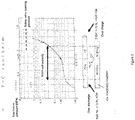
- a proper balance of the nickel electrode capacity with respect to the metal hydride electrode capacity with suitable amounts of both overcharge- and overdischarge reserves are essential for a well-functioning battery, enabling it to reach a stable long time charge/discharge performance, Figure 2 .
- the primary object of the present invention aims at obviating the aforementioned disadvantages and failings of previously known prior art, and at providing an improved battery. But it can also be used to control the balancing of the electrodes without the use of cobalt addition, thus reducing material cost.
- a first aspect of the present invention is to provide an improved battery of the initially defined type claim 1.
- a second aspect of the present invention is to provide a battery which comprises cobalt hydroxide. In such a battery the precharge created by the cobalt hydroxide in the nickel electrode can be adjusted.
- the present invention relates to a method of preparing the battery according to the present invention.
- the present invention relates to a method of counteracting the negative effects of corrosion in a metal hydride battery.
- the present invention relates to a method of replenishing an alkaline electrolyte in a metal hydride battery.
- the present invention relates to a method of rebalancing the electrodes in a metal hydride battery.
- a starved battery of the initially defined type which is characterized in that the housing of the battery contains added oxygen gas, hydrogen gas or hydrogen peroxide.
- the battery has a housing containing at least one cell wherein said at least one cell comprises a first electrode, a second electrode, a porous separator arranged between the first electrode and the second electrode, and an aqueous alkaline electrolyte arranged between the first electrode and the second electrode.
- the aqueous alkaline electrolyte is arranged between the first electrode and the second electrode, it is meant that the electrolyte is in contact with the first and second electrodes.
- the separator, the first electrode and the second electrode are configured to allow exchange of hydrogen and oxygen by allowing gas to migrate between the two electrodes.
- the housing further comprises means for adding a gas or a liquid to the housing.
- the battery further comprises added oxygen gas or hydrogen gas or hydrogen peroxide or a combination thereof in order to rebalance the electrodes and replenish the electrolyte by reactions with the electrode materials.
- Such a starved battery has a housing containing at least one cell wherein the said at least one cell comprises a first electrode, a second electrode, and an aqueous alkaline electrolyte arranged between the first electrode and the second electrode.
- the first electrode is a metal hydride electrode (MH) and the second electrode is a nickel hydroxide electrode (Ni(OH) 2 /NiOOH) further comprising cobalt hydroxide (Co(OH) 2 /CoOOH).
- the housing further comprises means for adding a gas or a liquid to the housing, and the battery further comprises added hydrogen peroxide.
- the present invention is based on the insight of that adding oxygen gas, hydrogen gas or hydrogen peroxide provides a suitable overcharge and discharge reserve and replenishes the electrolyte, which prolongs the life time of the battery and increases the number of possible cycles. Without being bound by any theory this may be due to that the addition of gas or the addition of oxygen in the peroxide restores the electrode balance resulting in that the internal gas pressure decreases since the gas recombination is improved. Thus the battery becomes less sensitive to unintentional overcharging and over discharging.
- the battery comprises nickel hydroxide electrode (Ni(OH) 2 /NiOOH).
- the first electrode may be a metal hydride electrode (MH) and the second electrode may be a nickel hydroxide electrode (Ni(OH) 2 /NiOOH).
- the first electrode may be a cadmium electrode (Cd) and the second electrode may be a nickel hydroxide electrode (Ni(OH) 2 /NiOOH).
- the first electrode may be a zinc electrode (Zn) and the second electrode may be a nickel hydroxide electrode (Ni(OH) 2 /NiOOH).
- the battery may comprise one or more cells, such as two or more cells, and may further comprise a common gas space for all of the two or more cells.
- the amount of added oxygen or hydrogen may be up to 2 moles per mole of active metal hydroxide, such as Ni(OH) 2 /Ni(OOH), content in the battery.
- the hydrogen peroxide addition may be up to 2 moles per mole of active metal hydride content in the battery.
- the first electrode may be a metal hydride electrode (MH) and the second electrode may be a nickel hydroxide electrode (Ni(OH) 2 /NiOOH) further comprising cobalt hydroxide (Co(OH) 2 /CoOOH).
- the second electrode may optionally further comprise zinc hydroxide (Zn(OH) 2 ).
- the first electrode may be a metal hydride electrode (MH) and the second electrode may be a nickel hydroxide electrode (Ni(OH) 2 /NiOOH) further comprising zinc hydroxide (Zn(OH) 2 ).
- the second electrode may optionally further comprise cobalt hydroxide (Co(OH) 2 /CoOOH).
- the aqueous alkaline electrolyte may comprise a mixture of lithium-, sodium- and potassium hydroxide (LiOH, NaOH, KOH).
- the first or the second electrode may further comprise one or more of Cerium (Ce), Lanthanum (La), Praseodymium (Pr), Manganese (Mn), Niobium (Nb), Cobalt (Co), Nickel (Ni), Magnesium (Mg), Neodymium (Nd), Titanium (Ti), Zirconium (Zr) Vanadium (V), Chromium (Cr), Tin (Sn), Yttrium (Y) or Aluminium (Al), such as one or more of Cerium (Ce), Lanthanum (La), Praseodymium (Pr), Manganese (Mn), Niobium (Nb),Nickel (Ni), Magnesium (Mg), Neodymium (Nd), Titanium (Ti), Zirconium (Zr) Vanadium (V), Chromium (Cr), Tin (Sn), or Aluminium (Al).
- the first electrode may comprise one of more of these elements.
- the added hydrogen gas, oxygen gas or hydrogen peroxide may be added separately, or consecutively, or in a mixture of hydrogen gas and oxygen gas, or oxygen gas and hydrogen peroxide, or hydrogen gas and hydrogen peroxide.
- the porous separator may be made of a polyamide or a polyolefin such as polypropylene.
- the second electrode may be a nickel hydroxide electrode (Ni(OH) 2 /NiOOH).
- This nickel hydroxide electrode (Ni(OH) 2 /NiOOH) may optionally further comprise cobalt hydroxide (Co(OH) 2 /CoOOH) and/or zinc hydroxide (Zn(OH) 2 .
- the housing may comprise a means for reducing the pressure in the housing.
- the means for adding a gas or a liquid to the housing and the means for reducing the pressure in the housing may be the same.
- the housing may comprise a safety vent arranged to limit the maximum internal pressure prevailing in the housing.
- the housing may comprise a single housing, or the housing may comprises two or more sub-housings, wherein each sub-housing is in gaseous communication with at least one other sub-housing by means of a gas conduit.
- the objects of the invention are achieved by a method of preparing the battery described above, as disclosed in the appended claims.
- the method of preparing the battery comprising the steps:
- the battery has a housing containing at least one cell wherein the said at least one cell comprises a first electrode, a second electrode, and an aqueous alkaline electrolyte arranged between the first and the second electrode, wherein the first electrode is a metal hydride electrode (MH) and the second electrode is a nickel hydroxide electrode (Ni(OH) 2 /NiOOH), and wherein the housing further comprises means for adding a gas or a liquid to the housing.
- the method comprises adding oxygen gas or hydrogen gas or hydrogen peroxide or a combination thereof to the battery at any state of charge (SOC).
- the objects of the invention are achieved by a method of replenishing an aqueous alkaline electrolyte in a battery, as disclosed in the appended claims.
- the battery has a housing containing at least one cell wherein the said at least one cell comprises a first electrode, a second electrode, and the aqueous alkaline electrolyte arranged between the first electrode and the second electrode, wherein the first electrode is a metal hydride electrode (MH) and the second electrode is a nickel hydroxide electrode (Ni(OH) 2 /NiOOH), and wherein the housing further comprises means for adding a gas or a liquid to the housing.
- the method comprises adding oxygen gas or hydrogen gas or hydrogen peroxide or a combination thereof to the battery in order to create water by the recombination reactions of the respective gases with the active electrode materials in the battery.
- the oxygen gas or hydrogen gas or hydrogen peroxide or a combination thereof may be added to the battery before the battery has reached not less than 50% of state of charge (SOC) or not less than 20% of state of charge (SOC).
- the objects of the invention are achieved by a method of re-establishing the balance between a first electrode and a second electrode in a battery, as disclosed in the appended claims.
- the battery has a housing containing at least one cell wherein the said at least one cell comprises the first electrode, the second electrode, and an aqueous alkaline electrolyte arranged between the first electrode and the second electrode, wherein the first electrode is a metal hydride electrode (MH) and the second electrode is a nickel hydroxide electrode (Ni(OH) 2 /NiOOH), and wherein the housing further comprises means for adding a gas or a liquid to the housing.
- the method comprises adding oxygen gas or hydrogen gas or hydrogen peroxide or a combination thereof to the battery.
- the present invention aims at providing a battery that rebalances, replenishes and counteracts the detrimental effect of corrosion and this be accomplished by adding oxygen, hydrogen and/or hydrogen peroxide to the cell.
- the oxygen, hydrogen or hydrogen peroxide may be added separately or consecutively.
- the starved electrolyte design means that only a minimal amount of electrolyte is available in the battery. Any loss of electrolyte will impair performance mainly manifested in an increased internal resistance.
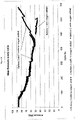
- Electrolyte dry-out is the main cause for limiting the cycle life. The electrolyte dry-out is mainly caused by either excessive internal cell pressure, which may open the safety valve releasing either oxygen or hydrogen gas dependent upon abusive overcharge or overdischarge, Figures 1 to 4 .
- Electrolyte dry-out is also a result of absorption of electrolyte into the nickel hydroxide structure or by corrosion of the metal hydride alloy.
- the latter is especially detrimental as the corrosion produces hydrogen, which offsets the capacity balance between the nickel- and the metal hydride electrodes.
- This increases the risk of venting the battery cells and accelerating the dry-out.
- the effect is aggravated by the shift of the metal hydride working point to higher equilibrium hydrogen pressures. This increases the hydrogen partial pressure, which in turn reduces the efficiency of the oxygen recombination reaction. Adding oxygen gas to the cell will prohibit this development in two ways
- a battery according to the present invention is starved having a housing containing at least one cell.
- Each cell comprises at least two electrodes, a first and a second electrode, and a porous separator.
- An aqueous alkaline electrolyte and a porous separator are arranged between the first and the second electrode.
- the starved configuration allows exchange of hydrogen and oxygen via the electrolyte and the separator allowing gas to migrate between the two electrodes.
- the housing further comprises means for adding a gas or a liquid to the housing and the battery further comprises added oxygen gas or hydrogen gas or hydrogen peroxide or a combination thereof. These are added in order to rebalance the electrodes and replenish the electrolyte by reactions with the electrode materials.
- oxygen, hydrogen or hydrogen peroxide may also avoid or minimize the negative effects of corrosion.
- the oxygen or hydrogen or hydrogen peroxide addition in the battery can be made at any state of charge (SOC). But preferably hydrogen is added at a low SOC and oxygen and hydrogen peroxide at a high SOC to facilitate their uptake and consecutively their transformation into water, which is replenishing the electrolyte.
- a battery according to the present invention is starved having a housing containing at least one cell.
- the housing may consist of a single discrete structure housing all of the cells of the battery, or may comprise several sub-housings, each subhousing housing a fraction of the total number of the cells of the battery.
- the battery may be of any construction, including those known in the art, such as cylindrical, prismatic or bi-polar.
- Each cell comprises at least two electrodes, a first and a second electrode, and a porous separator.
- An aqueous alkaline electrolyte and a porous separator are arranged between the first and the second electrode.
- the first electrode is a metal hydride electrode (MH) and the second electrode is a nickel hydroxide electrode (Ni(OH) 2 /NiOOH) further comprising cobalt hydroxide (Co(OH) 2 /CoOOH).
- the housing further comprises means for adding a gas or a liquid to the housing.
- the battery may comprise only one cell but the number of cells may be two or more, or three or more, or four or more. When the number of cells is two or more the battery may comprise a common gas space for all or for some of the cells. If the housing comprises several sub-housings, the common gas space may be achieved by providing a gas conduit connecting each sub-housiing to at least one other sub-housing. In this manner, a modular battery assembly may be achieved.
- bi-polar batteries having a common gas space are disclosed in document WO 03/026042 "A bipolar battery and biplate assembly”.
- Each cell comprises at least two electrodes but it may comprise four or more, or six or more electrodes.
- the electrodes are metal hydrides (MH) or metal hydroxide (MOH).
- the first electrode is a metal or metal alloy and may be a metal hydride electrode (MH).
- the second electrode may be a nickel hydroxide electrode (Ni(OH) 2 /Ni(OOH).
- the first electrode is a cadmium electrode (Cd) and the second electrode is a nickel hydroxide electrode (Ni(OH) 2 /NiOOH).
- the first electrode is a zinc electrode (Zn) and the second electrode is a nickel hydroxide electrode (Ni(OH 2 /NiOOH).
- the first or the second electrodes comprises one or more of Cerium (Ce), Lanthanum (La), Praseodymium (Pr), Neodynium (Nd), Titanium (Ti), Zirconium (Zr), Vanadium (V), Chromium (Cr), Tin (Sn), Manganese (Mn), Niobium (Nb), Cobalt (Co), Nickel (Ni), Magnesium (Mg), Yttrium (Y) or Aluminium (Al).
- the first electrode contains one or more of these elements.
- the first electrode may be of a hydrogen storage alloy known for use in NiMH batteries, such as AB 5 alloys or A 2 alloys.
- the second electrode further comprises cobolt or cobolt hydroxide (Co(OH) 2 /CoOH).
- the amount of cobolt or cobolt hydroxide may be 0 to 15 mol% such as 1 to 10 mol% or 2 to 5 mol% of the content of the electrode.
- the second electrode further comprises zinc or zinc hydroxide (Zn(OH) 2 /CoOOH).
- the amount of zinc or zinc hydroxide may be 0 to 10 mol%, such as 2 to 5 mol% of the content of the electrode.
- the second electrode may further comprise both cobalt hydroxide and zinc hydoxide in the proportions given above. However, the second electrode may also be essentially cobalt-free or cobalt-free.
- the porous separator may be made of any suitable material for example the separator may be made of a plastic material such as a polyolefin (polyethylene, polypropylene for example) or a polyamide or a natural polymer such as cotton, nylon or polyesters such as poly(ethylene terephthalate) or polytetrafluorethylene or polyvinyl chloride, or a combination thereof.
- the polymeric separator may be a non-woven material.
- the pores may have a size of 10-1000nm such as 20-500nm, such as 30 to 100nm.
- the electrolyte is an aqueous alkaline electrolyte which may comprise, besides water, alkali or alkali earth metal hydroxides.
- the electrolyte comprises potassium hydroxide.
- the electrolyte comprises lithium hydroxide.
- the electrolyte comprises sodium hydroxide.
- the electrolyte comprises lithium, sodium and/or potassium hydroxide (LiOH, NaOH, KOH).
- the means for adding gas (or removing gas, evacuating the housing) or liquid may be any suitable means such as a regulator, valve or check valve.
- the battery according to the present invention comprises adding of oxygen gas, hydrogen gas or hydrogen peroxide.
- the added hydrogen gas, oxygen gas or hydrogen peroxide is in a mixture of hydrogen gas and oxygen gas, or oxygen gas and hydrogen peroxide, or hydrogen gas and hydrogen peroxide.
- the addition may repeated one or more times.
- the amounts mentioned below refer to amounts added each time or the total added amount during the whole life cycle of the battery.
- the amount of added oxygen or hydrogen is up to 2 moles per mole of active metal hydroxide, such as Ni(OH) 2 /NiOOH, content in the battery, preferably not less than 0.001 moles per mole active metal hydroxide.
- the amount of added oxygen or hydrogen may be up to 1.5 moles per mole active metal hydride, or up to 3 moles.
- the amount of added oxygen may be 0.1 to 2 moles per active cobalt hydroxide, such as 0.5 to 1.5 moles per active cobalt hydroxide.
- the amount of added oxygen or hydrogen gas is 0.05 to 2 moles per mole active metal hydroxide, such as 1 to 1.5 moles.
- the amount of added hydrogen peroxide may be 1 moles per mole active metal hydride. Hydrogen peroxide is believed to re-establish the balance of both electrodes similar to the addition of oxygen gas.
- the battery according to the present invention may be prepared by providing a housing, at least two electrodes, a porous separator and an aqueous alkaline electrolyte and arranging the two electrodes in the housing together with the electrolyte and the separator.
- the housing comprises means for adding or removing gas or liquid and the housing is evacuated using said means in order to create a reduced pressure.
- oxygen gas, hydrogen gas or hydrogen peroxide is then added using said means.
- the step of evacuating the housing and adding oxygen gas, hydrogen gas or hydrogen peroxide may be repeated in order to obtain a more controlled environment inside the housing.
- Addition of oxygen gas or hydrogen gas or hydrogen peroxide or a combination thereof to the battery results in creation of water by the recombination reactions of the respective gases or liquids with the active electrode materials in the battery.
- the addition may be done at any state of charge (SOC). This will replenish the electrolyte in the starved battery.
- hydrogen is added at a low SOC and oxygen and hydrogen peroxide at a high SOC to facilitate their uptake and consecutively their transformation into water to be added to the electrolyte.
- the addition of hydrogen gas may be done to the battery before the battery has reached not less than 50% of state of charge (SOC) or not less than 20% of state of charge (SOC).
- the addition of oxygen gas or hydrogen peroxide is done to the battery when the battery has reached a state of charge of at least 50%, or at least 75%.
- the addition of oxygen gas, hydrogen gas or hydrogen peroxide may also re-establish the balance between a first and a second electrode in the battery. Hydrogen peroxide is believed to re-establish the balance between the electrodes.
Landscapes
- Chemical & Material Sciences (AREA)
- Chemical Kinetics & Catalysis (AREA)
- Electrochemistry (AREA)
- General Chemical & Material Sciences (AREA)
- Engineering & Computer Science (AREA)
- Manufacturing & Machinery (AREA)
- Inorganic Chemistry (AREA)
- Secondary Cells (AREA)
- Battery Electrode And Active Subsutance (AREA)
- Gas Exhaust Devices For Batteries (AREA)
- Cell Separators (AREA)
- Fuel Cell (AREA)
- Filling, Topping-Up Batteries (AREA)
- Hybrid Cells (AREA)
Abstract
Description
- The present invention relates generally to the field of starved metal hydride batteries. The device comprises a metal hydride battery where hydrogen or oxygen gas or hydrogen peroxide is added to improve performance. Further, the present invention relates specifically to the field of increasing the life time of the battery.
- Nickel metal hydride (NiMH) batteries have long cycle life and have rapid charge and discharge capabilities. During charge and discharge the electrodes interact with each other through the alkaline electrolyte as hydrogen is transported in the form of water molecules between the electrodes. During discharge hydrogen is released from the negative electrode and is allowed to migrate to the positive electrode (nickel electrode) where it intercalates. This binding results in energy being released. During charging the hydrogen migration is reversed, see
Figure 1 . - Especially NiMH batteries are designed to be nickel electrode limited with a starved electrolyte. This is done in order to be able to avoid overcharge and overdischarge states of the battery cells by controlling the cell chemistry and state-of-charge via the gas phase.
- When the cell is charged, hydrogen is transported from the nickel hydroxide to the metal hydride by water molecules in the aqueous alkaline electrolyte. During discharge hydrogen is transported back to the nickel hydroxide electrode, again in the form of water molecules.
- If the cell is charged beyond the capacity of the nickel electrode, hydrogen will still be transported and intercalated into the metal hydride electrode by water molecules, but in this case hydrogen will be taken from the aqueous electrolyte resulting in a production of oxygen gas. The overcharging reaction is thus denoted: 4OH- = 2H2O + O2 + 4e- (E° = +0.401V) . A cell with a starved electrolyte means in contrast to a flooded cell, that the amount of electrolyte is so limited that open spaces and channels exists between the electrodes through the separator. These open channels can now transport the oxygen to the metal hydride electrodes, where it can be recombined to form water. This recombination reaction is denoted: 2MH + O2 = 2H2O + 2M. The metal hydride electrode has thus a certain overcharge capacity reserve in relation to the nickel electrode.
- If the cell on the other hand is overdischarged, hydrogen will be transported to the nickel electrode. But as the capacity of the nickel electrode is below that of the metal hydride electrode, hydrogen will be released as hydrogen gas molecules instead of being intercalated into the nickel hydroxide. These hydrogen gas molecules can also migrate through the open channels to the metal hydride electrode and be recombined into water. A certain overdischarge capacity of the metal hydride electrode is usually created by adding cobalt to the nickel electrode, which results in a controlled pre-charging of the metal hydride electrode during the formation of the battery cells.
- A proper balance of the nickel electrode capacity with respect to the metal hydride electrode capacity with suitable amounts of both overcharge- and overdischarge reserves are essential for a well-functioning battery, enabling it to reach a stable long time charge/discharge performance,
Figure 2 . - This essential balancing of the two electrodes' capacity with respect to each other is unfortunately impaired by several mechanisms as the battery cells age.
- The primary object of the present invention aims at obviating the aforementioned disadvantages and failings of previously known prior art, and at providing an improved battery. But it can also be used to control the balancing of the electrodes without the use of cobalt addition, thus reducing material cost.
- A first aspect of the present invention is to provide an improved battery of the initially defined
type claim 1. A second aspect of the present invention is to provide a battery which comprises cobalt hydroxide. In such a battery the precharge created by the cobalt hydroxide in the nickel electrode can be adjusted. In third aspect the present invention relates to a method of preparing the battery according to the present invention. In a fourth aspect the present invention relates to a method of counteracting the negative effects of corrosion in a metal hydride battery. In a fifth aspect the present invention relates to a method of replenishing an alkaline electrolyte in a metal hydride battery. In a sixth aspect the present invention relates to a method of rebalancing the electrodes in a metal hydride battery. - According to the invention at least the primary aspect is attained by means of the initially defined battery and method of preparing the battery having the features defined in the independent claims. Preferred embodiments of the present invention are further defined in the dependent claims.
- According to a first aspect of the present invention, there is provided a starved battery of the initially defined type, which is characterized in that the housing of the battery contains added oxygen gas, hydrogen gas or hydrogen peroxide.
- The battery has a housing containing at least one cell wherein said at least one cell comprises a first electrode, a second electrode, a porous separator arranged between the first electrode and the second electrode, and an aqueous alkaline electrolyte arranged between the first electrode and the second electrode. When it is stated that the aqueous alkaline electrolyte is arranged between the first electrode and the second electrode, it is meant that the electrolyte is in contact with the first and second electrodes. The separator, the first electrode and the second electrode are configured to allow exchange of hydrogen and oxygen by allowing gas to migrate between the two electrodes. The housing further comprises means for adding a gas or a liquid to the housing. The battery further comprises added oxygen gas or hydrogen gas or hydrogen peroxide or a combination thereof in order to rebalance the electrodes and replenish the electrolyte by reactions with the electrode materials.
- According to a second aspect of the present invention, there is provided a starved battery according to claim 17.
- Such a starved battery has a housing containing at least one cell wherein the said at least one cell comprises a first electrode, a second electrode, and an aqueous alkaline electrolyte arranged between the first electrode and the second electrode. The first electrode is a metal hydride electrode (MH) and the second electrode is a nickel hydroxide electrode (Ni(OH)2/NiOOH) further comprising cobalt hydroxide (Co(OH)2/CoOOH). The housing further comprises means for adding a gas or a liquid to the housing, and the battery further comprises added hydrogen peroxide.
- Thus, the present invention is based on the insight of that adding oxygen gas, hydrogen gas or hydrogen peroxide provides a suitable overcharge and discharge reserve and replenishes the electrolyte, which prolongs the life time of the battery and increases the number of possible cycles. Without being bound by any theory this may be due to that the addition of gas or the addition of oxygen in the peroxide restores the electrode balance resulting in that the internal gas pressure decreases since the gas recombination is improved. Thus the battery becomes less sensitive to unintentional overcharging and over discharging.
- Further features applicable to the battery according to the first and/or second aspects are outlined below.
- In a preferred embodiment of the present invention, the battery comprises nickel hydroxide electrode (Ni(OH)2/NiOOH).
- For example, the first electrode may be a metal hydride electrode (MH) and the second electrode may be a nickel hydroxide electrode (Ni(OH)2/NiOOH). The first electrode may be a cadmium electrode (Cd) and the second electrode may be a nickel hydroxide electrode (Ni(OH)2/NiOOH). The first electrode may be a zinc electrode (Zn) and the second electrode may be a nickel hydroxide electrode (Ni(OH)2/NiOOH).
- The battery may comprise one or more cells, such as two or more cells, and may further comprise a common gas space for all of the two or more cells.
- The amount of added oxygen or hydrogen may be up to 2 moles per mole of active metal hydroxide, such as Ni(OH)2/Ni(OOH), content in the battery.
- The hydrogen peroxide addition may be up to 2 moles per mole of active metal hydride content in the battery.
- The first electrode may be a metal hydride electrode (MH) and the second electrode may be a nickel hydroxide electrode (Ni(OH)2/NiOOH) further comprising cobalt hydroxide (Co(OH)2/CoOOH). The second electrode may optionally further comprise zinc hydroxide (Zn(OH)2).
- The first electrode may be a metal hydride electrode (MH) and the second electrode may be a nickel hydroxide electrode (Ni(OH)2/NiOOH) further comprising zinc hydroxide (Zn(OH)2). The second electrode may optionally further comprise cobalt hydroxide (Co(OH)2/CoOOH).
- The aqueous alkaline electrolyte may comprise a mixture of lithium-, sodium- and potassium hydroxide (LiOH, NaOH, KOH).
- The first or the second electrode may further comprise one or more of Cerium (Ce), Lanthanum (La), Praseodymium (Pr), Manganese (Mn), Niobium (Nb), Cobalt (Co), Nickel (Ni), Magnesium (Mg), Neodymium (Nd), Titanium (Ti), Zirconium (Zr) Vanadium (V), Chromium (Cr), Tin (Sn), Yttrium (Y) or Aluminium (Al), such as one or more of Cerium (Ce), Lanthanum (La), Praseodymium (Pr), Manganese (Mn), Niobium (Nb),Nickel (Ni), Magnesium (Mg), Neodymium (Nd), Titanium (Ti), Zirconium (Zr) Vanadium (V), Chromium (Cr), Tin (Sn), or Aluminium (Al). Preferably the first electrode may comprise one of more of these elements.
- The added hydrogen gas, oxygen gas or hydrogen peroxide may be added separately, or consecutively, or in a mixture of hydrogen gas and oxygen gas, or oxygen gas and hydrogen peroxide, or hydrogen gas and hydrogen peroxide.
- The porous separator may be made of a polyamide or a polyolefin such as polypropylene.
- The second electrode may be a nickel hydroxide electrode (Ni(OH)2/NiOOH). This nickel hydroxide electrode (Ni(OH)2/NiOOH) may optionally further comprise cobalt hydroxide (Co(OH)2/CoOOH) and/or zinc hydroxide (Zn(OH)2.
- The housing may comprise a means for reducing the pressure in the housing. The means for adding a gas or a liquid to the housing and the means for reducing the pressure in the housing may be the same.
- The housing may comprise a safety vent arranged to limit the maximum internal pressure prevailing in the housing.
- The housing may comprise a single housing, or the housing may comprises two or more sub-housings, wherein each sub-housing is in gaseous communication with at least one other sub-housing by means of a gas conduit.
- According to another aspect of the present invention, the objects of the invention are achieved by a method of preparing the battery described above, as disclosed in the appended claims. The method of preparing the battery comprising the steps:
- a. providing a housing, a first electrode, a second electrode, and an aqueous alkaline electrolyte, wherein the housing comprises a means for reducing the pressure in the housing and means for adding a gas or a liquid to the housing;
- b. arranging the first electrode and the second electrode and the alkaline electrolyte in the housing in order to prepare a starved battery;
- c. evacuating the housing using said means for reducing the pressure in the housing in order to create a reduced pressure; and
- d. adding oxygen gas, hydrogen gas or hydrogen peroxide to the housing using said means for adding a gas or a liquid to the housing. The steps c and d may be repeated at least once, preferably twice.
- According to a further aspect, the objects of the invention are achieved by a method of counteracting the negative effects of corrosion of a metal hydride electrode in a battery, according to the appended claims. The battery has a housing containing at least one cell wherein the said at least one cell comprises a first electrode, a second electrode, and an aqueous alkaline electrolyte arranged between the first and the second electrode, wherein the first electrode is a metal hydride electrode (MH) and the second electrode is a nickel hydroxide electrode (Ni(OH)2/NiOOH), and wherein the housing further comprises means for adding a gas or a liquid to the housing. The method comprises adding oxygen gas or hydrogen gas or hydrogen peroxide or a combination thereof to the battery at any state of charge (SOC).
- According to yet another aspect, the objects of the invention are achieved by a method of replenishing an aqueous alkaline electrolyte in a battery, as disclosed in the appended claims. The battery has a housing containing at least one cell wherein the said at least one cell comprises a first electrode, a second electrode, and the aqueous alkaline electrolyte arranged between the first electrode and the second electrode, wherein the first electrode is a metal hydride electrode (MH) and the second electrode is a nickel hydroxide electrode (Ni(OH)2/NiOOH), and wherein the housing further comprises means for adding a gas or a liquid to the housing. The method comprises adding oxygen gas or hydrogen gas or hydrogen peroxide or a combination thereof to the battery in order to create water by the recombination reactions of the respective gases with the active electrode materials in the battery.
- The oxygen gas or hydrogen gas or hydrogen peroxide or a combination thereof may be added to the battery before the battery has reached not less than 50% of state of charge (SOC) or not less than 20% of state of charge (SOC).
- According to yet a further aspect, the objects of the invention are achieved by a method of re-establishing the balance between a first electrode and a second electrode in a battery, as disclosed in the appended claims. The battery has a housing containing at least one cell wherein the said at least one cell comprises the first electrode, the second electrode, and an aqueous alkaline electrolyte arranged between the first electrode and the second electrode, wherein the first electrode is a metal hydride electrode (MH) and the second electrode is a nickel hydroxide electrode (Ni(OH)2/NiOOH), and wherein the housing further comprises means for adding a gas or a liquid to the housing. The method comprises adding oxygen gas or hydrogen gas or hydrogen peroxide or a combination thereof to the battery.
- Further advantages with and features of the invention will be apparent from the other dependent claims as well as from the following detailed description of preferred embodiments.
- All the embodiments of the present application are applicable to all of the aspects of the present invention.
- A more complete understanding of the abovementioned and other features and advantages of the present invention will be apparent from the following detailed description of preferred embodiments in conjunction with the appended drawings, wherein:
- Fig. 1
- is a schematic figure of a metal hydride battery,
- Fig. 2
- is a graph disclosing how the electrode capacities are related to the hydrogen equilibrium pressure of the metal hydride used in the negative electrode,
- Fig. 3
- is a graph disclosing maximum pressure at every cycle,
- Fig. 4
- is a graph disclosing the resistance at every 50 cycles.
- The invention is not limited only to the embodiments described above and shown in the drawings, which primarily have an illustrative and exemplifying purpose. This patent application is intended to cover all adjustments and variants of the preferred embodiments described herein, thus the present invention is defined by the wording of the appended claims and the equivalents thereof. Thus, the equipment may be modified in all kinds of ways within the scope of the appended claims.
- It shall also be pointed out that all information about/concerning terms such as above, under, upper, lower, etc., shall be interpreted/read having the equipment oriented according to the figures, having the drawings oriented such that the references can be properly read. Thus, such terms only indicates mutual relations in the shown embodiments, which relations may be changed if the inventive equipment is provided with another structure/design.
- It shall also be pointed out that even thus it is not explicitly stated that features from a specific embodiment may be combined with features from another embodiment, the combination shall be considered obvious, if the combination is possible.
- Throughout this specification and the claims which follows, unless the context requires otherwise, the word "comprise", and variations such as "comprises" or "comprising", will be understood to imply the inclusion of a stated integer or steps or group of integers or steps but not the exclusion of any other integer or step or group of integers or steps.
- The present invention aims at providing a battery that rebalances, replenishes and counteracts the detrimental effect of corrosion and this be accomplished by adding oxygen, hydrogen and/or hydrogen peroxide to the cell. The oxygen, hydrogen or hydrogen peroxide may be added separately or consecutively. The starved electrolyte design means that only a minimal amount of electrolyte is available in the battery. Any loss of electrolyte will impair performance mainly manifested in an increased internal resistance. Electrolyte dry-out is the main cause for limiting the cycle life. The electrolyte dry-out is mainly caused by either excessive internal cell pressure, which may open the safety valve releasing either oxygen or hydrogen gas dependent upon abusive overcharge or overdischarge,
Figures 1 to 4 . Electrolyte dry-out is also a result of absorption of electrolyte into the nickel hydroxide structure or by corrosion of the metal hydride alloy. The latter is especially detrimental as the corrosion produces hydrogen, which offsets the capacity balance between the nickel- and the metal hydride electrodes. This results in an increased overdischarge reserve, but also a reduced overcharge capacity leading to an excessive internal gas pressure buildup. This increases the risk of venting the battery cells and accelerating the dry-out. The effect is aggravated by the shift of the metal hydride working point to higher equilibrium hydrogen pressures. This increases the hydrogen partial pressure, which in turn reduces the efficiency of the oxygen recombination reaction. Adding oxygen gas to the cell will prohibit this development in two ways - 1) Oxygen will restore the balance between the electrodes by oxidizing the hydrogen produced in the corrosion described above into water. This will result in a reduced pressure build up during overcharge. (
figure 3 ) - 2) The water produced in (1) will replenish the amount of electrolyte and reduce internal resistance. (
figure 4 ) - Adding water only to the battery cells will reduce the internal resistance but not the pressure build-up as the electrode imbalance remains. Adding peroxide H2O2 would on the other hand replenish the electrolyte as well as reestablishing the electrode balance. Adding consecutively hydrogen gas and oxygen gas can add a controlled volume of water to the electrolyte as well as it is a method to control the balance between electrodes. The latter can thus be another way to adjust the electrode balance without using a cobalt addition to the nickel electrode as described above.
- A battery according to the present invention is starved having a housing containing at least one cell. Each cell comprises at least two electrodes, a first and a second electrode, and a porous separator. An aqueous alkaline electrolyte and a porous separator are arranged between the first and the second electrode. The starved configuration allows exchange of hydrogen and oxygen via the electrolyte and the separator allowing gas to migrate between the two electrodes. The housing further comprises means for adding a gas or a liquid to the housing and the battery further comprises added oxygen gas or hydrogen gas or hydrogen peroxide or a combination thereof. These are added in order to rebalance the electrodes and replenish the electrolyte by reactions with the electrode materials. The addition of oxygen, hydrogen or hydrogen peroxide may also avoid or minimize the negative effects of corrosion. The oxygen or hydrogen or hydrogen peroxide addition in the battery can be made at any state of charge (SOC). But preferably hydrogen is added at a low SOC and oxygen and hydrogen peroxide at a high SOC to facilitate their uptake and consecutively their transformation into water, which is replenishing the electrolyte.
- A battery according to the present invention is starved having a housing containing at least one cell. The housing may consist of a single discrete structure housing all of the cells of the battery, or may comprise several sub-housings, each subhousing housing a fraction of the total number of the cells of the battery. The battery may be of any construction, including those known in the art, such as cylindrical, prismatic or bi-polar.
- Each cell comprises at least two electrodes, a first and a second electrode, and a porous separator. An aqueous alkaline electrolyte and a porous separator are arranged between the first and the second electrode. The first electrode is a metal hydride electrode (MH) and the second electrode is a nickel hydroxide electrode (Ni(OH)2/NiOOH) further comprising cobalt hydroxide (Co(OH)2/CoOOH). The housing further comprises means for adding a gas or a liquid to the housing.
- The battery may comprise only one cell but the number of cells may be two or more, or three or more, or four or more. When the number of cells is two or more the battery may comprise a common gas space for all or for some of the cells. If the housing comprises several sub-housings, the common gas space may be achieved by providing a gas conduit connecting each sub-housiing to at least one other sub-housing. In this manner, a modular battery assembly may be achieved.
- For example, bi-polar batteries having a common gas space are disclosed in document
WO 03/026042 - Each cell comprises at least two electrodes but it may comprise four or more, or six or more electrodes. The electrodes are metal hydrides (MH) or metal hydroxide (MOH). The first electrode is a metal or metal alloy and may be a metal hydride electrode (MH). The second electrode may be a nickel hydroxide electrode (Ni(OH)2/Ni(OOH). In one embodiment the first electrode is a cadmium electrode (Cd) and the second electrode is a nickel hydroxide electrode (Ni(OH)2/NiOOH). In another embodiment the first electrode is a zinc electrode (Zn) and the second electrode is a nickel hydroxide electrode (Ni(OH2/NiOOH). In one embodiment the first or the second electrodes comprises one or more of Cerium (Ce), Lanthanum (La), Praseodymium (Pr), Neodynium (Nd), Titanium (Ti), Zirconium (Zr), Vanadium (V), Chromium (Cr), Tin (Sn), Manganese (Mn), Niobium (Nb), Cobalt (Co), Nickel (Ni), Magnesium (Mg), Yttrium (Y) or Aluminium (Al). Preferably the first electrode contains one or more of these elements. For example, the first electrode may be of a hydrogen storage alloy known for use in NiMH batteries, such as AB5 alloys or A2 alloys. In one embodiment the second electrode further comprises cobolt or cobolt hydroxide (Co(OH)2/CoOH). The amount of cobolt or cobolt hydroxide may be 0 to 15 mol% such as 1 to 10 mol% or 2 to 5 mol% of the content of the electrode. In one embodiment the second electrode further comprises zinc or zinc hydroxide (Zn(OH)2/CoOOH). The amount of zinc or zinc hydroxide may be 0 to 10 mol%, such as 2 to 5 mol% of the content of the electrode. The second electrode may further comprise both cobalt hydroxide and zinc hydoxide in the proportions given above. However, the second electrode may also be essentially cobalt-free or cobalt-free.
- The porous separator may be made of any suitable material for example the separator may be made of a plastic material such as a polyolefin (polyethylene, polypropylene for example) or a polyamide or a natural polymer such as cotton, nylon or polyesters such as poly(ethylene terephthalate) or polytetrafluorethylene or polyvinyl chloride, or a combination thereof. The polymeric separator may be a non-woven material. The pores may have a size of 10-1000nm such as 20-500nm, such as 30 to 100nm.
- The electrolyte is an aqueous alkaline electrolyte which may comprise, besides water, alkali or alkali earth metal hydroxides. In one embodiment the electrolyte comprises potassium hydroxide. In another embodiment the electrolyte comprises lithium hydroxide. In yet another embodiment the electrolyte comprises sodium hydroxide. In one embodiment the electrolyte comprises lithium, sodium and/or potassium hydroxide (LiOH, NaOH, KOH).
- The means for adding gas (or removing gas, evacuating the housing) or liquid may be any suitable means such as a regulator, valve or check valve.
- In order to overcome the drawbacks of the prior art the battery according to the present invention comprises adding of oxygen gas, hydrogen gas or hydrogen peroxide. In one embodiment the added hydrogen gas, oxygen gas or hydrogen peroxide is in a mixture of hydrogen gas and oxygen gas, or oxygen gas and hydrogen peroxide, or hydrogen gas and hydrogen peroxide. The addition may repeated one or more times. The amounts mentioned below refer to amounts added each time or the total added amount during the whole life cycle of the battery. The amount of added oxygen or hydrogen is up to 2 moles per mole of active metal hydroxide, such as Ni(OH)2/NiOOH, content in the battery, preferably not less than 0.001 moles per mole active metal hydroxide. The amount of added oxygen or hydrogen may be up to 1.5 moles per mole active metal hydride, or up to 3 moles. When the electrode comprises cobalt hydroxide the amount of added oxygen may be 0.1 to 2 moles per active cobalt hydroxide, such as 0.5 to 1.5 moles per active cobalt hydroxide. In one embodiment the amount of added oxygen or hydrogen gas is 0.05 to 2 moles per mole active metal hydroxide, such as 1 to 1.5 moles. The amount of added hydrogen peroxide may be 1 moles per mole active metal hydride. Hydrogen peroxide is believed to re-establish the balance of both electrodes similar to the addition of oxygen gas.
- The battery according to the present invention may be prepared by providing a housing, at least two electrodes, a porous separator and an aqueous alkaline electrolyte and arranging the two electrodes in the housing together with the electrolyte and the separator. The housing comprises means for adding or removing gas or liquid and the housing is evacuated using said means in order to create a reduced pressure. To the housing oxygen gas, hydrogen gas or hydrogen peroxide is then added using said means. The step of evacuating the housing and adding oxygen gas, hydrogen gas or hydrogen peroxide may be repeated in order to obtain a more controlled environment inside the housing.
- By adding oxygen gas, hydrogen gas or hydrogen peroxide to the housing the negative effects of corrosion of the electrodes will be reduced.
- Addition of oxygen gas or hydrogen gas or hydrogen peroxide or a combination thereof to the battery results in creation of water by the recombination reactions of the respective gases or liquids with the active electrode materials in the battery. The addition may be done at any state of charge (SOC). This will replenish the electrolyte in the starved battery.
- Preferably hydrogen is added at a low SOC and oxygen and hydrogen peroxide at a high SOC to facilitate their uptake and consecutively their transformation into water to be added to the electrolyte. In one embodiment the addition of hydrogen gas may be done to the battery before the battery has reached not less than 50% of state of charge (SOC) or not less than 20% of state of charge (SOC). In one embodiment the addition of oxygen gas or hydrogen peroxide is done to the battery when the battery has reached a state of charge of at least 50%, or at least 75%.The addition of oxygen gas, hydrogen gas or hydrogen peroxide may also re-establish the balance between a first and a second electrode in the battery. Hydrogen peroxide is believed to re-establish the balance between the electrodes.
Claims (17)
- A starved electrolyte metal hydride battery comprising two or more cells having a housing containing said two or more cells wherein each cell comprises a first electrode, a second electrode, a porous separator arranged between the first electrode and the second electrode, and an aqueous alkaline electrolyte arranged between the first electrode and the second electrode, wherein the separator, the first electrode and the second electrode are configured to allow exchange of hydrogen and oxygen by allowing gas to migrate between the two electrodes, and wherein the housing further comprises means for adding a gas or a liquid to the housing;
wherein the battery further comprises added oxygen gas or hydrogen peroxide or a combination thereof in order to rebalance the electrodes and replenish the electrolyte by reactions with the electrode materials and wherein the battery further comprises a common gas space for all of the two or more cells. - The battery according to claim 1 wherein the first electrode is a metal hydride electrode (MH) and the second electrode is a nickel hydroxide electrode (Ni(OH)2/NiOOH), or wherein the first electrode is a cadmium electrode (Cd) and the second electrode is a nickel hydroxide electrode (Ni(OH)2/NiOOH), or wherein the first electrode is a zinc electrode (Zn) and the second electrode is a nickel hydroxide electrode (Ni(OH)2/NiOOH).
- The battery according to any one of claims 1 or 2 wherein the amount of added oxygen or hydrogen is up to 2 moles per mole of active metal hydroxide, such as Ni(OH)2/Ni(OOH), content in the battery.
- The battery according to any one of claims 1 or 2 wherein hydrogen peroxide additions are up to 2 moles per mole of active metal hydride content in the battery.
- The battery according to any one of claims 1 to 4 wherein the first electrode is a metal hydride electrode (MH) and the second electrode is a nickel hydroxide electrode (Ni(OH)2/NiOOH) and wherein the nickel hydroxide electrode (Ni(OH)2/NiOOH) further comprises cobalt hydroxide (Co(OH)2/CoOOH).
- The battery according to any one of the preceding claims wherein the aqueous alkaline electrolyte comprises a mixture of lithium-, sodium- and potassium hydroxide (LiOH, NaOH, KOH).
- The battery according to any one of the preceding claims wherein the first or the second electrode further comprises one or more of Cerium (Ce), Lanthanum (La), Praseodymium (Pr), Manganese (Mn), Niobium (Nb),Nickel (Ni), Magnesium (Mg), Neodymium (Nd), Titanium (Ti), Zirconium (Zr) Vanadium (V), Chromium (Cr), Tin (Sn), or Aluminium (Al).
- The battery according to any one of the preceding claims wherein the added oxygen gas or hydrogen peroxide are added separately or consecutively or in a mixture of oxygen gas and hydrogen peroxide.
- The battery according to any one of the preceding claims wherein the porous separator is made of a polyamide or a polyolefin such as polypropylene.
- The battery according to any one of the preceding claims, wherein the second electrode is a nickel hydroxide electrode (Ni(OH)2/NiOOH), and wherein the nickel hydroxide electrode (Ni(OH)2/NiOOH) optionally further comprises cobalt hydroxide (Co(OH)2/CoOOH) and/or zinc hydroxide(Zn(OH)2).
- The battery according to any one of the preceding claims, wherein the housing comprises a means for reducing the pressure in the housing.
- The battery according to any one of the preceding claims, wherein the means for adding a gas or a liquid to the housing and the means for reducing the pressure in the housing are the same.
- The battery according to any one of the preceding claims, wherein the housing comprises a safety vent arranged to limit the maximum internal pressure prevailing in the housing.
- The battery according to any one of the preceding claims, wherein the housing comprises a single housing, or wherein the housing comprises two or more sub-housings, each sub-housing being in gaseous communication with at least one other sub-housing by means of a gas conduit.
- A starved electrolyte metal hydride battery comprising two or more cells having a housing containing said two or more cells wherein each cell comprises a first electrode, a second electrode, and an aqueous alkaline electrolyte arranged between the first electrode and the second electrode, wherein the first electrode is a metal hydride electrode (MH) and the second electrode is a nickel hydroxide electrode (Ni(OH)2/NiOOH) further comprising cobalt hydroxide (Co(OH)2/CoOOH), and wherein the housing further comprises means for adding a gas or a liquid to the housing; wherein the battery further comprises added hydrogen peroxide.
- A method of preparing a starved electrolyte metal hydride battery comprising two or more cells having a housing containing said two or more cells wherein each cell comprises a first electrode, a second electrode, a porous separator arranged between the first electrode and the second electrode, and an aqueous alkaline electrolyte arranged between the first electrode and the second electrode, wherein the separator, the first electrode and the second electrode are configured to allow exchange of hydrogen and oxygen by allowing gas to migrate between the two electrodes, and wherein the housing further comprises means for adding a gas or a liquid to the housing;
wherein the battery further comprises added oxygen gas or hydrogen peroxide or a combination thereof in order to rebalance the electrodes and replenish the electrolyte by reactions with the electrode materials and wherein the battery further comprises a common gas space for all of the two or more cells, and wherein the method of preparing the battery comprises the steps:a. providing a housing, a first electrode, a second electrode, and an aqueous alkaline electrolyte, wherein the housing comprises means for adding a gas or a liquid to the housing;b. arranging the first electrode and the second electrode and the alkaline electrolyte in the housing in order to prepare a starved battery, and;c. adding oxygen gas, hydrogen peroxide or a combination thereof to the housing using said means for adding a gas or a liquid to the housing, wherein the oxygen gas or hydrogen peroxide is added to the battery when the battery has reached a state of charge of at least 50%. - The method according to claim 16 wherein the step c is repeated at least once, preferably twice.
Applications Claiming Priority (3)
| Application Number | Priority Date | Filing Date | Title |
|---|---|---|---|
| SE1551360A SE540479C2 (en) | 2015-10-21 | 2015-10-21 | A metal hydride battery with added hydrogen or oxygen gas |
| PCT/SE2016/051020 WO2017069691A1 (en) | 2015-10-21 | 2016-10-19 | A metal hydride battery with added hydrogen gas, oxygen gas or hydrogen peroxide |
| EP16787948.5A EP3365932B1 (en) | 2015-10-21 | 2016-10-19 | A metal hydride battery with added oxygen gas or hydrogen peroxide |
Related Parent Applications (3)
| Application Number | Title | Priority Date | Filing Date |
|---|---|---|---|
| PCT/SE2016/051020 Previously-Filed-Application WO2017069691A1 (en) | 2015-10-21 | 2016-10-19 | A metal hydride battery with added hydrogen gas, oxygen gas or hydrogen peroxide |
| EP16787948.5A Division-Into EP3365932B1 (en) | 2015-10-21 | 2016-10-19 | A metal hydride battery with added oxygen gas or hydrogen peroxide |
| EP16787948.5A Division EP3365932B1 (en) | 2015-10-21 | 2016-10-19 | A metal hydride battery with added oxygen gas or hydrogen peroxide |
Publications (1)
| Publication Number | Publication Date |
|---|---|
| EP4120426A1 true EP4120426A1 (en) | 2023-01-18 |
Family
ID=57208352
Family Applications (2)
| Application Number | Title | Priority Date | Filing Date |
|---|---|---|---|
| EP22154041.2A Pending EP4120426A1 (en) | 2015-10-21 | 2016-10-19 | A metal hydride battery with added oxygen gas or hydrogen peroxide |
| EP16787948.5A Active EP3365932B1 (en) | 2015-10-21 | 2016-10-19 | A metal hydride battery with added oxygen gas or hydrogen peroxide |
Family Applications After (1)
| Application Number | Title | Priority Date | Filing Date |
|---|---|---|---|
| EP16787948.5A Active EP3365932B1 (en) | 2015-10-21 | 2016-10-19 | A metal hydride battery with added oxygen gas or hydrogen peroxide |
Country Status (9)
| Country | Link |
|---|---|
| US (2) | US10637104B2 (en) |
| EP (2) | EP4120426A1 (en) |
| JP (2) | JP6903649B2 (en) |
| KR (2) | KR102406764B1 (en) |
| CN (2) | CN114824510A (en) |
| AU (2) | AU2016343239B2 (en) |
| BR (1) | BR112018007971B1 (en) |
| SE (1) | SE540479C2 (en) |
| WO (1) | WO2017069691A1 (en) |
Families Citing this family (6)
| Publication number | Priority date | Publication date | Assignee | Title |
|---|---|---|---|---|
| JP7095539B2 (en) * | 2018-10-05 | 2022-07-05 | 株式会社豊田自動織機 | Manufacturing method of nickel-metal hydride storage battery |
| EP4128419A1 (en) * | 2020-03-31 | 2023-02-08 | Nilar International AB | Method for reconditioning nimh battery cells |
| SE544475C2 (en) | 2020-03-31 | 2022-06-14 | Nilar Int Ab | Method for balancing battery modules by adding oxygen gas |
| WO2023055273A1 (en) * | 2021-09-28 | 2023-04-06 | Nilar International Ab | A metal hydride battery with means for introducing a gas into the battery |
| JP2024538352A (en) | 2021-11-05 | 2024-10-18 | ナイラー インターナショナル アーベー | How to fill a nickel metal hydride battery with oxygen |
| CN115966414B (en) * | 2023-01-11 | 2025-06-20 | 浙江工业大学 | Preparation and application of supercapacitors and their electrodes, NiOOH-Co(OH)2 composite electrode active materials |
Citations (5)
| Publication number | Priority date | Publication date | Assignee | Title |
|---|---|---|---|---|
| US4395469A (en) * | 1981-07-14 | 1983-07-26 | The United States Of America As Represented By The Secretary Of The Air Force | Low pressure nickel hydrogen battery |
| JP3182193B2 (en) * | 1992-03-04 | 2001-07-03 | 三洋電機株式会社 | Sealed metal-hydrogen alkaline storage battery |
| WO2003026042A1 (en) | 2001-09-20 | 2003-03-27 | Nilar Europe Ab | A bipolar battery and a biplate assembly |
| US20050202290A1 (en) * | 2004-03-10 | 2005-09-15 | Belabbes Merzougui | Integrated hybrid electrochemical device |
| JP2010015729A (en) * | 2008-07-01 | 2010-01-21 | Kawasaki Heavy Ind Ltd | Secondary battery, battery module, and their charging method |
Family Cites Families (19)
| Publication number | Priority date | Publication date | Assignee | Title |
|---|---|---|---|---|
| JPH04196057A (en) * | 1990-11-28 | 1992-07-15 | Hitachi Chem Co Ltd | Metal hydride sealed secondary battery |
| JPH07288137A (en) * | 1994-04-20 | 1995-10-31 | Toshiba Corp | Nickel / hydrogen battery |
| JPH0837022A (en) * | 1994-07-22 | 1996-02-06 | Sanyo Electric Co Ltd | Alkaline storage battery |
| TW359904B (en) * | 1996-12-17 | 1999-06-01 | Toshiba Battery | Electrodes, alkaline secondary battery, and method for manufacturing alkaline secondary battery |
| EP1113512A1 (en) * | 1999-12-28 | 2001-07-04 | Toshiba Battery Co., Ltd. | Positive active material for alkaline secondary cell and method for producing the same, and alkaline secondary cell using the positive active material and method for producing the same |
| JP2003178738A (en) * | 2001-12-11 | 2003-06-27 | Honda Motor Co Ltd | Hydrogen gas processing apparatus for nickel-metal hydride battery and hydrogen gas processing method for nickel-metal hydride battery |
| JP4420767B2 (en) * | 2003-10-16 | 2010-02-24 | 三洋電機株式会社 | Nickel / hydrogen storage battery |
| US7261970B2 (en) * | 2004-04-23 | 2007-08-28 | Ovonic Battery Company Inc. | Nickel metal hydride battery design |
| US20060035122A1 (en) * | 2004-08-13 | 2006-02-16 | Weissman Jeffrey G | Method for cooling oxygen sensitive components |
| JP5286742B2 (en) * | 2007-10-25 | 2013-09-11 | Jsr株式会社 | Composition for alkaline battery nickel electrode and alkaline battery |
| JP5196953B2 (en) * | 2007-10-31 | 2013-05-15 | 三洋電機株式会社 | Hydrogen storage alloy, hydrogen storage alloy electrode using the alloy, and nickel hydride secondary battery |
| CN102460811B (en) * | 2009-05-28 | 2015-11-25 | 艾默吉电力系统股份有限公司 | Redox flow cell rebalancing |
| CN101950818A (en) * | 2010-09-20 | 2011-01-19 | 四川宝生新能源电池有限公司 | High-temperature nickel-metal hydride battery |
| EP2444507B1 (en) * | 2010-10-20 | 2015-03-04 | Montanuniversität Leoben | Recovery of rare earth metals from waste material by leaching in non-oxidizing acid and by precipitating using sulphates |
| US20140170511A1 (en) * | 2012-08-19 | 2014-06-19 | Ftorion, Inc. | Flow Battery And Regeneration System With Improved Safety |
| JP2014232578A (en) * | 2013-05-28 | 2014-12-11 | 日立マクセル株式会社 | Method for manufacturing sealed battery |
| CN104752778B (en) * | 2013-12-25 | 2018-07-10 | 中国电子科技集团公司第十八研究所 | The preparation method of the hermetically sealed nickel-cadmium storage battery of controllable charge type |
| CN104752689A (en) * | 2013-12-31 | 2015-07-01 | 北京有色金属研究总院 | Composite Co(OH)2+ alkali metal ion spherical nickel hydroxide coated anode material and preparation method thereof |
| JP6407783B2 (en) * | 2015-03-27 | 2018-10-17 | プライムアースEvエナジー株式会社 | Nickel metal hydride storage battery and hybrid vehicle |
-
2015
- 2015-10-21 SE SE1551360A patent/SE540479C2/en unknown
-
2016
- 2016-10-19 CN CN202210349901.6A patent/CN114824510A/en active Pending
- 2016-10-19 EP EP22154041.2A patent/EP4120426A1/en active Pending
- 2016-10-19 EP EP16787948.5A patent/EP3365932B1/en active Active
- 2016-10-19 WO PCT/SE2016/051020 patent/WO2017069691A1/en not_active Ceased
- 2016-10-19 BR BR112018007971-5A patent/BR112018007971B1/en active IP Right Grant
- 2016-10-19 CN CN201680061821.3A patent/CN108370021B/en active Active
- 2016-10-19 US US15/769,015 patent/US10637104B2/en active Active
- 2016-10-19 KR KR1020217018763A patent/KR102406764B1/en active Active
- 2016-10-19 KR KR1020187014019A patent/KR102270417B1/en active Active
- 2016-10-19 AU AU2016343239A patent/AU2016343239B2/en active Active
- 2016-10-19 JP JP2018520449A patent/JP6903649B2/en active Active
-
2020
- 2020-03-18 US US16/822,569 patent/US11196093B2/en active Active
-
2021
- 2021-06-23 JP JP2021103750A patent/JP7315624B2/en active Active
-
2022
- 2022-10-21 AU AU2022256203A patent/AU2022256203B2/en active Active
Patent Citations (5)
| Publication number | Priority date | Publication date | Assignee | Title |
|---|---|---|---|---|
| US4395469A (en) * | 1981-07-14 | 1983-07-26 | The United States Of America As Represented By The Secretary Of The Air Force | Low pressure nickel hydrogen battery |
| JP3182193B2 (en) * | 1992-03-04 | 2001-07-03 | 三洋電機株式会社 | Sealed metal-hydrogen alkaline storage battery |
| WO2003026042A1 (en) | 2001-09-20 | 2003-03-27 | Nilar Europe Ab | A bipolar battery and a biplate assembly |
| US20050202290A1 (en) * | 2004-03-10 | 2005-09-15 | Belabbes Merzougui | Integrated hybrid electrochemical device |
| JP2010015729A (en) * | 2008-07-01 | 2010-01-21 | Kawasaki Heavy Ind Ltd | Secondary battery, battery module, and their charging method |
Non-Patent Citations (1)
| Title |
|---|
| ZHOU YE ET AL: "Oxygen and hydrogen gas recombination in NiMH cells", JOURNAL OF POWER SOURCES, vol. 208, 18 February 2012 (2012-02-18), AMSTERDAM, NL, pages 232 - 236, XP055594028, ISSN: 0378-7753, DOI: 10.1016/j.jpowsour.2012.02.028 * |
Also Published As
| Publication number | Publication date |
|---|---|
| JP6903649B2 (en) | 2021-07-14 |
| CN108370021A (en) | 2018-08-03 |
| KR102406764B1 (en) | 2022-06-10 |
| KR102270417B1 (en) | 2021-06-28 |
| JP2021153068A (en) | 2021-09-30 |
| EP3365932A1 (en) | 2018-08-29 |
| KR20210077802A (en) | 2021-06-25 |
| AU2022256203A1 (en) | 2022-11-24 |
| EP3365932B1 (en) | 2022-03-09 |
| WO2017069691A1 (en) | 2017-04-27 |
| US20190058225A1 (en) | 2019-02-21 |
| CN108370021B (en) | 2022-04-26 |
| US11196093B2 (en) | 2021-12-07 |
| AU2016343239A1 (en) | 2018-05-10 |
| BR112018007971B1 (en) | 2023-04-18 |
| US10637104B2 (en) | 2020-04-28 |
| SE1551360A1 (en) | 2017-04-22 |
| JP7315624B2 (en) | 2023-07-26 |
| SE540479C2 (en) | 2018-09-25 |
| AU2022256203B2 (en) | 2024-06-13 |
| US20200220226A1 (en) | 2020-07-09 |
| JP2018531494A (en) | 2018-10-25 |
| AU2016343239B2 (en) | 2022-07-28 |
| BR112018007971A2 (en) | 2018-10-30 |
| CN114824510A (en) | 2022-07-29 |
| KR20180091818A (en) | 2018-08-16 |
Similar Documents
| Publication | Publication Date | Title |
|---|---|---|
| AU2022256203B2 (en) | A metal hydride battery with added hydrogen gas, oxygen gas or hydrogen peroxide | |
| CN108539124B (en) | Secondary battery with supplementary lithium electrode and preparation method thereof | |
| Osaka et al. | Energy storage systems in electronics | |
| US9590262B2 (en) | Reversible fuel cell and reversible fuel cell system | |
| JP2018531494A6 (en) | Metal hydride battery with hydrogen gas, oxygen gas or hydrogen peroxide added | |
| JP2020149875A (en) | Rechargeable batteries, battery packs, vehicles, and stationary power supplies | |
| KR20160059974A (en) | Battery system and redox flow battery comprising same | |
| EP0170519A2 (en) | A method of producing a sealed metal oxide-hydrogen storage cell | |
| DK155859B (en) | RECHARGEABLE ELECTROCHEMICAL CELL CLOSED TO THE EXTERNAL ATMOSPHERE, AND PROCEDURES FOR THE MANUFACTURE OF SUCH A CELL | |
| US5569554A (en) | Sealed rechargeable battery with stabilizer | |
| JPS5928027B2 (en) | Rechargeable chemical battery or storage battery | |
| CN108539187A (en) | Alkaline secondary cell | |
| KR100413735B1 (en) | Ni-secondary battery comprising gel alkaline electrolyte | |
| JPH04294058A (en) | Manufacturing method of metal oxide-hydrogen storage battery | |
| US20060269841A1 (en) | Active material composition and an alkaline electrolyte storage battery | |
| McBreen | Secondary batteries—introduction | |
| US20200136139A1 (en) | Alkaline secondary battery | |
| JPS6180771A (en) | Enclosed type metallic oxide/hydrogen storage battery | |
| JPH01159969A (en) | Sealed ni-zn storage battery |
Legal Events
| Date | Code | Title | Description |
|---|---|---|---|
| PUAI | Public reference made under article 153(3) epc to a published international application that has entered the european phase |
Free format text: ORIGINAL CODE: 0009012 |
|
| STAA | Information on the status of an ep patent application or granted ep patent |
Free format text: STATUS: THE APPLICATION HAS BEEN PUBLISHED |
|
| AC | Divisional application: reference to earlier application |
Ref document number: 3365932 Country of ref document: EP Kind code of ref document: P |
|
| AK | Designated contracting states |
Kind code of ref document: A1 Designated state(s): AL AT BE BG CH CY CZ DE DK EE ES FI FR GB GR HR HU IE IS IT LI LT LU LV MC MK MT NL NO PL PT RO RS SE SI SK SM TR |
|
| STAA | Information on the status of an ep patent application or granted ep patent |
Free format text: STATUS: REQUEST FOR EXAMINATION WAS MADE |
|
| 17P | Request for examination filed |
Effective date: 20230630 |
|
| RBV | Designated contracting states (corrected) |
Designated state(s): AL AT BE BG CH CY CZ DE DK EE ES FI FR GB GR HR HU IE IS IT LI LT LU LV MC MK MT NL NO PL PT RO RS SE SI SK SM TR |