EP4113483A1 - Efficiency estimation device - Google Patents
Efficiency estimation device Download PDFInfo
- Publication number
- EP4113483A1 EP4113483A1 EP21759998.4A EP21759998A EP4113483A1 EP 4113483 A1 EP4113483 A1 EP 4113483A1 EP 21759998 A EP21759998 A EP 21759998A EP 4113483 A1 EP4113483 A1 EP 4113483A1
- Authority
- EP
- European Patent Office
- Prior art keywords
- efficiency
- subject
- biological information
- inference apparatus
- learning
- Prior art date
- Legal status (The legal status is an assumption and is not a legal conclusion. Google has not performed a legal analysis and makes no representation as to the accuracy of the status listed.)
- Withdrawn
Links
Images




Classifications
-
- A—HUMAN NECESSITIES
- A61—MEDICAL OR VETERINARY SCIENCE; HYGIENE
- A61B—DIAGNOSIS; SURGERY; IDENTIFICATION
- A61B5/00—Measuring for diagnostic purposes; Identification of persons
- A61B5/72—Signal processing specially adapted for physiological signals or for diagnostic purposes
- A61B5/7235—Details of waveform analysis
- A61B5/7264—Classification of physiological signals or data, e.g. using neural networks, statistical classifiers, expert systems or fuzzy systems
- A61B5/7267—Classification of physiological signals or data, e.g. using neural networks, statistical classifiers, expert systems or fuzzy systems involving training the classification device
-
- A—HUMAN NECESSITIES
- A61—MEDICAL OR VETERINARY SCIENCE; HYGIENE
- A61B—DIAGNOSIS; SURGERY; IDENTIFICATION
- A61B5/00—Measuring for diagnostic purposes; Identification of persons
- A61B5/16—Devices for psychotechnics; Testing reaction times ; Devices for evaluating the psychological state
- A61B5/163—Devices for psychotechnics; Testing reaction times ; Devices for evaluating the psychological state by tracking eye movement, gaze, or pupil change
-
- A—HUMAN NECESSITIES
- A61—MEDICAL OR VETERINARY SCIENCE; HYGIENE
- A61B—DIAGNOSIS; SURGERY; IDENTIFICATION
- A61B5/00—Measuring for diagnostic purposes; Identification of persons
- A61B5/16—Devices for psychotechnics; Testing reaction times ; Devices for evaluating the psychological state
- A61B5/168—Evaluating attention deficit, hyperactivity
-
- G—PHYSICS
- G06—COMPUTING OR CALCULATING; COUNTING
- G06N—COMPUTING ARRANGEMENTS BASED ON SPECIFIC COMPUTATIONAL MODELS
- G06N3/00—Computing arrangements based on biological models
- G06N3/02—Neural networks
- G06N3/04—Architecture, e.g. interconnection topology
- G06N3/0464—Convolutional networks [CNN, ConvNet]
-
- G—PHYSICS
- G06—COMPUTING OR CALCULATING; COUNTING
- G06N—COMPUTING ARRANGEMENTS BASED ON SPECIFIC COMPUTATIONAL MODELS
- G06N3/00—Computing arrangements based on biological models
- G06N3/02—Neural networks
- G06N3/08—Learning methods
- G06N3/09—Supervised learning
-
- G—PHYSICS
- G09—EDUCATION; CRYPTOGRAPHY; DISPLAY; ADVERTISING; SEALS
- G09B—EDUCATIONAL OR DEMONSTRATION APPLIANCES; APPLIANCES FOR TEACHING, OR COMMUNICATING WITH, THE BLIND, DEAF OR MUTE; MODELS; PLANETARIA; GLOBES; MAPS; DIAGRAMS
- G09B7/00—Electrically-operated teaching apparatus or devices working with questions and answers
- G09B7/02—Electrically-operated teaching apparatus or devices working with questions and answers of the type wherein the student is expected to construct an answer to the question which is presented or wherein the machine gives an answer to the question presented by a student
-
- G—PHYSICS
- G16—INFORMATION AND COMMUNICATION TECHNOLOGY [ICT] SPECIALLY ADAPTED FOR SPECIFIC APPLICATION FIELDS
- G16H—HEALTHCARE INFORMATICS, i.e. INFORMATION AND COMMUNICATION TECHNOLOGY [ICT] SPECIALLY ADAPTED FOR THE HANDLING OR PROCESSING OF MEDICAL OR HEALTHCARE DATA
- G16H50/00—ICT specially adapted for medical diagnosis, medical simulation or medical data mining; ICT specially adapted for detecting, monitoring or modelling epidemics or pandemics
- G16H50/20—ICT specially adapted for medical diagnosis, medical simulation or medical data mining; ICT specially adapted for detecting, monitoring or modelling epidemics or pandemics for computer-aided diagnosis, e.g. based on medical expert systems
-
- A—HUMAN NECESSITIES
- A61—MEDICAL OR VETERINARY SCIENCE; HYGIENE
- A61B—DIAGNOSIS; SURGERY; IDENTIFICATION
- A61B2503/00—Evaluating a particular growth phase or type of persons or animals
- A61B2503/20—Workers
-
- A—HUMAN NECESSITIES
- A61—MEDICAL OR VETERINARY SCIENCE; HYGIENE
- A61B—DIAGNOSIS; SURGERY; IDENTIFICATION
- A61B3/00—Apparatus for testing the eyes; Instruments for examining the eyes
- A61B3/10—Objective types, i.e. instruments for examining the eyes independent of the patients' perceptions or reactions
- A61B3/113—Objective types, i.e. instruments for examining the eyes independent of the patients' perceptions or reactions for determining or recording eye movement
-
- A—HUMAN NECESSITIES
- A61—MEDICAL OR VETERINARY SCIENCE; HYGIENE
- A61B—DIAGNOSIS; SURGERY; IDENTIFICATION
- A61B5/00—Measuring for diagnostic purposes; Identification of persons
- A61B5/01—Measuring temperature of body parts ; Diagnostic temperature sensing, e.g. for malignant or inflamed tissue
-
- A—HUMAN NECESSITIES
- A61—MEDICAL OR VETERINARY SCIENCE; HYGIENE
- A61B—DIAGNOSIS; SURGERY; IDENTIFICATION
- A61B5/00—Measuring for diagnostic purposes; Identification of persons
- A61B5/02—Detecting, measuring or recording for evaluating the cardiovascular system, e.g. pulse, heart rate, blood pressure or blood flow
- A61B5/024—Measuring pulse rate or heart rate
-
- A—HUMAN NECESSITIES
- A61—MEDICAL OR VETERINARY SCIENCE; HYGIENE
- A61B—DIAGNOSIS; SURGERY; IDENTIFICATION
- A61B5/00—Measuring for diagnostic purposes; Identification of persons
- A61B5/103—Measuring devices for testing the shape, pattern, colour, size or movement of the body or parts thereof, for diagnostic purposes
- A61B5/107—Measuring physical dimensions, e.g. size of the entire body or parts thereof
-
- G—PHYSICS
- G06—COMPUTING OR CALCULATING; COUNTING
- G06N—COMPUTING ARRANGEMENTS BASED ON SPECIFIC COMPUTATIONAL MODELS
- G06N3/00—Computing arrangements based on biological models
- G06N3/02—Neural networks
- G06N3/04—Architecture, e.g. interconnection topology
- G06N3/048—Activation functions
Definitions
- the present disclosure relates to an efficiency inference apparatus.
- a point of gaze of a subject onto a displayed object is identified, and a concentration level of the subject is inferred based only on data derived from a line of sight (PTL 1 ( Japanese Unexamined Patent Application Publication No. 2016-224142 )).
- a concentration state that yields a higher productivity is desirably evaluated as a state of a higher concentration level.
- a concentration state that yields a higher productivity is desirably evaluated as a state of a higher concentration level.
- Even if the line of sight is right at a target to be learned, the subject is not necessarily in the concentration state that yields a higher productivity.
- information taken into account by an inference model is insufficient.
- An efficiency inference apparatus for inferring an efficiency of a subject, including a biological information acquisition unit and an inference unit.
- the biological information acquisition unit acquires biological information of the subject.
- the inference unit infers the efficiency of the subject, based on the biological information.
- This efficiency inference apparatus can infer the efficiency of the subject that serves as an evaluation indicator of the productivity, from the biological information of the subject.
- An efficiency inference apparatus for inferring an efficiency of a subject, including a biological information acquisition unit and an inference unit.
- the biological information acquisition unit acquires biological information of the subject.
- the inference unit includes a trained model, and infers, using the trained model, the efficiency of the subject from the biological information.
- the trained model is a model trained by a training dataset including the biological information and the efficiency of the subject.
- This efficiency inference apparatus can infer the efficiency of the subject that serves as an evaluation indicator of the productivity, from the biological information of the subject.
- An efficiency inference apparatus is the apparatus according to the first aspect or the second aspect, in which the efficiency is a learning efficiency of the subject.
- An efficiency inference apparatus is the apparatus according to the third aspect, in which the learning efficiency is based on a percentage of correct answers of the subject in a result of a test taken by the subject.
- An efficiency inference apparatus is the apparatus according to the third aspect, in which the learning efficiency is based on a time taken by the subject for answering in a result of a test taken by the subject.
- An efficiency inference apparatus is the apparatus according to the first aspect or the second aspect, in which the efficiency is a work efficiency of the subject.
- This efficiency inference apparatus can infer the work efficiency of the subject.
- An efficiency inference apparatus is the apparatus according to the sixth aspect, in which the work efficiency is based on a work accuracy of the subject.
- the work accuracy of the subject includes a degree of occurrence of mistakes in a predetermined work of the subject.
- An efficiency inference apparatus is the apparatus according to the sixth aspect, in which the work efficiency is based on a work time taken for a predetermined work of the subject.
- An efficiency inference apparatus is the apparatus according to any of the first aspect to the eighth aspect, in which the biological information includes at least one of information related to a line of sight, a brain wave, a heartbeat, a body temperature, a body movement, a facial expression, or a face orientation of the subject.
- An efficiency inference apparatus is the apparatus according to any of the first aspect to the eighth aspect, in which the biological information is information obtained by processing a biological signal caused by a biological phenomenon or a biological activity and includes at least one of a drowsiness level, an arousal level, a concentration level, or a fatigue level.
- An efficiency inference apparatus is the apparatus according to the tenth aspect, in which the biological signal caused by the biological phenomenon or the biological activity is a brain wave, a heartbeat, a body temperature, a body movement, a facial expression, or a face orientation of the subject.
- An efficiency inference apparatus is the apparatus according to the ninth aspect, in which the information related to the line of sight of the subject includes at least one of a position of the line of sight, a movement of the line of sight, or a moving speed of the line of sight of the subject.
- Fig. 1 illustrates an efficiency inference apparatus 100 according to the present embodiment.
- the efficiency inference apparatus 100 is implemented by a computer.
- the efficiency inference apparatus 100 includes a biological information acquisition unit 20 and an inference unit 30.
- the biological information acquisition unit 20 acquires biological information of a subject 10.
- the inference unit 30 infers, using a trained model 40, an efficiency of the subject 10 from the biological information of the subject 10.
- the biological information acquisition unit 20 acquires the biological information of the subject 10.
- the biological information is information related to a line of sight of the subject 10.
- the information related to the line of sight of the subject 10 includes at least one of a position of the line of sight, a movement of the line of sight, or a moving speed of the line of sight of the subject 10.
- the biological information acquisition unit 20 acquires, using a camera, the position of the line of sight of the subject 10.
- the inference unit 30 includes the trained model 40, and infers, using the trained model 40, the efficiency of the subject 10 from the biological information.
- a processor such as a CPU or a GPU can be used as the inference unit 30.
- the inference unit 30 reads a program stored in a storage device (not illustrated) and performs predetermined arithmetic processing in accordance with this program. In accordance with the program, the efficiency inference apparatus 100 can further write the arithmetic operation result in the storage device or read information stored in the storage device.
- the storage device can be used as a database.
- the trained model 40 is a model trained with a training dataset including biological information and an efficiency of the subject 10.
- the number of positions of the line of sight of the subject 10 on the screen may vary from trial to trial.
- a binary classification task is for finding a function that maps "p" in order to assign a label "efficient” or "inefficient”.
- Fig. 2 illustrates an example of a network architecture including two convolutional layers.
- inputs to the network architecture are x-coordinate values and respective y-coordinate values on the screen.
- p x 1 y 1 , x 2 y 2 , ⁇ x K y K
- (x K , y K ) denotes a vector.
- a plurality of input vectors (x 1 , y 1 ), (x 2 , y 2 ) ⁇ are input from an input side (lower side in Fig. 2 ), and an efficiency of the subject is output from an output side (upper side in Fig. 2 ).
- This network architecture is constituted by two layers L1 and L2.
- the input vectors (x 1 , y 1 ), (x 2 , y 2 ), ⁇ (x K , y K ) are input to the first convolutional layer L1.
- a feature quantity of the line of sight of the subject 10 is extracted, and a first feature quantity is output.
- the first feature quantity from the first convolutional layer L1 is input to the second convolutional layer L2.
- a feature quantity of the line of sight of the subject 10 is extracted from the first feature quantity, and a second feature quantity is output.
- the second feature quantity from the second convolutional layer L2 is input to a pooling layer (mean/max pooling).
- a pooling layer compression is performed through extraction of a mean value or a maximum value of the second feature quantity (feature map).
- the feature vector from the pooling layer is input to the fully connected layer.
- the output from the fully connected layer is input to an output layer (not illustrated).
- the output from the fully connected layer indicates whether the efficiency of the subject 10 is efficient or inefficient.
- the trained model 40 used by the efficiency inference apparatus 100 will be described.
- the trained model 40 uses an inference model obtained by training in advance a neural network with a training dataset including biological information and an efficiency of a subject.
- a camera (not illustrated) of a personal computer for measuring information related to the line of sight and e-learning with a test are prepared. Training is performed using a training dataset in which the information related to the line of sight of the subject during e-learning is input data and information correlated to a percentage of correct answers of a test following the e-learning is output data.
- Fig. 3 illustrates an example of the learning data.
- positions where the line of sight of the subject 10 is located on the screen displaying the content during e-learning are recorded, and the recorded positions are used as the biological information of the subject.
- the percentage of correct answers of the test following the e-learning is 80%
- training is performed using a training dataset in which biological information in which the positions of the line of sight of the subject 10 are recorded as "(x 1 , y 1 ), (x 2 , y 2 ), ⁇ (x K , y K )" is the input and the percentage of correct answers of 80% is the output.
- training is performed using a training dataset in which biological information in which the positions of the line of sight of the subject 10 are recorded as "(x 1 ', y 1 '), (x 2 ', y 2 '), ⁇ (x l ', y l ')” is the input and the percentage of correct answers of 90% is the output.
- training is performed using a training dataset in which biological information in which the positions of the line of sight of the subject 10 are recorded as "(x 1 ", y 1 "), (x 2 “, y 2 "), ⁇ (x m “, y m ”)" is the input and the percentage of correct answers of 50% is the output.
- training is performed using a training dataset in which biological information in which the positions of the line of sight of the subject 10 are recorded as "(x 1 ′′′, y 1 ′′′), (x 2 ′′′, y 2 ′′′), ⁇ (x n′′′ , y n ′′′)" is the input and the percentage of correct answers of 40% is the output.
- the efficiency of the subject 10 inferred by the efficiency inference apparatus 100 is a learning efficiency.
- the learning efficiency is based on the percentage of correct answers of the test taken by the subjects 10.
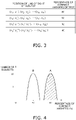
- Fig. 4 illustrates an example of a histogram of the learning efficiency.
- the horizontal axis represents the percentage of correct answers of the test taken by the subjects 10, and the vertical axis represents the number of subjects.
- the learning data is divided into two clusters, which are a cluster A and a cluster B.
- the cluster A has a peak at a point where the percentage of correct answers of the test taken by the subjects 10 is 80%.
- the cluster A is inferred to have a high learning efficiency because the percentage of correct answers of the test taken by the subjects 10 is high.
- the cluster B has a peak at a point where the percentage of correct answers of the test taken by the subjects 10 is 40%.
- the cluster B is inferred to have a low learning efficiency because the percentage of correct answers of the test taken by the subjects 10 is low.
- Fig. 5 is a flowchart of the efficiency inference apparatus 100. In the present embodiment, a case where the efficiency inference apparatus 100 is used in e-learning will be described.
- step S1 the subject 10 performs e-learning.
- An image of the subject 10 who is performing the e-learning is captured by a camera.
- the biological information acquisition unit 20 acquires the positions of the line of sight of the subject 10 who is performing the e-learning (step S2).
- the inference unit 30 infers, using the trained model 40, a percentage of correct answers to be obtained if the subject 10 took the test (step S3).
- the inference unit 30 outputs the percentage of correct answers inferred in step S3 to a display (not illustrated) (step S4).
- the display displays the inferred percentage of correct answers of the test.
- the efficiency inference apparatus 100 is the efficiency inference apparatus 100, for inferring an efficiency of the subject 10, including the biological information acquisition unit 20 and the inference unit 30.
- the biological information acquisition unit 20 acquires biological information of the subject 10.
- the inference unit 30 includes the trained model 40, and infers, using the trained model 40, the efficiency of the subject 10 from the biological information.
- the trained model 40 is a model trained with a training dataset including biological information and an efficiency of the subject 10.
- This efficiency inference apparatus 100 uses the trained model 40 trained with training data including the biological information and the efficiency of the subject 10. Thus, based on the biological information of the subject 10, the efficiency inference apparatus 100 can infer the efficiency of the subject 10 that serves as an evaluation indicator of the productivity.
- the efficiency is a learning efficiency of the subject 10.
- This efficiency inference apparatus 100 infers the learning efficiency of the subject 10, and thus can infer the learning efficiency of the subject 10 who performs e-learning.
- the learning efficiency is based on a percentage of correct answers of the subject 10 in a result of a test taken by the subject 10.
- the learning efficiency is based on the percentage of correct answers of the subject 10 in the result of the test taken by the subject 10.
- content of the e-learning can be changed in accordance with the learning efficiency (the inferred percentage of correct answers) of the subject 10 who is performing the e-learning.
- the information related to a line of sight of the subject includes at least one of a position of the line of sight, a movement of the line of sight, or a moving speed of the line of sight of the subject.
- the efficiency inference apparatus 100 may infer a learning efficiency in an online lecture.
- the efficiency inference apparatus 100 may infer a learning efficiency in a lecture at a tutoring school or at a school.
- a model trained with a training dataset including information related to the line of sight of the entire class and a mean percentage of correct answers of the class is used as the trained model.
- a model trained with a training dataset including information related to a line of sight of a specific student and a percentage of correct answers of the student may be used.
- the biological information used in the efficiency inference apparatus 100 may include at least one of a brain wave, a heartbeat, a body temperature, a body movement, a facial expression, or a face orientation of the subject.
- the biological information used in the efficiency inference apparatus 100 may be information obtained by processing a biological signal caused by a biological phenomenon or a biological activity, and may include at least one of a drowsiness level, an arousal level, a concentration level, or a fatigue level.
- Examples of the biological phenomenon include a heartbeat, a brain wave, a pulse, respiration, perspiration, and the like.
- examples of the biological activity include a facial expression, a face orientation, a body movement, and the like.
- the biological signal caused by the biological phenomenon and the biological activity includes a brain wave, a heartbeat, a body temperature, a body movement, a facial expression, a face orientation, or the like, and part of the biological signal caused by the biological phenomenon is referred to as a vital sign.
- the biological information includes at least one of information related to a line of sight, a brain wave, a heartbeat, a body temperature, a body movement, a facial expression, or a face orientation of the subject.
- the efficiency inference apparatus according to the modification 1C can infer the efficiency of the subject from the various kinds of biological information of the subject.
- the biological information is information obtained by processing a biological signal caused by a biological phenomenon or a biological activity, and includes at least one of a drowsiness level, an arousal level, a concentration level, or a fatigue level.
- the efficiency inference apparatus can infer the efficiency of the subject using, as the biological information, in addition to a biological signal caused by a biological phenomenon or a biological activity in a living body, the information obtained by processing the biological signal caused by the biological phenomenon or the biological activity.
- the biological information acquisition unit 20 acquires the biological information of the subject from a camera.
- the biological information acquisition unit 20 may acquire the biological information of the subject from a biological sensor.
- the learning efficiency is based on a percentage of correct answers of a test taken by the subject 10
- the learning efficiency may be based on a time taken by the subject 10 for answering the test or a time spent by the subject 10 for learning.
- the case where the time taken for answering the test is short corresponds to a cluster A having a peak at a point where the time taken for answering is 30 minutes.
- the learning efficiency is inferred to be high.
- the case where the time taken for answering the test is long corresponds to a cluster B having a peak at a point where the time taken for answering is 90 minutes. In this case, the learning efficiency is inferred to be low.
- the learning efficiency is based on the time taken by the subject for answering in a result of a test taken by the subject.
- content of the e-learning can be changed in accordance with the time taken for answering the test taken by the subject after the e-learning.
- the case where the time spent for learning is short corresponds to a cluster A having a peak at a point where the time spent for learning is 30 minutes. In this case, the learning efficiency is inferred to be high.
- the case where the time spent for learning is long corresponds to a cluster B having a peak at a point where the time spent for learning is 90 minutes. In this case, the learning efficiency is inferred to be low.
- the time spent for learning is a time taken to learn materials when the e-learning consists of the materials and the test.
- the learning efficiency is based on a time spent by the subject for learning in a result of a test taken by the subject.
- content of the e-learning can be changed in accordance with the time spent for learning by the subject who has performed the e-learning.
- the time spent for learning may be a playback time when learning is performed in an online lecture. For example, if the subject rewinds the content many times when performing learning in the online lecture, the playback time of the online lecture increases.
- any two or all of the percentage of correct answers of the test, the time taken for answering the test, and the time spent for learning of the subject 10 may be used as the indicators.
- the time taken by the subject for answering the test or the time spent by the subject for learning is acquired using a timer.
- the efficiency inferred by the efficiency inference apparatus 100 is the learning efficiency of the subject 10
- the efficiency inferred by the efficiency inference apparatus 100 may be a work efficiency of the subject.
- the work efficiency of the subject is based on a work accuracy of the subject.
- the work accuracy of the subject includes a degree of occurrence of mistakes in a predetermined work of the subject.
- the work efficiency of the subject may be based on a work time taken for the predetermined work of the subject.
- the predetermined work of the subject is a work at an assembly line at a factory, a data input work, or the like.
- the efficiency inference apparatus infers the work efficiency of the subject, and thus can infer the work efficiency of the subject at an assembly line at a factory, a data input work, or the like.
- the work efficiency is based on the work accuracy of the subject, and the work accuracy of the subject includes the degree of occurrence of mistakes in the predetermined work of the subject.
- assignment to a work place suitable for each person at the assembly line, a guidance for improving erroneous inputs of the subject who has performed the data input work, or the like can be performed.
- the work efficiency includes the work time taken for the predetermined work of the subject.
- Fig. 7 illustrates an efficiency inference apparatus 200 according to the present embodiment.
- the efficiency inference apparatus 200 is implemented by a computer.
- the efficiency inference apparatus 200 includes a biological information acquisition unit 20 and an inference unit 50.
- the biological information acquisition unit 20 acquires biological information of a subject 10.
- the inference unit 50 infers, using a physical model 60, an efficiency of the subject 10 from the biological information of the subject 10.
- the biological information acquisition unit 20 acquires the biological information of the subject 10.
- the biological information is information related to a line of sight of the subject 10.
- the information related to the line of sight of the subject 10 includes at least one of a position of the line of sight, a movement of the line of sight, or a moving speed of the line of sight of the subject 10.
- the biological information acquisition unit 20 acquires, using a camera, the position of the line of sight of the subject 10.
- the inference unit 50 includes the physical model 60, and infers, using the physical model 60, the efficiency of the subject 10 from the biological information.
- a processor such as a CPU or a GPU can be used as the inference unit 50.
- the inference unit 50 reads a program stored in a storage device (not illustrated) and performs predetermined arithmetic processing in accordance with this program. In accordance with the program, the efficiency inference apparatus 200 can further write the arithmetic operation result in the storage device or read information stored in the storage device.
- the storage device can be used as a database.
- the physical model 60 used by the efficiency inference apparatus 200 will be described.
- the physical model 60 indicates a correlation between biological information and an efficiency of the subject 10.
- the line of sight of the subject 10 on a screen is used. Positions where the line of sight of the subject 10 is located on the screen displaying the content during e-learning are acquired, and the acquired positions are used as the biological information of the subject.
- Fig. 8 is a flowchart of the efficiency inference apparatus 200. In the present embodiment, a case where the efficiency inference apparatus 200 is used in e-learning will be described.
- step S11 the subject 10 performs e-learning.
- An image of the subject 10 who is performing the e-learning is captured by a camera.
- the biological information acquisition unit 20 acquires the positions of the line of sight of the subject 10 who is performing the e-learning (step S12).
- the inference unit 50 infers, using the physical model 60, a percentage of correct answers to be obtained if the subject 10 took the test (step S13).
- the inference unit 50 outputs the percentage of correct answers inferred in step S13 to a display (not illustrated) (step S14).
- the display displays the inferred percentage of correct answers of the test.
- the efficiency inference apparatus 200 is the efficiency inference apparatus 200, for inferring an efficiency of the subject 10, including the biological information acquisition unit 20 and the inference unit 50.
- the biological information acquisition unit 20 acquires biological information of the subject 10.
- the inference unit 50 infers the efficiency of the subject 10, based on the biological information.
- the physical model 60 is based on a correlation between biological information and an efficiency of the subject 10.
- the efficiency inference apparatus 200 can infer the efficiency of the subject 10 that serves as an evaluation indicator of the productivity.
- the efficiency inference apparatus 200 may infer a learning efficiency in an online lecture.
- the efficiency inference apparatus 200 may infer a learning efficiency in a lecture at a tutoring school or at a school.
- the biological information used in the efficiency inference apparatus 200 may include at least one of a brain wave, a heartbeat, a body temperature, a body movement, a facial expression, or a face orientation of the subject.
- the biological information used in the efficiency inference apparatus 200 may include information obtained by processing a biological signal caused by a biological phenomenon or a biological activity, for example, converted information such as a drowsiness level, an arousal level, a concentration level, or a fatigue level.
- the biological information acquisition unit 20 acquires the biological information of the subject from a camera.
- the biological information acquisition unit 20 may acquire the biological information of the subject from a biological sensor.
- the learning efficiency is based on a percentage of correct answers of a test taken by the subject 10
- the learning efficiency may be based on a time taken by the subject 10 for answering the test or a time spent by the subject 10 for learning.
- the efficiency inferred by the efficiency inference apparatus 200 is the learning efficiency of the subject 10 has been described.
- the efficiency inferred by the efficiency inference apparatus 200 may be a work efficiency of the subject.
Landscapes
- Engineering & Computer Science (AREA)
- Health & Medical Sciences (AREA)
- Life Sciences & Earth Sciences (AREA)
- Physics & Mathematics (AREA)
- Artificial Intelligence (AREA)
- Biomedical Technology (AREA)
- General Health & Medical Sciences (AREA)
- Medical Informatics (AREA)
- Public Health (AREA)
- Biophysics (AREA)
- Molecular Biology (AREA)
- Theoretical Computer Science (AREA)
- Pathology (AREA)
- Animal Behavior & Ethology (AREA)
- Psychiatry (AREA)
- Mathematical Physics (AREA)
- Veterinary Medicine (AREA)
- Surgery (AREA)
- Evolutionary Computation (AREA)
- Heart & Thoracic Surgery (AREA)
- Data Mining & Analysis (AREA)
- Developmental Disabilities (AREA)
- Educational Technology (AREA)
- General Physics & Mathematics (AREA)
- Fuzzy Systems (AREA)
- Computer Vision & Pattern Recognition (AREA)
- Signal Processing (AREA)
- Physiology (AREA)
- Social Psychology (AREA)
- Hospice & Palliative Care (AREA)
- Computing Systems (AREA)
- Computational Linguistics (AREA)
- General Engineering & Computer Science (AREA)
- Software Systems (AREA)
- Child & Adolescent Psychology (AREA)
- Psychology (AREA)
- Databases & Information Systems (AREA)
- Epidemiology (AREA)
- Primary Health Care (AREA)
- Educational Administration (AREA)
Abstract
Description
- The present disclosure relates to an efficiency inference apparatus.
- In the related art, a point of gaze of a subject onto a displayed object is identified, and a concentration level of the subject is inferred based only on data derived from a line of sight (PTL 1 (
Japanese Unexamined Patent Application Publication No. 2016-224142 - In the case where a learning efficiency or a work efficiency of a subject is inferred, a concentration state that yields a higher productivity is desirably evaluated as a state of a higher concentration level. However, there is an issue that it is difficult to evaluate, based only on the data derived from the line of sight, whether the subject is in the concentration state that yields a higher productivity. Even if the line of sight is right at a target to be learned, the subject is not necessarily in the concentration state that yields a higher productivity. Thus, information taken into account by an inference model is insufficient. Further, as for a target to be inferred, it is desirable to infer an efficiency of a subject that serves as an evaluation indicator of the productivity, rather than a state of a living body such as the concentration state.
- An efficiency inference apparatus according to a first aspect is an efficiency inference apparatus, for inferring an efficiency of a subject, including a biological information acquisition unit and an inference unit. The biological information acquisition unit acquires biological information of the subject. The inference unit infers the efficiency of the subject, based on the biological information.
- This efficiency inference apparatus can infer the efficiency of the subject that serves as an evaluation indicator of the productivity, from the biological information of the subject.
- An efficiency inference apparatus according to a second aspect is an efficiency inference apparatus, for inferring an efficiency of a subject, including a biological information acquisition unit and an inference unit. The biological information acquisition unit acquires biological information of the subject. The inference unit includes a trained model, and infers, using the trained model, the efficiency of the subject from the biological information. The trained model is a model trained by a training dataset including the biological information and the efficiency of the subject.
- This efficiency inference apparatus can infer the efficiency of the subject that serves as an evaluation indicator of the productivity, from the biological information of the subject.
- An efficiency inference apparatus according to a third aspect is the apparatus according to the first aspect or the second aspect, in which the efficiency is a learning efficiency of the subject.
- An efficiency inference apparatus according to a fourth aspect is the apparatus according to the third aspect, in which the learning efficiency is based on a percentage of correct answers of the subject in a result of a test taken by the subject.
- An efficiency inference apparatus according to a fifth aspect is the apparatus according to the third aspect, in which the learning efficiency is based on a time taken by the subject for answering in a result of a test taken by the subject.
- An efficiency inference apparatus according to a sixth aspect is the apparatus according to the first aspect or the second aspect, in which the efficiency is a work efficiency of the subject.
- This efficiency inference apparatus can infer the work efficiency of the subject.
- An efficiency inference apparatus according to a seventh aspect is the apparatus according to the sixth aspect, in which the work efficiency is based on a work accuracy of the subject. The work accuracy of the subject includes a degree of occurrence of mistakes in a predetermined work of the subject.
- An efficiency inference apparatus according to an eighth aspect is the apparatus according to the sixth aspect, in which the work efficiency is based on a work time taken for a predetermined work of the subject.
- An efficiency inference apparatus according to a ninth aspect is the apparatus according to any of the first aspect to the eighth aspect, in which the biological information includes at least one of information related to a line of sight, a brain wave, a heartbeat, a body temperature, a body movement, a facial expression, or a face orientation of the subject.
- An efficiency inference apparatus according to a tenth aspect is the apparatus according to any of the first aspect to the eighth aspect, in which the biological information is information obtained by processing a biological signal caused by a biological phenomenon or a biological activity and includes at least one of a drowsiness level, an arousal level, a concentration level, or a fatigue level.
- An efficiency inference apparatus according to an eleventh aspect is the apparatus according to the tenth aspect, in which the biological signal caused by the biological phenomenon or the biological activity is a brain wave, a heartbeat, a body temperature, a body movement, a facial expression, or a face orientation of the subject.
- An efficiency inference apparatus according to a twelfth aspect is the apparatus according to the ninth aspect, in which the information related to the line of sight of the subject includes at least one of a position of the line of sight, a movement of the line of sight, or a moving speed of the line of sight of the subject.
-
-
Fig. 1 is a functional block diagram of anefficiency inference apparatus 100. -
Fig. 2 is a diagram illustrating an example of a network architecture. -
Fig. 3 is a diagram illustrating an example of learning data. -
Fig. 4 is a diagram illustrating an example of a histogram of a learning efficiency. -
Fig. 5 is a flowchart of theefficiency inference apparatus 100. -
Fig. 6A is a diagram illustrating another example of the histogram of the learning efficiency. -
Fig. 6B is a diagram illustrating another example of the histogram of the learning efficiency. -
Fig. 7 is a functional block diagram of anefficiency inference apparatus 200. -
Fig. 8 is a flowchart of theefficiency inference apparatus 200. -
Fig. 1 illustrates anefficiency inference apparatus 100 according to the present embodiment. Theefficiency inference apparatus 100 is implemented by a computer. Theefficiency inference apparatus 100 includes a biologicalinformation acquisition unit 20 and aninference unit 30. The biologicalinformation acquisition unit 20 acquires biological information of asubject 10. Theinference unit 30 infers, using a trainedmodel 40, an efficiency of thesubject 10 from the biological information of thesubject 10. - The biological
information acquisition unit 20 acquires the biological information of thesubject 10. The biological information is information related to a line of sight of thesubject 10. The information related to the line of sight of thesubject 10 includes at least one of a position of the line of sight, a movement of the line of sight, or a moving speed of the line of sight of thesubject 10. In the present embodiment, the biologicalinformation acquisition unit 20 acquires, using a camera, the position of the line of sight of thesubject 10. - The
inference unit 30 includes the trainedmodel 40, and infers, using the trainedmodel 40, the efficiency of thesubject 10 from the biological information. A processor such as a CPU or a GPU can be used as theinference unit 30. Theinference unit 30 reads a program stored in a storage device (not illustrated) and performs predetermined arithmetic processing in accordance with this program. In accordance with the program, theefficiency inference apparatus 100 can further write the arithmetic operation result in the storage device or read information stored in the storage device. The storage device can be used as a database. - The trained
model 40 is a model trained with a training dataset including biological information and an efficiency of thesubject 10. - In the present embodiment, to predict (infer) the efficiency of the
subject 10 using the trainedmodel 40, the line of sight of thesubject 10 on a screen is used. Expression (1) below denotes a concatenation of positions (xK, yK)T on the screen.
- For Expression (1), the number of positions of the line of sight of the subject 10 on the screen may vary from trial to trial. K denotes the number of collected pieces of line-of-sight coordinate data. For example, in the case where data is obtained for 10 seconds by a camera that acquires the line of sight of the subject 10 on the screen at one sample/second, then K = 10 holds.
- A binary classification task is for finding a function that maps "p" in order to assign a label "efficient" or "inefficient".
- In the present embodiment, a deep neural network is used. Specifically, a convolutional neural network having L convolutional layers (L = 1, 2, or 3) is used, and each layer is followed by, as an activation function, a ReLU function (ramp function) that is a non-linear function. An output from the highest convolutional layer is pooled by extracting a mean value or a maximum value to obtain a feature quantity in which a dimension in a time-series direction is compressed, and the pooling result is supplied to a fully connected layer having, as an activation function, a softmax function that is a non-linear function.
-
Fig. 2 illustrates an example of a network architecture including two convolutional layers. - First, as indicated by Expression (2) below, inputs to the network architecture are x-coordinate values and respective y-coordinate values on the screen.

- In Expression (2), (xK, yK) denotes a vector. In the two-layer network architecture illustrated in
Fig. 2 , a plurality of input vectors (x1, y1), (x2, y2) ··· are input from an input side (lower side inFig. 2 ), and an efficiency of the subject is output from an output side (upper side inFig. 2 ). This network architecture is constituted by two layers L1 and L2. - The input vectors (x1, y1), (x2, y2), ··· (xK, yK) are input to the first convolutional layer L1. In the first convolutional layer L1, a feature quantity of the line of sight of the subject 10 is extracted, and a first feature quantity is output.
- Then, the first feature quantity from the first convolutional layer L1 is input to the second convolutional layer L2. In the second convolutional layer L2, a feature quantity of the line of sight of the subject 10 is extracted from the first feature quantity, and a second feature quantity is output.
- Then, the second feature quantity from the second convolutional layer L2 is input to a pooling layer (mean/max pooling). In the pooling layer, compression is performed through extraction of a mean value or a maximum value of the second feature quantity (feature map).
- Then, the feature vector from the pooling layer is input to the fully connected layer. The output from the fully connected layer is input to an output layer (not illustrated). The output from the fully connected layer indicates whether the efficiency of the subject 10 is efficient or inefficient.
- The trained
model 40 used by theefficiency inference apparatus 100 will be described. The trainedmodel 40 uses an inference model obtained by training in advance a neural network with a training dataset including biological information and an efficiency of a subject. - In the learning process, a camera (not illustrated) of a personal computer for measuring information related to the line of sight and e-learning with a test are prepared. Training is performed using a training dataset in which the information related to the line of sight of the subject during e-learning is input data and information correlated to a percentage of correct answers of a test following the e-learning is output data.
-
Fig. 3 illustrates an example of the learning data. In this example, positions where the line of sight of the subject 10 is located on the screen displaying the content during e-learning are recorded, and the recorded positions are used as the biological information of the subject. As illustrated inFig. 3 , in the case where the percentage of correct answers of the test following the e-learning is 80%, training is performed using a training dataset in which biological information in which the positions of the line of sight of the subject 10 are recorded as "(x1, y1), (x2, y2), ··· (xK, yK)" is the input and the percentage of correct answers of 80% is the output. In addition, training is performed using a training dataset in which biological information in which the positions of the line of sight of the subject 10 are recorded as "(x1', y1'), (x2', y2'), ··· (xl', yl')" is the input and the percentage of correct answers of 90% is the output. In addition, training is performed using a training dataset in which biological information in which the positions of the line of sight of the subject 10 are recorded as "(x1", y1"), (x2", y2"), ··· (xm", ym")" is the input and the percentage of correct answers of 50% is the output. In addition, training is performed using a training dataset in which biological information in which the positions of the line of sight of the subject 10 are recorded as "(x1‴, y1‴), (x2‴, y2‴), ··· (xn‴, yn‴)" is the input and the percentage of correct answers of 40% is the output. - The efficiency of the subject 10 inferred by the
efficiency inference apparatus 100 is a learning efficiency. The learning efficiency is based on the percentage of correct answers of the test taken by thesubjects 10. -
Fig. 4 illustrates an example of a histogram of the learning efficiency. The horizontal axis represents the percentage of correct answers of the test taken by thesubjects 10, and the vertical axis represents the number of subjects. As illustrated inFig. 4 , the learning data is divided into two clusters, which are a cluster A and a cluster B. The cluster A has a peak at a point where the percentage of correct answers of the test taken by thesubjects 10 is 80%. The cluster A is inferred to have a high learning efficiency because the percentage of correct answers of the test taken by thesubjects 10 is high. The cluster B has a peak at a point where the percentage of correct answers of the test taken by thesubjects 10 is 40%. The cluster B is inferred to have a low learning efficiency because the percentage of correct answers of the test taken by thesubjects 10 is low. -
Fig. 5 is a flowchart of theefficiency inference apparatus 100. In the present embodiment, a case where theefficiency inference apparatus 100 is used in e-learning will be described. - First, in step S1, the subject 10 performs e-learning. An image of the subject 10 who is performing the e-learning is captured by a camera. The biological
information acquisition unit 20 acquires the positions of the line of sight of the subject 10 who is performing the e-learning (step S2). From the positions of the line of sight of the subject 10, theinference unit 30 infers, using the trainedmodel 40, a percentage of correct answers to be obtained if the subject 10 took the test (step S3). Then, theinference unit 30 outputs the percentage of correct answers inferred in step S3 to a display (not illustrated) (step S4). The display displays the inferred percentage of correct answers of the test. - (6-1)
Theefficiency inference apparatus 100 according to the present embodiment is theefficiency inference apparatus 100, for inferring an efficiency of the subject 10, including the biologicalinformation acquisition unit 20 and theinference unit 30. The biologicalinformation acquisition unit 20 acquires biological information of the subject 10. Theinference unit 30 includes the trainedmodel 40, and infers, using the trainedmodel 40, the efficiency of the subject 10 from the biological information. The trainedmodel 40 is a model trained with a training dataset including biological information and an efficiency of the subject 10. - This
efficiency inference apparatus 100 uses the trainedmodel 40 trained with training data including the biological information and the efficiency of the subject 10. Thus, based on the biological information of the subject 10, theefficiency inference apparatus 100 can infer the efficiency of the subject 10 that serves as an evaluation indicator of the productivity. - (6-2)
In theefficiency inference apparatus 100 according to the present embodiment, the efficiency is a learning efficiency of the subject 10. - This
efficiency inference apparatus 100 infers the learning efficiency of the subject 10, and thus can infer the learning efficiency of the subject 10 who performs e-learning. - (6-3)
In theefficiency inference apparatus 100 according to the present embodiment, the learning efficiency is based on a percentage of correct answers of the subject 10 in a result of a test taken by the subject 10. - In this
efficiency inference apparatus 100, the learning efficiency is based on the percentage of correct answers of the subject 10 in the result of the test taken by the subject 10. Thus, content of the e-learning can be changed in accordance with the learning efficiency (the inferred percentage of correct answers) of the subject 10 who is performing the e-learning. - (6-4)
In theefficiency inference apparatus 100 according to the present embodiment, the information related to a line of sight of the subject includes at least one of a position of the line of sight, a movement of the line of sight, or a moving speed of the line of sight of the subject. - In this
efficiency inference apparatus 100, various kinds of information related to the line of sight of the subject can be used as the biological information. - In the present embodiment, the case where the
efficiency inference apparatus 100 infers the learning efficiency of the subject in e-learning has been described. However, theefficiency inference apparatus 100 may infer a learning efficiency in an online lecture. - This enables an online lecture suitable for a level of a student to be selected with reference to the learning efficiency.
- In the present embodiment, the case where the
efficiency inference apparatus 100 infers the learning efficiency of the subject in e-learning has been described. However, theefficiency inference apparatus 100 may infer a learning efficiency in a lecture at a tutoring school or at a school. In the case of inferring the learning efficiency in a lecture at a tutoring school or at a school, a model trained with a training dataset including information related to the line of sight of the entire class and a mean percentage of correct answers of the class is used as the trained model. Alternatively, as the trained model, a model trained with a training dataset including information related to a line of sight of a specific student and a percentage of correct answers of the student may be used. - In the present embodiment, the case where the biological information used in the
efficiency inference apparatus 100 is information related to the line of sight of the subject 10 has been described. However, the biological information is not limited to this. The biological information used in theefficiency inference apparatus 100 may include at least one of a brain wave, a heartbeat, a body temperature, a body movement, a facial expression, or a face orientation of the subject. The biological information used in theefficiency inference apparatus 100 may be information obtained by processing a biological signal caused by a biological phenomenon or a biological activity, and may include at least one of a drowsiness level, an arousal level, a concentration level, or a fatigue level. Examples of the biological phenomenon include a heartbeat, a brain wave, a pulse, respiration, perspiration, and the like. In addition, examples of the biological activity include a facial expression, a face orientation, a body movement, and the like. The biological signal caused by the biological phenomenon and the biological activity includes a brain wave, a heartbeat, a body temperature, a body movement, a facial expression, a face orientation, or the like, and part of the biological signal caused by the biological phenomenon is referred to as a vital sign. - In the efficiency inference apparatus according to a modification 1C, the biological information includes at least one of information related to a line of sight, a brain wave, a heartbeat, a body temperature, a body movement, a facial expression, or a face orientation of the subject. Thus, the efficiency inference apparatus according to the modification 1C can infer the efficiency of the subject from the various kinds of biological information of the subject. In addition, in the efficiency inference apparatus according to the modification 1C, the biological information is information obtained by processing a biological signal caused by a biological phenomenon or a biological activity, and includes at least one of a drowsiness level, an arousal level, a concentration level, or a fatigue level. Thus, the efficiency inference apparatus according to the modification 1C can infer the efficiency of the subject using, as the biological information, in addition to a biological signal caused by a biological phenomenon or a biological activity in a living body, the information obtained by processing the biological signal caused by the biological phenomenon or the biological activity.
- In the present embodiment, the case where the biological
information acquisition unit 20 acquires the biological information of the subject from a camera has been described. However, the biologicalinformation acquisition unit 20 may acquire the biological information of the subject from a biological sensor. - In the present embodiment, as for the efficiency inferred by the
efficiency inference apparatus 100, the case where the learning efficiency is based on a percentage of correct answers of a test taken by the subject 10 has been described. However, the learning efficiency may be based on a time taken by the subject 10 for answering the test or a time spent by the subject 10 for learning. - For example, as illustrated in
Fig. 6A , the case where the time taken for answering the test is short corresponds to a cluster A having a peak at a point where the time taken for answering is 30 minutes. In this case, the learning efficiency is inferred to be high. In addition, the case where the time taken for answering the test is long corresponds to a cluster B having a peak at a point where the time taken for answering is 90 minutes. In this case, the learning efficiency is inferred to be low. - In the efficiency inference apparatus according to a modification 1D, the learning efficiency is based on the time taken by the subject for answering in a result of a test taken by the subject. Thus, content of the e-learning can be changed in accordance with the time taken for answering the test taken by the subject after the e-learning.
- In addition, as illustrated in
Fig. 6B , the case where the time spent for learning is short corresponds to a cluster A having a peak at a point where the time spent for learning is 30 minutes. In this case, the learning efficiency is inferred to be high. In addition, the case where the time spent for learning is long corresponds to a cluster B having a peak at a point where the time spent for learning is 90 minutes. In this case, the learning efficiency is inferred to be low. The time spent for learning is a time taken to learn materials when the e-learning consists of the materials and the test. - In the efficiency inference apparatus according to the modification 1D, the learning efficiency is based on a time spent by the subject for learning in a result of a test taken by the subject. Thus, content of the e-learning can be changed in accordance with the time spent for learning by the subject who has performed the e-learning.
- The time spent for learning may be a playback time when learning is performed in an online lecture. For example, if the subject rewinds the content many times when performing learning in the online lecture, the playback time of the online lecture increases.
- In addition, for the learning efficiency, any two or all of the percentage of correct answers of the test, the time taken for answering the test, and the time spent for learning of the subject 10 may be used as the indicators. The time taken by the subject for answering the test or the time spent by the subject for learning is acquired using a timer.
- In the present embodiment, the case where the efficiency inferred by the
efficiency inference apparatus 100 is the learning efficiency of the subject 10 has been described. However, the efficiency inferred by theefficiency inference apparatus 100 may be a work efficiency of the subject. - The work efficiency of the subject is based on a work accuracy of the subject. The work accuracy of the subject includes a degree of occurrence of mistakes in a predetermined work of the subject. The work efficiency of the subject may be based on a work time taken for the predetermined work of the subject. The predetermined work of the subject is a work at an assembly line at a factory, a data input work, or the like.
- The efficiency inference apparatus according to a modification 1E infers the work efficiency of the subject, and thus can infer the work efficiency of the subject at an assembly line at a factory, a data input work, or the like.
- In addition, in the efficiency inference apparatus according to the modification 1E, the work efficiency is based on the work accuracy of the subject, and the work accuracy of the subject includes the degree of occurrence of mistakes in the predetermined work of the subject. Thus, assignment to a work place suitable for each person at the assembly line, a guidance for improving erroneous inputs of the subject who has performed the data input work, or the like can be performed.
- In addition, in the efficiency inference apparatus according to the modification 1E, the work efficiency includes the work time taken for the predetermined work of the subject. Thus, a load variation at the assembly line can be improved or the subject who has performed the data input work can be prompted to take a break.
-
Fig. 7 illustrates anefficiency inference apparatus 200 according to the present embodiment. Theefficiency inference apparatus 200 is implemented by a computer. Theefficiency inference apparatus 200 includes a biologicalinformation acquisition unit 20 and aninference unit 50. The biologicalinformation acquisition unit 20 acquires biological information of a subject 10. Theinference unit 50 infers, using aphysical model 60, an efficiency of the subject 10 from the biological information of the subject 10. - The biological
information acquisition unit 20 acquires the biological information of the subject 10. The biological information is information related to a line of sight of the subject 10. The information related to the line of sight of the subject 10 includes at least one of a position of the line of sight, a movement of the line of sight, or a moving speed of the line of sight of the subject 10. In the present embodiment, the biologicalinformation acquisition unit 20 acquires, using a camera, the position of the line of sight of the subject 10. - The
inference unit 50 includes thephysical model 60, and infers, using thephysical model 60, the efficiency of the subject 10 from the biological information. A processor such as a CPU or a GPU can be used as theinference unit 50. Theinference unit 50 reads a program stored in a storage device (not illustrated) and performs predetermined arithmetic processing in accordance with this program. In accordance with the program, theefficiency inference apparatus 200 can further write the arithmetic operation result in the storage device or read information stored in the storage device. The storage device can be used as a database. - The
physical model 60 used by theefficiency inference apparatus 200 will be described. Thephysical model 60 indicates a correlation between biological information and an efficiency of the subject 10. - In the present embodiment, to predict (infer) the efficiency of the subject 10 using the
physical model 60, the line of sight of the subject 10 on a screen is used. Positions where the line of sight of the subject 10 is located on the screen displaying the content during e-learning are acquired, and the acquired positions are used as the biological information of the subject. - Suppose that the acquired biological information in which the positions of the line of sight of the subject 10 are "(x1, y1), (x2, y2), ··· (xk, yk)" is input. In this case, a percentage of correct answers of the test taken after e-learning is obtained using the
physical model 60 of Expression (3) below.
-
Fig. 8 is a flowchart of theefficiency inference apparatus 200. In the present embodiment, a case where theefficiency inference apparatus 200 is used in e-learning will be described. - First, in step S11, the subject 10 performs e-learning. An image of the subject 10 who is performing the e-learning is captured by a camera. The biological
information acquisition unit 20 acquires the positions of the line of sight of the subject 10 who is performing the e-learning (step S12). From the positions of the line of sight of the subject 10, theinference unit 50 infers, using thephysical model 60, a percentage of correct answers to be obtained if the subject 10 took the test (step S13). Then, theinference unit 50 outputs the percentage of correct answers inferred in step S13 to a display (not illustrated) (step S14). The display displays the inferred percentage of correct answers of the test. - (4-1)
Theefficiency inference apparatus 200 according to the present embodiment is theefficiency inference apparatus 200, for inferring an efficiency of the subject 10, including the biologicalinformation acquisition unit 20 and theinference unit 50. The biologicalinformation acquisition unit 20 acquires biological information of the subject 10. Theinference unit 50 infers the efficiency of the subject 10, based on the biological information. - In this
efficiency inference apparatus 200, thephysical model 60 is based on a correlation between biological information and an efficiency of the subject 10. Thus, based on the biological information of the subject 10, theefficiency inference apparatus 200 can infer the efficiency of the subject 10 that serves as an evaluation indicator of the productivity. - In the present embodiment, the case where the
efficiency inference apparatus 200 infers the learning efficiency of the subject in e-learning has been described. However, theefficiency inference apparatus 200 may infer a learning efficiency in an online lecture. - In the present embodiment, the case where the
efficiency inference apparatus 200 infers the learning efficiency of the subject in e-learning has been described. However, theefficiency inference apparatus 200 may infer a learning efficiency in a lecture at a tutoring school or at a school. - In the present embodiment, the case where the biological information used in the
efficiency inference apparatus 200 is information related to the line of sight of the subject 10 has been described. However, the biological information is not limited to this. The biological information used in theefficiency inference apparatus 200 may include at least one of a brain wave, a heartbeat, a body temperature, a body movement, a facial expression, or a face orientation of the subject. The biological information used in theefficiency inference apparatus 200 may include information obtained by processing a biological signal caused by a biological phenomenon or a biological activity, for example, converted information such as a drowsiness level, an arousal level, a concentration level, or a fatigue level. - In the present embodiment, the case where the biological
information acquisition unit 20 acquires the biological information of the subject from a camera has been described. However, the biologicalinformation acquisition unit 20 may acquire the biological information of the subject from a biological sensor. - In the present embodiment, as for the efficiency inferred by the
efficiency inference apparatus 200, the case where the learning efficiency is based on a percentage of correct answers of a test taken by the subject 10 has been described. However, the learning efficiency may be based on a time taken by the subject 10 for answering the test or a time spent by the subject 10 for learning. - In the present embodiment, the case where the efficiency inferred by the
efficiency inference apparatus 200 is the learning efficiency of the subject 10 has been described. However, the efficiency inferred by theefficiency inference apparatus 200 may be a work efficiency of the subject. - While the embodiments of the present disclosure have been described above, it should be understood that various modifications can be made on the configurations and details without departing from the gist and the scope of the present disclosure that are described in the claims.
-
- 10
- subject
- 20
- biological information acquisition unit
- 30, 50
- inference unit
- 40
- trained model
- 60
- physical model
- 100, 200
- efficiency inference apparatus
- PTL 1:
Japanese Unexamined Patent Application Publication No. 2016-224142
Claims (12)
- An efficiency inference apparatus for inferring an efficiency of a subject, comprising:a biological information acquisition unit configured to acquire biological information of the subject; andan inference unit configured to infer the efficiency of the subject, based on the biological information.
- An efficiency inference apparatus (100) for inferring an efficiency of a subject (10), comprising:a biological information acquisition unit (20) configured to acquire biological information of the subject; andan inference unit (30) including a trained model (40) and configured to infer, using the trained model, the efficiency of the subject from the biological information, whereinthe trained model is a model trained with a training dataset including the biological information and the efficiency of the subject.
- The efficiency inference apparatus according to Claim 1 or 2, wherein
the efficiency is a learning efficiency of the subject. - The efficiency inference apparatus according to Claim 3, wherein
the learning efficiency is based on a percentage of correct answers of the subject in a result of a test taken by the subject. - The efficiency inference apparatus according to Claim 3, wherein
the learning efficiency is based on a time taken by the subject for answering in a result of a test taken by the subject. - The efficiency inference apparatus according to Claim 1 or 2, wherein
the efficiency is a work efficiency of the subject. - The efficiency inference apparatus according to Claim 6, wherein
the work efficiency is based on a work accuracy of the subject, and
the work accuracy of the subject includes a degree of occurrence of mistakes in a predetermined work of the subject. - The efficiency inference apparatus according to Claim 6, wherein
the work efficiency is based on a work time taken for a predetermined work of the subject. - The efficiency inference apparatus according to any of Claims 1 to 8, wherein
the biological information includes at least one of information related to a line of sight, a brain wave, a heartbeat, a body temperature, a body movement, a facial expression, or a face orientation of the subject. - The efficiency inference apparatus according to any of Claims 1 to 8, wherein
the biological information is information obtained by processing a biological signal caused by a biological phenomenon or a biological activity and includes at least one of a drowsiness level, an arousal level, a concentration level, or a fatigue level. - The efficiency inference apparatus according to Claim 10, wherein
the biological signal caused by the biological phenomenon or the biological activity is a brain wave, a heartbeat, a body temperature, a body movement, a facial expression, or a face orientation of the subject. - The efficiency inference apparatus according to Claim 9, wherein
the information related to the line of sight of the subject includes at least one of a position of the line of sight, a movement of the line of sight, or a moving speed of the line of sight of the subject.
Applications Claiming Priority (3)
| Application Number | Priority Date | Filing Date | Title |
|---|---|---|---|
| JP2020033697 | 2020-02-28 | ||
| JP2021002281A JP2021140139A (en) | 2020-02-28 | 2021-01-08 | Efficiency estimation device |
| PCT/JP2021/007670 WO2021172584A1 (en) | 2020-02-28 | 2021-03-01 | Efficiency estimation device |
Publications (2)
| Publication Number | Publication Date |
|---|---|
| EP4113483A1 true EP4113483A1 (en) | 2023-01-04 |
| EP4113483A4 EP4113483A4 (en) | 2024-03-13 |
Family
ID=77491652
Family Applications (1)
| Application Number | Title | Priority Date | Filing Date |
|---|---|---|---|
| EP21759998.4A Withdrawn EP4113483A4 (en) | 2020-02-28 | 2021-03-01 | EFFICIENCY ESTIMATION DEVICE |
Country Status (4)
| Country | Link |
|---|---|
| US (1) | US20230293115A1 (en) |
| EP (1) | EP4113483A4 (en) |
| CN (1) | CN115136225A (en) |
| WO (1) | WO2021172584A1 (en) |
Families Citing this family (1)
| Publication number | Priority date | Publication date | Assignee | Title |
|---|---|---|---|---|
| CN115349145A (en) * | 2020-04-02 | 2022-11-15 | 松下知识产权经营株式会社 | Learning support device and learning support system |
Family Cites Families (9)
| Publication number | Priority date | Publication date | Assignee | Title |
|---|---|---|---|---|
| JP2016224142A (en) | 2015-05-28 | 2016-12-28 | 富士通株式会社 | Evaluation method, program, and evaluation apparatus |
| CN105046284A (en) * | 2015-08-31 | 2015-11-11 | 鲁东大学 | A multi-instance multi-label learning method and system based on feature selection |
| CN106073805B (en) * | 2016-05-30 | 2018-10-19 | 南京大学 | A kind of fatigue detection method and device based on eye movement data |
| WO2018167991A1 (en) * | 2017-03-14 | 2018-09-20 | オムロン株式会社 | Driver monitoring device, driver monitoring method, learning device, and learning method |
| US11003852B2 (en) * | 2017-09-14 | 2021-05-11 | Massachusetts Institute Of Technology | Predicting native language from gaze |
| CN107730087A (en) * | 2017-09-20 | 2018-02-23 | 平安科技(深圳)有限公司 | Forecast model training method, data monitoring method, device, equipment and medium |
| CN108154003B (en) * | 2017-12-04 | 2021-05-07 | 西北工业大学 | Blasting vibration prediction method based on Spark gene expression optimization |
| JP7096671B2 (en) * | 2018-01-19 | 2022-07-06 | 株式会社ベネッセコーポレーション | Learning support system |
| CN110826796A (en) * | 2019-11-01 | 2020-02-21 | 广州云蝶科技有限公司 | Score prediction method |
-
2021
- 2021-03-01 EP EP21759998.4A patent/EP4113483A4/en not_active Withdrawn
- 2021-03-01 US US17/801,687 patent/US20230293115A1/en active Pending
- 2021-03-01 CN CN202180015606.0A patent/CN115136225A/en active Pending
- 2021-03-01 WO PCT/JP2021/007670 patent/WO2021172584A1/en not_active Ceased
Also Published As
| Publication number | Publication date |
|---|---|
| US20230293115A1 (en) | 2023-09-21 |
| WO2021172584A1 (en) | 2021-09-02 |
| EP4113483A4 (en) | 2024-03-13 |
| CN115136225A (en) | 2022-09-30 |
Similar Documents
| Publication | Publication Date | Title |
|---|---|---|
| Hasanbasic et al. | Recognition of stress levels among students with wearable sensors | |
| Rasch et al. | Statistics in psychology using R and SPSS | |
| Randeniya et al. | Virtual reality based maintenance training effectiveness measures–a novel approach for rail industry | |
| JP2023098155A (en) | Computer program, information processing device and information processing method | |
| CN108171437A (en) | A kind of psychology vocational ability evaluation system | |
| Yasser et al. | Detection of confusion behavior using a facial expression based on different classification algorithms | |
| JP7469966B2 (en) | Information processing device, information processing method, and program | |
| Angalakuditi et al. | Stress detection using deep learning algorithms | |
| Adnan et al. | Unmasking Parkinson's Disease with Smile: An AI-enabled Screening Framework | |
| Södergård et al. | Inferring students’ self-assessed concentration levels in Daily Life using Biosignal Data from Wearables | |
| US20230293115A1 (en) | Efficiency inference apparatus | |
| JP6988034B1 (en) | Pregnant woman depressive symptom estimation system and estimation method, estimation model generator | |
| Herbert et al. | A psychologically driven, user-centered approach to character modeling | |
| CN113505665A (en) | Video-based student emotion interpretation method and device in school | |
| Le-Quang et al. | Wemotion: A system to detect emotion using wristbands and smartphones | |
| US20250169732A1 (en) | Psychological state estimation device and psychological state estimation method | |
| Santos et al. | Avoiding bias in students’ intrinsic motivation detection | |
| JP2021140139A (en) | Efficiency estimation device | |
| Anala et al. | Comparison of Machine Learning algorithms on detecting the confusion of students while watching MOOCs | |
| Khan et al. | Revisiting annotations in online student engagement | |
| Shen et al. | The impact of quantity of training data on recognition of eating gestures | |
| Pavlenko et al. | Eye Tracking in the Study of Cognitive Processes. | |
| CN110765987B (en) | Methods, devices and electronic devices for quantifying innovative behavioral characteristics | |
| US20230047530A1 (en) | Method and device for analyzing fine motor skills | |
| CN112396114A (en) | Evaluation system, evaluation method and related product |
Legal Events
| Date | Code | Title | Description |
|---|---|---|---|
| STAA | Information on the status of an ep patent application or granted ep patent |
Free format text: STATUS: THE INTERNATIONAL PUBLICATION HAS BEEN MADE |
|
| PUAI | Public reference made under article 153(3) epc to a published international application that has entered the european phase |
Free format text: ORIGINAL CODE: 0009012 |
|
| STAA | Information on the status of an ep patent application or granted ep patent |
Free format text: STATUS: REQUEST FOR EXAMINATION WAS MADE |
|
| 17P | Request for examination filed |
Effective date: 20220920 |
|
| AK | Designated contracting states |
Kind code of ref document: A1 Designated state(s): AL AT BE BG CH CY CZ DE DK EE ES FI FR GB GR HR HU IE IS IT LI LT LU LV MC MK MT NL NO PL PT RO RS SE SI SK SM TR |
|
| RAP3 | Party data changed (applicant data changed or rights of an application transferred) |
Owner name: DAIKIN INDUSTRIES, LTD. |
|
| DAV | Request for validation of the european patent (deleted) | ||
| DAX | Request for extension of the european patent (deleted) | ||
| P01 | Opt-out of the competence of the unified patent court (upc) registered |
Effective date: 20230525 |
|
| A4 | Supplementary search report drawn up and despatched |
Effective date: 20240213 |
|
| RIC1 | Information provided on ipc code assigned before grant |
Ipc: A61B 3/113 20060101ALI20240207BHEP Ipc: G09B 19/00 20060101AFI20240207BHEP |
|
| STAA | Information on the status of an ep patent application or granted ep patent |
Free format text: STATUS: THE APPLICATION IS DEEMED TO BE WITHDRAWN |
|
| 18D | Application deemed to be withdrawn |
Effective date: 20240903 |