EP4113090B1 - Gas detection device and gas detection method for cell module assembly - Google Patents
Gas detection device and gas detection method for cell module assembly Download PDFInfo
- Publication number
- EP4113090B1 EP4113090B1 EP21849781.6A EP21849781A EP4113090B1 EP 4113090 B1 EP4113090 B1 EP 4113090B1 EP 21849781 A EP21849781 A EP 21849781A EP 4113090 B1 EP4113090 B1 EP 4113090B1
- Authority
- EP
- European Patent Office
- Prior art keywords
- gas detection
- gas
- unit
- detection chamber
- cell module
- Prior art date
- Legal status (The legal status is an assumption and is not a legal conclusion. Google has not performed a legal analysis and makes no representation as to the accuracy of the status listed.)
- Active
Links
Images




Classifications
-
- G—PHYSICS
- G01—MEASURING; TESTING
- G01M—TESTING STATIC OR DYNAMIC BALANCE OF MACHINES OR STRUCTURES; TESTING OF STRUCTURES OR APPARATUS, NOT OTHERWISE PROVIDED FOR
- G01M3/00—Investigating fluid-tightness of structures
- G01M3/02—Investigating fluid-tightness of structures by using fluid or vacuum
- G01M3/04—Investigating fluid-tightness of structures by using fluid or vacuum by detecting the presence of fluid at the leakage point
-
- H—ELECTRICITY
- H01—ELECTRIC ELEMENTS
- H01M—PROCESSES OR MEANS, e.g. BATTERIES, FOR THE DIRECT CONVERSION OF CHEMICAL ENERGY INTO ELECTRICAL ENERGY
- H01M10/00—Secondary cells; Manufacture thereof
- H01M10/42—Methods or arrangements for servicing or maintenance of secondary cells or secondary half-cells
- H01M10/48—Accumulators combined with arrangements for measuring, testing or indicating the condition of cells, e.g. the level or density of the electrolyte
-
- G—PHYSICS
- G01—MEASURING; TESTING
- G01M—TESTING STATIC OR DYNAMIC BALANCE OF MACHINES OR STRUCTURES; TESTING OF STRUCTURES OR APPARATUS, NOT OTHERWISE PROVIDED FOR
- G01M3/00—Investigating fluid-tightness of structures
- G01M3/02—Investigating fluid-tightness of structures by using fluid or vacuum
- G01M3/04—Investigating fluid-tightness of structures by using fluid or vacuum by detecting the presence of fluid at the leakage point
- G01M3/16—Investigating fluid-tightness of structures by using fluid or vacuum by detecting the presence of fluid at the leakage point using electric detection means
-
- G—PHYSICS
- G01—MEASURING; TESTING
- G01M—TESTING STATIC OR DYNAMIC BALANCE OF MACHINES OR STRUCTURES; TESTING OF STRUCTURES OR APPARATUS, NOT OTHERWISE PROVIDED FOR
- G01M3/00—Investigating fluid-tightness of structures
- G01M3/02—Investigating fluid-tightness of structures by using fluid or vacuum
- G01M3/04—Investigating fluid-tightness of structures by using fluid or vacuum by detecting the presence of fluid at the leakage point
- G01M3/20—Investigating fluid-tightness of structures by using fluid or vacuum by detecting the presence of fluid at the leakage point using special tracer materials, e.g. dye, fluorescent material, radioactive material
- G01M3/22—Investigating fluid-tightness of structures by using fluid or vacuum by detecting the presence of fluid at the leakage point using special tracer materials, e.g. dye, fluorescent material, radioactive material for pipes, cables or tubes; for pipe joints or seals; for valves; for welds; for containers, e.g. radiators
- G01M3/226—Investigating fluid-tightness of structures by using fluid or vacuum by detecting the presence of fluid at the leakage point using special tracer materials, e.g. dye, fluorescent material, radioactive material for pipes, cables or tubes; for pipe joints or seals; for valves; for welds; for containers, e.g. radiators for containers, e.g. radiators
- G01M3/229—Investigating fluid-tightness of structures by using fluid or vacuum by detecting the presence of fluid at the leakage point using special tracer materials, e.g. dye, fluorescent material, radioactive material for pipes, cables or tubes; for pipe joints or seals; for valves; for welds; for containers, e.g. radiators for containers, e.g. radiators removably mounted in a test cell
-
- G—PHYSICS
- G01—MEASURING; TESTING
- G01M—TESTING STATIC OR DYNAMIC BALANCE OF MACHINES OR STRUCTURES; TESTING OF STRUCTURES OR APPARATUS, NOT OTHERWISE PROVIDED FOR
- G01M3/00—Investigating fluid-tightness of structures
- G01M3/02—Investigating fluid-tightness of structures by using fluid or vacuum
- G01M3/26—Investigating fluid-tightness of structures by using fluid or vacuum by measuring rate of loss or gain of fluid, e.g. by pressure-responsive devices, by flow detectors
- G01M3/32—Investigating fluid-tightness of structures by using fluid or vacuum by measuring rate of loss or gain of fluid, e.g. by pressure-responsive devices, by flow detectors for containers, e.g. radiators
- G01M3/3218—Investigating fluid-tightness of structures by using fluid or vacuum by measuring rate of loss or gain of fluid, e.g. by pressure-responsive devices, by flow detectors for containers, e.g. radiators for flexible or elastic containers
-
- G—PHYSICS
- G01—MEASURING; TESTING
- G01N—INVESTIGATING OR ANALYSING MATERIALS BY DETERMINING THEIR CHEMICAL OR PHYSICAL PROPERTIES
- G01N27/00—Investigating or analysing materials by the use of electric, electrochemical, or magnetic means
- G01N27/26—Investigating or analysing materials by the use of electric, electrochemical, or magnetic means by investigating electrochemical variables; by using electrolysis or electrophoresis
- G01N27/403—Cells and electrode assemblies
- G01N27/406—Cells and probes with solid electrolytes
- G01N27/407—Cells and probes with solid electrolytes for investigating or analysing gases
-
- G—PHYSICS
- G01—MEASURING; TESTING
- G01N—INVESTIGATING OR ANALYSING MATERIALS BY DETERMINING THEIR CHEMICAL OR PHYSICAL PROPERTIES
- G01N33/00—Investigating or analysing materials by specific methods not covered by groups G01N1/00 - G01N31/00
- G01N33/0004—Gaseous mixtures, e.g. polluted air
- G01N33/0009—General constructional details of gas analysers, e.g. portable test equipment
- G01N33/0027—General constructional details of gas analysers, e.g. portable test equipment concerning the detector
- G01N33/0031—General constructional details of gas analysers, e.g. portable test equipment concerning the detector comprising two or more sensors, e.g. a sensor array
-
- G—PHYSICS
- G01—MEASURING; TESTING
- G01N—INVESTIGATING OR ANALYSING MATERIALS BY DETERMINING THEIR CHEMICAL OR PHYSICAL PROPERTIES
- G01N33/00—Investigating or analysing materials by specific methods not covered by groups G01N1/00 - G01N31/00
- G01N33/0004—Gaseous mixtures, e.g. polluted air
- G01N33/0009—General constructional details of gas analysers, e.g. portable test equipment
- G01N33/0062—General constructional details of gas analysers, e.g. portable test equipment concerning the measuring method or the display, e.g. intermittent measurement or digital display
-
- G—PHYSICS
- G01—MEASURING; TESTING
- G01N—INVESTIGATING OR ANALYSING MATERIALS BY DETERMINING THEIR CHEMICAL OR PHYSICAL PROPERTIES
- G01N33/00—Investigating or analysing materials by specific methods not covered by groups G01N1/00 - G01N31/00
- G01N33/0004—Gaseous mixtures, e.g. polluted air
- G01N33/0009—General constructional details of gas analysers, e.g. portable test equipment
- G01N33/0073—Control unit therefor
-
- H—ELECTRICITY
- H01—ELECTRIC ELEMENTS
- H01M—PROCESSES OR MEANS, e.g. BATTERIES, FOR THE DIRECT CONVERSION OF CHEMICAL ENERGY INTO ELECTRICAL ENERGY
- H01M10/00—Secondary cells; Manufacture thereof
- H01M10/42—Methods or arrangements for servicing or maintenance of secondary cells or secondary half-cells
- H01M10/4228—Leak testing of cells or batteries
-
- H—ELECTRICITY
- H01—ELECTRIC ELEMENTS
- H01M—PROCESSES OR MEANS, e.g. BATTERIES, FOR THE DIRECT CONVERSION OF CHEMICAL ENERGY INTO ELECTRICAL ENERGY
- H01M10/00—Secondary cells; Manufacture thereof
- H01M10/42—Methods or arrangements for servicing or maintenance of secondary cells or secondary half-cells
- H01M10/4285—Testing apparatus
-
- H—ELECTRICITY
- H01—ELECTRIC ELEMENTS
- H01M—PROCESSES OR MEANS, e.g. BATTERIES, FOR THE DIRECT CONVERSION OF CHEMICAL ENERGY INTO ELECTRICAL ENERGY
- H01M10/00—Secondary cells; Manufacture thereof
- H01M10/42—Methods or arrangements for servicing or maintenance of secondary cells or secondary half-cells
- H01M10/48—Accumulators combined with arrangements for measuring, testing or indicating the condition of cells, e.g. the level or density of the electrolyte
- H01M10/482—Accumulators combined with arrangements for measuring, testing or indicating the condition of cells, e.g. the level or density of the electrolyte for several batteries or cells simultaneously or sequentially
-
- Y—GENERAL TAGGING OF NEW TECHNOLOGICAL DEVELOPMENTS; GENERAL TAGGING OF CROSS-SECTIONAL TECHNOLOGIES SPANNING OVER SEVERAL SECTIONS OF THE IPC; TECHNICAL SUBJECTS COVERED BY FORMER USPC CROSS-REFERENCE ART COLLECTIONS [XRACs] AND DIGESTS
- Y02—TECHNOLOGIES OR APPLICATIONS FOR MITIGATION OR ADAPTATION AGAINST CLIMATE CHANGE
- Y02E—REDUCTION OF GREENHOUSE GAS [GHG] EMISSIONS, RELATED TO ENERGY GENERATION, TRANSMISSION OR DISTRIBUTION
- Y02E60/00—Enabling technologies; Technologies with a potential or indirect contribution to GHG emissions mitigation
- Y02E60/10—Energy storage using batteries
Definitions
- the present invention relates to a gas detection apparatus for cell module assemblies capable of accurately and rapidly detecting a cell having a damaged battery cell module assembly and a damaged position of the cell and a gas detection method for cell module assemblies using the same.
- Secondary batteries which have high applicability and electrical properties, such as high energy density, have generally been used in electric vehicles (EV) or hybrid electric vehicles (HEV), each of which is driven using an electrical driving source, as well as portable devices.
- EV electric vehicles
- HEV hybrid electric vehicles
- Such secondary batteries have attracted attention as a new energy source capable of increasing environmental friendliness and energy efficiency, since no by-products are generated as the result of use of energy in addition to a primary advantage in that it is possible to remarkably reduce the use of fossil fuels.
- a lithium ion battery a lithium polymer battery, a nickel-cadmium battery, a nickel-hydride battery, and a nickel-zinc battery as secondary batteries that are widely used at present.
- the operating voltage of a unit secondary battery cell i.e. a unit battery cell, is about 2.5V to 4.2V.
- a plurality of battery cells may be connected to each other in series to constitute a battery pack.
- a plurality of battery cells may be connected to each other in parallel depending on required charge and discharge capacities of a battery pack in order to constitute the battery pack. Consequently, the number of battery cells included in the battery pack may be variously set depending on required output voltage or charge and discharge capacities.
- a battery module including a plurality of battery cells may be manufactured first, and a battery pack may be manufactured using a plurality of battery modules and other components, which is a general method.
- each of the battery cells may be a lithium polymer secondary battery cell.
- the lithium secondary battery is classified as a liquid electrolyte battery or a polymer electrolyte battery based on the kind of an electrolytic solution.
- a battery using a liquid electrolyte is called a lithium ion battery
- a battery using a polymer electrolyte is called a lithium polymer battery.
- various kinds of sheathing members may be used for the lithium secondary battery. Typically, a cylindrical sheathing member, a prismatic sheathing member, and a pouch sheathing member are used.
- An electrode assembly configured to have a structure in which a positive electrode plate, a negative electrode plate, and a separator interposed therebetween are stacked or wound is provided in the sheathing member of the lithium secondary battery.
- an electrolytic solution leaks from a cell constituting each electrode assembly due to damage to a case thereof caused by external influence during a manufacturing/assembly process thereof, or toxic gases generated due to electrochemical reaction between an electrode, an active material, and an electrolytic solution is introduced into the vehicle.
- leakage inspection is performed on a manufacturing process line. In general, inspection is performed using a method of checking a welded portion of a cap plate welded to the case using X-rays or with the naked eye.
- KR 2018-0047359 A discloses a method of capturing gas inside and outside a cell using a plurality of gas capturing tubes configured to capture gas to determine whether gas in the cell is discharged from the outside
- KR 2012-0115835 A discloses an apparatus that inspects a sealed state of a secondary battery using a vacuum chamber.
- the present invention has been made in view of the above problems, and it is an object of the present invention to provide a gas detection apparatus for cell module assemblies constituted by stacked battery cells and capable of accurately and rapidly detecting a cell having a damaged case of a battery cell module assembly and the damaged position of the cell having the damaged case. It is another object of the present invention to provide a gas detection method for cell module assemblies using the gas detection apparatus for cell module assemblies.
- the present invention provides a gas detection apparatus (10) comprising the features of patent claim 1, and a method of gas detection for battery cell module assemblies with the features of claim 10.
- the present invention it is possible to accurately and rapidly detect a defective battery cell among battery cells constituting a cell module assembly, and the defective position of the battery cell.
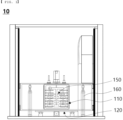
- FIG. 1 is a front view of a gas detection apparatus for cell module assemblies according to an embodiment of the present invention
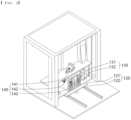
- FIG. 2 is a perspective view of the gas detection apparatus for cell module assemblies according to the embodiment of the present invention.
- the gas detection apparatus 10 for cell module assemblies includes a gas detection chamber unit 110, a sliding die unit 120, a gas sensor unit 130, a gas circulation unit 140, and a pressing unit 150.
- the sliding die unit 120 according to the embodiment of the present invention includes a mounting die 121 and a sliding frame 122
- the gas sensor unit 130 includes a gas sensing portion 131 and a gas electrode portion 132
- the gas circulation unit 140 includes an air suction device 141, an air fan 142, and an air blower 143.
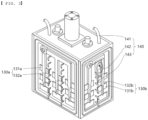
- FIG. 3 is a perspective view of the gas detection chamber unit of the gas detection apparatus for cell module assemblies according to the embodiment of the present invention.
- the gas sensor unit 130 is constituted by a plurality of gas sensors 130a and 130b provided at an outer wall of the gas detection chamber unit 110, and each of the plurality of gas sensors 130 may be a semiconductor type gas sensor.
- the gas sensing portion 131 is a portion that directly reacts with gas that leaks due to damage to a cell according to the present invention to indicate a change in resistance
- the gas electrode portion 132 is a portion that transmits an electrical signal from the gas sensing portion 131 to the outside.
- Each of the gas sensors 130 is disposed at a corresponding one of cells constituting a cell module assembly 100, or is disposed at a corresponding one of predetermined positions of the cells.
- the gas sensing portion 131 extends through the side wall of the gas detection chamber unit 110 such that one end of the gas sensing portion is disposed at the inner surface of the side wall of the gas detection chamber unit 110 so as to face an inner space of the gas detection chamber unit 110, and the other end of the gas sensing portion 131 is connected to the gas electrode portion 132.
- the gas sensing portion is connected to an external data logger (not shown), which realizes the kind and concentration value of a detected gas from the electrical signal from the gas sensing portion 131.
- the plurality of gas sensors 130 are disposed respectively at the stacked cells of the cell module assembly 100 and at the predetermined positions of the cells so as to be spaced apart from each other by a predetermined distance, and the number of gas sensors is not particularly restricted.
- the plurality of gas sensors may be disposed respectively at outer surfaces of cases of the cells that face the outer wall of the gas detection chamber unit, or may be disposed respectively at the predetermined positions of the outer surfaces of the cases of the cells that face the outer wall of the gas detection chamber unit. Consequently, the gas sensors 130 are disposed at the cells included in the cell module assembly 100 or are disposed at the predetermined positions of the cells, whereby it is possible to check a cell having a damaged case, from among the cells of the cell module assembly, and/or the damaged position of the cell having the damaged case based on a detection result. In the cell module assembly production stage, therefore, it is possible to check a defect of a cell due to damage thereto in advance and to replace the damaged cell, whereby it is possible to reduce a cell module assembly defect rate.
- the gas circulation unit 140 may include at least one selected from the group consisting of an air suction device 141, an air fan 142, and an air blower 143.
- the air suction device 141 may be constituted by a duct provided so as to extend through an upper wall surface of the gas detection chamber unit 110 and a suction pump (not shown) connected to the other end of the duct, and suctions air in the gas detection chamber unit 110 through driving of the suction pump.
- one or more air suction devices 141 are provided.
- One or more air fans 142 may be provided in the gas detection chamber unit 110.
- the air fan 142 may be disposed in a space defined between an inner upper end surface of the upper wall surface of the gas detection chamber unit 110 and an upper end surface of the cell module assembly received in the gas detection chamber unit 110, and one or more air fans 142 may be provided.
- the air blower 143 may be constituted by a nozzle (not shown) extending through the wall surface of the gas detection chamber unit 110 and an air hose (not shown) coupled to the nozzle.
- the air blower 143 may be disposed so as to extend through the upper wall surface or a side wall surface of the gas detection chamber unit 110.
- the air blower is disposed spaced apart from the side wall surface of the gas detection chamber unit by a predetermined distance.
- One or more air blowers may be disposed depending on characteristics of the cell module assembly and other environments, and the number of air blowers is not particularly restricted.
- FIG. 4 is a view showing the internal structure of the gas detection chamber unit according to the embodiment of the present invention.
- the air suction device 141 is disposed so as to extend through the upper wall surface of the gas detection chamber unit 110, a central shaft 152 connected to a motor 151 disposed at an upper end wall of the gas detection chamber unit 110 is disposed so as to extend through a central plate 153, and the pressing unit 150 is coupled to an end of the central shaft 152 while being located at a lower end surface of the central plate 153.
- a receiving space 111 configured to receive the cell module assembly is formed under the lower end of the pressing unit 150.
- the pressing unit 150 presses the upper end surface of the cell module assembly while pressing pressure thereof is adjusted using a method of controlling the lowering height of the pressing unit by driving of the motor 151.
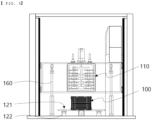
- FIG. 5 is a front view showing the state in which a cell module assembly according to an embodiment of the present invention is disposed at the lower end of the gas detection chamber unit.
- the gas detection chamber unit 110 is moved downwards by downward operation of the stripper 160 mechanically coupled to the gas detection chamber unit 110, whereby the lower end surface of the side wall of the gas detection chamber unit 110 comes into tight contact with the upper surface of the mounting die 121 while the cell module assembly 100 is received in the receiving space in the gas detection chamber unit 110.
- Each of the gas detection chamber unit 110 and the mounting die 121 is provided with a fastening member (not shown), by which the inner space of the gas detection chamber unit 110 may be completely sealed.
- the gas detection chamber unit 110 is moved upwards by upward operation of the stripper 160, whereby the cell module assembly 100 and the sliding die unit 120 are opened, and the sliding die unit 120 is moved to replace the cell module assembly with another cell module assembly to be inspected.
- FIG. 6 is a perspective view of a cell module assembly having cracks formed therein according to an embodiment of the present invention.
- battery cells are stacked such that relatively wide surfaces of the battery cells face each other to constitute a cell module assembly, cracks p are formed in side surfaces of cases of the stacked battery cells 101 and in the upper surface of the uppermost battery cell that does not face the other battery cells or the lower part of the uppermost battery cell.
- the cracks may be distributed at various positions of the battery cells.
- FIG. 7 is a photograph showing formation of a crack according to an embodiment of the present invention.
- a circular-hole-shaped crack is formed in the surface of the case of one of the stacked cells constituting the cell module assembly.
- the diameter of the crack is 0.65 mm.
- FIG. 8 is a flowchart of a gas detection method for cell module assemblies according to an embodiment of the present invention.
- a method of detecting gas in a cell module assembly 100 using the gas detection apparatus for cell module assemblies includes a step of disposing the cell module assembly 100 at the upper end of the mounting die 121 of the sliding die unit 120 and transferring the cell module assembly 100 using the sliding die unit 120 such that the mounting die 121 is located at the lower end of the gas detection chamber unit 110 along the sliding frame 122; a step of moving the gas detection chamber unit 110 downwards through downward operation of the stripper 160 such that the lower surface of the gas detection chamber unit 110 comes into tight contact with the upper surface of the mounting die 121 in order to receive the cell module assembly 100 mounted at the upper part of the mounting die 121 in the gas detection chamber unit 110; a step of driving the gas circulation unit 140 to circulate gas in the gas detection chamber unit 110; a step of detecting the gas in the gas detection chamber unit 110 using the gas sensor unit 130; a step of moving the gas detection chamber unit 110 upwards through upward operation of the stripper 160 to separate the cell module assembly 100 and the sliding die unit 120 from the
- the lowering height of the stripper 160 may be adjusted, and the cell module assembly 100 may be pressed using the pressing unit 150.
- FIGS. 9 to 14 show results of gas detection experiments on the cell module assembly according to examples of the present invention.
- the cell module assembly was disposed in the gas detection chamber unit 110 such that relatively long ones of the side surfaces of the stacked battery cells, excluding the stacked surfaces thereof, face the front wall surface and the rear wall surface of the gas detection chamber unit 110 and relatively short ones of the side surfaces of the stacked battery cells face the side wall surface of the gas detection chamber unit 110.
- a CO 2 detection sensor was used as the gas sensor.
- the cell module assembly 100 having cracks formed at positions p3 and p6 was disposed on the mounting die 121, the mounting die 121 was moved along the sliding frame 122 so as to be located at the lower end of the gas detection chamber unit 110, the stripper 160 was driven downwards such that the lower surface of the gas detection chamber unit 110 came into close contact with the upper surface of the mounting die 121, gas in the gas detection chamber unit 110 was detected using the gas sensor unit 130 while the gas circulation unit 140 was driven to circulate the gas in the gas detection chamber unit 110, result values were transmitted to the external data logger, and detected CO 2 concentration values were collected.
- the cell module assembly 100 having cracks formed at positions p1 and p4 was disposed on the mounting die 121, the mounting die 121 was moved along the sliding frame 122 so as to be located at the lower end of the gas detection chamber unit 110, the stripper 160 was driven downwards such that the lower surface of the gas detection chamber unit 110 came into close contact with the upper surface of the mounting die 121, gas in the gas detection chamber unit 110 was detected using the gas sensor unit 130 while the gas circulation unit 140 was driven to circulate the gas in the gas detection chamber unit 110, result values were transmitted to the external data logger, and detected CO 2 concentration values were collected.
- the cell module assembly 100 having cracks formed therein was disposed on the mounting die 121, the mounting die 121 was moved along the sliding frame 122 so as to be located at the lower end of the gas detection chamber unit 110, the stripper 160 was driven downwards such that the lower surface of the gas detection chamber unit 110 came into close contact with the upper surface of the mounting die 121, gas in the gas detection chamber unit 110 was detected using the gas sensor unit 130, and result values were transmitted to the external data logger.
- the air fan 142 and the air blower 143 were individually or simultaneously driven either for 2 seconds or continuously to perform gas detection experiments.
- Gas detection experiments according to the present invention were performed using the cell module assembly 100 having cracks formed in the surfaces of pouch cases of cells, and experiments to purify the gas detection chamber unit 110 through driving of the gas circulation unit 140 were performed after gas detection.
- Example 8 gas detection experiments were performed on a normal cell module assembly having no crack formed therein and a defective cell module assembly having a crack formed therein using the gas detection method according to the present invention.
- a defective cell module assembly having a crack formed at position P2 shown in FIG. 7 was used.
- Gas sensors were disposed at the front wall surface and the rear wall surface of the gas detection chamber unit 110 so as to be spaced apart from each other by a predetermined distance in a 3x3 matrix, and gas sensors were disposed at the side wall surface of the gas detection chamber unit so as to be spaced apart from each other by a predetermined distance in a 2x3 matrix.
- two gas sensors were also disposed at positions adjacent to the front of the upper wall surface of the gas detection chamber unit 110 so as to be spaced apart from each other by a predetermined distance. Experiments were performed through a step of transferring the cell module assembly using the sliding die unit 120; a step of moving the gas detection chamber unit 110 downwards through downward operation of the stripper 160 to receive the cell module assembly in the gas detection chamber unit 110; a step of driving the gas circulation unit 140 to circulate gas in the gas detection chamber unit 110; a step of detecting the gas in the gas detection chamber unit 110 using the gas sensor unit 130; a step of moving the gas detection chamber unit 110 upwards through upward operation of the stripper 160 to separate the gas detection chamber unit 110 and the sliding die unit 120 from each other; and a step of purifying the interior of the gas detection chamber unit 110 using the gas circulation unit 140.
- the results of gas detection experiments according to Example 8 are shown in FIG. 14 .
- the period from the start to 25 seconds of an x-axis, which indicates time, is a gas detection period
- the period from the 25 seconds to 40 seconds is a period during which the gas detection chamber unit 110 is purified after gas detection is completed. It can be seen from the result graph that gas was not detected as the result of gas detection experiments using the normal cell module assembly and that five gas sensors disposed at the crack position and the upper side, the lower side, the left side, and the right side of the crack position, among 34 gas sensors, detected CO 2 gas as the result of gas detection experiments using the cell module assembly having the cracks formed therein.
- the detected CO 2 concentration value was greater when the gas sensor was disposed closer to the crack position, and the average CO 2 concentration value of the gas sensor disposed closest to the crack position was the greatest. Consequently, it can be seen that it is possible to determine whether the battery cell is damaged based on whether CO 2 is detected by the gas sensor and that it is possible to determine a damaged cell and the damaged position of the cell based on comparison in CO 2 concentration values detected by the gas sensors.
Landscapes
- Chemical & Material Sciences (AREA)
- Engineering & Computer Science (AREA)
- Health & Medical Sciences (AREA)
- Life Sciences & Earth Sciences (AREA)
- Physics & Mathematics (AREA)
- General Physics & Mathematics (AREA)
- Electrochemistry (AREA)
- Chemical Kinetics & Catalysis (AREA)
- General Health & Medical Sciences (AREA)
- Pathology (AREA)
- Immunology (AREA)
- Analytical Chemistry (AREA)
- Biochemistry (AREA)
- General Chemical & Material Sciences (AREA)
- Manufacturing & Machinery (AREA)
- Medicinal Chemistry (AREA)
- Food Science & Technology (AREA)
- Combustion & Propulsion (AREA)
- Molecular Biology (AREA)
- Sampling And Sample Adjustment (AREA)
- Examining Or Testing Airtightness (AREA)
- Investigating Or Analysing Materials By Optical Means (AREA)
- Investigating Or Analyzing Materials By The Use Of Electric Means (AREA)
- Battery Mounting, Suspending (AREA)
Description
- This application claims the benefit of priority to
KR 2020-0094310 A filed on July 29, 2020 - The present invention relates to a gas detection apparatus for cell module assemblies capable of accurately and rapidly detecting a cell having a damaged battery cell module assembly and a damaged position of the cell and a gas detection method for cell module assemblies using the same.
- Secondary batteries, which have high applicability and electrical properties, such as high energy density, have generally been used in electric vehicles (EV) or hybrid electric vehicles (HEV), each of which is driven using an electrical driving source, as well as portable devices. Such secondary batteries have attracted attention as a new energy source capable of increasing environmental friendliness and energy efficiency, since no by-products are generated as the result of use of energy in addition to a primary advantage in that it is possible to remarkably reduce the use of fossil fuels.
- There are a lithium ion battery, a lithium polymer battery, a nickel-cadmium battery, a nickel-hydride battery, and a nickel-zinc battery as secondary batteries that are widely used at present. The operating voltage of a unit secondary battery cell, i.e. a unit battery cell, is about 2.5V to 4.2V. In the case in which output voltage higher than the above operating voltage is required, therefore, a plurality of battery cells may be connected to each other in series to constitute a battery pack. In addition, a plurality of battery cells may be connected to each other in parallel depending on required charge and discharge capacities of a battery pack in order to constitute the battery pack. Consequently, the number of battery cells included in the battery pack may be variously set depending on required output voltage or charge and discharge capacities.
- Meanwhile, in the case in which a plurality of battery cells is connected to each other in series/parallel to constitute a battery pack, a battery module including a plurality of battery cells may be manufactured first, and a battery pack may be manufactured using a plurality of battery modules and other components, which is a general method.
- Meanwhile, in the case in which a battery cell assembly is constituted by a plurality of battery cells in the battery module, each of the battery cells may be a lithium polymer secondary battery cell.
- In general, the lithium secondary battery is classified as a liquid electrolyte battery or a polymer electrolyte battery based on the kind of an electrolytic solution. A battery using a liquid electrolyte is called a lithium ion battery, and a battery using a polymer electrolyte is called a lithium polymer battery. In addition, various kinds of sheathing members may be used for the lithium secondary battery. Typically, a cylindrical sheathing member, a prismatic sheathing member, and a pouch sheathing member are used. An electrode assembly configured to have a structure in which a positive electrode plate, a negative electrode plate, and a separator interposed therebetween are stacked or wound is provided in the sheathing member of the lithium secondary battery.
- Conventionally, in a device, such as a vehicle, to which a battery module including a plurality of stacked electrode assemblies is applied, an electrolytic solution leaks from a cell constituting each electrode assembly due to damage to a case thereof caused by external influence during a manufacturing/assembly process thereof, or toxic gases generated due to electrochemical reaction between an electrode, an active material, and an electrolytic solution is introduced into the vehicle.
- In the case in which the electrolytic solution leaks from the battery due to damage to or poor airtightness of the case, the product is determined to be defective. For this reason, leakage inspection is performed on a manufacturing process line. In general, inspection is performed using a method of checking a welded portion of a cap plate welded to the case using X-rays or with the naked eye.
- However, X-ray inspection is less practicable since a process and equipment are complicated, and visual inspection has low reliability.
- In order to solve the above problems,
KR 2018-0047359 A KR 2012-0115835 A - However, these methods, each of which inspects whether a case is defective for a unit cell constituting a battery module, have a disadvantage in that it is difficult to accurately sort a battery cell having defects, such as tear or cracks, from battery cells modularized by stacking in a process of manufacturing a battery cell module assembly.
- Therefore, there is a high necessity for technology capable of accurately and rapidly sorting battery cells having defective cases during a battery cell module assembly manufacturing process before delivery of final products.
- Further prior art is described in
CN 108 444 650 A andCN 109 596 272 A . - The present invention has been made in view of the above problems, and it is an object of the present invention to provide a gas detection apparatus for cell module assemblies constituted by stacked battery cells and capable of accurately and rapidly detecting a cell having a damaged case of a battery cell module assembly and the damaged position of the cell having the damaged case. It is another object of the present invention to provide a gas detection method for cell module assemblies using the gas detection apparatus for cell module assemblies.
- In order to accomplish the above objects, the present invention provides a gas detection apparatus (10) comprising the features of
patent claim 1, and a method of gas detection for battery cell module assemblies with the features ofclaim 10. - Dependent claims are directed on features of preferred embodiments of the invention.
- According to the present invention, it is possible to accurately and rapidly detect a defective battery cell among battery cells constituting a cell module assembly, and the defective position of the battery cell.
- In addition, according to the present invention, it is possible to sort and replace defective cells in a cell module assembly production process, whereby it is possible to reduce a cell module assembly defect rate.
-
-
FIG. 1 is a front view of a gas detection apparatus for cell module assemblies according to an embodiment of the present invention. -
FIG. 2 is a perspective view of the gas detection apparatus for cell module assemblies according to the embodiment of the present invention. -
FIG. 3 is a perspective view of a gas detection chamber unit of the gas detection apparatus for cell module assemblies according to the embodiment of the present invention. -
FIG. 4 is a view showing the internal structure of the gas detection chamber unit according to the embodiment of the present invention. -
FIG. 5 is a front view showing the state in which a cell module assembly according to an embodiment of the present invention is disposed at the lower end of the gas detection chamber unit. -
FIG. 6 is a perspective view of a cell module assembly having cracks formed therein according to an embodiment of the present invention. -
FIG. 7 is a photograph of a cell module assembly having a crack formed therein according to an embodiment of the present invention. -
FIG. 8 is a flowchart of a gas detection method for cell module assemblies according to an embodiment of the present invention. -
FIGS. 9 to 14 show results of gas detection experiments on the cell module assembly according to examples of the present invention. - In the present application, it should be understood that the terms "comprises," "has," "disposes," "includes," etc. specify the presence of stated features, numbers, steps, operations, elements, components, or combinations thereof, but do not preclude the presence or addition of one or more other features, numbers, steps, operations, elements, components, or combinations thereof.
- In addition, the same reference numbers will be used throughout the drawings to refer to parts that perform similar functions or operations. In the case in which one part is said to be connected to another part in the specification, not only may the one part be directly connected to the other part, but also, the one part may be indirectly connected to the other part via a further part. In addition, that a certain element is included does not mean that other elements are excluded, but means that such elements may be further included unless mentioned otherwise.
- Hereinafter, the present invention will be described with reference to the accompanying drawings in order to assist in understanding the present invention.
-
FIG. 1 is a front view of a gas detection apparatus for cell module assemblies according to an embodiment of the present invention, andFIG. 2 is a perspective view of the gas detection apparatus for cell module assemblies according to the embodiment of the present invention. - Referring to
FIGS. 1 and2 , thegas detection apparatus 10 for cell module assemblies includes a gasdetection chamber unit 110, a slidingdie unit 120, agas sensor unit 130, agas circulation unit 140, and apressing unit 150. In addition, thesliding die unit 120 according to the embodiment of the present invention includes amounting die 121 and asliding frame 122, thegas sensor unit 130 includes agas sensing portion 131 and agas electrode portion 132, and thegas circulation unit 140 includes anair suction device 141, anair fan 142, and anair blower 143. -
FIG. 3 is a perspective view of the gas detection chamber unit of the gas detection apparatus for cell module assemblies according to the embodiment of the present invention. - Referring to
FIG. 3 , thegas sensor unit 130 is constituted by a plurality ofgas sensors detection chamber unit 110, and each of the plurality ofgas sensors 130 may be a semiconductor type gas sensor. Thegas sensing portion 131 is a portion that directly reacts with gas that leaks due to damage to a cell according to the present invention to indicate a change in resistance, and thegas electrode portion 132 is a portion that transmits an electrical signal from thegas sensing portion 131 to the outside. Each of thegas sensors 130 is disposed at a corresponding one of cells constituting acell module assembly 100, or is disposed at a corresponding one of predetermined positions of the cells. Thegas sensing portion 131 extends through the side wall of the gasdetection chamber unit 110 such that one end of the gas sensing portion is disposed at the inner surface of the side wall of the gasdetection chamber unit 110 so as to face an inner space of the gasdetection chamber unit 110, and the other end of thegas sensing portion 131 is connected to thegas electrode portion 132. The gas sensing portion is connected to an external data logger (not shown), which realizes the kind and concentration value of a detected gas from the electrical signal from thegas sensing portion 131. The plurality ofgas sensors 130 are disposed respectively at the stacked cells of thecell module assembly 100 and at the predetermined positions of the cells so as to be spaced apart from each other by a predetermined distance, and the number of gas sensors is not particularly restricted. In addition, the plurality of gas sensors may be disposed respectively at outer surfaces of cases of the cells that face the outer wall of the gas detection chamber unit, or may be disposed respectively at the predetermined positions of the outer surfaces of the cases of the cells that face the outer wall of the gas detection chamber unit. Consequently, thegas sensors 130 are disposed at the cells included in thecell module assembly 100 or are disposed at the predetermined positions of the cells, whereby it is possible to check a cell having a damaged case, from among the cells of the cell module assembly, and/or the damaged position of the cell having the damaged case based on a detection result. In the cell module assembly production stage, therefore, it is possible to check a defect of a cell due to damage thereto in advance and to replace the damaged cell, whereby it is possible to reduce a cell module assembly defect rate. - The
gas circulation unit 140 may include at least one selected from the group consisting of anair suction device 141, anair fan 142, and anair blower 143. However, the present invention is not limited thereto. Theair suction device 141 may be constituted by a duct provided so as to extend through an upper wall surface of the gasdetection chamber unit 110 and a suction pump (not shown) connected to the other end of the duct, and suctions air in the gasdetection chamber unit 110 through driving of the suction pump. Preferably, one or moreair suction devices 141 are provided. One ormore air fans 142 may be provided in the gasdetection chamber unit 110. Preferably, theair fan 142 may be disposed in a space defined between an inner upper end surface of the upper wall surface of the gasdetection chamber unit 110 and an upper end surface of the cell module assembly received in the gasdetection chamber unit 110, and one ormore air fans 142 may be provided. Theair blower 143 may be constituted by a nozzle (not shown) extending through the wall surface of the gasdetection chamber unit 110 and an air hose (not shown) coupled to the nozzle. Theair blower 143 may be disposed so as to extend through the upper wall surface or a side wall surface of the gasdetection chamber unit 110. Preferably, the air blower is disposed spaced apart from the side wall surface of the gas detection chamber unit by a predetermined distance. One or more air blowers may be disposed depending on characteristics of the cell module assembly and other environments, and the number of air blowers is not particularly restricted. -
FIG. 4 is a view showing the internal structure of the gas detection chamber unit according to the embodiment of the present invention. - Referring to
FIG. 4 , theair suction device 141 is disposed so as to extend through the upper wall surface of the gasdetection chamber unit 110, acentral shaft 152 connected to amotor 151 disposed at an upper end wall of the gasdetection chamber unit 110 is disposed so as to extend through acentral plate 153, and thepressing unit 150 is coupled to an end of thecentral shaft 152 while being located at a lower end surface of thecentral plate 153. A receivingspace 111 configured to receive the cell module assembly is formed under the lower end of thepressing unit 150. In addition, thepressing unit 150 presses the upper end surface of the cell module assembly while pressing pressure thereof is adjusted using a method of controlling the lowering height of the pressing unit by driving of themotor 151. -
FIG. 5 is a front view showing the state in which a cell module assembly according to an embodiment of the present invention is disposed at the lower end of the gas detection chamber unit. - Referring to
FIG. 5 , when the mounting die 121 disposed at the upper end of thecell module assembly 100 is located at the lower end of the gasdetection chamber unit 110 along the slidingframe 122, the gasdetection chamber unit 110 is moved downwards by downward operation of thestripper 160 mechanically coupled to the gasdetection chamber unit 110, whereby the lower end surface of the side wall of the gasdetection chamber unit 110 comes into tight contact with the upper surface of the mounting die 121 while thecell module assembly 100 is received in the receiving space in the gasdetection chamber unit 110. Each of the gasdetection chamber unit 110 and the mounting die 121 is provided with a fastening member (not shown), by which the inner space of the gasdetection chamber unit 110 may be completely sealed. In addition, when gas detection is completed, the gasdetection chamber unit 110 is moved upwards by upward operation of thestripper 160, whereby thecell module assembly 100 and the slidingdie unit 120 are opened, and the slidingdie unit 120 is moved to replace the cell module assembly with another cell module assembly to be inspected. -
FIG. 6 is a perspective view of a cell module assembly having cracks formed therein according to an embodiment of the present invention. - Referring to
FIG. 6 , battery cells are stacked such that relatively wide surfaces of the battery cells face each other to constitute a cell module assembly, cracks p are formed in side surfaces of cases of the stackedbattery cells 101 and in the upper surface of the uppermost battery cell that does not face the other battery cells or the lower part of the uppermost battery cell. The cracks may be distributed at various positions of the battery cells. -
FIG. 7 is a photograph showing formation of a crack according to an embodiment of the present invention. - Referring to
FIG. 7 , a circular-hole-shaped crack is formed in the surface of the case of one of the stacked cells constituting the cell module assembly. The diameter of the crack is 0.65 mm. -
FIG. 8 is a flowchart of a gas detection method for cell module assemblies according to an embodiment of the present invention. - Referring to
FIG. 8 , a method of detecting gas in a cell module assembly 100 using the gas detection apparatus for cell module assemblies includes a step of disposing the cell module assembly 100 at the upper end of the mounting die 121 of the sliding die unit 120 and transferring the cell module assembly 100 using the sliding die unit 120 such that the mounting die 121 is located at the lower end of the gas detection chamber unit 110 along the sliding frame 122; a step of moving the gas detection chamber unit 110 downwards through downward operation of the stripper 160 such that the lower surface of the gas detection chamber unit 110 comes into tight contact with the upper surface of the mounting die 121 in order to receive the cell module assembly 100 mounted at the upper part of the mounting die 121 in the gas detection chamber unit 110; a step of driving the gas circulation unit 140 to circulate gas in the gas detection chamber unit 110; a step of detecting the gas in the gas detection chamber unit 110 using the gas sensor unit 130; a step of moving the gas detection chamber unit 110 upwards through upward operation of the stripper 160 to separate the cell module assembly 100 and the sliding die unit 120 from the gas detection chamber unit; and a step of purifying the interior of the gas detection chamber unit 110 using the gas circulation unit 140. - Also, in the step of receiving the cell module assembly in the gas
detection chamber unit 110, the lowering height of thestripper 160 may be adjusted, and thecell module assembly 100 may be pressed using thepressing unit 150. -
FIGS. 9 to 14 show results of gas detection experiments on the cell module assembly according to examples of the present invention. - In the following examples of the present invention, the cell module assembly was disposed in the gas
detection chamber unit 110 such that relatively long ones of the side surfaces of the stacked battery cells, excluding the stacked surfaces thereof, face the front wall surface and the rear wall surface of the gasdetection chamber unit 110 and relatively short ones of the side surfaces of the stacked battery cells face the side wall surface of the gasdetection chamber unit 110. In addition, a CO2 detection sensor was used as the gas sensor. - Cracks were formed at positions p3 and p6 of the
cell module assembly 100 shown inFIG. 6 , and gas detection experiments were performed. - The
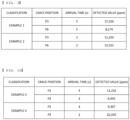
cell module assembly 100 having cracks formed at positions p3 and p6 was disposed on the mountingdie 121, the mountingdie 121 was moved along the slidingframe 122 so as to be located at the lower end of the gasdetection chamber unit 110, thestripper 160 was driven downwards such that the lower surface of the gasdetection chamber unit 110 came into close contact with the upper surface of the mountingdie 121, gas in the gasdetection chamber unit 110 was detected using thegas sensor unit 130 while thegas circulation unit 140 was driven to circulate the gas in the gasdetection chamber unit 110, result values were transmitted to the external data logger, and detected CO2 concentration values were collected. - Experiment times and CO2 concentration detection values according to Example 1 are shown in
FIG. 9 . - Gas detection experiments were performed in the state in which the interior of the gas
detection chamber unit 110 was completely sealed. - Gas detection experiments were performed in the same manner as in Example 1 except that the lower surface of the gas
detection chamber unit 110 and the upper surface of the mounting die 121 were fastened to each other via a fastening member such that the interior of the gas detection chamber unit was completely sealed. - Experiment times and CO2 concentration detection values according to Example 2 are shown in
FIG. 9 . - Gas detection experiments were performed in the state in which the
cell module assembly 100 was not pressed in the gasdetection chamber unit 110 that was partially sealed. - Cracks were formed at positions p1 and p4 of the
cell module assembly 100 shown inFIG. 6 , and gas detection experiments were performed. - The
cell module assembly 100 having cracks formed at positions p1 and p4 was disposed on the mountingdie 121, the mountingdie 121 was moved along the slidingframe 122 so as to be located at the lower end of the gasdetection chamber unit 110, thestripper 160 was driven downwards such that the lower surface of the gasdetection chamber unit 110 came into close contact with the upper surface of the mountingdie 121, gas in the gasdetection chamber unit 110 was detected using thegas sensor unit 130 while thegas circulation unit 140 was driven to circulate the gas in the gasdetection chamber unit 110, result values were transmitted to the external data logger, and detected CO2 concentration values were collected. - Experiment times and CO2 concentration detection values according to Example 3 are shown in
FIG. 10 . - Gas detection experiments were performed in the state in which the
cell module assembly 100 was pressed in the gasdetection chamber unit 110 that was partially sealed. - Cracks were formed at positions p1 and p4 of the
cell module assembly 100 shown inFIG. 6 , and gas detection experiments were performed. - Gas detection experiments were performed in the same manner as in Example 3 except that a step of bringing the lower surface of the gas
detection chamber unit 110 into close contact the upper surface of the mountingdie 121 and further driving thestripper 160 downwards in the state in which thepressing unit 150 was disposed in contact with the upper end surface of thecell module assembly 100 in order to press the upper end surface of thecell module assembly 100 was added. - Experiment times and CO2 concentration detection values according to Example 4 are shown in
FIG. 10 . - Experiments on a gas circulation effect depending on change in operation conditions of the
gas circulation unit 140 were performed in the state in which the interior of the gasdetection chamber unit 110 was partially sealed and thecell module assembly 100 was not pressed. - The
cell module assembly 100 having cracks formed therein was disposed on the mountingdie 121, the mountingdie 121 was moved along the slidingframe 122 so as to be located at the lower end of the gasdetection chamber unit 110, thestripper 160 was driven downwards such that the lower surface of the gasdetection chamber unit 110 came into close contact with the upper surface of the mountingdie 121, gas in the gasdetection chamber unit 110 was detected using thegas sensor unit 130, and result values were transmitted to the external data logger. In the step of detecting the gas using the gas sensor unit, theair fan 142 and theair blower 143 were individually or simultaneously driven either for 2 seconds or continuously to perform gas detection experiments. - Experiment times and CO2 concentration detection values according to Example 5 are shown in
FIG. 11 . - Experiments on an effect of purifying the gas
detection chamber unit 110 depending on change in operation conditions of thegas circulation unit 140 were performed in the state in which the interior of the gasdetection chamber unit 110 was partially sealed and thecell module assembly 100 was not pressed. - Gas detection experiments according to the present invention were performed using the
cell module assembly 100 having cracks formed in the surfaces of pouch cases of cells, and experiments to purify the gasdetection chamber unit 110 through driving of thegas circulation unit 140 were performed after gas detection. - It can be seen from the experiment results that the gas detection chamber unit was the most quickly purified when the
air suction device 141, theair fan 142, and theair blower 143 were simultaneously driven. - Experiment times and CO2 concentration detection values according to Example 6 are shown in
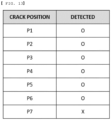
FIG. 12 . - Gas detection experiments were performed in the same manner as in Example 1 except that gas detection was performed at positions p1, p2, p3, p4, p5, p6, and p7 of the
cell module assembly 100 shown inFIG. 6 . - It can be seen from the gas detection experiment result for each crack position according to Example 7 that the position of the crack formed in the upper surface of the uppermost cell of the cell module assembly was detected. For this reason, the surfaces of the stacked cells that face each other, i.e. the upper surface and the lower surface of each unit cell, form stacked surfaces, whereby an effect similar to a taping effect is achieved, and therefore gas detection due to gas leakage within a short time may be difficult. Consequently, it can be seen that it may be difficult to rapidly detect the positions of cracks formed in the stacked surfaces using the gas detection apparatus for cell module assemblies according to the present invention.
- The results of CO2 gas detection according to Example 7 are shown in
FIG. 13 . - In Example 8, gas detection experiments were performed on a normal cell module assembly having no crack formed therein and a defective cell module assembly having a crack formed therein using the gas detection method according to the present invention. In this example, a defective cell module assembly having a crack formed at position P2 shown in
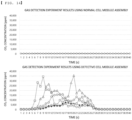
FIG. 7 was used. Gas sensors were disposed at the front wall surface and the rear wall surface of the gasdetection chamber unit 110 so as to be spaced apart from each other by a predetermined distance in a 3x3 matrix, and gas sensors were disposed at the side wall surface of the gas detection chamber unit so as to be spaced apart from each other by a predetermined distance in a 2x3 matrix. In addition, two gas sensors were also disposed at positions adjacent to the front of the upper wall surface of the gasdetection chamber unit 110 so as to be spaced apart from each other by a predetermined distance. Experiments were performed through a step of transferring the cell module assembly using the slidingdie unit 120; a step of moving the gasdetection chamber unit 110 downwards through downward operation of thestripper 160 to receive the cell module assembly in the gasdetection chamber unit 110; a step of driving thegas circulation unit 140 to circulate gas in the gasdetection chamber unit 110; a step of detecting the gas in the gasdetection chamber unit 110 using thegas sensor unit 130; a step of moving the gasdetection chamber unit 110 upwards through upward operation of thestripper 160 to separate the gasdetection chamber unit 110 and the slidingdie unit 120 from each other; and a step of purifying the interior of the gasdetection chamber unit 110 using thegas circulation unit 140. - The results of gas detection experiments according to Example 8 are shown in
FIG. 14 . In the result graph, the period from the start to 25 seconds of an x-axis, which indicates time, is a gas detection period, and the period from the 25 seconds to 40 seconds is a period during which the gasdetection chamber unit 110 is purified after gas detection is completed. It can be seen from the result graph that gas was not detected as the result of gas detection experiments using the normal cell module assembly and that five gas sensors disposed at the crack position and the upper side, the lower side, the left side, and the right side of the crack position, among 34 gas sensors, detected CO2 gas as the result of gas detection experiments using the cell module assembly having the cracks formed therein. The detected CO2 concentration value was greater when the gas sensor was disposed closer to the crack position, and the average CO2 concentration value of the gas sensor disposed closest to the crack position was the greatest. Consequently, it can be seen that it is possible to determine whether the battery cell is damaged based on whether CO2 is detected by the gas sensor and that it is possible to determine a damaged cell and the damaged position of the cell based on comparison in CO2 concentration values detected by the gas sensors. - Although the specific details of the present invention have been described in detail, those skilled in the art will appreciate that the detailed description thereof discloses only preferred embodiments of the present invention and thus does not limit the scope of the present invention which is defined by the appended claims.
-
- 10: Gas detection apparatus for cell module assemblies
- 100: Cell module assembly
- 101: Cell
- 110: Gas detection chamber unit
- 111: Receiving space
- 120: Sliding die unit
- 121: Mounting die
- 122: Sliding frame
- 130, 130a, 130b: Gas sensor units
- 131, 131a, 131b: Gas sensing portions
- 132, 132a, 132b: Gas electrode portions
- 140: Gas circulation unit
- 141: Air suction device
- 142: Air fan
- 143: Air blower
- 150: Pressing unit
- 151: Motor
- 152: Central shaft
- 153: Central plate
- 160: Stripper
- p, p1, p2, p3, p4, p5, p6, p7: Gas sensor detection positions
Claims (10)
- A gas detection apparatus (10) for cell module assemblies (100) constituted by stacked battery cells (101), the gas detection apparatus comprising:a gas detection chamber unit (110) configured to receive a cell module assembly (100); anda sliding die unit (120) configured to be movable to a lower part of the gas detection chamber unit (110) when the cell module assembly (100) is disposed at an upper end of the sliding die unit (120),wherein the gas detection apparatus (10) further comprises a gas sensor unit (130) provided in the gas detection chamber unit (110), the gas sensor unit (130) comprising a plurality of gas sensors (131, 131a, 131b) disposed at positions corresponding to positions of cells (101) of the cell module assembly (100),characterised in thatthe plurality of gas sensors (131, 131a, 131b) of the gas sensor unit (130) are provided at an outer wall of the gas detection chamber unit (110) so as to be disposed at the battery cells (101) constituting the cell module assembly (100) and at predetermined positions (P, P1-P7) of the stack of battery cells (101) in a state where the cells (101) are spaced apart from each other by a predetermined distance,the gas detection apparatus (10) further comprising a pressing unit (150) provided in the gas detection chamber unit (110), the pressing unit (150) being configured to press an upper part of the cell module assembly (100).
- The gas detection apparatus (10) according to claim 1, further comprising a gas circulation unit (140) provided in the gas detection chamber unit (110).
- The gas detection apparatus (10) according to claim 2, wherein the gas circulation unit (140) comprises at least one selected from among an air suction device (141), an air fan (142), and an air blower (143) constituted by a nozzle extending through a wall surface of the gas detection chamber unit (110) and an air hose.
- The gas detection apparatus (10) according to claim 3, wherein the air suction device (141) comprises a duct extending through a wall of the gas detection chamber unit (110) and a suction pump.
- The gas detection apparatus (10) according to claim 3, wherein the air fan (142) is disposed at an upper end wall of the gas detection chamber unit (110) in one or more.
- The gas detection apparatus (10) according to claim 3, wherein the air blower (143) extends through a side wall surface of the gas detection chamber unit (110) so as to be disposed at a predetermined position of the cell module assembly (100).
- The gas detection apparatus (10) according to claim 1, wherein the gas detection chamber unit (110) is moved downwards so as to be physically coupled to the sliding die unit (120) such that the gas detection chamber unit is partially sealed or completely sealed.
- The gas detection apparatus (10) according to claim 1, wherein the gas detection chamber unit (110) is coupled to a stripper (160) so as to be reciprocated upwards and downwards.
- The gas detection apparatus (10) according to claim 1, wherein the sliding die unit (120) comprises a mounting die (121) and a sliding frame (122).
- A gas detection method for cell module assemblies (100) constituted by stacked battery cells (101), using the gas detection apparatus (10) according to at least one of the preceding claims, the gas detection method comprising:(a) transferring a cell module assembly (100) to a lower end of a gas detection chamber unit (110) using a sliding die unit (120);(b) moving the gas detection chamber unit (110) downwards to receive the cell module assembly (100) in the gas detection chamber unit (110),
wherein an upper part of the cell module assembly (100) is pressed using a pressing unit (150) provided in the gas detection chamber unit (110);(c) driving a gas circulation unit (140) to circulate gas in the gas detection chamber unit (110);(d) detecting the gas in the gas detection chamber unit (110) using the gas sensor unit (130);(e) moving the gas detection chamber unit (110) upwards to open the cell module assembly (100) and the sliding die unit (120); and(f) driving the gas circulation unit (140) to purify the gas detection chamber unit (110).
Applications Claiming Priority (2)
| Application Number | Priority Date | Filing Date | Title |
|---|---|---|---|
| KR1020200094310A KR102754477B1 (en) | 2020-07-29 | 2020-07-29 | Cell Module Assembly Gas Detector and Method for Detecting Gas |
| PCT/KR2021/009937 WO2022025688A1 (en) | 2020-07-29 | 2021-07-29 | Gas detection device and gas detection method for cell module assembly |
Publications (3)
| Publication Number | Publication Date |
|---|---|
| EP4113090A1 EP4113090A1 (en) | 2023-01-04 |
| EP4113090A4 EP4113090A4 (en) | 2024-08-07 |
| EP4113090B1 true EP4113090B1 (en) | 2025-06-11 |
Family
ID=80035908
Family Applications (1)
| Application Number | Title | Priority Date | Filing Date |
|---|---|---|---|
| EP21849781.6A Active EP4113090B1 (en) | 2020-07-29 | 2021-07-29 | Gas detection device and gas detection method for cell module assembly |
Country Status (8)
| Country | Link |
|---|---|
| US (1) | US12265068B2 (en) |
| EP (1) | EP4113090B1 (en) |
| KR (1) | KR102754477B1 (en) |
| CN (1) | CN115398195B (en) |
| ES (1) | ES3035644T3 (en) |
| HU (1) | HUE071950T2 (en) |
| PL (1) | PL4113090T3 (en) |
| WO (1) | WO2022025688A1 (en) |
Families Citing this family (2)
| Publication number | Priority date | Publication date | Assignee | Title |
|---|---|---|---|---|
| KR102798460B1 (en) * | 2021-07-01 | 2025-04-22 | 주식회사 엘지에너지솔루션 | System and method for predicting the occurrence of gas venting in battery cells |
| WO2025168217A1 (en) * | 2024-02-09 | 2025-08-14 | Abb Schweiz Ag | Method and apparatus for battery cell formation and/or aging during battery cell manufacturing |
Family Cites Families (26)
| Publication number | Priority date | Publication date | Assignee | Title |
|---|---|---|---|---|
| KR100957367B1 (en) * | 2008-04-11 | 2010-05-12 | 현대자동차주식회사 | Fuel cell stack automatic airtight inspection device and method |
| RU2531058C2 (en) * | 2010-06-17 | 2014-10-20 | Ниссан Мотор Ко., Лтд. | Air tightness test method and air tightness tester for sealed accumulator |
| JP5693983B2 (en) * | 2011-01-31 | 2015-04-01 | ダイハツ工業株式会社 | Fuel cell system |
| DE102011016527A1 (en) * | 2011-04-08 | 2012-10-11 | Daimler Ag | Apparatus and method for leak detection of an electrochemical energy storage device |
| KR101198857B1 (en) | 2011-04-11 | 2012-11-07 | 주식회사 가스디엔에이 | Leak inspection device for secondary battery |
| JP2014127285A (en) * | 2012-12-26 | 2014-07-07 | Automotive Energy Supply Corp | Leakage inspection method of battery module and battery module |
| KR20150009876A (en) * | 2013-07-17 | 2015-01-27 | 삼성에스디아이 주식회사 | Leak inspection apparatus for battery and inspection method of a leak of the battery using the same |
| US20160116364A1 (en) * | 2014-10-24 | 2016-04-28 | Air Products And Chemicals, Inc. | Leak Test Apparatus and Method |
| KR20160052217A (en) * | 2014-11-04 | 2016-05-12 | (주)동희 | Leak testing devices |
| KR101760401B1 (en) * | 2014-12-15 | 2017-07-31 | 주식회사 엘지화학 | Apparatus for analyzing gas in secondary electric cell and method of analyzing the gas |
| TW201633593A (en) | 2015-01-29 | 2016-09-16 | 博隆能源股份有限公司 | Fuel cell stack assembly and method of operating the same |
| KR101989909B1 (en) | 2015-10-06 | 2019-06-17 | 주식회사 엘지화학 | A device for collecting inner gas in secondary battery and charging/discharging in secondary battery |
| KR101927178B1 (en) | 2016-09-08 | 2018-12-10 | 현대자동차 주식회사 | Device and method for testing airtightness of fuel cell stack |
| KR102268398B1 (en) | 2016-10-31 | 2021-06-24 | 주식회사 엘지에너지솔루션 | Gas analyzing apparatus for rechargeable battery |
| KR20190079798A (en) | 2017-12-28 | 2019-07-08 | 비지티 머티리얼스 리미티드 | High power battery or condenser module |
| KR102273782B1 (en) * | 2018-03-13 | 2021-07-06 | 삼성에스디아이 주식회사 | Apparatus for leak detection of battery cell and method for leak detection of battery cell |
| IT201800005260A1 (en) | 2018-05-11 | 2019-11-11 | METHOD FOR TIGHTNESS CHECK OF A BATTERY CELL AND RELATIVE CHECK SYSTEM | |
| US11569553B2 (en) * | 2018-06-06 | 2023-01-31 | Samsung Sdi Co., Ltd. | Battery system configured to detect abnormal battery system conditions and method of the same |
| KR20190139122A (en) | 2018-06-07 | 2019-12-17 | 주식회사 엘지화학 | A chamber for real-time analysis of the generated gas in the secondary battery and a system thereof |
| CN108444650A (en) * | 2018-06-15 | 2018-08-24 | 深圳前海久禾科技发展有限公司 | A kind of semi-automatic battery leakage detection device |
| KR102676976B1 (en) | 2019-01-03 | 2024-06-20 | 에스케이온 주식회사 | Apparatus for Analyzing Venting Gas in Secondary Electric Cell |
| CN109406065B (en) * | 2019-01-04 | 2021-11-19 | 重庆新知创科技有限公司 | Air tightness detection device for square-shell lithium battery shell |
| CN109596272A (en) * | 2019-01-30 | 2019-04-09 | 惠州市德赛自动化技术有限公司 | A kind of battery core leakage detection device |
| KR102146624B1 (en) | 2019-01-30 | 2020-08-20 | 조경열 | Main manhole for vacuum lorry |
| CN209927384U (en) * | 2019-05-27 | 2020-01-10 | 安徽庐江凯胜新能源科技有限公司 | Battery case cover plate sealing test device |
| JP7441697B2 (en) * | 2020-03-26 | 2024-03-01 | 本田技研工業株式会社 | Gas leak inspection method from fuel cell stack |
-
2020
- 2020-07-29 KR KR1020200094310A patent/KR102754477B1/en active Active
-
2021
- 2021-07-29 CN CN202180023689.8A patent/CN115398195B/en active Active
- 2021-07-29 PL PL21849781.6T patent/PL4113090T3/en unknown
- 2021-07-29 ES ES21849781T patent/ES3035644T3/en active Active
- 2021-07-29 EP EP21849781.6A patent/EP4113090B1/en active Active
- 2021-07-29 WO PCT/KR2021/009937 patent/WO2022025688A1/en not_active Ceased
- 2021-07-29 US US17/913,988 patent/US12265068B2/en active Active
- 2021-07-29 HU HUE21849781A patent/HUE071950T2/en unknown
Also Published As
| Publication number | Publication date |
|---|---|
| CN115398195A (en) | 2022-11-25 |
| WO2022025688A1 (en) | 2022-02-03 |
| US12265068B2 (en) | 2025-04-01 |
| PL4113090T3 (en) | 2025-09-01 |
| EP4113090A1 (en) | 2023-01-04 |
| HUE071950T2 (en) | 2025-10-28 |
| KR20220014567A (en) | 2022-02-07 |
| EP4113090A4 (en) | 2024-08-07 |
| KR102754477B1 (en) | 2025-01-17 |
| US20230130328A1 (en) | 2023-04-27 |
| ES3035644T3 (en) | 2025-09-05 |
| CN115398195B (en) | 2026-03-17 |
Similar Documents
| Publication | Publication Date | Title |
|---|---|---|
| KR102867148B1 (en) | Degas chamber for secondary cell and system having the same | |
| KR102602205B1 (en) | Degas system for secondary cell | |
| KR102560132B1 (en) | Manufacturin method and manufacturin device of rechargeable battery | |
| KR102775844B1 (en) | Degas system for secondary cell | |
| US11394080B2 (en) | Pouch-shaped battery case comprising crack prevention structure and method of manufacturing the same | |
| KR101957503B1 (en) | Vacuum hopper free charger | |
| CN105526962B (en) | Cylinder lithium ion battery combination property rapid detection system and detection method | |
| EP4113090B1 (en) | Gas detection device and gas detection method for cell module assembly | |
| KR20180111122A (en) | Leak inpection system for secondary cell | |
| KR20200059618A (en) | Secondary battery production system and method of the same | |
| KR20140017533A (en) | Method and system for producing electric cells for electrochemical energy storage devices | |
| KR101775213B1 (en) | Inspecting method for electrode assembly and inspecting device for the same | |
| KR20150051498A (en) | Electrode assembly and apparatus for manufacturing the same | |
| CN115943510A (en) | Stack inspection equipment for electrode plates or unit cells | |
| KR102675556B1 (en) | Rolling module for secondary battery cell | |
| KR20170082811A (en) | Method for Manufacturing Battery Cell and Device for Eliminating Gas from Battery Cell | |
| US12595997B2 (en) | Apparatus and method for checking for mis-assembly of battery cell activation tray or twisting thereof during operation | |
| CN110470435B (en) | Detection device and method for flow battery material | |
| KR101891891B1 (en) | Device of manufacturing simultaneously cap-assemblies and the method thereof | |
| KR20200059616A (en) | Tab cutting apparatus of secondary cell | |
| CN105637680A (en) | Electrode plate and method for manufacturing and inspecting electrode plate | |
| KR20200059614A (en) | Loading apparatus and method of electrode/separator assembly | |
| KR101583409B1 (en) | Apparatus of inspecting leakage of cap-assembly and inspecting method thereof | |
| EP4199209A1 (en) | Method for detecting misassembly or misalignment during operation of inner tray, and battery cell activation tray | |
| CN115031900A (en) | Battery airtightness batch detection method and system |
Legal Events
| Date | Code | Title | Description |
|---|---|---|---|
| STAA | Information on the status of an ep patent application or granted ep patent |
Free format text: STATUS: THE INTERNATIONAL PUBLICATION HAS BEEN MADE |
|
| PUAI | Public reference made under article 153(3) epc to a published international application that has entered the european phase |
Free format text: ORIGINAL CODE: 0009012 |
|
| STAA | Information on the status of an ep patent application or granted ep patent |
Free format text: STATUS: REQUEST FOR EXAMINATION WAS MADE |
|
| 17P | Request for examination filed |
Effective date: 20220928 |
|
| AK | Designated contracting states |
Kind code of ref document: A1 Designated state(s): AL AT BE BG CH CY CZ DE DK EE ES FI FR GB GR HR HU IE IS IT LI LT LU LV MC MK MT NL NO PL PT RO RS SE SI SK SM TR |
|
| DAV | Request for validation of the european patent (deleted) | ||
| DAX | Request for extension of the european patent (deleted) | ||
| REG | Reference to a national code |
Ref country code: DE Ref legal event code: R079 Ref document number: 602021032243 Country of ref document: DE Free format text: PREVIOUS MAIN CLASS: G01M0003040000 Ipc: G01M0003220000 |
|
| A4 | Supplementary search report drawn up and despatched |
Effective date: 20240704 |
|
| RIC1 | Information provided on ipc code assigned before grant |
Ipc: G01N 33/00 20060101ALI20240628BHEP Ipc: H01M 10/48 20060101ALI20240628BHEP Ipc: H01M 10/42 20060101ALI20240628BHEP Ipc: G01M 3/22 20060101AFI20240628BHEP |
|
| GRAP | Despatch of communication of intention to grant a patent |
Free format text: ORIGINAL CODE: EPIDOSNIGR1 |
|
| STAA | Information on the status of an ep patent application or granted ep patent |
Free format text: STATUS: GRANT OF PATENT IS INTENDED |
|
| RIC1 | Information provided on ipc code assigned before grant |
Ipc: G01N 33/00 20060101ALI20250130BHEP Ipc: H01M 10/48 20060101ALI20250130BHEP Ipc: H01M 10/42 20060101ALI20250130BHEP Ipc: G01M 3/22 20060101AFI20250130BHEP |
|
| INTG | Intention to grant announced |
Effective date: 20250218 |
|
| P01 | Opt-out of the competence of the unified patent court (upc) registered |
Free format text: CASE NUMBER: APP_13967/2025 Effective date: 20250321 |
|
| GRAS | Grant fee paid |
Free format text: ORIGINAL CODE: EPIDOSNIGR3 |
|
| GRAA | (expected) grant |
Free format text: ORIGINAL CODE: 0009210 |
|
| STAA | Information on the status of an ep patent application or granted ep patent |
Free format text: STATUS: THE PATENT HAS BEEN GRANTED |
|
| AK | Designated contracting states |
Kind code of ref document: B1 Designated state(s): AL AT BE BG CH CY CZ DE DK EE ES FI FR GB GR HR HU IE IS IT LI LT LU LV MC MK MT NL NO PL PT RO RS SE SI SK SM TR |
|
| REG | Reference to a national code |
Ref country code: GB Ref legal event code: FG4D |
|
| REG | Reference to a national code |
Ref country code: CH Ref legal event code: EP |
|
| REG | Reference to a national code |
Ref country code: IE Ref legal event code: FG4D |
|
| REG | Reference to a national code |
Ref country code: DE Ref legal event code: R096 Ref document number: 602021032243 Country of ref document: DE |
|
| PGFP | Annual fee paid to national office [announced via postgrant information from national office to epo] |
Ref country code: GB Payment date: 20250624 Year of fee payment: 5 |
|
| PGFP | Annual fee paid to national office [announced via postgrant information from national office to epo] |
Ref country code: NL Payment date: 20250623 Year of fee payment: 5 Ref country code: BE Payment date: 20250623 Year of fee payment: 5 |
|
| PGFP | Annual fee paid to national office [announced via postgrant information from national office to epo] |
Ref country code: FR Payment date: 20250624 Year of fee payment: 5 |
|
| REG | Reference to a national code |
Ref country code: SE Ref legal event code: TRGR |
|
| PGFP | Annual fee paid to national office [announced via postgrant information from national office to epo] |
Ref country code: SE Payment date: 20250624 Year of fee payment: 5 |
|
| REG | Reference to a national code |
Ref country code: NL Ref legal event code: FP |
|
| REG | Reference to a national code |
Ref country code: ES Ref legal event code: FG2A Ref document number: 3035644 Country of ref document: ES Kind code of ref document: T3 Effective date: 20250905 |
|
| PG25 | Lapsed in a contracting state [announced via postgrant information from national office to epo] |
Ref country code: FI Free format text: LAPSE BECAUSE OF FAILURE TO SUBMIT A TRANSLATION OF THE DESCRIPTION OR TO PAY THE FEE WITHIN THE PRESCRIBED TIME-LIMIT Effective date: 20250611 |
|
| PGFP | Annual fee paid to national office [announced via postgrant information from national office to epo] |
Ref country code: ES Payment date: 20250822 Year of fee payment: 5 |
|
| PGFP | Annual fee paid to national office [announced via postgrant information from national office to epo] |
Ref country code: DE Payment date: 20250624 Year of fee payment: 5 |
|
| REG | Reference to a national code |
Ref country code: LT Ref legal event code: MG9D |
|
| PG25 | Lapsed in a contracting state [announced via postgrant information from national office to epo] |
Ref country code: GR Free format text: LAPSE BECAUSE OF FAILURE TO SUBMIT A TRANSLATION OF THE DESCRIPTION OR TO PAY THE FEE WITHIN THE PRESCRIBED TIME-LIMIT Effective date: 20250912 Ref country code: NO Free format text: LAPSE BECAUSE OF FAILURE TO SUBMIT A TRANSLATION OF THE DESCRIPTION OR TO PAY THE FEE WITHIN THE PRESCRIBED TIME-LIMIT Effective date: 20250911 |
|
| PGFP | Annual fee paid to national office [announced via postgrant information from national office to epo] |
Ref country code: TR Payment date: 20250709 Year of fee payment: 5 Ref country code: PL Payment date: 20250626 Year of fee payment: 5 |
|
| PG25 | Lapsed in a contracting state [announced via postgrant information from national office to epo] |
Ref country code: BG Free format text: LAPSE BECAUSE OF FAILURE TO SUBMIT A TRANSLATION OF THE DESCRIPTION OR TO PAY THE FEE WITHIN THE PRESCRIBED TIME-LIMIT Effective date: 20250611 |
|
| PGFP | Annual fee paid to national office [announced via postgrant information from national office to epo] |
Ref country code: HU Payment date: 20250929 Year of fee payment: 5 |
|
| PG25 | Lapsed in a contracting state [announced via postgrant information from national office to epo] |
Ref country code: HR Free format text: LAPSE BECAUSE OF FAILURE TO SUBMIT A TRANSLATION OF THE DESCRIPTION OR TO PAY THE FEE WITHIN THE PRESCRIBED TIME-LIMIT Effective date: 20250611 |
|
| PGFP | Annual fee paid to national office [announced via postgrant information from national office to epo] |
Ref country code: AT Payment date: 20251020 Year of fee payment: 5 |
|
| PG25 | Lapsed in a contracting state [announced via postgrant information from national office to epo] |
Ref country code: RS Free format text: LAPSE BECAUSE OF FAILURE TO SUBMIT A TRANSLATION OF THE DESCRIPTION OR TO PAY THE FEE WITHIN THE PRESCRIBED TIME-LIMIT Effective date: 20250911 |
|
| REG | Reference to a national code |
Ref country code: HU Ref legal event code: AG4A Ref document number: E071950 Country of ref document: HU |
|
| PG25 | Lapsed in a contracting state [announced via postgrant information from national office to epo] |
Ref country code: LV Free format text: LAPSE BECAUSE OF FAILURE TO SUBMIT A TRANSLATION OF THE DESCRIPTION OR TO PAY THE FEE WITHIN THE PRESCRIBED TIME-LIMIT Effective date: 20250611 |
|
| PG25 | Lapsed in a contracting state [announced via postgrant information from national office to epo] |
Ref country code: PT Free format text: LAPSE BECAUSE OF FAILURE TO SUBMIT A TRANSLATION OF THE DESCRIPTION OR TO PAY THE FEE WITHIN THE PRESCRIBED TIME-LIMIT Effective date: 20251013 |
|
| REG | Reference to a national code |
Ref country code: AT Ref legal event code: MK05 Ref document number: 1802614 Country of ref document: AT Kind code of ref document: T Effective date: 20250611 |
|
| PG25 | Lapsed in a contracting state [announced via postgrant information from national office to epo] |
Ref country code: IS Free format text: LAPSE BECAUSE OF FAILURE TO SUBMIT A TRANSLATION OF THE DESCRIPTION OR TO PAY THE FEE WITHIN THE PRESCRIBED TIME-LIMIT Effective date: 20251011 |
|
| PG25 | Lapsed in a contracting state [announced via postgrant information from national office to epo] |
Ref country code: AT Free format text: LAPSE BECAUSE OF FAILURE TO SUBMIT A TRANSLATION OF THE DESCRIPTION OR TO PAY THE FEE WITHIN THE PRESCRIBED TIME-LIMIT Effective date: 20250611 Ref country code: SM Free format text: LAPSE BECAUSE OF FAILURE TO SUBMIT A TRANSLATION OF THE DESCRIPTION OR TO PAY THE FEE WITHIN THE PRESCRIBED TIME-LIMIT Effective date: 20250611 |
|
| PG25 | Lapsed in a contracting state [announced via postgrant information from national office to epo] |
Ref country code: CZ Free format text: LAPSE BECAUSE OF FAILURE TO SUBMIT A TRANSLATION OF THE DESCRIPTION OR TO PAY THE FEE WITHIN THE PRESCRIBED TIME-LIMIT Effective date: 20250611 |
|
| PG25 | Lapsed in a contracting state [announced via postgrant information from national office to epo] |
Ref country code: EE Free format text: LAPSE BECAUSE OF FAILURE TO SUBMIT A TRANSLATION OF THE DESCRIPTION OR TO PAY THE FEE WITHIN THE PRESCRIBED TIME-LIMIT Effective date: 20250611 |
|
| PG25 | Lapsed in a contracting state [announced via postgrant information from national office to epo] |
Ref country code: SK Free format text: LAPSE BECAUSE OF FAILURE TO SUBMIT A TRANSLATION OF THE DESCRIPTION OR TO PAY THE FEE WITHIN THE PRESCRIBED TIME-LIMIT Effective date: 20250611 |
|
| PG25 | Lapsed in a contracting state [announced via postgrant information from national office to epo] |
Ref country code: RO Free format text: LAPSE BECAUSE OF FAILURE TO SUBMIT A TRANSLATION OF THE DESCRIPTION OR TO PAY THE FEE WITHIN THE PRESCRIBED TIME-LIMIT Effective date: 20250611 |
|
| REG | Reference to a national code |
Ref country code: CH Ref legal event code: H13 Free format text: ST27 STATUS EVENT CODE: U-0-0-H10-H13 (AS PROVIDED BY THE NATIONAL OFFICE) Effective date: 20260224 |
|
| REG | Reference to a national code |
Ref country code: DE Ref legal event code: R097 Ref document number: 602021032243 Country of ref document: DE |
|
| PG25 | Lapsed in a contracting state [announced via postgrant information from national office to epo] |
Ref country code: LU Free format text: LAPSE BECAUSE OF NON-PAYMENT OF DUE FEES Effective date: 20250729 |
|
| PG25 | Lapsed in a contracting state [announced via postgrant information from national office to epo] |
Ref country code: MC Free format text: LAPSE BECAUSE OF FAILURE TO SUBMIT A TRANSLATION OF THE DESCRIPTION OR TO PAY THE FEE WITHIN THE PRESCRIBED TIME-LIMIT Effective date: 20250611 |
|
| PG25 | Lapsed in a contracting state [announced via postgrant information from national office to epo] |
Ref country code: DK Free format text: LAPSE BECAUSE OF FAILURE TO SUBMIT A TRANSLATION OF THE DESCRIPTION OR TO PAY THE FEE WITHIN THE PRESCRIBED TIME-LIMIT Effective date: 20250611 |
|
| PLBE | No opposition filed within time limit |
Free format text: ORIGINAL CODE: 0009261 |
|
| STAA | Information on the status of an ep patent application or granted ep patent |
Free format text: STATUS: NO OPPOSITION FILED WITHIN TIME LIMIT |
|
| PG25 | Lapsed in a contracting state [announced via postgrant information from national office to epo] |
Ref country code: CH Free format text: LAPSE BECAUSE OF NON-PAYMENT OF DUE FEES Effective date: 20250731 |
|
| REG | Reference to a national code |
Ref country code: CH Ref legal event code: L10 Free format text: ST27 STATUS EVENT CODE: U-0-0-L10-L00 (AS PROVIDED BY THE NATIONAL OFFICE) Effective date: 20260423 |