EP4113028A1 - Hot water storage plan creation system, hot water storage plan creation method, and program - Google Patents
Hot water storage plan creation system, hot water storage plan creation method, and program Download PDFInfo
- Publication number
- EP4113028A1 EP4113028A1 EP21808900.1A EP21808900A EP4113028A1 EP 4113028 A1 EP4113028 A1 EP 4113028A1 EP 21808900 A EP21808900 A EP 21808900A EP 4113028 A1 EP4113028 A1 EP 4113028A1
- Authority
- EP
- European Patent Office
- Prior art keywords
- hot water
- water storage
- plan creation
- amount
- unit
- Prior art date
- Legal status (The legal status is an assumption and is not a legal conclusion. Google has not performed a legal analysis and makes no representation as to the accuracy of the status listed.)
- Granted
Links
Images





Classifications
-
- F—MECHANICAL ENGINEERING; LIGHTING; HEATING; WEAPONS; BLASTING
- F24—HEATING; RANGES; VENTILATING
- F24H—FLUID HEATERS, e.g. WATER OR AIR HEATERS, HAVING HEAT-GENERATING MEANS, e.g. HEAT PUMPS, IN GENERAL
- F24H15/00—Control of fluid heaters
- F24H15/10—Control of fluid heaters characterised by the purpose of the control
- F24H15/172—Scheduling based on user demand, e.g. determining starting point of heating
-
- F—MECHANICAL ENGINEERING; LIGHTING; HEATING; WEAPONS; BLASTING
- F24—HEATING; RANGES; VENTILATING
- F24D—DOMESTIC- OR SPACE-HEATING SYSTEMS, e.g. CENTRAL HEATING SYSTEMS; DOMESTIC HOT-WATER SUPPLY SYSTEMS; ELEMENTS OR COMPONENTS THEREFOR
- F24D17/00—Domestic hot-water supply systems
- F24D17/0026—Domestic hot-water supply systems with conventional heating means
- F24D17/0031—Domestic hot-water supply systems with conventional heating means with accumulation of the heated water
-
- F—MECHANICAL ENGINEERING; LIGHTING; HEATING; WEAPONS; BLASTING
- F24—HEATING; RANGES; VENTILATING
- F24H—FLUID HEATERS, e.g. WATER OR AIR HEATERS, HAVING HEAT-GENERATING MEANS, e.g. HEAT PUMPS, IN GENERAL
- F24H15/00—Control of fluid heaters
- F24H15/10—Control of fluid heaters characterised by the purpose of the control
- F24H15/144—Measuring or calculating energy consumption
- F24H15/152—Forecasting future energy consumption
-
- F—MECHANICAL ENGINEERING; LIGHTING; HEATING; WEAPONS; BLASTING
- F24—HEATING; RANGES; VENTILATING
- F24H—FLUID HEATERS, e.g. WATER OR AIR HEATERS, HAVING HEAT-GENERATING MEANS, e.g. HEAT PUMPS, IN GENERAL
- F24H15/00—Control of fluid heaters
- F24H15/20—Control of fluid heaters characterised by control inputs
- F24H15/212—Temperature of the water
- F24H15/223—Temperature of the water in the water storage tank
-
- F—MECHANICAL ENGINEERING; LIGHTING; HEATING; WEAPONS; BLASTING
- F24—HEATING; RANGES; VENTILATING
- F24H—FLUID HEATERS, e.g. WATER OR AIR HEATERS, HAVING HEAT-GENERATING MEANS, e.g. HEAT PUMPS, IN GENERAL
- F24H15/00—Control of fluid heaters
- F24H15/20—Control of fluid heaters characterised by control inputs
- F24H15/246—Water level
- F24H15/248—Water level of water storage tanks
-
- F—MECHANICAL ENGINEERING; LIGHTING; HEATING; WEAPONS; BLASTING
- F24—HEATING; RANGES; VENTILATING
- F24H—FLUID HEATERS, e.g. WATER OR AIR HEATERS, HAVING HEAT-GENERATING MEANS, e.g. HEAT PUMPS, IN GENERAL
- F24H1/00—Water heaters, e.g. boilers, continuous-flow heaters or water-storage heaters
- F24H1/18—Water-storage heaters
Definitions
- the present disclosure relates to a hot water storage plan creation system, a hot water storage plan creation method, and a program.
- the present application claims priority to Japanese Patent Application No. 2020-87372 filed on May 19, 2020 , the content of which is incorporated herein by reference.
- a water heater heats tap water and stores the heated hot water in a hot water storage tank. Then, the hot water stored in the hot water storage tank is supplied to the kitchen and the bath facility.
- the hot water supply system often sets a water boiling amount based on a demand prediction every day, and is operated. However, since the demand prediction contains an error, there is a possibility that there will be a shortage of hot water due to a sudden increase in demand, and the like.
- PTL 1 discloses a control method of a water heater that stores hot water with a needed amount in a hot water storage tank by the time when the hot water supply is used, although unexpected hot water is to be discharged.
- a hot water storage plan creation system of the present disclosure includes a prediction data acquisition unit that acquires prediction data of hot water storage demand for each unit time in a predetermined period, and a plan creation unit that creates a hot water storage plan that defines a target hot water storage amount for each unit time in the predetermined period based on the prediction data.
- a hot water storage plan creation method of the present disclosure is executed by a hot water storage plan creation system, and includes a step of acquiring prediction data of hot water storage demand for each unit time in a predetermined period, and a step of creating a hot water storage plan that defines a target hot water storage amount for each unit time in the predetermined period, based on the prediction data.
- a program of the present disclosure causes a computer to execute a step of acquiring prediction data of hot water storage demand for each unit time in a predetermined period, and a step of creating a hot water storage plan that defines a target hot water storage amount for each unit time in the predetermined period, based on the prediction data.
- the hot water storage plan creation method it is possible to automatically set the water boiling amount that satisfies a demand prediction amount of daily hot water supply.
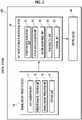
- Fig. 1 is a diagram illustrating an example of a hot water supply system according to one embodiment of the present disclosure.
- a hot water supply system 1 includes a water heater 2, a hot water storage tank 3, a facility 4, and a control system 100.
- the water heater 2 and the hot water storage tank 3 are connected by a pipe 6B, and the hot water storage tank 3 and the facility 4 are connected by a pipe 6C.
- Water is supplied to the water heater 2 through the pipe 6A.
- the water heater 2 includes, for example, a refrigerant circuit including a compressor, a condenser, an expansion valve, and an evaporator, and heats water to generate hot water by exchanging heat with the condenser.
- the water heater 2 sends the generated hot water to the hot water storage tank 3 through the pipe 6B.
- the hot water storage tank 3 stores hot water.
- the hot water storage tank 3 is provided with a sensor 5 that measures a hot water storage amount.
- the sensor 5 is, for example, a water level sensor.
- the control system 100 acquires the measured value of the sensor 5 and controls the water heater 2 such that the hot water storage amount measured by the sensor 5 is a target value.
- the hot water of an amount corresponding to the demand of the facility 4 is supplied from the hot water storage tank 3 to the facility 4 through the pipe 6C.
- the control system 100 performs demand amount prediction of hot water needed for a predetermined target period, and calculates a target value (hot water storage plan) of a hot water storage amount according to the demand amount prediction. Then, the control system 100 operates the water heater 2 based on the hot water storage plan. Next, the control system 100 will be described.
- Fig. 2 is a functional block diagram illustrating an example of a control system according to one embodiment of the present disclosure.
- the control system 100 includes a demand amount prediction device 10 that predicts the hot water demand amount, a hot water storage plan creation device 20 that creates a hot water storage plan of hot water to be stored in the hot water storage tank 3 based on the demand amount prediction, and the control device 30 of the water heater 2.
- the demand amount prediction device 10, the hot water storage plan creation device 20, and the control device 30 are communicably connected to each other.
- the demand amount prediction device 10 includes a data acquisition unit 11, a prediction model creation unit 12, a demand amount prediction unit 13, and a storage unit 14.
- the data acquisition unit 11 acquires various data needed for the demand amount prediction.
- the prediction model creation unit 12 learns the relationship between various parameters (descriptive variables) and a hot water usage amount (objective variable), and creates a prediction model that predicts the hot water demand amount.
- the descriptive variables of the prediction model are, for example, parameters that affect the demand for hot water such as the outside air temperature, the day of the week, the weather, the month, the season, the time, the time zone of the day (morning, noon, evening), and the like in the environment in which the hot water supply system 1 operates.
- the hot water usage amount is, for example, the hot water amount supplied from the hot water storage tank 3 to the facility 4. In the present disclosure, it is assumed that the hot water amount supplied to the facility 4 is known.
- the data acquisition unit 11 acquires the descriptive variables exemplified above and the usage of hot water (objective variable) at that time, associates the descriptive variables with the usage of hot water, and stores the association in the storage unit 14 as learning data.
- the prediction model creation unit 12 reads out the stored learning data, and creates a prediction model illustrating the relationship between the descriptive variables such as the outside air temperature and the day of the week and the hot water usage amount as the objective variable by processing such as multiple regression analysis.
- the prediction model creation unit 12 creates a prediction model based on actual operation data (the descriptive variable and the objective variable described above) regardless of the facility configuration of the hot water supply system 1. As a result, it can be introduced into any system and a highly precise demand prediction model can be created. Since the demand of the facility 4 may change due to the convenience of the facility, the prediction model creation unit 12 may periodically recreate the prediction model.
- the demand amount prediction unit 13 predicts the hot water demand amount for each unit time in a prediction target period based on the prediction model created by the prediction model creation unit 12.
- the demand amount prediction unit 13 outputs the demand amount prediction value for each unit time as prediction data.
- the prediction data includes data representing the hot water demand amount for each unit time as the hot water storage amount in the hot water storage tank 3. For example, when that the unit time is one hour, the prediction data includes information such as "7:00, 1%", “8:00, 2%", ..., and the like. Here, "7:00, 1%” indicates that the demand for hot water corresponding to 1% of the total hot water storage amount in the hot water storage tank 3 is expected from 7:00 to 8:00.
- the storage unit 14 stores the data acquired by the data acquisition unit 11, the prediction model created by the prediction model creation unit 12, and the like.
- the hot water storage plan creation device 20 includes a prediction data acquisition unit 21, an actual data acquisition unit 22, a setting acceptance unit 23, a plan creation unit 24, and a storage unit 25.
- the prediction data acquisition unit 21 acquires the prediction data output by the demand amount prediction device 10, and writes the acquired prediction data in the storage unit 25.
- the actual data acquisition unit 22 acquires actual data indicating the actual usage of hot water in the hot water storage tank 3, and writes the acquired actual data in the storage unit 25.
- the actual data is, for example, the hot water storage amount in the hot water storage tank 3 for each unit time.
- the actual data includes information such as "7:00, 80%", “8:00, 80%", ..., and the like.
- "7:00, 80%" and "8:00, 80%” indicate that the hot water storage amount in the hot water storage tank 3 is 80% at time points of 7:00 and 8:00.
- the hot water amount supplied from the hot water storage tank 3 to the facility 4 between 7:00 and 8:00 is equal to the hot water amount supplied by the water heater 2 to the hot water storage tank 3.
- the actual data is used to determine whether to create a hot water storage plan that prioritizes efficiency or create a hot water storage plan that prioritizes prevention of running out of hot water when a hot water storage plan is created.
- the setting acceptance unit 23 accepts the settings needed for the creation processing of the hot water storage plan.
- the plan creation unit 24 creates a hot water storage plan based on the prediction data.
- the hot water storage plan is, for example, the hot water storage amount in the hot water storage tank 3 for each unit time.
- the hot water storage plan includes, for example, information such as "6:00, 80%", “7:00, 80%", “8:00, 90%", ..., and the like.
- "7:00, 80%” indicates that the hot water storage amount that the sensor 5 measures at the time point of 7:00 is compared with 80% and an operation is performed to reach 80% when the hot water storage amount is less than 80%.
- a hot water storage plan is created such that 80% can be achieved at the time point of 7:00. For example, when water boiling is needed from 1:00 to achieve 80% of the hot water storage amount at the time point of 7:00, the water heater 2 creates a hot water storage plan such that the water heater 2 can start boiling water from 1:00.
- the storage unit 25 stores various information such as prediction data, actual data, and various settings.
- the control device 30 acquires the hot water storage amount of the hot water storage tank 3 measured by the sensor 5, and controls the operation of the water heater 2 based on the hot water storage amount measured by the sensor 5 and the target hot water storage amount set in the hot water storage plan created by the hot water storage plan creation device 20. For example, when the hot water storage amount at 7:00 in the hot water storage plan is 80% and the hot water storage amount measured by the sensor 5 at 7:00 is 70%, the control device 30 operates the water heater 2 such that the hot water storage amount in the hot water storage tank 3 is 80%.
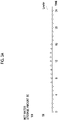
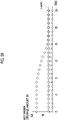
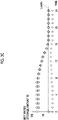
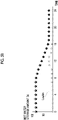
- Figs. 3A to 3D are first to fourth graphs illustrating creation processing of the hot water storage plan in one embodiment, respectively.
- plan creation unit 24 prepares the following variables.
- the values of C1, C2, and Lowlim are set by the user, the setting acceptance unit 23 accepts the settings for the variables, and each value is registered in the storage unit 25.
- the plan creation unit 24 creates a hot water storage plan by the following processing [1] to [7].
- the plan creation unit 24 automatically calculates the hot water storage plan including the target hot water storage amount for each unit time.
- the plan creation unit 24 outputs the created hot water storage plan to the control device 30.
- the above processing is one example.
- a value (larger value) safer than Lowlim may be set as the initial value of Target(i).
- a value that can avoid running out of hot water can be set in C1.
- the target hot water storage amount of 95% is given when the hot water storage amount measured by the sensor 5 is 45%, and it is assumed that it takes 10 hours until the hot water storage amount measured by the sensor 5 reaches 95%. That is, it is assumed that 5% of hot water can be boiled per hour.
- the ability of the water heater 2 to boil hot water differs depending on a system configuration and an operating condition such as a pipe diameter, a pipe length, a pipe height, a type (open type, closed type) and the number of the hot water storage tank 3, an outside air temperature, and a set temperature, and thus it is preferable to perform setting for each hot water supply system 1. Therefore, for example, the plan creation unit 24 may create a learning model that calculates the water boiling amount per unit time by machine learning and the like, calculate the water boiling amount by the learning model, and set C1 based on the calculated water boiling amount.
- the learning model outputs the hot water amount of the hot water that can be boiled per unit time by inputting.
- the plan creation unit 24 creates a learning model based on the hot water storage amount measured by the sensor 5 during the time when the water heater 2 operates and in a time zone when hot water does not outflow from the hot water storage tank 3, and the outside air temperature and water temperature during the same time.
- the plan creation unit 24 may input the estimated value of the outside air temperature and the water temperature for each hour in the target period of the hot water storage plan into the created learning model, calculate the C1 for each hour, and create the hot water storage plan by using the C1 for each hour.
- Figs. 4A and 4B are a first graph and a second graph illustrating creation processing of a long-term hot water storage plan according to one embodiment of the present disclosure, respectively.
- the demand amount prediction device 10 creates prediction data including a demand prediction amount for each time up to 48 hours ahead.
- the prediction data acquisition unit 21 acquires prediction data for 48 hours, and the plan creation unit 24 creates a hot water storage plan for 48 hours.
- Fig. 4B illustrates a hot water storage plan created by the plan creation unit 24 by further performing the processing of the above [7].
- the plan creation unit 24 creates a hot water storage plan by accumulating the hot water amount needed in the future while the time needed to boil the hot water amount is considered. Therefore, the risk of running out of hot water can be reduced by creating a hot water storage plan based on a long-term demand prediction.
- creating a hot water storage plan based on a long-term (for example, N > 1) demand prediction is called the hot water shortage prevention mode
- creating a hot water storage plan based on a shortterm (for example, N ⁇ 1) demand prediction is called the efficiency priority mode, and these modes are collectively called the plan mode.
- the plan creation unit 24 can create a hot water storage plan by switching to a plan mode of either the hot water shortage prevention mode or the efficiency priority mode based on the settings of the user or based on the recent tendency of the used hot water amount. For example, when efficiency is prioritized over the risk of running out of hot water (priority is given to reducing the energy consumed for water boiling as much as possible), the user sets the efficiency priority mode.
- the creation target period of the hot water storage plan in the efficiency priority mode is not limited to 24 hours, but may be 12 hours or 6 hours.
- the creation target period of the hot water storage plan in the hot water shortage prevention mode is not limited to 48 hours, but may be 72 hours or one week.
- the hot water amount needed during the target period can be secured.
- a hot water storage plan up to N days ahead may be created based on the demand prediction up to N days ahead every day.
- the prediction data is manually corrected, and the plan creation unit 24 is made to execute the above [1] to [7] based on the corrected prediction data, such that a hot water storage plan for avoiding running out of hot water can be created.
- the situation is illustrated in Figs. 5A and 5B .
- Figs. 5A and 5B are a first graph and a second graph illustrating how to deal with a fluctuation in hot water supply demand in one embodiment, respectively.
- Fig. 5A illustrates the hot water storage plan created by the plan creation unit 24 based on the prediction data after the correction. It can be seen that the hot water storage target value before 11:00 is increased as compared with Fig. 3D . As a result, a hot water storage plan that responds to an increase in demand can be created.
- a hot water storage plan that responds to the decrease in demand can be created by manually correcting the prediction data. As a result, the creation of wasteful hot water can be avoided.
- Fig. 6 is a diagram illustrating switching of the plan mode in one embodiment.
- An actual data P1 is the actual data when the decrease in the hot water storage amount is small with respect to the hot water storage plan
- an actual data P2 is the actual data when the decrease in the hot water storage amount is large with respect to the hot water storage plan.
- the plan creation unit 24 refers to the latest actual data for one week, determines that the error of the prediction data is within the permissible range when the change of the hot water storage amount for one week tends to be as illustrated by the actual data P1, and selects the efficiency priority mode to create a hot water storage plan. In addition, when the change in the hot water storage amount in one week tends to be as illustrated by the actual data P2, the plan creation unit 24 determines that the error of the prediction data is large and selects the hot water shortage prevention mode to create a hot water storage plan.
- the plan creation unit 24 acquires actual data for a predetermined period in the past (for example, the day before, one week, and the same day one week before), for example, selects the hot water shortage prevention mode when the number of frames in which the difference between the remaining hot water storage amount and Lowlim is within a predetermined range is greater than or equal to a predetermined number, and selects the efficiency priority mode when the number of such frames is less than the predetermined number.
- a predetermined period in the past for example, the day before, one week, and the same day one week before
- selects the hot water shortage prevention mode when the number of frames in which the difference between the remaining hot water storage amount and Lowlim is within a predetermined range is greater than or equal to a predetermined number
- selects the efficiency priority mode when the number of such frames is less than the predetermined number.
- the plan creation unit 24 may not select either the efficiency priority mode or the hot water shortage prevention mode, but may set the length of the target period in multiple stages according to the difference between the remaining hot water storage amount and Lowlim. For example, the plan creation unit 24 calculates a representative value (for example, an average value, a mode value, a minimum value, a maximum value, a median value, and the like) of the difference between the remaining hot water storage amount and Lowlim from the actual data of the past predetermined period.
- a representative value for example, an average value, a mode value, a minimum value, a maximum value, a median value, and the like
- the plan creation unit 24 sets the length of the target period to 48 hours when the representative value is less than or equal to 10%, sets the length of the target period to 36 hours when the representative value is 10% to 20%, sets the length of the target period to 30 hours when the representative value is 20% to 30%, sets 24 hours when the representative value is greater than or equal to 30%, and the like, such that the target period is set according to the difference between the remaining hot water storage amount and Lowlim.
- the difference between the remaining hot water storage amount and Lowlim is considered as the magnitude of the error of the prediction model, and the target period is set according to the magnitude of the error of the prediction model.
- a hot water storage plan that compensates for errors in the prediction model can be created.
- the plan creation unit 24 may correct the hot water storage plan instead of the length of the target period.
- the plan creation unit 24 may create a hot water storage plan in which a predetermined value (for example, +5%) is added to the target hot water storage amount, Target (i) of each frame of the hot water storage plan after creation (or each frame in the time zone when hot water consumption tends to be high) when the number of frames in which the difference between the remaining hot water storage amount and Lowlim is within a predetermined range is greater than or equal to a predetermined number based on the actual data of the past predetermined period, and may output the hot water storage plan created by the processing of [1] to [7] to the control device 30 when the number of frames in which difference between the remaining hot water storage amount and Lowlim is within a predetermined range is less than the predetermined number.
- a predetermined value for example, +5%
- the plan creation unit 24 may add an optional correction amount (for example, +5%) to Target(i) of a frame in which the difference between the remaining hot water storage amount and the Lowlim is within a predetermined range, subtract an optional correction amount (for example, -3%) from Target (i) of a frame in which the difference between the remaining hot water storage amount and Lowlim is greater than the predetermined value, learn the correction amount added or subtracted for each frame, and calculate a hot water storage plan that has no excess or deficiency for the demand.
- an optional correction amount for example, +5%
- the difference between the remaining hot water amount and Lowlim and the size of the appropriate correction amount may be learned together with the parameter such as the outside air temperature, the time, and the weather.
- the parameter such as the outside air temperature, the time, and the weather.
- Fig. 7 is a flowchart illustrating an example of hot water storage plan creation processing in one embodiment.
- the user performs various settings in the hot water storage plan creation device 20.
- the user sets the variables C1, C2, and Lowlim used to create the hot water storage plan, automatically sets or fixes the plan mode, or sets whether the setting of the target period is set according to the difference between the remaining hot water storage amount and Lowlim.
- the user sets either the efficiency priority mode or the hot water shortage prevention mode.
- the user sets the target period in each of the efficiency priority mode and the hot water shortage prevention mode.
- the user sets the target period according to the difference.
- the setting acceptance unit 23 accepts the settings (step S1) and writes the settings in the storage unit 25.
- the plan creation unit 24 determines whether the target period is variable (step S2).
- the plan creation unit 24 determines that the target period is variable when the plan mode is set to be automatic or when it is selected to set the target period according to the difference between the remaining hot water storage amount and Lowlim, and determines that the target period is not variable when the efficiency priority mode or the hot water shortage prevention mode is set in the plan mode.
- the actual data acquisition unit 22 acquires the actual data (step S3).
- the plan creation unit 24 determines the causing risk of running out of hot water based on the actual data, selects the hot water shortage prevention mode when the risk of running out of hot water is greater than or equal to a predetermined standard, and selects the efficiency priority mode when the risk of running out of hot water is less than the standard.
- the plan creation unit 24 sets the target period corresponding to the selected plan mode (step S4).
- the plan creation unit 24 sets a target period according to the difference between the remaining hot water storage amount and Lowlim based on the actual data (step S4).
- the hot water storage plan creation device 20 designates the target period to the demand amount prediction device 10 and instructs the demand amount prediction device 10 to create prediction data.
- the demand amount prediction unit 13 inputs the value (prediction value) of the descriptive variable in the designated target period into the prediction model, and creates the prediction data including the demand prediction amount of hot water for each unit time in the target period (step S5).
- the demand amount prediction unit 13 outputs the prediction data to the hot water storage plan creation device 20.
- the prediction data acquisition unit 21 acquires the prediction data (step S6).
- the user determines whether the demand in the target period is expected to change, and inputs the frame and the correction amount to be changed into the hot water storage plan creation device 20 when the change is expected (step S7; Yes).
- the setting acceptance unit 23 acquires the correction amount for changing the demand, and corrects the prediction data as described with reference to Fig. 5A (step S8).
- the plan creation unit 24 performs the above processing [1] to [7] and creates a hot water storage plan of the target period set by the above processing (step S9).
- the target hot water storage amount (a command value to the water heater 2) for each unit time in the target period can be automatically calculated based on the demand prediction of hot water.
- the target hot water storage amount can be applied to any system without depending on the facility configuration (the type and number of hot water storage tanks 3, the capacity and number of water heaters 2, and a pipe diameter and a pipe length) and the operating condition of the hot water supply system 1.
- a hot water storage plan (hot water shortage prevention mode) that avoids running out of hot water more reliably, or a hot water storage plan that prioritizes efficiency with less waste (efficiency priority mode) can be created.
- a hot water storage plan that achieves both efficiency and prevention of running out of hot water may be created by designating an intermediate length between the hot water shortage prevention mode and the efficiency priority mode in the target period.
- the efficiency priority mode and the hot water shortage prevention mode can be automatically selected based on the actual data, the user does not need to think about which plan mode to adopt.
- a hot water storage plan that compensates for the error of the prediction model can be created.
- a hot water storage plan that responds to a fluctuation in demand can be created by manually correcting the prediction data.
- Fig. 8 is a diagram illustrating an example of a hardware configuration of a control system according to one embodiment.
- the computer 900 includes a CPU 901, a main storage device 902, an auxiliary storage device 903, an input and output interface 904, and a communication interface 905.
- the demand amount prediction device 10, the hot water storage plan creation device 20, and the control device 30 described above are mounted on the computer 900.
- Each of the above-mentioned functions is stored in the auxiliary storage device 903 in the form of a program.
- the CPU 901 reads a program from the auxiliary storage device 903, expands the program to the main storage device 902, and executes the above processing according to the program.
- the CPU 901 secures a storage area in the main storage device 902 according to the program.
- the CPU 901 secures a storage area that stores the data being processed in the auxiliary storage device 903 according to the program.
- a program that realizes all or a portion of the functions of the demand amount prediction device 10, the hot water storage plan creation device 20, and the control device 30 may be recorded on a computer-readable recording medium, and the program recorded on the recording medium may be read and executed by the computer system, such that the processing by each functional unit may be performed.
- the term "computer system” as used herein includes an OS and hardware such as a peripheral device.
- the "computer system” includes the homepage providing environment (or display environment) when the WWW system is used.
- the "computer-readable recording medium” refers to a portable medium such as CD, DVD, and USB, or a storage device such as a hard disk built in a computer system.
- the computer 900 that receives the distribution may expand the program to the main storage device 902 and execute the above processing.
- the above program may be one for realizing a portion of the above-mentioned functions, and further may be one capable of realizing the above-mentioned functions in combination with a program already recorded in the computer system.
- the hot water storage plan creation system, the hot water storage plan creation method, and the program described in each embodiment are grasped as follows, for example.
- plan creation unit 24 sets 48 hours to the target period when the representative value of the difference is less than or equal to 10%, 36 hours when the representative value is 10% to 20%, 30 hours when the representative value is 20% to 30%, and 24 hours when the representative value is greater than or equal to 30%)
- the hot water storage plan creation system (the control system 100 and the hot water storage plan creation device 20) according to a seventh aspect is the hot water storage plan creation system of (1) to (6), and when the hot water storage demand (Demand(i)) in a first unit time exceeds a hot water amount C1 capable of being created per unit time, the plan creation unit 24 sets a total of the hot water storage demand in the first unit time and the hot water storage demand for each unit time in the future as compared with the first unit time in the predetermined period, to the target hot water storage amount (Target(i)) in the first unit time (processing of the above [5]).
- the hot water storage plan creation system (the control system 100 and the hot water storage plan creation device 20) according to an eighth aspect is the hot water storage plan creation system of (7), and when the hot water storage demand in the first unit time exceeds the hot water amount C1 capable of being created per unit time, the plan creation unit 24 calculates the number of the unit times corresponding to a time needed to create hot water for the hot water storage demand, and sets the target hot water storage amount of the first unit time, to the target hot water storage amount of each of the calculated number of the unit times before the first unit time (processing of the above [6]).
- the demand amount exceeds the hot water creation capacity per unit time, it is possible to create a hot water storage plan that can create the hot water amount that satisfies the demand by the needed time.
- the hot water storage plan creation system (the control system 100 and the hot water storage plan creation device 20) according to a ninth aspect is the hot water storage plan creation system of (8), and the plan creation unit 24 calculates the hot water amount C1 capable of being created per unit time by machine learning based on a hot water amount actually created per unit time.
- the hot water storage plan creation system (the control system 100, the hot water storage plan creation device 20, and the demand amount prediction device 10) according to a tenth aspect is the hot water storage plan creation system (the control system 100, the hot water storage plan creation device 20, and the demand amount prediction device 10) of (1) to (9), and further includes a prediction model creation unit 12 that creates a prediction model that outputs, when a condition that affects demand of hot water is input, a hot water demand amount under the condition and a demand amount prediction unit 13 that creates the prediction data based on the condition in the predetermined period and the prediction model.
- a prediction model creation unit 12 that creates a prediction model that outputs, when a condition that affects demand of hot water is input, a hot water demand amount under the condition
- a demand amount prediction unit 13 that creates the prediction data based on the condition in the predetermined period and the prediction model.
- a hot water storage plan creation method is a hot water storage plan creation method executed by the hot water storage plan creation system (the control system 100 and the hot water storage plan creation device 20), and includes a step of acquiring prediction data of hot water storage demand for each unit time in a predetermined period, and a step of creating a hot water storage plan that defines a target hot water storage amount for each unit time in the predetermined period based on the prediction data.
- a program causes a computer 900 to execute a step of acquiring prediction data of hot water storage demand for each unit time in a predetermined period, and a step of creating a hot water storage plan that defines a target hot water storage amount for each unit time in the predetermined period based on the prediction data.
Landscapes
- Engineering & Computer Science (AREA)
- Physics & Mathematics (AREA)
- Thermal Sciences (AREA)
- Chemical & Material Sciences (AREA)
- Combustion & Propulsion (AREA)
- Mechanical Engineering (AREA)
- General Engineering & Computer Science (AREA)
- Heat-Pump Type And Storage Water Heaters (AREA)
Abstract
Description
- The present disclosure relates to a hot water storage plan creation system, a hot water storage plan creation method, and a program. The present application claims priority to
Japanese Patent Application No. 2020-87372 filed on May 19, 2020 - In a hot water supply system used to supply hot water to a kitchen of a restaurant or a bath facility, a water heater heats tap water and stores the heated hot water in a hot water storage tank. Then, the hot water stored in the hot water storage tank is supplied to the kitchen and the bath facility. The hot water supply system often sets a water boiling amount based on a demand prediction every day, and is operated. However, since the demand prediction contains an error, there is a possibility that there will be a shortage of hot water due to a sudden increase in demand, and the like. In the related art,
PTL 1 discloses a control method of a water heater that stores hot water with a needed amount in a hot water storage tank by the time when the hot water supply is used, although unexpected hot water is to be discharged. - [PTL 1]
Japanese Unexamined Patent Application Publication No. 2019-207058 - There is a need for a method of automatically setting a water boiling amount capable of avoiding running out of hot water while a daily demand prediction is satisfied.
- It is an object of the present disclosure to provide a hot water storage plan creation system, a hot water storage plan creation method, and a program capable of solving the above-mentioned problems.
- A hot water storage plan creation system of the present disclosure includes a prediction data acquisition unit that acquires prediction data of hot water storage demand for each unit time in a predetermined period, and a plan creation unit that creates a hot water storage plan that defines a target hot water storage amount for each unit time in the predetermined period based on the prediction data.
- In addition, a hot water storage plan creation method of the present disclosure is executed by a hot water storage plan creation system, and includes a step of acquiring prediction data of hot water storage demand for each unit time in a predetermined period, and a step of creating a hot water storage plan that defines a target hot water storage amount for each unit time in the predetermined period, based on the prediction data.
- In addition, a program of the present disclosure causes a computer to execute a step of acquiring prediction data of hot water storage demand for each unit time in a predetermined period, and a step of creating a hot water storage plan that defines a target hot water storage amount for each unit time in the predetermined period, based on the prediction data.
- According to the hot water storage plan creation system, the hot water storage plan creation method, and the program described above, it is possible to automatically set the water boiling amount that satisfies a demand prediction amount of daily hot water supply.
-
-
Fig. 1 is a diagram illustrating an example of a hot water supply system according to one embodiment. -
Fig. 2 is a functional block diagram illustrating an example of a control system according to one embodiment. -
Fig. 3A is a first graph illustrating creation processing of a hot water storage plan according to one embodiment. -
Fig. 3B is a second graph illustrating creation processing of the hot water storage plan in one embodiment. -
Fig. 3C is a third graph illustrating creation processing of the hot water storage plan in one embodiment. -
Fig. 3D is a fourth graph illustrating creation processing of the hot water storage plan in one embodiment. -
Fig. 4A is a first graph illustrating creation processing of a long-term hot water storage plan in one embodiment. -
Fig. 4B is a second graph illustrating creation processing of the long-term hot water storage plan in one embodiment. -
Fig. 5A is a first graph illustrating how to deal with a fluctuation in hot water supply demand in one embodiment. -
Fig. 5B is a second graph illustrating how to deal with a fluctuation in the hot water supply demand in one embodiment. -
Fig. 6 is a graph illustrating switching of a plan mode in one embodiment. -
Fig. 7 is a flowchart illustrating an example of hot water storage plan creation processing in one embodiment. -
Fig. 8 is a diagram illustrating an example of a hardware configuration of a control system according to one embodiment. - Hereinafter, a hot water supply system according to one embodiment of the present disclosure will be described with reference to
Figs. 1 to 8 . -
Fig. 1 is a diagram illustrating an example of a hot water supply system according to one embodiment of the present disclosure. - As illustrated in the figure, a hot
water supply system 1 includes awater heater 2, a hotwater storage tank 3, afacility 4, and acontrol system 100. Thewater heater 2 and the hotwater storage tank 3 are connected by apipe 6B, and the hotwater storage tank 3 and thefacility 4 are connected by apipe 6C. Water is supplied to thewater heater 2 through thepipe 6A. Thewater heater 2 includes, for example, a refrigerant circuit including a compressor, a condenser, an expansion valve, and an evaporator, and heats water to generate hot water by exchanging heat with the condenser. Thewater heater 2 sends the generated hot water to the hotwater storage tank 3 through thepipe 6B. The hotwater storage tank 3 stores hot water. The hotwater storage tank 3 is provided with asensor 5 that measures a hot water storage amount. Thesensor 5 is, for example, a water level sensor. Thecontrol system 100 acquires the measured value of thesensor 5 and controls thewater heater 2 such that the hot water storage amount measured by thesensor 5 is a target value. The hot water of an amount corresponding to the demand of thefacility 4 is supplied from the hotwater storage tank 3 to thefacility 4 through thepipe 6C. - The
control system 100 performs demand amount prediction of hot water needed for a predetermined target period, and calculates a target value (hot water storage plan) of a hot water storage amount according to the demand amount prediction. Then, thecontrol system 100 operates thewater heater 2 based on the hot water storage plan. Next, thecontrol system 100 will be described. -
Fig. 2 is a functional block diagram illustrating an example of a control system according to one embodiment of the present disclosure. Thecontrol system 100 includes a demandamount prediction device 10 that predicts the hot water demand amount, a hot water storageplan creation device 20 that creates a hot water storage plan of hot water to be stored in the hotwater storage tank 3 based on the demand amount prediction, and thecontrol device 30 of thewater heater 2. The demandamount prediction device 10, the hot water storageplan creation device 20, and thecontrol device 30 are communicably connected to each other. - The demand
amount prediction device 10 includes adata acquisition unit 11, a predictionmodel creation unit 12, a demandamount prediction unit 13, and astorage unit 14. - The
data acquisition unit 11 acquires various data needed for the demand amount prediction. - The prediction
model creation unit 12 learns the relationship between various parameters (descriptive variables) and a hot water usage amount (objective variable), and creates a prediction model that predicts the hot water demand amount. The descriptive variables of the prediction model are, for example, parameters that affect the demand for hot water such as the outside air temperature, the day of the week, the weather, the month, the season, the time, the time zone of the day (morning, noon, evening), and the like in the environment in which the hotwater supply system 1 operates. The hot water usage amount is, for example, the hot water amount supplied from the hotwater storage tank 3 to thefacility 4. In the present disclosure, it is assumed that the hot water amount supplied to thefacility 4 is known. Thedata acquisition unit 11 acquires the descriptive variables exemplified above and the usage of hot water (objective variable) at that time, associates the descriptive variables with the usage of hot water, and stores the association in thestorage unit 14 as learning data. The predictionmodel creation unit 12 reads out the stored learning data, and creates a prediction model illustrating the relationship between the descriptive variables such as the outside air temperature and the day of the week and the hot water usage amount as the objective variable by processing such as multiple regression analysis. In this way, the predictionmodel creation unit 12 creates a prediction model based on actual operation data (the descriptive variable and the objective variable described above) regardless of the facility configuration of the hotwater supply system 1. As a result, it can be introduced into any system and a highly precise demand prediction model can be created. Since the demand of thefacility 4 may change due to the convenience of the facility, the predictionmodel creation unit 12 may periodically recreate the prediction model. - The demand
amount prediction unit 13 predicts the hot water demand amount for each unit time in a prediction target period based on the prediction model created by the predictionmodel creation unit 12. The demandamount prediction unit 13 outputs the demand amount prediction value for each unit time as prediction data. The prediction data includes data representing the hot water demand amount for each unit time as the hot water storage amount in the hotwater storage tank 3. For example, when that the unit time is one hour, the prediction data includes information such as "7:00, 1%", "8:00, 2%", ..., and the like. Here, "7:00, 1%" indicates that the demand for hot water corresponding to 1% of the total hot water storage amount in the hotwater storage tank 3 is expected from 7:00 to 8:00. - The
storage unit 14 stores the data acquired by thedata acquisition unit 11, the prediction model created by the predictionmodel creation unit 12, and the like. - The hot water storage
plan creation device 20 includes a predictiondata acquisition unit 21, an actualdata acquisition unit 22, a settingacceptance unit 23, aplan creation unit 24, and astorage unit 25. - The prediction
data acquisition unit 21 acquires the prediction data output by the demandamount prediction device 10, and writes the acquired prediction data in thestorage unit 25. - The actual
data acquisition unit 22 acquires actual data indicating the actual usage of hot water in the hotwater storage tank 3, and writes the acquired actual data in thestorage unit 25. The actual data is, for example, the hot water storage amount in the hotwater storage tank 3 for each unit time. The actual data includes information such as "7:00, 80%", "8:00, 80%", ..., and the like. Here, "7:00, 80%" and "8:00, 80%" indicate that the hot water storage amount in the hotwater storage tank 3 is 80% at time points of 7:00 and 8:00. Further, it is illustrated that the hot water amount supplied from the hotwater storage tank 3 to thefacility 4 between 7:00 and 8:00 is equal to the hot water amount supplied by thewater heater 2 to the hotwater storage tank 3. The actual data is used to determine whether to create a hot water storage plan that prioritizes efficiency or create a hot water storage plan that prioritizes prevention of running out of hot water when a hot water storage plan is created. - The setting
acceptance unit 23 accepts the settings needed for the creation processing of the hot water storage plan. - The
plan creation unit 24 creates a hot water storage plan based on the prediction data. The hot water storage plan is, for example, the hot water storage amount in the hotwater storage tank 3 for each unit time. The hot water storage plan includes, for example, information such as "6:00, 80%", "7:00, 80%", "8:00, 90%", ..., and the like. Here, "7:00, 80%" indicates that the hot water storage amount that thesensor 5 measures at the time point of 7:00 is compared with 80% and an operation is performed to reach 80% when the hot water storage amount is less than 80%. That is, it is a case where the target hot water storage amount of "7:00, 80%" is given to thecontrol device 30, and when the hot water storage amount measured by thesensor 5 does not reach 80% at the time point of 7:00, thecontrol device 30 starts the operation of thewater heater 2 such that the hot water storage amount is 80%. On the other hand, in the present disclosure, a hot water storage plan is created such that 80% can be achieved at the time point of 7:00. For example, when water boiling is needed from 1:00 to achieve 80% of the hot water storage amount at the time point of 7:00, thewater heater 2 creates a hot water storage plan such that thewater heater 2 can start boiling water from 1:00. - The
storage unit 25 stores various information such as prediction data, actual data, and various settings. - The
control device 30 acquires the hot water storage amount of the hotwater storage tank 3 measured by thesensor 5, and controls the operation of thewater heater 2 based on the hot water storage amount measured by thesensor 5 and the target hot water storage amount set in the hot water storage plan created by the hot water storageplan creation device 20. For example, when the hot water storage amount at 7:00 in the hot water storage plan is 80% and the hot water storage amount measured by thesensor 5 at 7:00 is 70%, thecontrol device 30 operates thewater heater 2 such that the hot water storage amount in the hotwater storage tank 3 is 80%. - Next, the creation processing of a hot water storage plan by the
plan creation unit 24 will be described.Figs. 3A to 3D are first to fourth graphs illustrating creation processing of the hot water storage plan in one embodiment, respectively. - First, the
plan creation unit 24 prepares the following variables. - Demand(i): A demand prediction amount in a frame i included in prediction data. The unit is %.
- Necessary(i): A hot water storage amount that should be secured at the start time of each frame. The unit is %.
- C1: A hot water amount that can be boiled in one frame. The unit is %/frame.
- C2: A hot water storage amount that should be secured at the end time of a plan target period. The unit is %.
- Afford(i): A flag indicating whether the demand prediction amount of the frame i is less than or equal to C1. When the demand prediction amount is less than or equal to C1 (although water boiling is started from the start time of the frame, the demand prediction amount can be supplied by the end time of the frame), the flag is "1", and when the demand prediction amount is larger than C1, the flag is "0".
- Target(i): A target hot water storage amount of the frame i. The unit is %. The hot water storage plan is configured with Target(i) for each unit time in the target period.
- Lowlim: A lower limit value of the hot water storage amount in the hot
water storage tank 3. Always try not to fall below the value. The unit is %. - For example, the values of C1, C2, and Lowlim are set by the user, the setting
acceptance unit 23 accepts the settings for the variables, and each value is registered in thestorage unit 25. - In addition, the following assumptions are made in the creation processing of the hot water storage plan.
- (a) It is assumed that the total daily demand is less than or equal to the total amount of boiling water per day. That is, it is assumed that the facility capacity of the hot
water supply system 1 is sufficient for the demand. - (b) As an example, one frame is one hour. In addition, the plan period for the hot water storage amount is 24 hours.
- (c) The hot water amount C1 to be boiled in one hour is calculated from past operation data.
- (d) The lower limit value Lowlim of the hot
water storage tank 3 is always secured. - The
plan creation unit 24 creates a hot water storage plan by the following processing [1] to [7]. - [1] First, the
plan creation unit 24 acquires the prediction data output by the demandamount prediction device 10. The circles inFigs. 3A to 3D indicate Demand(i) in each frame i (each time). - [2] Next, the
plan creation unit 24 sets Lowlim as the initial value of the Target (i) of each frame i. The asterisk inFig. 3B indicates the initial value of Target(i) in each frame i. - [3] Next, the
plan creation unit 24 calculates the hot water amount that should be secured at the start time of each frame i. First, the Necessary(24) of the final frame is calculated by the following equation (1).
- Necessary (i) of the other frames (i = 0 to 23) is calculated by the following equation (2).

- That is, all the future demand prediction amounts later than the frame i are added to the demand prediction amount of the frame i. The diamond-shaped mark in
Fig. 3B indicates Necessary(i) in each frame i.
- Necessary (i) of the other frames (i = 0 to 23) is calculated by the following equation (2).
- [4] Next, the
plan creation unit 24 sets Afford(i) of each frame i based on the prediction data. For example, Afford(i) of 9:00 to 16:00 (frame i = 9 to 16) is set to "0", and the other Afford(i) is set to "1". - [5] Next, the
plan creation unit 24 sets Target(i) = Necessary(i) for the frame of which Afford(i) is "0". The asterisks from 9:00 to 16:00 inFig. 3C indicate Target(i) after the processing is performed. - [6] Next, the
plan creation unit 24, for the first frame (referred to as the frame iα) in which Afford(i) changes from "1" to "0", calculates a time (frame number) K needed to boil the hot water amount indicated by Demand(iα) of the frame iα, and sets the target hot water storage amount of the frame i that is traced back by the number of frames calculated from the frame iα as Necessary(iα). Specifically, theplan creation unit 24 calculates K by the following equation (3).
- Here, ceil means rounding up an integer. In addition, 1 is added to allow time for boiling hot water. Then, the
plan creation unit 24 calculates Target(i-K) by the following equation (4).
- The asterisks from 1:00 to 8:00 in
Fig. 3C indicate Target(i) after the processing.
- Here, ceil means rounding up an integer. In addition, 1 is added to allow time for boiling hot water. Then, the
- [7] In addition, the
plan creation unit 24 sets the value of Target (i) to 100% for Target (i) exceeding 100%, and rounds up the value of Target(i) including the decimal point to an integer. Target (i) (i = 0 to 24) obtained in this manner is a hot water storage plan.Fig. 3D illustrates the hot water storage plan. The black asterisk inFig. 3D is the hot water storage plan. - By the processing of [1] to [7], the
plan creation unit 24 automatically calculates the hot water storage plan including the target hot water storage amount for each unit time. Theplan creation unit 24 outputs the created hot water storage plan to thecontrol device 30. The above processing is one example. For example, in [2], a value (larger value) safer than Lowlim may be set as the initial value of Target(i). In addition, as described below, a value that can avoid running out of hot water can be set in C1. - For example, in a time zone when hot water does not flow out from the hot
water storage tank 3, the target hot water storage amount of 95% is given when the hot water storage amount measured by thesensor 5 is 45%, and it is assumed that it takes 10 hours until the hot water storage amount measured by thesensor 5 reaches 95%. That is, it is assumed that 5% of hot water can be boiled per hour. The variable C1 is calculated by dividing the 5 (%/ hour) by a predetermined safety factor (referred to as "2"). In this example, C1 = 2.5 (%/ hour). By setting C1 on the safe side (less) based on the actual measurement value in this way, it is possible to create a hot water storage plan that does not cause running out of hot water. The setting of C1 may be performed by the user, or theplan creation unit 24 may acquire the measured value of thesensor 5 and set C1 by the above calculation. - In addition, the ability of the
water heater 2 to boil hot water differs depending on a system configuration and an operating condition such as a pipe diameter, a pipe length, a pipe height, a type (open type, closed type) and the number of the hotwater storage tank 3, an outside air temperature, and a set temperature, and thus it is preferable to perform setting for each hotwater supply system 1. Therefore, for example, theplan creation unit 24 may create a learning model that calculates the water boiling amount per unit time by machine learning and the like, calculate the water boiling amount by the learning model, and set C1 based on the calculated water boiling amount. For example, when an outside air temperature, a temperature of the supplied water, and a set temperature of the hot water are input, the learning model outputs the hot water amount of the hot water that can be boiled per unit time by inputting. Theplan creation unit 24 creates a learning model based on the hot water storage amount measured by thesensor 5 during the time when thewater heater 2 operates and in a time zone when hot water does not outflow from the hotwater storage tank 3, and the outside air temperature and water temperature during the same time. In addition, theplan creation unit 24 may input the estimated value of the outside air temperature and the water temperature for each hour in the target period of the hot water storage plan into the created learning model, calculate the C1 for each hour, and create the hot water storage plan by using the C1 for each hour. - In the above description, it is decided to create a hot water storage plan up to 24 hours later, but for example, when a large demand is planned the day after next, there is a possibility that the hot water will run out. Next, a hot water storage plan creation method for reducing such a risk of running out of hot water will be described with reference to
Figs. 4A and4B . -
Figs. 4A and4B are a first graph and a second graph illustrating creation processing of a long-term hot water storage plan according to one embodiment of the present disclosure, respectively. - The
plan creation unit 24 creates a longer-term hot water storage plan to reduce the risk of running out of hot water. For example, theplan creation unit 24 creates a hot water storage plan based on the demand prediction for N days (N > 1) in the future. When N = 2, theplan creation unit 24 creates a hot water storage plan up to 48 hours ahead. The demandamount prediction device 10 creates prediction data including a demand prediction amount for each time up to 48 hours ahead. In the hot water storageplan creation device 20, the predictiondata acquisition unit 21 acquires prediction data for 48 hours, and theplan creation unit 24 creates a hot water storage plan for 48 hours.Fig. 4A illustrates a graph in which the values of Target (i) (i = 0 to 48) created through the above processing [1] to [6] are plotted.Fig. 4B illustrates a hot water storage plan created by theplan creation unit 24 by further performing the processing of the above [7]. - As described above, the
plan creation unit 24 creates a hot water storage plan by accumulating the hot water amount needed in the future while the time needed to boil the hot water amount is considered. Therefore, the risk of running out of hot water can be reduced by creating a hot water storage plan based on a long-term demand prediction. Here, creating a hot water storage plan based on a long-term (for example, N > 1) demand prediction is called the hot water shortage prevention mode, creating a hot water storage plan based on a shortterm (for example, N ≤ 1) demand prediction is called the efficiency priority mode, and these modes are collectively called the plan mode. Theplan creation unit 24 can create a hot water storage plan by switching to a plan mode of either the hot water shortage prevention mode or the efficiency priority mode based on the settings of the user or based on the recent tendency of the used hot water amount. For example, when efficiency is prioritized over the risk of running out of hot water (priority is given to reducing the energy consumed for water boiling as much as possible), the user sets the efficiency priority mode. The creation target period of the hot water storage plan in the efficiency priority mode is not limited to 24 hours, but may be 12 hours or 6 hours. By setting the efficiency priority mode and creating a hot water storage plan, the operating cost of the hotwater supply system 1 can be suppressed. In addition, the creation target period of the hot water storage plan in the hot water shortage prevention mode is not limited to 48 hours, but may be 72 hours or one week. By setting the hot water shortage prevention mode and creating a hot water storage plan, the hot water amount needed during the target period can be secured. In the case of the hot water shortage prevention mode, for example, a hot water storage plan up to N days ahead may be created based on the demand prediction up to N days ahead every day. - Although a hot water storage plan is created in the hot water shortage prevention mode, there may be a shortage of hot water due to a sudden increase in demand. In such a case, the prediction data is manually corrected, and the
plan creation unit 24 is made to execute the above [1] to [7] based on the corrected prediction data, such that a hot water storage plan for avoiding running out of hot water can be created. The situation is illustrated inFigs. 5A and5B . -
Figs. 5A and5B are a first graph and a second graph illustrating how to deal with a fluctuation in hot water supply demand in one embodiment, respectively. - For example, when a sudden increase in demand is expected from 11:00 to 13:00, the value of Demand(i) from 11:00 to 13:00 in the prediction data of
Fig. 3A is corrected as illustrated inFig. 5A (inside H1 inFig. 5A ).Fig. 5B illustrates the hot water storage plan created by theplan creation unit 24 based on the prediction data after the correction. It can be seen that the hot water storage target value before 11:00 is increased as compared withFig. 3D . As a result, a hot water storage plan that responds to an increase in demand can be created. - In addition, although a sudden decrease in demand is expected, a hot water storage plan that responds to the decrease in demand can be created by manually correcting the prediction data. As a result, the creation of wasteful hot water can be avoided.
-
Fig. 6 is a diagram illustrating switching of the plan mode in one embodiment. - The actual data of one day illustrated in
Fig. 6 is illustrated. An actual data P1 is the actual data when the decrease in the hot water storage amount is small with respect to the hot water storage plan, and an actual data P2 is the actual data when the decrease in the hot water storage amount is large with respect to the hot water storage plan. - For example, the
plan creation unit 24 refers to the latest actual data for one week, determines that the error of the prediction data is within the permissible range when the change of the hot water storage amount for one week tends to be as illustrated by the actual data P1, and selects the efficiency priority mode to create a hot water storage plan. In addition, when the change in the hot water storage amount in one week tends to be as illustrated by the actual data P2, theplan creation unit 24 determines that the error of the prediction data is large and selects the hot water shortage prevention mode to create a hot water storage plan. More specifically, theplan creation unit 24 acquires actual data for a predetermined period in the past (for example, the day before, one week, and the same day one week before), for example, selects the hot water shortage prevention mode when the number of frames in which the difference between the remaining hot water storage amount and Lowlim is within a predetermined range is greater than or equal to a predetermined number, and selects the efficiency priority mode when the number of such frames is less than the predetermined number. By selecting the plan mode for the next day or later according to the remaining hot water storage amount on a daily basis in this way, a hot water storage plan without waste in line with the demand prediction can be automatically created while running out of hot water is avoided. - In addition, the
plan creation unit 24 may not select either the efficiency priority mode or the hot water shortage prevention mode, but may set the length of the target period in multiple stages according to the difference between the remaining hot water storage amount and Lowlim. For example, theplan creation unit 24 calculates a representative value (for example, an average value, a mode value, a minimum value, a maximum value, a median value, and the like) of the difference between the remaining hot water storage amount and Lowlim from the actual data of the past predetermined period. Then, theplan creation unit 24 sets the length of the target period to 48 hours when the representative value is less than or equal to 10%, sets the length of the target period to 36 hours when the representative value is 10% to 20%, sets the length of the target period to 30 hours when the representative value is 20% to 30%, sets 24 hours when the representative value is greater than or equal to 30%, and the like, such that the target period is set according to the difference between the remaining hot water storage amount and Lowlim. In this way, the difference between the remaining hot water storage amount and Lowlim is considered as the magnitude of the error of the prediction model, and the target period is set according to the magnitude of the error of the prediction model. As a result, a hot water storage plan that compensates for errors in the prediction model can be created. - In addition, the
plan creation unit 24 may correct the hot water storage plan instead of the length of the target period. For example, theplan creation unit 24 may create a hot water storage plan in which a predetermined value (for example, +5%) is added to the target hot water storage amount, Target (i) of each frame of the hot water storage plan after creation (or each frame in the time zone when hot water consumption tends to be high) when the number of frames in which the difference between the remaining hot water storage amount and Lowlim is within a predetermined range is greater than or equal to a predetermined number based on the actual data of the past predetermined period, and may output the hot water storage plan created by the processing of [1] to [7] to thecontrol device 30 when the number of frames in which difference between the remaining hot water storage amount and Lowlim is within a predetermined range is less than the predetermined number. - In addition, in order to create a more efficient hot water storage plan, the
plan creation unit 24, for example, with respect to the hot water storage plan created in the efficiency priority mode and based on the actual data of the past predetermined period, may add an optional correction amount (for example, +5%) to Target(i) of a frame in which the difference between the remaining hot water storage amount and the Lowlim is within a predetermined range, subtract an optional correction amount (for example, -3%) from Target (i) of a frame in which the difference between the remaining hot water storage amount and Lowlim is greater than the predetermined value, learn the correction amount added or subtracted for each frame, and calculate a hot water storage plan that has no excess or deficiency for the demand. In addition, in the learning, the difference between the remaining hot water amount and Lowlim and the size of the appropriate correction amount may be learned together with the parameter such as the outside air temperature, the time, and the weather. In this way, by adjusting the target hot water storage amount from the next day or later according to the remaining hot water storage amount on a daily basis, it is possible to create a hot water storage plan optimized for the minimum hot water storage amount such that the hot water does not run out. In addition, by correcting the target hot water storage amount based on the daily actual result, for example, a hot water storage plan close to the actual demand can be created even while the prediction model cannot cope with the change in the demand in thefacility 4. - Next, the flow of the hot water storage plan creation processing will be described.
-
Fig. 7 is a flowchart illustrating an example of hot water storage plan creation processing in one embodiment. - First, the user performs various settings in the hot water storage
plan creation device 20. For example, the user sets the variables C1, C2, and Lowlim used to create the hot water storage plan, automatically sets or fixes the plan mode, or sets whether the setting of the target period is set according to the difference between the remaining hot water storage amount and Lowlim. When fixing the plan mode, the user sets either the efficiency priority mode or the hot water shortage prevention mode. In addition, the user sets the target period in each of the efficiency priority mode and the hot water shortage prevention mode. When setting the target period according to the difference between the remaining hot water storage amount and Lowlim, the user sets the target period according to the difference. The settingacceptance unit 23 accepts the settings (step S1) and writes the settings in thestorage unit 25. - Next, the
plan creation unit 24 determines whether the target period is variable (step S2). Theplan creation unit 24 determines that the target period is variable when the plan mode is set to be automatic or when it is selected to set the target period according to the difference between the remaining hot water storage amount and Lowlim, and determines that the target period is not variable when the efficiency priority mode or the hot water shortage prevention mode is set in the plan mode. When it is determined that the target period is variable (step S2; Yes), the actualdata acquisition unit 22 acquires the actual data (step S3). Theplan creation unit 24 determines the causing risk of running out of hot water based on the actual data, selects the hot water shortage prevention mode when the risk of running out of hot water is greater than or equal to a predetermined standard, and selects the efficiency priority mode when the risk of running out of hot water is less than the standard. Theplan creation unit 24 sets the target period corresponding to the selected plan mode (step S4). Alternatively, theplan creation unit 24 sets a target period according to the difference between the remaining hot water storage amount and Lowlim based on the actual data (step S4). - Next, the hot water storage
plan creation device 20 designates the target period to the demandamount prediction device 10 and instructs the demandamount prediction device 10 to create prediction data. In the demandamount prediction device 10, the demandamount prediction unit 13 inputs the value (prediction value) of the descriptive variable in the designated target period into the prediction model, and creates the prediction data including the demand prediction amount of hot water for each unit time in the target period (step S5). The demandamount prediction unit 13 outputs the prediction data to the hot water storageplan creation device 20. In the hot water storageplan creation device 20, the predictiondata acquisition unit 21 acquires the prediction data (step S6). - Next, the user determines whether the demand in the target period is expected to change, and inputs the frame and the correction amount to be changed into the hot water storage
plan creation device 20 when the change is expected (step S7; Yes). The settingacceptance unit 23 acquires the correction amount for changing the demand, and corrects the prediction data as described with reference toFig. 5A (step S8). - When the correction of the prediction data is completed or when there is no change in the demand (step S7; No), the
plan creation unit 24 performs the above processing [1] to [7] and creates a hot water storage plan of the target period set by the above processing (step S9). - As described above, according to the present embodiment, the target hot water storage amount (a command value to the water heater 2) for each unit time in the target period can be automatically calculated based on the demand prediction of hot water. In addition, since the target hot water storage amount is calculated based on the prediction data calculated based on the operation data of the hot
water supply system 1, the target hot water storage amount can be applied to any system without depending on the facility configuration (the type and number of hotwater storage tanks 3, the capacity and number ofwater heaters 2, and a pipe diameter and a pipe length) and the operating condition of the hotwater supply system 1. - In addition, since it is a plan without waste based on demand prediction data and it is possible to create a hot water storage plan that takes into account the time needed to boil water, running out of hot water can be prevented in advance when the actual demand is less than or equal to the prediction data.
- In addition, by optionally setting the target period of plan creation, a hot water storage plan (hot water shortage prevention mode) that avoids running out of hot water more reliably, or a hot water storage plan that prioritizes efficiency with less waste (efficiency priority mode) can be created. Alternatively, a hot water storage plan that achieves both efficiency and prevention of running out of hot water may be created by designating an intermediate length between the hot water shortage prevention mode and the efficiency priority mode in the target period. In addition, since the efficiency priority mode and the hot water shortage prevention mode can be automatically selected based on the actual data, the user does not need to think about which plan mode to adopt. Furthermore, by flexibly changing the target period according to the remaining hot water storage amount indicated by the actual data, a hot water storage plan that compensates for the error of the prediction model can be created.
- In addition, when the actual demand is expected to deviate from the prediction data due to a sudden event that is difficult to predict, a hot water storage plan that responds to a fluctuation in demand can be created by manually correcting the prediction data.
-
Fig. 8 is a diagram illustrating an example of a hardware configuration of a control system according to one embodiment. - The
computer 900 includes aCPU 901, amain storage device 902, anauxiliary storage device 903, an input andoutput interface 904, and acommunication interface 905. - The demand
amount prediction device 10, the hot water storageplan creation device 20, and thecontrol device 30 described above are mounted on thecomputer 900. Each of the above-mentioned functions is stored in theauxiliary storage device 903 in the form of a program. TheCPU 901 reads a program from theauxiliary storage device 903, expands the program to themain storage device 902, and executes the above processing according to the program. In addition, theCPU 901 secures a storage area in themain storage device 902 according to the program. In addition, theCPU 901 secures a storage area that stores the data being processed in theauxiliary storage device 903 according to the program. - A program that realizes all or a portion of the functions of the demand
amount prediction device 10, the hot water storageplan creation device 20, and thecontrol device 30 may be recorded on a computer-readable recording medium, and the program recorded on the recording medium may be read and executed by the computer system, such that the processing by each functional unit may be performed. The term "computer system" as used herein includes an OS and hardware such as a peripheral device. In addition, the "computer system" includes the homepage providing environment (or display environment) when the WWW system is used. In addition, the "computer-readable recording medium" refers to a portable medium such as CD, DVD, and USB, or a storage device such as a hard disk built in a computer system. In addition, when the program is distributed to thecomputer 900 by a communication line, thecomputer 900 that receives the distribution may expand the program to themain storage device 902 and execute the above processing. In addition, the above program may be one for realizing a portion of the above-mentioned functions, and further may be one capable of realizing the above-mentioned functions in combination with a program already recorded in the computer system. - As described above, some embodiments according to the present disclosure have been described, but all of these embodiments are presented as examples and are not intended to limit the scope of the disclosure. These embodiments can be implemented in various other embodiments, and various omissions, replacements, and changes can be made without departing from the gist of the disclosure. These embodiments and variations thereof are included in the scope of the disclosure described in the claims and the equivalent scope thereof, as are included in the scope and gist of the disclosure.
- The hot water storage plan creation system, the hot water storage plan creation method, and the program described in each embodiment are grasped as follows, for example.
- (1) A hot water storage plan creation system (the
control system 100 and the hot water storage plan creation device 20) according to a first aspect includes a predictiondata acquisition unit 21 that acquires prediction data of hot water storage demand for each unit time in a predetermined period, and aplan creation unit 24 that creates a hot water storage plan that defines a target hot water storage amount for each unit time in the predetermined period based on the prediction data.
As a result, it is possible to automatically set a water boiling amount without waste that satisfies the demand prediction amount of daily hot water supply. - (2) The hot water storage plan creation system (the
control system 100 and the hot water storage plan creation device 20) according to a second aspect is the hot water storage plan creation system of (1), and further includes the settingacceptance unit 23 that accepts a setting of the predetermined period.
As a result, a hot water storage plan of an optional target period can be created. For example, when efficiency is prioritized, a short period is set for a predetermined period, and when it is desirable to create a more conservative hot water storage plan that expects a fluctuation of a future demand amount, a long period is set for the predetermined period, such that the desired hot water storage plan can be created. - (3) The hot water storage plan creation system (the
control system 100 and the hot water storage plan creation device 20) according to a third aspect is the hot water storage plan creation system of (2), and the settingacceptance unit 23 accepts a change in the prediction data.
As a result, a hot water storage plan that responds to a sudden change in demand can be created. - (4) The hot water storage plan creation system (the
control system 100 and the hot water storage plan creation device 20) according to a fourth aspect is the hot water storage plan creation system of (1) to (3), and further includes the actualdata acquisition unit 22 that acquires actual data of a remaining hot water storage amount in the hotwater storage tank 3, and theplan creation unit 24 sets the predetermined period based on the actual data. - (5) The hot water storage plan creation system (the
control system 100 and the hot water storage plan creation device 20) according to a fifth aspect is the hot water storage plan creation system of (4), and theplan creation unit 24 sets a first period (for example, 48 hours) set for a hot water shortage prevention mode to the predetermined period when the remaining hot water storage amount indicated by the actual data is less than a predetermined threshold value, and sets a second period (for example, 24 hours) shorter than the first period set for an efficiency priority mode to the predetermined period when the remaining hot water storage amount is greater than or equal to the threshold value. - (6) The hot water storage plan creation system (the
control system 100 and the hot water storage plan creation device 20) according to a sixth aspect is the hot water storage plan creation system of (4), and based on a difference between the remaining hot water storage amount indicated by the actual data and a predetermined threshold value, theplan creation unit 24 sets a shorter period to the predetermined period as the difference is larger, and sets a longer period to the predetermined period as the difference is smaller. - (For example, the
plan creation unit 24 sets 48 hours to the target period when the representative value of the difference is less than or equal to 10%, 36 hours when the representative value is 10% to 20%, 30 hours when the representative value is 20% to 30%, and 24 hours when the representative value is greater than or equal to 30%) - According to the fourth to sixth aspects, it is possible to automatically set a hot water storage plan without waste according to the demand prediction while running out of hot water is avoided based on the actual result of the remaining hot water storage amount.
- (7) The hot water storage plan creation system (the
control system 100 and the hot water storage plan creation device 20) according to a seventh aspect is the hot water storage plan creation system of (1) to (6), and when the hot water storage demand (Demand(i)) in a first unit time exceeds a hot water amount C1 capable of being created per unit time, theplan creation unit 24 sets a total of the hot water storage demand in the first unit time and the hot water storage demand for each unit time in the future as compared with the first unit time in the predetermined period, to the target hot water storage amount (Target(i)) in the first unit time (processing of the above [5]). - (8) The hot water storage plan creation system (the
control system 100 and the hot water storage plan creation device 20) according to an eighth aspect is the hot water storage plan creation system of (7), and when the hot water storage demand in the first unit time exceeds the hot water amount C1 capable of being created per unit time, theplan creation unit 24 calculates the number of the unit times corresponding to a time needed to create hot water for the hot water storage demand, and sets the target hot water storage amount of the first unit time, to the target hot water storage amount of each of the calculated number of the unit times before the first unit time (processing of the above [6]). - According to the seventh to eighth aspects, although the demand amount exceeds the hot water creation capacity per unit time, it is possible to create a hot water storage plan that can create the hot water amount that satisfies the demand by the needed time.
- (9) The hot water storage plan creation system (the
control system 100 and the hot water storage plan creation device 20) according to a ninth aspect is the hot water storage plan creation system of (8), and theplan creation unit 24 calculates the hot water amount C1 capable of being created per unit time by machine learning based on a hot water amount actually created per unit time. - As a result, the precision of the hot water storage plan can be improved.
- (10) The hot water storage plan creation system (the
control system 100, the hot water storageplan creation device 20, and the demand amount prediction device 10) according to a tenth aspect is the hot water storage plan creation system (thecontrol system 100, the hot water storageplan creation device 20, and the demand amount prediction device 10) of (1) to (9), and further includes a predictionmodel creation unit 12 that creates a prediction model that outputs, when a condition that affects demand of hot water is input, a hot water demand amount under the condition and a demandamount prediction unit 13 that creates the prediction data based on the condition in the predetermined period and the prediction model. - (11) A hot water storage plan creation method according to an eleventh aspect is a hot water storage plan creation method executed by the hot water storage plan creation system (the
control system 100 and the hot water storage plan creation device 20), and includes a step of acquiring prediction data of hot water storage demand for each unit time in a predetermined period, and a step of creating a hot water storage plan that defines a target hot water storage amount for each unit time in the predetermined period based on the prediction data. - (12) A program according to a twelfth aspect causes a
computer 900 to execute a step of acquiring prediction data of hot water storage demand for each unit time in a predetermined period, and a step of creating a hot water storage plan that defines a target hot water storage amount for each unit time in the predetermined period based on the prediction data. -
- 1
- Hot water supply system
- 2
- Water heater
- 3
- Hot water storage tank
- 4
- Facility
- 5
- Sensor
- 6A, 6B, 6C
- Pipe
- 100
- Control system
- 10
- Demand amount prediction device
- 11
- Data acquisition unit
- 12
- Prediction model creation unit
- 13
- Demand amount prediction unit
- 14
- Storage unit
- 20
- Hot water storage plan creation device
- 21
- Prediction data acquisition unit
- 22
- Actual data acquisition unit
- 23
- Setting acceptance unit
- 24
- Plan creation unit
- 25
- Storage unit
- 30
- Control device
- 900
- Computer
- 901
- CPU
- 902
- Main storage device
- 903
- Auxiliary storage device
- 904
- Input and output interface
- 905
- Communication interface
Claims (12)
- A hot water storage plan creation system comprising:a prediction data acquisition unit that acquires prediction data of hot water storage demand for each unit time in a predetermined period; anda plan creation unit that creates a hot water storage plan that defines a target hot water storage amount for each unit time in the predetermined period based on the prediction data.
- The hot water storage plan creation system according to claim 1, further comprising
a setting acceptance unit that accepts a setting of the predetermined period. - The hot water storage plan creation system according to claim 2, wherein
the setting acceptance unit accepts a change in the prediction data. - The hot water storage plan creation system according to any one of claims 1 to 3, further comprisingan actual data acquisition unit that acquires actual data of a remaining hot water storage amount in a hot water storage tank, whereinthe plan creation unit sets the predetermined period based on the actual data.
- The hot water storage plan creation system according to claim 4, wherein
the plan creation unit sets a first period set for a hot water shortage prevention mode to the predetermined period when the remaining hot water storage amount indicated by the actual data is less than a predetermined threshold value, and sets a second period shorter than the first period set for an efficiency priority mode to the predetermined period when the remaining hot water storage amount is greater than or equal to the threshold value. - The hot water storage plan creation system according to claim 4, wherein
based on a difference between the remaining hot water storage amount indicated by the actual data and a predetermined threshold value, the plan creation unit sets a shorter period to the predetermined period as the difference is larger, and sets a longer period to the predetermined period as the difference is smaller. - The hot water storage plan creation system according to any one of claims 1 to 6, wherein
when the hot water storage demand in a first unit time exceeds a hot water amount capable of being created per unit time, the plan creation unit sets a total of the hot water storage demand in the first unit time and the hot water storage demand for each unit time in the future as compared with the first unit time in the predetermined period, to the target hot water storage amount in the first unit time. - The hot water storage plan creation system according to claim 7, wherein
when the hot water storage demand in the first unit time exceeds the hot water amount capable of being created per unit time, the plan creation unit calculates the number of the unit times corresponding to a time needed to create hot water for the hot water storage demand, and sets the target hot water storage amount of the first unit time, to the target hot water storage amount of each of the calculated number of the unit times before the first unit time. - The hot water storage plan creation system according to claim 8, wherein
the plan creation unit calculates the hot water amount capable of being created per unit time by machine learning based on a hot water amount actually created per unit time. - The hot water storage plan creation system according to any one of claims 1 to 8, further comprising:a prediction model creation unit that creates a predication model that outputs, when a condition that affects demand of hot water is input, a hot water demand amount under the condition; anda demand amount prediction unit that creates the prediction data based on the condition in the predetermined period and the prediction model.
- A hot water storage plan creation method executed by a hot water storage plan creation system, the method comprising:a step of acquiring prediction data of hot water storage demand for each unit time in a predetermined period; anda step of creating a hot water storage plan that defines a target hot water storage amount for each unit time in the predetermined period based on the prediction data.
- A program that causes a computer to executea step of acquiring prediction data of hot water storage demand for each unit time in a predetermined period, anda step of creating a hot water storage plan that defines a target hot water storage amount for each unit time in the predetermined period based on the prediction data.
Applications Claiming Priority (2)
| Application Number | Priority Date | Filing Date | Title |
|---|---|---|---|
| JP2020087372A JP7531308B2 (en) | 2020-05-19 | 2020-05-19 | Hot water storage plan creation system, hot water storage plan creation method and program |
| PCT/JP2021/018580 WO2021235383A1 (en) | 2020-05-19 | 2021-05-17 | Hot water storage plan creation system, hot water storage plan creation method, and program |
Publications (4)
| Publication Number | Publication Date |
|---|---|
| EP4113028A1 true EP4113028A1 (en) | 2023-01-04 |
| EP4113028A4 EP4113028A4 (en) | 2023-08-16 |
| EP4113028B1 EP4113028B1 (en) | 2026-02-18 |
| EP4113028C0 EP4113028C0 (en) | 2026-02-18 |
Family
ID=78606382
Family Applications (1)
| Application Number | Title | Priority Date | Filing Date |
|---|---|---|---|
| EP21808900.1A Active EP4113028B1 (en) | 2020-05-19 | 2021-05-17 | Hot water storage plan creation system, hot water storage plan creation method, and program |
Country Status (4)
| Country | Link |
|---|---|
| EP (1) | EP4113028B1 (en) |
| JP (1) | JP7531308B2 (en) |
| ES (1) | ES3070367T3 (en) |
| WO (1) | WO2021235383A1 (en) |
Families Citing this family (3)
| Publication number | Priority date | Publication date | Assignee | Title |
|---|---|---|---|---|
| JP2024027909A (en) | 2022-08-19 | 2024-03-01 | 三菱重工サーマルシステムズ株式会社 | Flow rate estimation device, flow rate estimation method and program |
| CN117787464B (en) * | 2023-11-21 | 2026-07-17 | 中控技术股份有限公司 | Tank capacity prediction method and device, computer equipment and storage medium |
| JP2026045889A (en) * | 2024-08-30 | 2026-03-13 | 三菱重工サーマルシステムズ株式会社 | Hot water supply system and control method |
Family Cites Families (8)
| Publication number | Priority date | Publication date | Assignee | Title |
|---|---|---|---|---|
| JP5048820B2 (en) | 2004-06-15 | 2012-10-17 | 大阪瓦斯株式会社 | Cogeneration system |
| JP5147811B2 (en) | 2009-10-22 | 2013-02-20 | リンナイ株式会社 | Hot water system |
| JP5121882B2 (en) | 2010-05-27 | 2013-01-16 | 三菱電機株式会社 | Boiling control system, boiling control method and program |
| JP5025834B2 (en) * | 2010-11-10 | 2012-09-12 | パナソニック株式会社 | Operation planning method, operation planning device, operation method of heat pump hot water supply system, and operation method of heat pump hot water supply heating system |
| DE102012003227A1 (en) * | 2012-02-20 | 2013-08-22 | Sma Solar Technology Ag | SYSTEM FOR PROVIDING HEAT AND OPERATING PROCESS FOR SUCH A SYSTEM |
| JP2014149094A (en) | 2013-01-30 | 2014-08-21 | Noritz Corp | Hot water supply device |
| JP7110730B2 (en) | 2018-05-29 | 2022-08-02 | 株式会社ノーリツ | Hot water storage water heater |
| JP2020087372A (en) | 2018-11-30 | 2020-06-04 | パナソニックIpマネジメント株式会社 | Management system, management system control method, and program |
-
2020
- 2020-05-19 JP JP2020087372A patent/JP7531308B2/en active Active
-
2021
- 2021-05-17 ES ES21808900T patent/ES3070367T3/en active Active
- 2021-05-17 WO PCT/JP2021/018580 patent/WO2021235383A1/en not_active Ceased
- 2021-05-17 EP EP21808900.1A patent/EP4113028B1/en active Active
Also Published As
| Publication number | Publication date |
|---|---|
| EP4113028B1 (en) | 2026-02-18 |
| JP2021181852A (en) | 2021-11-25 |
| JP7531308B2 (en) | 2024-08-09 |
| WO2021235383A1 (en) | 2021-11-25 |
| EP4113028A4 (en) | 2023-08-16 |
| EP4113028C0 (en) | 2026-02-18 |
| ES3070367T3 (en) | 2026-06-15 |
Similar Documents
| Publication | Publication Date | Title |
|---|---|---|
| EP4113028B1 (en) | Hot water storage plan creation system, hot water storage plan creation method, and program | |
| JP6598876B2 (en) | Power control device, operation planning method, and program | |
| US20150142179A1 (en) | Air-conditioning management device, air-conditioning management method, and program | |
| US9702591B2 (en) | Hot water supply system | |
| JP5734325B2 (en) | Power prediction apparatus, facility control system, power prediction method, and program | |
| JP7284559B2 (en) | Storage battery control device, storage battery control program | |
| JP5203855B2 (en) | Hot water storage type hot water supply apparatus, operation planning apparatus, and operation planning method | |
| US11108094B2 (en) | Method and device for using an electrochemical energy store so as to optimize the service life | |
| JP2016126453A (en) | Device and method for making optimum energy system operation plan, program, and recording medium | |
| US10437273B2 (en) | Device operation setting apparatus and device operation setting value determination program | |
| CN108981185A (en) | Hot water machine and control method for electronic expansion valve, control device, readable storage medium storing program for executing | |
| CN112613165B (en) | Communication equipment service life prediction method and device | |
| EP4163862A1 (en) | Planning system, planning method, and program | |
| CN116641763B (en) | Method and device for controlling front steam pressure of multi-module high-temperature reactor steam turbine | |
| JP4075872B2 (en) | Supply plan operation plan creation method and operation plan creation device | |
| US11753961B2 (en) | Startup control device, startup control method, and program | |
| CN113366723A (en) | Target power calculation device, target power calculation method, and target power calculation program | |
| US12071934B2 (en) | Method for determining performance parameters in real time | |
| US11835944B2 (en) | Upgrade evaluation method and upgrade evaluation device | |
| US10969305B2 (en) | Turbine system with planning device generating usage plan of components, and planning method | |
| JP4179293B2 (en) | Generator operation plan creation device and generator operation plan creation program | |
| JP5242084B2 (en) | Received flow rate calculation method and apparatus | |
| CN117404863A (en) | Frequency conversion control method, device, storage medium and refrigeration equipment | |
| JP2007138856A (en) | System and method for forecasting starting schedule of steam turbine plant, program for forecasting and record medium storing program | |
| JP2017033665A (en) | Control method of control apparatus, control system, and control apparatus |
Legal Events
| Date | Code | Title | Description |
|---|---|---|---|
| STAA | Information on the status of an ep patent application or granted ep patent |
Free format text: STATUS: THE INTERNATIONAL PUBLICATION HAS BEEN MADE |
|
| PUAI | Public reference made under article 153(3) epc to a published international application that has entered the european phase |
Free format text: ORIGINAL CODE: 0009012 |
|
| STAA | Information on the status of an ep patent application or granted ep patent |
Free format text: STATUS: REQUEST FOR EXAMINATION WAS MADE |
|
| 17P | Request for examination filed |
Effective date: 20220930 |
|
| AK | Designated contracting states |
Kind code of ref document: A1 Designated state(s): AL AT BE BG CH CY CZ DE DK EE ES FI FR GB GR HR HU IE IS IT LI LT LU LV MC MK MT NL NO PL PT RO RS SE SI SK SM TR |
|
| A4 | Supplementary search report drawn up and despatched |
Effective date: 20230717 |
|
| RIC1 | Information provided on ipc code assigned before grant |
Ipc: F24D 17/00 20220101ALI20230711BHEP Ipc: F24H 1/18 20220101AFI20230711BHEP |
|
| DAV | Request for validation of the european patent (deleted) | ||
| DAX | Request for extension of the european patent (deleted) | ||
| STAA | Information on the status of an ep patent application or granted ep patent |
Free format text: STATUS: EXAMINATION IS IN PROGRESS |
|
| 17Q | First examination report despatched |
Effective date: 20240418 |
|
| GRAP | Despatch of communication of intention to grant a patent |
Free format text: ORIGINAL CODE: EPIDOSNIGR1 |
|
| STAA | Information on the status of an ep patent application or granted ep patent |
Free format text: STATUS: GRANT OF PATENT IS INTENDED |
|
| INTG | Intention to grant announced |
Effective date: 20250918 |
|
| GRAS | Grant fee paid |
Free format text: ORIGINAL CODE: EPIDOSNIGR3 |
|
| GRAA | (expected) grant |
Free format text: ORIGINAL CODE: 0009210 |
|
| STAA | Information on the status of an ep patent application or granted ep patent |
Free format text: STATUS: THE PATENT HAS BEEN GRANTED |
|
| AK | Designated contracting states |
Kind code of ref document: B1 Designated state(s): AL AT BE BG CH CY CZ DE DK EE ES FI FR GB GR HR HU IE IS IT LI LT LU LV MC MK MT NL NO PL PT RO RS SE SI SK SM TR |
|
| REG | Reference to a national code |
Ref country code: CH Ref legal event code: F10 Free format text: ST27 STATUS EVENT CODE: U-0-0-F10-F00 (AS PROVIDED BY THE NATIONAL OFFICE) Effective date: 20260218 Ref country code: GB Ref legal event code: FG4D |
|
| REG | Reference to a national code |
Ref country code: DE Ref legal event code: R096 Ref document number: 602021048301 Country of ref document: DE |
|
| REG | Reference to a national code |
Ref country code: IE Ref legal event code: FG4D |
|
| U01 | Request for unitary effect filed |
Effective date: 20260318 |
|
| U07 | Unitary effect registered |
Designated state(s): AT BE BG DE DK EE FI FR IT LT LU LV MT NL PT RO SE SI Effective date: 20260325 |
|
| U20 | Renewal fee for the european patent with unitary effect paid |
Year of fee payment: 6 Effective date: 20260423 |
|
| REG | Reference to a national code |
Ref country code: ES Ref legal event code: FG2A Ref document number: 3070367 Country of ref document: ES Kind code of ref document: T3 Effective date: 20260615 |
|
| PG25 | Lapsed in a contracting state [announced via postgrant information from national office to epo] |
Ref country code: RS Free format text: LAPSE BECAUSE OF FAILURE TO SUBMIT A TRANSLATION OF THE DESCRIPTION OR TO PAY THE FEE WITHIN THE PRESCRIBED TIME-LIMIT Effective date: 20260518 |
|
| PGFP | Annual fee paid to national office [announced via postgrant information from national office to epo] |
Ref country code: ES Payment date: 20260608 Year of fee payment: 6 |
|
| PG25 | Lapsed in a contracting state [announced via postgrant information from national office to epo] |
Ref country code: PL Free format text: LAPSE BECAUSE OF FAILURE TO SUBMIT A TRANSLATION OF THE DESCRIPTION OR TO PAY THE FEE WITHIN THE PRESCRIBED TIME-LIMIT Effective date: 20260218 |
|
| PGFP | Annual fee paid to national office [announced via postgrant information from national office to epo] |
Ref country code: GB Payment date: 20260521 Year of fee payment: 6 |
|
| PG25 | Lapsed in a contracting state [announced via postgrant information from national office to epo] |
Ref country code: GR Free format text: LAPSE BECAUSE OF FAILURE TO SUBMIT A TRANSLATION OF THE DESCRIPTION OR TO PAY THE FEE WITHIN THE PRESCRIBED TIME-LIMIT Effective date: 20260519 |
|
| PG25 | Lapsed in a contracting state [announced via postgrant information from national office to epo] |
Ref country code: NO Free format text: LAPSE BECAUSE OF FAILURE TO SUBMIT A TRANSLATION OF THE DESCRIPTION OR TO PAY THE FEE WITHIN THE PRESCRIBED TIME-LIMIT Effective date: 20260518 |
|
| PG25 | Lapsed in a contracting state [announced via postgrant information from national office to epo] |
Ref country code: HR Free format text: LAPSE BECAUSE OF FAILURE TO SUBMIT A TRANSLATION OF THE DESCRIPTION OR TO PAY THE FEE WITHIN THE PRESCRIBED TIME-LIMIT Effective date: 20260218 |
|
| PG25 | Lapsed in a contracting state [announced via postgrant information from national office to epo] |
Ref country code: IS Free format text: LAPSE BECAUSE OF FAILURE TO SUBMIT A TRANSLATION OF THE DESCRIPTION OR TO PAY THE FEE WITHIN THE PRESCRIBED TIME-LIMIT Effective date: 20260618 |