EP4112381B1 - Headlamp leveling device and headlamp leveling method for vehicle - Google Patents
Headlamp leveling device and headlamp leveling method for vehicle Download PDFInfo
- Publication number
- EP4112381B1 EP4112381B1 EP22178830.0A EP22178830A EP4112381B1 EP 4112381 B1 EP4112381 B1 EP 4112381B1 EP 22178830 A EP22178830 A EP 22178830A EP 4112381 B1 EP4112381 B1 EP 4112381B1
- Authority
- EP
- European Patent Office
- Prior art keywords
- voltage
- control
- resistor
- voltage level
- feedback
- Prior art date
- Legal status (The legal status is an assumption and is not a legal conclusion. Google has not performed a legal analysis and makes no representation as to the accuracy of the status listed.)
- Active
Links
Images


Classifications
-
- B—PERFORMING OPERATIONS; TRANSPORTING
- B60—VEHICLES IN GENERAL
- B60Q—ARRANGEMENT OF SIGNALLING OR LIGHTING DEVICES, THE MOUNTING OR SUPPORTING THEREOF OR CIRCUITS THEREFOR, FOR VEHICLES IN GENERAL
- B60Q1/00—Arrangement of optical signalling or lighting devices, the mounting or supporting thereof or circuits therefor
- B60Q1/02—Arrangement of optical signalling or lighting devices, the mounting or supporting thereof or circuits therefor the devices being primarily intended to illuminate the way ahead or to illuminate other areas of way or environments
- B60Q1/04—Arrangement of optical signalling or lighting devices, the mounting or supporting thereof or circuits therefor the devices being primarily intended to illuminate the way ahead or to illuminate other areas of way or environments the devices being headlights
- B60Q1/06—Arrangement of optical signalling or lighting devices, the mounting or supporting thereof or circuits therefor the devices being primarily intended to illuminate the way ahead or to illuminate other areas of way or environments the devices being headlights adjustable, e.g. remotely-controlled from inside vehicle
- B60Q1/076—Arrangement of optical signalling or lighting devices, the mounting or supporting thereof or circuits therefor the devices being primarily intended to illuminate the way ahead or to illuminate other areas of way or environments the devices being headlights adjustable, e.g. remotely-controlled from inside vehicle by electrical means including means to transmit the movements, e.g. shafts or joints
-
- H—ELECTRICITY
- H02—GENERATION; CONVERSION OR DISTRIBUTION OF ELECTRIC POWER
- H02P—CONTROL OR REGULATION OF ELECTRIC MOTORS, ELECTRIC GENERATORS OR DYNAMO-ELECTRIC CONVERTERS; CONTROLLING TRANSFORMERS, REACTORS OR CHOKE COILS
- H02P7/00—Arrangements for regulating or controlling the speed or torque of electric DC motors
- H02P7/03—Arrangements for regulating or controlling the speed or torque of electric DC motors for controlling the direction of rotation of DC motors
-
- B—PERFORMING OPERATIONS; TRANSPORTING
- B60—VEHICLES IN GENERAL
- B60Q—ARRANGEMENT OF SIGNALLING OR LIGHTING DEVICES, THE MOUNTING OR SUPPORTING THEREOF OR CIRCUITS THEREFOR, FOR VEHICLES IN GENERAL
- B60Q1/00—Arrangement of optical signalling or lighting devices, the mounting or supporting thereof or circuits therefor
- B60Q1/0088—Details of electrical connections
-
- B—PERFORMING OPERATIONS; TRANSPORTING
- B60—VEHICLES IN GENERAL
- B60Q—ARRANGEMENT OF SIGNALLING OR LIGHTING DEVICES, THE MOUNTING OR SUPPORTING THEREOF OR CIRCUITS THEREFOR, FOR VEHICLES IN GENERAL
- B60Q1/00—Arrangement of optical signalling or lighting devices, the mounting or supporting thereof or circuits therefor
- B60Q1/02—Arrangement of optical signalling or lighting devices, the mounting or supporting thereof or circuits therefor the devices being primarily intended to illuminate the way ahead or to illuminate other areas of way or environments
- B60Q1/04—Arrangement of optical signalling or lighting devices, the mounting or supporting thereof or circuits therefor the devices being primarily intended to illuminate the way ahead or to illuminate other areas of way or environments the devices being headlights
- B60Q1/06—Arrangement of optical signalling or lighting devices, the mounting or supporting thereof or circuits therefor the devices being primarily intended to illuminate the way ahead or to illuminate other areas of way or environments the devices being headlights adjustable, e.g. remotely-controlled from inside vehicle
- B60Q1/068—Arrangement of optical signalling or lighting devices, the mounting or supporting thereof or circuits therefor the devices being primarily intended to illuminate the way ahead or to illuminate other areas of way or environments the devices being headlights adjustable, e.g. remotely-controlled from inside vehicle by mechanical means
- B60Q1/0683—Adjustable by rotation of a screw
- B60Q1/0686—Adjustable by rotation of a screw using a position indicator mounted on the headlight and permanently attached thereto
-
- H—ELECTRICITY
- H05—ELECTRIC TECHNIQUES NOT OTHERWISE PROVIDED FOR
- H05B—ELECTRIC HEATING; ELECTRIC LIGHT SOURCES NOT OTHERWISE PROVIDED FOR; CIRCUIT ARRANGEMENTS FOR ELECTRIC LIGHT SOURCES, IN GENERAL
- H05B47/00—Circuit arrangements for operating light sources in general, i.e. where the type of light source is not relevant
- H05B47/10—Controlling the light source
- H05B47/105—Controlling the light source in response to determined parameters
- H05B47/14—Controlling the light source in response to determined parameters by determining electrical parameters of the light source
-
- B—PERFORMING OPERATIONS; TRANSPORTING
- B60—VEHICLES IN GENERAL
- B60Q—ARRANGEMENT OF SIGNALLING OR LIGHTING DEVICES, THE MOUNTING OR SUPPORTING THEREOF OR CIRCUITS THEREFOR, FOR VEHICLES IN GENERAL
- B60Q1/00—Arrangement of optical signalling or lighting devices, the mounting or supporting thereof or circuits therefor
- B60Q1/02—Arrangement of optical signalling or lighting devices, the mounting or supporting thereof or circuits therefor the devices being primarily intended to illuminate the way ahead or to illuminate other areas of way or environments
- B60Q1/04—Arrangement of optical signalling or lighting devices, the mounting or supporting thereof or circuits therefor the devices being primarily intended to illuminate the way ahead or to illuminate other areas of way or environments the devices being headlights
- B60Q1/06—Arrangement of optical signalling or lighting devices, the mounting or supporting thereof or circuits therefor the devices being primarily intended to illuminate the way ahead or to illuminate other areas of way or environments the devices being headlights adjustable, e.g. remotely-controlled from inside vehicle
- B60Q1/08—Arrangement of optical signalling or lighting devices, the mounting or supporting thereof or circuits therefor the devices being primarily intended to illuminate the way ahead or to illuminate other areas of way or environments the devices being headlights adjustable, e.g. remotely-controlled from inside vehicle automatically
- B60Q1/10—Arrangement of optical signalling or lighting devices, the mounting or supporting thereof or circuits therefor the devices being primarily intended to illuminate the way ahead or to illuminate other areas of way or environments the devices being headlights adjustable, e.g. remotely-controlled from inside vehicle automatically due to vehicle inclination, e.g. due to load distribution
- B60Q1/115—Arrangement of optical signalling or lighting devices, the mounting or supporting thereof or circuits therefor the devices being primarily intended to illuminate the way ahead or to illuminate other areas of way or environments the devices being headlights adjustable, e.g. remotely-controlled from inside vehicle automatically due to vehicle inclination, e.g. due to load distribution by electric means
-
- B—PERFORMING OPERATIONS; TRANSPORTING
- B60—VEHICLES IN GENERAL
- B60Y—INDEXING SCHEME RELATING TO ASPECTS CROSS-CUTTING VEHICLE TECHNOLOGY
- B60Y2304/00—Optimising design; Manufacturing; Testing
- B60Y2304/05—Reducing production costs, e.g. by redesign
Definitions
- the present disclosure relates to a headlamp leveling device and a headlamp leveling method for a vehicle.
- a headlamp for a vehicle is installed at a front end of the vehicle and emits light forward to ensure a driver's view.
- a device for adjusting a light-illumination angle of the headlamp has been developed so as to change an illuminating distance of light emitted toward the front of the vehicle in a stepwise manner to ensure driving convenience and visibility.
- a method of controlling the light-illumination angle of the headlamp may be divided into a method in which a driver adjusts the light-illumination angle with a switch installed in a vehicle and a method in which the vehicle automatically adjusts the light-illumination angle using a vehicle height sensor.
- the method of adjusting the light-illumination angle of the headlamp by using a switch having a mechanical configuration installed in the vehicle causes an increase in costs of a vehicle or a headlamp leveling device because a switch for adjusting the light-illumination angle needs be installed in the vehicle.
- CN 101 402 331 A relates to a method for follow-up illumination of an automotive lamp and US 2020/266740 A1 relates to stall detection in stepper motors using differential back-EMF between rising and falling commutation phase of the motor current.
- An aspect of the present disclosure provides a headlamp leveling device and a headlamp leveling method capable of adjusting a light-illumination angle of a headlamp using a pulse width control method used in a vehicle system.
- a headlamp leveling device includes a control voltage generator that generates a control voltage based on a width of a pulse, a control integrated circuit(IC) that controls a rotation direction of a motor by comparing a voltage level of a feedback voltage with a voltage level of the control voltage, a shaft position detector that generates a voltage corresponding to a position of the shaft moving with rotation of the motor, and a feedback voltage generator that generates the feedback voltage based on the voltage generated to correspond to the position of the shaft.
- a control voltage generator that generates a control voltage based on a width of a pulse
- a control integrated circuit(IC) that controls a rotation direction of a motor by comparing a voltage level of a feedback voltage with a voltage level of the control voltage
- a shaft position detector that generates a voltage corresponding to a position of the shaft moving with rotation of the motor
- a feedback voltage generator that generates the feedback voltage based on the voltage generated to correspond to the position of the shaft.
- control voltage generator may increase the voltage level of the control voltage when the width of the pulse increases and decrease the voltage level of the control voltage when the width of the pulse decreases.
- control voltage generator may include a voltage applying device that outputs a power voltage based on the pulse, a voltage smoothing device that smooths the voltage output from the voltage applying device, and a hysteresis device that outputs, as the control voltage, a voltage obtained by adding a hysteresis component to a voltage provided from the voltage smoothing device.
- the voltage applying device may output the power voltage in a specific period of the pulse.
- the voltage applying device may include a transistor configured to receive the pulse at a gate of the transistor and receive the power voltage at a drain of the transistor, and a resistor connected to a source of the transistor at one end of the resistor and connected to a ground terminal at another end of the resistor, and a node, to which the source of the transistor and the one end of the resistor are connected may be an output terminal of the voltage applying device.
- the voltage smoothing device may include a first resistor connected to an output terminal of the voltage applying device at one end of the first resistor, and a first capacitor connected to another end of the first resistor at one end of the first capacitor.
- the hysteresis device may include a resistor that receives a smoothed voltage from the voltage smoothing device at one end of the hysteresis device and outputs the control voltage at another end of the hysteresis device.
- the control IC controls the motor so as to rotate in a first direction when the voltage level of the control voltage is higher than a voltage level of the feedback voltage, and controls the motor so as to rotate in a second direction when the voltage level of the control voltage is lower than the voltage level of the feedback voltage.
- the first direction and the second direction are opposite to each other.
- the control IC includes a comparator that compares the voltage level of the control voltage and the voltage level of the feedback voltage; and a motor driver that controls rotation of the motor based on a result of comparison by the comparator.
- the shaft position detector may generate a voltage with a higher voltage level as the shaft moves in a first direction, and generate a voltage with a lower voltage level as the shaft moves to a second direction.
- the shaft position detector may include a variable resistor having a resistance value that varies according to movement of the shaft, a power voltage may be applied to one end of the variable resistor, and the variable resistor may be connected to a ground terminal at another end of the variable resistor.
- control voltage generator may include a second resistor that receives the voltage generated by the shaft position detector at one end of the second resistor, and a second capacitor connected to the other end of the second resistor at one end of the second capacitor and connected to a ground terminal at another end of the second capacitor, and the feedback voltage may be output at a node to which the another end of the second resistor and the one end of the second capacitor are connected.
- the second resistor may have a resistance value corresponding to a resistance value of the first resistor
- the second capacitor may have a capacitance value corresponding to a capacitance value of the first capacitor
- a headlamp leveling method includes generating a control voltage based on a pulse provided from a vehicle system, generating a feedback voltage according to a position of a shaft, controlling rotation of a motor by comparing a voltage level of the feedback voltage and a voltage level of the control voltage, and allowing the position of the shaft to be changed, according to the rotation of the motor.
- the headlamp leveling method may further include allowing a light-illumination angle of a headlamp to be changed, according to the position of the shaft.
- the generating of the control voltage may include generating a voltage based on a high period of the pulse, smoothing the voltage by removing variability of the voltage, and outputting, as the control voltage, a voltage obtained by adding a hysteresis component to the voltage that has been smoothed.
- the controlling of the rotation of the motor includes rotating the motor in a first direction when the voltage level of the control voltage is higher than the voltage level of the feedback voltage, and rotating the motor in a second direction when the voltage level of the control voltage is lower than the voltage level of the feedback voltage.
- the first direction and the second direction may be opposite to each other.
- the generating of the feedback voltage may include increasing the voltage level of the feedback voltage as the shaft moves in a first direction, and decreasing the voltage level of the feedback voltage as the shaft moves in a second direction, and the first direction and the second direction may be opposite to each other.
- FIG. 1 is a diagram illustrating a configuration of a vehicle including a headlamp leveling device for a vehicle according to an embodiment of the present disclosure
- a vehicle system 100 and a headlamp leveling device 200 may be implemented inside a vehicle.
- the vehicle system 100 and the headlamp leveling device 200 may be integrally formed with control units inside the vehicle, and may be implemented as separate devices and connected to the the control units of the vehicle by a separate connection means.
- the vehicle may include the vehicle system 100 and the headlamp leveling device 200.
- the vehicle system 100 may be a system capable of controlling a plurality of electrical components installed in the vehicle.
- the vehicle system 100 may include an integrated central control unit (ICU).
- ICU integrated central control unit
- the integrated central control unit may control the electrical components by generating a pulse-type signal using power stored in a battery and providing the pulse-type signal to the electrical components.
- the electrical components may include the headlamp leveling device 200.
- vehicle system 100 may include an AVNT (Audio/Video/Navigation/Telematics) system.
- AVNT Audio/Video/Navigation/Telematics
- the AVNT system may provide various conveniences to vehicle occupants by integrating electrical devices including audio devices, video devices, navigation devices, telematics devices, and the like installed in the vehicle.
- the AVNT system may use a signal in the form of a pulse when controlling an electric device.
- the vehicle system 100 may include a system capable of controlling electrical components or electric devices installed in the vehicle using a pulse width modulation method.
- the headlamp leveling device 200 may control a light-illumination angle of a headlamp based on the control according to the pulse width modulation method of the vehicle system 100.
- the headlamp leveling device 200 may receive continuous pulses from the vehicle system 100, and may adjust the light-illumination angle of the headlamp according to a change in pulse width.
- the headlamp leveling device 200 may adjust the light-illumination angle of the headlamp according to the ratio of the high period to the low period of a pulse received from the vehicle system 100.
- the headlamp leveling device 200 may increase the light-illumination angle of the headlamp when the high period of the pulse is greater than the low period, and decrease the light-illumination angle of the headlamp when the high period of the pulse is smaller than the low period.
- FIG. 2 is a diagram illustrating a configuration of a headlamp leveling device for a vehicle according to an embodiment of the present disclosure
- the headlamp leveling device 200 may include a control voltage generator 210, a control IC 220, a shaft position detector 230, a feedback voltage generator 240, and a motor 250.
- the control voltage generator 210 may generate a control voltage SET based on a pulse continuously provided from the vehicle system 100.
- control voltage generator 210 may increase a voltage level of the control voltage SET when the width of a pulse (e.g., the high period of the pulse) increases.
- control voltage generator 210 may decrease the voltage level of the control voltage SET when the pulse width (e.g., the high period of the pulse) decreases.
- the width of the low period of the pulse may decrease.
- control voltage generator 210 may maintain the voltage level of the control voltage SET when the pulse width does not increase or decrease, that is, when the pulse width is maintained without being changed.
- the control voltage generator 210 may include a voltage applying device 211, a voltage smoothing device 212, and a hysteresis device 213.
- the voltage applying device 211 may apply a power voltage V+ to a node only during the high period among the high period and the low period of the pulse.
- the power voltage V+ may be a voltage stored in a battery.
- the voltage applying device 211 may include a transistor Tr and a first resistor R1.
- the transistor Tr may receive a pulse at a gate of the transistor Tr and receive the power voltage V+ at a drain of the transistor Tr, and may be connected to one end of the first resistor R1 at a source of the transistor Tr.
- the first resistor R1 may connected to the source of the transistor Tr at one end of the first resistor R1 and connected to a ground terminal at the other end of the first resistor R1.
- the transistor Tr may be turned on when a pulse input to the gate is in a high period.
- the transistor Tr which has been turned-on, may transfer the power voltage V+ applied to the drain to the source.
- the power voltage V+ may be applied to the node to which the transistor Tr and the first resistor R1 are connected during the high period of the pulse.
- the transistor Tr may be turned off when the pulse input to the gate is in a low period.
- the transistor Tr which has been turned-off may block the supply of the power voltage V+ to the one end of the first resistor R1.
- the voltage applying device 211 may apply the power voltage V+ to the node to which the transistor Tr and the first resistorR1 are connected only during the high period of the pulse.
- the voltage level at one end of the first resistor R1 may be high only when the pulse is in the high period, so that the voltage applied to the first resistor R1 may have variability.
- the voltage smoothing device 212 may remove variations in the voltage provided from the voltage applying device 211, that is, the voltage applied to one end of the first resistor R1.
- the voltage smoothing device 212 may be implemented as a low-pass filter.
- the voltage smoothing device 212 may include a second resistor R2 and a first capacitor C1.
- One end of the first resistor R1 may be connected to one end of the second resistor R2, and one end of the first capacitor C1 may be connected to the other end of the second resistor R2.
- the first capacitor C1 may be connected to the other end of the second resistor R2 at one end and connected to a ground terminal at the other end.
- the hysteresis device 213 may provide a voltage provided from the voltage smoothing device 212, that is, a voltage having a smooth voltage level from which variability has been removed, to the control IC 220 as the control voltage SET.
- the hysteresis unit 213 may add a hysteresis component to the control voltage SET to be provided to the control IC 220.
- the hysteresis device 213 may be disposed between the voltage smoothing device 212 and the control IC 220 to delay reflection of a change in level of the voltage, output from the voltage smoothing device 12, to the control voltage SET to be provided to the control IC 220, thus preventing an instantaneous change in level of the power voltage V+ from affecting the level of the control voltage SET.
- the hysteresis device 213 may include a third resistor R3.
- the third resistor R3 may be connected to one end of the first capacitor C1 at one end of the third resistor R3, and connected to an input terminal of the control IC 220, to which the control voltage SET is input, at the other end of the third resistor R3.
- the control IC 220 may rotate the motor 250 by comparing the control voltage SET and the feedback voltage FB.
- control IC 220 may rotate the motor 250 in a first direction when the voltage level of the control voltage SET is higher than the voltage level of the feedback voltage FB.
- control IC 220 may rotate the motor 250 in a second direction.
- the first direction may be opposite to the second direction.
- the control IC 220 may include a comparator 221 and a motor driver 22.
- the comparator 221 may compare the voltage level of the control voltage SET and the voltage level of the feedback voltage FB, and provide a result of the comparison to the motor driver 222.
- the comparator 221 may provide a signal with a first voltage level to the motor driver 222 when the voltage level of the control voltage SET is higher than the voltage level of the feedback voltage FB.
- the comparator 221 may provide a signal with a second voltage level to the motor driver 222 when the voltage level of the control voltage SET is lower than the voltage level of the feedback voltage FB.
- the first voltage level may be higher than the second voltage level.
- the motor driver 222 may provide a signal or voltage capable of controlling a rotation direction of the motor 250 to the motor 250 according to a level of a signal provided from the comparator 221.
- the motor driver 222 may provide a signal or voltage capable of rotating the motor 250 in the first direction to the motor 250.
- the motor driver 222 may provide a signal or voltage capable of rotating the motor 250 in the second direction to the motor 250.
- the shaft position detector 230 may generate a voltage whose voltage level varies according to a position of a shaft.
- the shaft may be a mechanical device for changing the light-illumination angle of the headlamp by moving in the first direction and the second direction according to the rotation direction of the motor 250.
- the shaft position detector 230 may provide the feedback voltage generator 240 with a voltage with a higher level as the shaft moves in the first direction.
- the the shaft position detector 230 may provide the feedback voltage generator 240 with a voltage with a lower level as the shaft moves in the second direction.
- the shaft position detector 230 may include a variable resistor VR.
- the variable resistor VR may receive a power voltage V+ at one end and be connected to a ground terminal at the other end.
- variable resistor VR may have a resistance value corresponding to the position of the shaft which has moved in the first direction or the second direction, and may provide a voltage corresponding to the resistance value to the feedback voltage generator 240.
- the feedback voltage generator 240 may provide a voltage provided from the shaft position detector 230 to the control IC 220 as the feedback voltage FB.
- the feedback voltage generator 240 may be implemented by modeling the voltage smoothing device 212. Further, the feedback voltage generator 240 may be configured to allow a voltage, provided from the shaft position detector 230, to be delayed by a time required to remove the variability of voltage in the voltage smoothing device 212 and then provided to the control IC 220 as the feedback voltage FB to match the timing of changes between the control voltage SET and the feedback voltage FB.
- the feedback voltage generator 240 may include a fourth resistor R4 and a second capacitor C2.
- the fourth resistor R4 may receive a voltage provided from the shaft position detector 230 at one end of the fourth resistor R4, and may be connected to one end of the second capacitor C2 at the other end of the fourth resistor R4.
- the second capacitor C2 may be connected to the other end of the fourth resistor R4 at one end of the second capacitor C2 and connected to a ground terminal at the other end of the second capacitor C2.
- a node to which the other end of the fourth resistor R4 and the one end of the second capacitor C2 are connected may be a node to which the feedback voltage FB is output, and may be connected to an input terminal to which the feedback voltage FB of the control IC 220 is input.
- the resistance value of the fourth resistor R4 and the capacitance value of the second capacitor C2 may respectively correspond to the resistance value of the second resistor R2 and the capacitance value of the first capacitor C2, the second resistor R2 and the first capacitor C2 constituting the voltage smoothing device 212.
- the third capacitor C3 may be connected between an input terminal of the control IC 220 receiving the control voltage SET and an input terminal of the control IC 220 receiving the feedback voltage FB.
- control voltage generator 210 may increase the voltage level of the control voltage SET.
- the control IC 220 may rotate the motor 250 in the first direction by comparing the control voltage SET having an increased voltage level and the feedback voltage FB.
- the motor 250 may be rotated in the first direction to move the shaft in the first direction.
- the level of the voltage provided from the shaft position detector 230 may increase.
- the voltage provided from the shaft position detector 230 may be provided to the control IC 220 through the feedback voltage generator 240 as the feedback voltage FB.
- the control IC 220 may compare the control voltage SET and the feedback voltage FB and when the control voltage SET is higher than the voltage level of the feedback voltage FB, further rotate the motor 250 in the first direction.
- control IC 220 may rotate the motor 250 in the first direction until the voltage level of the feedback voltage FB is equal to the control voltage SET.
- control voltage generator 210 may decrease the voltage level of the control voltage SET.
- the control IC 220 may rotate the motor 250 in the second direction by comparing the control voltage SET having a decreased voltage level and the feedback voltage FB.
- the motor 250 may be rotated in the second direction to move the shaft in the second direction.
- the level of the voltage provided from the shaft position detector 230 may decrease.
- the voltage provided from the shaft position detector 230 may be provided to the control IC 220 through the feedback voltage generator 240 as the feedback voltage FB.
- the control IC 220 may compare the control voltage SET and the feedback voltage FB and when the control voltage SET is lower than the voltage level of the feedback voltage FB, further rotate the motor 250 in the second direction.
- control IC 220 may rotate the motor 250 in the second direction until the voltage level of the feedback voltage FB is equal to the control voltage SET.
- the headlamp leveling device 200 may receive a pulse having a variable width from the vehicle system 100 and adjust the light-illumination angle of the headlamp by adjusting the direction and amount of rotation of the motor 250 based on the pulse width and moving the shaft.
- the headlamp leveling device 200 may prevent a malfunction caused by a time required for the voltage smoothing device 212 to smooth a voltage by disposing the feedback voltage generator 240, implemented by modeling the voltage smoothing device 212 that generates the control voltage SET, between the shaft position detector 230 and the control IC 220.
- the headlamp leveling device 200 may prevent a malfunction caused when the voltage level of the control voltage SET is changed due to a change in the power voltage V+ by disposing the hysteresis device 213 between the voltage smoothing device 212 and the control IC 220.
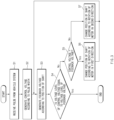
- FIG. 3 is a flowchart illustrating a headlamp leveling method of a vehicle according to an embodiment of the present disclosure.
- the headlamp leveling method may a pulse receiving operation S1, a control voltage generating operation S2, a feedback voltage generating operation S3, a first comparing operation S4, a second comparing operation S5, a first motor rotating operation S6, and a second motor rotating operation S7.
- the pulse receiving operation S1 may include receiving a pulse with a variable width from a vehicle system (e.g., ICU, AVNT).
- a vehicle system e.g., ICU, AVNT
- the pulse may include a high period and a low period, and the width of the pulse may correspond to the width of the high period.
- the control voltage generating operation S2 may include generating the control voltage SET corresponding to the size of the width of the received pulse.
- control voltage generating operation S2 may include generating the control voltage SET having a higher voltage level as the width of the pulse, that is, the width of the high period of the pulse increases.
- control voltage generating operation S2 may include generating the control voltage SET having a lower voltage level as the width of the pulse, that is, the width of the high period of the pulse decreases.
- the control voltage generating operation S2 may include generating a voltage based on the width of the high period of the pulse, smoothing a level of the voltage by removing variability of the generated voltage, and outputting, as the control voltage SET, a voltage obtained by adding a hysteresis component to the voltage that has been smoothed.
- the feedback voltage generating operation S3 may include generating the feedback voltage FB according to the position of a shaft.
- the shaft may move in the first direction or the second direction according to the rotation direction of the motor 250.
- the first direction and the second direction may be opposite to each other.
- the feedback voltage generating operation S3 may include generating the feedback voltage FB with a higher voltage level as the shaft moves in the first direction.
- the feedback voltage generating operation S3 may include generating the feedback voltage FB with a lower voltage level as the shaft moves in the second direction.
- the first comparison operation S4 may include comparing the voltage level of the control voltage SET and the voltage level of the feedback voltage FB.
- the first comparison operation S4 may include performing comparison as to whether the voltage level of the control voltage SET and the voltage level of the feedback voltage FB are equal to each other.
- the headlamp leveling method for a vehicle may be terminated.
- the second comparison operation S5 may be performed.
- the second comparison operation S5 may include comparing the voltage level of the control voltage SET and the voltage level of the feedback voltage FB.
- the second comparison operation S5 may include determining which voltage level is higher among the voltage level of the control voltage SET and the voltage level of the feedback voltage FB.
- the first motor rotation operation S6 may be performed.
- the second motor rotation operation S7 may be performed.
- the first motor rotation operation S6 may include rotating the motor 250 in the first direction to move the shaft in the first direction.
- the second motor rotation operation S7 may include rotating the motor 250 in the second direction to move the shaft in the second direction.
- the feedback voltage generation operation S3 for generating the feedback voltage FB according to a position to which the shaft has moved may be performed again.
- the headlamp leveling method for a vehicle may include changing the voltage level of the control voltage according to the width of the pulse and rotating the motor until the changed voltage level of the control voltage and the voltage level of the feedback voltage are equal to each other to rotate the position of the shaft.
- the voltage level of the feedback voltage may be changed according to the position of the shaft.
- the present technology has the advantage of reducing the costs of the vehicle and the headlamp leveling device by removing a switch for adjusting the light-illumination angle of the headlamp from the vehicle.
Landscapes
- Engineering & Computer Science (AREA)
- Mechanical Engineering (AREA)
- Power Engineering (AREA)
- Lighting Device Outwards From Vehicle And Optical Signal (AREA)
- Physics & Mathematics (AREA)
- General Physics & Mathematics (AREA)
- General Engineering & Computer Science (AREA)
Description
- The present disclosure relates to a headlamp leveling device and a headlamp leveling method for a vehicle.
- Generally, a headlamp for a vehicle is installed at a front end of the vehicle and emits light forward to ensure a driver's view.
- Recently, a device for adjusting a light-illumination angle of the headlamp has been developed so as to change an illuminating distance of light emitted toward the front of the vehicle in a stepwise manner to ensure driving convenience and visibility.
- A method of controlling the light-illumination angle of the headlamp may be divided into a method in which a driver adjusts the light-illumination angle with a switch installed in a vehicle and a method in which the vehicle automatically adjusts the light-illumination angle using a vehicle height sensor.
- The method of adjusting the light-illumination angle of the headlamp by using a switch having a mechanical configuration installed in the vehicle causes an increase in costs of a vehicle or a headlamp leveling device because a switch for adjusting the light-illumination angle needs be installed in the vehicle.
-
CN 101 402 331 A relates to a method for follow-up illumination of an automotive lamp andUS 2020/266740 A1 relates to stall detection in stepper motors using differential back-EMF between rising and falling commutation phase of the motor current. - The present disclosure has been made to solve the above-mentioned problems occurring in the prior art while advantages achieved by the prior art are maintained intact.
- An aspect of the present disclosure provides a headlamp leveling device and a headlamp leveling method capable of adjusting a light-illumination angle of a headlamp using a pulse width control method used in a vehicle system.
- The technical problems to be solved by the present disclosure are not limited to the aforementioned problems, and any other technical problems not mentioned herein will be clearly understood from the following description by those skilled in the art to which the present disclosure pertains. The invention is specified by the independent claims. Preferred embodiments are defined in the dependent claims. In the following description, although numerous features may be designated as optional, it is nevertheless acknowledged that all features comprised in the independent claims are not to be read as optional.
- According to an aspect of the present disclosure, a headlamp leveling device includes a control voltage generator that generates a control voltage based on a width of a pulse, a control integrated circuit(IC) that controls a rotation direction of a motor by comparing a voltage level of a feedback voltage with a voltage level of the control voltage, a shaft position detector that generates a voltage corresponding to a position of the shaft moving with rotation of the motor, and a feedback voltage generator that generates the feedback voltage based on the voltage generated to correspond to the position of the shaft.
- According to an embodiment, the control voltage generator may increase the voltage level of the control voltage when the width of the pulse increases and decrease the voltage level of the control voltage when the width of the pulse decreases.
- According to an embodiment, the control voltage generator may include a voltage applying device that outputs a power voltage based on the pulse, a voltage smoothing device that smooths the voltage output from the voltage applying device, and a hysteresis device that outputs, as the control voltage, a voltage obtained by adding a hysteresis component to a voltage provided from the voltage smoothing device.
- According to an embodiment, the voltage applying device may output the power voltage in a specific period of the pulse.
- According to an embodiment, the voltage applying device may include a transistor configured to receive the pulse at a gate of the transistor and receive the power voltage at a drain of the transistor, and a resistor connected to a source of the transistor at one end of the resistor and connected to a ground terminal at another end of the resistor, and a node, to which the source of the transistor and the one end of the resistor are connected may be an output terminal of the voltage applying device.
- According to an embodiment, the voltage smoothing device may include a first resistor connected to an output terminal of the voltage applying device at one end of the first resistor, and a first capacitor connected to another end of the first resistor at one end of the first capacitor.
- According to an embodiment, the hysteresis device may include a resistor that receives a smoothed voltage from the voltage smoothing device at one end of the hysteresis device and outputs the control voltage at another end of the hysteresis device.
- The control IC controls the motor so as to rotate in a first direction when the voltage level of the control voltage is higher than a voltage level of the feedback voltage, and controls the motor so as to rotate in a second direction when the voltage level of the control voltage is lower than the voltage level of the feedback voltage.
- According to an embodiment, the first direction and the second direction are opposite to each other.
- The control IC includes a comparator that compares the voltage level of the control voltage and the voltage level of the feedback voltage; and a motor driver that controls rotation of the motor based on a result of comparison by the comparator.
- According to an embodiment, the shaft position detector may generate a voltage with a higher voltage level as the shaft moves in a first direction, and generate a voltage with a lower voltage level as the shaft moves to a second direction.
- According to an embodiment, the shaft position detector may include a variable resistor having a resistance value that varies according to movement of the shaft, a power voltage may be applied to one end of the variable resistor, and the variable resistor may be connected to a ground terminal at another end of the variable resistor.
- According to an embodiment, the control voltage generator may include a second resistor that receives the voltage generated by the shaft position detector at one end of the second resistor, and a second capacitor connected to the other end of the second resistor at one end of the second capacitor and connected to a ground terminal at another end of the second capacitor, and the feedback voltage may be output at a node to which the another end of the second resistor and the one end of the second capacitor are connected.
- According to an embodiment, the second resistor may have a resistance value corresponding to a resistance value of the first resistor, and the second capacitor may have a capacitance value corresponding to a capacitance value of the first capacitor.
- According to another aspect of the present disclosure, a headlamp leveling method includes generating a control voltage based on a pulse provided from a vehicle system, generating a feedback voltage according to a position of a shaft, controlling rotation of a motor by comparing a voltage level of the feedback voltage and a voltage level of the control voltage, and allowing the position of the shaft to be changed, according to the rotation of the motor.
- According to an embodiment, the headlamp leveling method may further include allowing a light-illumination angle of a headlamp to be changed, according to the position of the shaft.
- According to an embodiment, the generating of the control voltage may include generating a voltage based on a high period of the pulse, smoothing the voltage by removing variability of the voltage, and outputting, as the control voltage, a voltage obtained by adding a hysteresis component to the voltage that has been smoothed.
- The controlling of the rotation of the motor includes rotating the motor in a first direction when the voltage level of the control voltage is higher than the voltage level of the feedback voltage, and rotating the motor in a second direction when the voltage level of the control voltage is lower than the voltage level of the feedback voltage.
- According to an embodiment, the first direction and the second direction may be opposite to each other.
- According to an embodiment, the generating of the feedback voltage may include increasing the voltage level of the feedback voltage as the shaft moves in a first direction, and decreasing the voltage level of the feedback voltage as the shaft moves in a second direction, and the first direction and the second direction may be opposite to each other.
- The above and other objects, features and advantages of the present disclosure will be more apparent from the following detailed description taken in conjunction with the accompanying drawings:
-
FIG. 1 is a diagram illustrating a configuration of a vehicle including a headlamp leveling device for a vehicle according to an embodiment of the present disclosure; -
FIG. 2 is a diagram illustrating a configuration of a headlamp leveling device for a vehicle according to an embodiment of the present disclosure; and -
FIG. 3 is a flowchart illustrating a headlamp leveling method of a vehicle according to an embodiment of the present disclosure. - Hereinafter, some embodiments of the present disclosure will be described in detail with reference to the exemplary drawings. In adding the reference numerals to the components of each drawing, it should be noted that the identical or equivalent component is designated by the identical numeral even when they are displayed on other drawings. Further, in describing the embodiment of the present disclosure, a detailed description of well-known features or functions will be ruled out in order not to unnecessarily obscure the gist of the present disclosure.
- In describing the components of the embodiment according to the present disclosure, terms such as first, second, "A", "B", (a), (b), and the like may be used. These terms are merely intended to distinguish one component from another component, and the terms do not limit the nature, sequence or order of the constituent components. Unless otherwise defined, all terms used herein, including technical or scientific terms, have the same meanings as those generally understood by those skilled in the art to which the present disclosure pertains. Such terms as those defined in a generally used dictionary are to be interpreted as having meanings equal to the contextual meanings in the relevant field of art, and are not to be interpreted as having ideal or excessively formal meanings unless clearly defined as having such in the present application.
- Hereinafter, embodiments of the present disclosure will be described in detail with reference to
FIGS. 1 and2 . -
FIG. 1 is a diagram illustrating a configuration of a vehicle including a headlamp leveling device for a vehicle according to an embodiment of the present disclosure; - Referring to
FIG. 1 , avehicle system 100 and aheadlamp leveling device 200 according to an embodiment of the present disclosure may be implemented inside a vehicle. In this case, thevehicle system 100 and theheadlamp leveling device 200 may be integrally formed with control units inside the vehicle, and may be implemented as separate devices and connected to the the control units of the vehicle by a separate connection means. - Referring to
FIG. 1 , the vehicle according to an embodiment of the present disclosure may include thevehicle system 100 and theheadlamp leveling device 200. - The
vehicle system 100 may be a system capable of controlling a plurality of electrical components installed in the vehicle. - For example, the
vehicle system 100 may include an integrated central control unit (ICU). - In this case, the integrated central control unit (ICU) may control the electrical components by generating a pulse-type signal using power stored in a battery and providing the pulse-type signal to the electrical components. The electrical components may include the
headlamp leveling device 200. - In addition, the
vehicle system 100 may include an AVNT (Audio/Video/Navigation/Telematics) system. - In this case, the AVNT system may provide various conveniences to vehicle occupants by integrating electrical devices including audio devices, video devices, navigation devices, telematics devices, and the like installed in the vehicle.
- The AVNT system may use a signal in the form of a pulse when controlling an electric device.
- The
vehicle system 100 according to an embodiment of the present disclosure may include a system capable of controlling electrical components or electric devices installed in the vehicle using a pulse width modulation method. - The
headlamp leveling device 200 may control a light-illumination angle of a headlamp based on the control according to the pulse width modulation method of thevehicle system 100. - For example, the
headlamp leveling device 200 may receive continuous pulses from thevehicle system 100, and may adjust the light-illumination angle of the headlamp according to a change in pulse width. - In more detail, for example, the
headlamp leveling device 200 may adjust the light-illumination angle of the headlamp according to the ratio of the high period to the low period of a pulse received from thevehicle system 100. - The
headlamp leveling device 200 may increase the light-illumination angle of the headlamp when the high period of the pulse is greater than the low period, and decrease the light-illumination angle of the headlamp when the high period of the pulse is smaller than the low period. -
FIG. 2 is a diagram illustrating a configuration of a headlamp leveling device for a vehicle according to an embodiment of the present disclosure; - Referring to
FIG. 2 , theheadlamp leveling device 200 may include acontrol voltage generator 210, acontrol IC 220, ashaft position detector 230, afeedback voltage generator 240, and amotor 250. - The
control voltage generator 210 may generate a control voltage SET based on a pulse continuously provided from thevehicle system 100. - For example, the
control voltage generator 210 may increase a voltage level of the control voltage SET when the width of a pulse (e.g., the high period of the pulse) increases. - Meanwhile, the
control voltage generator 210 may decrease the voltage level of the control voltage SET when the pulse width (e.g., the high period of the pulse) decreases. - In this case, when the pulse width increases, that is, when the width of the high period of the pulse increases, the width of the low period of the pulse may decrease.
- Also, the
control voltage generator 210 may maintain the voltage level of the control voltage SET when the pulse width does not increase or decrease, that is, when the pulse width is maintained without being changed. - The
control voltage generator 210 may include avoltage applying device 211, avoltage smoothing device 212, and ahysteresis device 213. - The
voltage applying device 211 may apply a power voltage V+ to a node only during the high period among the high period and the low period of the pulse. In this case, the power voltage V+ may be a voltage stored in a battery. - The
voltage applying device 211 may include a transistor Tr and a first resistor R1. - The transistor Tr may receive a pulse at a gate of the transistor Tr and receive the power voltage V+ at a drain of the transistor Tr, and may be connected to one end of the first resistor R1 at a source of the transistor Tr.
- The first resistor R1 may connected to the source of the transistor Tr at one end of the first resistor R1 and connected to a ground terminal at the other end of the first resistor R1.
- An operation of the
voltage applying device 211 configured as described above will be described as an example. - The transistor Tr may be turned on when a pulse input to the gate is in a high period.
- The transistor Tr, which has been turned-on, may transfer the power voltage V+ applied to the drain to the source.
- Accordingly, the power voltage V+ may be applied to the node to which the transistor Tr and the first resistor R1 are connected during the high period of the pulse.
- The transistor Tr may be turned off when the pulse input to the gate is in a low period.
- The transistor Tr which has been turned-off may block the supply of the power voltage V+ to the one end of the first resistor R1.
- That is, the
voltage applying device 211 may apply the power voltage V+ to the node to which the transistor Tr and the first resistorR1 are connected only during the high period of the pulse. - As a result, when a pulse including a high period and a low period is continuously provided to the
voltage applying device 211, the voltage level at one end of the first resistor R1 may be high only when the pulse is in the high period, so that the voltage applied to the first resistor R1 may have variability. - The
voltage smoothing device 212 may remove variations in the voltage provided from thevoltage applying device 211, that is, the voltage applied to one end of the first resistor R1. - The
voltage smoothing device 212 may be implemented as a low-pass filter. - For example, the
voltage smoothing device 212 may include a second resistor R2 and a first capacitor C1. - One end of the first resistor R1 may be connected to one end of the second resistor R2, and one end of the first capacitor C1 may be connected to the other end of the second resistor R2.
- The first capacitor C1 may be connected to the other end of the second resistor R2 at one end and connected to a ground terminal at the other end.
- The
hysteresis device 213 may provide a voltage provided from thevoltage smoothing device 212, that is, a voltage having a smooth voltage level from which variability has been removed, to thecontrol IC 220 as the control voltage SET. - The
hysteresis unit 213 may add a hysteresis component to the control voltage SET to be provided to thecontrol IC 220. - That is, the
hysteresis device 213 may be disposed between thevoltage smoothing device 212 and thecontrol IC 220 to delay reflection of a change in level of the voltage, output from the voltage smoothing device 12, to the control voltage SET to be provided to thecontrol IC 220, thus preventing an instantaneous change in level of the power voltage V+ from affecting the level of the control voltage SET. - The
hysteresis device 213 may include a third resistor R3. - The third resistor R3 may be connected to one end of the first capacitor C1 at one end of the third resistor R3, and connected to an input terminal of the
control IC 220, to which the control voltage SET is input, at the other end of the third resistor R3. - The
control IC 220 may rotate themotor 250 by comparing the control voltage SET and the feedback voltage FB. - For example, the
control IC 220 may rotate themotor 250 in a first direction when the voltage level of the control voltage SET is higher than the voltage level of the feedback voltage FB. - On the other hand, when the voltage level of the control voltage SET is lower than the voltage level of the feedback voltage FB, the
control IC 220 may rotate themotor 250 in a second direction. - In this case, the first direction may be opposite to the second direction.
- The
control IC 220 may include acomparator 221 and a motor driver 22. - The
comparator 221 may compare the voltage level of the control voltage SET and the voltage level of the feedback voltage FB, and provide a result of the comparison to themotor driver 222. - For example, the
comparator 221 may provide a signal with a first voltage level to themotor driver 222 when the voltage level of the control voltage SET is higher than the voltage level of the feedback voltage FB. - On the other hand, the
comparator 221 may provide a signal with a second voltage level to themotor driver 222 when the voltage level of the control voltage SET is lower than the voltage level of the feedback voltage FB. - In this case, the first voltage level may be higher than the second voltage level.
- The
motor driver 222 may provide a signal or voltage capable of controlling a rotation direction of themotor 250 to themotor 250 according to a level of a signal provided from thecomparator 221. - For example, when the signal with the first voltage level is provided from the
comparator 221, themotor driver 222 may provide a signal or voltage capable of rotating themotor 250 in the first direction to themotor 250. - When the signal with the second voltage level is provided from the
comparator 221, themotor driver 222 may provide a signal or voltage capable of rotating themotor 250 in the second direction to themotor 250. - The
shaft position detector 230 may generate a voltage whose voltage level varies according to a position of a shaft. - In this case, the shaft may be a mechanical device for changing the light-illumination angle of the headlamp by moving in the first direction and the second direction according to the rotation direction of the
motor 250. - For example, the
shaft position detector 230 may provide thefeedback voltage generator 240 with a voltage with a higher level as the shaft moves in the first direction. - The the
shaft position detector 230 may provide thefeedback voltage generator 240 with a voltage with a lower level as the shaft moves in the second direction. - The
shaft position detector 230 may include a variable resistor VR. - The variable resistor VR may receive a power voltage V+ at one end and be connected to a ground terminal at the other end.
- In this case, the variable resistor VR may have a resistance value corresponding to the position of the shaft which has moved in the first direction or the second direction, and may provide a voltage corresponding to the resistance value to the
feedback voltage generator 240. - The
feedback voltage generator 240 may provide a voltage provided from theshaft position detector 230 to thecontrol IC 220 as the feedback voltage FB. - In this case, the
feedback voltage generator 240 may be implemented by modeling thevoltage smoothing device 212. Further, thefeedback voltage generator 240 may be configured to allow a voltage, provided from theshaft position detector 230, to be delayed by a time required to remove the variability of voltage in thevoltage smoothing device 212 and then provided to thecontrol IC 220 as the feedback voltage FB to match the timing of changes between the control voltage SET and the feedback voltage FB. - The
feedback voltage generator 240 may include a fourth resistor R4 and a second capacitor C2. - The fourth resistor R4 may receive a voltage provided from the
shaft position detector 230 at one end of the fourth resistor R4, and may be connected to one end of the second capacitor C2 at the other end of the fourth resistor R4. - The second capacitor C2 may be connected to the other end of the fourth resistor R4 at one end of the second capacitor C2 and connected to a ground terminal at the other end of the second capacitor C2.
- In this case, a node to which the other end of the fourth resistor R4 and the one end of the second capacitor C2 are connected may be a node to which the feedback voltage FB is output, and may be connected to an input terminal to which the feedback voltage FB of the
control IC 220 is input. - The resistance value of the fourth resistor R4 and the capacitance value of the second capacitor C2 may respectively correspond to the resistance value of the second resistor R2 and the capacitance value of the first capacitor C2, the second resistor R2 and the first capacitor C2 constituting the
voltage smoothing device 212. - In this case, the third capacitor C3 may be connected between an input terminal of the
control IC 220 receiving the control voltage SET and an input terminal of thecontrol IC 220 receiving the feedback voltage FB. - The operation of the
headlamp leveling device 200 according to an embodiment of the present disclosure configured as described above will be described below. - When a width (e.g., a high period) of a pulse provided from the
vehicle system 100 increases, thecontrol voltage generator 210 may increase the voltage level of the control voltage SET. - The
control IC 220 may rotate themotor 250 in the first direction by comparing the control voltage SET having an increased voltage level and the feedback voltage FB. - The
motor 250 may be rotated in the first direction to move the shaft in the first direction. - As the shaft moves in the first direction, the level of the voltage provided from the
shaft position detector 230 may increase. - The voltage provided from the
shaft position detector 230 may be provided to thecontrol IC 220 through thefeedback voltage generator 240 as the feedback voltage FB. - The
control IC 220 may compare the control voltage SET and the feedback voltage FB and when the control voltage SET is higher than the voltage level of the feedback voltage FB, further rotate themotor 250 in the first direction. - As a result, the
control IC 220 may rotate themotor 250 in the first direction until the voltage level of the feedback voltage FB is equal to the control voltage SET. - Meanwhile, When a width (e.g., a high period) of a pulse provided from the
vehicle system 100 decreases, thecontrol voltage generator 210 may decrease the voltage level of the control voltage SET. - The
control IC 220 may rotate themotor 250 in the second direction by comparing the control voltage SET having a decreased voltage level and the feedback voltage FB. - The
motor 250 may be rotated in the second direction to move the shaft in the second direction. - As the shaft moves in the second direction, the level of the voltage provided from the
shaft position detector 230 may decrease. - The voltage provided from the
shaft position detector 230 may be provided to thecontrol IC 220 through thefeedback voltage generator 240 as the feedback voltage FB. - The
control IC 220 may compare the control voltage SET and the feedback voltage FB and when the control voltage SET is lower than the voltage level of the feedback voltage FB, further rotate themotor 250 in the second direction. - As a result, the
control IC 220 may rotate themotor 250 in the second direction until the voltage level of the feedback voltage FB is equal to the control voltage SET. - As described above, the
headlamp leveling device 200 according to an embodiment of the present disclosure may receive a pulse having a variable width from thevehicle system 100 and adjust the light-illumination angle of the headlamp by adjusting the direction and amount of rotation of themotor 250 based on the pulse width and moving the shaft. - In this case, the
headlamp leveling device 200 according to an embodiment of the present disclosure may prevent a malfunction caused by a time required for thevoltage smoothing device 212 to smooth a voltage by disposing thefeedback voltage generator 240, implemented by modeling thevoltage smoothing device 212 that generates the control voltage SET, between theshaft position detector 230 and thecontrol IC 220. - In addition, in the
headlamp leveling device 200 according to an embodiment of the present disclosure may prevent a malfunction caused when the voltage level of the control voltage SET is changed due to a change in the power voltage V+ by disposing thehysteresis device 213 between thevoltage smoothing device 212 and thecontrol IC 220. -
FIG. 3 is a flowchart illustrating a headlamp leveling method of a vehicle according to an embodiment of the present disclosure. - Referring to
FIG. 3 , the headlamp leveling method according to an embodiment of the present disclosure may a pulse receiving operation S1, a control voltage generating operation S2, a feedback voltage generating operation S3, a first comparing operation S4, a second comparing operation S5, a first motor rotating operation S6, and a second motor rotating operation S7. - The pulse receiving operation S1 may include receiving a pulse with a variable width from a vehicle system (e.g., ICU, AVNT).
- In this case, the pulse may include a high period and a low period, and the width of the pulse may correspond to the width of the high period.
- The control voltage generating operation S2 may include generating the control voltage SET corresponding to the size of the width of the received pulse.
- For example, the control voltage generating operation S2 may include generating the control voltage SET having a higher voltage level as the width of the pulse, that is, the width of the high period of the pulse increases.
- Meanwhile, the control voltage generating operation S2 may include generating the control voltage SET having a lower voltage level as the width of the pulse, that is, the width of the high period of the pulse decreases.
- The control voltage generating operation S2 may include generating a voltage based on the width of the high period of the pulse, smoothing a level of the voltage by removing variability of the generated voltage, and outputting, as the control voltage SET, a voltage obtained by adding a hysteresis component to the voltage that has been smoothed.
- The feedback voltage generating operation S3 may include generating the feedback voltage FB according to the position of a shaft.
- In this case, the shaft may move in the first direction or the second direction according to the rotation direction of the
motor 250. The first direction and the second direction may be opposite to each other. - For example, the feedback voltage generating operation S3 may include generating the feedback voltage FB with a higher voltage level as the shaft moves in the first direction.
- Meanwhile, the feedback voltage generating operation S3 may include generating the feedback voltage FB with a lower voltage level as the shaft moves in the second direction.
- The first comparison operation S4 may include comparing the voltage level of the control voltage SET and the voltage level of the feedback voltage FB.
- For example, the first comparison operation S4 may include performing comparison as to whether the voltage level of the control voltage SET and the voltage level of the feedback voltage FB are equal to each other.
- When it is determined in the first comparison operation S4 that the voltage level of the control voltage SET and the voltage level of the feedback voltage FB are equal to each other (Yes), the headlamp leveling method for a vehicle according to the embodiment of the present disclosure may be terminated.
- On the other hand, when it is determined in the first comparison operation S4 that the voltage level of the control voltage SET and the voltage level of the feedback voltage FB are not equal to each other (No), the second comparison operation S5 may be performed.
- The second comparison operation S5 may include comparing the voltage level of the control voltage SET and the voltage level of the feedback voltage FB.
- For example, the second comparison operation S5 may include determining which voltage level is higher among the voltage level of the control voltage SET and the voltage level of the feedback voltage FB.
- In the second comparison operation S5, when the voltage level of the control voltage SET is higher than the voltage level of the feedback voltage FB (Yes), the first motor rotation operation S6 may be performed.
- In the second comparison operation S5, when the voltage level of the control voltage SET is lower than the voltage level of the feedback voltage FB (No), the second motor rotation operation S7 may be performed.
- The first motor rotation operation S6 may include rotating the
motor 250 in the first direction to move the shaft in the first direction. - The second motor rotation operation S7 may include rotating the
motor 250 in the second direction to move the shaft in the second direction. - After the first and second motor rotation operations S6 and S7 have been performed, the feedback voltage generation operation S3 for generating the feedback voltage FB according to a position to which the shaft has moved may be performed again.
- That is, the headlamp leveling method for a vehicle according to an embodiment of the present disclosure may include changing the voltage level of the control voltage according to the width of the pulse and rotating the motor until the changed voltage level of the control voltage and the voltage level of the feedback voltage are equal to each other to rotate the position of the shaft. In this case, the voltage level of the feedback voltage may be changed according to the position of the shaft.
- The present technology has the advantage of reducing the costs of the vehicle and the headlamp leveling device by removing a switch for adjusting the light-illumination angle of the headlamp from the vehicle.
Claims (12)
- A headlamp leveling device, comprising:a control voltage generator (210) configured to generate a control voltage based on a width of a pulse;a control integrated circuit, IC (220), configured to control a rotation direction of a motor (250) by comparing a voltage level of a feedback voltage with a voltage level of the control voltage;a shaft position detector (230) configured to generate a voltage corresponding to a position of the shaft moving with rotation of the motor (250); anda feedback voltage generator (240) configured to generate the feedback voltage based on the voltage generated to correspond to the position of the shaft,characterized in that the control IC (220) is configured to:control the motor (250) so as to rotate in a first direction when the voltage level of the control voltage is higher than a voltage level of the feedback voltage, andcontrol the motor (250) so as to rotate in a second direction when the voltage level of the control voltage is lower than the voltage level of the feedback voltage, andwherein the control IC (220) includes:a comparator configured to compare the voltage level of the control voltage and the voltage level of the feedback voltage, anda motor driver (222) configured to control rotation of the motor (250) based on a result of comparison by the comparator.
- The headlamp leveling device of claim 1, wherein the control voltage generator (210) is configured to:increase the voltage level of the control voltage when the width of the pulse increases, anddecrease the voltage level of the control voltage when the width of the pulse decreases.
- The headlamp leveling device of claim 2, wherein the control voltage generator (210) includes:a voltage applying device (211) configured to output a power voltage based on the pulse,a voltage smoothing device (212) configured to smooth the voltage output from the voltage applying device (211), anda hysteresis device (213) configured to output, as the control voltage, a voltage obtained by adding a hysteresis component to a voltage provided from the voltage smoothing device (212).
- The headlamp leveling device of claim 3, wherein the voltage applying device (211) includes:a transistor (Tr) configured to receive the pulse at a gate of the transistor (Tr) and receive the power voltage at a drain of the transistor (Tr), anda resistor (R1) connected to a source of the transistor (Tr) at one end of the resistor (R1) and connected to a ground terminal at another end of the resistor (R1),wherein a node, to which the source of the transistor (Tr) and the one end of the resistor (R1) are connected is an output terminal of the voltage applying device (211).
- The headlamp leveling device of claim 3, or 4, wherein the voltage smoothing device (212) includes:a first resistor (R1) connected to an output terminal of the voltage applying device (211) at one end of the first resistor (R1), anda first capacitor (C1) connected to another end of the first resistor (R1) at one end of the first capacitor (C1).
- The headlamp leveling device of claim 3, 4, or 5, wherein the hysteresis device (213) includes a resistor configured to receive a smoothed voltage from the voltage smoothing device (212) at one end of the hysteresis device (213) and output the control voltage at another end of the hysteresis device (213).
- The headlamp leveling device of any one of claims 1 to 6, wherein the shaft position detector (230) is configured to:generate a voltage with a higher voltage level as the shaft moves in a first direction, andgenerate a voltage with a lower voltage level as the shaft moves to a second direction.
- The headlamp leveling device of claim 7, wherein: the shaft position detector (230) includes a variable resistor having a resistance value that varies according to movement of the shaft,a power voltage is applied to one end of the variable resistor, andthe variable resistor is connected to a ground terminal at another end of the variable resistor.
- The headlamp leveling device of any one of claims 5 to 8, wherein the feedback voltage generator (240) includes:a fourth resistor (R4)configured to receive the voltage generated by the shaft position detector (230) at one end of the fourth resistor (R4), anda second capacitor (C2) connected to the other end of the fourth resistor (R4) at one end of the second capacitor (C2) and connected to a ground terminal at another end of the second capacitor (C2), andwherein the feedback voltage is output at a node to which the another end of the fourth resistor (R4) and the one end of the second capacitor (C2) are connected.
- A headlamp leveling method comprising:generating (S2) a control voltage based on a pulse provided from a vehicle system;generating (S3) a feedback voltage according to a position of a shaft;controlling (S5) rotation of a motor (250) by comparing a voltage level of the feedback voltage and a voltage level of the control voltage; andallowing (S6, S7) the position of the shaft to be changed, according to the rotation of the motor (250),characterized in thatthe controlling of the rotation of the motor (250) includes:comparing the voltage level of the feedback voltage and the voltage level of the control voltage,rotating the motor (250) in a first direction when the voltage level of the control voltage is higher than the voltage level of the feedback voltage, androtating the motor (250) in a second direction when the voltage level of the control voltage is lower than the voltage level of the feedback voltage.
- The headlamp leveling method of claim 10, wherein the generating of the control voltage includes:generating a voltage based on a high period of the pulse,smoothing the voltage by removing variability of the voltage, andoutputting, as the control voltage, a voltage obtained by adding a hysteresis component to the voltage that has been smoothed.
- The headlamp leveling method of claim 10 or 11, wherein the generating of the feedback voltage includes:increasing the voltage level of the feedback voltage as the shaft moves in a first direction, anddecreasing the voltage level of the feedback voltage as the shaft moves in a second direction,wherein the first direction and the second direction are opposite to each other.
Applications Claiming Priority (1)
| Application Number | Priority Date | Filing Date | Title |
|---|---|---|---|
| KR1020210084963A KR20230001884A (en) | 2021-06-29 | 2021-06-29 | Head lamp leveling device and head lamp leveling method for vehicle |
Publications (2)
| Publication Number | Publication Date |
|---|---|
| EP4112381A1 EP4112381A1 (en) | 2023-01-04 |
| EP4112381B1 true EP4112381B1 (en) | 2024-04-24 |
Family
ID=82058368
Family Applications (1)
| Application Number | Title | Priority Date | Filing Date |
|---|---|---|---|
| EP22178830.0A Active EP4112381B1 (en) | 2021-06-29 | 2022-06-14 | Headlamp leveling device and headlamp leveling method for vehicle |
Country Status (3)
| Country | Link |
|---|---|
| US (1) | US12311831B2 (en) |
| EP (1) | EP4112381B1 (en) |
| KR (1) | KR20230001884A (en) |
Family Cites Families (4)
| Publication number | Priority date | Publication date | Assignee | Title |
|---|---|---|---|---|
| US6568837B2 (en) * | 2000-04-21 | 2003-05-27 | Elco Textron Inc. | Motorized headlamp adjuster |
| US9955551B2 (en) * | 2002-07-12 | 2018-04-24 | Yechezkal Evan Spero | Detector controlled illuminating system |
| CN101402331A (en) * | 2008-10-24 | 2009-04-08 | 上海电机学院 | Intelligent follow-up illumination method of car lamp |
| US10686391B2 (en) * | 2017-10-11 | 2020-06-16 | Texas Instruments Incorporated | Stall detection in stepper motors using differential back-EMF between rising and falling commutation phase of motor current |
-
2021
- 2021-06-29 KR KR1020210084963A patent/KR20230001884A/en active Pending
-
2022
- 2022-06-14 EP EP22178830.0A patent/EP4112381B1/en active Active
- 2022-06-15 US US17/807,089 patent/US12311831B2/en active Active
Also Published As
| Publication number | Publication date |
|---|---|
| KR20230001884A (en) | 2023-01-05 |
| US20220410792A1 (en) | 2022-12-29 |
| US12311831B2 (en) | 2025-05-27 |
| EP4112381A1 (en) | 2023-01-04 |
Similar Documents
| Publication | Publication Date | Title |
|---|---|---|
| KR100197165B1 (en) | Charging generator for a vehicle including a circuit for suppressing a sudden change in a field current | |
| US7009351B2 (en) | Single phase motor driving unit | |
| US8395343B2 (en) | Rotation speed control circuit, rotation speed control method and fan system | |
| JPH10184973A (en) | Solenoid valve driving device | |
| JP6830364B2 (en) | Soft start circuit and power supply equipped with this | |
| JP4316568B2 (en) | Vehicle generator control system | |
| JPH04264393A (en) | Control device for gas discharging lamp for vehicle | |
| US9391548B2 (en) | Motor driving device for vehicle | |
| JP5334737B2 (en) | Apparatus and method for detecting a measurand | |
| EP4112381B1 (en) | Headlamp leveling device and headlamp leveling method for vehicle | |
| US9391603B2 (en) | Semiconductor device, electronic appliance, and vehicle | |
| JP2573104B2 (en) | Variable-length high-precision pulse generator | |
| US20040169486A1 (en) | Stepping motor control apparatus | |
| JP6127895B2 (en) | Motor control device and motor control method | |
| US9559622B2 (en) | Motor driving device, electronic appliance, and vehicle | |
| JP3411310B2 (en) | Motor driving circuit and driving method thereof | |
| US7276941B2 (en) | Power up circuit of semiconductor memory device and compensating method thereof | |
| KR100288216B1 (en) | Reset signal generator | |
| JP2024501724A (en) | Capacitor charging circuit, airbag controller, and airbag system | |
| US20040130386A1 (en) | Reference voltage providing circuit | |
| JP2822074B2 (en) | DC motor drive circuit | |
| JP3065580B2 (en) | DC motor drive circuit | |
| JP2000134973A (en) | Control device for brushless motor | |
| US5928340A (en) | Apparatus for translating a bias signal into one of two different bias signals for a switching device | |
| JP6947007B2 (en) | Voltage divider circuit and vehicle display device |
Legal Events
| Date | Code | Title | Description |
|---|---|---|---|
| PUAI | Public reference made under article 153(3) epc to a published international application that has entered the european phase |
Free format text: ORIGINAL CODE: 0009012 |
|
| STAA | Information on the status of an ep patent application or granted ep patent |
Free format text: STATUS: REQUEST FOR EXAMINATION WAS MADE |
|
| 17P | Request for examination filed |
Effective date: 20220714 |
|
| AK | Designated contracting states |
Kind code of ref document: A1 Designated state(s): AL AT BE BG CH CY CZ DE DK EE ES FI FR GB GR HR HU IE IS IT LI LT LU LV MC MK MT NL NO PL PT RO RS SE SI SK SM TR |
|
| RBV | Designated contracting states (corrected) |
Designated state(s): AL AT BE BG CH CY CZ DE DK EE ES FI FR GB GR HR HU IE IS IT LI LT LU LV MC MK MT NL NO PL PT RO RS SE SI SK SM TR |
|
| REG | Reference to a national code |
Ref country code: DE Free format text: PREVIOUS MAIN CLASS: B60Q0001076000 Ref country code: DE Ref legal event code: R079 Ref document number: 602022003016 Country of ref document: DE Free format text: PREVIOUS MAIN CLASS: B60Q0001076000 Ipc: H02P0007030000 |
|
| RIC1 | Information provided on ipc code assigned before grant |
Ipc: B60Q 1/076 20060101ALI20230622BHEP Ipc: B60Q 1/115 20060101ALI20230622BHEP Ipc: H02P 7/03 20160101AFI20230622BHEP |
|
| GRAP | Despatch of communication of intention to grant a patent |
Free format text: ORIGINAL CODE: EPIDOSNIGR1 |
|
| STAA | Information on the status of an ep patent application or granted ep patent |
Free format text: STATUS: GRANT OF PATENT IS INTENDED |
|
| INTG | Intention to grant announced |
Effective date: 20231207 |
|
| GRAS | Grant fee paid |
Free format text: ORIGINAL CODE: EPIDOSNIGR3 |
|
| GRAA | (expected) grant |
Free format text: ORIGINAL CODE: 0009210 |
|
| STAA | Information on the status of an ep patent application or granted ep patent |
Free format text: STATUS: THE PATENT HAS BEEN GRANTED |
|
| AK | Designated contracting states |
Kind code of ref document: B1 Designated state(s): AL AT BE BG CH CY CZ DE DK EE ES FI FR GB GR HR HU IE IS IT LI LT LU LV MC MK MT NL NO PL PT RO RS SE SI SK SM TR |
|
| P01 | Opt-out of the competence of the unified patent court (upc) registered |
Effective date: 20240319 |
|
| RAP3 | Party data changed (applicant data changed or rights of an application transferred) |
Owner name: HYUNDAI MOBIS CO., LTD. |
|
| REG | Reference to a national code |
Ref country code: GB Ref legal event code: FG4D |
|
| REG | Reference to a national code |
Ref country code: CH Ref legal event code: EP |
|
| REG | Reference to a national code |
Ref country code: DE Ref legal event code: R096 Ref document number: 602022003016 Country of ref document: DE |
|
| REG | Reference to a national code |
Ref country code: IE Ref legal event code: FG4D |
|
| REG | Reference to a national code |
Ref country code: LT Ref legal event code: MG9D |
|
| REG | Reference to a national code |
Ref country code: NL Ref legal event code: MP Effective date: 20240424 |
|
| REG | Reference to a national code |
Ref country code: AT Ref legal event code: MK05 Ref document number: 1680701 Country of ref document: AT Kind code of ref document: T Effective date: 20240424 |
|
| PG25 | Lapsed in a contracting state [announced via postgrant information from national office to epo] |
Ref country code: NL Free format text: LAPSE BECAUSE OF FAILURE TO SUBMIT A TRANSLATION OF THE DESCRIPTION OR TO PAY THE FEE WITHIN THE PRESCRIBED TIME-LIMIT Effective date: 20240424 |
|
| PG25 | Lapsed in a contracting state [announced via postgrant information from national office to epo] |
Ref country code: NL Free format text: LAPSE BECAUSE OF FAILURE TO SUBMIT A TRANSLATION OF THE DESCRIPTION OR TO PAY THE FEE WITHIN THE PRESCRIBED TIME-LIMIT Effective date: 20240424 |
|
| PG25 | Lapsed in a contracting state [announced via postgrant information from national office to epo] |
Ref country code: IS Free format text: LAPSE BECAUSE OF FAILURE TO SUBMIT A TRANSLATION OF THE DESCRIPTION OR TO PAY THE FEE WITHIN THE PRESCRIBED TIME-LIMIT Effective date: 20240824 |
|
| PG25 | Lapsed in a contracting state [announced via postgrant information from national office to epo] |
Ref country code: BG Free format text: LAPSE BECAUSE OF FAILURE TO SUBMIT A TRANSLATION OF THE DESCRIPTION OR TO PAY THE FEE WITHIN THE PRESCRIBED TIME-LIMIT Effective date: 20240424 |
|
| PG25 | Lapsed in a contracting state [announced via postgrant information from national office to epo] |
Ref country code: HR Free format text: LAPSE BECAUSE OF FAILURE TO SUBMIT A TRANSLATION OF THE DESCRIPTION OR TO PAY THE FEE WITHIN THE PRESCRIBED TIME-LIMIT Effective date: 20240424 Ref country code: FI Free format text: LAPSE BECAUSE OF FAILURE TO SUBMIT A TRANSLATION OF THE DESCRIPTION OR TO PAY THE FEE WITHIN THE PRESCRIBED TIME-LIMIT Effective date: 20240424 |
|
| PG25 | Lapsed in a contracting state [announced via postgrant information from national office to epo] |
Ref country code: GR Free format text: LAPSE BECAUSE OF FAILURE TO SUBMIT A TRANSLATION OF THE DESCRIPTION OR TO PAY THE FEE WITHIN THE PRESCRIBED TIME-LIMIT Effective date: 20240725 |
|
| PG25 | Lapsed in a contracting state [announced via postgrant information from national office to epo] |
Ref country code: PT Free format text: LAPSE BECAUSE OF FAILURE TO SUBMIT A TRANSLATION OF THE DESCRIPTION OR TO PAY THE FEE WITHIN THE PRESCRIBED TIME-LIMIT Effective date: 20240826 |
|
| PG25 | Lapsed in a contracting state [announced via postgrant information from national office to epo] |
Ref country code: ES Free format text: LAPSE BECAUSE OF FAILURE TO SUBMIT A TRANSLATION OF THE DESCRIPTION OR TO PAY THE FEE WITHIN THE PRESCRIBED TIME-LIMIT Effective date: 20240424 |
|
| PG25 | Lapsed in a contracting state [announced via postgrant information from national office to epo] |
Ref country code: AT Free format text: LAPSE BECAUSE OF FAILURE TO SUBMIT A TRANSLATION OF THE DESCRIPTION OR TO PAY THE FEE WITHIN THE PRESCRIBED TIME-LIMIT Effective date: 20240424 |
|
| PG25 | Lapsed in a contracting state [announced via postgrant information from national office to epo] |
Ref country code: PL Free format text: LAPSE BECAUSE OF FAILURE TO SUBMIT A TRANSLATION OF THE DESCRIPTION OR TO PAY THE FEE WITHIN THE PRESCRIBED TIME-LIMIT Effective date: 20240424 |
|
| PG25 | Lapsed in a contracting state [announced via postgrant information from national office to epo] |
Ref country code: LV Free format text: LAPSE BECAUSE OF FAILURE TO SUBMIT A TRANSLATION OF THE DESCRIPTION OR TO PAY THE FEE WITHIN THE PRESCRIBED TIME-LIMIT Effective date: 20240424 |
|
| PG25 | Lapsed in a contracting state [announced via postgrant information from national office to epo] |
Ref country code: PT Free format text: LAPSE BECAUSE OF FAILURE TO SUBMIT A TRANSLATION OF THE DESCRIPTION OR TO PAY THE FEE WITHIN THE PRESCRIBED TIME-LIMIT Effective date: 20240826 Ref country code: PL Free format text: LAPSE BECAUSE OF FAILURE TO SUBMIT A TRANSLATION OF THE DESCRIPTION OR TO PAY THE FEE WITHIN THE PRESCRIBED TIME-LIMIT Effective date: 20240424 Ref country code: NO Free format text: LAPSE BECAUSE OF FAILURE TO SUBMIT A TRANSLATION OF THE DESCRIPTION OR TO PAY THE FEE WITHIN THE PRESCRIBED TIME-LIMIT Effective date: 20240724 Ref country code: LV Free format text: LAPSE BECAUSE OF FAILURE TO SUBMIT A TRANSLATION OF THE DESCRIPTION OR TO PAY THE FEE WITHIN THE PRESCRIBED TIME-LIMIT Effective date: 20240424 Ref country code: IS Free format text: LAPSE BECAUSE OF FAILURE TO SUBMIT A TRANSLATION OF THE DESCRIPTION OR TO PAY THE FEE WITHIN THE PRESCRIBED TIME-LIMIT Effective date: 20240824 Ref country code: HR Free format text: LAPSE BECAUSE OF FAILURE TO SUBMIT A TRANSLATION OF THE DESCRIPTION OR TO PAY THE FEE WITHIN THE PRESCRIBED TIME-LIMIT Effective date: 20240424 Ref country code: GR Free format text: LAPSE BECAUSE OF FAILURE TO SUBMIT A TRANSLATION OF THE DESCRIPTION OR TO PAY THE FEE WITHIN THE PRESCRIBED TIME-LIMIT Effective date: 20240725 Ref country code: FI Free format text: LAPSE BECAUSE OF FAILURE TO SUBMIT A TRANSLATION OF THE DESCRIPTION OR TO PAY THE FEE WITHIN THE PRESCRIBED TIME-LIMIT Effective date: 20240424 Ref country code: ES Free format text: LAPSE BECAUSE OF FAILURE TO SUBMIT A TRANSLATION OF THE DESCRIPTION OR TO PAY THE FEE WITHIN THE PRESCRIBED TIME-LIMIT Effective date: 20240424 Ref country code: BG Free format text: LAPSE BECAUSE OF FAILURE TO SUBMIT A TRANSLATION OF THE DESCRIPTION OR TO PAY THE FEE WITHIN THE PRESCRIBED TIME-LIMIT Effective date: 20240424 Ref country code: AT Free format text: LAPSE BECAUSE OF FAILURE TO SUBMIT A TRANSLATION OF THE DESCRIPTION OR TO PAY THE FEE WITHIN THE PRESCRIBED TIME-LIMIT Effective date: 20240424 Ref country code: RS Free format text: LAPSE BECAUSE OF FAILURE TO SUBMIT A TRANSLATION OF THE DESCRIPTION OR TO PAY THE FEE WITHIN THE PRESCRIBED TIME-LIMIT Effective date: 20240724 |
|
| PG25 | Lapsed in a contracting state [announced via postgrant information from national office to epo] |
Ref country code: DK Free format text: LAPSE BECAUSE OF FAILURE TO SUBMIT A TRANSLATION OF THE DESCRIPTION OR TO PAY THE FEE WITHIN THE PRESCRIBED TIME-LIMIT Effective date: 20240424 |
|
| PG25 | Lapsed in a contracting state [announced via postgrant information from national office to epo] |
Ref country code: EE Free format text: LAPSE BECAUSE OF FAILURE TO SUBMIT A TRANSLATION OF THE DESCRIPTION OR TO PAY THE FEE WITHIN THE PRESCRIBED TIME-LIMIT Effective date: 20240424 |
|
| PG25 | Lapsed in a contracting state [announced via postgrant information from national office to epo] |
Ref country code: CZ Free format text: LAPSE BECAUSE OF FAILURE TO SUBMIT A TRANSLATION OF THE DESCRIPTION OR TO PAY THE FEE WITHIN THE PRESCRIBED TIME-LIMIT Effective date: 20240424 |
|
| PG25 | Lapsed in a contracting state [announced via postgrant information from national office to epo] |
Ref country code: SK Free format text: LAPSE BECAUSE OF FAILURE TO SUBMIT A TRANSLATION OF THE DESCRIPTION OR TO PAY THE FEE WITHIN THE PRESCRIBED TIME-LIMIT Effective date: 20240424 Ref country code: RO Free format text: LAPSE BECAUSE OF FAILURE TO SUBMIT A TRANSLATION OF THE DESCRIPTION OR TO PAY THE FEE WITHIN THE PRESCRIBED TIME-LIMIT Effective date: 20240424 |
|
| REG | Reference to a national code |
Ref country code: DE Ref legal event code: R097 Ref document number: 602022003016 Country of ref document: DE |
|
| PG25 | Lapsed in a contracting state [announced via postgrant information from national office to epo] |
Ref country code: SM Free format text: LAPSE BECAUSE OF FAILURE TO SUBMIT A TRANSLATION OF THE DESCRIPTION OR TO PAY THE FEE WITHIN THE PRESCRIBED TIME-LIMIT Effective date: 20240424 |
|
| PG25 | Lapsed in a contracting state [announced via postgrant information from national office to epo] |
Ref country code: SM Free format text: LAPSE BECAUSE OF FAILURE TO SUBMIT A TRANSLATION OF THE DESCRIPTION OR TO PAY THE FEE WITHIN THE PRESCRIBED TIME-LIMIT Effective date: 20240424 Ref country code: SK Free format text: LAPSE BECAUSE OF FAILURE TO SUBMIT A TRANSLATION OF THE DESCRIPTION OR TO PAY THE FEE WITHIN THE PRESCRIBED TIME-LIMIT Effective date: 20240424 Ref country code: RO Free format text: LAPSE BECAUSE OF FAILURE TO SUBMIT A TRANSLATION OF THE DESCRIPTION OR TO PAY THE FEE WITHIN THE PRESCRIBED TIME-LIMIT Effective date: 20240424 Ref country code: EE Free format text: LAPSE BECAUSE OF FAILURE TO SUBMIT A TRANSLATION OF THE DESCRIPTION OR TO PAY THE FEE WITHIN THE PRESCRIBED TIME-LIMIT Effective date: 20240424 Ref country code: DK Free format text: LAPSE BECAUSE OF FAILURE TO SUBMIT A TRANSLATION OF THE DESCRIPTION OR TO PAY THE FEE WITHIN THE PRESCRIBED TIME-LIMIT Effective date: 20240424 Ref country code: CZ Free format text: LAPSE BECAUSE OF FAILURE TO SUBMIT A TRANSLATION OF THE DESCRIPTION OR TO PAY THE FEE WITHIN THE PRESCRIBED TIME-LIMIT Effective date: 20240424 Ref country code: MC Free format text: LAPSE BECAUSE OF FAILURE TO SUBMIT A TRANSLATION OF THE DESCRIPTION OR TO PAY THE FEE WITHIN THE PRESCRIBED TIME-LIMIT Effective date: 20240424 |
|
| PG25 | Lapsed in a contracting state [announced via postgrant information from national office to epo] |
Ref country code: LU Free format text: LAPSE BECAUSE OF NON-PAYMENT OF DUE FEES Effective date: 20240614 |
|
| PLBE | No opposition filed within time limit |
Free format text: ORIGINAL CODE: 0009261 |
|
| STAA | Information on the status of an ep patent application or granted ep patent |
Free format text: STATUS: NO OPPOSITION FILED WITHIN TIME LIMIT |
|
| 26N | No opposition filed |
Effective date: 20250127 |
|
| PG25 | Lapsed in a contracting state [announced via postgrant information from national office to epo] |
Ref country code: IE Free format text: LAPSE BECAUSE OF NON-PAYMENT OF DUE FEES Effective date: 20240614 |
|
| PG25 | Lapsed in a contracting state [announced via postgrant information from national office to epo] |
Ref country code: SI Free format text: LAPSE BECAUSE OF FAILURE TO SUBMIT A TRANSLATION OF THE DESCRIPTION OR TO PAY THE FEE WITHIN THE PRESCRIBED TIME-LIMIT Effective date: 20240424 Ref country code: BE Free format text: LAPSE BECAUSE OF NON-PAYMENT OF DUE FEES Effective date: 20240630 |
|
| REG | Reference to a national code |
Ref country code: BE Ref legal event code: MM Effective date: 20240630 |
|
| PGFP | Annual fee paid to national office [announced via postgrant information from national office to epo] |
Ref country code: DE Payment date: 20250422 Year of fee payment: 4 |
|
| PGFP | Annual fee paid to national office [announced via postgrant information from national office to epo] |
Ref country code: FR Payment date: 20250422 Year of fee payment: 4 |
|
| PG25 | Lapsed in a contracting state [announced via postgrant information from national office to epo] |
Ref country code: SE Free format text: LAPSE BECAUSE OF FAILURE TO SUBMIT A TRANSLATION OF THE DESCRIPTION OR TO PAY THE FEE WITHIN THE PRESCRIBED TIME-LIMIT Effective date: 20240424 |
|
| PG25 | Lapsed in a contracting state [announced via postgrant information from national office to epo] |
Ref country code: CY Free format text: LAPSE BECAUSE OF FAILURE TO SUBMIT A TRANSLATION OF THE DESCRIPTION OR TO PAY THE FEE WITHIN THE PRESCRIBED TIME-LIMIT; INVALID AB INITIO Effective date: 20220614 |
|
| REG | Reference to a national code |
Ref country code: CH Ref legal event code: H13 Free format text: ST27 STATUS EVENT CODE: U-0-0-H10-H13 (AS PROVIDED BY THE NATIONAL OFFICE) Effective date: 20260127 |
|
| PG25 | Lapsed in a contracting state [announced via postgrant information from national office to epo] |
Ref country code: IT Free format text: LAPSE BECAUSE OF FAILURE TO SUBMIT A TRANSLATION OF THE DESCRIPTION OR TO PAY THE FEE WITHIN THE PRESCRIBED TIME-LIMIT Effective date: 20240424 |
|
| PG25 | Lapsed in a contracting state [announced via postgrant information from national office to epo] |
Ref country code: HU Free format text: LAPSE BECAUSE OF FAILURE TO SUBMIT A TRANSLATION OF THE DESCRIPTION OR TO PAY THE FEE WITHIN THE PRESCRIBED TIME-LIMIT; INVALID AB INITIO Effective date: 20220614 |
|
| PG25 | Lapsed in a contracting state [announced via postgrant information from national office to epo] |
Ref country code: CH Free format text: LAPSE BECAUSE OF NON-PAYMENT OF DUE FEES Effective date: 20250630 |