EP4112163A1 - Material for n2o decomposition - Google Patents
Material for n2o decomposition Download PDFInfo
- Publication number
- EP4112163A1 EP4112163A1 EP21760072.5A EP21760072A EP4112163A1 EP 4112163 A1 EP4112163 A1 EP 4112163A1 EP 21760072 A EP21760072 A EP 21760072A EP 4112163 A1 EP4112163 A1 EP 4112163A1
- Authority
- EP
- European Patent Office
- Prior art keywords
- cobalt
- alkali metal
- material according
- catalyst
- salt
- Prior art date
- Legal status (The legal status is an assumption and is not a legal conclusion. Google has not performed a legal analysis and makes no representation as to the accuracy of the status listed.)
- Pending
Links
Images




Classifications
-
- B—PERFORMING OPERATIONS; TRANSPORTING
- B01—PHYSICAL OR CHEMICAL PROCESSES OR APPARATUS IN GENERAL
- B01J—CHEMICAL OR PHYSICAL PROCESSES, e.g. CATALYSIS OR COLLOID CHEMISTRY; THEIR RELEVANT APPARATUS
- B01J23/00—Catalysts comprising metals or metal oxides or hydroxides, not provided for in group B01J21/00
- B01J23/70—Catalysts comprising metals or metal oxides or hydroxides, not provided for in group B01J21/00 of the iron group metals or copper
- B01J23/76—Catalysts comprising metals or metal oxides or hydroxides, not provided for in group B01J21/00 of the iron group metals or copper combined with metals, oxides or hydroxides provided for in groups B01J23/02 - B01J23/36
- B01J23/78—Catalysts comprising metals or metal oxides or hydroxides, not provided for in group B01J21/00 of the iron group metals or copper combined with metals, oxides or hydroxides provided for in groups B01J23/02 - B01J23/36 with alkali- or alkaline earth metals
-
- B—PERFORMING OPERATIONS; TRANSPORTING
- B01—PHYSICAL OR CHEMICAL PROCESSES OR APPARATUS IN GENERAL
- B01D—SEPARATION
- B01D53/00—Separation of gases or vapours; Recovering vapours of volatile solvents from gases; Chemical or biological purification of waste gases, e.g. engine exhaust gases, smoke, fumes, flue gases, aerosols
- B01D53/34—Chemical or biological purification of waste gases
- B01D53/74—General processes for purification of waste gases; Apparatus or devices specially adapted therefor
- B01D53/86—Catalytic processes
- B01D53/8621—Removing nitrogen compounds
- B01D53/8625—Nitrogen oxides
- B01D53/8628—Processes characterised by a specific catalyst
-
- B—PERFORMING OPERATIONS; TRANSPORTING
- B01—PHYSICAL OR CHEMICAL PROCESSES OR APPARATUS IN GENERAL
- B01J—CHEMICAL OR PHYSICAL PROCESSES, e.g. CATALYSIS OR COLLOID CHEMISTRY; THEIR RELEVANT APPARATUS
- B01J23/00—Catalysts comprising metals or metal oxides or hydroxides, not provided for in group B01J21/00
- B01J23/005—Spinels
-
- B—PERFORMING OPERATIONS; TRANSPORTING
- B01—PHYSICAL OR CHEMICAL PROCESSES OR APPARATUS IN GENERAL
- B01J—CHEMICAL OR PHYSICAL PROCESSES, e.g. CATALYSIS OR COLLOID CHEMISTRY; THEIR RELEVANT APPARATUS
- B01J23/00—Catalysts comprising metals or metal oxides or hydroxides, not provided for in group B01J21/00
- B01J23/70—Catalysts comprising metals or metal oxides or hydroxides, not provided for in group B01J21/00 of the iron group metals or copper
- B01J23/74—Iron group metals
- B01J23/75—Cobalt
-
- B—PERFORMING OPERATIONS; TRANSPORTING
- B01—PHYSICAL OR CHEMICAL PROCESSES OR APPARATUS IN GENERAL
- B01J—CHEMICAL OR PHYSICAL PROCESSES, e.g. CATALYSIS OR COLLOID CHEMISTRY; THEIR RELEVANT APPARATUS
- B01J35/00—Catalysts, in general, characterised by their form or physical properties
- B01J35/40—Catalysts, in general, characterised by their form or physical properties characterised by dimensions, e.g. grain size
- B01J35/45—Nanoparticles
-
- B—PERFORMING OPERATIONS; TRANSPORTING
- B01—PHYSICAL OR CHEMICAL PROCESSES OR APPARATUS IN GENERAL
- B01J—CHEMICAL OR PHYSICAL PROCESSES, e.g. CATALYSIS OR COLLOID CHEMISTRY; THEIR RELEVANT APPARATUS
- B01J35/00—Catalysts, in general, characterised by their form or physical properties
- B01J35/60—Catalysts, in general, characterised by their form or physical properties characterised by their surface properties or porosity
- B01J35/61—Surface area
- B01J35/613—10-100 m2/g
-
- B—PERFORMING OPERATIONS; TRANSPORTING
- B01—PHYSICAL OR CHEMICAL PROCESSES OR APPARATUS IN GENERAL
- B01J—CHEMICAL OR PHYSICAL PROCESSES, e.g. CATALYSIS OR COLLOID CHEMISTRY; THEIR RELEVANT APPARATUS
- B01J35/00—Catalysts, in general, characterised by their form or physical properties
- B01J35/60—Catalysts, in general, characterised by their form or physical properties characterised by their surface properties or porosity
- B01J35/63—Pore volume
- B01J35/633—Pore volume less than 0.5 ml/g
-
- B—PERFORMING OPERATIONS; TRANSPORTING
- B01—PHYSICAL OR CHEMICAL PROCESSES OR APPARATUS IN GENERAL
- B01J—CHEMICAL OR PHYSICAL PROCESSES, e.g. CATALYSIS OR COLLOID CHEMISTRY; THEIR RELEVANT APPARATUS
- B01J35/00—Catalysts, in general, characterised by their form or physical properties
- B01J35/60—Catalysts, in general, characterised by their form or physical properties characterised by their surface properties or porosity
- B01J35/64—Pore diameter
- B01J35/647—2-50 nm
-
- B—PERFORMING OPERATIONS; TRANSPORTING
- B01—PHYSICAL OR CHEMICAL PROCESSES OR APPARATUS IN GENERAL
- B01J—CHEMICAL OR PHYSICAL PROCESSES, e.g. CATALYSIS OR COLLOID CHEMISTRY; THEIR RELEVANT APPARATUS
- B01J37/00—Processes, in general, for preparing catalysts; Processes, in general, for activation of catalysts
- B01J37/009—Preparation by separation, e.g. by filtration, decantation, screening
-
- B—PERFORMING OPERATIONS; TRANSPORTING
- B01—PHYSICAL OR CHEMICAL PROCESSES OR APPARATUS IN GENERAL
- B01J—CHEMICAL OR PHYSICAL PROCESSES, e.g. CATALYSIS OR COLLOID CHEMISTRY; THEIR RELEVANT APPARATUS
- B01J37/00—Processes, in general, for preparing catalysts; Processes, in general, for activation of catalysts
- B01J37/02—Impregnation, coating or precipitation
- B01J37/03—Precipitation; Co-precipitation
-
- B—PERFORMING OPERATIONS; TRANSPORTING
- B01—PHYSICAL OR CHEMICAL PROCESSES OR APPARATUS IN GENERAL
- B01J—CHEMICAL OR PHYSICAL PROCESSES, e.g. CATALYSIS OR COLLOID CHEMISTRY; THEIR RELEVANT APPARATUS
- B01J37/00—Processes, in general, for preparing catalysts; Processes, in general, for activation of catalysts
- B01J37/06—Washing
-
- B—PERFORMING OPERATIONS; TRANSPORTING
- B01—PHYSICAL OR CHEMICAL PROCESSES OR APPARATUS IN GENERAL
- B01J—CHEMICAL OR PHYSICAL PROCESSES, e.g. CATALYSIS OR COLLOID CHEMISTRY; THEIR RELEVANT APPARATUS
- B01J37/00—Processes, in general, for preparing catalysts; Processes, in general, for activation of catalysts
- B01J37/08—Heat treatment
-
- B—PERFORMING OPERATIONS; TRANSPORTING
- B01—PHYSICAL OR CHEMICAL PROCESSES OR APPARATUS IN GENERAL
- B01J—CHEMICAL OR PHYSICAL PROCESSES, e.g. CATALYSIS OR COLLOID CHEMISTRY; THEIR RELEVANT APPARATUS
- B01J6/00—Heat treatments such as Calcining; Fusing ; Pyrolysis
- B01J6/001—Calcining
-
- C—CHEMISTRY; METALLURGY
- C01—INORGANIC CHEMISTRY
- C01G—COMPOUNDS CONTAINING METALS NOT COVERED BY SUBCLASSES C01D OR C01F
- C01G51/00—Compounds of cobalt
-
- C—CHEMISTRY; METALLURGY
- C01—INORGANIC CHEMISTRY
- C01G—COMPOUNDS CONTAINING METALS NOT COVERED BY SUBCLASSES C01D OR C01F
- C01G51/00—Compounds of cobalt
- C01G51/04—Oxides
-
- B—PERFORMING OPERATIONS; TRANSPORTING
- B01—PHYSICAL OR CHEMICAL PROCESSES OR APPARATUS IN GENERAL
- B01D—SEPARATION
- B01D2255/00—Catalysts
- B01D2255/20—Metals or compounds thereof
- B01D2255/202—Alkali metals
-
- B—PERFORMING OPERATIONS; TRANSPORTING
- B01—PHYSICAL OR CHEMICAL PROCESSES OR APPARATUS IN GENERAL
- B01D—SEPARATION
- B01D2255/00—Catalysts
- B01D2255/20—Metals or compounds thereof
- B01D2255/202—Alkali metals
- B01D2255/2022—Potassium
-
- B—PERFORMING OPERATIONS; TRANSPORTING
- B01—PHYSICAL OR CHEMICAL PROCESSES OR APPARATUS IN GENERAL
- B01D—SEPARATION
- B01D2255/00—Catalysts
- B01D2255/20—Metals or compounds thereof
- B01D2255/207—Transition metals
- B01D2255/20746—Cobalt
-
- B—PERFORMING OPERATIONS; TRANSPORTING
- B01—PHYSICAL OR CHEMICAL PROCESSES OR APPARATUS IN GENERAL
- B01D—SEPARATION
- B01D2255/00—Catalysts
- B01D2255/90—Physical characteristics of catalysts
- B01D2255/92—Dimensions
- B01D2255/9202—Linear dimensions
-
- B—PERFORMING OPERATIONS; TRANSPORTING
- B01—PHYSICAL OR CHEMICAL PROCESSES OR APPARATUS IN GENERAL
- B01D—SEPARATION
- B01D2255/00—Catalysts
- B01D2255/90—Physical characteristics of catalysts
- B01D2255/92—Dimensions
- B01D2255/9205—Porosity
-
- B—PERFORMING OPERATIONS; TRANSPORTING
- B01—PHYSICAL OR CHEMICAL PROCESSES OR APPARATUS IN GENERAL
- B01D—SEPARATION
- B01D2255/00—Catalysts
- B01D2255/90—Physical characteristics of catalysts
- B01D2255/92—Dimensions
- B01D2255/9207—Specific surface
-
- B—PERFORMING OPERATIONS; TRANSPORTING
- B01—PHYSICAL OR CHEMICAL PROCESSES OR APPARATUS IN GENERAL
- B01D—SEPARATION
- B01D2257/00—Components to be removed
- B01D2257/40—Nitrogen compounds
- B01D2257/402—Dinitrogen oxide
-
- B—PERFORMING OPERATIONS; TRANSPORTING
- B01—PHYSICAL OR CHEMICAL PROCESSES OR APPARATUS IN GENERAL
- B01D—SEPARATION
- B01D2258/00—Sources of waste gases
- B01D2258/02—Other waste gases
-
- C—CHEMISTRY; METALLURGY
- C01—INORGANIC CHEMISTRY
- C01P—INDEXING SCHEME RELATING TO STRUCTURAL AND PHYSICAL ASPECTS OF SOLID INORGANIC COMPOUNDS
- C01P2002/00—Crystal-structural characteristics
- C01P2002/30—Three-dimensional structures
- C01P2002/32—Three-dimensional structures spinel-type (AB2O4)
-
- C—CHEMISTRY; METALLURGY
- C01—INORGANIC CHEMISTRY
- C01P—INDEXING SCHEME RELATING TO STRUCTURAL AND PHYSICAL ASPECTS OF SOLID INORGANIC COMPOUNDS
- C01P2002/00—Crystal-structural characteristics
- C01P2002/60—Compounds characterised by their crystallite size
-
- C—CHEMISTRY; METALLURGY
- C01—INORGANIC CHEMISTRY
- C01P—INDEXING SCHEME RELATING TO STRUCTURAL AND PHYSICAL ASPECTS OF SOLID INORGANIC COMPOUNDS
- C01P2002/00—Crystal-structural characteristics
- C01P2002/70—Crystal-structural characteristics defined by measured X-ray, neutron or electron diffraction data
- C01P2002/72—Crystal-structural characteristics defined by measured X-ray, neutron or electron diffraction data by d-values or two theta-values, e.g. as X-ray diagram
-
- C—CHEMISTRY; METALLURGY
- C01—INORGANIC CHEMISTRY
- C01P—INDEXING SCHEME RELATING TO STRUCTURAL AND PHYSICAL ASPECTS OF SOLID INORGANIC COMPOUNDS
- C01P2002/00—Crystal-structural characteristics
- C01P2002/80—Crystal-structural characteristics defined by measured data other than those specified in group C01P2002/70
- C01P2002/85—Crystal-structural characteristics defined by measured data other than those specified in group C01P2002/70 by XPS, EDX or EDAX data
-
- C—CHEMISTRY; METALLURGY
- C01—INORGANIC CHEMISTRY
- C01P—INDEXING SCHEME RELATING TO STRUCTURAL AND PHYSICAL ASPECTS OF SOLID INORGANIC COMPOUNDS
- C01P2004/00—Particle morphology
- C01P2004/01—Particle morphology depicted by an image
- C01P2004/03—Particle morphology depicted by an image obtained by SEM
-
- C—CHEMISTRY; METALLURGY
- C01—INORGANIC CHEMISTRY
- C01P—INDEXING SCHEME RELATING TO STRUCTURAL AND PHYSICAL ASPECTS OF SOLID INORGANIC COMPOUNDS
- C01P2006/00—Physical properties of inorganic compounds
- C01P2006/12—Surface area
-
- C—CHEMISTRY; METALLURGY
- C01—INORGANIC CHEMISTRY
- C01P—INDEXING SCHEME RELATING TO STRUCTURAL AND PHYSICAL ASPECTS OF SOLID INORGANIC COMPOUNDS
- C01P2006/00—Physical properties of inorganic compounds
- C01P2006/14—Pore volume
-
- C—CHEMISTRY; METALLURGY
- C01—INORGANIC CHEMISTRY
- C01P—INDEXING SCHEME RELATING TO STRUCTURAL AND PHYSICAL ASPECTS OF SOLID INORGANIC COMPOUNDS
- C01P2006/00—Physical properties of inorganic compounds
- C01P2006/16—Pore diameter
-
- C—CHEMISTRY; METALLURGY
- C01—INORGANIC CHEMISTRY
- C01P—INDEXING SCHEME RELATING TO STRUCTURAL AND PHYSICAL ASPECTS OF SOLID INORGANIC COMPOUNDS
- C01P2006/00—Physical properties of inorganic compounds
- C01P2006/16—Pore diameter
- C01P2006/17—Pore diameter distribution
-
- Y—GENERAL TAGGING OF NEW TECHNOLOGICAL DEVELOPMENTS; GENERAL TAGGING OF CROSS-SECTIONAL TECHNOLOGIES SPANNING OVER SEVERAL SECTIONS OF THE IPC; TECHNICAL SUBJECTS COVERED BY FORMER USPC CROSS-REFERENCE ART COLLECTIONS [XRACs] AND DIGESTS
- Y02—TECHNOLOGIES OR APPLICATIONS FOR MITIGATION OR ADAPTATION AGAINST CLIMATE CHANGE
- Y02C—CAPTURE, STORAGE, SEQUESTRATION OR DISPOSAL OF GREENHOUSE GASES [GHG]
- Y02C20/00—Capture or disposal of greenhouse gases
- Y02C20/10—Capture or disposal of greenhouse gases of nitrous oxide (N2O)
Definitions
- the present invention relates to a catalyst with a non-stoichiometric spinel-type crystalline structure, the production process for obtaining it via precipitation with controlled washing, and its particular use in the N 2 O decomposition reaction. Therefore, we understand that the present invention is in the area of green industry aimed at reducing N 2 O emissions.
- Nitrous oxide is a greenhouse gas with a potential 298 higher than CO 2 and with a devastating effect on the ozone layer, with a lifetime in the troposphere of 100 years.
- the industrial sector generates 5% of total N 2 O emissions and it is estimated that this is the sector that is likely to experience the largest increase in emissions in the very near future.
- nitric acid and adipic acid production are the main sources of N 2 O emissions. Since the number of plants is limited, emission reductions could be easier to achieve compared to other sectors that have many diffuse sources, such as biomass burning or agriculture. Measures have already been established for a large number of the adipic acid plants, but emissions in nitric acid plants are particularly difficult to reduce.
- the tertiary treatment offers the great advantage of not affecting the heart of the nitric acid plant since it is implemented as a tail gas treatment.
- the main technological problem is to develop catalytic systems that are active at relatively low temperatures (between 250 °C and 500 °C) and capable of operating under real process conditions, since there are other components present in the tail gas (O 2 , H 2 O and possibly NO x ) that can significantly alter the efficiency of the catalyst.
- Catalysts considered to be active in the decomposition reaction of N 2 O at low-temperature are zeolites modified with various metals (Cr, Mn, Fe, Co, Ni o Cu), noble metals (Rh, Ru, Pd) supported on ZnO, CeO 2 , Al 2 O 3 , TiO 2 o ZrO 2 , hydrotalcite derivatives, spinels and metal oxides [ M. Konsolakis, ACS Catal. 2015, 5, 6397-6421 ; J. Perez-Ramirez, Appl. Catal. B 44 (2003) 117-151 ]. Among them, those that have shown the best catalytic activities and the best resistance to O 2 and H 2 O are based on cobalt spinel.
- the present invention concerns a new material with the formula Co 3 O 4-x/2 A y , its preparation process and its use as a catalyst in the decomposition reaction of N 2 O.
- the present invention relates to a material characterised in that it has a non-stoichiometric spinel-type crystalline structure, the general formula of which is "Co 3 O 4-x/2 A y ", where "x” has a value of between 0.02 and 0.3, “A” is an alkaline element and “y” has a value of between 0.06 and 0.18, with an A/Co ratio of between 0.02 and 0.10; the primary particle size being equivalent to a crystallite size of between 5 and 30 nm.
- non-stoichiometric spinel is understood as any material having cubic structure of spinel-type cobalt oxide that is partially reduced, which generates oxygen vacancies, with the general formula Co 3 O 4-x/2 A y , since there is a reduction of Co 3+ to Co 2+ induced by the presence of the alkali element.
- the material is preferably mesoporous.
- mesoporous material means any material having pores with a predominant pore size between 2 nm and 50 nm.
- the advantage of the material being mesoporous is the accessibility of gases to the catalytically active centres, based on an ideal ratio of pore volume to specific surface area.
- the material has a pore volume of between 0.2 cm 3 /g and 0.4 cm 3 /g and a specific surface area BET of between 40 m 2 /g and 80 m 2 /g, relatively high for a bulk material, resulting in a high gas-solid contact surface area which favours catalytic activity.
- the alkali element A is K, x is 0.182, and y is 0.09
- the alkali element A is Cs, x is 0.235, and y is 0.15
- Another aspect of the invention is a process for obtaining a Co 3 O 4-x/2 A y material with a non-stoichiometric spinel structure characterised by the following steps:
- the washing in stage (d) is carried out in a controlled manner and is critical, since the content of A in the sample depends on it, and this directly influences the reduction temperature of Co(III) to Co (II) and, therefore, the Co 2+ /Co 3+ ratio obtained, thus controlling, depending on the amount of water used in relation to the initial Co salt content in the reaction, the amount of alkali to be introduced into the crystal lattice of the material of the present invention. Furthermore, this controlled washing avoids an additional stage in which the alkali metal is added, making the procedure of the present invention simpler than those described in the prior art.
- a non-stoichiometric cobalt spinel precipitation of cobalt oxide is produced, doped with an alkali metal in such a way that an intimate contact between the Co and the alkali ion is created from the stage of precipitate formation.
- the doping is of the bulk-type doping, with a distribution of the alkali element throughout the whole not just on the surface.
- This synthesis process directly affects the cobalt spinel-formation process, generating a material with a primary particle size equivalent to the size of crystallite or crystalline domain, as revealed by X-ray diffraction and scanning electron microscopy.
- a small primary particle size of the cobalt spinel results in a high exposed specific surface area, leading to a high ratio of active centres per gram of catalyst, contributing to the improvement of catalyst efficiency.
- the inclusion of the alkali ion by this process significantly alters the chemical-physical properties of the material, as it causes a partial reduction of Co(III) ions to Co(II). This changes the stoichiometry of the resulting spinel, decreasing the proportion of oxygen in the lattice, which leads to a distortion of the structure and gives it distinctly different catalytic properties than the conventional spinel.
- the cobalt salt in step (a) is selected from cobalt nitrate hexahydrate, cobalt sulphate, cobalt chloride and cobalt acetate.
- the alkali metal salt or hydroxide of step (b) is selected from an alkali metal carbonate, alkali metal nitrate, alkali metal hydroxide and alkali metal acetate.
- the alkali metal salt or hydroxide is alkali metal carbonate.
- step (d) if the cobalt salt is cobalt nitrate hexahydrate and the alkali metal salt is alkali metal carbonate, the washing of step (d) is with an amount of water between 16 ml/g and 21 ml/g of cobalt nitrate hexahydrate.
- a third aspect of the present invention relates to the use of the material described above as a catalyst.
- the material refers to the use of the material as a catalyst in the oxidation/decomposition of gases.
- the material refers to the use of the material as a catalyst for N 2 O decomposition.
- the catalysts show a N 2 O conversion of 98 % under real operating conditions from 340 °C at a GHSV of 50,330 h -1 .
- the catalysts show a N 2 O conversion of 98 % under real operating conditions from 310 °C at a GHSV of 24,000 h -1 .
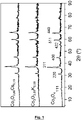
- X-ray diffractograms (XRD) of the materials described in examples 1 and 3 show that these materials have a cubic structure close to that of the Co 3 O 4 spinel described in example 7 (JCPDS 00-042-1467) ( Figure 1 ).
- the average crystallite size was calculated according to the Scherrer equation respectively obtaining values around 18 nm and 10 nm.
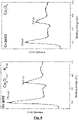
- microphotographs show the general surface appearance of the materials, formed by agglomerates of primary particles with sizes similar to those obtained for crystallite sizes by XRD, and with pores whose diameter falls within the range of mesoporous materials (2-50 nm), as determined by N 2 adsorption-desorption isotherms ( Figure 3 ).
- O 2 temperature-programmed desorption (O 2 -TPD) experiments were performed with the materials described in examples 1, 3 and 7.
- the peak relative to surface oxygen (P O2 -I) appeared at temperatures around 100 °C ( figure 6 ), compared to 190 °C for the material without K (example 7).
- N 2 O decomposition reaction The most accepted mechanism for the N 2 O decomposition reaction is through adsorption of N 2 O on an active centre [A], releasing N 2 and leaving an O atom adsorbed on that centre. A second N 2 O molecule is adsorbed on this centre, giving rise to another N 2 molecule. The two adsorbed O atoms must recombine to form molecular O 2 , this being the limiting stage of the reaction: N 2 O (g) + [A] ⁇ N 2 (g) + [O - - A] [O - - A] + N 2 O (g) ⁇ N 2 (g) + O 2 (g) + [A]
- the O 2 DTP results obtained show that the samples described in examples 1 and 3 have the ability to perform the O 2 desorption processes from the lattice oxygen (P O2 -II) at a temperature (200 - 300°C) significantly lower than that required by the sample with conventional spinel structure (> 300°C). This can be considered to be related to the lowering of the temperature required by these new catalysts to carry out the N 2 O decomposition process under the indicated conditions.
- P O2 -II lattice oxygen
- the increase in reaction rate produced by the catalysts covered by the patent is more than an order of magnitude greater than the best described in the article mentioned in this example.
- the catalyst described in this article, D1 as Co 3 O 4 , showed a binding energy of the Co 2p 3/2 component of 780.1 eV similar to the K-free spinel described in example 7 ( Figure 3 ), and the desorption of the lattice oxygen obtained by O 2 DTP takes place, as with the K-free spinel described in example 7, at 300°C and above ( Figure 5 ).
- the increase in reaction rate produced by the materials covered by the patent is more than an order of magnitude greater than the best described in the article mentioned in this example.
Landscapes
- Chemical & Material Sciences (AREA)
- Organic Chemistry (AREA)
- Engineering & Computer Science (AREA)
- Chemical Kinetics & Catalysis (AREA)
- Materials Engineering (AREA)
- Physics & Mathematics (AREA)
- Thermal Sciences (AREA)
- Environmental & Geological Engineering (AREA)
- Inorganic Chemistry (AREA)
- Health & Medical Sciences (AREA)
- Biomedical Technology (AREA)
- Analytical Chemistry (AREA)
- General Chemical & Material Sciences (AREA)
- Oil, Petroleum & Natural Gas (AREA)
- Catalysts (AREA)
- Exhaust Gas Treatment By Means Of Catalyst (AREA)
- Dispersion Chemistry (AREA)
- Inorganic Compounds Of Heavy Metals (AREA)
Abstract
Description
- The present invention relates to a catalyst with a non-stoichiometric spinel-type crystalline structure, the production process for obtaining it via precipitation with controlled washing, and its particular use in the N2O decomposition reaction. Therefore, we understand that the present invention is in the area of green industry aimed at reducing N2O emissions.
- Nitrous oxide is a greenhouse gas with a potential 298 higher than CO2 and with a devastating effect on the ozone layer, with a lifetime in the troposphere of 100 years. The industrial sector generates 5% of total N2O emissions and it is estimated that this is the sector that is likely to experience the largest increase in emissions in the very near future. Within the industrial sector, nitric acid and adipic acid production are the main sources of N2O emissions. Since the number of plants is limited, emission reductions could be easier to achieve compared to other sectors that have many diffuse sources, such as biomass burning or agriculture. Measures have already been established for a large number of the adipic acid plants, but emissions in nitric acid plants are particularly difficult to reduce.
- The most effective technologies for nitrous oxide removal in nitric acid plants are catalytic decomposition processes carried out after the ammonia oxidation stage (secondary treatment) or its removal in the tail gas stream (tertiary treatment). There are several commercial catalysts available for secondary treatment, but they have some disadvantages, such as deactivation, low wear resistance or sintering of the active phase due to the high temperatures they have to withstand (between 750 °C and 940 °C).
- The tertiary treatment offers the great advantage of not affecting the heart of the nitric acid plant since it is implemented as a tail gas treatment. The main technological problem is to develop catalytic systems that are active at relatively low temperatures (between 250 °C and 500 °C) and capable of operating under real process conditions, since there are other components present in the tail gas (O2, H2O and possibly NOx) that can significantly alter the efficiency of the catalyst.
- Catalysts considered to be active in the decomposition reaction of N2O at low-temperature are zeolites modified with various metals (Cr, Mn, Fe, Co, Ni o Cu), noble metals (Rh, Ru, Pd) supported on ZnO, CeO2, Al2O3, TiO2 o ZrO2, hydrotalcite derivatives, spinels and metal oxides [M. Konsolakis, ACS Catal. 2015, 5, 6397-6421; J. Perez-Ramirez, Appl. Catal. B 44 (2003) 117-151]. Among them, those that have shown the best catalytic activities and the best resistance to O2 and H2O are based on cobalt spinel. Yan et al [L. Yan, R. Ren, X. Wang, Q. Gao, D. Ji, J. Suo, Catal. Comm. 4 (2003) 505-509;
L. Yan, R. Ren, X. Wang, D. Ji, J. Suo, Appl. Catal. B 45 (2003) 85-90] published studies with the formulations ZnxCo1-xCo2O4 and MxCo1-xCo2O4 (M= Ni, Mg) where T50 (temperature required for 50 % conversion of N2O) were recorded respectively at 250 and 220 °C. The operating conditions used were GHSV (gas hourly space velocity) of 15000 h-1 and N2O concentrations of 1000 ppm, with 10% O2 and 5% H2O. Similar results (T50 = 260°C) were obtained by Xu et al. [L. Xue, C. Zhang, H. He, Y. Teraoka, Appl. Catal. B 75 (2007) 167-174] with its CoCe0.05 catalyst also working at a space velocity of 15000 h-1 and concentrations of 1000 ppm of N2O, 10% of O2 and 3% of H2O. - The addition of alkaline elements enhances the catalytic activity of cobalt spinel Co3O4 [
JP2007054714 (A - Therefore, there is a need to provide catalysts that report more than 90% conversion at temperatures below 350°C under real conditions, and to provide catalysts that are stable under these conditions.
- The present invention concerns a new material with the formula Co3O4-x/2Ay, its preparation process and its use as a catalyst in the decomposition reaction of N2O.
- In a first aspect the present invention relates to a material characterised in that it has a non-stoichiometric spinel-type crystalline structure, the general formula of which is "Co3O4-x/2Ay", where "x" has a value of between 0.02 and 0.3, "A" is an alkaline element and "y" has a value of between 0.06 and 0.18, with an A/Co ratio of between 0.02 and 0.10; the primary particle size being equivalent to a crystallite size of between 5 and 30 nm.
- In the present invention "non-stoichiometric spinel" is understood as any material having cubic structure of spinel-type cobalt oxide that is partially reduced, which generates oxygen vacancies, with the general formula Co3O4-x/2Ay, since there is a reduction of Co3+ to Co2+ induced by the presence of the alkali element.
- The advantage associated with these catalysts is that they show surface desorption of oxygen at temperatures around 100°C and lattice desorption of oxygen at temperatures between 200 and 300 °C because the Co2+/Co3+ ratio in the catalyst is between 0.55 and 0.80.
- The material is preferably mesoporous. In the present invention, "mesoporous material" means any material having pores with a predominant pore size between 2 nm and 50 nm.
- The advantage of the material being mesoporous is the accessibility of gases to the catalytically active centres, based on an ideal ratio of pore volume to specific surface area. In a preferred embodiment, the material has a pore volume of between 0.2 cm3/g and 0.4 cm3/g and a specific surface area BET of between 40 m2/g and 80 m2/g, relatively high for a bulk material, resulting in a high gas-solid contact surface area which favours catalytic activity.
- In another preferred embodiment, the alkali element A is K, x is 0.182, and y is 0.09
- In another preferred embodiment the alkali element A is Cs, x is 0.235, and y is 0.15
- Another aspect of the invention is a process for obtaining a Co3O4-x/2Ay material with a non-stoichiometric spinel structure characterised by the following steps:
- a) dissolving a cobalt salt in water;
- b) dissolving a salt or hydroxide of an alkali metal in water;
- c) slowly adding the solution obtained in step (b) to the solution prepared in step (a) until a pH of between 8 and 11 is reached;
- d) filtering the solid obtained in step (c) and washing it with 5 ml to 75 ml of water for each gram of cobalt salt added in step (a);
- e) drying the solid obtained in step (d) at a temperature between 50 °C and 200 °C for a time between 12 h and 20 h; and
- f) calcining the solid obtained in step (e) at a temperature between 200 °C and 700 °C in an air atmosphere for at least 30 min.
- The washing in stage (d) is carried out in a controlled manner and is critical, since the content of A in the sample depends on it, and this directly influences the reduction temperature of Co(III) to Co (II) and, therefore, the Co2+/Co3+ ratio obtained, thus controlling, depending on the amount of water used in relation to the initial Co salt content in the reaction, the amount of alkali to be introduced into the crystal lattice of the material of the present invention. Furthermore, this controlled washing avoids an additional stage in which the alkali metal is added, making the procedure of the present invention simpler than those described in the prior art.
- According to the process described in the present invention, a non-stoichiometric cobalt spinel precipitation of cobalt oxide is produced, doped with an alkali metal in such a way that an intimate contact between the Co and the alkali ion is created from the stage of precipitate formation. The doping is of the bulk-type doping, with a distribution of the alkali element throughout the whole not just on the surface.
- This synthesis process directly affects the cobalt spinel-formation process, generating a material with a primary particle size equivalent to the size of crystallite or crystalline domain, as revealed by X-ray diffraction and scanning electron microscopy. A small primary particle size of the cobalt spinel results in a high exposed specific surface area, leading to a high ratio of active centres per gram of catalyst, contributing to the improvement of catalyst efficiency.
- In addition, the inclusion of the alkali ion by this process significantly alters the chemical-physical properties of the material, as it causes a partial reduction of Co(III) ions to Co(II). This changes the stoichiometry of the resulting spinel, decreasing the proportion of oxygen in the lattice, which leads to a distortion of the structure and gives it distinctly different catalytic properties than the conventional spinel.
- In another preferred embodiment of the process, the cobalt salt in step (a) is selected from cobalt nitrate hexahydrate, cobalt sulphate, cobalt chloride and cobalt acetate.
- In another preferred embodiment of the process the alkali metal salt or hydroxide of step (b) is selected from an alkali metal carbonate, alkali metal nitrate, alkali metal hydroxide and alkali metal acetate. In a more preferred embodiment, the alkali metal salt or hydroxide is alkali metal carbonate.
- In another preferred embodiment of the process, if the cobalt salt is cobalt nitrate hexahydrate and the alkali metal salt is alkali metal carbonate, the washing of step (d) is with an amount of water between 16 ml/g and 21 ml/g of cobalt nitrate hexahydrate.
- A third aspect of the present invention relates to the use of the material described above as a catalyst.
- In a more preferred embodiment it refers to the use of the material as a catalyst in the oxidation/decomposition of gases.
- In a still more preferred embodiment it refers to the use of the material as a catalyst for N2O decomposition.
- The catalysts show a N2O conversion of 98 % under real operating conditions from 340 °C at a GHSV of 50,330 h-1.
- The catalysts show a N2O conversion of 98 % under real operating conditions from 310 °C at a GHSV of 24,000 h-1.
- Furthermore, it shows a high stability in the presence of H2O and O2 of at least 65 h without a decrease in the conversion of N2O and without altering determining properties such as particle size or porosity.
- Throughout the description and claims the word "comprises" and its variants are not intended to exclude other technical features, additives, components or steps. Other objects, advantages and features of the invention will be apparent to those skilled in the art in part from the description and in part from the practice of the invention. The following examples and figures are provided by way of illustration, and are not intended to be limiting of the present invention.
-
-
Fig. 1 X-ray diffractograms of the materials of the invention. -
Fig. 2 Scanning electron microscopy images of the materials of the invention. -
Fig. 3 Pore size distribution of the materials of the invention obtained by adsorption-desorption isotherms of N2. -
Fig. 4 XPS diagrams of the materials of the invention. -
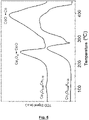
Fig. 5 Programmed temperature reduction with H2 of the materials of the invention. -
Fig. 6 Desorption of O2 at programmed temperature of the materials of the invention. -
Fig. 7 Conversion of N2O as a function of space time in the presence of O2 and H2O vapour of the materials of the invention and of materials reported in the state of the art. - The invention is illustrated below by means of the results of tests carried out by the inventors which demonstrate the effectiveness of the product of the invention.
- 14.84 grams of cobalt nitrate (Co(NO3)2.6H2O) were dissolved in 100 ml of water and the solution was kept under stirring. 100 ml of a solution of potassium carbonate (K2CO3) 15% w/w was prepared, placed in a burette and slowly added to the cobalt nitrate solution. The addition of carbonate was continued until the pH reached was 9. The solid was filtered off and washed with 250 ml of water at 15°C. It was dried at 100 °C for 16 h and calcined at 400 °C for 2 h, to obtain a catalyst with the formula Co3O3.88K0.08.
- When a sample of the material obtained according to example 1 was introduced into a tubular reactor and a gas stream of Ar with an N2O concentration of 1400 ppm, was fed at a ratio (Gas flow rate : catalyst volume) GHSV = 50,300 h-1, gradual heating of the gases inside the reactor resulted in a progressive decrease of the N2O concentration at the reactor outlet equivalent to N2O conversion values of 73 % at 260°C, 95 % at 280°C and 98 % at temperatures above 310 °C.
- When a sample of this material was introduced into a tubular reactor and a gas stream of Ar with an N2O concentration equal to 1400 ppm and O2 = 3% v/v was fed at a ratio (total gas flow rate : catalyst volume) GHSV = 50,300 h-1, gradual heating of the gases inside the reactor resulted in a progressive decrease of the N2O concentration at the reactor outlet, equivalent to N2O conversion values of 17 % at 250 °C, 88 % at 300 °C and 96 % at temperatures above 350 °C.
- When a sample of this material was introduced into a tubular reactor and a gas stream of Ar with an N2O concentration equal to 1400 ppm and [H2O] = 0.5% v/v was fed at a ratio (Total gas flow rate : catalyst volume) GHSV = 50,300 h-1, gradual heating of the gases inside the reactor resulted in a progressive decrease of the N2O concentration at the reactor outlet, equivalent to N2O conversion values of 25% at 250°C, 75% at 280°C and 98% at temperatures above 340°C.
- When a sample of the material obtained according to example 1 was introduced into a tubular reactor and a gas stream of Ar with a concentration of N2O equal to 1400 ppm, [O2] = 3% v/v and H2O = 0.5% v/v was fed at a ratio (Total gas flow : catalyst volume) GHSV = 50,300 h-1, gradual heating of the gases inside the reactor resulted in a progressive decrease of the N2O concentration at the reactor outlet, equivalent to N2O conversion values of 17 % at 260 °C, 42 % at 275 °C, 73 % at 290 °C, 94% at 315 °C and 97 % at temperatures above 350 °C.
- When a sample of the material obtained according to example 1 was introduced into a tubular reactor and a stream of Ar gas was fed, with a concentration of N2O equal to 1400 ppm, [O2] = 3% v/v and H2O = 0.5% v/v, at a ratio (Total gas flow : catalyst volume) GHSV = 50,300 h-1, keeping the reaction temperature equal to 360°C, an initial N2O conversion of 93% was obtained, experiencing a slight increase in conversion to 96% over 65 hours in reaction.
- 14.84 grams of cobalt nitrate (Co(NO3)2.6H2O) were dissolved in 100 ml of water and the solution was kept under stirring. 100 ml of a solution of caesium carbonate (Cs2CO3) at 30% w/w was prepared. This solution was poured into a burette. The carbonate solution was slowly added and maintained until the pH reached was 9. The total volume of carbonate added was 57.5 ml. The solid was filtered off and washed with 220 ml of water at 15 °C. It was dried at 100 °C for 16 h and calcined at 400 °C for 2 h to obtain a material with the formula Co3O3.88Cs0.15.
- When a sample of the material obtained according to example 3 was introduced into a tubular reactor and a gas stream of Ar with a concentration of N2O equivalent to 1400 ppm, [O2] = 3% v/v and H2O = 0.5% v/v was fed at a ratio (Total gas flow : catalyst volume) GHSV = 50,300 h-1, gradual heating of the gases inside the reactor resulted in a progressive decrease of the N2O concentration at the reactor outlet equivalent to N2O conversion values of 50 % at 280 °C, 80 % at 300 °C, 93 % at 320 °C and 97 % at temperatures above 340 °C.
- 59.36 grams of cobalt nitrate (Co(NO3)2.6H2O) were dissolved in 400 ml of water and the solution was kept under stirring. 400 ml of a solution of caesium carbonate (Cs2CO3) at 30% w/w was prepared. This solution was poured into a burette. The carbonate solution was slowly added and maintained until the pH reached was 9. The total volume of carbonate added was 207 ml. The solid was filtered off and washed with 1160 ml of water at 15 °C. It was dried at 100 °C for 16 h and calcined at 400 °C for 2 h to obtain a material with the formula Co3O3.88Cs0.06.
- When a sample of the material obtained according to example 5 was introduced into a tubular reactor and a gas stream of Ar with a concentration of N2O equivalent to 1400 ppm, [O2] = 3% v/v and H2O = 0.5% v/v was fed at a ratio (Total gas flow : catalyst volume) GHSV = 24,000 h-1, gradual heating of the gases inside the reactor resulted in a progressive decrease of the N2O concentration at the reactor outlet equivalent to N2O conversion values of 47 % at 250 °C, 88 % at 280 °C, 95 % at 300 °C and 99 % at temperatures above 320 °C.
- 14.84 grams of cobalt nitrate (Co(NO3)2.6H2O) were dissolved in 100 ml of water and the solution was kept under stirring. 100 ml of a solution of potassium carbonate (K2CO3) at 15 % w/w was prepared, placed in a burette and the potassium carbonate solution was slowly added to the cobalt nitrate solution and the addition of carbonate was continued until the pH reached was 9. The total volume of carbonate added was 54 ml. The solid was filtered off and washed with 400 ml of water at 15°C. It was dried at 100 °C for 16 h and calcined at 400 °C for 2 h, obtaining a K-free material with the formula Co3O4.
- When a sample of the material obtained according to example 7 was introduced into a tubular reactor and an Ar gas stream with an N2O concentration equivalent to 1400 ppm was fed at a ratio (Gas flow rate : catalyst volume) GHSV = 50,300 h-1, gradual heating of the gases inside the reactor resulted in a progressive decrease of the N2O concentration at the reactor outlet, equivalent to N2O conversion values of 9 % at 280 °C, 20 % at 320 °C, 34 % at 360 °C and 44 % at 380 °C. A decrease in N2O conversion due to the absence of the alkaline element was observed throughout the range of temperature tested.
- X-ray diffractograms (XRD) of the materials described in examples 1 and 3 show that these materials have a cubic structure close to that of the Co3O4 spinel described in example 7 (JCPDS 00-042-1467) (
Figure 1 ). The average crystallite size was calculated according to the Scherrer equation respectively obtaining values around 18 nm and 10 nm. - Scanning Electron Microscopy micrographs of these materials (
Figure 2 ) showed an average primary particle size between 10 and 20 nm for example 1 and 8-15 nm for example 3. - These microphotographs show the general surface appearance of the materials, formed by agglomerates of primary particles with sizes similar to those obtained for crystallite sizes by XRD, and with pores whose diameter falls within the range of mesoporous materials (2-50 nm), as determined by N2 adsorption-desorption isotherms (
Figure 3 ). - The samples of the materials described in examples 1 and 7 were analysed by X-ray photoelectron spectroscopy (XPS) showing a shift of the Co 2p level in the sample Co3O3.88K0.08 (example 1) towards lower binding energies with respect to the sample without K (example 7) which is explained by the increase in the proportion of Co(II) (CoO) species that are stabilised by the electron donation effect promoted by the presence of K+ ions (
figure 4 ). - According to these results, the material obtained following the procedure described in the invention is clearly different, as regards its redox properties, with respect to those previously described.
- Programmed temperature reduction experiments were performed on the materials described in examples 1 and 3, detecting a shift of the first reduction peak towards lower temperatures (246 and 262 °C respectively for Co3O3.88K0.08 and Co3O3.88Cs0.15) compared to those reported in the state of the art for conventional spinel (
Figure 5 ). From these results, the Co2+/Co3+ ratio was calculated, obtaining a value higher than the stoichiometric value (0.7 versus 0.5). This increase in the ratio of Co(II) with respect to Co(III) in the spinel lattice leads to the appearance of a certain proportion of oxygen vacancies, which give the surface of the material special properties for adsorbing and activating the N2O molecule. This changes the stoichiometry of the spinel, making it oxygen deficient. - According to these results, the material obtained following the procedure described in the invention is clearly different, as regards its redox properties, with respect to those previously described.
- O2 temperature-programmed desorption (O2-TPD) experiments were performed with the materials described in examples 1, 3 and 7. In the materials whose washing was controlled (examples 1 and 3), the peak relative to surface oxygen (PO2-I) appeared at temperatures around 100 °C (
figure 6 ), compared to 190 °C for the material without K (example 7). - Furthermore, the peak relative to the lattice oxygen (PO2-II) shifted to lower temperatures (180 - 350 °C) whereas in the K-free spinel this peak appeared from 300 °C onwards.
- Based on these results, it can be concluded that the materials covered by this patent are clearly different in terms of their O2 adsorption/desorption capacity.
- The most accepted mechanism for the N2O decomposition reaction is through adsorption of N2O on an active centre [A], releasing N2 and leaving an O atom adsorbed on that centre. A second N2O molecule is adsorbed on this centre, giving rise to another N2 molecule. The two adsorbed O atoms must recombine to form molecular O2, this being the limiting stage of the reaction:
N2O (g) + [A] → N2 (g) + [O- - A] [O- - A] + N2O (g) → N2 (g) + O2 (g) + [A]
- The O2 DTP results obtained show that the samples described in examples 1 and 3 have the ability to perform the O2 desorption processes from the lattice oxygen (PO2-II) at a temperature (200 - 300°C) significantly lower than that required by the sample with conventional spinel structure (> 300°C). This can be considered to be related to the lowering of the temperature required by these new catalysts to carry out the N2O decomposition process under the indicated conditions.
- A comparison is made of the data obtained from the catalyst obtained according to example 1 of the present invention against the data described in the prior art documents, "D1" [Li Xue, Changbin Zhang, Hong He, Yasutake Teraoka, Applied Catalysis B: Environmental, Volume 75, Issues 3-4, 2007, Pages 167-174, figure 8], where, for instance, at 350 °C, it is possible to observe that the conversion obtained with this catalyst, under conditions of humidity and the presence of O2, is close to 77%, compared to the 96% conversion obtained with the CO3O3.88K0.08 material. To compare these results, the data have been analysed as a function of the space velocity (GHSV) at which the different experiments have been carried out.
Figure 7 shows the results of N2O conversion under conditions of humidity and in the presence of O2 for the mentioned catalysts as a function of space time or contact time, i.e. considering the volume of the catalyst and the flow rate used in each experiment (T= Vcat/F = 1/GHSV). This comparison highlights the great improvement in the catalytic activity of this material compared to the state of the art since a shorter contact time (lower volume of catalyst) is needed to achieve similar or higher conversions. - The following table shows the values of the reaction constant at 350°C, K350°C, calculated considering that the reaction runs according to a first-order kinetics, which would be the best quantitative expression of the catalytic activity.
Table 1. Values of the reaction constant of the catalysts. Catalyst 1st order eq. K 350°C (s-1) Co3O3.88K0.08 45.0 Cat Co3O4 (D1) 2.9 - According to these data, the increase in reaction rate produced by the catalysts covered by the patent is more than an order of magnitude greater than the best described in the article mentioned in this example.
- On the other hand, the catalyst described in this article, D1, as Co3O4 , showed a binding energy of the Co 2p 3/2 component of 780.1 eV similar to the K-free spinel described in example 7 (
Figure 3 ), and the desorption of the lattice oxygen obtained by O2 DTP takes place, as with the K-free spinel described in example 7, at 300°C and above (Figure 5 ). - The material obtained according to example 1 and according to example 3 of the present invention and the data shown in the prior art document, "D2" [Pawet Stelmachowski, Gabriela Maniak, Andrzej Kotarba, Zbigniew Sojka, Catalysis Communications, ,
Figure 7 ] are compared. It can be seen fromFigure 7 of "D2" that under humid conditions (option b) the Cs-doped catalyst achieves a conversion value close to 90 % at 350 °C. The K-doped catalyst is significantly less active, since at this temperature the estimated conversion in this curve is close to 50%, while the conversion of the materials in examples 1 and 5 is respectively 96 and 98%, using a much smaller volume of catalyst (shorter contact time). - Furthermore, the following table shows the values of the reaction constant at 350 °C, K350°C, calculated considering that the reaction runs according to a first-order kinetics, which would be the best quantitative expression of the catalytic activity.
Table 2. Values of the reaction constant of the catalysts. Catalyst 1st order eq. K350°C (s-1) Co3O3.88K0.08 45.0 Co3O3.88Cs0.15 49.0 Cat Cs (D2) 4.3 - According to these data, the increase in reaction rate produced by the materials covered by the patent is more than an order of magnitude greater than the best described in the article mentioned in this example.
Claims (13)
- A material characterised in that it has a non-stoichiometric spinel-type crystal structure with the general formula Co3O4-x/2Ay, wherein:x has a value between 0.02 and 0.3A is an alkali element, andy has a value of between 0.06 and 0.18with an A/Co ratio between 0.02 and 0.10; a Co2+/Co3+ ratio between 0.55 and 0.80; and a primary particle size equivalent to the crystallite size between 5 and 30 nm.
- The material according to claim 1, wherein the material has a specific surface area BET of between 40 m2/g and 80 m2/g.
- The material according to any one of claims 1 or 2, wherein the material has a pore volume of between 0.2 cm3/g and 0.4 cm3/g.
- The material according to any one of claims 1 to 3, wherein the material is mesoporous.
- The material according to any one of claims 1 to 4, wherein the alkali element A is K, x is 0.182, and y is 0.09.
- The material according to any one of claims 1 to 4, wherein the alkali element A is Cs, x is 0.235, and y is 0.15.
- A process for obtaining the material according to claims 1 to 6, characterised in that it comprises the following steps:a) dissolving a cobalt salt in water;b) dissolving an alkali metal salt or hydroxide in water;c) slowly adding the solution obtained in step (b) to the solution prepared in step (a) until a pH of between 8 and 11 is reached;d) filtering the solid obtained in step (c) and washing it with 5 ml to 75 ml of water for each gram of cobalt salt added in step (a);e) drying the solid obtained in step (d) at a temperature between 50 °C and 200 °C for a time between 12 h and 20 h; andf) calcining the solid obtained in step (e) at a temperature between 200 °C and 700 °C in an air atmosphere for at least 30 min.
- The process according to claim 7, wherein the cobalt salt in step (a) is selected from cobalt nitrate hexahydrate, cobalt sulphate, cobalt chloride and cobalt acetate.
- The process according to any one of claims 7 or 8, wherein the alkali metal salt or hydroxide in step (b) is selected from alkali metal carbonate, alkali metal nitrate, alkali metal hydroxide and alkali metal acetate.
- The process according to claim 9, wherein if the cobalt salt is cobalt nitrate hexahydrate and the alkali metal salt is alkali metal carbonate, the washing of step (d) is with an amount of water between 16 ml/g and 21 ml/g of cobalt nitrate hexahydrate.
- Use of the material according to any one of claims 1 to 6 as a catalyst.
- Use of the material according to claim 11 as a catalyst in the oxidation/decomposition of gases.
- Use of the material according to claim 11 as a catalyst for the decomposition of N2O.
Applications Claiming Priority (2)
| Application Number | Priority Date | Filing Date | Title |
|---|---|---|---|
| ES202030167A ES2850524B2 (en) | 2020-02-27 | 2020-02-27 | MATERIAL FOR THE DECOMPOSITION OF N2O |
| PCT/ES2021/070138 WO2021170893A1 (en) | 2020-02-27 | 2021-02-25 | Material for n2o decomposition |
Publications (2)
| Publication Number | Publication Date |
|---|---|
| EP4112163A1 true EP4112163A1 (en) | 2023-01-04 |
| EP4112163A4 EP4112163A4 (en) | 2024-03-27 |
Family
ID=77417430
Family Applications (1)
| Application Number | Title | Priority Date | Filing Date |
|---|---|---|---|
| EP21760072.5A Pending EP4112163A4 (en) | 2020-02-27 | 2021-02-25 | MATERIAL FOR DECOMPOSITION OF N2O |
Country Status (11)
| Country | Link |
|---|---|
| US (2) | US20230095029A1 (en) |
| EP (1) | EP4112163A4 (en) |
| JP (1) | JP7700138B2 (en) |
| CN (1) | CN115427144B (en) |
| AU (1) | AU2021225369A1 (en) |
| BR (1) | BR112022017098A2 (en) |
| CA (1) | CA3168895A1 (en) |
| ES (1) | ES2850524B2 (en) |
| MX (1) | MX2022010680A (en) |
| UA (1) | UA129782C2 (en) |
| WO (1) | WO2021170893A1 (en) |
Families Citing this family (1)
| Publication number | Priority date | Publication date | Assignee | Title |
|---|---|---|---|---|
| CN116371413B (en) * | 2023-03-02 | 2025-03-21 | 上海交通大学 | A modified cobalt-based catalyst for low-temperature decomposition of nitrous oxide, and its preparation method and application |
Family Cites Families (4)
| Publication number | Priority date | Publication date | Assignee | Title |
|---|---|---|---|---|
| JPH0938492A (en) * | 1995-08-02 | 1997-02-10 | Nippon Oil Co Ltd | Nitrogen oxide removal catalyst |
| JP2007054714A (en) * | 2005-08-23 | 2007-03-08 | Kyoto Univ | Nitrous oxide decomposition catalyst and nitrous oxide decomposition method using the catalyst |
| CN101204657B (en) | 2006-12-20 | 2011-08-31 | 中国科学院生态环境研究中心 | Alkali-metal-containing cobalt-cerium composite oxide catalyst for direct decomposition of N2O and preparation method thereof |
| JP5483723B2 (en) * | 2010-09-03 | 2014-05-07 | 株式会社日本触媒 | Nitrous oxide decomposition catalyst and purification method of gas containing nitrous oxide using the same |
-
2020
- 2020-02-27 ES ES202030167A patent/ES2850524B2/en active Active
-
2021
- 2021-02-25 US US17/904,663 patent/US20230095029A1/en active Pending
- 2021-02-25 AU AU2021225369A patent/AU2021225369A1/en active Pending
- 2021-02-25 MX MX2022010680A patent/MX2022010680A/en unknown
- 2021-02-25 CN CN202180028383.1A patent/CN115427144B/en active Active
- 2021-02-25 BR BR112022017098A patent/BR112022017098A2/en unknown
- 2021-02-25 UA UAA202203271A patent/UA129782C2/en unknown
- 2021-02-25 WO PCT/ES2021/070138 patent/WO2021170893A1/en not_active Ceased
- 2021-02-25 CA CA3168895A patent/CA3168895A1/en active Pending
- 2021-02-25 JP JP2022551015A patent/JP7700138B2/en active Active
- 2021-02-25 EP EP21760072.5A patent/EP4112163A4/en active Pending
-
2025
- 2025-05-16 US US19/210,589 patent/US20250339849A1/en active Pending
Also Published As
| Publication number | Publication date |
|---|---|
| ES2850524B2 (en) | 2022-04-06 |
| AU2021225369A1 (en) | 2022-09-15 |
| ES2850524A1 (en) | 2021-08-30 |
| CN115427144A (en) | 2022-12-02 |
| BR112022017098A2 (en) | 2022-11-16 |
| WO2021170893A1 (en) | 2021-09-02 |
| US20230095029A1 (en) | 2023-03-30 |
| UA129782C2 (en) | 2025-07-30 |
| CA3168895A1 (en) | 2021-09-02 |
| MX2022010680A (en) | 2022-10-07 |
| JP7700138B2 (en) | 2025-06-30 |
| US20250339849A1 (en) | 2025-11-06 |
| CN115427144B (en) | 2024-04-16 |
| JP2023515555A (en) | 2023-04-13 |
| EP4112163A4 (en) | 2024-03-27 |
Similar Documents
| Publication | Publication Date | Title |
|---|---|---|
| Pan et al. | Sphere-shaped Mn3O4 catalyst with remarkable low-temperature activity for methyl–ethyl–ketone combustion | |
| Tang et al. | Complete oxidation of formaldehyde over Ag/MnOx–CeO2 catalysts | |
| US5990040A (en) | Promoted and stabilized copper oxide and zinc oxide catalyst and preparation | |
| Zhang et al. | Reduction of NO by CO over nanoscale LaCo1− xCuxO3 and LaMn1− xCuxO3 perovskites | |
| AU2020343826B2 (en) | Low-temperature denitration catalyst | |
| US20230059034A1 (en) | Method of preparing the water-gas shift catalyst, catalyst, use and process to reduce the content of carbon monoxide | |
| Kwon et al. | Influence of attrition milling on V/Ti catalysts for the selective oxidation of ammonia | |
| US20250339849A1 (en) | Material for the decomposition of n2o | |
| Choi et al. | Comparison between unsupported mesoporous Co3O4 and supported Co3O4 on mesoporous silica as catalysts for N2O decomposition | |
| US12458959B2 (en) | Compositions and methods for treating porous materials | |
| Lv et al. | Catalytic oxidation of toluene over Co3O4-CeO2 bimetal oxides derived from Ce-based MOF | |
| GB2611859A (en) | Method of preparing the water-gas shift catalyst, catalyst, use and process to reduce the content of carbon monoxide | |
| Guo et al. | Promoted catalytic oxidation of benzene over Mn-Ni solid solutions: Effect of metal oxygen bond parameters | |
| JP4759739B2 (en) | Ethylene decomposition catalyst | |
| JP4656353B2 (en) | Room temperature catalyst | |
| JP2009241036A (en) | Carbon monoxide conversion catalyst comprising composition for carbon monoxide conversion catalyst, and method of removing carbon monoxide using the same | |
| RU2825335C1 (en) | Decomposition material n2o | |
| Serrano-Lotina et al. | Material for N2O decomposition | |
| CN112675867A (en) | Preparation method of catalytic material for efficiently eliminating hydrogen cyanide | |
| JP3752529B2 (en) | Iridium support material, iridium support method, and iridium support catalyst | |
| KR20250018396A (en) | Metal-supported catalyst system for methane combustion under humid conditions, method for preparing the same and use thereof | |
| KR100840721B1 (en) | Method for preparing a catalyst for removing nitric oxide and catalyst for removing nitric oxide prepared therefrom | |
| Hu et al. | Advances in Room‐Temperature Catalytic Ozone Decomposition: Mechanisms, Catalysts, and Future Challenges | |
| AU779876B2 (en) | Process for the catalytic oxidation of carbonaceous compounds | |
| JP7390663B2 (en) | Porous iron oxide catalyst |
Legal Events
| Date | Code | Title | Description |
|---|---|---|---|
| STAA | Information on the status of an ep patent application or granted ep patent |
Free format text: STATUS: THE INTERNATIONAL PUBLICATION HAS BEEN MADE |
|
| PUAI | Public reference made under article 153(3) epc to a published international application that has entered the european phase |
Free format text: ORIGINAL CODE: 0009012 |
|
| STAA | Information on the status of an ep patent application or granted ep patent |
Free format text: STATUS: REQUEST FOR EXAMINATION WAS MADE |
|
| 17P | Request for examination filed |
Effective date: 20220921 |
|
| AK | Designated contracting states |
Kind code of ref document: A1 Designated state(s): AL AT BE BG CH CY CZ DE DK EE ES FI FR GB GR HR HU IE IS IT LI LT LU LV MC MK MT NL NO PL PT RO RS SE SI SK SM TR |
|
| DAV | Request for validation of the european patent (deleted) | ||
| DAX | Request for extension of the european patent (deleted) | ||
| A4 | Supplementary search report drawn up and despatched |
Effective date: 20240227 |
|
| RIC1 | Information provided on ipc code assigned before grant |
Ipc: B01J 37/06 20060101ALI20240221BHEP Ipc: B01J 37/03 20060101ALI20240221BHEP Ipc: C01G 51/04 20060101ALI20240221BHEP Ipc: C01G 51/00 20060101ALI20240221BHEP Ipc: B01D 53/86 20060101ALI20240221BHEP Ipc: B01J 35/64 20240101ALI20240221BHEP Ipc: B01J 35/63 20240101ALI20240221BHEP Ipc: B01J 35/61 20240101ALI20240221BHEP Ipc: B01J 23/00 20060101ALI20240221BHEP Ipc: B01J 23/75 20060101ALI20240221BHEP Ipc: B01J 23/78 20060101AFI20240221BHEP |