EP4102253A1 - Verfahren und vorrichtung zur auswahl von sensorressourcen eines multisensorsystems - Google Patents
Verfahren und vorrichtung zur auswahl von sensorressourcen eines multisensorsystems Download PDFInfo
- Publication number
- EP4102253A1 EP4102253A1 EP22178508.2A EP22178508A EP4102253A1 EP 4102253 A1 EP4102253 A1 EP 4102253A1 EP 22178508 A EP22178508 A EP 22178508A EP 4102253 A1 EP4102253 A1 EP 4102253A1
- Authority
- EP
- European Patent Office
- Prior art keywords
- sensor
- alternative
- sensors
- alternatives
- quality metric
- Prior art date
- Legal status (The legal status is an assumption and is not a legal conclusion. Google has not performed a legal analysis and makes no representation as to the accuracy of the status listed.)
- Granted
Links
Images

Classifications
-
- G—PHYSICS
- G01—MEASURING; TESTING
- G01S—RADIO DIRECTION-FINDING; RADIO NAVIGATION; DETERMINING DISTANCE OR VELOCITY BY USE OF RADIO WAVES; LOCATING OR PRESENCE-DETECTING BY USE OF THE REFLECTION OR RERADIATION OF RADIO WAVES; ANALOGOUS ARRANGEMENTS USING OTHER WAVES
- G01S13/00—Systems using the reflection or reradiation of radio waves, e.g. radar systems; Analogous systems using reflection or reradiation of waves whose nature or wavelength is irrelevant or unspecified
- G01S13/86—Combinations of radar systems with non-radar systems, e.g. sonar, direction finder
- G01S13/865—Combination of radar systems with lidar systems
-
- G—PHYSICS
- G01—MEASURING; TESTING
- G01S—RADIO DIRECTION-FINDING; RADIO NAVIGATION; DETERMINING DISTANCE OR VELOCITY BY USE OF RADIO WAVES; LOCATING OR PRESENCE-DETECTING BY USE OF THE REFLECTION OR RERADIATION OF RADIO WAVES; ANALOGOUS ARRANGEMENTS USING OTHER WAVES
- G01S13/00—Systems using the reflection or reradiation of radio waves, e.g. radar systems; Analogous systems using reflection or reradiation of waves whose nature or wavelength is irrelevant or unspecified
- G01S13/66—Radar-tracking systems; Analogous systems
- G01S13/72—Radar-tracking systems; Analogous systems for two-dimensional [2D] tracking, e.g. combination of angle and range tracking, track-while-scan radar
- G01S13/723—Radar-tracking systems; Analogous systems for two-dimensional [2D] tracking, e.g. combination of angle and range tracking, track-while-scan radar by using numerical data
- G01S13/726—Multiple target tracking
-
- G—PHYSICS
- G01—MEASURING; TESTING
- G01S—RADIO DIRECTION-FINDING; RADIO NAVIGATION; DETERMINING DISTANCE OR VELOCITY BY USE OF RADIO WAVES; LOCATING OR PRESENCE-DETECTING BY USE OF THE REFLECTION OR RERADIATION OF RADIO WAVES; ANALOGOUS ARRANGEMENTS USING OTHER WAVES
- G01S13/00—Systems using the reflection or reradiation of radio waves, e.g. radar systems; Analogous systems using reflection or reradiation of waves whose nature or wavelength is irrelevant or unspecified
- G01S13/87—Combinations of radar systems, e.g. primary radar and secondary radar
- G01S13/878—Combination of several spaced transmitters or receivers of known location for determining the position of a transponder or a reflector
Definitions
- the invention generally relates to the field of sensors and in particular to a method and a device for monitoring the use of sensors in a multi-sensor system.
- Multi-sensor systems are equipped with a set of heterogeneous sensors providing information to the system.
- a multi-sensor system uses the various pieces of information delivered by the various sensors to perform system functions, such as, for example, functions for controlling the operation of the multi-sensor system or functions specific to the missions of the multi-sensor system.
- an operator responsible for managing the system must, for each operational request, linked to a function of the system, choose sensors from the system to meet the operational request. Generally, the operator chooses the subset of sensors which makes it possible to obtain a result as quickly as possible. However, in cases where the sensor resources are already in high demand, it happens that the operator chooses less conventional means to meet the demand. For example, if the system uses a RADAR-type sensor and such a RADAR sensor has made a 3D detection and is very overloaded, the operator can resort to reconstructing a 3D location from 2D information obtained by other sensors.
- the operator may even find himself unable to respond to certain very specific requests due to the unavailability of one or more sensors, if these sensors are overloaded and are the only ones able to respond to the request. (eg inability to identify for a target detection system to detect a target of interest if the optronic sensor, which is the only one able to perform this type of action in the system, is already overloaded).
- the device may further comprise a calculation module configured to calculate for each alternative use of sensors an overall predicted value for each quality metric, the overall predicted value of a metric being calculated from the predicted values of the quality metric for all sensors associated with the alternative.
- the calculation module can be configured to calculate the global predicted value of a metric from parameters relating to the system, to the system function indicated in the request and/or to the sensors.
- the candidate alternative selection unit may be configured to pre-screen the alternatives based on the overall predicted values of the quality metrics computed for each alternative.
- Each quality metric can be associated with a target value in the query and in that the filtering includes a preselection of alternatives having for each quality metric an overall predicted value greater than the target value of the quality metric indicated in the query, the candidate alternative selection unit being configured to select the candidate alternatives among the pre-selected alternatives.
- Each quality metric specified in the request can be associated with a priority level, the device then comprising an alternative weight calculation unit representing the utility weight of the alternative on the system, the alternative weight being configured to calculate the weight of the alternative on the system taking into account the priority levels associated with the quality metrics.
- the selection unit may be configured to select at least some of the candidate alternatives based on the utility weights associated with the alternatives.
- the utility weight can be a value defined between a minimum weight value and a maximum weight value.
- the sensor usage control device may comprise a priority selection table associating, for each function of the system, a priority level with each quality metric, the device being configured to determine the priority level of each quality metric from the priority selection table, for the system function specified in the query.
- the priority level can be set for each quality metric in the query.
- the sensor performance model may be a model defined from an artificial intelligence technique based on learning on real performance data, the real data comprising values of quality metrics obtained by the system for sensors used by the system to run each system function.
- Each sensor usage alternative may include a fixed value for the usage rate and duration associated with each sensor.
- Each alternative for using sensors can comprise, for at least one sensor of the alternative, a range of values defined for the rate of use and/or the duration associated with the sensor, the prediction unit being configured to select beforehand , for the sensor a fixed value in the range of values defined for the utilization rate and/or the duration associated with the sensor before the determination of predicted values of quality metrics for the sensor.
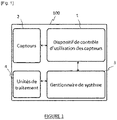
- the figure 1 shows a multi-sensor system 100 according to embodiments of the invention.
- the multi-sensor system 100 comprises a set of sensors 2, each sensor 2 being configured to take measurements and to output these measurements to the multi-sensor system 100.
- the multi-sensor system 100 is configured to implement a set of functions (also called 'system functions').
- the system functions can for example be a service provided by the multi-sensor system 100.
- the multi-sensor system 100 can be any type of system embedding a plurality of sensors 2 (at least two sensors) and using the data recorded by the sensors 2 to execute system functions.
- the multi-sensor system 100 can evolve in dynamic environments.
- the multi-sensor system 100 can be mobile or static.
- the sensors 2 of the multi-sensor system 100 can comprise a set of P heterogeneous sensors (sensors of different types) or homogeneous (of the same type).
- the multi-sensor system 100 can include RADAR, LIDAR, Camera sensors.
- the multi-sensor system 100 can be, for example, and without limitation, an aerial system (aircraft), an airborne system (drone), an aeronautical or space system, a naval system (surface vessel), an underwater system, an automated or semi-automated vehicle, etc.
- an aerial system aircraft
- an airborne system drone
- an aeronautical or space system a naval system (surface vessel)
- naval system surface vessel
- underwater system an automated or semi-automated vehicle, etc.
- the multi-sensor system 100 can be a system comprising subsystems of different types (for example an airborne system, a land system and a naval system), such as a collaborative system.
- the multi-sensor system 100 advantageously comprises a sensor use control device 1 configured to control the use of the sensors 2 of the multi-sensor system 100.
- the control device 1 is configured to dynamically and in real time select the sensors 2 to be used in response to a request for sensor resources (also called hereinafter “operational request” or request) from among the sensors 2 available.
- the operational request is associated with at least one system function (requested system function).
- the operational request includes a parameter indicating a type of function of the multi-sensor system.
- the operational request further includes at least one quality metric.
- the operational request represents a system function execution request (for example, detection function request) requiring data from sensors of the system 100.
- the multi-sensor system 100 can comprise a system manager 3 configured to request the use of the sensors 2 of the system, by using the sensor(s) selection information determined by the control device 1.
- the system manager 3 can in particular control the execution of the function associated with the operational request received using the information supplied by the sensor use control device 1 .
- the system manager 3 can thus launch the execution of the function associated with the operational request from the data measured by the sensors selected by the control device 1.
- the system functions implemented by the multi-sensor system 100 can include various functions of the system 100, such as, for example and without limitation, functions dedicated to the proper operation of the system (driving function), functions intended to guarantee safety of the system (control function) or functions relating to system missions (for example, object detection function).
- the system functions can be executed by one or more processing units, using the data returned by the sensors selected by the control device 1.
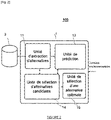
- the picture 2 is a diagram representing the sensor usage control device 1 according to certain embodiments.
- the control device 1 comprises a sensor use alternatives extraction unit 11 configured to extract a set of sensor use alternatives from a database 3 storing a set of alternatives, in response to receiving an operational request ('request') indicating a type of system function and at least one quality metric.
- the alternatives database 3 can be stored in the system 100 from information received from external sources or predetermined by the control device 1.
- the database of alternatives 3 can store a library of alternatives, pre-established, specific to the system 100 and to the various sensors 2 that it embeds.
- the alternatives library can be reused when the system 100 is operational, regardless of the functions performed by the system 100, without it being necessary to modify it.
- the alternatives database 3 may be dynamically updated taking into account data collected during the operation of the system 100.
- an alternative for using sensors thus corresponds to a set of sensors comprising at least one sensor and comprises, for each sensor of the set of sensors, the rate n and the duration d.
- An alternative of sensors thus designates a combination of sensors 2 that can be used for the implementation of the system function, at the load rate n and for the duration d associated with each sensor.
- the control device 1 thus makes it possible to determine an alternative of sensors to be used for the implementation of the system function, the system function then being executed using the data from the sensors of the selected alternative, each sensor 2 being used at charge rate n and for the duration d associated.
- Duration d can be defined from a date t (duration of use of the set of sensors from date t).
- the extraction unit 11 is configured to extract the alternative uses of sensors associated with the system function indicated in the operational request.
- the control device 1 further comprises a prediction unit 12 comprising a set of sensor performance models 120, each sensor performance model being associated with a sensor.
- the prediction unit 12 is configured to apply to each sensor alternative and, for each sensor associated with the alternative, the sensor performance model 120 corresponding to the sensor.
- the sensor performance model associated with a sensor is configured to provide, for a utilization rate and a duration of the sensor, a predicted value for each quality metric specified in the operational request. The value predicted corresponds to the estimated value of the quality metric for use of the sensor at the rate of use and for the duration associated with the sensor in the alternative.
- the prediction unit 12 can thus provide for an extracted sensor use alternative and, for each sensor of the sensor alternative, a predicted value for each quality metric specified in the operational request.
- the prediction unit 12 may comprise a calculation module 121 configured to calculate, for each sensor use alternative extracted, an overall predicted value for each quality metric specified in the operational request or information indicating the impossibility of using the alternative, from the predicted values of the quality metrics determined for the different sensors of the sensor alternative.
- the performance prediction unit 12 thus makes it possible to estimate, thanks to the performance models of the various sensors 2 of the system 100, what will be the results obtained by the sensors 2 during the execution of the system function requested in the application. operational.
- a sensor of an alternative use of sensors can include a fixed value for the utilization rate n associated with it and/or for the duration d associated with it.
- a sensor of an alternative use of sensors can comprise a range of values for the rate of use n associated with it and/or for the duration d associated with it.
- the prediction unit 12 can be configured to select beforehand, for the sensor, a fixed value in the range of values defined for the rate of use and/or for the duration associated with the sensor before the determining predicted values of quality metrics for the sensor.
- the sensor use control device 1 also comprises a candidate alternative selection unit 14 configured to select at least some of the extracted sensor use alternatives according to the predicted values of the quality metrics for the sensors of each alternative.
- the candidate alternative selection unit 14 can for example be configured to select L alternatives among all the sensor alternatives (L ⁇ P with P denoting the total number of alternatives preselected by the extraction unit).
- the selected candidate alternatives may be delivered to the system manager 3.
- the system manager may generate a display of the selected candidate alternatives to a system operator 100 who will select one of the candidate alternatives and command execution of the requested system function. in the operational request using the sensors of the selected alternative, each at the associated utilization rate and duration of use.
- the control device can comprise an optimal alternative selection unit 15 configured to select an optimal alternative from among one of the candidate alternatives according to one or more selection criteria.
- the sensor use control device 1 thus makes it possible to determine the best alternative of sensors to be used to meet the operational demand from the predictions of values of the quality metrics.
- the quality metrics indicated in the operational request may include one or more quality metrics corresponding to the quality metrics to be met to meet the operational request (quality metrics to be met in response to the execution of the system function).
- Each quality metric specified in the operational request can be associated with a target value or a range of values representing the minimum values that must be reached by the quality metrics, in response to the execution of the system function.
- the quality metrics can for example comprise a precision metric, a speed of result metric, a covered area metric, and /or a stealth metric.
- the operational request may further include a priority level associated with each quality metric.
- the priority level associated with each quality metric can be predetermined using a priority selection table.
- the sensor use control device 1 can comprise a priority selection table associating, for each function of the system, a level priority to each quality metric, the device being configured to determine the priority level of each quality metric from the priority selection table, for the system function specified in the request.
- the sensor usage control device 1 can be configured to convert the value or each extreme value of the range of values associated with each quality metric into a value having a target format, using a table conversion specific to the type of system function indicated in the operational request.
- a conversion makes it possible, for example, to convert the values of the precision metrics into trivialized values. For example, for a type of requested system function corresponding to air detection tracking, a detection accuracy metric of 100 meters specified in the operational request can be transformed into a value equal to 3/5 for the accuracy metric (the precision metric is thus set to the value 3/5).
- the Figure 3A represents an example of implementation of the device for controlling the use of sensors according to certain embodiments.
- Each performance model 120 is specific to the sensor 2 associated with it.
- Each sensor performance model 120 may be a model generated using one or more learning-based artificial intelligence techniques to train the model on real performance data (e.g. techniques based on trained neural networks) .
- the actual data may include quality metric values actually obtained by the system to perform the system functions using each sensor.
- each sensor performance model 120 can be an expert model, built by an expert from his expertise, without learning.
- Performance models can be used without limitation regardless of the mode of operation or missions performed by the System 100.
- Sensor performance models 120 may be generated offline or, alternatively, dynamically, during use of the sensor usage monitor, depending on the application of the invention.
- the performance model thus makes it possible to project the alternatives extracted by the extraction unit 11 onto the environment data 6 of the multi-sensor system 100.
- the performance models 120 can be updated using the learned data by the system 100 during its operation.
- the prediction module 102 can be further configured to transform the extracted alternatives into transformed alternatives, using the performance models to select a value within the range of values of the utilization rate and/or the duration associated with the sensor in the corresponding alternative, if such parameters do not have a fixed value and transforming the extracted alternative into a transformed alternative comprising for said sensor the value selected in the range of values.
- the performance of each of the sensors 2 can thus be estimated via the associated sensor performance model 120, by applying the state of the environment in which the system 100 operates (for example, weather, tactical situation, jamming , ).
- the performance prediction made by the prediction unit is made along T axes corresponding to the T quality metrics specified in the operational request.
- the calculation module 121 makes it possible to synthesize an overall performance prediction made for each alternative on the same T axes by using a feedback logic of the results obtained by each of the sensors 2 of the alternative.
- the calculation module 121 of the prediction unit 12 is configured to determine an overall performance prediction made for each alternative corresponding to a set of overall predicted values for the various quality metrics specified in the operational request, the overall predicted value d a quality metric being calculated from the predicted values for the different quality metrics for each sensor 2 of the alternative.
- the calculation module thus implements a calculation formula providing the overall predicted value of a quality metric for a given alternative as a function of the predicted values of the metric for the various sensors 2 associated with the alternative.
- the calculation formula implemented can be a function of other parameters related to the system 100, to the system function requested in the operational request, and/or to the type of sensors of the alternative.
- each quality metric specified in the operational request will be denoted M i (1 ⁇ i ⁇ T), with T corresponding to the total number of quality metrics specified in the operational request.
- the target value of each quality metric M i specified in the operational request will be denoted Target Vi .
- the calculation module 121 of the prediction unit can also take into account the relative positions of each sensor in the system 100 and an estimate of the position of the target.
- the calculation module 121 of the prediction unit 12 can implement a more complex calculation from the predicted values ⁇ ij for the different quality metrics for each C 1 sensor 1 and C1 2 of the alternative A 1 , relative positions of each sensor C 1 1 and C1 2 , and the estimation of the position of the target.
- the candidate alternatives selection unit 14 can then implement a prior filtering to select all the alternatives A k which have for each metric of quality M i a global predicted value Vi k which satisfies the target value Vi target of the metric of specified quality (minimum value to be satisfied) in the operational request, i.e. V ik ⁇ Vi target .
- the sensor use control device 1 can comprise an alternative weight calculation unit (also called “utility score”) 16 configured to calculate the weight w k of each alternative A k of sensors extracted by the extraction unit 11 on the system 100.
- the weight w k of an alternative A k represents the operational utility associated with the alternative, that is to say the level of added value which will be provided to system 100 if this alternative is chosen for the implementation of the requested system function.
- the weight of an alternative is between a minimum weight value and a maximum weight value.
- the weight of an alternative represents the operational utility weight of the alternative on system 100 for performing the system function, each at the associated utilization rate n and duration d , to meet the demand operational.
- the alternative weight calculation unit 16 can be configured to calculate the weight of an alternative of using sensors on the system 100 taking into account the priority levels associated with the quality metrics Mi specified in the operational request. .
- Equation (1) Pi denotes the priority level and Vi k denotes the global predicted value for each quality metric M i .
- the candidate alternatives selection unit 14 can be configured to select at least some of the alternatives according to the weights calculated for each alternative extracted.
- Priority levels associated with each of the four quality metrics including: a P1 priority associated with the Accuracy metric equal to 80%, a P2 priority associated with the Speed of result metric equal to 20%, a P3 priority associated with the Covered Area metric equal to 0%, a P4 priority associated with the Stealth metric equal to 0%.
- An Optronic tracking alternative associated with a single sensor of the Optronic sensor type, with for the optronic sensor: a utilization rate n 3 of 1% and a duration of utilization d 3 of 0.5 s.
- the prediction unit 12 can then determine, for each of the three alternatives, and for each of the sensors of each alternative, predicted values for the four quality metrics specified in the operational request obtained for each alternative extracted by the extraction unit 11.
- the prediction unit 12 can return a value indicating that the use of the alternative is impossible to achieve the minimum quality metrics (in this example, the implementation of the optronic tracking alternative is impossible because it is out of range of the sensor).
- the candidate alternative selection unit 14 selects the candidate alternatives according to the predicted values for the quality metrics, for each alternative and for each sensor of an alternative.
- the candidate alternative selection unit 14 can for example select the first and the second alternatives which have the predicted values of quality metrics that best meet the operational demand, namely the alternative of "Radar Tracking" and the alternative of "GE Tracking".
- the candidate alternative that maximizes the alternative weight is the radar tracking alternative (4.8>3).
- the candidate alternative selection unit 14 can thus select this single radar tracking alternative.
- the alternative candidate selection unit 14 would have selected the alternative of " Radar tracking” only.
- the operational request had specified a stealth metric having a target value equal to 2/5, the candidate alternative selection unit 14 would have selected only the "Tracking GE" alternative.
- the optimal alternative selection unit 15 may for example comprise an alternative impact determination module configured to determine an impact indicator for each candidate alternative selected by the alternative selection unit.
- candidate alternatives 14 the optimal alternative selection unit 15 then being configured to choose an optimal alternative from among the candidate alternatives on the basis of the impact indicator calculated for each candidate alternative.
- the impact indicator of an alternative represents the impact of the use of all the sensors of the alternative, each at the utilization rate n and for the duration d associated with the sensor in the sensor alternative, for respond to the system function specified in the request.
- the impact indicator of an alternative of sensors can be determined by calculating an elementary sensor impact indicator for each sensor of the alternative and by summing the different elementary impact indicators calculated for all the sensors of the alternative.
- the elemental impact indicator of a sensor can be determined by multiplying two or more factors relating to the duration of use of the sensor and/or the load of the sensor and/or the environment of the sensor, such as a sensor life factor, a sensor load factor and a sensor criticality factor.
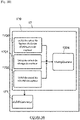
- the Figure 3B represents an impact indicator calculation unit 17 according to an exemplary embodiment.
- the impact indicator calculation unit 17 comprises an elementary impact indicator calculation unit 170 configured to calculate, for each alternative A k and for each sensor C j k of the alternative, an elementary impact indicator I jk representing the impact of the use of the sensor C j k of the alternative, at the utilization rate n and for the duration d associated with the sensor in the sensor alternative, to fulfill the system function specified in the request.
- the elementary impact indicator I jk of a sensor C j k thus represents a notation the impact of using n% of sensor C j k for d seconds on date t .
- the impact indicator calculation unit 17 may further comprise an adder 171 configured to add the elementary impact indicators I ik determined for all the sensors of the alternative, which provides the impact indicator I k of use of the alternative.
- N k designates the number of sensors C j k of the alternative A k .
- the elementary impact indicator calculation unit 170 is configured to calculate, for each sensor C j k of an alternative A k (1 ⁇ j ⁇ N k ) at least two factors relating to the use of the sensor C j k from the duration d associated with the sensor and/or the load rate n associated with the sensor.
- the calculation unit further comprises a multiplier 1704 configured to calculate the product of the factors relating to the use of the sensor C j k , which provides the elementary impact indicator I jk of the sensor.
- the elementary impact indicator calculation unit 170 comprises a service life factor calculation unit 1700 configured to calculate a sensor service life factor ⁇ ( d ) at from the duration of use d associated with the sensor in the alternative.
- the sensor life factor ⁇ ( d ) represents the impact of using a sensor C j k of the alternative A k during the duration d.
- the time-of-use factor can be considered linear.
- the constant K can be identical for all the sensors C j k of the alternative A k . In one embodiment, the constant K can be identical for all the sensors 2 of the system 100.
- the elementary impact indicator calculation unit 170 may further comprise a sensor load factor calculation unit 1701 configured to calculate a load factor of the sensor F ( n, C ) from a coefficient of load C of the sensor and the utilization rate n associated with sensor C j k in the alternative.
- the load factor C of the sensor has the same unit as the load rate of the sensor. It can be expressed as a percentage.
- the load factor C of the sensor thus represents the load of the sensor ( C %) before the use of the n %.
- the load factor of the sensor F ( n, C ) thus represents the impact of the use of the n % of the sensor C j k depending on the collector load ( C %).
- the load factor of the sensor F ( n, C ) thus depends on the load rate of the sensor n associated with the sensor in the alternative A k and on the load of the sensor ( C %) before the use of the n %.
- the load factor of the sensor F ( n, C ) thus makes it possible to take into account the fact that the less a sensor has available bandwidth, the less it is likely to be able to meet future operational demands. For example, in an extreme case, if a given sensor no longer has available bandwidth, system 100 will be unable to meet operational demands for which all alternatives need that particular sensor.
- a coefficient coef( x ) is given to each value of the load x of a sensor, with x lying between a minimum load value (for example 0) and a maximum load value (for example 100) of a sensor, coef( x ) being an increasing function when x is increasing.
- the load factor F ( n, C ) can thus be used as a multiplication factor for the consumption of n % of a sensor loaded at C %.
- the elementary impact indicator calculation unit 170 can further comprise a sensor criticality calculation unit 1702 configured to calculate a sensor criticality factor f crit representing a predicted value of the criticality C j k of the sensor on date t according to the state of the environment of the sensor on date t.
- the calculation implemented by the sensor criticality calculation unit 1702 to determine the criticality factor f crit of a sensor of the sensor C j k depends on the type of sensor, the prediction of the criticality of the sensor at the date t of the sensor is specific to each sensor.
- the calculation implemented by the sensor criticality calculation unit 1702 may be based on a sensor environment analysis technique implemented using one or more sensor environment analysis algorithms.
- the calculation implemented by the sensor criticality calculation unit 1702 to determine the criticality factor f crit of a sensor of the sensor C j k depends on the type of sensor, the forecast of the criticality of the sensor at the date t of the sensor being specific to each sensor.
- the sensor criticality factor f crit can be calculated using a technique for analyzing the environment of the sensor estimated at date t.
- the criticality factor of a sensor represents a probability of use of the resource given the state of the environment at time t.
- the criticality factor of the sensor is a value between a minimum criticality value (for example close to 0) indicating that the sensor C j k is an optional resource and a maximum criticality value (for example 100) indicating that the sensor C j k represents a necessary resource.
- the higher the criticality factor the more probable the use of the resource.
- the use of resources of lower criticality can be favored, when the choice is possible to meet an operational demand.
- the analysis technique thus makes it possible to estimate between the minimum criticality value and the maximum criticality value at what point the sensor will be critical in the environment of the sensor estimated at date t.
- the analysis technique used to estimate the criticality factor of a sensor C j k can be based on Boolean logic or an artificial intelligence-based technique (for example and without limitation a technique based on fuzzy logic or neural networks).
- the elementary impact calculation unit can then determine the elementary impact indicator I jk of the sensor C j k by performing the product of the service life factor ⁇ ( d ), the load factor of the sensor F ( n , C ), and the criticality factor ⁇ crit .
- the criticality factor thus provides a forecast of the criticality of the sensor C j k on date t depending on the environment in which it will evolve on this date.
- the optimal alternative selection unit 15 may apply other criteria for selecting the candidate alternatives.
- the optimal alternative selection unit 15 can be replaced by a recommendation generation unit configured to generate recommendations of sensor alternatives to be used on a graphical interface, from the candidate alternatives, an operator being able to select one of the candidate alternatives depending on the information displayed.
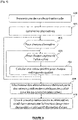
- the figure 4 is a flowchart showing the method of controlling use of sensors according to embodiments.
- an operational request is received, the operational request including a type of system function to be performed, at least one metric quality, each quality metric being associated with a target value (minimum value of the quality metric to be satisfied when implementing the system function).
- the operational request represents a system function execution request (for example, detection function request) requiring data from sensors.
- sensor alternatives are retrieved from the sensor database.
- step 404 for each alternative (block 401) and for each sensor of the alternative (block 403), values are predicted for each quality metric specified in the operational request.
- Step 406 a set of candidate alternatives are selected from the predicted values of the T quality metrics for the different sensors of the alternatives.
- Step 406 may comprise, for each alternative, a global predicted value calculation for each quality metric from the predicted values for the quality metric for the sensors of the alternative, the selection of the candidate alternatives being carried out from the global predicted values of the T quality metrics obtained for each alternative.
- Step 406 can further comprise filtering the alternatives which do not satisfy the target values of the quality metrics by comparing for each alternative A k and for each quality metric M i , the global predicted value Vi k obtained for the metric of quality Mi to the target value of the quality metric Vi target .
- step 406 may comprise a step of calculating the utility weight of each alternative from the global predicted values Vi k obtained for the different metrics for the alternative A k and associated priority levels Pi to each metric Mi.
- the selection of the candidate alternatives is then carried out according to the utility weights associated with each quality metric, after the filtering step.
- selecting candidate alternatives may include selecting alternatives that maximize utility weight among the filtered alternatives.
- an alternative from the selected candidate alternatives is chosen and the system function requested in the operational request is implemented using the sensor data associated with the chosen alternative.
- the embodiments of the invention thus make it possible to transform an operational request into a set of alternatives for using the sensors of the system making it possible to respond to the request and to select a list of candidate alternatives according to the utility (or added value) brought to the system by each alternative.
- the embodiments of the invention provide a sensor resource control device and method capable of optimizing the use of the sensor resources of the multi-sensor system. They make it possible to adjust dynamically and in real time the use of the sensor resources by the system among the available sensor resources. They thus make it possible to provide an optimized response to operational requests for sensor resources, while retaining the possibility of responding as best as possible to subsequent requests for sensor resources that may be received.
- the sensor resources of the system 100 can thus be optimized so as to guarantee that it can respond as best as possible to the operational requests it has received, while retaining the possibility of responding as best as possible to the requests that it has received. he could receive.
- the system 100 can thus itself orchestrate the use of the various sensors, in a dynamic manner.
- the device for controlling the use of the sensors 1 or the subsystems of the device 1 can be implemented in various ways by hardware (“hardware”), software, or a combination of hardware and software, especially in the form of program code that can be distributed as a program product, in various forms.
- the program code may be distributed using computer readable media, which may include computer readable storage media and communication media.
- the methods described in the present description can in particular be implemented in the form of computer program instructions executable by one or more processors in a computer computing device. These computer program instructions may also be stored in a computer readable medium.
- the invention is not limited to the embodiments described above by way of non-limiting example. It encompasses all the variant embodiments which may be envisaged by those skilled in the art.
- the invention is not limited to the multi-sensor systems 100 cited in the description by way of non-limiting example.
- the invention is not limited either to the calculation formulas implemented by the calculation module 121 data or to the quality metrics also cited by way of non-limiting example in the description.
Landscapes
- Engineering & Computer Science (AREA)
- Radar, Positioning & Navigation (AREA)
- Remote Sensing (AREA)
- Computer Networks & Wireless Communication (AREA)
- Physics & Mathematics (AREA)
- General Physics & Mathematics (AREA)
- Testing Or Calibration Of Command Recording Devices (AREA)
- Testing And Monitoring For Control Systems (AREA)
- Radar Systems Or Details Thereof (AREA)
Applications Claiming Priority (1)
| Application Number | Priority Date | Filing Date | Title |
|---|---|---|---|
| FR2106107A FR3123993B1 (fr) | 2021-06-10 | 2021-06-10 | Procédé et dispositif de sélection des ressources capteurs d'un système multi-capteur |
Publications (2)
| Publication Number | Publication Date |
|---|---|
| EP4102253A1 true EP4102253A1 (de) | 2022-12-14 |
| EP4102253B1 EP4102253B1 (de) | 2023-12-06 |
Family
ID=78827808
Family Applications (1)
| Application Number | Title | Priority Date | Filing Date |
|---|---|---|---|
| EP22178508.2A Active EP4102253B1 (de) | 2021-06-10 | 2022-06-10 | Verfahren und vorrichtung zur auswahl von sensorressourcen eines multisensorsystems |
Country Status (3)
| Country | Link |
|---|---|
| EP (1) | EP4102253B1 (de) |
| ES (1) | ES2974925T3 (de) |
| FR (1) | FR3123993B1 (de) |
Cited By (1)
| Publication number | Priority date | Publication date | Assignee | Title |
|---|---|---|---|---|
| EP4567687A1 (de) * | 2023-12-06 | 2025-06-11 | ATOS France | Verfahren, vorrichtung und computersystem zur verwaltung von modellen künstlicher intelligenz zur vorhersage von sensormessungen |
-
2021
- 2021-06-10 FR FR2106107A patent/FR3123993B1/fr not_active Expired - Fee Related
-
2022
- 2022-06-10 EP EP22178508.2A patent/EP4102253B1/de active Active
- 2022-06-10 ES ES22178508T patent/ES2974925T3/es active Active
Non-Patent Citations (5)
| Title |
|---|
| "Novel Radar Techniques and Applications Volume 2: Waveform Diversity and Cognitive Radar, and Target Tracking and Data Fusion", 1 October 2017 (2017-10-01), pages 157 - 193, XP055896219, ISBN: 978-1-61353-228-7, Retrieved from the Internet <URL:https://www.researchgate.net/profile/Alexander-Charlish/publication/319880866_Cognitive_Radar_Management/links/5b0d0061aca2725783ec63ba/Cognitive-Radar-Management.pdf> DOI: 10.1049/SBRA512G_ch5 * |
| DE FREITAS ALLAN ET AL: "Response Surface Modeling for Networked Radar Resource Allocation", 2018 21ST INTERNATIONAL CONFERENCE ON INFORMATION FUSION (FUSION), ISIF, 10 July 2018 (2018-07-10), pages 1 - 7, XP033398080, DOI: 10.23919/ICIF.2018.8455815 * |
| KLEMM, RICHARDGRIFFITHS, HUGHKOCH, WOLFGANG: "Waveform diversity and cognitive radar, and target tracking and data fusion", vol. 2, 2017, SCITECH PUBLISHING, article "Novel radar techniques and applications" |
| NARYKOV ALEXEY S ET AL: "Sensor selection algorithm for optimal management of the tracking capability in multisensor radar system", 2013 EUROPEAN RADAR CONFERENCE, EMA, 9 October 2013 (2013-10-09), pages 499 - 502, XP032533775 * |
| YANG FENG ET AL: "The design of a multi-sensor tracking and fusion algorithms test-bed", CONTROL CONFERENCE, 2008. CCC 2008. 27TH CHINESE, IEEE, PISCATAWAY, NJ, USA, 16 July 2008 (2008-07-16), pages 768 - 772, XP031311359, ISBN: 978-7-900719-70-6 * |
Cited By (1)
| Publication number | Priority date | Publication date | Assignee | Title |
|---|---|---|---|---|
| EP4567687A1 (de) * | 2023-12-06 | 2025-06-11 | ATOS France | Verfahren, vorrichtung und computersystem zur verwaltung von modellen künstlicher intelligenz zur vorhersage von sensormessungen |
Also Published As
| Publication number | Publication date |
|---|---|
| FR3123993B1 (fr) | 2023-06-16 |
| ES2974925T3 (es) | 2024-07-02 |
| FR3123993A1 (fr) | 2022-12-16 |
| EP4102253B1 (de) | 2023-12-06 |
Similar Documents
| Publication | Publication Date | Title |
|---|---|---|
| US8972306B2 (en) | System and method for sensor tasking | |
| EP4708201A2 (de) | Verbesserung generativer kontradiktorischer netzwerke unter verwendung kombinierter eingaben | |
| EP4066224A1 (de) | Entscheidungsunterstützungsvorrichtung und verfahren zum verwalten von luftkonflikten | |
| WO2022117875A1 (fr) | Système et procédé de contrôle de véhicule à base d'apprentissage machine | |
| US8201181B2 (en) | System and method for sensor scheduling using fuzzy cognitive maps | |
| EP3364213A1 (de) | Verfahren und system der kontextualiserten wahrnehmung von materiellen körpern | |
| JP2023014018A (ja) | コンピュータ実装方法、コンピュータプログラム、コンピュータシステム(機械学習ワークロードの展開の最適化) | |
| EP2991274A1 (de) | Verfahren zur ausführung von diensten in adaptiver echtzeit, insbesondere flugsteuerungsdienste, und echtzeitsystem zur umsetzung eines solchen verfahrens | |
| US20150254564A1 (en) | Smart process management | |
| EP4102253B1 (de) | Verfahren und vorrichtung zur auswahl von sensorressourcen eines multisensorsystems | |
| FR3079637A1 (fr) | Procede d'evaluation de la conformite d'un systeme de pistage a un ensemble d'exigences et dispositifs associes | |
| CN118982063A (zh) | 基于联邦学习的模型训练方法、系统及相关设备 | |
| EP3506201B1 (de) | Adaptives system und verfahren zur automatischen nachverfolgung mindestens eines ziels in mindestens einem videofluss | |
| EP4102366B1 (de) | Verfahren und vorrichtung zur optimierung von sensorressourcen eines multisensorsystems | |
| EP4321954A2 (de) | Verfahren und vorrichtung zur automatischen führung eines autonomen luftfahrzeugs | |
| WO2021122397A1 (fr) | Procédé et dispositif de supervision d'un système de pistage | |
| WO2002097763A1 (fr) | Dispositif electrique d'aide a la navigation et procede utilisant un tel dispositif | |
| EP3792124B1 (de) | Verfahren zur steuerung eines autonomen fahrzeugs, das eine diskretisierung der umgebungsdaten beinhaltet | |
| Grabis et al. | A Smart Winter Road Maintenance Platform to Balance Monitoring Accuracy and Cost | |
| EP4145173B1 (de) | Verfahren zur entscheidung und bewertung des interlacing einer vielzahl von radarmodes, entsprechendes computerprogramm und entsprechende vorrichtung | |
| EP4441636B1 (de) | Verfahren zur bewertung von vorhersageunsicherheiten in einem neuronalen netzwerk | |
| CN119734717B (zh) | 基于人机交互的驾驶策略选择方法、装置、设备及介质 | |
| EP4322061A1 (de) | Elektronische vorrichtung und datenverarbeitungsverfahren mit mindestens einem selbstadaptiven künstlichen intelligenzmodell mit lokalem lernen, elektronisches system und computerprogramm dafür | |
| EP4465242A1 (de) | Ein verfahren zur schätzung mindestens einer dimension eines von einer punktwolke dargestellten objekts | |
| Ingram et al. | Enhancing cognitive fusion for space situational awareness |
Legal Events
| Date | Code | Title | Description |
|---|---|---|---|
| PUAI | Public reference made under article 153(3) epc to a published international application that has entered the european phase |
Free format text: ORIGINAL CODE: 0009012 |
|
| STAA | Information on the status of an ep patent application or granted ep patent |
Free format text: STATUS: THE APPLICATION HAS BEEN PUBLISHED |
|
| AK | Designated contracting states |
Kind code of ref document: A1 Designated state(s): AL AT BE BG CH CY CZ DE DK EE ES FI FR GB GR HR HU IE IS IT LI LT LU LV MC MK MT NL NO PL PT RO RS SE SI SK SM TR |
|
| STAA | Information on the status of an ep patent application or granted ep patent |
Free format text: STATUS: REQUEST FOR EXAMINATION WAS MADE |
|
| 17P | Request for examination filed |
Effective date: 20230321 |
|
| RBV | Designated contracting states (corrected) |
Designated state(s): AL AT BE BG CH CY CZ DE DK EE ES FI FR GB GR HR HU IE IS IT LI LT LU LV MC MK MT NL NO PL PT RO RS SE SI SK SM TR |
|
| P01 | Opt-out of the competence of the unified patent court (upc) registered |
Effective date: 20230427 |
|
| GRAP | Despatch of communication of intention to grant a patent |
Free format text: ORIGINAL CODE: EPIDOSNIGR1 |
|
| STAA | Information on the status of an ep patent application or granted ep patent |
Free format text: STATUS: GRANT OF PATENT IS INTENDED |
|
| RIC1 | Information provided on ipc code assigned before grant |
Ipc: G01S 13/87 20060101ALI20230706BHEP Ipc: G01S 13/72 20060101ALI20230706BHEP Ipc: G01S 13/86 20060101AFI20230706BHEP |
|
| INTG | Intention to grant announced |
Effective date: 20230726 |
|
| GRAS | Grant fee paid |
Free format text: ORIGINAL CODE: EPIDOSNIGR3 |
|
| GRAA | (expected) grant |
Free format text: ORIGINAL CODE: 0009210 |
|
| STAA | Information on the status of an ep patent application or granted ep patent |
Free format text: STATUS: THE PATENT HAS BEEN GRANTED |
|
| AK | Designated contracting states |
Kind code of ref document: B1 Designated state(s): AL AT BE BG CH CY CZ DE DK EE ES FI FR GB GR HR HU IE IS IT LI LT LU LV MC MK MT NL NO PL PT RO RS SE SI SK SM TR |
|
| RAP3 | Party data changed (applicant data changed or rights of an application transferred) |
Owner name: THALES |
|
| REG | Reference to a national code |
Ref country code: GB Ref legal event code: FG4D Free format text: NOT ENGLISH |
|
| REG | Reference to a national code |
Ref country code: CH Ref legal event code: EP |
|
| REG | Reference to a national code |
Ref country code: DE Ref legal event code: R096 Ref document number: 602022001217 Country of ref document: DE |
|
| REG | Reference to a national code |
Ref country code: IE Ref legal event code: FG4D Free format text: LANGUAGE OF EP DOCUMENT: FRENCH |
|
| REG | Reference to a national code |
Ref country code: LT Ref legal event code: MG9D |
|
| PG25 | Lapsed in a contracting state [announced via postgrant information from national office to epo] |
Ref country code: GR Free format text: LAPSE BECAUSE OF FAILURE TO SUBMIT A TRANSLATION OF THE DESCRIPTION OR TO PAY THE FEE WITHIN THE PRESCRIBED TIME-LIMIT Effective date: 20240307 |
|
| REG | Reference to a national code |
Ref country code: NL Ref legal event code: MP Effective date: 20231206 |
|
| PG25 | Lapsed in a contracting state [announced via postgrant information from national office to epo] |
Ref country code: LT Free format text: LAPSE BECAUSE OF FAILURE TO SUBMIT A TRANSLATION OF THE DESCRIPTION OR TO PAY THE FEE WITHIN THE PRESCRIBED TIME-LIMIT Effective date: 20231206 |
|
| PG25 | Lapsed in a contracting state [announced via postgrant information from national office to epo] |
Ref country code: LT Free format text: LAPSE BECAUSE OF FAILURE TO SUBMIT A TRANSLATION OF THE DESCRIPTION OR TO PAY THE FEE WITHIN THE PRESCRIBED TIME-LIMIT Effective date: 20231206 Ref country code: GR Free format text: LAPSE BECAUSE OF FAILURE TO SUBMIT A TRANSLATION OF THE DESCRIPTION OR TO PAY THE FEE WITHIN THE PRESCRIBED TIME-LIMIT Effective date: 20240307 Ref country code: BG Free format text: LAPSE BECAUSE OF FAILURE TO SUBMIT A TRANSLATION OF THE DESCRIPTION OR TO PAY THE FEE WITHIN THE PRESCRIBED TIME-LIMIT Effective date: 20240306 |
|
| REG | Reference to a national code |
Ref country code: AT Ref legal event code: MK05 Ref document number: 1638914 Country of ref document: AT Kind code of ref document: T Effective date: 20231206 |
|
| PG25 | Lapsed in a contracting state [announced via postgrant information from national office to epo] |
Ref country code: NL Free format text: LAPSE BECAUSE OF FAILURE TO SUBMIT A TRANSLATION OF THE DESCRIPTION OR TO PAY THE FEE WITHIN THE PRESCRIBED TIME-LIMIT Effective date: 20231206 |
|
| PG25 | Lapsed in a contracting state [announced via postgrant information from national office to epo] |
Ref country code: SE Free format text: LAPSE BECAUSE OF FAILURE TO SUBMIT A TRANSLATION OF THE DESCRIPTION OR TO PAY THE FEE WITHIN THE PRESCRIBED TIME-LIMIT Effective date: 20231206 Ref country code: RS Free format text: LAPSE BECAUSE OF FAILURE TO SUBMIT A TRANSLATION OF THE DESCRIPTION OR TO PAY THE FEE WITHIN THE PRESCRIBED TIME-LIMIT Effective date: 20231206 Ref country code: NO Free format text: LAPSE BECAUSE OF FAILURE TO SUBMIT A TRANSLATION OF THE DESCRIPTION OR TO PAY THE FEE WITHIN THE PRESCRIBED TIME-LIMIT Effective date: 20240306 Ref country code: NL Free format text: LAPSE BECAUSE OF FAILURE TO SUBMIT A TRANSLATION OF THE DESCRIPTION OR TO PAY THE FEE WITHIN THE PRESCRIBED TIME-LIMIT Effective date: 20231206 Ref country code: LV Free format text: LAPSE BECAUSE OF FAILURE TO SUBMIT A TRANSLATION OF THE DESCRIPTION OR TO PAY THE FEE WITHIN THE PRESCRIBED TIME-LIMIT Effective date: 20231206 Ref country code: HR Free format text: LAPSE BECAUSE OF FAILURE TO SUBMIT A TRANSLATION OF THE DESCRIPTION OR TO PAY THE FEE WITHIN THE PRESCRIBED TIME-LIMIT Effective date: 20231206 |
|
| PG25 | Lapsed in a contracting state [announced via postgrant information from national office to epo] |
Ref country code: IS Free format text: LAPSE BECAUSE OF FAILURE TO SUBMIT A TRANSLATION OF THE DESCRIPTION OR TO PAY THE FEE WITHIN THE PRESCRIBED TIME-LIMIT Effective date: 20240406 |
|
| REG | Reference to a national code |
Ref country code: ES Ref legal event code: FG2A Ref document number: 2974925 Country of ref document: ES Kind code of ref document: T3 Effective date: 20240702 |
|
| PG25 | Lapsed in a contracting state [announced via postgrant information from national office to epo] |
Ref country code: CZ Free format text: LAPSE BECAUSE OF FAILURE TO SUBMIT A TRANSLATION OF THE DESCRIPTION OR TO PAY THE FEE WITHIN THE PRESCRIBED TIME-LIMIT Effective date: 20231206 Ref country code: AT Free format text: LAPSE BECAUSE OF FAILURE TO SUBMIT A TRANSLATION OF THE DESCRIPTION OR TO PAY THE FEE WITHIN THE PRESCRIBED TIME-LIMIT Effective date: 20231206 |
|
| PG25 | Lapsed in a contracting state [announced via postgrant information from national office to epo] |
Ref country code: SK Free format text: LAPSE BECAUSE OF FAILURE TO SUBMIT A TRANSLATION OF THE DESCRIPTION OR TO PAY THE FEE WITHIN THE PRESCRIBED TIME-LIMIT Effective date: 20231206 |
|
| PG25 | Lapsed in a contracting state [announced via postgrant information from national office to epo] |
Ref country code: SM Free format text: LAPSE BECAUSE OF FAILURE TO SUBMIT A TRANSLATION OF THE DESCRIPTION OR TO PAY THE FEE WITHIN THE PRESCRIBED TIME-LIMIT Effective date: 20231206 Ref country code: SK Free format text: LAPSE BECAUSE OF FAILURE TO SUBMIT A TRANSLATION OF THE DESCRIPTION OR TO PAY THE FEE WITHIN THE PRESCRIBED TIME-LIMIT Effective date: 20231206 Ref country code: RO Free format text: LAPSE BECAUSE OF FAILURE TO SUBMIT A TRANSLATION OF THE DESCRIPTION OR TO PAY THE FEE WITHIN THE PRESCRIBED TIME-LIMIT Effective date: 20231206 Ref country code: IS Free format text: LAPSE BECAUSE OF FAILURE TO SUBMIT A TRANSLATION OF THE DESCRIPTION OR TO PAY THE FEE WITHIN THE PRESCRIBED TIME-LIMIT Effective date: 20240406 Ref country code: EE Free format text: LAPSE BECAUSE OF FAILURE TO SUBMIT A TRANSLATION OF THE DESCRIPTION OR TO PAY THE FEE WITHIN THE PRESCRIBED TIME-LIMIT Effective date: 20231206 Ref country code: CZ Free format text: LAPSE BECAUSE OF FAILURE TO SUBMIT A TRANSLATION OF THE DESCRIPTION OR TO PAY THE FEE WITHIN THE PRESCRIBED TIME-LIMIT Effective date: 20231206 Ref country code: AT Free format text: LAPSE BECAUSE OF FAILURE TO SUBMIT A TRANSLATION OF THE DESCRIPTION OR TO PAY THE FEE WITHIN THE PRESCRIBED TIME-LIMIT Effective date: 20231206 |
|
| PG25 | Lapsed in a contracting state [announced via postgrant information from national office to epo] |
Ref country code: PL Free format text: LAPSE BECAUSE OF FAILURE TO SUBMIT A TRANSLATION OF THE DESCRIPTION OR TO PAY THE FEE WITHIN THE PRESCRIBED TIME-LIMIT Effective date: 20231206 Ref country code: PT Free format text: LAPSE BECAUSE OF FAILURE TO SUBMIT A TRANSLATION OF THE DESCRIPTION OR TO PAY THE FEE WITHIN THE PRESCRIBED TIME-LIMIT Effective date: 20240408 |
|
| PG25 | Lapsed in a contracting state [announced via postgrant information from national office to epo] |
Ref country code: PT Free format text: LAPSE BECAUSE OF FAILURE TO SUBMIT A TRANSLATION OF THE DESCRIPTION OR TO PAY THE FEE WITHIN THE PRESCRIBED TIME-LIMIT Effective date: 20240408 Ref country code: PL Free format text: LAPSE BECAUSE OF FAILURE TO SUBMIT A TRANSLATION OF THE DESCRIPTION OR TO PAY THE FEE WITHIN THE PRESCRIBED TIME-LIMIT Effective date: 20231206 |
|
| REG | Reference to a national code |
Ref country code: DE Ref legal event code: R097 Ref document number: 602022001217 Country of ref document: DE |
|
| PG25 | Lapsed in a contracting state [announced via postgrant information from national office to epo] |
Ref country code: DK Free format text: LAPSE BECAUSE OF FAILURE TO SUBMIT A TRANSLATION OF THE DESCRIPTION OR TO PAY THE FEE WITHIN THE PRESCRIBED TIME-LIMIT Effective date: 20231206 |
|
| PLBE | No opposition filed within time limit |
Free format text: ORIGINAL CODE: 0009261 |
|
| STAA | Information on the status of an ep patent application or granted ep patent |
Free format text: STATUS: NO OPPOSITION FILED WITHIN TIME LIMIT |
|
| PG25 | Lapsed in a contracting state [announced via postgrant information from national office to epo] |
Ref country code: SI Free format text: LAPSE BECAUSE OF FAILURE TO SUBMIT A TRANSLATION OF THE DESCRIPTION OR TO PAY THE FEE WITHIN THE PRESCRIBED TIME-LIMIT Effective date: 20231206 |
|
| PG25 | Lapsed in a contracting state [announced via postgrant information from national office to epo] |
Ref country code: SI Free format text: LAPSE BECAUSE OF FAILURE TO SUBMIT A TRANSLATION OF THE DESCRIPTION OR TO PAY THE FEE WITHIN THE PRESCRIBED TIME-LIMIT Effective date: 20231206 Ref country code: DK Free format text: LAPSE BECAUSE OF FAILURE TO SUBMIT A TRANSLATION OF THE DESCRIPTION OR TO PAY THE FEE WITHIN THE PRESCRIBED TIME-LIMIT Effective date: 20231206 |
|
| 26N | No opposition filed |
Effective date: 20240909 |
|
| PG25 | Lapsed in a contracting state [announced via postgrant information from national office to epo] |
Ref country code: MC Free format text: LAPSE BECAUSE OF FAILURE TO SUBMIT A TRANSLATION OF THE DESCRIPTION OR TO PAY THE FEE WITHIN THE PRESCRIBED TIME-LIMIT Effective date: 20231206 |
|
| PG25 | Lapsed in a contracting state [announced via postgrant information from national office to epo] |
Ref country code: LU Free format text: LAPSE BECAUSE OF NON-PAYMENT OF DUE FEES Effective date: 20240610 |
|
| PG25 | Lapsed in a contracting state [announced via postgrant information from national office to epo] |
Ref country code: IE Free format text: LAPSE BECAUSE OF NON-PAYMENT OF DUE FEES Effective date: 20240610 |
|
| PG25 | Lapsed in a contracting state [announced via postgrant information from national office to epo] |
Ref country code: BE Free format text: LAPSE BECAUSE OF NON-PAYMENT OF DUE FEES Effective date: 20240630 |
|
| REG | Reference to a national code |
Ref country code: BE Ref legal event code: MM Effective date: 20240630 |
|
| PGFP | Annual fee paid to national office [announced via postgrant information from national office to epo] |
Ref country code: DE Payment date: 20250514 Year of fee payment: 4 |
|
| PGFP | Annual fee paid to national office [announced via postgrant information from national office to epo] |
Ref country code: FR Payment date: 20250523 Year of fee payment: 4 |
|
| PG25 | Lapsed in a contracting state [announced via postgrant information from national office to epo] |
Ref country code: FI Free format text: LAPSE BECAUSE OF FAILURE TO SUBMIT A TRANSLATION OF THE DESCRIPTION OR TO PAY THE FEE WITHIN THE PRESCRIBED TIME-LIMIT Effective date: 20231207 |
|
| PGFP | Annual fee paid to national office [announced via postgrant information from national office to epo] |
Ref country code: ES Payment date: 20250703 Year of fee payment: 4 |
|
| PGFP | Annual fee paid to national office [announced via postgrant information from national office to epo] |
Ref country code: IT Payment date: 20250630 Year of fee payment: 4 |
|
| PG25 | Lapsed in a contracting state [announced via postgrant information from national office to epo] |
Ref country code: CY Free format text: LAPSE BECAUSE OF FAILURE TO SUBMIT A TRANSLATION OF THE DESCRIPTION OR TO PAY THE FEE WITHIN THE PRESCRIBED TIME-LIMIT; INVALID AB INITIO Effective date: 20220610 |
|
| REG | Reference to a national code |
Ref country code: CH Ref legal event code: H13 Free format text: ST27 STATUS EVENT CODE: U-0-0-H10-H13 (AS PROVIDED BY THE NATIONAL OFFICE) Effective date: 20260127 |
|
| PG25 | Lapsed in a contracting state [announced via postgrant information from national office to epo] |
Ref country code: HU Free format text: LAPSE BECAUSE OF FAILURE TO SUBMIT A TRANSLATION OF THE DESCRIPTION OR TO PAY THE FEE WITHIN THE PRESCRIBED TIME-LIMIT; INVALID AB INITIO Effective date: 20220610 |