EP4101959B1 - Artificial blood vessel and preparation method therefor - Google Patents
Artificial blood vessel and preparation method therefor Download PDFInfo
- Publication number
- EP4101959B1 EP4101959B1 EP20923869.0A EP20923869A EP4101959B1 EP 4101959 B1 EP4101959 B1 EP 4101959B1 EP 20923869 A EP20923869 A EP 20923869A EP 4101959 B1 EP4101959 B1 EP 4101959B1
- Authority
- EP
- European Patent Office
- Prior art keywords
- yarns
- weaves
- weave
- warp
- satin
- Prior art date
- Legal status (The legal status is an assumption and is not a legal conclusion. Google has not performed a legal analysis and makes no representation as to the accuracy of the status listed.)
- Active
Links
Images

Classifications
-
- A—HUMAN NECESSITIES
- A61—MEDICAL OR VETERINARY SCIENCE; HYGIENE
- A61F—FILTERS IMPLANTABLE INTO BLOOD VESSELS; PROSTHESES; DEVICES PROVIDING PATENCY TO, OR PREVENTING COLLAPSING OF, TUBULAR STRUCTURES OF THE BODY, e.g. STENTS; ORTHOPAEDIC, NURSING OR CONTRACEPTIVE DEVICES; FOMENTATION; TREATMENT OR PROTECTION OF EYES OR EARS; BANDAGES, DRESSINGS OR ABSORBENT PADS; FIRST-AID KITS
- A61F2/00—Filters implantable into blood vessels; Prostheses, i.e. artificial substitutes or replacements for parts of the body; Appliances for connecting them with the body; Devices providing patency to, or preventing collapsing of, tubular structures of the body, e.g. stents
- A61F2/02—Prostheses implantable into the body
- A61F2/04—Hollow or tubular parts of organs, e.g. bladders, tracheae, bronchi or bile ducts
- A61F2/06—Blood vessels
-
- D—TEXTILES; PAPER
- D03—WEAVING
- D03D—WOVEN FABRICS; METHODS OF WEAVING; LOOMS
- D03D1/00—Woven fabrics designed to make specified articles
-
- D—TEXTILES; PAPER
- D03—WEAVING
- D03D—WOVEN FABRICS; METHODS OF WEAVING; LOOMS
- D03D13/00—Woven fabrics characterised by the special disposition of the warp or weft threads, e.g. with curved weft threads, with discontinuous warp threads, with diagonal warp or weft
-
- D—TEXTILES; PAPER
- D03—WEAVING
- D03D—WOVEN FABRICS; METHODS OF WEAVING; LOOMS
- D03D13/00—Woven fabrics characterised by the special disposition of the warp or weft threads, e.g. with curved weft threads, with discontinuous warp threads, with diagonal warp or weft
- D03D13/004—Woven fabrics characterised by the special disposition of the warp or weft threads, e.g. with curved weft threads, with discontinuous warp threads, with diagonal warp or weft with weave pattern being non-standard or providing special effects
-
- D—TEXTILES; PAPER
- D03—WEAVING
- D03D—WOVEN FABRICS; METHODS OF WEAVING; LOOMS
- D03D13/00—Woven fabrics characterised by the special disposition of the warp or weft threads, e.g. with curved weft threads, with discontinuous warp threads, with diagonal warp or weft
- D03D13/008—Woven fabrics characterised by the special disposition of the warp or weft threads, e.g. with curved weft threads, with discontinuous warp threads, with diagonal warp or weft characterised by weave density or surface weight
-
- D—TEXTILES; PAPER
- D03—WEAVING
- D03D—WOVEN FABRICS; METHODS OF WEAVING; LOOMS
- D03D15/00—Woven fabrics characterised by the material, structure or properties of the fibres, filaments, yarns, threads or other warp or weft elements used
- D03D15/20—Woven fabrics characterised by the material, structure or properties of the fibres, filaments, yarns, threads or other warp or weft elements used characterised by the material of the fibres or filaments constituting the yarns or threads
- D03D15/233—Woven fabrics characterised by the material, structure or properties of the fibres, filaments, yarns, threads or other warp or weft elements used characterised by the material of the fibres or filaments constituting the yarns or threads protein-based, e.g. wool or silk
-
- D—TEXTILES; PAPER
- D03—WEAVING
- D03D—WOVEN FABRICS; METHODS OF WEAVING; LOOMS
- D03D15/00—Woven fabrics characterised by the material, structure or properties of the fibres, filaments, yarns, threads or other warp or weft elements used
- D03D15/20—Woven fabrics characterised by the material, structure or properties of the fibres, filaments, yarns, threads or other warp or weft elements used characterised by the material of the fibres or filaments constituting the yarns or threads
- D03D15/283—Woven fabrics characterised by the material, structure or properties of the fibres, filaments, yarns, threads or other warp or weft elements used characterised by the material of the fibres or filaments constituting the yarns or threads synthetic polymer-based, e.g. polyamide or polyester fibres
-
- D—TEXTILES; PAPER
- D03—WEAVING
- D03D—WOVEN FABRICS; METHODS OF WEAVING; LOOMS
- D03D15/00—Woven fabrics characterised by the material, structure or properties of the fibres, filaments, yarns, threads or other warp or weft elements used
- D03D15/50—Woven fabrics characterised by the material, structure or properties of the fibres, filaments, yarns, threads or other warp or weft elements used characterised by the properties of the yarns or threads
- D03D15/573—Tensile strength
-
- D—TEXTILES; PAPER
- D03—WEAVING
- D03D—WOVEN FABRICS; METHODS OF WEAVING; LOOMS
- D03D3/00—Woven fabrics characterised by their shape
- D03D3/02—Tubular fabrics
-
- D—TEXTILES; PAPER
- D06—TREATMENT OF TEXTILES OR THE LIKE; LAUNDERING; FLEXIBLE MATERIALS NOT OTHERWISE PROVIDED FOR
- D06B—TREATING TEXTILE MATERIALS USING LIQUIDS, GASES OR VAPOURS
- D06B23/00—Component parts, details, or accessories of apparatus or machines, specially adapted for the treating of textile materials, not restricted to a particular kind of apparatus, provided for in groups D06B1/00 - D06B21/00
- D06B23/02—Rollers
- D06B23/028—Rollers for thermal treatment
-
- D—TEXTILES; PAPER
- D06—TREATMENT OF TEXTILES OR THE LIKE; LAUNDERING; FLEXIBLE MATERIALS NOT OTHERWISE PROVIDED FOR
- D06C—FINISHING, DRESSING, TENTERING OR STRETCHING TEXTILE FABRICS
- D06C23/00—Making patterns or designs on fabrics
- D06C23/04—Making patterns or designs on fabrics by shrinking, embossing, moiréing, or crêping
-
- D—TEXTILES; PAPER
- D06—TREATMENT OF TEXTILES OR THE LIKE; LAUNDERING; FLEXIBLE MATERIALS NOT OTHERWISE PROVIDED FOR
- D06C—FINISHING, DRESSING, TENTERING OR STRETCHING TEXTILE FABRICS
- D06C7/00—Heating or cooling textile fabrics
- D06C7/02—Setting
-
- D—TEXTILES; PAPER
- D10—INDEXING SCHEME ASSOCIATED WITH SUBLASSES OF SECTION D, RELATING TO TEXTILES
- D10B—INDEXING SCHEME ASSOCIATED WITH SUBLASSES OF SECTION D, RELATING TO TEXTILES
- D10B2401/00—Physical properties
- D10B2401/04—Heat-responsive characteristics
- D10B2401/041—Heat-responsive characteristics thermoplastic; thermosetting
-
- D—TEXTILES; PAPER
- D10—INDEXING SCHEME ASSOCIATED WITH SUBLASSES OF SECTION D, RELATING TO TEXTILES
- D10B—INDEXING SCHEME ASSOCIATED WITH SUBLASSES OF SECTION D, RELATING TO TEXTILES
- D10B2509/00—Medical; Hygiene
- D10B2509/06—Vascular grafts; stents
Definitions
- the present invention relates to the field of medical devices and, in particular, to an artificial blood vessel and a method of preparing the same.
- AD aortic dissection
- An artificial blood vessel sutured with a metal stent thereon i.e., an intraoperative stent
- an intraoperative stent may be delivered to the lesion site through open surgery, and the artificial blood vessel is secured without suture at both ends of the lesion artery by elastic expansion force of the stent, thus completely sealing the intimal breach.
- a portion of the artificial blood vessel not sutured to the stent (about 1 cm long) is sutured to the aortic arch, thus achieving the purpose of AD treatment.
- US 5 127 919 A discloses a vascular graft prosthesis of woven synthetic yarn where selected fill threads are woven into S-shaped lock elements about selected warp threads to provide a tubular fabric that resists fraying when cut at an oblique angle.
- US 4 530 113 A discloses graft prostheses woven with cross-weave patterns to prevent unravelling and to increase suture hold strength.
- CN 105 105 867 A discloses an integrally-molded woven blood vessel covered stent and a preparation method thereof.
- the present invention provides a method of preparing an artificial blood vessel as defined in the appended claim 1.
- an area ratio of the first weave to the second weave may be from 1: 1 to 1: 3.
- the method may further include sizing the warp yarns, before the warp and weft yarns are woven into the composite fabric.
- the method may further include desizing the composite fabric.
- the warp yarns may be sized at a sizing rate of 50 to 100 m/min and a drying cylinder temperature of 50 °C to 80 °C.
- the desizing may be accomplished at a temperature within the range of 80 °C to 85 °C for 3 h to 5 h.
- the warp and weft yarns may be spun yarns made of polymer materials with biocompatibility.
- a material of the spun yarns may be at least one selected from the group of polyethylene terephthalate, polyethylene, polytetrafluoroethylene and natural mulberry silk.
- the weft yarns may be selected from the group of monofilament, multiple wound yarns and twisted yarns.
- the present invention also provides an artificial blood vessel as defined in appended claim 8.
- an area ratio of the first weave to the second weave may be from 1: 1 to 1: 3 .
- the present invention provides an artificial blood vessel and a method of preparing the same.
- a softness degree of the first weave is lower than that of the second weave.
- this composite structure ensures both low permeability and increased softness of the fabric. Therefore, it is improved to a certain extent over the conventional woven artificial blood vessels and is easier to handle and suture.
- the present invention provides an artificial blood vessel and a method for preparing the same.
- the method includes: weaving warp and weft yarns to form a composite fabric with alternating plain and satin weaves; and successively corrugating and thermal-setting the composite fabric to obtain an artificial blood vessel.
- the artificial blood vessel adopts a composite structure of the plain and satin weaves formed by the warp and weft yarns, which not only ensures low permeability but improves the softness of the fabric. Therefore, the artificial blood vessel obtained in the present application has certain advantages over conventional woven artificial blood vessels and is easier to operate and suture.
- the method for preparing an artificial blood vessel includes the following steps:
- an area ratio of the first weave to the second weave may be 1: 1 to 1: 3.
- the area ratio may be 1: 1, 1: 2, 1: 3 or the like.
- the first weave is a plain weave and the second weave is a satin weave.
- plain weave is that warp yarns and weft yarns are interwoven with each other, and the interweaving of two adjacent yarns is just the opposite. Interweaving points of each yarn are exactly on the opposite sides of respective interweaving points of each adjacent yarn.
- plain weave has the most interweaving points.
- satin weave is that the warp and weft yarns will form some independent and unconnected weave points. Compared with other weaves, the stain weave has less interweaving points.
- the satin weave endows the fabric soft hand feeling but prone to being snagged and pilled.
- combining a plain weave with a satin weave can result in a fabric with uniform long yarn floating lines on the surface, which endows the fabric a relatively soft feeling and is not prone to being snagged and pilled.
- the warp and weft yarns are implemented as spun yarns of a biocompatible polymer material.
- a material of the warp and weft yarns is selected from the following group: polyethylene terephthalate, polyethylene, polytetrafluoroethylene and natural mulberry silk.
- a fineness of the warp yarns may be 4.44 tex (40 D) to 11.11 tex (100 D).
- the warp yarns may be multifilament yarns each composed of different numbers of monofilament yarns.
- the warp yarns are sized to form a uniform size layer coated on the surface, the sizing is conducted at a sizing rate of 50-100 m/min and a drying cylinder temperature of 50 °C to 80 °C.
- the size layer would increase the strength and friction resistance of warp yarns.
- the sized warp yarns may be further subjected to sectional warping.
- the weft yarns may be selected from the group of monofilament, multiple wound yarns and twisted yarns.
- the fineness of the weft yarns may range from 4.44 tex (40 D) to 11.11 tex (100 D).
- the number of single yarns in multiple yarns may range from 0 to 6, and a twist level thereof may range from 0 to 300 turns per 10 cm. After being twisted, torsion between fibers within the yarns will increase, and distance between fibers will also increase with the increase of its twist level.
- the warp and weft yarns may be woven on a high-precision weaving machine. After the warp yarns are unrolled from a warp beam, the warp yarns further undergo a sequential threading treatment, i.e., the warp yarns sequentially pass through heddle eyes and reed dents. After that, the warp yarns interlace with the weft yarns to form the composite fabric with interlaced plain and satin weaves.
- the warp yarns will receive repeated friction from heddle eyes, reed dents and shuttle.
- the friction makes the warp yarns prone to being snagged and pilled, and causes warp yarns to break, resulting in obvious defects on the fabric surface. Consequently, after subsequent corrugating and setting treatment, the appearance of artificial blood vessels presents defects such as lousiness, resulting in an uneven tube wall thereof, which may have an adverse effect on treatment effect when using the artificial blood vessel.
- the warp yarns are sized to ensure the process goes smooth and finally enable the resulting artificial blood vessel to have an even tube wall.
- the composite fabric is desized.
- the de-sizing is accomplished at a temperature in the range of 80 °C to 85 °C for a period of time ranging from 3 h to 5 h.
- the desized composite fabric may be disposed on a stainless steel core shaft with a pitch of 1 to 2 mm, and a thick-denier high-strength yarn may be then wound thereon with a tension of 10 kg/N to 12 kg/N.
- the core shaft with the wound fabric thereon may be disposed in hot water at a temperature of 80-90 °C for 3-5 min to stabilize the corrugated shape of the fabric, and then dried. In this way, the artificial blood vessel with high softness and low permeability can be obtained.
- Embodiments of the present application also provide an artificial blood vessel, which is prepared by the methods above.
- the artificial blood vessel is a three-dimensional tube obtained from a thermal setting process and having a diameter of 8 mm to 36 mm.
- the composite fabric of the artificial blood vessel has a warp density ranging from 480 yarns per 10 cm to 748 yarns per 10 cm and a weft density ranging from 280 yarns per 10 cm to 400 yarns per 10 cm, which ensure that the artificial blood vessel has desirable softness and low permeability.
- the area ratio of the first weave to the second weave is 1: 1, the first weave is a plain weave, and the second weave is a satin weave with warps floating over 5 to 9 wefts.
- the warp yarns were 8.89 tex/24F (80D/24F) medical grade polyethylene terephthalate yarns, which were multifilament yarns each composed of 24 monofilament yarns and had been sized.
- the weft yarns were twisted yarns wherein 3 monofilaments were twisted at a level of 300 turns per 10 cm, each made of 4.44 tex (40D) polyester.
- a composite fabric was made of plain weaves and satin weaves with 9 long floating lines, wherein the area ratio of the plain weaves to the satin weaves was 1: 1.
- the composite fabric was further processed into a fabric tube with a diameter of 24 mm.
- Fig. 2 The appearance of the composite fabric is shown in Fig. 2 , wherein black blocks represent warp interlacing points of the plain weave, gray blocks represent warp interlacing points of the satin weave. Moreover, the number of long warp floating lines was 9, and white blocks represent weft interlacing points.
- the Arabic numerals 1, 2, 3 ... 10 denote the plain weave, and the capital letters A, B, C ... J denote the satin weave.
- the fabric for the artificial blood vessel was woven on a high-precision weaving machine, and had a warp density of 600 yarns per 10 cm and a weft density of 280 yarns per 10 cm.
- the total number of the warp yarns was 450, each has 24 fibers, and warp beams of two systems operated simultaneously to feed the warp yarns.
- a sequential threading process followed, which involved threading the warp yarns through a total of 60 reed dents successively.
- the yarns were weaved with even tension, and no breakage or pilling occurred. In this way, the resulting composite fabric had noticeable floating lines, a uniform and neat texture, and glossy and clean appearance.
- the composite fabric was subject to desizing, corrugating and thermal setting processes in sequence.
- the desizing process was carried out at a temperature of 85 °C for 5 h.
- the composite fabric was disposed on a stainless steel core shaft with a pitch of 2 mm, and a thick-denier high-strength yarn was then wound thereon with a tension of 12 kg/N to corrugate the fabric.
- the core shaft with the composite fabric wound thereon was thermal set by placing it in hot water at a temperature of 90 °C for 5 min. After the corrugated shape of the fabric was stabilized, it was dried. Finally, artificial blood vessel with three-dimensional tubular form was obtained.
- the artificial blood vessel prepared in Embodiment 1 has desirable softness.
- a loop height was measured as 10 cm. It is generally believed that a greater loop height indicates better softness.
- its permeability was measured to be 150 ml/cm 2 •min. Generally, a permeability below 400 ml/cm 2 •min is considered to be low.
- Chemical analysis was performed on the artificial blood vessel prepared in Embodiment 1, according to Chinese national standard GB/T14233.1-2008 , i.e., Test methods for Infusion, Transfusion, and Injection Equipment for Medical Use, Part 1: Chemical Analysis Methods.
- the artificial blood vessel prepared in Embodiment 1 meets all the chemical and biological performance requirements.
- the warp yarns were 11.11tex/72f (100D/72f) medical grade polytetrafluoroethylene yarns, which were multifilament yarns each composed of 72 monofilament yarns and had been sized.
- the weft yarns were multiple wound yarns with 6 monofilaments that were not twisted, each made of 4.44 tex (40D) polytetrafluoroethylene filaments.
- a composite fabrics were made of plain weaves and satin weaves with 5 long floating lines, wherein the area ratio of the plain weaves to the satin weaves was 1: 1.
- the composite fabric was further processed into a fabric tube with a diameter of 36 mm.
- Fig. 3 The appearance of the composite fabric is shown in Fig. 3 , wherein black blocks represent warp interlacing points of the plain weave, gray blocks represent warp interlacing points of the satin weave. Moreover, the number of long warp floating lines was 5, and white blocks represent weft interlacing points.
- the Arabic numerals 1, 2, 3 ... 6 denote the plain weave, and the capital letters A, B, C ... F denote the satin weave.
- the fabric for the artificial blood vessel was woven on a high-precision weaving machine and had a warp density of 480 yarns per 10 cm and a weft density of 300 yarns per 10 cm.
- the total number of the warp yarns was 544, each has 24 fibers, and warp beams of two systems operated simultaneously to feed the warp yarns.
- a sequential threading process followed, which involved threading the warp yarns through a total of 86 reed dents successively.
- the yarns were weaved with even tension, and no breakage or pilling occurred. In this war, the resulting composite fabric had noticeable floats, a uniform and neat texture, and glossy and clean appearance.
- the composite fabric was subject to desizing, corrugating and thermal setting processes in sequence.
- the desizing process was carried out at a temperature of 80 °C for 3 h.
- the composite fabric was disposed on a stainless steel core shaft with a pitch of 1 mm, and a thick-denier high-strength yarn was then wound thereon with a tension of 10 kg/N to corrugate the fabric.
- the core shaft with the composite fabric wound thereon was thermal-set by placing it in hot water at a temperature of 80 °C for 3 min. After the corrugated shape of the fabric was stabilized, it was dried. Finally, artificial blood vessel with three-dimensional tubular form was obtained.
- the artificial blood vessel prepared in Embodiment 2 has desirable softness.
- a loop height was measured as 8 cm. It is generally believed that a greater loop height indicates better softness.
- a pressure of 16 kPa its permeability was measured to be 50 ml/cm 2 •min. It was further subjected to the same chemical analysis and biological performance tests as in Embodiment 1, and the test results met all the requirements.
- the warp yarns were 4.44tex/16f (40D/16f) medical grade polyethylene terephthalate yarns, which were multifilament yarns each composed of 16 monofilament yarns and had been sized.
- the weft yarns were twisted at a level of 100 turns per 10 cm.
- a composite fabric was made of plain weaves and satin weaves with 6 long floating lines, wherein the area ratio of the plain weaves to the satin weaves was 1: 1.
- the composite fabric was further processed into a fabric tube with a diameter of 8 mm.
- the fabric for the artificial blood vessel was woven on a high-precision weaving machine, and had a warp density of 748 yarns per 10 cm and a weft density of 400 yarns per 10 cm.
- the total number of the warp yarns was 138, and warp beams of two systems operated simultaneously to feed the warp yarns.
- a sequential threading process followed, which involved threading the warp yarns through a total of 22 reed dents successively.
- the yarns were weaved with even tension, and no breakage or pilling occurred.
- the resulting composite fabric had noticeable floating lines, a uniform and neat texture, and glossy and clean appearance.
- the composite fabric was subject to desizing, corrugating and thermal setting processes in sequence.
- the desizing process was carried out at a temperature of 85 °C for 4 h.
- the composite fabric was disposed on a stainless steel core shaft with a pitch of 1.5 mm, and a thick-denier high-strength yarn was then wound thereon with a tension of 11 kg/N to corrugate the fabric.
- the core shaft with the composite fabric wound thereon was thermal-set by placing it in hot water at a temperature of 85 °C for 4 min. After the corrugated shape of the fabric was stabilized, it was dried. Finally, artificial blood vessel with three-dimensional tubular form was obtained.
- the artificial blood vessel prepared in Embodiment 3 has desirable softness.
- a loop height was measured as 16 cm. It is generally believed that a greater loop height indicates better softness.
- a pressure of 16 kPa its permeability was measured to be 200 ml/cm 2 •min. It was further subjected to the same chemical analysis and biological performance tests as in Embodiment 1, and the test results met all the requirements.
- the artificial blood vessel and the method provided in the present application solve the problems of inadequate softness and excessive permeability of the conventional artificial blood vessels.
Landscapes
- Engineering & Computer Science (AREA)
- Textile Engineering (AREA)
- Health & Medical Sciences (AREA)
- Biomedical Technology (AREA)
- Vascular Medicine (AREA)
- Cardiology (AREA)
- Oral & Maxillofacial Surgery (AREA)
- Transplantation (AREA)
- Gastroenterology & Hepatology (AREA)
- Heart & Thoracic Surgery (AREA)
- Pulmonology (AREA)
- Life Sciences & Earth Sciences (AREA)
- Animal Behavior & Ethology (AREA)
- General Health & Medical Sciences (AREA)
- Public Health (AREA)
- Veterinary Medicine (AREA)
- Prostheses (AREA)
- Treatment Of Fiber Materials (AREA)
- Woven Fabrics (AREA)
Description
- The present invention relates to the field of medical devices and, in particular, to an artificial blood vessel and a method of preparing the same.
- With the aging of the population, the incidence rate of vascular diseases such as aortic aneurysm and aortic dissection have been greatly rising. Vascular reconstruction accomplished by resection and endovascular exclusion can greatly prolong patients' life. An aortic dissection (AD) is a condition in which blood flowing inside the aortic lumen enters the aortic media via a teared aortic intima and further tears the media tissue longitudinally along the aorta, thus forming a false lumen in addition to the real lumen. ADs are divided into De-Bake types I, II and III according to where the intimal tears originate. They all feature a dangerous onset and a high mortality rate. An artificial blood vessel sutured with a metal stent thereon, i.e., an intraoperative stent, may be delivered to the lesion site through open surgery, and the artificial blood vessel is secured without suture at both ends of the lesion artery by elastic expansion force of the stent, thus completely sealing the intimal breach. At the same time, a portion of the artificial blood vessel not sutured to the stent (about 1 cm long) is sutured to the aortic arch, thus achieving the purpose of AD treatment.
- Research on woven artificial blood vessels has started since Voorhees observed the phenomenon of cells growing on a silk thread immersed in blood in 1952. As far, traditional textile techniques such as weaving, knitting and non-weaving remain mainstream methods for preparing artificial blood vessels. Materials of artificial blood vessels have experienced several generations of changes from metals and Vinyon-N to today's polyesters, silk, polytetrafluoroethylene, etc. The selection of appropriate fiber materials and textile structures has always been a research focus of domestic and foreign experts and scholars. Woven artificial blood vessels involve basic tissues of textile weaves such as plain weave, twill weave and satin weave or various variants thereof. Among them, plain weave artificial blood vessels are widely used because of their compact tube wall structure and small deformation, together with their minimum water (blood) permeability. However, low softness of such blood vessels will make it difficult to operate and suture during surgery, and even cause cell adhesion and growth difficulty, which is not conductive to the endothelialization of cells. Finally, it will lead to vascular blockage and other problems.
-
US 5 127 919 A discloses a vascular graft prosthesis of woven synthetic yarn where selected fill threads are woven into S-shaped lock elements about selected warp threads to provide a tubular fabric that resists fraying when cut at an oblique angle.US 4 530 113 A discloses graft prostheses woven with cross-weave patterns to prevent unravelling and to increase suture hold strength.CN 105 105 867 A discloses an integrally-molded woven blood vessel covered stent and a preparation method thereof. - The invention is set out in the appended set of claims.
- It is an object of the present invention to provide an artificial blood vessel and a method of preparing the same, which can overcome the problems of low softness and excessive permeability of conventional artificial blood vessels.
- To this end, the present invention provides a method of preparing an artificial blood vessel as defined in the appended
claim 1. - Optionally, in the method, an area ratio of the first weave to the second weave may be from 1: 1 to 1: 3.
- Optionally, the method may further include sizing the warp yarns, before the warp and weft yarns are woven into the composite fabric.
- Before the composite fabric is corrugated, the method may further include desizing the composite fabric.
- Optionally, in the method, the warp yarns may be sized at a sizing rate of 50 to 100 m/min and a drying cylinder temperature of 50 °C to 80 °C.
- Optionally, in the method, the desizing may be accomplished at a temperature within the range of 80 °C to 85 °C for 3 h to 5 h.
- Optionally, in the method, the warp and weft yarns may be spun yarns made of polymer materials with biocompatibility.
- Optionally, in the method, a material of the spun yarns may be at least one selected from the group of polyethylene terephthalate, polyethylene, polytetrafluoroethylene and natural mulberry silk.
- Optionally, in the method, the weft yarns may be selected from the group of monofilament, multiple wound yarns and twisted yarns.
- The present invention also provides an artificial blood vessel as defined in appended
claim 8. - Optionally, in the artificial blood vessel, an area ratio of the first weave to the second weave may be from 1: 1 to 1: 3.
- In summary, the present invention provides an artificial blood vessel and a method of preparing the same. In the composite structure of the artificial blood vessel with the alternating first and second weaves formed by the warp and weft yarns according to the independent claims, a softness degree of the first weave is lower than that of the second weave. As a result, combining stiffness of the first weave with softness of the second weave, this composite structure ensures both low permeability and increased softness of the fabric. Therefore, it is improved to a certain extent over the conventional woven artificial blood vessels and is easier to handle and suture.
-
-
Fig. 1 is a flow diagram of a method for preparing an artificial blood vessel according to an embodiment of the present invention; -
Fig. 2 schematically illustrates a composition of a composite fabric prepared inEmbodiment 1 of the present invention; -
Fig. 3 schematically illustrates a composition of a composite fabric prepared inEmbodiment 2 of the present invention; and -
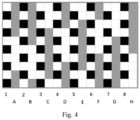
Fig. 4 schematically illustrates a composition of a composite fabric prepared inEmbodiment 3 of the present invention. - The present invention is mainly to solve the problems of low softness and excessive permeability of conventional artificial blood vessels.
- In view of the above, the present invention provides an artificial blood vessel and a method for preparing the same. The method includes: weaving warp and weft yarns to form a composite fabric with alternating plain and satin weaves; and successively corrugating and thermal-setting the composite fabric to obtain an artificial blood vessel. The artificial blood vessel adopts a composite structure of the plain and satin weaves formed by the warp and weft yarns, which not only ensures low permeability but improves the softness of the fabric. Therefore, the artificial blood vessel obtained in the present application has certain advantages over conventional woven artificial blood vessels and is easier to operate and suture.
- The artificial blood vessel and method proposed by the present invention will be described in detail below with reference to the accompanying figures and specific embodiments. Note that the figures are provided in a very simplified form not necessarily drawn to exact scale and for the only purpose of facilitating easy and clear description of the embodiments. In addition, the structures shown in the figures are usually partially representations of their actual counterparts. In particular, as the figures would have different emphases, they are sometimes drawn to different scales.
- As shown in
Fig. 1 , according to an embodiment of the present invention, the method for preparing an artificial blood vessel includes the following steps: - S11) weaving warp and weft yarns to form interlaced first and second weaves, both weaves extend along a weft direction and alternate to obtain a composite fabric, wherein a softness degree of the first weave is lower than that of the second weave; and
- S12) successively corrugating and thermal-setting the composite fabric to obtain the artificial blood vessel.
- To make the composite fabric to meet the requirements of low permeability and high softness, in step S11, an area ratio of the first weave to the second weave may be 1: 1 to 1: 3. In particular, the area ratio may be 1: 1, 1: 2, 1: 3 or the like.
- In this embodiment, the first weave is a plain weave and the second weave is a satin weave. The characteristic of plain weave is that warp yarns and weft yarns are interwoven with each other, and the interweaving of two adjacent yarns is just the opposite. Interweaving points of each yarn are exactly on the opposite sides of respective interweaving points of each adjacent yarn. Compared with other weaves, the plain weave has the most interweaving points. Hence, the plain weave endows the fabric a stiff and smooth surface and hand feeling. The characteristic of satin weave is that the warp and weft yarns will form some independent and unconnected weave points. Compared with other weaves, the stain weave has less interweaving points. Most of the warp (weft) yarns float on the weft (warp) yarns, and long floating warp (weft) lines are visible on the fabric surface. Hence, the satin weave endows the fabric soft hand feeling but prone to being snagged and pilled. In view of the above, combining a plain weave with a satin weave can result in a fabric with uniform long yarn floating lines on the surface, which endows the fabric a relatively soft feeling and is not prone to being snagged and pilled.
- In some examples, the warp and weft yarns are implemented as spun yarns of a biocompatible polymer material. For example, a material of the warp and weft yarns is selected from the following group: polyethylene terephthalate, polyethylene, polytetrafluoroethylene and natural mulberry silk.
- A fineness of the warp yarns may be 4.44 tex (40 D) to 11.11 tex (100 D). The warp yarns may be multifilament yarns each composed of different numbers of monofilament yarns. In one example, before the warp and weft yarns are woven into the composite fabric, the warp yarns are sized to form a uniform size layer coated on the surface, the sizing is conducted at a sizing rate of 50-100 m/min and a drying cylinder temperature of 50 °C to 80 °C. The size layer would increase the strength and friction resistance of warp yarns. After that, the sized warp yarns may be further subjected to sectional warping.
- Since there is no need for the weft yarns to pass through heddle eyes or reed dents during the weaving process, they are less worn and do not need to be sized. Therefore, the weft yarns may be selected from the group of monofilament, multiple wound yarns and twisted yarns. The fineness of the weft yarns may range from 4.44 tex (40 D) to 11.11 tex (100 D). The number of single yarns in multiple yarns may range from 0 to 6, and a twist level thereof may range from 0 to 300 turns per 10 cm. After being twisted, torsion between fibers within the yarns will increase, and distance between fibers will also increase with the increase of its twist level. As a result, when aforementioned warp yarns and weft yarns interlaced with each other, a porosity of the resulting fabric will increase accordingly. Therefore, permeability of a fabric has a close relationship with the twist level of the used yarns. Hence, it is suggested to select yarns with appropriate twist level according to practical needs. In one example, before the warp and weft yarns are woven to form the composite fabric, the weft yarns are subject to a winding or twisting operation on a winder or twister. They are then evenly wound on a shuttle and thus get ready to be woven. If the weft yarns are selected to be monofilament yarns, the number of single yarns in wound yarns would be set to zero for the winder. In another example, there is no need for the weft yarns to be twisted, then the twist level would be set to zero for the twister.
- The warp and weft yarns may be woven on a high-precision weaving machine. After the warp yarns are unrolled from a warp beam, the warp yarns further undergo a sequential threading treatment, i.e., the warp yarns sequentially pass through heddle eyes and reed dents. After that, the warp yarns interlace with the weft yarns to form the composite fabric with interlaced plain and satin weaves.
- During the weaving process, the warp yarns will receive repeated friction from heddle eyes, reed dents and shuttle. The friction makes the warp yarns prone to being snagged and pilled, and causes warp yarns to break, resulting in obvious defects on the fabric surface. Consequently, after subsequent corrugating and setting treatment, the appearance of artificial blood vessels presents defects such as lousiness, resulting in an uneven tube wall thereof, which may have an adverse effect on treatment effect when using the artificial blood vessel. In order to avoid this, according to embodiments of the present application, before the warp and weft yarns are woven to form the composite fabric, i.e., prior to the warp yarns treading through the heddle eyes, reed dents and shuttle successively, the warp yarns are sized to ensure the process goes smooth and finally enable the resulting artificial blood vessel to have an even tube wall.
- After the warp yarns are sized in step S11 and before the composite fabric is corrugated in step S12, the composite fabric is desized. In one example, the de-sizing is accomplished at a temperature in the range of 80 °C to 85 °C for a period of time ranging from 3 h to 5 h.
- During the corrugation of the composite fabric in
step 12, the desized composite fabric may be disposed on a stainless steel core shaft with a pitch of 1 to 2 mm, and a thick-denier high-strength yarn may be then wound thereon with a tension of 10 kg/N to 12 kg/N. During the setting process, the core shaft with the wound fabric thereon may be disposed in hot water at a temperature of 80-90 °C for 3-5 min to stabilize the corrugated shape of the fabric, and then dried. In this way, the artificial blood vessel with high softness and low permeability can be obtained. - Embodiments of the present application also provide an artificial blood vessel, which is prepared by the methods above. The artificial blood vessel is a three-dimensional tube obtained from a thermal setting process and having a diameter of 8 mm to 36 mm. Further, according to the invention, the composite fabric of the artificial blood vessel has a warp density ranging from 480 yarns per 10 cm to 748 yarns per 10 cm and a weft density ranging from 280 yarns per 10 cm to 400 yarns per 10 cm, which ensure that the artificial blood vessel has desirable softness and low permeability.
- In order to enable the composite fabric to have both low permeability and high softness, in some examples, the area ratio of the first weave to the second weave is 1: 1, the first weave is a plain weave, and the second weave is a satin weave with warps floating over 5 to 9 wefts. The artificial blood vessel and method according to the present application will be explained in detail below by way of the exemplary examples. Advantages and objects of the present application will be more apparent from the description of the following examples.
- The warp yarns were 8.89 tex/24F (80D/24F) medical grade polyethylene terephthalate yarns, which were multifilament yarns each composed of 24 monofilament yarns and had been sized. The weft yarns were twisted yarns wherein 3 monofilaments were twisted at a level of 300 turns per 10 cm, each made of 4.44 tex (40D) polyester. A composite fabric was made of plain weaves and satin weaves with 9 long floating lines, wherein the area ratio of the plain weaves to the satin weaves was 1: 1. The composite fabric was further processed into a fabric tube with a diameter of 24 mm.
- The appearance of the composite fabric is shown in
Fig. 2 , wherein black blocks represent warp interlacing points of the plain weave, gray blocks represent warp interlacing points of the satin weave. Moreover, the number of long warp floating lines was 9, and white blocks represent weft interlacing points. TheArabic numerals - The fabric for the artificial blood vessel was woven on a high-precision weaving machine, and had a warp density of 600 yarns per 10 cm and a weft density of 280 yarns per 10 cm. The total number of the warp yarns was 450, each has 24 fibers, and warp beams of two systems operated simultaneously to feed the warp yarns. A sequential threading process followed, which involved threading the warp yarns through a total of 60 reed dents successively. During the weaving process, the yarns were weaved with even tension, and no breakage or pilling occurred. In this way, the resulting composite fabric had noticeable floating lines, a uniform and neat texture, and glossy and clean appearance.
- The composite fabric was subject to desizing, corrugating and thermal setting processes in sequence. The desizing process was carried out at a temperature of 85 °C for 5 h. After the desizing process, the composite fabric was disposed on a stainless steel core shaft with a pitch of 2 mm, and a thick-denier high-strength yarn was then wound thereon with a tension of 12 kg/N to corrugate the fabric. After the corrugating process, the core shaft with the composite fabric wound thereon was thermal set by placing it in hot water at a temperature of 90 °C for 5 min. After the corrugated shape of the fabric was stabilized, it was dried. Finally, artificial blood vessel with three-dimensional tubular form was obtained.
- The artificial blood vessel prepared in
Embodiment 1 has desirable softness. In a heart loop test, a loop height was measured as 10 cm. It is generally believed that a greater loop height indicates better softness. At a pressure of 16 kPa, its permeability was measured to be 150 ml/cm2•min. Generally, a permeability below 400 ml/cm2•min is considered to be low. Chemical analysis was performed on the artificial blood vessel prepared inEmbodiment 1, according to Chinese national standardGB/T14233.1-2008 Embodiment 1 in accordance with Chinese national standardsGB/T 16886.4-2003 GB/T 168865-2017 Table 1 Results of Chemical Analysis and Biological Performance Tests Test Requirement Result Chemical analysis Reducing substances ≤ 2 ml 0.15 ml Evaporation residue ≤ 2 mg 0.3 g Alkalinity/Acidity ≤ 1.5 0.27 Content of heavy metals A light color than the standard solution Satisfied UV absorbance <0.1 Abs <0.1 Abs Biological tests Cell viability ≥ 70% 89% Hemolysis rate < 5% 0.0% - As can be seen from Table 1, the artificial blood vessel prepared in
Embodiment 1 meets all the chemical and biological performance requirements. - The warp yarns were 11.11tex/72f (100D/72f) medical grade polytetrafluoroethylene yarns, which were multifilament yarns each composed of 72 monofilament yarns and had been sized. The weft yarns were multiple wound yarns with 6 monofilaments that were not twisted, each made of 4.44 tex (40D) polytetrafluoroethylene filaments. A composite fabrics were made of plain weaves and satin weaves with 5 long floating lines, wherein the area ratio of the plain weaves to the satin weaves was 1: 1. The composite fabric was further processed into a fabric tube with a diameter of 36 mm.
- The appearance of the composite fabric is shown in
Fig. 3 , wherein black blocks represent warp interlacing points of the plain weave, gray blocks represent warp interlacing points of the satin weave. Moreover, the number of long warp floating lines was 5, and white blocks represent weft interlacing points. TheArabic numerals - The fabric for the artificial blood vessel was woven on a high-precision weaving machine and had a warp density of 480 yarns per 10 cm and a weft density of 300 yarns per 10 cm. The total number of the warp yarns was 544, each has 24 fibers, and warp beams of two systems operated simultaneously to feed the warp yarns. A sequential threading process followed, which involved threading the warp yarns through a total of 86 reed dents successively. During the weaving process, the yarns were weaved with even tension, and no breakage or pilling occurred. In this war, the resulting composite fabric had noticeable floats, a uniform and neat texture, and glossy and clean appearance.
- The composite fabric was subject to desizing, corrugating and thermal setting processes in sequence. The desizing process was carried out at a temperature of 80 °C for 3 h. After the desizing proces, the composite fabric was disposed on a stainless steel core shaft with a pitch of 1 mm, and a thick-denier high-strength yarn was then wound thereon with a tension of 10 kg/N to corrugate the fabric. After the corrugating process, the core shaft with the composite fabric wound thereon was thermal-set by placing it in hot water at a temperature of 80 °C for 3 min. After the corrugated shape of the fabric was stabilized, it was dried. Finally, artificial blood vessel with three-dimensional tubular form was obtained.
- The artificial blood vessel prepared in
Embodiment 2 has desirable softness. In a heart loop test, a loop height was measured as 8 cm. It is generally believed that a greater loop height indicates better softness. At a pressure of 16 kPa, its permeability was measured to be 50 ml/cm2•min. It was further subjected to the same chemical analysis and biological performance tests as inEmbodiment 1, and the test results met all the requirements. - The warp yarns were 4.44tex/16f (40D/16f) medical grade polyethylene terephthalate yarns, which were multifilament yarns each composed of 16 monofilament yarns and had been sized. The weft yarns were twisted at a level of 100 turns per 10 cm. A composite fabric was made of plain weaves and satin weaves with 6 long floating lines, wherein the area ratio of the plain weaves to the satin weaves was 1: 1. The composite fabric was further processed into a fabric tube with a diameter of 8 mm.
- The appearance of the composite fabric is shown in
Fig. 4 , wherein black blocks represent warp interlacing points of the plain weave, gray blocks represent warp interlacing points of the satin weave. Moreover, the number of long warp floating lines was 6, and white blocks represent weft interlacing points. TheArabic numerals - The fabric for the artificial blood vessel was woven on a high-precision weaving machine, and had a warp density of 748 yarns per 10 cm and a weft density of 400 yarns per 10 cm. The total number of the warp yarns was 138, and warp beams of two systems operated simultaneously to feed the warp yarns. A sequential threading process followed, which involved threading the warp yarns through a total of 22 reed dents successively. During the weaving process, the yarns were weaved with even tension, and no breakage or pilling occurred. The resulting composite fabric had noticeable floating lines, a uniform and neat texture, and glossy and clean appearance.
- The composite fabric was subject to desizing, corrugating and thermal setting processes in sequence. The desizing process was carried out at a temperature of 85 °C for 4 h. After the desizing process, the composite fabric was disposed on a stainless steel core shaft with a pitch of 1.5 mm, and a thick-denier high-strength yarn was then wound thereon with a tension of 11 kg/N to corrugate the fabric. After the corrugating process, the core shaft with the composite fabric wound thereon was thermal-set by placing it in hot water at a temperature of 85 °C for 4 min. After the corrugated shape of the fabric was stabilized, it was dried. Finally, artificial blood vessel with three-dimensional tubular form was obtained.
- The artificial blood vessel prepared in
Embodiment 3 has desirable softness. In a heart loop test, a loop height was measured as 16 cm. It is generally believed that a greater loop height indicates better softness. At a pressure of 16 kPa, its permeability was measured to be 200 ml/cm2•min. It was further subjected to the same chemical analysis and biological performance tests as inEmbodiment 1, and the test results met all the requirements. - It is to be noted that although several artificial blood vessels and methods for preparing same have been described above as examples, it would be appreciated that, according to the present embodiment, the parameters such as yarn diameters/numbers and twist level may also be chosen from the scopes as mentioned above in the description. Therefore, the foregoing examples may be modified to obtain various alternatives, and the present invention is not limited thereto.
- In conclusion, the artificial blood vessel and the method provided in the present application solve the problems of inadequate softness and excessive permeability of the conventional artificial blood vessels.
- The description presented above is merely that of a few preferred embodiments of the present invention and is not intended to limit the scope thereof in any sense. Changes and modifications within the scope defined in the appended claims are possible.
Claims (11)
- A method for preparing an artificial blood vessel, comprising:weaving warp yarns and weft yarns to form interlaced first weaves and second weaves, both weaves extend along a weft direction to obtain a composite fabric; andsuccessively corrugating and thermal-setting the composite fabric to obtain the artificial blood vessel, whereinthe first weaves are plain weaves and the second weaves are satin weaves, each plain weave and each satin weave alternate with each other, and each of the satin weaves has warps floating over 5 to 9 wefts;the composite fabric has a warp density in the range of 480 yarns per 10 cm to 748 yarns per 10 cm and a weft density of 280 yarns per 10 cm to 400 yarns per 10 cm.
- The method of claim 1, wherein an area ratio of the first weave to the second weave is from 1: 1 to 1: 3.
- The method of claim 1, wherein the warp and weft yarns are spun yarns made of polymer materials with biocompatibility.
- The method of claim 3, wherein a material of the spun yarns is at least one selected from the group of polyethylene terephthalate, polyethylene, polytetrafluoroethylene and natural mulberry silk.
- The method of claim 1, wherein the weft yarns are selected from the group of monofilament, multiple wound yarns and twisted yarns.
- The method of claim 1, wherein there are two plain weaves located on either side of one satin weave, and there are two satin weaves located on either side of one plain weave.
- The method of claim 1, wherein for each plain weave, the warp yarns and the weft yarns are interwoven with each other such that for two plain weaves on either side of each satin weave, the interweaving of the warp and weft yarns is opposite, and interweaving points of each yarn are exactly on opposite sides of respective interweaving points of each adjacent yarn.
- An artificial blood vessel prepared by the method described in any of claims 1 to 7, comprising a composite fabric which is formed by first weaves and second weaves alternating along a weft direction, and the first and second weaves are weaved by warp yarns and weft yarns, wherein
the first weaves are plain weaves and the second weaves are satin weaves, each plain weave and each satin weave alternate with each other, and each of the satin weaves has warps floating over 5 to 9 wefts; the composite fabric has a warp density in the range of 480 yarns per 10 cm to 748 yarns per 10 cm and a weft density of 280 yarns per 10 cm to 400 yarns per 10 cm. - The artificial blood vessel of claim 8, wherein an area ratio of the first weave to the second weave is from 1: 1 to 1: 3.
- The artificial blood vessel of claim 8, wherein there are two plain weaves located on either side of one satin weave, and there are two satin weaves located on either side of one plain weave.
- The artificial blood vessel of claim 8, wherein for each plain weave, the warp yarns and the weft yarns are interwoven with each other such that for two plain weaves on either side of each satin weave, the interweaving of the warp and weft yarns is opposite, and interweaving points of each yarn are exactly on opposite sides of respective interweaving points of each adjacent yarn.
Applications Claiming Priority (2)
| Application Number | Priority Date | Filing Date | Title |
|---|---|---|---|
| CN202010167879.4A CN113463243B (en) | 2020-03-11 | 2020-03-11 | Artificial blood vessel and preparation method thereof |
| PCT/CN2020/096804 WO2021179468A1 (en) | 2020-03-11 | 2020-06-18 | Artificial blood vessel and preparation method therefor |
Publications (3)
| Publication Number | Publication Date |
|---|---|
| EP4101959A1 EP4101959A1 (en) | 2022-12-14 |
| EP4101959A4 EP4101959A4 (en) | 2023-11-22 |
| EP4101959B1 true EP4101959B1 (en) | 2025-05-07 |
Family
ID=77672095
Family Applications (1)
| Application Number | Title | Priority Date | Filing Date |
|---|---|---|---|
| EP20923869.0A Active EP4101959B1 (en) | 2020-03-11 | 2020-06-18 | Artificial blood vessel and preparation method therefor |
Country Status (5)
| Country | Link |
|---|---|
| US (1) | US20230165671A1 (en) |
| EP (1) | EP4101959B1 (en) |
| JP (1) | JP7499865B2 (en) |
| CN (1) | CN113463243B (en) |
| WO (1) | WO2021179468A1 (en) |
Families Citing this family (5)
| Publication number | Priority date | Publication date | Assignee | Title |
|---|---|---|---|---|
| CN116356468B (en) * | 2021-12-20 | 2025-11-11 | 浙江脉通智造科技(集团)有限公司 | Tubular fabric and preparation method thereof, sewing ring and preparation method thereof |
| CN115198421B (en) * | 2022-05-30 | 2023-05-12 | 华融科创生物科技(天津)有限公司 | Flexible special-shaped pipe structure and braiding method and application thereof |
| CN114959989B (en) * | 2022-06-29 | 2023-11-28 | 山东黄河三角洲纺织科技研究院有限公司 | Artificial blood vessel and three-dimensional braiding method thereof |
| CN118001462B (en) * | 2024-02-03 | 2024-11-12 | 武汉纺织大学 | Artificial blood vessel based on polymer yarn weaving and preparation method thereof |
| CN119548675B (en) * | 2024-11-30 | 2025-08-01 | 山东黄河三角洲纺织科技研究院有限公司 | Preparation method of easy-to-stitch braided artificial blood vessel |
Family Cites Families (19)
| Publication number | Priority date | Publication date | Assignee | Title |
|---|---|---|---|---|
| US4530113A (en) * | 1983-05-20 | 1985-07-23 | Intervascular, Inc. | Vascular grafts with cross-weave patterns |
| CN86207175U (en) * | 1986-09-20 | 1987-07-01 | 苏州丝织试样厂 | Woven satin pile type artificial blood vessel |
| US4816028A (en) * | 1987-07-01 | 1989-03-28 | Indu Kapadia | Woven vascular graft |
| JP2683240B2 (en) * | 1988-01-08 | 1997-11-26 | 鐘紡株式会社 | Multifilament yarn sizing method |
| US5127919A (en) * | 1988-12-14 | 1992-07-07 | Vascutec Corporation | Woven vascular graft |
| CN1033140C (en) * | 1990-09-18 | 1996-10-30 | 苏州医学院 | woven artificial small blood vessel |
| CN2075073U (en) * | 1990-09-18 | 1991-04-17 | 苏州医学院 | Artificial small blood ressed weaved by machine |
| JPH10277068A (en) * | 1997-04-08 | 1998-10-20 | Ube Ind Ltd | Vascular prosthesis with stent |
| DE10125712B4 (en) * | 2001-05-21 | 2012-06-06 | Aesculap Ag | Implant for surgery |
| CN100345527C (en) * | 2003-02-21 | 2007-10-31 | 无锡莱福纶生物材料有限公司 | Machine knitting artificial blood vessel without pleat in the internal wall, and its making method |
| CN100350885C (en) * | 2003-04-24 | 2007-11-28 | 无锡莱福纶生物材料有限公司 | Artificial blood vessel blended by utilizing natural bent synthetic fibre and protein fibre and its production method |
| US7299828B2 (en) * | 2003-11-20 | 2007-11-27 | Invista North America S.A R.L. | Stretch woven fabrics including polyester bicomponent filaments |
| CN101084846B (en) * | 2007-03-21 | 2010-05-26 | 林增华 | Double-layer weaving polyester artificial vessel |
| CN105105867B (en) * | 2015-07-16 | 2017-10-24 | 东华大学 | One kind is integrally formed woven blood vessel covered stent and preparation method thereof |
| CN105030372B (en) * | 2015-08-31 | 2017-03-01 | 东华大学 | Partial gradient structural vessel support overlay film towards orthotopic fenestration and preparation method thereof |
| CN105963051B (en) * | 2016-04-20 | 2018-01-19 | 东华大学 | A kind of intravascular stent fabric overlay film with local resistant structure and preparation method thereof |
| CA3082000A1 (en) * | 2017-12-15 | 2019-06-20 | Toray Industries, Inc. | Woven fabric and method for manufacturing same |
| CA3089862A1 (en) * | 2018-01-31 | 2019-08-08 | The Secant Group, Llc | Woven graft composite with varied density |
| CN110604633B (en) * | 2019-10-18 | 2024-03-05 | 江苏百优达生命科技有限公司 | An integrated variable structure vascular stent coating and its manufacturing method |
-
2020
- 2020-03-11 CN CN202010167879.4A patent/CN113463243B/en active Active
- 2020-06-18 WO PCT/CN2020/096804 patent/WO2021179468A1/en not_active Ceased
- 2020-06-18 JP JP2022554301A patent/JP7499865B2/en active Active
- 2020-06-18 EP EP20923869.0A patent/EP4101959B1/en active Active
- 2020-06-18 US US17/910,665 patent/US20230165671A1/en active Pending
Also Published As
| Publication number | Publication date |
|---|---|
| US20230165671A1 (en) | 2023-06-01 |
| WO2021179468A1 (en) | 2021-09-16 |
| JP7499865B2 (en) | 2024-06-14 |
| EP4101959A1 (en) | 2022-12-14 |
| CN113463243A (en) | 2021-10-01 |
| JP2023517573A (en) | 2023-04-26 |
| EP4101959A4 (en) | 2023-11-22 |
| CN113463243B (en) | 2023-08-18 |
Similar Documents
| Publication | Publication Date | Title |
|---|---|---|
| EP4101959A1 (en) | Artificial blood vessel and preparation method therefor | |
| EP3733122A1 (en) | Medical fabric | |
| KR102221342B1 (en) | Medical fabric | |
| US20210177568A1 (en) | Medical Fabric | |
| CA1214602A (en) | Vascular grafts with cross-weave patterns | |
| US9427342B2 (en) | Woven fabric with shape memory element strands | |
| US8833402B2 (en) | Woven fabric having composite yarns for endoluminal devices | |
| CN103402460B (en) | Covered stnet | |
| US20120171917A1 (en) | Composite woven fabric for endoluminal devices | |
| JP6518066B2 (en) | Medical high density fabric | |
| TWI632899B (en) | Artificial blood vessel | |
| JP6438692B2 (en) | Medical fabric | |
| JP4053857B2 (en) | Method for producing bag-woven tubular body for deformed vascular prosthesis | |
| CN1142932A (en) | Artificial blood vessel interweaved by silk and polyester fibre long filament | |
| CN120585515A (en) | A dense polyester artificial blood vessel | |
| JP2003339745A (en) | Woven tubular body for stent type blood vessel prosthesis material, and stent type blood vessel prosthesis material using the same |
Legal Events
| Date | Code | Title | Description |
|---|---|---|---|
| STAA | Information on the status of an ep patent application or granted ep patent |
Free format text: STATUS: THE INTERNATIONAL PUBLICATION HAS BEEN MADE |
|
| PUAI | Public reference made under article 153(3) epc to a published international application that has entered the european phase |
Free format text: ORIGINAL CODE: 0009012 |
|
| STAA | Information on the status of an ep patent application or granted ep patent |
Free format text: STATUS: REQUEST FOR EXAMINATION WAS MADE |
|
| 17P | Request for examination filed |
Effective date: 20220909 |
|
| AK | Designated contracting states |
Kind code of ref document: A1 Designated state(s): AL AT BE BG CH CY CZ DE DK EE ES FI FR GB GR HR HU IE IS IT LI LT LU LV MC MK MT NL NO PL PT RO RS SE SI SK SM TR |
|
| DAV | Request for validation of the european patent (deleted) | ||
| DAX | Request for extension of the european patent (deleted) | ||
| REG | Reference to a national code |
Ref country code: DE Ref legal event code: R079 Free format text: PREVIOUS MAIN CLASS: D03D0003020000 Ipc: A61F0002060000 Ref country code: DE Ref legal event code: R079 Ref document number: 602020051103 Country of ref document: DE Free format text: PREVIOUS MAIN CLASS: D03D0003020000 Ipc: A61F0002060000 |
|
| RIC1 | Information provided on ipc code assigned before grant |
Ipc: D06C 23/04 20060101ALN20230717BHEP Ipc: D06C 7/02 20060101ALN20230717BHEP Ipc: D06B 23/02 20060101ALN20230717BHEP Ipc: D03D 1/00 20060101ALI20230717BHEP Ipc: D03D 13/00 20060101ALI20230717BHEP Ipc: A61F 2/06 20130101AFI20230717BHEP |
|
| A4 | Supplementary search report drawn up and despatched |
Effective date: 20231023 |
|
| RIC1 | Information provided on ipc code assigned before grant |
Ipc: D06C 23/04 20060101ALN20231017BHEP Ipc: D06C 7/02 20060101ALN20231017BHEP Ipc: D06B 23/02 20060101ALN20231017BHEP Ipc: D03D 1/00 20060101ALI20231017BHEP Ipc: D03D 13/00 20060101ALI20231017BHEP Ipc: A61F 2/06 20130101AFI20231017BHEP |
|
| GRAP | Despatch of communication of intention to grant a patent |
Free format text: ORIGINAL CODE: EPIDOSNIGR1 |
|
| STAA | Information on the status of an ep patent application or granted ep patent |
Free format text: STATUS: GRANT OF PATENT IS INTENDED |
|
| RIC1 | Information provided on ipc code assigned before grant |
Ipc: D06C 23/04 20060101ALN20241120BHEP Ipc: D06C 7/02 20060101ALN20241120BHEP Ipc: D06B 23/02 20060101ALN20241120BHEP Ipc: D03D 1/00 20060101ALI20241120BHEP Ipc: D03D 13/00 20060101ALI20241120BHEP Ipc: A61F 2/06 20130101AFI20241120BHEP |
|
| INTG | Intention to grant announced |
Effective date: 20241203 |
|
| GRAS | Grant fee paid |
Free format text: ORIGINAL CODE: EPIDOSNIGR3 |
|
| GRAA | (expected) grant |
Free format text: ORIGINAL CODE: 0009210 |
|
| STAA | Information on the status of an ep patent application or granted ep patent |
Free format text: STATUS: THE PATENT HAS BEEN GRANTED |
|
| AK | Designated contracting states |
Kind code of ref document: B1 Designated state(s): AL AT BE BG CH CY CZ DE DK EE ES FI FR GB GR HR HU IE IS IT LI LT LU LV MC MK MT NL NO PL PT RO RS SE SI SK SM TR |
|
| REG | Reference to a national code |
Ref country code: GB Ref legal event code: FG4D |
|
| REG | Reference to a national code |
Ref country code: CH Ref legal event code: EP |
|
| REG | Reference to a national code |
Ref country code: DE Ref legal event code: R096 Ref document number: 602020051103 Country of ref document: DE |
|
| REG | Reference to a national code |
Ref country code: IE Ref legal event code: FG4D |
|
| PGFP | Annual fee paid to national office [announced via postgrant information from national office to epo] |
Ref country code: GB Payment date: 20250618 Year of fee payment: 6 |
|
| PGFP | Annual fee paid to national office [announced via postgrant information from national office to epo] |
Ref country code: IE Payment date: 20250618 Year of fee payment: 6 |
|
| REG | Reference to a national code |
Ref country code: NL Ref legal event code: MP Effective date: 20250507 |
|
| PG25 | Lapsed in a contracting state [announced via postgrant information from national office to epo] |
Ref country code: PT Free format text: LAPSE BECAUSE OF FAILURE TO SUBMIT A TRANSLATION OF THE DESCRIPTION OR TO PAY THE FEE WITHIN THE PRESCRIBED TIME-LIMIT Effective date: 20250908 Ref country code: FI Free format text: LAPSE BECAUSE OF FAILURE TO SUBMIT A TRANSLATION OF THE DESCRIPTION OR TO PAY THE FEE WITHIN THE PRESCRIBED TIME-LIMIT Effective date: 20250507 Ref country code: ES Free format text: LAPSE BECAUSE OF FAILURE TO SUBMIT A TRANSLATION OF THE DESCRIPTION OR TO PAY THE FEE WITHIN THE PRESCRIBED TIME-LIMIT Effective date: 20250507 |
|
| REG | Reference to a national code |
Ref country code: LT Ref legal event code: MG9D |
|
| PG25 | Lapsed in a contracting state [announced via postgrant information from national office to epo] |
Ref country code: NO Free format text: LAPSE BECAUSE OF FAILURE TO SUBMIT A TRANSLATION OF THE DESCRIPTION OR TO PAY THE FEE WITHIN THE PRESCRIBED TIME-LIMIT Effective date: 20250807 Ref country code: GR Free format text: LAPSE BECAUSE OF FAILURE TO SUBMIT A TRANSLATION OF THE DESCRIPTION OR TO PAY THE FEE WITHIN THE PRESCRIBED TIME-LIMIT Effective date: 20250808 |
|
| PG25 | Lapsed in a contracting state [announced via postgrant information from national office to epo] |
Ref country code: NL Free format text: LAPSE BECAUSE OF FAILURE TO SUBMIT A TRANSLATION OF THE DESCRIPTION OR TO PAY THE FEE WITHIN THE PRESCRIBED TIME-LIMIT Effective date: 20250507 Ref country code: PL Free format text: LAPSE BECAUSE OF FAILURE TO SUBMIT A TRANSLATION OF THE DESCRIPTION OR TO PAY THE FEE WITHIN THE PRESCRIBED TIME-LIMIT Effective date: 20250507 |
|
| REG | Reference to a national code |
Ref country code: AT Ref legal event code: MK05 Ref document number: 1791635 Country of ref document: AT Kind code of ref document: T Effective date: 20250507 |
|
| PG25 | Lapsed in a contracting state [announced via postgrant information from national office to epo] |
Ref country code: BG Free format text: LAPSE BECAUSE OF FAILURE TO SUBMIT A TRANSLATION OF THE DESCRIPTION OR TO PAY THE FEE WITHIN THE PRESCRIBED TIME-LIMIT Effective date: 20250507 |
|
| PG25 | Lapsed in a contracting state [announced via postgrant information from national office to epo] |
Ref country code: HR Free format text: LAPSE BECAUSE OF FAILURE TO SUBMIT A TRANSLATION OF THE DESCRIPTION OR TO PAY THE FEE WITHIN THE PRESCRIBED TIME-LIMIT Effective date: 20250507 |
|
| PG25 | Lapsed in a contracting state [announced via postgrant information from national office to epo] |
Ref country code: AT Free format text: LAPSE BECAUSE OF FAILURE TO SUBMIT A TRANSLATION OF THE DESCRIPTION OR TO PAY THE FEE WITHIN THE PRESCRIBED TIME-LIMIT Effective date: 20250507 |
|
| PG25 | Lapsed in a contracting state [announced via postgrant information from national office to epo] |
Ref country code: RS Free format text: LAPSE BECAUSE OF FAILURE TO SUBMIT A TRANSLATION OF THE DESCRIPTION OR TO PAY THE FEE WITHIN THE PRESCRIBED TIME-LIMIT Effective date: 20250807 |
|
| PG25 | Lapsed in a contracting state [announced via postgrant information from national office to epo] |
Ref country code: IS Free format text: LAPSE BECAUSE OF FAILURE TO SUBMIT A TRANSLATION OF THE DESCRIPTION OR TO PAY THE FEE WITHIN THE PRESCRIBED TIME-LIMIT Effective date: 20250907 |
|
| PG25 | Lapsed in a contracting state [announced via postgrant information from national office to epo] |
Ref country code: LV Free format text: LAPSE BECAUSE OF FAILURE TO SUBMIT A TRANSLATION OF THE DESCRIPTION OR TO PAY THE FEE WITHIN THE PRESCRIBED TIME-LIMIT Effective date: 20250507 |
|
| REG | Reference to a national code |
Ref country code: DE Ref legal event code: R119 Ref document number: 602020051103 Country of ref document: DE |
|
| PG25 | Lapsed in a contracting state [announced via postgrant information from national office to epo] |
Ref country code: SM Free format text: LAPSE BECAUSE OF FAILURE TO SUBMIT A TRANSLATION OF THE DESCRIPTION OR TO PAY THE FEE WITHIN THE PRESCRIBED TIME-LIMIT Effective date: 20250507 Ref country code: DK Free format text: LAPSE BECAUSE OF FAILURE TO SUBMIT A TRANSLATION OF THE DESCRIPTION OR TO PAY THE FEE WITHIN THE PRESCRIBED TIME-LIMIT Effective date: 20250507 |
|
| PG25 | Lapsed in a contracting state [announced via postgrant information from national office to epo] |
Ref country code: CZ Free format text: LAPSE BECAUSE OF FAILURE TO SUBMIT A TRANSLATION OF THE DESCRIPTION OR TO PAY THE FEE WITHIN THE PRESCRIBED TIME-LIMIT Effective date: 20250507 |
|
| PG25 | Lapsed in a contracting state [announced via postgrant information from national office to epo] |
Ref country code: EE Free format text: LAPSE BECAUSE OF FAILURE TO SUBMIT A TRANSLATION OF THE DESCRIPTION OR TO PAY THE FEE WITHIN THE PRESCRIBED TIME-LIMIT Effective date: 20250507 |
|
| PG25 | Lapsed in a contracting state [announced via postgrant information from national office to epo] |
Ref country code: SK Free format text: LAPSE BECAUSE OF FAILURE TO SUBMIT A TRANSLATION OF THE DESCRIPTION OR TO PAY THE FEE WITHIN THE PRESCRIBED TIME-LIMIT Effective date: 20250507 |
|
| REG | Reference to a national code |
Ref country code: CH Ref legal event code: H13 Free format text: ST27 STATUS EVENT CODE: U-0-0-H10-H13 (AS PROVIDED BY THE NATIONAL OFFICE) Effective date: 20260127 |
|
| PG25 | Lapsed in a contracting state [announced via postgrant information from national office to epo] |
Ref country code: IT Free format text: LAPSE BECAUSE OF FAILURE TO SUBMIT A TRANSLATION OF THE DESCRIPTION OR TO PAY THE FEE WITHIN THE PRESCRIBED TIME-LIMIT Effective date: 20250507 |
|
| PG25 | Lapsed in a contracting state [announced via postgrant information from national office to epo] |
Ref country code: RO Free format text: LAPSE BECAUSE OF FAILURE TO SUBMIT A TRANSLATION OF THE DESCRIPTION OR TO PAY THE FEE WITHIN THE PRESCRIBED TIME-LIMIT Effective date: 20250507 |
|
| PG25 | Lapsed in a contracting state [announced via postgrant information from national office to epo] |
Ref country code: LU Free format text: LAPSE BECAUSE OF NON-PAYMENT OF DUE FEES Effective date: 20250618 |
|
| PG25 | Lapsed in a contracting state [announced via postgrant information from national office to epo] |
Ref country code: MC Free format text: LAPSE BECAUSE OF FAILURE TO SUBMIT A TRANSLATION OF THE DESCRIPTION OR TO PAY THE FEE WITHIN THE PRESCRIBED TIME-LIMIT Effective date: 20250507 |
|
| REG | Reference to a national code |
Ref country code: BE Ref legal event code: MM Effective date: 20250630 |
|
| PLBE | No opposition filed within time limit |
Free format text: ORIGINAL CODE: 0009261 |
|
| STAA | Information on the status of an ep patent application or granted ep patent |
Free format text: STATUS: NO OPPOSITION FILED WITHIN TIME LIMIT |
|
| REG | Reference to a national code |
Ref country code: CH Ref legal event code: L10 Free format text: ST27 STATUS EVENT CODE: U-0-0-L10-L00 (AS PROVIDED BY THE NATIONAL OFFICE) Effective date: 20260318 |
|
| PG25 | Lapsed in a contracting state [announced via postgrant information from national office to epo] |
Ref country code: DE Free format text: LAPSE BECAUSE OF NON-PAYMENT OF DUE FEES Effective date: 20260101 |
|
| 26N | No opposition filed |
Effective date: 20260210 |
|
| PG25 | Lapsed in a contracting state [announced via postgrant information from national office to epo] |
Ref country code: BE Free format text: LAPSE BECAUSE OF NON-PAYMENT OF DUE FEES Effective date: 20250630 |
|
| PG25 | Lapsed in a contracting state [announced via postgrant information from national office to epo] |
Ref country code: FR Free format text: LAPSE BECAUSE OF NON-PAYMENT OF DUE FEES Effective date: 20250707 |
|
| PG25 | Lapsed in a contracting state [announced via postgrant information from national office to epo] |
Ref country code: CH Free format text: LAPSE BECAUSE OF NON-PAYMENT OF DUE FEES Effective date: 20250630 |