EP4101332A1 - Shoe sole, and shoe - Google Patents
Shoe sole, and shoe Download PDFInfo
- Publication number
- EP4101332A1 EP4101332A1 EP20923265.1A EP20923265A EP4101332A1 EP 4101332 A1 EP4101332 A1 EP 4101332A1 EP 20923265 A EP20923265 A EP 20923265A EP 4101332 A1 EP4101332 A1 EP 4101332A1
- Authority
- EP
- European Patent Office
- Prior art keywords
- rubber
- mass
- activated carbon
- rubber composition
- shoe
- Prior art date
- Legal status (The legal status is an assumption and is not a legal conclusion. Google has not performed a legal analysis and makes no representation as to the accuracy of the status listed.)
- Pending
Links
- 229920001971 elastomer Polymers 0.000 claims abstract description 144
- 239000005060 rubber Substances 0.000 claims abstract description 138
- OKTJSMMVPCPJKN-UHFFFAOYSA-N Carbon Chemical compound [C] OKTJSMMVPCPJKN-UHFFFAOYSA-N 0.000 claims abstract description 86
- 239000000203 mixture Substances 0.000 claims abstract description 74
- VYPSYNLAJGMNEJ-UHFFFAOYSA-N Silicium dioxide Chemical compound O=[Si]=O VYPSYNLAJGMNEJ-UHFFFAOYSA-N 0.000 claims description 67
- 239000000377 silicon dioxide Substances 0.000 claims description 33
- 229920001223 polyethylene glycol Polymers 0.000 claims description 14
- 239000002202 Polyethylene glycol Substances 0.000 claims description 11
- 239000011521 glass Substances 0.000 description 32
- XLYOFNOQVPJJNP-UHFFFAOYSA-N water Substances O XLYOFNOQVPJJNP-UHFFFAOYSA-N 0.000 description 30
- 238000012360 testing method Methods 0.000 description 28
- 239000011148 porous material Substances 0.000 description 23
- 239000006087 Silane Coupling Agent Substances 0.000 description 17
- 239000000463 material Substances 0.000 description 15
- 230000003068 static effect Effects 0.000 description 12
- 230000000052 comparative effect Effects 0.000 description 11
- 239000002245 particle Substances 0.000 description 10
- 238000004898 kneading Methods 0.000 description 9
- OKTJSMMVPCPJKN-IGMARMGPSA-N Carbon-12 Chemical class [12C] OKTJSMMVPCPJKN-IGMARMGPSA-N 0.000 description 8
- 238000000034 method Methods 0.000 description 7
- 239000002994 raw material Substances 0.000 description 7
- 239000000806 elastomer Substances 0.000 description 6
- 125000000524 functional group Chemical group 0.000 description 6
- 229920003049 isoprene rubber Polymers 0.000 description 6
- 238000002156 mixing Methods 0.000 description 4
- 244000043261 Hevea brasiliensis Species 0.000 description 3
- 239000005062 Polybutadiene Substances 0.000 description 3
- 229910052681 coesite Inorganic materials 0.000 description 3
- 229910052906 cristobalite Inorganic materials 0.000 description 3
- 239000011256 inorganic filler Substances 0.000 description 3
- 229910003475 inorganic filler Inorganic materials 0.000 description 3
- 238000005259 measurement Methods 0.000 description 3
- 229920003052 natural elastomer Polymers 0.000 description 3
- 229920001194 natural rubber Polymers 0.000 description 3
- 229920002857 polybutadiene Polymers 0.000 description 3
- 229920001021 polysulfide Polymers 0.000 description 3
- 239000005077 polysulfide Substances 0.000 description 3
- 150000008117 polysulfides Polymers 0.000 description 3
- 239000011164 primary particle Substances 0.000 description 3
- 239000000523 sample Substances 0.000 description 3
- 229910052682 stishovite Inorganic materials 0.000 description 3
- 125000000101 thioether group Chemical group 0.000 description 3
- 229910052905 tridymite Inorganic materials 0.000 description 3
- VTHOKNTVYKTUPI-UHFFFAOYSA-N triethoxy-[3-(3-triethoxysilylpropyltetrasulfanyl)propyl]silane Chemical compound CCO[Si](OCC)(OCC)CCCSSSSCCC[Si](OCC)(OCC)OCC VTHOKNTVYKTUPI-UHFFFAOYSA-N 0.000 description 3
- 238000004073 vulcanization Methods 0.000 description 3
- 235000017166 Bambusa arundinacea Nutrition 0.000 description 2
- 235000017491 Bambusa tulda Nutrition 0.000 description 2
- 241001330002 Bambuseae Species 0.000 description 2
- VTYYLEPIZMXCLO-UHFFFAOYSA-L Calcium carbonate Chemical compound [Ca+2].[O-]C([O-])=O VTYYLEPIZMXCLO-UHFFFAOYSA-L 0.000 description 2
- 235000013162 Cocos nucifera Nutrition 0.000 description 2
- 244000060011 Cocos nucifera Species 0.000 description 2
- 241000196324 Embryophyta Species 0.000 description 2
- 229920000459 Nitrile rubber Polymers 0.000 description 2
- 239000005662 Paraffin oil Substances 0.000 description 2
- 235000015334 Phyllostachys viridis Nutrition 0.000 description 2
- PPBRXRYQALVLMV-UHFFFAOYSA-N Styrene Chemical compound C=CC1=CC=CC=C1 PPBRXRYQALVLMV-UHFFFAOYSA-N 0.000 description 2
- UCKMPCXJQFINFW-UHFFFAOYSA-N Sulphide Chemical compound [S-2] UCKMPCXJQFINFW-UHFFFAOYSA-N 0.000 description 2
- 239000011425 bamboo Substances 0.000 description 2
- 229920005549 butyl rubber Polymers 0.000 description 2
- 239000003610 charcoal Substances 0.000 description 2
- 238000004132 cross linking Methods 0.000 description 2
- 230000000694 effects Effects 0.000 description 2
- 239000005038 ethylene vinyl acetate Substances 0.000 description 2
- 230000002209 hydrophobic effect Effects 0.000 description 2
- 238000003384 imaging method Methods 0.000 description 2
- 229940057995 liquid paraffin Drugs 0.000 description 2
- 239000011159 matrix material Substances 0.000 description 2
- 239000004014 plasticizer Substances 0.000 description 2
- 229920001084 poly(chloroprene) Polymers 0.000 description 2
- 229920001200 poly(ethylene-vinyl acetate) Polymers 0.000 description 2
- 229920002379 silicone rubber Polymers 0.000 description 2
- 229920003048 styrene butadiene rubber Polymers 0.000 description 2
- 239000000126 substance Substances 0.000 description 2
- 238000009864 tensile test Methods 0.000 description 2
- 239000002023 wood Substances 0.000 description 2
- OWRCNXZUPFZXOS-UHFFFAOYSA-N 1,3-diphenylguanidine Chemical compound C=1C=CC=CC=1NC(=N)NC1=CC=CC=C1 OWRCNXZUPFZXOS-UHFFFAOYSA-N 0.000 description 1
- YRVRZDIWEXCJSX-UHFFFAOYSA-N 2-methyl-3-(3-triethoxysilylpropyl)thiirane-2-carboxylic acid Chemical compound CCO[Si](OCC)(OCC)CCCC1SC1(C)C(O)=O YRVRZDIWEXCJSX-UHFFFAOYSA-N 0.000 description 1
- DCQBZYNUSLHVJC-UHFFFAOYSA-N 3-triethoxysilylpropane-1-thiol Chemical compound CCO[Si](OCC)(OCC)CCCS DCQBZYNUSLHVJC-UHFFFAOYSA-N 0.000 description 1
- UUEWCQRISZBELL-UHFFFAOYSA-N 3-trimethoxysilylpropane-1-thiol Chemical compound CO[Si](OC)(OC)CCCS UUEWCQRISZBELL-UHFFFAOYSA-N 0.000 description 1
- MFNWUMRYUYUAAV-UHFFFAOYSA-N 4-(3-trimethoxysilylpropyl)-3H-1,3-benzothiazole-2-thione Chemical compound CO[Si](OC)(OC)CCCC1=CC=CC2=C1N=C(S2)S MFNWUMRYUYUAAV-UHFFFAOYSA-N 0.000 description 1
- NLZUEZXRPGMBCV-UHFFFAOYSA-N Butylhydroxytoluene Chemical compound CC1=CC(C(C)(C)C)=C(O)C(C(C)(C)C)=C1 NLZUEZXRPGMBCV-UHFFFAOYSA-N 0.000 description 1
- ZZOXWBGGPBLVNQ-UHFFFAOYSA-N CN(C)C(SSSSC(N(C)C)=[S+]CCC[SiH2]C(OC)OC)=[S+]CCC[SiH2]C(OC)OC Chemical compound CN(C)C(SSSSC(N(C)C)=[S+]CCC[SiH2]C(OC)OC)=[S+]CCC[SiH2]C(OC)OC ZZOXWBGGPBLVNQ-UHFFFAOYSA-N 0.000 description 1
- SKFGZHGVWONCTD-UHFFFAOYSA-N CN(C)C(SSSSC(N(C)C)=[S+]CCC[Si](OC)(OC)OC)=[S+]CCC[Si](OC)(OC)OC Chemical compound CN(C)C(SSSSC(N(C)C)=[S+]CCC[Si](OC)(OC)OC)=[S+]CCC[Si](OC)(OC)OC SKFGZHGVWONCTD-UHFFFAOYSA-N 0.000 description 1
- JOYRKODLDBILNP-UHFFFAOYSA-N Ethyl urethane Chemical compound CCOC(N)=O JOYRKODLDBILNP-UHFFFAOYSA-N 0.000 description 1
- 239000004793 Polystyrene Substances 0.000 description 1
- 229910008051 Si-OH Inorganic materials 0.000 description 1
- 229910006358 Si—OH Inorganic materials 0.000 description 1
- 235000021355 Stearic acid Nutrition 0.000 description 1
- 239000002174 Styrene-butadiene Substances 0.000 description 1
- NINIDFKCEFEMDL-UHFFFAOYSA-N Sulfur Chemical compound [S] NINIDFKCEFEMDL-UHFFFAOYSA-N 0.000 description 1
- 229910021536 Zeolite Inorganic materials 0.000 description 1
- HCHKCACWOHOZIP-UHFFFAOYSA-N Zinc Chemical compound [Zn] HCHKCACWOHOZIP-UHFFFAOYSA-N 0.000 description 1
- 238000005299 abrasion Methods 0.000 description 1
- 125000003647 acryloyl group Chemical group O=C([*])C([H])=C([H])[H] 0.000 description 1
- 125000003302 alkenyloxy group Chemical group 0.000 description 1
- 125000003545 alkoxy group Chemical group 0.000 description 1
- XAGFODPZIPBFFR-UHFFFAOYSA-N aluminium Chemical compound [Al] XAGFODPZIPBFFR-UHFFFAOYSA-N 0.000 description 1
- 229910052782 aluminium Inorganic materials 0.000 description 1
- PNEYBMLMFCGWSK-UHFFFAOYSA-N aluminium oxide Inorganic materials [O-2].[O-2].[O-2].[Al+3].[Al+3] PNEYBMLMFCGWSK-UHFFFAOYSA-N 0.000 description 1
- 150000001412 amines Chemical class 0.000 description 1
- 125000003277 amino group Chemical group 0.000 description 1
- 239000003963 antioxidant agent Substances 0.000 description 1
- 230000003078 antioxidant effect Effects 0.000 description 1
- 235000010354 butylated hydroxytoluene Nutrition 0.000 description 1
- 229910000019 calcium carbonate Inorganic materials 0.000 description 1
- 229910052799 carbon Inorganic materials 0.000 description 1
- 239000006229 carbon black Substances 0.000 description 1
- 125000003178 carboxy group Chemical group [H]OC(*)=O 0.000 description 1
- 239000003795 chemical substances by application Substances 0.000 description 1
- 239000004927 clay Substances 0.000 description 1
- 229910052570 clay Inorganic materials 0.000 description 1
- 239000003245 coal Substances 0.000 description 1
- 239000008119 colloidal silica Substances 0.000 description 1
- 150000001875 compounds Chemical class 0.000 description 1
- AFZSMODLJJCVPP-UHFFFAOYSA-N dibenzothiazol-2-yl disulfide Chemical compound C1=CC=C2SC(SSC=3SC4=CC=CC=C4N=3)=NC2=C1 AFZSMODLJJCVPP-UHFFFAOYSA-N 0.000 description 1
- HNPSIPDUKPIQMN-UHFFFAOYSA-N dioxosilane;oxo(oxoalumanyloxy)alumane Chemical compound O=[Si]=O.O=[Al]O[Al]=O HNPSIPDUKPIQMN-UHFFFAOYSA-N 0.000 description 1
- 238000009826 distribution Methods 0.000 description 1
- 125000003700 epoxy group Chemical group 0.000 description 1
- 238000011156 evaluation Methods 0.000 description 1
- 230000001747 exhibiting effect Effects 0.000 description 1
- 239000000945 filler Substances 0.000 description 1
- 235000013312 flour Nutrition 0.000 description 1
- 239000010439 graphite Substances 0.000 description 1
- 229910002804 graphite Inorganic materials 0.000 description 1
- 238000007542 hardness measurement Methods 0.000 description 1
- ZLNQQNXFFQJAID-UHFFFAOYSA-L magnesium carbonate Chemical compound [Mg+2].[O-]C([O-])=O ZLNQQNXFFQJAID-UHFFFAOYSA-L 0.000 description 1
- 229910000021 magnesium carbonate Inorganic materials 0.000 description 1
- 239000001095 magnesium carbonate Substances 0.000 description 1
- 238000002844 melting Methods 0.000 description 1
- 230000008018 melting Effects 0.000 description 1
- QSHDDOUJBYECFT-UHFFFAOYSA-N mercury Chemical compound [Hg] QSHDDOUJBYECFT-UHFFFAOYSA-N 0.000 description 1
- 229910052753 mercury Inorganic materials 0.000 description 1
- -1 methacryloyl group Chemical group 0.000 description 1
- 230000007935 neutral effect Effects 0.000 description 1
- QIQXTHQIDYTFRH-UHFFFAOYSA-N octadecanoic acid Chemical compound CCCCCCCCCCCCCCCCCC(O)=O QIQXTHQIDYTFRH-UHFFFAOYSA-N 0.000 description 1
- OQCDKBAXFALNLD-UHFFFAOYSA-N octadecanoic acid Natural products CCCCCCCC(C)CCCCCCCCC(O)=O OQCDKBAXFALNLD-UHFFFAOYSA-N 0.000 description 1
- 230000003287 optical effect Effects 0.000 description 1
- 239000003415 peat Substances 0.000 description 1
- 125000000951 phenoxy group Chemical group [H]C1=C([H])C([H])=C(O*)C([H])=C1[H] 0.000 description 1
- 230000000704 physical effect Effects 0.000 description 1
- 229920003023 plastic Polymers 0.000 description 1
- 239000004033 plastic Substances 0.000 description 1
- 229920002647 polyamide Polymers 0.000 description 1
- 229920000728 polyester Polymers 0.000 description 1
- 229920006124 polyolefin elastomer Polymers 0.000 description 1
- 229920002223 polystyrene Polymers 0.000 description 1
- 239000004800 polyvinyl chloride Substances 0.000 description 1
- 238000003825 pressing Methods 0.000 description 1
- 238000001028 reflection method Methods 0.000 description 1
- 238000009877 rendering Methods 0.000 description 1
- 239000011342 resin composition Substances 0.000 description 1
- 230000000630 rising effect Effects 0.000 description 1
- JPPLPDOXWBVPCW-UHFFFAOYSA-N s-(3-triethoxysilylpropyl) octanethioate Chemical compound CCCCCCCC(=O)SCCC[Si](OCC)(OCC)OCC JPPLPDOXWBVPCW-UHFFFAOYSA-N 0.000 description 1
- 239000011257 shell material Substances 0.000 description 1
- 125000005372 silanol group Chemical group 0.000 description 1
- 239000004945 silicone rubber Substances 0.000 description 1
- 239000008117 stearic acid Substances 0.000 description 1
- 238000003860 storage Methods 0.000 description 1
- 229910052717 sulfur Inorganic materials 0.000 description 1
- 239000011593 sulfur Substances 0.000 description 1
- 239000000454 talc Substances 0.000 description 1
- 229910052623 talc Inorganic materials 0.000 description 1
- 229920001169 thermoplastic Polymers 0.000 description 1
- 229920002725 thermoplastic elastomer Polymers 0.000 description 1
- 229920006346 thermoplastic polyester elastomer Polymers 0.000 description 1
- 239000004416 thermosoftening plastic Substances 0.000 description 1
- 125000003396 thiol group Chemical group [H]S* 0.000 description 1
- FBBATURSCRIBHN-UHFFFAOYSA-N triethoxy-[3-(3-triethoxysilylpropyldisulfanyl)propyl]silane Chemical compound CCO[Si](OCC)(OCC)CCCSSCCC[Si](OCC)(OCC)OCC FBBATURSCRIBHN-UHFFFAOYSA-N 0.000 description 1
- JTTSZDBCLAKKAY-UHFFFAOYSA-N trimethoxy-[3-(3-trimethoxysilylpropyltetrasulfanyl)propyl]silane Chemical compound CO[Si](OC)(OC)CCCSSSSCCC[Si](OC)(OC)OC JTTSZDBCLAKKAY-UHFFFAOYSA-N 0.000 description 1
- 239000006097 ultraviolet radiation absorber Substances 0.000 description 1
- 125000000391 vinyl group Chemical group [H]C([*])=C([H])[H] 0.000 description 1
- 239000004636 vulcanized rubber Substances 0.000 description 1
- 238000009736 wetting Methods 0.000 description 1
- 239000010457 zeolite Substances 0.000 description 1
- 229910052725 zinc Inorganic materials 0.000 description 1
- 239000011701 zinc Substances 0.000 description 1
Images



Classifications
-
- A—HUMAN NECESSITIES
- A43—FOOTWEAR
- A43B—CHARACTERISTIC FEATURES OF FOOTWEAR; PARTS OF FOOTWEAR
- A43B13/00—Soles; Sole-and-heel integral units
- A43B13/14—Soles; Sole-and-heel integral units characterised by the constructive form
- A43B13/22—Soles made slip-preventing or wear-resisting, e.g. by impregnation or spreading a wear-resisting layer
-
- A—HUMAN NECESSITIES
- A43—FOOTWEAR
- A43B—CHARACTERISTIC FEATURES OF FOOTWEAR; PARTS OF FOOTWEAR
- A43B13/00—Soles; Sole-and-heel integral units
- A43B13/02—Soles; Sole-and-heel integral units characterised by the material
- A43B13/04—Plastics, rubber or vulcanised fibre
-
- A—HUMAN NECESSITIES
- A43—FOOTWEAR
- A43B—CHARACTERISTIC FEATURES OF FOOTWEAR; PARTS OF FOOTWEAR
- A43B13/00—Soles; Sole-and-heel integral units
- A43B13/14—Soles; Sole-and-heel integral units characterised by the constructive form
- A43B13/22—Soles made slip-preventing or wear-resisting, e.g. by impregnation or spreading a wear-resisting layer
- A43B13/223—Profiled soles
Definitions
- the present invention relates to a shoe sole and a shoe.
- the rubber composition of this embodiment can be produced by kneading the above components, that is, the rubber, the activated carbon, and, optionally, silica, the silane coupling agent, polyethylene glycol, and the like by any method generally carried out by a person skilled in the art.
- a method of kneading the above components using an open roll or a kneader can be used as the kneading method.
- Fig. 6 and Fig. 7 show photographs of the real contact parts respectively imaged under the non-lubricated conditions and the water lubricated conditions.
- the black regions are the true contact parts
- the white regions are the regions where the flat plate shaped glass GL is not in contact with the rubber SP1,SP2.
- the gray region is a part where the flat plate shaped glass GL is in contact with water (is wet)
- the white region is a part where the flat plate-shaped glass GL is not in contact with any of water and the rubber SP1,SP2 (air is present).
Landscapes
- Chemical & Material Sciences (AREA)
- Engineering & Computer Science (AREA)
- Materials Engineering (AREA)
- Compositions Of Macromolecular Compounds (AREA)
- Footwear And Its Accessory, Manufacturing Method And Apparatuses (AREA)
Abstract
Description
- The present invention relates to a shoe sole and a shoe.
- Shoes are sometimes used on the ground wet by water during or after rain. The ground wet by water is likely to cause slippage and may cause the wearer of the shoes to slip on the ground when the wearer moves on the ground.
- In prior arts, it is conceived that rendering the shoe sole with high water absorbability is effective for the shoe to have high wet-grip performance (for example, Patent Literature 1, paragraph 0009). Therefore, a shoe sole of a shoe for which excellent wet-grip performance is required has conventionally been provided with a water-absorbing porous material.
- Patent Literature 1:
WO/2007-007412 A - While the method as mentioned has been proposed in order to improve the wet-grip performance of the shoe, there are ongoing demands for a shoe that has more improved wet-grip performance.
- In view of the aforementioned problem, it is an object of the present invention to provide a shoe sole and a shoe that have improved wet-grip performance.
- A shoe sole according to the present invention is composed of a rubber composition including rubber and activated carbon.
- A shoe according to the present invention includes the aforementioned shoe sole.
-
-
Fig. 1 is a schematic view showing a surface of an elastic body forming a shoe sole according to one embodiment. -
Fig. 2 is a schematic view showing the elastic body ofFig. 1 before it makes contact with an object wet by water. -
Fig. 3 is a schematic view showing the elastic body ofFig. 1 after it makes contact with the object wet by water. -
Fig. 4 is a schematic view showing a shoe as a wearable equipment of one embodiment, which has an anti-slip member provided at a ground engaging position of a shoe sole. -
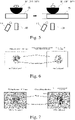
Fig. 5 is a schematic view showing an apparatus for observing and imaging a contact portion between rubber and a flat plate shaped glass by performing a friction test in a preliminary study of examples. -
Fig. 6 is a photograph showing contact portions between the flat plate shaped glass and the rubber after the flat plate shaped glass is slid 5mm on the rubber having a smooth surface at an apex in contact with the glass, in the preliminary examination of examples. -
Fig. 7 is a photograph showing contacting portions between the flat plate shaped glass and the rubber after the flat plate shaped glass is slid 5 mm on the rubber having pores of about 100 µm3 formed at the apex in contact with the glass, in the preliminary study of examples. -
Fig. 8 is a graph representing the areas of the contact portions between the flat plate shaped glass and the rubber after the flat plate shaped glass is slid 5mm on the rubber in the preliminary study of examples. -
Fig. 9 is a graph showing the static friction coefficients between the flat plate shaped glass and the rubber after the flat plate shaped glass is slid 5mm on the rubber in the preliminary study of examples. - Hereinafter, an embodiment of the present invention will be described with reference to the drawings. The following embodiments are shown merely as examples. The present invention is not limited to the following embodiment at all.
- First, a function of a rubber composition forming a shoe sole of the present invention will be described with reference to
Figs. 1 to 3 using an elastic body composed of the rubber composition as a model.Fig. 1 is a schematic view showing a surface of anelastic body 10 of this embodiment. Theelastic body 10 of this embodiment includesrubber 11 and activatedcarbon 12, and at least part of particles of the activatedcarbon 12 is exposed on the surface of theelastic body 10. - The present inventors have found that, in a shoe sole composed of a rubber composition, inclusion of particles having pores into which water hardly enters in the shoe sole can solve the above problem. And the present inventors have found that activated carbon is suitable as such particles.
- Since activated carbon has high hydrophobicity and the size of the pores open to the surface is generally about 1 µm, water hardly enters the pores even when water is in contact with the pores. The present inventors have found that when activated carbon having pores which have been considered unsuitable for the purpose of absorbing water is disposed on a shoe sole, air is released from the pores of activated carbon due to strain of the shoe sole at the time of the contact of the shoe sole with the ground via a water film, and a region in which the shoe sole and the ground are in direct contact with each other is formed, thereby have completed the present invention.
-
Fig. 2 is a schematic view showing theelastic body 10 composed of the same composition as the composition of the shoe sole of this embodiment before it makes contact with an object G wet by water W.Fig. 3 is a schematic view showing theelastic body 10 after it makes contact with the object G wet by the water W. The object G is herein represented as the ground wet by the water W. Further,Fig. 3 shows the state in which strain is being applied to the interface between the ground and theelastic body 10 by the strain applied to theelastic body 10 in the direction of the arrow. - The activated
carbon 12 has a large number of pores. When the pore distribution is measured by the mercury intrusion method, the activatedcarbon 12 usually exhibits a peak in any portion of the ranges of 0.5 µm or more and 3 µm or less. In other words, the activatedcarbon 12 has a large number of pores having a diameter of 0.5 µm to 3 µm centered on a diameter of about 1 µm. The activatedcarbon 12 is usually less hydrophilic (more hydrophobic) than porous particles such as silica or zeolite. For the activatedcarbon 12 having high hydrophobicity, water hardly enters the pores having a small diameter as described above because the contact angle increases. - As shown in
Fig. 3 , the activatedcarbon 12 exposed on the surface of theelastic body 10 in which strain is applied to the interface with the ground, releases air A from the pores. Although the amount of the air A released at this time is small, a gap is hardly formed between theelastic body 10 having low elasticity and the ground, so that the air A can be spread over a relatively wide range. When the air A is interposed between theelastic body 10 and the ground, a driving force that minimizes the sum of the surface free energies is exerted so that water is expelled between theelastic body 10 and the ground in the region where the air A is interposed, thereby allowing the surface of theelastic body 10 to be in direct contact with the ground. In this way, a large number of portions where theelastic body 10 and the ground come into direct contact with each other without water interposed therebetween are formed, so that theelastic body 10 exhibits high grip performance. - The
elastic body 10 of this embodiment exhibits the above-described characteristics by including a specific component such as activated carbon in the rubber composition. It is preferable that the rubber composition have specific physical property value in order for theelastic body 10 to exhibit the above-described characteristics. - The content of the activated carbon in the rubber composition is preferably 0.1% by mass or more because excellent wet-grip performance can be imparted to the
elastic body 10. The content of the activated carbon is more preferably 0.2% by mass or more, still more preferably 0.3% by mass or more. The content of the activated carbon is preferably 10% by mass or less because excellent strength can be imparted to theelastic body 10. The content of the activated carbon is more preferably 5% by mass or less, still more preferably 3% by mass or less. - The activated carbon can be made of a plant such as coconut shell, wood, or bamboo as a raw material, or can be made of peat, coal, plastic, or the like as a raw material. Preferably, the activated carbon is obtained from a plant raw material in that it has a large number of pores as described above.
- The activated carbon is preferably powdered activated carbon. It is preferable that the powdered activated carbon have a particle diameter in which a passing ratio of 150 µm mesh is 90% by mass or more. It is more preferable that the powdered activated carbon have a particle diameter in which a passing ratio of 75 µm mesh is 90% by mass or more. However, the activated carbon is not limited to powdered activated carbon, and can be granular activated carbon.
- As rubber in the rubber composition forming the
elastic body 10, an elastomer generally used for forming a shoe sole is used. Examples of the elastomer include a vulcanized rubber such as an isoprene rubber (IR), a natural rubber (NR), a butadiene rubber (BR), a styrene butadiene rubber (SBR), a chloroprene rubber (CR), an acrylonitrile butadiene rubber (NBR), a butyl rubber (IIR), or a silicone rubber (Si); and a thermoplastic elastomer such as a styrene-based elastomer (TPS), an olefin-based elastomer (TPO), a urethane-based elastomer (TPU), a polyester-based elastomer (TPEE), polyamide-based elastomer (TPA), polyvinyl chloride (PVC), or an ethylenevinyl acetate copolymer (EVA). IR, BR, SBR, and NR having excellent tensile strength, tear strength, and abrasion resistance are suitably selected. - The rubber composition can further include an inorganic filler such as silica, alumina, calcium carbonate, magnesium carbonate, carbon black, graphite, talc, or clay. When a portion other than activated carbon in the rubber composition is assumed as a matrix, it is preferable that the matrix itself have hydrophilicity. Therefore, an inorganic filler having excellent hydrophilicity is suitably included in the rubber composition. Silica having a large number of silanol groups (-Si-OH) which are hydrophilic functional groups on the particle surface is suitably selected for the inorganic filler included in the rubber composition.
- The silica can be wet silica or dry silica. The wet silica can be precipitated silica, gel silica, or colloidal silica. The dry silica can be flame silica or arc method silica. It is preferable that the silica be wet silica. It is preferable that the wet silica include aggregated particles in which a plurality of primary particles of about 20 µm are aggregated. Precipitated silica is suitable because it includes a large amount of aggregated particles which are easily decomposed into primary particles, is easy to handle, and is excellent in dispersibility of primary particles in rubber.
- The content of the silica in the rubber composition is preferably 10 parts by mass or more based on 100 parts by mass of the rubber. The content of the silica is more preferably 20 parts by mass or more, still more preferably 30 parts by mass or more. The content of the silica in the rubber composition is preferably 100 parts by mass or less based on 100 parts by mass of the rubber. The content of the silica is more preferably 90 parts by mass or less, still more preferably 80 parts by mass or more.
- It is preferable that the rubber composition include a silane coupling agent together with silica. The silane coupling agent in this embodiment has a hydrolyzable functional group at the end of the molecular chain, and can further have an organic functional group other than the hydrolyzable functional group. The hydrolyzable functional group can be an alkoxy group, a phenoxy group, a carboxyl group, an alkenyloxy group, or the like. The organic functional group can be an epoxy group, a vinyl group, an acryloyl group, a methacryloyl group, an amino group, a sulfide group, a mercapto group, or the like. The silane coupling agent in this embodiment preferably has a sulfide group. In other words, the silane coupling agent in this embodiment is preferably a sulfide-based silane coupling agent. The sulfide-based silane coupling agent can be a monosulfide-based silane coupling agent or a polysulfide-based silane coupling agent.
- Examples of the sulfide-based silane coupling agent include bis (3-triethoxysilylpropyl) tetrasulfide, bis (3-trimethoxysilylpropyl) tetrasulfide, bis (3-triethoxysilylpropyl) disulfide, mercaptopropyltrimethoxysilane, mercaptopropyltriethoxysilane, 3-trimethoxysilylpropyl-N,N-dimethylthiocarbamoyl-tetrasulfide, trimethoxysilylpropyl-mercaptobenzothiazole tetrasulfide, triethoxysilylpropyl-methacrylate-monosulfide, dimethoxymethylsilylpropyl-N, N-dimethylthiocarbamoyl-tetrasulfide, and 3-octanoylthio-1-propyltriethoxysilane. In this embodiment, a polysulfide-based silane coupling agent is preferred. The polysulfide-based silane coupling agent also works effectively in crosslinking of rubber. Among them, bis(3-triethoxysilylpropyl)tetrasulfide is preferred.
- The silane coupling agent can be included in the rubber composition at a ratio of 1 part by mass or more when the content of silica in the rubber composition is set to 100 parts by mass. The content of the silane coupling agent is preferably 6 parts by mass or more, more preferably 7 parts by mass or more, based on 100 parts by mass of the silica. The content of the silane coupling agent is preferably 20 parts by mass or less, more preferably 15 parts by mass or less, based on 100 parts by mass of the silica.
- The rubber composition can further include a compound having excellent hydrophilicity such as polyethylene glycol. The polyethylene glycol preferably has a mass average molecular weight of 2000 or more and 5000 or less. The mass average molecular weight is determined as a value in terms of polystyrene by the GPC method. The content of the polyethylene glycol in the rubber composition is preferably 0.1 parts by mass or more based on 100 parts by mass of the rubber. The content of the polyethylene glycol is more preferably 0.2 parts by mass or more, still more preferably 0.3 parts by mass or more. The content of the polyethylene glycol is more preferably 10 parts by mass or less, still more preferably 2 parts by mass or less.
- The rubber composition can include a plasticizer such as paraffin oil (liquid paraffin). It is preferable that the content of a highly hydrophobic plasticizer such as paraffin oil be 30 parts by mass or less based on 100 parts by mass of the rubber.
- In addition to the above components, the rubber composition of this embodiment can further include other optional components such as a vulcanizing agent, a vulcanization accelerator, a crosslinking accelerator, a filler, an antioxidant, or an ultraviolet absorber.
- The hardness of the rubber composition is preferably set to 50 or more and 80 or less as measured by a Type A durometer based on JIS K 6253-3:2012.
- The tensile elastic modulus of the rubber composition is preferably 12 MPa or less. The tensile elastic modulus of the rubber composition is more preferably 10 MPa or less, still more preferably 8 MPa or less. The tensile elastic modulus is preferably 1 MPa or more. The tensile elastic modulus can be determined from the slope of the stress-strain curve in the low strain region in the tensile test of JIS K6251:2017 "Rubber, vulcanized or thermoplastic-Determination of tensile stress-strain properties" (e.g., the slope of the stress/strain curve corresponding to between 2 strain points of ε 1 = 0.05%, and ε 2 = 0.25%).
- It is preferable that the rubber composition have a tensile strength of 15 MPa or more measured on the basis of JIS K6251:2017 "Rubber, vulcanized or thermoplastic-Determination of tensile stress-strain properties" in terms of exhibiting properties required for a shoe sole. It is preferable that the rubber composition have a tensile elongation at break of 350% or more measured based on the same JIS. The tear strength determined on the basis of JIS K6252-1:2015 "Rubber, vulcanized or thermoplastic -- Determination of tear strength - Part 1: Trouser, angle and crescent test pieces" is preferably 40N/mm or more. The tear strength can be measured using an angle-shaped test piece (without notches).
- The tensile strength of the rubber composition is more preferably 18 MPa or more, still more preferably 20 MPa or more. The tensile strength is usually 50 MPa or less.
- The tensile elongation at break of the rubber composition is 400% or more, still more preferably 500% or more. The tensile elongation at break is usually 1000% or less.
- The tear strength of the rubber composition is more preferably 50N/mm or more, still more preferably 60N/mm or more. The tensile strength is usually 120N/mm or less.
- The rubber composition of this embodiment can be produced by kneading the above components, that is, the rubber, the activated carbon, and, optionally, silica, the silane coupling agent, polyethylene glycol, and the like by any method generally carried out by a person skilled in the art. For example, as the kneading method, a method of kneading the above components using an open roll or a kneader can be used.
- The shoe sole of this embodiment exhibits high wet-grip performance by being composed of the rubber composition, as described above while exemplifying the aforementioned
elastic body 10. -
Fig. 4 is a schematic view showing ashoe 20 of one embodiment, which has the rubber composition (elastic body) provided at a ground engaging position of ashoe sole 23. Theshoe 20 includes anupper member 21 covering the upper surface of the foot, amidsole 22 arranged on the lower side of theupper member 21, and an outer sole 23 in contact with the ground. - In this embodiment, the
shoe 20 includes both themidsole 22 and the outer sole 23, but theshoe 20 does not necessarily include both of them. That is, theshoe 20 can be configured to include only the outer sole 23 as the shoe sole, and include nomidsole 22. - As described above, since the shoe sole according to this embodiment is composed of a rubber composition including rubber and activated carbon, high wet-grip performance can be exhibited.
- Preferably, the rubber composition of the shoe sole according to this embodiment has a tensile elastic modulus of 10 MPa or less. Therefore, the wet-grip performance of the shoe sole can be effectively enhanced in such a case.
- Preferably, the shoe sole according to this embodiment has a content of the activated carbon in the rubber composition being 0.1% by mass or more and 5% by mass or less. In such a case, excellent wet-grip performance and excellent strength can be imparted to the rubber composition.
- Preferably, in the shoe sole according to this embodiment, the rubber composition further includes silica, and the content of the silica in the rubber composition is 10 parts by mass or more and 100 parts by mass or less based on 100 parts by mass of the rubber. In such a case, the hydrophilicity of the rubber composition can be suitably enhanced.
- Preferably, in the shoe sole according to this embodiment, the rubber composition further includes polyethylene glycol, and the content of the polyethylene glycol in the rubber composition is 0.1 parts by mass or more and 10 parts by mass or less based on 100 parts by mass of the rubber. In such a case, the hydrophilicity of the rubber composition can be suitably enhanced.
- Further, since the shoe according to the present invention includes the above-described shoe sole, high wet-grip performance can be exhibited.
- Although further detailed description will not be repeated here, even if there are any matters not described directly above, conventionally known technical matters for shoes and rubber compositions can be appropriately adopted in the present invention. In other words, the present invention is not limited to the above illustration in any way.
- Hereinafter, the present invention will be elucidated by way of specific examples and comparative examples of the present invention. However, the present invention is not limited to the following examples.
- First, in order to investigate the influence on wet-grip performance due to pores formed on the surface of the rubber, a friction test of a rubber having pores formed on its surface and a rubber having no pores formed thereon with a flat plate shaped glass not wetted with water and a flat plate shaped glass wetted with water was performed.
- All of the rubbers used in the friction test were hemispherical silicone rubbers having a radius of curvature of 7.6 mm, one of which was a rubber SP1 having a smooth surface on which a recess or the like was not provided at an apex, and the other was a rubber SP2 having a recess (pore) of about 100 µm3 formed at an apex in contact with the glass. Fluorescent particles were kneaded into these rubbers in order to facilitate observation of the contact state with the flat plate shaped glass during the friction test.
- As shown on the left of
Fig. 5 , each rubber SP1,SP2 was placed on a dry (non-lubricated condition) or water-wetted (water-lubricated condition) flat plate shaped glass GL so as to have their apexes contacting the surface of the flat plate shaped glass GL. Thereafter, as shown on the right side ofFIG. 5 , with the normal load F=0.0981N of the apex of the rubber SP1,SP2, and at a sliding speed of 0.10 mm/s, the flat plate shaped glass GL on the rubber SP1,SP2, was slid 5.0mm in a direction parallel to the surface thereof. - During this time, in each of the non-lubricated conditions and the water-lubricated conditions, the true contact part of the rubber SP1,SP2 and the flat plate shaped glass GL was continued to be observed using the device shown in
Fig. 5 . After the flat plate shaped glass GL was slid 5.0mm, the true contact part was imaged. The device includes a light source LS for illuminating the true contact part and a CCD device CD for imaging the true contact part. The true contact part was observed and imaged by combining the total reflection method and the optical interference method. -
Fig. 6 and Fig. 7 show photographs of the real contact parts respectively imaged under the non-lubricated conditions and the water lubricated conditions. InFig. 6 and Fig. 7 , the black regions are the true contact parts, and the white regions are the regions where the flat plate shaped glass GL is not in contact with the rubber SP1,SP2. InFig. 7 , the gray region is a part where the flat plate shaped glass GL is in contact with water (is wet), and the white region is a part where the flat plate-shaped glass GL is not in contact with any of water and the rubber SP1,SP2 (air is present). Note that, although not shown, the presence of air remains only in the part where the pores are formed at the true contact part between the rubber SP2 and the flat plate shaped glass GL before sliding the flat plate shaped glass GL in the water lubricated conditions, and when the flat plate shaped glass GL is slid, a phenomenon in which bubbles diffuse over a wide range of the true contact part was observed. The area of the black region (true contact part) derived from the photographs ofFig. 6 and Fig. 7 (area of the true contact part) is derived, and a graph of the area is shown inFig. 8 . - Furthermore, the static friction coefficient between the rubber SP1,SP2 and the flat plate shaped glass GL was measured after the flat plate shaped glass GL was slid 5.0 mm.
Fig. 9 shows the measured static friction coefficient. - As can be understood from
Fig. 6 to Fig. 9 , in the non-lubricated conditions, although the area of the true contact part between the rubber SP2 and the flat plate shaped glass GL after the flat plate shaped glass GL is slid 5.0mm was found to slightly decrease in comparison with the rubber SP1 due to the effect of pores formed on the surface, it can be seen that the friction coefficient is almost the same as the rubber SP1. Therefore, it can be seen that the grip performance in the non-lubricated conditions is hardly affected by the pores formed on the surface. On the other hand, in the water-lubricated conditions, the area of the true contact part between the rubber SP2 and the flat plate shaped glass GL after the flat plate shaped glass GL is slid 5.0mm is increased by about 38% compared with the rubber SP1, and the friction coefficient is also increased by about 27%. In addition, for the rubber SP2 having pores formed on the surface, it can be seen that the friction coefficient is improved in the water-lubricated conditions compared with the non-lubricated conditions. From this result, it can be seen that in the rubber in which pores are formed on the surface, the wet-grip performance in the water lubricated conditions is greatly improved so as to be able to exceed the non-lubricated conditions. - Next, in order to investigate the wet-grip performance for various rubber compositions according to the present invention, a friction test was performed on various rubber compositions according to the following Examples and Comparative Examples.
- As a material of rubber to be blended into the rubber composition, the following materials were prepared.
- IR: Isoprene rubber (high cis type, Mooney viscosity: approx. 82)
- SiO2: Precipitated silica
- CA: Silane coupling agent (bis(3-triethoxysilylpropyl)tetrasulfide)
- PEG : Polyethylene glycol (mass average molecular weight: about 3000, melting point: about 60°C)
- PO: Liquid paraffin (kinematic viscosity: about 40 mm2/s, molecular weight: 430) St: Stearic acid
- ZnO: Active zinc flour
- AO: 2,6-di-tert-butyl-4-methylphenol
- OA: Organic amine vulcanization accelerator
- These materials were blended and kneaded in order by the blending ratios (mass ratios) shown in Table 1 below 3 separate times to prepare rubbers (a) to (d). Specifically, various IRs which are materials for primary kneading of the rubber raw material shown in Table 1 below were kneaded using a kneader (device name : DS3-10MWB, manufactured by Nippon Spindle Manufacturing Co., Ltd.) for 1 minute at 80 to 130°C, thereby obtaining a primary kneaded material. To the primary kneading material thus obtained, SiO2, PO, CA, St, and ZnO as materials for secondary kneading were blended by the blending ratios (mass ratios) shown in Table 1 below, and kneaded using a kneader (device name : DS3-10MWB, manufactured by Nippon Spindle Manufacturing Co., Ltd.) at 80 to 130°C for 10 minutes to obtain a secondary kneading material. To the secondary kneading material thus obtained, OA, PEG, and AO as materials for tertiary kneading were blended by the blending ratios (mass ratios) shown in Table 1 below, and kneaded using an open roll (device name : KD-M2-8, manufactured by KNEADER MACHINERY CO., LTD.) at 25 to 60°C for 10 minutes to obtain rubbers (a) to (d).
Table 1 Material (a) (b) (c) (d) Primary IR 100 100 100 100 Secondary SiO 2 20 40 60 80 PO 20 20 20 20 CA 2.0 4.0 6.0 8.0 St 2 2 2 2 ZnO 5 5 5 5 Tertiary OA 1 1 1 1 PEG 1 1 1 1 AO 1 1 1 1 Total 152 174 196 218 - As activated carbon to be blended into the rubber composition, the following materials were prepared.
- Activated Carbon A:. Activated carbon powder neutral (raw material: wood scrap) manufactured by Fujifilm Wako Pure Chemical Industries, Ltd.
- Activated carbon B: YD32-1 (raw material: coconut shell charcoal) manufactured by Sanei Corporation
- Activated carbon C: Takesumipowder-150 (raw material: bamboo charcoal) manufactured by Maeda Inc.
- In addition to the rubber and the activated carbon described above, the following materials were prepared as other materials to be blended into the rubber composition.
- S: Sulfur
- DM: di-2-benzothiazolyl disulfide
- D: 1,3-diphenylguanidine.
- The rubber thus prepared, the activated carbon, and the other materials were blended in the blending ratios (mass ratios) shown in Table 2 below, and kneaded at 25 to 60 °C for 10 minutes using an open roll (device name: KD-M2-8, manufactured by KNEADER MACHINERY CO., LTD.). Thus, the rubber compositions were obtained.

- The hardness of each of the rubber compositions of Comparative Examples 1 to 4 and Examples 1 to 10 was measured using "Asker Rubber Hardness Meter Type A" manufactured by Kobunshi Keiki Co., Ltd., as a Type A durometer based on JIS K 6253-3:2012. The results are shown in Table 3 below.
- After the rubber compositions of Comparative Examples 1 to 4 and Examples 1 to 10 were each cut into a flat plate having a thickness of 4 mm, the flat plates were each cut using a dumbbell-shaped No. 2 punched mold based on JIS K 6251:2017 to obtain dumbbell-shaped test pieces for the respective resin compositions. For these test pieces, the tensile strength and the elongation at break of each of the test pieces were measured by performing a tensile test based on JIS K 6251:2017 using Autograph Precision Universal Testing Machine (Product name: "AG-50kNIS MS type" manufactured by Shimadzu Corporation) at 23°C and at a crosshead speed of 500 mm/min. The results are shown in Table 3 below.
- After the rubber compositions of Comparative Examples 1 to 4 and Examples 1 to 10 were formed into a flat plate shape, they were cut into strips having a length of 33±3 mm, a width of 5±1 mm, and a thickness of 2±1 mm to obtain test pieces. The storage modulus [23°C] at 23°C of each of these test pieces was measured using a dynamic viscoelasticity measuring device "Rheogel-E4000" manufactured by UBE as a measuring device under the following conditions according to JIS K 7244-4:1999 (the same as in ISO 6721-4:1994), and it was set as an initial elastic modulus of each of the rubber compositions. The results are shown in Table 3.
- Measuring mode: Tensile mode of sine wave distortion
- Frequency: 10 Hz
- Distance between chucks: 20 mm
- Load: Automatic static load
- Dynamic strain: 5 µm
- Temperature rising rate: 2°C/min
- The rubber compositions of Comparative Examples 1 to 4 and Examples 1 to 10 were heated at 160°C for 8 to 12 minutes using a mold for a flat plate having a thickness of 2 mm to obtain flat plate shaped test pieces having a thickness of 2 mm. For these test pieces, the tear strength of each of the test pieces was measured by performing the tear test based on JIS K 6252:2007 using a die cut in the form of a test piece of the standard shape. The results are shown in Table 3 below.
- Test pieces each molded into a flat plate shape having a thickness of 2 mm were obtained by introducing the rubber composition of each of Comparative Examples 1 to 4 and Examples 1 to 10 into a flat plate shaped mold, followed by pressing at 160°C for 8 to 12 minutes (a predetermined appropriate vulcanization time T90 + 2 minutes) using a device (name: Ram diameter of 12" 150 tons (manufactured by Nimei Koki Co., Ltd.)). The static friction coefficient and the dynamic friction coefficient in the water lubricated conditions were measured by wetting these test pieces with water and sliding the probe on the test pieces. Specifically, at an ambient temperature of 24 °C and a relative humidity (RH) of 75%, the surface of each of the test pieces molded into a flat plate shape was wet with water, and an aluminum probe having a columnar shape (10 mm in diameter and 6.0 mm in length) was disposed on the water-wet surface of the test piece so that the surface of the test piece and the side face of the columnar body were in contact with each other. Thereafter, the columnar body was slid on the surface of the test piece in a direction orthogonal to the length direction of the probe at a vertical load of 0.981 N and a sliding speed of 10.0 mm/s, and the static friction coefficient and the dynamic friction coefficient at that time were measured. The results are shown in Table 3 below.
Table 3 Rubber Type Activated carbon phr/type Hardness HA Tensile strength MPa Elongation at break % Initial elastic modulus MPa Tear strength N/mm Static friction coefficient Dynamic friction coefficient C. Ex. 1 (a) 0 48 20.5 567.3 2.5 42.0 0.67 0.61 C. Ex. 2 (b) 0 60 24.8 558.6 5.6 68.3 0.57 0.50 C. Ex. 3 (c) 0 70 24.9 510.9 11.7 92.8 0.51 0.46 C. Ex. 4 (d) 0 79 22.9 426.6 18.6 90.2 0.39 0.34 C. Ex. 2 (b) 0 60 24.8 558.6 5.6 68.3 0.57 0.50 Ex. 1 (b) 0.1/A 59 24.7 503.5 5.7 63.3 0.58 0.52 Ex. 2 (b) 0.5/A 60 25.4 586.0 5.6 68.2 0.61 0.55 Ex. 3 (b) 1/A 59 25.2 608.1 5.3 68.6 0.62 0.62 Ex. 4 (b) 5/A 59 23.0 624.9 5.7 71.0 0.84 0.74 Ex. 5 (b) 10/A 60 20.4 593.2 5.8 65.1 0.74 0.68 Ex. 6 (a) 5/A 48 20.7 642.5 2.4 36.7 1.01 0.88 Ex. 4 (b) 5/A 59 23.0 624.9 5.7 71.0 0.84 0.74 Ex. 7 (c) 5/A 69 22.5 578.2 10.8 92.1 0.61 0.53 Ex. 8 (d) 5/A 77 21.5 514.0 17.2 96.2 0.45 0.43 C. Ex. 2 (b) 0 60 24.8 558.6 5.6 68.3 0.57 0.50 Ex. 4 (b) 5/A 59 23.0 624.9 5.7 71.0 0.84 0.74 Ex. 9 (b) 5/B 60 13.0 412.9 6.0 58.5 0.74 0.62 Ex. 10 (b) 5/C 61 23.2 566.5 6.2 55.3 0.81 0.75 - As is apparent from Table 3, it can be seen that the rubber compositions of Examples 1 to 10 including activated carbon are superior in the static friction coefficient and the dynamic friction coefficient in the water lubricated conditions compared with the rubber alone of Comparative Examples 1 to 4 including no activated carbon. For example, it can be seen that the rubber compositions of Examples 1 to 5 including the rubber (b) and activated carbon are superior in the static friction coefficient and the dynamic friction coefficient in the water lubricated conditions compared with the rubber (b) alone accompanied by no activated carbon according to Comparative Example 2.
- Note that, although the rubber (a) alone according to Comparative Example 1 having a smaller content of the silane coupling agent than the rubber (b) is excellent in terms of the static friction coefficient and the dynamic friction coefficient, the mechanical strength such as hardness is greatly inferior to that of the rubber compositions of Examples 1 to 5. Therefore, it can be seen that the rubber compositions of Examples 1 to 5 have increased static friction coefficient and dynamic friction coefficient in the water lubricated conditions while maintaining sufficient mechanical strength. In this regard, it can be seen that the rubber compositions of Examples 1 to 3 in which the content of the activated carbon is 1 phr or less are excellent in terms of mechanical strength because the tensile strength is kept higher than that of the rubber compositions of Examples 4 and 5 in which the content of the activated carbon is 5 phr or more.
- Note that, when the same test was performed using Shirasagi C M191, Shirasagi M M247, Carborafin M227, and Carborafin-6 M227 manufactured by Osaka Gas Chemical, which are other commercially available industrial activated carbons, respectively, in place of the activated carbon A of Examples 1 to 8, it was confirmed that almost the same effect as that of the activated carbon A was obtained. That is, it was also confirmed that the rubber compositions including these activated carbons have increased static friction coefficient and dynamic friction coefficient in the water lubricated conditions while keeping sufficient mechanical strength.
-
- 10: Elastic body
- 11: Rubber
- 12: Activated carbon
Claims (6)
- A shoe sole composed of a rubber composition comprising rubber and activated carbon.
- The shoe sole according to claim 1, wherein a tensile elastic modulus of the rubber composition is 10 MPa or less.
- The shoe sole according to claim 1 or 2, wherein a content of the activated carbon in the rubber composition is 0.1% by mass or more and 5% by mass or less..
- The shoe sole according to any one of claims 1 to 3, wherein the rubber composition further comprises silica, and a content of the silica in the rubber composition is 10 parts by mass or more and 100 parts by mass or less based on 100 parts by mass of the rubber.
- The shoe sole according to any one of claims 1 to 4, wherein the rubber composition further comprises polyethylene glycol, and a content of the polyethylene glycol in the rubber composition is 0.1 parts by mass or more and 10 parts by mass or less based on 100 parts by mass of the rubber.
- A shoe comprising the shoe sole according to any one of claims 1 to 5.
Applications Claiming Priority (1)
| Application Number | Priority Date | Filing Date | Title |
|---|---|---|---|
| PCT/JP2020/009680 WO2021176685A1 (en) | 2020-03-06 | 2020-03-06 | Shoe sole, and shoe |
Publications (2)
| Publication Number | Publication Date |
|---|---|
| EP4101332A1 true EP4101332A1 (en) | 2022-12-14 |
| EP4101332A4 EP4101332A4 (en) | 2023-01-25 |
Family
ID=77613996
Family Applications (1)
| Application Number | Title | Priority Date | Filing Date |
|---|---|---|---|
| EP20923265.1A Pending EP4101332A4 (en) | 2020-03-06 | 2020-03-06 | Shoe sole, and shoe |
Country Status (5)
| Country | Link |
|---|---|
| US (1) | US20230119951A1 (en) |
| EP (1) | EP4101332A4 (en) |
| JP (1) | JP7531576B2 (en) |
| CN (1) | CN115209761A (en) |
| WO (1) | WO2021176685A1 (en) |
Families Citing this family (2)
| Publication number | Priority date | Publication date | Assignee | Title |
|---|---|---|---|---|
| DE112022007007T5 (en) * | 2022-04-08 | 2025-01-30 | Asics Corporation | SHOE SOLE ELEMENT AND SHOE |
| US12507757B2 (en) * | 2023-04-12 | 2025-12-30 | Acushnet Company | Golf shoe with traction elements |
Family Cites Families (9)
| Publication number | Priority date | Publication date | Assignee | Title |
|---|---|---|---|---|
| DE2536674C3 (en) * | 1975-08-18 | 1979-09-27 | Deutsche Gold- Und Silber-Scheideanstalt Vormals Roessler, 6000 Frankfurt | Crosslinkable mixtures based on rubber, organosilanes and silicate fillers |
| JP3717260B2 (en) * | 1997-02-18 | 2005-11-16 | 横浜ゴム株式会社 | Rubber composition for studless tire |
| JP4462396B2 (en) * | 2000-08-09 | 2010-05-12 | 青木安全靴製造株式会社 | Rubber composition for shoe sole, shoe sole using the rubber composition, and shoe |
| JP4860033B2 (en) | 2000-11-06 | 2012-01-25 | 株式会社ムーンスター | Rubber composition for shoes and rubber parts for shoes using the same |
| FR2858623B1 (en) | 2003-08-08 | 2006-01-13 | Rhodia Polyamide Intermediates | POLYURETHANE FOAMS, MANUFACTURING METHOD AND USE THEREOF |
| TWI386419B (en) * | 2004-12-20 | 2013-02-21 | Ube Industries | Process for producing polybutadiene rubber and rubber composition |
| WO2007007412A1 (en) | 2005-07-14 | 2007-01-18 | Moonstar Chemical Corporation | Rubber composition for shoe sole |
| EP2045287A4 (en) * | 2006-07-26 | 2010-03-03 | Ube Industries | RUBBER COMPOSITION FOR SHOE SOLE AND RUBBER FOAM COMPOSITION |
| CN112533506B (en) * | 2018-06-04 | 2023-03-28 | 耐克创新有限合伙公司 | Two-part sole structure and use thereof |
-
2020
- 2020-03-06 EP EP20923265.1A patent/EP4101332A4/en active Pending
- 2020-03-06 WO PCT/JP2020/009680 patent/WO2021176685A1/en not_active Ceased
- 2020-03-06 US US17/905,460 patent/US20230119951A1/en active Pending
- 2020-03-06 CN CN202080097887.4A patent/CN115209761A/en active Pending
- 2020-03-06 JP JP2022504912A patent/JP7531576B2/en active Active
Also Published As
| Publication number | Publication date |
|---|---|
| US20230119951A1 (en) | 2023-04-20 |
| WO2021176685A1 (en) | 2021-09-10 |
| CN115209761A (en) | 2022-10-18 |
| JPWO2021176685A1 (en) | 2021-09-10 |
| JP7531576B2 (en) | 2024-08-09 |
| EP4101332A4 (en) | 2023-01-25 |
Similar Documents
| Publication | Publication Date | Title |
|---|---|---|
| JP5549469B2 (en) | Rubber composition and pneumatic tire using the same | |
| EP3272803B1 (en) | Tire rubber composition and pneumatic tire | |
| EP1741745B1 (en) | Rubber composition for tire tread and pneumatic tire comprising the same | |
| EP4215578A1 (en) | Anti-slip member for wearable article or sports article, wearable article, and sports article | |
| JP6134556B2 (en) | Rubber composition and method for producing rubber composition | |
| JP2011046299A (en) | Pneumatic tire | |
| US20230119951A1 (en) | Shoe sole and shoe | |
| WO2017033986A1 (en) | Rubber composition, molded rubber article, and method for producing same | |
| EP3243874A1 (en) | Rubber composition including conjugated diene polymer and olefin polymer and tire using same | |
| JP2018177873A (en) | Pneumatic tire | |
| KR20170074918A (en) | Chloroprene rubber composition, vulcanized molded article, and anti-vibration rubber | |
| JP2008280528A (en) | Rubber composition for liquid-sealed vibration isolating rubber | |
| JP2014062141A (en) | Rubber composition for tire, and winter tire | |
| CN102604166B (en) | Highly damping rubber composition and vibration suppressing member | |
| JP2009007395A (en) | Rubber composition, molded article of the same and wiper blade by using the same | |
| JP5213369B2 (en) | Rubber composition for cap tread of studless tire and studless tire | |
| CN107849312B (en) | Rubber composition for tire and pneumatic tire | |
| JP2009001603A (en) | Rubber sheet for rubber support coating, and coating material for rubber support | |
| JP2014062167A (en) | Rubber composition for winter tire, and winter tire | |
| JPH0412750B2 (en) | ||
| JP6713678B2 (en) | Rubber composition, rubber molded article and method for producing rubber molded article | |
| JP4867015B2 (en) | Rubber composition and method for producing the same | |
| JP2019085792A (en) | Fender | |
| EP4230434A1 (en) | Organosilicon compound graft copolymer, and tire rubber composition containing said copolymer | |
| JP2001161404A (en) | Shoe sole |
Legal Events
| Date | Code | Title | Description |
|---|---|---|---|
| STAA | Information on the status of an ep patent application or granted ep patent |
Free format text: STATUS: THE INTERNATIONAL PUBLICATION HAS BEEN MADE |
|
| PUAI | Public reference made under article 153(3) epc to a published international application that has entered the european phase |
Free format text: ORIGINAL CODE: 0009012 |
|
| STAA | Information on the status of an ep patent application or granted ep patent |
Free format text: STATUS: REQUEST FOR EXAMINATION WAS MADE |
|
| 17P | Request for examination filed |
Effective date: 20220909 |
|
| AK | Designated contracting states |
Kind code of ref document: A1 Designated state(s): AL AT BE BG CH CY CZ DE DK EE ES FI FR GB GR HR HU IE IS IT LI LT LU LV MC MK MT NL NO PL PT RO RS SE SI SK SM TR |
|
| A4 | Supplementary search report drawn up and despatched |
Effective date: 20221223 |
|
| RIC1 | Information provided on ipc code assigned before grant |
Ipc: A43B 13/22 20060101ALI20221219BHEP Ipc: A43B 13/04 20060101ALI20221219BHEP Ipc: A43B 13/02 20220101AFI20221219BHEP |
|
| DAV | Request for validation of the european patent (deleted) | ||
| DAX | Request for extension of the european patent (deleted) | ||
| STAA | Information on the status of an ep patent application or granted ep patent |
Free format text: STATUS: EXAMINATION IS IN PROGRESS |
|
| 17Q | First examination report despatched |
Effective date: 20250304 |