EP4101019B1 - Kohlenstofffaserelektrode mit verbessertem aktivem material und bleisäurebatterie damit - Google Patents
Kohlenstofffaserelektrode mit verbessertem aktivem material und bleisäurebatterie damit Download PDFInfo
- Publication number
- EP4101019B1 EP4101019B1 EP21709235.2A EP21709235A EP4101019B1 EP 4101019 B1 EP4101019 B1 EP 4101019B1 EP 21709235 A EP21709235 A EP 21709235A EP 4101019 B1 EP4101019 B1 EP 4101019B1
- Authority
- EP
- European Patent Office
- Prior art keywords
- lead
- current collector
- negative
- acid battery
- paste
- Prior art date
- Legal status (The legal status is an assumption and is not a legal conclusion. Google has not performed a legal analysis and makes no representation as to the accuracy of the status listed.)
- Active
Links
Images




Classifications
-
- H—ELECTRICITY
- H01—ELECTRIC ELEMENTS
- H01M—PROCESSES OR MEANS, e.g. BATTERIES, FOR THE DIRECT CONVERSION OF CHEMICAL ENERGY INTO ELECTRICAL ENERGY
- H01M10/00—Secondary cells; Manufacture thereof
- H01M10/06—Lead-acid accumulators
- H01M10/08—Selection of materials as electrolytes
-
- H—ELECTRICITY
- H01—ELECTRIC ELEMENTS
- H01M—PROCESSES OR MEANS, e.g. BATTERIES, FOR THE DIRECT CONVERSION OF CHEMICAL ENERGY INTO ELECTRICAL ENERGY
- H01M4/00—Electrodes
- H01M4/02—Electrodes composed of, or comprising, active material
- H01M4/36—Selection of substances as active materials, active masses, active liquids
- H01M4/38—Selection of substances as active materials, active masses, active liquids of elements or alloys
-
- H—ELECTRICITY
- H01—ELECTRIC ELEMENTS
- H01M—PROCESSES OR MEANS, e.g. BATTERIES, FOR THE DIRECT CONVERSION OF CHEMICAL ENERGY INTO ELECTRICAL ENERGY
- H01M4/00—Electrodes
- H01M4/02—Electrodes composed of, or comprising, active material
- H01M4/36—Selection of substances as active materials, active masses, active liquids
- H01M4/48—Selection of substances as active materials, active masses, active liquids of inorganic oxides or hydroxides
- H01M4/56—Selection of substances as active materials, active masses, active liquids of inorganic oxides or hydroxides of lead
-
- H—ELECTRICITY
- H01—ELECTRIC ELEMENTS
- H01M—PROCESSES OR MEANS, e.g. BATTERIES, FOR THE DIRECT CONVERSION OF CHEMICAL ENERGY INTO ELECTRICAL ENERGY
- H01M4/00—Electrodes
- H01M4/02—Electrodes composed of, or comprising, active material
- H01M4/62—Selection of inactive substances as ingredients for active masses, e.g. binders, fillers
- H01M4/624—Electric conductive fillers
- H01M4/625—Carbon or graphite
-
- H—ELECTRICITY
- H01—ELECTRIC ELEMENTS
- H01M—PROCESSES OR MEANS, e.g. BATTERIES, FOR THE DIRECT CONVERSION OF CHEMICAL ENERGY INTO ELECTRICAL ENERGY
- H01M4/00—Electrodes
- H01M4/02—Electrodes composed of, or comprising, active material
- H01M4/62—Selection of inactive substances as ingredients for active masses, e.g. binders, fillers
- H01M4/627—Expanders for lead-acid accumulators
-
- H—ELECTRICITY
- H01—ELECTRIC ELEMENTS
- H01M—PROCESSES OR MEANS, e.g. BATTERIES, FOR THE DIRECT CONVERSION OF CHEMICAL ENERGY INTO ELECTRICAL ENERGY
- H01M4/00—Electrodes
- H01M4/02—Electrodes composed of, or comprising, active material
- H01M4/62—Selection of inactive substances as ingredients for active masses, e.g. binders, fillers
- H01M4/628—Inhibitors, e.g. gassing inhibitors, corrosion inhibitors
-
- H—ELECTRICITY
- H01—ELECTRIC ELEMENTS
- H01M—PROCESSES OR MEANS, e.g. BATTERIES, FOR THE DIRECT CONVERSION OF CHEMICAL ENERGY INTO ELECTRICAL ENERGY
- H01M4/00—Electrodes
- H01M4/02—Electrodes composed of, or comprising, active material
- H01M4/64—Carriers or collectors
- H01M4/66—Selection of materials
- H01M4/663—Selection of materials containing carbon or carbonaceous materials as conductive part, e.g. graphite, carbon fibres
-
- H—ELECTRICITY
- H01—ELECTRIC ELEMENTS
- H01M—PROCESSES OR MEANS, e.g. BATTERIES, FOR THE DIRECT CONVERSION OF CHEMICAL ENERGY INTO ELECTRICAL ENERGY
- H01M4/00—Electrodes
- H01M4/02—Electrodes composed of, or comprising, active material
- H01M4/64—Carriers or collectors
- H01M4/66—Selection of materials
- H01M4/68—Selection of materials for use in lead-acid accumulators
-
- H—ELECTRICITY
- H01—ELECTRIC ELEMENTS
- H01M—PROCESSES OR MEANS, e.g. BATTERIES, FOR THE DIRECT CONVERSION OF CHEMICAL ENERGY INTO ELECTRICAL ENERGY
- H01M4/00—Electrodes
- H01M4/02—Electrodes composed of, or comprising, active material
- H01M4/64—Carriers or collectors
- H01M4/70—Carriers or collectors characterised by shape or form
- H01M4/72—Grids
- H01M4/73—Grids for lead-acid accumulators, e.g. frame plates
-
- H—ELECTRICITY
- H01—ELECTRIC ELEMENTS
- H01M—PROCESSES OR MEANS, e.g. BATTERIES, FOR THE DIRECT CONVERSION OF CHEMICAL ENERGY INTO ELECTRICAL ENERGY
- H01M4/00—Electrodes
- H01M4/02—Electrodes composed of, or comprising, active material
- H01M4/64—Carriers or collectors
- H01M4/70—Carriers or collectors characterised by shape or form
- H01M4/72—Grids
- H01M4/74—Meshes or woven material; Expanded metal
- H01M4/747—Woven material
-
- H—ELECTRICITY
- H01—ELECTRIC ELEMENTS
- H01M—PROCESSES OR MEANS, e.g. BATTERIES, FOR THE DIRECT CONVERSION OF CHEMICAL ENERGY INTO ELECTRICAL ENERGY
- H01M4/00—Electrodes
- H01M4/02—Electrodes composed of, or comprising, active material
- H01M4/64—Carriers or collectors
- H01M4/70—Carriers or collectors characterised by shape or form
- H01M4/80—Porous plates, e.g. sintered carriers
- H01M4/801—Sintered carriers
- H01M4/805—Sintered carriers of powdered and fibrous material
-
- H—ELECTRICITY
- H01—ELECTRIC ELEMENTS
- H01M—PROCESSES OR MEANS, e.g. BATTERIES, FOR THE DIRECT CONVERSION OF CHEMICAL ENERGY INTO ELECTRICAL ENERGY
- H01M4/00—Electrodes
- H01M4/02—Electrodes composed of, or comprising, active material
- H01M2004/026—Electrodes composed of, or comprising, active material characterised by the polarity
- H01M2004/027—Negative electrodes
-
- Y—GENERAL TAGGING OF NEW TECHNOLOGICAL DEVELOPMENTS; GENERAL TAGGING OF CROSS-SECTIONAL TECHNOLOGIES SPANNING OVER SEVERAL SECTIONS OF THE IPC; TECHNICAL SUBJECTS COVERED BY FORMER USPC CROSS-REFERENCE ART COLLECTIONS [XRACs] AND DIGESTS
- Y02—TECHNOLOGIES OR APPLICATIONS FOR MITIGATION OR ADAPTATION AGAINST CLIMATE CHANGE
- Y02E—REDUCTION OF GREENHOUSE GAS [GHG] EMISSIONS, RELATED TO ENERGY GENERATION, TRANSMISSION OR DISTRIBUTION
- Y02E60/00—Enabling technologies; Technologies with a potential or indirect contribution to GHG emissions mitigation
- Y02E60/10—Energy storage using batteries
Definitions
- the present inventions relate to the field of batteries.
- the present inventions more specifically relate to the field of lead-acid batteries.
- Lead-acid batteries are known.
- Lead-acid batteries are generally made up of plates of lead and separate plates of lead dioxide, which are submerged into an electrolyte or acid solution.
- the lead, lead dioxide and electrolyte provide a chemical means of storing electrical energy which can perform useful work when the terminals of a battery are connected to an external circuit.
- the plates of lead, lead dioxide and electrolyte, together with a battery separator, are contained within a housing of a polypropylene material.
- Start-stop vehicles can place various demands on a battery.
- Vehicles also are increasing in the electrical load of components, for which the electrical load must be supported through a stop event.
- Vehicle manufacturers are seeking a cost effective, reliable energy storage solution that ensures a seamless customer experience. Therefore, there is a need for consistent reliable performance from a lead-acid battery.
- a robust battery which can support additional prolonged/intermittent loads and support optimal duration and frequency of stop events.
- a need exists for a lead-acid battery which provides sustainable and fast rechargeability (e.g., optimized charge acceptance) and consistent cycling performance. Accordingly, a need exists for an AGM lead-acid battery with improved performance over existing devices,
- US9543589 discloses a lead-acid battery comprising as a current collector a carbon fibre material, wherein the carbon fibre material comprises a woven or a non-woven carbon fibre material.
- the lead-acid battery further comprises Pb-based particles attached to the conductive fibre material formed by impregnating a paste comprising Pb-based particles, sulphuric acid, and water into the conductive fibre material.
- the paste also comprises an expander, such as lignosulphonate.
- the paste comprising Pb-based particles includes barium sulphate.
- US2012328940 discloses a lead-acid battery comprising of a plurality of carbon nanotube fibers comprising at least one surfactant or dispersing aid, such as barium sulfate
- WO2010059729 discloses a lead-acid battery comprising a an electrode active material and carbon.
- the active material such as lead oxide is provided on fibers formed into a mat, which can be woven and non-woven.
- the fibers may also be coated with carbon.
- the fiber arrays may act as current collectors for the electrodes, loaded for instance with anode active material
- WO2017060837 discloses a lead-acid battery including at least one electrode comprising a carbon fibre material impregnated with an active material comprising a paste comprising Pb-based particles and sulphuric acid.
- the impregnated paste was prepared using lead oxide, dilute sulphuric acid, lignosulphonate as an expander, and barium sulphate.
- a lead-acid storage battery which has improved performance.
- a lead-acid battery has a container with a cover and includes one or more compartments.
- One or more cell elements are provided in the one or more compartments.
- the one or more cell elements comprise a positive electrode, the positive electrode having a positive current collector and a positive electrochemically active material in contact with the positive current collector; a negative electrode, the negative electrode having a negative current collector and a negative active mass in contact with the negative current collector.
- Electrolyte is provided within the container.
- One or more terminal posts extend from the container or the cover and are electrically coupled to the one or more cell elements.
- the positive and/or negative electrode may comprise, in lieu of a punched, cast, or expanded metal grid, for example, a cured carbon or carbonized fiber mat.
- the cured carbon or carbonized fiber mat may be impregnated with a paste or active material.
- the active material may include an expander or additive.
- only the negative electrode may comprise a carbon fiber mat while the positive electrode may comprise a lead grid.
- An improved paste having the expander or additive may be included on the negative electrode. The improved negative paste in combination with the carbonized fiber current collector may contribute to improved charge acceptance of the battery.
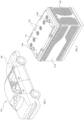
- a battery 100 is disclosed, and in particular a rechargeable battery, such as, for example, a lead-acid battery.
- a rechargeable battery such as, for example, a lead-acid battery.
- Various embodiments of lead-acid storage batteries may be either sealed (e.g., maintenance-free) or unsealed (e.g., wet). While specific examples are described and illustrated, the battery 100 may be any secondary battery suitable for the purposes provided.
- the battery 100 is a lead-acid battery.
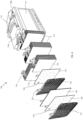
- the lead-acid battery 100 is composed of a housing or container which includes a cover 116.
- the cover 116 is provided for the container or housing 114 and may be sealed to the container 114.
- the container 114 and/or cover 116 includes battery terminals 118 a, b. As shown in FIG.
- the battery cover 116 may also include one or more filler hole caps and/or vent assemblies 120.
- the housing 114 and cover 116 may be primarily composed of a polymer material.
- the polymer material may be a recycled polymer material.
- An electrolyte, which typically comprises sulfuric acid, may be included in the battery 100 within the housing 114.
- the electrodes 104, 106 include electrically-conductive positive or negative current collectors or substrates or grids 124, 126 or current collector 1001 as discussed in further detail herein.
- a "grid” or “current collector” may include any type of mechanical or physical support or substrate for the active material.
- Positive paste or electrochemically active material 128 is provided in contact with and/or on the positive grid 124 and negative paste or electrochemically active material 130 is provided on the negative grid 126.
- a separator 108 is positioned between the positive and negative electrodes or plates 104, 106. In a retained electrolyte-type battery 100, the separator 108 may be a porous and absorbent glass mat (AGM).
- the lead-acid battery herein is an AGM lead-acid battery.
- a plurality of positive electrodes or plates 104 and a plurality of negative electrodes or plates 106 generally make up at least a portion of the electrochemical cell 110.
- a plurality of plate or electrode sets or books or cell elements 110 may be electrically connected (e.g., electrically coupled in series or other configuration) according to the capacity of the lead-acid storage battery 100.
- the plurality of positive electrodes or plates 104 and negative electrodes or plates 106 may be provided in stacks or sets or cell elements 110 for producing a battery 100 having a predetermined voltage, as one example, a 12-volt battery, in the vehicle 102.
- the number of cell elements 110 or groups or sets may be varied. It will also be obvious to those skilled in the art after reading this specification that the size and number of electrodes 104 and/or 106 in any particular group (including the size and number of the individual current collectors).
- the number of groups used to construct the battery 100 may vary depending upon the desired end use.
- the element stack 110 may be compressed during insertion reducing the thickness of the separator 108.
- each current collector has a lug 134.
- one or more cast-on straps or intercell connectors 136 are provided which electrically couple the lugs 134 of like polarity in an electrode or plate set or cell element 110 and to connect other respective sets or cell elements 110 in the battery 100.
- the connection of the elements may be a single element, parallel connection (capacity doubled, voltage the same) or series connection (e.g., voltages are additive (i.e., 4V, 6V, etc.) with the same capacity).
- One or more positive terminal posts 118a and one or more negative terminal posts 118b, as shown in FIGS. 2-4 may also be provided, electrically coupled to the cell elements 110.
- Such terminal posts typically include portions which may extend through the cover and/or container wall, depending upon the battery design. It will be recognized that a variety of terminal arrangements are possible, including top, side, front or corner configurations known in the art.
- the intercell connectors 136 and/or terminals 118a, b may be composed of lead or lead alloy. In one or more examples the lead may be a recycled lead.
- the electrodes 104, 106 include electrically conductive positive or negative current collectors or substrates or grids 124, 126.
- the positive grid or current collector or substrate 124 and/or the negative grid or current collector or substrate 126 may be composed of lead or lead alloy, which in some examples of embodiments may be or include a recycled lead.
- a "grid” as used herein may include any type of mechanical support for the active material.
- at least one of the positive grid or the negative grid may comprise a fibrous material, such as a fiber mat 1005.
- the current collector is a conductive fibrous material forming a conductive fibrous matrix 1005.
- the conductive fibrous material or conductive fibrous matrix 1005 may be a mat made of carbon or carbonized fibers.
- the fibers may be textile fiber material.
- the current collector may be understood to be formed from a felt-like fabric material.
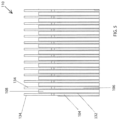
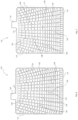
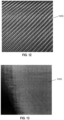
- a carbonized fiber mat 1005 may have an appearance similar to the fiber mats shown in FIGS. 12-14 , and the fibers may be woven or non-woven (see FIGS. 9-12 ).
- the carbonized fibers of the mat or matrix 1005 are shown in exaggerated dimensions to illustrate the fibers and/or voids which may be present within the fiber fabric (discussed in further detail herein below).
- the conductive fibrous matrix provides a void volume formed by voids within the fiber matrix, between the fibers. These voids may be filled by active material or paste, and/or electrolyte. The voids and fibers also provide enhanced surface area to the current collector.
- the conductive fiber mat 1005 may have undergone a curing step to convert the fiber mat into a stiff current collector or substrate.
- the conductive fibrous material may also be present in multiple layers or a single layer.
- the current collector or substrate 1001 may have a strap or frame member 1003 coupled to the mat portion 1005.
- the strap 1003 is bonded to the top border of the fiber mat 1005.
- the lead alloy strap may be connected to the fiber mat or substrate by penetration into and/or between the fibers of the fibrous material.
- the strap 1003 extends along the edge of the current collector 1005, and preferably along the entire length of the edge of the current collector. This strap may be understood to be electrically in communication with the mat portion 1005.
- the current collector or substrate 1001 comprises a mat of conductive fibers 1005, e.g., carbonized fibers, affixed to a strap 1003 having a lug 134.
- the lead alloy strap 1003 has a lug 134 on a top portion thereof for electrical connection within the battery 100.
- the strap 1003 having a lug 134 may be formed of metal such as lead.
- the strap or frame member 1003 may be comprised of a metal or lead alloy.
- the alloy may be a calcium alloy or calcium tin alloy.
- the strap or frame member 1003 may comprise a lead-calcium alloy.
- the frame member 1003 may be a lead-calcium-tin alloy. While a lead-calcium alloy and lead-tin-calcium alloy are described, various alloys should be understood as within the scope of this disclosure.
- the lead alloy may include one or more of aluminum, tin, silver, antimony, and/or calcium. Likewise, the alloy may also include one or more impurities.
- the substrates or grids or current collectors 124, 126, 1001 may be composed of the same or similar material. It is contemplated, however, that material composition may also vary between the positive and the negative electrodes 104, 106 or current collectors.
- one or both of the current collectors i.e., positive, negative, or both
- various examples of grids 124, 126 suitable for use with the inventions described herein are shown and described in United States Patent Nos.
- one or both current collectors may comprise a conductive fiber mate (e.g., current collector 1001).
- the positive electrode 104 may comprise a conductive fiber mate current collector 1001.
- the negative electrode 106 may comprise a conductive fiber mat current collector 1001.
- the grid or substrate of the positive electrode 104 or negative electrode 106 may be a punched grid, a continuously cast (concast) grid, an expanded metal grid, a carbon or carbonized felt or fiber substrate, ceramic, and so forth.
- the grid or current collector may also include surface roughening or may be subjected to one or more different surface treatments (e.g., solvent, surfactant and/or steam cleaning), such as may be used to improve paste adhesion among other benefits.
- the positive and negative grids 124, 126 are formed of different thicknesses. However, it is contemplated that the grids 124, 126 may be of the same thickness. The thickness of each grid 124, 126 may be varied based upon desired manufacturing and performance parameters. For instance, thickness may be determined based upon manufacturing requirements, such as minimum requirements for paste adhesion, improved cycle performance, endurance, or other suitable parameters. While specific examples are provided for purposes of illustration, variations thereon may be made to provide grid dimensions suitable for the particular application.
- each plate 104, 106 comprises a current collector or grid 124, 126, 1001 pasted with electrochemically active material 128, 130.
- the paste-type electrode includes a current collector or grid which acts as a substrate and an electrochemically active material or paste is provided in contact with and/or on the substrate.
- the current collectors or grids 124, 126, 1001, including a positive grid and a negative grid, provide an electrical contact between the positive and negative electrochemically active materials or paste 128, 130 which may serve to conduct current.
- positive paste 128 is provided in contact with and/or on the positive grid 124 and negative paste 130 is provided in contact with and/or on the negative grid 126.
- the positive plate 104 includes a positive grid 124 having or supporting a positive electrochemically active material or paste 128 thereon, and in some examples of embodiments may include a pasting paper or a woven or non-woven sheet material comprised of fibers (e.g., a "scrim") 132; and the negative plate 106 includes a negative grid 126 having or supporting a negative electrochemically active material or paste 130 thereon, and in some examples of embodiments may include a pasting paper or scrim 132.
- the scrim in one or more examples of embodiments may be composed of or include glass fibers. In other examples, the scrim may include other fiber materials, such as but not limited to polymer.
- the current collector 1001 may comprise a fiber mat portion 1005 which may comprise, for example, a plurality of carbonized fibers.
- the current collector may be provided with a paste and cured, forming an electrode. That is, the current collector 1001 may therefore be understood to be impregnated with a paste and have undergone a curing step (either before or after impregnation with a paste) to produce a stiff grid.
- the electrochemically active material or paste may be formed of compositions including lead or leady oxide.
- the lead may be a recycled lead.
- the paste or electrochemically active material (positive or negative) is oftentimes a mixture of lead and lead oxide or lead dioxide particles and dilute sulfuric acid, and may include other additives, such as carbon, barium sulfate, and/or expander such as lignosulfonate.
- the negative electrochemically active material may include the other additives described above. Additives may be provided in varying amounts and combinations to the paste (positive and/or negative) suitable for the intended purposes of the battery. Alternative negative mass / paste recipes may also be provided which accomplish the objectives described herein.
- the negative active material or paste 130 may also contain fiber and/or "expander" additives which may help maintain the active material structure and improve performance characteristics, among other things.
- a negative active material is provided on the negative electrode 106.
- the active material is a negative paste (e.g., the negative paste 130, described above).
- the active material or paste 130 may be provided on the negative electrode 106, particularly on mat portion 1005.
- the paste 130 (negative paste) further comprises carbon or a carbon additive.
- the negative paste comprises carbon fibers or other known carbon sources. In other words, both the mat portion 1005 and negative paste 130 may comprise carbon.
- the negative paste 130 comprises high surface area fibers. In various embodiments, the negative paste 130 comprises chopped carbon fibers.
- the negative paste may comprise organic expanders (e.g., lignins, humic acid), advanced carbon additives, or both advanced carbon additives and organic expanders.
- the active material or paste 128 and/or 130 may have an improved composition or recipe over traditional batteries.
- the active material composition or recipe provides a changed, or improved, charge acceptance performance and/or efficiency (e.g., dynamic charge acceptance, i.e., relatively short duration charge pulse) over existing AGM batteries while also maintaining or improving CCA (Cold Cranking Amps) performance and cycle life performance.
- CCA Cold Cranking Amps
- the negative mass recipe may include an improved expander, or other additives which accomplish the foregoing objectives.
- the negative mass may include one or more additives.
- improved AGM battery charge acceptance of the negative plate 106 may be accomplished by using individually or in combination (e.g., as an addition to the negative paste 130 or included in the negative paste mass) one or more of the following additives which are combined with one or more of the paste mixture materials described herein:
- Additives may be provided in varying amounts and combinations suitable for the intended purposes of the battery.
- a plurality of conductive carbons may be used in the negative electrochemically active material.
- the paste mixture may comprise a first conductive carbon and a second conductive carbon, in addition to one or more of the additional components described herein.
- Alternative negative mass recipes may also be provided which accomplish the objectives described herein.
- other materials or compositions may be present in the paste mix, such as for example, water, fibers (e.g., polymer or glass), sulfuric acid, and so forth.
- carbon nanotubes and the like may maintain a conductive matrix in the active material, thereby improving performance, especially in regards to micro-cycling as used in micro-hybrid and start-stop applications.
- surface oxidized graphite, as well as conductive carbon black with high surface area and high structure also provide improved performance.
- one or more carbons may be combined (by weight percent) such as a conductive large particle carbon and a smaller particle carbon form (e.g., allotrope).
- the formulation of the negative paste 130 may comprise an ultra-fine barium sulfate as part of the active material paste or slurry for inclusion on the negative plate 106 (e.g., a carbon fiber mat, a plate with a carbon felt grid).
- the barium sulfate may be ultra-fine, which may comprise a particle size less than 1 micrometer, more specifically no more than .8 micrometers, or a range from .4 to .04 micrometers.
- fine particle barium sulfate produces a greater number of small lead sulfate crystals during discharge. These small lead sulfate crystals are easier to dissolve during a charge than large lead sulfate crystals, leading to an improvement in charge acceptance.
- the addition of barium hydroxide (barium carbonate) to the lead battery paste and its reaction with sulfuric acid may produce small barium particles in situ.
- the described negative paste 130 has various advantages, including but not limited to, helping with static charge acceptance performance and recovery from a fully discharged condition.
- the negative plate 106 may also have the advantageous feature of resisting the buildup of dense passivating lead sulfate.
- the charge/discharge reaction involves the conversion of lead to lead sulfate (discharge) and the lead sulfate to lead (recharge). The process proceeds via a dissolution-precipitation mechanism. Components that influence either dissolution or precipitation can influence performance.
- fine particle barium sulfate is believed to provide more nucleation sites for fine lead sulfate deposition and dissolution;
- organic expanders are surface active molecules which impede the deposition of lead as a non-porous layer, the lead is deposited as high surface area sponge lead in the presence of organic expanders, i.e., organics prevent sintering of the lead electrode;
- the carbon conductive network allows better utilization of the inner part of the active material, so reactions are not limited to the surface of the plate where mass transport is easiest, the foregoing assists in mitigation the lead-sulfate buildup on the surface of plates which prevents access to the interior of the active mass;
- the carbon may impart an increase in capacitance enabling the battery to absorb high power charge pulses.
- the negative plate 106 may also have the advantageous feature of, in one or more examples, maintaining functionality for the life of the battery 100.
- the negative plate 106 may have low gassing and low water consumption, enabling, for example, longer useful service life in a vehicle 102 during idle-stop-start operation.
- the surface active properties of the components e.g., barium sulfate, organic expander, and carbon additive
- the additives may act to change the electrochemistry, changing the rate or potential at which gas is produced.
- Lead acid batteries produce gas on charging-hydrogen from the negative and oxygen from the positive-the rate of gas production (and water loss) can be modified by the paste additives.
- Components with a high surface area can lower the current density, while carbons may have a capacitive effect, and organic materials may bind to surfaces preventing access to the surface and thus raise the potential at which gas is evolved.
- Additives may be provided in varying amounts and combinations suitable for the intended purposes of the battery. Alternative negative mass recipes may also be provided which accomplish the objectives described herein. It is also contemplated that other materials or compositions may be present in the paste mix, such as for example, water, fibers (e.g., polymer or glass), sulfuric acid, and so forth.
- separator material 108 may be provided between each positive electrode or plate 104 and negative electrode or plate 106.
- the separator 108 may be a porous and absorbent glass mat (AGM).
- AGM absorbent glass mat
- an AGM lead-acid battery has positive and negative electrodes or plates 104, 106 which are separated by an absorbent glass mat 108 that absorbs and holds the battery's acid or electrolyte and prevents it from flowing freely inside the battery 100.
- the working electrolyte saturation is at some value below 100% saturation to allow recombinant reactions of hydrogen and oxygen.
- the absorbent glass mat 108 may also be used with an additional separator (not shown); various common commercially available separators are known in the art.
- the separator may be a "U-shape" wrapping the plate or electrode, but the separator or AGM can be a single sheet or, for example, can be a single length concertina with plates separated by 2 layers. Accordingly, in various embodiments, the electrode including the current collector, e.g., current collector 1001, may further be wrapped in or interleaved with a separator. A single or double layer of separator 108 may be employed. For example, a separator may be provided on the positive plate 104 and an AGM 108 may also be employed with the positive/negative plates 104, 106.
- An electrolyte which is typically sulfuric acid, may be included in the battery 100.
- the electrolyte may include one or more metal ions.
- the sulfuric acid electrolyte may be a sulfuric acid solution including one or more metal sulfates.
- a carbon fabric as disclosed herein may be chopped and integrated into the negative paste 130.
- the paste 130 comprising the chopped carbon fabric may then be applied to a conventional grid 126, for example those disclosed in FIGS. 6-7 and described further herein.
- the disclosed may have various advantages to battery performance, including but not limited to, increased charge acceptance. Improved charge acceptance in lead acid batteries facilitates fuel efficiency improvements that may reduce CO2 emissions and facilitate advanced vehicle features such as start/stop.
- the term “coupled” means the joining of two members directly or indirectly to one another. Such joining may be stationary in nature or moveable in nature. Such joining may be achieved with the two members or the two members and any additional intermediate members being integrally formed as a single unitary body with one another or with the two members or the two members and any additional intermediate members being attached to one another. Such joining may be permanent in nature or may be removable or releasable in nature.
Landscapes
- Chemical & Material Sciences (AREA)
- Chemical Kinetics & Catalysis (AREA)
- Electrochemistry (AREA)
- General Chemical & Material Sciences (AREA)
- Engineering & Computer Science (AREA)
- Materials Engineering (AREA)
- Manufacturing & Machinery (AREA)
- Inorganic Chemistry (AREA)
- Battery Electrode And Active Subsutance (AREA)
Claims (15)
- Elektrode (104, 106), umfassend einen Stromkollektor (124, 126, 1001) aus karbonisierten Fasern, der eine Paste (128, 130) mit einem oder mehreren Additiven aufweist, die die Ladungsaufnahme verbessern, wobei das eine oder die mehreren Additive Folgendes umfassen:- eines von ultrafeinem Bariumsulfat oder Kohlenstoff oder beide; und- Bariumhydroxid.
- Elektrode (104, 106) nach Anspruch 1,
wobei das Additiv einen organischen Expander umfasst. - Elektrode (104, 106) nach Anspruch 1 oder 2,
wobei der Stromkollektor (124, 126, 1001) aus karbonisierten Fasern eine gewebte Kohlenstofffasermatte umfasst. - Elektrode (104, 106) nach einem der Ansprüche 1 bis 3,
wobei der Stromkollektor (124, 126, 1001) aus karbonisierten Fasern eine gefilzte Kohlenstofffasermatte umfasst. - Elektrode (104, 106) nach einem der Ansprüche 1 bis 4,
wobei der Stromkollektor (124, 126, 1001) aus karbonisierten Fasern ein Negativstromkollektor (126, 1001) aus karbonisierten Fasern ist. - Bleisäurebatterie (100) mit einer Elektrode (104, 106) nach Anspruch 1, wobei das Additiv Kohlenstoffe, organische Expander und Bariumsulfat umfasst.
- Bleisäurebatterie (100) nach Anspruch 6,
wobei ein Elektrolyt in der Batterie (100) Schwefelsäure umfasst, die dazu ausgelegt ist, mit dem Bariumhydroxid zu reagieren, um in situ Bariumteilchen zu erzeugen. - Bleisäurebatterie (100) nach Anspruch 6 oder 7,
wobei der Stromkollektor (124, 126, 1001) aus karbonisierten Fasern eine gewebte Kohlenstofffasermatte oder eine gefilzte Kohlenstofffasermatte umfasst. - Bleisäurebatterie (100) nach einem der Ansprüche 6 bis 8,
wobei der Stromkollektor (124, 126, 1001) aus karbonisierten Fasern ein Negativstromkollektor (126, 1001) aus karbonisierten Fasern ist. - Bleisäurebatterie (100) nach einem der Ansprüche 6 bis 9,
wobei die Paste (128, 130) eine Negativpaste (130) ist. - Bleisäurebatterie (100), umfassend eine Elektrode (104, 106) nach Anspruch 1,
wobei der Stromkollektor (124, 126, 1001) aus karbonisierten Fasern einem Kohlenstofffaser-Stromkollektor (124, 126, 1001) entspricht. - Bleisäurebatterie (100) nach Anspruch 11,
wobei der Kohlenstofffaser-Stromkollektor (124, 126, 1001) einen Fasermattenabschnitt mit einer Mehrzahl von karbonisierten Fasern umfasst. - Bleisäurebatterie (100) nach Anspruch 12,
wobei es sich bei dem Fasermattenabschnitt um eine gewebte Kohlenstofffasermatte oder eine gefilzte Kohlenstofffasermatte handelt. - Bleisäurebatterie (100) nach einem der Ansprüche 11 bis 13,wobei die Paste (128, 130) ein negatives elektrochemisch aktives Material (130) umfasst, das das eine oder die mehreren Additive umfasst,wobei das aktive Material (130) ferner vorzugsweise einen organischen Expander umfasst.
- Bleisäurebatterie (100) nach einem der Ansprüche 11 bis 14,wobei der Kohlenstofffaser-Stromkollektor (124, 126, 1001) ein Kohlenstofffaser-Negativstromkollektor (126, 1001) ist, und/oderwobei der Kohlenstofffaser-Stromkollektor (124, 126, 1001) einen Kohlenstoff, einen organischen Expander und Bariumsulfat umfasst.
Applications Claiming Priority (4)
| Application Number | Priority Date | Filing Date | Title |
|---|---|---|---|
| US202062970504P | 2020-02-05 | 2020-02-05 | |
| US202062970472P | 2020-02-05 | 2020-02-05 | |
| US202063065070P | 2020-08-13 | 2020-08-13 | |
| PCT/US2021/016731 WO2021158859A1 (en) | 2020-02-05 | 2021-02-05 | Carbon fiber electrode with enhanced active material and lead acid battery having same |
Publications (2)
| Publication Number | Publication Date |
|---|---|
| EP4101019A1 EP4101019A1 (de) | 2022-12-14 |
| EP4101019B1 true EP4101019B1 (de) | 2024-12-11 |
Family
ID=74845058
Family Applications (1)
| Application Number | Title | Priority Date | Filing Date |
|---|---|---|---|
| EP21709235.2A Active EP4101019B1 (de) | 2020-02-05 | 2021-02-05 | Kohlenstofffaserelektrode mit verbessertem aktivem material und bleisäurebatterie damit |
Country Status (4)
| Country | Link |
|---|---|
| US (1) | US12542283B2 (de) |
| EP (1) | EP4101019B1 (de) |
| CN (1) | CN115336045A (de) |
| WO (1) | WO2021158859A1 (de) |
Families Citing this family (3)
| Publication number | Priority date | Publication date | Assignee | Title |
|---|---|---|---|---|
| CN115336045A (zh) | 2020-02-05 | 2022-11-11 | Cps科技控股有限公司 | 具有增强的活性材料的碳纤维电极和铅酸电池 |
| AU2023432067A1 (en) * | 2023-02-24 | 2025-08-21 | Theion Gmbh | Advanced anisotropic 3d current collector with tailored electron tortuosity optimized towards the direction of tabs |
| CN120637627A (zh) * | 2025-06-12 | 2025-09-12 | 天能电池集团(江西)有限公司 | 一种基于中央紧凑型极耳的高性价比动力铅酸蓄电池系统 |
Family Cites Families (18)
| Publication number | Priority date | Publication date | Assignee | Title |
|---|---|---|---|---|
| US3702265A (en) * | 1971-06-25 | 1972-11-07 | Gen Motors Corp | Lead-acid storage battery paste |
| US3798070A (en) * | 1972-05-12 | 1974-03-19 | S Ruben | Lead-acid storage battery with titanyl sulfate buffered electrolyte |
| JPS58111263A (ja) | 1981-12-24 | 1983-07-02 | Shin Kobe Electric Mach Co Ltd | 鉛蓄電池用陰極板の製造法 |
| US5582936A (en) | 1994-11-16 | 1996-12-10 | Globe-Union, Inc. | Lead-acid batteries with optimum current collection at grid lugs |
| US5989749A (en) | 1997-11-26 | 1999-11-23 | Johnson Controls Technology Company | Stamped battery grid |
| US6203948B1 (en) | 1997-11-26 | 2001-03-20 | Johnson Controls Technology Company | Stamped grid having offset horizontal wires |
| US6274274B1 (en) | 1999-07-09 | 2001-08-14 | Johnson Controls Technology Company | Modification of the shape/surface finish of battery grid wires to improve paste adhesion |
| US6953641B2 (en) | 2001-01-05 | 2005-10-11 | Johnson Controls Technology Company | Battery grid |
| EP3021389B1 (de) | 2008-11-18 | 2018-07-11 | Johnson Controls Technology Company | Elektrische energiespeichereinrichtungen |
| KR101821428B1 (ko) * | 2009-12-24 | 2018-01-23 | 아크액티브 리미티드 | 납축전지 구조의 개선 |
| MX338843B (es) | 2010-03-03 | 2016-05-03 | Johnson Controls Tech Co | Rejillas de bateria y metodos para fabricar las mismas. |
| JP6088500B2 (ja) | 2011-06-23 | 2017-03-01 | モレキュラー レバー デザイン,エルエルシー | 離散的カーボンナノチューブを含有する鉛酸バッテリー配合物 |
| US9543589B2 (en) * | 2012-03-08 | 2017-01-10 | Arcactive Limited | Lead-acid battery construction |
| JP7106448B2 (ja) | 2015-10-06 | 2022-07-26 | アークアクティブ リミテッド | 改良された鉛酸バッテリー電極 |
| US10511016B2 (en) * | 2016-11-30 | 2019-12-17 | Global Graphene Group, Inc. | Graphene-protected lead acid batteries |
| US11936032B2 (en) * | 2017-06-09 | 2024-03-19 | Cps Technology Holdings Llc | Absorbent glass mat battery |
| CN110127744A (zh) | 2019-03-19 | 2019-08-16 | 超威电源有限公司 | 一种改善负极和膏用硫酸钡分散一致性的方法 |
| CN115336045A (zh) | 2020-02-05 | 2022-11-11 | Cps科技控股有限公司 | 具有增强的活性材料的碳纤维电极和铅酸电池 |
-
2021
- 2021-02-05 CN CN202180024036.1A patent/CN115336045A/zh active Pending
- 2021-02-05 WO PCT/US2021/016731 patent/WO2021158859A1/en not_active Ceased
- 2021-02-05 EP EP21709235.2A patent/EP4101019B1/de active Active
- 2021-02-05 US US17/797,261 patent/US12542283B2/en active Active
Also Published As
| Publication number | Publication date |
|---|---|
| EP4101019A1 (de) | 2022-12-14 |
| CN115336045A (zh) | 2022-11-11 |
| WO2021158859A1 (en) | 2021-08-12 |
| US12542283B2 (en) | 2026-02-03 |
| US20230052472A1 (en) | 2023-02-16 |
Similar Documents
| Publication | Publication Date | Title |
|---|---|---|
| US12288897B2 (en) | Absorbent glass mat battery | |
| US7006346B2 (en) | Positive electrode of an electric double layer capacitor | |
| AU2004273104B2 (en) | High performance energy storage devices | |
| KR20100014606A (ko) | 최적화된 에너지 저장 장치 | |
| EP4101019B1 (de) | Kohlenstofffaserelektrode mit verbessertem aktivem material und bleisäurebatterie damit | |
| US20240222600A1 (en) | Absorbent glass mat battery | |
| JP2025170358A (ja) | 改良された鉛蓄電池セパレータ及びこれを備えるバッテリー | |
| WO2021067774A1 (en) | Spiral wound battery & cell with carbonised fiber mat current collector | |
| US20220407083A1 (en) | Active material having oxidized fiber additive & electrode and battery having same | |
| JP3533032B2 (ja) | アルカリ蓄電池とその製造方法 | |
| US12266783B2 (en) | Negative mass for lead-acid battery electrodes and lead-acid battery including same | |
| US20220393181A1 (en) | Lead-acid battery having fiber electrode with lead-calcium strap | |
| JPH07240233A (ja) | 高分子固体電解質リチウム二次電池 | |
| US20250233126A1 (en) | Negative mass for lead-acid battery electrodes and lead-acid battery including same | |
| WO2021150851A1 (en) | Lead-acid battery having fiber electrode and alloy for use with same | |
| JP2021144798A (ja) | 鉛蓄電池 | |
| KR20190022166A (ko) | 납산전지용 다층구조상 전극 및 이를 포함하는 납산 기반 축전지 시스템 |
Legal Events
| Date | Code | Title | Description |
|---|---|---|---|
| STAA | Information on the status of an ep patent application or granted ep patent |
Free format text: STATUS: UNKNOWN |
|
| STAA | Information on the status of an ep patent application or granted ep patent |
Free format text: STATUS: THE INTERNATIONAL PUBLICATION HAS BEEN MADE |
|
| PUAI | Public reference made under article 153(3) epc to a published international application that has entered the european phase |
Free format text: ORIGINAL CODE: 0009012 |
|
| STAA | Information on the status of an ep patent application or granted ep patent |
Free format text: STATUS: REQUEST FOR EXAMINATION WAS MADE |
|
| 17P | Request for examination filed |
Effective date: 20220901 |
|
| AK | Designated contracting states |
Kind code of ref document: A1 Designated state(s): AL AT BE BG CH CY CZ DE DK EE ES FI FR GB GR HR HU IE IS IT LI LT LU LV MC MK MT NL NO PL PT RO RS SE SI SK SM TR |
|
| DAV | Request for validation of the european patent (deleted) | ||
| DAX | Request for extension of the european patent (deleted) | ||
| STAA | Information on the status of an ep patent application or granted ep patent |
Free format text: STATUS: EXAMINATION IS IN PROGRESS |
|
| 17Q | First examination report despatched |
Effective date: 20231114 |
|
| GRAP | Despatch of communication of intention to grant a patent |
Free format text: ORIGINAL CODE: EPIDOSNIGR1 |
|
| STAA | Information on the status of an ep patent application or granted ep patent |
Free format text: STATUS: GRANT OF PATENT IS INTENDED |
|
| INTG | Intention to grant announced |
Effective date: 20240701 |
|
| GRAS | Grant fee paid |
Free format text: ORIGINAL CODE: EPIDOSNIGR3 |
|
| GRAA | (expected) grant |
Free format text: ORIGINAL CODE: 0009210 |
|
| STAA | Information on the status of an ep patent application or granted ep patent |
Free format text: STATUS: THE PATENT HAS BEEN GRANTED |
|
| AK | Designated contracting states |
Kind code of ref document: B1 Designated state(s): AL AT BE BG CH CY CZ DE DK EE ES FI FR GB GR HR HU IE IS IT LI LT LU LV MC MK MT NL NO PL PT RO RS SE SI SK SM TR |
|
| REG | Reference to a national code |
Ref country code: GB Ref legal event code: FG4D |
|
| REG | Reference to a national code |
Ref country code: CH Ref legal event code: EP |
|
| REG | Reference to a national code |
Ref country code: DE Ref legal event code: R096 Ref document number: 602021023244 Country of ref document: DE |
|
| REG | Reference to a national code |
Ref country code: IE Ref legal event code: FG4D |
|
| REG | Reference to a national code |
Ref country code: LT Ref legal event code: MG9D |
|
| PG25 | Lapsed in a contracting state [announced via postgrant information from national office to epo] |
Ref country code: HR Free format text: LAPSE BECAUSE OF FAILURE TO SUBMIT A TRANSLATION OF THE DESCRIPTION OR TO PAY THE FEE WITHIN THE PRESCRIBED TIME-LIMIT Effective date: 20241211 |
|
| PG25 | Lapsed in a contracting state [announced via postgrant information from national office to epo] |
Ref country code: FI Free format text: LAPSE BECAUSE OF FAILURE TO SUBMIT A TRANSLATION OF THE DESCRIPTION OR TO PAY THE FEE WITHIN THE PRESCRIBED TIME-LIMIT Effective date: 20241211 |
|
| PG25 | Lapsed in a contracting state [announced via postgrant information from national office to epo] |
Ref country code: BG Free format text: LAPSE BECAUSE OF FAILURE TO SUBMIT A TRANSLATION OF THE DESCRIPTION OR TO PAY THE FEE WITHIN THE PRESCRIBED TIME-LIMIT Effective date: 20241211 |
|
| REG | Reference to a national code |
Ref country code: NL Ref legal event code: MP Effective date: 20241211 |
|
| PG25 | Lapsed in a contracting state [announced via postgrant information from national office to epo] |
Ref country code: ES Free format text: LAPSE BECAUSE OF FAILURE TO SUBMIT A TRANSLATION OF THE DESCRIPTION OR TO PAY THE FEE WITHIN THE PRESCRIBED TIME-LIMIT Effective date: 20241211 |
|
| PG25 | Lapsed in a contracting state [announced via postgrant information from national office to epo] |
Ref country code: NO Free format text: LAPSE BECAUSE OF FAILURE TO SUBMIT A TRANSLATION OF THE DESCRIPTION OR TO PAY THE FEE WITHIN THE PRESCRIBED TIME-LIMIT Effective date: 20250311 |
|
| PG25 | Lapsed in a contracting state [announced via postgrant information from national office to epo] |
Ref country code: LV Free format text: LAPSE BECAUSE OF FAILURE TO SUBMIT A TRANSLATION OF THE DESCRIPTION OR TO PAY THE FEE WITHIN THE PRESCRIBED TIME-LIMIT Effective date: 20241211 Ref country code: GR Free format text: LAPSE BECAUSE OF FAILURE TO SUBMIT A TRANSLATION OF THE DESCRIPTION OR TO PAY THE FEE WITHIN THE PRESCRIBED TIME-LIMIT Effective date: 20250312 |
|
| PG25 | Lapsed in a contracting state [announced via postgrant information from national office to epo] |
Ref country code: RS Free format text: LAPSE BECAUSE OF FAILURE TO SUBMIT A TRANSLATION OF THE DESCRIPTION OR TO PAY THE FEE WITHIN THE PRESCRIBED TIME-LIMIT Effective date: 20250311 |
|
| PG25 | Lapsed in a contracting state [announced via postgrant information from national office to epo] |
Ref country code: NL Free format text: LAPSE BECAUSE OF FAILURE TO SUBMIT A TRANSLATION OF THE DESCRIPTION OR TO PAY THE FEE WITHIN THE PRESCRIBED TIME-LIMIT Effective date: 20241211 |
|
| REG | Reference to a national code |
Ref country code: AT Ref legal event code: MK05 Ref document number: 1751102 Country of ref document: AT Kind code of ref document: T Effective date: 20241211 |
|
| PG25 | Lapsed in a contracting state [announced via postgrant information from national office to epo] |
Ref country code: SM Free format text: LAPSE BECAUSE OF FAILURE TO SUBMIT A TRANSLATION OF THE DESCRIPTION OR TO PAY THE FEE WITHIN THE PRESCRIBED TIME-LIMIT Effective date: 20241211 |
|
| PG25 | Lapsed in a contracting state [announced via postgrant information from national office to epo] |
Ref country code: PL Free format text: LAPSE BECAUSE OF FAILURE TO SUBMIT A TRANSLATION OF THE DESCRIPTION OR TO PAY THE FEE WITHIN THE PRESCRIBED TIME-LIMIT Effective date: 20241211 |
|
| PG25 | Lapsed in a contracting state [announced via postgrant information from national office to epo] |
Ref country code: IS Free format text: LAPSE BECAUSE OF FAILURE TO SUBMIT A TRANSLATION OF THE DESCRIPTION OR TO PAY THE FEE WITHIN THE PRESCRIBED TIME-LIMIT Effective date: 20250411 |
|
| PG25 | Lapsed in a contracting state [announced via postgrant information from national office to epo] |
Ref country code: PT Free format text: LAPSE BECAUSE OF FAILURE TO SUBMIT A TRANSLATION OF THE DESCRIPTION OR TO PAY THE FEE WITHIN THE PRESCRIBED TIME-LIMIT Effective date: 20250411 |
|
| PG25 | Lapsed in a contracting state [announced via postgrant information from national office to epo] |
Ref country code: EE Free format text: LAPSE BECAUSE OF FAILURE TO SUBMIT A TRANSLATION OF THE DESCRIPTION OR TO PAY THE FEE WITHIN THE PRESCRIBED TIME-LIMIT Effective date: 20241211 |
|
| PG25 | Lapsed in a contracting state [announced via postgrant information from national office to epo] |
Ref country code: AT Free format text: LAPSE BECAUSE OF FAILURE TO SUBMIT A TRANSLATION OF THE DESCRIPTION OR TO PAY THE FEE WITHIN THE PRESCRIBED TIME-LIMIT Effective date: 20241211 Ref country code: RO Free format text: LAPSE BECAUSE OF FAILURE TO SUBMIT A TRANSLATION OF THE DESCRIPTION OR TO PAY THE FEE WITHIN THE PRESCRIBED TIME-LIMIT Effective date: 20241211 |
|
| PG25 | Lapsed in a contracting state [announced via postgrant information from national office to epo] |
Ref country code: SK Free format text: LAPSE BECAUSE OF FAILURE TO SUBMIT A TRANSLATION OF THE DESCRIPTION OR TO PAY THE FEE WITHIN THE PRESCRIBED TIME-LIMIT Effective date: 20241211 |
|
| PG25 | Lapsed in a contracting state [announced via postgrant information from national office to epo] |
Ref country code: CZ Free format text: LAPSE BECAUSE OF FAILURE TO SUBMIT A TRANSLATION OF THE DESCRIPTION OR TO PAY THE FEE WITHIN THE PRESCRIBED TIME-LIMIT Effective date: 20241211 |
|
| PG25 | Lapsed in a contracting state [announced via postgrant information from national office to epo] |
Ref country code: IT Free format text: LAPSE BECAUSE OF FAILURE TO SUBMIT A TRANSLATION OF THE DESCRIPTION OR TO PAY THE FEE WITHIN THE PRESCRIBED TIME-LIMIT Effective date: 20241211 |
|
| PG25 | Lapsed in a contracting state [announced via postgrant information from national office to epo] |
Ref country code: SE Free format text: LAPSE BECAUSE OF FAILURE TO SUBMIT A TRANSLATION OF THE DESCRIPTION OR TO PAY THE FEE WITHIN THE PRESCRIBED TIME-LIMIT Effective date: 20241211 |
|
| REG | Reference to a national code |
Ref country code: DE Ref legal event code: R097 Ref document number: 602021023244 Country of ref document: DE |
|
| PG25 | Lapsed in a contracting state [announced via postgrant information from national office to epo] |
Ref country code: MC Free format text: LAPSE BECAUSE OF FAILURE TO SUBMIT A TRANSLATION OF THE DESCRIPTION OR TO PAY THE FEE WITHIN THE PRESCRIBED TIME-LIMIT Effective date: 20241211 |
|
| REG | Reference to a national code |
Ref country code: CH Ref legal event code: PL |
|
| PG25 | Lapsed in a contracting state [announced via postgrant information from national office to epo] |
Ref country code: DK Free format text: LAPSE BECAUSE OF FAILURE TO SUBMIT A TRANSLATION OF THE DESCRIPTION OR TO PAY THE FEE WITHIN THE PRESCRIBED TIME-LIMIT Effective date: 20241211 |
|
| PG25 | Lapsed in a contracting state [announced via postgrant information from national office to epo] |
Ref country code: LU Free format text: LAPSE BECAUSE OF NON-PAYMENT OF DUE FEES Effective date: 20250205 |
|
| PLBE | No opposition filed within time limit |
Free format text: ORIGINAL CODE: 0009261 |
|
| STAA | Information on the status of an ep patent application or granted ep patent |
Free format text: STATUS: NO OPPOSITION FILED WITHIN TIME LIMIT |
|
| PG25 | Lapsed in a contracting state [announced via postgrant information from national office to epo] |
Ref country code: CH Free format text: LAPSE BECAUSE OF NON-PAYMENT OF DUE FEES Effective date: 20250228 |
|
| 26N | No opposition filed |
Effective date: 20250912 |
|
| REG | Reference to a national code |
Ref country code: BE Ref legal event code: MM Effective date: 20250228 |
|
| PG25 | Lapsed in a contracting state [announced via postgrant information from national office to epo] |
Ref country code: BE Free format text: LAPSE BECAUSE OF NON-PAYMENT OF DUE FEES Effective date: 20250228 |
|
| PG25 | Lapsed in a contracting state [announced via postgrant information from national office to epo] |
Ref country code: IE Free format text: LAPSE BECAUSE OF NON-PAYMENT OF DUE FEES Effective date: 20250205 |
|
| PGFP | Annual fee paid to national office [announced via postgrant information from national office to epo] |
Ref country code: GB Payment date: 20260227 Year of fee payment: 6 |
|
| PGFP | Annual fee paid to national office [announced via postgrant information from national office to epo] |
Ref country code: DE Payment date: 20260227 Year of fee payment: 6 |
|
| PGFP | Annual fee paid to national office [announced via postgrant information from national office to epo] |
Ref country code: FR Payment date: 20260225 Year of fee payment: 6 |