EP4099333A2 - Verfahren und vorrichtung zum trainieren eines pediktionsmodells für zusammengesetzte eigenschaften, speichermedium und computerprogrammprodukt - Google Patents
Verfahren und vorrichtung zum trainieren eines pediktionsmodells für zusammengesetzte eigenschaften, speichermedium und computerprogrammprodukt Download PDFInfo
- Publication number
- EP4099333A2 EP4099333A2 EP22191040.9A EP22191040A EP4099333A2 EP 4099333 A2 EP4099333 A2 EP 4099333A2 EP 22191040 A EP22191040 A EP 22191040A EP 4099333 A2 EP4099333 A2 EP 4099333A2
- Authority
- EP
- European Patent Office
- Prior art keywords
- compound
- annotated
- data set
- prediction model
- property prediction
- Prior art date
- Legal status (The legal status is an assumption and is not a legal conclusion. Google has not performed a legal analysis and makes no representation as to the accuracy of the status listed.)
- Withdrawn
Links
Images


Classifications
-
- G—PHYSICS
- G16—INFORMATION AND COMMUNICATION TECHNOLOGY [ICT] SPECIALLY ADAPTED FOR SPECIFIC APPLICATION FIELDS
- G16C—COMPUTATIONAL CHEMISTRY; CHEMOINFORMATICS; COMPUTATIONAL MATERIALS SCIENCE
- G16C20/00—Chemoinformatics, i.e. ICT specially adapted for the handling of physicochemical or structural data of chemical particles, elements, compounds or mixtures
- G16C20/70—Machine learning, data mining or chemometrics
-
- G—PHYSICS
- G06—COMPUTING OR CALCULATING; COUNTING
- G06N—COMPUTING ARRANGEMENTS BASED ON SPECIFIC COMPUTATIONAL MODELS
- G06N3/00—Computing arrangements based on biological models
- G06N3/02—Neural networks
- G06N3/04—Architecture, e.g. interconnection topology
- G06N3/042—Knowledge-based neural networks; Logical representations of neural networks
-
- G—PHYSICS
- G06—COMPUTING OR CALCULATING; COUNTING
- G06N—COMPUTING ARRANGEMENTS BASED ON SPECIFIC COMPUTATIONAL MODELS
- G06N3/00—Computing arrangements based on biological models
- G06N3/02—Neural networks
- G06N3/04—Architecture, e.g. interconnection topology
- G06N3/045—Combinations of networks
-
- G—PHYSICS
- G06—COMPUTING OR CALCULATING; COUNTING
- G06N—COMPUTING ARRANGEMENTS BASED ON SPECIFIC COMPUTATIONAL MODELS
- G06N3/00—Computing arrangements based on biological models
- G06N3/02—Neural networks
- G06N3/08—Learning methods
- G06N3/088—Non-supervised learning, e.g. competitive learning
-
- G—PHYSICS
- G06—COMPUTING OR CALCULATING; COUNTING
- G06N—COMPUTING ARRANGEMENTS BASED ON SPECIFIC COMPUTATIONAL MODELS
- G06N3/00—Computing arrangements based on biological models
- G06N3/02—Neural networks
- G06N3/08—Learning methods
- G06N3/0895—Weakly supervised learning, e.g. semi-supervised or self-supervised learning
-
- G—PHYSICS
- G06—COMPUTING OR CALCULATING; COUNTING
- G06N—COMPUTING ARRANGEMENTS BASED ON SPECIFIC COMPUTATIONAL MODELS
- G06N3/00—Computing arrangements based on biological models
- G06N3/02—Neural networks
- G06N3/08—Learning methods
- G06N3/096—Transfer learning
-
- G—PHYSICS
- G16—INFORMATION AND COMMUNICATION TECHNOLOGY [ICT] SPECIALLY ADAPTED FOR SPECIFIC APPLICATION FIELDS
- G16C—COMPUTATIONAL CHEMISTRY; CHEMOINFORMATICS; COMPUTATIONAL MATERIALS SCIENCE
- G16C20/00—Chemoinformatics, i.e. ICT specially adapted for the handling of physicochemical or structural data of chemical particles, elements, compounds or mixtures
- G16C20/30—Prediction of properties of chemical compounds, compositions or mixtures
Definitions
- the present disclosure relates to the field of artificial intelligence technology, and particularly to the field of deep learning technology.
- the core of an ADMET prediction platform is an algorithm model, and the existing ADMET prediction platform usually applies a certain deep learning model.
- the deep learning model needs to acquire a large amount of annotated training data for supervised training. If the training data is insufficient, the improvement for the effect of the model will be limited.
- Embodiments of the present disclosure propose a method and apparatus for training a compound property prediction model, a storage medium and a program product.
- some embodiments of the present disclosure provide a method for training a compound property prediction model.
- the method includes: acquiring an unannotated compound data set; pre-training a graph neural network using the unannotated compound data set, to obtain a pre-trained graph neural network; acquiring a plurality of annotated compound data sets, each annotated compound data set being annotated with one kind of compound property; and performing multi-task training on the pre-trained graph neural network using the plurality of annotated compound data sets, to obtain a compound property prediction model, the compound property prediction model being used to predict a plurality kinds of properties of a compound.
- some embodiments of the present disclosure provide an apparatus for training a compound property prediction model.
- the apparatus includes: a first acquiring module, configured to acquire an unannotated compound data set; a first training module, configured to pre-train a graph neural network using the unannotated compound data set to obtain a pre-trained graph neural network; a second acquiring module, configured to acquire a plurality of annotated compound data sets, each annotated compound data set being annotated with one kind of compound property; a second training module, configured to perform multi-task training on the pre-trained graph neural network using the plurality of annotated compound data sets, to obtain a compound property prediction model, the compound property prediction model being used to predict a plurality kinds of properties of a compound.
- some embodiments of present disclosure provide a non-transitory computer readable storage medium, storing computer instructions, wherein the computer instructions, when executed by a computer, cause the computer to perform the method according to any one of the implementations described in the first aspect.
- some embodiments of the present disclosure provide a computer program product, the computer program product include a computer program, where the computer program, when executed by a processor, causes the processor to implement the method according to any one of the implementations described in the first aspect.
- Fig. 1 illustrates a flow 100 of a method for training a compound property prediction model according to some embodiments of the present disclosure.
- the method for training a compound property prediction model includes the following steps.
- Step 101 acquiring an unannotated compound data set.
- an executing body of the method for training a compound property prediction model may acquire the unannotated compound data set.
- the unannotated compound data set may include a large scale of compound data not annotated with a tag.
- the compound data may include, but not limited to, the spatial structure, topology, sequence expression, chemical knowledge, etc. of a compound.
- Step 102 pre-training a graph neural network using the unannotated compound data set, to obtain a pre-trained graph neural network.
- the above executing body may pre-train the graph neural network (GNN) by using the unannotated compound data set, to obtain the pre-trained graph neural network.
- GNN graph neural network
- a variety of self-supervised tasks that may be applied to a compound graph structure may be designed by drawing on the pre-training technology popular in the fields of natural language processing and image processing, and the graph neural network may be pre-trained based on a large-scale unannotated compound data set, such that the model is capable of learning the physicochemical knowledge contained in the compound structure itself.
- the above executing body may first obtain self-supervised information based on the unannotated compound data in the unannotated compound data set; and then use the unannotated compound data as an input and the self-supervised information as an output, to pre-train the graph neural network to obtain the pre-trained graph neural network.
- the self-supervised information may be self-supervised information mined from the compound data.
- a variety of self-supervised tasks applied to the compound graph structure may be designed based on the self-supervised information, and the graph neural network is pre-trained with the large-scale unannotated compound data set, such that the graph neural network is capable of learning the physicochemical knowledge contained in the compound structure itself.
- the self-supervised information may include, but not limited to, a compound local structure (Context), a compound bond length, a compound bond angle, a molecular fingerprint, and the like.
- Self-supervised information is mined from a sequence expression in the compound data by using an existing chemical tool.
- the self-supervised tasks designed based on the self-supervised information may include, but not limited to, a compound local structure prediction, a compound bond length prediction, a compound bond angle prediction, a molecular fingerprint prediction, and the like.
- Step 103 acquiring a plurality of annotated compound data sets.
- the above executing body may acquire the plurality of annotated compound data sets.
- an annotated compound data set may include compound data annotated with a property tag.
- One annotated compound data set is annotated with one kind of compound property.
- the plurality of annotated compound data sets may include, but not limited to, at least two of: a compound data set annotated with ADMET properties, a compound data set annotated with biological activity properties, a compound data set annotated with compound physicochemical attributes, etc.
- the scale of the annotated compound data set is much smaller than the scale of the unannotated compound data set, and the scale of the compound data set annotated with the ADMET properties is much smaller than the scale of the compound data set annotated with the biological activity properties and the scale of the compound data set annotated with the compound physicochemical attributes.
- Step 104 performing multi-task training on the pre-trained graph neural network using the plurality of annotated compound data sets, to obtain a compound property prediction model.
- the above executing body may perform the multi-task training on the pre-trained graph neural network using the plurality of annotated compound data sets, to obtain the compound property prediction model.
- the compound property prediction model may be used to predict a plurality of properties of a compound.
- the plurality of annotated compound data sets are combined to perform the multi-task training, such that the model learns a wider range of domain knowledge, thus implementing a knowledge transfer.
- annotated compound data set of a larger scale may be collected, for example, another compound data set annotated with biologically activities, and a compound data set annotated with compound physicochemical attributes.
- these annotated compound data sets are combined to perform the multi-task training, such that the model learns relevance from various compound data sets annotated with properties such as physics, chemistry, biological activity and biological toxicity, thereby realizing the knowledge transfer.
- the effect of the model can be significantly improved by introducing the compound data set annotated with the biologically activities.
- embodiments of the present disclosure can provide a more flexible multi-task training process.
- the flexible introduction and exit of a task are achieved by setting a specific number of training rounds of each task, thereby breaking the boundary between the pre-training and the fine-tuning for a downstream task.
- a first introduced task may be considered as pre-training in the conventional sense, and a second introduced task may be considered as downstream fine-tuning in the conventional sense.
- various customized tasks can be easily compatible, other physical, chemical and biological related data sets can be introduced, and a wider range of domain knowledge can be learned.
- the model can gradually focus on the really concerned downstream task.
- a multi-stage compound pre-training and knowledge transfer training framework is proposed.
- the model is pre-trained based on a large-scale unannotated compound data set, such that the model learns the physical and chemical knowledge implied in the compound structure.
- the model learns a wider range of domain knowledge, thus realizing the knowledge transfer.
- the effect of the model is significantly improved.
- the cost of acquiring the training data is reduced.
- the trained compound property prediction model which is capable of predicting the ADMET properties can be applied to the virtual screening in the early stage of the research and development of the drug, and thus can more accurately screen the available compound from a candidate compound library, thereby greatly reducing the risk of failure in the research and development of the drug, reducing the cost, and further greatly accelerating the discovery and development of the new drug.
- the large-scale compound pre-training technique is applied to the ADMET property prediction task of a compound, and the prediction accuracy of the ADMET properties is greatly improved based on the multi-stage and multi-task training framework.
- Fig. 2 illustrates a flow 200 of a method for training a compound property prediction model according to some embodiments of the present disclosure.
- the method for training a compound property prediction model includes the following steps.
- Step 201 acquiring an unannotated compound data set.
- Step 202 pre-training a graph neural network using the unannotated compound data set, to obtain a pre-trained graph neural network.
- Step 203 acquiring a plurality of annotated compound data sets.
- Step 204 performing multi-task training on the pre-trained graph neural network using the plurality of annotated compound data sets, to obtain a compound property prediction model.
- step 201-204 the detailed operations of step 201-204 have been described in detail in steps 101-104 in the embodiment shown in Fig. 1 , and thus will not be repeatedly described here.
- Step 205 acquiring a target annotated compound data set.
- an executing body of the method for training a compound property prediction model may acquire the target annotated compound data set.
- the target annotated compound data set may be annotated with a target kind of compound property.
- the target annotated compound data set may be a private data set uploaded by a user.
- a model fine-tuning interface that can be invoked by a user may be provided, and the user may upload the private data set through the model fine-tuning interface.
- Step 206 performing fine-tuning on the compound property prediction model using the target annotated compound data set, to obtain a fine-tuned compound property prediction model.
- the above executing body may perform the fine-tuning on the compound property prediction model using the target annotated compound data set, to obtain the fine-tuned compound property prediction model.
- the fine-tuned compound property prediction model may be used to predict the target kind of property of a compound.
- fine-tuning task on the pre-trained model is added for the ADMET prediction task.
- the fine-tuning is performed on the compound property prediction model based on the private data set uploaded through the model fine-tuning interface.
- a model fine-tuning step is added to the flow 200 of the method for training a compound property prediction model in this embodiment.
- a model fine tuning function is provided on the ADMET prediction task, based on the multi-stage compound pre-training and knowledge transfer training framework.
- the fine-tuning is performed on the compound property prediction model based on the private data set uploaded through the model fine-tuning interface, and thus, the effect of the model is significantly improved as compared with a model trained from random initialization.
- Fig. 3 illustrates a flow 300 of a method for training a compound property prediction model according to some embodiments of the present disclosure.
- the method for training a compound property prediction model includes the following steps.
- Step 301 acquiring an unannotated compound data set.
- Step 302 pre-training a graph neural network using the unannotated compound data set, to obtain a pre-trained graph neural network.
- Step 303 acquiring a plurality of annotated compound data sets.
- Step 304 performing multi-task training on the pre-trained graph neural network using the plurality of annotated compound data sets, to obtain a compound property prediction model.
- step 301-304 the detailed operations of step 301-304 have been described in detail in steps 101-104 in the embodiment shown in Fig. 1 , and thus will not be repeatedly described here.
- Step 305 optimizing the compound property prediction model using one annotated compound data set in the plurality of annotated compound data sets, to obtain an optimized compound property prediction model.
- the above executing body may optimize the compound property prediction model using the one annotated compound data set in the plurality of annotated compound data sets, to obtain the optimized compound property prediction model.
- the optimized compound property prediction model may be used to predict one kind of property of a compound.
- the shared model parameters of the compound property prediction model may be replicated and re-considered as an independent model, and the training is continued in a single-task mode for several rounds on the compound property prediction model, such that the model parameters are further optimized for a downstream task, thereby improving the effect of the model.
- the compound property prediction model is further trained using the compound data set annotated with the ADMET properties for several rounds, such that the optimized compound property prediction model is used to predict a property in the ADMET properties of a compound.
- the compound property prediction model is further trained using the compound data set annotated with the other biological activities for several rounds, such that the optimized compound property prediction model is used to predict the other biological activities of a compound.
- Step 306 acquiring a target annotated compound data set.
- the executing body of the method for training a compound property prediction model may acquire the target annotated compound data set.
- the target annotated compound data set may be annotated with a target kind of compound property.
- the target annotated compound data set may be a private data set uploaded by a user.
- a model fine-tuning interface that may be invoked by a user is provided, and the user may upload the private data set through the model fine-tuning interface.
- Step 307 performing fine-tuning on the optimized compound property prediction model using the target annotated compound data set, to obtain a fine-tuned compound property prediction model.
- the above executing body may perform the fine-tuning on the compound property prediction model using the target annotated compound data set, to obtain the fine-tuned compound property prediction model.
- the fine-tuned compound property prediction model may be used to predict a target kind of compound property of a compound.
- a large-scale pre-training based model fine-tuning task is added to an ADMET prediction task.
- the fine-tuning is performed on the compound property prediction model based on the private data set uploaded through the model fine-tuning interface.
- a model optimization step and a model fine-tuning step are added to the flow 300 of the method for training a compound property prediction model in this embodiment.
- the training is continued in a single-task mode for several rounds, such that the model parameters are further optimized for a downstream task, thereby improving the effect of the model.
- a model fine tuning function is provided on the ADMET prediction task, based on the multi-stage compound pre-training and knowledge transfer training framework. The fine-tuning is performed on the compound property prediction model based on the private data set uploaded through the model fine-tuning interface, and thus, the effect of the model is significantly improved as compared with a model trained from random initialization.
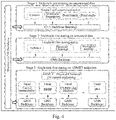
- Fig. 4 shows a three-stage compound pre-training and attribute prediction framework.
- the first stage is multi-task pre-training based on unannotated data.
- five self-supervised tasks (a compound local structure prediction, a compound molecular fingerprint prediction, a compound bond length prediction, and a compound bond angle prediction) that may be applied to the compound graph structure are designed, and the GNN backbone network is pre-trained based on a large-scale unannotated compound data set, such that the model learns the physicochemical knowledge contained in the compound structure itself.
- the second stage is multi-task fine-tuning on annotated data.
- a compound data set annotated with ADMET properties, a compound data set annotated with other biological activities, a compound data set annotated with compound physicochemical attributes, etc. are collected, and 40 fine-tuning tasks are constructed to perform multi-task training, such that the model learns relevance from various data sets such as physics, chemistry, biological activity and biological toxicity, thereby realizing the knowledge transfer.
- the third stage is single-task fine-tuning on ADMET endpoints.
- the shared model parameters are replicated and re-considered as an independent model, and 36 trained endpoints are constructed for properties such as a Caco-2 permeability, BBBP, a CYP450 1A2 inhibitor, and pKa, to continue to perform the training in a single-task mode for several rounds, such that the model parameters are further optimized for a downstream task, thereby improving the effect.
- properties such as a Caco-2 permeability, BBBP, a CYP450 1A2 inhibitor, and pKa
- some embodiments of the present disclosure provides an apparatus for training a compound property prediction model.
- the embodiments of the apparatus correspond to the embodiments of the method shown in Fig. 1 .
- the apparatus may be applied in various electronic devices.
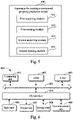
- an apparatus 500 for training a compound property prediction model in this embodiment may include: a first acquiring module 501, a first training module 502, a second acquiring module 503 and a second training module 504.
- the first acquiring module 501 is configured to acquire an unannotated compound data set.
- the first training module 502 is configured to pre-train a graph neural network using the unannotated compound data set to obtain a pre-trained graph neural network.
- the second acquiring module 503 is configured to acquire a plurality of annotated compound data sets, each annotated compound data set being annotated with one kind of compound property.
- the second training module 504 is configured to perform multi-task training on the pre-trained graph neural network using the plurality of annotated compound data sets, to obtain a compound property prediction model, the compound property prediction model being used to predict a plurality kinds of properties of a compound.
- the apparatus 500 for training a compound property prediction model further includes: a third acquiring module, configured to acquire a target annotated compound data set, the target annotated compound data set being annotated with a target kind of compound property; and a first fine-tuning module, configured to perform fine-tuning on the compound property prediction model using the target annotated compound data set, to obtain a fine-tuned compound property prediction model, the fine-tuned compound property prediction model being used to predict the target kind of compound property of a compound.
- a third acquiring module configured to acquire a target annotated compound data set, the target annotated compound data set being annotated with a target kind of compound property
- a first fine-tuning module configured to perform fine-tuning on the compound property prediction model using the target annotated compound data set, to obtain a fine-tuned compound property prediction model, the fine-tuned compound property prediction model being used to predict the target kind of compound property of a compound.
- the apparatus 500 for training a compound property prediction model further includes: an optimizing module, configured to optimize the compound property prediction model using one annotated compound data set in the plurality of annotated compound data sets, to obtain an optimized compound property prediction model, the optimized compound property prediction model being used to predict one kind of compound property of a compound.
- an optimizing module configured to optimize the compound property prediction model using one annotated compound data set in the plurality of annotated compound data sets, to obtain an optimized compound property prediction model, the optimized compound property prediction model being used to predict one kind of compound property of a compound.
- the apparatus 500 for training a compound property prediction model further includes: a fourth acquiring module, configured to acquire a target annotated compound data set, the target annotated compound data set being annotated with a target kind of compound property; and a second fine-tuning module, configured to perform fine-tuning on the optimized compound property prediction model using the target annotated compound data set, to obtain a fine-tuned compound property prediction model, the fine-tuned compound property prediction model being used to predict the target kind of compound property of a compound.
- a fourth acquiring module configured to acquire a target annotated compound data set, the target annotated compound data set being annotated with a target kind of compound property
- a second fine-tuning module configured to perform fine-tuning on the optimized compound property prediction model using the target annotated compound data set, to obtain a fine-tuned compound property prediction model, the fine-tuned compound property prediction model being used to predict the target kind of compound property of a compound.
- the first training module 502 is further configured to: obtain self-supervised information based on unannotated compound data in the unannotated compound data set; and use the unannotated compound data as an input and the self-supervised information as an output, to pre-train the graph neural network to obtain the pre-trained graph neural network.
- the self-supervised information includes at least one of: a compound local structure, a compound bond length, a compound bond angle, or a molecular fingerprint.
- the plurality of annotated compound data sets include at least two of: a compound data set annotated with absorption, distribution, metabolism, excretion and toxicity (ADMET) properties of a drug, a compound data set annotated with biological activities, and a compound data set annotated with compound physicochemical attributes.
- ADMET absorption, distribution, metabolism, excretion and toxicity
- the collection, storage, use, processing, transmission, provision, disclosure, etc. of the personal information of a user all comply with the provisions of the relevant laws and regulations, and do not violate public order and good customs.
- an electronic device a readable storage medium and a computer program product are provided.
- Fig. 6 is a schematic block diagram of an example electronic device 600 that may be used to implement embodiments of the present disclosure.
- the electronic device is intended to represent various forms of digital computers such as a laptop computer, a desktop computer, a workstation, a personal digital assistant, a server, a blade server, a mainframe computer, and other appropriate computers.
- the electronic device may alternatively represent various forms of mobile apparatuses such as personal digital processing, a cellular telephone, a smart phone, a wearable device and other similar computing apparatuses.
- the parts shown herein, their connections and relationships, and their functions are only as examples, and not intended to limit implementations of the present disclosure as described and/or claimed herein.
- the device 600 includes a computation unit 601, which may perform various appropriate actions and processing, based on a computer program stored in a read-only memory (ROM) 602 or a computer program loaded from a storage unit 608 into a random access memory (RAM) 603.
- ROM read-only memory
- RAM random access memory
- various programs and data required for the operation of the device 600 may also be stored.
- the computation unit 601, the ROM 602, and the RAM 603 are connected to each other through a bus 604.
- An input/output (I/O) interface 605 is also connected to the bus 604.
- a plurality of parts in the device 600 are connected to the I/O interface 605, including: an input unit 606, for example, a keyboard and a mouse; an output unit 607, for example, various types of displays and speakers; the storage unit 608, for example, a disk and an optical disk; and a communication unit 609, for example, a network card, a modem, or a wireless communication transceiver.
- the communication unit 609 allows the device 600 to exchange information/data with other devices over a computer network such as the Internet and/or various telecommunication networks.
- the computation unit 601 may be various general-purpose and/or dedicated processing components having processing and computing capabilities. Some examples of the computation unit 601 include, but are not limited to, central processing unit (CPU), graphics processing unit (GPU), various dedicated artificial intelligence (AI) computing chips, various computation units running machine learning model algorithms, digital signal processors (DSP), and any appropriate processors, controllers, microcontrollers, etc.
- the computation unit 601 performs the various methods and processes described above, such as a method for training a compound property prediction model.
- the method for training a compound property prediction model may be implemented as a computer software program, which is tangibly included in a machine readable medium, such as the storage unit 608.
- part or all of the computer program may be loaded and/or installed on the device 600 via the ROM 602 and/or the communication unit 609.
- the computer program When the computer program is loaded into the RAM 603 and executed by the computation unit 601, one or more steps of the method for training a compound property prediction model described above maybe performed.
- the computation unit 601 may be configured to perform the method for training a compound property prediction model by any other appropriate means (for example, by means of firmware).
- Various embodiments of the systems and technologies described above herein may be implemented in digital electronic circuit systems, integrated circuit systems, field programmable gate arrays (FPGA), application specific integrated circuits (ASIC), application specific standard products (ASSP), system on chip (SOC), load programmable logic devices (CPLD), computer hardware, firmware, software, and/or combinations thereof.
- FPGA field programmable gate arrays
- ASIC application specific integrated circuits
- ASSP application specific standard products
- SOC system on chip
- CPLD load programmable logic devices
- computer hardware firmware, software, and/or combinations thereof.
- the program code for implementing the methods of the present disclosure may be written in any combination of one or more programming languages. These program codes can be provided to the processor or controller of general computer, dedicated computer or other programmable data processing device, so that when executed by the processor or controller, the program code enables the functions / operations specified in the flow chart and/or block diagram to be implemented.
- the program code can be executed completely on the machine, partially on the machine, partially on the machine and partially on the remote machine as a separate software package, or completely on the remote machine or server.
- a machine readable medium may be a tangible medium which may contain or store a program for use by, or used in combination with, an instruction execution system, apparatus or device.
- the machine readable medium may be a machine readable signal medium or a machine readable storage medium.
- the computer readable medium may include, but is not limited to, electronic, magnetic, optical, electromagnetic, infrared, or semiconductor systems, apparatuses, or devices, or any appropriate combination of the above.
- a more specific example of the machine readable storage medium will include an electrical connection based on one or more pieces of wire, a portable computer disk, a hard disk, a random access memory (RAM), a read only memory (ROM), an erasable programmable read only memory (EPROM or flash memory), an optical fiber, a portable compact disk read only memory (CD-ROM), an optical storage device, a magnetic storage device, or any appropriate combination of the above.
- a portable computer disk a hard disk, a random access memory (RAM), a read only memory (ROM), an erasable programmable read only memory (EPROM or flash memory), an optical fiber, a portable compact disk read only memory (CD-ROM), an optical storage device, a magnetic storage device, or any appropriate combination of the above.
- a display apparatus e.g., a CRT (cathode ray tube) or an LCD (liquid crystal display) monitor
- a keyboard and a pointing apparatus e.g., a mouse or a trackball
- Other kinds of apparatuses may also be configured to provide interaction with the user.
- feedback provided to the user maybe any form of sensory feedback (e.g., visual feedback, auditory feedback, or tactile feedback); and an input may be received from the user in any form (including an acoustic input, a voice input, or a tactile input).
- the systems and technologies described herein may be implemented in a computing system that includes a back-end component (e.g., as a data server), or a computing system that includes a middleware component (e.g., an application server), or a computing system that includes a front-end component (e.g., a user computer with a graphical user interface or a web browser through which the user can interact with an implementation of the systems and technologies described herein), or a computing system that includes any combination of such a back-end component, such a middleware component, or such a front-end component.
- the components of the system may be interconnected by digital data communication (e.g., a communication network) in any form or medium. Examples of the communication network include: a local area network (LAN), a wide area network (WAN), and the Internet.
- the computer system may include a client and a server.
- the client and the server are generally remote from each other, and generally interact with each other through a communication network.
- the relationship between the client and the server is generated by virtue of computer programs that run on corresponding computers and have a client-server relationship with each other.
- the server may also be a distributed system server or a blockchain server.
Landscapes
- Engineering & Computer Science (AREA)
- Theoretical Computer Science (AREA)
- Physics & Mathematics (AREA)
- Computing Systems (AREA)
- Life Sciences & Earth Sciences (AREA)
- Health & Medical Sciences (AREA)
- Artificial Intelligence (AREA)
- Software Systems (AREA)
- Data Mining & Analysis (AREA)
- Evolutionary Computation (AREA)
- General Health & Medical Sciences (AREA)
- General Physics & Mathematics (AREA)
- Molecular Biology (AREA)
- General Engineering & Computer Science (AREA)
- Computational Linguistics (AREA)
- Mathematical Physics (AREA)
- Biophysics (AREA)
- Biomedical Technology (AREA)
- Bioinformatics & Cheminformatics (AREA)
- Crystallography & Structural Chemistry (AREA)
- Chemical & Material Sciences (AREA)
- Bioinformatics & Computational Biology (AREA)
- Computer Vision & Pattern Recognition (AREA)
- Databases & Information Systems (AREA)
- Medical Informatics (AREA)
- Management, Administration, Business Operations System, And Electronic Commerce (AREA)
- Information Retrieval, Db Structures And Fs Structures Therefor (AREA)
- Investigating Or Analysing Biological Materials (AREA)
Applications Claiming Priority (1)
| Application Number | Priority Date | Filing Date | Title |
|---|---|---|---|
| CN202111482319.9A CN114141317B (zh) | 2021-12-07 | 2021-12-07 | 化合物性质预测模型训练方法、装置、设备以及存储介质 |
Publications (2)
| Publication Number | Publication Date |
|---|---|
| EP4099333A2 true EP4099333A2 (de) | 2022-12-07 |
| EP4099333A3 EP4099333A3 (de) | 2023-05-24 |
Family
ID=80384239
Family Applications (1)
| Application Number | Title | Priority Date | Filing Date |
|---|---|---|---|
| EP22191040.9A Withdrawn EP4099333A3 (de) | 2021-12-07 | 2022-08-18 | Verfahren und vorrichtung zum trainieren eines prediktionsmodells für zusammengesetzte eigenschaften, speichermedium und computerprogrammprodukt |
Country Status (4)
| Country | Link |
|---|---|
| US (1) | US20220392585A1 (de) |
| EP (1) | EP4099333A3 (de) |
| JP (1) | JP2022163051A (de) |
| CN (1) | CN114141317B (de) |
Cited By (1)
| Publication number | Priority date | Publication date | Assignee | Title |
|---|---|---|---|---|
| EP4708304A1 (de) * | 2024-09-05 | 2026-03-11 | Microsoft Technology Licensing, LLC | Chemische ähnlichkeitssuche unter verwendung eines feinabgestimmten neuronalen netzwerks |
Families Citing this family (8)
| Publication number | Priority date | Publication date | Assignee | Title |
|---|---|---|---|---|
| JP7764069B2 (ja) * | 2022-05-18 | 2025-11-05 | 国立研究開発法人産業技術総合研究所 | 物性予測装置、物性予測方法、及びプログラム |
| CN115274002B (zh) * | 2022-06-13 | 2023-05-23 | 中国科学院广州地球化学研究所 | 一种基于机器学习的化合物持久性筛查方法 |
| CN115719622A (zh) * | 2022-11-28 | 2023-02-28 | 烟台国工智能科技有限公司 | 一种化学分子性质预测的方法、系统及介质 |
| US12587274B2 (en) | 2023-03-28 | 2026-03-24 | Quantum Generative Materials Llc | Satellite optimization management system based on natural language input and artificial intelligence |
| CN116612835B (zh) * | 2023-07-18 | 2023-10-10 | 微观纪元(合肥)量子科技有限公司 | 化合物性质预测模型的训练方法、化合物性质的预测方法 |
| US12368503B2 (en) | 2023-12-27 | 2025-07-22 | Quantum Generative Materials Llc | Intent-based satellite transmit management based on preexisting historical location and machine learning |
| US12603701B2 (en) | 2023-12-27 | 2026-04-14 | Quantum Generative Materials Llc | Distributed satellite constellation management and control system |
| CN118522372B (zh) * | 2024-07-23 | 2024-10-25 | 天津贝芸科技有限公司 | 一种基于融合指纹的分子admet性质预测方法及模型 |
Family Cites Families (15)
| Publication number | Priority date | Publication date | Assignee | Title |
|---|---|---|---|---|
| KR102410820B1 (ko) * | 2017-08-14 | 2022-06-20 | 삼성전자주식회사 | 뉴럴 네트워크를 이용한 인식 방법 및 장치 및 상기 뉴럴 네트워크를 트레이닝하는 방법 및 장치 |
| CN119673318A (zh) * | 2018-03-05 | 2025-03-21 | 斯坦福大学托管董事会 | 用于空间图卷积的系统和方法及其在药物发现和分子模拟中的应用 |
| CN113168568B (zh) * | 2018-10-23 | 2026-01-09 | 斯坦福大学托管董事会 | 用于具有深度特征化的主动迁移学习的系统和方法 |
| JP6974651B2 (ja) * | 2019-03-15 | 2021-12-01 | 富士フイルム株式会社 | 特徴推定方法、特徴推定装置、プログラム及び記録媒体 |
| EP3712897A1 (de) * | 2019-03-22 | 2020-09-23 | Tata Consultancy Services Limited | Automatisierte vorhersage der biologischen reaktion von chemischen verbindungen auf der basis chemischer informationen |
| WO2021059388A1 (ja) * | 2019-09-25 | 2021-04-01 | 日本電信電話株式会社 | 学習装置、画像処理装置、学習方法及び学習プログラム |
| JP7453053B2 (ja) * | 2020-04-27 | 2024-03-19 | Toyo Tire株式会社 | ゴム材料物性予測システム、およびゴム材料物性予測方法 |
| CN111755078B (zh) * | 2020-07-30 | 2022-09-23 | 腾讯科技(深圳)有限公司 | 药物分子属性确定方法、装置及存储介质 |
| US11100373B1 (en) * | 2020-11-02 | 2021-08-24 | DOCBOT, Inc. | Autonomous and continuously self-improving learning system |
| US20220180201A1 (en) * | 2020-12-07 | 2022-06-09 | Microsoft Technology Licensing, Llc | Molecule embedding using graph neural networks and multi-task training |
| CN112925977A (zh) * | 2021-02-26 | 2021-06-08 | 中国科学技术大学 | 一种基于自监督图表征学习的推荐方法 |
| CN112990295A (zh) * | 2021-03-10 | 2021-06-18 | 中国互联网络信息中心 | 一种基于迁移学习和深度学习融合的半监督图表示学习方法及装置 |
| CN113255769B (zh) * | 2021-05-26 | 2024-03-29 | 北京百度网讯科技有限公司 | 化合物属性预测模型训练方法和化合物属性预测方法 |
| CN113707234B (zh) * | 2021-08-27 | 2023-09-05 | 中南大学 | 一种基于机器翻译模型的先导化合物成药性优化方法 |
| CN113707235B (zh) * | 2021-08-30 | 2023-09-26 | 平安科技(深圳)有限公司 | 基于自监督学习的药物小分子性质预测方法、装置及设备 |
-
2021
- 2021-12-07 CN CN202111482319.9A patent/CN114141317B/zh active Active
-
2022
- 2022-07-20 JP JP2022115221A patent/JP2022163051A/ja active Pending
- 2022-08-18 US US17/820,688 patent/US20220392585A1/en active Pending
- 2022-08-18 EP EP22191040.9A patent/EP4099333A3/de not_active Withdrawn
Cited By (1)
| Publication number | Priority date | Publication date | Assignee | Title |
|---|---|---|---|---|
| EP4708304A1 (de) * | 2024-09-05 | 2026-03-11 | Microsoft Technology Licensing, LLC | Chemische ähnlichkeitssuche unter verwendung eines feinabgestimmten neuronalen netzwerks |
Also Published As
| Publication number | Publication date |
|---|---|
| JP2022163051A (ja) | 2022-10-25 |
| EP4099333A3 (de) | 2023-05-24 |
| CN114141317A (zh) | 2022-03-04 |
| US20220392585A1 (en) | 2022-12-08 |
| CN114141317B (zh) | 2025-12-16 |
Similar Documents
| Publication | Publication Date | Title |
|---|---|---|
| EP4099333A2 (de) | Verfahren und vorrichtung zum trainieren eines pediktionsmodells für zusammengesetzte eigenschaften, speichermedium und computerprogrammprodukt | |
| JP7166322B2 (ja) | モデルを訓練するための方法、装置、電子機器、記憶媒体およびコンピュータプログラム | |
| JP7234483B2 (ja) | エンティティリンキング方法、装置、電子デバイス、記憶媒体及びプログラム | |
| US20210342549A1 (en) | Method for training semantic analysis model, electronic device and storage medium | |
| CN112288075B (zh) | 一种数据处理方法及相关设备 | |
| JP7285977B2 (ja) | ニューラルネットワークトレーニング方法、装置、電子機器、媒体及びプログラム製品 | |
| US10755048B2 (en) | Artificial intelligence based method and apparatus for segmenting sentence | |
| CN114121180B (zh) | 药物筛选方法、装置、电子设备及存储介质 | |
| CN113988157B (zh) | 语义检索网络训练方法、装置、电子设备及存储介质 | |
| CN110852438A (zh) | 模型生成方法和装置 | |
| US20250225398A1 (en) | Data processing method and related apparatus | |
| JP6743942B2 (ja) | 語彙テーブルの選択方法、装置およびコンピュータ読み取り可能な記憶媒体 | |
| CN111341299B (zh) | 一种语音处理方法及装置 | |
| JP2024138520A (ja) | トレーニングサンプル取得及び大規模モデル最適化トレーニング方法、及び装置 | |
| CN114281968A (zh) | 一种模型训练及语料生成方法、装置、设备和存储介质 | |
| CN114490116A (zh) | 数据处理方法、装置、电子设备及存储介质 | |
| US20250094877A1 (en) | Large model-based method of generating text and method of training text generation model | |
| CN114461085A (zh) | 医疗输入推荐方法、装置、设备及存储介质 | |
| CN113343715B (zh) | 自动生成正则表达式的方法、装置、设备及存储介质 | |
| CN112989797B (zh) | 模型训练、文本扩展方法,装置,设备以及存储介质 | |
| WO2025236734A1 (zh) | 一种数据处理方法及其装置 | |
| CN115660064B (zh) | 基于深度学习平台的模型训练方法、数据处理方法和装置 | |
| CN115858921B (zh) | 模型处理方法、装置、设备以及存储介质 | |
| CN114860411B (zh) | 多任务学习方法、装置、电子设备和存储介质 | |
| CN113240304B (zh) | 特征构建方法、装置、设备以及存储介质 |
Legal Events
| Date | Code | Title | Description |
|---|---|---|---|
| PUAI | Public reference made under article 153(3) epc to a published international application that has entered the european phase |
Free format text: ORIGINAL CODE: 0009012 |
|
| STAA | Information on the status of an ep patent application or granted ep patent |
Free format text: STATUS: REQUEST FOR EXAMINATION WAS MADE |
|
| 17P | Request for examination filed |
Effective date: 20220818 |
|
| AK | Designated contracting states |
Kind code of ref document: A2 Designated state(s): AL AT BE BG CH CY CZ DE DK EE ES FI FR GB GR HR HU IE IS IT LI LT LU LV MC MK MT NL NO PL PT RO RS SE SI SK SM TR |
|
| PUAL | Search report despatched |
Free format text: ORIGINAL CODE: 0009013 |
|
| AK | Designated contracting states |
Kind code of ref document: A3 Designated state(s): AL AT BE BG CH CY CZ DE DK EE ES FI FR GB GR HR HU IE IS IT LI LT LU LV MC MK MT NL NO PL PT RO RS SE SI SK SM TR |
|
| RIC1 | Information provided on ipc code assigned before grant |
Ipc: G06N 3/02 20060101ALI20230420BHEP Ipc: G16C 20/30 20190101AFI20230420BHEP |
|
| STAA | Information on the status of an ep patent application or granted ep patent |
Free format text: STATUS: THE APPLICATION IS DEEMED TO BE WITHDRAWN |
|
| 18D | Application deemed to be withdrawn |
Effective date: 20231125 |