EP4099263B1 - Etikettiervorrichtung und lernvorrichtung - Google Patents
Etikettiervorrichtung und lernvorrichtung Download PDFInfo
- Publication number
- EP4099263B1 EP4099263B1 EP20922860.0A EP20922860A EP4099263B1 EP 4099263 B1 EP4099263 B1 EP 4099263B1 EP 20922860 A EP20922860 A EP 20922860A EP 4099263 B1 EP4099263 B1 EP 4099263B1
- Authority
- EP
- European Patent Office
- Prior art keywords
- learning
- unit
- feature
- image
- feature map
- Prior art date
- Legal status (The legal status is an assumption and is not a legal conclusion. Google has not performed a legal analysis and makes no representation as to the accuracy of the status listed.)
- Active
Links
Images





Classifications
-
- G—PHYSICS
- G06—COMPUTING OR CALCULATING; COUNTING
- G06V—IMAGE OR VIDEO RECOGNITION OR UNDERSTANDING
- G06V10/00—Arrangements for image or video recognition or understanding
- G06V10/70—Arrangements for image or video recognition or understanding using pattern recognition or machine learning
- G06V10/77—Processing image or video features in feature spaces; using data integration or data reduction, e.g. principal component analysis [PCA] or independent component analysis [ICA] or self-organising maps [SOM]; Blind source separation
- G06V10/774—Generating sets of training patterns; Bootstrap methods, e.g. bagging or boosting
-
- G—PHYSICS
- G06—COMPUTING OR CALCULATING; COUNTING
- G06F—ELECTRIC DIGITAL DATA PROCESSING
- G06F3/00—Input arrangements for transferring data to be processed into a form capable of being handled by the computer; Output arrangements for transferring data from processing unit to output unit, e.g. interface arrangements
- G06F3/16—Sound input; Sound output
- G06F3/167—Audio in a user interface, e.g. using voice commands for navigating, audio feedback
-
- G—PHYSICS
- G06—COMPUTING OR CALCULATING; COUNTING
- G06N—COMPUTING ARRANGEMENTS BASED ON SPECIFIC COMPUTATIONAL MODELS
- G06N20/00—Machine learning
-
- G—PHYSICS
- G06—COMPUTING OR CALCULATING; COUNTING
- G06N—COMPUTING ARRANGEMENTS BASED ON SPECIFIC COMPUTATIONAL MODELS
- G06N3/00—Computing arrangements based on biological models
- G06N3/02—Neural networks
- G06N3/04—Architecture, e.g. interconnection topology
- G06N3/045—Combinations of networks
- G06N3/0455—Auto-encoder networks; Encoder-decoder networks
-
- G—PHYSICS
- G06—COMPUTING OR CALCULATING; COUNTING
- G06N—COMPUTING ARRANGEMENTS BASED ON SPECIFIC COMPUTATIONAL MODELS
- G06N3/00—Computing arrangements based on biological models
- G06N3/02—Neural networks
- G06N3/04—Architecture, e.g. interconnection topology
- G06N3/0464—Convolutional networks [CNN, ConvNet]
-
- G—PHYSICS
- G06—COMPUTING OR CALCULATING; COUNTING
- G06N—COMPUTING ARRANGEMENTS BASED ON SPECIFIC COMPUTATIONAL MODELS
- G06N3/00—Computing arrangements based on biological models
- G06N3/02—Neural networks
- G06N3/08—Learning methods
- G06N3/096—Transfer learning
-
- G—PHYSICS
- G06—COMPUTING OR CALCULATING; COUNTING
- G06N—COMPUTING ARRANGEMENTS BASED ON SPECIFIC COMPUTATIONAL MODELS
- G06N3/00—Computing arrangements based on biological models
- G06N3/02—Neural networks
- G06N3/08—Learning methods
- G06N3/0985—Hyperparameter optimisation; Meta-learning; Learning-to-learn
-
- G—PHYSICS
- G06—COMPUTING OR CALCULATING; COUNTING
- G06T—IMAGE DATA PROCESSING OR GENERATION, IN GENERAL
- G06T7/00—Image analysis
-
- G—PHYSICS
- G06—COMPUTING OR CALCULATING; COUNTING
- G06T—IMAGE DATA PROCESSING OR GENERATION, IN GENERAL
- G06T7/00—Image analysis
- G06T7/10—Segmentation; Edge detection
- G06T7/11—Region-based segmentation
-
- G—PHYSICS
- G06—COMPUTING OR CALCULATING; COUNTING
- G06V—IMAGE OR VIDEO RECOGNITION OR UNDERSTANDING
- G06V10/00—Arrangements for image or video recognition or understanding
- G06V10/10—Image acquisition
- G06V10/12—Details of acquisition arrangements; Constructional details thereof
- G06V10/14—Optical characteristics of the device performing the acquisition or on the illumination arrangements
-
- G—PHYSICS
- G06—COMPUTING OR CALCULATING; COUNTING
- G06V—IMAGE OR VIDEO RECOGNITION OR UNDERSTANDING
- G06V10/00—Arrangements for image or video recognition or understanding
- G06V10/40—Extraction of image or video features
-
- G—PHYSICS
- G06—COMPUTING OR CALCULATING; COUNTING
- G06V—IMAGE OR VIDEO RECOGNITION OR UNDERSTANDING
- G06V10/00—Arrangements for image or video recognition or understanding
- G06V10/40—Extraction of image or video features
- G06V10/46—Descriptors for shape, contour or point-related descriptors, e.g. scale invariant feature transform [SIFT] or bags of words [BoW]; Salient regional features
- G06V10/462—Salient features, e.g. scale invariant feature transforms [SIFT]
-
- G—PHYSICS
- G06—COMPUTING OR CALCULATING; COUNTING
- G06V—IMAGE OR VIDEO RECOGNITION OR UNDERSTANDING
- G06V10/00—Arrangements for image or video recognition or understanding
- G06V10/40—Extraction of image or video features
- G06V10/46—Descriptors for shape, contour or point-related descriptors, e.g. scale invariant feature transform [SIFT] or bags of words [BoW]; Salient regional features
- G06V10/469—Contour-based spatial representations, e.g. vector-coding
- G06V10/473—Contour-based spatial representations, e.g. vector-coding using gradient analysis
-
- G—PHYSICS
- G06—COMPUTING OR CALCULATING; COUNTING
- G06V—IMAGE OR VIDEO RECOGNITION OR UNDERSTANDING
- G06V10/00—Arrangements for image or video recognition or understanding
- G06V10/70—Arrangements for image or video recognition or understanding using pattern recognition or machine learning
- G06V10/77—Processing image or video features in feature spaces; using data integration or data reduction, e.g. principal component analysis [PCA] or independent component analysis [ICA] or self-organising maps [SOM]; Blind source separation
- G06V10/80—Fusion, i.e. combining data from various sources at the sensor level, preprocessing level, feature extraction level or classification level
- G06V10/806—Fusion, i.e. combining data from various sources at the sensor level, preprocessing level, feature extraction level or classification level of extracted features
-
- G—PHYSICS
- G06—COMPUTING OR CALCULATING; COUNTING
- G06V—IMAGE OR VIDEO RECOGNITION OR UNDERSTANDING
- G06V10/00—Arrangements for image or video recognition or understanding
- G06V10/70—Arrangements for image or video recognition or understanding using pattern recognition or machine learning
- G06V10/82—Arrangements for image or video recognition or understanding using pattern recognition or machine learning using neural networks
-
- G—PHYSICS
- G06—COMPUTING OR CALCULATING; COUNTING
- G06V—IMAGE OR VIDEO RECOGNITION OR UNDERSTANDING
- G06V10/00—Arrangements for image or video recognition or understanding
- G06V10/96—Management of image or video recognition tasks
-
- G—PHYSICS
- G06—COMPUTING OR CALCULATING; COUNTING
- G06V—IMAGE OR VIDEO RECOGNITION OR UNDERSTANDING
- G06V10/00—Arrangements for image or video recognition or understanding
- G06V10/98—Detection or correction of errors, e.g. by rescanning the pattern or by human intervention; Evaluation of the quality of the acquired patterns
-
- G—PHYSICS
- G06—COMPUTING OR CALCULATING; COUNTING
- G06V—IMAGE OR VIDEO RECOGNITION OR UNDERSTANDING
- G06V20/00—Scenes; Scene-specific elements
- G06V20/50—Context or environment of the image
- G06V20/52—Surveillance or monitoring of activities, e.g. for recognising suspicious objects
-
- G—PHYSICS
- G06—COMPUTING OR CALCULATING; COUNTING
- G06V—IMAGE OR VIDEO RECOGNITION OR UNDERSTANDING
- G06V20/00—Scenes; Scene-specific elements
- G06V20/70—Labelling scene content, e.g. deriving syntactic or semantic representations
-
- G—PHYSICS
- G06—COMPUTING OR CALCULATING; COUNTING
- G06N—COMPUTING ARRANGEMENTS BASED ON SPECIFIC COMPUTATIONAL MODELS
- G06N3/00—Computing arrangements based on biological models
- G06N3/02—Neural networks
- G06N3/08—Learning methods
- G06N3/088—Non-supervised learning, e.g. competitive learning
-
- G—PHYSICS
- G06—COMPUTING OR CALCULATING; COUNTING
- G06N—COMPUTING ARRANGEMENTS BASED ON SPECIFIC COMPUTATIONAL MODELS
- G06N3/00—Computing arrangements based on biological models
- G06N3/02—Neural networks
- G06N3/08—Learning methods
- G06N3/09—Supervised learning
-
- G—PHYSICS
- G06—COMPUTING OR CALCULATING; COUNTING
- G06T—IMAGE DATA PROCESSING OR GENERATION, IN GENERAL
- G06T2207/00—Indexing scheme for image analysis or image enhancement
- G06T2207/20—Special algorithmic details
- G06T2207/20081—Training; Learning
Definitions
- the present disclosure relates to a labeling device and a learning device.
- Patent Literature 1 discloses a technique of predicting learning performance on the basis of the labeling state of learning data.
- CN 110705558 describes an image instance segmentation method and device.
- Patent Literature 1 WO 2018/079020
- labeling of learning data is performed manually.
- labeling person the person who labels the learning data
- labeling work the work of labeling the learning data
- the present disclosure has been made to solve the above problem, and an object of the present disclosure is to reduce the workload of labeling work on a labeling person.
- a labeling device includes: an image-signal acquisition unit to acquire an image signal indicating an image captured by a camera; an image recognition unit which has learned by machine learning, to perform image recognition on the captured image, to detect one or more individual objects included in the captured image; and a learning-data-set generation unit to generate, by performing labeling on one or more individual objects included in the captured image detected by the image recognition unit, a learning data set including image data corresponding to each of the objects and label data corresponding to each of the objects.
- the image recognition unit includes a first feature-amount extraction unit to generate a first feature map corresponding to the captured image using the acquired image signal, a second feature-amount extraction unit to generate a second feature map corresponding to the captured image using the acquired image signal, and an object recognition unit to perform object recognition using the first feature map and the second feature map, the first feature map corresponds to a foreground mask or corresponds to a mid-level feature corresponding to objectness, and the second feature map corresponds to a high-level feature.
- the object recognition unit is to perform object recognition using a third feature map obtained by combining the first feature map and the second feature map.
- the object recognition unit weights, using one or more individual first feature amounts in the first feature map, one or more corresponding second feature amounts in the second feature map, wherein the object recognition unit sets an importance value corresponding to each of the second feature amounts using a calculated similarity between each of the first feature amounts and a corresponding one of the second feature amounts.
- the object recognition unit calculates an inner product, by performing element-wise multiplication between each of the individual first feature amounts in the first feature map and the corresponding second feature amounts in the second feature map.
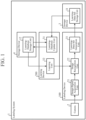
- FIG. 1 is a block diagram illustrating a main part of a labeling system according to a first embodiment.
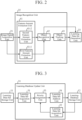
- FIG. 2 is a block diagram illustrating a main part of an image recognition unit in a labeling device according to the first embodiment.
- FIG. 3 is a block diagram illustrating a main part of a learning-database update unit in the learning device according to the first embodiment. The labeling system according to the first embodiment will be described with reference to FIGS. 1 to 3 .
- a labeling system 1 includes a camera 2, a storage device 3, a storage device 4, a labeling device 100, and a learning device 200.
- the storage device 3 includes a learning-data-set storage unit 11.
- the storage device 4 includes a learning-database storage unit 12.
- the labeling device 100 includes an image-signal acquisition unit 21, an image recognition unit 22, and a learning-data-set generation unit 23.
- the learning device 200 includes a learning-database update unit 31 and a learning unit 32.
- the camera 2 is a monitoring camera. Specifically, for example, the camera 2 is a surveillance camera, a security camera, or an electronic mirror camera.
- the camera 2 includes a visible light camera or an infrared camera, and also includes a camera for capturing a video.
- captured images the individual still images constituting a video captured by the camera 2 may be referred to as "captured images”.
- the image-signal acquisition unit 21 acquires an image signal indicating a captured image.
- the image recognition unit 22 performs image recognition using the acquired image signal.
- image recognition performed by the image recognition unit 22 includes object recognition and tracking.
- object recognition performed by the image recognition unit 22 includes at least one of object detection and scene segmentation.
- the image recognition unit 22 includes a feature-amount extraction unit 41, an object recognition unit 42, and an object tracking unit 43.
- the feature-amount extraction unit 41 includes a first feature-amount extraction unit 41_1 and a second feature-amount extraction unit 41_2.
- the first feature-amount extraction unit 41_1 generates a feature map (hereinafter, may be referred to as "first feature map”) corresponding to each captured image using the acquired image signal.
- the first feature map includes a plurality of feature amounts (hereinafter, may be referred to as "first feature amounts”) arranged in two directions orthogonal to each other.
- the first feature map corresponds to a foreground mask for each attribute.
- the first feature-amount extraction unit 41_1 generates the first feature map by generating a foreground mask for each attribute using, for example, background subtraction developed in Google Summer of Code (GSoC) 2017.
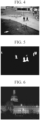
- FIG. 4 illustrates an example of a captured image.
- FIG. 5 illustrates an example of a first feature map corresponding to such a captured image and based on background subtraction. More specifically, FIG. 5 illustrates an example of a foreground mask corresponding to an attribute "person".
- the first feature map corresponds to a mid-level feature corresponding to objectness. That is, each first feature amount in the first feature map uses such a mid-level feature.
- mid-level is equivalent to a level based on a human visual model. That is, “mid-level” is lower than a feature level used in conventional object recognition.
- the mid-level feature uses, for example, attention.
- the first feature-amount extraction unit 41_1 generates the first feature map by generating an attention map using an attention mechanism, for example.
- FIG. 6 illustrates an example of a captured image.
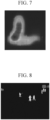
- FIG. 7 illustrates an example of a first feature map corresponding to such a captured image and based on attention.
- the mid-level feature uses saliency, for example.
- the first feature-amount extraction unit 41_1 generates the first feature map by generating a saliency map using a method similar to the method described in Reference Literature 1 below. That is, the first feature-amount extraction unit 41_1 generates the first feature map by performing saliency estimation.
- the mid-level feature is only required to correspond to objectness, and is not limited to attention or saliency.
- the method of generating the first feature map by the first feature-amount extraction unit 41_1 is not limited to the specific examples described above.
- the first feature-amount extraction unit 41_1 can generate the first feature map using at least one of image gradient detection, saliency estimation, background subtraction, objectness estimation, attention, and scene segmentation.
- the second feature-amount extraction unit 41_2 generates one or more feature maps (hereinafter, may be referred to as "second feature maps”) corresponding to each captured image using the acquired image signal.
- the second feature map is sequentially generated using, for example, a convolutional neural network (hereinafter, may be denoted as "CNN").
- CNN convolutional neural network
- Each of the second feature maps includes a plurality of feature amounts (hereinafter, may be referred to as "second feature amounts”) arranged in two directions orthogonal to each other.
- the second feature map corresponds to a high-level feature. That is, each second feature amount uses such a high-level feature.
- “high-level” is equivalent to a feature level used in conventional object recognition. That is, "high-level” is higher than a level based on a human visual model.
- FIG. 8 illustrates an example of a second feature map corresponding to the captured image illustrated in FIG. 4 .
- the object recognition unit 42 performs object recognition using the generated first feature map and the generated second feature map.
- Object recognition performed by the object recognition unit 42 includes at least one of object detection and scene segmentation, as described above.
- the position of each object included in a captured image is estimated by regression, and an attribute of the corresponding object is estimated by classify.
- information indicating a bounding box corresponding to coordinates (x, y, w, h) for position and size, information indicating a label corresponding to an attribute, information indicating the confidence of each bounding box, and the like are output, for each object included in the captured image.
- Scene segmentation divides the captured image into regions corresponding to respective attributes. Scene segmentation allows the captured image to be divided into a plurality of regions on a pixel-by-pixel basis. With scene segmentation, information indicating the area of each region, information indicating the attribute of each region, and the like are output.
- the object recognition unit 42 performs both object detection and scene segmentation by Mask Region-based CNN (R-CNN).
- R-CNN Mask Region-based CNN
- Mask R-CNN is described in Reference Literature 2 below.
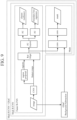
- FIG. 9 illustrates an example of a neural network structure corresponding to the feature-amount extraction unit 41 and the object recognition unit 42 in a case where the first feature-amount extraction unit 41_1 generates a foreground mask for each attribute by background subtraction and the object recognition unit 42 performs both object detection and scene segmentation by Mask R-CNN.
- a neural network may be referred to as "Mask R-CNN + GSoC”.
- “GSoC Background Subtraction” corresponds to the first feature-amount extraction unit 41_1.
- CNN of "Faster R-CNN” in “Mask R-CNN” corresponds to the second feature-amount extraction unit 41_2.
- the block group subsequent to CNN in “Mask R-CNN” corresponds to the object recognition unit 42.
- CNN of "Faster R-CNN” in “Mask R-CNN” uses, for example, a network obtained by combining feature pyramid networks (FPN) with Residual Network (ResNet)-101. Furthermore, as illustrated in FIG. 9 , “Mask” in “Mask R-CNN” includes a plurality of convolution blocks ("conv.” in FIG. 9 ).
- the neural network illustrated in FIG. 9 is learned in advance using an existing large-scale database. Specifically, for example, the neural network illustrated in FIG. 9 is learned in advance using Microsoft Common Objects in Context (COCO). In other words, the image recognition unit 22 is learned in advance using such a large-scale database.
- COCO Microsoft Common Objects in Context
- the database used for learning of the image recognition unit 22 is not limited to Microsoft COCO.
- the image recognition unit 22 can be, for example, learned in advance using a public database from "OpenAI".
- OpenAI a public database from "OpenAI”.
- an example of a case where the image recognition unit 22 is learned in advance using Microsoft COCO will be mainly described.
- an object with a learned shape among objects included in the captured image can be recognized with high accuracy. Furthermore, object recognition with a certain degree of accuracy can be performed on an object with an unlearned shape among the objects included in the captured image.
- a feature map (hereinafter, may be referred to as "third feature map”) obtained by combining the first feature map and the second feature map is used as follows. Furthermore, in object recognition performed by the object recognition unit 42, the threshold is set to a value lower than that of conventional object recognition (that is, object recognition using the second feature map instead of the third feature map).
- the third feature map will be described.
- the object recognition unit 42 weights, using the individual first feature amounts in the first feature map, the corresponding second feature amounts in the individual second feature maps. At this time, the object recognition unit 42 sets a value (hereinafter referred to as "importance") W indicating a weight of such weighting as follows.
- the object recognition unit 42 calculates similarity S between each of the individual first feature amounts in the first feature map and a corresponding one of the second feature amounts in the individual second feature maps.
- the similarity S is, for example, a value based on at least one of Earth Mover's Distance (EMD), Cosine Similarity, Kullback-Leibler Divergence (KLD), L2 norm, L1 norm, and Manhattan Distance.
- the object recognition unit 42 sets the importance W corresponding to each of the second feature amounts using the calculated similarity S. At this time, for each of the second feature amounts, the object recognition unit 42 sets the importance W to a larger value as the corresponding similarity S becomes larger (that is, as the corresponding distance becomes shorter). In other words, for each of the second feature amounts, the object recognition unit 42 sets the importance W to a smaller value as the corresponding similarity S becomes smaller (that is, as the corresponding distance becomes longer).
- the second feature amount related to a region corresponding to a foreground object in the captured image is made to be relatively stronger than the second feature amount related to a region corresponding to a background in the captured image.
- the second feature amount related to the region corresponding to the background in the captured image is made to be relatively weaker than the second feature amount related to the region corresponding to the foreground object in the captured image.
- FIG. 10 illustrates an example of the third feature map generated in this manner.
- the third feature map illustrated in FIG. 10 corresponds to the captured image illustrated in FIG. 4 . That is, the third feature map illustrated in FIG. 10 is generated by weighting the second feature map illustrated in FIG. 8 using the first feature map illustrated in FIG. 5 .
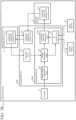
- FIG. 11 illustrates an example of a neural network structure of the first convolution block in this case.
- the neural network includes a weight calculation layer (in FIG. 11 , "Weight Calc.”). The importance W as described above is set by the weight calculation layer.
- the object recognition unit 42 calculates an inner product, by performing element-wise multiplication between each of the individual first feature amounts in the first feature map and the corresponding second feature amount in the individual second feature maps.
- the second feature amount related to a region corresponding to a foreground object in the captured image is made to be relatively stronger than the second feature amount related to a region corresponding to a background in the captured image.
- the second feature amount related to the region corresponding to the background in the captured image is made to be relatively weaker than the second feature amount related to the region corresponding to the foreground object in the captured image.
- a plurality of third feature maps corresponding to the first feature maps are generated.
- Such a calculation is performed, for example, in the first convolution block of "Mask” in "Mask R-CNN + GSoC".
- the object recognition unit 42 weights, using the individual first feature amounts in the first feature map, the corresponding second feature amounts in the individual second feature maps. At this time, the object recognition unit 42 sets the importance W as follows.
- the object recognition unit 42 selects a representative value in each of second feature maps by using global average pooling (GAP).
- GAP global average pooling
- a plurality of third feature maps corresponding to the second feature maps are generated.
- one third feature map corresponding to one second feature map is generated.
- Such weighting is performed, for example, in the first convolution block of "Mask” in “Mask R-CNN + GSoC".
- the neural network in the first convolutional block in this case has a GAP layer instead of the weight calculation layer in the structure illustrated in FIG. 11 .
- the importance W as described above is set.
- the third feature map generated in accordance with the first specific example, the second specific example, or the third specific example for object recognition it is possible to avoid the occurrence of misrecognition in which a part of the background is recognized as an object as compared with a case where the second feature map is used for object recognition. Further, since the occurrence of misrecognition can be suppressed while using a low threshold as described above, the object can be recognized with high accuracy. In particular, it is possible to improve the recognition accuracy for an object with an unlearned shape.
- the first convolution block of "Mask” in “Mask R-CNN + GSoC” usually includes a step of performing convolution (hereinafter, may be referred to as "first step”), a step of performing deconvolution (may be hereinafter, referred to as “second step”), and a step of performing point-wise convolution (hereinafter, may be referred to as "third step”).
- Weighting according to the first specific example can be performed in the first step or can be performed in the third step.
- Weighting according to the second specific example can be performed in the first step or can be performed in the third step.
- Weighting according to the third specific example can be performed in the first step or can be performed in the third step.
- weighting according to the first specific example, the calculation according to the second specific example, or weighting according to the third specific example can be preferably performed in the first step or can be preferably performed in the third step depending on the number of neural network layers or the like. It is only required that a more preferable step is selected among these steps.
- object recognition that performs object detection and object recognition using the third feature map
- object recognition according to the first embodiment uses "Mask R-CNN + GSoC”.
- object recognition that performs object detection and scene segmentation using the second feature map may be referred to as “comparative object recognition”. That is, comparative object recognition uses "Mask R-CNN”.
- FIG. 12 illustrates an example of a recognition result by comparative object recognition.
- FIG. 13 illustrates an example of a recognition result by object recognition according to the first embodiment. More specifically, FIG. 13 illustrates an example of a recognition result related to an attribute "person". These recognition results correspond to the captured image illustrated in FIG. 4 .
- the left half part of the table illustrated in FIG. 14 shows experimental results related to the recognition accuracy of comparative object recognition.
- the right half part of the table illustrated in FIG. 14 shows experimental results related to the recognition accuracy of object recognition according to the first embodiment.
- Numerical values in the respective columns of the table indicate mean average precision (mAP), and its unit is %. Furthermore, “visibility > 0.X" in the table indicates that only an object in which a part occupying more than 10 ⁇ X% of the entire object is shown in the image is set as a recognition target. In other words, it is indicated that an object in which a part occupying only 10 ⁇ X% or less of the entire object is shown in the image is excluded from the recognition target.
- the object tracking unit 43 tracks each object included in the captured image, by using the result of object recognition performed by the object recognition unit 42 in time series. As a result, it is possible to suppress, for each object, a decrease in recognition accuracy of each object due to a change in apparent shape in a video captured by the camera 2.
- the apparent shape of the object may change with time in the video captured by the camera 2.
- the apparent shape of the object may be a learned shape in the captured image at a certain timing, whereas the shape of the object may be an unlearned shape in the captured image at another timing.
- object recognition since the object is not recognized by object recognition at the latter timing, object recognition may be temporally unstable.
- the object can be recognized even at the latter timing.
- the recognition of the object can thus be temporally stabilized. As a result, the recognition accuracy of the object can be further improved.
- Tracking performed by the object tracking unit 43 is, for example, as follows. That is, on the basis of the result of object detection in a captured image corresponding to an Nth frame (N is any integer), the object tracking unit 43 performs regression with a tracking-loss based on a distance such as KLD, in terms of the attribute of each object, the coordinates of each object, and the population proportion of the foreground to the background in each small region. As a result, the object tracking unit 43 predicts the position and size of each object in a captured image corresponding to an N+1th frame.
- a distance such as KLD
- the object tracking unit 43 detects an object that is detected by object detection in the captured image corresponding to the Nth frame but is not detected by object detection in the captured image corresponding to the N+1th frame. As a result, it is possible to continuously detect an object that is included in the captured image corresponding to the N+1th frame but is not detected by object detection.
- the learning-data-set generation unit 23 generates a learning data set corresponding to each object included in the captured image, on the basis of the result of object recognition performed by the object recognition unit 42 and the result of tracking performed by the object tracking unit 43.
- the learning data set includes data indicating an image in a bounding box corresponding to each object (hereinafter, referred to as "image data”), data indicating a label corresponding to an attribute of each object (hereinafter, referred to as “label data”), data indicating a mask corresponding to a region corresponding to each object (hereinafter, referred to as “mask data”), and the like. It can be said that generating such a learning data set is labeling each object included in the captured image.
- the learning data set includes data used for assignment of a priority P (hereinafter, referred to as "data for priority assignment”) by a priority assignment unit 53 to be described later.
- the data for priority assignment includes, for example, data indicating the confidence of object recognition related to each object (hereinafter, referred to as "confidence data").
- the data for priority assignment is not limited to the confidence data.
- the data for priority assignment can include, for example, instead of or in addition to the confidence data, at least one of data indicating a size of each object, data indicating a high-dimensional image feature of each object, data indicating a low-dimensional image feature of each object, data indicating objectness of each object, data indicating a result of saliency estimation of each object, and data indicating attention of each object.
- the learning data set includes image data, label data, mask data, and confidence data.
- the object recognition unit 42 uses the third feature map for object recognition. This makes it possible to avoid the occurrence of misrecognition in which a part of the background is recognized as an object. As a result, it is possible to avoid generation of a learning data set corresponding to Easy Example in Focal Loss in the learning-data-set generation unit 23. That is, it is possible to avoid generation of a learning data set including image data corresponding to the background. Consequently, in relearning or additional learning of the image recognition unit 22 by the learning unit 32 to be described later, convergence of such learning can be accelerated.
- the learning-data-set storage unit 11 stores the learning data set generated by the learning-data-set generation unit 23.
- the learning-database update unit 31 updates a learning database stored in the learning-database storage unit 12, using the learning data set stored in the learning-data-set storage unit 11.
- the learning-database update unit 31 includes a learning-data-set acquisition unit 51, a learning-data-set acquisition unit 52, the priority assignment unit 53, and a learning-data-set addition unit 54.
- the learning-data-set acquisition unit 51 acquires a learning data set (hereinafter, may be referred to as "first learning data set") stored in the learning-data-set storage unit 11.
- the learning-data-set acquisition unit 52 acquires a plurality of learning data sets (hereinafter, may be referred to as "second learning data sets") included in the learning database stored in the learning-database storage unit 12.
- the priority assignment unit 53 assigns the priority P in relearning or additional learning by the learning unit 32 to be described later to the acquired first learning data set. At this time, the priority assignment unit 53 assigns the priority P in such a way that the learning priority of a data set with a high learning value increases (that is, the learning priority of a data set with a low learning value decreases), on the basis of the variation in a distribution D of the acquired second learning data sets.
- the distribution D is a distribution based on the data for priority assignment.
- the distribution D is a distribution in a confidence map based on the confidence data.
- FIG. 15 illustrates an example of the confidence map.
- the priority assignment unit 53 sets the priority P as follows, for example.
- the priority assignment unit 53 classifies the acquired second learning data sets into a data set group in which a data set with high confidence is sufficiently accumulated (hereinafter, referred to as "first data set group”), a data set group in which a data set with high confidence is accumulated to some extent (hereinafter, referred to as "second data set group”), and a data set group in which a data set with high confidence is insufficient (hereinafter, referred to as "third data set group”).
- first data set group a data set group in which a data set with high confidence is sufficiently accumulated
- second data set group a data set group in which a data set with high confidence is accumulated to some extent
- third data set group a data set group in which a data set with high confidence is insufficient
- Such classification is based on, for example, the label indicated by the label data (that is, the attribute of the corresponding object) or the shape of the mask indicated by the mask data (that is, the apparent shape of the corresponding object).
- the priority assignment unit 53 determines which of the first data set group, the second data set group, and the third data set group the acquired first learning data set is to be classified into. Such determination is based on, for example, the label indicated by the label data (that is, the attribute of the corresponding object) or the shape of the mask indicated by the mask data (that is, the apparent shape of the corresponding object).
- the priority assignment unit 53 sets the priority P of the first learning data to a low value.
- the priority assignment unit 53 sets the priority P of the first learning data to a medium value.
- the priority assignment unit 53 sets the priority P of the first learning data to a medium value.
- the priority assignment unit 53 sets the priority P of the first learning data to a high value.
- the distribution D is only required to be a distribution based on the data for priority assignment, and is not limited to the distribution based on the confidence data.
- the distribution D can be a distribution based on at least one of confidence, a size, a high-dimensional image feature, a low-dimensional image feature, objectness, saliency estimation, and attention.
- the method for the priority assignment unit 53 to assign the priority P is not limited to the above specific example. It is only required that the priority assignment unit 53 assigns the priority P in such a way that the learning priority of a data set with a high learning value increases (that is, the learning priority of a data set with a low learning value decreases).
- the learning-data-set addition unit 54 generates a data set (hereinafter, may be referred to as "third learning data set") obtained by additionally writing data (hereinafter, referred to as "priority data") indicating the assigned priority P to the acquired first learning data set.
- the learning-data-set addition unit 54 updates the learning database, by adding the generated third learning data set to the learning database stored in the learning-database storage unit 12.
- the learning-data-set addition unit 54 can exclude, from the learning database addition target, the third learning data set corresponding to the priority P less than a predetermined value. As a result, it is possible to prevent a data set with a low learning value from being added to the learning database.
- the learning-data-set addition unit 54 can assign the priority P again to each piece of the second learning data in the same manner as assigning the priority P to the first learning data set. As a result, the learning-data-set addition unit 54 can adjust the priority P in the learning database as a whole.
- the learning-database update unit 31 can newly create a learning database, by newly storing the third learning data set generated as described above in the learning-database storage unit 12. Thereafter, the learning-database update unit 31 can update the learning database by adding the newly generated third learning data set to the learning database as needed. That is, the learning-database update unit 31 can generate and update the learning database.
- the learning unit 32 performs relearning or additional learning of the image recognition unit 22, using the learning database stored in the learning-database storage unit 12 (that is, using the learning database updated by the learning-database update unit 31).
- relearning or additional learning may be collectively referred to as "relearning or the like”.
- the image recognition unit 22 is learned in advance using the existing large-scale database.
- the image recognition unit 22 can freely learn using the updated learning database. Consequently, the learning unit 32 performs relearning or the like of the image recognition unit 22 using the updated learning database.
- Relearning or the like of the first feature-amount extraction unit 41_1 is performed by, for example, supervised learning or unsupervised learning. Consequently, various known techniques related to supervised learning or unsupervised learning can be used for relearning or the like of the first feature-amount extraction unit 41_1. Detailed description of these techniques will be omitted.
- Relearning or the like of the second feature-amount extraction unit 41_2 is performed by, for example, supervised learning. Consequently, various known techniques related to supervised learning can be used for relearning or the like of the second feature-amount extraction unit 41_2. As described above, the second feature-amount extraction unit 41_2 uses CNN. For this reason, relearning or the like of the second feature-amount extraction unit 41_2 can be performed by deep learning. Consequently, various known techniques related to deep learning can be used for relearning or the like of the second feature-amount extraction unit 41_2. Detailed description of these techniques will be omitted.
- Relearning or the like of the object recognition unit 42 is performed by, for example, supervised learning. Consequently, various known techniques related to supervised learning can be used for relearning or the like of the object recognition unit 42. Detailed description of these techniques will be omitted.
- the priority P is assigned to each of the learning data sets included in the learning database.
- the learning unit 32 can thus vary a learning rate ⁇ of relearning or the like, for each learning data set or for each label, depending on the assigned priority P. For example, the learning unit 32 can increase the learning rate ⁇ as the assigned priority P becomes higher (that is, reduce the learning rate ⁇ as the assigned priority P becomes lower).
- the learning unit 32 can perform data augmentation on some of the learning data sets included in the learning database, depending on the assigned priority P. For example, the learning unit 32 performs data augmentation on a learning data set to which a high priority P is assigned.
- Various known techniques can be used for the data augmentation. Detailed description of these techniques will be omitted.
- the updated learning database is a database smaller than the existing large-scale database.
- the updated learning database is based on an image (that is, an image captured by the camera 2) different from the image included in the existing large-scale database.
- the updated learning database can include a label different from a label included in the existing large-scale database.
- relearning or the like of the image recognition unit 22 by the learning unit 32 can be performed by transfer learning.
- various known techniques related to transfer learning can be used for relearning or the like of the image recognition unit 22 by the learning unit 32. Detailed description of these techniques will be omitted.
- relearning or the like of the image recognition unit 22 by the learning unit 32 can be performed by fine tuning.
- various known techniques related to fine tuning can be used for relearning or the like of the image recognition unit 22 by the learning unit 32. Detailed description of these techniques will be omitted.
- relearning or the like of the image recognition unit 22 by the learning unit 32 can be performed by few-shot learning.
- various known techniques related to few-shot learning can be used for relearning or the like of the image recognition unit 22 by the learning unit 32. Detailed description of these techniques will be omitted.
- relearning or the like of the image recognition unit 22 by the learning unit 32 can be performed by meta-learning.
- various known techniques related to meta-learning can be used for relearning or the like of the image recognition unit 22 by the learning unit 32. Detailed description of these techniques will be omitted.
- relearning or the like of the image recognition unit 22 by the learning unit 32 can be performed by distillation.
- various known techniques related to distillation can be used for relearning or the like of the image recognition unit 22 by the learning unit 32. Detailed description of these techniques will be omitted.
- the system including the camera 2 for example, a monitoring system, a security system, or an electronic mirror
- relearning or the like is repeatedly performed by the learning unit 32, so that image recognition performed by the image recognition unit 22 gradually adapts to the environment of the place where the camera 2 is installed.
- the accuracy of labeling by the learning-data-set generation unit 23 is gradually improved.
- image-signal acquisition function the function of the image-signal acquisition unit 21 may be collectively referred to as "image-signal acquisition function".
- image-signal acquisition function may be denoted as a reference sign "F1”.
- process performed by the image-signal acquisition unit 21 may be collectively referred to as "image-signal acquisition process”.
- image recognition function the function of the image recognition unit 22 may be collectively referred to as "image recognition function".
- image recognition function may be denoted as a reference sign "F2”.
- process performed by the image recognition unit 22 may be collectively referred to as "image recognition process”.
- the function of the learning-data-set generation unit 23 may be collectively referred to as “learning-data-set generation function”.
- learning-data-set generation function may be denoted as a reference sign "F3”.
- process performed by the learning-data-set generation unit 23 may be collectively referred to as “learning-data-set generation process”.
- the function of the learning-database update unit 31 may be collectively referred to as “learning-database update function”.
- the learning-database function may be denoted as a reference sign "F11”.
- the process performed by the learning-database update unit 31 may be collectively referred to as “learning-database update process”.
- the functions of the learning unit 32 may be collectively referred to as "learning function”.
- the learning function may be denoted as a reference sign "F12”.
- the process performed by the learning unit 32 may be collectively referred to as “learning process”.
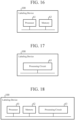
- the labeling device 100 includes a processor 61 and a memory 62.
- the memory 62 stores programs corresponding to the functions F1 to F3.
- the processor 61 reads and executes the programs stored in the memory 62. As a result, the functions F1 to F3 are implemented.
- the labeling device 100 includes a processing circuit 63.
- the processing circuit 63 performs the processes corresponding to the functions F1 to F3. As a result, the functions F1 to F3 are implemented.
- the labeling device 100 includes the processor 61, the memory 62, and the processing circuit 63.
- the memory 62 stores at least one program corresponding to a part of the functions F1 to F3.
- the processor 61 reads and executes the program stored in the memory 62. As a result, such a part of the functions is implemented.
- the processing circuit 63 performs at least one process corresponding to the remaining of the functions F1 to F3. As a result, the remaining function is implemented.
- the processor 61 includes one or more processors. Each processor uses, for example, a central processing unit (CPU), a graphics processing unit (GPU), a microprocessor, a microcontroller, or a digital signal processor (DSP).
- CPU central processing unit
- GPU graphics processing unit
- DSP digital signal processor
- the memory 62 includes one or more nonvolatile memories. Alternatively, the memory 62 includes one or more nonvolatile memories and one or more volatile memories. That is, the memory 62 includes one or more memories. Each memory uses, for example, a semiconductor memory, a magnetic disk, an optical disk, a magneto-optical disk, a magnetic tape, or a magnetic drum. More specifically, each volatile memory uses, for example, a random access memory (RAM).
- RAM random access memory
- each nonvolatile memory uses, for example, a read only memory (ROM), a flash memory, an erasable programmable read only memory (EPROM), an electrically erasable programmable read only memory (EEPROM), a solid state drive, a hard disk drive, a flexible disk, a compact disk, a digital versatile disc (DVD), a Blu-ray disk, or a mini disk.
- ROM read only memory
- EPROM erasable programmable read only memory
- EEPROM electrically erasable programmable read only memory
- solid state drive a hard disk drive
- a flexible disk a compact disk
- DVD digital versatile disc
- Blu-ray disk or a mini disk.
- the processing circuit 63 includes one or more digital circuits. Alternatively, the processing circuit 63 includes one or more digital circuits and one or more analog circuits. That is, the processing circuit 63 includes one or more processing circuits. Each processing circuit uses, for example, an application specific integrated circuit (ASIC), a programmable logic device (PLD), a field programmable gate array (FPGA), a system on a chip (SoC), or a system large scale integration (LSI).
- ASIC application specific integrated circuit
- PLD programmable logic device
- FPGA field programmable gate array
- SoC system on a chip
- LSI system large scale integration
- the processor 61 when the processor 61 includes a plurality of processors, the correspondence relationship between the functions F1 to F3 and the processors is freely determined. That is, each of the processors can read and execute one or more programs corresponding to one or more corresponding functions among the functions F1 to F3.
- the processor 61 can include dedicated processors corresponding to the individual functions F1 to F3.
- the memory 62 includes a plurality of memories, the correspondence relationship between the functions F1 to F3 and the memories is freely determined. That is, each of the memories can store one or more programs corresponding to one or more corresponding functions among the functions F1 to F3.
- the memory 62 can include dedicated memories corresponding to the individual functions F1 to F3.
- the processing circuit 63 includes a plurality of processing circuits, the correspondence relationship between the functions F1 to F3 and the processing circuits is freely determined. That is, each of the processing circuits can perform one or more processes corresponding to one or more corresponding functions among the functions F1 to F3.
- the processing circuit 63 can include dedicated processing circuits corresponding to the individual functions F1 to F3.
- the learning device 200 includes a processor 71 and a memory 72.
- the memory 72 stores programs corresponding to the functions F11 and F12.
- the processor 71 reads and executes the programs stored in the memory 72. As a result, the functions F11 and F12 are implemented.
- the learning device 200 includes a processing circuit 73.
- the processing circuit 73 performs the processes corresponding to the functions F11 and F12. As a result, the functions F11 and F12 are implemented.
- the learning device 200 includes the processor 71, the memory 72, and the processing circuit 73.
- the memory 72 stores a program corresponding to a part of the functions F11 and F12.
- the processor 71 reads and executes the program stored in the memory 72. As a result, such a part of the functions is implemented.
- the processing circuit 73 performs the process corresponding to the remaining of the functions F11 and F12. As a result, the remaining function is implemented.
- the specific example of the processor 71 is similar to the specific example of the processor 61.
- the specific example of the memory 72 is similar to the specific example of the memory 62.
- the specific example of the processing circuit 73 is similar to the specific example of the processing circuit 63. Consequently, the detailed description thereof will be omitted.
- the processor 71 when the processor 71 includes a plurality of processors, the correspondence relationship between the functions F11 and F12 and the processors is freely determined. That is, each of the processors can read and execute one or more programs corresponding to one or more corresponding functions of the functions F11 and F12.
- the processor 71 can include dedicated processors corresponding to the individual functions F11 and F12.
- each of the memories can store one or more programs corresponding to one or more corresponding functions of the functions F11 and F12.
- the memory 72 can include dedicated memories corresponding to the individual functions F11 and F12.
- the processing circuit 73 includes a plurality of processing circuits, the correspondence relationship between the functions F11 and F12 and the processing circuits is freely determined. That is, each of the processing circuits can perform one or more processes corresponding to one or more corresponding functions of the functions F11 and F12.
- the processing circuit 73 can include dedicated processing circuits corresponding to the individual functions F11 and F12.
- the image-signal acquisition unit 21 performs the image-signal acquisition process (step ST1).
- the image recognition unit 22 performs the image recognition process (step ST2).
- the learning-data-set generation unit 23 then performs the learning-data-set generation process (step ST3).
- the learning-database update unit 31 performs the learning-database update process (step ST11).
- the learning unit 32 performs the learning process (step ST12).
- the learning device 200 can include the labeling device 100. That is, the learning device 200 can include the image-signal acquisition unit 21, the image recognition unit 22, the learning-data-set generation unit 23, the learning-database update unit 31, and the learning unit 32.
- the labeling device 100 can include the learning device 200. That is, the labeling device 100 can include the image-signal acquisition unit 21, the image recognition unit 22, the learning-data-set generation unit 23, the learning-database update unit 31, and the learning unit 32.
- the labeling device 100 can be integrated with the camera 2.
- the learning device 200 can be integrated with the camera 2.
- the artificial intelligence (AI) camera can be implemented.
- the labeling device 100 can include a server that is communicable with the camera 2.
- the learning device 200 can include a server that is communicable with the camera 2.
- Such a server can use an edge server.
- the edge AI camera can be implemented.
- the labeling device 100 includes the image-signal acquisition unit 21 that acquires an image signal indicating an image captured by the camera 2, the image recognition unit 22 that has learned by machine learning and performs image recognition on the captured image, and the learning-data-set generation unit 23 that generates a learning data set including image data corresponding to each object and label data corresponding to each object by performing labeling on each object included in the captured image on the basis of a result of the image recognition.
- the labeling work can be automated in generating the learning data set using the image captured by the camera 2.
- the workload on the labeling person can be reduced.
- the image recognition unit 22 has learned using the existing large-scale database. As a result, not only highly accurate object recognition can be implemented for a learned object, but also object recognition with a certain degree of accuracy can be implemented for an unlearned object.
- the image recognition unit 22 includes the first feature-amount extraction unit 41_1 that generates a first feature map corresponding to a captured image, the second feature-amount extraction unit 41_2 that generates a second feature map corresponding to the captured image, and the object recognition unit 42 that performs object recognition using the first feature map and the second feature map.
- the first feature map corresponds to a foreground mask or corresponds to a mid-level feature corresponding to objectness
- the second feature map corresponds to a high-level feature.
- the accuracy of object recognition can be improved by using the first feature map in addition to the second feature map. In particular, the accuracy of object recognition for an unlearned object can be improved.
- the image recognition unit 22 includes the object tracking unit 43 that tracks each object by using a result of object recognition in time series. As a result, each object can be recognized with higher accuracy.
- the learning device 200 is the learning device 200 for the labeling device 100, and includes the learning-database update unit 31 that updates a learning database by adding the learning data set generated by the learning-data-set generation unit 23 to the learning database, and the learning unit 32 that performs relearning or additional learning of the image recognition unit 22 using the learning database. Consequently, relearning or the like by transfer learning, fine tuning, Few-shot learning, meta learning or distillation can be implemented for the image recognition unit 22. As a result, the accuracy of image recognition can be gradually improved, and the accuracy of labeling can also be gradually improved. Furthermore, in automating the labeling work, it is possible to eliminate the need for a person corresponding to Oracle in Active Learning.
- the learning-database update unit 31 assigns the priority P to the learning data set generated by the learning-data-set generation unit 23, on the basis of the variation in the distribution D of a plurality of learning data sets included in the learning database.
- the priority P efficient relearning or the like can be implemented using the learning database that is smaller than the existing large-scale database.
- the learning unit 32 sets the learning rate ⁇ of relearning or additional learning depending on the priority P. As a result, efficient relearning or the like can be implemented.
- the learning unit 32 performs data augmentation on the learning database depending on the priority P. As a result, efficient relearning or the like can be implemented.
- FIG. 26 is a block diagram illustrating a main part of a labeling system according to a second embodiment.
- the labeling system according to the second embodiment will be described with reference to FIG. 26 .
- Note that, in FIG. 26 the same reference numerals are given to blocks similar to those illustrated in FIG. 1 , and the description thereof will be omitted.
- a labeling system 1a includes the camera 2, the storage device 3, the storage device 4, an output device 5, an input device 6, a labeling device 100a, and the learning device 200.
- the labeling device 100a includes the image-signal acquisition unit 21, the image recognition unit 22, a learning-data-set generation unit 23a, and a user-interface control unit (hereinafter, denoted to as "UI control unit") 24.
- UI control unit user-interface control unit
- the output device 5 includes, for example, a display or a speaker.
- the input device 6 includes a device corresponding to the output device 5.
- the output device 5 includes a display
- the input device 6 includes a touch panel and a touch pen.
- the output device 5 includes a speaker
- the input device 6 includes a microphone.
- the UI control unit 24 executes control to output the result of image recognition by the image recognition unit 22, using the output device 5. Furthermore, the UI control unit 24 performs a process of receiving an input of an operation using the input device 6, that is, an input of an operation of correcting the result of image recognition (hereinafter, may be referred to as "correction operation").
- the UI control unit 24 executes control to display a screen (hereinafter, may be referred to as "correction screen") including an image indicating the result of image recognition by the image recognition unit 22, using a display.
- the UI control unit 24 performs a process of receiving an input of the correction operation using a touch panel and a touch pen. That is, the UI control unit 24 performs a process of receiving an input of the correction operation through a handwriting input to the correction screen.
- the UI control unit 24 executes control to output a voice indicating the result of image recognition by the image recognition unit 22, using a speaker.
- the UI control unit 24 performs a process of receiving an input of the correction operation using a microphone. That is, the UI control unit 24 performs a process of receiving an input of the correction operation through a voice input.
- various known techniques related to speech recognition can be used for the process of receiving the input of the correction operation.
- the UI related to the input of the correction operation can use an interactive UI.
- the labeling person can easily correct the result of image recognition by the image recognition unit 22.
- the learning-data-set generation unit 23a generates a learning data set similar to the learning data set generated by the learning-data-set generation unit 23. That is, the learning-data-set generation unit 23a generates a first learning data set including image data, label data, mask data, confidence data, and the like, on the basis of the result of image recognition by the image recognition unit 22. The learning-data-set generation unit 23a generates a third learning data set by adding priority data to the generated first learning data set. The learning-data-set generation unit 23a stores the generated third learning data set in the learning-data-set storage unit 11.
- the learning-data-set generation unit 23a generates the first learning data based on the result of the correction.
- the function of the learning-data-set generation unit 23a may be collectively referred to as “learning-data-set generation function”.
- the learning-data-set generation function may be denoted as a reference sign "F3a”.
- the process performed by the learning-data-set generation unit 23a may be collectively referred to as “learning-data-set generation process”.
- UI control function the function of the UI control unit 24 may be collectively referred to as "UI control function”.
- UI control function may be denoted as a reference sign "F4".
- control and process performed by the UI control unit 24 may be collectively referred to as "output control and operation input process”.
- the hardware configuration of the main part of the labeling device 100a is similar to that described in the first embodiment with reference to FIGS. 16 to 18 . Consequently, the detailed description thereof will be omitted. That is, the labeling device 100a has the functions F1, F2, F3a, and F4. Each of the functions F1, F2, F3a, and F4 can be implemented by the processor 61 and the memory 62, or can be implemented by the processing circuit 63.
- step ST1 The process of step ST1 is performed first.
- step ST2 the process of step ST2 is performed.
- the UI control unit 24 then performs the output control and the operation input process (step ST4).
- step ST3a the learning-data-set generation unit 23a performs the learning-data-set generation process.
- the learning device 200 can include the labeling device 100a. That is, the learning device 200 can include the image-signal acquisition unit 21, the image recognition unit 22, the learning-data-set generation unit 23a, the UI control unit 24, the learning-database update unit 31, and the learning unit 32.
- the labeling device 100a can include the learning device 200. That is, the labeling device 100a can include the image-signal acquisition unit 21, the image recognition unit 22, the learning-data-set generation unit 23a, the UI control unit 24, the learning-database update unit 31, and the learning unit 32.
- the labeling device 100a can be integrated with the camera 2.
- the learning device 200 can be integrated with the camera 2.
- the AI camera can be implemented.
- the labeling device 100a can include a server that is communicable with the camera 2.
- the learning device 200 can include a server that is communicable with the camera 2.
- Such a server can use, for example, an edge server.
- the edge AI camera can be implemented.
- the labeling device 100a includes the UI control unit 24 that executes the control to output a result of image recognition and performs the process of receiving an input of the operation of correcting the result of image recognition, and the learning-data-set generation unit 23a generates a learning data set on the basis of the result of the correction made by the operation.
- the labeling work can be semi-automated in generating the learning data set using an image captured by the camera 2.
- the labeling work of the labeling person can be supported.
- the workload on the labeling person can be reduced.
- the UI control unit 24 executes the control to display a screen including an image indicating a result of image recognition, and performs the process of receiving an input of an operation through a handwriting input to the screen.
- the result of image recognition can be easily corrected.
- the UI control unit 24 executes the control to output a voice indicating a result of image recognition, and performs the process of receiving an input of an operation through a voice input.
- the result of image recognition can be easily corrected.
- the labeling device and the learning device according to the present disclosure can be used for, for example, a monitoring system, a security system, or an electronic mirror.
Landscapes
- Engineering & Computer Science (AREA)
- Theoretical Computer Science (AREA)
- Physics & Mathematics (AREA)
- General Physics & Mathematics (AREA)
- Multimedia (AREA)
- Computer Vision & Pattern Recognition (AREA)
- Software Systems (AREA)
- Evolutionary Computation (AREA)
- Health & Medical Sciences (AREA)
- Computing Systems (AREA)
- General Health & Medical Sciences (AREA)
- Artificial Intelligence (AREA)
- General Engineering & Computer Science (AREA)
- Computational Linguistics (AREA)
- Medical Informatics (AREA)
- Mathematical Physics (AREA)
- Data Mining & Analysis (AREA)
- Databases & Information Systems (AREA)
- Life Sciences & Earth Sciences (AREA)
- Biomedical Technology (AREA)
- Biophysics (AREA)
- Molecular Biology (AREA)
- Human Computer Interaction (AREA)
- Audiology, Speech & Language Pathology (AREA)
- Quality & Reliability (AREA)
- Image Analysis (AREA)
- Pinball Game Machines (AREA)
- Display Devices Of Pinball Game Machines (AREA)
Claims (21)
- Kennzeichnungsvorrichtung (100, 100a), umfassend:eine Bildsignal-Erwerbungseinheit (21) zum Erwerben eines Bildsignals, das ein von einer Kamera (2) aufgenommenes Bild anzeigt;eine Bilderkennungseinheit (22), die durch maschinelles Lernen gelernt hat, Bilderkennung an dem aufgenommenen Bild durchzuführen, um ein oder mehrere einzelne Objekte zu erkennen, die in dem aufgenommenen Bild enthalten sind; undeine Lerndatensatz-Erzeugungseinheit (23, 23a) zum Erzeugen eines Lerndatensatzes, der Bilddaten, die jedem der Objekte entsprechen, und Kennzeichnungsdaten, die jedem der Objekte entsprechen, enthält, durch Ausführen einer Kennzeichnung an einem oder mehreren einzelnen Objekten, die in dem aufgenommenen Bild enthalten sind, das von der Bilderkennungseinheit erfasst wurde;wobei die Bilderkennungseinheit (22) eine erste Merkmalsmengenextraktionseinheit (41_1) zum Erzeugen einer ersten Merkmalskarte entsprechend dem aufgenommenen Bild unter Verwendung des erworbenen Bildsignals, eine zweite Merkmalsmengenextraktionseinheit (41_2) zum Erzeugen einer zweiten Merkmalskarte entsprechend dem aufgenommenen Bild Verwendung des erworbenen Bildsignals und eine Objekterkennungseinheit (42) zum Durchführen einer Objekterkennung unter Verwendung der ersten Merkmalskarte und der zweiten Merkmalskarte umfasst,wobei die erste Merkmalskarte einer Vordergrundmaske oder einem Merkmal der mittleren Ebene entspricht, das der Objekthaftigkeit entspricht,wobei die zweite Merkmalskarte einem Merkmal der höheren Ebene entspricht,wobei die Objekterkennungseinheit die Objekterkennung unter Verwendung einer dritten Merkmalskarte durchführen soll, die durch Kombinieren der ersten Merkmalskarte und der zweiten Merkmalskarte erhalten wird, und wobei das Erhalten der dritten Merkmalskarte eines der folgenden umfasst:wenn die erste Merkmalskarte einer Vordergrundmaske entspricht, die Objekterkennungseinheit (42) unter Verwendung einer oder mehrerer individueller erster Merkmalsmengen in der ersten Merkmalskarte eine oder mehrere entsprechende zweite Merkmalsmengen in der zweiten Merkmalskarte gewichtet, wobei die Objekterkennungseinheit (42) einen Wichtigkeitswert (W) entsprechend jeder der zweiten Merkmalsmengen unter Verwendung einer berechneten Ähnlichkeit (S) zwischen jeder der ersten Merkmalsmengen und einer entsprechenden der zweiten Merkmalsmengen festlegt, oderwenn die erste Merkmalskarte einer Vordergrundmaske entspricht, die Objekterkennungseinheit (42) ein inneres Produkt berechnet, indem sie eine elementweise Multiplikation zwischen jedem der einzelnen ersten Merkmalswerte in der ersten Merkmalskarte und den entsprechenden zweiten Merkmalswerten in der zweiten Merkmalskarte durchführt, oderwenn die erste Merkmalskarte einem Merkmal der mittleren Ebene entspricht, das der Objekthaftigkeit entspricht, und das Merkmal der mittleren Ebene Aufmerksamkeit verwendet, die Objekterkennungseinheit (42) unter Verwendung eines oder mehrerer individueller erster Merkmalsbeträge in der ersten Merkmalskarte einen oder mehrere entsprechende zweite Merkmalsbeträge in der zweiten Merkmalskarte gewichtet, wobei die Objekterkennungseinheit (42) einen repräsentativen Wert in der ersten Merkmalskarte auswählt und den Wichtigkeitswert (W) auf der Grundlage des repräsentativen Wertes einstellt.
- Kennzeichnungsvorrichtung (100, 100a) nach Anspruch 1, wobei die Bilderkennungseinheit (22) unter Verwendung einer bestehenden großen Datenbank gelernt hat.
- Kennzeichnungsvorrichtung (100, 100a) nach Anspruch 1, wobei die erste Merkmalsmengenextraktionseinheit (41_1) die erste Merkmalskarte unter Verwendung von mindestens einer der Funktionen erzeugt: Bildgradientenerkennung, Auffälligkeitsschätzung, Hintergrundsubtraktion, Objekthaftigkeitsschätzung, Aufmerksamkeit und Szenensegmentierung.
- Kennzeichnungsvorrichtung (100, 100a) nach Anspruch 1, wobei, wenn die erste Merkmalskarte einer Vordergrundmaske entspricht und die Objekterkennungseinheit (42) unter Verwendung einer oder mehrerer individueller erster Merkmalsmengen in der ersten Merkmalskarte einen oder mehrere entsprechende zweite Merkmalsbeträge in der zweiten Merkmalskarte gewichtet und einen Wichtigkeitswert (W) entsprechend jedem der zweiten Merkmalsbeträge unter Verwendung einer berechneten Ähnlichkeit (S) zwischen jedem der ersten Merkmalsbeträge und einem entsprechenden der zweiten Merkmalsbeträge einstellt, wobei die Ähnlichkeit (S) ein Wert ist, der auf der Grundlage von mindestens einem der folgenden Werte berechnet wird: Earth Mover's Distance, EMD, Kosinusähnlichkeit, Kullback-Leibler-Divergenz, KLD, L2-Norm, L1-Norm und Manhattan-Distanz.
- Kennzeichnungsvorrichtung (100, 100a) nach Anspruch 1,wobei die Objekterkennung mindestens eine von Objekterkennung und Szenensegmentierung umfasst,die Objekterfassung darin besteht, eine Position jedes der Objekte durch Regression zu schätzen und ein Attribut jedes der Objekte durch Klassifizierung zu schätzen, unddie Szenensegmentierung darin besteht, das aufgenommene Bild in Regionen zu unterteilen, die den jeweiligen Attributen entsprechen.
- Kennzeichnungsvorrichtung (100, 100a) nach Anspruch 1, wobei die Bilderkennungseinheit (22) eine Objektverfolgungseinheit (43) enthält, um jedes der Objekte unter Verwendung eines Ergebnisses der Objekterkennung in Zeitreihen zu verfolgen.
- Kennzeichnungsvorrichtung (100, 100a) nach Anspruch 1, wobei die erste Merkmalsmengenextraktionseinheit (41_1) durch überwachtes Lernen oder unüberwachtes Lernen gelernt werden kann.
- Kennzeichnungsvorrichtung (100, 100a) nach Anspruch 1, wobei die zweite Merkmalsmengenextraktionseinheit (41_2) durch überwachtes Lernen gelernt werden kann.
- Kennzeichnungsvorrichtung (100, 100a) nach Anspruch 1, wobei die zweite Merkmalsmengenextraktionseinheit (41_2) durch Deep Learning gelernt werden kann.
- Kennzeichnungsvorrichtung (100, 100a) nach Anspruch 1, wobei die zweite Merkmalsmengenextraktionseinheit (41_2) ein neuronales konvolutionales Netz verwendet.
- Kennzeichnungsvorrichtung (100, 100a) nach Anspruch 1, wobei die Objekterkennungseinheit (42) durch überwachtes Lernen gelernt werden kann.
- Kennzeichnungsvorrichtung (100a) nach Anspruch 1, die ferner eine Benutzerschnittstellen-Steuereinheit (24) umfasst, um eine Steuerung zur Ausgabe des Ergebnisses der Bilderkennung auszuführen und einen Prozess zum Empfangen einer Eingabe eines Vorgangs zur Korrektur des Ergebnisses der Bilderkennung durchzuführen,
wobei die Lerndatensatz-Erzeugungseinheit (23a) den Lerndatensatz auf der Grundlage eines Ergebnisses einer durch den Vorgang vorgenommenen Korrektur erzeugt. - Kennzeichnungsvorrichtung (100a) nach Anspruch 12, wobei die Benutzerschnittstellen-Steuereinheit (24) eine Steuerung ausführt, um einen Bildschirm anzuzeigen, der ein Bild enthält, das das Ergebnis der Bilderkennung anzeigt, und einen Prozess des Empfangs einer Eingabe des Vorgangs durch eine handschriftliche Eingabe auf dem Bildschirm durchführt.
- Kennzeichnungsvorrichtung (100a) nach Anspruch 12, wobei die Benutzerschnittstellen-Steuereinheit (24) eine Steuerung ausführt, um eine Stimme auszugeben, die das Ergebnis der Bilderkennung anzeigt, und einen Prozess des Empfangens einer Eingabe des Vorgangs durch eine Spracheingabe durchführt.
- Kennzeichnungsvorrichtung (100, 100a) nach Anspruch 1, wobei die Kamera (2) eine Überwachungskamera ist.
- Kennzeichnungsvorrichtung (100, 100a) nach Anspruch 15, wobei die Kamera (2) eine Überwachungskamera, eine Sicherheitskamera oder eine elektronische Spiegelkamera ist.
- Lernvorrichtung (200) mit der Kennzeichnungsvorrichtung (100, 100a) nach Anspruch 1, wobei die Lernvorrichtung (200) ferner umfasst:eine Lerndatenbank-Aktualisierungseinheit (31), um eine Lerndatenbank zu aktualisieren, indem der Lerndatensatz, der von der Lerndatensatz-Erzeugungseinheit (23, 23a) erzeugt wurde, zu der Lerndatenbank hinzugefügt wird; undeine Lerneinheit (32), um ein Neulernen oder zusätzliches Lernen der Bilderkennungseinheit (22) unter Verwendung der Lerndatenbank durchzuführen.
- Lernvorrichtung (200) nach Anspruch 17, wobei die Lerndatenbank-Aktualisierungseinheit (31) dem von der Lerndatensatz-Erzeugungseinheit (23, 23a) erzeugten Lerndatensatz eine Priorität (P) auf der Grundlage einer Variation in einer Verteilung (D) einer Vielzahl von Lerndatensätzen, die in der Lerndatenbank enthalten sind, zuweist, wobei die Verteilung (D) auf mindestens einem von Vertrauen, einer Größe, einem hochdimensionalen Bildmerkmal, einem niedrigdimensionalen Bildmerkmal, Objekthaftigkeit, Auffälligkeitsschätzung und Aufmerksamkeit basiert.
- Lernvorrichtung (200) nach Anspruch 18, wobei die Priorität (P) auf einen Wert gesetzt wird, der auf einem Lernwert des von der Lerndatensatz-Erzeugungseinheit (23, 23a) erzeugten Lerndatensatzes basiert, so dass die Lernpriorität eines Lerndatensatzes mit einem relativ hohen Lernwert steigt und die Lernpriorität eines Lerndatensatzes mit einem relativ niedrigen Lernwert sinkt.
- Lernvorrichtung (200) nach Anspruch 18, wobei die Lerneinheit (32) eine Lernrate (η) des Neulernens oder des zusätzlichen Lernens in Abhängigkeit von der Priorität (P) einstellt.
- Lernvorrichtung (200) nach Anspruch 18, wobei die Lerneinheit (32) eine Datenerweiterung in der Lerndatenbank in Abhängigkeit von der Priorität (P) durchführt.
Applications Claiming Priority (1)
| Application Number | Priority Date | Filing Date | Title |
|---|---|---|---|
| PCT/JP2020/009092 WO2021176584A1 (ja) | 2020-03-04 | 2020-03-04 | ラベリング装置及び学習装置 |
Publications (3)
| Publication Number | Publication Date |
|---|---|
| EP4099263A1 EP4099263A1 (de) | 2022-12-07 |
| EP4099263A4 EP4099263A4 (de) | 2023-01-25 |
| EP4099263B1 true EP4099263B1 (de) | 2025-03-19 |
Family
ID=77613245
Family Applications (1)
| Application Number | Title | Priority Date | Filing Date |
|---|---|---|---|
| EP20922860.0A Active EP4099263B1 (de) | 2020-03-04 | 2020-03-04 | Etikettiervorrichtung und lernvorrichtung |
Country Status (6)
| Country | Link |
|---|---|
| US (1) | US12315227B2 (de) |
| EP (1) | EP4099263B1 (de) |
| JP (1) | JP7055259B2 (de) |
| KR (1) | KR102553995B1 (de) |
| CN (1) | CN115176277B (de) |
| WO (1) | WO2021176584A1 (de) |
Families Citing this family (5)
| Publication number | Priority date | Publication date | Assignee | Title |
|---|---|---|---|---|
| JP2022054916A (ja) * | 2020-09-28 | 2022-04-07 | LeapMind株式会社 | 認識処理実行プログラム及び認識処理実行装置 |
| JP2025517145A (ja) * | 2022-05-05 | 2025-06-03 | ドクター デイビッド カンパニー | 集団知性を利用した情報処理システム及びその方法 |
| JP2023177717A (ja) * | 2022-06-03 | 2023-12-14 | 株式会社日立国際電気 | 追加学習用のデータ収集システムおよびデータ収集方法 |
| EP4343712A1 (de) * | 2022-09-23 | 2024-03-27 | Robert Bosch GmbH | Vorrichtung und verfahren zum ermitteln eines datensatzes zum trainieren und/oder testen eines objektdetektors |
| EP4425443A1 (de) * | 2023-03-03 | 2024-09-04 | Palantir Technologies Inc. | Systeme und verfahren zur benutzergestützten objekterkennung |
Citations (1)
| Publication number | Priority date | Publication date | Assignee | Title |
|---|---|---|---|---|
| CN110705558A (zh) * | 2019-09-29 | 2020-01-17 | 郑州阿帕斯科技有限公司 | 图像实例分割方法和装置 |
Family Cites Families (26)
| Publication number | Priority date | Publication date | Assignee | Title |
|---|---|---|---|---|
| JP5777380B2 (ja) | 2011-04-05 | 2015-09-09 | キヤノン株式会社 | 画像認識装置、画像認識方法、及びプログラム |
| JP2013125322A (ja) * | 2011-12-13 | 2013-06-24 | Olympus Corp | 学習装置、プログラム及び学習方法 |
| JP6188400B2 (ja) * | 2013-04-26 | 2017-08-30 | オリンパス株式会社 | 画像処理装置、プログラム及び画像処理方法 |
| JP6118752B2 (ja) * | 2014-03-28 | 2017-04-19 | セコム株式会社 | 学習データ生成装置 |
| JP6446971B2 (ja) | 2014-10-06 | 2019-01-09 | 日本電気株式会社 | データ処理装置、データ処理方法、及び、コンピュータ・プログラム |
| WO2016084336A1 (ja) | 2014-11-27 | 2016-06-02 | 日本電気株式会社 | 追学習装置、追学習方法、および、記憶媒体 |
| JP6435581B2 (ja) | 2015-01-29 | 2018-12-12 | パナソニックIpマネジメント株式会社 | 転移学習装置、転移学習システム、転移学習方法およびプログラム |
| US9946951B2 (en) * | 2015-08-12 | 2018-04-17 | International Business Machines Corporation | Self-optimized object detection using online detector selection |
| JP6509717B2 (ja) | 2015-12-09 | 2019-05-08 | 日本電信電話株式会社 | 事例選択装置、分類装置、方法、及びプログラム |
| US10572800B2 (en) | 2016-02-05 | 2020-02-25 | Nec Corporation | Accelerating deep neural network training with inconsistent stochastic gradient descent |
| JP6364037B2 (ja) | 2016-03-16 | 2018-07-25 | セコム株式会社 | 学習データ選択装置 |
| US10943141B2 (en) | 2016-09-15 | 2021-03-09 | Mitsubishi Electric Corporation | Object detection device and object detection method |
| JP6911866B2 (ja) | 2016-10-26 | 2021-07-28 | ソニーグループ株式会社 | 情報処理装置および情報処理方法 |
| FR3059806B1 (fr) * | 2016-12-06 | 2019-10-25 | Commissariat A L'energie Atomique Et Aux Energies Alternatives | Procede d'obtention d'un systeme de labellisation d'images, programme d'ordinateur et dispositif correspondants, systeme de labellisation d'images |
| CN109584295B (zh) * | 2017-09-29 | 2022-08-26 | 阿里巴巴集团控股有限公司 | 对图像内目标物体进行自动标注的方法、装置及系统 |
| JP6919990B2 (ja) * | 2017-10-17 | 2021-08-18 | 株式会社日立製作所 | オンライン認識装置、オンライン認識方法、及びそれに用いる設定画面 |
| US10768628B2 (en) * | 2017-12-12 | 2020-09-08 | Uatc, Llc | Systems and methods for object detection at various ranges using multiple range imagery |
| US11301733B2 (en) * | 2018-05-18 | 2022-04-12 | Google Llc | Learning data augmentation strategies for object detection |
| CN108985293A (zh) * | 2018-06-22 | 2018-12-11 | 深源恒际科技有限公司 | 一种基于深度学习的图像自动化标注方法及系统 |
| JP7308421B2 (ja) * | 2018-07-02 | 2023-07-14 | パナソニックIpマネジメント株式会社 | 学習装置、学習システム、及び学習方法 |
| CN109492686A (zh) * | 2018-11-01 | 2019-03-19 | 郑州云海信息技术有限公司 | 一种图片标注方法与系统 |
| JP6810359B2 (ja) * | 2018-11-22 | 2021-01-06 | キヤノンマーケティングジャパン株式会社 | 情報処理装置、制御方法、プログラム |
| CN109741332B (zh) * | 2018-12-28 | 2021-06-04 | 天津大学 | 一种人机协同的图像分割与标注方法 |
| JP6573297B1 (ja) * | 2019-01-16 | 2019-09-11 | パナソニック株式会社 | 監視カメラおよび検知方法 |
| US11966842B2 (en) * | 2019-05-23 | 2024-04-23 | Icahn School Of Medicine At Mount Sinai | Systems and methods to train a cell object detector |
| JP7031081B2 (ja) | 2019-12-25 | 2022-03-07 | 三菱電機株式会社 | 物体検出装置、モニタリング装置及び学習装置 |
-
2020
- 2020-03-04 EP EP20922860.0A patent/EP4099263B1/de active Active
- 2020-03-04 WO PCT/JP2020/009092 patent/WO2021176584A1/ja not_active Ceased
- 2020-03-04 KR KR1020227029033A patent/KR102553995B1/ko active Active
- 2020-03-04 JP JP2021572533A patent/JP7055259B2/ja not_active Expired - Fee Related
- 2020-03-04 CN CN202080097652.5A patent/CN115176277B/zh active Active
-
2022
- 2022-08-02 US US17/879,535 patent/US12315227B2/en active Active
Patent Citations (1)
| Publication number | Priority date | Publication date | Assignee | Title |
|---|---|---|---|---|
| CN110705558A (zh) * | 2019-09-29 | 2020-01-17 | 郑州阿帕斯科技有限公司 | 图像实例分割方法和装置 |
Also Published As
| Publication number | Publication date |
|---|---|
| CN115176277B (zh) | 2026-03-03 |
| US12315227B2 (en) | 2025-05-27 |
| EP4099263A4 (de) | 2023-01-25 |
| KR102553995B1 (ko) | 2023-07-10 |
| US20220366676A1 (en) | 2022-11-17 |
| EP4099263A1 (de) | 2022-12-07 |
| JP7055259B2 (ja) | 2022-04-15 |
| CN115176277A (zh) | 2022-10-11 |
| WO2021176584A1 (ja) | 2021-09-10 |
| JPWO2021176584A1 (de) | 2021-09-10 |
| KR20220123142A (ko) | 2022-09-05 |
Similar Documents
| Publication | Publication Date | Title |
|---|---|---|
| US12315227B2 (en) | Labeling device and learning device | |
| CN110084299B (zh) | 基于多头融合注意力的目标检测方法和装置 | |
| CN111027493B (zh) | 一种基于深度学习多网络软融合的行人检测方法 | |
| CN106204522B (zh) | 对单个图像的联合深度估计和语义标注 | |
| CN101930611B (zh) | 多视图面部追踪 | |
| CN109492576B (zh) | 图像识别方法、装置及电子设备 | |
| CN114677330B (zh) | 一种图像处理方法、电子设备及存储介质 | |
| CN114998595B (zh) | 弱监督语义分割方法、语义分割方法及可读存储介质 | |
| KR20180071947A (ko) | 영상 처리 장치 및 방법 | |
| CN113129332B (zh) | 执行目标对象跟踪的方法和装置 | |
| CN114359959B (zh) | 一种基于深度学习的静态手势识别方法、装置及汽车 | |
| CN116363374A (zh) | 图像语义分割网络持续学习方法、系统、设备及存储介质 | |
| US20240338830A1 (en) | Systems and methods for multiple-object tracking | |
| CN112132130A (zh) | 一种面向全场景的实时性车牌检测方法及系统 | |
| JP4567660B2 (ja) | 電子画像内で物体のセグメントを求める方法 | |
| EP3913544B1 (de) | Computerimplementiertes trainingsverfahren, klassifizierungsverfahren und -system, computerprogramm und computerlesbares aufzeichnungsmedium | |
| KR101316848B1 (ko) | 배경 합성을 위한 자동 객체 분할 장치 및 방법 | |
| CN111462181B (zh) | 一种基于矩形非对称逆布局模型的视频单目标跟踪方法 | |
| Akamine et al. | Fully automatic extraction of salient objects from videos in near real time | |
| JP5241687B2 (ja) | 物体検出装置及び物体検出プログラム | |
| Dadrass | Dynamic Object Detection Using Moving Cameras for UAV Collision Prevention | |
| CN116758460B (zh) | 基于视觉地图重建的面向复杂环境下的目标检测方法 | |
| Wei et al. | Attention-enhanced re-activation CAMs for weakly supervised semantic segmentation | |
| US20240013407A1 (en) | Information processing apparatus, information processing method, and non-transitory computer-readable storage medium | |
| Smit et al. | Metric collection on semantically segmented highspeed lightning footage with machine learning |
Legal Events
| Date | Code | Title | Description |
|---|---|---|---|
| STAA | Information on the status of an ep patent application or granted ep patent |
Free format text: STATUS: THE INTERNATIONAL PUBLICATION HAS BEEN MADE |
|
| PUAI | Public reference made under article 153(3) epc to a published international application that has entered the european phase |
Free format text: ORIGINAL CODE: 0009012 |
|
| STAA | Information on the status of an ep patent application or granted ep patent |
Free format text: STATUS: REQUEST FOR EXAMINATION WAS MADE |
|
| 17P | Request for examination filed |
Effective date: 20220803 |
|
| AK | Designated contracting states |
Kind code of ref document: A1 Designated state(s): AL AT BE BG CH CY CZ DE DK EE ES FI FR GB GR HR HU IE IS IT LI LT LU LV MC MK MT NL NO PL PT RO RS SE SI SK SM TR |
|
| A4 | Supplementary search report drawn up and despatched |
Effective date: 20230102 |
|
| RIC1 | Information provided on ipc code assigned before grant |
Ipc: G06V 20/70 20220101ALI20221220BHEP Ipc: G06V 20/52 20220101ALI20221220BHEP Ipc: G06V 10/82 20220101ALI20221220BHEP Ipc: G06T 7/00 20170101AFI20221220BHEP |
|
| DAV | Request for validation of the european patent (deleted) | ||
| DAX | Request for extension of the european patent (deleted) | ||
| STAA | Information on the status of an ep patent application or granted ep patent |
Free format text: STATUS: EXAMINATION IS IN PROGRESS |
|
| 17Q | First examination report despatched |
Effective date: 20231012 |
|
| REG | Reference to a national code |
Ref country code: DE Ref legal event code: R079 Free format text: PREVIOUS MAIN CLASS: G06T0007000000 Ipc: G06V0010820000 Ref country code: DE Ref legal event code: R079 Ref document number: 602020048149 Country of ref document: DE Free format text: PREVIOUS MAIN CLASS: G06T0007000000 Ipc: G06V0010820000 |
|
| GRAP | Despatch of communication of intention to grant a patent |
Free format text: ORIGINAL CODE: EPIDOSNIGR1 |
|
| STAA | Information on the status of an ep patent application or granted ep patent |
Free format text: STATUS: GRANT OF PATENT IS INTENDED |
|
| RIC1 | Information provided on ipc code assigned before grant |
Ipc: G06N 3/09 20230101ALN20240930BHEP Ipc: G06N 3/088 20230101ALN20240930BHEP Ipc: G06N 3/0464 20230101ALI20240930BHEP Ipc: G06N 3/0455 20230101ALI20240930BHEP Ipc: G06V 20/70 20220101ALI20240930BHEP Ipc: G06V 20/52 20220101ALI20240930BHEP Ipc: G06V 10/82 20220101AFI20240930BHEP |
|
| RIC1 | Information provided on ipc code assigned before grant |
Ipc: G06N 3/09 20230101ALN20241010BHEP Ipc: G06N 3/088 20230101ALN20241010BHEP Ipc: G06N 3/0464 20230101ALI20241010BHEP Ipc: G06N 3/0455 20230101ALI20241010BHEP Ipc: G06V 20/70 20220101ALI20241010BHEP Ipc: G06V 20/52 20220101ALI20241010BHEP Ipc: G06V 10/82 20220101AFI20241010BHEP |
|
| INTG | Intention to grant announced |
Effective date: 20241017 |
|
| GRAJ | Information related to disapproval of communication of intention to grant by the applicant or resumption of examination proceedings by the epo deleted |
Free format text: ORIGINAL CODE: EPIDOSDIGR1 |
|
| GRAS | Grant fee paid |
Free format text: ORIGINAL CODE: EPIDOSNIGR3 |
|
| GRAA | (expected) grant |
Free format text: ORIGINAL CODE: 0009210 |
|
| STAA | Information on the status of an ep patent application or granted ep patent |
Free format text: STATUS: THE PATENT HAS BEEN GRANTED |
|
| AK | Designated contracting states |
Kind code of ref document: B1 Designated state(s): AL AT BE BG CH CY CZ DE DK EE ES FI FR GB GR HR HU IE IS IT LI LT LU LV MC MK MT NL NO PL PT RO RS SE SI SK SM TR |
|
| INTG | Intention to grant announced |
Effective date: 20241017 |
|
| REG | Reference to a national code |
Ref country code: GB Ref legal event code: FG4D |
|
| REG | Reference to a national code |
Ref country code: CH Ref legal event code: EP |
|
| REG | Reference to a national code |
Ref country code: DE Ref legal event code: R096 Ref document number: 602020048149 Country of ref document: DE |
|
| REG | Reference to a national code |
Ref country code: IE Ref legal event code: FG4D |
|
| PG25 | Lapsed in a contracting state [announced via postgrant information from national office to epo] |
Ref country code: RS Free format text: LAPSE BECAUSE OF FAILURE TO SUBMIT A TRANSLATION OF THE DESCRIPTION OR TO PAY THE FEE WITHIN THE PRESCRIBED TIME-LIMIT Effective date: 20250619 |
|
| PG25 | Lapsed in a contracting state [announced via postgrant information from national office to epo] |
Ref country code: FI Free format text: LAPSE BECAUSE OF FAILURE TO SUBMIT A TRANSLATION OF THE DESCRIPTION OR TO PAY THE FEE WITHIN THE PRESCRIBED TIME-LIMIT Effective date: 20250319 |
|
| REG | Reference to a national code |
Ref country code: LT Ref legal event code: MG9D |
|
| PG25 | Lapsed in a contracting state [announced via postgrant information from national office to epo] |
Ref country code: NO Free format text: LAPSE BECAUSE OF FAILURE TO SUBMIT A TRANSLATION OF THE DESCRIPTION OR TO PAY THE FEE WITHIN THE PRESCRIBED TIME-LIMIT Effective date: 20250619 |
|
| PG25 | Lapsed in a contracting state [announced via postgrant information from national office to epo] |
Ref country code: HR Free format text: LAPSE BECAUSE OF FAILURE TO SUBMIT A TRANSLATION OF THE DESCRIPTION OR TO PAY THE FEE WITHIN THE PRESCRIBED TIME-LIMIT Effective date: 20250319 |
|
| PG25 | Lapsed in a contracting state [announced via postgrant information from national office to epo] |
Ref country code: LV Free format text: LAPSE BECAUSE OF FAILURE TO SUBMIT A TRANSLATION OF THE DESCRIPTION OR TO PAY THE FEE WITHIN THE PRESCRIBED TIME-LIMIT Effective date: 20250319 |
|
| PG25 | Lapsed in a contracting state [announced via postgrant information from national office to epo] |
Ref country code: GR Free format text: LAPSE BECAUSE OF FAILURE TO SUBMIT A TRANSLATION OF THE DESCRIPTION OR TO PAY THE FEE WITHIN THE PRESCRIBED TIME-LIMIT Effective date: 20250620 Ref country code: BG Free format text: LAPSE BECAUSE OF FAILURE TO SUBMIT A TRANSLATION OF THE DESCRIPTION OR TO PAY THE FEE WITHIN THE PRESCRIBED TIME-LIMIT Effective date: 20250319 |
|
| REG | Reference to a national code |
Ref country code: NL Ref legal event code: MP Effective date: 20250319 |
|
| REG | Reference to a national code |
Ref country code: AT Ref legal event code: MK05 Ref document number: 1777614 Country of ref document: AT Kind code of ref document: T Effective date: 20250319 |
|
| PG25 | Lapsed in a contracting state [announced via postgrant information from national office to epo] |
Ref country code: NL Free format text: LAPSE BECAUSE OF FAILURE TO SUBMIT A TRANSLATION OF THE DESCRIPTION OR TO PAY THE FEE WITHIN THE PRESCRIBED TIME-LIMIT Effective date: 20250319 |
|
| PG25 | Lapsed in a contracting state [announced via postgrant information from national office to epo] |
Ref country code: SE Free format text: LAPSE BECAUSE OF FAILURE TO SUBMIT A TRANSLATION OF THE DESCRIPTION OR TO PAY THE FEE WITHIN THE PRESCRIBED TIME-LIMIT Effective date: 20250319 |
|
| PG25 | Lapsed in a contracting state [announced via postgrant information from national office to epo] |
Ref country code: SM Free format text: LAPSE BECAUSE OF FAILURE TO SUBMIT A TRANSLATION OF THE DESCRIPTION OR TO PAY THE FEE WITHIN THE PRESCRIBED TIME-LIMIT Effective date: 20250319 |
|
| PG25 | Lapsed in a contracting state [announced via postgrant information from national office to epo] |
Ref country code: PT Free format text: LAPSE BECAUSE OF FAILURE TO SUBMIT A TRANSLATION OF THE DESCRIPTION OR TO PAY THE FEE WITHIN THE PRESCRIBED TIME-LIMIT Effective date: 20250721 Ref country code: ES Free format text: LAPSE BECAUSE OF FAILURE TO SUBMIT A TRANSLATION OF THE DESCRIPTION OR TO PAY THE FEE WITHIN THE PRESCRIBED TIME-LIMIT Effective date: 20250319 |
|
| PG25 | Lapsed in a contracting state [announced via postgrant information from national office to epo] |
Ref country code: IT Free format text: LAPSE BECAUSE OF FAILURE TO SUBMIT A TRANSLATION OF THE DESCRIPTION OR TO PAY THE FEE WITHIN THE PRESCRIBED TIME-LIMIT Effective date: 20250319 Ref country code: PL Free format text: LAPSE BECAUSE OF FAILURE TO SUBMIT A TRANSLATION OF THE DESCRIPTION OR TO PAY THE FEE WITHIN THE PRESCRIBED TIME-LIMIT Effective date: 20250319 |
|
| PG25 | Lapsed in a contracting state [announced via postgrant information from national office to epo] |
Ref country code: AT Free format text: LAPSE BECAUSE OF FAILURE TO SUBMIT A TRANSLATION OF THE DESCRIPTION OR TO PAY THE FEE WITHIN THE PRESCRIBED TIME-LIMIT Effective date: 20250319 |
|
| PG25 | Lapsed in a contracting state [announced via postgrant information from national office to epo] |
Ref country code: CZ Free format text: LAPSE BECAUSE OF FAILURE TO SUBMIT A TRANSLATION OF THE DESCRIPTION OR TO PAY THE FEE WITHIN THE PRESCRIBED TIME-LIMIT Effective date: 20250319 Ref country code: EE Free format text: LAPSE BECAUSE OF FAILURE TO SUBMIT A TRANSLATION OF THE DESCRIPTION OR TO PAY THE FEE WITHIN THE PRESCRIBED TIME-LIMIT Effective date: 20250319 |
|
| PG25 | Lapsed in a contracting state [announced via postgrant information from national office to epo] |
Ref country code: RO Free format text: LAPSE BECAUSE OF FAILURE TO SUBMIT A TRANSLATION OF THE DESCRIPTION OR TO PAY THE FEE WITHIN THE PRESCRIBED TIME-LIMIT Effective date: 20250319 |
|
| PG25 | Lapsed in a contracting state [announced via postgrant information from national office to epo] |
Ref country code: SK Free format text: LAPSE BECAUSE OF FAILURE TO SUBMIT A TRANSLATION OF THE DESCRIPTION OR TO PAY THE FEE WITHIN THE PRESCRIBED TIME-LIMIT Effective date: 20250319 |
|
| PG25 | Lapsed in a contracting state [announced via postgrant information from national office to epo] |
Ref country code: IS Free format text: LAPSE BECAUSE OF FAILURE TO SUBMIT A TRANSLATION OF THE DESCRIPTION OR TO PAY THE FEE WITHIN THE PRESCRIBED TIME-LIMIT Effective date: 20250719 |
|
| REG | Reference to a national code |
Ref country code: DE Ref legal event code: R097 Ref document number: 602020048149 Country of ref document: DE |
|
| PG25 | Lapsed in a contracting state [announced via postgrant information from national office to epo] |
Ref country code: DK Free format text: LAPSE BECAUSE OF FAILURE TO SUBMIT A TRANSLATION OF THE DESCRIPTION OR TO PAY THE FEE WITHIN THE PRESCRIBED TIME-LIMIT Effective date: 20250319 |
|
| PLBE | No opposition filed within time limit |
Free format text: ORIGINAL CODE: 0009261 |
|
| STAA | Information on the status of an ep patent application or granted ep patent |
Free format text: STATUS: NO OPPOSITION FILED WITHIN TIME LIMIT |
|
| REG | Reference to a national code |
Ref country code: CH Ref legal event code: L10 Free format text: ST27 STATUS EVENT CODE: U-0-0-L10-L00 (AS PROVIDED BY THE NATIONAL OFFICE) Effective date: 20260128 |
|
| 26N | No opposition filed |
Effective date: 20251222 |
|
| PGFP | Annual fee paid to national office [announced via postgrant information from national office to epo] |
Ref country code: GB Payment date: 20260202 Year of fee payment: 7 |
|
| PGFP | Annual fee paid to national office [announced via postgrant information from national office to epo] |
Ref country code: DE Payment date: 20260128 Year of fee payment: 7 |