EP4098788A1 - Laundry treatment device, control method and apparatus thereof, and storage medium - Google Patents
Laundry treatment device, control method and apparatus thereof, and storage medium Download PDFInfo
- Publication number
- EP4098788A1 EP4098788A1 EP20947353.7A EP20947353A EP4098788A1 EP 4098788 A1 EP4098788 A1 EP 4098788A1 EP 20947353 A EP20947353 A EP 20947353A EP 4098788 A1 EP4098788 A1 EP 4098788A1
- Authority
- EP
- European Patent Office
- Prior art keywords
- dehydration
- treatment device
- inner drum
- laundry treatment
- laundry
- Prior art date
- Legal status (The legal status is an assumption and is not a legal conclusion. Google has not performed a legal analysis and makes no representation as to the accuracy of the status listed.)
- Pending
Links
Images

Classifications
-
- D—TEXTILES; PAPER
- D06—TREATMENT OF TEXTILES OR THE LIKE; LAUNDERING; FLEXIBLE MATERIALS NOT OTHERWISE PROVIDED FOR
- D06F—LAUNDERING, DRYING, IRONING, PRESSING OR FOLDING TEXTILE ARTICLES
- D06F33/00—Control of operations performed in washing machines or washer-dryers
- D06F33/30—Control of washing machines characterised by the purpose or target of the control
- D06F33/32—Control of operational steps, e.g. optimisation or improvement of operational steps depending on the condition of the laundry
- D06F33/40—Control of operational steps, e.g. optimisation or improvement of operational steps depending on the condition of the laundry of centrifugal separation of water from the laundry
-
- D—TEXTILES; PAPER
- D06—TREATMENT OF TEXTILES OR THE LIKE; LAUNDERING; FLEXIBLE MATERIALS NOT OTHERWISE PROVIDED FOR
- D06F—LAUNDERING, DRYING, IRONING, PRESSING OR FOLDING TEXTILE ARTICLES
- D06F33/00—Control of operations performed in washing machines or washer-dryers
- D06F33/50—Control of washer-dryers characterised by the purpose or target of the control
- D06F33/52—Control of the operational steps, e.g. optimisation or improvement of operational steps depending on the condition of the laundry
- D06F33/63—Control of the operational steps, e.g. optimisation or improvement of operational steps depending on the condition of the laundry of air flow, e.g. blowing air during the washing process to prevent entanglement of the laundry
-
- D—TEXTILES; PAPER
- D06—TREATMENT OF TEXTILES OR THE LIKE; LAUNDERING; FLEXIBLE MATERIALS NOT OTHERWISE PROVIDED FOR
- D06F—LAUNDERING, DRYING, IRONING, PRESSING OR FOLDING TEXTILE ARTICLES
- D06F2103/00—Parameters monitored or detected for the control of domestic laundry washing machines, washer-dryers or laundry dryers
- D06F2103/68—Operation mode; Program phase
-
- D—TEXTILES; PAPER
- D06—TREATMENT OF TEXTILES OR THE LIKE; LAUNDERING; FLEXIBLE MATERIALS NOT OTHERWISE PROVIDED FOR
- D06F—LAUNDERING, DRYING, IRONING, PRESSING OR FOLDING TEXTILE ARTICLES
- D06F2105/00—Systems or parameters controlled or affected by the control systems of washing machines, washer-dryers or laundry dryers
- D06F2105/46—Drum speed; Actuation of motors, e.g. starting or interrupting
- D06F2105/48—Drum speed
-
- D—TEXTILES; PAPER
- D06—TREATMENT OF TEXTILES OR THE LIKE; LAUNDERING; FLEXIBLE MATERIALS NOT OTHERWISE PROVIDED FOR
- D06F—LAUNDERING, DRYING, IRONING, PRESSING OR FOLDING TEXTILE ARTICLES
- D06F25/00—Washing machines with receptacles, e.g. perforated, having a rotary movement, e.g. oscillatory movement, the receptacle serving both for washing and for centrifugally separating water from the laundry and having further drying means, e.g. using hot air
Definitions
- the disclosure relates to the field of laundry treatment, and in particular to a laundry treatment device, a control method and a control apparatus of the laundry treatment device, and a storage medium.
- an integrated washing and drying machine is deeply favored by consumers because it can directly enter drying operation after washing and dehydration.
- high-speed dehydration is generally performed to remove most of water attached to laundry, and then drying is performed. Since the water removal speed of dehydration is far higher than the drying speed, many manufacturers adjust the rotation speed of dehydration before drying to a very high level, in order that the laundry enters a drying stage in a dry state as much as possible, thereby saving the drying time and electricity consumption.
- the higher the rotation speed of dehydration the higher the probability that the laundry is attached to the wall of a washing drum, and the laundry dehydrated at high speed may be tightly attached to the inner drum wall.
- the washing drum keeps continuous rotating and stopping in the drying process, part of laundry may be shaken and untangled to fall off, but if the laundry has not been fallen off about half an hour before drying, it will be difficult for the laundry to fall off afterward, which causes the so-called phenomenon of drum attachment. In addition, the laundry is prone to wrinkle in the drying process, which affects user experience.
- embodiments of the disclosure provide a laundry treatment device, a control method and a control apparatus of the laundry treatment device, and a storage medium, to effectively improve the phenomenon of attachment of laundry to the drum, i.e., the phenomenon of drum attachment of laundry.
- the embodiments of the disclosure provide a control method of a laundry treatment device, which may include the following operations.
- the laundry treatment device is controlled to perform dehydration multiple times, each dehydration ends when a rotation speed of an inner drum of the laundry treatment device returns to zero, and the inner drum is controlled to alternately rotate forwards and backwards in a time interval between two adjacent dehydrations.
- the operation that the laundry treatment device is controlled to perform dehydration multiple times includes the following operations.
- the laundry treatment device is controlled to cyclically operate for N periods in the sequence of a first mode and a second mode, where N is a natural number greater than 1.
- the first mode is configured for controlling the inner drum to operate at a rotation speed of dehydration lower than a target rotation speed of dehydration, and controlling the rotation speed of the inner drum to return to zero when it is determined that the first mode is operated for a first set time.
- the second mode is configured for controlling the inner drum to alternately rotate forwards and backwards and to operate for a second set time after it is determined that the rotation speed of the inner drum returns to zero.
- the first set time ranges from 20 s to 80 s.
- the first set time gradually extends with an increase of the number of cycles.
- the rotation speed of dehydration corresponding to the first mode gradually increases with an increase of the number of cycles.
- the method further includes the following operation.
- the laundry treatment device is controlled to work in a third mode configured for controlling the inner drum to operate for a third set time at the target rotation speed of dehydration, where the first set time and the second set time are both shorter than the third set time.
- the method further includes the following operation.
- a fan and a heating device of the laundry treatment device are controlled to be started, and the inner drum is controlled to alternately rotate forwards and backwards.
- the embodiments of the disclosure further provide a control apparatus of a laundry treatment device, which may include a control module.
- the control module is configured to control the laundry treatment device to perform dehydration multiple times, wherein each dehydration ends when a rotation speed of an inner drum of the laundry treatment device returns to zero, and to control the inner drum of the laundry treatment device to alternately rotate forwards and backwards in a time interval between two adjacent dehydrations.
- the embodiments of the disclosure further provide a laundry treatment device, which may include: a processor, and a memory configured to store a computer program capable of running on the processor.
- the processor when being configured to execute the computer program, implements steps of the method in any embodiment of the disclosure.
- the embodiments of the disclosure further provide a storage medium, which stores a computer program thereon; and the computer program, when being executed by a processor, implements steps of the method in any embodiment of the disclosure.
- the laundry treatment device is controlled to perform dehydration multiple times, each dehydration ends when the rotation speed of the inner drum of the laundry treatment device returns to zero, and the inner drum of the laundry treatment device is controlled to alternately rotate forwards and backwards in a time interval between two adjacent dehydrations.
- dehydration is performed multiple times, so that the dehydration time corresponding to single dehydration can be shortened, and thus the probability that laundry is attached to the inner wall of the inner drum can be reduced.
- each dehydration ends when the rotation speed of the inner drum returns to zero, and the inner drum is controlled to alternately rotate forwards and backwards in the time interval between two adjacent dehydrations, so that the laundry in the inner drum can be shaken and untangled uniformly.
- the probability that the laundry is attached to the inner wall of the inner drum can be further reduced, the phenomenon of drum attachment caused by the fact that the laundry is attached to the inner wall of the inner drum in the existing dehydration process may be effectively improved, and subsequent laundry drying is facilitated.
- the embodiments of the disclosure provide a control method of a laundry treatment device.
- the laundry treatment device may be a washing and drying integrated machine with a drying function.
- the laundry treatment device may include: an inner drum and a motor configured for driving the inner drum to rotate.
- the inner drum may rotate under the action of the motor so as to wash and dehydrate laundry in the inner drum.
- the laundry treatment device may further include a fan for drying and a heating device.
- the control method of the laundry treatment device provided by the embodiments of the disclosure, as shown in FIG. 1 , includes the following operations.
- the laundry treatment device is controlled to perform dehydration multiple times, each dehydration ends when a rotation speed of an inner drum of the laundry treatment device returns to zero, and the inner drum is controlled to alternately rotate forwards and backwards in a time interval between two adjacent dehydrations.
- forward rotation and backward rotation used herein refer to that the directions of rotation of the inner drum are different.
- the backward rotation is counter-clockwise if the inner drum rotates forwards in a clockwise direction, and the backward rotation is clockwise if the inner drum rotates forwards in a counter-clockwise direction.
- the rotation speed at which the inner drum is controlled to alternately rotate forwards and backwards is lower than the rotation speed corresponding to dehydration, for example, it may be the rotation speed lower than 60 revolutions per minute (rpm), only if the laundry in the inner drum can be shaken and untangled.
- the dehydration time corresponding to single dehydration can be shortened, so that the probability that laundry is attached to the inner wall of the inner drum can be reduced.
- each dehydration ends when the rotation speed of the inner drum returns to zero, and the inner drum is controlled to alternately rotate forwards and backwards in the time interval between two adjacent dehydrations, so that the laundry in the inner drum can be shaken and untangled uniformly, and the probability that the laundry is attached to the inner wall of the inner drum is further reduced.
- the phenomenon of drum attachment caused by the fact that the laundry is attached to the inner wall of the inner drum in the existing dehydration process may be effectively improved, and subsequent laundry drying is facilitated.
- the operation that the laundry treatment device is controlled to perform dehydration multiple times includes the following operation.
- the laundry treatment device is controlled to cyclically operate for N periods in the sequence of a first mode and a second mode, where N is a natural number greater than 1.
- the first mode is configured for controlling an inner drum to operate at a rotation speed of dehydration lower than a target rotation speed of dehydration, and controlling the rotation speed of the inner drum to return to zero when it is determined that the first mode is operated for a first set time.
- the second mode is configured for controlling the inner drum to alternately rotate forwards and backwards and to operate for a second set time.
- the target rotation speed of dehydration refers to a rated rotation speed of dehydration or a highest rotation speed of dehydration at which the laundry treatment device can operate.
- the laundry treatment device is controlled to perform dehydration multiple times at the dehydration stage.
- the rotation speed of dehydration in each first mode is smaller than the target rotation speed of dehydration, namely, the time and rotation speed of dehydration in the first mode are reduced compared with those in the traditional dehydration stage, so that moisture attached to laundry can be removed multiple times.
- the rotation speed of dehydration corresponding to the first mode is low and lasts for a short time, where the effect of centrifugal force can be reduced by reducing the rotation speed of dehydration, and thus the adhesive force between the laundry and the inner wall of the inner drum is small; and the effect of supporting force between the laundry can be effectively reduced due to shortening of the duration of dehydration.
- the phenomenon of drum attachment is mainly caused by the adhesive force between the laundry and the inner wall of the inner drum and the supporting force between the laundry.
- the laundry treatment device also operates in the second mode, the rotation speed of the inner drum is immediately reduced to zero, so that the laundry falls off from the drum wall, then the laundry in the inner drum is shaken and untangled based on alternating forward rotation and backward rotation of the inner drum, and the probability that the laundry is attached to the inner wall of the inner drum can be further reduced.
- the first set time ranges from 20 s to 80 s.
- the supporting force between the laundry can be smaller, which is beneficial for reducing the probability that the laundry is attached to the inner wall of the inner drum.
- the first set time gradually extends with an increase of the number of cycles.
- the amount of moisture remaining on the laundry gradually decreases with the increase of number of dehydration, and thus a balance between dehydration efficiency and prevention of the laundry from being attached to the inner wall of the inner drum can be achieved by gradually extending the operation time of the first mode.
- the rotation speed of dehydration corresponding to the first mode increases gradually with the increase of the number of cycles.
- the amount of moisture remaining on the laundry gradually decreases with the increase of number of dehydration, and thus a balance between dehydration efficiency and prevention of the laundry from being attached to the inner wall of the inner drum can be achieved by gradually increasing the rotation speed of hydration in the first mode.
- the method further includes the following operation.
- the laundry treatment device is controlled to work in a third mode configured for controlling the inner drum to operate for a third set time at the target rotation speed of dehydration, where the first set time and the second set time are both shorter than the third set time.
- the laundry treatment device Due to the fact that the laundry treatment device is subjected to the process of alternately operating the first mode and the second mode, the amount of moisture remaining on the laundry in the inner drum is greatly reduced.
- the laundry treatment device controls the inner drum to operate at the target rotation speed of dehydration, the probability that the laundry is attached to the inner wall of the inner drum is then greatly reduced, and compared with the first mode, the dehydration efficiency of the laundry can be improved by prolonging the third set time of operation at the target rotation speed of dehydration.
- the laundry treatment device at the dehydration stage of the laundry treatment device, dehydration is performed multiple times, each dehydration ends when the rotation speed of the inner drum returns to zero, and the inner drum is controlled to alternately rotate forwards and backwards in a time interval between two adjacent dehydrations, so that the laundry in the inner drum can be shaken and untangled uniformly.
- the probability that the laundry is attached to the inner wall of the inner drum is greatly reduced, which is conductive to directly drying the dehydrated laundry, such that uneven drying or laundry wrinkling caused by the phenomenon of drum attachment of the laundry can be effectively avoided.
- the laundry treatment device can directly dry the laundry in the inner drum after the operation of the dehydration stage ends.
- the method further includes the following operation.
- a fan and a heating device of the laundry treatment device are controlled to be started, and the inner drum is controlled to alternately rotate forwards and backwards.
- the fan and the heating device of the laundry treatment device are both started, and moisture remaining on laundry can be dried through hot air flow.
- the inner drum By controlling the inner drum to alternately rotate forwards and backwards, laundry in the inner drum can fall off and be heated evenly, and therefore, the drying effect is improved.
- a laundry treatment device is a drum-type washing and drying integrated machine, and a control method of the laundry treatment device includes the following operations.
- the drum-type washing and drying integrated machine may perform the first dehydration after washing and rinsing of laundry in the inner drum are finished.
- the target rotation speed of dehydration is 1200 rpm
- the rotation speed of the first dehydration is 600 rpm
- the operation time of the first dehydration is 20 s.
- the drum-type washing and drying integrated machine controls the inner drum to alternately rotate forwards and backwards at the rotation speed of 60 rpm so as to shake laundry in the inner drum to be untangled, and the operation time can be set to, such as 10 s, so that the laundry falls off from the inner wall of the inner drum.
- the drum-type washing and drying integrated machine performs the second dehydration
- the rotation speed of the second dehydration is 800 rpm
- the operation time of the second dehydration is 40 s
- the drum-type washing and drying integrated machine controls the inner drum to alternately rotate forwards and backwards at the rotation speed of 60 rpm so as to shake laundry in the inner drum to be untangled, and the operation time can be set to, such as 10 s, so that the laundry falls off from the inner wall of the inner drum.
- the drum-type washing and drying integrated machine performs the third dehydration, the rotation speed of the third dehydration is 1000 rpm, the operation time of the third dehydration is 60 s, and after the operation of the third dehydration ends, the inner drum stops rotation.
- the drum-type washing and drying integrated machine controls the inner drum to alternately rotate forwards and backwards at the rotation speed of 60 rpm so as to shake laundry in the inner drum to be untangled, and the operation time can be set to, such as 10 s, so that the laundry falls off from the inner wall of the inner drum.
- dehydration is carried out at a target rotation speed of dehydration.
- the drum-type washing and drying integrated machine controls the inner drum to perform dehydration at the target rotation speed of dehydration, namely, perform dehydration at the rotation speed of 1200 rpm, and to operate until the dehydration ends.
- the fan and the heating device are both started when the drum-type washing and drying integrated machine determines that the dehydration ends, so that moisture remaining on laundry can be dried through hot air flow.
- the inner drum By controlling the inner drum to alternately rotate forwards and backwards, laundry in the inner drum can completely fall off and be heated evenly, and therefore, the drying effect is improved.
- the embodiments of the disclosure further provide a control apparatus of a laundry treatment device, which corresponds to the control method of the laundry treatment device.
- the steps of the embodiments of the control method of the laundry treatment device described above are also fully applicable to the embodiments of the control apparatus of the laundry treatment device.
- the control apparatus of the laundry treatment device includes: a control module 301, configured to control the laundry treatment device to perform dehydration multiple times, where each dehydration ends when the rotation speed of the inner drum of the laundry treatment device returns to zero, and to control the inner drum to alternately rotate forwards and backwards in a time interval between two adjacent dehydrations.
- control module 301 is specifically configured to: control the laundry treatment device to cyclically operate for N periods in the sequence of a first mode and a second mode, where N is a natural number greater than 1.
- the first mode is configured for controlling the inner drum to operate at a rotation speed of dehydration lower than a target rotation speed of dehydration, and controlling the rotation speed of the inner drum to return to zero when it is determined that the first mode operates for a first set time; and the second mode is configured for controlling the inner drum to alternately rotate forwards and backwards and to operate for a second set time.
- the first set time ranges from 20 s to 80 s.
- the first set time gradually extends with an increase of the number of cycles.
- the rotation speed of dehydration corresponding to the first mode increases gradually with an increase of the number of cycles.
- control module 301 is also configured to control the laundry treatment device to work in a third mode.
- the third mode is configured for controlling the inner drum to operate for a third set time at the target rotation speed of dehydration.
- the first set time and the second set time are both shorter than the third set time.
- control apparatus of the laundry treatment device further includes a drying module 302, configured to control the laundry treatment device to perform drying.
- the drying module 302 is specifically configured to control a fan and a heating device of the laundry treatment device to be started, and control the inner drum to alternately rotate forwards and backwards.
- control module 301 and the drying module 302 can be implemented by a processor in a control apparatus of the laundry treatment device.
- the processor needs to execute a computer program in a memory to implement its function.
- control apparatus of the laundry treatment device when the control apparatus of the laundry treatment device provided by the embodiment performs control on the laundry treatment device, the division of each program module is merely illustrative. In an actual application, the above processing may be distributed to be completed by different program modules as required, i.e., an internal structure of the apparatus is divided into different program modules to complete all or a part of processing described above.
- control apparatus of the laundry treatment device provided by the above embodiment has a same concept with the embodiment of the control method of the laundry treatment device, and a specific implementation process is detailed in the method embodiment and will no longer repeated herein.
- FIG. 4 only illustrates an exemplary structure, rather than all structures, of the laundry treatment device. A part or all of the structures shown in FIG. 4 may be implemented as required.
- the laundry treatment device 400 may include: at least one processor 401, a memory 402 and a user interface 404. Components in the laundry treatment device 400 are coupled together via a bus system 403. It may be understood that the bus system 403 is configured to implement connection and communication among these components. In addition to a data bus, the bus system 403 may further include a power bus, a control bus and a state signal bus. For clarity, the buses each are labeled as the bus system 404 in FIG. 4 .
- the laundry treatment device further includes: an inner drum and a motor configured for driving the inner drum to rotate.
- the inner drum may rotate under the action of the motor so as to wash and dehydrate laundry in the inner drum.
- the laundry treatment device may further include a fan for drying and a heating device.
- a user interface 403 may include a display, a keypad, a mouse, a trackball, a click wheel, a key, a button, a touch panel or a touch screen, etc.
- the memory 402 is configured to store various types of data to support the operation of the laundry treatment device. Examples of such data include any computer program operated on the laundry treatment device.
- the control method of the laundry treatment device disclosed in the embodiment of the disclosure may be applied to the processor 401, or may be implemented by the processor 401.
- the processor 401 may be an integrated circuit chip, and has a signal processing capability. During implementation, steps of the control method of the laundry treatment device may be completed by means of an instruction in a form of an integrated logic circuit of hardware in the processor 401 or software.
- the processor 401 may be a universal processor, a Digital Signal Processor (DSP), or another programmable logic device, separate gate or transistor logic device, separate hardware component and the like.
- the processor 401 may implement or execute each method, step or logic block diagram disclosed in the embodiments of the disclosure.
- the universal processor may be a microprocessor, or any conventional processor, etc.
- the steps of the method disclosed in combination with the embodiments of the disclosure may be directly embodied as being executed and completed by a hardware decoding processor, or by a combination of hardware and software modules in the decoding processor.
- the software module may be located in a storage medium.
- the storage medium is located in the memory 402.
- the processor 401 reads information in the memory 402, and completes the steps of the control method of the laundry treatment device provided by the embodiments of the disclosure in combination with its hardware.
- the laundry treatment device may be implemented by one or more of an Application Specific Integrated Circuit (ASIC), a DSP, a Programmable Logic Device (PLD), a Complex Programmable Logic Device (CPLD), a FPGA, a universal processor, a controller, a Micro Controller Unit (MCU), a microprocessor, or other electronic components, to execute the above method.
- ASIC Application Specific Integrated Circuit
- DSP Digital Signal processor
- PLD Programmable Logic Device
- CPLD Complex Programmable Logic Device
- FPGA field-programmable Logic Device
- universal processor a controller
- MCU Micro Controller Unit
- microprocessor or other electronic components
- the memory 402 may be a volatile memory or a nonvolatile memory, and may also include both the volatile memory and the nonvolatile memory.
- the nonvolatile memory may be a Read Only Memory (ROM), a Programmable Read-Only Memory (PROM), an Erasable Programmable Read-Only Memory (EPROM), an Electrically Erasable Programmable Read-Only Memory (EEPROM), a Ferromagnetic Random Access Memory (FRAM), a flash memory, a magnetic surface memory, an optical disc or a Compact Disc Read-Only Memory (CD-ROM); and the magnetic surface memory may be a magnetic disk memory or magnetic tape memory.
- the volatile memory may be a Random Access Memory (RAM), and serves as an external high-speed cache.
- RAMs may be available, for example, a Static Random Access Memory (SRAM), a Synchronous Static Random Access Memory (SSRAM), a Dynamic Random Access Memory (DRAM), a Synchronous Dynamic Random Access Memory (SDRAM), a Double Data Rate Synchronous Dynamic Random Access Memory (DDRSDRAM), an Enhanced Synchronous Dynamic Random Access Memory (ESDRAM), a SyncLink Dynamic Random Access Memory (SLDRAM), and a Direct Rambus Random Access Memory (DRRAM).
- SRAM Static Random Access Memory
- SSRAM Synchronous Static Random Access Memory
- DRAM Dynamic Random Access Memory
- SDRAM Synchronous Dynamic Random Access Memory
- DDRSDRAM Double Data Rate Synchronous Dynamic Random Access Memory
- ESDRAM Enhanced Synchronous Dynamic Random Access Memory
- SLDRAM SyncLink Dynamic Random Access Memory
- DRRAM Direct Rambus Random Access Memory
- the embodiments of the disclosure further provide a storage medium, i.e., a computer storage medium, which may be a computer readable storage medium specifically, and includes, for example, the memory 402 for storing a computer program; and the computer program may be executed by the processor 401 of the laundry treatment device to complete the steps of the method in the embodiments of the disclosure.
- the computer readable storage medium may be a memory such as an ROM, a PROM, an EPROM, an EEPROM, a Flash Memory, a magnetic surface memory, an optical disk, or a CD-ROM.
Landscapes
- Engineering & Computer Science (AREA)
- Textile Engineering (AREA)
- Control Of Washing Machine And Dryer (AREA)
Abstract
Description
- This application is based on and claims priority to
Chinese patent application No. 202010734599.7 filed on July 27, 2020 - The disclosure relates to the field of laundry treatment, and in particular to a laundry treatment device, a control method and a control apparatus of the laundry treatment device, and a storage medium.
- In the field of laundry treatment, an integrated washing and drying machine is deeply favored by consumers because it can directly enter drying operation after washing and dehydration. In order to shorten the drying time, after washing, high-speed dehydration is generally performed to remove most of water attached to laundry, and then drying is performed. Since the water removal speed of dehydration is far higher than the drying speed, many manufacturers adjust the rotation speed of dehydration before drying to a very high level, in order that the laundry enters a drying stage in a dry state as much as possible, thereby saving the drying time and electricity consumption. However, the higher the rotation speed of dehydration, the higher the probability that the laundry is attached to the wall of a washing drum, and the laundry dehydrated at high speed may be tightly attached to the inner drum wall. The washing drum keeps continuous rotating and stopping in the drying process, part of laundry may be shaken and untangled to fall off, but if the laundry has not been fallen off about half an hour before drying, it will be difficult for the laundry to fall off afterward, which causes the so-called phenomenon of drum attachment. In addition, the laundry is prone to wrinkle in the drying process, which affects user experience.
- In view of this, embodiments of the disclosure provide a laundry treatment device, a control method and a control apparatus of the laundry treatment device, and a storage medium, to effectively improve the phenomenon of attachment of laundry to the drum, i.e., the phenomenon of drum attachment of laundry.
- The technical solutions in the embodiments of the disclosure are implemented as follows.
- The embodiments of the disclosure provide a control method of a laundry treatment device, which may include the following operations.
- The laundry treatment device is controlled to perform dehydration multiple times, each dehydration ends when a rotation speed of an inner drum of the laundry treatment device returns to zero, and the inner drum is controlled to alternately rotate forwards and backwards in a time interval between two adjacent dehydrations.
- In some embodiments, the operation that the laundry treatment device is controlled to perform dehydration multiple times includes the following operations.
- The laundry treatment device is controlled to cyclically operate for N periods in the sequence of a first mode and a second mode, where N is a natural number greater than 1.
- The first mode is configured for controlling the inner drum to operate at a rotation speed of dehydration lower than a target rotation speed of dehydration, and controlling the rotation speed of the inner drum to return to zero when it is determined that the first mode is operated for a first set time. The second mode is configured for controlling the inner drum to alternately rotate forwards and backwards and to operate for a second set time after it is determined that the rotation speed of the inner drum returns to zero.
- In some embodiments, the first set time ranges from 20 s to 80 s.
- In some embodiments, the first set time gradually extends with an increase of the number of cycles.
- In some embodiments, the rotation speed of dehydration corresponding to the first mode gradually increases with an increase of the number of cycles.
- In some embodiments, the method further includes the following operation.
- The laundry treatment device is controlled to work in a third mode configured for controlling the inner drum to operate for a third set time at the target rotation speed of dehydration, where the first set time and the second set time are both shorter than the third set time.
- In some embodiments, the method further includes the following operation.
- A fan and a heating device of the laundry treatment device are controlled to be started, and the inner drum is controlled to alternately rotate forwards and backwards.
- The embodiments of the disclosure further provide a control apparatus of a laundry treatment device, which may include a control module.
- The control module is configured to control the laundry treatment device to perform dehydration multiple times, wherein each dehydration ends when a rotation speed of an inner drum of the laundry treatment device returns to zero, and to control the inner drum of the laundry treatment device to alternately rotate forwards and backwards in a time interval between two adjacent dehydrations.
- The embodiments of the disclosure further provide a laundry treatment device, which may include: a processor, and a memory configured to store a computer program capable of running on the processor. The processor, when being configured to execute the computer program, implements steps of the method in any embodiment of the disclosure.
- The embodiments of the disclosure further provide a storage medium, which stores a computer program thereon; and the computer program, when being executed by a processor, implements steps of the method in any embodiment of the disclosure.
- According to the technical solutions provided by the embodiments of the disclosure, the laundry treatment device is controlled to perform dehydration multiple times, each dehydration ends when the rotation speed of the inner drum of the laundry treatment device returns to zero, and the inner drum of the laundry treatment device is controlled to alternately rotate forwards and backwards in a time interval between two adjacent dehydrations. At the dehydration stage, dehydration is performed multiple times, so that the dehydration time corresponding to single dehydration can be shortened, and thus the probability that laundry is attached to the inner wall of the inner drum can be reduced. Meanwhile, each dehydration ends when the rotation speed of the inner drum returns to zero, and the inner drum is controlled to alternately rotate forwards and backwards in the time interval between two adjacent dehydrations, so that the laundry in the inner drum can be shaken and untangled uniformly. As such, the probability that the laundry is attached to the inner wall of the inner drum can be further reduced, the phenomenon of drum attachment caused by the fact that the laundry is attached to the inner wall of the inner drum in the existing dehydration process may be effectively improved, and subsequent laundry drying is facilitated.
-
-
FIG. 1 illustrates a flowchart schematic diagram of a control method of a laundry treatment device according to an embodiment of the disclosure. -
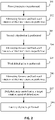
FIG. 2 illustrates a flowchart schematic diagram of a control method of a laundry treatment device according to an application embodiment of the disclosure. -
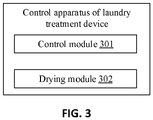
FIG. 3 illustrates a structural schematic diagram of a control apparatus of a laundry treatment device according to an embodiment of the disclosure. -
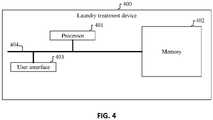
FIG. 4 illustrates a structural schematic diagram of a laundry treatment device according to an embodiment of the disclosure. - The disclosure will be further described below in combination with the accompanying drawings and embodiments.
- Unless otherwise defined, all technical and scientific terms used in the specification have a same meaning generally understood by a person skilled in the art to which the disclosure belongs. The terms used in the specification of the disclosure are merely to describe the specific embodiments, rather than to limit the disclosure.
- The embodiments of the disclosure provide a control method of a laundry treatment device. The laundry treatment device may be a washing and drying integrated machine with a drying function. The laundry treatment device may include: an inner drum and a motor configured for driving the inner drum to rotate. The inner drum may rotate under the action of the motor so as to wash and dehydrate laundry in the inner drum. The laundry treatment device may further include a fan for drying and a heating device.
- The control method of the laundry treatment device provided by the embodiments of the disclosure, as shown in
FIG. 1 , includes the following operations. - In S101, the laundry treatment device is controlled to perform dehydration multiple times, each dehydration ends when a rotation speed of an inner drum of the laundry treatment device returns to zero, and the inner drum is controlled to alternately rotate forwards and backwards in a time interval between two adjacent dehydrations.
- It may be understood that forward rotation and backward rotation used herein refer to that the directions of rotation of the inner drum are different. The backward rotation is counter-clockwise if the inner drum rotates forwards in a clockwise direction, and the backward rotation is clockwise if the inner drum rotates forwards in a counter-clockwise direction. The rotation speed at which the inner drum is controlled to alternately rotate forwards and backwards is lower than the rotation speed corresponding to dehydration, for example, it may be the rotation speed lower than 60 revolutions per minute (rpm), only if the laundry in the inner drum can be shaken and untangled.
- In the embodiment of the disclosure, at the dehydration stage, dehydration is performed multiple times, the dehydration time corresponding to single dehydration can be shortened, so that the probability that laundry is attached to the inner wall of the inner drum can be reduced. Meanwhile, each dehydration ends when the rotation speed of the inner drum returns to zero, and the inner drum is controlled to alternately rotate forwards and backwards in the time interval between two adjacent dehydrations, so that the laundry in the inner drum can be shaken and untangled uniformly, and the probability that the laundry is attached to the inner wall of the inner drum is further reduced. In this way, the phenomenon of drum attachment caused by the fact that the laundry is attached to the inner wall of the inner drum in the existing dehydration process may be effectively improved, and subsequent laundry drying is facilitated.
- In some embodiments, the operation that the laundry treatment device is controlled to perform dehydration multiple times includes the following operation.
- The laundry treatment device is controlled to cyclically operate for N periods in the sequence of a first mode and a second mode, where N is a natural number greater than 1.
- The first mode is configured for controlling an inner drum to operate at a rotation speed of dehydration lower than a target rotation speed of dehydration, and controlling the rotation speed of the inner drum to return to zero when it is determined that the first mode is operated for a first set time. The second mode is configured for controlling the inner drum to alternately rotate forwards and backwards and to operate for a second set time. Herein, the target rotation speed of dehydration refers to a rated rotation speed of dehydration or a highest rotation speed of dehydration at which the laundry treatment device can operate.
- In the embodiment of the disclosure, the laundry treatment device is controlled to perform dehydration multiple times at the dehydration stage. Before the target rotation speed of dehydration is operated, the rotation speed of dehydration in each first mode is smaller than the target rotation speed of dehydration, namely, the time and rotation speed of dehydration in the first mode are reduced compared with those in the traditional dehydration stage, so that moisture attached to laundry can be removed multiple times. Moreover, the rotation speed of dehydration corresponding to the first mode is low and lasts for a short time, where the effect of centrifugal force can be reduced by reducing the rotation speed of dehydration, and thus the adhesive force between the laundry and the inner wall of the inner drum is small; and the effect of supporting force between the laundry can be effectively reduced due to shortening of the duration of dehydration. The phenomenon of drum attachment is mainly caused by the adhesive force between the laundry and the inner wall of the inner drum and the supporting force between the laundry. With the control method of the laundry treatment device according to the embodiment of the disclosure, the adhesive force between the laundry and the inner wall of the inner drum and the supporting force between the laundry can be effectively reduced, and therefore, the probability that laundry is attached to the inner wall of the inner drum can be effectively reduced. In addition, after the first mode is operated, the laundry treatment device also operates in the second mode, the rotation speed of the inner drum is immediately reduced to zero, so that the laundry falls off from the drum wall, then the laundry in the inner drum is shaken and untangled based on alternating forward rotation and backward rotation of the inner drum, and the probability that the laundry is attached to the inner wall of the inner drum can be further reduced.
- In some embodiments, the first set time ranges from 20 s to 80 s.
- By reasonably controlling the operation time of the first mode, the supporting force between the laundry can be smaller, which is beneficial for reducing the probability that the laundry is attached to the inner wall of the inner drum.
- In some embodiments, the first set time gradually extends with an increase of the number of cycles.
- Herein, the amount of moisture remaining on the laundry gradually decreases with the increase of number of dehydration, and thus a balance between dehydration efficiency and prevention of the laundry from being attached to the inner wall of the inner drum can be achieved by gradually extending the operation time of the first mode.
- In some embodiments, the rotation speed of dehydration corresponding to the first mode increases gradually with the increase of the number of cycles.
- Herein, the amount of moisture remaining on the laundry gradually decreases with the increase of number of dehydration, and thus a balance between dehydration efficiency and prevention of the laundry from being attached to the inner wall of the inner drum can be achieved by gradually increasing the rotation speed of hydration in the first mode.
- In some embodiments, the method further includes the following operation.
- The laundry treatment device is controlled to work in a third mode configured for controlling the inner drum to operate for a third set time at the target rotation speed of dehydration, where the first set time and the second set time are both shorter than the third set time.
- Due to the fact that the laundry treatment device is subjected to the process of alternately operating the first mode and the second mode, the amount of moisture remaining on the laundry in the inner drum is greatly reduced. In this case, the laundry treatment device controls the inner drum to operate at the target rotation speed of dehydration, the probability that the laundry is attached to the inner wall of the inner drum is then greatly reduced, and compared with the first mode, the dehydration efficiency of the laundry can be improved by prolonging the third set time of operation at the target rotation speed of dehydration.
- In the embodiment of the disclosure, at the dehydration stage of the laundry treatment device, dehydration is performed multiple times, each dehydration ends when the rotation speed of the inner drum returns to zero, and the inner drum is controlled to alternately rotate forwards and backwards in a time interval between two adjacent dehydrations, so that the laundry in the inner drum can be shaken and untangled uniformly. Thus, the probability that the laundry is attached to the inner wall of the inner drum is greatly reduced, which is conductive to directly drying the dehydrated laundry, such that uneven drying or laundry wrinkling caused by the phenomenon of drum attachment of the laundry can be effectively avoided. On this basis, the laundry treatment device can directly dry the laundry in the inner drum after the operation of the dehydration stage ends.
- In some embodiments, the method further includes the following operation.
- A fan and a heating device of the laundry treatment device are controlled to be started, and the inner drum is controlled to alternately rotate forwards and backwards.
- Herein, the fan and the heating device of the laundry treatment device are both started, and moisture remaining on laundry can be dried through hot air flow. By controlling the inner drum to alternately rotate forwards and backwards, laundry in the inner drum can fall off and be heated evenly, and therefore, the drying effect is improved.
- The disclosure will be further described in detail below with reference to an application embodiment.
- In an implementation mode, as shown in
FIG. 2 , a laundry treatment device according to the application embodiment of the disclosure is a drum-type washing and drying integrated machine, and a control method of the laundry treatment device includes the following operations. - In S201, a first dehydration is performed.
- Herein, the drum-type washing and drying integrated machine may perform the first dehydration after washing and rinsing of laundry in the inner drum are finished. Exemplarily, the target rotation speed of dehydration is 1200 rpm, the rotation speed of the first dehydration is 600 rpm, the operation time of the first dehydration is 20 s. After the operation of the first dehydration ends, the inner drum stops rotation, i.e., the rotation speed returns to zero.
- In S202, alternating forward and backward rotations of the inner drum are performed.
- The drum-type washing and drying integrated machine controls the inner drum to alternately rotate forwards and backwards at the rotation speed of 60 rpm so as to shake laundry in the inner drum to be untangled, and the operation time can be set to, such as 10 s, so that the laundry falls off from the inner wall of the inner drum.
- In S203, a second dehydration is performed.
- Herein, the drum-type washing and drying integrated machine performs the second dehydration, the rotation speed of the second dehydration is 800 rpm, the operation time of the second dehydration is 40 s, and after operation of the second dehydration ends, the inner drum stops rotation.
- In S204, alternating forward and backward rotations of the inner drum are performed.
- The drum-type washing and drying integrated machine controls the inner drum to alternately rotate forwards and backwards at the rotation speed of 60 rpm so as to shake laundry in the inner drum to be untangled, and the operation time can be set to, such as 10 s, so that the laundry falls off from the inner wall of the inner drum.
- In S205, a third dehydration is performed.
- The drum-type washing and drying integrated machine performs the third dehydration, the rotation speed of the third dehydration is 1000 rpm, the operation time of the third dehydration is 60 s, and after the operation of the third dehydration ends, the inner drum stops rotation.
- In S206, alternating forward and backward rotations of the inner drum are performed.
- The drum-type washing and drying integrated machine controls the inner drum to alternately rotate forwards and backwards at the rotation speed of 60 rpm so as to shake laundry in the inner drum to be untangled, and the operation time can be set to, such as 10 s, so that the laundry falls off from the inner wall of the inner drum.
- In S207, dehydration is carried out at a target rotation speed of dehydration.
- The drum-type washing and drying integrated machine controls the inner drum to perform dehydration at the target rotation speed of dehydration, namely, perform dehydration at the rotation speed of 1200 rpm, and to operate until the dehydration ends.
- In S208, laundry drying is performed.
- The fan and the heating device are both started when the drum-type washing and drying integrated machine determines that the dehydration ends, so that moisture remaining on laundry can be dried through hot air flow. By controlling the inner drum to alternately rotate forwards and backwards, laundry in the inner drum can completely fall off and be heated evenly, and therefore, the drying effect is improved.
- In order to realize the method provided by the embodiment of the disclosure, the embodiments of the disclosure further provide a control apparatus of a laundry treatment device, which corresponds to the control method of the laundry treatment device. The steps of the embodiments of the control method of the laundry treatment device described above are also fully applicable to the embodiments of the control apparatus of the laundry treatment device.
- As shown in
FIG. 3 , the control apparatus of the laundry treatment device includes: acontrol module 301, configured to control the laundry treatment device to perform dehydration multiple times, where each dehydration ends when the rotation speed of the inner drum of the laundry treatment device returns to zero, and to control the inner drum to alternately rotate forwards and backwards in a time interval between two adjacent dehydrations. - In some embodiments, the
control module 301 is specifically configured to: control the laundry treatment device to cyclically operate for N periods in the sequence of a first mode and a second mode, where N is a natural number greater than 1. - The first mode is configured for controlling the inner drum to operate at a rotation speed of dehydration lower than a target rotation speed of dehydration, and controlling the rotation speed of the inner drum to return to zero when it is determined that the first mode operates for a first set time; and the second mode is configured for controlling the inner drum to alternately rotate forwards and backwards and to operate for a second set time.
- In some embodiments, the first set time ranges from 20 s to 80 s.
- In some embodiments, the first set time gradually extends with an increase of the number of cycles.
- In some embodiments, the rotation speed of dehydration corresponding to the first mode increases gradually with an increase of the number of cycles.
- In some embodiments, the
control module 301 is also configured to control the laundry treatment device to work in a third mode. - The third mode is configured for controlling the inner drum to operate for a third set time at the target rotation speed of dehydration. The first set time and the second set time are both shorter than the third set time.
- In some embodiments, the control apparatus of the laundry treatment device further includes a
drying module 302, configured to control the laundry treatment device to perform drying. - In some embodiments, the
drying module 302 is specifically configured to control a fan and a heating device of the laundry treatment device to be started, and control the inner drum to alternately rotate forwards and backwards. - In practical application, the
control module 301 and thedrying module 302 can be implemented by a processor in a control apparatus of the laundry treatment device. Certainly, the processor needs to execute a computer program in a memory to implement its function. - It is to be noted that when the control apparatus of the laundry treatment device provided by the embodiment performs control on the laundry treatment device, the division of each program module is merely illustrative. In an actual application, the above processing may be distributed to be completed by different program modules as required, i.e., an internal structure of the apparatus is divided into different program modules to complete all or a part of processing described above. In addition, the control apparatus of the laundry treatment device provided by the above embodiment has a same concept with the embodiment of the control method of the laundry treatment device, and a specific implementation process is detailed in the method embodiment and will no longer repeated herein.
- Based on hardware implementation of the program module, and in order to implement the method in the embodiments of the disclosure, the embodiments of the disclosure further provide a laundry treatment device.
FIG. 4 only illustrates an exemplary structure, rather than all structures, of the laundry treatment device. A part or all of the structures shown inFIG. 4 may be implemented as required. - As shown in
FIG. 4 , the laundry treatment device 400 provided by the embodiments of the disclosure may include: at least one processor 401, amemory 402 and auser interface 404. Components in the laundry treatment device 400 are coupled together via abus system 403. It may be understood that thebus system 403 is configured to implement connection and communication among these components. In addition to a data bus, thebus system 403 may further include a power bus, a control bus and a state signal bus. For clarity, the buses each are labeled as thebus system 404 inFIG. 4 . - In can be understood that, the laundry treatment device further includes: an inner drum and a motor configured for driving the inner drum to rotate. The inner drum may rotate under the action of the motor so as to wash and dehydrate laundry in the inner drum. The laundry treatment device may further include a fan for drying and a heating device.
- A
user interface 403 may include a display, a keypad, a mouse, a trackball, a click wheel, a key, a button, a touch panel or a touch screen, etc. - In the embodiment of the disclosure, the
memory 402 is configured to store various types of data to support the operation of the laundry treatment device. Examples of such data include any computer program operated on the laundry treatment device. - The control method of the laundry treatment device disclosed in the embodiment of the disclosure may be applied to the processor 401, or may be implemented by the processor 401. The processor 401 may be an integrated circuit chip, and has a signal processing capability. During implementation, steps of the control method of the laundry treatment device may be completed by means of an instruction in a form of an integrated logic circuit of hardware in the processor 401 or software. The processor 401 may be a universal processor, a Digital Signal Processor (DSP), or another programmable logic device, separate gate or transistor logic device, separate hardware component and the like. The processor 401 may implement or execute each method, step or logic block diagram disclosed in the embodiments of the disclosure. The universal processor may be a microprocessor, or any conventional processor, etc. The steps of the method disclosed in combination with the embodiments of the disclosure may be directly embodied as being executed and completed by a hardware decoding processor, or by a combination of hardware and software modules in the decoding processor. The software module may be located in a storage medium. The storage medium is located in the
memory 402. The processor 401 reads information in thememory 402, and completes the steps of the control method of the laundry treatment device provided by the embodiments of the disclosure in combination with its hardware. - In an exemplary embodiment, the laundry treatment device may be implemented by one or more of an Application Specific Integrated Circuit (ASIC), a DSP, a Programmable Logic Device (PLD), a Complex Programmable Logic Device (CPLD), a FPGA, a universal processor, a controller, a Micro Controller Unit (MCU), a microprocessor, or other electronic components, to execute the above method.
- It may be understood that the
memory 402 may be a volatile memory or a nonvolatile memory, and may also include both the volatile memory and the nonvolatile memory. The nonvolatile memory may be a Read Only Memory (ROM), a Programmable Read-Only Memory (PROM), an Erasable Programmable Read-Only Memory (EPROM), an Electrically Erasable Programmable Read-Only Memory (EEPROM), a Ferromagnetic Random Access Memory (FRAM), a flash memory, a magnetic surface memory, an optical disc or a Compact Disc Read-Only Memory (CD-ROM); and the magnetic surface memory may be a magnetic disk memory or magnetic tape memory. The volatile memory may be a Random Access Memory (RAM), and serves as an external high-speed cache. By illustrative but not restrictive description, many forms of RAMs may be available, for example, a Static Random Access Memory (SRAM), a Synchronous Static Random Access Memory (SSRAM), a Dynamic Random Access Memory (DRAM), a Synchronous Dynamic Random Access Memory (SDRAM), a Double Data Rate Synchronous Dynamic Random Access Memory (DDRSDRAM), an Enhanced Synchronous Dynamic Random Access Memory (ESDRAM), a SyncLink Dynamic Random Access Memory (SLDRAM), and a Direct Rambus Random Access Memory (DRRAM). The memories described in the embodiment of the disclosure include, but are not limited to, these memories and any other appropriate types of memories. - In an exemplary embodiment, the embodiments of the disclosure further provide a storage medium, i.e., a computer storage medium, which may be a computer readable storage medium specifically, and includes, for example, the
memory 402 for storing a computer program; and the computer program may be executed by the processor 401 of the laundry treatment device to complete the steps of the method in the embodiments of the disclosure. The computer readable storage medium may be a memory such as an ROM, a PROM, an EPROM, an EEPROM, a Flash Memory, a magnetic surface memory, an optical disk, or a CD-ROM. - It is to be noted that, terms such as "first" and "second" are only used to distinguish similar objects, rather than to describe a special order or a precedence order.
- Additionally, the technical solutions recorded in the embodiments of the disclosure may be freely combined without conflicts.
- The above description is only the specific implementation manner of the disclosure and not intended to limit the scope of protection of the disclosure. Any variations or replacements easily conceived by to the person skilled in the art within the technical scope disclosed by the disclosure shall fall within the scope of protection of the disclosure. Therefore, the scope of protection of the disclosure shall be subjected to the scope of protection of the claims.
Claims (10)
- A control method of a laundry treatment device, comprising:
controlling the laundry treatment device to perform dehydration multiple times, wherein each dehydration ends when a rotation speed of an inner drum of the laundry treatment device returns to zero, and controlling the inner drum to alternately rotate forwards and backwards in a time interval between two adjacent dehydrations. - The method of claim 1, wherein said controlling the laundry treatment device to perform dehydration multiple times comprises:controlling the laundry treatment device to cyclically operate for N periods in the sequence of a first mode and a second mode, wherein N is a natural number greater than 1;wherein the first mode is configured for controlling the inner drum to operate at a rotation speed of dehydration lower than a target rotation speed of dehydration, and controlling the rotation speed of the inner drum to return to zero when it is determined that the first mode is operated for a first set time; and the second mode is configured for controlling the inner drum to alternately rotate forwards and backwards and to operate for a second set time, after it is determined that the rotation speed of the inner drum returns to zero.
- The method of claim 2, wherein
the first set time ranges from 20 s to 80 s. - The method of claim 2, wherein
the first set time gradually extends with an increase of the number of cycles. - The method of claim 2, wherein
the rotation speed of dehydration corresponding to the first mode increases gradually with an increase of the number of cycles. - The method of claim 1, further comprising:
controlling the laundry treatment device to work in a third mode configured for controlling the inner drum to operate for a third set time at the target rotation speed of dehydration, wherein the first set time and the second set time are both shorter than the third set time. - The method of claim 1, further comprising:
controlling a fan and a heating device of the laundry treatment device to be started, and controlling the inner drum to alternately rotate forwards and backwards. - A control apparatus of a laundry treatment device, comprising:
a control module, configured to control the laundry treatment device to perform dehydration multiple times, wherein each dehydration ends when a rotation speed of an inner drum of the laundry treatment device returns to zero, and to control the inner drum of the laundry treatment device to alternately rotate forwards and backwards in a time interval between two adjacent dehydrations. - A laundry treatment device, comprising: a processor, and a memory configured to store a computer program capable of running on the processor, wherein
the processor, when being configured to execute the computer program, implements steps of the method of any one of claims 1 to 7. - A storage medium, storing a computer program thereon, wherein the computer program, when being executed by a processor, implements steps of the method of any one of claims 1 to 7.
Applications Claiming Priority (2)
| Application Number | Priority Date | Filing Date | Title |
|---|---|---|---|
| CN202010734599.7A CN113981653A (en) | 2020-07-27 | 2020-07-27 | Clothes treatment equipment, control method and device thereof and storage medium |
| PCT/CN2020/126591 WO2022021652A1 (en) | 2020-07-27 | 2020-11-04 | Laundry treatment device, control method and apparatus thereof, and storage medium |
Publications (2)
| Publication Number | Publication Date |
|---|---|
| EP4098788A1 true EP4098788A1 (en) | 2022-12-07 |
| EP4098788A4 EP4098788A4 (en) | 2023-08-30 |
Family
ID=79731578
Family Applications (1)
| Application Number | Title | Priority Date | Filing Date |
|---|---|---|---|
| EP20947353.7A Pending EP4098788A4 (en) | 2020-07-27 | 2020-11-04 | LAUNDRY TREATMENT APPARATUS, CONTROL METHOD AND APPARATUS THEREOF, AND STORAGE MEDIA |
Country Status (3)
| Country | Link |
|---|---|
| EP (1) | EP4098788A4 (en) |
| CN (1) | CN113981653A (en) |
| WO (1) | WO2022021652A1 (en) |
Family Cites Families (15)
| Publication number | Priority date | Publication date | Assignee | Title |
|---|---|---|---|---|
| JPH07114873B2 (en) * | 1989-07-19 | 1995-12-13 | シャープ株式会社 | Drum type washer / dryer |
| KR20040006252A (en) * | 2002-07-11 | 2004-01-24 | 삼성전자주식회사 | Shoes washing control method for washing machine |
| CN1978774B (en) * | 2005-12-01 | 2011-05-25 | 海尔集团公司 | Method for preventing clothing wrinkles during drying process |
| JP4511490B2 (en) * | 2006-04-19 | 2010-07-28 | 日立アプライアンス株式会社 | Drum-type washing machine or drum-type washing machine |
| JP4402123B2 (en) * | 2007-02-14 | 2010-01-20 | パナソニック株式会社 | Drum type washer / dryer |
| KR101809948B1 (en) * | 2011-03-24 | 2017-12-18 | 엘지전자 주식회사 | Control method of Laundry machine |
| JP5539286B2 (en) * | 2011-10-12 | 2014-07-02 | シャープ株式会社 | Washing and drying machine |
| PL3020858T3 (en) * | 2014-11-13 | 2022-08-29 | Electrolux Appliances Aktiebolag | Laundry washing-drying machine and washing-drying cycle |
| CN107724022B (en) * | 2016-08-12 | 2021-06-18 | 重庆海尔滚筒洗衣机有限公司 | A drying method for an integrated washing and drying machine and the integrated washing and drying machine |
| CN107724028B (en) * | 2016-08-12 | 2021-07-20 | 重庆海尔滚筒洗衣机有限公司 | A drying method for an integrated washing and drying machine and the integrated washing and drying machine |
| CN107313209A (en) * | 2017-08-30 | 2017-11-03 | 珠海格力电器股份有限公司 | Washing machine dewatering mechanism control method and device and washing machine |
| CN109423811B (en) * | 2017-09-01 | 2022-05-13 | 青岛海尔洗涤电器有限公司 | Control method of washing and drying integrated machine and washing and drying integrated machine |
| CN108085925B (en) * | 2017-11-14 | 2020-07-28 | 珠海格力电器股份有限公司 | Clothes wrinkle removal control method and device, storage medium and laundry equipment |
| CN110499608B (en) * | 2018-05-18 | 2023-01-24 | 青岛海尔洗涤电器有限公司 | Clothes processing device drying control method and clothes processing device |
| CN108998924B (en) * | 2018-08-27 | 2020-04-28 | 珠海格力电器股份有限公司 | Clothes wrinkle removal control method and device, storage medium and washing machine |
-
2020
- 2020-07-27 CN CN202010734599.7A patent/CN113981653A/en active Pending
- 2020-11-04 EP EP20947353.7A patent/EP4098788A4/en active Pending
- 2020-11-04 WO PCT/CN2020/126591 patent/WO2022021652A1/en not_active Ceased
Also Published As
| Publication number | Publication date |
|---|---|
| EP4098788A4 (en) | 2023-08-30 |
| CN113981653A (en) | 2022-01-28 |
| WO2022021652A1 (en) | 2022-02-03 |
Similar Documents
| Publication | Publication Date | Title |
|---|---|---|
| CN112301700B (en) | Control method, device and equipment of clothes treatment equipment and storage medium | |
| CN112301645B (en) | Control method, device and equipment of clothes treatment equipment and storage medium | |
| EP3892770A1 (en) | Washing control method, apparatus and device for washing device, and storage medium | |
| CN113737457B (en) | Laundry treating apparatus, dehydration control method and device thereof, and storage medium | |
| JP2004334486A (en) | Starting system using boot code and starting method | |
| EP4461184A1 (en) | Control method and control apparatus for cleaning device, and cleaning device | |
| CN106149272A (en) | Washing machine and air-dried control method thereof | |
| CN114108235A (en) | Control method and device for dewatering of clothes treatment equipment and storage medium | |
| CN115450004B (en) | Clothes processing equipment and control method, device and storage medium thereof | |
| CN118241464A (en) | Control method of laundry treatment apparatus, and storage medium | |
| WO2015188306A1 (en) | Washing control device, washing machine provided with same, and washing control method | |
| WO2015188304A1 (en) | Washing control device, washing machine provided with same, and washing control method | |
| CN110623618A (en) | Dish washing machine drying control method and device, storage medium and dish washing machine | |
| CN114075748B (en) | Reserved washing method and washing machine | |
| CN116263005A (en) | Clothes processing equipment and its control method, device and storage medium | |
| CN113832649A (en) | Dehydration control method, device, clothes processing equipment and storage medium | |
| CN112323345B (en) | Clothes treatment device, washing control method and device thereof, and storage medium | |
| JP2004070854A (en) | Data processor | |
| CN113089264A (en) | Control method and device of washing machine, storage medium and washing machine | |
| EP3892768A1 (en) | Washing control method and device for washing apparatus, apparatus, and storage medium | |
| CN115142247A (en) | Clothes treatment equipment, control method and device thereof and storage medium | |
| CN107221349B (en) | Microcontroller chip based on flash memory | |
| CN118223246A (en) | A reservation method, device and electronic device for clothing processing equipment | |
| CN113981653A (en) | Clothes treatment equipment, control method and device thereof and storage medium | |
| CN118760482A (en) | A multi-core heterogeneous system fast startup method and system |
Legal Events
| Date | Code | Title | Description |
|---|---|---|---|
| STAA | Information on the status of an ep patent application or granted ep patent |
Free format text: STATUS: THE INTERNATIONAL PUBLICATION HAS BEEN MADE |
|
| PUAI | Public reference made under article 153(3) epc to a published international application that has entered the european phase |
Free format text: ORIGINAL CODE: 0009012 |
|
| STAA | Information on the status of an ep patent application or granted ep patent |
Free format text: STATUS: REQUEST FOR EXAMINATION WAS MADE |
|
| 17P | Request for examination filed |
Effective date: 20220902 |
|
| AK | Designated contracting states |
Kind code of ref document: A1 Designated state(s): AL AT BE BG CH CY CZ DE DK EE ES FI FR GB GR HR HU IE IS IT LI LT LU LV MC MK MT NL NO PL PT RO RS SE SI SK SM TR |
|
| REG | Reference to a national code |
Ref country code: DE Ref legal event code: R079 Free format text: PREVIOUS MAIN CLASS: D06F0033600000 Ipc: D06F0033400000 |
|
| A4 | Supplementary search report drawn up and despatched |
Effective date: 20230728 |
|
| RIC1 | Information provided on ipc code assigned before grant |
Ipc: D06F 105/48 20200101ALN20230724BHEP Ipc: D06F 103/68 20200101ALN20230724BHEP Ipc: D06F 33/63 20200101ALN20230724BHEP Ipc: D06F 25/00 20060101ALN20230724BHEP Ipc: D06F 33/40 20200101AFI20230724BHEP |
|
| DAV | Request for validation of the european patent (deleted) | ||
| DAX | Request for extension of the european patent (deleted) | ||
| STAA | Information on the status of an ep patent application or granted ep patent |
Free format text: STATUS: EXAMINATION IS IN PROGRESS |
|
| 17Q | First examination report despatched |
Effective date: 20250714 |