EP4096258A1 - Netzwerkzugangsverfahren und endgerät - Google Patents
Netzwerkzugangsverfahren und endgerät Download PDFInfo
- Publication number
- EP4096258A1 EP4096258A1 EP21804766.0A EP21804766A EP4096258A1 EP 4096258 A1 EP4096258 A1 EP 4096258A1 EP 21804766 A EP21804766 A EP 21804766A EP 4096258 A1 EP4096258 A1 EP 4096258A1
- Authority
- EP
- European Patent Office
- Prior art keywords
- terminal
- access network
- network equipment
- rrc connection
- service
- Prior art date
- Legal status (The legal status is an assumption and is not a legal conclusion. Google has not performed a legal analysis and makes no representation as to the accuracy of the status listed.)
- Granted
Links
Images





Classifications
-
- H—ELECTRICITY
- H04—ELECTRIC COMMUNICATION TECHNIQUE
- H04W—WIRELESS COMMUNICATION NETWORKS
- H04W76/00—Connection management
- H04W76/10—Connection setup
- H04W76/19—Connection re-establishment
-
- H—ELECTRICITY
- H04—ELECTRIC COMMUNICATION TECHNIQUE
- H04W—WIRELESS COMMUNICATION NETWORKS
- H04W8/00—Network data management
- H04W8/18—Processing of user or subscriber data, e.g. subscribed services, user preferences or user profiles; Transfer of user or subscriber data
- H04W8/183—Processing at user equipment or user record carrier
-
- H—ELECTRICITY
- H04—ELECTRIC COMMUNICATION TECHNIQUE
- H04W—WIRELESS COMMUNICATION NETWORKS
- H04W76/00—Connection management
- H04W76/10—Connection setup
- H04W76/15—Setup of multiple wireless link connections
-
- H—ELECTRICITY
- H04—ELECTRIC COMMUNICATION TECHNIQUE
- H04W—WIRELESS COMMUNICATION NETWORKS
- H04W76/00—Connection management
- H04W76/30—Connection release
- H04W76/34—Selective release of ongoing connections
-
- H—ELECTRICITY
- H04—ELECTRIC COMMUNICATION TECHNIQUE
- H04W—WIRELESS COMMUNICATION NETWORKS
- H04W48/00—Access restriction; Network selection; Access point selection
- H04W48/08—Access restriction or access information delivery, e.g. discovery data delivery
- H04W48/12—Access restriction or access information delivery, e.g. discovery data delivery using downlink control channel
-
- H—ELECTRICITY
- H04—ELECTRIC COMMUNICATION TECHNIQUE
- H04W—WIRELESS COMMUNICATION NETWORKS
- H04W60/00—Affiliation to network, e.g. registration; Terminating affiliation with the network, e.g. de-registration
- H04W60/04—Affiliation to network, e.g. registration; Terminating affiliation with the network, e.g. de-registration using triggered events
-
- H—ELECTRICITY
- H04—ELECTRIC COMMUNICATION TECHNIQUE
- H04W—WIRELESS COMMUNICATION NETWORKS
- H04W88/00—Devices specially adapted for wireless communication networks, e.g. terminals, base stations or access point devices
- H04W88/02—Terminal devices
- H04W88/06—Terminal devices adapted for operation in multiple networks or having at least two operational modes, e.g. multi-mode terminals
Definitions
- This specification relates to the field of mobile communications technologies, and specifically to a network access method and a terminal.
- the 5-th generation (5th generation, 5G) network architecture can be divided into two networking modes: non stand-alone (non stand-alone, NSA) and stand-alone (stand-alone, SA).
- non stand-alone non stand-alone
- stand-alone stand-alone
- SA stand-alone
- NSA networking mode a 5G carrier is added on the basis of long term evolution (long term evolution, LTE), and the 5G carrier can be used to carry user plane data.
- LTE long term evolution
- the third generation partnership project (third generation partnership project, 3GPP) release (release, R) 15 defines a dual connectivity (dual connectivity, DC) framework for long term evolution (long term evolution, LTE) and new radio (new radio, NR), which includes an evolved universal terrestrial radio access network (evolved universal terrestrial radio access network, E-UTRAN)-NR dual connectivity (E-UTRA-NR dual connectivity, EN-DC) architecture.
- DC dual connectivity
- LTE long term evolution
- NR new radio
- E-UTRAN evolved universal terrestrial radio access network
- E-UTRA-NR dual connectivity, EN-DC EN-DC
- the EN-DC architecture does not need to add a 5-th generation (5th generation, 5G) core network, but only needs to add 5G base stations to cooperate with existing 4-th generation (4th generation, 4G) base stations to provide a 5G+4G joint access for terminals.
- a terminal in an EN-DC state simultaneously accesses a 4G cell and a 5G cell, where the 4G cell may be called a master cell group (master cell group, MCG), and the 5G cell may be called a secondary cell group (secondary cell group, SCG).
- some terminals may support dual subscriber identification module (subscriber identification module, SIM) cards, so that services from different networks, such as voice, multimedia messaging, short message, and data services, can be implemented.
- SIM subscriber identification module
- One SIM card of the dual SIM cards can be used as a primary card, and the other SIM card can be used as a secondary card.
- the primary card refers to a default data service card, which means that the data service for the terminal is transmitted by default through a network corresponding to the primary card.
- the primary card When the primary card is in an EN-DC state, due to an implementation scheme of the terminal, the primary card releases the SCG when the secondary card is executing a related service (such as a voice service or a multimedia messaging service).
- a network side needs to initiate an SCG addition process to enable the primary card to re-access a 5G cell. If the network side does not initiate the SCG addition process for a long time, the primary card may not be able to access a 5G cell for a long time, thereby affecting network experience of a user.
- Embodiments of this application provide a network access method and a terminal.
- the terminal can actively initiate RRC connection re-establishment to trigger a network side to add a secondary cell for the terminal, thereby improving network experience of a user.
- an embodiment of this application provides a network access method, which may be applied to a terminal configured with two SIM cards, where one of the two SIM cards is used as a primary card, and the other one is used as a secondary card.
- the terminal is connected to primary access network equipment and secondary access network equipment through the primary card, and the terminal is connected to the secondary access network equipment with assistance of the primary access network equipment.
- the method includes: disconnecting, by the terminal, an RRC connection between the terminal and the secondary access network equipment when the terminal executes a first service through the secondary card; determining, by the terminal, that the first service ends; and actively disconnecting, by the terminal, an RRC connection between the terminal and the primary access network equipment, and sending an RRC connection re-establishment request to the primary access network equipment, so that the terminal is reconnected to the secondary access network equipment through the primary card with assistance of the primary access network equipment.
- the terminal in a case that a connection between the primary card of the terminal and the auxiliary access network equipment is disconnected because the secondary card executes a service, when or after the service executed by the secondary card ends, the terminal can actively disconnect the connection between the primary card and the primary access network equipment, and send a connection re-establishment request to the primary access network equipment through the primary card, which may trigger the primary access network equipment to assist the terminal as soon as possible to connect to the secondary access network equipment through the primary card.
- that the actively disconnecting, by the terminal, an RRC connection between the terminal and the primary access network equipment, and sending an RRC connection re-establishment request to the primary access network equipment includes: when a cell on which the terminal camps through the primary card at the end of the first service supports dual connectivity, actively disconnecting, by the terminal, the RRC connection between the terminal and the primary access network equipment, and sending the RRC connection re-establishment request to the primary access network equipment.
- the terminal disconnects the connection between the terminal and the primary access network equipment only when the cell on which the terminal camps through the primary card supports dual connectivity. It can be understood that in a case that the cell does not support dual connectivity, it is difficult for the terminal to connect to the secondary access network equipment through the primary card. Therefore, in this implementation, in a case that the cell does not support dual connectivity, the connection between the terminal and the primary access network equipment is no longer disconnected, so as to improve communication experience of a user.
- the dual connectivity is universal terrestrial radio access network-new radio dual connectivity EN-DC.
- that the actively disconnecting, by the terminal, an RRC connection between the terminal and the primary access network equipment, and sending an RRC connection re-establishment request to the primary access network equipment includes: when the terminal does not receive a measurement control message of an event B 1 or an RRC connection reconfiguration request through the primary card within a first time period, actively disconnecting, by the terminal, the RRC connection between the terminal and the primary access network equipment, and sending the RRC connection re-establishment request to the primary access network equipment, where the first time period is a time period that starts when the first service ends.
- the terminal may first wait for the measurement control message of the event B1 or the RRC connection reconfiguration request sent by a network side. If no measurement control message of the event B1 or RRC connection reconfiguration request is received from the network side within a specified time period, the terminal actively disconnects the RRC connection between the terminal and the primary access network equipment, and sends the RRC connection re-establishment request to the primary access network equipment, thereby avoiding the measurement control message of the event B1 or the RRC connection reconfiguration request normally sent by the network side.
- that the actively disconnecting, by the terminal, an RRC connection between the terminal and the primary access network equipment, and sending an RRC connection re-establishment request to the primary access network equipment includes: when a total number of times that the terminal executes service(s) in at least one service through the secondary card within a second time period is less than or equal to n, actively disconnecting, by the terminal, the RRC connection between the terminal and the primary access network equipment, and sending the RRC connection re-establishment request to the primary access network equipment, where the second time period is a time period that terminates when the first service ends, and the first service is one of the at least one service.
- the terminal when the total number of times that the secondary card executes service(s) within a period of time, that may cause the primary card to release a secondary cell, does not exceed a preset number of times, the terminal sends the RRC connection re-establishment request to the primary access network equipment, thereby avoiding abnormal statistics data on the network side caused by frequent sending of the RRC connection re-establishment request to the primary access network equipment.
- the at least one service includes at least one of the following: a voice service corresponding to the secondary card and a multimedia messaging service corresponding to the secondary card.
- that the actively disconnecting, by the terminal, an RRC connection between the terminal and the primary access network equipment, and sending an RRC connection re-establishment request to the primary access network equipment includes: when the terminal runs no delay-sensitive application, actively disconnecting, by the terminal, the RRC connection between the terminal and the primary access network equipment, and sending the RRC connection re-establishment request to the primary access network equipment; or when the terminal executes no delay-sensitive service, actively disconnecting, by the terminal, the RRC connection between the terminal and the primary access network equipment, and sending the RRC connection re-establishment request to the primary access network equipment.
- connection between the terminal and the primary access network equipment is disconnected only when it is determined that the terminal runs no delay-sensitive application or that the terminal executes no delay-sensitive service, to avoid the impact of disconnecting the connection between the terminal and the primary access network equipment on the delay-sensitive application or the delay-sensitive service.
- the method further includes: listing by the terminal, a cell on which the terminal currently camps through the primary card into a first list when the terminal fails to connect to the secondary access network equipment through the primary card, where when the terminal camps on a cell in the first list through the primary card, the terminal no longer sends an RRC connection re-establishment request to the primary access network equipment.
- a cell in which the terminal fails to access the secondary access network equipment through the primary card may be listed into a blacklist.
- the terminal When the terminal camps on a cell in the blacklist through the primary card, the terminal no longer sends an RRC connection re-establishment request to the primary access network equipment, so as to avoid repeated initiation of RRC connection re-establishment caused by repeated failures of access to the secondary access network equipment.
- the method further includes: clearing, by the terminal, the first list when the terminal restarts, or when a tracking area of a wireless network accessed by the terminal through the primary card changes.
- the primary access network equipment is 4G access network equipment
- the secondary access network equipment is 5G access network equipment.
- the terminal in a case that a 5G cell accessed by the primary card of the terminal is released because the secondary card executes a service, when or after the service executed by the secondary card ends, the terminal can actively release a 4G cell accessed by the primary card, and send a connection re-establishment request to the 4G primary access network equipment through the primary card, which may trigger the primary access network equipment to assist the terminal as soon as possible to connect to a 5G cell by using the primary card, thereby improving communication experience of a user.
- an embodiment of this application provides a terminal configured with two SIM cards, where one of the two SIM cards is used as a primary card, and the other one is used as a secondary card.
- the terminal is connected to primary access network equipment and secondary access network equipment through the primary card, and the terminal is connected to the secondary access network equipment with assistance of the primary access network equipment.
- the terminal includes a processor, a memory, and a transceiver.
- the memory is configured to store a computer instruction; and when the terminal operates, the processor executes the computer instruction so that the terminal performs: disconnecting, by the terminal, an RRC connection between the terminal and the secondary access network equipment when the terminal executes a first service through the secondary card; determining, by the terminal, that the first service ends; and the terminal actively disconnects an RRC connection between the terminal and the primary access network equipment, and sending an RRC connection re-establishment request to the primary access network equipment, so that the terminal is reconnected to the secondary access network equipment through the primary card with assistance of the primary access network equipment.
- the processor executes the computer instruction, so that the terminal further performs: when a first cell on which the terminal camps through the primary card at the end of the first service supports dual connectivity, actively disconnecting, by the terminal, the RRC connection between the terminal and the primary access network equipment, and sending the RRC connection re-establishment request to the primary access network equipment.
- the dual connectivity is universal terrestrial radio access network-new radio dual connectivity EN-DC.
- the processor executes the computer instruction, so that the terminal further performs: when the terminal does not receive a measurement control message of an event B 1 or an RRC connection reconfiguration request through the primary card within a first time period, actively disconnecting, by the terminal, the RRC connection between the terminal and the primary access network equipment, and sending the RRC connection re-establishment request to the primary access network equipment, where the first time period is a time period that starts when the first service ends.
- the processor executes the computer instruction, so that the terminal further performs: when a total number of times that the terminal executes service(s) in at least one service through the secondary card within a second time period is less than or equal to n, actively disconnecting, by the terminal, the RRC connection between the terminal and the primary access network equipment, and sending the RRC connection re-establishment request to the primary access network equipment, where the second time period is a time period that terminates when the first service ends, and the first service is one of the at least one service.
- the at least one service includes at least one of the following: a voice service corresponding to the secondary card and a multimedia messaging service corresponding to the secondary card.
- the processor executes the computer instruction, so that the terminal further performs: when the terminal runs no delay-sensitive application, actively disconnecting, by the terminal, the RRC connection between the terminal and the primary access network equipment, and sending the RRC connection re-establishment request to the primary access network equipment; or when the terminal executes no delay-sensitive service, actively disconnecting, by the terminal, the RRC connection between the terminal and the primary access network equipment, and sending the RRC connection re-establishment request to the primary access network equipment.
- the processor executes the computer instruction, so that the terminal further performs: listing, by the terminal, a cell on which the terminal currently camps through the primary card into a first list when the terminal fails to connect to the secondary access network equipment through the primary card, where when the terminal camps on a cell in the first list through the primary card, the terminal no longer sends an RRC connection re-establishment request to the primary access network equipment.
- the processor executes the computer instruction, so that the terminal further performs: clearing, by the terminal, the first list when the terminal restarts, or when a tracking area of a wireless network accessed by the terminal through the primary card changes.
- the primary access network equipment is 4G access network equipment
- the secondary access network equipment is 5G access network equipment.
- the terminal provided in the second aspect is configured to perform the method provided in the first aspect. Therefore, for beneficial effects that can be achieved by the terminal, reference may be made to the foregoing corresponding beneficial effects.
- an embodiment of this application provides a chip system, including a processor and an interface circuit; where the processor is connected to the interface circuit, and is configured to execute instructions so that a terminal installed with the chip system performs the method provided in the first aspect.
- an embodiment of this application provides a computer storage medium.
- the computer storage medium includes computer instructions, and when the computer instructions are run on a terminal, the terminal is caused to perform the method provided in the first aspect.
- an embodiment of this application provides a computer program product.
- computer program code contained in the computer program product is executed by a processor in a terminal, the method provided in the first aspect is implemented.
- the terminal configured with dual cards can actively disconnect the RRC connection between the primary card and the network side when a service of the secondary card ends, and send an RRC connection re-establishment request through the primary card, which may trigger the network side to add a secondary cell for the primary card of the terminal as soon as possible, thereby improving network experience of a user.
- A/B may representA or B.
- and/or is only an association relationship for describing associated objects and represents that three relationships may exist.
- a and/or B may represent the following three cases: Only A exists, both A and B exist, and only B exists.
- a plurality of means two or more than two.
- first and second are merely intended for a purpose of description, and shall not be understood as an indication or implication of relative importance or an implicit indication of the number of the indicated technical features. Therefore, a feature limited by “first” or “second” may explicitly or implicitly include one or more features.
- the terms “include”, “comprise”, and “have”, and variants thereof all mean “including but not limited to”, unless otherwise specifically emphasized.
- the 5-th generation network architecture can be divided into two networking modes: NSA and stand-alone SA.
- NSA In the early stage of 5G mobile communications system, most operators chose an EN-DC architecture as the NSA networking mode.
- the EN-DC architecture is a dual connectivity architecture defined by 3GPP.
- a terminal In the EN-DC architecture, a terminal may be connected to 4G access network equipment and to 5G access network equipment with assistance of the 4G access network equipment, thereby achieving simultaneous access to a 4G cell and a 5G cell, so that a user has better communication experience.
- SIM cards For example, one SIM card is used for private services, and the other SIM card is used for work; or one SIM card is used for data services, and the other SIM card is used for voice services.
- One SIM card of the two SIM cards can be used as a primary card, and the other SIM card can be used as a secondary card.
- the primary card refers to a default data service card, which means that the data service for the terminal is transmitted by default through a network corresponding to the primary card.
- the primary card supports EN-DC
- the primary card can simultaneously access a 4G cell and a 5G cell. Due to an implementation scheme of the mobile phone, the primary card releases the 5G cell when the secondary card is executing a related service (such as a voice service or a multimedia messaging service).
- a network side triggers a process for the terminal to add an SCG by sending a radio resource control (radio resource control, RRC) connection reconfiguration (connection reconfiguration) request or a measurement control message of an event B 1 (event B 1).
- RRC radio resource control
- the network side may not send an RRC connection reconfiguration request or a measurement control message of an event B 1 for a long time, so that the primary card cannot reconnect to the 5G network for a long time and a user is unable to fully experience more stable, faster and more reliable network performance of the 5G network, resulting in poor communication experience of the user.
- an embodiment of this application provides a network access method.
- a service of the secondary card causes the primary card to release an SCG
- the primary card can actively send an RRC connection re-establishment request to the network side to re-establish an RRC connection between the primary card and the network side.
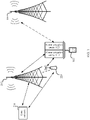
- FIG. 1 is a wireless communications system to which a network access method provided in an embodiment of this application is applicable.
- the wireless communication system may include: a terminal 100, access network equipment (access network equipment) 210, access network equipment 220, and access network equipment 300.
- the access network equipment 210 and the access network equipment are connected to a core network 230.
- the access network equipment 210 may be a base transceiver station (base transceiver station, BTS) in a time division synchronous code division multiple access (time division synchronous code division multiple access, TD-SCDMA) system, or may be an evolutional node B (evolutional node B, eNB) in an LTE system, or may be a next generation node B (next generation node B, gNB) in a 5G system.
- base transceiver station base transceiver station, BTS
- time division synchronous code division multiple access time division synchronous code division multiple access
- eNB evolutional node B
- next generation node B next generation node B
- 5G 5G system
- the access network equipment 210 may alternatively be an access point (access point, AP), a transmission and reception node (trans TRP), a central unit (central unit, CU), or an access network entity, and may include some or all of the functions of the foregoing access network entity.
- the access network equipment 210 and the access network equipment 220 may be network equipment in the EN-DC architecture. Specifically, the access network equipment 210 may be an eNB, and the access network equipment 220 may be a gNB. The access network equipment 210 and the access network equipment 220 may be connected to a 4G core network (evolved packet core, EPC) 230 together.
- EPC evolved packet core
- the terminals 100 may be distributed in the wireless communications system shown in FIG. 1 , and may be stationary or mobile.
- the terminal 100 may include but is not limited to: a mobile phone (mobile phone), a tablet computer (Pad), a computer having wireless transmitting and receiving functions, a virtual reality (virtual reality, VR) terminal device, an augmented reality (augmented reality, AR) terminal device, a wireless terminal in industrial control (industrial control), a wireless terminal in self driving (self driving), a wireless terminal in remote medical (remote medical), a wireless terminal in a smart grid (smart grid), a wireless terminal in transportation safety (transportation safety), a wireless terminal in a smart city (smart city), a wireless terminal in a smart home (smart home), and the like.
- FIG. 2 is a possible hardware structure of the terminal 100.
- the terminal 100 may include a processor 110, an external memory interface 120, an internal memory 121, a universal serial bus (universal serial bus, USB) interface 130, a charging management module 140, a power management module 141, a battery 142, an antenna 1, an antenna 2, a mobile communications module 150, a wireless communications module 160, an audio module 170, a loudspeaker 170A, a telephone receiver 170B, a microphone 170C, an earphone jack 170D, a sensor module 180, a key 190, an engine 191, an indicator 192, a camera 193, a display 194, a subscriber identification module (subscriber identification module, SIM) card interface 195, and the like.
- a processor 110 an external memory interface 120, an internal memory 121, a universal serial bus (universal serial bus, USB) interface 130, a charging management module 140, a power management module 141, a battery 142, an antenna 1, an antenna 2, a mobile communications module 150, a wireless communications module 160, an audio module 1
- the sensor module 180 may include a pressure sensor 180A, a gyro sensor 180B, a barometric pressure sensor 180C, a magnetic sensor 180D, an acceleration sensor 180E, a distance sensor 180F, an optical proximity sensor 180G, a fingerprint sensor 180H, a temperature sensor 180J, a touch sensor 180K, an ambient light sensor 180L, a bone conduction sensor 180M, and the like.
- the terminal 100 may include more or fewer components than those shown in the figure, or combine some of the components, split some of the components, or arrange the components differently.
- the components shown in the figure may be implemented by using hardware, software, or a combination of software and hardware.
- the processor 110 may include an application processor (application processor, AP) and a modem (modem).
- application processor application processor
- modem modem
- the processor 110 may further include one or more of a graphics processing unit (graphics processing unit, GPU), an image signal processor (image signal processor, ISP), a controller, a video codec, a digital signal processor (digital signal processor, DSP), a baseband processor, a neural-network processing unit (neural-network processing unit, NPU), and/or the like.
- graphics processing unit graphics processing unit, GPU
- image signal processor image signal processor, ISP
- a controller a video codec
- DSP digital signal processor
- baseband processor a baseband processor
- neural-network processing unit neural-network processing unit, NPU
- Different processing units may be separate devices or be integrated into one or more processors.
- a wireless communication function of the terminal 100 may be implemented by using the antenna 1, the antenna 2, the mobile communications module 150, the wireless communications module 160, the modem, the baseband processor, and the like.
- the antenna 1 and the antenna 2 are configured to transmit and receive an electromagnetic wave signal.
- Each antenna of the terminal 100 may be configured to cover one or multiple communication bands. Different antennas may each be used for multiple purposes to improve antenna utilization.
- the antenna 1 may also be used as a diversity antenna of a wireless local area network. In some other embodiments, the antenna may be used in combination with a tuning switch.
- the mobile communications module 150 may provide a wireless communication solution including 2G/3G/4G/5G and the like to be applied to the terminal 100.
- the mobile communications module 150 may include at least one filter, a switch, a power amplifier, a low noise amplifier (low noise amplifier, LNA), and the like.
- the mobile communications module 150 may receive an electromagnetic wave through at least two antennas including the antenna 1, perform processing such as filtering and amplification on the received electromagnetic wave, and transmit the processed electromagnetic wave to the modem for demodulation.
- the mobile communications module 150 may further amplify a signal modulated by the modem, and convert the signal into an electromagnetic wave through the antenna 1 for transmission.
- at least some functional modules of the mobile communications module 150 may be provided in the processor 110.
- at least some functional modules of the mobile communications module 150 and at least some modules of the processor 110 may be provided in a same device.
- the modem may include a modulator and a demodulator.
- the modulator is configured to modulate a low frequency baseband signal that is to be sent into a medium or high frequency signal.
- the demodulator is configured to demodulate a received electromagnetic wave signal into a low frequency baseband signal. Then, the demodulator transmits the low frequency baseband signal obtained through demodulation to the baseband processor for processing. After being processed by the baseband processor, the low frequency baseband signal is transferred to the application processor.
- the application processor outputs a sound signal through an audio device (not limited to the loudspeaker 170A, the telephone receiver 170B, and the like), or displays an image or a video through the display 194.
- the modem may be a separate device.
- the modem may be separate from the processor 110 and provided in a same device together with the mobile communications module 150 or another functional module.
- the mobile communications module 150 may be a module in the modem.
- the wireless communications module 160 may provide wireless communication solutions such as a wireless local area network (wireless local area networks, WLAN) (for example, a wireless fidelity (wireless fidelity, Wi-Fi) network), Bluetooth (bluetooth, BT), a global navigation satellite system (global navigation satellite system, GNSS), frequency modulation (frequency modulation, FM), a near field communication technology (near field communication, NFC), and an infrared technology (infrared, IR) to be applied on the terminal 100.
- the wireless communications module 160 may be one or more devices integrating at least one communication processing module.
- the wireless communications module 160 receives an electromagnetic wave through the antenna 2, performs frequency modulation and filtering processing on the electromagnetic wave signal, and transmits the processed signal to the processor 110.
- the wireless communications module 160 may also receive a to-be-transmitted signal from the processor 110, perform frequency modulation and amplification on the signal, and transmit the signal as an electromagnetic wave using the antenna 2.
- the antenna 1 of the terminal 100 is coupled to the mobile communications module 150, and the antenna 2 is coupled to the wireless communications module 160, so that the terminal 100 can communicate with a network and another device by using a wireless communications technology.
- the wireless communications technology may include global system for mobile communications (global system for mobile communications, GSM), general packet radio service (general packet radio service, GPRS), code division multiple access (code division multiple access, CDMA), wideband code division multiple access (wideband code division multiple access, WCDMA), time-division code division multiple access (time-division code division multiple access, TD-SCDMA), long term evolution (long term evolution, LTE), fifth generation, new radio (new radio, NR), BT, GNSS, WLAN, NFC, FM, an IR technology, and/or the like.
- GSM global system for mobile communications
- GPRS general packet radio service
- code division multiple access code division multiple access
- CDMA wideband code division multiple access
- WCDMA wideband code division multiple access
- WCDMA wideband code division multiple
- the GNSS may include the global positioning system (global positioning system, GPS), the global navigation satellite system (global navigation satellite system, GLONASS), the Beidou navigation satellite system (Beidou navigation satellite system, BDS), the quasi-zenith satellite system (quasi-zenith satellite system, QZSS), and/or the satellite based augmentation systems (satellite based augmentation systems, SBAS).
- GPS global positioning system
- GLONASS global navigation satellite system
- BDS Beidou navigation satellite system
- QZSS quasi-zenith satellite system
- SBAS satellite based augmentation systems
- the SIM card interface 195 is configured to connect a SIM card.
- the SIM card may be inserted into the SIM card interface 195 or pulled out from the SIM card interface 195, to come into contact with and separate from the terminal 100.
- the terminal 100 may support N SIM card interfaces, where N is a positive integer greater than 1.
- the SIM card interface 195 may support a nano SIM card, a micro SIM card, a SIM card, and the like.
- a plurality of cards may be inserted into one SIM card interface 195 at the same time.
- the plurality of SIM cards may be of a same type or of different types.
- the SIM card interface 195 may also be compatible with different types of SIM cards.
- the SIM card interface 195 may also be compatible with an external memory card.
- the terminal 100 interacts with a network by using a SIM card, to implement functions such as call and data communication.
- the terminal 100 adopts an eSIM, that is, an embedded SIM (embedded-SIM, eSIM) card.
- the eSIM card may be embedded in the terminal 100 and cannot be separated from the terminal 100.
- the terminal 100 may be installed with a SIM card A1 and a SIM card A2, which means that the terminal 100 is configured with dual SIM cards.
- the SIM card A1 may correspond to an operator A11
- the SIM card A2 may correspond to an operator A21.
- the operator A11 and the operator A21 may be different operators.
- the operator A11 may be China Mobile ®
- the operator A21 may be China Unicom ® .
- the operator A11 and the operator A21 may be a same operator.
- the operator A11 and the operator A21 are China Unicom ® .
- the SIM card and its evolution are collectively referred to as a SIM card.
- the SIM card may be an identity card for a global system for mobile communications (global system for mobile communications, GSM) digital mobile phone subscriber.
- GSM global system for mobile communications
- the SIM card can alternatively be used to store an identification code and a key of a user, and support the GSM system in authenticating the user.
- the SIM card may alternatively be a universal subscriber identity module (universal subscriber identity module, USIM), which may also be referred to as an upgraded SIM card, and so on. Details are not further described herein.
- the SIM card can be understood as a key for the terminal 100 to access a network. It can be understood that the SIM card has subscription information or a network use right of an operator's subscriber, which represents a subscriber identity.
- the terminal 100 may access a mobile network by using the subscriber identity represented by the SIM card.
- the user identity represented by the SIM card may be a subscriber identity (for example, an international mobile subscriber identity (international mobile subscriber identity, IMSI) or a temporary mobile subscriber identity (temporary mobile subscriber identity, TMSI)).
- a subscriber identity corresponding to the SIM card A1 may be referred to as a subscriber identity A12
- a subscriber identity corresponding to the SIM card A2 may be referred to as a subscriber identity A22.
- the terminal 100 uses a SIM card (for example, the SIM card A1 or the SIM card A2) to access a network, which may also be referred to as the terminal 100 accessing the network by using a subscriber identity (the subscriber identity A12 or the subscriber identity A22).
- the terminal 100 accessing the network by using a subscriber identity means the terminal accessing the network by using the subscription information or the network use right corresponding to the subscriber identity.
- the SIM card (for example, the SIM card A1 and the SIM card A2) logically corresponds to a communication entity served by the network side, for example, user equipment (user equipment, UE) in a 4G or 5G mobile communications system.
- the communication entity communicates with the network side by using a subscriber identity corresponding to the SIM card.
- the SIM card A1 and the SIM card A2 can be recognized or regarded by the network side as two different communication entities, even if the SIM card A1 and the SIM card A2 are installed in a same physical entity (that is, the terminal 100). In other words, when the terminal 100 accesses the network by using different subscriber identities, the network side may recognize or regard the terminal 100 as different communication entities.
- the terminal 100 may include two communication entities corresponding to the SIM card A1 and the SIM card A2, respectively.
- the communication entity corresponding to the SIM card A1 (the subscriber identity A12) may be referred to as a communication entity A13
- the communication entity corresponding to the SIM card A2 (the subscriber identity A22) may be referred to as a communication entity A23.
- the communication entity A13 is an entity in the terminal 100 for executing services by using the subscriber identity A12.
- the terminal 100 communicates with the network side by using the subscriber identity A12, which may mean that the communication entity A13 communicates with the network side.
- the communication entity A23 is an entity in the terminal 100 for executing services by using the subscriber identity A22.
- the terminal 100 communicates with the network side by using the subscriber identity A22, which may mean that the communication entity A23 communicates with the network side.
- the communication entity A13 and the communication entity A23 may be functional entities or logical entities in the modem of the terminal 100.
- the terminal 100 may be connected to different access network equipment by using the subscriber identity A12 and the subscriber identity A22, respectively.
- the communication entity A13 and the communication entity A23 may be connected to different access network equipment.
- the communication entity A13 is connected to the access network equipment 210
- the communication entity A23 is connected to the access network equipment 300.
- the terminal 100 may be connected to a same access network equipment by using the subscriber identity A12 and the subscriber identity A22.
- the communication entity A13 and the communication entity A23 may be connected to the same access network equipment.
- the communication entity A13 and the communication entity A23 are connected to the access network equipment 210 (not shown).
- the SIM card A1 can be set as the primary card.
- the terminal 100 may determine the SIM card A1 as the primary card in response to an operation by the user.
- the terminal 100 may display a dual card management screen, and set the SIM card A1 as the primary card in response of an operation initiated by the user for a functional area corresponding to the SIM card A1.
- the SIM card A1 When the SIM card A1 is set as the primary card, the SIM card A2 may be referred to as the secondary card, the communication entity A13 may be referred to as a primary card modem, and the communication entity A23 may be referred to as a secondary card modem.
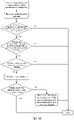
- FIG. 4A is a flowchart of a network access method according to some embodiments of this application.
- the primary card when a service of the secondary card starts, the primary card (or the primary card modem) may be triggered to reconnect to LTE from 5G.
- the primary card before the service of the secondary card starts, the primary card can simultaneously access a 5G cell and an LTE cell.
- the primary card can release the 5G cell and maintain access to the LTE cell.
- the primary card can actively trigger a process for reconnecting to 5G.
- the primary card can actively trigger the network side to add a 5G cell for the primary card, so that the primary card can access the 5G cell as soon as possible, improving communication experience of a user.
- a process for the primary card to reconnect to 5G can be actively triggered, so that the primary card can reconnect to a 5G cell as soon as possible, improving communication experience of a user in a dual-card scenario.
- FIG. 4B is a flowchart of a network access method according to some other embodiments of this application.
- a service of the secondary card causes the primary card to reconnect to LTE from NSA.
- the primary card can release a 5G cell and maintain access to an LTE cell.
- the terminal may determine whether the current LTE cell for the primary card supports EN-DC and no SCG is added within a time T.
- No SCG added for the primary card within the time T means that no process for adding an SCG for the primary card is triggered on the network side within the time T.
- the terminal may determine whether the LTE cell on which the primary card currently camps supports EN-DC. For details, reference may be made to description of step 410a in FIG. 4C-2 below.
- the terminal no longer performs subsequent steps.
- the terminal may determine whether a process for adding an SCG for the primary card is triggered by the network side within the time period T that starts when the service of the secondary card ends. For details, reference may be made to description of step 410b in FIG. 4C-2 below.
- the terminal may determine whether a number of times that the secondary card executes a service within a time period T1 exceeds n. For details, reference may be made to description of step 410c in FIG. 4C-2 below, and details are not described herein.
- the terminal no longer executes subsequent steps.
- the terminal may determine whether a delay-sensitive whitelisted application is running. For details, reference may be made to description of step 410d in FIG. 4C-2 below, and details are not described herein.
- the terminal can actively trigger the LTE used by the primary card to initiate re-establishment.
- LTE used by the primary card
- the terminal may determine whether an SCG is successfully added for the primary card after re-establishment. For details, reference may be made to description of step 415 in FIG. 4C-2 below, and details are not described herein.
- the terminal lists a current cell for the primary card (that is, the cell on which the primary card currently camps) into a temporary blacklist, and no longer initiates re-establishment for fast reconnecting to 5G.
- a current cell for the primary card that is, the cell on which the primary card currently camps
- a process for the primary card to reconnect to 5G can be actively triggered, so that the primary card can reconnect to a 5G cell as soon as possible, improving communication experience of a user in a dual-card scenario.
- the communication entity A13 when the communication entity A13 is in the EN-DC state with the access network equipment 210 as the master node, there are a 4G RRC connection between the communication entity A13 and the access network equipment 210 and a 5G RRC connection between the communication entity 13 and the access network equipment 220. There is a 4G RRC connection between the communication entity 23 and the access network equipment 200.
- the communication entity A13 is the primary card modem, which means that a data service of the terminal 100 (for example, a data service of a third-party application run by the terminal 100) is transmitted by default through a link between the communication entity 13 and the network side. The user can experience 5G performance when the communication entity A13 is in the EN-DC state.
- the communication entity A13 is in the EN-DC state and a status bar of the terminal 100 may display a 4G/5G dual-network icon 501 corresponding to the SIM card A1.
- the terminal 100 can smoothly play a high-definition video online.
- the communication entity A23 may perform step 400 to initiate a service B1.
- the service B1 is a voice service that needs to be executed by using the subscriber identity A22.
- the terminal 100 may exit a video play screen in response to an operation by the user and display a dial screen.
- the dial screen the user can input a desired phone number and then select the SIM card A2 to dial.
- the communication entity A23 may initiate a voice service (the service B1).
- the communication entity A23 may also perform step 401 to transfer a request for occupying a transmitter to an arbitration entity, where the request for occupying the transmitter includes an identifier of the service B1.
- the arbitration entity may perform step 402a to determine that the communication entity A23 occupies the transmitter, which enables the communication entity A23 to execute the service B1. For example, when the service B1 is a voice service, the communication entity A23 can dial up and perform a call after the call is connected.
- the terminal 100 is usually equipped with a transmitter.
- the communication entity A13 and the communication entity A23 take turns to occupy the transmitter in time division multiplexing (time division multiplexing, TDM) mode.
- the terminal 100 may further include an arbitration entity.
- the arbitration entity may be a functional entity or a logical entity in a modem of the terminal 100.
- the arbitration entity may decide which one of the communication entity A13 and the communication entity A23 is to occupy the transmitter. In a case that the SIM card A1 is the primary card, the arbitration entity decides that the transmitter is to be occupied by the communication entity A13 by default.
- the communication entity A13 applies to the arbitration entity for occupying the transmitter.
- the arbitration entity may also perform step 402b to determine that the service B1 is one of at least one preset service.
- the at least one service may include a service with a long duration or a large amount of service data, such as a voice service or a multimedia messaging service.
- a short message service has a small amount of data and takes a short time for sending or receiving a short message. Therefore, the short message service is not a service in the at least one service.
- the terminal 100 needs to fall back from an EN-DC state under the subscriber identity A13 to an LTE state under the subscriber identity A12.
- the terminal 100 needs to disconnect a 5G RRC connection between the communication entity A13 and the access network equipment 220, and only maintain a 4G RRC connection between the communication entity A13 and the access network equipment 210.
- the arbitration entity may perform step 403 to send a 5G link release notification to the communication entity A13.
- the communication entity A13 may perform step 404 to send an SCG fail (SCG fail) message to the access network equipment 210.
- SCG fail SCG fail
- the access network equipment 210 may perform step 405 to send a 5G RRC connection release (RRC connection release) message to the communication entity A13.
- the communication entity A13 may perform step 406 to release the 5G RRC connection.
- the service B1 when the communication entity A23 executes the service B1, and the service B1 is one of the at least one preset service, the 5G RRC connection between the communication entity A13 and the access network equipment 220 is released, which means that the secondary cell of the communication entity A13 is released.
- the communication entity A13 only maintains the 4G RRC connection between the communication entity A13 and the access network equipment 210.
- the service B1 can be set as a voice service. During dial-up for the voice service and during a call after the call is connected, the status bar of the terminal 100 may display a 4G network icon 502 corresponding to the SIM card A1.
- the communication entity A23 may perform step 407 to end the service B1.
- the service B1 is for example a voice service.
- the communication entity A23 may end the service B1 in response to a hang-up operation initiated by the user.
- step 408 may further be performed to transfer a notification of end-of-service B1 to the arbitration entity.
- the arbitration entity may perform step 409a to enable the communication entity A13 to recover occupation of the transmitter. In other words, when the service B1 ends, the transmitter is occupied by the communication entity A13 again.
- the communication entity A13 may maintains the connection between communication entity A13 and the access network equipment 210.
- the communication entity A13 can actively disconnect the connection between the communication entity A13 and the access network equipment 210, and initiate RRC connection re-establishment. This triggers the network side to send an RRC connection reconfiguration request to the communication entity A13, so that an SCG can be quickly added for the communication entity A13.
- the arbitration entity when the arbitration entity receives the notification of end-of-service B1, the arbitration entity may transfer to the communication entity A13 a message for indicating that the service B1 ends or a message for indicating the communication entity A13 to send an RRC connection re-establishment request, so that the communication entity A13 sends an RRC connection re-establishment request to the access network equipment 210.
- step 409b may be performed to send the notification of end-of-service B1 to the communication entity A13.
- the communication entity A13 may perform subsequent steps such as steps 411 and 412.
- the arbitration entity when the arbitration entity receives the notification of end-of-service B1, the arbitration entity may transfer an RRC connection re-establishment request sending instruction to the communication entity A13. After receiving the RRC connection re-establishment request sending instruction, the communication entity A13 may perform subsequent steps such as steps 411 and 412.
- the communication entity A23 may transfer to the communication entity A13 a message indicating that the service B 1 ends or a message for indicating the communication entity A13 to send an RRC connection re-establishment request, so that the communication entity A13 sends an RRC connection re-establishment request to the access network equipment 210.
- the message used to indicate that the service B1 ends may be a notification of end-of-service B1.
- the message for indicating the communication entity A13 to send an RRC connection re-establishment request may be an RRC connection re-establishment request sending instruction.
- the communication entity A13 may first perform step 411, to actively release the 4G RRC connection between the communication entity A13 and the access network equipment 210. It can be understood that, with regard to the release of the RRC connection, generally when the RRC connection release message sent by the network side is received, the RRC connection is released in response to the RRC connection release message. However, in step 411, the communication entity A13 can actively release the RRC connection without the RRC connection release message sent from the network side.
- the communication entity A13 may perform step 412, to send an RRC connection re-establishment request to the access network equipment 210.
- the access network equipment 210 may perform step 413 in response to the RRC connection re-establishment request, to send an RRC connection re-establishment message to the communication entity A13.
- the communication entity A13 can perform radio resource configuration, set content of the RRC connection re-establishment complete message, and the like. Then, the communication entity A13 may perform step 414, to send the RRC connection re-establishment complete message to the access network equipment 210.
- the communication entity A13 re-accesses the cell provided by the access network equipment 210, and can trigger the access network equipment 210 to add an SCG for the communication entity A13.
- the process of adding an SCG will be described below with reference to FIG. 7 , and is not described in detail here.
- the communication entity A13 may perform step 410a before step 411, to determine whether the primary cell on which the communication entity A13 currently camps supports EN-DC.
- EN-DC For example, it can be understood that 5G spectra are mostly at high band, and a high-band network signal coverage is small. In other words, a 5G signal coverage provided by the access network equipment 220 may be smaller than a 4G signal coverage provided by the access network equipment 210. Therefore, one or more of cells provided by the access network equipment 210 may not support EN-DC due to lack of 5G signal coverage. One or more of cells provided by the access network equipment 210 may either not support EN-DC due to network configuration or other reasons. In other words, not all cells provided by the access network equipment 210 support EN-DC.
- the terminal 100 has moved or signal quality of the 4G cell on which the communication entity A13 camps has changed, causing the communication entity A13 to switch to another 4G cell.
- a 4G cell on which the communication entity A13 camps when the service B1 executed by the communication entity A23 starts may be different from a 4G cell on which the communication entity A13 camps when the service B1 executed by the communication entity A23 ends.
- the 4G cell on which the communication entity A13 camps when the service B1 executed by the communication entity A23 ends may not support EN-DC. Therefore, before performing step 411, the communication entity A13 may first determine whether the 4G cell on which the communication entity A13 currently camps supports EN-DC.
- the communication entity A13 may determine, based on its cell access history, whether the 4G cell on which the communication entity A13 currently camps supports EN-DC. Historically, whenever accessing a 4G cell, the communication entity A13 can record whether an RRC connection reconfiguration request sent by an access network equipment to which the 4G cell belongs is received during attachment to the 4G cell. If an RRC connection reconfiguration request is received, it means that the 4G cell supports EN-DC. If no RRC connection reconfiguration request is received, it means that the 4G cell does not support EN-DC. In this way, the communication entity A13 may determine whether the cell on which the communication entity A13 currently camps supports EN-DC.
- the communication entity A13 may perform step 411 and subsequent steps.
- the communication entity A13 performs step 410b before step 411, to determine whether the communication entity A13 has received an SCG addition trigger message from the network side when a timer C1 expires.
- the SCG addition trigger message may specifically be a measurement control message of an event B1 or an RRC connection reconfiguration request. It can be understood that when the service B1 ends, or within a relatively short time after the service B1 ends, the network side may also actively send the measurement control message of the event B1 or the RRC connection reconfiguration request to the communication entity A13, to trigger a process for adding an SCG for the communication entity A13. In order to avoid the measurement control message of the event B1 or the RRC connection reconfiguration request actively sent by the network side, the communication entity A13 performs step 410b before step 411.
- duration of the timer C1 may be determined by using big data about duration in which the primary card reconnects to the 5G network.
- the duration in which the primary card reconnects to 5G may be duration between a moment at which a service performed by the secondary card (the service causes the primary card to release an SCG) ends and a moment at which the primary card re-accesses the 5G network, in a dual-card scenario.
- the big data about the duration in which the primary card reconnects to the 5G network is obtained.
- Distribution of each duration in the big data about the duration in which the primary card reconnects to 5G can be calculated.
- Duration of the timer C1 can be determined based on distribution of each duration in the big data about the duration in which the primary card reconnects to 5G. For example, duration with a greatest probability is set to be the duration of the timer C1.
- the duration of the timer C1 can be preset based on experience or experiments, for example, may be a duration of 2s.
- the communication entity A13 may perform step 411 and subsequent steps.
- the communication entity A13 may perform step 410c before step 411, to determine whether a total number of times that the communication module A23 executes service(s) in at least one service within a time period T1 exceeds n.
- the time period T1 may be a time period counted backward from a time at which the communication entity A13 receives a message indicating that the service B1 ends or a message for indicating the communication entity A13 to send an RRC connection re-establishment request.
- a time length of the time period T1 is 60 seconds
- the time period T1 is 60 seconds counted backward with a moment, at which the communication entity A13 receives a message indicating that the service B1 ends or a message for indicating the communication entity A13 to send an RRC connection re-establishment request, as an end point.
- a time length of the time period T1 may be 120 seconds, 180 seconds, or the like.
- n is a preset value, which may be, for example, 3 or 4.
- a total number of times that service(s) in at least one service are executed in step 410c is to accumulate the number of times that the service(s) in the at least one service are executed.
- the at least one service includes a voice service and a multimedia messaging service. If the voice service is executed once and the multimedia messaging service is executed twice, the total number of times that the service(s) in the at least one service are executed is 3 (1+2).
- the communication entity A13 triggers the RRC connection re-establishment when or after the service(s), in the at least one service, executed by the communication entity A23 ends. If the number of times that the communication entity A23 executes service(s) in the at least one service in a short time is large, the RRC connection re-establishment occurs frequently, which may lead to abnormal statistics on the network side. To avoid this, the communication entity A13 performs step 410c before step 411.
- n may be 3, 4, or the like herein.
- a value of n may be preset based on experience or experiments.
- the communication entity A13 may perform step 410d before step 411, to determine whether the terminal 100 is currently running a delay-sensitive application. Because the SIM card A1 is a default data service card, service data of applications running on the terminal 100 is transmitted through a connection between the communication entity A13 and the network side. To trigger the RRC connection re-establishment, the communication entity A13 needs to disconnect its connection from the network side, that is, to perform step 411. If the communication entity A13 needs to disconnect its connection from the network side when the terminal 100 is currently running a delay-sensitive application, operating experience of the user with the application is affected. Therefore, the communication entity A13 may perform step 410d before step 411.
- the delay-sensitive application may be an application in a whitelist of delay-sensitive applications.
- the whitelist of delay-sensitive applications may include application identifiers of a plurality of applications.
- An application identifier may be a package name (package name) of an application.
- the whitelist of delay-sensitive applications may be used as a configuration file, and is pre-configured into the terminal 100 when the terminal 100 is being produced.
- Applications in the whitelist of delay-sensitive applications may include interactive game (for example, multiplayer online battle arena (multiplayer online battle arena, MOBA)) applications, telephone applications, and the like.
- the developer can update the applications in the whitelist of delay-sensitive applications, for example, by adding a newly emerging interactive application to the whitelist of delay-sensitive applications.
- the updated whitelist of delay-sensitive applications may be sent to the terminal 100 by server push.
- a user can add an application to the whitelist of delay-sensitive applications.
- the terminal 100 may provide an operation portal and an interactive interface for managing the whitelist of delay-sensitive applications, so that the user can add an application to the whitelist of delay-sensitive applications.
- the terminal 100 may display an operation portal for managing the whitelist of delay-sensitive applications, in response to an operation initiated by the user for a "settings" function option.
- the terminal 100 may display a screen shown in FIG. 6A in response to an operation for the operation portal.
- An application D1 and an application D2 are applications that are installed on the terminal 100 and that have already been added to the whitelist of delay-sensitive applications.
- An application D3, an application D4, and the like are applications that are installed on the terminal 100 but have not added to the whitelist of delay-sensitive applications.
- the terminal 100 can provide a "remove” option for the user to remove the related application from the whitelist of delay-sensitive applications.
- the terminal 100 can provide an "add" option for the user to add the related application to the whitelist of delay-sensitive applications. For example, referring to FIG. 6A and FIG. 6B , the terminal 100 may add the application D3 to the whitelist of delay-sensitive applications in response to an operation on the "add" function option corresponding to the application D3.
- the communication entity A13 may determine whether an application running in the foreground of the terminal 100 is an application in the whitelist of applications. For example, the communication entity A13 may obtain a package name of the application running in the foreground, match or search the package name in the whitelist of applications, and determine that the application running in the foreground is an application in the whitelist of applications if a package name consistent with the package name is matched or found. When the application running in the foreground is an application in the whitelist of applications, it is determined that the terminal 100 is running a delay-sensitive application. When the application running in the foreground is not an application in the whitelist of applications, it is determined that the terminal 100 is not running a delay-sensitive application.
- step 411 and its subsequent steps can be performed.
- the communication entity A13 may determine whether the terminal 100 currently is executing a delay-sensitive service.
- a delay-sensitive service may be a voice service, a telemetry service, a teleconferencing service, an interactive game service, or the like.
- the communication entity A13 disconnects its connection from the network side, so as to initiate RRC connection re-establishment, service experience of the user is affected.
- the communication entity A13 can actively disconnect its connection from the network side, and then initiate the RRC connection re-establishment.
- the radio link control (radio link control, RLC) layer may identify a service type to which the data packet belongs, and therefore may determine whether the data packet is data for a delay-sensitive service (for example, a voice service, a telemetry service, a teleconferencing service, or an interactive game service). If the data packet is data for a delay-sensitive service, it means that the terminal 100 is executing a delay-sensitive service.
- a delay-sensitive service for example, a voice service, a telemetry service, a teleconferencing service, or an interactive game service.
- step 411 and its subsequent steps can be performed.
- the communication entity A13 may further perform step 410b. If in step 410b, it is determined that the communication entity A13 has not received a measurement control message of an event B1 or an RRC connection reconfiguration request when the timer C1 expires, the communication entity A13 may further perform step 410c. If in step 410c, it is determined that a total number of times that the communication module A23 executes service(s) in at least one service within the time period T1 does not exceed n, the communication entity A13 may further perform step 410d. When in step 410d, it is determined that the terminal 100 is not running a delay-sensitive application, the communication entity A13 performs step 411 and subsequent steps.
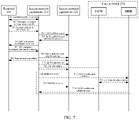
- step 701 an RRC connection between the communication entity A13 and the access network equipment 210 may be established.
- step 701 includes step 412, step 413, and step 414 in FIG. 4C-2 .
- the access network equipment 210 may add a secondary cell for the terminal 100 based on a measurement when the communication entity A13 is connected to the access network equipment 210. Details are as follows.
- the access network equipment 210 may perform step 702, to send a measurement control message of an event B1 to the communication entity A13.
- the communication entity A13 may search for a cell provided by the access network equipment 220, in response to the measurement control message of the event B1.
- the communication entity A13 may perform step 703, to send a measurement report of the event B1 to the access network equipment 210.
- the measurement report of the event B1 is used to report to the access network equipment 210 signal quality of an inter-system neighboring cell as measured by the communication entity A13, that is, to report to the access network equipment 210 signal quality of a cell provided by the access network equipment 220 as measured by the communication entity A13.
- the signal quality of the cell may be characterized by a reference signal receiving power (reference signal receiving power, RSRP) of the cell.
- the signal quality of the cell may be characterized by a reference signal received quality (reference signal received quality, RSRQ) of the cell.
- the signal quality of the cell may be characterized by a signal to interference plus noise ratio (signal to interference plus noise ratio, SINR) of the cell.
- the signal quality of the cell may be characterized by a received signal strength indication (received signal strength indication, SINR) of the cell.
- the signal quality of the cell may be jointly characterized by two or more of RSRP, RSRQ, SINR, and RSSI of the cell.
- the access network equipment 210 may perform step 704, to send an SgNB addition request (addition request) to the access network equipment 220.
- SgNB is a gNB as a secondary node.
- the access network equipment 210 may be an eNB, and may be referred to as a MeNB (master eNB) when serving as a master node.
- the access network equipment 220 may be a gNB, and may be referred to as an SgNB (secondary gNB) when serving as a secondary node.
- the access network equipment 220 may perform step 705, to send an SgNB addition request acknowledge (addition request acknowledge) message to the access network equipment 210.
- the access network equipment 210 may perform step 706, to send a radio resource control (radio resource control, RRC) connection reconfiguration (connection reconfiguration) request to the communication entity A13.
- RRC radio resource control
- the communication entity A13 may perform step 707, to send an RRC connection reconfiguration complete (connection reconfiguration complete) message to the access network equipment 210.
- the access network equipment 210 may perform step 708, to send an SgNB reconfiguration complete (reconfiguration complete) message to the access network equipment 220.
- a random access procedure may be performed between the terminal 100 and the access network equipment 220 through step 709.
- the random access procedure reference may be made to the foregoing description, and details are not described here.
- the communication entity A13 may be connected to the access network equipment 220.
- an RRC connection between the communication entity A13 and the access network equipment 220 is established.
- the access network equipment 210 has added a secondary cell (SCG) for the communication entity A13.
- SCG secondary cell
- the communication entity A13 enters an EN-DC state, which means that the terminal 100 enters the EN-DC state by using the user identity A12.
- the access network equipment 210 may perform step 710, to send an SgNB status transfer (status transfer) to the access network equipment 220.
- a service gateway (service gateway, S-GW) in the core network 230, the access network equipment 210, and the access network equipment 220 may perform data forwarding (data forwarding) in step 711.
- the access network equipment 210, the access network equipment 220, and the core network 230 may perform a path update procedure (path update procedure).
- path update procedure may include the following steps:
- the communication entity A13 accesses the core network 230 based on a wireless network provided by the access network device 220.
- the access network equipment 210 may blindly add a secondary cell for the communication entity A13 when the communication entity A13 is connected to the access network equipment 210. Still referring to FIG. 7 , in the process of blindly adding a secondary cell, after the communication entity A13 is connected to the access network equipment 210 through step 701, the access network equipment 210 does not perform step 702 (correspondingly, the communication entity A13 does not perform step 703 either), but may directly perform step 704 and subsequent steps. In other words, compared with adding a secondary cell based on a measurement, blindly adding a secondary cell omits step 702 and step 704.
- step 704 and subsequent steps in a scheme of blindly adding a secondary cell reference may be made to the foregoing description of steps 704 to 715, and details are not repeated here.
- the communication entity A13 may re-access a 5G cell.
- an SCG may be added for the communication entity A13.
- the status bar of the terminal 100 may display a 4G/5G dual-network icon 501 corresponding to the SIM card A1.
- the terminal 100 may transmit service data, such as a video stream of a high-definition video, through a 5G network, so that the high-definition video can be played smoothly, improving viewing experience of the user.
- the access network equipment 210 may fail to add an SCG for the communication entity A13. Still referring to FIG. 4C-2 , the communication entity A13 may perform step 415, to determine whether addition of an SCG is successful.
- a scheme for determining whether addition of an SCG is successful may be as follows.
- the communication entity A13 determines whether signal quality of an inter-system neighboring cell is higher than a threshold when measuring the inter-system neighboring cell in response to a measurement control message of an event B1. If the signal quality of the inter-system neighboring cell is not higher than the threshold, it can be determined that the addition of an SCG has failed. In another example, the communication entity A13 may determine whether an RRC connection reconfiguration request is received when the timer expires, and if no RRC connection reconfiguration request is received, it can be determined that the addition of an SCG has failed. In still another example, the communication entity A13 may determine whether the random access procedure in step 709 has failed. If the random access procedure in step 709 fails (for example, no random access response is received when the timer expires), it can be determined that the addition of an SCG has failed. There are other examples, which are not listed herein one by one.
- the communication entity A13 of the access network equipment 210 may perform step 416 and may list the 4G cell on which it currently camps into a temporary blacklist.
- the communication entity A13 no longer triggers the RRC connection re-establishment, so that step 411 and step 412 are no longer performed, to avoid repeated initiation of the RRC connection re-establishment due to repeated SCG addition failures.
- the communication entity A13 may clear the temporary blacklist.
- the communication entity A13 may clear the temporary blacklist.
- the dual-card terminal can actively disconnect the RRC connection between the primary card and the network side when a service of the secondary card ends, and actively initiate the RRC connection re-establishment through the primary card, which may trigger the network side to add a secondary cell for the primary card of the terminal as soon as possible, thereby improving network experience of a user.
- an embodiment of this application provides a terminal 800, and the terminal 800 may be configured with two SIM cards.
- One of the two SIM cards can be used as a primary card, and the other one can be used as a secondary card.
- the terminal 800 may include a processor 810, a memory 820, and a transceiver 830.
- the memory 820 stores an instruction, and the instruction may be executed by the processor 810.
- the terminal 800 may perform the operations performed by the terminal in the foregoing method embodiments, for example, the operations performed by the terminal 100 in FIGs. 4C-1 and 4C-2 .
- the processor 810 may perform data processing operations
- the transceiver 830 may perform data transmission and/or reception operations.
- an embodiment of this application provides a chip system 900, which may be applied to a terminal configured with two SIM cards.
- One of the two SIM cards can be used as a primary card, and the other one can be used as a secondary card.
- the chip system 900 includes: a processor 910 and an interface circuit 920.
- the processor 910 is connected to the interface circuit 920, and is configured to perform the operations performed by the terminal in the foregoing method embodiments, for example, the operations performed by the terminal 100 in FIGs. 4C-1 and 4C-2 .
- the chip system 900 further includes a memory 930.
- the memory stores an instruction, and the instruction may be executed by the processor 910.
- the chip system 900 may perform the operations performed by the terminal in the foregoing method embodiments, for example, the operations performed by the terminal 100 in FIGs. 4C-1 and 4C-2 .
- the processor in this embodiment of this application may be a central processing unit (central processing unit, CPU), or may be another general-purpose processor, a digital signal processor (digital signal processor, DSP), an application-specific integrated circuit (application specific integrated circuit, ASIC), a field programmable gate array (field programmable gate array, FPGA) or another programmable logic device, a transistor logic device, a hardware component, or any combination thereof.
- the general-purpose processor may be a microprocessor, or may be any conventional processor.
- the software instruction may include a corresponding software module.
- the software module may be stored in a random access memory (random access memory, RAM), a flash memory, a read-only memory (read-only memory, ROM), a programmable read-only memory (programmable rom, PROM), an erasable programmable read-only memory (erasable PROM, EPROM), an electrically erasable programmable read-only memory (electrically EPROM, EEPROM), a register, a hard disk, a removable hard disk, a CD-ROM, or any other form of storage medium well-known in the art.
- a storage medium is coupled to a processor, so that the processor can read information from the storage medium or write information into the storage medium.
- the storage medium may alternatively be a component of the processor.
- the processor and the storage medium may be located in an ASIC.
- All or some of the foregoing embodiments may be implemented by software, hardware, firmware, or any combination thereof.
- the functions are implemented by software, all or some of the functions may be implemented in a form of a computer program product.
- the computer program product includes one or more computer instructions.
- the computer may be a general-purpose computer, a special-purpose computer, a computer network, or other programmable apparatuses.
- the computer instruction may be stored in a computer-readable storage medium, or may be transmitted by using the computer-readable storage medium.
- the computer instructions may be transmitted from a website, computer, server, or data center to another website, computer, server, or data center in a wired (for example, a coaxial cable, an optical fiber, or a digital subscriber line (DSL)) or wireless (for example, infrared, radio, and microwave, or the like) manner.
- the computer-readable storage medium may be any usable medium accessible by a computer, or a data storage device, such as a server or a data center, integrating one or more usable media.
- the usable medium may be a magnetic medium (for example, a floppy disk, a hard disk, or a magnetic tape), an optical medium (for example, a DVD), a semiconductor medium (for example, a solid state disk (solid state disk, SSD)), or the like.
- a magnetic medium for example, a floppy disk, a hard disk, or a magnetic tape
- an optical medium for example, a DVD
- a semiconductor medium for example, a solid state disk (solid state disk, SSD)
Landscapes
- Engineering & Computer Science (AREA)
- Computer Networks & Wireless Communication (AREA)
- Signal Processing (AREA)
- Databases & Information Systems (AREA)
- Mobile Radio Communication Systems (AREA)
- Telephone Function (AREA)
Applications Claiming Priority (3)
| Application Number | Priority Date | Filing Date | Title |
|---|---|---|---|
| CN202010405578 | 2020-05-14 | ||
| CN202010544883.8A CN113676891B (zh) | 2020-05-14 | 2020-06-15 | 一种网络接入方法及终端 |
| PCT/CN2021/093888 WO2021228238A1 (zh) | 2020-05-14 | 2021-05-14 | 一种网络接入方法及终端 |
Publications (3)
| Publication Number | Publication Date |
|---|---|
| EP4096258A1 true EP4096258A1 (de) | 2022-11-30 |
| EP4096258A4 EP4096258A4 (de) | 2023-06-28 |
| EP4096258B1 EP4096258B1 (de) | 2025-01-01 |
Family
ID=78525240
Family Applications (1)
| Application Number | Title | Priority Date | Filing Date |
|---|---|---|---|
| EP21804766.0A Active EP4096258B1 (de) | 2020-05-14 | 2021-05-14 | Netzwerkzugangsverfahren und endgerät |
Country Status (3)
| Country | Link |
|---|---|
| US (1) | US12615680B2 (de) |
| EP (1) | EP4096258B1 (de) |
| WO (1) | WO2021228238A1 (de) |
Families Citing this family (1)
| Publication number | Priority date | Publication date | Assignee | Title |
|---|---|---|---|---|
| EP4213586A4 (de) * | 2020-09-11 | 2023-11-01 | Beijing Xiaomi Mobile Software Co., Ltd. | Verbindungssteuerungsverfahren und verbindungssteuerungsvorrichtung |
Family Cites Families (11)
| Publication number | Priority date | Publication date | Assignee | Title |
|---|---|---|---|---|
| EP2547130B1 (de) * | 2011-07-12 | 2013-03-27 | Giesecke & Devrient GmbH | Verfahren und Identifizierungsmodul zur Netzauswahl |
| WO2015177601A1 (en) * | 2014-05-21 | 2015-11-26 | Pismo Labs Technology Limited | Selecting base station at a mutli-sim communication device |
| CN106028309B (zh) * | 2016-05-25 | 2020-02-18 | 深圳市万普拉斯科技有限公司 | 使双卡双待终端中的主卡恢复到数据网络的方法和装置 |
| US9775082B1 (en) | 2016-12-20 | 2017-09-26 | Intel IP Corporation | Link adaptation in wireless communication using multiple SIMS |
| CN109246834B (zh) * | 2017-05-04 | 2020-10-27 | 展讯通信(上海)有限公司 | 一种EN双连接的建立方法、eNB及gNB |
| US10952273B2 (en) * | 2017-08-10 | 2021-03-16 | At&T Intellectual Property I, L.P. | Detecting and correcting radio link failures based on different usage scenarios |
| AU2017439668A1 (en) | 2017-11-14 | 2020-06-18 | Guangdong Oppo Mobile Telecommunications Corp., Ltd. | Network switching method, network device, and terminal device |
| US11445359B2 (en) | 2018-08-27 | 2022-09-13 | Samsung Electronics Co., Ltd. | Apparatus and method for providing voice call and data service simultaneously on plurality of SIM |
| KR102597009B1 (ko) * | 2018-08-27 | 2023-11-01 | 삼성전자주식회사 | 이종 네트워크에서 이중 연결 동작을 수행하기 위한 방법 및 장치. |
| EP3874799A1 (de) | 2018-10-30 | 2021-09-08 | Telefonaktiebolaget Lm Ericsson (Publ) | Messkonfiguration in nr-dc |
| US11564155B2 (en) * | 2020-04-07 | 2023-01-24 | Charter Communications Operating, Llc | Apparatus and methods for interworking in wireless networks |
-
2021
- 2021-05-14 WO PCT/CN2021/093888 patent/WO2021228238A1/zh not_active Ceased
- 2021-05-14 EP EP21804766.0A patent/EP4096258B1/de active Active
- 2021-05-14 US US17/908,754 patent/US12615680B2/en active Active
Also Published As
| Publication number | Publication date |
|---|---|
| EP4096258A4 (de) | 2023-06-28 |
| US20230128087A1 (en) | 2023-04-27 |
| WO2021228238A1 (zh) | 2021-11-18 |
| EP4096258B1 (de) | 2025-01-01 |
| US12615680B2 (en) | 2026-04-28 |
Similar Documents
| Publication | Publication Date | Title |
|---|---|---|
| JP7709495B2 (ja) | 情報送信方法および装置 | |
| CN113498123B (zh) | 一种网络接入系统、方法及终端 | |
| EP4044758B1 (de) | Anweisung zum zugriff auf vorkonfigurierte kandidatenzelle im fall eines fehlers der masterzellengruppe (mcg) | |
| US11202237B2 (en) | Method for preventing an inter-rat change from being triggered and communications apparatus utilizing the same | |
| CN110267245B (zh) | 通信控制方法及电子设备 | |
| US12550215B2 (en) | Network connection method, system, and related apparatus | |
| US12550033B2 (en) | Communication method, apparatus, and system | |
| US20240422641A1 (en) | Communication method and apparatus | |
| US12452830B2 (en) | Information processing method based on network slide identity information in access procedure, and terminal device | |
| US20240334223A1 (en) | Communication method and apparatus | |
| CN113676891B (zh) | 一种网络接入方法及终端 | |
| EP4096258B1 (de) | Netzwerkzugangsverfahren und endgerät | |
| EP4727213A1 (de) | Kommunikationsverfahren und zugehörige vorrichtung | |
| US20250056202A1 (en) | Communication method and related device | |
| US20230354265A1 (en) | User equipment, network node, and base station | |
| CN117998486A (zh) | 一种通信方法及装置 | |
| US20250380310A1 (en) | Small data transmission method and apparatus, terminal, and network side device | |
| US20250203436A1 (en) | Communication method and apparatus | |
| EP4322500A1 (de) | Vermeidung von zugangssperre für mt-dienst | |
| CN120201500A (zh) | 小区接入方法、电子设备和芯片系统 | |
| WO2025059859A1 (zh) | 无线通信方法、终端设备以及网络设备 | |
| CN120224307A (zh) | 小区接入方法、电子设备、芯片系统和存储介质 | |
| WO2023123432A1 (zh) | 无线通信的方法、终端和网络设备 | |
| CN118413602A (zh) | 处理呼叫的方法及装置、芯片、终端设备、可读存储介质 |
Legal Events
| Date | Code | Title | Description |
|---|---|---|---|
| STAA | Information on the status of an ep patent application or granted ep patent |
Free format text: STATUS: THE INTERNATIONAL PUBLICATION HAS BEEN MADE |
|
| PUAI | Public reference made under article 153(3) epc to a published international application that has entered the european phase |
Free format text: ORIGINAL CODE: 0009012 |
|
| STAA | Information on the status of an ep patent application or granted ep patent |
Free format text: STATUS: REQUEST FOR EXAMINATION WAS MADE |
|
| 17P | Request for examination filed |
Effective date: 20220826 |
|
| AK | Designated contracting states |
Kind code of ref document: A1 Designated state(s): AL AT BE BG CH CY CZ DE DK EE ES FI FR GB GR HR HU IE IS IT LI LT LU LV MC MK MT NL NO PL PT RO RS SE SI SK SM TR |
|
| A4 | Supplementary search report drawn up and despatched |
Effective date: 20230531 |
|
| RIC1 | Information provided on ipc code assigned before grant |
Ipc: H04W 88/06 20090101ALN20230524BHEP Ipc: H04W 60/04 20090101ALN20230524BHEP Ipc: H04W 48/12 20090101ALN20230524BHEP Ipc: H04W 76/34 20180101ALI20230524BHEP Ipc: H04W 76/19 20180101ALI20230524BHEP Ipc: H04W 76/15 20180101ALI20230524BHEP Ipc: H04W 8/18 20090101AFI20230524BHEP |
|
| DAV | Request for validation of the european patent (deleted) | ||
| DAX | Request for extension of the european patent (deleted) | ||
| STAA | Information on the status of an ep patent application or granted ep patent |
Free format text: STATUS: EXAMINATION IS IN PROGRESS |
|
| 17Q | First examination report despatched |
Effective date: 20231201 |
|
| RIC1 | Information provided on ipc code assigned before grant |
Ipc: H04W 88/06 20090101ALN20240729BHEP Ipc: H04W 60/04 20090101ALN20240729BHEP Ipc: H04W 48/12 20090101ALN20240729BHEP Ipc: H04W 76/34 20180101ALI20240729BHEP Ipc: H04W 76/19 20180101ALI20240729BHEP Ipc: H04W 76/15 20180101ALI20240729BHEP Ipc: H04W 8/18 20090101AFI20240729BHEP |
|
| GRAP | Despatch of communication of intention to grant a patent |
Free format text: ORIGINAL CODE: EPIDOSNIGR1 |
|
| STAA | Information on the status of an ep patent application or granted ep patent |
Free format text: STATUS: GRANT OF PATENT IS INTENDED |
|
| INTG | Intention to grant announced |
Effective date: 20240909 |
|
| GRAS | Grant fee paid |
Free format text: ORIGINAL CODE: EPIDOSNIGR3 |
|
| GRAA | (expected) grant |
Free format text: ORIGINAL CODE: 0009210 |
|
| STAA | Information on the status of an ep patent application or granted ep patent |
Free format text: STATUS: THE PATENT HAS BEEN GRANTED |
|
| AK | Designated contracting states |
Kind code of ref document: B1 Designated state(s): AL AT BE BG CH CY CZ DE DK EE ES FI FR GB GR HR HU IE IS IT LI LT LU LV MC MK MT NL NO PL PT RO RS SE SI SK SM TR |
|
| REG | Reference to a national code |
Ref country code: GB Ref legal event code: FG4D |
|
| REG | Reference to a national code |
Ref country code: DE Ref legal event code: R096 Ref document number: 602021024355 Country of ref document: DE |
|
| REG | Reference to a national code |
Ref country code: CH Ref legal event code: EP |
|
| REG | Reference to a national code |
Ref country code: IE Ref legal event code: FG4D |
|
| REG | Reference to a national code |
Ref country code: NL Ref legal event code: FP |
|
| REG | Reference to a national code |
Ref country code: LT Ref legal event code: MG9D |
|
| PGFP | Annual fee paid to national office [announced via postgrant information from national office to epo] |
Ref country code: NL Payment date: 20250409 Year of fee payment: 5 |
|
| REG | Reference to a national code |
Ref country code: AT Ref legal event code: MK05 Ref document number: 1757547 Country of ref document: AT Kind code of ref document: T Effective date: 20250101 |
|
| PG25 | Lapsed in a contracting state [announced via postgrant information from national office to epo] |
Ref country code: FI Free format text: LAPSE BECAUSE OF FAILURE TO SUBMIT A TRANSLATION OF THE DESCRIPTION OR TO PAY THE FEE WITHIN THE PRESCRIBED TIME-LIMIT Effective date: 20250101 |
|
| PG25 | Lapsed in a contracting state [announced via postgrant information from national office to epo] |
Ref country code: PL Free format text: LAPSE BECAUSE OF FAILURE TO SUBMIT A TRANSLATION OF THE DESCRIPTION OR TO PAY THE FEE WITHIN THE PRESCRIBED TIME-LIMIT Effective date: 20250101 |
|
| PGFP | Annual fee paid to national office [announced via postgrant information from national office to epo] |
Ref country code: DE Payment date: 20250402 Year of fee payment: 5 |
|
| PG25 | Lapsed in a contracting state [announced via postgrant information from national office to epo] |
Ref country code: ES Free format text: LAPSE BECAUSE OF FAILURE TO SUBMIT A TRANSLATION OF THE DESCRIPTION OR TO PAY THE FEE WITHIN THE PRESCRIBED TIME-LIMIT Effective date: 20250101 |
|
| PG25 | Lapsed in a contracting state [announced via postgrant information from national office to epo] |
Ref country code: NO Free format text: LAPSE BECAUSE OF FAILURE TO SUBMIT A TRANSLATION OF THE DESCRIPTION OR TO PAY THE FEE WITHIN THE PRESCRIBED TIME-LIMIT Effective date: 20250401 Ref country code: IS Free format text: LAPSE BECAUSE OF FAILURE TO SUBMIT A TRANSLATION OF THE DESCRIPTION OR TO PAY THE FEE WITHIN THE PRESCRIBED TIME-LIMIT Effective date: 20250501 |
|
| PG25 | Lapsed in a contracting state [announced via postgrant information from national office to epo] |
Ref country code: HR Free format text: LAPSE BECAUSE OF FAILURE TO SUBMIT A TRANSLATION OF THE DESCRIPTION OR TO PAY THE FEE WITHIN THE PRESCRIBED TIME-LIMIT Effective date: 20250101 |
|
| PG25 | Lapsed in a contracting state [announced via postgrant information from national office to epo] |
Ref country code: LV Free format text: LAPSE BECAUSE OF FAILURE TO SUBMIT A TRANSLATION OF THE DESCRIPTION OR TO PAY THE FEE WITHIN THE PRESCRIBED TIME-LIMIT Effective date: 20250101 Ref country code: PT Free format text: LAPSE BECAUSE OF FAILURE TO SUBMIT A TRANSLATION OF THE DESCRIPTION OR TO PAY THE FEE WITHIN THE PRESCRIBED TIME-LIMIT Effective date: 20250502 |
|
| PG25 | Lapsed in a contracting state [announced via postgrant information from national office to epo] |
Ref country code: BG Free format text: LAPSE BECAUSE OF FAILURE TO SUBMIT A TRANSLATION OF THE DESCRIPTION OR TO PAY THE FEE WITHIN THE PRESCRIBED TIME-LIMIT Effective date: 20250101 Ref country code: GR Free format text: LAPSE BECAUSE OF FAILURE TO SUBMIT A TRANSLATION OF THE DESCRIPTION OR TO PAY THE FEE WITHIN THE PRESCRIBED TIME-LIMIT Effective date: 20250402 |
|
| PG25 | Lapsed in a contracting state [announced via postgrant information from national office to epo] |
Ref country code: AT Free format text: LAPSE BECAUSE OF FAILURE TO SUBMIT A TRANSLATION OF THE DESCRIPTION OR TO PAY THE FEE WITHIN THE PRESCRIBED TIME-LIMIT Effective date: 20250101 |
|
| PG25 | Lapsed in a contracting state [announced via postgrant information from national office to epo] |
Ref country code: CZ Free format text: LAPSE BECAUSE OF FAILURE TO SUBMIT A TRANSLATION OF THE DESCRIPTION OR TO PAY THE FEE WITHIN THE PRESCRIBED TIME-LIMIT Effective date: 20250101 |
|
| PG25 | Lapsed in a contracting state [announced via postgrant information from national office to epo] |
Ref country code: SE Free format text: LAPSE BECAUSE OF FAILURE TO SUBMIT A TRANSLATION OF THE DESCRIPTION OR TO PAY THE FEE WITHIN THE PRESCRIBED TIME-LIMIT Effective date: 20250101 |
|
| REG | Reference to a national code |
Ref country code: DE Ref legal event code: R097 Ref document number: 602021024355 Country of ref document: DE |
|
| PG25 | Lapsed in a contracting state [announced via postgrant information from national office to epo] |
Ref country code: SM Free format text: LAPSE BECAUSE OF FAILURE TO SUBMIT A TRANSLATION OF THE DESCRIPTION OR TO PAY THE FEE WITHIN THE PRESCRIBED TIME-LIMIT Effective date: 20250101 |
|
| PG25 | Lapsed in a contracting state [announced via postgrant information from national office to epo] |
Ref country code: DK Free format text: LAPSE BECAUSE OF FAILURE TO SUBMIT A TRANSLATION OF THE DESCRIPTION OR TO PAY THE FEE WITHIN THE PRESCRIBED TIME-LIMIT Effective date: 20250101 |
|
| PG25 | Lapsed in a contracting state [announced via postgrant information from national office to epo] |
Ref country code: IT Free format text: LAPSE BECAUSE OF FAILURE TO SUBMIT A TRANSLATION OF THE DESCRIPTION OR TO PAY THE FEE WITHIN THE PRESCRIBED TIME-LIMIT Effective date: 20250101 |
|
| PG25 | Lapsed in a contracting state [announced via postgrant information from national office to epo] |
Ref country code: EE Free format text: LAPSE BECAUSE OF FAILURE TO SUBMIT A TRANSLATION OF THE DESCRIPTION OR TO PAY THE FEE WITHIN THE PRESCRIBED TIME-LIMIT Effective date: 20250101 |
|
| PG25 | Lapsed in a contracting state [announced via postgrant information from national office to epo] |
Ref country code: RO Free format text: LAPSE BECAUSE OF FAILURE TO SUBMIT A TRANSLATION OF THE DESCRIPTION OR TO PAY THE FEE WITHIN THE PRESCRIBED TIME-LIMIT Effective date: 20250101 |
|
| PG25 | Lapsed in a contracting state [announced via postgrant information from national office to epo] |
Ref country code: SK Free format text: LAPSE BECAUSE OF FAILURE TO SUBMIT A TRANSLATION OF THE DESCRIPTION OR TO PAY THE FEE WITHIN THE PRESCRIBED TIME-LIMIT Effective date: 20250101 |
|
| PLBE | No opposition filed within time limit |
Free format text: ORIGINAL CODE: 0009261 |
|
| STAA | Information on the status of an ep patent application or granted ep patent |
Free format text: STATUS: NO OPPOSITION FILED WITHIN TIME LIMIT |
|
| REG | Reference to a national code |
Ref country code: CH Ref legal event code: L10 Free format text: ST27 STATUS EVENT CODE: U-0-0-L10-L00 (AS PROVIDED BY THE NATIONAL OFFICE) Effective date: 20251112 |
|
| 26N | No opposition filed |
Effective date: 20251002 |
|
| REG | Reference to a national code |
Ref country code: CH Ref legal event code: H13 Free format text: ST27 STATUS EVENT CODE: U-0-0-H10-H13 (AS PROVIDED BY THE NATIONAL OFFICE) Effective date: 20251223 |
|
| PG25 | Lapsed in a contracting state [announced via postgrant information from national office to epo] |
Ref country code: LU Free format text: LAPSE BECAUSE OF NON-PAYMENT OF DUE FEES Effective date: 20250514 |
|
| PG25 | Lapsed in a contracting state [announced via postgrant information from national office to epo] |
Ref country code: CH Free format text: LAPSE BECAUSE OF NON-PAYMENT OF DUE FEES Effective date: 20250531 |
|
| REG | Reference to a national code |
Ref country code: BE Ref legal event code: MM Effective date: 20250531 |
|
| PG25 | Lapsed in a contracting state [announced via postgrant information from national office to epo] |
Ref country code: MC Free format text: LAPSE BECAUSE OF FAILURE TO SUBMIT A TRANSLATION OF THE DESCRIPTION OR TO PAY THE FEE WITHIN THE PRESCRIBED TIME-LIMIT Effective date: 20250101 |
|
| PGFP | Annual fee paid to national office [announced via postgrant information from national office to epo] |
Ref country code: GB Payment date: 20260324 Year of fee payment: 6 |
|
| PG25 | Lapsed in a contracting state [announced via postgrant information from national office to epo] |
Ref country code: IE Free format text: LAPSE BECAUSE OF NON-PAYMENT OF DUE FEES Effective date: 20250514 |
|
| PG25 | Lapsed in a contracting state [announced via postgrant information from national office to epo] |
Ref country code: BE Free format text: LAPSE BECAUSE OF NON-PAYMENT OF DUE FEES Effective date: 20250531 |
|
| PG25 | Lapsed in a contracting state [announced via postgrant information from national office to epo] |
Ref country code: FR Free format text: LAPSE BECAUSE OF NON-PAYMENT OF DUE FEES Effective date: 20250531 |