EP4095030B1 - Maneuvering assistance device - Google Patents
Maneuvering assistance device Download PDFInfo
- Publication number
- EP4095030B1 EP4095030B1 EP20915571.2A EP20915571A EP4095030B1 EP 4095030 B1 EP4095030 B1 EP 4095030B1 EP 20915571 A EP20915571 A EP 20915571A EP 4095030 B1 EP4095030 B1 EP 4095030B1
- Authority
- EP
- European Patent Office
- Prior art keywords
- ship
- zone
- future
- watch
- module
- Prior art date
- Legal status (The legal status is an assumption and is not a legal conclusion. Google has not performed a legal analysis and makes no representation as to the accuracy of the status listed.)
- Active
Links
Images



Classifications
-
- G—PHYSICS
- G05—CONTROLLING; REGULATING
- G05D—SYSTEMS FOR CONTROLLING OR REGULATING NON-ELECTRIC VARIABLES
- G05D1/00—Control of position, course, altitude or attitude of land, water, air or space vehicles, e.g. using automatic pilots
- G05D1/02—Control of position or course in two dimensions
- G05D1/0206—Control of position or course in two dimensions specially adapted to water vehicles
-
- B—PERFORMING OPERATIONS; TRANSPORTING
- B63—SHIPS OR OTHER WATERBORNE VESSELS; RELATED EQUIPMENT
- B63B—SHIPS OR OTHER WATERBORNE VESSELS; EQUIPMENT FOR SHIPPING
- B63B43/00—Improving safety of vessels, e.g. damage control, not otherwise provided for
- B63B43/18—Improving safety of vessels, e.g. damage control, not otherwise provided for preventing collision or grounding; reducing collision damage
-
- B—PERFORMING OPERATIONS; TRANSPORTING
- B63—SHIPS OR OTHER WATERBORNE VESSELS; RELATED EQUIPMENT
- B63B—SHIPS OR OTHER WATERBORNE VESSELS; EQUIPMENT FOR SHIPPING
- B63B49/00—Arrangements of nautical instruments or navigational aids
-
- B—PERFORMING OPERATIONS; TRANSPORTING
- B63—SHIPS OR OTHER WATERBORNE VESSELS; RELATED EQUIPMENT
- B63B—SHIPS OR OTHER WATERBORNE VESSELS; EQUIPMENT FOR SHIPPING
- B63B79/00—Monitoring properties or operating parameters of vessels in operation
- B63B79/30—Monitoring properties or operating parameters of vessels in operation for diagnosing, testing or predicting the integrity or performance of vessels
-
- B—PERFORMING OPERATIONS; TRANSPORTING
- B63—SHIPS OR OTHER WATERBORNE VESSELS; RELATED EQUIPMENT
- B63B—SHIPS OR OTHER WATERBORNE VESSELS; EQUIPMENT FOR SHIPPING
- B63B79/00—Monitoring properties or operating parameters of vessels in operation
- B63B79/40—Monitoring properties or operating parameters of vessels in operation for controlling the operation of vessels, e.g. monitoring their speed, routing or maintenance schedules
-
- G—PHYSICS
- G01—MEASURING; TESTING
- G01C—MEASURING DISTANCES, LEVELS OR BEARINGS; SURVEYING; NAVIGATION; GYROSCOPIC INSTRUMENTS; PHOTOGRAMMETRY OR VIDEOGRAMMETRY
- G01C21/00—Navigation; Navigational instruments not provided for in groups G01C1/00 - G01C19/00
- G01C21/20—Instruments for performing navigational calculations
-
- G—PHYSICS
- G01—MEASURING; TESTING
- G01C—MEASURING DISTANCES, LEVELS OR BEARINGS; SURVEYING; NAVIGATION; GYROSCOPIC INSTRUMENTS; PHOTOGRAMMETRY OR VIDEOGRAMMETRY
- G01C21/00—Navigation; Navigational instruments not provided for in groups G01C1/00 - G01C19/00
- G01C21/20—Instruments for performing navigational calculations
- G01C21/203—Instruments for performing navigational calculations specially adapted for water-borne vessels
-
- G—PHYSICS
- G01—MEASURING; TESTING
- G01S—RADIO DIRECTION-FINDING; RADIO NAVIGATION; DETERMINING DISTANCE OR VELOCITY BY USE OF RADIO WAVES; LOCATING OR PRESENCE-DETECTING BY USE OF THE REFLECTION OR RERADIATION OF RADIO WAVES; ANALOGOUS ARRANGEMENTS USING OTHER WAVES
- G01S13/00—Systems using the reflection or reradiation of radio waves, e.g. radar systems; Analogous systems using reflection or reradiation of waves whose nature or wavelength is irrelevant or unspecified
- G01S13/88—Radar or analogous systems specially adapted for specific applications
- G01S13/93—Radar or analogous systems specially adapted for specific applications for anti-collision purposes
- G01S13/937—Radar or analogous systems specially adapted for specific applications for anti-collision purposes of marine craft
-
- G—PHYSICS
- G08—SIGNALLING
- G08G—TRAFFIC CONTROL SYSTEMS
- G08G3/00—Traffic control systems for marine craft
- G08G3/02—Anti-collision systems
-
- G—PHYSICS
- G01—MEASURING; TESTING
- G01S—RADIO DIRECTION-FINDING; RADIO NAVIGATION; DETERMINING DISTANCE OR VELOCITY BY USE OF RADIO WAVES; LOCATING OR PRESENCE-DETECTING BY USE OF THE REFLECTION OR RERADIATION OF RADIO WAVES; ANALOGOUS ARRANGEMENTS USING OTHER WAVES
- G01S13/00—Systems using the reflection or reradiation of radio waves, e.g. radar systems; Analogous systems using reflection or reradiation of waves whose nature or wavelength is irrelevant or unspecified
- G01S13/66—Radar-tracking systems; Analogous systems
-
- G—PHYSICS
- G01—MEASURING; TESTING
- G01S—RADIO DIRECTION-FINDING; RADIO NAVIGATION; DETERMINING DISTANCE OR VELOCITY BY USE OF RADIO WAVES; LOCATING OR PRESENCE-DETECTING BY USE OF THE REFLECTION OR RERADIATION OF RADIO WAVES; ANALOGOUS ARRANGEMENTS USING OTHER WAVES
- G01S7/00—Details of systems according to groups G01S13/00, G01S15/00, G01S17/00
- G01S7/02—Details of systems according to groups G01S13/00, G01S15/00, G01S17/00 of systems according to group G01S13/00
- G01S7/04—Display arrangements
- G01S7/06—Cathode-ray tube displays or other two dimensional or three-dimensional displays
- G01S7/10—Providing two-dimensional [2D] co-ordinated display of distance and direction
- G01S7/12—Plan-position indicators, i.e. P.P.I.
Definitions
- the present disclosure relates to a ship maneuver supporting device.
- Nonpatent Document 1 discloses a calculation technique of the zone by this kind of ship maneuver supporting device.
- Nonpatent Document 1 discloses a technique for calculating an OZT (Obstacle Zone by Target) which is a space among a maneuvering space of a ship concerned, impeded by the existence of another ship and its movement.
- the calculation technique of the OZT according to Nonpatent Document 1 is as follows. That is, it defines an ETA (Estimated Time of Arrival) probability distribution which indicates the probability of a time point at which the ships reach an arbitrary point, in consideration of speed errors which occur on the ships, to calculate a probability of simultaneous existence of the ships at the arbitrary point. A location where this simultaneous existence probability is higher than a given probability value is considered to be the OZT where the possibility of a collision exists.
- US 2017/0067984 A1 and US 2019/0137624 A1 are also concerned with the determination of locations that ships can reach and of possible collisions.
- Nonpatent Document 1 calculates the OZT while considering the ships as points, and therefore, it does not take into consideration the actual sizes of the ships. Thus, even if a ship operator steers a ship to avoid the OZT in the indication, a near miss or a collision between the ship and another ship may still occur because the ships actually have the physical sizes.
- Nonpatent Document 1 the technique of obtaining the OZT by calculating the simultaneous existence probability of the ships like Nonpatent Document 1 significantly increases the computational complexity. Therefore, according to the technique of Nonpatent Document 1, it is difficult from the viewpoint of a calculation load to increase the OZT calculating points, and thereby, it becomes difficult to improve the spatial resolution of the OZT indication.
- the present disclosure is made in view of the above situations, and one purpose thereof is to provide a ship maneuver supporting device, capable of generating display data indicative of the risk of a collision with sufficient accuracy, and capable of reducing a calculation load in generating the display data.
- the ship maneuver supporting device 1 may be connected to a display unit 5.
- the display unit 5 may be constituted, for example, as a liquid crystal display, and display information for supporting ship navigation.
- the ship maneuver supporting device 1 may generate display data for displaying a collision risk zone and a watch zone on the display unit 5, and output it to the display unit 5.
- the ship data processing module 21 may acquire, regarding the ship 2, data necessary for the indication of the collision risk zone and the watch zone.
- the ship data processing module 21 may include a ship data acquiring module 22 and a ship future position estimating module 23.
- the ship future position estimating module 23 may estimate future positions of the ship at the plurality of time points T1, T2, ... which are described for the other ship future position estimating module 13.
- the estimated ship positions P1, P2, ... may correspond to the other ship positions Pr1, Pr2, ... estimated by the other ship future position estimating module 13 at the time points T1, T2, ..., respectively.
- the ship future position estimating module 23 may assume that the magnitude of the ship velocity vector V acquired at the reference time point T0 is constant, but the direction of the ship velocity vector V changed to an arbitrary direction at the reference time point T0, and, after that, the ship 2 continues traveling from the ship position P0 in the fixed direction. That is, it may be considered that the ship 2 defines the course arbitrarily at the ship position P0, but, after that, it continues traveling on the course at the same traveling speed. Therefore, the estimated ship positions P1, P2, ... may all be located on concentric circles centering on the ship position P0 at the reference time point T0.
- Fig. 2 as for the ship positions P1, P2, ..., some of the many estimated positions are illustrated by small circles.
- the radii of the circles where the estimated ship positions P1, P2, ... are disposed (hereinafter, may also be referred to as "ship position candidate circles E1, E2, ") may be equal to a product of times from the reference time point T0 to the respective time points T1, T2, ... and the magnitude of the ship velocity vector V.
- the ship future position estimating module 23 of Fig. 1 may calculate the ship position candidate circles E1, E2, ... at the time points T1, T2, ..., respectively.
- the ship future position estimating module 23 may output data related to the ship position candidate circles E1, E2, ... to the calculation processing module 31 as the estimated ship positions P1, P2, ..., respectively.
- the length setting memory 26 may store a ship length L and a private length PL.
- the ship length L may be a full length of the ship 2 in the front-and-rear direction.
- the ship length L may indicate a physical size of the ship 2 in the front-and-rear direction.
- a collision will occur between the ship 2 and the another ship 3. Note that the ship position P0 which is acquired by the ship data acquiring module 22, and the ship positions P1, P2, ...
- the estimated by the ship future position estimating module 23 may mean an attaching position of the GNSS antenna described above to the ship body, and this position (the representative point described above, and hereinafter, it is referred to as "the ship reference position") may be normally located at an intermediate part of the ship length L. Therefore, the parameter of the ship length L may be a combination of a length L1 from the ship reference position to the bow and a length L2 from the ship reference position to the stern. The two lengths L1 and L2 may be suitably set to the ship maneuver supporting device 1 in advance.
- the private length PL may mean the length of the private area (watch area) in the front-and-rear direction, where the physical contact between the ship 2 and the another ship 3 does not occur because the private length PL is not included in the ship length L, but the ship operator feels that the entry of the another ship 3 into the private area is mentally unpreferred.
- the private area can be taken as a personal area where, when considering a distance from one person to another, the person becomes cautious if another person approaches the person from front or rear.
- the private length PL may be set, by the ship operator, as an arbitrary length at least on the front side or the rear side of the ship length L. For example, the ship operator can set the private length PL of 0.5NM (nautical mile) long on the front side of the ship length L.
- the length setting memory 26 illustrated in Fig. 1 may output the stored ship length L and private length PL to the calculation processing module 31.
- the calculation processing module 31 may determine by a calculation whether the collision risk zone or the watch zone is to be displayed at each of the determination points D1, D2, ... as described above using the data outputted from the other ship data processing module 11 and the ship data processing module 21.
- the calculation processing module 31 may include a separating distance calculating module 32, a risk calculating module 33, and a zone display determining module 34.
- the separating distance calculating module 32 may calculate separating distances R1, R2, ... which are distances between the other ship positions Pr1, Pr2, ... where an arrival is estimated for the respective future time points T1, T2, ..., and corresponding ship positions P1, P2, ...
- the separating distance calculating module 32 may select a position which is the closest to the other ship position Pr1 at the time point T1, from the large number of ship positions P1 estimated for the time point T1.
- the ship position P1 selected for the calculation of the separating distance R1 from the large number of estimated ship positions P1 is illustrated by a black circle.
- the separating distance R1 may be calculated as a distance between the black-circle position among the ship positions P1, and the other ship position Pr1.
- the separating distance R1 may mean the minimum distance between the point on the ship position candidate circle E1, and the other ship position Pr1.
- the separating distance R1 at the time point T1 can be calculated easily by calculating a distance between the other ship position Pr1 at the time point T1 and the ship position P0 at the reference time point T0 (the center of the ship position candidate circle E1), and subtracting the radius of the ship position candidate circle E1 from this distance.
- the separating distances R2, ... at other time points T2, ... are similar.
- the separating distance calculating module 32 may calculate a separating distance Rn which is a distance between the future position of the ship 2 and the future position of the another ship 3 which are estimated, while considering that the traveling speeds of the ship 2 and the another ship 3 are fixed. Therefore, the separating distance Rn can be acquired by the simple geometric calculation.
- the value may become not only positive but negative. If the separating distance Rn is positive, it may mean that the ship position Pn is closer to the ship position P0 at the reference time point T0 than the other ship position Prn. If the separating distance Rn is negative, it may mean that the ship position Pn is farther from the ship position P0 at the reference time point T0 than the other ship position Prn. In the example of Fig. 2 , the separating distances R1, R2, R3, and R4 become positive, and the separating distance R5 becomes negative.
- the separating distance Rn is positive, it may indicate that the another ship 3 is located on the bow side of the ship 2 in the case where the ship 2 and the another ship 3 approach each other the most. If the separating distance Rn is negative, it may mean that the another ship 3 is located on the stern side of the ship 2 in the case where the ship 2 and the another ship 3 approach each other the most.
- the ship 2 and the another ship 3 each may be treated as a point, and therefore, their physical sizes may not be taken into the consideration.
- the separating distance Rn may be expressed as a distance between the ship reference position which is the representative point of the ship 2, and the representative point of the another ship 3.
- the risk calculating module 33 of Fig. 1 may calculate risk values (a collision risk value, a watch risk value) RPn which are parameters for determining whether the collision risk zone and the watch zone are to be displayed.
- the risk calculating module 33 may convert the separating distances Rn calculated by the separating distance calculating module 32 into the risk values RPn, by utilizing a risk function FR defined beforehand.
- the risk value RPn may be a value of 0 or larger and 1 or smaller, where "0" indicates that there is no possibility of a collision between the ship 2 and the another ship 3, and " 1" indicates that the ship 2 and another ship 3 will collide.
- the risk function FR which the risk calculating module 33 uses for the calculation may be defined with reference to the stored contents of the length setting memory 26.
- the risk function FR used in this embodiment is illustrated by a graph in which the ship reference position of Fig. 3(a) is the origin, the separating distance R is on the horizontal axis, and the risk value RP is on the vertical axis.
- the value of the risk function FR becomes 1. Further, when the separating distance R is within a range corresponding to the private length PL (L1 ⁇ R ⁇ L1+PL), the value of the risk function FR becomes a value larger than 0 and smaller than 1, and the value decreases monotonously as the separating distance R increases. When the separating distance R is within a range which does not correspond to either the ship length L or the private length PL (R ⁇ -L2, or R ⁇ L1+PL), the value of the risk function FR becomes 0.
- the risk calculating module 33 may calculate the risk value RP using the risk function FR of which the value becomes 1 within the range where the separating distance R corresponds to the ship length L. Therefore, the possibility of a collision can be evaluated in consideration of the physical length of the ship.
- the risk calculating module 33 may output to the zone display determining module 34 risk values RP1, RP2, ... which are acquired by substituting the separating distances R1, R2, ... in the risk function FR.
- the zone display determining module 34 may determine whether, at each of the determination points D1, D2, ..., the collision risk zone is to be displayed, the watch zone is to be displayed, or none of them is to be displayed, according to the risk values RP1, RP2, ... outputted from the risk calculating module 33.
- the zone display determining module 34 may determine that the collision risk zone is necessary to be displayed. If the risk value RP outputted from the risk value RP is smaller than 1 but larger than 0, the zone display determining module 34 may determine that the watch zone is necessary to be displayed. If the risk value RP is 0, the zone display determining module 34 may determine that neither the collision risk zone nor the watch zone is necessary to be displayed.
- the probability distribution may be calculated not considering the velocity error which is used conventionally for the OZT. That is, the calculation processing module 31 may consider that there is no error between the ship velocity vector V and the other ship velocity vector Vt, and simply determine whether the collision risk zone and the watch zone are to be displayed based on whether the positional relationship between the reference position of the ship 2 and the representative point of the another ship 3 which is expressed by the separating distance Rn falls within the range of the ship length L, or falls within the range of the private length PL. Therefore, the computational complexity required for the determination can be reduced remarkably.
- Fig. 4 is a view illustrating one example of the indication of a collision risk zone 91 and a watch zone 92 in the situation of Fig. 2 .
- Fig. 5 is a view illustrating the indication of the collision risk zone 91 and the watch zone 92 according to this embodiment, as compared with the conventional indication of OZT.
- the display data generating module 41 may generate display data for displaying information for supporting the ship operator on the display unit 5, and output it to the display unit 5 via a suitable interface.
- the display data generating module 41 may generate display data diagrammatically indicating the position and the speed of the ship 2, the position and the speed of the another ship 3, etc.
- the display data generating module 41 may further display the collision risk zone 91 or the watch zone 92 at each of the determination points D1, D2, ... according to the determination result of the zone display determining module 34.
- Fig. 4 illustrates one example of the indication of the display unit 5 in the situation of Fig. 2 , where the risk value RP4 corresponding to the separating distance R4 is 1, the risk value corresponding to the separating distance R3 is 0.3, and the risk values corresponding to other respective separating distances R1, R2, and R5 are 0.
- a symbol indicative of the collision risk zone 91 is displayed at the determination point D4, and a symbol indicative of the watch zone 92 is displayed at the determination point D3.
- No symbol is displayed at other determination points D1, D2, and D5. Note that, since the determination points D1, D2, ... are points for being used as references of the calculation, they are illustrated in Fig. 4 for explanation, but they will not actually be displayed on the screen.
- the collision risk zone 91 and the watch zone 92 may be displayed as circular symbols centering on the determination point Dn.
- the size of the circle may be determined suitably so that it does not become excessively small.
- the size of the circle may be set so that its diameter becomes equal to the ship length L.
- the indication of the collision risk zone 91 and the watch zone 92 may need to be updated on real time according to the variation. Further, there may not be just one another ship 3 but may be a plurality of other ships 3 around the ship 2, and in this case, the display processing of the collision risk zone 91 and the watch zone 92 may have to be performed for each of the other ships 3. Therefore, it is important to reduce the calculation load required for the processing.
- a given determination limit distance may be defined so that the positions of the determination points Dn outputted from the other ship future position estimating module 13 are limited within the determination limit distance from the other ship position Pr0. Therefore, the calculation load can be prevented from being too large.
- the computational complexity which is required for determining whether the collision risk zone 91 and the watch zone 92 are to be displayed at each determination point Dn is reduced compared with the conventional technique, as described above. Therefore, even when the distance between the adjacent determination points Dn is shortened or the determination limit distance is extended to generate the large number of determination points Dn, the processing can be performed satisfactorily on real time. Therefore, the resolution of displaying the collision risk zone 91 and the watch zone 92 can be increased, or the indication of the collision risk zone 91 and the watch zone 92 based on the estimation of more advanced future can be performed.
- the color displayed on the display unit 5 can be differentiated between the collision risk zone 91 and the watch zone 92.
- the differentiation of the display color between the collision risk zone 91 and the watch zone 92 is illustrated by a solid line and a broken line, for the sake of expressing in the drawing. Therefore, since the ship operator can clearly distinguish the area where the possibility of a collision with another ship 3 is high, and the area where the collision will not occur but the possibility of another ship 3 coming into the private length PL is high, he/she can easily understand the situation.
- the differentiation may be the existence of painting out the inside of the zone, or a variation in the transparency or the pattern of the painting-out zones.
- the contours of the symbols of the zones may be differentiated by a solid line, a broken line, etc. Further, it may be configured so that the ship operator can distinguish between the collision risk zone 91 and the watch zone 92 by adding character(s), a sign, or a small mark to the zone symbol.
- the watch zone 92 may correspond to the case where the risk value RP is larger than 0 and smaller than 1, and the display data generating module 41 may generate, for the watch zone 92, the display data which differentiates the indication mode according to the risk value RP. For example, as the risk value RP becomes smaller, the transparency of the contour of the displayed watch zone 92 or the painting out of the inside may be increased gradually. Alternatively, the collision risk zone 91 may be displayed in red, and the watch zone 92 may be changed in the display color so that the red is changed gradually to yellow as the risk value RP becomes smaller.
- the indication of the watch zone may only be performed when the risk value RP is larger than a given threshold set by the ship operator. Therefore, the indication according to the preference of the ship operator can be realized.
- collision risk zone 91 and the watch zone 92 may be displayed in the completely same mode.
- Fig. 5 illustrates, under the same situation, a comparison of the indication between the collision risk zones 91 of this embodiment and the conventional OZT.
- the collision risk zone 91 of this embodiment may extend to the side closer to the another ship 3 (an extended part 91e), more than the conventional OZT illustrated in Fig. 5(b) , as a result of taking the ship length L into consideration.
- This indication illustrates that, when taking the actual ship length L into consideration, the ship 2 should not be navigated to the part which overlaps with the conventional OZT and to the extended part 91e which spreads therefrom, in order to avoid the collision with the another ship 3.
- the watch zone 92 accompanying having set the private length PL forward of the ship 2 is displayed on the side closer to the another ship 3 than the collision risk zone 91.
- This indication illustrates that, if the ship is navigated to the watch zone 92, the possibility that the another ship 3 will enter into the area corresponding to the private length PL forward of the ship 2 is high.
- the collision risk zone 91 is not displayed at a location N1 corresponding to the circle at the left end of the conventional OZT illustrated in Fig. 5(b) .
- the length L2 of the part on the stern side from the ship reference position among the ship length L is considerably short, and the risk calculating module 33 appropriately took this into consideration.
- the example of Fig. 5(a) illustrates a case where the private length PL is not set rearward of the ship 2, if the rearward private length PL is set suitably, the watch zone 92 will be displayed at the location N1 described above.
- the ship maneuver supporting device 1 of this embodiment may include the other ship data acquiring module 12, the other ship future position estimating module 13, the ship data acquiring module 22, the ship future position estimating module 23, the risk calculating module 33, and the display data generating module 41.
- the other ship data acquiring module 12 may acquire the information on the position and the velocity of another ship 3 (the other ship position Pr0 and the other ship velocity vector Vt).
- the other ship future position estimating module 13 may estimate the other ship positions Pr1, Pr2, ... at the plurality of future time points T1, T2, ... when the another ship 3 continues traveling on the same course and at the same traveling speed, based on the other ship position Pr0 and the other ship velocity vector Vt which are acquired by the other ship data acquiring module 12.
- the ship 2 not only regarding the ship 2 but also regarding another ship 3, it may be treated as an elongated straight line having the length of the another ship 3 in the front-and-rear direction, instead of being treated as a point, and the possibility of a collision is evaluated. Therefore, the indication of the collision risk zone 91 and the watch zone 92 can further match with the actual navigation feel of the ship operator.
Landscapes
- Engineering & Computer Science (AREA)
- Radar, Positioning & Navigation (AREA)
- Remote Sensing (AREA)
- Ocean & Marine Engineering (AREA)
- Physics & Mathematics (AREA)
- Mechanical Engineering (AREA)
- Chemical & Material Sciences (AREA)
- Combustion & Propulsion (AREA)
- General Physics & Mathematics (AREA)
- Automation & Control Theory (AREA)
- Computer Networks & Wireless Communication (AREA)
- Public Health (AREA)
- Health & Medical Sciences (AREA)
- Aviation & Aerospace Engineering (AREA)
- Electromagnetism (AREA)
- Traffic Control Systems (AREA)
- Electrical Discharge Machining, Electrochemical Machining, And Combined Machining (AREA)
- Paper (AREA)
Description
- The present disclosure relates to a ship maneuver supporting device.
- Conventionally, ship maneuver supporting devices are known, which can calculate a zone where a collision of one ship with another will occur in the future, utilizing navigational information on the ships.
Nonpatent Document 1 discloses a calculation technique of the zone by this kind of ship maneuver supporting device. -
Nonpatent Document 1 discloses a technique for calculating an OZT (Obstacle Zone by Target) which is a space among a maneuvering space of a ship concerned, impeded by the existence of another ship and its movement. The calculation technique of the OZT according toNonpatent Document 1 is as follows. That is, it defines an ETA (Estimated Time of Arrival) probability distribution which indicates the probability of a time point at which the ships reach an arbitrary point, in consideration of speed errors which occur on the ships, to calculate a probability of simultaneous existence of the ships at the arbitrary point. A location where this simultaneous existence probability is higher than a given probability value is considered to be the OZT where the possibility of a collision exists.
US 2017/0067984 A1 andUS 2019/0137624 A1 are also concerned with the determination of locations that ships can reach and of possible collisions. - [Nonpatent Document 1] Hayama IMAZU, Junji FUKUTO, and Masayoshi NUMANO: "Obstacle Zone by Target and its Expression," The Journal of Japan Institute of Navigation, vol.107, pp.191-197, September 2002.
- However, the technique of
Nonpatent Document 1 described above calculates the OZT while considering the ships as points, and therefore, it does not take into consideration the actual sizes of the ships. Thus, even if a ship operator steers a ship to avoid the OZT in the indication, a near miss or a collision between the ship and another ship may still occur because the ships actually have the physical sizes. - Further, the technique of obtaining the OZT by calculating the simultaneous existence probability of the ships like Nonpatent
Document 1 significantly increases the computational complexity. Therefore, according to the technique ofNonpatent Document 1, it is difficult from the viewpoint of a calculation load to increase the OZT calculating points, and thereby, it becomes difficult to improve the spatial resolution of the OZT indication. - The present disclosure is made in view of the above situations, and one purpose thereof is to provide a ship maneuver supporting device, capable of generating display data indicative of the risk of a collision with sufficient accuracy, and capable of reducing a calculation load in generating the display data.
- These problems are solved by the claimed subject-matter which defines the present invention.
- According to
claim 1, the display data for displaying the zone where a collision between the first ship and the second ship will occur in the future can be generated by using the separating distance between the first ship and the second ship. Therefore, a zone with higher adequacy which matches with the actual navigation feel of a ship operator can be displayed. Further, the collision risk value can be calculated based on the separating distance between the first ship and the second ship, instead of calculating a probability of simultaneous existence of the first ship and the second ship in consideration of the generation of the speed error. Therefore, the calculation load can be reduced. - According to
claim 2, the collision risk can be evaluated in a rational manner. - According to
claim 3, the adequacy of the indication of the zone can be further increased. - According to claim 4, when the ship operator etc. sets the watch area forward and/or rearward of the first ship as the area into which the second ship is not desirable to enter, it is possible to display the watch zone where the possibility that the second ship will enter into the watch area in the future is high, together with the collision risk zone. Thus, it is possible to support the ship operator more suitably. Further, since the watch zone and the collision risk zone are displayed distinguishably, it will help easy understandings of the ship operator.
According toclaim 5, the watch zone can be displayed for a part where the possibility that the second ship will enter the watch area in the future is above the given degree. According to claim 6, the ship operator can easily distinguish and grasp the watch zone and the collision risk zone which are displayed in different colors.
According to claim 7, the watch zone which matches with the feel of the ship operator which varies depending on the traveling speed can be displayed. -
-
Fig. 1 is a block diagram illustrating an electric configuration of a ship maneuver supporting device according to a first embodiment. -
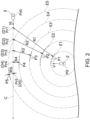
Fig. 2 is a view illustrating one example of a calculation of a separating distance. -
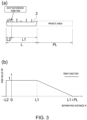
Fig. 3 is a view illustrating one example of a risk function for converting the separating distance into a risk value. -
Fig. 4 is a view illustrating one example of indication of a collision risk zone and a watch zone in the situation ofFig. 2 . -
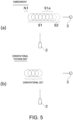
Fig. 5 is a view illustrating the indication of the collision risk zone and the watch zone according to this embodiment, as compared with a conventional indication of OZT. -
Fig. 6 is a block diagram illustrating an electric configuration of a ship maneuver supporting device of a second embodiment. - Next, embodiments of the present disclosure are described with reference to the drawings.
Fig. 1 is a block diagram illustrating an electric configuration of a shipmaneuver supporting device 1. - First, a first embodiment is described. The ship
maneuver supporting device 1 of the first embodiment illustrated inFig. 1 may be provided to a ship (hereinafter, referred to as "the ship" or "this ship") which travels on a water surface. - The ship
maneuver supporting device 1 may be connected to adisplay unit 5. Thedisplay unit 5 may be constituted, for example, as a liquid crystal display, and display information for supporting ship navigation. The shipmaneuver supporting device 1 may generate display data for displaying a collision risk zone and a watch zone on thedisplay unit 5, and output it to thedisplay unit 5. - The collision risk zone may be a zone where the possibility of a collision between this ship and another ship will occur in the future is high. The watch zone may be a zone where, although the possibility of the collision is low, the possibility of another ship entering into a private area, which is set based on a relationship with this ship, in the future is high. These zones may be to indicate, in response to a course change in the ship, an area (OZT) where the ship is to be impeded by another ship on a scheduled course of another ship, and may be calculated by a different method from
Nonpatent Document 1. The details of the collision risk zone and the watch zone will be described later. - The ship
maneuver supporting device 1 may include an other shipdata processing module 11, a shipdata processing module 21, alength setting memory 26, acalculation processing module 31, and a displaydata generating module 41. - In detail, the ship
maneuver supporting device 1 may be constituted as a known computer, and may be comprised of a CPU, a ROM, and a RAM. The ROM may store a program for generating the display data of the collision risk zone and the watch zone which are described above. By collaboration of the hardware and software described above, the shipmaneuver supporting device 1 can be operated as the other shipdata processing module 11, the shipdata processing module 21, thelength setting memory 26, thecalculation processing module 31, the displaydata generating module 41, etc. - The other ship
data processing module 11 may acquire data necessary for the indication of the collision risk zones and the watch zones related to other ships which exist around the ship. The other shipdata processing module 11 may include an other shipdata acquiring module 12 and an other ship futureposition estimating module 13. - As illustrated in
Fig. 2 by a relationship between a ship 2 (the ship) and anothership 3, the other shipdata acquiring module 12 may acquire an other ship position Pr0 which is the current position of the anothership 3, and an other ship velocity vector Vt which is a ship velocity vector of theanother ship 3. - In detail, the ship
maneuver supporting device 1 ofFig. 1 may be connected to a radar device (not illustrated) which detects the periphery of theship 2 and generate a radar image. This radar device may have a TT (Target Tracking) function which is a technique for detecting and tracking the motion of a detected target object (another ship 3). Describing briefly since the TT function is known, the TT function acquires the position and the velocity vector of the target object (another ship 3) which exists around the ship by a calculation based on a transition of the past radar images. - The radar device may output, as the position and the velocity of the
another ship 3, a position of a representative point and a velocity. As the position of the representative point, a position of the center of an echo image of theanother ship 3 which appears in the radar image may be used, for example. - Although the radar device acquires the relative position and velocity of the
another ship 3 on the basis of theship 2, the position and the velocity vector of theanother ship 3 which are inputted into the other shipdata acquiring module 12 may be converted beforehand into ground-based values, based on the position and the heading of theship 2 which are obtained by a suitable measure (for example, a known GNSS positioning device and a known direction sensor). The other shipdata acquiring module 12 may output the acquired other ship position Pr0 and the other ship velocity vector Vt to the other ship futureposition estimating module 13, for every detected target object. - The other ship future
position estimating module 13 may estimate a future position of the anothership 3. The obtained estimated position of the anothership 3 may serve as a positional reference for determining whether the collision risk zone and the watch zone are to be displayed on this position. In the following description, this position may be referred to as a "determination point." - Below, it is described in detail. As illustrated in
Fig. 2 , the other ship futureposition estimating module 13 may determine a plurality of future time points T1, T2, ... at a suitable time interval ΔT from a reference time point T0 (in detail, the current time) which is a time point when the position and the velocity of the anothership 3 are obtained, as a starting point. Then, the other ship futureposition estimating module 13 may estimate other ship positions Pr1, Pr2, ... at the future time points T1, T2, ... described above, based on the position and the traveling speed of the another ship 3 (other ship position Pr0 and other ship velocity vector Vt) at the reference time point T0. The other ship positions Pr1, Pr2, ... calculated by the estimation may become determination points D1, D2, ... - When calculating the other ship positions Pr1, Pr2, ... (determination points D1, D2, ...), the other ship future
position estimating module 13 may assume that the anothership 3 moves from the other ship position Pr0, while maintaining the magnitude and the direction of the other ship velocity vector Vt which are acquired at the reference time point T0. That is, it may be considered that the anothership 3 continues traveling at the same course and the same traveling speed as those at the reference time point T0. Therefore, the other ship positions Pr1, Pr2, ... can be calculated easily. - As illustrated in
Fig. 2 , the other ship positions Pr1, Pr2, ... may be defined, at a suitable interval, so as to be lined up on a straight-line course C which is a line extending the other ship velocity vector Vt from the other ship position Pr0. Although in the example ofFig. 2 the other ship positions Pr1, Pr2, ... are lined up at an equal interval, it is one example and the details will be described later. The other ship futureposition estimating module 13 may output data indicative of the acquired positions of the other ship positions Pr1, Pr2, ... (determination points D1, D2, ...) to thecalculation processing module 31 and the displaydata generating module 41. - The ship
data processing module 21 may acquire, regarding theship 2, data necessary for the indication of the collision risk zone and the watch zone. The shipdata processing module 21 may include a shipdata acquiring module 22 and a ship futureposition estimating module 23. - The ship
data acquiring module 22 may accept inputs of data related to a ship position P0 which is the position of the ship, and a ship velocity vector V. - The ship position P0 may be the current position of the
ship 2. The shipmaneuver supporting device 1 may be connected to a GNSS positioning device (not illustrated), and the shipdata acquiring module 22 may be capable of acquiring the ship position P0 which is the position of theship 2 based on the positioning result inputted from the GNSS positioning device. - The ship velocity vector V may be the current traveling speed of the
ship 2. The shipdata acquiring module 22 may be capable of acquiring the ship velocity vector V which is a traveling speed of theship 2 by calculating a change in the position obtained from the GNSS positioning device. - The ship position P0 and the ship velocity vector V may mean the representative point of the ship 2 (in detail, a position of a location to which the GNSS antenna (not illustrated) is attached), and the velocity. The ship
data acquiring module 22 may output the acquired ship position P0 and ship velocity vector V, to the ship futureposition estimating module 23. - The ship future
position estimating module 23 may estimate future positions of the ship at the plurality of time points T1, T2, ... which are described for the other ship futureposition estimating module 13. The estimated ship positions P1, P2, ... may correspond to the other ship positions Pr1, Pr2, ... estimated by the other ship futureposition estimating module 13 at the time points T1, T2, ..., respectively. - When calculating the ship positions P1, P2, ..., the ship future
position estimating module 23 may assume that the magnitude of the ship velocity vector V acquired at the reference time point T0 is constant, but the direction of the ship velocity vector V changed to an arbitrary direction at the reference time point T0, and, after that, theship 2 continues traveling from the ship position P0 in the fixed direction. That is, it may be considered that theship 2 defines the course arbitrarily at the ship position P0, but, after that, it continues traveling on the course at the same traveling speed. Therefore, the estimated ship positions P1, P2, ... may all be located on concentric circles centering on the ship position P0 at the reference time point T0. - In
Fig. 2 , as for the ship positions P1, P2, ..., some of the many estimated positions are illustrated by small circles. The radii of the circles where the estimated ship positions P1, P2, ... are disposed (hereinafter, may also be referred to as "ship position candidate circles E1, E2, ...") may be equal to a product of times from the reference time point T0 to the respective time points T1, T2, ... and the magnitude of the ship velocity vector V. - Thus, the ship future
position estimating module 23 ofFig. 1 may calculate the ship position candidate circles E1, E2, ... at the time points T1, T2, ..., respectively. The ship futureposition estimating module 23 may output data related to the ship position candidate circles E1, E2, ... to thecalculation processing module 31 as the estimated ship positions P1, P2, ..., respectively. - The
length setting memory 26 may store a ship length L and a private length PL. - As illustrated in
Fig. 3(a) , the ship length L may be a full length of theship 2 in the front-and-rear direction. The ship length L may indicate a physical size of theship 2 in the front-and-rear direction. In this embodiment, if anothership 3 exists within a range of the ship length L, it is considered that a collision will occur between theship 2 and the anothership 3. Note that the ship position P0 which is acquired by the shipdata acquiring module 22, and the ship positions P1, P2, ... estimated by the ship futureposition estimating module 23 may mean an attaching position of the GNSS antenna described above to the ship body, and this position (the representative point described above, and hereinafter, it is referred to as "the ship reference position") may be normally located at an intermediate part of the ship length L. Therefore, the parameter of the ship length L may be a combination of a length L1 from the ship reference position to the bow and a length L2 from the ship reference position to the stern. The two lengths L1 and L2 may be suitably set to the shipmaneuver supporting device 1 in advance. - The private length PL may mean the length of the private area (watch area) in the front-and-rear direction, where the physical contact between the
ship 2 and the anothership 3 does not occur because the private length PL is not included in the ship length L, but the ship operator feels that the entry of the anothership 3 into the private area is mentally unpreferred. The private area can be taken as a personal area where, when considering a distance from one person to another, the person becomes cautious if another person approaches the person from front or rear. The private length PL may be set, by the ship operator, as an arbitrary length at least on the front side or the rear side of the ship length L. For example, the ship operator can set the private length PL of 0.5NM (nautical mile) long on the front side of the ship length L. - The
length setting memory 26 illustrated inFig. 1 may output the stored ship length L and private length PL to thecalculation processing module 31. - Next, the
calculation processing module 31 is described. Thecalculation processing module 31 may determine by a calculation whether the collision risk zone or the watch zone is to be displayed at each of the determination points D1, D2, ... as described above using the data outputted from the other shipdata processing module 11 and the shipdata processing module 21. - The
calculation processing module 31 may include a separatingdistance calculating module 32, arisk calculating module 33, and a zonedisplay determining module 34. - The separating
distance calculating module 32 may calculate separating distances R1, R2, ... which are distances between the other ship positions Pr1, Pr2, ... where an arrival is estimated for the respective future time points T1, T2, ..., and corresponding ship positions P1, P2, ... - Since the separating distances R1, R2, ... are for evaluating the risk of a collision, it is rational to consider a case where the
ship 2 and anothership 3 approach each other the most, among various anticipated cases. Thus, for example, upon a calculation of the separating distance R1 at the time point T1, the separatingdistance calculating module 32 may select a position which is the closest to the other ship position Pr1 at the time point T1, from the large number of ship positions P1 estimated for the time point T1. - In
Fig. 2 , the ship position P1 selected for the calculation of the separating distance R1 from the large number of estimated ship positions P1 is illustrated by a black circle. The separating distance R1 may be calculated as a distance between the black-circle position among the ship positions P1, and the other ship position Pr1. - When taking the time point T1 as one example, the separating distance R1 may mean the minimum distance between the point on the ship position candidate circle E1, and the other ship position Pr1. The separating distance R1 at the time point T1 can be calculated easily by calculating a distance between the other ship position Pr1 at the time point T1 and the ship position P0 at the reference time point T0 (the center of the ship position candidate circle E1), and subtracting the radius of the ship position candidate circle E1 from this distance. The separating distances R2, ... at other time points T2, ... are similar.
- Thus, the separating
distance calculating module 32 may calculate a separating distance Rn which is a distance between the future position of theship 2 and the future position of the anothership 3 which are estimated, while considering that the traveling speeds of theship 2 and the anothership 3 are fixed. Therefore, the separating distance Rn can be acquired by the simple geometric calculation. - Since the separating distance Rn can be calculated by the calculation method described above, the value may become not only positive but negative. If the separating distance Rn is positive, it may mean that the ship position Pn is closer to the ship position P0 at the reference time point T0 than the other ship position Prn. If the separating distance Rn is negative, it may mean that the ship position Pn is farther from the ship position P0 at the reference time point T0 than the other ship position Prn. In the example of
Fig. 2 , the separating distances R1, R2, R3, and R4 become positive, and the separating distance R5 becomes negative. - If the separating distance Rn is positive, it may indicate that the another
ship 3 is located on the bow side of theship 2 in the case where theship 2 and the anothership 3 approach each other the most. If the separating distance Rn is negative, it may mean that the anothership 3 is located on the stern side of theship 2 in the case where theship 2 and the anothership 3 approach each other the most. - In this embodiment, in the stage where the separating
distance calculating module 32 calculates the separating distance Rn, theship 2 and the anothership 3 each may be treated as a point, and therefore, their physical sizes may not be taken into the consideration. The separating distance Rn may be expressed as a distance between the ship reference position which is the representative point of theship 2, and the representative point of the anothership 3. - The
risk calculating module 33 ofFig. 1 may calculate risk values (a collision risk value, a watch risk value) RPn which are parameters for determining whether the collision risk zone and the watch zone are to be displayed. In detail, therisk calculating module 33 may convert the separating distances Rn calculated by the separatingdistance calculating module 32 into the risk values RPn, by utilizing a risk function FR defined beforehand. The risk value RPn may be a value of 0 or larger and 1 or smaller, where "0" indicates that there is no possibility of a collision between theship 2 and the anothership 3, and " 1" indicates that theship 2 and anothership 3 will collide. - The risk function FR which the
risk calculating module 33 uses for the calculation may be defined with reference to the stored contents of thelength setting memory 26. InFig. 3(b) , the risk function FR used in this embodiment is illustrated by a graph in which the ship reference position ofFig. 3(a) is the origin, the separating distance R is on the horizontal axis, and the risk value RP is on the vertical axis. - As illustrated in
Fig. 3(b) , when the separating distance R is within a range corresponding to the ship length L (a range of -L2 ≤ R ≤ L1), the value of the risk function FR becomes 1. Further, when the separating distance R is within a range corresponding to the private length PL (L1 < R < L1+PL), the value of the risk function FR becomes a value larger than 0 and smaller than 1, and the value decreases monotonously as the separating distance R increases. When the separating distance R is within a range which does not correspond to either the ship length L or the private length PL (R < -L2, or R ≥ L1+PL), the value of the risk function FR becomes 0. - Thus, in this embodiment, the
risk calculating module 33 may calculate the risk value RP using the risk function FR of which the value becomes 1 within the range where the separating distance R corresponds to the ship length L. Therefore, the possibility of a collision can be evaluated in consideration of the physical length of the ship. - The
risk calculating module 33 may output to the zonedisplay determining module 34 risk values RP1, RP2, ... which are acquired by substituting the separating distances R1, R2, ... in the risk function FR. - The zone
display determining module 34 may determine whether, at each of the determination points D1, D2, ..., the collision risk zone is to be displayed, the watch zone is to be displayed, or none of them is to be displayed, according to the risk values RP1, RP2, ... outputted from therisk calculating module 33. - In detail, if the risk value RPn outputted from the
risk calculating module 33 is 1, the zonedisplay determining module 34 may determine that the collision risk zone is necessary to be displayed. If the risk value RP outputted from the risk value RP is smaller than 1 but larger than 0, the zonedisplay determining module 34 may determine that the watch zone is necessary to be displayed. If the risk value RP is 0, the zonedisplay determining module 34 may determine that neither the collision risk zone nor the watch zone is necessary to be displayed. - Thus, according to the
calculation processing module 31 of this embodiment, the probability distribution may be calculated not considering the velocity error which is used conventionally for the OZT. That is, thecalculation processing module 31 may consider that there is no error between the ship velocity vector V and the other ship velocity vector Vt, and simply determine whether the collision risk zone and the watch zone are to be displayed based on whether the positional relationship between the reference position of theship 2 and the representative point of the anothership 3 which is expressed by the separating distance Rn falls within the range of the ship length L, or falls within the range of the private length PL. Therefore, the computational complexity required for the determination can be reduced remarkably. - Next, the display
data generating module 41 is described.Fig. 4 is a view illustrating one example of the indication of acollision risk zone 91 and awatch zone 92 in the situation ofFig. 2 .Fig. 5 is a view illustrating the indication of thecollision risk zone 91 and thewatch zone 92 according to this embodiment, as compared with the conventional indication of OZT. - The display
data generating module 41 may generate display data for displaying information for supporting the ship operator on thedisplay unit 5, and output it to thedisplay unit 5 via a suitable interface. - In
Fig. 4 , one example of a display screen in thedisplay unit 5 is illustrated. As illustrated inFig. 4 , the displaydata generating module 41 may generate display data diagrammatically indicating the position and the speed of theship 2, the position and the speed of the anothership 3, etc. The displaydata generating module 41 may further display thecollision risk zone 91 or thewatch zone 92 at each of the determination points D1, D2, ... according to the determination result of the zonedisplay determining module 34. -
Fig. 4 illustrates one example of the indication of thedisplay unit 5 in the situation ofFig. 2 , where the risk value RP4 corresponding to the separating distance R4 is 1, the risk value corresponding to the separating distance R3 is 0.3, and the risk values corresponding to other respective separating distances R1, R2, and R5 are 0. - As illustrated in
Fig. 4 , a symbol indicative of thecollision risk zone 91 is displayed at the determination point D4, and a symbol indicative of thewatch zone 92 is displayed at the determination point D3. No symbol is displayed at other determination points D1, D2, and D5. Note that, since the determination points D1, D2, ... are points for being used as references of the calculation, they are illustrated inFig. 4 for explanation, but they will not actually be displayed on the screen. - The
collision risk zone 91 and thewatch zone 92 may be displayed as circular symbols centering on the determination point Dn. The size of the circle may be determined suitably so that it does not become excessively small. For example, the size of the circle may be set so that its diameter becomes equal to the ship length L. - For example, when the circular symbols of the
collision risk zones 91 are displayed at two adjacent determination points Dn, it is not desirable that a gap is produced between the circles. Therefore, the time interval ΔT for the other ship futureposition estimating module 13 calculating the determination point Dn may be defined so that the distance between the adjacent determination points Dn is fully shortened in consideration of the size of the circular symbol and the magnitude of the other ship velocity vector Vt. Therefore, the area (two-dimensional) continuity of the indication of thecollision risk zone 91 or thewatch zone 92 can be secured. - Since all of the ship position P0, the ship velocity vector V, the other ship position Pr0, and the other ship velocity vector Vt which are inputted into the ship
maneuver supporting device 1 vary every moment, the indication of thecollision risk zone 91 and thewatch zone 92 may need to be updated on real time according to the variation. Further, there may not be just one anothership 3 but may be a plurality ofother ships 3 around theship 2, and in this case, the display processing of thecollision risk zone 91 and thewatch zone 92 may have to be performed for each of theother ships 3. Therefore, it is important to reduce the calculation load required for the processing. - Although the other ship future
position estimating module 13 can theoretically generate an infinite number of determination points Dn, the calculation load will become too heavy if the number of the determination points Dn becomes large. Thus, in this embodiment, a given determination limit distance may be defined so that the positions of the determination points Dn outputted from the other ship futureposition estimating module 13 are limited within the determination limit distance from the other ship position Pr0. Therefore, the calculation load can be prevented from being too large. - Note that, in this embodiment, the computational complexity which is required for determining whether the
collision risk zone 91 and thewatch zone 92 are to be displayed at each determination point Dn is reduced compared with the conventional technique, as described above. Therefore, even when the distance between the adjacent determination points Dn is shortened or the determination limit distance is extended to generate the large number of determination points Dn, the processing can be performed satisfactorily on real time. Therefore, the resolution of displaying thecollision risk zone 91 and thewatch zone 92 can be increased, or the indication of thecollision risk zone 91 and thewatch zone 92 based on the estimation of more advanced future can be performed. - In the display data generated by the display
data generating module 41, the color displayed on thedisplay unit 5 can be differentiated between thecollision risk zone 91 and thewatch zone 92. InFig. 4 , the differentiation of the display color between thecollision risk zone 91 and thewatch zone 92 is illustrated by a solid line and a broken line, for the sake of expressing in the drawing. Therefore, since the ship operator can clearly distinguish the area where the possibility of a collision with anothership 3 is high, and the area where the collision will not occur but the possibility of anothership 3 coming into the private length PL is high, he/she can easily understand the situation. - Note that, it is not limited to changing the color for changing the indication on the display unit between the
collision risk zone 91 and thewatch zone 92. For example, between thecollision risk zone 91 and thewatch zone 92, the differentiation may be the existence of painting out the inside of the zone, or a variation in the transparency or the pattern of the painting-out zones. As illustrated inFig. 4 , the contours of the symbols of the zones may be differentiated by a solid line, a broken line, etc. Further, it may be configured so that the ship operator can distinguish between thecollision risk zone 91 and thewatch zone 92 by adding character(s), a sign, or a small mark to the zone symbol. - The
watch zone 92 may correspond to the case where the risk value RP is larger than 0 and smaller than 1, and the displaydata generating module 41 may generate, for thewatch zone 92, the display data which differentiates the indication mode according to the risk value RP. For example, as the risk value RP becomes smaller, the transparency of the contour of the displayedwatch zone 92 or the painting out of the inside may be increased gradually. Alternatively, thecollision risk zone 91 may be displayed in red, and thewatch zone 92 may be changed in the display color so that the red is changed gradually to yellow as the risk value RP becomes smaller. - Instead of displaying uniformly when the risk value RP is larger than 0 and smaller than 1, the indication of the watch zone may only be performed when the risk value RP is larger than a given threshold set by the ship operator. Therefore, the indication according to the preference of the ship operator can be realized.
- Note that the
collision risk zone 91 and thewatch zone 92 may be displayed in the completely same mode. - As described above, in this embodiment, the evaluation of the collision risk in consideration of the ship length L may be performed using the risk function FR. That is, it may not treat the
ship 2 as a point but as an elongated straight line in the front-and-rear direction with the ship length L. Therefore, for example, even when the ship length L corresponds to a fairly long large-sized ship, the high-risk area of the collision can be displayed at an appropriate position in consideration of the actual size of the ship. -
Fig. 5 illustrates, under the same situation, a comparison of the indication between thecollision risk zones 91 of this embodiment and the conventional OZT. As illustrated inFig. 5(a) , thecollision risk zone 91 of this embodiment may extend to the side closer to the another ship 3 (anextended part 91e), more than the conventional OZT illustrated inFig. 5(b) , as a result of taking the ship length L into consideration. This indication illustrates that, when taking the actual ship length L into consideration, theship 2 should not be navigated to the part which overlaps with the conventional OZT and to theextended part 91e which spreads therefrom, in order to avoid the collision with the anothership 3. - In the indication example of this embodiment illustrated in
Fig. 5(a) , thewatch zone 92 accompanying having set the private length PL forward of theship 2 is displayed on the side closer to the anothership 3 than thecollision risk zone 91. This indication illustrates that, if the ship is navigated to thewatch zone 92, the possibility that the anothership 3 will enter into the area corresponding to the private length PL forward of theship 2 is high. - Note that, in the indication example of this embodiment illustrated in
Fig. 5(a) , thecollision risk zone 91 is not displayed at a location N1 corresponding to the circle at the left end of the conventional OZT illustrated inFig. 5(b) . This is a result of that, in this embodiment, the length L2 of the part on the stern side from the ship reference position among the ship length L is considerably short, and therisk calculating module 33 appropriately took this into consideration. Although the example ofFig. 5(a) illustrates a case where the private length PL is not set rearward of theship 2, if the rearward private length PL is set suitably, thewatch zone 92 will be displayed at the location N1 described above. - In the above description, the collision risk may be evaluated while considering that the position of the radar antenna provided to the radar device is the same as the position of the GNSS antenna of the GNSS positioning device (in other words, the ship reference position). However, when the distance between the attaching position of the radar antenna and the attaching position of the GNSS antenna cannot be ignored, it may be desirable to recalculate the other ship position acquired by the other ship
data acquiring module 12 so that the position of the GNSS antenna becomes a reference, thereby enabling a more accurate collision calculation. On the other hand, the ship reference position may be determined so that it is in agreement with the position of the radar antenna, not the position of the GNSS antenna. In this case, the ship position etc. acquired by the other shipdata processing module 11 may be recalculated so that the position of the radar antenna becomes a reference. - As described above, the ship
maneuver supporting device 1 of this embodiment may include the other shipdata acquiring module 12, the other ship futureposition estimating module 13, the shipdata acquiring module 22, the ship futureposition estimating module 23, therisk calculating module 33, and the displaydata generating module 41. The other shipdata acquiring module 12 may acquire the information on the position and the velocity of another ship 3 (the other ship position Pr0 and the other ship velocity vector Vt). The other ship futureposition estimating module 13 may estimate the other ship positions Pr1, Pr2, ... at the plurality of future time points T1, T2, ... when the anothership 3 continues traveling on the same course and at the same traveling speed, based on the other ship position Pr0 and the other ship velocity vector Vt which are acquired by the other shipdata acquiring module 12. The shipdata acquiring module 22 may acquire the information on the position and the velocity of the ship 2 (the ship position P0 and the ship velocity vector V). The ship futureposition estimating module 23 may estimate the ship positions P1, P2, ... corresponding to the other ship positions Pr1, Pr2, ... estimated by the other ship futureposition estimating module 13, when theship 2 continues traveling on the course which is arbitrarily defined at the ship position P0 and at the same traveling speed, based on the ship position P0 and the ship velocity vector V which are acquired by the shipdata acquiring module 22. Therisk calculating module 33 may calculate the risk value RP for determining whether thecollision risk zone 91 which is the zone where the possibility of the collision between theship 2 and the anothership 3 will occur in the future is high is to be displayed based on the separating distances R1, R2, ... between the other ship positions Pr1, Pr2, ... estimated at the respective time points T1, T2, ..., and the ship positions P1, P2, ... estimated corresponding thereto. The displaydata generating module 41 may generate the display data for displaying thecollision risk zones 91 at the estimated other ship positions Pr1, Pr2, ... based on the determination using the risk value RP. - Therefore, the
collision risk zone 91 which is the zone where the collision between theship 2 and the anothership 3 will occur in the future can be displayed on thedisplay unit 5, utilizing the size of theship 2, and the separating distances R1, R2, ... between theship 2 and the anothership 3. That is, since the size of theship 2 is taken into consideration, thecollision risk zone 91 which matches with the actual navigation feel of the ship operator can be displayed with higher adequacy. Further, instead of the conventional calculation of the simultaneous existence probability of the ship and the another ship in consideration of the generation of the speed error, the indication determination of thecollision risk zone 91 may be performed based on the separating distances R1, R2, ... between theship 2 and the anothership 3, and thus, the calculation load can be remarkably reduced. - Next, a second embodiment is described.
Fig. 6 is a block diagram illustrating an electric configuration of a shipmaneuver supporting device 1x of the second embodiment. Note that, in the description of the second embodiment, the same reference characters are given in the drawing to members identical or similar to the first embodiment to omit the explanation thereof. - According to the ship
maneuver supporting device 1x of the second embodiment illustrated inFig. 6 , the other shipdata acquiring module 12 may acquire the information on the position and the velocity of the anothership 3 from an AIS device, not from the radar device. The AIS device is an automatic ship identification system for exchanging navigational information between a plurality of ships, which is capable of acquiring data, such as the position, a ground speed, the name, the length, and the width of the anothership 3, and the position of the positioning antenna. - The other ship
data acquiring module 12 may acquire not only the position and the velocity of the anothership 3, but also the information on the length of the anothership 3 and the position of the positioning antenna in the front-and-rear direction. The other shipdata acquiring module 12 may output to therisk calculating module 33 the length of the anothership 3 from the position of the positioning antenna to the bow, and the length from the position of the positioning antenna to the stern, based on the information on the length and the position of the positioning antenna of the anothership 3. - The
risk calculating module 33 may calculate the risk value RP utilizing the ship length L and the private length PL which are acquired from thelength setting memory 26, and the length of the another ship acquired from the other shipdata acquiring module 12. As the risk function FR used in this embodiment, the area of the separating distance R where the risk value RP becomes 1 in the graph ofFig. 3(b) , which is changed so that it is suitably extended in the front-and-rear direction of theship 2 taking the length of the anothership 3 into consideration, may be used. - According to this embodiment, not only regarding the
ship 2 but also regarding anothership 3, it may be treated as an elongated straight line having the length of the anothership 3 in the front-and-rear direction, instead of being treated as a point, and the possibility of a collision is evaluated. Therefore, the indication of thecollision risk zone 91 and thewatch zone 92 can further match with the actual navigation feel of the ship operator. - The information on the another
ship 3 obtained by the AIS may not include the information on the size of the anothership 3. In this case, therisk calculating module 33 can calculate the risk value RP, while uniformly considering that the length of the anothership 3 is equal to the length which is suitably set in advance by the ship operator. - Although the suitable embodiments of the present disclosure are described above, the above configurations may be changed as follows, for example.
- The other ship positions Pr1, Pr2, ... (determination points D1, D2, ...) which are defined by the other ship future
position estimating module 13 on the course C of the other ship position Pr0 are not limited to being lined up at the equal interval like inFig. 2 , but may also be lined up at unequal intervals. For example, considering a plurality of virtual straight lines which radially spread at an equal angular interval from the position of theship 2, the other ship positions Pr1, Pr2, ... may be defined at positions where the virtual straight lines intersect with the course C described above. In this case, the plurality of virtual straight lines can be disposed so that the angular intervals of the virtual straight lines near the current course of the ship 2 (for example, the virtual straight lines within 10° of the left and right of the course of the ship 2) become smaller than the angular intervals of the virtual straight lines outside the angular range. In this case, since the determination points D1, D2, ... can be densely defined in the area where an interfere easily occurs on the present course of theship 2, the spatial resolution for displaying the collision risk zone and the watch zone near the scheduled course of theship 2 can be improved. - As described above, the other ship positions Pr1, Pr2, ... may correspond to the plurality of future time points T1, T2, .... Therefore, depending on how the other ship positions Pr1, Pr2, ... are defined, the sizes of the corresponding ship position candidate circles E1, E2, ... will also be changed.
- The ship reference position is not limited to the position described in the above embodiments, but it may be defined at an arbitrary point of the
ship 2. For example, the ship reference position may be defined at a position used as a turning axis of the ship 2 (a pivoting position of the ship body movement). - In actual navigation, one should pay attention to
other ships 3 which are located forward farther away during a high-speed travel, as compared with the case of a low-speed travel. In consideration of this, the private length PL set especially forward of theship 2 may be changed automatically according to the magnitude of the ship velocity vector V. - According to the second embodiment, in the radar device described in the first embodiment, the other ship
data processing module 11 may acquire the length of the anothership 3 which is acquired from the shape of the echo image tracked by the TT function, not by the AIS. - The indication of the
collision risk zone 91 may be determined not only in consideration of the length of theship 2, but also in consideration of the width. The indication of thewatch zone 92 may be determined not only in consideration of the length of the private area, but also in consideration of the width. Similarly, not only the length of the anothership 3 but also the width may be taken into the consideration. - The risk value (collision risk value) for determining whether the
collision risk zone 91 is to be displayed, and the risk value (watch risk value) for determining whether thewatch zone 92 is to be displayed may be calculated by using separate functions, instead of the common risk function FR. - The
collision risk zone 91 and thewatch zone 92 may be displayed in respective arbitrary modes. For example, instead of the circles centering on the determination points Dn, they may be expressed by a line which connects the determination points Dn. The thickness of the line may be set suitably. - In the risk function FR, the risk value RP of the private length PL may be decreased, for example, in a curved relation, instead of being decreased linearly as illustrated in
Fig. 3(b) . - According to the
calculation processing module 31 in the first embodiment, therisk calculating module 33 may calculate the risk value RP in consideration of the physical size of theship 2. Alternatively, the physical size of theship 2 may be taken into the consideration in the stage where the separatingdistance calculating module 32 calculates the separating distance Rn. For example, the separatingdistance calculating module 32 may consider the length L1 from the ship reference position to the bow, and perform the calculation using the minimum value of the distance between the estimated position of the representative point of the anothership 3 and the estimated future tip-end position of the bow of theship 2, as the separating distance Rn. - The ship
maneuver supporting device 1 may be provided integrally with thedisplay unit 5. -
- 1
- Ship Maneuver Supporting Device
- 11
- Other Ship Data Processing Module
- 32
- Separating Distance Calculating Module
- 33
- Risk Calculating Module
- 41
- Display Data Generating Module
Claims (7)
- A ship maneuver supporting device (1), comprising:an other ship data acquiring module (12) that is configured to acquire information on a position (Pr0) and a velocity (Vt) of a second ship (3);an other ship future position estimating module (13) that is configured to estimate, based on the position (Pr0) and the velocity (Vt) of the second ship (3) acquired by the other ship data acquiring module (12), future positions (D1, ..., D5) of the second ship (3) at a plurality of future time points when the second ship (3) continues traveling on the same course at the same traveling speed;a ship data acquiring module (22) that is configured to acquire information on a position (P0) and a velocity (V) of a first ship (2);a ship future position estimating module (23) that is configured to estimate, based on the position (P0) and the velocity (V) of the first ship (2) acquired by the ship data acquiring module (22), for each of the future positions (D1, ..., D5) of the second ship and at the same future time point at which said future position of the second ship (2) has been estimated, a plurality of future positions (P1, ..., P5) that the first ship (2) could reach when the first ship (2) continues traveling on a course arbitrarily defined at the position (P0) of the first ship, at the same traveling speed;a risk calculating module (33) that is configured to calculate for each of the future positions (D1, ..., D5) of the second ship (3) a collision risk value for determining whether a collision risk zone (91) that is a zone where a possibility of a collision between the first ship (2) and the second ship (3) will occur in the future is high is to be displayed, based on a separating distance (R1, ..., R5) between the future position (D1, ..., D5) of the second ship (3) and the closest future position (P1, ..., P5) of the first ship (2) estimated at the same future time point as said future position (D1, ..., D5) of the second ship (3); anda display data generating module (41) that is configured to generate display data for displaying the collision risk zone (91) at the estimated future position (D1, ..., D5) of the second ship (3), based on the determination using the collision risk value.
- The ship maneuver supporting device (1) of claim 1, wherein
the separating distance (R1, ..., R5) is calculated as a minimum distance between the future position (D1, ..., D5) of the second ship (3) estimated at each of the time points and the future position (P1, ..., P5) of the first ship (2) estimated at the same future time point as said future position (D1, ..., D5) of the second ship (3). - The ship maneuver supporting device (1) of claim 1 or 2, wherein
the risk calculating module (33) is configured to calculate the collision risk value in consideration of a physical size of at least one of the first ship (2) and the second ship (3). - The ship maneuver supporting device (1) of any one of claims 1 to 3, whereinin consideration of a physical size of the first ship (2), and a size of a watch area that is set forward and/or rearward of the first ship (2), the risk calculating module (33) is capable of calculating a watch risk value for determining whether a watch zone (92) that is a zone where a possibility that the second ship (3) will enter into the watch area in the future is high is to be displayed, based on the separating distance (R1, ..., R5), andthe display data generating module (41) is capable of generating display data for displaying the watch zone (92) at the estimated future position (D1, ..., D5) of the second ship (3) so that the watch zone (92) is distinguishable from the collision risk zone (91), based on the determination using the watch risk value.
- The ship maneuver supporting device (1) of claim 4, wherein
the display data generating module (41) is configured to generate the display data for displaying the watch zone (92), when the watch risk value is above a given threshold. - The ship maneuver supporting device (1) of claim 4 or 5, wherein
the collision risk zone (91) and the watch zone (92) displayed based on the display data are different from each other at least in color. - The ship maneuver supporting device (1) of any one of claims 4 to 6, wherein
the size of the watch area varies according to a traveling speed of the first ship (2).
Applications Claiming Priority (2)
| Application Number | Priority Date | Filing Date | Title |
|---|---|---|---|
| JP2020007183 | 2020-01-20 | ||
| PCT/JP2020/048156 WO2021149447A1 (en) | 2020-01-20 | 2020-12-23 | Maneuvering assistance device |
Publications (3)
| Publication Number | Publication Date |
|---|---|
| EP4095030A1 EP4095030A1 (en) | 2022-11-30 |
| EP4095030A4 EP4095030A4 (en) | 2024-01-24 |
| EP4095030B1 true EP4095030B1 (en) | 2025-07-09 |
Family
ID=76992291
Family Applications (1)
| Application Number | Title | Priority Date | Filing Date |
|---|---|---|---|
| EP20915571.2A Active EP4095030B1 (en) | 2020-01-20 | 2020-12-23 | Maneuvering assistance device |
Country Status (6)
| Country | Link |
|---|---|
| US (1) | US12473059B2 (en) |
| EP (1) | EP4095030B1 (en) |
| JP (2) | JP7635162B2 (en) |
| KR (1) | KR20220128424A (en) |
| CN (1) | CN114930427B (en) |
| WO (1) | WO2021149447A1 (en) |
Families Citing this family (7)
| Publication number | Priority date | Publication date | Assignee | Title |
|---|---|---|---|---|
| JP2021142788A (en) * | 2020-03-10 | 2021-09-24 | トヨタ自動車株式会社 | Operation support system |
| EP4234385A4 (en) * | 2020-10-23 | 2024-07-17 | Furuno Electric Co., Ltd. | Ship monitoring system, ship monitoring method, information processing device, and program |
| WO2022249632A1 (en) * | 2021-05-26 | 2022-12-01 | 古野電気株式会社 | Ship monitoring device, ship monitoring method, and program |
| CN113744569B (en) * | 2021-11-03 | 2022-02-18 | 武汉理工大学 | Method, system, equipment and storage medium for autonomous collision avoidance of ships in open water |
| EP4290495A1 (en) | 2022-06-09 | 2023-12-13 | Furuno Electric Co., Ltd. | Obstruction zone generation device and method |
| CN116161198B (en) * | 2023-02-16 | 2025-12-02 | 武汉理工大学 | A multi-sensor wireless acquisition and transmission system and method for ship collision data |
| JP2025119644A (en) * | 2024-02-02 | 2025-08-15 | 古野電気株式会社 | Navigation support system, navigation support method, and program |
Family Cites Families (25)
| Publication number | Priority date | Publication date | Assignee | Title |
|---|---|---|---|---|
| JPS62117100A (en) * | 1985-11-18 | 1987-05-28 | 日本鋼管株式会社 | Refuge navigation judgement aid |
| JPH08235500A (en) * | 1995-02-23 | 1996-09-13 | Oki Electric Ind Co Ltd | Collision prevention support device |
| US5860605A (en) * | 1996-10-11 | 1999-01-19 | Johannes Petrus Andreas Josephus Van Der Zanden | Method and device for synchronously making material collide |
| JP4055915B2 (en) * | 1997-10-23 | 2008-03-05 | 日本無線株式会社 | Automatic collision prevention assist device |
| JP3777411B2 (en) | 2003-08-08 | 2006-05-24 | 今津隼馬 | Ship navigation support device |
| JP4445313B2 (en) | 2004-04-01 | 2010-04-07 | 古野電気株式会社 | Ship navigation support device |
| US20060290562A1 (en) * | 2005-05-05 | 2006-12-28 | Ehresoft Technologies | Maritime contact management and collison avoidance systems and methods |
| JP4375308B2 (en) * | 2005-08-30 | 2009-12-02 | 日本電気株式会社 | Ridge direction extraction device, ridge direction extraction method, ridge direction extraction program |
| US8423278B2 (en) * | 2008-11-19 | 2013-04-16 | Furuno Electric Company Limited | Navigation aid method, device and program |
| JP5415145B2 (en) * | 2009-05-13 | 2014-02-12 | 古野電気株式会社 | Radar equipment |
| JP2011060179A (en) * | 2009-09-14 | 2011-03-24 | National Institute Of Advanced Industrial Science & Technology | Steering control method |
| JP2013028296A (en) | 2011-07-29 | 2013-02-07 | Ship & Ocean Foundation | Ship navigation support device |
| US10431099B2 (en) * | 2014-02-21 | 2019-10-01 | FLIR Belgium BVBA | Collision avoidance systems and methods |
| KR101647743B1 (en) * | 2015-07-07 | 2016-08-11 | 한국해양과학기술원 | Navigation system of ships for avoiding collision using time series graphic interface |
| JP2017041071A (en) * | 2015-08-19 | 2017-02-23 | 古野電気株式会社 | Display device for ship |
| CN105184480A (en) * | 2015-09-01 | 2015-12-23 | 中国南方电网有限责任公司超高压输电公司广州局 | Assessment method for latent anchor damage caused by ships to submarine cables, and control system |
| JP6953108B2 (en) * | 2015-09-08 | 2021-10-27 | 古野電気株式会社 | Information display device and information display method |
| US11262449B2 (en) * | 2016-05-26 | 2022-03-01 | Furuno Electric Co., Ltd. | Signal processing device and radar device |
| WO2018193596A1 (en) * | 2017-04-20 | 2018-10-25 | 富士通株式会社 | Collision risk calculation program, collision risk calculation method, and collision risk calculation device |
| KR101902730B1 (en) * | 2018-02-12 | 2018-09-28 | 목포해양대학교 산학협력단 | Ship collision avoidance method using psychological character of ship officer |
| JP6618562B2 (en) * | 2018-03-22 | 2019-12-11 | 東京計器株式会社 | Ship navigation support device |
| CN108711312B (en) * | 2018-05-24 | 2020-09-01 | 大连海事大学 | Prediction method of collision risk between ships and static objects based on BP neural network |
| JP6901431B2 (en) | 2018-05-25 | 2021-07-14 | 株式会社本間組 | Construction vessel operation management system |
| JP7138706B2 (en) * | 2018-07-06 | 2022-09-16 | 古野電気株式会社 | display data generator |
| JP2025117100A (en) | 2024-01-30 | 2025-08-12 | 株式会社Magnolia White | Stretchable Device |
-
2020
- 2020-12-23 JP JP2021573027A patent/JP7635162B2/en active Active
- 2020-12-23 CN CN202080090828.4A patent/CN114930427B/en active Active
- 2020-12-23 EP EP20915571.2A patent/EP4095030B1/en active Active
- 2020-12-23 WO PCT/JP2020/048156 patent/WO2021149447A1/en not_active Ceased
- 2020-12-23 KR KR1020227028359A patent/KR20220128424A/en active Pending
-
2022
- 2022-07-20 US US17/868,860 patent/US12473059B2/en active Active
-
2025
- 2025-02-12 JP JP2025020620A patent/JP7799104B2/en active Active
Also Published As
| Publication number | Publication date |
|---|---|
| WO2021149447A1 (en) | 2021-07-29 |
| JP7635162B2 (en) | 2025-02-25 |
| EP4095030A4 (en) | 2024-01-24 |
| CN114930427B (en) | 2025-10-28 |
| JPWO2021149447A1 (en) | 2021-07-29 |
| CN114930427A (en) | 2022-08-19 |
| EP4095030A1 (en) | 2022-11-30 |
| JP7799104B2 (en) | 2026-01-14 |
| US20220348297A1 (en) | 2022-11-03 |
| US12473059B2 (en) | 2025-11-18 |
| KR20220128424A (en) | 2022-09-20 |
| JP2025067946A (en) | 2025-04-24 |
Similar Documents
| Publication | Publication Date | Title |
|---|---|---|
| EP4095030B1 (en) | Maneuvering assistance device | |
| JP7270812B2 (en) | Collision warning device and collision warning method | |
| US20230406461A1 (en) | Navigation route planning apparatus and navigation route planning method | |
| EP2590152B1 (en) | Device for estimating vehicle travel path | |
| US9031771B2 (en) | Method and system for determining a position and/or orientation of a displaceable load | |
| US11443637B2 (en) | Proximity sensing system and method for a marine vessel | |
| CN114942430B (en) | Method and system for multi-hypothesis based fusion of sensor data | |
| JP2019196970A (en) | Own vehicle position estimating device | |
| JP7431194B2 (en) | Tidal flow display device based on augmented reality | |
| US20240087459A1 (en) | Ship monitoring device, ship monitoring method and a non-transitory computer-readable medium | |
| CN119296380A (en) | Route planning system and route planning method | |
| JP7842085B2 (en) | Ship monitoring system, ship monitoring method, information processing device, and program | |
| JP2025120028A (en) | Route planning system and route planning method | |
| US12391346B2 (en) | Obstruction zone generation device and method | |
| CN119301474A (en) | Marine environment sensing system | |
| WO2024057826A1 (en) | Navigation supporting device, navigation supporting system, navigation supporting method, and navigation supporting program | |
| JPH0431439B2 (en) | ||
| EP4365631A1 (en) | A radar system for 3d ego motion estimation | |
| JP7750661B2 (en) | Information processing device, control method, program, and storage medium | |
| US20250201130A1 (en) | Navigation assistance device and navigation assistance method | |
| US20250198764A1 (en) | Navigation assistance device and navigation assistance method | |
| CN119053514A (en) | Information processing device, control method, program, and storage medium | |
| JPH0347713B2 (en) |
Legal Events
| Date | Code | Title | Description |
|---|---|---|---|
| STAA | Information on the status of an ep patent application or granted ep patent |
Free format text: STATUS: THE INTERNATIONAL PUBLICATION HAS BEEN MADE |
|
| PUAI | Public reference made under article 153(3) epc to a published international application that has entered the european phase |
Free format text: ORIGINAL CODE: 0009012 |
|
| STAA | Information on the status of an ep patent application or granted ep patent |
Free format text: STATUS: REQUEST FOR EXAMINATION WAS MADE |
|
| 17P | Request for examination filed |
Effective date: 20220818 |
|
| AK | Designated contracting states |
Kind code of ref document: A1 Designated state(s): AL AT BE BG CH CY CZ DE DK EE ES FI FR GB GR HR HU IE IS IT LI LT LU LV MC MK MT NL NO PL PT RO RS SE SI SK SM TR |
|
| DAV | Request for validation of the european patent (deleted) | ||
| DAX | Request for extension of the european patent (deleted) | ||
| REG | Reference to a national code |
Ref country code: DE Free format text: PREVIOUS MAIN CLASS: B63B0043180000 Ref country code: DE Ref legal event code: R079 Ref document number: 602020054404 Country of ref document: DE Free format text: PREVIOUS MAIN CLASS: B63B0043180000 Ipc: G05D0001020000 |
|
| A4 | Supplementary search report drawn up and despatched |
Effective date: 20240104 |
|
| RIC1 | Information provided on ipc code assigned before grant |
Ipc: G01S 13/937 20200101ALI20231221BHEP Ipc: G01C 21/20 20060101ALI20231221BHEP Ipc: G01S 13/66 20060101ALI20231221BHEP Ipc: G01S 7/12 20060101ALI20231221BHEP Ipc: B63B 79/40 20200101ALI20231221BHEP Ipc: G08G 3/02 20060101ALI20231221BHEP Ipc: B63B 43/18 20060101ALI20231221BHEP Ipc: G05D 1/02 20200101AFI20231221BHEP |
|
| REG | Reference to a national code |
Ref country code: DE Free format text: PREVIOUS MAIN CLASS: G05D0001020000 Ref country code: DE Ref legal event code: R079 Ref document number: 602020054404 Country of ref document: DE Free format text: PREVIOUS MAIN CLASS: G05D0001020000 Ipc: G05D0001000000 |
|
| RIC1 | Information provided on ipc code assigned before grant |
Ipc: G01S 13/937 20200101ALI20241219BHEP Ipc: G01S 13/66 20060101ALI20241219BHEP Ipc: G01S 7/12 20060101ALI20241219BHEP Ipc: G01C 21/20 20060101ALI20241219BHEP Ipc: G08G 3/02 20060101ALI20241219BHEP Ipc: B63B 79/40 20200101ALI20241219BHEP Ipc: B63B 43/18 20060101ALI20241219BHEP Ipc: G05D 1/00 20060101AFI20241219BHEP |
|
| GRAP | Despatch of communication of intention to grant a patent |
Free format text: ORIGINAL CODE: EPIDOSNIGR1 |
|
| STAA | Information on the status of an ep patent application or granted ep patent |
Free format text: STATUS: GRANT OF PATENT IS INTENDED |
|
| INTG | Intention to grant announced |
Effective date: 20250205 |
|
| GRAS | Grant fee paid |
Free format text: ORIGINAL CODE: EPIDOSNIGR3 |
|
| GRAA | (expected) grant |
Free format text: ORIGINAL CODE: 0009210 |
|
| STAA | Information on the status of an ep patent application or granted ep patent |
Free format text: STATUS: THE PATENT HAS BEEN GRANTED |
|
| AK | Designated contracting states |
Kind code of ref document: B1 Designated state(s): AL AT BE BG CH CY CZ DE DK EE ES FI FR GB GR HR HU IE IS IT LI LT LU LV MC MK MT NL NO PL PT RO RS SE SI SK SM TR |
|
| REG | Reference to a national code |
Ref country code: GB Ref legal event code: FG4D |
|
| REG | Reference to a national code |
Ref country code: CH Ref legal event code: EP |
|
| REG | Reference to a national code |
Ref country code: IE Ref legal event code: FG4D |
|
| REG | Reference to a national code |
Ref country code: DE Ref legal event code: R096 Ref document number: 602020054404 Country of ref document: DE |
|
| REG | Reference to a national code |
Ref country code: NL Ref legal event code: MP Effective date: 20250709 |
|
| PG25 | Lapsed in a contracting state [announced via postgrant information from national office to epo] |
Ref country code: PT Free format text: LAPSE BECAUSE OF FAILURE TO SUBMIT A TRANSLATION OF THE DESCRIPTION OR TO PAY THE FEE WITHIN THE PRESCRIBED TIME-LIMIT Effective date: 20251110 |
|
| PG25 | Lapsed in a contracting state [announced via postgrant information from national office to epo] |
Ref country code: NL Free format text: LAPSE BECAUSE OF FAILURE TO SUBMIT A TRANSLATION OF THE DESCRIPTION OR TO PAY THE FEE WITHIN THE PRESCRIBED TIME-LIMIT Effective date: 20250709 |
|
| REG | Reference to a national code |
Ref country code: AT Ref legal event code: MK05 Ref document number: 1812400 Country of ref document: AT Kind code of ref document: T Effective date: 20250709 |
|
| PG25 | Lapsed in a contracting state [announced via postgrant information from national office to epo] |
Ref country code: IS Free format text: LAPSE BECAUSE OF FAILURE TO SUBMIT A TRANSLATION OF THE DESCRIPTION OR TO PAY THE FEE WITHIN THE PRESCRIBED TIME-LIMIT Effective date: 20251109 |
|
| PGFP | Annual fee paid to national office [announced via postgrant information from national office to epo] |
Ref country code: DE Payment date: 20251028 Year of fee payment: 6 |
|
| PGFP | Annual fee paid to national office [announced via postgrant information from national office to epo] |
Ref country code: GB Payment date: 20251030 Year of fee payment: 6 |
|
| PG25 | Lapsed in a contracting state [announced via postgrant information from national office to epo] |
Ref country code: NO Free format text: LAPSE BECAUSE OF FAILURE TO SUBMIT A TRANSLATION OF THE DESCRIPTION OR TO PAY THE FEE WITHIN THE PRESCRIBED TIME-LIMIT Effective date: 20251009 |
|
| REG | Reference to a national code |
Ref country code: LT Ref legal event code: MG9D |
|
| PG25 | Lapsed in a contracting state [announced via postgrant information from national office to epo] |
Ref country code: AT Free format text: LAPSE BECAUSE OF FAILURE TO SUBMIT A TRANSLATION OF THE DESCRIPTION OR TO PAY THE FEE WITHIN THE PRESCRIBED TIME-LIMIT Effective date: 20250709 |
|
| PG25 | Lapsed in a contracting state [announced via postgrant information from national office to epo] |
Ref country code: FI Free format text: LAPSE BECAUSE OF FAILURE TO SUBMIT A TRANSLATION OF THE DESCRIPTION OR TO PAY THE FEE WITHIN THE PRESCRIBED TIME-LIMIT Effective date: 20250709 |
|
| PG25 | Lapsed in a contracting state [announced via postgrant information from national office to epo] |
Ref country code: HR Free format text: LAPSE BECAUSE OF FAILURE TO SUBMIT A TRANSLATION OF THE DESCRIPTION OR TO PAY THE FEE WITHIN THE PRESCRIBED TIME-LIMIT Effective date: 20250709 |
|
| PG25 | Lapsed in a contracting state [announced via postgrant information from national office to epo] |
Ref country code: GR Free format text: LAPSE BECAUSE OF FAILURE TO SUBMIT A TRANSLATION OF THE DESCRIPTION OR TO PAY THE FEE WITHIN THE PRESCRIBED TIME-LIMIT Effective date: 20251010 |
|
| PG25 | Lapsed in a contracting state [announced via postgrant information from national office to epo] |
Ref country code: SE Free format text: LAPSE BECAUSE OF FAILURE TO SUBMIT A TRANSLATION OF THE DESCRIPTION OR TO PAY THE FEE WITHIN THE PRESCRIBED TIME-LIMIT Effective date: 20250709 |
|
| PG25 | Lapsed in a contracting state [announced via postgrant information from national office to epo] |
Ref country code: LV Free format text: LAPSE BECAUSE OF FAILURE TO SUBMIT A TRANSLATION OF THE DESCRIPTION OR TO PAY THE FEE WITHIN THE PRESCRIBED TIME-LIMIT Effective date: 20250709 |
|
| PG25 | Lapsed in a contracting state [announced via postgrant information from national office to epo] |
Ref country code: PL Free format text: LAPSE BECAUSE OF FAILURE TO SUBMIT A TRANSLATION OF THE DESCRIPTION OR TO PAY THE FEE WITHIN THE PRESCRIBED TIME-LIMIT Effective date: 20250709 Ref country code: BG Free format text: LAPSE BECAUSE OF FAILURE TO SUBMIT A TRANSLATION OF THE DESCRIPTION OR TO PAY THE FEE WITHIN THE PRESCRIBED TIME-LIMIT Effective date: 20250709 |
|
| PG25 | Lapsed in a contracting state [announced via postgrant information from national office to epo] |
Ref country code: RS Free format text: LAPSE BECAUSE OF FAILURE TO SUBMIT A TRANSLATION OF THE DESCRIPTION OR TO PAY THE FEE WITHIN THE PRESCRIBED TIME-LIMIT Effective date: 20251009 |
|
| PG25 | Lapsed in a contracting state [announced via postgrant information from national office to epo] |
Ref country code: ES Free format text: LAPSE BECAUSE OF FAILURE TO SUBMIT A TRANSLATION OF THE DESCRIPTION OR TO PAY THE FEE WITHIN THE PRESCRIBED TIME-LIMIT Effective date: 20250709 |
|
| PG25 | Lapsed in a contracting state [announced via postgrant information from national office to epo] |
Ref country code: RO Free format text: LAPSE BECAUSE OF FAILURE TO SUBMIT A TRANSLATION OF THE DESCRIPTION OR TO PAY THE FEE WITHIN THE PRESCRIBED TIME-LIMIT Effective date: 20250709 |
|
| PG25 | Lapsed in a contracting state [announced via postgrant information from national office to epo] |
Ref country code: SM Free format text: LAPSE BECAUSE OF FAILURE TO SUBMIT A TRANSLATION OF THE DESCRIPTION OR TO PAY THE FEE WITHIN THE PRESCRIBED TIME-LIMIT Effective date: 20250709 |
|
| PG25 | Lapsed in a contracting state [announced via postgrant information from national office to epo] |
Ref country code: DK Free format text: LAPSE BECAUSE OF FAILURE TO SUBMIT A TRANSLATION OF THE DESCRIPTION OR TO PAY THE FEE WITHIN THE PRESCRIBED TIME-LIMIT Effective date: 20250709 |
|
| PG25 | Lapsed in a contracting state [announced via postgrant information from national office to epo] |
Ref country code: IT Free format text: LAPSE BECAUSE OF FAILURE TO SUBMIT A TRANSLATION OF THE DESCRIPTION OR TO PAY THE FEE WITHIN THE PRESCRIBED TIME-LIMIT Effective date: 20250709 |
|
| PG25 | Lapsed in a contracting state [announced via postgrant information from national office to epo] |
Ref country code: CZ Free format text: LAPSE BECAUSE OF FAILURE TO SUBMIT A TRANSLATION OF THE DESCRIPTION OR TO PAY THE FEE WITHIN THE PRESCRIBED TIME-LIMIT Effective date: 20250709 |
|
| PG25 | Lapsed in a contracting state [announced via postgrant information from national office to epo] |
Ref country code: SK Free format text: LAPSE BECAUSE OF FAILURE TO SUBMIT A TRANSLATION OF THE DESCRIPTION OR TO PAY THE FEE WITHIN THE PRESCRIBED TIME-LIMIT Effective date: 20250709 Ref country code: EE Free format text: LAPSE BECAUSE OF FAILURE TO SUBMIT A TRANSLATION OF THE DESCRIPTION OR TO PAY THE FEE WITHIN THE PRESCRIBED TIME-LIMIT Effective date: 20250709 |