EP4094589A1 - Method for manufacturing sliced frozen vegetables and production line for manufacturing sliced frozen vegetables - Google Patents
Method for manufacturing sliced frozen vegetables and production line for manufacturing sliced frozen vegetables Download PDFInfo
- Publication number
- EP4094589A1 EP4094589A1 EP21461542.9A EP21461542A EP4094589A1 EP 4094589 A1 EP4094589 A1 EP 4094589A1 EP 21461542 A EP21461542 A EP 21461542A EP 4094589 A1 EP4094589 A1 EP 4094589A1
- Authority
- EP
- European Patent Office
- Prior art keywords
- raw material
- station
- organic components
- freezing
- sorting
- Prior art date
- Legal status (The legal status is an assumption and is not a legal conclusion. Google has not performed a legal analysis and makes no representation as to the accuracy of the status listed.)
- Granted
Links
Images



Classifications
-
- A—HUMAN NECESSITIES
- A23—FOODS OR FOODSTUFFS; TREATMENT THEREOF, NOT COVERED BY OTHER CLASSES
- A23L—FOODS, FOODSTUFFS OR NON-ALCOHOLIC BEVERAGES, NOT OTHERWISE PROVIDED FOR; PREPARATION OR TREATMENT THEREOF
- A23L19/00—Products from fruits or vegetables; Preparation or treatment thereof
- A23L19/03—Products from fruits or vegetables; Preparation or treatment thereof consisting of whole pieces or fragments without mashing the original pieces
-
- A—HUMAN NECESSITIES
- A23—FOODS OR FOODSTUFFS; TREATMENT THEREOF, NOT COVERED BY OTHER CLASSES
- A23B—PRESERVATION OF FOODS, FOODSTUFFS OR NON-ALCOHOLIC BEVERAGES; CHEMICAL RIPENING OF FRUIT OR VEGETABLES
- A23B7/00—Preservation of fruit or vegetables; Chemical ripening of fruit or vegetables
- A23B7/005—Preserving by heating
- A23B7/0053—Preserving by heating by direct or indirect contact with heating gases or liquids
-
- A—HUMAN NECESSITIES
- A23—FOODS OR FOODSTUFFS; TREATMENT THEREOF, NOT COVERED BY OTHER CLASSES
- A23B—PRESERVATION OF FOODS, FOODSTUFFS OR NON-ALCOHOLIC BEVERAGES; CHEMICAL RIPENING OF FRUIT OR VEGETABLES
- A23B7/00—Preservation of fruit or vegetables; Chemical ripening of fruit or vegetables
- A23B7/04—Freezing; Subsequent thawing; Cooling
-
- A—HUMAN NECESSITIES
- A23—FOODS OR FOODSTUFFS; TREATMENT THEREOF, NOT COVERED BY OTHER CLASSES
- A23L—FOODS, FOODSTUFFS OR NON-ALCOHOLIC BEVERAGES, NOT OTHERWISE PROVIDED FOR; PREPARATION OR TREATMENT THEREOF
- A23L5/00—Preparation or treatment of foods or foodstuffs, in general; Food or foodstuffs obtained thereby; Materials therefor
- A23L5/20—Removal of unwanted matter, e.g. deodorisation or detoxification
Definitions
- the invention concerns a method for manufacturing a sliced frozen vegetables, in particular onion, shallot or garlic and a production line for manufacturing a sliced frozen vegetables, in particular onion, shallot or garlic.
- the process of preparation of frozen food requires removing unnecessary parts of the raw material, preferably by mechanical means.
- Methods for processing of vegetables or fruits, including their machine peeling or removing other unnecessary organic components are known in the state of the art.
- Freezing is an initial step of processing of tomatoes before separation of the skin; freezing concerns only the surface layer of the vegetable. During separation of the skin of the tomato, the product is defrosted. The vegetables treated in the disclosed manner are not sliced.
- Invention disclosed in CN109105932 includes a machine for peeling garlic.
- an advantageous technical effect of peeling the garlic after its previous cooling is disclosed.
- the document CN102429007 discloses a garlic freezing method, in which before freezing garlic is sliced and the skin is peeled.
- the international application WO2007/025000 discloses a method of cryogenic peeling of fruits or vegetables.
- the surface of the fruit or the vegetable is frozen cryogenically.
- the key step of the process is defrosting of the skin before its separation.
- the partially frozen fruit/vegetable is heated e.g. in a hot water bath for a certain period of time. Indicated temperature range, to which the skin should be heated is about 15 - 100°C.
- Indicated temperature range, to which the skin should be heated is about 15 - 100°C.
- an initial incision of the skin in order to its softening is indicated. Such incision enables subsequent squeezing the vegetable out of the skin and obtaining final flesh.
- the vegetables subjected to the processing according to the disclosed method are not sliced.
- the invention disclosed in DE2216906 includes a method of processing, especially fruits. Semi-finished products are frozen as a whole, and then they are subjected to the processing aiming at i.e. removing the stones from inside the fruit.
- the objective of the invention was to develop a method of processing vegetables, in order to obtain a sliced frozen vegetables free of organic and inorganic contaminants as a final effect, without the classical step of peeling using industrial peelers.
- the objective of the invention was to develop a method, which will allows to obtain sliced frozen vegetables - onion, shallot and garlic, devoid of skins and other contaminants.
- the objective of the invention was also to develop a production line to realize this method, devoid of low-performing peeling machines.
- a method for manufacturing a sliced frozen vegetables, in particular onion, shallot or garlic, comprising cleaning, slicing and freezing of a raw material, according to the invention is characterized in that the unnecessary organic components and/or inorganic contaminants are removed, at least partly mechanically, from the raw material which was first sliced and then frozen. Unexpectedly during tests it turned out, that unnecessary organic components in the raw material first sliced and then frozen can be easily removed, the same as inorganic contaminants (added artificially for the need of the tests).
- Performing the slicing step and the freezing step before the step of removing unnecessary organic components and/or inorganic contaminants allows for abandonment of a step of peeling with an use of the industrial peelers, and as a result a simplification of the production line and a reduction of the manufacturing time of frozen vegetables is possible.
- the raw material is frozen to a temperature between -50°C do -5°C. Freezing of the raw material before removing the organic components and/or inorganic contaminants allows for easier removal of the organic components and/or inorganic contaminants, which are still present on the raw material after slicing (e.g. skins). Particularly advantageously is to freeze the raw material to a temperature between -35°C and -18°C, and even more advantageously to a temperature between -22°C and -18°C. In justified cases, an initial freezing is advantageous, and then freezing the raw material to the desired temperature.
- the unnecessary organic components and/or inorganic contaminants are removed at temperatures below zero, advantageously not higher than -4°C.
- temperatures below zero advantageously not higher than -4°C.
- the unnecessary organic components and/or inorganic contaminants are removed through of at least one process selected from: shaking, air sorting, optical sorting, laser sorting, sorting with an use of LED diodes, blowing.
- Those processes can be combined in any order. Using more processes or cascading of the same processes allow for more effective removing of the unnecessary organic components and/or inorganic contaminants.
- cleaning of the raw material includes washing of the raw material.
- a heat treatment of the raw material is carried out at the temperatures between 50 and 100°C.
- the heat treatment of the raw material may be carried out by blanching, boiling or steaming.
- the raw material is cooled, so that its temperature is closer to the final temperature in the freezing step.
- a disinfection of the raw material is carried out before freezing of the raw material.
- a production line for manufacturing a sliced frozen vegetables, in particular onion, shallot or garlic, comprising a pre-treatment line, a line for at least partly mechanically removing of unnecessary organic components and/or inorganic contaminants and a freezing station according to the invention is characterized in that the pre-treatment line comprises a raw material cleaning station and a raw material slicing station while the freezing station is situated between the pre-treatment line and the line for at least partly mechanically removing of unnecessary organic components and/or inorganic contaminants such that at least partially mechanical removing of unnecessary organic components and/or inorganic contaminants is carried out on the sliced and frozen raw material.
- the pre-treatment line comprises an inspection table.
- the pre-treatment line comprises a washing station of the raw material.
- the pre-treatment line comprises a disinfection station of the raw material.
- the freezing station comprises a station chosen from: a fluidization tunnel and/or a static freezing chamber.
- the line for at least partly mechanically removing of unnecessary organic components and/or inorganic contaminants comprises at least one station chosen from: a shaking station, air sorting station, a station for optical sorting, a station for laser sorting, a station for sorting with the use of LED diodes.
- the pre-treatment line comprises a station for heat treatment of the raw material at the temperature between 50 and 100°C.
- a production line according to the invention allows in particular realization of the method according to the invention of manufacturing sliced frozen vegetables, in particular onion, shallot or garlic.
- a production line according to the invention is cheaper and more efficient than lines known in the state of the art, because the processed raw material is not subjected to the processing in expensive and ineffective industrial peelers.
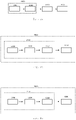
- White onions are used as raw material in one embodiment of the invention (e.g. Allium Cepa L. Cepa Group - Onion, Echalion) . Parameters of the method giving good results are summarized in Tab. 1, and a block diagram of the steps of the method according to this embodiment of the invention is presented in Figs 1a and 1b .
- cleaning 100 of the raw material is performed.
- Cleaning 100 includes in particular washing 110, which is performed by an water-air cleaner.
- the person skilled in the art routinely chooses water pressure depending on the type and quality of the vegetables used.
- Washed raw material is subjected to disinfection 120. Good effects were obtained as well as while treating the raw material with a product listed below or with a solution of the product, either directly or using products diluted in water. Good effects were obtained by performing disinfection with a mixture of peracetic acid with hydrogen peroxide, whereas the person skilled in the art will routinely propose other products for this purpose.
- the raw material is sliced 200.
- industrial slicing machines for vegetables are used.
- onion was sliced into cubes of side dimensions 6 mm. It was shown in experiments, that the cubes with the dimensions in the range of 4 mm to 20 mm performed equally well, in particular the cubes with the dimensions 5 mm, 6mm, 10 mm performed well.
- the size of the cube is dictated by the needs of the recipient of the resulting material, the person skilled in the art routinely sets the parameters of the machine to obtain the cubes with the desired side dimension.
- the method according to the invention gave good results for the slices with the thickness of 2 to 8 mm, the slices with the thickness of 2 mm, 2,5 mm, 3 mm, 4 mm, 5 mm, 6 mm, 7 mm, 8 mm performed well in particular.
- the thickness of the slice is dictated by the needs of the recipients of the resulting material, the person skilled in the art routinely sets the parameters of the machine (e.g. electrical industrial slicer) so that to obtain the cubes with the desired thickness slices.
- the raw material having skin and other organic components is sliced.
- the sliced raw material is frozen in the freezing step 300 up to temperature -18°C.
- the temperature on the range of -50°C to - 5°C gives good results.
- good effects were obtained for the temperature of freezing below -18°C.
- Onion freezing in this embodiment was realized by a passage of the raw material through a fluidization tunnel.
- Removing 400 of the unnecessary organic components and/or inorganic contaminants is realized on the raw material, which temperature is below -6°C. Good effects were obtained in particular when the temperature was below 0°C, in particular not higher than -4°C.
- the skins are removed from the raw material which is frozen and sliced. This means, that, before the step 400, fragments of the skins were still present on the raw material, that did not fall off during slicing. The raw material after the step 400 is still frozen.
- the skins of the onions are removed by shaking (e.g. on sieves) 410.
- Good effects were obtained by using vibration calibrators - single, double or multi deck, e.g. triple deck.
- Such prepared material is packaged. At every step, whether it is after or before the cleaning step 100, slicing 200, freezing 300, removing 400 unnecessary organic components it is possible to use the inspection by a worker with the use of inspection tables. However experiments showed, that it is not necessary, because the method according to the invention is characterized by very high effectiveness.
- Step Step parameters Raw material cleaning 100 Washing 110 Water-air cleaner Disinfection 120 Disinfection with a mixture of peracetic acid with hydrogen peroxide Slicing 200 Cubes with the side dimension 6 mm Freezing 300 -18°C Removing 400 unnecessary organic components and/or inorganic contaminants are Shaking 410 Triple-deck callibrator Optical sorting 420 Optical sorting 421 with blowing Temperature of the raw material during the step Below -6°C
- Shallotes were used as raw material in one embodiment of the invention (e.g. Allium Cepa L. Aggregatum Group - Shallot). Parameters of the method which results in good effects are summarized in Tab. 2, and a block diagram of the steps of the method according to this embodiment of the invention are presented in Fig. 1a and Fig. 1c .
- cleaning 100 of the raw material is performed.
- Cleaning 100 includes in particular washing 110. Washing 110 was performed under a water spray. In most cases, washing is sufficient to obtain good results of cleaning 100.
- Washed raw material is subjected to heat treatment 130.
- Heat treatment is that the raw material, whole or sliced, is blanched or boiled (blanching, boiling in water or by steam) at temperature of 50 to 100°C.
- Such prepared raw material is sliced 200 in the next step.
- shallot was sliced into cubes with the side dimension 5 mm by means of an industrial slicer for vegetables.
- the sliced raw material is frozen 300 to temperature of -20°C. Freezing of the shallot in this embodiment was realized by using a static freezing chamber. Good effects were obtained in particular for the freezing temperature in the range of -18°C to -22°C.
- step 400 organic components in the form of skins and if need be other inorganic contaminants are removed, which are present in the sliced and frozen raw material.
- Removing 400 unnecessary organic components and/or inorganic contaminants is realized with the raw material, whose temperature is lower than -4,5°C.
- the skins are removed from the raw material which is frozen and sliced. This means, that on the raw material, before the step 400, there were still the fragments of the skins, that did not fall off during slicing. The raw material after the step 400 is still frozen.
- shaking 410 is performed first - input shaker evenly distributes the raw material on the free-fall chute.
- the raw material is directed downwards towards the control zone, where it is scanned by a special set of various pulsing LED diodes and a combination of cameras (optical sorting with the use of LED diodes 422 ).
- Step Step parameters Raw material cleaning 100 Washing 110 Washing under water spray Heat treatment 130 Blanching whole shallots at temperature 85-95°C for 2-4 min or by boiling it for 1-3 minutes and then cooling in cooling tank with cold water Slicing 200 Cubes with side dimension 5 mm Freezing 300 -20°C Removing 400 unnecessary organic components and/or inorganic contaminants Shaking 410 Shaker Optical sorting 420 Sorting with the use of LED diodes 422 with blowing Raw material temperature during the step Below -4,5°C
- Garlic is used as raw material in one embodiment of the invention (e.g. Allium sativum L. - Garlic). Parameters of the method which result in good effects are summarized in Tab. 3, and a block diagram of the steps of the method according to this embodiment of the invention are presented in Fig. 1a and Fig. 1d .
- cleaning 100 of the raw material is performed.
- Cleaning 100 includes in particular washing 110. Washing 110 was performed in a tank.
- Washed raw material is subjected to heat treatment 130.
- Good effects were obtained by performing heat treatment of the garlic by its blanching using water vapour.
- Good effects were obtained also thanks to subsequent cooling of the blanched garlic in a cooling tank, i.e. device, to which very cold water is fed. Thanks to that the raw material has lower temperature before the step of freezing 300. If the duration of the process is not crucial, cooling is not necessary. It is also possible to perform both disinfection and heat treatment, in any order.
- Such prepared raw material is sliced 200 in the next step.
- garlic was sliced into cubes with the side dimension 4 mm by means of industrial slicer for vegetables. Good effects were also obtained for the garlic sliced into cubes with the side dimension 3 mm, 5 mm, 6 mm, 10 mm.
- Sliced raw material is frozen 300 to a temperature of -35°C. Freezing of the garlic in this embodiment was realized by using a static freezing chamber. Good effects were obtained in particular for the freezing temperature in the range of -45°C to -35°C.
- step 400 organic components in the form of skins and eventually other inorganic contaminants are removed, which are present in sliced and frozen raw material.
- Removing 400 unnecessary organic components and/or inorganic contaminants is realized with the raw material, whose temperature is lower than -7°C.
- the skins are removed from the raw material which is frozen and sliced. This means, that on the raw material, before the step 400, there were still the fragments of the skins, that did not fall off during slicing. The raw material after the step 400 is still frozen.
- first shaking 410 is performed - input shaker evenly distributes the raw material on the free-fall chute.
- the raw material is air sorted 415, e.g. by using a winnower.
- the raw material is directed downwards towards the control zone, where it is scanned (optical sorting 420 ), e.g. by lasers (laser sorting 421 ), cameras, BSI or BSI+ (Biometric Signature Identification) or their combination.
- optical sorting 420 e.g. by lasers (laser sorting 421 ), cameras, BSI or BSI+ (Biometric Signature Identification) or their combination.
- the raw material is directed downwards towards the control zone, where it is scanned by a special set of various pulsing LED diodes and a combination of cameras (optical sorting with the use of LED diodes 422 ).
- Cascade arrangement of the steps of optical sorting: laser sorting and sorting with the use of LED diodes allows particularly effective separation of foreign bodies (inorganic components), but also residues from mechanical preparation - mainly in the form of loose skins (organic components), its fragments adhered to the good raw material or cross-contaminations.
- Step Step parameters Raw material cleaning 100 Washing 110 Washing in a tank Heat treatment 130 Blanching using water vapour and then cooling in a cooling tank with a cold water Slicing 200 Cubes with side dimension 4 mm Freezing 300 -35°C Removing 400 unnecessary organic components and/or inorganic contaminants Shaking 410 Shaker Sorting with the use of air 415 Winnower Optical sorting 420 Laser sorting 421 with blowing Optical sorting 420 Laser sorting with the use of LED diodes 422 with blowing Raw material temperature during the step Below -7°C
- Embodiment of the production line according to this embodiment of invention is presented in Fig. 2a and Fig. 3a-c .
- the production line according to this embodiment allows for realization the method according to the invention according to the embodiment 3.
- the production line for manufacturing sliced frozen vegetables, in particular onion, shallot or garlic comprises a pre-treatment line 0000.
- the production line comprises further a line 0400 for at least partly mechanically removing of unnecessary organic components and/or inorganic contaminants and a freezing station 0300.
- the pre-treatment line 0000 comprises further a raw material cleaning station 0100 and a raw material slicing station 0200.
- a freezing station 0300 is situated between the pre-treatment line 0000 and the line 0400 for at least partly mechanically removing of unnecessary organic components and/or inorganic contaminants such that at least partially mechanical removing of unnecessary organic components and/or inorganic contaminants is carried out on the raw material which is sliced and frozen.
- Transport of the raw material between particular lines and stations is realized by chutes known-in-the-art, belt conveyors, feeders or other transport equipment allowing a transport of the raw material.
- the cleaning station 0100 in this embodiment comprises a washing station 0110 and a station for heat treatment of the raw material 0130.
- Washing station 0110 is realized by using a tank, in which the raw material is rinsed.
- the station for heat treatment of the raw material 0130 in principle allows the heat treatment of the raw material at the temperature of 50 to 100°C.
- stand for the heat treatment of the raw material 0130 comprises a device for blanching using water vapour. Good effects were obtained by providing a cooler, in the form of a device to which very cold water is fed, behind the device for blanching with the use of water vapour.
- the raw material is directed from the cleaning station 0100 to the slicing station 0200.
- the slicing station can be realized e.g. by using industrial slicers or shredders.
- the raw material is directed to the freezing station 0300 from the slicing station 0200.
- the freezing station 0300 comprised static freezing chamber. Good effects may be achieved also by using fluidization tunnels. It is also possible to realize the refrigerated chambers enabling post-freezing of the raw material.
- the freezing station 0300 allows for obtaining the raw material temperature in the rage of -50°C to -5°C.
- the raw material is directed from the freezing station 0300 to the line 0400 for at least partly mechanically removing of unnecessary organic components and/or inorganic contaminants.
- Good effects can be achieved if, during the stay of the raw material on the line 0400 for at least partly mechanically removing of unnecessary organic components and/or inorganic contaminants, the temperature of the raw material does not exceed -4°C, in this embodiment -7°C. Exceeding this temperature can result in decreased effectiveness of the process, but not necessarily below an acceptable value.
- Fragments of the skins, that did not fall off during slicing are still present in the raw material (sliced and frozen), directed to the line 0400 for at least partly mechanically removing of unnecessary organic components and/or inorganic contaminants.
- the raw material passing through the line 0400 for at least partly mechanically removing of unnecessary organic components and/or inorganic contaminants is directed subsequently to:
- sorting stations are multiplied, it will be clear for the person skilled in the art, that a change of number/order of sorting stations is possible. For the person skilled in the at it will be also clear, that increasing the number of the sorting station allows achieving better results.
- an inspection table may be used (not shown in figures), in particular in the pre-treatment line 0000, between the pre-treatment line 0000 and the freezing station 0300, between freezing station 0300 and a line 0400 for removing at least partially mechanically the organic components and/or inorganic contaminants or after the line 0400 for removing at least partially mechanically the organic components and/or inorganic contaminants.
- Using the inspection table is not necessary; operation of the invention gives good results without using it.
- Using the inspection table gives good results, if the pre-treatment line 0000 comprises the inspection table.
Landscapes
- Chemical & Material Sciences (AREA)
- Engineering & Computer Science (AREA)
- Life Sciences & Earth Sciences (AREA)
- Polymers & Plastics (AREA)
- Food Science & Technology (AREA)
- Nutrition Science (AREA)
- Health & Medical Sciences (AREA)
- Chemical Kinetics & Catalysis (AREA)
- General Chemical & Material Sciences (AREA)
- Wood Science & Technology (AREA)
- Zoology (AREA)
- Preparation Of Fruits And Vegetables (AREA)
- Storage Of Fruits Or Vegetables (AREA)
Abstract
Description
- The invention concerns a method for manufacturing a sliced frozen vegetables, in particular onion, shallot or garlic and a production line for manufacturing a sliced frozen vegetables, in particular onion, shallot or garlic.
- The process of preparation of frozen food requires removing unnecessary parts of the raw material, preferably by mechanical means. Methods for processing of vegetables or fruits, including their machine peeling or removing other unnecessary organic components are known in the state of the art.
- For example in the patent
US2813563 a method of processing of tomatoes is disclosed. Freezing is an initial step of processing of tomatoes before separation of the skin; freezing concerns only the surface layer of the vegetable. During separation of the skin of the tomato, the product is defrosted. The vegetables treated in the disclosed manner are not sliced. - In the document
US3982037 , a method of peeling fruit and vegetables is disclosed. The following examples of fruit and vegetables are disclosed in the document: peaches, apricots, nectarines, plums, cherries, grapes and tomatoes. The products are alternately heated and cooled. It was pointed, that in order to separate the skin it is necessary to heat the product - heating results in separating the skin. - In the document
CN105725233 stoning of fruits - berries - after freezing is disclosed. - In the international application
WO2009/079930 a method of peeling plant seeds including a plant seed cooling step is disclosed. Freezing is followed by a step of seeds selection. Invention discloses a machine enabling separation of the skin of frozen seeds. - Invention disclosed in
CN109105932 includes a machine for peeling garlic. In the document an advantageous technical effect of peeling the garlic after its previous cooling is disclosed. - The document
CN102429007 discloses a garlic freezing method, in which before freezing garlic is sliced and the skin is peeled. - The capacities of peeling machines are very low and the peeling process (whether manual or by machine) is laborious and expensive.
- In the document
FR2400847 - The
international application WO2007/025000 discloses a method of cryogenic peeling of fruits or vegetables. In the method according to the invention the surface of the fruit or the vegetable is frozen cryogenically. The key step of the process is defrosting of the skin before its separation. The partially frozen fruit/vegetable is heated e.g. in a hot water bath for a certain period of time. Indicated temperature range, to which the skin should be heated is about 15 - 100°C. In the application the possibility of an initial incision of the skin in order to its softening is indicated. Such incision enables subsequent squeezing the vegetable out of the skin and obtaining final flesh. The vegetables subjected to the processing according to the disclosed method are not sliced. - The invention disclosed in
DE2216906 includes a method of processing, especially fruits. Semi-finished products are frozen as a whole, and then they are subjected to the processing aiming at i.e. removing the stones from inside the fruit. - The objective of the invention was to develop a method of processing vegetables, in order to obtain a sliced frozen vegetables free of organic and inorganic contaminants as a final effect, without the classical step of peeling using industrial peelers. In particular, the objective of the invention was to develop a method, which will allows to obtain sliced frozen vegetables - onion, shallot and garlic, devoid of skins and other contaminants. The objective of the invention was also to develop a production line to realize this method, devoid of low-performing peeling machines.
- A method for manufacturing a sliced frozen vegetables, in particular onion, shallot or garlic, comprising cleaning, slicing and freezing of a raw material, according to the invention is characterized in that the unnecessary organic components and/or inorganic contaminants are removed, at least partly mechanically, from the raw material which was first sliced and then frozen. Unexpectedly during tests it turned out, that unnecessary organic components in the raw material first sliced and then frozen can be easily removed, the same as inorganic contaminants (added artificially for the need of the tests). Performing the slicing step and the freezing step before the step of removing unnecessary organic components and/or inorganic contaminants allows for abandonment of a step of peeling with an use of the industrial peelers, and as a result a simplification of the production line and a reduction of the manufacturing time of frozen vegetables is possible.
- Advantageously, in the method according to the invention, the raw material is frozen to a temperature between -50°C do -5°C. Freezing of the raw material before removing the organic components and/or inorganic contaminants allows for easier removal of the organic components and/or inorganic contaminants, which are still present on the raw material after slicing (e.g. skins). Particularly advantageously is to freeze the raw material to a temperature between -35°C and -18°C, and even more advantageously to a temperature between -22°C and -18°C. In justified cases, an initial freezing is advantageous, and then freezing the raw material to the desired temperature.
- Advantageously, the unnecessary organic components and/or inorganic contaminants are removed at temperatures below zero, advantageously not higher than -4°C. By maintaining a negative temperature of the raw material during removing of the unnecessary organic components and/or inorganic contaminants it is easier to remove those components and contaminants.
- Advantageously, the unnecessary organic components and/or inorganic contaminants are removed through of at least one process selected from: shaking, air sorting, optical sorting, laser sorting, sorting with an use of LED diodes, blowing. Those processes can be combined in any order. Using more processes or cascading of the same processes allow for more effective removing of the unnecessary organic components and/or inorganic contaminants.
- Advantageously, cleaning of the raw material includes washing of the raw material.
- Advantageously, before freezing of the raw material, a heat treatment of the raw material is carried out at the temperatures between 50 and 100°C. The heat treatment of the raw material may be carried out by blanching, boiling or steaming. Advantageously, after the heat treatment, the raw material is cooled, so that its temperature is closer to the final temperature in the freezing step.
- Advantageously, before freezing of the raw material, a disinfection of the raw material is carried out.
- A production line for manufacturing a sliced frozen vegetables, in particular onion, shallot or garlic, comprising
a pre-treatment line,
a line for at least partly mechanically removing of unnecessary organic components and/or inorganic contaminants and a freezing station according to the invention is characterized in that
the pre-treatment line comprises a raw material cleaning station and a raw material slicing station while the freezing station is situated between the pre-treatment line and the line for at least partly mechanically removing of unnecessary organic components and/or inorganic contaminants such that at least partially mechanical removing of unnecessary organic components and/or inorganic contaminants is carried out on the sliced and frozen raw material. - Advantageously the pre-treatment line comprises an inspection table.
- Advantageously the pre-treatment line comprises a washing station of the raw material.
- Advantageously, the pre-treatment line comprises a disinfection station of the raw material.
- Advantageously, the freezing station comprises a station chosen from: a fluidization tunnel and/or a static freezing chamber.
- Advantageously, the line for at least partly mechanically removing of unnecessary organic components and/or inorganic contaminants comprises at least one station chosen from: a shaking station, air sorting station, a station for optical sorting, a station for laser sorting, a station for sorting with the use of LED diodes.
- Advantageously, the pre-treatment line comprises a station for heat treatment of the raw material at the temperature between 50 and 100°C.
- A production line according to the invention allows in particular realization of the method according to the invention of manufacturing sliced frozen vegetables, in particular onion, shallot or garlic. A production line according to the invention is cheaper and more efficient than lines known in the state of the art, because the processed raw material is not subjected to the processing in expensive and ineffective industrial peelers.
- The invention is described below in more details with reference to its embodiments, presented in the attached drawings, in which
-
Fig. 1a presents a block diagram of the steps of the manufacturing method of the sliced frozen vegetables, according to the invention, -
Fig. 1b presents a block diagram of the steps of the manufacturing method of the sliced frozen vegetables, according to one of the embodiments, -
Fig. 1c presents a block diagram of the steps of the manufacturing method of the sliced frozen vegetables, according to another embodiment, -
Fig. 1c presents a block diagram of the steps of the manufacturing method of the sliced frozen vegetables, according to another embodiment, -
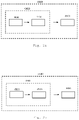
Fig. 2a presents a simplified block diagram of the production line according to the invention, -
Fig. 2b-d present embodiments of the pre-treatment line, -
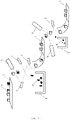
Fig. 3a presents a block diagram of the production line according to one of the embodiments, -
Fig. 3b presents a fragment of thefigure 3a - an embodiment of the line for at least partly mechanically removing of unnecessary organic components and/or inorganic contaminants, -
Fig. 3c presents other view of the production line according to another embodiment. - White onions are used as raw material in one embodiment of the invention (e.g. Allium Cepa L. Cepa Group - Onion, Echalion) . Parameters of the method giving good results are summarized in Tab. 1, and a block diagram of the steps of the method according to this embodiment of the invention is presented in
Figs 1a and 1b . - For manufacturing frozen vegetables it is advisable to use good quality vegetables of consumable maturity, which are uniform in variety in lots, fresh, hard, reasonably uniform in size and colour, healthy, not mechanically damaged, free of chemical plant protection agent residues, free of extraneous odours and tastes.
- Good effects were obtained for the onion which was clean, whole, dry, free from chives, free from all signs of mould, rot and disease discoloration, healthy, hard, free from pests, free from external moisture, free from frost, free from foreign smell and taste, and stored properly.
- In the first step of the method according to the invention, cleaning 100 of the raw material is performed.
Cleaning 100 includes inparticular washing 110, which is performed by an water-air cleaner. The person skilled in the art routinely chooses water pressure depending on the type and quality of the vegetables used. - Washed raw material is subjected to
disinfection 120. Good effects were obtained as well as while treating the raw material with a product listed below or with a solution of the product, either directly or using products diluted in water. Good effects were obtained by performing disinfection with a mixture of peracetic acid with hydrogen peroxide, whereas the person skilled in the art will routinely propose other products for this purpose. - In the next step the raw material is sliced 200. For slicing, industrial slicing machines for vegetables are used. In this embodiment, onion was sliced into cubes of side dimensions 6 mm. It was shown in experiments, that the cubes with the dimensions in the range of 4 mm to 20 mm performed equally well, in particular the cubes with the dimensions 5 mm, 6mm, 10 mm performed well. The size of the cube is dictated by the needs of the recipient of the resulting material, the person skilled in the art routinely sets the parameters of the machine to obtain the cubes with the desired side dimension.
- Good results were obtained also for the raw material cut into slices. The method according to the invention gave good results for the slices with the thickness of 2 to 8 mm, the slices with the thickness of 2 mm, 2,5 mm, 3 mm, 4 mm, 5 mm, 6 mm, 7 mm, 8 mm performed well in particular. The thickness of the slice is dictated by the needs of the recipients of the resulting material, the person skilled in the art routinely sets the parameters of the machine (e.g. electrical industrial slicer) so that to obtain the cubes with the desired thickness slices.
- In the method according to the invention the raw material having skin and other organic components is sliced.
- Then the sliced raw material is frozen in the freezing
step 300 up to temperature -18°C. Experiments showed, that the temperature on the range of -50°C to - 5°C gives good results. In particular good effects were obtained for the temperature of freezing below -18°C. In the justified situation a higher temperature of the raw material assuming post-freezing in refrigerating chambers is allowed. Onion freezing in this embodiment was realized by a passage of the raw material through a fluidization tunnel. - In the
next step 400 organic components in the form of skins and if need be other contaminants, including inorganic, present in sliced and frozen raw material, are removed. Surprisingly it turned out, that thanks to earlier implementation of slicing 200 and freezing 300, it is possible to obtain sliced frozen vegetables particularly efficiently, because the use of industrial peelers is not necessary. - Removing 400 of the unnecessary organic components and/or inorganic contaminants is realized on the raw material, which temperature is below -6°C. Good effects were obtained in particular when the temperature was below 0°C, in particular not higher than -4°C.
- In such realization of the method, the skins are removed from the raw material which is frozen and sliced. This means, that, before the
step 400, fragments of the skins were still present on the raw material, that did not fall off during slicing. The raw material after thestep 400 is still frozen. - In this embodiment, the skins of the onions are removed by shaking (e.g. on sieves) 410. Good effects were obtained by using vibration calibrators - single, double or multi deck, e.g. triple deck.
- Good effects were obtained, when the raw material was evenly distributed to the free-fall chute after shaking on the sieves. The raw material was directed downwards towards a control zone, where it was scanned (optical sorting 420), e.g. by lasers (laser sorting 421), cameras, BSI or BSI+ (Biometric Signature Identification) or their combination.
- Organic components in the form of the skins and if need be other contaminants are hit with a precise powerful burst of air (blowing), which directs them into the rejection zone, while the good raw material continues its natural process of free falling.
- Such prepared material is packaged. At every step, whether it is after or before the
cleaning step 100, slicing 200, freezing 300, removing 400 unnecessary organic components it is possible to use the inspection by a worker with the use of inspection tables. However experiments showed, that it is not necessary, because the method according to the invention is characterized by very high effectiveness. - Experiments with onion showed, that by the use of the method it is possible to obtain sorting of the organic components and intentionally placed inorganic contaminants, e.g. pieces of glass, cigarettes or fragments of plastic. Experiment showed that it is possible to obtain reject lower than 20% of the initial weight of the raw material.
- In turn experiments with red onion with the side dimension of the cube equal to 10 mm showed, that with the use of the method it is possible to obtain sorting of the organic components and intentionally placed inorganic contaminants, e.g. pieces of glass, cigarettes or fragments of plastic. Experiment showed that it is possible to obtain reject lower than 2% of the initial weight of the raw material.
Tab. 1 Step Step parameters Raw material cleaning 100 Washing 110Water- air cleaner Disinfection 120 Disinfection with a mixture of peracetic acid with hydrogen peroxide Slicing 200 Cubes with the side dimension 6 mm Freezing 300 -18°C Removing 400 unnecessary organic components and/or inorganic contaminants are Shaking 410 Triple-deck callibrator Optical sorting 420 Optical sorting 421 with blowing Temperature of the raw material during the step Below -6°C - Shallotes were used as raw material in one embodiment of the invention (e.g. Allium Cepa L. Aggregatum Group - Shallot). Parameters of the method which results in good effects are summarized in Tab. 2, and a block diagram of the steps of the method according to this embodiment of the invention are presented in
Fig. 1a andFig. 1c . - Good effects were obtained for the shallot which was clean, whole, dry, free from chives, free from all signs of mould, rot and disease discoloration, healthy, hard, free from pests, free from external moisture, free from frost, free from foreign smell and taste, and stored properly.
- In the first step of the method according to the invention, cleaning 100 of the raw material is performed.
Cleaning 100 includes inparticular washing 110.Washing 110 was performed under a water spray. In most cases, washing is sufficient to obtain good results of cleaning 100. - Washed raw material is subjected to
heat treatment 130. Heat treatment is that the raw material, whole or sliced, is blanched or boiled (blanching, boiling in water or by steam) at temperature of 50 to 100°C. - Good effects were obtained by performing heat treatment both by blanching whole shallots at temperature 85-95°C for 2-4 min or by boiling it for 1-3 minutes. Good effects were obtained also thanks to subsequent cooling of the blanched shallot in a cooling tank, i.e. device, to which very cold water is fed. As a result the raw material has lower temperature before the freezing
step 300. If the duration of the process is not crucial, cooling is not necessary. - Such prepared raw material is sliced 200 in the next step. In this embodiment shallot was sliced into cubes with the side dimension 5 mm by means of an industrial slicer for vegetables.
- The sliced raw material is frozen 300 to temperature of -20°C. Freezing of the shallot in this embodiment was realized by using a static freezing chamber. Good effects were obtained in particular for the freezing temperature in the range of -18°C to -22°C.
- Next, in the
step 400 organic components in the form of skins and if need be other inorganic contaminants are removed, which are present in the sliced and frozen raw material. - Removing 400 unnecessary organic components and/or inorganic contaminants is realized with the raw material, whose temperature is lower than -4,5°C.
- In such realization of the method, the skins are removed from the raw material which is frozen and sliced. This means, that on the raw material, before the
step 400, there were still the fragments of the skins, that did not fall off during slicing. The raw material after thestep 400 is still frozen. - In this embodiment shaking 410 is performed first - input shaker evenly distributes the raw material on the free-fall chute.
- Then the raw material is directed downwards towards the control zone, where it is scanned by a special set of various pulsing LED diodes and a combination of cameras (optical sorting with the use of LED diodes 422).
- Organic components in the form of the skins and if need be other contaminants are hit with a precise powerful burst of air (blowing), which directs them into the rejection zone, while the good raw material continues its natural process of free falling.
- Good effects are possible to be obtained by means of sorting with the use of air, e.g. by using a winnower, e.g. after shaking and before optical sorting. It is also clear that in the step of removing 400 unnecessary organic components and/or inorganic contaminants, which can comprise steps like shaking, air sorting , optical sorting, laser sorting, optical sorting with the use of LED diodes, blowing, those steps can be repeated what will result in a greater precision of removing organic components and/or inorganic contaminants out of the raw material. Application of at least one of listed steps will result in satisfactory results.
- Experiments with shallot showed, that by the use of the method it is possible to obtain sorting of the organic components and intentionally placed inorganic contaminants, e.g. pieces of glass, cigarettes or fragments of plastic. Experiment showed that it is possible to obtain reject lower than 4% of the initial weight of the raw material.
Tab. 2 Step Step parameters Raw material cleaning 100 Washing 110Washing under water spray Heat treatment 130 Blanching whole shallots at temperature 85-95°C for 2-4 min or by boiling it for 1-3 minutes and then cooling in cooling tank with cold water Slicing 200 Cubes with side dimension 5 mm Freezing 300 -20°C Removing 400 unnecessary organic components and/or inorganic contaminants Shaking 410 Shaker Optical sorting 420 Sorting with the use of LED diodes 422 with blowingRaw material temperature during the step Below -4,5°C - Garlic is used as raw material in one embodiment of the invention (e.g. Allium sativum L. - Garlic). Parameters of the method which result in good effects are summarized in Tab. 3, and a block diagram of the steps of the method according to this embodiment of the invention are presented in
Fig. 1a andFig. 1d . - Good effects were obtained for the garlic which was clean, whole, dry, free from chives, free from all signs of mould, rot and disease discoloration, healthy, hard, free from pests, free from external moisture, free from frost, free from foreign smell and taste, and stored properly.
- In the first step of the method according to the invention, cleaning 100 of the raw material is performed.
Cleaning 100 includes inparticular washing 110.Washing 110 was performed in a tank. - Washed raw material is subjected to
heat treatment 130. Good effects were obtained by performing heat treatment of the garlic by its blanching using water vapour. Good effects were obtained also thanks to subsequent cooling of the blanched garlic in a cooling tank, i.e. device, to which very cold water is fed. Thanks to that the raw material has lower temperature before the step of freezing 300. If the duration of the process is not crucial, cooling is not necessary. It is also possible to perform both disinfection and heat treatment, in any order. - Such prepared raw material is sliced 200 in the next step. In this embodiment garlic was sliced into cubes with the side dimension 4 mm by means of industrial slicer for vegetables. Good effects were also obtained for the garlic sliced into cubes with the side dimension 3 mm, 5 mm, 6 mm, 10 mm.
- Sliced raw material is frozen 300 to a temperature of -35°C. Freezing of the garlic in this embodiment was realized by using a static freezing chamber. Good effects were obtained in particular for the freezing temperature in the range of -45°C to -35°C.
- Next, in the
step 400 organic components in the form of skins and eventually other inorganic contaminants are removed, which are present in sliced and frozen raw material. - Removing 400 unnecessary organic components and/or inorganic contaminants is realized with the raw material, whose temperature is lower than -7°C.
- In such realization of the method, the skins are removed from the raw material which is frozen and sliced. This means, that on the raw material, before the
step 400, there were still the fragments of the skins, that did not fall off during slicing. The raw material after thestep 400 is still frozen. - In this embodiment first shaking 410 is performed - input shaker evenly distributes the raw material on the free-fall chute.
- Then the raw material is air sorted 415, e.g. by using a winnower.
- Then the raw material is directed downwards towards the control zone, where it is scanned (optical sorting 420), e.g. by lasers (laser sorting 421), cameras, BSI or BSI+ (Biometric Signature Identification) or their combination.
- Organic components in the form of the skins and if need be other contaminants are hit with a precise powerful burst of air (blowing), which directs them into the rejection zone, while the good raw material continue their natural process of free falling.
- Then the raw material is directed downwards towards the control zone, where it is scanned by a special set of various pulsing LED diodes and a combination of cameras (optical sorting with the use of LED diodes 422).
- Organic components in the form of the skins and if need be other contaminants are hit with a precise powerful burst of air (blowing), which directs them into the rejection zone, while the good raw material continues their natural process of free falling.
- Cascade arrangement of the steps of optical sorting: laser sorting and sorting with the use of LED diodes allows particularly effective separation of foreign bodies (inorganic components), but also residues from mechanical preparation - mainly in the form of loose skins (organic components), its fragments adhered to the good raw material or cross-contaminations.
- This is how the relatively low, acceptable level of reject is obtained. Preliminary mechanical cleaning of the raw material (e.g. during washing) or using air sorting (e.g. by using a winnower) after shaking allows for further limitation of defects concentration in a final product.
- The raw material is packaged and further stored under appropriate conditions.
Tab. 3 Step Step parameters Raw material cleaning 100 Washing 110Washing in a tank Heat treatment 130 Blanching using water vapour and then cooling in a cooling tank with a cold water Slicing 200 Cubes with side dimension 4 mm Freezing 300 -35°C Removing 400 unnecessary organic components and/or inorganic contaminants Shaking 410 Shaker Sorting with the use of air 415Winnower Optical sorting 420 Laser sorting 421 with blowing Optical sorting 420 Laser sorting with the use of LED diodes 422 with blowingRaw material temperature during the step Below -7°C - Embodiment of the production line according to this embodiment of invention is presented in
Fig. 2a andFig. 3a-c . - The production line according to this embodiment allows for realization the method according to the invention according to the embodiment 3.
- The production line for manufacturing sliced frozen vegetables, in particular onion, shallot or garlic, comprises a
pre-treatment line 0000. The production line comprises further aline 0400 for at least partly mechanically removing of unnecessary organic components and/or inorganic contaminants and a freezingstation 0300. - The
pre-treatment line 0000 comprises further a rawmaterial cleaning station 0100 and a rawmaterial slicing station 0200. - A freezing
station 0300 is situated between thepre-treatment line 0000 and theline 0400 for at least partly mechanically removing of unnecessary organic components and/or inorganic contaminants such that at least partially mechanical removing of unnecessary organic components and/or inorganic contaminants is carried out on the raw material which is sliced and frozen. - Transport of the raw material between particular lines and stations is realized by chutes known-in-the-art, belt conveyors, feeders or other transport equipment allowing a transport of the raw material.
- The
cleaning station 0100 in this embodiment comprises awashing station 0110 and a station for heat treatment of theraw material 0130.Washing station 0110 is realized by using a tank, in which the raw material is rinsed. The station for heat treatment of theraw material 0130 in principle allows the heat treatment of the raw material at the temperature of 50 to 100°C. In this embodiment stand for the heat treatment of theraw material 0130 comprises a device for blanching using water vapour. Good effects were obtained by providing a cooler, in the form of a device to which very cold water is fed, behind the device for blanching with the use of water vapour. - The raw material is directed from the
cleaning station 0100 to the slicingstation 0200. The slicing station can be realized e.g. by using industrial slicers or shredders. - The raw material is directed to the freezing
station 0300 from the slicingstation 0200. In this embodiment the freezingstation 0300 comprised static freezing chamber. Good effects may be achieved also by using fluidization tunnels. It is also possible to realize the refrigerated chambers enabling post-freezing of the raw material. The freezingstation 0300 allows for obtaining the raw material temperature in the rage of -50°C to -5°C. - The raw material is directed from the freezing
station 0300 to theline 0400 for at least partly mechanically removing of unnecessary organic components and/or inorganic contaminants. Good effects can be achieved if, during the stay of the raw material on theline 0400 for at least partly mechanically removing of unnecessary organic components and/or inorganic contaminants, the temperature of the raw material does not exceed -4°C, in this embodiment -7°C. Exceeding this temperature can result in decreased effectiveness of the process, but not necessarily below an acceptable value. - Fragments of the skins, that did not fall off during slicing are still present in the raw material (sliced and frozen), directed to the
line 0400 for at least partly mechanically removing of unnecessary organic components and/or inorganic contaminants. - In this embodiment, the raw material passing through the
line 0400 for at least partly mechanically removing of unnecessary organic components and/or inorganic contaminants, is directed subsequently to: - a shaking
station 0410 in this embodiment realized by a device - a shaker, which evenly distributes the raw material, which is then directed to - a station for air sorting 0415, e.g. by a device - a winnower
- a station for optical sorting 0420 - a station for laser sorting - the raw material S is scanned by cameras K and lasers L and then the organic components in the form of skins and if need be other contaminants forming reject O are hit with a precise, powerful burst of air using a precise air gun P (blowing), which directs them to the reject zone - reject tank Z, while the good raw material S is directed to the feeder T and then to
- a station for optical sorting 0420 - station for sorting with the use of LED diodes - the raw material S is scanned by the set of pulsing LED diodes integrated with cameras D and then the organic components in the form of skins and if need be other contaminants forming reject O are hit with a precise, powerful burst of air using a precise air gun P (blowing), which directs them to the reject zone - reject tank Z, while the good raw material S is directed to the feeder T and then to packaging, storing etc.
- Although in this embodiment the sorting stations are multiplied, it will be clear for the person skilled in the art, that a change of number/order of sorting stations is possible. For the person skilled in the at it will be also clear, that increasing the number of the sorting station allows achieving better results.
- For the person skilled in the art such modification of the
pre-treatment line 0000 is also clear a that e.g. adisinfection station 0120 is added - instead of, before or after the heat treatment station of the raw material 0130 (seeFig. 2b-2e ). Such modified line allows realization of the method according to the embodiment 1 or 2 of the invention. - At any location of the production line an inspection table may be used (not shown in figures), in particular in the
pre-treatment line 0000, between thepre-treatment line 0000 and the freezingstation 0300, between freezingstation 0300 and aline 0400 for removing at least partially mechanically the organic components and/or inorganic contaminants or after theline 0400 for removing at least partially mechanically the organic components and/or inorganic contaminants. Using the inspection table is not necessary; operation of the invention gives good results without using it. Using the inspection table gives good results, if thepre-treatment line 0000 comprises the inspection table. -
- 100 cleaning
- 110 washing
- 120 disinfection
- 130 heat treatment
- 200 slicing
- 300 freezing
- 400 removing of unnecessary organic components and/or inorganic contaminants
- 410 shaking
- 415 air sorting
- 420 optical sorting
- 421 laser sorting
- 422 sorting with an use of LED diodes
- 0000 pre-treatment line
- 0100 cleaning station
- 0110 washing station
- 0120 disinfection station
- 0130 station for heat treatment of the raw material at temperature of 50 to 100°C
- 0200 slicing station
- 0100 cleaning station
- 0300 freezing station
- 0400 line for at least partly mechanically removing of unnecessary organic components and/or inorganic contaminants
- 0410 shaking station
- 0415 station for air sorting
- 0420 station for optical sorting
- 0421 station for laser sorting
- 0422 station for sorting with the use of LED diodes
- S raw material
- O reject
- T feeder - transport
- L laser
- K camera
- D LED diodes integrated with cameras
- Z reject tank
- P precise air gun
Claims (14)
- A method for manufacturing sliced frozen vegetables, in particular onion, shallot or garlic, comprising cleaning (100), slicing (200) and freezing (300) of a raw material, characterized in that unnecessary organic components and/or inorganic contaminants are removed (400), at least partly mechanically, from the raw material which was first sliced and then frozen.
- A method according to claim 1 characterized in that the raw material is frozen (300) to the temperature between -50°C do -5°C.
- A method according to claim 1 or 2 characterized in that the unnecessary organic components and/or inorganic contaminants are removed (400) at temperatures below 0°C, not higher than -4°C.
- A method according to claim 1 or 2 or 3 characterized in that the unnecessary organic components and/or inorganic contaminants are removed (400) from the raw material through of at least one process selected from: shaking (410), air sorting (415), optical sorting (420), laser sorting (421), sorting with an use of LED diodes (422), blowing.
- A method according to claim 1 or 2 or 3 or 4 characterized in that cleaning (100) of the raw material includes washing of the raw material (110).
- A method according to claim 1 or 2 or 3 or 4 or 5 characterized in that before freezing (300) of the raw material, a heat treatment (130) of the raw material is carried out at the temperatures between 50 and 100°C.
- A method according to claim 1 or 2 or 3 or 4 or 5 or 6 characterized in that before freezing (300) of the raw material, a disinfection (120) of the raw material is carried out.
- A production line for manufacturing sliced frozen vegetables, in particular onion, shallot or garlic, comprising
a pre-treatment line (0000),
a line for at least partly mechanically removing of unnecessary organic components and/or inorganic contaminants (0400) and a freezing station (0300)
characterized in that
the pre-treatment line (0000) comprises a raw material cleaning station (0100) and a raw material slicing station (0200) and a freezing station (0300) is situated between a pre-treatment line (0000) and the line (0400) for at least partly mechanically removing of unnecessary organic components and/or inorganic contaminants such that at least partially mechanical removing of unnecessary organic components and/or inorganic contaminants is carried out on the sliced and frozen raw material. - A production line according to claim 8, characterized in that the pre-treatment line (0000) comprises an inspection table.
- A production line according to claim 8 or 9, characterized in that the pre-treatment line (0000) comprises a raw material washing station (0110).
- A production line according to claim 8 or 9 or 10, characterized in that the pre-treatment line (0000) comprises a raw material disinfection station (0120).
- A production line according to claim 8 or 9 or 10 or 11, characterized in that the freezing station comprises a station chosen from: a fluidization tunnel and/or a static freezing chamber.
- A production line according to any of claim 8 to 12, characterized in that the line for at least partly mechanically removing (0400) of unnecessary organic components and/or inorganic contaminants comprises at least one of the station chosen from: a shaking station (0410), a station for air sorting (0415), a station for optical sorting (0420), a station for laser sorting (0421), a station for sorting with the use of LED diodes (0422).
- A production line according to any of claim 8 to 13, characterized in that the pre-treatment line (0000) comprises a station for heat treatment (0130) of the raw material at the temperature between 50 and 100°C.
Priority Applications (6)
| Application Number | Priority Date | Filing Date | Title |
|---|---|---|---|
| EP21461542.9A EP4094589B1 (en) | 2021-05-26 | 2021-05-26 | Method for manufacturing sliced frozen vegetables and production line for manufacturing sliced frozen vegetables |
| ES21461542T ES2962326T3 (en) | 2021-05-26 | 2021-05-26 | Procedure for producing frozen cut vegetables and production line for producing frozen cut vegetables |
| PL21461542.9T PL4094589T3 (en) | 2021-05-26 | 2021-05-26 | Method for manufacturing sliced frozen vegetables and production line for manufacturing sliced frozen vegetables |
| EP22720060.7A EP4346439B1 (en) | 2021-05-26 | 2022-04-22 | Method for manufacturing sliced frozen vegetables and production line for manufacturing |
| PL22720060.7T PL4346439T3 (en) | 2021-05-26 | 2022-04-22 | Method for producing sliced frozen vegetables and a production line for producing them |
| PCT/IB2022/053786 WO2022248949A1 (en) | 2021-05-26 | 2022-04-22 | Method for manufacturing a sliced frozen vegetables and a production line for manufacturing a sliced frozen vegetables |
Applications Claiming Priority (1)
| Application Number | Priority Date | Filing Date | Title |
|---|---|---|---|
| EP21461542.9A EP4094589B1 (en) | 2021-05-26 | 2021-05-26 | Method for manufacturing sliced frozen vegetables and production line for manufacturing sliced frozen vegetables |
Publications (3)
| Publication Number | Publication Date |
|---|---|
| EP4094589A1 true EP4094589A1 (en) | 2022-11-30 |
| EP4094589C0 EP4094589C0 (en) | 2023-08-16 |
| EP4094589B1 EP4094589B1 (en) | 2023-08-16 |
Family
ID=76522916
Family Applications (2)
| Application Number | Title | Priority Date | Filing Date |
|---|---|---|---|
| EP21461542.9A Active EP4094589B1 (en) | 2021-05-26 | 2021-05-26 | Method for manufacturing sliced frozen vegetables and production line for manufacturing sliced frozen vegetables |
| EP22720060.7A Active EP4346439B1 (en) | 2021-05-26 | 2022-04-22 | Method for manufacturing sliced frozen vegetables and production line for manufacturing |
Family Applications After (1)
| Application Number | Title | Priority Date | Filing Date |
|---|---|---|---|
| EP22720060.7A Active EP4346439B1 (en) | 2021-05-26 | 2022-04-22 | Method for manufacturing sliced frozen vegetables and production line for manufacturing |
Country Status (4)
| Country | Link |
|---|---|
| EP (2) | EP4094589B1 (en) |
| ES (1) | ES2962326T3 (en) |
| PL (2) | PL4094589T3 (en) |
| WO (1) | WO2022248949A1 (en) |
Families Citing this family (1)
| Publication number | Priority date | Publication date | Assignee | Title |
|---|---|---|---|---|
| CN117568513B (en) * | 2023-11-25 | 2025-09-23 | 中国农业科学院郑州果树研究所 | AFLP molecular markers, detection primers and their applications for sweet cherry fruit firmness |
Citations (10)
| Publication number | Priority date | Publication date | Assignee | Title |
|---|---|---|---|---|
| US2813563A (en) | 1954-12-18 | 1957-11-19 | Cagnoni Delfino | Process for facilitating the peeling of tomatoes and apparatus for performing said process |
| DE2216906A1 (en) | 1972-04-07 | 1973-10-11 | Linde Ag | Fruit processing - esp preserving soft fruit in flash frozen state |
| US3982037A (en) | 1975-01-15 | 1976-09-21 | The United States Of America As Represented By The Secretary Of Agriculture | Peeling fruits and vegetables by multiple heatings and coolings |
| FR2400847A1 (en) | 1977-05-31 | 1979-03-23 | Tenuta Antonio | PROCESS AND PLANT FOR THE PRODUCTION OF FROZEN TOMATOES, PELEATED |
| WO2007025000A2 (en) | 2005-08-22 | 2007-03-01 | Conagra Foods Packaged Foods Company, Inc. | Cryogenic peeling process |
| WO2009079930A1 (en) | 2007-12-21 | 2009-07-02 | Shanghai Invent Logistic And Technology Co., Ltd. | Method and apparatus for dehulling off plant seed |
| CN102429007A (en) | 2011-12-15 | 2012-05-02 | 南京财经大学 | A kind of processing method of vacuum microwave freeze-drying garlic flakes |
| CN105595245A (en) * | 2015-12-31 | 2016-05-25 | 青岛恒孚食品有限公司 | Quick-frozen spinach processing method |
| CN105725233A (en) | 2016-02-25 | 2016-07-06 | 沈阳农业大学 | Frozen-blueberry hole pricking machine and processing method |
| CN109105932A (en) | 2018-08-24 | 2019-01-01 | 李昀昕 | Automatic Grading Garlic Peeling Machine |
Family Cites Families (1)
| Publication number | Priority date | Publication date | Assignee | Title |
|---|---|---|---|---|
| US20080113070A1 (en) | 2006-11-15 | 2008-05-15 | Mansour Nagi A | Fresh ready onion and spice mix |
-
2021
- 2021-05-26 ES ES21461542T patent/ES2962326T3/en active Active
- 2021-05-26 PL PL21461542.9T patent/PL4094589T3/en unknown
- 2021-05-26 EP EP21461542.9A patent/EP4094589B1/en active Active
-
2022
- 2022-04-22 EP EP22720060.7A patent/EP4346439B1/en active Active
- 2022-04-22 PL PL22720060.7T patent/PL4346439T3/en unknown
- 2022-04-22 WO PCT/IB2022/053786 patent/WO2022248949A1/en not_active Ceased
Patent Citations (10)
| Publication number | Priority date | Publication date | Assignee | Title |
|---|---|---|---|---|
| US2813563A (en) | 1954-12-18 | 1957-11-19 | Cagnoni Delfino | Process for facilitating the peeling of tomatoes and apparatus for performing said process |
| DE2216906A1 (en) | 1972-04-07 | 1973-10-11 | Linde Ag | Fruit processing - esp preserving soft fruit in flash frozen state |
| US3982037A (en) | 1975-01-15 | 1976-09-21 | The United States Of America As Represented By The Secretary Of Agriculture | Peeling fruits and vegetables by multiple heatings and coolings |
| FR2400847A1 (en) | 1977-05-31 | 1979-03-23 | Tenuta Antonio | PROCESS AND PLANT FOR THE PRODUCTION OF FROZEN TOMATOES, PELEATED |
| WO2007025000A2 (en) | 2005-08-22 | 2007-03-01 | Conagra Foods Packaged Foods Company, Inc. | Cryogenic peeling process |
| WO2009079930A1 (en) | 2007-12-21 | 2009-07-02 | Shanghai Invent Logistic And Technology Co., Ltd. | Method and apparatus for dehulling off plant seed |
| CN102429007A (en) | 2011-12-15 | 2012-05-02 | 南京财经大学 | A kind of processing method of vacuum microwave freeze-drying garlic flakes |
| CN105595245A (en) * | 2015-12-31 | 2016-05-25 | 青岛恒孚食品有限公司 | Quick-frozen spinach processing method |
| CN105725233A (en) | 2016-02-25 | 2016-07-06 | 沈阳农业大学 | Frozen-blueberry hole pricking machine and processing method |
| CN109105932A (en) | 2018-08-24 | 2019-01-01 | 李昀昕 | Automatic Grading Garlic Peeling Machine |
Non-Patent Citations (2)
| Title |
|---|
| DATABASE FSTA [online] INTERNATIONAL FOOD INFORMATION SERVICE (IFIS), FRANkFURT-MAIN, DE; 1993, BUTLER T: "Equipping yourself to stay within the law.", XP002804708, Database accession no. FS-1993-01-E-0024 * |
| DATABASE FSTA [online] INTERNATIONAL FOOD INFORMATION SERVICE (IFIS), FRANkFURT-MAIN, DE; 2008, "Fresh ready onion and spice mix.", XP002804707, Database accession no. FS-2008-08-Jv3682 * |
Also Published As
| Publication number | Publication date |
|---|---|
| EP4346439C0 (en) | 2025-06-18 |
| PL4094589T3 (en) | 2023-11-06 |
| ES2962326T3 (en) | 2024-03-18 |
| EP4094589C0 (en) | 2023-08-16 |
| PL4346439T3 (en) | 2025-09-15 |
| EP4094589B1 (en) | 2023-08-16 |
| EP4346439A1 (en) | 2024-04-10 |
| WO2022248949A1 (en) | 2022-12-01 |
| EP4346439B1 (en) | 2025-06-18 |
Similar Documents
| Publication | Publication Date | Title |
|---|---|---|
| CN1116820C (en) | Method for producing shattered preservative-free dried fruit pieces | |
| KR101060015B1 (en) | Sweet potato processing method and system | |
| CN107683895A (en) | A kind of preparation method of frozen fresh spinacs | |
| FR2798260B1 (en) | METHOD AND DEVICE FOR TREATING PLANTS AFTER HARVESTING | |
| EP4346439B1 (en) | Method for manufacturing sliced frozen vegetables and production line for manufacturing | |
| US8563070B2 (en) | Method of manufacturing citrus snack using reduced pressure drying | |
| Burns | Carrots | |
| Liadakis et al. | Identification, quantification, and characterization of tomato processing by-products | |
| KR20100101199A (en) | Strawberries freezing/drying method | |
| US4517211A (en) | Method for the production of concentrated, frozen potato puree | |
| EP3157360B1 (en) | Method for processing potatoes | |
| CN100482098C (en) | Method for processing frozen fruit | |
| CN115211544A (en) | Production method of dried potato chips | |
| CN110574780A (en) | fruit freezing processing method | |
| Pękosławska et al. | Osmotic dehydration of pumpkin in starch syrup. | |
| KR20200071315A (en) | Method for drying fruit comprising tangerine by low temperature vacuum | |
| KR101902804B1 (en) | The Dried Citrus Fruit and the Manufacturing Method thereof | |
| KR102729558B1 (en) | A Method of producing flour using green banana | |
| RU2538816C1 (en) | Dried garlic production method | |
| Holdsworth | Raw Material—Production and Post-Harvest Preparation | |
| CN109770131A (en) | A kind of preparation method of crisp melon beverage | |
| US2950203A (en) | Process of quick-freezing raw onions | |
| RU2653005C1 (en) | Method for production candied fruits from quince | |
| Szymanek | Studies on shelling of frozen sweet corn | |
| RU2518733C1 (en) | Dried hot pepper production method |
Legal Events
| Date | Code | Title | Description |
|---|---|---|---|
| STAA | Information on the status of an ep patent application or granted ep patent |
Free format text: STATUS: EXAMINATION IS IN PROGRESS |
|
| PUAI | Public reference made under article 153(3) epc to a published international application that has entered the european phase |
Free format text: ORIGINAL CODE: 0009012 |
|
| 17P | Request for examination filed |
Effective date: 20220117 |
|
| AK | Designated contracting states |
Kind code of ref document: A1 Designated state(s): AL AT BE BG CH CY CZ DE DK EE ES FI FR GB GR HR HU IE IS IT LI LT LU LV MC MK MT NL NO PL PT RO RS SE SI SK SM TR |
|
| GRAP | Despatch of communication of intention to grant a patent |
Free format text: ORIGINAL CODE: EPIDOSNIGR1 |
|
| STAA | Information on the status of an ep patent application or granted ep patent |
Free format text: STATUS: GRANT OF PATENT IS INTENDED |
|
| RIC1 | Information provided on ipc code assigned before grant |
Ipc: A23B 7/005 20060101ALI20221220BHEP Ipc: A23B 7/04 20060101ALI20221220BHEP Ipc: A23L 19/00 20160101AFI20221220BHEP |
|
| RBV | Designated contracting states (corrected) |
Designated state(s): AL AT BE BG CH CY CZ DE DK EE ES FI FR GB GR HR HU IE IS IT LI LT LU LV MC MK MT NL NO PL PT RO RS SE SI SK SM TR |
|
| INTG | Intention to grant announced |
Effective date: 20230111 |
|
| RAP1 | Party data changed (applicant data changed or rights of an application transferred) |
Owner name: STAWINSKA, JOANNA |
|
| RIN1 | Information on inventor provided before grant (corrected) |
Inventor name: STAWINSKA, JOANNA Inventor name: WYDERKA, SEBASTIAN |
|
| GRAS | Grant fee paid |
Free format text: ORIGINAL CODE: EPIDOSNIGR3 |
|
| GRAA | (expected) grant |
Free format text: ORIGINAL CODE: 0009210 |
|
| STAA | Information on the status of an ep patent application or granted ep patent |
Free format text: STATUS: THE PATENT HAS BEEN GRANTED |
|
| AK | Designated contracting states |
Kind code of ref document: B1 Designated state(s): AL AT BE BG CH CY CZ DE DK EE ES FI FR GB GR HR HU IE IS IT LI LT LU LV MC MK MT NL NO PL PT RO RS SE SI SK SM TR |
|
| REG | Reference to a national code |
Ref country code: CH Ref legal event code: EP Ref country code: DE Ref legal event code: R096 Ref document number: 602021004346 Country of ref document: DE |
|
| REG | Reference to a national code |
Ref country code: IE Ref legal event code: FG4D |
|
| U01 | Request for unitary effect filed |
Effective date: 20230831 |
|
| U07 | Unitary effect registered |
Designated state(s): AT BE BG DE DK EE FI FR IT LT LU LV MT NL PT SE SI Effective date: 20230907 |
|
| PG25 | Lapsed in a contracting state [announced via postgrant information from national office to epo] |
Ref country code: GR Free format text: LAPSE BECAUSE OF FAILURE TO SUBMIT A TRANSLATION OF THE DESCRIPTION OR TO PAY THE FEE WITHIN THE PRESCRIBED TIME-LIMIT Effective date: 20231117 |
|
| PG25 | Lapsed in a contracting state [announced via postgrant information from national office to epo] |
Ref country code: IS Free format text: LAPSE BECAUSE OF FAILURE TO SUBMIT A TRANSLATION OF THE DESCRIPTION OR TO PAY THE FEE WITHIN THE PRESCRIBED TIME-LIMIT Effective date: 20231216 |
|
| PG25 | Lapsed in a contracting state [announced via postgrant information from national office to epo] |
Ref country code: RS Free format text: LAPSE BECAUSE OF FAILURE TO SUBMIT A TRANSLATION OF THE DESCRIPTION OR TO PAY THE FEE WITHIN THE PRESCRIBED TIME-LIMIT Effective date: 20230816 Ref country code: NO Free format text: LAPSE BECAUSE OF FAILURE TO SUBMIT A TRANSLATION OF THE DESCRIPTION OR TO PAY THE FEE WITHIN THE PRESCRIBED TIME-LIMIT Effective date: 20231116 Ref country code: IS Free format text: LAPSE BECAUSE OF FAILURE TO SUBMIT A TRANSLATION OF THE DESCRIPTION OR TO PAY THE FEE WITHIN THE PRESCRIBED TIME-LIMIT Effective date: 20231216 Ref country code: HR Free format text: LAPSE BECAUSE OF FAILURE TO SUBMIT A TRANSLATION OF THE DESCRIPTION OR TO PAY THE FEE WITHIN THE PRESCRIBED TIME-LIMIT Effective date: 20230816 Ref country code: GR Free format text: LAPSE BECAUSE OF FAILURE TO SUBMIT A TRANSLATION OF THE DESCRIPTION OR TO PAY THE FEE WITHIN THE PRESCRIBED TIME-LIMIT Effective date: 20231117 |
|
| REG | Reference to a national code |
Ref country code: ES Ref legal event code: FG2A Ref document number: 2962326 Country of ref document: ES Kind code of ref document: T3 Effective date: 20240318 |
|
| PG25 | Lapsed in a contracting state [announced via postgrant information from national office to epo] |
Ref country code: SM Free format text: LAPSE BECAUSE OF FAILURE TO SUBMIT A TRANSLATION OF THE DESCRIPTION OR TO PAY THE FEE WITHIN THE PRESCRIBED TIME-LIMIT Effective date: 20230816 Ref country code: RO Free format text: LAPSE BECAUSE OF FAILURE TO SUBMIT A TRANSLATION OF THE DESCRIPTION OR TO PAY THE FEE WITHIN THE PRESCRIBED TIME-LIMIT Effective date: 20230816 Ref country code: CZ Free format text: LAPSE BECAUSE OF FAILURE TO SUBMIT A TRANSLATION OF THE DESCRIPTION OR TO PAY THE FEE WITHIN THE PRESCRIBED TIME-LIMIT Effective date: 20230816 Ref country code: SK Free format text: LAPSE BECAUSE OF FAILURE TO SUBMIT A TRANSLATION OF THE DESCRIPTION OR TO PAY THE FEE WITHIN THE PRESCRIBED TIME-LIMIT Effective date: 20230816 |
|
| REG | Reference to a national code |
Ref country code: DE Ref legal event code: R097 Ref document number: 602021004346 Country of ref document: DE |
|
| U20 | Renewal fee for the european patent with unitary effect paid |
Year of fee payment: 4 Effective date: 20240418 |
|
| PLBE | No opposition filed within time limit |
Free format text: ORIGINAL CODE: 0009261 |
|
| STAA | Information on the status of an ep patent application or granted ep patent |
Free format text: STATUS: NO OPPOSITION FILED WITHIN TIME LIMIT |
|
| 26N | No opposition filed |
Effective date: 20240517 |
|
| PG25 | Lapsed in a contracting state [announced via postgrant information from national office to epo] |
Ref country code: MC Free format text: LAPSE BECAUSE OF FAILURE TO SUBMIT A TRANSLATION OF THE DESCRIPTION OR TO PAY THE FEE WITHIN THE PRESCRIBED TIME-LIMIT Effective date: 20230816 |
|
| PG25 | Lapsed in a contracting state [announced via postgrant information from national office to epo] |
Ref country code: MC Free format text: LAPSE BECAUSE OF FAILURE TO SUBMIT A TRANSLATION OF THE DESCRIPTION OR TO PAY THE FEE WITHIN THE PRESCRIBED TIME-LIMIT Effective date: 20230816 |
|
| U20 | Renewal fee for the european patent with unitary effect paid |
Year of fee payment: 5 Effective date: 20250523 |
|
| PGFP | Annual fee paid to national office [announced via postgrant information from national office to epo] |
Ref country code: GB Payment date: 20250528 Year of fee payment: 5 |
|
| PG25 | Lapsed in a contracting state [announced via postgrant information from national office to epo] |
Ref country code: HU Free format text: LAPSE BECAUSE OF FAILURE TO SUBMIT A TRANSLATION OF THE DESCRIPTION OR TO PAY THE FEE WITHIN THE PRESCRIBED TIME-LIMIT; INVALID AB INITIO Effective date: 20210526 |
|
| PG25 | Lapsed in a contracting state [announced via postgrant information from national office to epo] |
Ref country code: CY Free format text: LAPSE BECAUSE OF FAILURE TO SUBMIT A TRANSLATION OF THE DESCRIPTION OR TO PAY THE FEE WITHIN THE PRESCRIBED TIME-LIMIT; INVALID AB INITIO Effective date: 20210526 |
|
| PG25 | Lapsed in a contracting state [announced via postgrant information from national office to epo] |
Ref country code: TR Free format text: LAPSE BECAUSE OF FAILURE TO SUBMIT A TRANSLATION OF THE DESCRIPTION OR TO PAY THE FEE WITHIN THE PRESCRIBED TIME-LIMIT Effective date: 20230816 |
|
| REG | Reference to a national code |
Ref country code: CH Ref legal event code: U11 Free format text: ST27 STATUS EVENT CODE: U-0-0-U10-U11 (AS PROVIDED BY THE NATIONAL OFFICE) Effective date: 20260601 |
|
| U20 | Renewal fee for the european patent with unitary effect paid |
Year of fee payment: 6 Effective date: 20260514 |
|
| PGFP | Annual fee paid to national office [announced via postgrant information from national office to epo] |
Ref country code: ES Payment date: 20260601 Year of fee payment: 6 |
|
| PGFP | Annual fee paid to national office [announced via postgrant information from national office to epo] |
Ref country code: PL Payment date: 20260514 Year of fee payment: 6 |
|
| PGFP | Annual fee paid to national office [announced via postgrant information from national office to epo] |
Ref country code: CH Payment date: 20260601 Year of fee payment: 6 Ref country code: IE Payment date: 20260514 Year of fee payment: 6 |