EP4091973B1 - Verkeilungsvorrichtung mit lockerungsüberwachung - Google Patents
Verkeilungsvorrichtung mit lockerungsüberwachung Download PDFInfo
- Publication number
- EP4091973B1 EP4091973B1 EP22173934.5A EP22173934A EP4091973B1 EP 4091973 B1 EP4091973 B1 EP 4091973B1 EP 22173934 A EP22173934 A EP 22173934A EP 4091973 B1 EP4091973 B1 EP 4091973B1
- Authority
- EP
- European Patent Office
- Prior art keywords
- arm
- tension
- driving means
- telescoping arm
- telescoping
- Prior art date
- Legal status (The legal status is an assumption and is not a legal conclusion. Google has not performed a legal analysis and makes no representation as to the accuracy of the status listed.)
- Active
Links
Images





Classifications
-
- B—PERFORMING OPERATIONS; TRANSPORTING
- B65—CONVEYING; PACKING; STORING; HANDLING THIN OR FILAMENTARY MATERIAL
- B65G—TRANSPORT OR STORAGE DEVICES, e.g. CONVEYORS FOR LOADING OR TIPPING, SHOP CONVEYOR SYSTEMS OR PNEUMATIC TUBE CONVEYORS
- B65G69/00—Auxiliary measures taken, or devices used, in connection with loading or unloading
- B65G69/003—Restraining movement of a vehicle at a loading station using means not being part of the vehicle
- B65G69/005—Restraining movement of a vehicle at a loading station using means not being part of the vehicle the means engaging at least one wheel of the vehicle
-
- B—PERFORMING OPERATIONS; TRANSPORTING
- B60—VEHICLES IN GENERAL
- B60T—VEHICLE BRAKE CONTROL SYSTEMS OR PARTS THEREOF; BRAKE CONTROL SYSTEMS OR PARTS THEREOF, IN GENERAL; ARRANGEMENT OF BRAKING ELEMENTS ON VEHICLES IN GENERAL; PORTABLE DEVICES FOR PREVENTING UNWANTED MOVEMENT OF VEHICLES; VEHICLE MODIFICATIONS TO FACILITATE COOLING OF BRAKES
- B60T3/00—Portable devices for preventing unwanted movement of vehicles, e.g. chocks
-
- B—PERFORMING OPERATIONS; TRANSPORTING
- B60—VEHICLES IN GENERAL
- B60P—VEHICLES ADAPTED FOR LOAD TRANSPORTATION OR TO TRANSPORT, TO CARRY, OR TO COMPRISE SPECIAL LOADS OR OBJECTS
- B60P3/00—Vehicles adapted to transport, to carry or to comprise special loads or objects
- B60P3/06—Vehicles adapted to transport, to carry or to comprise special loads or objects for carrying vehicles
- B60P3/07—Vehicles adapted to transport, to carry or to comprise special loads or objects for carrying vehicles for carrying road vehicles
- B60P3/073—Vehicle retainers
- B60P3/075—Vehicle retainers for wheels, hubs, or axle shafts
- B60P3/077—Wheel cradles, chocks, or wells
-
- B—PERFORMING OPERATIONS; TRANSPORTING
- B64—AIRCRAFT; AVIATION; COSMONAUTICS
- B64F—GROUND OR AIRCRAFT-CARRIER-DECK INSTALLATIONS SPECIALLY ADAPTED FOR USE IN CONNECTION WITH AIRCRAFT; DESIGNING, MANUFACTURING, ASSEMBLING, CLEANING, MAINTAINING OR REPAIRING AIRCRAFT, NOT OTHERWISE PROVIDED FOR; HANDLING, TRANSPORTING, TESTING OR INSPECTING AIRCRAFT COMPONENTS, NOT OTHERWISE PROVIDED FOR
- B64F1/00—Ground or aircraft-carrier-deck installations
- B64F1/12—Ground or aircraft-carrier-deck installations for anchoring aircraft
- B64F1/16—Pickets or ground anchors; Wheel chocks
Definitions
- the present technology relates in general to arrangements and methods for blocking movements of vehicles, and in particular to safety aspects of such arrangements and methods.
- a fork-lift truck may be driven onto the loading bed of the truck or trailer through a swingable ramp or leveler that is normally anchored at the loading dock.
- the truck and its load often weigh several tons and there is an apparent risk that a vehicle only being blocked with its parking brake will be displaced when driving onto the truck bed or the ramp. Ice, snow or loose gravel may increase these risks.
- the apparatus for locking a vehicle at a loading dock comprises a telescopic arm that at one end is supported so as to be stationary but is pivotal about two axes.
- the opposite end is provided with an engagement means for effecting a blocking connection between the vehicle and the area of a loading dock.
- the stationary end may be provided at a safe position where it is practically completely out of the way when it comes to e.g. snow clearance and risk of being run into, the capability of pivotal movement and the telescopic design of the arm makes it possible to easily maneuver the engagement means into a blocking or restraining engagement from the outside of the vehicle.
- an engagement means is provided in the accurate position in connection with a wheel of the vehicle, safe loading/unloading can be performed.
- a general object is thus to provide devices and methods for improving the safety in connection with loading/unloading of road freight vehicles at a loading dock.
- the telescoping arm comprises a first member telescopically displaceable with respect to a second member.
- the chocking apparatus further comprises displacement driving means arranged for moving the first member telescopically in relation to the second member.
- the chocking apparatus also comprises an arm support, to which a first end of the telescoping arm being attached and a chock, attached to a second end, opposite to the first end, of the telescoping arm.
- the chocking apparatus further comprises an arm tension detecting system configured for obtaining a tension-related measure representing a tension in said telescoping arm.
- the chocking apparatus further comprises a control system connected to the arm tension detecting system and configured for activating a safety routine in dependence of the tension-related measure.
- the control system is configured for activating the displacement driving means for retracting the telescoping arm if the tension-related measure falls outside a predetermined range.
- a method for operating a chocking apparatus for preventing unintentional movement of a road freight vehicle in association with loading/unloading at a loading dock comprises operating displacement driving means arranged for moving a first member of a telescoping arm telescopically with respect to a second member of the telescoping arm.
- the telescoping arm that is extendable and retractable, respectively, and is by a first end attached to an arm support.
- a chock is attached to a second end, opposite to the first end, of the telescoping arm.
- a tension-related measure representing a tension in said telescoping arm is detected.
- a safety routine is activated in dependence of the tension-related measure.
- the safety routine comprises retracting of the telescoping arm if the tension-related measure falls outside a predetermined range.
- FIG. 1 illustrates schematically an embodiment of a chocking apparatus 1.
- a telescoping arm 10 is attached by a first end 13 to an arm support 30.
- the arm support is intended to be installed in association with a loading dock for a road freight vehicle.
- the arm support 30 comprises a vertical pivot connection 31 and a horizontal pivot connection 32, thereby allowing the telescoping arm to be tilted in both a vertical and horizontal direction with respect to the loading dock.
- a second end 14 of the telescoping arm 10 is connected to a chock 20.
- the chock 20 is shaped for fitting against a wheel of a road freight vehicle.
- the chock 20 is connected by a rotatable connection 21 and a pivotable connection 22 in order to admit minor direction adjustments of the chock 20 with respect to the telescoping arm 10.
- a wheel arrangement 50 is connected to a first tube 35, in turn attached to the pivotable parts of the arm support 30.
- a wheel 51 is supported on a leaf spring 52 to support the first tube 35 on
- the telescoping arm 10 is extendable and retractable, respectively.
- the telescoping arm 10 comprises a first member that is telescopically displaceable with respect to a second.
- the first member is covered by the first tube 35 and the second member is covered and attached to a second tube 15.
- a displacement driving means 40 is arranged for moving the first member telescopically in relation to the second member.
- the displacement driving means comprises a hydraulic system 45 having a pressurizing device 42.
- the pressurizing device is configured for providing pressure differences between different sealed volumes between a cylinder and a piston, thereby actuating on first and second members for changing their relative telescopic positions.
- a control system 70 is connected to the displacement driving means 40 and to an operator display 41.
- the operator display 41 allows an operator to drive the chocking apparatus 1 and to observe different kinds of signaling from the system.
- Figure 2 show a schematic cross-sectional view of an embodiment of a telescopic arm 10.
- a first member 11 is telescopically arranged with respect to a second member 12.
- the first member comprises a cylinder 16 and the second member 12 comprises a piston 17.
- the piston 17 is arranged with sealings 45 and 46 against and inside the cylinder 16.
- the outer end of the piston 17 is at the second end 14 of the telescopic arm 10 attached to the second tube 15.
- Pressurizing connections 43, 44 are provided from the pressurizing unit 42 to volumes 47, 48 between the piston 17 and the cylinder 16. By applying pressure differences between the volumes 47, 48, forces can be applied on the piston 17 to be moved relative the cylinder 16.
- the force on the piston can be directed towards the second end 14 or towards the first end 13.
- the first tube 35 is attached to the arm support 30, and serves as a guide for the second tube 15.
- the second tube 15 moves within the space between the first tube 35 and the cylinder 16.
- the bottom of cylinder 16, i.e. at the first end 13, is attached to a supporting plate of the arm support 30 by a spring arrangement, described below.
- an arm tension detecting system 5 is provided.
- the arm tension detecting system 5 is configured for obtaining a tension-related measure representing a tension in the telescoping arm 10.
- the arm tension detecting system 5 comprises a spring arrangement 60.
- the first end 13 of the telescoping arm 10 is attached to the arm support 30 via the spring arrangement 60.
- the spring arrangement 60 is configured for counteracting a displacement of the first end 13 of the telescoping arm 10 in the direction D towards the second end of the telescoping arm 10.
- the first member 11, i.e. here the cylinder 16 is at the first end 13 provided with an end stop surface 67 from which a shaft 64 extends.
- the arm support 30 has a support plate 33 with a hole 34.
- the shaft 64 is slidably arranged through the hole 34.
- the shaft 64 has furthermore a spring stopper 61 arranged at a distance X from the stop surface 67.
- a number of disc springs 65 are mounted between the spring stopper 61 and the support plate 33 of the arm support 30.
- the spring arrangement 60 thereby counteract any displacement of the first end 13 of the telescoping arm away from the support plate 33 by means of the action of the disc springs 65.
- the disc springs 65 When the chocking apparatus is unloaded, the disc springs 65 thereby hold the end stop surface 67 against the support plate 33.
- the arm tension detecting system 5 further comprises a first position sensor 63A.
- the first position sensor 63A is provided at the arm support 30.
- the first position sensor 63A is configured for detecting if a relative position between the first end 13 and the arm support 30 is within a predetermined range.
- the first position sensor 63A is attached at the inside of the continuation of the first tube 35 and is arranged for sensing if an indexing member 62 on the shaft 64 is in the vicinity.
- a second sensor 63B is also provided at the arm support 30, somewhat displaced from the first sensor 63A in the direction away from the second end.
- the second position sensor is configured for detecting the relative position between the first end 13 and the arm support 30 in another range than the first position sensor 63A.
- the indexing member 62 of the shaft 64 is placed in front of the second position sensor 63B when the chocking apparatus is unloaded, i.e. in the situation illustrated in Figure 3 .
- a spare first position sensor 63C and a spare second position sensor 63D are also provided at the opposite side of the arm support 30. These sensors are provided as a redundancy if any of the other sensors are malfunctioning.
- the position sensors used in this context can be of essentially any type.
- An inductive sensor sensing the distance between the sensor and the indexing member, is presently believed to be a well operating example.
- other types of position sensing techniques can also be used, for example, but not limited to magnetic sensing, capacitive sensing, optical sensing and sound sensing.
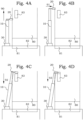
- FIGs 4A-D schematically illustrates an embodiment of a general procedure for clamping a road freight vehicle 80.
- the road freight vehicle 80 indicated by dotted lines is parked in front of a loading dock 82.
- a ramp 81 connects the road freight vehicle 80 and the loading dock 82.
- a wheel 83 of the road freight vehicle 80 is intended to be chocked.
- the chocking apparatus 1 is attached to the loading dock 82 in a retracted condition.
- the chocking apparatus 1 is operated such that the telescopic arm is extended in the direction denoted by the arrow 90 besides the wheel 83.
- the force 93 will act on the telescopic arm 10.
- the telescopic arm 10 will then move away from the arm support 30 until a spring force is built up in the spring arrangement that is equal to the applied force 93. This will be discussed more in detail below.
- Figure 5 illustrates a similar embodiment as in Figure 3 , but in a loaded state, i.e. when a chock is pushed with a predetermined force against a wheel.
- the first end 13 is displaced somewhat in the direction D compared to Figure 3 , since the telescopic arm 10 is exposed for a certain force. Consequently, the spring stopper 61 and the indexing member 62 are also displaced by the same amount, resulting in a compression of the disc springs 65.
- the displacement is essentially proportional to the applied force, and at a stead state, the compression of the disc springs 65 will give rise to a counteracting force of a same magnitude, balancing the forces.
- the indexing member 62 is now placed in front of the first position sensor 63A.
- the first position sensor 63A can then detect the presence of the indexing member 62 and determine that there is a relative displacement between the first end 13 and the arm support 30 within a predetermined range. This means that a suitable force is applied on the chock and loading/unloading of the vehicle can now be performed without risks.
- the relative position between the first end 13 and the arm support 30 is thereby in this embodiment considered as the tension-related measure.
- the movement of the indexing member 62 is directly associated with the tension in the telescoping arm 10 and the relative position then constitutes a measure of such a tension.
- the wheel may be moved. If the wheel is moved towards the loading dock, the chock may follow, due to the force applied to it. However, the resulting force between the chock and the wheel after the moving is typically reduced. Such a reduction is contact force will also result in a corresponding decrease of the force at the first end 13 of the telescopic arm 10, in turn resulting in that the first end 13 of the telescopic arm 10 will be displaced somewhat away from the second end. If such a decrease of the forces and thus displacement in the arm support is large enough, the safety of the chocking action is questioned.
- This situation can, however, be detected by the first position sensor 63A, discovering that the indexing member 62 no longer is in the requested relative position range.
- Safety routines may therefore be taken as a result of the findings of the first position sensor 63A, i.e. in dependence of the detected relative position between the first end 13 and the arm support 30.
- Such functionality can easily be implemented in a control system, as will be described further below.
- the second position sensor 63B can be utilized to detect that the relative position between the first end 13 and the arm support 30 is according to the expectations. Failures in operation prohibiting a correct operation of the telescopic arm may lead to the expected starting position is not reached. An indication from the second position sensor 63B that the correct position is not reached may be used to alert the operator to start a failure investigation before starting the entire chocking operation.
- FIG. 6 is a flow diagram of steps of an embodiment of a method for operating a chocking apparatus for preventing unintentional movement of a road freight vehicle in association with loading/unloading at a loading dock.
- step S10 which may be performed e.g. if there is a second position sensor, it is determined if the first end of the telescopic arm is in a correct initial position relative the arm support. If it is found that position is non-correct, the flow may continue to step S12 in which an indication of an error state is signaled.
- the operator display 41 is advantageously used for such signaling purposes.
- a red light or a warning message in a display may indicated for the operator that the equipment is not in order to be used, and that some kind of fault investigation is recommended.
- step S20 a displacement driving means is operated for telescopically moving the first member of the telescoping arm in relation to the second member of said telescoping arm.
- the step S20 typically comprises a number of part steps.
- step S21 the telescopic arm is extended to position the chock beyond the vehicle wheel to be chocked.
- step S22 the chock is placed right behind tS50he vehicle wheel.
- step S23 the telescopic arm is contracted until the chock comes into contact with the vehicle wheel.
- step S24 a force is applied between the chock and the vehicle wheel.
- Such actions are by advantage performed by an operator, e.g. using an operator display 41 ( Fig. 1 ).
- step S30 it is determined whether the tension-related measure, e.g. the relative position of the first end of the telescopic arm with respect to the arm support, is within a predetermined range. If this is the case, the process continues to step S31, in which it is signaled that loading/unloading can be performed. This signaling may for instance be a light signal, a sound signal, and/or a message at an operator screen. The process then continues back to the determining step S30 and the process can be repeated until the chock is to be released in step S50.
- the tension-related measure e.g. the relative position of the first end of the telescopic arm with respect to the arm support
- step S30 If it is concluded in step S30 that the tension-related measure, e.g. the relative position of the first end of the telescopic arm with respect to the arm support, is outside the predetermined range, the process continues to a step S40, in which a safety routine is activated.
- a safety routine is activated. The details of this safety routine may be different depending on which additional information that may be available and on the nature of the mechanical parts. Some examples are discussed here below. If the safety routines are successful, the process may return to step S30, otherwise, loading/unloading may have to be stopped.
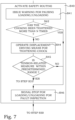
- FIG. 7 illustrates a part flow diagram of part steps of an embodiment of step S40 of Figure 6 .
- the activation of the safety routines may start with step S41 in which a warning is issued to the operator and/or loading/unloading personnel that the safety may be questioned, and that loading/unloading should be paused, at least temporarily.
- the displacement driving means is operated for tightening the chock against the vehicle wheel. This may be performed manually or automatically. If the wheel has moved and this was the cause of that the first end of the telescoping arm was not within the allowed range, a further tightening by use of the displacement driving means may compensate for the wheel displacement.
- step S45 it is checked whether this tightening action had the requested result in bringing back the tension of the telescoping arm, e.g. indicated by the position of the first end of the telescoping arm, into the allowed range. If the measures were successful, the process can return to step S31 and the loading/unloading can start again. If the tightening action did not result in bringing tension-related measure, e.g. the first end of the telescoping arm, into the allowed range, there has to be additional problems with the equipment, and loading/unloading should be stopped until such problems are identified and solved. The proceed thereby continues to step S46, where a stop for loading/unloading for fault inspection is signaled to the operator or personnel performing loading/unloading. The process then continues to step S50, when it is determined that loading/unloading personnel has exited the vehicle.
- step S42 may be introduced after the issue of the warning of the pausing.
- the number of tightening actions is kept on track and when more than a predetermined number of tightenings are performed, the process will continue directly to step S46.
- This measure can be useful if e.g. the ground is extremely slippery, and the vehicle continues to slide relatively large distances. It may then be wise to counteract the properties of the ground and repark the vehicle before the loading/unloading is continued.
- step S42 it is thus checked whether choking has been tightened mor than N times. If that is the case, step S46 will follow. Otherwise, a new tightening is allowed.
- the number N can for instance be selected with respect to the width of the allowed rang for the first end, the degree of safety that is intended to be used.
- the displacement driving means comprises a hydraulic system
- Such pressure monitors can be used to determine a pressure difference between the volumes.
- Such a measure can preferably also be used to further improve the safety routines.
- FIG 8 illustrates a part flow diagram of part steps of another embodiment of step S40 of Figure 6 .
- a step S43 is introduced, in which it is determined if measured pressure differences in the hydraulic system are compatible with the tension-related measure, e.g. the first end position.
- the tension-related measure e.g. the first end position.
- a reduction of the tension in the telescopic arm e.g. indicated by displacement of the first end of the telescoping arm, is typically an indication of that the force on the wheel has been reduced.
- Such a reduction would also be seen as a reduction of the pressure difference within the hydraulic system. If these two changes are compatible, the telescoping arm is probably in good order and the process can continue to step S44.
- FIG. 9 illustrates a part flow diagram of steps of another embodiment of a method for operating a chocking apparatus for preventing unintentional movement of a road freight vehicle in association with loading/unloading at a loading dock.
- the tension-related measure e.g. the first end position
- the process continues to a step S32.
- the pressure differences in the hydraulic system are checked to conclude if there are any out-of range operation. If the pressure differences are within the acceptable predetermined ranges, loading/unloading may be continued, and the process continues to step S31. However, if the pressure differences are outside the predetermined allowed range, the safety routines of step S40 can be activated.
- This embodiment may detect faults in the system that depends on e.g. a faulty mechanical interaction between the cylinder and different members attached to the arm support. If, for instance, the spring arrangement is made according to the Figures 3 and 5 , there might be a slight risk for the shaft to get stuck in the hole of the support plate. In such a case, the wheel may be displaced and release some of the force from the telescopic arm, without causing a displacement of the indexing member. However, if the piston and cylinder operates correctly, there will be a decrease in the pressure differences, which then can be used to indicate need for actions.
- the mechanically based position sensing system and the hydraulically based pressure system can thus be utilized as complementary sources of information for creating a safe loading/unloading situation.
- the actual design and operation of the telescoping arm can be altered in many different ways.
- One obvious alternative is to use a pneumatic system instead.
- the functions for such a system are basically analogue to the hydraulic case.
- displacement driving means on mechanical driving of the telescoping movement.
- a lever arrangement or a crank arrangement preferably combined with different kinds of ratchet mechanisms, may allow a fully manual operation of the displacement driving means.
- Mechanical driving may also be provided e.g. by different kinds of motor systems.
- An electrical motor may easily be adapted to drive the telescoping movement of the telescoping arm.
- the relative positions of the first and second members may be mechanically fixed, by different latching arrangements.
- the displacement driving means is a mechanical system, whereby the displacement driving means further comprises a motor, configured for providing a relative motion between the first member of the telescopic arm and said second member of the telescopic arm.
- control system is connected also to the displacement driving means, wherein the control system is configured for activating the safety routine in further dependence of operation conditions of the motor.
- the detailed design of the spring arrangement can be varied in many ways, still providing the same or corresponding functions.
- the type of springs can of course be different, and the spring force balancing the force by which the chock is affected can be provided by expansion of springs instead of compression.
- the position detection can be provided in many different way, known as such in prior art. Electrically and/or magnetically based detection, such as using conductive or inductive sensors can be utilized, as well as many types of optically based systems may easily be adapted to measure a relative position between the first end of the telescopic arm and the arm support. Even fully mechanical solutions of sensors are feasible. Since it only is the relative position between the first end of the telescoping arm and the arm support that has to be monitored, the actual place where measurements are made may differ.
- Figure 10 illustrates schematically parts of another embodiment of a chocking apparatus 1.
- the telescoping arm 10 comprises a first member 11 comprising a threaded rod 116 attached to an end plate 114 at the first end 13.
- the end plate is provided with holes, through which two guiding rails 115 are provided.
- the guiding rails 115 are provided with recesses 118 in which a part of the end plat 114 fits.
- the end plate 114 is firmly attached to one end of a coil spring 160, constituting the spring arrangement 60.
- the other end of the coil spring 160 is attached to a support plate 33 of the arm support 30.
- the coil spring 160 is dimensioned to provide a small pulling force on the end plate 114 when the telescopic arm is not in use, ensuring that the end plate 114 rests against a surface of the recesses 118 positioned nearest the arm support 30.
- a second member 12 of the telescopic arm 10 is in this embodiment constituted by a threaded cylinder 117, adapted to fit to the threaded rod 116.
- a displacement driving means 40 comprises a motor 140, e.g. an electrical motor, and is arranged for applying a turning force onto the threaded cylinder 117. By this, a telescopic movement between the first and second members 11, 12 is achieved.
- a first position sensor 63A in this embodiment constituted by a simple push contact, will detect the presence of the end plate 114. If the chocking force will be reduced, e.g. is the vehicle wheel moves, the coil spring 160 will cause the end plate 114 to be retracted from the first position sensor 63A, and a need for security actions may be detected.
- a second position sensor 63B is provided at the opposite side of the recess 118 and detects if the end plate is positioned in a start position.
- the arm tension detecting system (5) has been based on a spring arrangement and detection of a displacement.
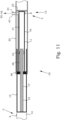
- Figure 11 illustrates schematically a telescoping arm 10 of a chocking apparatus.
- the arm tension detecting system 5 comprises a tension sensor 6.
- it is intended to use a strain gauge as the tension sensor 6.
- Two alternative or complementary positions of such tension sensor 6 are indicated, however, the person skilled in the art realizes that many other locations are possible as well.
- the tension sensor 6 is arranged at the telescoping arm 10 and is configured for determining a strain in the telescoping arm 10 as the tension-related measure.
- One of the illustrated locations of the tension sensor is at the second end 14 of the telescoping arm 10. These parts are exposed for essentially the same forces as is applied to the chock. The forces cause the members at the second end 14 to become strained, which is detectable by the strain gauge.
- the other illustrated location of the tension sensor is close to the first end 13 of the telescoping arm, in this embodiment at the first member 11, at the outside of the cylinder 16. Also this part will experience the forces that are applied to the chock an corresponding strains will be present.
Landscapes
- Engineering & Computer Science (AREA)
- Mechanical Engineering (AREA)
- Transportation (AREA)
- Vehicle Body Suspensions (AREA)
Claims (14)
- Verkeilungsvorrichtung (1) zum Verhindern von ungewollter Bewegung eines Straßenfrachtfahrzeugs in Zusammenhang mit dem Beladen/Entladen an einer Laderampe, aufweisend:- einen Teleskoparm (10), der ausfahrbar bzw. einfahrbar ist, mit einem ersten Glied (11), das relativ zu einem zweiten Glied (12) teleskopisch verfahrbar ist;- ein Verfahrantriebsmittel (40), das zum teleskopischen Bewegen des ersten Glieds (11) relativ zu dem zweiten Glied (12) angeordnet ist;- eine Armhalterung (30), an der ein erstes Ende (13) des Teleskoparms (10) befestigt ist; und- einen Keil (20), der an einem dem ersten Ende (13) entgegengesetzten zweiten Ende (14) des Teleskoparms (10) befestigt ist, gekennzeichnet durch- ein Armspannungserfassungssystem (5), das zum Ermitteln einer spannungsbezogenen Messung, die eine Spannung in dem Teleskoparm abbildet, ausgebildet ist; und- ein Steuerungssystem (70), das mit dem Armspannungserfassungssystem (5) verbunden und zum Aktivieren einer Sicherheitsroutine in Abhängigkeit von der spannungsbezogenen Messung ausgebildet ist;
wobei das Steuerungssystem (70) zum Aktivieren des Verfahrantriebsmittels (40) zum Einfahren des Teleskoparms (10), wenn die spannungsbezogene Messung außerhalb eines vorbestimmten Bereichs liegt, ausgebildet ist. - Verkeilungsvorrichtung nach Anspruch 1, dadurch gekennzeichnet, dassdas Armspannungserfassungssystem (5) eine Federanordnung (60) und mindestens einen ersten Lagesensor (63A; 63C) aufweist;wobei das erste Ende (13) des Teleskoparms (10) über die Federanordnung (60) an der Armhalterung (30) befestigt ist;wobei die Federanordnung (60) dazu ausgebildet ist, einer Verfahrbewegung des ersten Endes (13) des Teleskoparms (10) in der Richtung (D) hin zu dem zweiten Ende (14) des Teleskoparms (10) entgegenzuwirken, und dass sie ferner aufweist:- den mindestens einen Lagesensor (63A; 63C), der dazu ausgebildet ist, zu erfassen, ob eine relative Lage zwischen dem ersten Ende (13) und der Armhalterung (30) als die spannungsbezogene Messung innerhalb eines vorbestimmten Bereichs liegt.
- Verkeilungsvorrichtung nach Anspruch 1, dadurch gekennzeichnet, dassdas Armspannungserfassungssystem (5) einen Spannungssensor (6) aufweist;wobei der Spannungssensor (6) an dem Teleskoparm (10) angeordnet ist und zum Bestimmen einer Dehnung in dem Teleskoparm (10) als die spannungsbezogene Messung ausgebildet ist.
- Verkeilungsvorrichtung nach Anspruch 3, dadurch gekennzeichnet, dass der Spannungssensor (6) ein Dehnungsmessstreifen ist.
- Verkeilungsvorrichtung nach einem beliebigen der Ansprüche 1 bis 4, dadurch gekennzeichnet, dass das Steuerungssystem (70) zum Anstoßen einer Ausgabe eines Warnsignals ausgebildet ist, wenn die spannungsbezogene Messung außerhalb eines vorbestimmten Bereichs liegt.
- Verkeilungsvorrichtung nach Anspruch 2, gekennzeichnet durch einen zweiten Lagesensor (63B; 63D), der zum Erfassen der relativen Lage zwischen dem ersten Ende (13) und der Armhalterung (30) in einem anderen Bereich als der erste Lagesensor (63A; 63C) ausgebildet ist.
- Verkeilungsvorrichtung nach einem beliebigen der Ansprüche 1 bis 6, dadurch gekennzeichnet, dass das Verfahrantriebsmittel (40) ein hydraulisches System (45) ist, wobei das erste Glied (11) des Teleskoparms (10) ein Zylinder (16) und das zweite Glied (12) des Teleskoparms (10) ein Kolben (17) ist, wobei das Verfahrantriebsmittel (40) ferner eine Druckerzeugungsvorrichtung (42) aufweist, die zum Bereitstellen von Druckdifferenzen zwischen verschiedenen abgeschlossenen Räumen zwischen dem Zylinder (16) und dem Kolben (17) ausgebildet ist.
- Verkeilungsvorrichtung nach einem beliebigen der Ansprüche 1 bis 6, dadurch gekennzeichnet, dass das Verfahrantriebsmittel (40) ein pneumatisches System ist, wobei das erste Glied (11) des Teleskoparms (10) ein Zylinder (16) und das zweite Glied (12) des Teleskoparms (10) ein Kolben (17) ist, wobei das Verfahrantriebsmittel (40) ferner eine Druckerzeugungsvorrichtung (42) aufweist, die zum Bereitstellen von Druckdifferenzen zwischen verschiedenen abgeschlossenen Räumen zwischen dem Zylinder (16) und dem Kolben (17) ausgebildet ist.
- Verkeilungsvorrichtung nach einem beliebigen der Ansprüche 1 bis 6, dadurch gekennzeichnet, dass das Verfahrantriebsmittel (40) ein mechanisches System ist, wobei das Verfahrantriebsmittel (40) ferner einen Motor (140) aufweist, der zum Bereitstellen einer relativen Bewegung zwischen dem ersten Glied (11) des Teleskoparms (10) und dem zweiten Glied (12) des Teleskoparms (10) ausgebildet ist.
- Verkeilungsvorrichtung nach Anspruch 7 oder 8, dadurch gekennzeichnet, dass das Steuerungssystem (70) auch mit dem Verfahrantriebsmittel (40) verbunden ist, wobei das Steuerungssystem (70) zum Aktivieren der Sicherheitsroutine in weiterer Abhängigkeit von den Druckdifferenzen in dem Verfahrantriebsmittel (40) ausgebildet ist.
- Verkeilungsvorrichtung nach Anspruch 9, dadurch gekennzeichnet, dass das Steuerungssystem (70) auch mit dem Verfahrantriebsmittel (40) verbunden ist, wobei das Steuerungssystem (70) zum Aktivieren der Sicherheitsroutine in weiterer Abhängigkeit von Betriebszuständen des Motors (140) ausgebildet ist.
- Verkeilungsvorrichtung nach einem beliebigen der Ansprüche 1 bis 11, dadurch gekennzeichnet, dass das erste Ende (13) des Teleskoparms (10) eine Endanschlagoberfläche (67) aufweist, von der sich ein Schaft (64) wegerstreckt, wobei die Armhalterung (30) eine Halterungsplatte (33) mit einem Loch (34) aufweist, durch welches der Schaft (64) verschiebbar angeordnet ist, und wobei der Schaft (64) einen Federstopper (61), der in einem Abstand (X) von der Anschlagoberfläche (67) angeordnet ist, und Tellerfedern (65), die zwischen dem Federstopper (61) und der Halterungsplatte (33) der Armhalterung (30) angebracht sind, aufweist.
- Verfahren zum Bedienen einer Verkeilungsvorrichtung zum Verhindern von ungewollter Bewegung eines Straßenfrachtfahrzeugs in Zusammenhang mit dem Beladen/Entladen an einer Laderampe, umfassend den Schritt des:- Bedienens eines Verfahrantriebsmittels zum teleskopischen Bewegen eines ersten Glieds eines Teleskoparms, der ausfahrbar bzw. einfahrbar ist, relativ zu einem zweiten Glied des Teleskoparms;wobei der Teleskoparm durch ein erstes Ende an einer Armhalterung und durch ein dem ersten Ende entgegengesetztes zweites Ende an einem Keil befestigt ist und ein erstes Glied aufweist, das relativ zu einem zweiten Glied teleskopisch verfahrbar ist;gekennzeichnet durch die weiteren Schritte des:- Erfassens einer spannungsbezogenen Messung, welche eine Spannung in dem Teleskoparm abbildet; und- Aktivieren einer Sicherheitsroutine in Abhängigkeit von der spannungsbezogenen Messung;wobei die Sicherheitsroutine Einfahren des Teleskoparms (10) umfasst, wenn die spannungsbezogene Messung außerhalb eines vorbestimmten Bereichs liegt.
- Verfahren nach Anspruch 13, dadurch gekennzeichnet, dass der Schritt des Aktivierens einer Sicherheitsroutine Anstoßen einer Ausgabe eines Warnsignals umfasst, wenn die spannungsbezogene Messung außerhalb eines vorbestimmten Bereichs liegt.
Applications Claiming Priority (1)
| Application Number | Priority Date | Filing Date | Title |
|---|---|---|---|
| SE2150638A SE544917C2 (en) | 2021-05-19 | 2021-05-19 | Chocking apparatus with slacking surveillance and a method for operating a chocking apparatus |
Publications (3)
| Publication Number | Publication Date |
|---|---|
| EP4091973A1 EP4091973A1 (de) | 2022-11-23 |
| EP4091973C0 EP4091973C0 (de) | 2024-02-14 |
| EP4091973B1 true EP4091973B1 (de) | 2024-02-14 |
Family
ID=81748673
Family Applications (1)
| Application Number | Title | Priority Date | Filing Date |
|---|---|---|---|
| EP22173934.5A Active EP4091973B1 (de) | 2021-05-19 | 2022-05-18 | Verkeilungsvorrichtung mit lockerungsüberwachung |
Country Status (2)
| Country | Link |
|---|---|
| EP (1) | EP4091973B1 (de) |
| SE (1) | SE544917C2 (de) |
Family Cites Families (8)
| Publication number | Priority date | Publication date | Assignee | Title |
|---|---|---|---|---|
| US4207019A (en) * | 1978-09-11 | 1980-06-10 | Cone Malcolm S | Truck dock wheel safety chock system |
| US7032720B2 (en) * | 2002-02-25 | 2006-04-25 | Gaetan Jette | Wheel chock restraint system |
| SE524657C2 (sv) * | 2003-01-10 | 2004-09-14 | Bengt-Olov Eriksson | Blokeringsanordning |
| US7226265B2 (en) * | 2004-03-11 | 2007-06-05 | Hendrickson Usa, L L.C. | Tire-detecting wheel chock apparatus |
| US8307956B2 (en) * | 2007-07-25 | 2012-11-13 | Rite-Hite Holding Corporation | Wheel chock system |
| US8006811B2 (en) * | 2007-09-07 | 2011-08-30 | Rite-Hite Holding Corporation | Loading dock wheel restraint comprising a flexible elongate member |
| US8464846B2 (en) * | 2008-03-04 | 2013-06-18 | Rite-Hite Holding Corporation | Restraining arms for wheel chocks |
| US11285932B2 (en) * | 2017-06-05 | 2022-03-29 | Rite-Hite Holding Corporation | Wheel chock alarm systems and related methods |
-
2021
- 2021-05-19 SE SE2150638A patent/SE544917C2/en unknown
-
2022
- 2022-05-18 EP EP22173934.5A patent/EP4091973B1/de active Active
Also Published As
| Publication number | Publication date |
|---|---|
| SE544917C2 (en) | 2022-12-27 |
| EP4091973C0 (de) | 2024-02-14 |
| SE2150638A1 (en) | 2022-11-20 |
| EP4091973A1 (de) | 2022-11-23 |
Similar Documents
| Publication | Publication Date | Title |
|---|---|---|
| US10479331B2 (en) | Trailer docking repositionable support | |
| US8590674B2 (en) | Chock system | |
| US5743697A (en) | Automatic wheel chock | |
| US5934857A (en) | Automatic wheel chock system | |
| US7032720B2 (en) | Wheel chock restraint system | |
| US4555211A (en) | Truck locking device | |
| US4915568A (en) | Vehicle restraining apparatus | |
| AU2015236334B2 (en) | Fifth wheel coupler safety control system | |
| US8532816B2 (en) | Truck restraint for loading dock | |
| WO2011146787A1 (en) | Trailer stabilizer | |
| CN100413740C (zh) | 弹簧储能缸 | |
| US5388947A (en) | Manually controlled vehicle restraint apparatus with a counterbalance | |
| US20060071549A1 (en) | Electronic controlled vacuum powered brake system for towed trailers | |
| EP4091973B1 (de) | Verkeilungsvorrichtung mit lockerungsüberwachung | |
| WO1988008403A1 (en) | Commercial vehicle locating system | |
| CN108290582B (zh) | 用于在运输车辆上固定半挂车主销的系统 | |
| CA2234974A1 (en) | Automatic wheel chock system | |
| KR102258264B1 (ko) | 에어 디스크 브레이크용 캘리퍼 위치검출 장치 | |
| EP1136343B1 (de) | Einrichtung und Verfahren zur Regelung einer lenkbaren Achse | |
| US20210239172A1 (en) | Systems and methods for sensing a brake component with an acoustic sensor | |
| KR20230042504A (ko) | 차량의 자동 주차를 위한 방법 및 시스템 | |
| US20260054700A1 (en) | Brake system and method for carrying out a parking brake function of a vehicle | |
| EP4328102A1 (de) | Bremssystem, fahrzeugkombination und verfahren zum betreiben derselben | |
| TR2023010724A2 (tr) | Mekani̇k ayakli yükleme rampasi kontrol si̇stemi̇ ve yöntemi̇ | |
| CN121291345A (zh) | 自锁式防移位车轮挡块装置及控制方法 |
Legal Events
| Date | Code | Title | Description |
|---|---|---|---|
| PUAI | Public reference made under article 153(3) epc to a published international application that has entered the european phase |
Free format text: ORIGINAL CODE: 0009012 |
|
| STAA | Information on the status of an ep patent application or granted ep patent |
Free format text: STATUS: THE APPLICATION HAS BEEN PUBLISHED |
|
| AK | Designated contracting states |
Kind code of ref document: A1 Designated state(s): AL AT BE BG CH CY CZ DE DK EE ES FI FR GB GR HR HU IE IS IT LI LT LU LV MC MK MT NL NO PL PT RO RS SE SI SK SM TR |
|
| STAA | Information on the status of an ep patent application or granted ep patent |
Free format text: STATUS: REQUEST FOR EXAMINATION WAS MADE |
|
| 17P | Request for examination filed |
Effective date: 20230308 |
|
| RBV | Designated contracting states (corrected) |
Designated state(s): AL AT BE BG CH CY CZ DE DK EE ES FI FR GB GR HR HU IE IS IT LI LT LU LV MC MK MT NL NO PL PT RO RS SE SI SK SM TR |
|
| RIC1 | Information provided on ipc code assigned before grant |
Ipc: B65G 69/00 20060101AFI20230628BHEP |
|
| GRAP | Despatch of communication of intention to grant a patent |
Free format text: ORIGINAL CODE: EPIDOSNIGR1 |
|
| STAA | Information on the status of an ep patent application or granted ep patent |
Free format text: STATUS: GRANT OF PATENT IS INTENDED |
|
| INTG | Intention to grant announced |
Effective date: 20230915 |
|
| GRAS | Grant fee paid |
Free format text: ORIGINAL CODE: EPIDOSNIGR3 |
|
| GRAA | (expected) grant |
Free format text: ORIGINAL CODE: 0009210 |
|
| STAA | Information on the status of an ep patent application or granted ep patent |
Free format text: STATUS: THE PATENT HAS BEEN GRANTED |
|
| AK | Designated contracting states |
Kind code of ref document: B1 Designated state(s): AL AT BE BG CH CY CZ DE DK EE ES FI FR GB GR HR HU IE IS IT LI LT LU LV MC MK MT NL NO PL PT RO RS SE SI SK SM TR |
|
| REG | Reference to a national code |
Ref country code: GB Ref legal event code: FG4D |
|
| REG | Reference to a national code |
Ref country code: CH Ref legal event code: EP |
|
| REG | Reference to a national code |
Ref country code: DE Ref legal event code: R096 Ref document number: 602022001918 Country of ref document: DE |
|
| REG | Reference to a national code |
Ref country code: IE Ref legal event code: FG4D |
|
| U01 | Request for unitary effect filed |
Effective date: 20240308 |
|
| U07 | Unitary effect registered |
Designated state(s): AT BE BG DE DK EE FI FR IT LT LU LV MT NL PT SE SI Effective date: 20240318 |
|
| PG25 | Lapsed in a contracting state [announced via postgrant information from national office to epo] |
Ref country code: IS Free format text: LAPSE BECAUSE OF FAILURE TO SUBMIT A TRANSLATION OF THE DESCRIPTION OR TO PAY THE FEE WITHIN THE PRESCRIBED TIME-LIMIT Effective date: 20240614 |
|
| PG25 | Lapsed in a contracting state [announced via postgrant information from national office to epo] |
Ref country code: GR Free format text: LAPSE BECAUSE OF FAILURE TO SUBMIT A TRANSLATION OF THE DESCRIPTION OR TO PAY THE FEE WITHIN THE PRESCRIBED TIME-LIMIT Effective date: 20240515 |
|
| PG25 | Lapsed in a contracting state [announced via postgrant information from national office to epo] |
Ref country code: HR Free format text: LAPSE BECAUSE OF FAILURE TO SUBMIT A TRANSLATION OF THE DESCRIPTION OR TO PAY THE FEE WITHIN THE PRESCRIBED TIME-LIMIT Effective date: 20240214 Ref country code: RS Free format text: LAPSE BECAUSE OF FAILURE TO SUBMIT A TRANSLATION OF THE DESCRIPTION OR TO PAY THE FEE WITHIN THE PRESCRIBED TIME-LIMIT Effective date: 20240514 |
|
| PG25 | Lapsed in a contracting state [announced via postgrant information from national office to epo] |
Ref country code: ES Free format text: LAPSE BECAUSE OF FAILURE TO SUBMIT A TRANSLATION OF THE DESCRIPTION OR TO PAY THE FEE WITHIN THE PRESCRIBED TIME-LIMIT Effective date: 20240214 |
|
| PG25 | Lapsed in a contracting state [announced via postgrant information from national office to epo] |
Ref country code: RS Free format text: LAPSE BECAUSE OF FAILURE TO SUBMIT A TRANSLATION OF THE DESCRIPTION OR TO PAY THE FEE WITHIN THE PRESCRIBED TIME-LIMIT Effective date: 20240514 Ref country code: IS Free format text: LAPSE BECAUSE OF FAILURE TO SUBMIT A TRANSLATION OF THE DESCRIPTION OR TO PAY THE FEE WITHIN THE PRESCRIBED TIME-LIMIT Effective date: 20240614 Ref country code: HR Free format text: LAPSE BECAUSE OF FAILURE TO SUBMIT A TRANSLATION OF THE DESCRIPTION OR TO PAY THE FEE WITHIN THE PRESCRIBED TIME-LIMIT Effective date: 20240214 Ref country code: GR Free format text: LAPSE BECAUSE OF FAILURE TO SUBMIT A TRANSLATION OF THE DESCRIPTION OR TO PAY THE FEE WITHIN THE PRESCRIBED TIME-LIMIT Effective date: 20240515 Ref country code: ES Free format text: LAPSE BECAUSE OF FAILURE TO SUBMIT A TRANSLATION OF THE DESCRIPTION OR TO PAY THE FEE WITHIN THE PRESCRIBED TIME-LIMIT Effective date: 20240214 |
|
| PG25 | Lapsed in a contracting state [announced via postgrant information from national office to epo] |
Ref country code: PL Free format text: LAPSE BECAUSE OF FAILURE TO SUBMIT A TRANSLATION OF THE DESCRIPTION OR TO PAY THE FEE WITHIN THE PRESCRIBED TIME-LIMIT Effective date: 20240214 |
|
| PG25 | Lapsed in a contracting state [announced via postgrant information from national office to epo] |
Ref country code: PL Free format text: LAPSE BECAUSE OF FAILURE TO SUBMIT A TRANSLATION OF THE DESCRIPTION OR TO PAY THE FEE WITHIN THE PRESCRIBED TIME-LIMIT Effective date: 20240214 |
|
| PG25 | Lapsed in a contracting state [announced via postgrant information from national office to epo] |
Ref country code: SM Free format text: LAPSE BECAUSE OF FAILURE TO SUBMIT A TRANSLATION OF THE DESCRIPTION OR TO PAY THE FEE WITHIN THE PRESCRIBED TIME-LIMIT Effective date: 20240214 |
|
| PG25 | Lapsed in a contracting state [announced via postgrant information from national office to epo] |
Ref country code: CZ Free format text: LAPSE BECAUSE OF FAILURE TO SUBMIT A TRANSLATION OF THE DESCRIPTION OR TO PAY THE FEE WITHIN THE PRESCRIBED TIME-LIMIT Effective date: 20240214 |
|
| U21 | Renewal fee for the european patent with unitary effect paid with additional fee |
Year of fee payment: 3 Effective date: 20240918 |
|
| PG25 | Lapsed in a contracting state [announced via postgrant information from national office to epo] |
Ref country code: SK Free format text: LAPSE BECAUSE OF FAILURE TO SUBMIT A TRANSLATION OF THE DESCRIPTION OR TO PAY THE FEE WITHIN THE PRESCRIBED TIME-LIMIT Effective date: 20240214 |
|
| PG25 | Lapsed in a contracting state [announced via postgrant information from national office to epo] |
Ref country code: SM Free format text: LAPSE BECAUSE OF FAILURE TO SUBMIT A TRANSLATION OF THE DESCRIPTION OR TO PAY THE FEE WITHIN THE PRESCRIBED TIME-LIMIT Effective date: 20240214 Ref country code: SK Free format text: LAPSE BECAUSE OF FAILURE TO SUBMIT A TRANSLATION OF THE DESCRIPTION OR TO PAY THE FEE WITHIN THE PRESCRIBED TIME-LIMIT Effective date: 20240214 Ref country code: RO Free format text: LAPSE BECAUSE OF FAILURE TO SUBMIT A TRANSLATION OF THE DESCRIPTION OR TO PAY THE FEE WITHIN THE PRESCRIBED TIME-LIMIT Effective date: 20240214 Ref country code: CZ Free format text: LAPSE BECAUSE OF FAILURE TO SUBMIT A TRANSLATION OF THE DESCRIPTION OR TO PAY THE FEE WITHIN THE PRESCRIBED TIME-LIMIT Effective date: 20240214 |
|
| REG | Reference to a national code |
Ref country code: DE Ref legal event code: R097 Ref document number: 602022001918 Country of ref document: DE |
|
| PLBE | No opposition filed within time limit |
Free format text: ORIGINAL CODE: 0009261 |
|
| STAA | Information on the status of an ep patent application or granted ep patent |
Free format text: STATUS: NO OPPOSITION FILED WITHIN TIME LIMIT |
|
| PG25 | Lapsed in a contracting state [announced via postgrant information from national office to epo] |
Ref country code: MC Free format text: LAPSE BECAUSE OF FAILURE TO SUBMIT A TRANSLATION OF THE DESCRIPTION OR TO PAY THE FEE WITHIN THE PRESCRIBED TIME-LIMIT Effective date: 20240214 |
|
| 26N | No opposition filed |
Effective date: 20241115 |
|
| PG25 | Lapsed in a contracting state [announced via postgrant information from national office to epo] |
Ref country code: MC Free format text: LAPSE BECAUSE OF FAILURE TO SUBMIT A TRANSLATION OF THE DESCRIPTION OR TO PAY THE FEE WITHIN THE PRESCRIBED TIME-LIMIT Effective date: 20240214 |
|
| PG25 | Lapsed in a contracting state [announced via postgrant information from national office to epo] |
Ref country code: IE Free format text: LAPSE BECAUSE OF NON-PAYMENT OF DUE FEES Effective date: 20240518 |
|
| U20 | Renewal fee for the european patent with unitary effect paid |
Year of fee payment: 4 Effective date: 20250416 |
|
| PGFP | Annual fee paid to national office [announced via postgrant information from national office to epo] |
Ref country code: NO Payment date: 20250416 Year of fee payment: 4 |
|
| PG25 | Lapsed in a contracting state [announced via postgrant information from national office to epo] |
Ref country code: CY Free format text: LAPSE BECAUSE OF FAILURE TO SUBMIT A TRANSLATION OF THE DESCRIPTION OR TO PAY THE FEE WITHIN THE PRESCRIBED TIME-LIMIT; INVALID AB INITIO Effective date: 20220518 |
|
| PG25 | Lapsed in a contracting state [announced via postgrant information from national office to epo] |
Ref country code: HU Free format text: LAPSE BECAUSE OF FAILURE TO SUBMIT A TRANSLATION OF THE DESCRIPTION OR TO PAY THE FEE WITHIN THE PRESCRIBED TIME-LIMIT; INVALID AB INITIO Effective date: 20220518 |
|
| REG | Reference to a national code |
Ref country code: CH Ref legal event code: H13 Free format text: ST27 STATUS EVENT CODE: U-0-0-H10-H13 (AS PROVIDED BY THE NATIONAL OFFICE) Effective date: 20251223 |
|
| PG25 | Lapsed in a contracting state [announced via postgrant information from national office to epo] |
Ref country code: CH Free format text: LAPSE BECAUSE OF NON-PAYMENT OF DUE FEES Effective date: 20250531 |