EP4089632B1 - Detection result analysis device, detection result analysis method, and detection result analysis program - Google Patents
Detection result analysis device, detection result analysis method, and detection result analysis program Download PDFInfo
- Publication number
- EP4089632B1 EP4089632B1 EP21767418.3A EP21767418A EP4089632B1 EP 4089632 B1 EP4089632 B1 EP 4089632B1 EP 21767418 A EP21767418 A EP 21767418A EP 4089632 B1 EP4089632 B1 EP 4089632B1
- Authority
- EP
- European Patent Office
- Prior art keywords
- activeness
- evaluation value
- degree
- layers
- layer
- Prior art date
- Legal status (The legal status is an assumption and is not a legal conclusion. Google has not performed a legal analysis and makes no representation as to the accuracy of the status listed.)
- Active
Links
Images








Classifications
-
- G—PHYSICS
- G06—COMPUTING OR CALCULATING; COUNTING
- G06V—IMAGE OR VIDEO RECOGNITION OR UNDERSTANDING
- G06V20/00—Scenes; Scene-specific elements
- G06V20/70—Labelling scene content, e.g. deriving syntactic or semantic representations
-
- G—PHYSICS
- G06—COMPUTING OR CALCULATING; COUNTING
- G06V—IMAGE OR VIDEO RECOGNITION OR UNDERSTANDING
- G06V10/00—Arrangements for image or video recognition or understanding
- G06V10/70—Arrangements for image or video recognition or understanding using pattern recognition or machine learning
- G06V10/764—Arrangements for image or video recognition or understanding using pattern recognition or machine learning using classification, e.g. of video objects
-
- G—PHYSICS
- G06—COMPUTING OR CALCULATING; COUNTING
- G06T—IMAGE DATA PROCESSING OR GENERATION, IN GENERAL
- G06T7/00—Image analysis
-
- G—PHYSICS
- G06—COMPUTING OR CALCULATING; COUNTING
- G06V—IMAGE OR VIDEO RECOGNITION OR UNDERSTANDING
- G06V10/00—Arrangements for image or video recognition or understanding
- G06V10/20—Image preprocessing
- G06V10/25—Determination of region of interest [ROI] or a volume of interest [VOI]
-
- G—PHYSICS
- G06—COMPUTING OR CALCULATING; COUNTING
- G06V—IMAGE OR VIDEO RECOGNITION OR UNDERSTANDING
- G06V10/00—Arrangements for image or video recognition or understanding
- G06V10/20—Image preprocessing
- G06V10/255—Detecting or recognising potential candidate objects based on visual cues, e.g. shapes
-
- G—PHYSICS
- G06—COMPUTING OR CALCULATING; COUNTING
- G06V—IMAGE OR VIDEO RECOGNITION OR UNDERSTANDING
- G06V10/00—Arrangements for image or video recognition or understanding
- G06V10/40—Extraction of image or video features
- G06V10/44—Local feature extraction by analysis of parts of the pattern, e.g. by detecting edges, contours, loops, corners, strokes or intersections; Connectivity analysis, e.g. of connected components
- G06V10/443—Local feature extraction by analysis of parts of the pattern, e.g. by detecting edges, contours, loops, corners, strokes or intersections; Connectivity analysis, e.g. of connected components by matching or filtering
- G06V10/449—Biologically inspired filters, e.g. difference of Gaussians [DoG] or Gabor filters
- G06V10/451—Biologically inspired filters, e.g. difference of Gaussians [DoG] or Gabor filters with interaction between the filter responses, e.g. cortical complex cells
- G06V10/454—Integrating the filters into a hierarchical structure, e.g. convolutional neural networks [CNN]
-
- G—PHYSICS
- G06—COMPUTING OR CALCULATING; COUNTING
- G06V—IMAGE OR VIDEO RECOGNITION OR UNDERSTANDING
- G06V10/00—Arrangements for image or video recognition or understanding
- G06V10/70—Arrangements for image or video recognition or understanding using pattern recognition or machine learning
- G06V10/77—Processing image or video features in feature spaces; using data integration or data reduction, e.g. principal component analysis [PCA] or independent component analysis [ICA] or self-organising maps [SOM]; Blind source separation
- G06V10/80—Fusion, i.e. combining data from various sources at the sensor level, preprocessing level, feature extraction level or classification level
- G06V10/806—Fusion, i.e. combining data from various sources at the sensor level, preprocessing level, feature extraction level or classification level of extracted features
-
- G—PHYSICS
- G06—COMPUTING OR CALCULATING; COUNTING
- G06V—IMAGE OR VIDEO RECOGNITION OR UNDERSTANDING
- G06V10/00—Arrangements for image or video recognition or understanding
- G06V10/70—Arrangements for image or video recognition or understanding using pattern recognition or machine learning
- G06V10/82—Arrangements for image or video recognition or understanding using pattern recognition or machine learning using neural networks
-
- G—PHYSICS
- G06—COMPUTING OR CALCULATING; COUNTING
- G06V—IMAGE OR VIDEO RECOGNITION OR UNDERSTANDING
- G06V10/00—Arrangements for image or video recognition or understanding
- G06V10/20—Image preprocessing
- G06V10/28—Quantising the image, e.g. histogram thresholding for discrimination between background and foreground patterns
Definitions
- the present invention relates to a technique of analyzing a detection result obtained by an object detection model constituted using a neural network.
- Patent Literature 1 a detection result obtained by an object detection model that detects a target object from image data is analyzed to identify learning data lacking in the object detection model.
- a portion that is a basis of judgment by the object detection model is visualized.
- Gradient-weighted Class Action Mapping (GradCAM) is available.
- the object detection model includes a 2-stage type model and a 1-stage type model.
- the 2-stage type model is a model that identifies a target object after narrowing down a Region of Interest (RoI) that indicates a range considered to be the target object.
- the 1-stage type model is a model that identifies an object and a position of the object by using a set of boundary boxes of particular sizes called anchor boxes.
- JP 2019 153092 A discloses a position determination apparatus for determining, from a first image that is an image including at least a desired first subject, a position of the desired first subject.
- Patent Literature 1 JP 2019-192082 A
- the layer suitable for visualization by GradCAM differs depending on conditions such as a type of a target object and a size of the detected target object.
- An objective of the present disclosure is to make it possible to identify a layer suitable for visualizing a portion that is a basis of judgment by the object detection model.
- a detection result analysis device includes:
- the evaluation value calculation unit if the activeness degree is higher than an activeness threshold value, converts the activeness degree into a conversion activeness degree corresponding to the activeness threshold value, and if the activeness degree is equal to or less than the activeness threshold value, converts the activeness degree into a conversion activeness degree corresponding to an activeness threshold value that is one-level lower than the activeness threshold value; and then calculates the evaluation value.
- a detection result analysis method according to the present disclosure is defined in claim 3.
- a detection result analysis program according to the present disclosure is defined in claim 4.
- an evaluation value of a layer is calculated from a heat map representing an activeness degree per pixel in image data, and from a detection region where a target object is detected. At least some layers out of a plurality of layers are selected on the basis of the calculation values. This makes it possible to identify a layer suitable for visualization.
- a configuration of a detection result analysis device 10 according to Embodiment 1 will be described with referring to Fig. 1 .
- the detection result analysis device 10 is a computer that identifies a layer suitable for visualizing a portion that is a basis of judgment by an object detection model.
- the detection result analysis device 10 is provided with hardware devices which are a processor 11, a memory 12, a storage 13, and a communication interface 14.
- the processor 11 is connected to the other hardware devices via a signal line and controls the other hardware devices.
- the processor 11 is an Integrated Circuit (IC) which performs processing. Specific examples of the processor 11 are a Central Processing Unit (CPU), a Digital Signal Processor (DSP), and a Graphics Processing Unit (GPU).
- CPU Central Processing Unit
- DSP Digital Signal Processor
- GPU Graphics Processing Unit
- the memory 12 is a storage device that stores data temporarily. Specific examples of the memory 12 are a Static Random-Access Memory (SRAM) and a Dynamic Random-Access Memory (DRAM).
- SRAM Static Random-Access Memory
- DRAM Dynamic Random-Access Memory
- the storage 13 is a storage device that keeps data.
- a specific example of the storage 13 is a Hard Disk Drive (HDD).
- the storage 13 may be a portable recording medium such as a Secure Digital (SD, registered trademark) memory card, a CompactFlash (registered trademark, CF), a NAND flash, a flexible disk, an optical disk, a compact disk, a Blu-ray (registered trademark) Disc, and a Digital Versatile Disk (DVD).
- SD Secure Digital
- CF CompactFlash
- NAND flash NAND flash
- the communication interface 14 is an interface for communicating with an external device. Specific examples of the communication interface 14 are an Ethernet (registered trademark) port, a Universal Serial Bus (USB) port, and a High-Definition Multimedia Interface (HDMI, registered trademark) port.
- Ethernet registered trademark
- USB Universal Serial Bus
- HDMI High-Definition Multimedia Interface
- the detection result analysis device 10 is provided with an image acquisition unit 21, an evaluation value calculation unit 22, a layer selection unit 23, and a synthesis unit 24, as function components. Functions of the individual function components of the detection result analysis device 10 are implemented by software.
- a program that implements the functions of the individual function components of the detection result analysis device 10 is stored in the storage 13. This program is read into the memory 12 by the processor 11 and run by the processor 11. Hence, the functions of the individual function components of the detection result analysis device 10 are implemented.
- Fig. 1 illustrates only one processor as the processor 11. However, there may be a plurality of processors 11. The plurality of processor 11 may cooperate with each other to run the program that implements the individual functions.
- An operation procedure of the detection result analysis device 10 according to Embodiment 1 corresponds to a detection result analysis method according to Embodiment 1.
- a program that implements the operations of the detection result analysis device 10 according to Embodiment 1 corresponds to a detection result analysis program according to Embodiment 1.
- the object detection model is a model that detects a target object included in image data.
- the object detection model is a model constituted using a neural network. As it is constituted using the neural network, the object detection model is constituted of a plurality of layers.
- Step S11 of Fig. 2 Image Acquisition Process
- the image acquisition unit 21 acquires image data 31 being a processing target.
- the image acquisition unit 21 reads the image data 31 being set in the storage 13 by a user of the detection result analysis device 10, thereby acquiring the image data 31.
- the evaluation value calculation unit 22 focuses on, as a target layer, each of the plurality of layers constituting the object detection model, and calculates an evaluation value of the target layer.
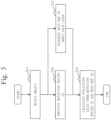
- the evaluation value calculation unit 22 calculates the evaluation value from a heat map 33 representing an activeness degree per pixel in the image data 31 obtained from an output result of the target layer, and from a detection region 32 where a target object is detected from the image data 31 acquired in step S11.
- Step S21 of Fig. 3 Object Detection Result
- the evaluation value calculation unit 22 takes as input the image data 31 acquired in step S11 and detects the target object by the object detection model.
- a type of the target object may be specified in advance or may be specified by the user.
- Fig. 4 illustrates a case where a bottle is specified as the type of the target object.
- the evaluation value calculation unit 22 identifies the detection region 32 which is a region where the target object is detected and which is identified by detecting the target object in step S21.
- the evaluation value calculation unit 22 focuses on each of the plurality of layers constituting the object detection model, as the target layer, and generates the heat map 33.
- the evaluation value calculation unit 22 generates the heat map 33 about the target layer from an output result of the target layer obtained when detecting the target object in step S21.
- the heat map 33 represents an activeness degree per pixel in the image data 31 acquired in step S11. Note that in the heat map 33, a pixel with a higher activeness degree shows a larger value.
- the layer to be focused on as the target layer is only a layer, such as a convolution layer and a pooling layer, from which the heat map 33 can be generated, among the layers constituting the object detection model.
- the layer from which the heat map 33 can be generated specifically refers to a layer having a plurality of channels with two or more pixels in a vertical direction and two or more pixels in a horizontal direction and whose gradient can be calculated.
- all the layers from which the heat maps 33 can be generated are individually set as the target layers. However, out of all the layers from which the heat maps 33 can be generated, only some layers may be set as the target layers. For example, out of all the layers from which the heat maps 33 can be generated, only a certain layer and layers subsequent to it may be set as the target layers.
- the evaluation value calculation unit 22 expands an output result of the target layer and generates the heat map 33 representing the activeness degree per pixel of the image data 31.
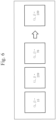
- the evaluation value calculation unit 22 generates the heat map 33 on the premise that one pixel represents four pixels of the image data 31.
- the number of pixels of the image data in the output result may increase.
- the number of pixels in the output result may vary depending on the layer. In any case, the number of pixels in the output result may be increased or decreased to correspond to the number of pixels of the image data 31.
- the evaluation value calculation unit 22 focuses on, as the target layer, each of the plurality of layers from which the heat maps 33 are generated, and calculates the evaluation value from the heat map 33 generated about the target layer in step S23 and from the detection region 32 identified in step S22.
- the evaluation value calculation unit 22 calculates the evaluation value from a ratio of an activeness degree on an inside of the detection region 32 and an activeness degree on an outside of the detection region 32, the activeness degree being represented by the heat map about the target layer. According to the invention, the evaluation value calculation unit 22 calculates, as the evaluation value, a proportion of a sum of activeness degrees on the inside of the detection region 32 to a sum of activeness degrees on the outside of the detection region 32.
- a pixel that is hatched darker has a higher activeness degree.
- the proportion of the sum of the activeness degrees on the inside of the detection region 32 to the sum of the activeness degrees on the outside of the detection region 32 is calculated as the evaluation value.
- the evaluation value is not limited to this.
- a proportion of the sum of the activeness degrees on the inside of the detection region 32 to a sum of activeness degrees of the entire image data 31 may be calculated as the evaluation value.
- Step S13 of Fig. 2 Layer Selection Process
- the layer selection unit 23 selects at least some layers out of the plurality of layers constituting the object detection model, on the basis of the evaluation value calculated in step S12.
- the layer selection unit 23 selects a criterial number of layers out of layers each having an evaluation value higher than an evaluation threshold value. Accordingly, when there are a criterial number or more of layers each having an evaluation value higher than the evaluation threshold value, the criterial number of layers are selected. On the other hand, when there are less than the criterial number of layers each having an evaluation value higher than the threshold value, every layer having an evaluation value higher than the evaluation threshold value is selected.
- the evaluation threshold value is a value that is set in advance in accordance with how much a layer should contribute to detection of the target object so that it is treated as an analysis target, or the like.
- the criterial number is a value that is set in advance in accordance with the number of layers constituting the object detection model, or the like.
- Fig. 5 out of layers ranging from a layer conv0 to a layer conv17_1, layers each having achieved an evaluation value higher than 1.0 being the evaluation threshold value are four layers which are the layer conv11, the layer conv13, the layer conv14_1, and the layer conv14_2.
- the evaluation value of the layer conv11 is expressed as inf. Note that inf indicates that all activated pixels are inside of the detection region 32 and that their evaluation values are infinity.
- Fig. 5 it is assumed that the criterial number is 5, and all of the four layers which are the layer conv11, the layer conv13, the layer conv14_1, and the layer conv14_2 are selected.
- the synthesis unit 24 synthesizes the heat maps 33 about the layers selected in step S13, thereby generating a synthesis map 34.
- the synthesis unit 24 focuses on each pixel of the image data 31 as the target pixel, and sets the highest activeness degree among activeness degrees of the target pixels represented by the individual heat maps about the plurality of layers selected in step S13, as the activeness degree of the target pixel in the synthesis map 34, thereby generating the synthesis map 34.
- the activeness degree about the pixel p i,j in a synthesis map 34 is 239 which is the highest among 15, 239, and 76.
- heat maps 33 about the four layers which are the layer conv11, the layer conv13, the layer conv14_1, and the layer conv14_2 are synthesized to generate a synthesis map 34.
- the activeness degree indicated by each pixel of the synthesis map 34 is the highest activeness degree among the layer conv11, the layer conv13, the layer conv14_1, and the layer conv14_2.
- the detection result analysis device 10 calculates, about each layer, the evaluation value from the heat map 33 and the detection region 32, and selects a layer on the basis of the evaluation value. This enables selection of a layer suitable for visualization.
- a certain layer when a sum of activeness degrees on the inside of the detection region 32 is large, it signifies that a result of that layer is likely to have contributed to detection of a target object.
- a proportion of a sum of activeness degrees on the inside of the detection region 32 to a sum of activeness degrees on the outside of the detection region 32 is high, it signifies that a result of this layer is strongly reflected in a detection result of a target object.
- the proportion of the sum of the activeness degrees on the inside of the detection region 32 to the sum of the activeness degrees on the outside of the detection region 32 is an index that is used as the evaluation value in Embodiment 1.
- to select a layer having a high evaluation value signifies to select a layer suitable for visualizing a portion that is a basis of judgment by the object detection model.
- the detection result analysis device 10 selects a layer suitable for visualization and generates the synthesis map 34. Therefore, it is possible to generate the synthesis map 34 appropriately representing a portion that is a basis of judgment by the object detection model. As a result, it is possible to appropriately analyze the object detection model.
- a type of a target object is a bicycle.
- the entire bicycle is not identified as a detection region 32, but a portion covering from a front wheel to a vicinity of a chain wheel of the bicycle is identified as a detection region 32. That is, it is hard to say that the bicycle is appropriately detected by the object detection model.
- a pedal, a crank, part of a frame, and part of the front wheel are the basis of judgment. Meanwhile, it can be seen that a handle, a saddle, and a rear wheel are not much utilized as the basis of judgment. From this result, it may be possible to provide the object detection model with learning data about the handle, the saddle, and the rear wheel which are not much utilized as the basis of judgment, and to cause the object detection model to learn the learning data.
- a criterial number of layers are selected in step S13 of Fig. 2 .
- the criterial number may be 1. Sometimes the criterial number is desirably 2 or more.
- the synthesis unit 24 may output the heat map 33 about the selected layer as it is, as the synthesis map 34.
- the type of the target object is a motorbike.
- a layer conv7, a layer conv9, a layer conv12, a layer conv13, a layer conv14_1, a layer conv14_2, and a layer conv15_1 achieved an evaluation value higher than 1.0 which is an evaluation threshold value.
- the criterial number is 5.
- the layer conv9, the layer conv12, the layer conv14_1, the layer conv14_2, and the layer conv15_1 are selected, and a synthesis map 34 is generated.
- the front wheel of the motorbike, a vicinity of the front wheel, and part of the handle are the portion that is the basis of judgment.
- a bare wheel is often utilized as the basis of judgment, and it can be seen from the synthesis map 34 that judgment is made appropriately by the object detection model.
- a layer having the highest evaluation value is the layer conv9. Therefore, if the criterial number is 1, that is, if selecting only a layer having the highest evaluation value, only the layer conv9 is selected. Then, from the synthesis map 34, it seems as if part of the handle is the portion that is the basis of judgment. In this manner, an evaluation value of a layer featuring only a narrow region becomes the highest, and there is a possibility that only a layer not necessarily appropriately representing a portion that is the basis of judgment is selected.
- Fig. 9 the type of the target object is a bicycle.
- Image data 31 of Fig. 9 contains two bicycles.
- a layer having the highest evaluation value is a layer conv15_1. Therefore, if the criterial number is 1, that is, if selecting only a layer having the highest evaluation value, only the layer conv15_1 is selected. However, in the layer conv 15 _1, only a vicinity of a bicycle in front is activated, and a vicinity of a bicycle in the back is not activated. Hence, when there are a plurality of target objects in this manner, an evaluation value of a layer featuring only some target objects becomes the highest, and there is a possibility that only a layer not necessarily appropriately representing a portion that is the basis of judgment is selected.
- Embodiment 1 the individual function components are implemented by software. However, Modification 1 may be possible in which the individual function components are implemented by hardware. This Modification 1 will be described regarding its difference from Embodiment 1.
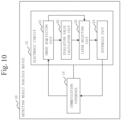
- a configuration of a detection result analysis device 10 according to Modification 1 will be described with referring to Fig. 10 .
- the detection result analysis device 10 is provided with an electronic circuit 15 in place of a processor 11, a memory 12, and a storage 13.
- the electronic circuit 15 is a dedicated circuit that implements the functions of the individual function components and the functions of the memory 12 and storage 13.
- the electronic circuit 15 may be a single circuit, a composite circuit, a programmed processor, a parallel-programmed processor, a logic IC, a Gate Array (GA), an Application Specific Integrated Circuit (ASIC), or a Field-Programmable Gate Array (FPGA).
- a gate Array GA
- ASIC Application Specific Integrated Circuit
- FPGA Field-Programmable Gate Array
- the individual function components may be implemented by one electronic circuit 15.
- the individual function components may be implemented by a plurality of electronic circuits 15 through distribution.
- Modification 2 may be possible in which some of the function components are implemented by hardware and the other function components are implemented by software.
- the processor 11, the memory 12, the storage 13, and the electronic circuit 15 are referred to as processing circuitry. That is, the functions of the individual function components are implemented by processing circuitry.
- Embodiment 2 an activeness degree of each pixel represented by a heat map 33 is subjected to n-value coding, and after that an evaluation value is calculated. This is where Embodiment 2 is different from Embodiment 1. Note that n is an integer of 2 or more. In Embodiment 2, this difference will be described, and the same point will not be described.
- An operation procedure of the detection result analysis device 10 according to Embodiment 2 corresponds to a detection result analysis method according to Embodiment 2.
- a program that implements the operations of the detection result analysis device 10 according to Embodiment 2 corresponds to a detection result analysis program according to Embodiment 2.
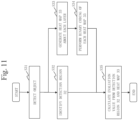
- step S31 through step S33 are the same as the processes of step S21 through step S23 of Fig. 3 .
- An evaluation value calculation unit 22 performs n-value coding of a heat map 33 generated in step S33 for each layer. In Embodiment 2, the evaluation value calculation unit 22 performs binary coding of the heat map 33 of each layer.
- the evaluation value calculation unit 22 focuses on each pixel in the heat map 33, as a target pixel. If the activeness degree of the target pixel is higher than the activeness threshold value, the evaluation value calculation unit 22 converts the activeness degree of the target pixel into 1. If the activeness degree of the target pixel is equal to or less than the activeness threshold value, the evaluation value calculation unit 22 converts the activeness degree of the target pixel into 0. As a result, as illustrated in Fig. 12 , activeness degrees of pixels hatched dark in the heat map 33 become 1, and activeness degrees of the other pixels become 0. In Fig. 12 , a pixel having an activeness degree of 1 is expressed in white, and a pixel having an activeness degree of 0 is expressed in dark.
- the evaluation value calculation unit 22 by using the activeness degree after conversion in step S34, calculates, as an evaluation value, a proportion of a sum of the activeness degrees on the inside of the detection region 32 to a sum of the activeness degrees on the outside of the detection region 32.
- the detection result analysis device 10 performs binary coding of the activeness degree of each pixel in the heat map 33, and after that calculates the evaluation value.
- binary coding of the activeness degree a significant layer has a higher evaluation value, and a non-significant layer has a lower evaluation value. This makes it possible to identify a layer that is more suitable for visualization.
- Embodiment 2 in an exemplification of binary coding, if the activeness degree is higher than the activeness threshold value, 1 is set as the conversion activeness degree. If the activeness degree is equal to or less than the activeness threshold value, 0 is set as the conversion activeness degree. An arbitrary value can be set as the conversion activeness degree of each activeness threshold value.
- the evaluation layer slightly exceeds 1.0 which is the evaluation threshold value.
- the evaluation value decreases to less than 1.0 which is the evaluation threshold value.
- the evaluation value becomes much higher. As a result, a number of layers having evaluation values exceeding 1.0 which is the evaluation threshold value decreases.
- the heat map 33 is subjected to binary coding.
- coding of the heat map 33 is not limited to binary coding, and n-value coding may be employed.
- an evaluation value calculation unit 22 uses two threshold values which are a threshold value X and a threshold value Y, as activeness threshold values.
- a threshold value X a threshold value X
- a threshold value Y a threshold value Y
- an activeness threshold value for n - 1 is set, and a conversion activeness degree is set for each activeness threshold value.
- a conversion activeness degree is fixed for each range of activeness degree which is partitioned by i (0 ⁇ i ⁇ n) and i - 1. If the activeness degree is higher than the activeness threshold value for n - 1, the activeness degree is converted into a conversion activeness degree corresponding to the activeness threshold value for n - 1. If the activeness degree is equal to or lower than the activeness threshold value for n - 1 and higher than an activeness threshold value for n - 2, the activeness degree is converted into a conversion activeness degree corresponding to the activeness threshold value for n - 2.
- a conversion activeness degree corresponding to an activeness threshold value higher than n - 1 is set to 1.
- an activeness degree of n - 2 through 2 it is converted into a value between 1 and 0. This is how n-value coding is performed. Calculation can be simplified by setting a lower limit value of the conversion activeness degree to 0.
- the upper limit value of the conversion activeness degree is not limited to 1 but may be another value.
- n-value coding may be performed using an ReLU function with a shifted threshold value.
- a pixel having an activeness degree equal to or lower than the evaluation threshold value X 0 is set as the activeness degree.
- the value of the activeness degree is maintained.
- the detection result analysis device 10 in the individual embodiments may be applied to an object detection model used in an Automated guided vehicle (AGV).
- AGV Automated guided vehicle
- the automated guided vehicle reads symbols written on the floor and ceiling, thereby grasping a position of itself.
- 10 detection result analysis device
- 11 processor
- 12 memory
- 13 storage
- 14 communication interface
- 15 electronic circuit
- 21 image acquisition unit
- 22 evaluation value calculation unit
- 23 layer selection unit
- 24 synthesis unit
- 31 image data
- 32 detection region
- 33 heat map
- 34 synthesis map.
Landscapes
- Engineering & Computer Science (AREA)
- Theoretical Computer Science (AREA)
- General Physics & Mathematics (AREA)
- Physics & Mathematics (AREA)
- Multimedia (AREA)
- Computer Vision & Pattern Recognition (AREA)
- Evolutionary Computation (AREA)
- General Health & Medical Sciences (AREA)
- Artificial Intelligence (AREA)
- Health & Medical Sciences (AREA)
- Databases & Information Systems (AREA)
- Computing Systems (AREA)
- Medical Informatics (AREA)
- Software Systems (AREA)
- Biomedical Technology (AREA)
- Molecular Biology (AREA)
- Biodiversity & Conservation Biology (AREA)
- Life Sciences & Earth Sciences (AREA)
- Computational Linguistics (AREA)
- Image Analysis (AREA)
Applications Claiming Priority (2)
| Application Number | Priority Date | Filing Date | Title |
|---|---|---|---|
| JP2020040424A JP7139369B2 (ja) | 2020-03-10 | 2020-03-10 | 検出結果分析装置、検出結果分析方法及び検出結果分析プログラム |
| PCT/JP2021/000835 WO2021181858A1 (ja) | 2020-03-10 | 2021-01-13 | 検出結果分析装置、検出結果分析方法及び検出結果分析プログラム |
Publications (3)
| Publication Number | Publication Date |
|---|---|
| EP4089632A1 EP4089632A1 (en) | 2022-11-16 |
| EP4089632A4 EP4089632A4 (en) | 2023-02-08 |
| EP4089632B1 true EP4089632B1 (en) | 2024-10-23 |
Family
ID=77668836
Family Applications (1)
| Application Number | Title | Priority Date | Filing Date |
|---|---|---|---|
| EP21767418.3A Active EP4089632B1 (en) | 2020-03-10 | 2021-01-13 | Detection result analysis device, detection result analysis method, and detection result analysis program |
Country Status (5)
| Country | Link |
|---|---|
| US (1) | US12374082B2 (https=) |
| EP (1) | EP4089632B1 (https=) |
| JP (1) | JP7139369B2 (https=) |
| CN (1) | CN115244574B (https=) |
| WO (1) | WO2021181858A1 (https=) |
Families Citing this family (1)
| Publication number | Priority date | Publication date | Assignee | Title |
|---|---|---|---|---|
| US20240362885A1 (en) * | 2021-09-30 | 2024-10-31 | Rakuten Group, Inc. | Image scoring apparatus, image scoring method and method of machine learning |
Family Cites Families (16)
| Publication number | Priority date | Publication date | Assignee | Title |
|---|---|---|---|---|
| JP6948851B2 (ja) | 2016-06-30 | 2021-10-13 | キヤノン株式会社 | 情報処理装置、情報処理方法 |
| US11468290B2 (en) * | 2016-06-30 | 2022-10-11 | Canon Kabushiki Kaisha | Information processing apparatus, information processing method, and non-transitory computer-readable storage medium |
| JP2018156586A (ja) | 2017-03-21 | 2018-10-04 | 株式会社東芝 | 監視システム |
| JP6959114B2 (ja) | 2017-11-20 | 2021-11-02 | 株式会社パスコ | 誤判別可能性評価装置、誤判別可能性評価方法及びプログラム |
| JP7122328B2 (ja) | 2018-01-10 | 2022-08-19 | 富士フイルム株式会社 | 画像処理装置、プロセッサ装置、画像処理方法、及びプログラム |
| JP2019125204A (ja) | 2018-01-17 | 2019-07-25 | 株式会社東芝 | 目標認識装置、目標認識方法、プログラム及び畳み込みニューラルネットワーク |
| JP6554193B1 (ja) | 2018-01-30 | 2019-07-31 | 三菱電機インフォメーションシステムズ株式会社 | 記入領域抽出装置および記入領域抽出プログラム |
| WO2019155628A1 (ja) * | 2018-02-09 | 2019-08-15 | 日本電気株式会社 | 画像処理装置、画像処理方法および記録媒体 |
| CN110163031B (zh) * | 2018-02-13 | 2023-10-20 | 佳能株式会社 | 用于检测对象的部位的装置和方法及存储介质 |
| JP6992590B2 (ja) | 2018-02-23 | 2022-01-13 | 日本電信電話株式会社 | 特徴表現装置、特徴表現方法、およびプログラム |
| JP6892606B2 (ja) | 2018-03-02 | 2021-06-23 | 日本電信電話株式会社 | 位置特定装置、位置特定方法及びコンピュータプログラム |
| US10740647B2 (en) * | 2018-03-14 | 2020-08-11 | Adobe Inc. | Detecting objects using a weakly supervised model |
| JP7036401B2 (ja) | 2018-04-27 | 2022-03-15 | Awl株式会社 | 学習用サーバ、不足学習用画像収集支援システム、及び不足学習用画像推定プログラム |
| JP2019197311A (ja) | 2018-05-08 | 2019-11-14 | コニカミノルタ株式会社 | 学習方法、学習プログラム、および学習装置 |
| JP2019211913A (ja) | 2018-06-01 | 2019-12-12 | 日本電信電話株式会社 | 特徴量抽出装置、方法、及びプログラム |
| EP3748540A1 (en) * | 2019-06-06 | 2020-12-09 | Koninklijke Philips N.V. | Deep neural network visualisation |
-
2020
- 2020-03-10 JP JP2020040424A patent/JP7139369B2/ja active Active
-
2021
- 2021-01-13 CN CN202180017889.2A patent/CN115244574B/zh active Active
- 2021-01-13 EP EP21767418.3A patent/EP4089632B1/en active Active
- 2021-01-13 WO PCT/JP2021/000835 patent/WO2021181858A1/ja not_active Ceased
-
2022
- 2022-08-03 US US17/880,333 patent/US12374082B2/en active Active
Also Published As
| Publication number | Publication date |
|---|---|
| JP7139369B2 (ja) | 2022-09-20 |
| US12374082B2 (en) | 2025-07-29 |
| JP2021140705A (ja) | 2021-09-16 |
| CN115244574A (zh) | 2022-10-25 |
| WO2021181858A1 (ja) | 2021-09-16 |
| EP4089632A1 (en) | 2022-11-16 |
| EP4089632A4 (en) | 2023-02-08 |
| CN115244574B (zh) | 2025-12-16 |
| US20220375200A1 (en) | 2022-11-24 |
Similar Documents
| Publication | Publication Date | Title |
|---|---|---|
| US9552536B2 (en) | Image processing device, information storage device, and image processing method | |
| US10255663B2 (en) | Image processing device, image processing method, computer program product | |
| US11568682B2 (en) | Recognition of activity in a video image sequence using depth information | |
| CN109598231A (zh) | 一种视频水印的识别方法、装置、设备及存储介质 | |
| KR20210051722A (ko) | 객체 검출 모델의 학습 방법 및 객체 검출 모델이 실행되는 객체 검출 장치 | |
| CN110390681B (zh) | 一种基于深度相机的深度图物体轮廓快速提取方法及装置 | |
| CN112329761A (zh) | 文本检测方法、装置、设备及存储介质 | |
| WO2018197835A1 (en) | Apparatus and method for open-set object recognition | |
| JP6887154B2 (ja) | 画像処理システム、評価モデル構築方法、画像処理方法及びプログラム | |
| WO2022250054A1 (ja) | 異常検知方法、異常検知装置、およびプログラム | |
| CN114503131A (zh) | 检索装置、检索方法、检索程序和学习模型检索系统 | |
| EP4071710A1 (en) | Object detecting device, object detecting method, and object detecting program | |
| EP4089632B1 (en) | Detection result analysis device, detection result analysis method, and detection result analysis program | |
| Osman et al. | Few-shot learning network for moving object detection using exemplar-based attention map | |
| EP3951707A1 (en) | Image processing device and image processing program | |
| CN116824194B (zh) | 图像分类模型的训练方法、图像处理方法及装置 | |
| CN109903246B (zh) | 检测图像变化的方法及装置 | |
| JP2022129792A (ja) | 領域変換装置、領域変換方法及び領域変換システム | |
| KR101332630B1 (ko) | 경량화된 랜덤펀스 및 이를 이용한 이미지 표현방법 | |
| CN117974482A (zh) | 一种用于增强异常检测能力的图像增强方法、系统和设备 | |
| KR102018773B1 (ko) | Akbing을 이용한 영상의 객체 후보 검출 장치 및 방법 | |
| Duth et al. | Identification and extraction of text in non-blurred and blurred image sequences | |
| Davydov et al. | Monocular Supervised Metric Distance Estimation for Autonomous Driving Applications | |
| KR20230106896A (ko) | 신경망 모델 학습 방법, 음향 이벤트 및 음향 방향 인식 방법, 및 상기 방법을 수행하는 전자 장치 | |
| CN119942095B (zh) | 多光谱遮挡目标的检测方法及装置、存储介质、电子设备 |
Legal Events
| Date | Code | Title | Description |
|---|---|---|---|
| STAA | Information on the status of an ep patent application or granted ep patent |
Free format text: STATUS: THE INTERNATIONAL PUBLICATION HAS BEEN MADE |
|
| PUAI | Public reference made under article 153(3) epc to a published international application that has entered the european phase |
Free format text: ORIGINAL CODE: 0009012 |
|
| STAA | Information on the status of an ep patent application or granted ep patent |
Free format text: STATUS: REQUEST FOR EXAMINATION WAS MADE |
|
| 17P | Request for examination filed |
Effective date: 20220809 |
|
| AK | Designated contracting states |
Kind code of ref document: A1 Designated state(s): AL AT BE BG CH CY CZ DE DK EE ES FI FR GB GR HR HU IE IS IT LI LT LU LV MC MK MT NL NO PL PT RO RS SE SI SK SM TR |
|
| A4 | Supplementary search report drawn up and despatched |
Effective date: 20230110 |
|
| RIC1 | Information provided on ipc code assigned before grant |
Ipc: G06V 20/70 20220101ALI20230103BHEP Ipc: G06V 10/82 20220101ALI20230103BHEP Ipc: G06V 10/80 20220101ALI20230103BHEP Ipc: G06V 10/25 20220101ALI20230103BHEP Ipc: G06T 7/00 19950101AFI20230103BHEP |
|
| DAV | Request for validation of the european patent (deleted) | ||
| DAX | Request for extension of the european patent (deleted) | ||
| STAA | Information on the status of an ep patent application or granted ep patent |
Free format text: STATUS: EXAMINATION IS IN PROGRESS |
|
| 17Q | First examination report despatched |
Effective date: 20230828 |
|
| REG | Reference to a national code |
Ref country code: DE Ref legal event code: R079 Ipc: G06V0010820000 Ref country code: DE Ref legal event code: R079 Ref document number: 602021020704 Country of ref document: DE Free format text: PREVIOUS MAIN CLASS: G06T0007000000 Ipc: G06V0010820000 |
|
| GRAP | Despatch of communication of intention to grant a patent |
Free format text: ORIGINAL CODE: EPIDOSNIGR1 |
|
| STAA | Information on the status of an ep patent application or granted ep patent |
Free format text: STATUS: GRANT OF PATENT IS INTENDED |
|
| RIC1 | Information provided on ipc code assigned before grant |
Ipc: G06T 7/00 20170101ALI20240229BHEP Ipc: G06V 20/70 20220101ALI20240229BHEP Ipc: G06V 10/80 20220101ALI20240229BHEP Ipc: G06V 10/25 20220101ALI20240229BHEP Ipc: G06V 10/44 20220101ALI20240229BHEP Ipc: G06V 10/82 20220101AFI20240229BHEP |
|
| INTG | Intention to grant announced |
Effective date: 20240327 |
|
| GRAS | Grant fee paid |
Free format text: ORIGINAL CODE: EPIDOSNIGR3 |
|
| GRAA | (expected) grant |
Free format text: ORIGINAL CODE: 0009210 |
|
| STAA | Information on the status of an ep patent application or granted ep patent |
Free format text: STATUS: THE PATENT HAS BEEN GRANTED |
|
| AK | Designated contracting states |
Kind code of ref document: B1 Designated state(s): AL AT BE BG CH CY CZ DE DK EE ES FI FR GB GR HR HU IE IS IT LI LT LU LV MC MK MT NL NO PL PT RO RS SE SI SK SM TR |
|
| REG | Reference to a national code |
Ref country code: GB Ref legal event code: FG4D |
|
| REG | Reference to a national code |
Ref country code: CH Ref legal event code: EP |
|
| REG | Reference to a national code |
Ref country code: DE Ref legal event code: R096 Ref document number: 602021020704 Country of ref document: DE |
|
| REG | Reference to a national code |
Ref country code: IE Ref legal event code: FG4D |
|
| REG | Reference to a national code |
Ref country code: LT Ref legal event code: MG9D |
|
| REG | Reference to a national code |
Ref country code: NL Ref legal event code: MP Effective date: 20241023 |
|
| REG | Reference to a national code |
Ref country code: AT Ref legal event code: MK05 Ref document number: 1735480 Country of ref document: AT Kind code of ref document: T Effective date: 20241023 |
|
| PG25 | Lapsed in a contracting state [announced via postgrant information from national office to epo] |
Ref country code: NL Free format text: LAPSE BECAUSE OF FAILURE TO SUBMIT A TRANSLATION OF THE DESCRIPTION OR TO PAY THE FEE WITHIN THE PRESCRIBED TIME-LIMIT Effective date: 20241023 |
|
| PG25 | Lapsed in a contracting state [announced via postgrant information from national office to epo] |
Ref country code: NL Free format text: LAPSE BECAUSE OF FAILURE TO SUBMIT A TRANSLATION OF THE DESCRIPTION OR TO PAY THE FEE WITHIN THE PRESCRIBED TIME-LIMIT Effective date: 20241023 |
|
| PG25 | Lapsed in a contracting state [announced via postgrant information from national office to epo] |
Ref country code: IS Free format text: LAPSE BECAUSE OF FAILURE TO SUBMIT A TRANSLATION OF THE DESCRIPTION OR TO PAY THE FEE WITHIN THE PRESCRIBED TIME-LIMIT Effective date: 20250223 Ref country code: PT Free format text: LAPSE BECAUSE OF FAILURE TO SUBMIT A TRANSLATION OF THE DESCRIPTION OR TO PAY THE FEE WITHIN THE PRESCRIBED TIME-LIMIT Effective date: 20250224 Ref country code: HR Free format text: LAPSE BECAUSE OF FAILURE TO SUBMIT A TRANSLATION OF THE DESCRIPTION OR TO PAY THE FEE WITHIN THE PRESCRIBED TIME-LIMIT Effective date: 20241023 |
|
| PG25 | Lapsed in a contracting state [announced via postgrant information from national office to epo] |
Ref country code: FI Free format text: LAPSE BECAUSE OF FAILURE TO SUBMIT A TRANSLATION OF THE DESCRIPTION OR TO PAY THE FEE WITHIN THE PRESCRIBED TIME-LIMIT Effective date: 20241023 |
|
| PG25 | Lapsed in a contracting state [announced via postgrant information from national office to epo] |
Ref country code: BG Free format text: LAPSE BECAUSE OF FAILURE TO SUBMIT A TRANSLATION OF THE DESCRIPTION OR TO PAY THE FEE WITHIN THE PRESCRIBED TIME-LIMIT Effective date: 20241023 |
|
| PG25 | Lapsed in a contracting state [announced via postgrant information from national office to epo] |
Ref country code: ES Free format text: LAPSE BECAUSE OF FAILURE TO SUBMIT A TRANSLATION OF THE DESCRIPTION OR TO PAY THE FEE WITHIN THE PRESCRIBED TIME-LIMIT Effective date: 20241023 |
|
| PG25 | Lapsed in a contracting state [announced via postgrant information from national office to epo] |
Ref country code: NO Free format text: LAPSE BECAUSE OF FAILURE TO SUBMIT A TRANSLATION OF THE DESCRIPTION OR TO PAY THE FEE WITHIN THE PRESCRIBED TIME-LIMIT Effective date: 20250123 |
|
| PG25 | Lapsed in a contracting state [announced via postgrant information from national office to epo] |
Ref country code: AT Free format text: LAPSE BECAUSE OF FAILURE TO SUBMIT A TRANSLATION OF THE DESCRIPTION OR TO PAY THE FEE WITHIN THE PRESCRIBED TIME-LIMIT Effective date: 20241023 Ref country code: LV Free format text: LAPSE BECAUSE OF FAILURE TO SUBMIT A TRANSLATION OF THE DESCRIPTION OR TO PAY THE FEE WITHIN THE PRESCRIBED TIME-LIMIT Effective date: 20241023 Ref country code: GR Free format text: LAPSE BECAUSE OF FAILURE TO SUBMIT A TRANSLATION OF THE DESCRIPTION OR TO PAY THE FEE WITHIN THE PRESCRIBED TIME-LIMIT Effective date: 20250124 |
|
| PG25 | Lapsed in a contracting state [announced via postgrant information from national office to epo] |
Ref country code: PL Free format text: LAPSE BECAUSE OF FAILURE TO SUBMIT A TRANSLATION OF THE DESCRIPTION OR TO PAY THE FEE WITHIN THE PRESCRIBED TIME-LIMIT Effective date: 20241023 |
|
| PG25 | Lapsed in a contracting state [announced via postgrant information from national office to epo] |
Ref country code: RS Free format text: LAPSE BECAUSE OF FAILURE TO SUBMIT A TRANSLATION OF THE DESCRIPTION OR TO PAY THE FEE WITHIN THE PRESCRIBED TIME-LIMIT Effective date: 20250123 |
|
| PG25 | Lapsed in a contracting state [announced via postgrant information from national office to epo] |
Ref country code: SM Free format text: LAPSE BECAUSE OF FAILURE TO SUBMIT A TRANSLATION OF THE DESCRIPTION OR TO PAY THE FEE WITHIN THE PRESCRIBED TIME-LIMIT Effective date: 20241023 |
|
| PG25 | Lapsed in a contracting state [announced via postgrant information from national office to epo] |
Ref country code: DK Free format text: LAPSE BECAUSE OF FAILURE TO SUBMIT A TRANSLATION OF THE DESCRIPTION OR TO PAY THE FEE WITHIN THE PRESCRIBED TIME-LIMIT Effective date: 20241023 |
|
| PG25 | Lapsed in a contracting state [announced via postgrant information from national office to epo] |
Ref country code: EE Free format text: LAPSE BECAUSE OF FAILURE TO SUBMIT A TRANSLATION OF THE DESCRIPTION OR TO PAY THE FEE WITHIN THE PRESCRIBED TIME-LIMIT Effective date: 20241023 |
|
| PG25 | Lapsed in a contracting state [announced via postgrant information from national office to epo] |
Ref country code: RO Free format text: LAPSE BECAUSE OF FAILURE TO SUBMIT A TRANSLATION OF THE DESCRIPTION OR TO PAY THE FEE WITHIN THE PRESCRIBED TIME-LIMIT Effective date: 20241023 |
|
| REG | Reference to a national code |
Ref country code: DE Ref legal event code: R097 Ref document number: 602021020704 Country of ref document: DE |
|
| PG25 | Lapsed in a contracting state [announced via postgrant information from national office to epo] |
Ref country code: SK Free format text: LAPSE BECAUSE OF FAILURE TO SUBMIT A TRANSLATION OF THE DESCRIPTION OR TO PAY THE FEE WITHIN THE PRESCRIBED TIME-LIMIT Effective date: 20241023 |
|
| PG25 | Lapsed in a contracting state [announced via postgrant information from national office to epo] |
Ref country code: CZ Free format text: LAPSE BECAUSE OF FAILURE TO SUBMIT A TRANSLATION OF THE DESCRIPTION OR TO PAY THE FEE WITHIN THE PRESCRIBED TIME-LIMIT Effective date: 20241023 |
|
| PG25 | Lapsed in a contracting state [announced via postgrant information from national office to epo] |
Ref country code: IT Free format text: LAPSE BECAUSE OF FAILURE TO SUBMIT A TRANSLATION OF THE DESCRIPTION OR TO PAY THE FEE WITHIN THE PRESCRIBED TIME-LIMIT Effective date: 20241023 |
|
| PLBE | No opposition filed within time limit |
Free format text: ORIGINAL CODE: 0009261 |
|
| REG | Reference to a national code |
Ref country code: CH Ref legal event code: PL |
|
| STAA | Information on the status of an ep patent application or granted ep patent |
Free format text: STATUS: NO OPPOSITION FILED WITHIN TIME LIMIT |
|
| PG25 | Lapsed in a contracting state [announced via postgrant information from national office to epo] |
Ref country code: SE Free format text: LAPSE BECAUSE OF FAILURE TO SUBMIT A TRANSLATION OF THE DESCRIPTION OR TO PAY THE FEE WITHIN THE PRESCRIBED TIME-LIMIT Effective date: 20241023 |
|
| PG25 | Lapsed in a contracting state [announced via postgrant information from national office to epo] |
Ref country code: LU Free format text: LAPSE BECAUSE OF NON-PAYMENT OF DUE FEES Effective date: 20250113 Ref country code: MC Free format text: LAPSE BECAUSE OF FAILURE TO SUBMIT A TRANSLATION OF THE DESCRIPTION OR TO PAY THE FEE WITHIN THE PRESCRIBED TIME-LIMIT Effective date: 20241023 |
|
| 26N | No opposition filed |
Effective date: 20250724 |
|
| P01 | Opt-out of the competence of the unified patent court (upc) registered |
Free format text: CASE NUMBER: UPC_APP_4948_4089632/2025 Effective date: 20250827 |
|
| PG25 | Lapsed in a contracting state [announced via postgrant information from national office to epo] |
Ref country code: BE Free format text: LAPSE BECAUSE OF NON-PAYMENT OF DUE FEES Effective date: 20250131 |
|
| PG25 | Lapsed in a contracting state [announced via postgrant information from national office to epo] |
Ref country code: FR Free format text: LAPSE BECAUSE OF NON-PAYMENT OF DUE FEES Effective date: 20250131 |
|
| PG25 | Lapsed in a contracting state [announced via postgrant information from national office to epo] |
Ref country code: CH Free format text: LAPSE BECAUSE OF NON-PAYMENT OF DUE FEES Effective date: 20250131 |
|
| REG | Reference to a national code |
Ref country code: BE Ref legal event code: MM Effective date: 20250131 |
|
| PGFP | Annual fee paid to national office [announced via postgrant information from national office to epo] |
Ref country code: GB Payment date: 20251127 Year of fee payment: 6 |
|
| PG25 | Lapsed in a contracting state [announced via postgrant information from national office to epo] |
Ref country code: IE Free format text: LAPSE BECAUSE OF NON-PAYMENT OF DUE FEES Effective date: 20250113 |
|
| PGFP | Annual fee paid to national office [announced via postgrant information from national office to epo] |
Ref country code: DE Payment date: 20251203 Year of fee payment: 6 |