EP4088052B1 - Magnetic check valve with applications in fuel cell systems - Google Patents
Magnetic check valve with applications in fuel cell systems Download PDFInfo
- Publication number
- EP4088052B1 EP4088052B1 EP21707814.6A EP21707814A EP4088052B1 EP 4088052 B1 EP4088052 B1 EP 4088052B1 EP 21707814 A EP21707814 A EP 21707814A EP 4088052 B1 EP4088052 B1 EP 4088052B1
- Authority
- EP
- European Patent Office
- Prior art keywords
- check valve
- valve
- piston
- magnetic check
- magnetic
- Prior art date
- Legal status (The legal status is an assumption and is not a legal conclusion. Google has not performed a legal analysis and makes no representation as to the accuracy of the status listed.)
- Active
Links
Images


Classifications
-
- F—MECHANICAL ENGINEERING; LIGHTING; HEATING; WEAPONS; BLASTING
- F16—ENGINEERING ELEMENTS AND UNITS; GENERAL MEASURES FOR PRODUCING AND MAINTAINING EFFECTIVE FUNCTIONING OF MACHINES OR INSTALLATIONS; THERMAL INSULATION IN GENERAL
- F16K—VALVES; TAPS; COCKS; ACTUATING-FLOATS; DEVICES FOR VENTING OR AERATING
- F16K15/00—Check valves
- F16K15/02—Check valves with guided rigid valve members
- F16K15/08—Check valves with guided rigid valve members shaped as rings
-
- F—MECHANICAL ENGINEERING; LIGHTING; HEATING; WEAPONS; BLASTING
- F16—ENGINEERING ELEMENTS AND UNITS; GENERAL MEASURES FOR PRODUCING AND MAINTAINING EFFECTIVE FUNCTIONING OF MACHINES OR INSTALLATIONS; THERMAL INSULATION IN GENERAL
- F16K—VALVES; TAPS; COCKS; ACTUATING-FLOATS; DEVICES FOR VENTING OR AERATING
- F16K31/00—Actuating devices; Operating means; Releasing devices
- F16K31/02—Actuating devices; Operating means; Releasing devices electric; magnetic
- F16K31/06—Actuating devices; Operating means; Releasing devices electric; magnetic using a magnet, e.g. diaphragm valves, cutting off by means of a liquid
- F16K31/08—Actuating devices; Operating means; Releasing devices electric; magnetic using a magnet, e.g. diaphragm valves, cutting off by means of a liquid using a permanent magnet
- F16K31/084—Actuating devices; Operating means; Releasing devices electric; magnetic using a magnet, e.g. diaphragm valves, cutting off by means of a liquid using a permanent magnet the magnet being used only as a holding element to maintain the valve in a specific position, e.g. check valves
-
- H—ELECTRICITY
- H01—ELECTRIC ELEMENTS
- H01M—PROCESSES OR MEANS, e.g. BATTERIES, FOR THE DIRECT CONVERSION OF CHEMICAL ENERGY INTO ELECTRICAL ENERGY
- H01M8/00—Fuel cells; Manufacture thereof
- H01M8/04—Auxiliary arrangements, e.g. for control of pressure or for circulation of fluids
- H01M8/04082—Arrangements for control of reactant parameters, e.g. pressure or concentration
- H01M8/04089—Arrangements for control of reactant parameters, e.g. pressure or concentration of gaseous reactants
-
- H—ELECTRICITY
- H01—ELECTRIC ELEMENTS
- H01M—PROCESSES OR MEANS, e.g. BATTERIES, FOR THE DIRECT CONVERSION OF CHEMICAL ENERGY INTO ELECTRICAL ENERGY
- H01M8/00—Fuel cells; Manufacture thereof
- H01M8/04—Auxiliary arrangements, e.g. for control of pressure or for circulation of fluids
- H01M8/04298—Processes for controlling fuel cells or fuel cell systems
- H01M8/04694—Processes for controlling fuel cells or fuel cell systems characterised by variables to be controlled
- H01M8/04746—Pressure; Flow
-
- Y—GENERAL TAGGING OF NEW TECHNOLOGICAL DEVELOPMENTS; GENERAL TAGGING OF CROSS-SECTIONAL TECHNOLOGIES SPANNING OVER SEVERAL SECTIONS OF THE IPC; TECHNICAL SUBJECTS COVERED BY FORMER USPC CROSS-REFERENCE ART COLLECTIONS [XRACs] AND DIGESTS
- Y02—TECHNOLOGIES OR APPLICATIONS FOR MITIGATION OR ADAPTATION AGAINST CLIMATE CHANGE
- Y02E—REDUCTION OF GREENHOUSE GAS [GHG] EMISSIONS, RELATED TO ENERGY GENERATION, TRANSMISSION OR DISTRIBUTION
- Y02E60/00—Enabling technologies; Technologies with a potential or indirect contribution to GHG emissions mitigation
- Y02E60/30—Hydrogen technology
- Y02E60/50—Fuel cells
Definitions
- the present disclosure is directed to magnetic check valves. Specifically, the present disclosure is directed to a magnetic check valve where the valve piston is designed with a central aperture configured for fluid flow.
- check valves are prolific in various piping applications and systems. Check valves are used to restrict fluid such that the fluid can only flow one way through the valve and is stopped from flowing the opposite direction. This generally provides protection to an upstream process that could be harmed if the process were to backflow.
- check valves contribute to the pressure drop in a piping system. In normally closed valves, this is in part due to the return force the moving valve member exerts on the fluid flow. This return force is generally increased as the valve is more fully opened: for example, in a spring check valve, the more compressed the spring is, the greater force it exerts on the system.
- the flow path through check valves is also often fairly restrictive, which is another source of pressure drop. Thus, even a fully open valve contributes to pressure drop in the system. A greater pressure drop means more work is required to operate the system, which leads to lower efficiency.
- Document GB 685051 A discloses a known magnetic check valve.
- Check valves are an important part of fuel cell systems. They help inhibit contamination of the fuel supply source by preventing backflow into the storage tank. They also minimize fouling of the proton exchange membrane by preventing ambient air from entering the fuel cell system when the fuel cell system is not running.
- the present disclosure is directed to an improved design for a magnetic check valve according to claim 1.
- the prongs according to the present disclosure each independently comprise at least one magnet, which attract the magnetic material in the piston to close the valve.
- the valve seat contains segments of annular space between the central plate and the housing which allow fluid to flow through the valve seat when the valve is open.
- the flow pattern according to the present disclosure allows for a high flow rate through the valve while minimizing pressure drop.
- This design also minimizes the return force present in the system when the valve is open and fluid is flowing.
- the magnetic force should be just enough that the piston returns to the valve seat when closed.
- the valve when the valve is in the open state, it exerts a minimal amount of force on the fluid flowing through the system, thereby decreasing pressure drop and increasing efficiency.
- Magnetic check valves according to the present disclosure are portrayed in figures 1-4 .
- Figure 1 shows the check valve 20 with a partial cross-sectional view.
- the bottom half of the figure shows the outside housing 10 while the top half shows the working parts of the valve.
- the valve includes the valve seat 11, the piston chamber 12, and the piston 13.
- Figure 1 shows the central aperture 19 and the magnetic material within the piston 18.
- a valve seat 11 includes at least one magnet 14 and at least one open annular space 15.
- the valve seat 11 also includes a central plate 16, which blocks flow when the valve is shut.
- Opposite the valve seat 11 is the piston chamber 12.
- Disposed within the piston chamber 12 is a piston 13 that sides along the axis of the valve.
- the piston 13 is an annular shape with a central aperture 19, through which the fluid flows when the valve is open.
- the piston 13 is sized to form a seal with the central plate 16 when the valve is closed, preventing flow in the reverse direction.
- the piston contains a magnetic material 18 that is attracted to the magnet 14 in the prong 17 of the valve seat 11. The magnetic attraction is just strong enough to close the valve when there is no fluid flowing through it.
- the result of the low magnetic attraction and the central aperture 19 of the piston 13 is a high flow rate through the valve with a low pressure drop.
- Figure 3 shows the configuration of the valve seat 11 in one embodiment of the present disclosure.
- Each of these three prongs 17 contains a magnet 14, which provides the force to close the valve when there is no fluid flow.
- Figure 3 also shows the annular space 15 between the housing 10, the central plate 16, and the prongs 17, where the fluid flows when the valve is open.
- Figure 4 shows the external housing 10 of the valve.
- the check valve 20 comprises a housing 10, which holds the valve components.
- the valve seat 11 is stationary. It comprises a central plate 16, which is connected to the housing 10 by one or more prongs 17. This allows for annular space 15 between the central plate 16 and the housing 10, where fluid can flow through the valve seat 11.
- Each of the prongs 17 further houses a magnet 14, which provides the driving force to keep the check valve 20 closed when there is no fluid flow.
- the piston chamber 12 is located downstream from the valve seat 11.
- the piston chamber 12 is a cylindrical space, that holds a piston 13.
- the piston 13 can slide back and forth along the axis of the housing 11.
- the piston 13 has an annular shape, with a central aperture 19.
- the piston 13 contains a magnetic material 18 housed in the prongs 17 of the valve seat 11. When there is no flow, the magnetic attraction closes the check valve 20. When the check valve 20 is closed, a continuous seal is formed between the piston 13 and the central plate 16, so as to prevent any backflow.
- the check valve 20 is normally closed. It comprises a piston 13 having an annular shape with a central aperture 19 and a magnetic material 18.
- the check valve 20 further comprises a valve seat 11 that includes a central plate 16 which forms a continuous seal with the central aperture 19.
- the central plate 16 is connected to the valve housing 10 by at least one prong 17. Any prongs 17 that connect the central plate 16 to the housing 10 also contain a magnet 14.
- the magnetic check valve 20 contains a valve seat 11 and a piston 13.
- the piston 13 comprises a magnetic material 18.
- the valve seat 11 contains a central plate 16 that is connected to the valve housing 10 by at least 2 prongs 17. The fluid path through the valve is directed through the annular spaces 15 between the valve housing 10 and the central plate 16, then through a central aperture 19 in the piston 13.
- the check valve 20 is configured to a fuel cell system.
- the valve seat 11 has an annular flow path, set by a central plate 16 and a set of prongs 17 connecting the central plate 16 to the valve housing 10.
- the prongs 17 each contain a magnet 14.
- This piston chamber 12 contains a piston 13 with an annular shape, wherein the annular width of the piston corresponds to at least the thickness of the annular flow path through the valve seat.
- the flow path is through the central aperture of the piston 19.
- the piston 13 comprises a magnetic material 18 that is attracted to the magnets 14 in the prongs 17. The magnetic attraction is just sufficient enough to close the check valve 20 when there is no flow.
- the check valve 20 comprises a valve seat 11 wherein there are three prongs 17 that connect to the housing 10 and the central plate 16. In each of the three prongs 17 there is a magnet 14.
- the valve seat also comprises three sections of annular space 15 to allow fluid flow through the valve seat 11. These annular spaces 15 are defined by the housing 10, the prongs 17, and the central plate 16.
- the check valve 20 further comprises a piston chamber 12, which houses a piston 13.
- the piston 13 slides axially within the piston chamber 12.
- the piston 13 houses an encapsulated steel ring 18.
- the piston 13 is an annular shape with a central aperture 19. It is through this central aperture 19 that the fluid flows when the check valve 20 is open.
- the attraction between the steel ring 18 and the magnets 14 is what closes the check valve 20 when fluid is not flowing.
- the magnetic attraction should be just strong enough to close the valve when there is no fluid flowing.
- the valve may be placed in a fuel cell that is part of a vehicle.
- the valve may be placed in the exhaust line of the cathode side of a fuel cell.
- the valve may be placed on the hydrogen supply line of a fuel cell.
- the valve may comprise a gasket material that forms a seal between the central plate and the central aperture of the piston.
- the valve is normally closed.
- the valve may be injection molded.
- the magnetic material in the piston may be a steel ring encapsulated in silicone. The magnetic attraction is weakest when the valve is fully open.
Landscapes
- Engineering & Computer Science (AREA)
- General Engineering & Computer Science (AREA)
- Mechanical Engineering (AREA)
- Sustainable Development (AREA)
- Sustainable Energy (AREA)
- Chemical & Material Sciences (AREA)
- Chemical Kinetics & Catalysis (AREA)
- Electrochemistry (AREA)
- General Chemical & Material Sciences (AREA)
- Life Sciences & Earth Sciences (AREA)
- Manufacturing & Machinery (AREA)
- Check Valves (AREA)
- Fuel Cell (AREA)
- Fluidized-Bed Combustion And Resonant Combustion (AREA)
Description
- This application claims the benefit of priority to
U.S. Provisional Application No. 62/958,289, filed January 7, 2020 - The present disclosure is directed to magnetic check valves. Specifically, the present disclosure is directed to a magnetic check valve where the valve piston is designed with a central aperture configured for fluid flow.
- The use of check valves is prolific in various piping applications and systems. Check valves are used to restrict fluid such that the fluid can only flow one way through the valve and is stopped from flowing the opposite direction. This generally provides protection to an upstream process that could be harmed if the process were to backflow.
- The most common forms of check valves are spring and swing type check valves; however, other variations of check valves have been used. Check valves contribute to the pressure drop in a piping system. In normally closed valves, this is in part due to the return force the moving valve member exerts on the fluid flow. This return force is generally increased as the valve is more fully opened: for example, in a spring check valve, the more compressed the spring is, the greater force it exerts on the system. The flow path through check valves is also often fairly restrictive, which is another source of pressure drop. Thus, even a fully open valve contributes to pressure drop in the system. A greater pressure drop means more work is required to operate the system, which leads to lower efficiency. Document
GB 685051 A - Check valves are an important part of fuel cell systems. They help inhibit contamination of the fuel supply source by preventing backflow into the storage tank. They also minimize fouling of the proton exchange membrane by preventing ambient air from entering the fuel cell system when the fuel cell system is not running.
- The present disclosure is directed to an improved design for a magnetic check valve according to claim 1.
- The prongs according to the present disclosure each independently comprise at least one magnet, which attract the magnetic material in the piston to close the valve. The valve seat contains segments of annular space between the central plate and the housing which allow fluid to flow through the valve seat when the valve is open.
- The flow pattern according to the present disclosure allows for a high flow rate through the valve while minimizing pressure drop. This design also minimizes the return force present in the system when the valve is open and fluid is flowing. The magnetic force should be just enough that the piston returns to the valve seat when closed. Thus, when the valve is in the open state, it exerts a minimal amount of force on the fluid flowing through the system, thereby decreasing pressure drop and increasing efficiency.
- Magnetic check valves according to the present disclosure are portrayed in
figures 1-4 . -
Figure 1 shows a partial cross-sectional view of the valve from a radial perspective. -
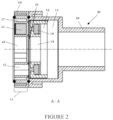
Figure 2 shows a cross section of the valve, including the valve seat and the piston within the piston chamber, from a radial viewpoint. -
Figure 3 shows a cross sectional view of the valve seat with an axial perspective. -
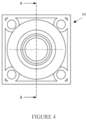
Figure 4 shows a cross section of the housing from an axial perspective. -
Figure 1 shows thecheck valve 20 with a partial cross-sectional view. The bottom half of the figure shows theoutside housing 10 while the top half shows the working parts of the valve. The valve includes thevalve seat 11, thepiston chamber 12, and thepiston 13.Figure 1 shows thecentral aperture 19 and the magnetic material within thepiston 18. -
Figure 2 more closely shows the functional parts of thecheck valve 20. Avalve seat 11 includes at least onemagnet 14 and at least one openannular space 15. Thevalve seat 11 also includes acentral plate 16, which blocks flow when the valve is shut. Opposite thevalve seat 11 is thepiston chamber 12. Disposed within thepiston chamber 12 is apiston 13 that sides along the axis of the valve. Thepiston 13 is an annular shape with acentral aperture 19, through which the fluid flows when the valve is open. Thepiston 13 is sized to form a seal with thecentral plate 16 when the valve is closed, preventing flow in the reverse direction. The piston contains amagnetic material 18 that is attracted to themagnet 14 in theprong 17 of thevalve seat 11. The magnetic attraction is just strong enough to close the valve when there is no fluid flowing through it. The result of the low magnetic attraction and thecentral aperture 19 of thepiston 13 is a high flow rate through the valve with a low pressure drop. -
Figure 3 shows the configuration of thevalve seat 11 in one embodiment of the present disclosure. There are threeprongs 17 that extend from thehousing 10 to connect to acentral plate 16. Each of these threeprongs 17 contains amagnet 14, which provides the force to close the valve when there is no fluid flow.Figure 3 also shows theannular space 15 between thehousing 10, thecentral plate 16, and theprongs 17, where the fluid flows when the valve is open. -
Figure 4 shows theexternal housing 10 of the valve. - In an example, which is not part of the present invention, the
check valve 20 comprises ahousing 10, which holds the valve components. There are two main sections in the valve: thevalve seat 11 and thepiston chamber 12. Thevalve seat 11 is stationary. It comprises acentral plate 16, which is connected to thehousing 10 by one ormore prongs 17. This allows forannular space 15 between thecentral plate 16 and thehousing 10, where fluid can flow through thevalve seat 11. Each of theprongs 17 further houses amagnet 14, which provides the driving force to keep thecheck valve 20 closed when there is no fluid flow. Thepiston chamber 12 is located downstream from thevalve seat 11. Thepiston chamber 12 is a cylindrical space, that holds apiston 13. Thepiston 13 can slide back and forth along the axis of thehousing 11. Thepiston 13 has an annular shape, with acentral aperture 19. When thecheck valve 20 is open, the fluid flows through thiscentral aperture 19. Thepiston 13 contains amagnetic material 18 housed in theprongs 17 of thevalve seat 11. When there is no flow, the magnetic attraction closes thecheck valve 20. When thecheck valve 20 is closed, a continuous seal is formed between thepiston 13 and thecentral plate 16, so as to prevent any backflow. - In an example, which is not part of the present invention, the
check valve 20 is normally closed. It comprises apiston 13 having an annular shape with acentral aperture 19 and amagnetic material 18. Thecheck valve 20 further comprises avalve seat 11 that includes acentral plate 16 which forms a continuous seal with thecentral aperture 19. Thecentral plate 16 is connected to thevalve housing 10 by at least oneprong 17. Anyprongs 17 that connect thecentral plate 16 to thehousing 10 also contain amagnet 14. - In an example, which is not part of the present invention, the
magnetic check valve 20 contains avalve seat 11 and apiston 13. Thepiston 13 comprises amagnetic material 18. Thevalve seat 11 contains acentral plate 16 that is connected to thevalve housing 10 by at least 2 prongs 17. The fluid path through the valve is directed through theannular spaces 15 between thevalve housing 10 and thecentral plate 16, then through acentral aperture 19 in thepiston 13. - According to an embodiment of the present disclosure, the
check valve 20 is configured to a fuel cell system. Thevalve seat 11 has an annular flow path, set by acentral plate 16 and a set ofprongs 17 connecting thecentral plate 16 to thevalve housing 10. Theprongs 17 each contain amagnet 14. Further, there is apiston chamber 12 located downstream from thevalve seat 11. Thispiston chamber 12 contains apiston 13 with an annular shape, wherein the annular width of the piston corresponds to at least the thickness of the annular flow path through the valve seat. The flow path is through the central aperture of thepiston 19. There is acontact surface 21 between thecentral plate 16 and thepiston 13. Thepiston 13 comprises amagnetic material 18 that is attracted to themagnets 14 in theprongs 17. The magnetic attraction is just sufficient enough to close thecheck valve 20 when there is no flow. - According to the present disclosure, the
check valve 20 comprises avalve seat 11 wherein there are threeprongs 17 that connect to thehousing 10 and thecentral plate 16. In each of the threeprongs 17 there is amagnet 14. The valve seat also comprises three sections ofannular space 15 to allow fluid flow through thevalve seat 11. Theseannular spaces 15 are defined by thehousing 10, theprongs 17, and thecentral plate 16. Thecheck valve 20 further comprises apiston chamber 12, which houses apiston 13. Thepiston 13 slides axially within thepiston chamber 12. Thepiston 13 houses an encapsulatedsteel ring 18. Thepiston 13 is an annular shape with acentral aperture 19. It is through thiscentral aperture 19 that the fluid flows when thecheck valve 20 is open. The attraction between thesteel ring 18 and themagnets 14 is what closes thecheck valve 20 when fluid is not flowing. The magnetic attraction should be just strong enough to close the valve when there is no fluid flowing. There is acontact surface 21 between thecentral plate 16 and thepiston 13 such that backflow is prevented when thecheck valve 20 is closed. - Any embodiment of the present invention may further comprise the following elements. The valve may be placed in a fuel cell that is part of a vehicle. The valve may be placed in the exhaust line of the cathode side of a fuel cell. The valve may be placed on the hydrogen supply line of a fuel cell. The valve may comprise a gasket material that forms a seal between the central plate and the central aperture of the piston. The valve is normally closed. The valve may be injection molded. The magnetic material in the piston may be a steel ring encapsulated in silicone. The magnetic attraction is weakest when the valve is fully open.
Claims (9)
- A magnetic check valve (20) comprising:
a housing (10) comprising a valve seat (11), a piston chamber (12) and a piston (13);wherein the valve seat comprises(1) at least three prongs (17) extending radially from the housing (10), the at least three prongs (17) connecting to a central plate (16);
wherein each of the at least three prongs (17) comprises at least one magnet (14); and(2) at least three segments of annular space (15) between the central plate and the housing;wherein the piston chamber (12), downstream from the valve seat (11), comprises a cylindrical space configured to receive the piston (13) that slides along the axis of the housing (10);characterized in that,
wherein the piston (13)(1) is an annular shape with a central aperture (19) configured to allow fluid flow and sized to form a seal with the central plate (16); and(2) comprises a material (18) that is attracted to the at least one magnet in the at least three prongs;
the material (18) of the piston (13) comprises an encapsulated steel ring, and that there is a contact surface (21) between the central plate (16) and the piston (13) such that backflow is prevented when the check valve (20) is closed. - The magnetic check valve of claim 1 wherein the magnetic check valve is normally closed.
- The magnetic check valve of claim 1 wherein the magnetic check valve is injection molded.
- The magnetic check valve of claim 1 wherein the material that is attracted to the at least one magnet in the piston comprises a steel ring encapsulated in a polyvinylchloride shell.
- The magnetic check valve of claim 1 wherein the magnetic attraction is weakest when the valve is fully open.
- The magnetic check valve of claim 1 wherein the valve seat comprises three prongs extending radially from the housing.
- A fuel cell comprising the magnetic check valve (20) of claim 1.
- The fuel cell of claim 7, wherein the magnetic check valve (20) is placed in an exhaust line of a cathode side of the fuel cell.
- The fuel cell of claim 7, wherein the magnetic check valve (20) is placed in a supply line of a fuel cell downstream of a hydrogen supply.
Applications Claiming Priority (2)
| Application Number | Priority Date | Filing Date | Title |
|---|---|---|---|
| US202062958289P | 2020-01-07 | 2020-01-07 | |
| PCT/US2021/012467 WO2021142095A1 (en) | 2020-01-07 | 2021-01-07 | Magnetic check valve with applications in fuel cell systems |
Publications (3)
| Publication Number | Publication Date |
|---|---|
| EP4088052A1 EP4088052A1 (en) | 2022-11-16 |
| EP4088052C0 EP4088052C0 (en) | 2025-04-30 |
| EP4088052B1 true EP4088052B1 (en) | 2025-04-30 |
Family
ID=74701543
Family Applications (1)
| Application Number | Title | Priority Date | Filing Date |
|---|---|---|---|
| EP21707814.6A Active EP4088052B1 (en) | 2020-01-07 | 2021-01-07 | Magnetic check valve with applications in fuel cell systems |
Country Status (7)
| Country | Link |
|---|---|
| US (1) | US11435008B2 (en) |
| EP (1) | EP4088052B1 (en) |
| JP (1) | JP7755586B2 (en) |
| KR (1) | KR102951546B1 (en) |
| CN (1) | CN115843324A (en) |
| AU (1) | AU2021205896A1 (en) |
| WO (1) | WO2021142095A1 (en) |
Families Citing this family (3)
| Publication number | Priority date | Publication date | Assignee | Title |
|---|---|---|---|---|
| WO2021053708A1 (en) * | 2019-09-17 | 2021-03-25 | トリニティ工業株式会社 | Valve module, valve device, and valve system |
| US11268627B1 (en) * | 2020-09-08 | 2022-03-08 | Magic Plastics, Inc. | Adjustable check valve |
| DE202021103675U1 (en) * | 2021-07-08 | 2022-10-13 | Liquitec Ag | Magnetic check valve |
Family Cites Families (16)
| Publication number | Priority date | Publication date | Assignee | Title |
|---|---|---|---|---|
| US556023A (en) * | 1896-03-10 | Valve | ||
| US685051A (en) * | 1901-07-15 | 1901-10-22 | Charles F Koch | Saggar for paving-tiles or the like. |
| US1578766A (en) * | 1925-01-19 | 1926-03-30 | Parkersburg Rig & Reel Co | Valve |
| US1953130A (en) * | 1931-11-06 | 1934-04-03 | Ingersoll Rand Co | Valve |
| US2646071A (en) * | 1948-12-29 | 1953-07-21 | Wagner William | Magnetic check valve |
| GB685051A (en) * | 1949-06-16 | 1952-12-31 | Armstrong Whitworth And Compan | An improved automatic valve |
| US2713349A (en) * | 1951-09-05 | 1955-07-19 | Lloyd T Gibbs | Valve gages and associated structures for reciprocating valve discs |
| US2949931A (en) * | 1958-01-29 | 1960-08-23 | Hughes Aircraft Co | Magnetic check valve |
| US3415272A (en) * | 1965-06-07 | 1968-12-10 | Edward A. Blackhawk | Check valve |
| US5320136A (en) * | 1993-03-19 | 1994-06-14 | The United States Of America As Represented By The Administrator Of The National Aeronautics And Space Administration | Magnetically operated check valve |
| US5441679A (en) * | 1993-06-03 | 1995-08-15 | Studor, Inc. | Method of assembling a value head |
| US6648012B2 (en) * | 2001-06-13 | 2003-11-18 | Applied Materials, Inc. | Non-return valve override device |
| CN2562015Y (en) * | 2002-07-16 | 2003-07-23 | 王原 | Permanent-magnet one way valves |
| CN101371207B (en) * | 2005-12-27 | 2010-08-25 | 内塔芬有限公司 | Fluid flow control regulator |
| JP2011198533A (en) * | 2010-03-18 | 2011-10-06 | Toshiba Corp | Fuel cell system, and operation method thereof |
| CN110608304B (en) * | 2019-10-23 | 2024-09-13 | 江西三丰医药科技有限公司 | One-way valve |
-
2021
- 2021-01-07 JP JP2022542039A patent/JP7755586B2/en active Active
- 2021-01-07 CN CN202180019699.4A patent/CN115843324A/en active Pending
- 2021-01-07 WO PCT/US2021/012467 patent/WO2021142095A1/en not_active Ceased
- 2021-01-07 AU AU2021205896A patent/AU2021205896A1/en active Pending
- 2021-01-07 EP EP21707814.6A patent/EP4088052B1/en active Active
- 2021-01-07 US US17/248,057 patent/US11435008B2/en active Active
- 2021-01-07 KR KR1020227027176A patent/KR102951546B1/en active Active
Also Published As
| Publication number | Publication date |
|---|---|
| EP4088052C0 (en) | 2025-04-30 |
| US11435008B2 (en) | 2022-09-06 |
| KR102951546B1 (en) | 2026-04-14 |
| JP2023510284A (en) | 2023-03-13 |
| US20210231228A1 (en) | 2021-07-29 |
| AU2021205896A1 (en) | 2022-08-18 |
| CN115843324A (en) | 2023-03-24 |
| EP4088052A1 (en) | 2022-11-16 |
| KR20220123698A (en) | 2022-09-08 |
| JP7755586B2 (en) | 2025-10-16 |
| WO2021142095A1 (en) | 2021-07-15 |
Similar Documents
| Publication | Publication Date | Title |
|---|---|---|
| EP4088052B1 (en) | Magnetic check valve with applications in fuel cell systems | |
| US8267375B1 (en) | Cartridge valve and manifold assembly | |
| WO2005008108B1 (en) | Extended stroke valve and diaphragm | |
| US10533678B2 (en) | Electromagnetic valve | |
| JP6567044B2 (en) | Solenoid valve for internal combustion engine | |
| WO2006088731A2 (en) | Springless compressor valve | |
| US20140124065A1 (en) | Check valve assembly | |
| US9989164B1 (en) | Air-operated, magnetic, non-stall air directional control valve | |
| CN114060588B (en) | Electromagnetically actuated valve | |
| BR112017028465A2 (en) | valve with non-round closing member | |
| CN221170767U (en) | A solenoid valve | |
| US20240271709A1 (en) | Three-Way Valve | |
| US9092037B2 (en) | Pressure-regulating valve | |
| CN110608304A (en) | One-way valve | |
| JP2000337539A (en) | Check valve | |
| CN215258032U (en) | Throttle Valves and Throttle Components | |
| CN210716143U (en) | One-way valve | |
| CN221257829U (en) | Sealing cover for small electromagnetic valve | |
| US2462372A (en) | Pump | |
| CN219221358U (en) | Instant impact-preventing one-way valve | |
| CN223609468U (en) | A solenoid valve | |
| CN222458367U (en) | A high pressure resistant solenoid valve | |
| US20230137824A1 (en) | Solenoid valve | |
| JP3486097B2 (en) | Gas pressure reducing valve | |
| CN213332565U (en) | Backflow preventer |
Legal Events
| Date | Code | Title | Description |
|---|---|---|---|
| STAA | Information on the status of an ep patent application or granted ep patent |
Free format text: STATUS: UNKNOWN |
|
| STAA | Information on the status of an ep patent application or granted ep patent |
Free format text: STATUS: THE INTERNATIONAL PUBLICATION HAS BEEN MADE |
|
| PUAI | Public reference made under article 153(3) epc to a published international application that has entered the european phase |
Free format text: ORIGINAL CODE: 0009012 |
|
| STAA | Information on the status of an ep patent application or granted ep patent |
Free format text: STATUS: REQUEST FOR EXAMINATION WAS MADE |
|
| 17P | Request for examination filed |
Effective date: 20220715 |
|
| AK | Designated contracting states |
Kind code of ref document: A1 Designated state(s): AL AT BE BG CH CY CZ DE DK EE ES FI FR GB GR HR HU IE IS IT LI LT LU LV MC MK MT NL NO PL PT RO RS SE SI SK SM TR |
|
| DAV | Request for validation of the european patent (deleted) | ||
| DAX | Request for extension of the european patent (deleted) | ||
| RAP3 | Party data changed (applicant data changed or rights of an application transferred) |
Owner name: NUVERA FUEL CELLS, LLC |
|
| GRAP | Despatch of communication of intention to grant a patent |
Free format text: ORIGINAL CODE: EPIDOSNIGR1 |
|
| STAA | Information on the status of an ep patent application or granted ep patent |
Free format text: STATUS: GRANT OF PATENT IS INTENDED |
|
| INTG | Intention to grant announced |
Effective date: 20241126 |
|
| GRAS | Grant fee paid |
Free format text: ORIGINAL CODE: EPIDOSNIGR3 |
|
| GRAA | (expected) grant |
Free format text: ORIGINAL CODE: 0009210 |
|
| STAA | Information on the status of an ep patent application or granted ep patent |
Free format text: STATUS: THE PATENT HAS BEEN GRANTED |
|
| AK | Designated contracting states |
Kind code of ref document: B1 Designated state(s): AL AT BE BG CH CY CZ DE DK EE ES FI FR GB GR HR HU IE IS IT LI LT LU LV MC MK MT NL NO PL PT RO RS SE SI SK SM TR |
|
| REG | Reference to a national code |
Ref country code: CH Ref legal event code: EP Ref country code: GB Ref legal event code: FG4D |
|
| REG | Reference to a national code |
Ref country code: IE Ref legal event code: FG4D |
|
| REG | Reference to a national code |
Ref country code: DE Ref legal event code: R096 Ref document number: 602021029973 Country of ref document: DE |
|
| U01 | Request for unitary effect filed |
Effective date: 20250530 |
|
| U07 | Unitary effect registered |
Designated state(s): AT BE BG DE DK EE FI FR IT LT LU LV MT NL PT RO SE SI Effective date: 20250710 |
|
| PG25 | Lapsed in a contracting state [announced via postgrant information from national office to epo] |
Ref country code: ES Free format text: LAPSE BECAUSE OF FAILURE TO SUBMIT A TRANSLATION OF THE DESCRIPTION OR TO PAY THE FEE WITHIN THE PRESCRIBED TIME-LIMIT Effective date: 20250430 |
|
| PG25 | Lapsed in a contracting state [announced via postgrant information from national office to epo] |
Ref country code: NO Free format text: LAPSE BECAUSE OF FAILURE TO SUBMIT A TRANSLATION OF THE DESCRIPTION OR TO PAY THE FEE WITHIN THE PRESCRIBED TIME-LIMIT Effective date: 20250730 Ref country code: GR Free format text: LAPSE BECAUSE OF FAILURE TO SUBMIT A TRANSLATION OF THE DESCRIPTION OR TO PAY THE FEE WITHIN THE PRESCRIBED TIME-LIMIT Effective date: 20250731 |
|
| PG25 | Lapsed in a contracting state [announced via postgrant information from national office to epo] |
Ref country code: PL Free format text: LAPSE BECAUSE OF FAILURE TO SUBMIT A TRANSLATION OF THE DESCRIPTION OR TO PAY THE FEE WITHIN THE PRESCRIBED TIME-LIMIT Effective date: 20250430 |
|
| PG25 | Lapsed in a contracting state [announced via postgrant information from national office to epo] |
Ref country code: HR Free format text: LAPSE BECAUSE OF FAILURE TO SUBMIT A TRANSLATION OF THE DESCRIPTION OR TO PAY THE FEE WITHIN THE PRESCRIBED TIME-LIMIT Effective date: 20250430 |
|
| PG25 | Lapsed in a contracting state [announced via postgrant information from national office to epo] |
Ref country code: RS Free format text: LAPSE BECAUSE OF FAILURE TO SUBMIT A TRANSLATION OF THE DESCRIPTION OR TO PAY THE FEE WITHIN THE PRESCRIBED TIME-LIMIT Effective date: 20250731 |
|
| PG25 | Lapsed in a contracting state [announced via postgrant information from national office to epo] |
Ref country code: IS Free format text: LAPSE BECAUSE OF FAILURE TO SUBMIT A TRANSLATION OF THE DESCRIPTION OR TO PAY THE FEE WITHIN THE PRESCRIBED TIME-LIMIT Effective date: 20250830 |
|
| PG25 | Lapsed in a contracting state [announced via postgrant information from national office to epo] |
Ref country code: SM Free format text: LAPSE BECAUSE OF FAILURE TO SUBMIT A TRANSLATION OF THE DESCRIPTION OR TO PAY THE FEE WITHIN THE PRESCRIBED TIME-LIMIT Effective date: 20250430 |
|
| PG25 | Lapsed in a contracting state [announced via postgrant information from national office to epo] |
Ref country code: CZ Free format text: LAPSE BECAUSE OF FAILURE TO SUBMIT A TRANSLATION OF THE DESCRIPTION OR TO PAY THE FEE WITHIN THE PRESCRIBED TIME-LIMIT Effective date: 20250430 |
|
| PG25 | Lapsed in a contracting state [announced via postgrant information from national office to epo] |
Ref country code: SK Free format text: LAPSE BECAUSE OF FAILURE TO SUBMIT A TRANSLATION OF THE DESCRIPTION OR TO PAY THE FEE WITHIN THE PRESCRIBED TIME-LIMIT Effective date: 20250430 |
|
| PLBE | No opposition filed within time limit |
Free format text: ORIGINAL CODE: 0009261 |
|
| STAA | Information on the status of an ep patent application or granted ep patent |
Free format text: STATUS: NO OPPOSITION FILED WITHIN TIME LIMIT |
|
| REG | Reference to a national code |
Ref country code: CH Ref legal event code: L10 Free format text: ST27 STATUS EVENT CODE: U-0-0-L10-L00 (AS PROVIDED BY THE NATIONAL OFFICE) Effective date: 20260311 |
|
| 26N | No opposition filed |
Effective date: 20260202 |