EP4086048B1 - Electrode sheet cutting apparatus including upper cutter and lower cutter and electrode sheet cutting method using the same - Google Patents
Electrode sheet cutting apparatus including upper cutter and lower cutter and electrode sheet cutting method using the same Download PDFInfo
- Publication number
- EP4086048B1 EP4086048B1 EP21808660.1A EP21808660A EP4086048B1 EP 4086048 B1 EP4086048 B1 EP 4086048B1 EP 21808660 A EP21808660 A EP 21808660A EP 4086048 B1 EP4086048 B1 EP 4086048B1
- Authority
- EP
- European Patent Office
- Prior art keywords
- electrode sheet
- cutter
- electrode
- cutting
- upper cutter
- Prior art date
- Legal status (The legal status is an assumption and is not a legal conclusion. Google has not performed a legal analysis and makes no representation as to the accuracy of the status listed.)
- Active
Links
Images

Classifications
-
- B—PERFORMING OPERATIONS; TRANSPORTING
- B26—HAND CUTTING TOOLS; CUTTING; SEVERING
- B26D—CUTTING; DETAILS COMMON TO MACHINES FOR PERFORATING, PUNCHING, CUTTING-OUT, STAMPING-OUT OR SEVERING
- B26D1/00—Cutting through work characterised by the nature or movement of the cutting member or particular materials not otherwise provided for; Apparatus or machines therefor; Cutting members therefor
- B26D1/01—Cutting through work characterised by the nature or movement of the cutting member or particular materials not otherwise provided for; Apparatus or machines therefor; Cutting members therefor involving a cutting member which does not travel with the work
- B26D1/04—Cutting through work characterised by the nature or movement of the cutting member or particular materials not otherwise provided for; Apparatus or machines therefor; Cutting members therefor involving a cutting member which does not travel with the work having a linearly-movable cutting member
- B26D1/06—Cutting through work characterised by the nature or movement of the cutting member or particular materials not otherwise provided for; Apparatus or machines therefor; Cutting members therefor involving a cutting member which does not travel with the work having a linearly-movable cutting member wherein the cutting member reciprocates
- B26D1/08—Cutting through work characterised by the nature or movement of the cutting member or particular materials not otherwise provided for; Apparatus or machines therefor; Cutting members therefor involving a cutting member which does not travel with the work having a linearly-movable cutting member wherein the cutting member reciprocates of the guillotine type
- B26D1/085—Cutting through work characterised by the nature or movement of the cutting member or particular materials not otherwise provided for; Apparatus or machines therefor; Cutting members therefor involving a cutting member which does not travel with the work having a linearly-movable cutting member wherein the cutting member reciprocates of the guillotine type for thin material, e.g. for sheets, strips or the like
-
- B—PERFORMING OPERATIONS; TRANSPORTING
- B26—HAND CUTTING TOOLS; CUTTING; SEVERING
- B26D—CUTTING; DETAILS COMMON TO MACHINES FOR PERFORATING, PUNCHING, CUTTING-OUT, STAMPING-OUT OR SEVERING
- B26D1/00—Cutting through work characterised by the nature or movement of the cutting member or particular materials not otherwise provided for; Apparatus or machines therefor; Cutting members therefor
- B26D1/01—Cutting through work characterised by the nature or movement of the cutting member or particular materials not otherwise provided for; Apparatus or machines therefor; Cutting members therefor involving a cutting member which does not travel with the work
- B26D1/04—Cutting through work characterised by the nature or movement of the cutting member or particular materials not otherwise provided for; Apparatus or machines therefor; Cutting members therefor involving a cutting member which does not travel with the work having a linearly-movable cutting member
- B26D1/06—Cutting through work characterised by the nature or movement of the cutting member or particular materials not otherwise provided for; Apparatus or machines therefor; Cutting members therefor involving a cutting member which does not travel with the work having a linearly-movable cutting member wherein the cutting member reciprocates
- B26D1/08—Cutting through work characterised by the nature or movement of the cutting member or particular materials not otherwise provided for; Apparatus or machines therefor; Cutting members therefor involving a cutting member which does not travel with the work having a linearly-movable cutting member wherein the cutting member reciprocates of the guillotine type
- B26D1/09—Cutting through work characterised by the nature or movement of the cutting member or particular materials not otherwise provided for; Apparatus or machines therefor; Cutting members therefor involving a cutting member which does not travel with the work having a linearly-movable cutting member wherein the cutting member reciprocates of the guillotine type with a plurality of cutting members
-
- B—PERFORMING OPERATIONS; TRANSPORTING
- B26—HAND CUTTING TOOLS; CUTTING; SEVERING
- B26D—CUTTING; DETAILS COMMON TO MACHINES FOR PERFORATING, PUNCHING, CUTTING-OUT, STAMPING-OUT OR SEVERING
- B26D1/00—Cutting through work characterised by the nature or movement of the cutting member or particular materials not otherwise provided for; Apparatus or machines therefor; Cutting members therefor
- B26D1/01—Cutting through work characterised by the nature or movement of the cutting member or particular materials not otherwise provided for; Apparatus or machines therefor; Cutting members therefor involving a cutting member which does not travel with the work
- B26D1/04—Cutting through work characterised by the nature or movement of the cutting member or particular materials not otherwise provided for; Apparatus or machines therefor; Cutting members therefor involving a cutting member which does not travel with the work having a linearly-movable cutting member
- B26D1/06—Cutting through work characterised by the nature or movement of the cutting member or particular materials not otherwise provided for; Apparatus or machines therefor; Cutting members therefor involving a cutting member which does not travel with the work having a linearly-movable cutting member wherein the cutting member reciprocates
- B26D1/08—Cutting through work characterised by the nature or movement of the cutting member or particular materials not otherwise provided for; Apparatus or machines therefor; Cutting members therefor involving a cutting member which does not travel with the work having a linearly-movable cutting member wherein the cutting member reciprocates of the guillotine type
- B26D1/09—Cutting through work characterised by the nature or movement of the cutting member or particular materials not otherwise provided for; Apparatus or machines therefor; Cutting members therefor involving a cutting member which does not travel with the work having a linearly-movable cutting member wherein the cutting member reciprocates of the guillotine type with a plurality of cutting members
- B26D1/095—Cutting through work characterised by the nature or movement of the cutting member or particular materials not otherwise provided for; Apparatus or machines therefor; Cutting members therefor involving a cutting member which does not travel with the work having a linearly-movable cutting member wherein the cutting member reciprocates of the guillotine type with a plurality of cutting members for thin material, e.g. for sheets, strips or the like
-
- B—PERFORMING OPERATIONS; TRANSPORTING
- B26—HAND CUTTING TOOLS; CUTTING; SEVERING
- B26D—CUTTING; DETAILS COMMON TO MACHINES FOR PERFORATING, PUNCHING, CUTTING-OUT, STAMPING-OUT OR SEVERING
- B26D5/00—Arrangements for operating and controlling machines or devices for cutting, cutting-out, stamping-out, punching, perforating, or severing by means other than cutting
- B26D5/02—Means for moving the cutting member into its operative position for cutting
-
- B—PERFORMING OPERATIONS; TRANSPORTING
- B26—HAND CUTTING TOOLS; CUTTING; SEVERING
- B26D—CUTTING; DETAILS COMMON TO MACHINES FOR PERFORATING, PUNCHING, CUTTING-OUT, STAMPING-OUT OR SEVERING
- B26D7/00—Details of apparatus for cutting, cutting-out, stamping-out, punching, perforating, or severing by means other than cutting
- B26D7/01—Means for holding or positioning work
- B26D7/02—Means for holding or positioning work with clamping means
- B26D7/025—Means for holding or positioning work with clamping means acting upon planar surfaces
-
- B—PERFORMING OPERATIONS; TRANSPORTING
- B26—HAND CUTTING TOOLS; CUTTING; SEVERING
- B26D—CUTTING; DETAILS COMMON TO MACHINES FOR PERFORATING, PUNCHING, CUTTING-OUT, STAMPING-OUT OR SEVERING
- B26D7/00—Details of apparatus for cutting, cutting-out, stamping-out, punching, perforating, or severing by means other than cutting
- B26D7/20—Cutting beds
-
- H—ELECTRICITY
- H01—ELECTRIC ELEMENTS
- H01M—PROCESSES OR MEANS, e.g. BATTERIES, FOR THE DIRECT CONVERSION OF CHEMICAL ENERGY INTO ELECTRICAL ENERGY
- H01M4/00—Electrodes
- H01M4/02—Electrodes composed of, or comprising, active material
- H01M4/04—Processes of manufacture in general
-
- H—ELECTRICITY
- H01—ELECTRIC ELEMENTS
- H01M—PROCESSES OR MEANS, e.g. BATTERIES, FOR THE DIRECT CONVERSION OF CHEMICAL ENERGY INTO ELECTRICAL ENERGY
- H01M4/00—Electrodes
- H01M4/02—Electrodes composed of, or comprising, active material
- H01M4/13—Electrodes for accumulators with non-aqueous electrolyte, e.g. for lithium-accumulators; Processes of manufacture thereof
- H01M4/139—Processes of manufacture
-
- H—ELECTRICITY
- H01—ELECTRIC ELEMENTS
- H01M—PROCESSES OR MEANS, e.g. BATTERIES, FOR THE DIRECT CONVERSION OF CHEMICAL ENERGY INTO ELECTRICAL ENERGY
- H01M50/00—Constructional details or processes of manufacture of the non-active parts of electrochemical cells other than fuel cells, e.g. hybrid cells
- H01M50/50—Current conducting connections for cells or batteries
- H01M50/531—Electrode connections inside a battery casing
-
- Y—GENERAL TAGGING OF NEW TECHNOLOGICAL DEVELOPMENTS; GENERAL TAGGING OF CROSS-SECTIONAL TECHNOLOGIES SPANNING OVER SEVERAL SECTIONS OF THE IPC; TECHNICAL SUBJECTS COVERED BY FORMER USPC CROSS-REFERENCE ART COLLECTIONS [XRACs] AND DIGESTS
- Y02—TECHNOLOGIES OR APPLICATIONS FOR MITIGATION OR ADAPTATION AGAINST CLIMATE CHANGE
- Y02E—REDUCTION OF GREENHOUSE GAS [GHG] EMISSIONS, RELATED TO ENERGY GENERATION, TRANSMISSION OR DISTRIBUTION
- Y02E60/00—Enabling technologies; Technologies with a potential or indirect contribution to GHG emissions mitigation
- Y02E60/10—Energy storage using batteries
Definitions
- a secondary battery in general, includes a positive electrode and a negative electrode, each of which includes a current collector having an active material applied to one surface or opposite surfaces thereof, and a separator.
- An electrode such as a positive electrode or a negative electrode, is formed by manufacturing an electrode sheet having an electrode active material applied to one surface or opposite surfaces thereof and cutting the manufactured electrode sheet.
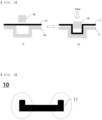
- FIG. 1 is a schematic view showing a conventional electrode sheet cutting apparatus and method
- FIG. 2 is an enlarged view showing the section of an electrode sheet cut by the conventional electrode sheet cutting apparatus.
- cutters configured to cut an electrode plate are located at opposite surfaces of a target. However, cutting is performed from the middle part of the target, and therefore removal of a residue and deformation of the cut surface of an electrode sheet are not considered.
- the present invention has been made in view of the above problems, and it is an object of the present invention to provide an electrode sheet cutting apparatus capable of minimizing deformation of an electrode sheet and an electrode sheet cutting method using the same.
- an electrode sheet cutting apparatus includes an upper cutter configured to be located above an electrode sheet, the upper cutter being configured to cut the electrode sheet; a lower cutter located so as to correspond to the upper cutter, the lower cutter being configured to engage the upper cutter so as to cut the electrode sheet; and an electrode sheet support located between the upper cutter and the lower cutter, the electrode sheet support being configured to support the electrode sheet, the electrode sheet support being provided with a through hole configured to correspond to a cutting portion of the electrode sheet being cut at which the upper cutter and the lower cutter are configured to engage each other.
- the upper cutter and the lower cutter may be each configured to apply an identical force to the electrode sheet.
- the upper cutter and the lower cutter may be each configured to move to the electrode sheet at an identical speed.
- the upper cutter and the lower cutter are each configured to cut the electrode sheet while widening a cutting range of the electrode sheet from one side of the cutting portion.
- the cutting portion may be widened from a portion adjacent to a middle part of the electrode sheet to a contoured portion of the electrode sheet.
- the distance between the upper cutter and the lower cutter before the electrode sheet is cut may gradually increase toward one side.
- the electrode sheet may be cut to form an electrode tab protrusion.
- the upper cutter and the lower cutter may be configured to start cutting the electrode sheet at a position at which the electrode tab protrusion is to be formed.
- the present invention provides an electrode sheet cutting method including (S1) disposing an electrode sheet on an electrode sheet support having a through hole formed at a portion at which the electrode sheet is to be cut; and (S2) cutting the electrode sheet using an upper cutter and a lower cutter according to any one of claims 1 to 9.
- the electrode sheet may be cut in a longitudinal direction or a direction perpendicular thereto to form a single electrode assembly or may be cut in a concave-convex shape to form an electrode tab.
- the upper cutter and the lower cutter may first cut a protrusion of the electrode tab and may then cut a place on the electrode sheet farthest from the protrusion of the electrode tab in step (S2).
- the place on the electrode sheet farthest from the protrusion of the electrode tab may be another cutting portion of the electrode sheet.
- one or more constructions that do not conflict with each other may be selected and combined from among the above constructions.
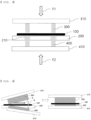
- FIG. 3 is a schematic view showing an electrode sheet cutting apparatus and method according to the present invention.
- the electrode sheet cutting apparatus includes an electrode sheet support 200 configured to support an electrode sheet 100, an upper cutter 300 located above the electrode sheet 100, and a lower cutter 400 located under the electrode sheet support 200, the lower cutter being disposed at the position at which the lower cutter engages the upper cutter 300.
- the electrode sheet support 200 may be provided with a through hole 210, which is formed in a cutting portion of the electrode sheet 100 being cut at which the upper cutter 300 and the lower cutter 400 are configured to engage each other, such that the upper cutter 300 and the lower cutter 400 engage each other while cutting the electrode sheet 100.
- the upper cutter 300 is connected to an upper pressing portion 310, and the lower cutter 400 is connected to a lower pressing portion 410 so as to be moved at predetermined force and speed.
- the upper cutter 300 applies upper pressing force F1 above the electrode sheet 100, and the lower cutter 400 applies lower pressing force F2 under the electrode sheet 100.
- the lower cutter 400 cuts the electrode sheet 100 through the through hole 210 and engages the upper cutter 300.
- the upper pressing force F1 and the lower pressing force F2 may be equal to each other in order to prevent deformation of the electrode sheet 100.
- the force of the upper cutter 300 applied to the electrode sheet 100 and the force of the lower cutter 400 applied to the electrode sheet 100 are equal to each other, a danger of the electrode sheet 100 being deformed upwards or downwards is reduced.
- the upper cutter 300 and the lower cutter 400 may be spaced apart from the electrode sheet 100 by the same distance and may reach the electrode sheet at the same speed. As a result, the upper cutter 300 or the lower cutter 400 may be prevented from early reaching and cutting the electrode sheet 100, whereby it is possible to inhibit deformation of the electrode sheet 100.
- FIG. 4 is a schematic view showing an upper cutter and a lower cutter of an electrode sheet cutting apparatus according to a first embodiment of the present invention
- FIG. 5 is a schematic view showing another shape of the upper cutter and the lower cutter of the electrode sheet cutting apparatus according to the first embodiment.
- the upper cutter 300 and the lower cutter 400 may have the same shape.
- each of the upper cutter 300 and the lower cutter 400 may have a rectangular shape or a parallelogram shape, as shown in FIG. 4 , or each of the upper cutter 300 and the lower cutter 400 may have a right triangular shape in which one side of each of the upper cutter 300 and the lower cutter 400 protrudes more than the other thereof, as shown in FIG. 5 .
- the shape of each of the upper cutter and the lower cutter is not restricted as long as it is possible to uniformly cut the electrode sheet 100.
- the inter-cutter distance B between the upper cutter 300 and the lower cutter 400 before the electrode sheet 100 is cut may gradually increase from one end to the other end thereof, as shown in FIG. 4 . That is, the distance at which the upper cutter 300 and the lower cutter 400 engage each other first may be very short, and the inter-cutter distance B may gradually increase in a cutting direction A.
- the upper cutter 300 and the lower cutter 400 disposed as described above may cut the electrode sheet 100 while extending a cutting range from one side of the cutting portion. That is, the upper cutter 300 and the lower cutter 400 may be operated like a fodder chopper. As a result, a movement range of each of the upper cutter 300 and the lower cutter 400 at one corner of the cutting portion and a movement range of each of the upper cutter and the lower cutter at the other corner of the cutting portion may be different from each other.
- the electrode sheet cutting apparatus performs cutting while extending a range from one side to the other side of the cutting portion, as described above, force applied to the electrode sheet is increased, whereby cutting is easily performed, and deformation of the electrode sheet is reduced. In addition, since cutting is performed while extending the range from one side to the other side, foreign matter generated due to cutting moves to the other side.
- the cutting portion in order to easily remove the foreign matter, it is preferable for the cutting portion to be widened from a portion adjacent to a middle part of the electrode sheet 100 to a contour portion of the electrode sheet, i.e. it is preferable that the upper cutter 300 and the lower cutter 400 engage each other first at the middle part of the electrode sheet 100 and then the cutting portion be widened to the contour portion of the electrode sheet 100.
- the inter-cutter distance B decreases until the entire surfaces of the upper cutter 300 and the lower cutter 400 engage each other, as shown in FIG. 4 . Subsequently, the entire surfaces of the upper cutter 300 and the lower cutter 400 engage each other to cut the cutting portion, and then the upper cutter 300 and the lower cutter 400 move so as to become distant from the electrode sheet 100.
- an electrode sheet cutting method may mainly include steps of: (S1) disposing an electrode sheet 100 on an electrode sheet support 200 having a through hole 210 formed at a portion at which the electrode sheet 100 is to be cut and (S2) cutting the electrode sheet 100 using an upper cutter 300 and a lower cutter 400. After step (S2), a step of removing the upper cutter 300 and the lower cutter 400 from the electrode sheet 100 after cutting of the electrode sheet 100 is completed may be performed.
- FIG. 6 is a schematic view showing an upper cutter and a lower cutter of an electrode sheet cutting apparatus according to a second embodiment of the present invention.
- the upper cutter 300 and the lower cutter 400 of the electrode sheet cutting apparatus according to the second embodiment of the present invention may be disposed in a symmetrical fashion, whereby the inter-cutter distance may be the shortest at one corner of each of the upper cutter 300 and the lower cutter 400 and the inter-cutter distance may be the longest at the other corner of each of the upper cutter and the lower cutter. That is, the upper cutter 300 and the lower cutter 400 may be disposed in a symmetrical fashion while each of the upper cutter and the lower cutter has a right triangular shape.
- the shape or position of the upper cutter 300 and the lower cutter 400 may be changed.
- the most protruding portions of the upper cutter 300 and the lower cutter 400 it is preferable for the most protruding portions of the upper cutter 300 and the lower cutter 400 to be disposed at the place closest to the position at which the electrode tab portion 120 is to be formed depending on the position of the electrode tab portion 120, and it is preferable for the upper cutter 300 and the lower cutter 400 to be disposed so as to be most deeply recessed at the electrode sheet section 112 cut to form the unit cell electrode.
Landscapes
- Engineering & Computer Science (AREA)
- Life Sciences & Earth Sciences (AREA)
- Mechanical Engineering (AREA)
- Forests & Forestry (AREA)
- Chemical & Material Sciences (AREA)
- Chemical Kinetics & Catalysis (AREA)
- General Chemical & Material Sciences (AREA)
- Electrochemistry (AREA)
- Manufacturing & Machinery (AREA)
- Materials Engineering (AREA)
- Battery Electrode And Active Subsutance (AREA)
- Details Of Cutting Devices (AREA)
- Connection Of Batteries Or Terminals (AREA)
Description
- The present invention relates to an electrode sheet cutting apparatus including an upper cutter and a lower cutter and an electrode sheet cutting method using the same, and more particularly to an electrode sheet cutting apparatus capable of preventing deformation of a cut surface of an electrode sheet and removing a material, such as burr, from the cut surface of the electrode sheet at the time of cutting the electrode sheet and an electrode sheet cutting method using the same.
- In general, a secondary battery includes a positive electrode and a negative electrode, each of which includes a current collector having an active material applied to one surface or opposite surfaces thereof, and a separator. An electrode, such as a positive electrode or a negative electrode, is formed by manufacturing an electrode sheet having an electrode active material applied to one surface or opposite surfaces thereof and cutting the manufactured electrode sheet.
-
FIG. 1 is a schematic view showing a conventional electrode sheet cutting apparatus and method, andFIG. 2 is an enlarged view showing the section of an electrode sheet cut by the conventional electrode sheet cutting apparatus. - In the conventional electrode sheet cutting apparatus, as shown in
FIG. 1 , (i) anelectrode sheet 10 is disposed on anelectrode sheet support 20 having a recess formed at a portion at which an electrode sheet section is provided, and (ii) theelectrode sheet 10 is cut using acutter 30. At this time, thecutter 30 applies force to the recess in theelectrode sheet support 20 to cut theelectrode sheet 10. In the case in which no recess is provided in theelectrode sheet support 20, thecutter 30 applies force above the section of theelectrode sheet 10 to cut theelectrode sheet 10. - In the conventional electrode sheet cutting apparatus, however, an
electrode section 11 may be deformed or a residue, such as burr, is present at theelectrode section 11 when theelectrode sheet 10 is cut, as shown inFIG. 2 . - In the case in which a portion of the
electrode sheet 10 is deformed or a residue, such as burr, is present, as shown inFIG. 2 , transfer of theelectrode sheet 10 may be impeded by the deformed portion or the residue, and when an electrode assembly is formed, density of the electrode assembly is reduced by the deformed portion or the residue, whereby capacity of a battery is reduced. Also, in the case in which a pouch-shaped secondary battery is formed using electrodes, the electrodes may not be stably stacked, whereby it may not be possible to form the battery so as to have a desired shape. - In the drawings of
Patent Document 1, cutters configured to cut an electrode plate are located at opposite surfaces of a target. However, cutting is performed from the middle part of the target, and therefore removal of a residue and deformation of the cut surface of an electrode sheet are not considered. - Therefore, an electrode sheet cutting apparatus capable of minimizing a residue due to electrode cutting while minimizing deformation of an electrode sheet at the time of cutting the electrode sheet and an electrode sheet cutting method using the same are required.
- (Patent Document 1)
Korean Patent Application Publication No. 2010-0096018 -
JP 2003 117882 A claim 1 is based, discloses a sheet cutting apparatus comprising an upper cutter configured to be located above a sheet, the upper cutter being configured to cut the sheet; a lower cutter located so as to correspond to the upper cutter, the lower cutter being configured to engage the upper cutter so as to cut the sheet; and an sheet support located between the upper cutter and the lower cutter, the sheet support being configured to support the sheet and having a passage in which the lower cutting blade can move vertically. - The present invention has been made in view of the above problems, and it is an object of the present invention to provide an electrode sheet cutting apparatus capable of minimizing deformation of an electrode sheet and an electrode sheet cutting method using the same.
- It is another object of the present invention to provide an electrode sheet cutting method capable of minimizing deformation and residue of an electrode sheet due to cutting of the electrode sheet by defining the cutting position and sequence of the electrode sheet.
- In order to accomplish the above objects, an electrode sheet cutting apparatus according to the present invention is defined in the appended set of claims, and includes an upper cutter configured to be located above an electrode sheet, the upper cutter being configured to cut the electrode sheet; a lower cutter located so as to correspond to the upper cutter, the lower cutter being configured to engage the upper cutter so as to cut the electrode sheet; and an electrode sheet support located between the upper cutter and the lower cutter, the electrode sheet support being configured to support the electrode sheet, the electrode sheet support being provided with a through hole configured to correspond to a cutting portion of the electrode sheet being cut at which the upper cutter and the lower cutter are configured to engage each other.
- Also, the upper cutter and the lower cutter may be each configured to apply an identical force to the electrode sheet.
- Also, the upper cutter and the lower cutter may be each configured to move to the electrode sheet at an identical speed.
- Also, the upper cutter and the lower cutter are each configured to cut the electrode sheet while widening a cutting range of the electrode sheet from one side of the cutting portion.
- Also, the cutting portion may be widened from a portion adjacent to a middle part of the electrode sheet to a contoured portion of the electrode sheet.
- The upper cutter and the lower cutter may each have a symmetrical shape to one another.
- The distance between the upper cutter and the lower cutter before the electrode sheet is cut may gradually increase toward one side.
- The electrode sheet may be cut to form an electrode tab protrusion.
- At this time, the upper cutter and the lower cutter may be configured to start cutting the electrode sheet at a position at which the electrode tab protrusion is to be formed.
- In addition, the present invention provides an electrode sheet cutting method including (S1) disposing an electrode sheet on an electrode sheet support having a through hole formed at a portion at which the electrode sheet is to be cut; and (S2) cutting the electrode sheet using an upper cutter and a lower cutter according to any one of
claims 1 to 9. - In step (S2), the electrode sheet may be cut in a longitudinal direction or a direction perpendicular thereto to form a single electrode assembly or may be cut in a concave-convex shape to form an electrode tab.
- When the electrode tab is formed in step (S2), the upper cutter and the lower cutter may first cut a protrusion of the electrode tab and may then cut a place on the electrode sheet farthest from the protrusion of the electrode tab in step (S2).
- The place on the electrode sheet farthest from the protrusion of the electrode tab may be another cutting portion of the electrode sheet.
- In the present invention, one or more constructions that do not conflict with each other may be selected and combined from among the above constructions.
-
-
FIG. 1 is a schematic view showing a conventional electrode sheet cutting apparatus and method. -
FIG. 2 is an enlarged view showing the section of an electrode cut by the conventional electrode sheet cutting apparatus. -
FIG. 3 is a schematic view showing an electrode sheet cutting apparatus and method according to the present invention. -
FIG. 4 is a schematic view showing an electrode sheet cutting apparatus and method according to a first embodiment of the present invention. -
FIG. 5 is a schematic view showing another shape of the upper cutter and the lower cutter of the electrode sheet cutting apparatus according to the first embodiment. -
FIG. 6 is a schematic view showing an upper cutter and a lower cutter of an electrode sheet cutting apparatus according to a second embodiment of the present invention. -
FIG. 7 is a schematic view showing the upper part of an electrode sheet support according to the present invention. -
FIG. 8 is an enlarged view showing the section of an electrode cut by the electrode sheet cutting apparatus according to the present invention. -
FIG. 9 is a schematic view showing the electrode sheet cutting apparatus according to the present invention and an electrode sheet cut thereby. -
FIG. 10 is a view showing the result of virtual simulation of force applied to the electrode sheet by the electrode sheet cutting apparatus. - In the present application, it should be understood that the terms "comprises," "has," "includes," etc. specify the presence of stated features, numbers, steps, operations, elements, components, or combinations thereof, but do not preclude the presence or addition of one or more other features, numbers, steps, operations, elements, components, or combinations thereof.
- In addition, the same reference numbers will be used throughout the drawings to refer to parts that perform similar functions or operations. In the case in which one part is said to be connected to another part in the specification, not only may the one part be directly connected to the other part, but also, the one part may be indirectly connected to the other part via a further part. In addition, that a certain element is included does not mean that other elements are excluded, but means that such elements may be further included unless mentioned otherwise.
- Hereinafter, an electrode sheet cutting apparatus according to the present invention and an electrode sheet cutting method using the same will be described in detail with reference to the accompanying drawings.
-
FIG. 3 is a schematic view showing an electrode sheet cutting apparatus and method according to the present invention. - The electrode sheet cutting apparatus according to the present invention includes an
electrode sheet support 200 configured to support anelectrode sheet 100, anupper cutter 300 located above theelectrode sheet 100, and alower cutter 400 located under theelectrode sheet support 200, the lower cutter being disposed at the position at which the lower cutter engages theupper cutter 300. - At this time, the
electrode sheet support 200 may be provided with athrough hole 210, which is formed in a cutting portion of theelectrode sheet 100 being cut at which theupper cutter 300 and thelower cutter 400 are configured to engage each other, such that theupper cutter 300 and thelower cutter 400 engage each other while cutting theelectrode sheet 100. - The
upper cutter 300 is connected to an upperpressing portion 310, and thelower cutter 400 is connected to a lowerpressing portion 410 so as to be moved at predetermined force and speed. Theupper cutter 300 applies upper pressing force F1 above theelectrode sheet 100, and thelower cutter 400 applies lower pressing force F2 under theelectrode sheet 100. Thelower cutter 400 cuts theelectrode sheet 100 through the throughhole 210 and engages theupper cutter 300. - The upper pressing force F1 and the lower pressing force F2 may be equal to each other in order to prevent deformation of the
electrode sheet 100. In the case in which the force of theupper cutter 300 applied to theelectrode sheet 100 and the force of thelower cutter 400 applied to theelectrode sheet 100 are equal to each other, a danger of theelectrode sheet 100 being deformed upwards or downwards is reduced. - In addition, the
upper cutter 300 and thelower cutter 400 may be spaced apart from theelectrode sheet 100 by the same distance and may reach the electrode sheet at the same speed. As a result, theupper cutter 300 or thelower cutter 400 may be prevented from early reaching and cutting theelectrode sheet 100, whereby it is possible to inhibit deformation of theelectrode sheet 100. -
FIG. 4 is a schematic view showing an upper cutter and a lower cutter of an electrode sheet cutting apparatus according to a first embodiment of the present invention, andFIG. 5 is a schematic view showing another shape of the upper cutter and the lower cutter of the electrode sheet cutting apparatus according to the first embodiment. - In the electrode sheet cutting apparatus according to the first embodiment of the present invention, the
upper cutter 300 and thelower cutter 400 may have the same shape. When viewed from the side, each of theupper cutter 300 and thelower cutter 400 may have a rectangular shape or a parallelogram shape, as shown inFIG. 4 , or each of theupper cutter 300 and thelower cutter 400 may have a right triangular shape in which one side of each of theupper cutter 300 and thelower cutter 400 protrudes more than the other thereof, as shown inFIG. 5 . However, the shape of each of the upper cutter and the lower cutter is not restricted as long as it is possible to uniformly cut theelectrode sheet 100. - The inter-cutter distance B between the
upper cutter 300 and thelower cutter 400 before theelectrode sheet 100 is cut may gradually increase from one end to the other end thereof, as shown inFIG. 4 . That is, the distance at which theupper cutter 300 and thelower cutter 400 engage each other first may be very short, and the inter-cutter distance B may gradually increase in a cutting direction A. - The
upper cutter 300 and thelower cutter 400 disposed as described above may cut theelectrode sheet 100 while extending a cutting range from one side of the cutting portion. That is, theupper cutter 300 and thelower cutter 400 may be operated like a fodder chopper. As a result, a movement range of each of theupper cutter 300 and thelower cutter 400 at one corner of the cutting portion and a movement range of each of the upper cutter and the lower cutter at the other corner of the cutting portion may be different from each other. - In the case in which the electrode sheet cutting apparatus according to the present invention performs cutting while extending a range from one side to the other side of the cutting portion, as described above, force applied to the electrode sheet is increased, whereby cutting is easily performed, and deformation of the electrode sheet is reduced. In addition, since cutting is performed while extending the range from one side to the other side, foreign matter generated due to cutting moves to the other side.
- At this time, in order to easily remove the foreign matter, it is preferable for the cutting portion to be widened from a portion adjacent to a middle part of the
electrode sheet 100 to a contour portion of the electrode sheet, i.e. it is preferable that theupper cutter 300 and thelower cutter 400 engage each other first at the middle part of theelectrode sheet 100 and then the cutting portion be widened to the contour portion of theelectrode sheet 100. - In the electrode sheet cutting apparatus according to the present invention, after the electrode sheet is cut as the result of being operated like the fodder chopper, the inter-cutter distance B decreases until the entire surfaces of the
upper cutter 300 and thelower cutter 400 engage each other, as shown inFIG. 4 . Subsequently, the entire surfaces of theupper cutter 300 and thelower cutter 400 engage each other to cut the cutting portion, and then theupper cutter 300 and thelower cutter 400 move so as to become distant from theelectrode sheet 100. - That is, an electrode sheet cutting method according to the present invention may mainly include steps of: (S1) disposing an
electrode sheet 100 on anelectrode sheet support 200 having a throughhole 210 formed at a portion at which theelectrode sheet 100 is to be cut and (S2) cutting theelectrode sheet 100 using anupper cutter 300 and alower cutter 400. After step (S2), a step of removing theupper cutter 300 and thelower cutter 400 from theelectrode sheet 100 after cutting of theelectrode sheet 100 is completed may be performed. -
FIG. 6 is a schematic view showing an upper cutter and a lower cutter of an electrode sheet cutting apparatus according to a second embodiment of the present invention. - The
upper cutter 300 and thelower cutter 400 of the electrode sheet cutting apparatus according to the second embodiment of the present invention may be disposed in a symmetrical fashion, whereby the inter-cutter distance may be the shortest at one corner of each of theupper cutter 300 and thelower cutter 400 and the inter-cutter distance may be the longest at the other corner of each of the upper cutter and the lower cutter. That is, theupper cutter 300 and thelower cutter 400 may be disposed in a symmetrical fashion while each of the upper cutter and the lower cutter has a right triangular shape. - After the
upper cutter 300 and thelower cutter 400 come into contact with theelectrode sheet 100 first at one corner of each thereof, the shape or position of theupper cutter 300 and thelower cutter 400 may be changed. - As an example, the angle of the
upper cutter 300 may be changed while theupper cutter 300 enters the upperpressing portion 310, to which theupper cutter 300 is connected, and the angle of thelower cutter 400 may also be changed so as to correspond to theupper cutter 300 while thelower cutter 400 enters the lowerpressing portion 410, to which thelower cutter 400 is connected. Finally, edges of theupper cutter 300 and thelower cutter 400 may come into complete contact with each other, as shown inFIG. 4 . -
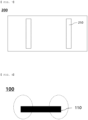
FIG. 7 is a schematic view showing the upper part of an electrode sheet support according to the present invention. - The
electrode sheet support 200 according to the present invention is provided with a throughhole 210 corresponding to a cutting portion at which an electrode sheet is cut, as shown inFIG. 7 . The throughhole 210 is an empty hole configured to allow thelower cutter 400 to extend therethrough. The size of the throughhole 210 is set in consideration of the radius of thelower cutter 400 due to movement or change in angle thereof. At this time, in order to prevent damage to thelower cutter 400 due to movement or change in angle thereof, an electrode sheet damage prevention portion may be provided in the throughhole 210. It is preferable for the electrode sheet damage prevention portion to be made of a flexible material in order to protect the electrode sheet while not damaging the edge of thelower cutter 400. -
FIG. 8 is an enlarged view showing the section of an electrode sheet cut by the electrode sheet cutting apparatus according to the present invention. - An
electrode section 110 according to the present invention means the point of theelectrode sheet 100 at which the upper cutter and the lower cutter engage each other, i.e. the point of the electrode sheet at which the electrode sheet is cut, as shown inFIG. 8 . - The
electrode section 110 may be divided into an electrode tab section and an electrode sheet section depending on the portion that is cut. The cutting sequence or cutting start region of theelectrode sheet 100 may be changed depending on the kind of theelectrode section 110. -
FIG. 9 is a schematic view showing the electrode sheet cutting apparatus according to the present invention and an electrode sheet cut thereby. - As shown in (i) of
FIG. 9 , in order to obtain a plurality ofelectrode tab portions 120 from asingle electrode sheet 100, thesingle electrode sheet 100 may be cut to form the plurality ofelectrode tab portions 120. - In the case in which the
electrode sheet 100 is manufactured, as described above, theelectrode sheet 100 may be cut in a longitudinal direction or a direction perpendicular thereto in order to form a single electrode assembly or may be cut in a concave-convex shape in order to form anelectrode tab portion 120 in (S2) the step of cutting theelectrode sheet 100. - When an
electrode tab section 111 for electrode tab cutting is formed, it is preferable to perform cutting first in an electrode tab protrusion cutting direction a and then to perform cutting in a direction perpendicular to the protruding direction a of theelectrode tab portion 120, i.e. an electrode tab concave cutting direction b, which is a direction toward theelectrode sheet 100, in order to minimize deformation of theelectrode sheet 100 and to easily remove foreign matter generated due to cutting. In addition, it is preferable to first cut the place at which theelectrode tab portion 120 protrudes, i.e. the place closest to the electrode tab protrusion, and to last cut the place farthest from the electrode tab protrusion in the electrode tab concave cutting direction b. That is, in a left electrode tab concave cutting direction b-1, which is one of the electrode tab concave cutting direction b, it is preferable to perform cutting from the left side to the right side, since theelectrode tab portion 120 is formed at the left side of the place at which cutting starts. Also, in a right electrode tab concave cutting direction b-2, which is the other of the electrode tab concave cutting direction, it is preferable to perform cutting from the right side to the left side, since theelectrode tab portion 120 is formed at the right side of the place at which cutting starts. - The left electrode tab concave cutting direction b-1 and the right electrode tab concave cutting direction b-2 engage each other at the place farthest from the place at which the
electrode tab portion 120 is formed, i.e. the center between theelectrode tab portions 120. At this region, theelectrode sheet 100 is cut in a direction perpendicular to the electrode tab concave cutting direction b to form a unit cell electrode for an electrode assembly. - To this end, the electrode sheet cutting apparatus according to the present invention includes an
upper cutter 300, an upperpressing portion 310, alower cutter 400, and a lowerpressing portion 410, as shown in (ii) ofFIG. 9 . When the electrode sheet is cut, therefore, theupper cutter 300 and thelower cutter 400 are deformed. - At this time, it is preferable for the most protruding portions of the
upper cutter 300 and thelower cutter 400 to be disposed at the place closest to the position at which theelectrode tab portion 120 is to be formed depending on the position of theelectrode tab portion 120, and it is preferable for theupper cutter 300 and thelower cutter 400 to be disposed so as to be most deeply recessed at theelectrode sheet section 112 cut to form the unit cell electrode. -
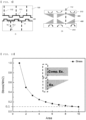
FIG. 10 is a view showing the result of virtual simulation of force applied to the electrode sheet by the electrode sheet cutting apparatus. - Force applied to the electrode sheet by the electrode sheet cutting apparatus decreases with increasing contact area between the electrode sheet cutting apparatus and the electrode sheet.
- That is, the conventional electrode sheet cutting apparatus uniformly contacts the electrode sheet over the entire area (area = 10), whereby force applied to the electrode sheet decreases (stress = 0.1), as shown in
FIG. 10 . In contrast, a portion (area < 10) of the electrode sheet cutting apparatus according to the present invention comes into contact with the electrode sheet first, whereby force applied to the electrode sheet increases (stress > 0.1), as shown inFIG. 10 . As a result, the electrode sheet is rapidly cut, and deformation of the electrode sheet is reduced. - Although the specific details of the present invention have been described in detail, those skilled in the art will appreciate that the detailed description thereof discloses only preferred embodiments of the present invention and thus does not limit the scope of the present invention. Accordingly, those skilled in the art will appreciate that various changes and modifications are possible, without departing from the category and the technical idea of the present invention, and it will be obvious that such changes and modifications fall within the scope of the appended claims.
-
- 10, 100: Electrode sheets
- 11, 110: Electrode sections
- 120: Electrode tab portion
- 111: Electrode tab section
- 112: Electrode sheet section
- 200: Electrode sheet support
- 210: Through hole
- 30: Cutter
- 300: Upper cutter
- 310: Upper pressing portion
- 400: Lower cutter
- 410: Lower pressing portion
- F1: Upper pressing force
- F2: Lower pressing force
- A: Cutting direction
- B: Inter-cutter distance
- a: Electrode tab protrusion cutting direction
- b: Electrode tab concave cutting direction
- b-1: Left electrode tab concave cutting direction
- b-2: Right electrode tab concave cutting direction
- An electrode sheet cutting apparatus and an electrode sheet cutting method according to the present invention are capable of minimizing deformation of an electrode sheet. In addition, it is possible to easily remove foreign matter generated due to cutting of the electrode sheet such that an electrode is not affected by the foreign matter.
- In addition, it is possible to cut the electrode sheet so as to have a regular shape, whereby it is possible to uniformly stack electrodes, and it is possible to provide a regular shape in the case in which the electrodes are stacked in a pouch-shaped case. Furthermore, the electrodes are stacked at a uniform height, whereby it is possible to improve density and capacity of the electrode.
- In addition, cutting is performed from one side, whereby a residue generated as the result of electrode cutting moves to a specific portion, and therefore it is possible to easily remove the residue.
Claims (11)
- An electrode sheet cutting apparatus comprising:an upper cutter (300) configured to be located above an electrode sheet, the upper cutter (300) being configured to cut the electrode sheet (100);a lower cutter (400) located so as to correspond to the upper cutter (300), the lower cutter being configured to engage the upper cutter (300) so as to cut the electrode sheet (100); andan electrode sheet support (200) located between the upper cutter (300) and the lower cutter (400), the electrode sheet (100) support being configured to support the electrode sheet (100), characterized in that the electrode sheet (100) support is provided with a through hole (210) configured to correspond to a cutting portion of the electrode sheet (100) being cut at which the upper cutter (300) and the lower cutter (400) are configured to engage each other,wherein an inter-cutter distance (B) between the upper cutter (300) and the lower cutter (400) before the electrode sheet (100) is cut is formed to be gradually increased in a cutting direction (A) so that the upper cutter (300) and the lower cutter (400) are each configured to cut the electrode sheet while widening a cutting range of the electrode sheet from one side of the cutting portion.
- The electrode sheet cutting apparatus according to claim 1, wherein the upper cutter (300) and the lower cutter (400) are each configured to apply an identical force to the electrode sheet (100).
- The electrode sheet cutting apparatus according to claim 1, wherein the upper cutter (300) and the lower cutter (400) are each configured to move to the electrode sheet (100) at an identical speed.
- The electrode sheet cutting apparatus according to claim 1, wherein the upper cutter (300) and the lower cutter (400) are configured to engage each other first at a middle part of the electrode sheet(100) and then the cutting portion is widened to a contoured portion of the electrode sheet (100).
- The electrode sheet cutting apparatus according to claim 1, wherein the upper cutter (300) and the lower cutter (400) each have a symmetrical shape to one another.
- The electrode sheet cutting apparatus according to claim 1, wherein the electrode sheet (100) is configured to cut to form an electrode tab protrusion.
- The electrode sheet cutting apparatus according to claim 6, wherein the upper cutter (300) and the lower cutter (400) are configured to start cutting the electrode sheet (100) at a position at which the electrode tab protrusion is to be formed.
- An electrode sheet cutting method comprising:(S1) disposing an electrode sheet (100) on an electrode sheet support having a through hole (210) formed at a portion at which the electrode sheet (100) is to be cut; and(S2) cutting the electrode sheet (100) using the upper cutter (300) and the lower cutter (400) according to any one of claims 1 to 7.
- The electrode sheet cutting method according to claim 8, wherein, in step (S2), the electrode sheet (100) is cut in a longitudinal direction or a direction perpendicular thereto to form a single electrode assembly or is cut in a concave-convex shape to form an electrode tab.
- The electrode sheet cutting method according to claim 9, wherein when the electrode tab is formed in step (S2), the upper cutter (300) and the lower cutter (400) first cut a protrusion of the electrode tab and then cut a place on the electrode sheet (100) farthest from the protrusion of the electrode tab in step (S2).
- The electrode sheet cutting method according to claim 10, wherein the place on the electrode sheet farthest from the protrusion of the electrode tab is another cutting portion of the electrode sheet.
Applications Claiming Priority (2)
| Application Number | Priority Date | Filing Date | Title |
|---|---|---|---|
| KR1020200060561A KR102752601B1 (en) | 2020-05-20 | 2020-05-20 | Electrode sheet Cutting Device and Electrode sheet Cutting method having upper cutter and lower cutter |
| PCT/KR2021/006217 WO2021235831A1 (en) | 2020-05-20 | 2021-05-18 | Electrode sheet cutting apparatus comprising upper cutter and lower cutter, and electrode sheet cutting method using same |
Publications (3)
| Publication Number | Publication Date |
|---|---|
| EP4086048A1 EP4086048A1 (en) | 2022-11-09 |
| EP4086048A4 EP4086048A4 (en) | 2023-07-12 |
| EP4086048B1 true EP4086048B1 (en) | 2025-07-02 |
Family
ID=78698082
Family Applications (1)
| Application Number | Title | Priority Date | Filing Date |
|---|---|---|---|
| EP21808660.1A Active EP4086048B1 (en) | 2020-05-20 | 2021-05-18 | Electrode sheet cutting apparatus including upper cutter and lower cutter and electrode sheet cutting method using the same |
Country Status (8)
| Country | Link |
|---|---|
| US (1) | US20230129239A1 (en) |
| EP (1) | EP4086048B1 (en) |
| JP (1) | JP7658541B2 (en) |
| KR (1) | KR102752601B1 (en) |
| CN (1) | CN114945452B (en) |
| ES (1) | ES3036366T3 (en) |
| HU (1) | HUE072076T2 (en) |
| WO (1) | WO2021235831A1 (en) |
Family Cites Families (19)
| Publication number | Priority date | Publication date | Assignee | Title |
|---|---|---|---|---|
| US10122A (en) * | 1853-10-11 | Machine fob cttttino binders boards | ||
| CS184769B2 (en) * | 1973-08-09 | 1978-09-15 | Schloemann Siemag Ag | Shears for longitudinal cutting the rolled sheets particularly the heavy plates |
| US4481848A (en) * | 1982-06-07 | 1984-11-13 | Takeda Machinery Works Company, Ltd. | Corner shear machine |
| JP3805226B2 (en) * | 2001-10-03 | 2006-08-02 | キヤノンマシナリー株式会社 | Work cutting device |
| JP2010198770A (en) | 2009-02-23 | 2010-09-09 | Sanyo Electric Co Ltd | Method and apparatus for manufacturing wound electrode assembly |
| JP2011161565A (en) * | 2010-02-09 | 2011-08-25 | Kanefusa Corp | Cutter for cutting electrode |
| CN103310996B (en) * | 2012-03-15 | 2016-12-14 | 尼吉康株式会社 | Coiler device |
| JP6029351B2 (en) * | 2012-06-28 | 2016-11-24 | 日産自動車株式会社 | Laser cutting method, product manufacturing apparatus, and product manufacturing method |
| KR102052589B1 (en) * | 2013-04-01 | 2019-12-05 | 삼성에스디아이 주식회사 | Electrode, rechargeable battery and fablicating method of electrode |
| JP2015170408A (en) * | 2014-03-05 | 2015-09-28 | 株式会社豊田自動織機 | Method of manufacturing electrode |
| KR102273773B1 (en) * | 2014-09-04 | 2021-07-06 | 삼성에스디아이 주식회사 | Rolling device for secondary battery and rolling method for the same |
| JP2016081742A (en) * | 2014-10-17 | 2016-05-16 | 株式会社豊田自動織機 | Manufacturing method of electrode |
| KR101750602B1 (en) * | 2014-10-28 | 2017-06-23 | 주식회사 엘지화학 | Electrode cutting apparatus |
| KR101649104B1 (en) * | 2015-01-19 | 2016-08-19 | 최병일 | The cutting apparatus |
| KR101774262B1 (en) * | 2015-03-11 | 2017-09-04 | 주식회사 엘지화학 | Electrode Tab Fabricating Apparatus with Improved Dimensional Stability and Method for Fabricating Electrode Tab Utilizing the Same |
| KR102096817B1 (en) * | 2015-11-12 | 2020-04-03 | 주식회사 엘지화학 | Method of Manufacturing Electrode Plate Using Electrode Sheet Including Notching Part |
| JP2019212434A (en) * | 2018-06-01 | 2019-12-12 | 株式会社豊田自動織機 | Electrode manufacturing device |
| KR20200060561A (en) | 2018-11-21 | 2020-06-01 | 김민준 | Green forage continuous cultivation apparatus |
| KR102757189B1 (en) * | 2019-03-28 | 2025-01-21 | 주식회사 엘지에너지솔루션 | Electrode manufacturing equipment for rechargeable battery, electrode manufactured from thereof and rechargeable battery |
-
2020
- 2020-05-20 KR KR1020200060561A patent/KR102752601B1/en active Active
-
2021
- 2021-05-18 EP EP21808660.1A patent/EP4086048B1/en active Active
- 2021-05-18 HU HUE21808660A patent/HUE072076T2/en unknown
- 2021-05-18 ES ES21808660T patent/ES3036366T3/en active Active
- 2021-05-18 US US17/914,023 patent/US20230129239A1/en active Pending
- 2021-05-18 JP JP2022542223A patent/JP7658541B2/en active Active
- 2021-05-18 CN CN202180008645.8A patent/CN114945452B/en active Active
- 2021-05-18 WO PCT/KR2021/006217 patent/WO2021235831A1/en not_active Ceased
Also Published As
| Publication number | Publication date |
|---|---|
| WO2021235831A1 (en) | 2021-11-25 |
| KR20210143583A (en) | 2021-11-29 |
| CN114945452A (en) | 2022-08-26 |
| JP2023510316A (en) | 2023-03-13 |
| ES3036366T3 (en) | 2025-09-18 |
| US20230129239A1 (en) | 2023-04-27 |
| JP7658541B2 (en) | 2025-04-08 |
| EP4086048A1 (en) | 2022-11-09 |
| HUE072076T2 (en) | 2025-10-28 |
| CN114945452B (en) | 2024-01-26 |
| KR102752601B1 (en) | 2025-01-10 |
| EP4086048A4 (en) | 2023-07-12 |
Similar Documents
| Publication | Publication Date | Title |
|---|---|---|
| EP1716606B1 (en) | Battery having specific package structure | |
| US8790418B2 (en) | Manufacturing method for an electrode for a battery | |
| JP5159007B2 (en) | Manufacturing method of battery electrode plate | |
| EP4086048B1 (en) | Electrode sheet cutting apparatus including upper cutter and lower cutter and electrode sheet cutting method using the same | |
| EP4095964B1 (en) | Method of manufacturing electrode including folding portion and electrode sheet including folding portion | |
| US5214833A (en) | Method of manufacturing an inner cutter for a dry shaver | |
| EP4086997A1 (en) | Method for manufacturing electrode including folding part and electrode sheet including folding part | |
| KR102052589B1 (en) | Electrode, rechargeable battery and fablicating method of electrode | |
| EP3951969A1 (en) | Electrode assembly having depressed section formed in electrode tab, guide member for stacking same, and method of manufacturing stack-type battery using same | |
| CN217253721U (en) | A general tool for laser is cut apart | |
| US11901541B2 (en) | Electrode shaping apparatus having notching pilot pin and electrode shaping method using the same | |
| EP3955373A1 (en) | Battery cell having improved weldability and processing apparatus thereof | |
| EP4625512A1 (en) | Electrode for secondary battery and manufacturing method thereof | |
| JP7444648B2 (en) | Battery case and its manufacturing method | |
| US20020034684A1 (en) | Separator for lead storage batteries | |
| KR102706400B1 (en) | Electrode for secondary battery and method of manufacturing electrode | |
| KR20250159783A (en) | Welding part cutter with cleaning function | |
| KR20260057871A (en) | Notching device for rechargeable battery electrode substrate | |
| KR20240060162A (en) | Notching apparatus of electrode for secondary battery | |
| CN121569402A (en) | Battery cell for battery and method for manufacturing same | |
| KR20250135646A (en) | Punching device and punching method using same | |
| KR20250110439A (en) | Apparatus of manufacturing secondary battery and method of manufacturing secondary battery | |
| KR100359615B1 (en) | Current collector and the fabrication method thereof for secondary battery | |
| KR100359613B1 (en) | Current collector and the fabrication method thereof for secondary battery | |
| CN121605520A (en) | Method for manufacturing electrode assemblies |
Legal Events
| Date | Code | Title | Description |
|---|---|---|---|
| STAA | Information on the status of an ep patent application or granted ep patent |
Free format text: STATUS: THE INTERNATIONAL PUBLICATION HAS BEEN MADE |
|
| PUAI | Public reference made under article 153(3) epc to a published international application that has entered the european phase |
Free format text: ORIGINAL CODE: 0009012 |
|
| STAA | Information on the status of an ep patent application or granted ep patent |
Free format text: STATUS: REQUEST FOR EXAMINATION WAS MADE |
|
| 17P | Request for examination filed |
Effective date: 20220805 |
|
| AK | Designated contracting states |
Kind code of ref document: A1 Designated state(s): AL AT BE BG CH CY CZ DE DK EE ES FI FR GB GR HR HU IE IS IT LI LT LU LV MC MK MT NL NO PL PT RO RS SE SI SK SM TR |
|
| A4 | Supplementary search report drawn up and despatched |
Effective date: 20230609 |
|
| RIC1 | Information provided on ipc code assigned before grant |
Ipc: B26D 7/20 20060101ALI20230602BHEP Ipc: H01M 50/531 20210101ALI20230602BHEP Ipc: H01M 4/04 20060101ALI20230602BHEP Ipc: B26D 7/02 20060101ALI20230602BHEP Ipc: B26D 5/02 20060101ALI20230602BHEP Ipc: B26D 1/09 20060101AFI20230602BHEP |
|
| DAV | Request for validation of the european patent (deleted) | ||
| DAX | Request for extension of the european patent (deleted) | ||
| GRAP | Despatch of communication of intention to grant a patent |
Free format text: ORIGINAL CODE: EPIDOSNIGR1 |
|
| STAA | Information on the status of an ep patent application or granted ep patent |
Free format text: STATUS: GRANT OF PATENT IS INTENDED |
|
| INTG | Intention to grant announced |
Effective date: 20250312 |
|
| P01 | Opt-out of the competence of the unified patent court (upc) registered |
Free format text: CASE NUMBER: APP_16844/2025 Effective date: 20250407 |
|
| GRAS | Grant fee paid |
Free format text: ORIGINAL CODE: EPIDOSNIGR3 |
|
| GRAA | (expected) grant |
Free format text: ORIGINAL CODE: 0009210 |
|
| STAA | Information on the status of an ep patent application or granted ep patent |
Free format text: STATUS: THE PATENT HAS BEEN GRANTED |
|
| AK | Designated contracting states |
Kind code of ref document: B1 Designated state(s): AL AT BE BG CH CY CZ DE DK EE ES FI FR GB GR HR HU IE IS IT LI LT LU LV MC MK MT NL NO PL PT RO RS SE SI SK SM TR |
|
| REG | Reference to a national code |
Ref country code: GB Ref legal event code: FG4D |
|
| REG | Reference to a national code |
Ref country code: CH Ref legal event code: EP |
|
| REG | Reference to a national code |
Ref country code: DE Ref legal event code: R096 Ref document number: 602021033489 Country of ref document: DE |
|
| REG | Reference to a national code |
Ref country code: IE Ref legal event code: FG4D |
|
| REG | Reference to a national code |
Ref country code: ES Ref legal event code: FG2A Ref document number: 3036366 Country of ref document: ES Kind code of ref document: T3 Effective date: 20250918 |
|
| REG | Reference to a national code |
Ref country code: HU Ref legal event code: AG4A Ref document number: E072076 Country of ref document: HU |
|
| REG | Reference to a national code |
Ref country code: NL Ref legal event code: MP Effective date: 20250702 |
|
| PG25 | Lapsed in a contracting state [announced via postgrant information from national office to epo] |
Ref country code: PT Free format text: LAPSE BECAUSE OF FAILURE TO SUBMIT A TRANSLATION OF THE DESCRIPTION OR TO PAY THE FEE WITHIN THE PRESCRIBED TIME-LIMIT Effective date: 20251103 |
|
| PG25 | Lapsed in a contracting state [announced via postgrant information from national office to epo] |
Ref country code: NL Free format text: LAPSE BECAUSE OF FAILURE TO SUBMIT A TRANSLATION OF THE DESCRIPTION OR TO PAY THE FEE WITHIN THE PRESCRIBED TIME-LIMIT Effective date: 20250702 |
|
| REG | Reference to a national code |
Ref country code: AT Ref legal event code: MK05 Ref document number: 1808744 Country of ref document: AT Kind code of ref document: T Effective date: 20250702 |
|
| PG25 | Lapsed in a contracting state [announced via postgrant information from national office to epo] |
Ref country code: IS Free format text: LAPSE BECAUSE OF FAILURE TO SUBMIT A TRANSLATION OF THE DESCRIPTION OR TO PAY THE FEE WITHIN THE PRESCRIBED TIME-LIMIT Effective date: 20251102 |
|
| PG25 | Lapsed in a contracting state [announced via postgrant information from national office to epo] |
Ref country code: NO Free format text: LAPSE BECAUSE OF FAILURE TO SUBMIT A TRANSLATION OF THE DESCRIPTION OR TO PAY THE FEE WITHIN THE PRESCRIBED TIME-LIMIT Effective date: 20251002 |
|
| REG | Reference to a national code |
Ref country code: LT Ref legal event code: MG9D |
|
| PG25 | Lapsed in a contracting state [announced via postgrant information from national office to epo] |
Ref country code: AT Free format text: LAPSE BECAUSE OF FAILURE TO SUBMIT A TRANSLATION OF THE DESCRIPTION OR TO PAY THE FEE WITHIN THE PRESCRIBED TIME-LIMIT Effective date: 20250702 |
|
| PG25 | Lapsed in a contracting state [announced via postgrant information from national office to epo] |
Ref country code: FI Free format text: LAPSE BECAUSE OF FAILURE TO SUBMIT A TRANSLATION OF THE DESCRIPTION OR TO PAY THE FEE WITHIN THE PRESCRIBED TIME-LIMIT Effective date: 20250702 |
|
| PG25 | Lapsed in a contracting state [announced via postgrant information from national office to epo] |
Ref country code: HR Free format text: LAPSE BECAUSE OF FAILURE TO SUBMIT A TRANSLATION OF THE DESCRIPTION OR TO PAY THE FEE WITHIN THE PRESCRIBED TIME-LIMIT Effective date: 20250702 |
|
| PG25 | Lapsed in a contracting state [announced via postgrant information from national office to epo] |
Ref country code: GR Free format text: LAPSE BECAUSE OF FAILURE TO SUBMIT A TRANSLATION OF THE DESCRIPTION OR TO PAY THE FEE WITHIN THE PRESCRIBED TIME-LIMIT Effective date: 20251003 |
|
| PG25 | Lapsed in a contracting state [announced via postgrant information from national office to epo] |
Ref country code: SE Free format text: LAPSE BECAUSE OF FAILURE TO SUBMIT A TRANSLATION OF THE DESCRIPTION OR TO PAY THE FEE WITHIN THE PRESCRIBED TIME-LIMIT Effective date: 20250702 Ref country code: CZ Free format text: LAPSE BECAUSE OF FAILURE TO SUBMIT A TRANSLATION OF THE DESCRIPTION OR TO PAY THE FEE WITHIN THE PRESCRIBED TIME-LIMIT Effective date: 20250702 |
|
| PG25 | Lapsed in a contracting state [announced via postgrant information from national office to epo] |
Ref country code: LV Free format text: LAPSE BECAUSE OF FAILURE TO SUBMIT A TRANSLATION OF THE DESCRIPTION OR TO PAY THE FEE WITHIN THE PRESCRIBED TIME-LIMIT Effective date: 20250702 |
|
| PG25 | Lapsed in a contracting state [announced via postgrant information from national office to epo] |
Ref country code: PL Free format text: LAPSE BECAUSE OF FAILURE TO SUBMIT A TRANSLATION OF THE DESCRIPTION OR TO PAY THE FEE WITHIN THE PRESCRIBED TIME-LIMIT Effective date: 20250702 Ref country code: BG Free format text: LAPSE BECAUSE OF FAILURE TO SUBMIT A TRANSLATION OF THE DESCRIPTION OR TO PAY THE FEE WITHIN THE PRESCRIBED TIME-LIMIT Effective date: 20250702 |
|
| PG25 | Lapsed in a contracting state [announced via postgrant information from national office to epo] |
Ref country code: RS Free format text: LAPSE BECAUSE OF FAILURE TO SUBMIT A TRANSLATION OF THE DESCRIPTION OR TO PAY THE FEE WITHIN THE PRESCRIBED TIME-LIMIT Effective date: 20251002 |
|
| PG25 | Lapsed in a contracting state [announced via postgrant information from national office to epo] |
Ref country code: SM Free format text: LAPSE BECAUSE OF FAILURE TO SUBMIT A TRANSLATION OF THE DESCRIPTION OR TO PAY THE FEE WITHIN THE PRESCRIBED TIME-LIMIT Effective date: 20250702 |
|
| PGFP | Annual fee paid to national office [announced via postgrant information from national office to epo] |
Ref country code: GB Payment date: 20260324 Year of fee payment: 6 |
|
| PG25 | Lapsed in a contracting state [announced via postgrant information from national office to epo] |
Ref country code: DK Free format text: LAPSE BECAUSE OF FAILURE TO SUBMIT A TRANSLATION OF THE DESCRIPTION OR TO PAY THE FEE WITHIN THE PRESCRIBED TIME-LIMIT Effective date: 20250702 |
|
| PG25 | Lapsed in a contracting state [announced via postgrant information from national office to epo] |
Ref country code: IT Free format text: LAPSE BECAUSE OF FAILURE TO SUBMIT A TRANSLATION OF THE DESCRIPTION OR TO PAY THE FEE WITHIN THE PRESCRIBED TIME-LIMIT Effective date: 20250702 |
|
| PG25 | Lapsed in a contracting state [announced via postgrant information from national office to epo] |
Ref country code: EE Free format text: LAPSE BECAUSE OF FAILURE TO SUBMIT A TRANSLATION OF THE DESCRIPTION OR TO PAY THE FEE WITHIN THE PRESCRIBED TIME-LIMIT Effective date: 20250702 Ref country code: SK Free format text: LAPSE BECAUSE OF FAILURE TO SUBMIT A TRANSLATION OF THE DESCRIPTION OR TO PAY THE FEE WITHIN THE PRESCRIBED TIME-LIMIT Effective date: 20250702 |