EP4085451B1 - Sprachagnostische mehrsprachige modellierung durch effektive skriptnormalisierung - Google Patents
Sprachagnostische mehrsprachige modellierung durch effektive skriptnormalisierung Download PDFInfo
- Publication number
- EP4085451B1 EP4085451B1 EP21705040.0A EP21705040A EP4085451B1 EP 4085451 B1 EP4085451 B1 EP 4085451B1 EP 21705040 A EP21705040 A EP 21705040A EP 4085451 B1 EP4085451 B1 EP 4085451B1
- Authority
- EP
- European Patent Office
- Prior art keywords
- script
- language
- training data
- respective native
- training
- Prior art date
- Legal status (The legal status is an assumption and is not a legal conclusion. Google has not performed a legal analysis and makes no representation as to the accuracy of the status listed.)
- Active
Links
Images


Classifications
-
- G—PHYSICS
- G10—MUSICAL INSTRUMENTS; ACOUSTICS
- G10L—SPEECH ANALYSIS TECHNIQUES OR SPEECH SYNTHESIS; SPEECH RECOGNITION; SPEECH OR VOICE PROCESSING TECHNIQUES; SPEECH OR AUDIO CODING OR DECODING
- G10L15/00—Speech recognition
- G10L15/005—Language recognition
-
- G—PHYSICS
- G10—MUSICAL INSTRUMENTS; ACOUSTICS
- G10L—SPEECH ANALYSIS TECHNIQUES OR SPEECH SYNTHESIS; SPEECH RECOGNITION; SPEECH OR VOICE PROCESSING TECHNIQUES; SPEECH OR AUDIO CODING OR DECODING
- G10L15/00—Speech recognition
- G10L15/06—Creation of reference templates; Training of speech recognition systems, e.g. adaptation to the characteristics of the speaker's voice
- G10L15/063—Training
-
- G—PHYSICS
- G06—COMPUTING OR CALCULATING; COUNTING
- G06F—ELECTRIC DIGITAL DATA PROCESSING
- G06F40/00—Handling natural language data
- G06F40/40—Processing or translation of natural language
- G06F40/58—Use of machine translation, e.g. for multi-lingual retrieval, for server-side translation for client devices or for real-time translation
-
- G—PHYSICS
- G06—COMPUTING OR CALCULATING; COUNTING
- G06N—COMPUTING ARRANGEMENTS BASED ON SPECIFIC COMPUTATIONAL MODELS
- G06N3/00—Computing arrangements based on biological models
- G06N3/02—Neural networks
- G06N3/04—Architecture, e.g. interconnection topology
- G06N3/044—Recurrent networks, e.g. Hopfield networks
-
- G—PHYSICS
- G06—COMPUTING OR CALCULATING; COUNTING
- G06N—COMPUTING ARRANGEMENTS BASED ON SPECIFIC COMPUTATIONAL MODELS
- G06N3/00—Computing arrangements based on biological models
- G06N3/02—Neural networks
- G06N3/04—Architecture, e.g. interconnection topology
- G06N3/044—Recurrent networks, e.g. Hopfield networks
- G06N3/0442—Recurrent networks, e.g. Hopfield networks characterised by memory or gating, e.g. long short-term memory [LSTM] or gated recurrent units [GRU]
-
- G—PHYSICS
- G06—COMPUTING OR CALCULATING; COUNTING
- G06N—COMPUTING ARRANGEMENTS BASED ON SPECIFIC COMPUTATIONAL MODELS
- G06N3/00—Computing arrangements based on biological models
- G06N3/02—Neural networks
- G06N3/04—Architecture, e.g. interconnection topology
- G06N3/045—Combinations of networks
- G06N3/0455—Auto-encoder networks; Encoder-decoder networks
-
- G—PHYSICS
- G06—COMPUTING OR CALCULATING; COUNTING
- G06N—COMPUTING ARRANGEMENTS BASED ON SPECIFIC COMPUTATIONAL MODELS
- G06N3/00—Computing arrangements based on biological models
- G06N3/02—Neural networks
- G06N3/04—Architecture, e.g. interconnection topology
- G06N3/049—Temporal neural networks, e.g. delay elements, oscillating neurons or pulsed inputs
-
- G—PHYSICS
- G06—COMPUTING OR CALCULATING; COUNTING
- G06N—COMPUTING ARRANGEMENTS BASED ON SPECIFIC COMPUTATIONAL MODELS
- G06N3/00—Computing arrangements based on biological models
- G06N3/02—Neural networks
- G06N3/08—Learning methods
- G06N3/084—Backpropagation, e.g. using gradient descent
-
- G—PHYSICS
- G06—COMPUTING OR CALCULATING; COUNTING
- G06N—COMPUTING ARRANGEMENTS BASED ON SPECIFIC COMPUTATIONAL MODELS
- G06N3/00—Computing arrangements based on biological models
- G06N3/02—Neural networks
- G06N3/08—Learning methods
- G06N3/09—Supervised learning
-
- G—PHYSICS
- G10—MUSICAL INSTRUMENTS; ACOUSTICS
- G10L—SPEECH ANALYSIS TECHNIQUES OR SPEECH SYNTHESIS; SPEECH RECOGNITION; SPEECH OR VOICE PROCESSING TECHNIQUES; SPEECH OR AUDIO CODING OR DECODING
- G10L15/00—Speech recognition
- G10L15/26—Speech to text systems
-
- G—PHYSICS
- G06—COMPUTING OR CALCULATING; COUNTING
- G06F—ELECTRIC DIGITAL DATA PROCESSING
- G06F40/00—Handling natural language data
- G06F40/10—Text processing
- G06F40/12—Use of codes for handling textual entities
- G06F40/126—Character encoding
- G06F40/129—Handling non-Latin characters, e.g. kana-to-kanji conversion
-
- G—PHYSICS
- G06—COMPUTING OR CALCULATING; COUNTING
- G06F—ELECTRIC DIGITAL DATA PROCESSING
- G06F40/00—Handling natural language data
- G06F40/40—Processing or translation of natural language
- G06F40/53—Processing of non-Latin text
-
- G—PHYSICS
- G10—MUSICAL INSTRUMENTS; ACOUSTICS
- G10L—SPEECH ANALYSIS TECHNIQUES OR SPEECH SYNTHESIS; SPEECH RECOGNITION; SPEECH OR VOICE PROCESSING TECHNIQUES; SPEECH OR AUDIO CODING OR DECODING
- G10L15/00—Speech recognition
- G10L15/08—Speech classification or search
- G10L15/16—Speech classification or search using artificial neural networks
Definitions
- This disclosure relates to language-agnostic multilingual modeling using effective script normalization.
- ASR Automated speech recognition
- multilingual ASR systems have gained popularity as an effective way to expand ASR coverage of the world's languages.
- conventional multilingual ASR systems have been shown to outperform monolingual ASR systems, particularly for those languages where less training data is available.
- ASR systems can be implemented using a significantly simplified infrastructure, owing to the fact that multiple natural languages can be supported with just a single speech model rather than with multiple individual models.
- AM acoustic model
- LMs language-specific language models
- E2E end-to-end
- WERs word error rates
- PM pronunciation model
- LMs recurrent neural network transducer
- LAS attention-based models
- One aspect of the invention provides a computer-implemented method in accordance with claim 1.
- transliterating the corresponding transcription in the respective native script into the corresponding transliterated text includes using a respective transliteration transducer associated with the respective native script to transliterate the corresponding transcription in the respective native script into the corresponding transliterated text in the target script.
- the transliteration transducer associated with the respective native script may include: an input transducer configured to input Unicode symbols in the respective native script to symbols in a pair language model; a bigram pair language model transducer configured to map between symbols in the respective native script and the target script; and an output transducer configured to map the symbols in the pair language model to output symbols in the target script.
- the operations may also include, prior to transliterating the corresponding transcription in the respective native language, training, using agreement-based data pre-processing, each respective transliteration transducer to only process transliteration pairs that have at least one spelling in the target script of the transliterated text for a given native word that is common across each of the respective native languages associated with the training data sets.
- the operations may optionally include, prior to transliterating the corresponding transcription in the respective native language, training, using frequency-based data pre-processing, each respective transliteration transducer to only process transliteration pairs that have spellings in the target script of the transliterated text for a given native word that satisfy a frequency threshold.
- transliterating the corresponding transcription in the respective native script into the corresponding transliterated text includes either using a finite state transducer (FST) network to transliterate the corresponding transcription in the respective native script into the corresponding transliterated text, or using a language-independent transliteration transducer to transliterate the corresponding transcription in the respective native script into the corresponding transliterated text in the target script.
- the multilingual E2E speech recognition model may include a sequence-to-sequence neural network.
- the multilingual E2E speech recognition model may include a recurrent neural network transducer (RNN-T).
- training the multilingual E2E speech recognition model includes using a stochastic optimization algorithm to train the multilingual E2E speech recognition model.
- the operations may also include, prior to training the multilingual E2E ASR model, shuffling the normalized training data samples generated from each respective training data sample of each training data set.
- the operations also include, after training the multilingual E2E ASR model, pushing the trained multilingual E2E ASR model to a plurality of user devices, each user device configured to: capture, using at least one microphone in communication with the user device, an utterance spoken by a respective user of the user device in any combination of the respective native languages associated with the training data sets; and generate, using the trained multilingual E2E ASR model, a corresponding speech recognition result in the target script for the captured utterance spoken by the respective user.
- at least one of the plurality of user devices may be further configured to transliterate the corresponding speech recognition result in the target script into a transliterated script.
- Another aspect of the invention provides a system in accordance with claim 14.
- transliterating the corresponding transcription in the respective native script into the corresponding transliterated text includes using a respective transliteration transducer associated with the respective native script to transliterate the corresponding transcription in the respective native script into the corresponding transliterated text in the target script.
- the transliteration transducer associated with the respective native script may include: an input transducer configured to input Unicode symbols in the respective native script to symbols in a pair language model; a bigram pair language model transducer configured to map between symbols in the respective native script and the target script; and an output transducer configured to map the symbols in the pair language model to output symbols in the target script.
- the operations may also include, prior to transliterating the corresponding transcription in the respective native language, training, using agreement-based data pre-processing, each respective transliteration transducer to only process transliteration pairs that have at least one spelling in the target script of the transliterated text for a given native word that is common across each of the respective native languages associated with the training data sets.
- the operations may optionally include, prior to transliterating the corresponding transcription in the respective native language, training, using frequency-based data pre-processing, each respective transliteration transducer to only process transliteration pairs that have spellings in the target script of the transliterated text for a given native word that satisfy a frequency threshold.
- transliterating the corresponding transcription in the respective native script into the corresponding transliterated text includes either using a finite state transducer (FST) network to transliterate the corresponding transcription in the respective native script into the corresponding transliterated text, or using a language-independent transliteration transducer to transliterate the corresponding transcription in the respective native script into the corresponding transliterated text in the target script.
- the multilingual E2E speech recognition model may include a sequence-to-sequence neural network.
- the multilingual E2E speech recognition model may include a recurrent neural network transducer (RNN-T).
- training the multilingual E2E speech recognition model includes using a stochastic optimization algorithm to train the multilingual E2E speech recognition model.
- the operations may also include, prior to training the multilingual E2E ASR model, shuffling the normalized training data samples generated from each respective training data sample of each training data set.
- the operations also include, after training the multilingual E2E ASR model, pushing the trained multilingual E2E ASR model to a plurality of user devices, each user device configured to: capture, using at least one microphone in communication with the user device, an utterance spoken by a respective user of the user device in any combination of the respective native languages associated with the training data sets; and generate, using the trained multilingual E2E ASR model, a corresponding speech recognition result in the target script for the captured utterance spoken by the respective user.
- at least one of the plurality of user devices may be further configured to transliterate the corresponding speech recognition result in the target script into a transliterated script.
- FIG. 1 illustrates an automated speech recognition (ASR) system 100 implementing a language-agnostic, end-to-end (E2E) ASR model 300 that resides on user devices 102, 102a-d of various Indic-speaking users 104, 104a-d.
- ASR automated speech recognition
- the user 104a of the user device 102a speaks Bengali as his/her respective native language
- the user 104b of the second user device 102b speaks Hindi as his/her respective native language
- the user 104c of the user device 102c speaks Kannada as his/her respective native language
- the user 104d of the user device 102d speaks Tamil has his/her respective native language.
- While the example shown depicts the ASR system 100 residing on a user device 102, some or all components of the ASR system 100 may reside on a remote computing device (e.g., one or more servers of a distributed system executing in a cloud-computing environment) in communication with the user device 102. Moreover, other users 104 may speak other Indic languages or languages of other dialects such as, without limitation, English, French, Spanish, Chinese, German, and/or Japanese.
- a remote computing device e.g., one or more servers of a distributed system executing in a cloud-computing environment
- other users 104 may speak other Indic languages or languages of other dialects such as, without limitation, English, French, Spanish, Chinese, German, and/or Japanese.
- the user devices 102 are depicted as mobile phones, the user devices 102 may correspond to any type of computing device such as, without limitation, a tablet device, a laptop/desktop computer, a wearable device, a digital assistant device, a smart speaker/display, a smart appliance, an automotive infotainment system, or an Internet-of-Things (IoT) device.
- a tablet device a laptop/desktop computer
- a wearable device a digital assistant device
- a smart speaker/display a smart appliance
- automotive infotainment system or an Internet-of-Things (IoT) device.
- IoT Internet-of-Things
- Each of the user devices 102 include an audio subsystem 108 configured to receive utterances 106 spoken by the users 104 (e.g., the user devices 102 may include one or more microphones for recording the spoken utterances 106) in their respective native languages and convert the utterances 106 into a corresponding digital format associated with input acoustic frames 110 capable of being processed by the ASR system 100.
- each user 104 speaks a respective utterance 106, 106a-d in the respective native language of the English word "Discovery" and the audio subsystem 108 converts each utterance 106, 106a-d into corresponding acoustic frames 110, 110a-d for input to the ASR system 100.
- the acoustic frames 110a are associated with audio spoken in the respective native language of Bengali
- the acoustic frames 110b are associated with audio spoken in the respective native language of Hindi
- the acoustic frames 110c are associated with audio spoken in the respective native language of Kannada
- the acoustic frames 110d are associated with audio spoken in the respective native language of Tamil.
- the multilingual E2E ASR model 300 receives, as input, the acoustic frames 110 corresponding to each utterance 106, and generates/predicts, as output, a corresponding transcription (e.g., recognition result) 120 of the utterance 106 in a target script.
- each corresponding transcription 120 represents the respective native language of the corresponding utterance/audio 106 in the same target script.
- the term "script" generally refers to a writing system that includes a system of symbols that are used to represent a natural language.
- Example scripts include Latin, Cyrillic, Greek, Arabic, Indic, or any another writing system.
- the target script includes Latin such that each corresponding recognition result 120a, 120b, 120c, 120d represents the respective native language of the corresponding utterance 106a, 106b, 106c, 106d in the same target script of Latin.
- the multilingual E2E ASR model 300 is configured to generate/predict corresponding speech recognition results 120 in the same target script of Latin such that each recognition result 120a, 120b, 120c, 120d is in the same target script of Latin, e.g., "Discovery".
- one or more users 104 speak codemixed utterances 106 that include codemixing of words in their respective native language as well as a secondary language such as English, another Indic language, or some other natural language.
- the ASR model 300 will similarly generate/predict a corresponding speech recognition result in the same target script, e.g., Latin.
- the ASR system 100 optionally includes a transliteration module 400 configured to transliterate the speech recognition result 120 output from the multilingual E2E ASR model 300 in the target script into any suitable transliterated script 121.
- the transliteration module 400 may transliterate each of: the speech recognition result 120a associated with the Bengali-speaking user 104a from the Latin target script into Bengali script 121a; the speech recognition result 120b associated with the Hindi-speaking user 104b from the Latin target script into Hindi script 121b; the speech recognition result 120c associated with the Kannada-speaking user 104c from the Latin target script into Kannada script 121c; and the speech recognition result 120d associated with the Tamil-speaking user 104d from the Latin target script into Tamil script 121d.
- the transliteration module 400 may use finite state transducer (FST) networks to perform the transliteration.
- FST finite state transducer
- the user devices 102 also execute a user interface generator 107 configured to present a representation of the speech recognition results 120, 121 of the ASR system 100 to the respective users 104 of the user device 102.
- the speech recognition result 120 in the target script and/or in the transliterated script 121 output from ASR system 100 is processed, e.g., by a natural language understanding (NLU) module executing on the user device 102 or a remote device, to execute a user command.
- NLU natural language understanding
- the transliteration module 400 transliterates the speech recognition result 120 in the target script associated with a first user 104a that speaks a first respective native language (e.g., Bengali) into transliterated script 121 representing a second different respective native language (e.g., Hindi) spoken by a second user 104a.
- the transliterated script 121 may represent the second respective native language spoken by the second user 104b for an audible utterance 106a spoken by the first user 104a in the first respective native language.
- the user interface generator 107 on the second user device 102b may present the transliterated script 121 to the second user 104.
- a text-to-speech system (e.g., executing on any combination of the first user device 104a, the second user device 102b, or a remote system) may convert the transliterated script 121 into synthesized speech for audible output by the second user device 102b in the second respective native language (e.g., Hindi) spoken by the second user 104b.
- the second respective native language e.g., Hindi
- the language of the transliterated script may be based on the native language associated with the user that provided the corresponding utterance 106 or the native language associated with a recipient user 104b that speaks a different native language than the native language in which the original utterance 106 was spoken.
- the multilingual E2E ASR model 300 may implement any type of sequence-to-sequence neural network architecture.
- the multilingual E2E ASR model 300 implements a Listen, Attend, Spell (LAS) neural network architecture.
- the multilingual E2E ASR model 300 uses a Recurrent Neural Network-Transducer (RNN-T) model architecture which adheres to the latency constraints associated with interactive applications.
- RNN-T Recurrent Neural Network-Transducer
- an example multilingual E2E ASR model 300 includes an encoder network 310, a prediction network 320, and a joint network 330.
- the prediction network 320 is also an LSTM network, which, like a language model (LM), processes the sequence of non-blank symbols output by a final Softmax layer 340 so far, y 0 , . . . , y ui-1 , into a dense representation
- LM language model
- the representations produced by the encoder and prediction networks 310, 320 are combined by the joint network 330.
- the joint network then predicts which is a distribution over the next output symbol.
- the Softmax layer 340 may employ any technique to select the output symbol with the highest probability in the distribution as the next output symbol predicted by the model 300.
- the multilingual RNN-T model 300 does not make a conditional independence assumption, rather the prediction of each symbol is conditioned not only on the acoustics but also on the sequence of labels output so far.
- the multilingual RNN-T model 300 does assume an output symbol is independent of future acoustic frames 110, which allows a multilingual RNN-T model to be employed in a streaming fashion.
- the encoder network 310 of the multilingual RNN-T model 300 is made up of eight 2,048-dimensional LSTM layers, each followed by a 640-dimensional projection layer.
- the prediction network 320 may have two 2,048-dimensional LSTM layers, each of which is also followed by 640-dimensional projection layer.
- the joint network 330 may also have 640 hidden units.
- the softmax layer may be composed of a unified grapheme set from all languages, i.e., 988 graphemes in total, that is generated using all unique graphemes in a plurality of training data sets 202 ( FIG. 2 ).
- implementations herein are directed toward the multilingual E2E ASR model 300 being language-agnostic such that no language information (e.g., embedding, vectors, tags, etc.) is provided with the input acoustic frames 110 to identify the language(s) associated with the input acoustic frames 110.
- no language information e.g., embedding, vectors, tags, etc.
- the multi-lingual E2E ASR model 300 is not conditioned on any language information during training such that the model 300 is configured to receive training audio in any natural language and learn to predict speech recognition results 120 in a target script for the audio that match a corresponding reference transcription in the same target script independent of the respective natural language associated with the audio.
- training the multilingual E2E ASR model 300 to be language-agnostic permits all parameters of the model to be shared across all natural languages representing the input acoustic frames 110.
- the model 300 is also able to provide benefits for data-scarce languages and enable training of the model 300 on new or different languages at any time, thereby providing a scalable and uniform model for multilingual speech recognition in a multitude of different multicultural societies where several languages are frequency used together (but often rendered with different writing systems). That is, by not depending on language information limits, the language-agnostic multilingual E2E ASR model 300 can be extended to newer languages and be adaptable to accepting codemixed utterances spoken in languages used during training.
- an example training process 200 for building/training the language-agnostic, multilingual E2E ASR model 300 includes transforming all languages used to train the model into one writing system (e.g., a target script) through a many-to-one transliteration module 400.
- the ASR model 300 will be able to map similar sounding acoustics to a single, canonical target sequence of graphemes, effectively separating modeling and rendering problems over traditional language-dependent multilingual models.
- transliteration refers to a sequence-to-sequence mapping problem that aims to convert text/script from one writing system to another
- a computing device 201 such as a remote server executing on a distributed system in a cloud computing environment, may execute the training process 200 and later push the trained language-agnostic, multilingual E2E ASR model 300 to user devices 102 for generating speech recognition results on-device. Additionally or alternatively, the trained model 300 may execute on the computing device 201 for generating speech recognition results 120 in the target script based on acoustic frames 110 received from user devices 102.
- the training process 200 obtains a plurality of training data sets 202, 202a-n each associated with a respective native language that is different than the respective native languages of the other training data sets 202.
- each training data set 202 includes a plurality of respective training data samples 204, 204a-n, whereby each training sample 204 includes audio 210 (e.g., an audible utterance) spoken in the respective native language and a corresponding transcription 220 of the audio 210 in a respective native script representing the respective native language.
- audio 210 e.g., an audible utterance
- the training process 200 transliterates the corresponding transcription 220 in the respective native script into corresponding transliterated text 221 representing the respective native language of the corresponding audio 210 in a target script. That is, the training process transliterates the native script of the transcriptions in all of the different native languages into the same target script, whereby the target script is associated with a different writing system than the writing systems associated with each of the native scripts.
- the target script includes Latin script representing the Latin writing system.
- the training process 200 uses a many-to-one transliteration module 400 to transliterate the transcriptions 220 in the native scripts into the corresponding transliterated texts 221 in the target script.
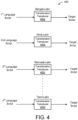
- the transliteration module 400 includes multiple transliteration transducers 400, 400a-n each associated with a respective native language for transliterating the respective native script representing the respective native language into the transliterated text 221 in the target script. For instance, FIG.
- each transliteration transducer 400a-n associated with a respective native script and including a composition of three transducers: I ⁇ P ⁇ O, where I includes an input transducer configured to map Unicode symbols to symbols in a pair language model, P includes a bigram pair language model transducer configured to map between symbols in the respective native script and the target script (e.g., Bengali-Latin; Hindi-Latin; Kannada-Latin; and Tamil-Latin), and O includes an output transducer configured to map the pair language model symbols to the target output symbols of the target script (e.g., Latin).
- Each pair language model transducer P includes an n-gram model over "pair' symbols having an input Unicode code point paired with an output Unicode code point.
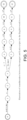
- FIG. 5 shows an example transliteration transducer transliterating Devanagari writing script into Latin script.
- the conditional probability of the transliterated word e.g., Browser
- the conditional probability of the transliterated word is obtained by dividing a joint probability from the transliteration transducer by a marginalization sum over all input and output sequences. This computation is efficiently implemented by computing a shortest path in the transliteration transducer 400.
- the input for training each pair language model transducer P of each transliteration transducer 400 includes respective transliteration pairs formed from native script words and possible Latin script Romanizations.
- a "transliteration pair” (interchangeably referred to as a "transliterated pair” or "a native-transliterated word pair”) refers to a word in a native language script (e.g., a respective one of Bengali, Hindi, Kannada; or Tamil) paired with a corresponding spelling of the word in the target script (e.g., Latin script Romanization).
- a native language script e.g., a respective one of Bengali, Hindi, Kannada; or Tamil
- Latin script Romanization e.g., Latin script Romanization
- the possible Latin script romanizations can result in the spelling of words in a variety of different ways since there is no standard orthography in the Latin script.
- Table 1 shows native script spellings of the English word "discovery" in each of the four Indic languages of Bengali, Hindi, Kannada, and Tamil with attested Romanizations of that word in transducer training data.
- Table 1 Bengali Hindi Kannada Tamil discoveri discovery discovary tiskavari discovery discovery discovery discovery diskovary discoveri diskovery discovery diskoveri Table 1 shows that while the actual spelling of the word in English is attested in all four of the Indic native languages, annotators in each language may vary in the number and kind of Romanization they suggest. This variance by the annotators may be driven by many factors, including differences in pronunciation or simply individual variation.
- each transliteration transducer 400 associated with a respective native language is configured to only process transliteration pairs which have at least one common spelling in the target script of the transliterated text 221. For instance, in the above example where the target script spelling of "Discovery" is common across each of the four Indic languages of Bengali, Hindi, Kannada, and Tamil, the transliteration transducers 400 associated with each of the four Indic languages may be trained to only process the target script with the spelling "Discovery" while leaving all other spellings unprocessed.
- the transliteration transducer 400a for transliterating Bengali to Latin is trained to only process the target script spelling "Discovery” without processing the other possible spellings of "discoveri”, “diskovary”, “diskovery”, and “diskoveri”.
- Table 2 below provides an example algorithm for training the transliteration transducers 400 on the agreement-based pre-processing technique.
- the training data also contains a frequency of occurrences of all transliterated forms for a word in the respective native script.
- the frequency-based data pre-processing technique transforms all of the transliteration pairs for each language.
- the frequency-based data pre-processing may also rely on an empirical observation that the most frequent transliterated pairs formed usually correlated to commonly used spellings of proper nouns and/or actual dictionary spellings of the English words.
- each respective transliteration transducer 400 is configured to only process/retain the target script with spellings that meet a frequency threshold and discard the rest.
- the frequency threshold includes an average transliteration frequency per native word in the training data. Table 3 below provides an example algorithm for training the transliteration transducers 400 on the frequency-based pre-processing technique.
- the many-to-one transliteration module 400 includes a language-independent transliteration transducer configured to transliterate each corresponding transcription 220 in each respective native script into the corresponding transliterated text 221 in the target script. As such, separate transliteration transducers 400 each associated with a respective language would not have to be trained individually.
- FIG. 2 shows the training process 200 associating the corresponding transliterated text 221 in the target script with the corresponding audio 210 in the respective native language to generate a respective normalized training data sample 240.
- a normalizer 230 receives the audio 210 spoken in the respective native language from the respective training data sample 204 and the corresponding transliterated text 221 output from the transliteration module 400 to generate the respective normalized training data sample 240.
- the normalized training data sample 240 may also include the transcription 220 in addition to the corresponding audio 210 and the transliterated text 221.
- data storage 260 e.g., residing on memory hardware of the computing system 201 may store normalized training sets 205, 205a-n corresponding to respective ones of the received training data sets 202, 202a-n.
- each normalized training set 205 includes a plurality of respective normalized training samples 240, 240a-n, whereby each respective normalized training sample 240 includes the audio 210 (e.g., an audible utterance) spoken in the respective native language and the corresponding transliterated text 221 representing the respective native language of the audio 210 in the target scrip.
- each respective normalized training sample 240 includes the audio 210 (e.g., an audible utterance) spoken in the respective native language and the corresponding transliterated text 221 representing the respective native language of the audio 210 in the target scrip.
- the training process 200 trains, using the normalized training data samples 240 generated from each respective training data sample 204 of each training data set 202 and without providing any language information, the multilingual E2E ASR model 300 to predict speech recognition results 120 in the target script (e.g., Latin) for corresponding speech utterances 106 spoken in any of the different native languages (e.g., the Indic languages of Bengali, Hindi, Kannada, and Tamil) associated with the plurality of training data sets 202.
- the model 300 is trained without being conditioned on any language information associated with the normalized training data samples 240 provided as input such that the model 300 is agnostic to the natural languages of the audio 210 provided as input.
- training the multilingual E2E ASR model 300 includes shuffling the normalized training data samples 240 such that a sequence of normalized training data samples 240 received as training inputs includes randomly selected audio 210 in any combination and order of natural languages. In doing so, multilingual training of the model 300 may be optimized so that the model 300 does not learn to apply weights favoring one particular language at a time as in the case if the model were trained by grouping the normalized training data samples 240 according to their respective native languages.
- Training of the multilingual E2E ASR model 300 generally includes using a stochastic optimization algorithm, such as stochastic gradient decent, to train a neural network architecture of the model 300 through backpropagation.
- the stochastic optimization algorithm defines a loss function (e.g., a cross-entropy loss function) based on a difference between actual outputs (e.g., recognition results 120 in the target script) of the neural network and desired outputs (e.g., the transliterated text 221 representing the respective native language of the audio 210 in the target scrip).
- the loss function is computed for a batch of training examples, and then differentiated with respect to each weight in the model 300.
- the training process 200 takes into account data imbalance across the plurality of data sets 202.
- Data imbalance is a natural consequence of the varied distribution of speakers across the world's languages. Languages with more speakers tend to produce transcribed data more easily.
- ASR systems may only train the AM on transcribed speech data, all components in a multilingual E2E model are trained on transcribed speech data.
- multilingual E2E models may be more sensitive to data imbalance. That is, the multilingual E2E ASR model 300 tends to be more influenced by over-represented native languages in the training data sets 202. The magnitude of over influence is more pronounced in the instant case when no language information/identifier is provided (e.g., no language identifiers encoded with the training audio or language models incorporated).
- the training process first augments the plurality of training data sets 202 with diverse noise styles.
- the degree of data augmentation for each language is determined empirically by observing a count of noisy copies in the training data set 202 associated with lowest-resource language (e.g., Kannada) that causes the model 300 to degrade in performance. Based on the count of noisy copies, the training data sets 202 associated with the remaining native languages are augmented with a target number of noise styles to result in equal amounts of data for each of the native languages used for training the model 300.
- lowest-resource language e.g., Kannada
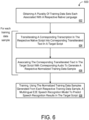
- FIG. 6 provides a flowchart of an example arrangement of operations for a method 600 of training a language-agnostic, multilingual E2E ASR model 300.
- the method 600 includes obtaining a plurality of training data sets 202 each associated with a respective native language that is different than the respective native languages associated with the other training data sets 202.
- each training data set 202 includes a plurality of respective training data samples 204 that each include audio 210 spoken in the respective native language and a corresponding transcription 220 of the audio in a respective native script representing the respective native language.
- the method 600 For each respective training data sample 204 of each training data set in the respective native language, the method 600 includes, at operation 604, transliterating the corresponding transcription 220 in the respective native script into corresponding transliterated text 221.
- the transliterated text 221 represents the respective native language of the corresponding audio 210 in a target script.
- the method 600 includes, at operation 606, associating the corresponding transliterated text 221 in the target script with the corresponding audio 210 in the respective native language to generate a respective normalized training data sample 240.
- the respective normalized training data sample 240 includes the audio 210 spoken in the respective native language and the corresponding transliterated text 221 in the target script.
- the method 600 includes training, using the normalized training data samples generated from each respective training data sample of each training data set and without providing any language information, the multilingual E2E ASR model 300 to predict speech recognition results 120 in the target script for corresponding speech utterances 106 spoken in any of the different native languages associated with the plurality of training data sets 202.
- Training the model 300 may include using a stochastic optimization algorithm, such as stochastic gradient decent.
- a software application may refer to computer software that causes a computing device to perform a task.
- a software application may be referred to as an "application,” an "app,” or a "program.”
- Example applications include, but are not limited to, system diagnostic applications, system management applications, system maintenance applications, word processing applications, spreadsheet applications, messaging applications, media streaming applications, social networking applications, and gaming applications.
- the non-transitory memory may be physical devices used to store programs (e.g., sequences of instructions) or data (e.g., program state information) on a temporary or permanent basis for use by a computing device.
- the non-transitory memory may be volatile and/or non-volatile addressable semiconductor memory. Examples of non-volatile memory include, but are not limited to, flash memory and read-only memory (ROM) / programmable read-only memory (PROM) / erasable programmable read-only memory (EPROM) / electronically erasable programmable read-only memory (EEPROM) (e.g., typically used for firmware, such as boot programs). Examples of volatile memory include, but are not limited to, random access memory (RAM), dynamic random access memory (DRAM), static random access memory (SRAM), phase change memory (PCM) as well as disks or tapes.
- RAM random access memory
- DRAM dynamic random access memory
- SRAM static random access memory
- PCM phase change memory
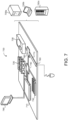
- FIG. 7 is schematic view of an example computing device 700 that may be used to implement the systems and methods described in this document.
- the computing device 700 is intended to represent various forms of digital computers, such as laptops, desktops, workstations, personal digital assistants, servers, blade servers, mainframes, and other appropriate computers.
- the components shown here, their connections and relationships, and their functions, are meant to be exemplary only, and are not meant to limit implementations of the inventions described and/or claimed in this document.
- the computing device 700 includes a processor 710, memory 720, a storage device 730, a high-speed interface/controller 740 connecting to the memory 720 and high-speed expansion ports 750, and a low speed interface/controller 760 connecting to a low speed bus 770 and a storage device 730.
- Each of the components 710, 720, 730, 740, 750, and 760, are interconnected using various busses, and may be mounted on a common motherboard or in other manners as appropriate.
- the processor 710 can process instructions for execution within the computing device 700, including instructions stored in the memory 720 or on the storage device 730 to display graphical information for a graphical user interface (GUI) on an external input/output device, such as display 780 coupled to high speed interface 740.
- GUI graphical user interface
- multiple processors and/or multiple buses may be used, as appropriate, along with multiple memories and types of memory.
- multiple computing devices 700 may be connected, with each device providing portions of the necessary operations (e.g., as a server bank, a group of blade servers, or a multi-processor system).
- the memory 720 stores information non-transitorily within the computing device 700.
- the memory 720 may be a computer-readable medium, a volatile memory unit(s), or non-volatile memory unit(s).
- the non-transitory memory 720 may be physical devices used to store programs (e.g., sequences of instructions) or data (e.g., program state information) on a temporary or permanent basis for use by the computing device 700.
- non-volatile memory examples include, but are not limited to, flash memory and read-only memory (ROM) / programmable read-only memory (PROM) / erasable programmable read-only memory (EPROM) / electronically erasable programmable read-only memory (EEPROM) (e.g., typically used for firmware, such as boot programs).
- volatile memory examples include, but are not limited to, random access memory (RAM), dynamic random access memory (DRAM), static random access memory (SRAM), phase change memory (PCM) as well as disks or tapes.
- the storage device 730 is capable of providing mass storage for the computing device 700.
- the storage device 730 is a computer-readable medium.
- the storage device 730 may be a floppy disk device, a hard disk device, an optical disk device, or a tape device, a flash memory or other similar solid state memory device, or an array of devices, including devices in a storage area network or other configurations.
- a computer program product is tangibly embodied in an information carrier.
- the computer program product contains instructions that, when executed, perform one or more methods, such as those described above.
- the information carrier is a computer- or machine-readable medium, such as the memory 720, the storage device 730, or memory on processor 710.
- the high speed controller 740 manages bandwidth-intensive operations for the computing device 700, while the low speed controller 760 manages lower bandwidth-intensive operations. Such allocation of duties is exemplary only.
- the high-speed controller 740 is coupled to the memory 720, the display 780 (e.g., through a graphics processor or accelerator), and to the high-speed expansion ports 750, which may accept various expansion cards (not shown).
- the low-speed controller 760 is coupled to the storage device 730 and a low-speed expansion port 790.
- the low-speed expansion port 790 which may include various communication ports (e.g., USB, Bluetooth, Ethernet, wireless Ethernet), may be coupled to one or more input/output devices, such as a keyboard, a pointing device, a scanner, or a networking device such as a switch or router, e.g., through a network adapter.
- input/output devices such as a keyboard, a pointing device, a scanner, or a networking device such as a switch or router, e.g., through a network adapter.
- the computing device 700 may be implemented in a number of different forms, as shown in the figure. For example, it may be implemented as a standard server 700a or multiple times in a group of such servers 700a, as a laptop computer 700b, or as part of a rack server system 700c.
- implementations of the systems and techniques described herein can be realized in digital electronic and/or optical circuitry, integrated circuitry, specially designed ASICs (application specific integrated circuits), computer hardware, firmware, software, and/or combinations thereof.
- ASICs application specific integrated circuits
- These various implementations can include implementation in one or more computer programs that are executable and/or interpretable on a programmable system including at least one programmable processor, which may be special or general purpose, coupled to receive data and instructions from, and to transmit data and instructions to, a storage system, at least one input device, and at least one output device.
- the processes and logic flows described in this specification can be performed by one or more programmable processors, also referred to as data processing hardware, executing one or more computer programs to perform functions by operating on input data and generating output.
- the processes and logic flows can also be performed by special purpose logic circuitry, e.g., an FPGA (field programmable gate array) or an ASIC (application specific integrated circuit).
- processors suitable for the execution of a computer program include, by way of example, both general and special purpose microprocessors, and any one or more processors of any kind of digital computer.
- a processor will receive instructions and data from a read only memory or a random access memory or both.
- the essential elements of a computer are a processor for performing instructions and one or more memory devices for storing instructions and data.
- a computer will also include, or be operatively coupled to receive data from or transfer data to, or both, one or more mass storage devices for storing data, e.g., magnetic, magneto optical disks, or optical disks.
- mass storage devices for storing data
- a computer need not have such devices.
- Computer readable media suitable for storing computer program instructions and data include all forms of non-volatile memory, media and memory devices, including by way of example semiconductor memory devices, e.g., EPROM, EEPROM, and flash memory devices; magnetic disks, e.g., internal hard disks or removable disks; magneto optical disks; and CD ROM and DVD-ROM disks.
- the processor and the memory can be supplemented by, or incorporated in, special purpose logic circuitry.
- one or more aspects of the disclosure can be implemented on a computer having a display device, e.g., a CRT (cathode ray tube), LCD (liquid crystal display) monitor, or touch screen for displaying information to the user and optionally a keyboard and a pointing device, e.g., a mouse or a trackball, by which the user can provide input to the computer.
- a display device e.g., a CRT (cathode ray tube), LCD (liquid crystal display) monitor, or touch screen for displaying information to the user and optionally a keyboard and a pointing device, e.g., a mouse or a trackball, by which the user can provide input to the computer.
- Other kinds of devices can be used to provide interaction with a user as well; for example, feedback provided to the user can be any form of sensory feedback, e.g., visual feedback, auditory feedback, or tactile feedback; and input from the user can be received in any form, including acoustic, speech, or tactile input
Landscapes
- Engineering & Computer Science (AREA)
- Physics & Mathematics (AREA)
- Theoretical Computer Science (AREA)
- Computational Linguistics (AREA)
- Health & Medical Sciences (AREA)
- Artificial Intelligence (AREA)
- Audiology, Speech & Language Pathology (AREA)
- Evolutionary Computation (AREA)
- General Health & Medical Sciences (AREA)
- General Physics & Mathematics (AREA)
- General Engineering & Computer Science (AREA)
- Multimedia (AREA)
- Acoustics & Sound (AREA)
- Human Computer Interaction (AREA)
- Life Sciences & Earth Sciences (AREA)
- Molecular Biology (AREA)
- Computing Systems (AREA)
- Data Mining & Analysis (AREA)
- Biophysics (AREA)
- Mathematical Physics (AREA)
- Software Systems (AREA)
- Biomedical Technology (AREA)
- Machine Translation (AREA)
Claims (15)
- Computerimplementiertes Verfahren (600), umfassend:Erhalten einer Vielzahl von Trainingsdatensätzen (202), die jeweils einer jeweiligen Muttersprache zugeordnet sind, die sich von der jeweiligen Muttersprache der anderen Trainingsdatensätze (202) unterscheidet, wobei jeder Trainingsdatensatz (202) eine Vielzahl von jeweiligen Trainingsdatenproben (204) umfasst, wobei jede Trainingsdatenprobe (204) in der jeweiligen Muttersprache gesprochene Audiodaten (210) und eine entsprechende Transkription (220) des Audios (210) in einem jeweiligen muttersprachlichen Skript, das die jeweilige Muttersprache darstellt, umfasst;für jede jeweilige Trainingsdatenprobe (204) eines jeden Trainingsdatensatzes (202) in der jeweiligen Muttersprache:Transliterieren der entsprechenden Transkription (220) in dem jeweiligen muttersprachlichen Skript in entsprechenden transliterierten Text (221), der die jeweilige Muttersprache des entsprechenden Audios (210) in einem Zielskript darstellt; und Zuordnen des entsprechenden transliterierten Textes (221) in dem Zielskript zu dem entsprechenden Audio (210) in der jeweiligen Muttersprache, um eine jeweilige normalisierte Trainingsdatenprobe (240) zu erzeugen, wobei die jeweilige normalisierte Trainingsdatenprobe (240) das Audio (210), das in der jeweiligen Muttersprache gesprochen wird, und den entsprechenden transliterierten Text (221) in dem Zielskript umfasst; undTrainieren eines mehrsprachigen End-to-End-Spracherkennungsmodells (300) durch die normalisierten Trainingsdatenproben (240), die aus jeder jeweiligen Trainingsdatenprobe (204) jedes Trainingsdatensatzes (202) erzeugt wurden, und ohne irgendwelche Sprachinformationen bereitzustellen, um Spracherkennungsergebnisse (120) in dem Zielskript für entsprechende Sprachäußerungen (106) vorherzusagen, die in einer der unterschiedlichen Muttersprachen gesprochen werden, die der Vielzahl der Trainingsdatensätze (202) zugeordnet sind.
- Computerimplementiertes Verfahren (600) nach Anspruch 1, wobei Transliterieren der entsprechenden Transkription (220) in dem jeweiligen muttersprachlichen Skript die Verwendung eines FST-Netzwerks (Finite State Transducer) umfasst, um die entsprechende Transkription (220) in dem jeweiligen muttersprachlichen Skript in den entsprechenden transliterierten Text (221) zu transliterieren.
- Computerimplementiertes Verfahren (600) nach Anspruch 1, wobei Transliterieren der entsprechenden Transkription (220) in dem jeweiligen muttersprachlichen Skript in den entsprechenden transliterierten Text (221) die Verwendung eines jeweiligen Transliterationstransducers (400) umfasst, der dem jeweiligen muttersprachlichen Skript zugeordnet ist, um die entsprechende Transkription (220) in dem jeweiligen muttersprachlichen Skript in den entsprechenden transliterierten Text (221) in dem Zielskript zu transliterieren.
- Computerimplementiertes Verfahren (600) nach Anspruch 3, wobei der Transliterationstransducer (400), der dem jeweiligen nativen Skript zugeordnet ist, umfasst:einen Eingabe-Transducer, der so konfiguriert ist, dass er Unicode-Symbole in dem jeweiligen nativen Skript in Symbole in einem Paar-Sprachmodell eingibt;einen Bigram-Paar-Sprachmodell-Transducer, der so konfiguriert ist, dass er zwischen Symbolen in dem jeweiligen nativen Skript und dem Zielskript abbildet; undeinen Ausgabe-Transducer, der so konfiguriert ist, dass er die Symbole in dem Paar-Sprachmodell auf Ausgabesymbole in dem Zielskript abbildet.
- Computerimplementiertes Verfahren (600) nach Anspruch 3 oder 4, ferner umfassend, vor der Transliteration der entsprechenden Transkription (220) in der jeweiligen Muttersprache, Trainieren jedes jeweiligen Transliterationstransducers (400) unter Verwendung von vereinbarungsbasierter Datenvorverarbeitung, um nur Transliterationspaare zu verarbeiten, die mindestens eine Schreibweise in dem Zielskript des transliterierten Textes (221) für ein gegebenes muttersprachliches Wort aufweisen, das in jeder der jeweiligen den Trainingsdatensätzen (202) zugeordneten Muttersprachen gemeinsam ist.
- Computerimplementiertes Verfahren (600) nach Anspruch 3 oder 4, ferner umfassend, vor dem Transliterieren der entsprechenden Transkription (220) in der jeweiligen Muttersprache, Trainieren jedes jeweiligen Transliterationstransducers (400) unter Verwendung frequenzbasierter Datenvorverarbeitung, um nur Transliterationspaare zu verarbeiten, die Schreibweisen in dem Zielskript des transliterierten Textes (221) für ein gegebenes muttersprachliches Wort aufweisen, die eine Frequenzschwelle erfüllen.
- Computerimplementiertes Verfahren (600) nach einem der Ansprüche 1-6, wobei Transliterieren der entsprechenden Transkription (220) in dem jeweiligen muttersprachlichen Skript in den entsprechenden transliterierten Text (221) die Verwendung eines sprachunabhängigen Transliterationstransducers (400) umfasst, um die entsprechende Transkription (220) in dem jeweiligen muttersprachlichen Skript in den entsprechenden transliterierten Text (221) in dem Zielskript zu transliterieren.
- Computerimplementiertes Verfahren (600) nach einem der Ansprüche 1-7, wobei das mehrsprachige End-to-End-Spracherkennungsmodell (300) ein Sequenz-zu-Sequenz-neuronales Netz umfasst.
- Computerimplementiertes Verfahren (600) nach einem der Ansprüche 1-8, wobei das mehrsprachige End-to-End-Spracherkennungsmodell (300) einen rekurrenten neuronalen Netz-Wandler (RNN-T) umfasst.
- Computerimplementiertes Verfahren (600) nach einem der Ansprüche 1-9, wobei Trainieren des mehrsprachigen End-to-End-Spracherkennungsmodells (300) die Verwendung eines stochastischen Optimierungsalgorithmus zum Trainieren des mehrsprachigen End-to-End-Spracherkennungsmodells (300) umfasst.
- Computerimplementiertes Verfahren (600) nach einem der Ansprüche 1-10, ferner umfassend, vor dem Trainieren des mehrsprachigen End-to-End-Spracherkennungsmodells (300), Mischen der normalisierten Trainingsdatenproben (240), die aus jeder entsprechenden Trainingsdatenprobe (204) jedes Trainingsdatensatzes (202) erzeugt wurden.
- Computerimplementiertes Verfahren (600) nach einem der Ansprüche 1-11, ferner umfassend, nach dem Trainieren des mehrsprachigen End-to-End-Spracherkennungsmodells (300), Übertragen des trainierten mehrsprachigen End-to-End-Spracherkennungsmodells (300) auf eine Vielzahl von Benutzervorrichtungen (102), wobei jede Benutzervorrichtung (102) konfiguriert ist zum:
Erfassen einer Äußerung (106), die von einem jeweiligen Benutzer der Vorrichtung (102) in einer beliebigen Kombination der jeweiligen den Trainingsdatensätzen (202) zugeordneten Muttersprachen gesprochen wird, unter Verwendung mindestens eines Mikrofons, das mit der Vorrichtung (102) kommuniziert; und Erzeugen unter Verwendung des trainierten mehrsprachigen End-to-End-Spracherkennungsmodells (300) eines entsprechenden Spracherkennungsergebnisses (120) in dem Zielskript für die aufgenommene Äußerung (106), die von dem jeweiligen Benutzer gesprochen wurde. - Computerimplementiertes Verfahren (600) nach Anspruch 12, wobei mindestens eine der Vielzahl von Benutzervorrichtungen (102) ferner so konfiguriert ist, dass sie das entsprechende Spracherkennungsergebnis (120) in dem Zielskript in ein transliteriertes Skript (121) transliteriert.
- System (100), umfassend:Datenverarbeitungshardware (710); undSpeicherhardware (720), die mit der Datenverarbeitungshardware (710) kommuniziert, wobei die Speicherhardware (720) Anweisungen speichert, die, wenn sie auf der Datenverarbeitungshardware (710) ausgeführt werden, die Datenverarbeitungshardware (710) veranlassen, das Verfahren nach einem der vorhergehenden Ansprüche durchzuführen.
- Computerlesbares Medium (720), das Anweisungen speichert, die, wenn sie auf der Datenverarbeitungshardware (710) ausgeführt werden, die Datenverarbeitungshardware (710) veranlassen, das Verfahren nach einem der Ansprüche 1-13 durchzuführen.
Priority Applications (1)
| Application Number | Priority Date | Filing Date | Title |
|---|---|---|---|
| EP24162746.2A EP4361897A3 (de) | 2020-01-28 | 2021-01-19 | Sprachagnostische mehrsprachige modellierung durch effektive skriptnormalisierung |
Applications Claiming Priority (2)
| Application Number | Priority Date | Filing Date | Title |
|---|---|---|---|
| US202062966779P | 2020-01-28 | 2020-01-28 | |
| PCT/US2021/014024 WO2021154544A1 (en) | 2020-01-28 | 2021-01-19 | Language-agnostic multilingual modeling using effective script normalization |
Related Child Applications (1)
| Application Number | Title | Priority Date | Filing Date |
|---|---|---|---|
| EP24162746.2A Division EP4361897A3 (de) | 2020-01-28 | 2021-01-19 | Sprachagnostische mehrsprachige modellierung durch effektive skriptnormalisierung |
Publications (2)
| Publication Number | Publication Date |
|---|---|
| EP4085451A1 EP4085451A1 (de) | 2022-11-09 |
| EP4085451B1 true EP4085451B1 (de) | 2024-04-10 |
Family
ID=74592794
Family Applications (2)
| Application Number | Title | Priority Date | Filing Date |
|---|---|---|---|
| EP24162746.2A Withdrawn EP4361897A3 (de) | 2020-01-28 | 2021-01-19 | Sprachagnostische mehrsprachige modellierung durch effektive skriptnormalisierung |
| EP21705040.0A Active EP4085451B1 (de) | 2020-01-28 | 2021-01-19 | Sprachagnostische mehrsprachige modellierung durch effektive skriptnormalisierung |
Family Applications Before (1)
| Application Number | Title | Priority Date | Filing Date |
|---|---|---|---|
| EP24162746.2A Withdrawn EP4361897A3 (de) | 2020-01-28 | 2021-01-19 | Sprachagnostische mehrsprachige modellierung durch effektive skriptnormalisierung |
Country Status (4)
| Country | Link |
|---|---|
| US (3) | US11615779B2 (de) |
| EP (2) | EP4361897A3 (de) |
| CN (1) | CN115039171A (de) |
| WO (1) | WO2021154544A1 (de) |
Families Citing this family (14)
| Publication number | Priority date | Publication date | Assignee | Title |
|---|---|---|---|---|
| DE202020102105U1 (de) * | 2020-04-16 | 2020-04-29 | Robert Bosch Gmbh | Vorrichtung zum automatisierten Erzeugen eines Wissensgraphen |
| US11886771B1 (en) * | 2020-11-25 | 2024-01-30 | Joseph Byers | Customizable communication system and method of use |
| US11862144B2 (en) * | 2020-12-16 | 2024-01-02 | Microsoft Technology Licensing, Llc | Augmented training data for end-to-end models |
| US12424200B2 (en) * | 2021-03-31 | 2025-09-23 | Speechly Oy | Method and system for performing domain adaptation of end-to-end automatic speech recognition model |
| EP4364135B1 (de) * | 2021-06-29 | 2026-02-18 | Microsoft Technology Licensing, LLC | Kanonisches training für hochgradig konfigurierbare multilinguale spracherkennung |
| KR20240089276A (ko) * | 2021-10-06 | 2024-06-20 | 구글 엘엘씨 | 다중 언어 자동 스피치 인식을 위한 공동 비지도 및 지도 트레이닝 |
| US12380289B2 (en) * | 2021-12-01 | 2025-08-05 | Talent Unlimited Online Services Private Limited | System and method for speech recognition using machine transliteration and transfer learning |
| CN113936647B (zh) * | 2021-12-17 | 2022-04-01 | 中国科学院自动化研究所 | 语音识别模型的训练方法、语音识别方法和系统 |
| WO2023136490A1 (ko) * | 2022-01-11 | 2023-07-20 | 삼성전자 주식회사 | 발음에 기반한 이종 언어의 텍스트 검색 방법 및 이를 적용한 전자 장치 |
| CN114694655B (zh) * | 2022-03-28 | 2025-07-08 | 南方电网数字企业科技(广东)有限公司 | 一种针对粤语音频的拓展方法及语音识别方法 |
| CN120188214A (zh) * | 2022-10-13 | 2025-06-20 | 谷歌有限责任公司 | 用于多语言语音辨识的通用单语言输出层 |
| CN115831095A (zh) * | 2022-11-11 | 2023-03-21 | 上海湃舵智能科技有限公司 | 通话中多语言语音自动切换方法、系统及机器人 |
| US12361924B2 (en) * | 2022-12-28 | 2025-07-15 | Ringcentral, Inc. | Systems and methods for audio transcription switching based on real-time identification of languages in an audio stream |
| CN120279893B (zh) * | 2025-06-10 | 2025-10-03 | 青岛海尔科技有限公司 | 基于大模型的语音数据处理方法、装置、存储介质及电子装置 |
Family Cites Families (13)
| Publication number | Priority date | Publication date | Assignee | Title |
|---|---|---|---|---|
| US7716050B2 (en) * | 2002-11-15 | 2010-05-11 | Voice Signal Technologies, Inc. | Multilingual speech recognition |
| US10319374B2 (en) * | 2015-11-25 | 2019-06-11 | Baidu USA, LLC | Deployed end-to-end speech recognition |
| US11238854B2 (en) * | 2016-12-14 | 2022-02-01 | Google Llc | Facilitating creation and playback of user-recorded audio |
| CN107066453A (zh) * | 2017-01-17 | 2017-08-18 | 881飞号通讯有限公司 | 一种网络语音通信中实现多语言互译的方法 |
| US10832668B1 (en) * | 2017-09-19 | 2020-11-10 | Amazon Technologies, Inc. | Dynamic speech processing |
| US10593321B2 (en) * | 2017-12-15 | 2020-03-17 | Mitsubishi Electric Research Laboratories, Inc. | Method and apparatus for multi-lingual end-to-end speech recognition |
| US20190214134A1 (en) * | 2018-01-05 | 2019-07-11 | James Stewart Bates | System and method for automated healthcare service |
| US11488590B2 (en) * | 2018-05-09 | 2022-11-01 | Staton Techiya Llc | Methods and systems for processing, storing, and publishing data collected by an in-ear device |
| US10872599B1 (en) * | 2018-06-28 | 2020-12-22 | Amazon Technologies, Inc. | Wakeword training |
| US11238845B2 (en) * | 2018-11-21 | 2022-02-01 | Google Llc | Multi-dialect and multilingual speech recognition |
| JP7244665B2 (ja) * | 2019-02-21 | 2023-03-22 | グーグル エルエルシー | エンドツーエンドの音声変換 |
| US10964309B2 (en) * | 2019-04-16 | 2021-03-30 | Microsoft Technology Licensing, Llc | Code-switching speech recognition with end-to-end connectionist temporal classification model |
| CN113853608A (zh) * | 2019-06-21 | 2021-12-28 | 英特尔公司 | 利用稀疏三维(3d)分组卷积的通用模块化稀疏3d卷积设计 |
-
2021
- 2021-01-19 US US17/152,760 patent/US11615779B2/en active Active
- 2021-01-19 CN CN202180011577.0A patent/CN115039171A/zh active Pending
- 2021-01-19 EP EP24162746.2A patent/EP4361897A3/de not_active Withdrawn
- 2021-01-19 EP EP21705040.0A patent/EP4085451B1/de active Active
- 2021-01-19 WO PCT/US2021/014024 patent/WO2021154544A1/en not_active Ceased
-
2023
- 2023-03-21 US US18/187,330 patent/US12536989B2/en active Active
-
2025
- 2025-12-22 US US19/429,695 patent/US20260120679A1/en active Pending
Also Published As
| Publication number | Publication date |
|---|---|
| US11615779B2 (en) | 2023-03-28 |
| EP4361897A2 (de) | 2024-05-01 |
| US20230223009A1 (en) | 2023-07-13 |
| US12536989B2 (en) | 2026-01-27 |
| EP4085451A1 (de) | 2022-11-09 |
| CN115039171A (zh) | 2022-09-09 |
| WO2021154544A1 (en) | 2021-08-05 |
| US20260120679A1 (en) | 2026-04-30 |
| US20210233510A1 (en) | 2021-07-29 |
| EP4361897A3 (de) | 2024-07-17 |
Similar Documents
| Publication | Publication Date | Title |
|---|---|---|
| US12536989B2 (en) | Language-agnostic multilingual modeling using effective script normalization | |
| EP3966816B1 (de) | Grossskalige erkennung von multilingualer sprache mit einem end-to-end-streamingmodell | |
| CN113692616B (zh) | 用于在端到端模型中的跨语言语音识别的基于音素的场境化 | |
| US12087279B2 (en) | Regularizing word segmentation | |
| EP4295358B1 (de) | Rekurrentes sprachmodell mit nachschlagetabelle | |
| EP4405936B1 (de) | Gemeinsames unüberwachtes und überwachtes training zur mehrsprachigen automatischen spracherkennung | |
| CN117378004A (zh) | 具有序列的对比损失的有监督和无监督的训练 | |
| US20240304178A1 (en) | Using text-injection to recognize speech without transcription | |
| WO2024118387A1 (en) | Monte carlo self-training for speech recognition | |
| US20240296837A1 (en) | Mask-conformer augmenting conformer with mask-predict decoder unifying speech recognition and rescoring | |
| US20240185841A1 (en) | Parameter-efficient model reprogramming for cross-lingual speech recognition | |
| WO2024086265A1 (en) | Context-aware end-to-end asr fusion of context, acoustic and text representations | |
| US20250182753A1 (en) | Non-autoregressive and multilingual language-model-fused asr system |
Legal Events
| Date | Code | Title | Description |
|---|---|---|---|
| STAA | Information on the status of an ep patent application or granted ep patent |
Free format text: STATUS: UNKNOWN |
|
| STAA | Information on the status of an ep patent application or granted ep patent |
Free format text: STATUS: THE INTERNATIONAL PUBLICATION HAS BEEN MADE |
|
| PUAI | Public reference made under article 153(3) epc to a published international application that has entered the european phase |
Free format text: ORIGINAL CODE: 0009012 |
|
| STAA | Information on the status of an ep patent application or granted ep patent |
Free format text: STATUS: REQUEST FOR EXAMINATION WAS MADE |
|
| 17P | Request for examination filed |
Effective date: 20220804 |
|
| AK | Designated contracting states |
Kind code of ref document: A1 Designated state(s): AL AT BE BG CH CY CZ DE DK EE ES FI FR GB GR HR HU IE IS IT LI LT LU LV MC MK MT NL NO PL PT RO RS SE SI SK SM TR |
|
| DAV | Request for validation of the european patent (deleted) | ||
| DAX | Request for extension of the european patent (deleted) | ||
| GRAP | Despatch of communication of intention to grant a patent |
Free format text: ORIGINAL CODE: EPIDOSNIGR1 |
|
| STAA | Information on the status of an ep patent application or granted ep patent |
Free format text: STATUS: GRANT OF PATENT IS INTENDED |
|
| RIC1 | Information provided on ipc code assigned before grant |
Ipc: G06F 40/129 20200101ALN20231012BHEP Ipc: G06F 40/53 20200101ALN20231012BHEP Ipc: G10L 15/16 20060101ALN20231012BHEP Ipc: G06N 3/084 20230101ALI20231012BHEP Ipc: G06N 3/044 20230101ALI20231012BHEP Ipc: G10L 15/06 20130101AFI20231012BHEP |
|
| INTG | Intention to grant announced |
Effective date: 20231024 |
|
| GRAS | Grant fee paid |
Free format text: ORIGINAL CODE: EPIDOSNIGR3 |
|
| GRAA | (expected) grant |
Free format text: ORIGINAL CODE: 0009210 |
|
| STAA | Information on the status of an ep patent application or granted ep patent |
Free format text: STATUS: THE PATENT HAS BEEN GRANTED |
|
| AK | Designated contracting states |
Kind code of ref document: B1 Designated state(s): AL AT BE BG CH CY CZ DE DK EE ES FI FR GB GR HR HU IE IS IT LI LT LU LV MC MK MT NL NO PL PT RO RS SE SI SK SM TR |
|
| REG | Reference to a national code |
Ref country code: GB Ref legal event code: FG4D |
|
| REG | Reference to a national code |
Ref country code: CH Ref legal event code: EP |
|
| P01 | Opt-out of the competence of the unified patent court (upc) registered |
Effective date: 20240308 |
|
| REG | Reference to a national code |
Ref country code: DE Ref legal event code: R096 Ref document number: 602021011621 Country of ref document: DE |
|
| REG | Reference to a national code |
Ref country code: IE Ref legal event code: FG4D |
|
| REG | Reference to a national code |
Ref country code: LT Ref legal event code: MG9D |
|
| REG | Reference to a national code |
Ref country code: NL Ref legal event code: MP Effective date: 20240410 |
|
| REG | Reference to a national code |
Ref country code: AT Ref legal event code: MK05 Ref document number: 1675735 Country of ref document: AT Kind code of ref document: T Effective date: 20240410 |
|
| PG25 | Lapsed in a contracting state [announced via postgrant information from national office to epo] |
Ref country code: NL Free format text: LAPSE BECAUSE OF FAILURE TO SUBMIT A TRANSLATION OF THE DESCRIPTION OR TO PAY THE FEE WITHIN THE PRESCRIBED TIME-LIMIT Effective date: 20240410 |
|
| PG25 | Lapsed in a contracting state [announced via postgrant information from national office to epo] |
Ref country code: NL Free format text: LAPSE BECAUSE OF FAILURE TO SUBMIT A TRANSLATION OF THE DESCRIPTION OR TO PAY THE FEE WITHIN THE PRESCRIBED TIME-LIMIT Effective date: 20240410 |
|
| PG25 | Lapsed in a contracting state [announced via postgrant information from national office to epo] |
Ref country code: IS Free format text: LAPSE BECAUSE OF FAILURE TO SUBMIT A TRANSLATION OF THE DESCRIPTION OR TO PAY THE FEE WITHIN THE PRESCRIBED TIME-LIMIT Effective date: 20240810 |
|
| PG25 | Lapsed in a contracting state [announced via postgrant information from national office to epo] |
Ref country code: BG Free format text: LAPSE BECAUSE OF FAILURE TO SUBMIT A TRANSLATION OF THE DESCRIPTION OR TO PAY THE FEE WITHIN THE PRESCRIBED TIME-LIMIT Effective date: 20240410 |
|
| PG25 | Lapsed in a contracting state [announced via postgrant information from national office to epo] |
Ref country code: FI Free format text: LAPSE BECAUSE OF FAILURE TO SUBMIT A TRANSLATION OF THE DESCRIPTION OR TO PAY THE FEE WITHIN THE PRESCRIBED TIME-LIMIT Effective date: 20240410 Ref country code: HR Free format text: LAPSE BECAUSE OF FAILURE TO SUBMIT A TRANSLATION OF THE DESCRIPTION OR TO PAY THE FEE WITHIN THE PRESCRIBED TIME-LIMIT Effective date: 20240410 |
|
| PG25 | Lapsed in a contracting state [announced via postgrant information from national office to epo] |
Ref country code: GR Free format text: LAPSE BECAUSE OF FAILURE TO SUBMIT A TRANSLATION OF THE DESCRIPTION OR TO PAY THE FEE WITHIN THE PRESCRIBED TIME-LIMIT Effective date: 20240711 |
|
| PG25 | Lapsed in a contracting state [announced via postgrant information from national office to epo] |
Ref country code: PT Free format text: LAPSE BECAUSE OF FAILURE TO SUBMIT A TRANSLATION OF THE DESCRIPTION OR TO PAY THE FEE WITHIN THE PRESCRIBED TIME-LIMIT Effective date: 20240812 |
|
| PG25 | Lapsed in a contracting state [announced via postgrant information from national office to epo] |
Ref country code: ES Free format text: LAPSE BECAUSE OF FAILURE TO SUBMIT A TRANSLATION OF THE DESCRIPTION OR TO PAY THE FEE WITHIN THE PRESCRIBED TIME-LIMIT Effective date: 20240410 |
|
| PG25 | Lapsed in a contracting state [announced via postgrant information from national office to epo] |
Ref country code: AT Free format text: LAPSE BECAUSE OF FAILURE TO SUBMIT A TRANSLATION OF THE DESCRIPTION OR TO PAY THE FEE WITHIN THE PRESCRIBED TIME-LIMIT Effective date: 20240410 |
|
| PG25 | Lapsed in a contracting state [announced via postgrant information from national office to epo] |
Ref country code: PL Free format text: LAPSE BECAUSE OF FAILURE TO SUBMIT A TRANSLATION OF THE DESCRIPTION OR TO PAY THE FEE WITHIN THE PRESCRIBED TIME-LIMIT Effective date: 20240410 |
|
| PG25 | Lapsed in a contracting state [announced via postgrant information from national office to epo] |
Ref country code: LV Free format text: LAPSE BECAUSE OF FAILURE TO SUBMIT A TRANSLATION OF THE DESCRIPTION OR TO PAY THE FEE WITHIN THE PRESCRIBED TIME-LIMIT Effective date: 20240410 |
|
| PG25 | Lapsed in a contracting state [announced via postgrant information from national office to epo] |
Ref country code: PT Free format text: LAPSE BECAUSE OF FAILURE TO SUBMIT A TRANSLATION OF THE DESCRIPTION OR TO PAY THE FEE WITHIN THE PRESCRIBED TIME-LIMIT Effective date: 20240812 Ref country code: PL Free format text: LAPSE BECAUSE OF FAILURE TO SUBMIT A TRANSLATION OF THE DESCRIPTION OR TO PAY THE FEE WITHIN THE PRESCRIBED TIME-LIMIT Effective date: 20240410 Ref country code: NO Free format text: LAPSE BECAUSE OF FAILURE TO SUBMIT A TRANSLATION OF THE DESCRIPTION OR TO PAY THE FEE WITHIN THE PRESCRIBED TIME-LIMIT Effective date: 20240710 Ref country code: LV Free format text: LAPSE BECAUSE OF FAILURE TO SUBMIT A TRANSLATION OF THE DESCRIPTION OR TO PAY THE FEE WITHIN THE PRESCRIBED TIME-LIMIT Effective date: 20240410 Ref country code: IS Free format text: LAPSE BECAUSE OF FAILURE TO SUBMIT A TRANSLATION OF THE DESCRIPTION OR TO PAY THE FEE WITHIN THE PRESCRIBED TIME-LIMIT Effective date: 20240810 Ref country code: HR Free format text: LAPSE BECAUSE OF FAILURE TO SUBMIT A TRANSLATION OF THE DESCRIPTION OR TO PAY THE FEE WITHIN THE PRESCRIBED TIME-LIMIT Effective date: 20240410 Ref country code: GR Free format text: LAPSE BECAUSE OF FAILURE TO SUBMIT A TRANSLATION OF THE DESCRIPTION OR TO PAY THE FEE WITHIN THE PRESCRIBED TIME-LIMIT Effective date: 20240711 Ref country code: FI Free format text: LAPSE BECAUSE OF FAILURE TO SUBMIT A TRANSLATION OF THE DESCRIPTION OR TO PAY THE FEE WITHIN THE PRESCRIBED TIME-LIMIT Effective date: 20240410 Ref country code: ES Free format text: LAPSE BECAUSE OF FAILURE TO SUBMIT A TRANSLATION OF THE DESCRIPTION OR TO PAY THE FEE WITHIN THE PRESCRIBED TIME-LIMIT Effective date: 20240410 Ref country code: BG Free format text: LAPSE BECAUSE OF FAILURE TO SUBMIT A TRANSLATION OF THE DESCRIPTION OR TO PAY THE FEE WITHIN THE PRESCRIBED TIME-LIMIT Effective date: 20240410 Ref country code: AT Free format text: LAPSE BECAUSE OF FAILURE TO SUBMIT A TRANSLATION OF THE DESCRIPTION OR TO PAY THE FEE WITHIN THE PRESCRIBED TIME-LIMIT Effective date: 20240410 Ref country code: RS Free format text: LAPSE BECAUSE OF FAILURE TO SUBMIT A TRANSLATION OF THE DESCRIPTION OR TO PAY THE FEE WITHIN THE PRESCRIBED TIME-LIMIT Effective date: 20240710 |
|
| REG | Reference to a national code |
Ref country code: DE Ref legal event code: R097 Ref document number: 602021011621 Country of ref document: DE |
|
| PG25 | Lapsed in a contracting state [announced via postgrant information from national office to epo] |
Ref country code: DK Free format text: LAPSE BECAUSE OF FAILURE TO SUBMIT A TRANSLATION OF THE DESCRIPTION OR TO PAY THE FEE WITHIN THE PRESCRIBED TIME-LIMIT Effective date: 20240410 |
|
| PG25 | Lapsed in a contracting state [announced via postgrant information from national office to epo] |
Ref country code: EE Free format text: LAPSE BECAUSE OF FAILURE TO SUBMIT A TRANSLATION OF THE DESCRIPTION OR TO PAY THE FEE WITHIN THE PRESCRIBED TIME-LIMIT Effective date: 20240410 |
|
| PG25 | Lapsed in a contracting state [announced via postgrant information from national office to epo] |
Ref country code: CZ Free format text: LAPSE BECAUSE OF FAILURE TO SUBMIT A TRANSLATION OF THE DESCRIPTION OR TO PAY THE FEE WITHIN THE PRESCRIBED TIME-LIMIT Effective date: 20240410 |
|
| PG25 | Lapsed in a contracting state [announced via postgrant information from national office to epo] |
Ref country code: SK Free format text: LAPSE BECAUSE OF FAILURE TO SUBMIT A TRANSLATION OF THE DESCRIPTION OR TO PAY THE FEE WITHIN THE PRESCRIBED TIME-LIMIT Effective date: 20240410 Ref country code: RO Free format text: LAPSE BECAUSE OF FAILURE TO SUBMIT A TRANSLATION OF THE DESCRIPTION OR TO PAY THE FEE WITHIN THE PRESCRIBED TIME-LIMIT Effective date: 20240410 |
|
| PG25 | Lapsed in a contracting state [announced via postgrant information from national office to epo] |
Ref country code: SM Free format text: LAPSE BECAUSE OF FAILURE TO SUBMIT A TRANSLATION OF THE DESCRIPTION OR TO PAY THE FEE WITHIN THE PRESCRIBED TIME-LIMIT Effective date: 20240410 |
|
| PG25 | Lapsed in a contracting state [announced via postgrant information from national office to epo] |
Ref country code: SM Free format text: LAPSE BECAUSE OF FAILURE TO SUBMIT A TRANSLATION OF THE DESCRIPTION OR TO PAY THE FEE WITHIN THE PRESCRIBED TIME-LIMIT Effective date: 20240410 Ref country code: SK Free format text: LAPSE BECAUSE OF FAILURE TO SUBMIT A TRANSLATION OF THE DESCRIPTION OR TO PAY THE FEE WITHIN THE PRESCRIBED TIME-LIMIT Effective date: 20240410 Ref country code: RO Free format text: LAPSE BECAUSE OF FAILURE TO SUBMIT A TRANSLATION OF THE DESCRIPTION OR TO PAY THE FEE WITHIN THE PRESCRIBED TIME-LIMIT Effective date: 20240410 Ref country code: EE Free format text: LAPSE BECAUSE OF FAILURE TO SUBMIT A TRANSLATION OF THE DESCRIPTION OR TO PAY THE FEE WITHIN THE PRESCRIBED TIME-LIMIT Effective date: 20240410 Ref country code: DK Free format text: LAPSE BECAUSE OF FAILURE TO SUBMIT A TRANSLATION OF THE DESCRIPTION OR TO PAY THE FEE WITHIN THE PRESCRIBED TIME-LIMIT Effective date: 20240410 Ref country code: CZ Free format text: LAPSE BECAUSE OF FAILURE TO SUBMIT A TRANSLATION OF THE DESCRIPTION OR TO PAY THE FEE WITHIN THE PRESCRIBED TIME-LIMIT Effective date: 20240410 |
|
| PG25 | Lapsed in a contracting state [announced via postgrant information from national office to epo] |
Ref country code: IT Free format text: LAPSE BECAUSE OF FAILURE TO SUBMIT A TRANSLATION OF THE DESCRIPTION OR TO PAY THE FEE WITHIN THE PRESCRIBED TIME-LIMIT Effective date: 20240410 |
|
| PLBE | No opposition filed within time limit |
Free format text: ORIGINAL CODE: 0009261 |
|
| STAA | Information on the status of an ep patent application or granted ep patent |
Free format text: STATUS: NO OPPOSITION FILED WITHIN TIME LIMIT |
|
| 26N | No opposition filed |
Effective date: 20250113 |
|
| PG25 | Lapsed in a contracting state [announced via postgrant information from national office to epo] |
Ref country code: SI Free format text: LAPSE BECAUSE OF FAILURE TO SUBMIT A TRANSLATION OF THE DESCRIPTION OR TO PAY THE FEE WITHIN THE PRESCRIBED TIME-LIMIT Effective date: 20240410 |
|
| REG | Reference to a national code |
Ref country code: CH Ref legal event code: PL |
|
| PG25 | Lapsed in a contracting state [announced via postgrant information from national office to epo] |
Ref country code: SE Free format text: LAPSE BECAUSE OF FAILURE TO SUBMIT A TRANSLATION OF THE DESCRIPTION OR TO PAY THE FEE WITHIN THE PRESCRIBED TIME-LIMIT Effective date: 20240410 |
|
| PG25 | Lapsed in a contracting state [announced via postgrant information from national office to epo] |
Ref country code: MC Free format text: LAPSE BECAUSE OF FAILURE TO SUBMIT A TRANSLATION OF THE DESCRIPTION OR TO PAY THE FEE WITHIN THE PRESCRIBED TIME-LIMIT Effective date: 20240410 Ref country code: LU Free format text: LAPSE BECAUSE OF NON-PAYMENT OF DUE FEES Effective date: 20250119 |
|
| PG25 | Lapsed in a contracting state [announced via postgrant information from national office to epo] |
Ref country code: BE Free format text: LAPSE BECAUSE OF NON-PAYMENT OF DUE FEES Effective date: 20250131 |
|
| PG25 | Lapsed in a contracting state [announced via postgrant information from national office to epo] |
Ref country code: CH Free format text: LAPSE BECAUSE OF NON-PAYMENT OF DUE FEES Effective date: 20250131 |
|
| REG | Reference to a national code |
Ref country code: BE Ref legal event code: MM Effective date: 20250131 |
|
| PG25 | Lapsed in a contracting state [announced via postgrant information from national office to epo] |
Ref country code: IE Free format text: LAPSE BECAUSE OF NON-PAYMENT OF DUE FEES Effective date: 20250119 |
|
| PGFP | Annual fee paid to national office [announced via postgrant information from national office to epo] |
Ref country code: GB Payment date: 20260127 Year of fee payment: 6 |
|
| PGFP | Annual fee paid to national office [announced via postgrant information from national office to epo] |
Ref country code: DE Payment date: 20260128 Year of fee payment: 6 |
|
| PGFP | Annual fee paid to national office [announced via postgrant information from national office to epo] |
Ref country code: FR Payment date: 20260126 Year of fee payment: 6 |