EP4084845B1 - Anwendung von schleifenverstärkung für eine positive überdruckbeatmung - Google Patents
Anwendung von schleifenverstärkung für eine positive überdruckbeatmung Download PDFInfo
- Publication number
- EP4084845B1 EP4084845B1 EP20842572.8A EP20842572A EP4084845B1 EP 4084845 B1 EP4084845 B1 EP 4084845B1 EP 20842572 A EP20842572 A EP 20842572A EP 4084845 B1 EP4084845 B1 EP 4084845B1
- Authority
- EP
- European Patent Office
- Prior art keywords
- ventilation
- gain
- loop gain
- flow
- pressure
- Prior art date
- Legal status (The legal status is an assumption and is not a legal conclusion. Google has not performed a legal analysis and makes no representation as to the accuracy of the status listed.)
- Active
Links
Images

Classifications
-
- A—HUMAN NECESSITIES
- A61—MEDICAL OR VETERINARY SCIENCE; HYGIENE
- A61M—DEVICES FOR INTRODUCING MEDIA INTO, OR ONTO, THE BODY; DEVICES FOR TRANSDUCING BODY MEDIA OR FOR TAKING MEDIA FROM THE BODY; DEVICES FOR PRODUCING OR ENDING SLEEP OR STUPOR
- A61M16/00—Devices for influencing the respiratory system of patients by gas treatment, e.g. ventilators; Tracheal tubes
- A61M16/021—Devices for influencing the respiratory system of patients by gas treatment, e.g. ventilators; Tracheal tubes operated by electrical means
- A61M16/022—Control means therefor
- A61M16/024—Control means therefor including calculation means, e.g. using a processor
-
- A—HUMAN NECESSITIES
- A61—MEDICAL OR VETERINARY SCIENCE; HYGIENE
- A61M—DEVICES FOR INTRODUCING MEDIA INTO, OR ONTO, THE BODY; DEVICES FOR TRANSDUCING BODY MEDIA OR FOR TAKING MEDIA FROM THE BODY; DEVICES FOR PRODUCING OR ENDING SLEEP OR STUPOR
- A61M16/00—Devices for influencing the respiratory system of patients by gas treatment, e.g. ventilators; Tracheal tubes
- A61M16/021—Devices for influencing the respiratory system of patients by gas treatment, e.g. ventilators; Tracheal tubes operated by electrical means
- A61M16/022—Control means therefor
- A61M16/024—Control means therefor including calculation means, e.g. using a processor
- A61M16/026—Control means therefor including calculation means, e.g. using a processor specially adapted for predicting, e.g. for determining an information representative of a flow limitation during a ventilation cycle by using a root square technique or a regression analysis
-
- A—HUMAN NECESSITIES
- A61—MEDICAL OR VETERINARY SCIENCE; HYGIENE
- A61M—DEVICES FOR INTRODUCING MEDIA INTO, OR ONTO, THE BODY; DEVICES FOR TRANSDUCING BODY MEDIA OR FOR TAKING MEDIA FROM THE BODY; DEVICES FOR PRODUCING OR ENDING SLEEP OR STUPOR
- A61M16/00—Devices for influencing the respiratory system of patients by gas treatment, e.g. ventilators; Tracheal tubes
- A61M16/0057—Pumps therefor
-
- A—HUMAN NECESSITIES
- A61—MEDICAL OR VETERINARY SCIENCE; HYGIENE
- A61M—DEVICES FOR INTRODUCING MEDIA INTO, OR ONTO, THE BODY; DEVICES FOR TRANSDUCING BODY MEDIA OR FOR TAKING MEDIA FROM THE BODY; DEVICES FOR PRODUCING OR ENDING SLEEP OR STUPOR
- A61M16/00—Devices for influencing the respiratory system of patients by gas treatment, e.g. ventilators; Tracheal tubes
- A61M16/0057—Pumps therefor
- A61M16/0066—Blowers or centrifugal pumps
- A61M16/0069—Blowers or centrifugal pumps the speed thereof being controlled by respiratory parameters, e.g. by inhalation
-
- A—HUMAN NECESSITIES
- A61—MEDICAL OR VETERINARY SCIENCE; HYGIENE
- A61M—DEVICES FOR INTRODUCING MEDIA INTO, OR ONTO, THE BODY; DEVICES FOR TRANSDUCING BODY MEDIA OR FOR TAKING MEDIA FROM THE BODY; DEVICES FOR PRODUCING OR ENDING SLEEP OR STUPOR
- A61M16/00—Devices for influencing the respiratory system of patients by gas treatment, e.g. ventilators; Tracheal tubes
- A61M16/04—Tracheal tubes
- A61M16/0434—Cuffs
-
- A—HUMAN NECESSITIES
- A61—MEDICAL OR VETERINARY SCIENCE; HYGIENE
- A61M—DEVICES FOR INTRODUCING MEDIA INTO, OR ONTO, THE BODY; DEVICES FOR TRANSDUCING BODY MEDIA OR FOR TAKING MEDIA FROM THE BODY; DEVICES FOR PRODUCING OR ENDING SLEEP OR STUPOR
- A61M16/00—Devices for influencing the respiratory system of patients by gas treatment, e.g. ventilators; Tracheal tubes
- A61M16/06—Respiratory or anaesthetic masks
-
- A—HUMAN NECESSITIES
- A61—MEDICAL OR VETERINARY SCIENCE; HYGIENE
- A61M—DEVICES FOR INTRODUCING MEDIA INTO, OR ONTO, THE BODY; DEVICES FOR TRANSDUCING BODY MEDIA OR FOR TAKING MEDIA FROM THE BODY; DEVICES FOR PRODUCING OR ENDING SLEEP OR STUPOR
- A61M16/00—Devices for influencing the respiratory system of patients by gas treatment, e.g. ventilators; Tracheal tubes
- A61M16/06—Respiratory or anaesthetic masks
- A61M16/0666—Nasal cannulas or tubing
- A61M16/0672—Nasal cannula assemblies for oxygen therapy
-
- A—HUMAN NECESSITIES
- A61—MEDICAL OR VETERINARY SCIENCE; HYGIENE
- A61M—DEVICES FOR INTRODUCING MEDIA INTO, OR ONTO, THE BODY; DEVICES FOR TRANSDUCING BODY MEDIA OR FOR TAKING MEDIA FROM THE BODY; DEVICES FOR PRODUCING OR ENDING SLEEP OR STUPOR
- A61M16/00—Devices for influencing the respiratory system of patients by gas treatment, e.g. ventilators; Tracheal tubes
- A61M16/10—Preparation of respiratory gases or vapours
- A61M16/1075—Preparation of respiratory gases or vapours by influencing the temperature
-
- A—HUMAN NECESSITIES
- A61—MEDICAL OR VETERINARY SCIENCE; HYGIENE
- A61M—DEVICES FOR INTRODUCING MEDIA INTO, OR ONTO, THE BODY; DEVICES FOR TRANSDUCING BODY MEDIA OR FOR TAKING MEDIA FROM THE BODY; DEVICES FOR PRODUCING OR ENDING SLEEP OR STUPOR
- A61M16/00—Devices for influencing the respiratory system of patients by gas treatment, e.g. ventilators; Tracheal tubes
- A61M16/20—Valves specially adapted to medical respiratory devices
- A61M16/201—Controlled valves
-
- A—HUMAN NECESSITIES
- A61—MEDICAL OR VETERINARY SCIENCE; HYGIENE
- A61M—DEVICES FOR INTRODUCING MEDIA INTO, OR ONTO, THE BODY; DEVICES FOR TRANSDUCING BODY MEDIA OR FOR TAKING MEDIA FROM THE BODY; DEVICES FOR PRODUCING OR ENDING SLEEP OR STUPOR
- A61M16/00—Devices for influencing the respiratory system of patients by gas treatment, e.g. ventilators; Tracheal tubes
- A61M16/0003—Accessories therefor, e.g. sensors, vibrators, negative pressure
- A61M2016/0027—Accessories therefor, e.g. sensors, vibrators, negative pressure pressure meter
-
- A—HUMAN NECESSITIES
- A61—MEDICAL OR VETERINARY SCIENCE; HYGIENE
- A61M—DEVICES FOR INTRODUCING MEDIA INTO, OR ONTO, THE BODY; DEVICES FOR TRANSDUCING BODY MEDIA OR FOR TAKING MEDIA FROM THE BODY; DEVICES FOR PRODUCING OR ENDING SLEEP OR STUPOR
- A61M16/00—Devices for influencing the respiratory system of patients by gas treatment, e.g. ventilators; Tracheal tubes
- A61M16/0003—Accessories therefor, e.g. sensors, vibrators, negative pressure
- A61M2016/003—Accessories therefor, e.g. sensors, vibrators, negative pressure with a flowmeter
-
- A—HUMAN NECESSITIES
- A61—MEDICAL OR VETERINARY SCIENCE; HYGIENE
- A61M—DEVICES FOR INTRODUCING MEDIA INTO, OR ONTO, THE BODY; DEVICES FOR TRANSDUCING BODY MEDIA OR FOR TAKING MEDIA FROM THE BODY; DEVICES FOR PRODUCING OR ENDING SLEEP OR STUPOR
- A61M16/00—Devices for influencing the respiratory system of patients by gas treatment, e.g. ventilators; Tracheal tubes
- A61M16/0003—Accessories therefor, e.g. sensors, vibrators, negative pressure
- A61M2016/003—Accessories therefor, e.g. sensors, vibrators, negative pressure with a flowmeter
- A61M2016/0033—Accessories therefor, e.g. sensors, vibrators, negative pressure with a flowmeter electrical
- A61M2016/0039—Accessories therefor, e.g. sensors, vibrators, negative pressure with a flowmeter electrical in the inspiratory circuit
-
- A—HUMAN NECESSITIES
- A61—MEDICAL OR VETERINARY SCIENCE; HYGIENE
- A61M—DEVICES FOR INTRODUCING MEDIA INTO, OR ONTO, THE BODY; DEVICES FOR TRANSDUCING BODY MEDIA OR FOR TAKING MEDIA FROM THE BODY; DEVICES FOR PRODUCING OR ENDING SLEEP OR STUPOR
- A61M16/00—Devices for influencing the respiratory system of patients by gas treatment, e.g. ventilators; Tracheal tubes
- A61M16/0003—Accessories therefor, e.g. sensors, vibrators, negative pressure
- A61M2016/003—Accessories therefor, e.g. sensors, vibrators, negative pressure with a flowmeter
- A61M2016/0033—Accessories therefor, e.g. sensors, vibrators, negative pressure with a flowmeter electrical
- A61M2016/0042—Accessories therefor, e.g. sensors, vibrators, negative pressure with a flowmeter electrical in the expiratory circuit
-
- A—HUMAN NECESSITIES
- A61—MEDICAL OR VETERINARY SCIENCE; HYGIENE
- A61M—DEVICES FOR INTRODUCING MEDIA INTO, OR ONTO, THE BODY; DEVICES FOR TRANSDUCING BODY MEDIA OR FOR TAKING MEDIA FROM THE BODY; DEVICES FOR PRODUCING OR ENDING SLEEP OR STUPOR
- A61M2202/00—Special media to be introduced, removed or treated
- A61M2202/02—Gases
- A61M2202/0208—Oxygen
-
- A—HUMAN NECESSITIES
- A61—MEDICAL OR VETERINARY SCIENCE; HYGIENE
- A61M—DEVICES FOR INTRODUCING MEDIA INTO, OR ONTO, THE BODY; DEVICES FOR TRANSDUCING BODY MEDIA OR FOR TAKING MEDIA FROM THE BODY; DEVICES FOR PRODUCING OR ENDING SLEEP OR STUPOR
- A61M2205/00—General characteristics of the apparatus
- A61M2205/18—General characteristics of the apparatus with alarm
-
- A—HUMAN NECESSITIES
- A61—MEDICAL OR VETERINARY SCIENCE; HYGIENE
- A61M—DEVICES FOR INTRODUCING MEDIA INTO, OR ONTO, THE BODY; DEVICES FOR TRANSDUCING BODY MEDIA OR FOR TAKING MEDIA FROM THE BODY; DEVICES FOR PRODUCING OR ENDING SLEEP OR STUPOR
- A61M2205/00—General characteristics of the apparatus
- A61M2205/33—Controlling, regulating or measuring
- A61M2205/3331—Pressure; Flow
- A61M2205/3334—Measuring or controlling the flow rate
-
- A—HUMAN NECESSITIES
- A61—MEDICAL OR VETERINARY SCIENCE; HYGIENE
- A61M—DEVICES FOR INTRODUCING MEDIA INTO, OR ONTO, THE BODY; DEVICES FOR TRANSDUCING BODY MEDIA OR FOR TAKING MEDIA FROM THE BODY; DEVICES FOR PRODUCING OR ENDING SLEEP OR STUPOR
- A61M2205/00—General characteristics of the apparatus
- A61M2205/33—Controlling, regulating or measuring
- A61M2205/3368—Temperature
-
- A—HUMAN NECESSITIES
- A61—MEDICAL OR VETERINARY SCIENCE; HYGIENE
- A61M—DEVICES FOR INTRODUCING MEDIA INTO, OR ONTO, THE BODY; DEVICES FOR TRANSDUCING BODY MEDIA OR FOR TAKING MEDIA FROM THE BODY; DEVICES FOR PRODUCING OR ENDING SLEEP OR STUPOR
- A61M2205/00—General characteristics of the apparatus
- A61M2205/35—Communication
- A61M2205/3576—Communication with non implanted data transmission devices, e.g. using external transmitter or receiver
- A61M2205/3584—Communication with non implanted data transmission devices, e.g. using external transmitter or receiver using modem, internet or Bluetooth®
-
- A—HUMAN NECESSITIES
- A61—MEDICAL OR VETERINARY SCIENCE; HYGIENE
- A61M—DEVICES FOR INTRODUCING MEDIA INTO, OR ONTO, THE BODY; DEVICES FOR TRANSDUCING BODY MEDIA OR FOR TAKING MEDIA FROM THE BODY; DEVICES FOR PRODUCING OR ENDING SLEEP OR STUPOR
- A61M2205/00—General characteristics of the apparatus
- A61M2205/50—General characteristics of the apparatus with microprocessors or computers
- A61M2205/502—User interfaces, e.g. screens or keyboards
- A61M2205/505—Touch-screens; Virtual keyboard or keypads; Virtual buttons; Soft keys; Mouse touches
-
- A—HUMAN NECESSITIES
- A61—MEDICAL OR VETERINARY SCIENCE; HYGIENE
- A61M—DEVICES FOR INTRODUCING MEDIA INTO, OR ONTO, THE BODY; DEVICES FOR TRANSDUCING BODY MEDIA OR FOR TAKING MEDIA FROM THE BODY; DEVICES FOR PRODUCING OR ENDING SLEEP OR STUPOR
- A61M2205/00—General characteristics of the apparatus
- A61M2205/50—General characteristics of the apparatus with microprocessors or computers
- A61M2205/52—General characteristics of the apparatus with microprocessors or computers with memories providing a history of measured variating parameters of apparatus or patient
-
- A—HUMAN NECESSITIES
- A61—MEDICAL OR VETERINARY SCIENCE; HYGIENE
- A61M—DEVICES FOR INTRODUCING MEDIA INTO, OR ONTO, THE BODY; DEVICES FOR TRANSDUCING BODY MEDIA OR FOR TAKING MEDIA FROM THE BODY; DEVICES FOR PRODUCING OR ENDING SLEEP OR STUPOR
- A61M2205/00—General characteristics of the apparatus
- A61M2205/58—Means for facilitating use, e.g. by people with impaired vision
- A61M2205/581—Means for facilitating use, e.g. by people with impaired vision by audible feedback
-
- A—HUMAN NECESSITIES
- A61—MEDICAL OR VETERINARY SCIENCE; HYGIENE
- A61M—DEVICES FOR INTRODUCING MEDIA INTO, OR ONTO, THE BODY; DEVICES FOR TRANSDUCING BODY MEDIA OR FOR TAKING MEDIA FROM THE BODY; DEVICES FOR PRODUCING OR ENDING SLEEP OR STUPOR
- A61M2205/00—General characteristics of the apparatus
- A61M2205/58—Means for facilitating use, e.g. by people with impaired vision
- A61M2205/582—Means for facilitating use, e.g. by people with impaired vision by tactile feedback
-
- A—HUMAN NECESSITIES
- A61—MEDICAL OR VETERINARY SCIENCE; HYGIENE
- A61M—DEVICES FOR INTRODUCING MEDIA INTO, OR ONTO, THE BODY; DEVICES FOR TRANSDUCING BODY MEDIA OR FOR TAKING MEDIA FROM THE BODY; DEVICES FOR PRODUCING OR ENDING SLEEP OR STUPOR
- A61M2205/00—General characteristics of the apparatus
- A61M2205/58—Means for facilitating use, e.g. by people with impaired vision
- A61M2205/583—Means for facilitating use, e.g. by people with impaired vision by visual feedback
-
- A—HUMAN NECESSITIES
- A61—MEDICAL OR VETERINARY SCIENCE; HYGIENE
- A61M—DEVICES FOR INTRODUCING MEDIA INTO, OR ONTO, THE BODY; DEVICES FOR TRANSDUCING BODY MEDIA OR FOR TAKING MEDIA FROM THE BODY; DEVICES FOR PRODUCING OR ENDING SLEEP OR STUPOR
- A61M2210/00—Anatomical parts of the body
- A61M2210/10—Trunk
- A61M2210/1025—Respiratory system
- A61M2210/1039—Lungs
-
- A—HUMAN NECESSITIES
- A61—MEDICAL OR VETERINARY SCIENCE; HYGIENE
- A61M—DEVICES FOR INTRODUCING MEDIA INTO, OR ONTO, THE BODY; DEVICES FOR TRANSDUCING BODY MEDIA OR FOR TAKING MEDIA FROM THE BODY; DEVICES FOR PRODUCING OR ENDING SLEEP OR STUPOR
- A61M2230/00—Measuring parameters of the user
- A61M2230/20—Blood composition characteristics
- A61M2230/205—Blood composition characteristics partial oxygen pressure (P-O2)
-
- A—HUMAN NECESSITIES
- A61—MEDICAL OR VETERINARY SCIENCE; HYGIENE
- A61M—DEVICES FOR INTRODUCING MEDIA INTO, OR ONTO, THE BODY; DEVICES FOR TRANSDUCING BODY MEDIA OR FOR TAKING MEDIA FROM THE BODY; DEVICES FOR PRODUCING OR ENDING SLEEP OR STUPOR
- A61M2230/00—Measuring parameters of the user
- A61M2230/40—Respiratory characteristics
-
- A—HUMAN NECESSITIES
- A61—MEDICAL OR VETERINARY SCIENCE; HYGIENE
- A61M—DEVICES FOR INTRODUCING MEDIA INTO, OR ONTO, THE BODY; DEVICES FOR TRANSDUCING BODY MEDIA OR FOR TAKING MEDIA FROM THE BODY; DEVICES FOR PRODUCING OR ENDING SLEEP OR STUPOR
- A61M2230/00—Measuring parameters of the user
- A61M2230/40—Respiratory characteristics
- A61M2230/42—Rate
-
- A—HUMAN NECESSITIES
- A61—MEDICAL OR VETERINARY SCIENCE; HYGIENE
- A61M—DEVICES FOR INTRODUCING MEDIA INTO, OR ONTO, THE BODY; DEVICES FOR TRANSDUCING BODY MEDIA OR FOR TAKING MEDIA FROM THE BODY; DEVICES FOR PRODUCING OR ENDING SLEEP OR STUPOR
- A61M2230/00—Measuring parameters of the user
- A61M2230/40—Respiratory characteristics
- A61M2230/46—Resistance or compliance of the lungs
Definitions
- the present embodiments relate generally to a system for positive airway pressure therapy and more particularly, to a system for positive airway pressure therapy utilizing loop gain for ventilation stability.
- CSF Congestive heart failure
- OSA obstructive sleep apnea
- CSR Cheyne-Stokes respiration
- FIG 1 illustrates a typical Cheyne-Stokes respiration (CSR) pattern 30, which is characterized by rhythmic waxing periods 32 and waning periods 34 of respiration, with regularly recurring periods of high respiratory drive (hyperpnea) 36 and low respiratory drive (hypopnea or apnea) 38.
- CSR Cheyne-Stokes respiration
- a typical Cheyne-Stokes cycle lasts about one minute and is characterized by a crescendo (arrow A), in which the peak respiratory flow of the patient increases over several breath cycles, and decrescendo (arrow B), in which the peak respiratory flow of the patient decreases over several breath cycles.
- the typical Cheyne-Stokes cycle ends with a central apnea or hypopnea following the decrescendo phase. Apneas, hyperpneas, and the abnormal change in the depth and rate of breathing often cause arousals and, thus, degrades sleep quality. This disruption in sleep, as well as the periodic desaturation of arterial oxygen, caused by the CSR cycle stresses the cardio-vascular system and specifically the heart.
- bi-level positive airway therapy has included bi-level positive airway therapy.
- pressure is applied alternately at relatively higher and lower prescription pressure levels within the airway of the patient so that the therapeutic air pressure is alternately administered at a larger and smaller magnitude.
- the higher and lower magnitude positive prescription pressure levels are known as inspiratory positive airway pressure (IPAP) and expiratory positive airway pressure (EPAP), respectively.
- the inspiratory and expiratory pressure are synchronized with the patient's inspiratory cycle and expiratory cycle, respectively.
- CSR cardiac output improves when patients are supported using bi-level pressure therapy. It has also been recognized that CSR can be treated by augmenting respiratory effort with positive pressure support when the CSR pattern is in hypopnea region 38. To accomplish this, it is known to use a ventilator or pressure support system to deliver machine triggered breaths during the hypopnea interval when the patient's own respiratory drive is reduced or not present. Alternatively, another method of treating CSR is where CO 2 is selectively rebreathed during the hyperneic phase of the CSR cycle. However, this method requires additional equipment to be used with the typical ventilator system.
- Document D1 US 2003/121519 A1 (ESTES MARK C [US] ET AL )) relates to a system for treatment of a medical disorder such as obstructive sleep apnea that involves applying a gain to flow rate of pressurized gas delivered to a patient during inspiratory and/or expiratory phases of a respiratory cycle to deliver the pressurized gas in proportion to the respective gains during inspiration and/or expiration.
- a base pressure may be applied in addition to the gain-modified pressures and an elevated pressure profile may be employed to assist or control inspiration.
- the system may be fully automated responsive to feedback provided by a flow sensor that determines the estimated patient flow rate.
- a leak computer can be included to instantaneously calculate gas leakage from the system.
- the system may be utilized in connection with conventional continuous positive airway pressure treatments, such as CPAP or bi-level positive airway pressure equipment to effect various beneficial treatment applications.
- Document D2 WO 2016/065411 A1 (RESMED LTD [AU] ) relates to methods and apparatus that provide automated controls for a respiratory pressure therapy device, such as a servo-ventilator.
- a controller controls application of pressure support ventilation therapy to an airway of a patient.
- the controller also controls the respiratory pressure therapy device to auto-titrate an expiratory positive airway pressure (EPAP) of a pressure support ventilation therapy so as to maintain airway patency of the patient.
- the EPAP may be bounded below by a floor pressure limit.
- the controller further controls the respiratory pressure therapy device to repeatedly adjust the floor pressure limit depending on events of interest during the auto-titration of the EPAP.
- Such methodologies may improve treatment for patients such as those suffering from sleep disordered breathing-comorbid hyperarousal disorders.
- Document D3 ( WO 2018/204985 A1 (RESMED LTD [AU]) relates to an apparatus for treating a respiratory disorder in a patient.
- the apparatus comprises a pressure generator configured to generate a flow of air so as to provide ventilatory support to the patient; a transducer configured to generate a flow signal representing a property of the flow of air; and a controller configured to analyse the flow signal to estimate the inspiratory volume and the expiratory volume of a breath of the patient and servo-control the degree of ventilatory support to adjust an estimated tidal volume toward a target tidal volume.
- a gain of the servo-control is dependent on a difference between the estimated inspiratory volume and the estimated expiratory volume.
- Document D4 ( WO 00/45882 A1 (REMMERS JOHN E [CA]; HAJDUK ERIC ANDREW [CA]; PLATT RONALD SCOTT [CA])) relates to a system for reducing central sleep apnea (CSA) in which certain methods of increasing a patient's re-breathing during periods of the sleep cycle are used.
- the over-oxygenation which typically results from the over-breathing period can be reduced, thus reducing the compensating under-breathing period, and effectively reducing the loop gain associated with the CSA.
- One embodiment of the device includes a blower (60), a mask (64) with a gas exit (66), a tube (62) connected between the blower, and the mask.
- Document D5 NEMATI SHAMIM ET AL: "Model-based characterization of ventilatory stability using spontaneous breathing", JOURNAL OF APPLIED PHYSIOLOGY, vol. 111, no. 1, 1 July 2011, pages 55-67, XP055793445, US ISSN: 8750-7587, 001: 10.1152/japplphysiol.01358.2010 ) relates to model-based characterization of ventilatory stability using spontaneous breathing.
- D5 discloses a method based on trivariate autoregressive modeling using ventilation, end-tidal PCO 2 and PO 2 which provides for estimation of the overall "loop gain" of the respiratory control system and its components, chemoreflex gain and plant gain.
- model-based analysis of spontaneous breathing can 1) characterize the dynamics of the respiratory control system, and 2) provide a simple tool for elucidating an individual's propensity for ventilatory instability, in turn allowing potential therapies to be directed at the underlying mechanisms.”
- Document D6 ( DEACON-DIAZ NAOMI ET AL: "Inherent vs. Induced Loop Gain Abnormalities in Obstructive Sleep Apnea", FRONTIERS IN NEUROLOGY, vol. 9, 2 November 2018, XP055793447, DOI: 10.3389/fneur.2018.00896 ) relates to inherent vs. induced loop gain abnormalities in obstructive sleep apnea.
- D6 discloses that unstable ventilatory chemoreflex control, quantified as loop gain, is recognized as one of four key pathophysiological traits that contribute to cause obstructive sleep apnea (OSA).
- OSA obstructive sleep apnea
- Novel treatments aimed at reducing loop gain are being investigated, with the intention that future OSA treatment may be tailored to the individual's specific cause of apnea.
- few studies have evaluated loop gain in OSA and non-OSA controls and those that have provide little evidence to support an inherent abnormality in either overall chemical loop gain in OSA patients vs. non ⁇ -OSA controls, or its components (controller and plant gain).
- intermittent hypoxia may induce high controller gain through neoplastic changes to chemoreflex control, and may also decrease plant gain via oxidative stress induced inflammation and reduced lung function.
- positive airway pressure is used to treat a number of sleep disordered breathing conditions for a human respiratory system (or ventilation system) including obstructive sleep apnea (OSA) and Cheyne-Stokes respiration (CSR).
- OSA obstructive sleep apnea
- CSR Cheyne-Stokes respiration
- loopgain or "loop gain”
- loopgain >1 also referred to herein as "high loopgain” are unstable and lead to repetitive hypopneas in OSA and CSR breathing.
- ASV auto-servo ventilation
- Current known auto-servo ventilation (ASV) devices provide patient ventilation when needed to increase ventilation; however, such current known ASV devices are not capable of restricting patient ventilation when patient ventilation response (e.g., muscle effort) exceeds a baseline.
- patient ventilation response e.g., muscle effort
- the current known ASV devices attempt to stabilize ventilation by providing support when necessary to ensure a ventilation target determined as a proportion of the spontaneous ventilation. This provides a limited benefit because that method fails to recognize the waxing and waning time variant of respiratory drive.
- the embodiments of the present disclosure advantageously monitor for the time varying effort and provide opposing ventilation in phase with the central controller.
- the embodiments of the present disclosure advantageously address the inability in prior known ASV devices to treat the hyperventilation phase in high loop gain patients.
- the embodiments of the present disclosure advantageously treat an instability (i.e., instability in the respiratory or ventilation system) of a breathing patient using positive pressure therapy and a negative feedback closed loop control system which modulates human respiratory system loop gain (i.e., ventilation system loop gain) to counter act swings in patient ventilation response.
- an instability i.e., instability in the respiratory or ventilation system
- a negative feedback closed loop control system which modulates human respiratory system loop gain (i.e., ventilation system loop gain) to counter act swings in patient ventilation response.
- Central Controller Central control of ventilation in the human respiratory system takes place within the medulla and pons of the brain, utilizing both central and peripheral chemoreceptors.
- the medulla is a section of the brain located in the brainstem which is responsible for automatic functions like breathing, blood pressure, circulation and heart functions, and digestion.
- the pons is a horse shoe-shaped structure in the brain stem of the brain that is crucial to life.
- the pons consists of nerve fibers that connect the cerebrum and the cerebellum, and bridges sensory information between the left and right hemispheres of the brain.
- Central chemoreceptors monitor CO 2 levels in the cerebrospinal fluid, while peripheral chemoreceptors located in aortic and carotid bodies monitor CO 2 and O 2 in the blood.
- the aortic body is located along the aortic arch.
- the carotid body is in the carotid artery. Due to location, the time constant of central chemoreceptors is very slow (i.e., around 50 seconds) relative to peripheral chemoreceptors with a time constant between 10 and 30 seconds.
- the human respiratory or ventilation system plant is comprised of plant components.
- the lumped plant model includes at least the lungs, gas exchange units (i.e., the alveoli), and gas transport units (i.e., hemoglobin).
- the plant has an overall plant gain corresponding to a relationship between plant input and plant output.
- Plant Gain and Plant Gain Modification Each plant component has its own gain, the relationship between input and output. Those gains are non-linear, differ between individuals and contribute to the overall plant gain.
- the ventilation plant is a complex interaction of dynamic plant components. For instance, the plant gain of the lungs is constantly changing by air mixing, lung volume, heart rate, interstitial fluid, body position, etc. To assist in further understanding, several examples of constantly changing contributions to plant gain are presented herein below, including V/Q ratio and circulation delay.
- V/Q ratio is an expression of an operational efficiency of the alveoli in the lungs and expresses a number of Units of Ventilation at the alveoli to a number of Gas Exchange units in the blood.
- V/Q efficiency is modified on the ventilated side of the alveoli by the magnitude of partial pressures of oxygen (O 2 ) and carbon dioxide (CO 2 ).
- O 2 partial pressures of oxygen
- CO 2 carbon dioxide
- FRC Functional Residual Capacity
- Positive lung pressure impacts V/Q by opening small airways and allowing for increased ventilation to distal alveoli.
- Heart rate and cardiac output also impact the perfusion efficiency as well as the gas exchange process, the latter of which is dependent on the movement of hemoglobin across the alveoli. Because the lung is a complex pulmonary vascular network, depth of breath and interstitial fluid level will also play a role in V/Q efficiency.
- LVEF left ventricle ejection fraction
- cycle time observed in treatment emergent periodic breathing is 30 seconds relative to low LVEF ( ⁇ 20%) cycle times approaching 86 seconds, for example.
- other plant gain modifiers can include heart rate, circulating blood volume, and hemoglobin levels, which are not further discussed herein.
- Bodies Compensatory Modifiers Some plant components act in a compensatory manor to compensate for another plant that is compromised (i.e., a compromised plant). Several examples will now be discussed. One of the easiest examples of this is the heart rate response to poor ventilation. The heart rate can be seen increasing in obstructive sleep apnea (OSA) subjects to maintain adequate oxygen levels in the tissues during low ventilation periods. In this example, low ventilation is a reduction in plant gain, while increased heart rate is an increase in plant gain.
- OSA obstructive sleep apnea
- a second example of a plant component acting in a compensatory manor to compensate for another compromised plant is chemosensitivity in central sleep apnea (Chemosensitivity In CSA).
- central chemosensitivity is a response by the central controller to compensate for reduced cardiac output.
- Patients with chronic heart failure have a compromised cardiac output which creates a loop delay in circulation time. The time delay between gas exchange in the lungs and the blood reaching the chemo sensors is longer than normal. Loop delay can be viewed as a reduction in plant gain, while a compensatory response to this condition by the central controller is the increased chemosensitivity to CO 2 which can be viewed as an increase in plant gain.
- chemosensitivity is sufficient to maintain stable ventilation in early stages of CO impairment and deep sleep.
- ventilation instability ensues due to total loop gain approaching one (1).
- This condition has been described as a waxing and waning breathing pattern, periodic breathing, Cheyne-Stokes Respiration (CSR) and Hunter Cheyne-Stokes Breathing.
- CSR Cheyne-Stokes Respiration
- LVEF left ventricle ejection fraction
- a third example of a plant component acting in a compensatory manor to compensate for another compromised plant is chemosensitivity in obstructive sleep apnea (Chemosensitivity In OSA).
- Chemosensitivity and high loop gain have also been used to describe sleep disordered breathing in OSA.
- high loop gain has been used to describe intermittent hypoxia mixed events in OSA subjects.
- patients exhibit ventilation overshoot resulting in repetitive cycles of hyperventilation, reduced upper airway muscle dilation and partial to complete closure of the upper airway.
- the ventilatory response to hypoxia is often underdamped, leading to overshoot in ventilation and hypocapnea.
- CPAP continuous positive airway pressure
- EEPAP expiratory positive airway pressure
- Clinician Plant Component Gain Modification Clinicians have sought interventions to improve ventilation stability in patients with impaired loop gain by altering the gain of plant components.
- the treatment strategy is to increase the gain of a plant component by way of a plant component modification. This will in affect reduce the operational burden on the central controller of the human respiratory system, which in turn will allow for a reduction in its responsiveness to CO 2 and O 2 signals.
- Some strategies target the impaired cardiac muscle with inotropic drugs which increase the contractility of the heart.
- positive pressure CPAP continuous positive airway pressure
- PCO 2 carbon dioxide pressure
- PEO 2 alveolar carbon dioxide pressure
- PICO 2 inspired carbon dioxide pressure
- System Loop Gain is the system responsiveness to a disturbance.
- the loop gain is the product of controller and plant gains against the observed error signal from the central and peripheral chemo receptors.
- loop gain of the ventilatory control system i.e., of the human respiratory system
- loop gain of the ventilatory control system can be quantified in terms of four measurable factors, according to the relationship given in Equation 1.
- loop gain G ⁇ PAC O 2 ⁇ PIC O 2 lung volume ⁇ T
- G describes the dynamic responsiveness of the controller (peripheral and central chemoreceptor sensitivity) of the human respiratory system.
- T [(2 ⁇ /[cycle period]) 2 + 1/ ⁇ lung2 ] -0.5 .
- controller gain G describes the change in ventilation of the human respiratory system in response to changes in PCO 2 (or PO 2 ).
- G can be modified by additional factors.
- changes in upper airway patency that occur in parallel with PCO 2 in patients with a responsive upper airway will also raise G .
- Loop gain becomes clinically relevant in patients when control of ventilation is compromised due to low loop gain or high loop gain instability. It has been determined that system loop gain exceeds one (1) (i.e., the system becomes unstable) only in specific circumstances. Loop gain can be further understood in terms of general control theory, as follows.
- the response of a control system can be categorized into the categories of underdamped, critically damped and overdamped. With reference now to Figure 2 , four control system responses, labeled A (42), B (44), C (46) and D (48), are illustrated.
- the system responses A, B, and D have a loop gain less than 1, contrasted by the system response C which represents a loop gain greater than 1.
- the response curve A represents an underdamped response.
- the response curve B represents an overdamped response.
- the response curve C represents a non-settling underdamped condition with a loop gain greater than 1.
- the response curve D represents a critically damped condition.
- Loop Gain There are several methods by which loop gain has been measured in both wake and sleeping patients. Wake testing methods have measured loop gain through a single or series of breath holds. Sleeping patients have undergone CPAP drop tests where differences in plant gain are driven through a reduction in CPAP pressure, corresponding differences in both ventilation and effort are collected and these difference values are used to estimate loop gain. That testing has produced models which have been further used to estimate loop gain from polysomnography (PSG) data without interventional procedures.
- PSG polysomnography
- loop gain values which are subject to the conditions by which a respective loop gain value was determined and the value of loop gain has to be constructed at a particular frequency, which may be different than the fundamental frequency of a particular patient. Additionally, for a given patient, loop gain is not a constant but will vary based on sleep stage, body position, therapeutic pressure levels.
- loop gain may aid the clinician in the provision of personalized care. Loop gain may help validate the clinician's intuition for the type of therapeutic intervention. Protocols and guidelines are far from established, but likely baseline conditions would be collected including metrics from the area of respiratory science. These metrics include apnea hypopnea index (AHI), arousal indices, sleep continuity metrics, blood gases, desaturation indices, etc. Loop gain and/or some ventilation stability metrics which correlate to loop gain may be more generally applied across populations. This baseline data would be interpreted and interventions would then be introduced based on the interpretation.
- AHI apnea hypopnea index
- arousal indices arousal indices
- sleep continuity metrics arousal indices
- blood gases desaturation indices
- Loop gain and/or some ventilation stability metrics which correlate to loop gain may be more generally applied across populations. This baseline data would be interpreted and interventions would then be introduced based on the interpretation.
- interventions would be self-titrating against a set of goals.
- Those goals could be multifactorial to stabilize breathing and/or treat underlying conditions such as obstructive sleep apnea.
- CPAP benefits loop gain by increasing the plant gain which in turn reduces the load on the central controller of the human respiratory system.
- the intervention examines the benefit to both obstructive sleep apnea events as well as benefits to loop gain.
- CPAP pressure may be increased until (i) either no further benefit is observed in either outcome or (ii) negative impact is observed in either outcome. Without this approach, and focusing solely on the elimination of events, it is possible to increase plant gain causing loop gain instability.
- the basic positive airway pressure device contains a pneumatic source such as a rotating fan, a pressure sensor for closed loop fan control and a pneumotachograph to measure airflow.
- a pneumatic source such as a rotating fan
- a pressure sensor for closed loop fan control
- a pneumotachograph to measure airflow.
- the patient or subject receiving treatment
- the pressure sensor is used as feedback, the fan speed is adjusted to a desired mask pressure which includes pressure drops for conduit and mask determined by current flow conditions. Small residual flow-based control errors may affect patient loop gain as the mask pressure varies due to pressure control dynamics.
- Continuous Positive Airway Pressure (CPAP) therapy is primarily used for obstructive sleep apnea but can also be used to treat acute cardiogenic pulmonary edema.
- BiPAP BiLevel Pressure
- BiPAP BiLevel Pressure
- This therapy mode is primarily used in patients with resistive, restrictive lung disease and obesity hypoventilation patients.
- BiPAP delivers consistent pressure support regardless of patient effort.
- the resulting tidal volumes will vary and depending on the amount of pressure support configured, the patient may be left with no control in the inspired tidal volume, which can be destabilizing to high loop gain patients and is likely to cause hypocapnea.
- BiPAP can be configured to deliver machine initiated or timed breaths when patient effort is absent or reduced due to hypocapnea.
- AVAPS Average Volume Assured Pressure Support
- Auto Servo Ventilation is a therapy mode designed to treat patients with high loop gain ventilation control deficiencies.
- the ASV device monitors some aspect of ventilation and provides pressure support only as needed to maintain some proportion of that value (typically 90% of monitored value). Because of that proportion, the ASV device design allows the patient to guide the therapy. Similar to BiPAP, machine breaths can be configured in this mode.
- Auto Servo Ventilation is described as a therapy designed to treat high loop gain disease states.
- Existing auto servo devices monitor some aspect of ventilation over several minutes, compute some proportion of that value and provide pressure support as needed to ensure that future ventilation is at least of that magnitude.
- These ventilation targets are some measurement of magnitude of ventilation such as tidal volume, minute ventilation or peak flow.
- the current ASV devices only provide pressure support during a period of time when a reduction in breathing (hypopnea) occurs.
- the pressure support provided via the current ASV devices is only capable of driving more ventilation to the patient.
- the hyperpnea i.e., increase in ventilation
- the current ASV device reverts to a pressure pattern equivalent to CPAP which is essentially non-therapeutic in terms of reducing the waxing and waning breathing pattern.
- the embodiments of the present disclosure advantageously provide a positive airway pressure (PAP) therapy algorithm which treats loop gain deficiency with an approach targeted towards the root cause of this deficiency.
- PAP positive airway pressure
- Loopgain (or "loop gain”): The formal diagnostic assessment of respiratory loopgain is well established in the clinical community. Some of those assessment methods involve conducting laboratory tests while other less invasive methods have been described using information from polysomnography (PSG). In central sleep apnea (CSA) and treatment emergent periodic breathing, loopgain patients exhibit a cyclic respiratory pattern which mathematically is described well in frequency domain mathematics. In obstructive sleep apnea (OSA), the over ventilation response to an obstructive event requires different analysis methods. For the description of this work, recognizing that there will not be a single form of representation, the term loopgain will be used as a general term, non-specific to any specific algorithm or method of loopgain determination.
- loopgain may be any form of descriptive representation of ventilation stability including but not limited to existing known published forms of loopgain, time constants of response, rate of change metrics, slew rate, overshoot measurements, sleep stage, arousals, etc. Additionally, artificial intelligence can be utilized to construct a model representing loopgain as a composite metric.
- Flow Based Gain Therapy is a general term that may incorporate one or more combination of specific means to alter device PAP therapy interaction with the patient.
- FBGT Flow Based Gain Therapy
- the system and method make use of a flow based gain (or flow based gain factor) capability by which a portion of the supported mask pressure is computed as a gain factor multiplied by the instantaneous patient flow rate.
- the gain factor (i) when positive, would drive ventilation and, (ii) when negative, would restrict ventilation.
- PAV Proportional Assist Ventilation
- the flow based gain (or flow based gain factor) is altered to manage ventilation stability, including the application of negative gain to counteract muscle effort.
- Flow based ventilation gain therapy acts as a control stabilizer for the central controller of the human respiratory system.
- the system and method embodiments of positive airway pressure therapy utilizing loop gain for ventilation stability of the present disclosure advantageously address the role of chemosensitivity in CSA patients.
- the system includes a gain scheduler, configured to schedule a flow based gain that is proportional to the magnitude and/or rate of change of the waxing and waning pattern, makes additions to or reductions from patient effort, thus acting in opposition to the unstable muscle efforts of the patient.
- the PAP therapy utilizing loop gain for ventilation stability provides more normalized ventilation and entrains the central controller of the human respiratory system into a stable breathing pattern.
- the system and method embodiments of positive airway pressure therapy utilizing loop gain for ventilation stability of the present disclosure also advantageously address the role of chemosensitivity in OSA patients.
- Obstructed sleep apnea patients with chemosensitivity will also benefit from the PAP therapy utilizing loop gain for ventilation stability.
- This therapy i.e., utilizing loop gain for ventilation stability
- the positive airway pressure therapy system utilizing loop gain for ventilation stability includes system components for performing at least one sub-therapy, e.g., flow based gain therapy (FBGT).
- FBGT flow based gain therapy
- FBGT involves several sub-processes which include monitoring of conditions, determination of response, delivery of therapy, and reporting of information. A brief discussion of each of the sub-processes is provided below.
- the system and method are based upon and/or incorporate the following.
- the foundation for loopgain control is a flow based gain factor which offsets the actions of the central controller of the human respiratory system.
- the central controller In high loopgain chemosenstivity patients, the central controller is over responding to chemical stimulus from the chemo sensors.
- the goal of the FBGT is to prevent the over and/or under compensation of the central controller with the use of pressure support acting against and/or with the action of the diaphragm to prevent and/or assist ventilation during the unstable condition.
- a FBGT may consider several forms of instability that the design of a FBGT may consider.
- a CSA patient who is exhibiting periodic breathing i.e., waxing and waning.
- the FB gain factor may be updated based on the current phase of that cycle, moving in opposing form to the cycling ventilation.
- the gain factor is configured to directly oppose the central controller of the human respiratory system.
- SDB sleep disordered breathing
- the FB gain or FB gain factor
- the FB gain may be adjusted to become active only during those periods of acute SDB events.
- gain would be adjusted to become negative during ventilation overshoot and positive during ventilation undershoot.
- Additional examples of disease states include Obesity Hypoventilation Syndrome and Respiratory Event Related Arousals, wherein the gain adjustment is particular to the disease state and occurs only while the conditions of the respective disease state are occurring.
- Artificial intelligence may be employed to generate a comprehensive model of loop gain using a multivariate approach with ventilation metrics.
- the ventilation metrics may include one or more common respiratory parameters such as tidal volumes, minute ventilation, and sleep disordered breathing events.
- the ventilation metrics could also include time windowing, and/or statistical processing for minimum, maximum, and standard deviation.
- Machine learning may be employed to generate a model or function which is useful for predicting or determining loop gain, given one or more independent variables, which may include ventilation metrics and/or features.
- One benefit of this approach is that the machine learning model may be computationally inexpensive relative to the target computation.
- the multivariate result may also be more generalized across - or limited to certain - populations and circumstances.
- Machine learning techniques include multi regression linear and neural networks.
- the foundation of FBGT in the positive airway pressure therapy system utilizing loop gain for ventilation stability according to the embodiments of the present disclosure, resides in the calculation of at least one model containing at least one metric describing ventilation stability; however, it is understood this could be a multitude of models containing a multitude of metrics (i.e., stability metrics).
- the at least one model or the multitude of models may be generated by one or more of AI, ml, or a combination of AI and ml.
- the stability metric can include one or more of the following:
- breath features may be used to define respiratory stability.
- breath features that would aid in the construction of a stability metric, including, but not limited to:
- the output of the FBGT, in the positive airway pressure therapy system utilizing loop gain for ventilation stability according to the embodiments of the present disclosure, is a gain factor scaled appropriately to provide pressure support in opposing form to the patient's muscle effort driving ventilation. Once the FB gain factor is determined, it becomes part of the FBGT therapy subsystem, according to the embodiments of the present disclosure.
- the system and method generate a 4-minute moving window of minute ventilation.
- the gain factor is determined by subtracting the 4-minute average from the 3-breath average minute ventilation. This difference is then multiplied by a scaling factor, typically a value between 0.01 and 0.09, and more preferably a value of .07 as a recommendation.
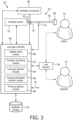
- Positive airway pressure therapy system 50 includes a ventilator source 52, a database 54, a user interface 56, an optional ventilation component 58, and a controller 60 operatively coupled with ventilator source 52, database 54, user interface 56, and optional ventilation component 58.
- the ventilator source or gas flow generator 52 comprises any suitable ventilator or gas flow generator having an output port 62 configured to output a ventilation gas.
- the output port 62 is configured to be coupled via a first plurality of ventilation components in a ventilation circuit 64 between the ventilator source 52 and a patient 70.
- the system 50 for delivering a flow of gas to an airway of a patient respiratory system includes a ventilator source or gas flow generator 52, at least one sensor 74, and a loop gain controller 60.
- the gas flow generator 52 generates the flow of gas and communicates the flow of gas to a patient circuit 64 for delivering the flow of gas to the airway of the patient respiratory system.
- the at least one sensor 74 generates output signals related to at least one characteristic associated with the flow of gas.
- the loop gain controller 60 selectively controls the flow of gas to the airway of the patient respiratory system according to a positive airway pressure (PAP) therapy mode, in response to the generated output signals of the at least one sensor 74.
- PAP positive airway pressure
- the PAP therapy mode of system 50 is configured to treat a respiratory system loop gain deficiency corresponding to a ventilation instability by utilizing loop gain for ventilation stability.
- the PAP therapy system 50 is adapted for use with the patient or ventilation circuit 64 that can comprise a number of various ventilation circuit components.
- the various ventilation circuit components include at least one or more of a ventilation hose or conduit 66 and a patient interface 68.
- the patient interface 68 can comprise any one of a variety of patient interfaces to be attached to a patient 70 while receiving ventilation therapy.
- the patient interface 68 can are either invasively attached to the patient such as an endotracheal tube or tracheostomy tube or non-invasively connected such as a nasal mask, full face mask or nasal cannula.
- a caregiver or operator 72 may be present during an initial setup of the ventilator system apparatus 50 and/or to assist if needed during an administration of the ventilation therapy to the patient 70.
- the ventilation circuit components may also include one or more optional ventilation component 58 (e.g., a humidifier, heater, nebulizer, etc.), one or more sensors 74 (e.g., temperature sensor, flow sensor, etc.), and one or more valves 76.
- the ventilation hose 66 includes a hose cuff (not shown) at an end thereof that is configured to be coupled to an output port 62 of the ventilator source 52.
- the database or storage 54 comprises electronic storage media that electronically stores information.
- the electronic storage media of database storage 54 can include one or both of system storage that is provided integrally (i.e., substantially non-removable) with system 50 and/or removable storage that is removably connectable to system 50 via, for example, a port (e.g., a USB port, a FireWire port, etc.) or a drive (e.g., a disk drive, etc.).
- a port e.g., a USB port, a FireWire port, etc.
- a drive e.g., a disk drive, etc.
- Database or storage 54 may include one or more of optically readable storage media (e.g., optical disks, etc.), magnetically readable storage media (e.g., magnetic tape, magnetic hard drive, floppy drive, etc.), electrical charge-based storage media (e.g., EPROM, EEPROM, RAM, etc.), solid-state storage media (e.g., flash drive, etc.), and/or other electronically readable storage media.
- Database or storage 54 may store software algorithms, information determined by controller 60, information received via user interface 56, and/or other information that enables system 50 to function properly.
- Database or storage 54 may be a separate component within system 50, or database storage 54 may be provided integrally with one or more other components of system 50 (e.g., controller 60).
- database or storage 54 may ideally be contained and maintained (i.e., updated) on a network server, shared computer, be internet based or contained within a third party data center and system 50 may access this data through a telecommunications protocol (e.g., via a wired or wireless communications connection with the third party data center).
- User interface 56 is configured to provide an interface between system 50 and a user (e.g., an operator 72, patient or subject 70, a caregiver, a therapy decision-maker, etc.) through which the user can provide information to and receive information from system 50.
- the user interface 56 enables one or more of data, results, and/or instructions and any other communicable items, collectively referred to as "information," to be communicated between the user and system 50.
- An example of information that may be conveyed to patient 70 or user 72 is a report detailing trends in the patient's respiratory breathing patterns such as respiratory rate, tidal volume and applied pressures throughout a period during which the patient is receiving (respiratory) therapy.
- Another example of information that may be conveyed by the patient 70 and/or user 72 is an alarm or unsafe condition detected by system 50.
- interface devices suitable for inclusion in user interface 56 include a keypad, buttons, switches, a keyboard, knobs, levers, a display screen, a touch screen, speakers, a microphone, an indicator light, an audible alarm, and a printer.
- Information may be provided to patient 70 by user interface 56 in the form of auditory signals, visual signals, tactile signals, and/or other sensory signals.
- the user interface 56 may be integrated with a removable storage interface provided by database or storage 54.
- information is loaded into system 50 from removable storage (e.g., a smart card, a flash drive, a removable disk, etc.) that enables the user to customize the implementation of system 50.
- removable storage e.g., a smart card, a flash drive, a removable disk, etc.
- Other techniques for communicating information with system 50 are contemplated as user interface 56.
- controller 60 is operatively coupled with ventilator source or gas flow generator 52, database 54, user interface 56, and optional ventilation component 58.
- Controller 60 comprises one or more modules that include at least a stability metric module 80, a condition monitoring module 82, a loop gain decision module 84, a therapy prescription decision module 86, and a pressure delivery module 88, as will be discussed further herein.
- controller 60 can be configured for a wired or wireless communications connection with a remote device or network, for example, as indicated via reference numeral 78.
- controller 60 comprises one or more of a microprocessor, microcontroller, field programmable gate array (FPGA), integrated circuit, discrete analog or digital circuit components, hardware, software, firmware, or any combination thereof, for performing various functions as discussed herein, further according to the requirements of a given ventilator system apparatus implementation and/or application. Controller 60 can further comprise one or more of the various modules as discussed herein. Additional details regarding the controller 60 will be provided herein below with reference to the Figures.
- the modules 80-88 can comprise one or more of an integrated circuit, discrete analog or digital circuit components, hardware, software, firmware, or any combination thereof, for performing various functions as discussed herein, further according to the requirements of a given ventilator system apparatus implementation and/or application.
- one or more of the modules 80-88 can further comprise various combinations of one or more of the various modules.
- the described modules may be computer program modules which are rendered in a non-transitory computer-readable medium.
- the stability metric module 80 of controller 60 is configured to determine at least one stability metric.
- the at least one stability metric comprises one or more of (a) a clinical loop gain, (b) a statistical correlate to the clinical loop gain in (a), and (c) a composite metric.
- the statistical correlate to the clinical loop gain in (a) is generated based on breath features, as will be discussed below.
- the composite metric is generated based on breath features.
- the breath features for use in generating the statistical correlate or the composite metric of the at least one stability metric, determined via the stability metric module and/or the condition monitoring module comprise one or more of: i) rate of change of minute ventilation, ii) ventilation overshoot detection, iii) ventilation undershoot detection, iv) period, phase and amplitude of periodic breathing, v) a model dealing with CO 2 consumption, vi) a model dealing with sleep stage and/or arousal of central nervous system, vii) simple windowed average minute ventilation, and viii) any combination of the above.
- the condition monitoring module 82 of controller 60 is configured to monitor ventilation characteristics of the flow of gas in the patient respiratory system and to provide an output indicative of the monitored ventilation characteristics.
- the monitored ventilation characteristics at least correspond to an occurrence of sleep disorder breathing (SDB) events in the patient respiratory system.
- SDB sleep disorder breathing
- the loop gain decision module 84 of controller 60 is configured to determine a future ventilation characteristic target and plant gain target based on the determined at least one stability metric and the output from the condition monitoring module.
- the future ventilation characteristic and plant gain targets, determined via the loop gain decision module 84 comprise magnitude and/or phase information of the flow of gas in the airway of the patient respiratory system.
- the future ventilation characteristic and plant gain targets also provide loop gain control, in response to delivery of the therapy command pressure or delivery characteristic, via the pressure delivery module 88.
- the future ventilation characteristic and plant gain targets modify, via increasing or decreasing, the loop gain for ventilation stability in the patient respiratory system.
- the therapy prescription decision module 86 of controller 60 is configured to determine a therapy command pressure or delivery characteristic based on the determined future ventilation characteristic and plant gain targets, wherein the therapy command pressure or delivery characteristic include a single command pressure or delivery characteristic or a combination of more than one command pressure or delivery characteristic.
- the pressure delivery module 88 of controller 60 is configured to control the ventilation source or gas flow generator 52 to deliver the flow of gas to the airway of the patient respiratory system at the determined therapy command pressure or delivery characteristic for a future breath.
- pressure delivery module 88 is configured to control an operation of the ventilator source 52 with operating parameters determined as a function of at least an output of the therapy prescription decision module 86.
- the outputs of the various modules can be advantageously used to estimate ventilation circuit compliance and thus facilitate circuit compensation accuracy.
- the improved accuracy of circuit compliance leads to improved estimation of patient parameters, such as flow, tidal volume, and respiratory parameters such as work of breathing (WOB), muscle pressure (Pmus), pressure time product (PTP), intrinsic positive end-expiratory pressure (PEEPi).
- circuit compliance is used to correct distal measurements to their respective proximal values referenced to the patient. Distal measurements are more accurate when they are corrected for losses due to the circuit, including compliance losses.
- circuit compensation refers to the use of circuit compliance for corrective measures.
- the ventilator source 52 is configured to output ventilation gas with one or more ventilation properties in response to one or more operating parameters provided via the pressure delivery module 88, thus providing improved patient parameter monitoring and feedback in an improved closed loop ventilator control.
- the future ventilation characteristic and plant gain targets render modifications to plant gain of one or more plant components of the patient respiratory system.
- the future ventilation characteristic and plant gain targets render modifications to plant gain via a change in one or more pressure delivery characteristic.
- the one or more pressure delivery characteristic can include one or more of (i) a baseline pressure, (ii) an inspiratory pressure, and (iii) an expiratory pressure.
- the loop gain decision module 84 further comprises a flow based gain scheduler.
- the flow based gain scheduler is configured to (i) schedule a flow based gain that is proportional to a magnitude and/or rate of change of a waxing and waning pattern of patient breathing effort.
- the flow based gain scheduler is further configured to (ii) make additions to or reductions from the patient breathing effort, thus acting in opposition of unstable waxing and waning muscle efforts in the patient respiratory system.
- the flow based gain scheduler is configured to (i) schedule a flow based gain that is proportional to a magnitude and/or rate of change of a signal, obtained via the condition monitoring module, that is representative of a sleep disordered breathing pattern, and (ii) make additions to or reductions from the flow of gas, via the pressure delivery module, thereby acting in opposition to unstable breathing efforts in the patient respiratory system.
- the therapy prescription decision module 86 is further configured to determine the therapy command pressure or delivery characteristic based upon at least a loop gain input from the flow based gain scheduler.
- the therapy command pressure or delivery characteristic when delivered, is configured to generate a flow based gain that provides pressure therapy in such a manner to provide baseline pressure sufficient to overcome obstructive SDB events, or in other words, regulate plant gain and flow based gain configured to normalize loop gain.
- the future ventilation characteristic target, determined via the loop gain decision module 84 comprises a flow based pressure augmentation that is calculated continuously throughout a breath.
- the calculated flow based pressure augmentation is a product of (i) an instantaneous patient airway gas flow rate and (ii) a flow based gain factor.
- a sign of the instantaneous patient airway gas flow rate is positive during inspiration and negative during expiration.
- the loop gain controller 60 drives ventilation, via the pressure delivery module 88 and the gas flow generator 52, to increase ventilation in the patient respiratory system.
- the loop gain controller 60 restricts ventilation, via the pressure delivery module 88 and the gas flow generator 52, to decrease ventilation in the patient respiratory system.
- the loop gain decision module 84 is further configured to determine the flow based gain factor, wherein determining the flow based gain factor includes adjusting the flow based gain factor.
- the determined or adjusted flow based gain factor is based on monitored conditions of the patient respiratory system in a current phase of instability of a patient breath cycle in response to the generated output signals of the at least one sensor 74.
- the loop gain decision module 84 adjusts the flow based gain factor for a given disease state and the adjustment occurs only while conditions of the respective disease state are occurring in the patient respiratory system.
- the condition monitoring module 82 is further configured to collect and monitor output signals of the at least one sensor 74 which correspond to inputs for respiratory system loop gain determination in a positive airway pressure (PAP) therapy.
- PAP positive airway pressure
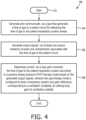
- the method 90 for delivering a flow of gas to an airway of a patient respiratory system comprises: generating the flow of gas (at Step 94), generating output signals (at Step 96), and selectively controlling, via a loop gain controller 60 ( Figure 3 ), the flow of gas to the airway of the patient respiratory system (at Step 98).
- Generating and communicating the flow of gas to a patient circuit (at Step 94) is accomplished via a gas flow generator 54 ( Figure 3 ), further for delivering the flow of gas to the airway of the patient respiratory system.
- Generating output signals (at Step 96) related to at least one characteristic associated with the flow of gas is accomplished via at least one sensor 74 ( Figure 3 ).
- Selectively controlling the flow of gas to the airway of the patient respiratory system is accomplished via a loop gain controller 60 according to a positive airway pressure (PAP) therapy mode, further in response to the generated output signals via the at least one sensor 74.
- PAP positive airway pressure
- Flow into the airway of the patient respiratory system is positive flow and flow out of the airway of the patient respiratory system is negative flow, from the gas flow generator 52 via the patient circuit 64.
- the PAP therapy mode is configured to treat a respiratory system loop gain deficiency corresponding to a ventilation instability by utilizing loop gain for ventilation stability.
- Step 98 Figure 4
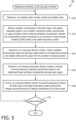
- Step 98 Figure 4
- the method includes wherein selectively controlling, via the loop gain controller 60, (Step 98) comprises: (a) determining, via a stability metric module 80 ( Figure 3 ), at least one stability metric (Step 100), (b) monitoring, via a condition monitoring module 82, ventilation characteristics of the flow of gas in the patient respiratory system and providing an output indicative of the monitored ventilation characteristics (Step 102), wherein the monitored ventilation characteristics at least correspond to an occurrence of sleep disorder breathing (SDB) events in the patient respiratory system, (c) determining, via a loop gain decision module 84, a future ventilation characteristic target and plant gain target based on the determined at least one stability metric and the output from the condition monitoring module (Step 104), (d) determining, via a therapy prescription decision module 86, a therapy command pressure or delivery characteristic based on the determined future ventilation characteristic and plant gain targets (Step 106), wherein the therapy command pressure or delivery characteristic include as single command pressure or delivery characteristic or a combination of more than one command pressure or delivery characteristic, and (e) controlling,
- the loop gain controller queries whether or not to continue therapy (Step 110). In response to continuing therapy, the method returns to step 100, with determining, via the stability metric module 80, at least one stability metric. On the other hand, in response to not continuing therapy, the method ends.
- the method includes wherein the future ventilation characteristic and plant gain targets, determined via the loop gain decision module 84, (i) comprise magnitude and/or phase information of the flow of gas in the airway of the patient respiratory system, (ii) provide loop gain control, in response to delivery of the therapy command pressure or delivery characteristic, via the pressure delivery module 88, and (iii) based on the magnitude and/or phase information, via opposing flow based gain, modify, via increasing or decreasing, the loop gain for ventilation stability in the patient respiratory system.
- the future ventilation characteristic and plant gain targets, determined via the loop gain decision module 84 render modifications to plant gain of one or more plant components of the patient respiratory system via a change in one or more pressure delivery characteristic.
- the one or more pressure delivery characteristic includes one or more of (i) a baseline pressure, (ii) an inspiratory pressure, and (iii) an expiratory pressure.
- the method includes wherein selectively controlling, via the loop gain controller 60, further comprises: (c)(i) scheduling, via a flow based gain scheduler of the loop gain decision module, a flow based gain that is proportional to a magnitude and/or rate of change of a waxing and waning pattern of patient breathing effort, and (c)(ii) making additions to or reductions from the patient breathing effort, via the determined future ventilation characteristic target and plant gain target, thus acting in opposition of unstable waxing and waning muscle efforts in the patient respiratory system.
- the method includes wherein selectively controlling, via the loop gain controller 60, further comprises: (d)(i) determining, via the therapy prescription decision module 86, the therapy command pressure or delivery characteristic based upon at least a loop gain input from the flow based gain scheduler, wherein the therapy command pressure or delivery characteristic, when delivered, is configured to generate a flow based gain that provides pressure therapy in such a manner to provide baseline pressure sufficient to overcome obstructive SDB events, or in other words, regulate plant gain and flow based gain configured to normalize loop gain.
- the embodiments of the present disclosure advantageously provide a PAP device with an integrated ventilation stability feature in which the stability is based on loop gain.
- PAP interventions and corresponding mechanisms of reduced ventilatory instability i.e., loop gain
- CPAP interventions and corresponding mechanisms of reduced ventilatory instability can be briefly summarized as follows.
- the corresponding mechanism of reduced ventilatory instability presumably lowers chemosensitivity and reduces circulatory delays.
- the corresponding mechanism of reduced ventilatory instability increases lung volume, (ii) provides possible effect on cardiogenic pulmonary oedema and associated effects on chemosensitivity, and (iii) provides possible long-term effects on cardiac function and circulatory delay.
- the corresponding mechanism of reduced ventilatory instability lowers carotid-body chemosensitivity.
- the corresponding mechanism of reduced ventilatory instability comprises acetazolamide lowering alveolar PCO 2 and supplemental CO 2 raising inspired PCO 2 , with both reducing the alveolar inspired PCO 2 gradient.
- body position e.g., lateral or upright, versus supine
- the corresponding mechanism of reduced ventilatory instability increases lung volume. Additional interventions and corresponding mechanisms of reduced ventilatory instability are possible.
Landscapes
- Health & Medical Sciences (AREA)
- Emergency Medicine (AREA)
- Pulmonology (AREA)
- Engineering & Computer Science (AREA)
- Anesthesiology (AREA)
- Biomedical Technology (AREA)
- Heart & Thoracic Surgery (AREA)
- Hematology (AREA)
- Life Sciences & Earth Sciences (AREA)
- Animal Behavior & Ethology (AREA)
- General Health & Medical Sciences (AREA)
- Public Health (AREA)
- Veterinary Medicine (AREA)
- Measurement Of The Respiration, Hearing Ability, Form, And Blood Characteristics Of Living Organisms (AREA)
Claims (14)
- System (50) zum Abgeben eines Gasflusses an einen Atemweg eines Patienten-Atemtrakts, wobei das System umfasst:einen Gasflussgenerator (52), der zum Erzeugen des Gasflusses konfiguriert ist, wobei der Gasflussgenerator weiter zum Übermitteln des Gasflusses an einen Patientenkreislauf (64) konfiguriert ist;mindestens einen Sensor (74), der zum Erzeugen von Ausgangssignalen konfiguriert ist, die sich auf mindestens eine mit dem Gasfluss verbundene Charakteristik beziehen; undeine Steuereinheit, wobei die Steuereinheit umfasst:
eine Schleifenverstärkungssteuereinheit (60), die zum selektiven Steuern des Gasflusses von dem Gasflussgenerator (52) über den Patientenkreislauf (64) gemäß einem positiven Atemwegsdruck (PAP)-Therapiemodus, der auf einen Schleifenverstärkungsmangel abzielt, als Reaktion auf die erzeugten Ausgangssignale konfiguriert ist, wobei die Schleifenverstärkungssteuereinheit (60) umfasst:(a) ein Stabilitätsmetrikmodul (80), das zum Bestimmen mindestens einer die Beatmungsstabilität beschreibenden Beatmungsstabilitätsmetrik konfiguriert ist, die mit einer Schleifenverstärkung korreliert,(b) ein Zustandsüberwachungsmodul (82), das zum Überwachen von Beatmungscharakteristiken des Gasflusses und zum Bereitstellen einer Ausgabe, die die überwachten Beatmungscharakteristiken anzeigt, konfiguriert ist, wobei die überwachten Beatmungscharakteristiken mindestens einem Auftreten von Ereignissen schlafbezogener Atmungsstörungen (SDB) entsprechen,(c) ein Schleifenverstärkungsentscheidungsmodul (84), das zum Bestimmen eines zukünftigen Beatmungscharakteristikziels und eines Anlagenverstärkungsziels auf der Grundlage der mindestens einen bestimmten Beatmungsstabilitätsmetrik und der Ausgabe des Zustandsüberwachungsmoduls (82) konfiguriert ist, wobei das zukünftige Beatmungscharakteristikziel und das Anlagenverstärkungsziel spezifisch für die Verwaltung der Beatmungsstabilität durch Behandlung eines entsprechenden Schleifenverstärkungsmangels sind,(d) ein Therapieverschreibungsentscheidungsmodul (86), das zum Bestimmen eines Therapiebefehlsdrucks oder einer Abgabecharakteristik auf der Grundlage der bestimmten zukünftigen Beatmungscharakteristik- und Anlagenverstärkungsziele konfiguriert ist, und(e) ein Druckabgabemodul (88), das zum Steuern des Gasflussgenerators konfiguriert ist, um den Gasfluss mit dem bestimmten Therapiebefehlsdruck oder der Abgabecharakteristik für einen zukünftigen Atemzug abzugeben, um den Schleifenverstärkungsmangel zu überwinden und Beatmungsstabilität zu gewährleisten. - System (50) nach Anspruch 1, wobei die mindestens eine Beatmungsstabilitätsmetrik eines oder mehrere der Folgenden umfasst:a) eine klinische Schleifenverstärkung, die wie folgt definiert ist:
 (b) ein statistisches Korrelat zu der klinischen Schleifenverstärkung in (a), wobei das statistische Korrelat auf der Grundlage von Atemmerkmalen erzeugt wird; und(c) eine zusammengesetzte Metrik, wobei die zusammengesetzte Metrik einem Modell entspricht, das die Schleifenverstärkung darstellt, wobei das Modell durch künstliche Intelligenz, maschinelles Lernen oder eine Kombination davon auf der Grundlage von Atemmerkmalen konstruiert wird.
 - System (50) nach Anspruch 2, wobei die Atemmerkmale zur Verwendung beim Erzeugen des statistischen Korrelats oder der zusammengesetzten Metrik der mindestens einen Beatmungsstabilitätsmetrik, die über das Stabilitätsmetrikmodul bestimmt wird, eines oder mehrere der Folgenden umfassen:i) Änderungsrate des Atemminutenvolumens,ii) Erkennung von Beatmungsüberschreitungen,iii) Erkennung von Beatmungsunterschreitungen,iv) Periode, Phase und Amplitude der periodischen Atmung,v) ein Modell, das sich mit dem CO2-Verbrauch befasst,vi) ein Modell, das sich mit dem Schlafstadium und/oder der Erregung des zentralen Nervensystems befasst,vii) einfaches gefenstertes durchschnittliches Atemminutenvolumen, undviii) eine beliebige Kombination des vorstehenden.
- System (50) nach Anspruch 1, wobei die über das Schleifenverstärkungsentscheidungsmodul (84) bestimmten zukünftigen Beatmungscharakteristik- und Anlagenverstärkungsziele (i) Größen- und/oder Phaseninformationen des Gasflusses umfassen, (ii) eine Schleifenverstärkungsregelung als Reaktion auf die Abgabe des Therapiebefehlsdrucks oder der Abgabecharakteristik über das Druckabgabemodul (88) bereitstellen, und (iii) auf der Grundlage der Größen-und/oder Phaseninformationen über eine auf dem Gegenfluss basierende Verstärkung die Schleifenverstärkung zur Beatmungsstabilität durch Erhöhen oder Verringern modifizieren.
- System (50) nach Anspruch 1, wobei die zukünftige Beatmungscharakteristik- und Anlagenverstärkungsziele, die über das Schleifenverstärkungsentscheidungsmodul (84) bestimmt werden, Modifikationen der Anlagenverstärkung einer oder mehrerer Anlagenkomponenten über eine Änderung einer oder mehrerer Druckabgabecharakteristiken wiedergeben.
- System (50) nach Anspruch 1, wobei das Schleifenverstärkungsentscheidungsmodul (84) weiter einen auf dem Fluss basierenden Verstärkungsplaner umfasst, der spezifisch für die Verwaltung der Beatmungsstabilität durch Behandeln des entsprechenden Schleifenverstärkungsmangels ist.
- System (50) nach Anspruch 6, wobei der auf dem Fluss basierende Verstärkungsplaner dazu konfiguriert ist, (i) eine auf dem Fluss basierende Verstärkung zu planen, die proportional zu einer Größe und/oder Änderungsrate eines über das Zustandsüberwachungsmodul erhaltenen Signals ist, das für ein schlafgestörtes Atemmuster repräsentativ ist, und (ii) den Gasfluss über das Druckabgabemodul hinzuzufügen oder zu reduzieren, um dadurch instabilen Atembemühungen im Atemtrakt des Patienten entgegenzuwirken.
- System (50) nach Anspruch 6, wobei das Therapieverschreibungsentscheidungsmodul (86) weiter zum Bestimmen des Therapiebefehlsdrucks oder der Abgabecharakteristik auf der Grundlage mindestens einer Schleifenverstärkungseingabe von dem auf dem Fluss basierenden Verstärkungsplaner konfiguriert ist, wobei der Therapiebefehlsdruck oder die Abgabecharakteristik bei Abgabe zum Erzeugen einer auf dem Fluss basierenden Verstärkung konfiguriert ist, die eine Drucktherapie auf eine solche Weise bereitstellt, dass ein Basisdruck bereitgestellt wird, der ausreicht, um obstruktive SDB-Ereignisse zu überwinden, oder die Anlagenverstärkung und die auf dem Fluss basierende Verstärkung reguliert, die zum Normalisieren der Schleifenverstärkung konfiguriert sind.
- System (50) nach Anspruch 1, wobei das zukünftige Beatmungscharakteristikziel, das über das Schleifenverstärkungsentscheidungsmodul (84) bestimmt wird, eine auf dem Fluss basierende Druckerhöhung umfasst, die kontinuierlich während eines Atemzugs berechnet wird, und wobei die berechnete, auf dem Fluss basierende Druckerhöhung ein Produkt aus (i) einer momentanen Atemwegsgasflussrate des Patienten und (ii) einem auf dem Fluss basierenden Verstärkungsfaktor ist.
- System (50) nach Anspruch 9, wobei ein Vorzeichen der momentanen Atemwegsgasflussrate des Patienten während der Einatmung positiv und während der Ausatmung negativ ist.
- System (50) nach Anspruch 9, wobei bei einem positiven Wert des auf dem Fluss basierenden Verstärkungsfaktors die Schleifenverstärkungssteuereinheit (60) die Beatmung über das Druckabgabemodul (88) und den Gasflussgenerator (52) antreibt, um die Beatmung zu erhöhen, und wobei bei einem negativen Wert des auf dem Fluss basierenden Verstärkungsfaktors die Schleifenverstärkungssteuereinheit (60) die Beatmung über das Druckabgabemodul (88) und den Gasflussgenerator (52) einschränkt, um die Beatmung zu verringern.
- System (50) nach Anspruch 9, wobei das Schleifenverstärkungsentscheidungsmodul (84) weiter zum Bestimmen des auf dem Fluss basierenden Verstärkungsfaktors konfiguriert ist, wobei Bestimmen des auf dem Fluss basierenden Verstärkungsfaktors Einstellen des auf dem Fluss basierenden Verstärkungsfaktors beinhaltet, und wobei der bestimmte oder angepasste auf dem Fluss basierende Verstärkungsfaktor auf der Grundlage von überwachten Bedingungen in einer aktuellen Phase der Instabilität eines Atemzyklus als Reaktion auf die erzeugten Ausgangssignale erfolgt.
- System (50) nach Anspruch 9, wobei das Schleifenverstärkungsentscheidungsmodul (84) den auf dem Fluss basierenden Verstärkungsfaktor für einen gegebenen Krankheitszustand anpasst und die Anpassung nur erfolgt, während Bedingungen, des jeweiligen Krankheitszustands vorliegen, die über das Zustandsüberwachungsmodul bestimmt werden.
- System (50) nach Anspruch 1, wobei das Zustandsüberwachungsmodul (82) weiter zum Sammeln und Überwachen von Ausgangssignalen des mindestens einen Sensors (74) konfiguriert ist, die Eingängen für die Bestimmung der Schleifenverstärkung des Atemtrakts im positiven Atemwegsdruck (PAP)-Therapiemodus entsprechen.
Applications Claiming Priority (2)
| Application Number | Priority Date | Filing Date | Title |
|---|---|---|---|
| US201962955492P | 2019-12-31 | 2019-12-31 | |
| PCT/EP2020/087378 WO2021136702A1 (en) | 2019-12-31 | 2020-12-21 | Utilizing loop gain for positive airway pressure ventilation |
Publications (2)
| Publication Number | Publication Date |
|---|---|
| EP4084845A1 EP4084845A1 (de) | 2022-11-09 |
| EP4084845B1 true EP4084845B1 (de) | 2024-11-13 |
Family
ID=74187240
Family Applications (1)
| Application Number | Title | Priority Date | Filing Date |
|---|---|---|---|
| EP20842572.8A Active EP4084845B1 (de) | 2019-12-31 | 2020-12-21 | Anwendung von schleifenverstärkung für eine positive überdruckbeatmung |
Country Status (3)
| Country | Link |
|---|---|
| US (1) | US12151063B2 (de) |
| EP (1) | EP4084845B1 (de) |
| WO (1) | WO2021136702A1 (de) |
Families Citing this family (1)
| Publication number | Priority date | Publication date | Assignee | Title |
|---|---|---|---|---|
| EP4481754A1 (de) * | 2023-06-20 | 2024-12-25 | Koninklijke Philips N.V. | System und verfahren zur bestimmung einer korrelation zwischen medikamenteneinnahme und dem resultat einer schlafbezogenen atmungsstörungstherapie |
Family Cites Families (9)
| Publication number | Priority date | Publication date | Assignee | Title |
|---|---|---|---|---|
| US6932084B2 (en) * | 1994-06-03 | 2005-08-23 | Ric Investments, Inc. | Method and apparatus for providing positive airway pressure to a patient |
| AU2868900A (en) * | 1999-02-04 | 2000-08-25 | Eric Andrew Hajduk | Ventilatory stablization technology |
| US7810497B2 (en) * | 2006-03-20 | 2010-10-12 | Ric Investments, Llc | Ventilatory control system |
| WO2009026582A1 (en) * | 2007-08-23 | 2009-02-26 | Invacare Corporation | Method and apparatus for adjusting desired pressure in positive airway pressure devices |
| JP5777637B2 (ja) | 2010-01-14 | 2015-09-09 | コーニンクレッカ フィリップス エヌ ヴェ | ベースラインからの圧力低下を用いる補助換気装置 |
| AU2010342296B2 (en) | 2010-01-14 | 2014-08-14 | Koninklijke Philips Electronics N.V. | Servo ventilation using negative pressure support |
| US10213152B2 (en) * | 2011-02-14 | 2019-02-26 | The Board Of Regents Of The University Of Texas System | System and method for real-time measurement of sleep quality |
| US10850054B2 (en) * | 2014-10-27 | 2020-12-01 | ResMed Pty Ltd | Method and apparatus for treating hyperarousal disorders |
| JP7772496B2 (ja) * | 2017-05-12 | 2025-11-18 | レスメド・プロプライエタリー・リミテッド | 呼吸障害の治療のための方法および装置 |
-
2020
- 2020-12-21 EP EP20842572.8A patent/EP4084845B1/de active Active
- 2020-12-21 WO PCT/EP2020/087378 patent/WO2021136702A1/en not_active Ceased
- 2020-12-31 US US17/138,971 patent/US12151063B2/en active Active
Also Published As
| Publication number | Publication date |
|---|---|
| CN115243749A (zh) | 2022-10-25 |
| US20210196914A1 (en) | 2021-07-01 |
| WO2021136702A1 (en) | 2021-07-08 |
| US12151063B2 (en) | 2024-11-26 |
| EP4084845A1 (de) | 2022-11-09 |
Similar Documents
| Publication | Publication Date | Title |
|---|---|---|
| US7810497B2 (en) | Ventilatory control system | |
| EP2208504B1 (de) | Vorrichtung zur systemischen Steuerung einer Atemhilfe bei Ateminsuffizienz | |
| Johnson et al. | Treatment of sleep-disordered breathing with positive airway pressure devices: technology update | |
| CN115052648B (zh) | 用于确定和/或预测管理气道压力的睡眠和呼吸行为的方法和设备 | |
| US7802571B2 (en) | Method and apparatus for controlling a ventilator | |
| US9744322B2 (en) | Automatic pressure titration | |
| EP1778325B1 (de) | Deltafluss-druckregler | |
| US6530372B1 (en) | Automatic respiration under positive airway pressure | |
| JP6574096B2 (ja) | 周期性呼吸を治療するための方法および装置 | |
| Johnson | APAP, BPAP, CPAP, and new modes of positive airway pressure therapy | |
| EP4084845B1 (de) | Anwendung von schleifenverstärkung für eine positive überdruckbeatmung | |
| Ai et al. | Development of closed-loop modelling framework for adaptive respiratory pacemakers | |
| US11406778B2 (en) | Unlocking a respiratory mode | |
| CN115243749B (zh) | 利用环路增益进行气道正压通气 | |
| Spießhöfer et al. | Respiratory effects of adaptive servoventilation therapy in patients with heart failure and Cheyne-Stokes respiration compared to healthy volunteers | |
| US10842958B1 (en) | Method and system for diagnosis and treatment of sleep disordered breathing of a patient | |
| CN119701149B (zh) | 一种呼吸设备的压力补偿控制方法、装置、设备及介质 | |
| WO2026055604A1 (en) | Enhanced expiratory rebreathing device | |
| CN120285375A (zh) | 用于球囊呼吸机按压器的控制方法及系统 |
Legal Events
| Date | Code | Title | Description |
|---|---|---|---|
| STAA | Information on the status of an ep patent application or granted ep patent |
Free format text: STATUS: UNKNOWN |
|
| STAA | Information on the status of an ep patent application or granted ep patent |
Free format text: STATUS: THE INTERNATIONAL PUBLICATION HAS BEEN MADE |
|
| PUAI | Public reference made under article 153(3) epc to a published international application that has entered the european phase |
Free format text: ORIGINAL CODE: 0009012 |
|
| STAA | Information on the status of an ep patent application or granted ep patent |
Free format text: STATUS: REQUEST FOR EXAMINATION WAS MADE |
|
| 17P | Request for examination filed |
Effective date: 20220801 |
|
| AK | Designated contracting states |
Kind code of ref document: A1 Designated state(s): AL AT BE BG CH CY CZ DE DK EE ES FI FR GB GR HR HU IE IS IT LI LT LU LV MC MK MT NL NO PL PT RO RS SE SI SK SM TR |
|
| DAV | Request for validation of the european patent (deleted) | ||
| DAX | Request for extension of the european patent (deleted) | ||
| GRAP | Despatch of communication of intention to grant a patent |
Free format text: ORIGINAL CODE: EPIDOSNIGR1 |
|
| STAA | Information on the status of an ep patent application or granted ep patent |
Free format text: STATUS: GRANT OF PATENT IS INTENDED |
|
| INTG | Intention to grant announced |
Effective date: 20240619 |
|
| RIN1 | Information on inventor provided before grant (corrected) |
Inventor name: KANE, MICHAEL THOMAS |
|
| GRAS | Grant fee paid |
Free format text: ORIGINAL CODE: EPIDOSNIGR3 |
|
| GRAA | (expected) grant |
Free format text: ORIGINAL CODE: 0009210 |
|
| STAA | Information on the status of an ep patent application or granted ep patent |
Free format text: STATUS: THE PATENT HAS BEEN GRANTED |
|
| AK | Designated contracting states |
Kind code of ref document: B1 Designated state(s): AL AT BE BG CH CY CZ DE DK EE ES FI FR GB GR HR HU IE IS IT LI LT LU LV MC MK MT NL NO PL PT RO RS SE SI SK SM TR |
|
| REG | Reference to a national code |
Ref country code: GB Ref legal event code: FG4D |
|
| REG | Reference to a national code |
Ref country code: CH Ref legal event code: EP |
|
| REG | Reference to a national code |
Ref country code: IE Ref legal event code: FG4D |
|
| REG | Reference to a national code |
Ref country code: DE Ref legal event code: R096 Ref document number: 602020041439 Country of ref document: DE |
|
| REG | Reference to a national code |
Ref country code: LT Ref legal event code: MG9D |
|
| REG | Reference to a national code |
Ref country code: NL Ref legal event code: MP Effective date: 20241113 |
|
| PG25 | Lapsed in a contracting state [announced via postgrant information from national office to epo] |
Ref country code: IS Free format text: LAPSE BECAUSE OF FAILURE TO SUBMIT A TRANSLATION OF THE DESCRIPTION OR TO PAY THE FEE WITHIN THE PRESCRIBED TIME-LIMIT Effective date: 20250313 Ref country code: PT Free format text: LAPSE BECAUSE OF FAILURE TO SUBMIT A TRANSLATION OF THE DESCRIPTION OR TO PAY THE FEE WITHIN THE PRESCRIBED TIME-LIMIT Effective date: 20250313 Ref country code: HR Free format text: LAPSE BECAUSE OF FAILURE TO SUBMIT A TRANSLATION OF THE DESCRIPTION OR TO PAY THE FEE WITHIN THE PRESCRIBED TIME-LIMIT Effective date: 20241113 |
|
| PG25 | Lapsed in a contracting state [announced via postgrant information from national office to epo] |
Ref country code: FI Free format text: LAPSE BECAUSE OF FAILURE TO SUBMIT A TRANSLATION OF THE DESCRIPTION OR TO PAY THE FEE WITHIN THE PRESCRIBED TIME-LIMIT Effective date: 20241113 Ref country code: NL Free format text: LAPSE BECAUSE OF FAILURE TO SUBMIT A TRANSLATION OF THE DESCRIPTION OR TO PAY THE FEE WITHIN THE PRESCRIBED TIME-LIMIT Effective date: 20241113 |
|
| REG | Reference to a national code |
Ref country code: AT Ref legal event code: MK05 Ref document number: 1741195 Country of ref document: AT Kind code of ref document: T Effective date: 20241113 |
|
| PG25 | Lapsed in a contracting state [announced via postgrant information from national office to epo] |
Ref country code: BG Free format text: LAPSE BECAUSE OF FAILURE TO SUBMIT A TRANSLATION OF THE DESCRIPTION OR TO PAY THE FEE WITHIN THE PRESCRIBED TIME-LIMIT Effective date: 20241113 |
|
| PG25 | Lapsed in a contracting state [announced via postgrant information from national office to epo] |
Ref country code: ES Free format text: LAPSE BECAUSE OF FAILURE TO SUBMIT A TRANSLATION OF THE DESCRIPTION OR TO PAY THE FEE WITHIN THE PRESCRIBED TIME-LIMIT Effective date: 20241113 |
|
| PG25 | Lapsed in a contracting state [announced via postgrant information from national office to epo] |
Ref country code: NO Free format text: LAPSE BECAUSE OF FAILURE TO SUBMIT A TRANSLATION OF THE DESCRIPTION OR TO PAY THE FEE WITHIN THE PRESCRIBED TIME-LIMIT Effective date: 20250213 |
|
| PG25 | Lapsed in a contracting state [announced via postgrant information from national office to epo] |
Ref country code: GR Free format text: LAPSE BECAUSE OF FAILURE TO SUBMIT A TRANSLATION OF THE DESCRIPTION OR TO PAY THE FEE WITHIN THE PRESCRIBED TIME-LIMIT Effective date: 20250214 Ref country code: LV Free format text: LAPSE BECAUSE OF FAILURE TO SUBMIT A TRANSLATION OF THE DESCRIPTION OR TO PAY THE FEE WITHIN THE PRESCRIBED TIME-LIMIT Effective date: 20241113 Ref country code: AT Free format text: LAPSE BECAUSE OF FAILURE TO SUBMIT A TRANSLATION OF THE DESCRIPTION OR TO PAY THE FEE WITHIN THE PRESCRIBED TIME-LIMIT Effective date: 20241113 |
|
| PG25 | Lapsed in a contracting state [announced via postgrant information from national office to epo] |
Ref country code: PL Free format text: LAPSE BECAUSE OF FAILURE TO SUBMIT A TRANSLATION OF THE DESCRIPTION OR TO PAY THE FEE WITHIN THE PRESCRIBED TIME-LIMIT Effective date: 20241113 |
|
| PG25 | Lapsed in a contracting state [announced via postgrant information from national office to epo] |
Ref country code: RS Free format text: LAPSE BECAUSE OF FAILURE TO SUBMIT A TRANSLATION OF THE DESCRIPTION OR TO PAY THE FEE WITHIN THE PRESCRIBED TIME-LIMIT Effective date: 20250213 |
|
| PG25 | Lapsed in a contracting state [announced via postgrant information from national office to epo] |
Ref country code: SM Free format text: LAPSE BECAUSE OF FAILURE TO SUBMIT A TRANSLATION OF THE DESCRIPTION OR TO PAY THE FEE WITHIN THE PRESCRIBED TIME-LIMIT Effective date: 20241113 |
|
| PG25 | Lapsed in a contracting state [announced via postgrant information from national office to epo] |
Ref country code: DK Free format text: LAPSE BECAUSE OF FAILURE TO SUBMIT A TRANSLATION OF THE DESCRIPTION OR TO PAY THE FEE WITHIN THE PRESCRIBED TIME-LIMIT Effective date: 20241113 |
|
| PG25 | Lapsed in a contracting state [announced via postgrant information from national office to epo] |
Ref country code: EE Free format text: LAPSE BECAUSE OF FAILURE TO SUBMIT A TRANSLATION OF THE DESCRIPTION OR TO PAY THE FEE WITHIN THE PRESCRIBED TIME-LIMIT Effective date: 20241113 |
|
| PG25 | Lapsed in a contracting state [announced via postgrant information from national office to epo] |
Ref country code: RO Free format text: LAPSE BECAUSE OF FAILURE TO SUBMIT A TRANSLATION OF THE DESCRIPTION OR TO PAY THE FEE WITHIN THE PRESCRIBED TIME-LIMIT Effective date: 20241113 |
|
| PG25 | Lapsed in a contracting state [announced via postgrant information from national office to epo] |
Ref country code: SK Free format text: LAPSE BECAUSE OF FAILURE TO SUBMIT A TRANSLATION OF THE DESCRIPTION OR TO PAY THE FEE WITHIN THE PRESCRIBED TIME-LIMIT Effective date: 20241113 |
|
| PG25 | Lapsed in a contracting state [announced via postgrant information from national office to epo] |
Ref country code: CZ Free format text: LAPSE BECAUSE OF FAILURE TO SUBMIT A TRANSLATION OF THE DESCRIPTION OR TO PAY THE FEE WITHIN THE PRESCRIBED TIME-LIMIT Effective date: 20241113 |
|
| PG25 | Lapsed in a contracting state [announced via postgrant information from national office to epo] |
Ref country code: IT Free format text: LAPSE BECAUSE OF FAILURE TO SUBMIT A TRANSLATION OF THE DESCRIPTION OR TO PAY THE FEE WITHIN THE PRESCRIBED TIME-LIMIT Effective date: 20241113 |
|
| REG | Reference to a national code |
Ref country code: CH Ref legal event code: PL |
|
| REG | Reference to a national code |
Ref country code: DE Ref legal event code: R097 Ref document number: 602020041439 Country of ref document: DE |
|
| PG25 | Lapsed in a contracting state [announced via postgrant information from national office to epo] |
Ref country code: LU Free format text: LAPSE BECAUSE OF NON-PAYMENT OF DUE FEES Effective date: 20241221 |
|
| PG25 | Lapsed in a contracting state [announced via postgrant information from national office to epo] |
Ref country code: SE Free format text: LAPSE BECAUSE OF FAILURE TO SUBMIT A TRANSLATION OF THE DESCRIPTION OR TO PAY THE FEE WITHIN THE PRESCRIBED TIME-LIMIT Effective date: 20241113 |
|
| PG25 | Lapsed in a contracting state [announced via postgrant information from national office to epo] |
Ref country code: MC Free format text: LAPSE BECAUSE OF FAILURE TO SUBMIT A TRANSLATION OF THE DESCRIPTION OR TO PAY THE FEE WITHIN THE PRESCRIBED TIME-LIMIT Effective date: 20241113 |
|
| PLBE | No opposition filed within time limit |
Free format text: ORIGINAL CODE: 0009261 |
|
| STAA | Information on the status of an ep patent application or granted ep patent |
Free format text: STATUS: NO OPPOSITION FILED WITHIN TIME LIMIT |
|
| REG | Reference to a national code |
Ref country code: BE Ref legal event code: MM Effective date: 20241231 |
|
| PG25 | Lapsed in a contracting state [announced via postgrant information from national office to epo] |
Ref country code: BE Free format text: LAPSE BECAUSE OF NON-PAYMENT OF DUE FEES Effective date: 20241231 |
|
| PG25 | Lapsed in a contracting state [announced via postgrant information from national office to epo] |
Ref country code: FR Free format text: LAPSE BECAUSE OF NON-PAYMENT OF DUE FEES Effective date: 20250113 |
|
| PG25 | Lapsed in a contracting state [announced via postgrant information from national office to epo] |
Ref country code: CH Free format text: LAPSE BECAUSE OF NON-PAYMENT OF DUE FEES Effective date: 20241231 |
|
| 26N | No opposition filed |
Effective date: 20250814 |
|
| PG25 | Lapsed in a contracting state [announced via postgrant information from national office to epo] |
Ref country code: IE Free format text: LAPSE BECAUSE OF NON-PAYMENT OF DUE FEES Effective date: 20241221 |
|
| GBPC | Gb: european patent ceased through non-payment of renewal fee |
Effective date: 20250213 |
|
| PG25 | Lapsed in a contracting state [announced via postgrant information from national office to epo] |
Ref country code: GB Free format text: LAPSE BECAUSE OF NON-PAYMENT OF DUE FEES Effective date: 20250213 |
|
| PGFP | Annual fee paid to national office [announced via postgrant information from national office to epo] |
Ref country code: DE Payment date: 20251229 Year of fee payment: 6 |