EP4084534B1 - Mobilitätsunterstützung für teilnehmergeräte mit variierenden fähigkeiten in einem drahtlosen netzwerk - Google Patents
Mobilitätsunterstützung für teilnehmergeräte mit variierenden fähigkeiten in einem drahtlosen netzwerk Download PDFInfo
- Publication number
- EP4084534B1 EP4084534B1 EP22169867.3A EP22169867A EP4084534B1 EP 4084534 B1 EP4084534 B1 EP 4084534B1 EP 22169867 A EP22169867 A EP 22169867A EP 4084534 B1 EP4084534 B1 EP 4084534B1
- Authority
- EP
- European Patent Office
- Prior art keywords
- base station
- neighbor base
- capability
- measurement
- system information
- Prior art date
- Legal status (The legal status is an assumption and is not a legal conclusion. Google has not performed a legal analysis and makes no representation as to the accuracy of the status listed.)
- Active
Links
Images



Classifications
-
- H—ELECTRICITY
- H04—ELECTRIC COMMUNICATION TECHNIQUE
- H04W—WIRELESS COMMUNICATION NETWORKS
- H04W8/00—Network data management
- H04W8/22—Processing or transfer of terminal data, e.g. status or physical capabilities
-
- H—ELECTRICITY
- H04—ELECTRIC COMMUNICATION TECHNIQUE
- H04W—WIRELESS COMMUNICATION NETWORKS
- H04W72/00—Local resource management
- H04W72/04—Wireless resource allocation
- H04W72/044—Wireless resource allocation based on the type of the allocated resource
- H04W72/0453—Resources in frequency domain, e.g. a carrier in FDMA
-
- H—ELECTRICITY
- H04—ELECTRIC COMMUNICATION TECHNIQUE
- H04W—WIRELESS COMMUNICATION NETWORKS
- H04W36/00—Hand-off or reselection arrangements
- H04W36/0005—Control or signalling for completing the hand-off
- H04W36/0055—Transmission or use of information for re-establishing the radio link
- H04W36/0058—Transmission of hand-off measurement information, e.g. measurement reports
-
- H—ELECTRICITY
- H04—ELECTRIC COMMUNICATION TECHNIQUE
- H04W—WIRELESS COMMUNICATION NETWORKS
- H04W36/00—Hand-off or reselection arrangements
- H04W36/0005—Control or signalling for completing the hand-off
- H04W36/0055—Transmission or use of information for re-establishing the radio link
- H04W36/0061—Transmission or use of information for re-establishing the radio link of neighbour cell information
-
- H—ELECTRICITY
- H04—ELECTRIC COMMUNICATION TECHNIQUE
- H04W—WIRELESS COMMUNICATION NETWORKS
- H04W36/00—Hand-off or reselection arrangements
- H04W36/0005—Control or signalling for completing the hand-off
- H04W36/0083—Determination of parameters used for hand-off, e.g. generation or modification of neighbour cell lists
- H04W36/00835—Determination of neighbour cell lists
- H04W36/008355—Determination of target cell based on user equipment [UE] properties, e.g. UE service capabilities
-
- H—ELECTRICITY
- H04—ELECTRIC COMMUNICATION TECHNIQUE
- H04W—WIRELESS COMMUNICATION NETWORKS
- H04W36/00—Hand-off or reselection arrangements
- H04W36/0005—Control or signalling for completing the hand-off
- H04W36/0083—Determination of parameters used for hand-off, e.g. generation or modification of neighbour cell lists
- H04W36/0085—Hand-off measurements
-
- H—ELECTRICITY
- H04—ELECTRIC COMMUNICATION TECHNIQUE
- H04W—WIRELESS COMMUNICATION NETWORKS
- H04W48/00—Access restriction; Network selection; Access point selection
- H04W48/08—Access restriction or access information delivery, e.g. discovery data delivery
- H04W48/10—Access restriction or access information delivery, e.g. discovery data delivery using broadcasted information
-
- H—ELECTRICITY
- H04—ELECTRIC COMMUNICATION TECHNIQUE
- H04W—WIRELESS COMMUNICATION NETWORKS
- H04W76/00—Connection management
- H04W76/10—Connection setup
- H04W76/15—Setup of multiple wireless link connections
-
- H—ELECTRICITY
- H04—ELECTRIC COMMUNICATION TECHNIQUE
- H04W—WIRELESS COMMUNICATION NETWORKS
- H04W76/00—Connection management
- H04W76/20—Manipulation of established connections
- H04W76/28—Discontinuous transmission [DTX]; Discontinuous reception [DRX]
-
- H—ELECTRICITY
- H04—ELECTRIC COMMUNICATION TECHNIQUE
- H04W—WIRELESS COMMUNICATION NETWORKS
- H04W76/00—Connection management
- H04W76/40—Connection management for selective distribution or broadcast
-
- H—ELECTRICITY
- H04—ELECTRIC COMMUNICATION TECHNIQUE
- H04W—WIRELESS COMMUNICATION NETWORKS
- H04W88/00—Devices specially adapted for wireless communication networks, e.g. terminals, base stations or access point devices
- H04W88/02—Terminal devices
- H04W88/06—Terminal devices adapted for operation in multiple networks or having at least two operational modes, e.g. multi-mode terminals
-
- H—ELECTRICITY
- H04—ELECTRIC COMMUNICATION TECHNIQUE
- H04W—WIRELESS COMMUNICATION NETWORKS
- H04W36/00—Hand-off or reselection arrangements
- H04W36/08—Reselecting an access point
-
- H—ELECTRICITY
- H04—ELECTRIC COMMUNICATION TECHNIQUE
- H04W—WIRELESS COMMUNICATION NETWORKS
- H04W36/00—Hand-off or reselection arrangements
- H04W36/24—Reselection being triggered by specific parameters
- H04W36/30—Reselection being triggered by specific parameters by measured or perceived connection quality data
- H04W36/302—Reselection being triggered by specific parameters by measured or perceived connection quality data due to low signal strength
-
- H—ELECTRICITY
- H04—ELECTRIC COMMUNICATION TECHNIQUE
- H04W—WIRELESS COMMUNICATION NETWORKS
- H04W48/00—Access restriction; Network selection; Access point selection
- H04W48/08—Access restriction or access information delivery, e.g. discovery data delivery
- H04W48/12—Access restriction or access information delivery, e.g. discovery data delivery using downlink control channel
-
- H—ELECTRICITY
- H04—ELECTRIC COMMUNICATION TECHNIQUE
- H04W—WIRELESS COMMUNICATION NETWORKS
- H04W8/00—Network data management
- H04W8/22—Processing or transfer of terminal data, e.g. status or physical capabilities
- H04W8/24—Transfer of terminal data
- H04W8/245—Transfer of terminal data from a network towards a terminal
-
- Y—GENERAL TAGGING OF NEW TECHNOLOGICAL DEVELOPMENTS; GENERAL TAGGING OF CROSS-SECTIONAL TECHNOLOGIES SPANNING OVER SEVERAL SECTIONS OF THE IPC; TECHNICAL SUBJECTS COVERED BY FORMER USPC CROSS-REFERENCE ART COLLECTIONS [XRACs] AND DIGESTS
- Y02—TECHNOLOGIES OR APPLICATIONS FOR MITIGATION OR ADAPTATION AGAINST CLIMATE CHANGE
- Y02D—CLIMATE CHANGE MITIGATION TECHNOLOGIES IN INFORMATION AND COMMUNICATION TECHNOLOGIES [ICT], I.E. INFORMATION AND COMMUNICATION TECHNOLOGIES AIMING AT THE REDUCTION OF THEIR OWN ENERGY USE
- Y02D30/00—Reducing energy consumption in communication networks
- Y02D30/70—Reducing energy consumption in communication networks in wireless communication networks
Definitions
- the described aspects generally relate to mobility support for user equipments (UEs) with varying capabilities operating in a wireless network.
- UEs user equipments
- the 3rd Generation Partnership Project (3GPP) has developed a new radio-access technology known as fifth generation (5G) New Radio (NR).
- the 5G wireless technology is primarily designed to address a wide range of use cases categorized into the enhanced mobile broadband (eMBB), ultra-reliable and low latency communication (URLLC), and massive machine-type communication (mMTC).
- Example applications may include industrial wireless sensor networks, video surveillance, or wearables.
- UEs user equipments
- RedCap reduced capability with lower cost and complexity, smaller form factor, and longer battery life.
- EP 3 731 562 A1 which discusses a cell reselection method, an apparatus and a system.
- Some aspects of this disclosure relate to apparatuses and methods for implementing mobility support for user equipments (UEs) with varying capabilities operating in a wireless network.
- UE user equipments
- One UE can have a UE capability different from another UE, e.g., reduced capability (RedCap) such as lower cost and complexity, smaller form factor, and longer battery life.
- RedCap reduced capability
- UE mobility can refer to the event that a UE can move or handover from communicating with a serving base station to a neighbor base station.
- a UE can be in different states, e.g., an idle state, an inactive state, or a connected state.
- Various operations may be performed to support UE mobility for UEs with varying capabilities in different states.
- a user equipment In a wireless system, e.g., the fifth generation (5G) New Radio (NR) technology, a user equipment (UE) can have reduced capability (RedCap) compared to a regular UE, which results in lower cost and complexity, smaller form factor, and longer battery life for the RedCap UE.
- RedCap reduced capability
- Many applications such as industrial wireless sensor networks, video surveillance, wearables, or more, may benefit from RedCap UEs.
- a UE capability may be specified in various ways, including: a number of antenna ports of the UE, a data rate that can be associated with the UE, a latency requirement of the UE, or other performance capabilities.
- a base station can support various types of UEs, including regular UEs and RedCap UEs.
- a base station can specify the types of UEs it supports by a UE capability condition, which can be specified in various ways. For example, a base station can specify a UE capability condition by listing a set of UE capabilities that are not allowed to access the base station, which may be called access restrictions. Alternatively, a base station can specify a UE capability condition by listing a set of UE capabilities that are allowed to access the base station. For example, a UE capability condition can specify the base station supports UEs with two receiver antenna ports, but does not support a UE with only one receiver antenna port.
- a base station can provide UE capability condition in the broadcast information, e.g., master information block (MIB), or system information block (SIB) 1.
- MIB master information block
- SIB system information block
- a UE can be in various states or operational modes. For example, a UE can be in an idle state, an inactive state, or a connected state, where a state can be referred to as a mode as well. UE mobility or UE handover can be managed differently when the UE is in different states. A UE handover from the serving base station to a neighbor base station can also be referred to a re-selection of a base station.
- the UE can perform measurements, and report the measurements on the measurement objects to the serving base station to make a decision for the handover.
- the UE can report the measurements in a periodic manner or when the UE is triggered by an event. For example, a UE can be triggered to report the measurements when the signal strength from a neighbor base station is better than the serving base station by a predetermined offset for a period of time.
- the UE may not have explicit knowledge of the serving base station to manage the handover or mobility of the UE. Since the UE is in an idle mode, there may not be an established connection between the UE and the serving base station. Instead, the UE may just be registered or camped with the serving base station. UE can still listen to information broadcast by the serving base station or neighbor base stations. Based on the broadcast information or signals, the UE can perform various measurements, but does not report any measurements. The UE can use the measurements to decide if it wants to re-select a neighbor cell over the serving cell. Once a UE decides to handover to the neighbor cell, the UE does not inform the neighbor cell about the re-selection. Rather, the UE just starts listening to the broadcast channels of the neighbor cell for paging, for broadcast reception etc., which indicates the UE has performed the handover in the idle state.
- the UE can periodically measure signals from the neighbor base station, which can be provided in the same frequency as the serving base station or in a different frequency. If the neighbor base station provides better signal strength that may satisfy a threshold condition between the measurements of signals from the serving base station and the measurements of signals from the neighbor base station, the UE can start to obtain the broadcast system information from the neighbor base station.
- the broadcast system information from the neighbor base station can contain the UE capability condition associated with the neighbor base station. After the UE obtains the broadcast system information from the neighbor base station, and determines that the UE capability meets the UE capability condition associated with the neighbor base station, the UE completes the handover to the neighbor base station, so that the neighbor base station is the serving cell after the handover.
- the UE capability does not meet the UE capability condition associated with the neighbor base station, it would be a waste of energy for the UE to perform the measurements of signals from the neighbor base station. Even if the neighbor base station has higher signal quality, the neighbor base station does not support the UE since the UE capability does not meet the UE capability condition associated with the neighbor base station.
- a system information from the serving base station can include a UE capability condition associated with a neighbor base station.
- the UE can determine whether a UE capability meets the UE capability condition associated with the neighbor base station. When the UE capability meets the UE capability condition associated with the neighbor base station, the UE can perform a measurement of a reference signal received from the neighbor base station. In this way, the UE may not perform the measurement of a reference signal received from the neighbor base station when the UE capability does not meet the UE capability condition to save energy.
- the system information from the serving base station can include corresponding UE capability conditions associated with one or more neighbor base stations. If the UE meets the UE capability conditions associated with one or more neighbor base stations, the UE can perform measurements of the corresponding references signals, and select a neighbor base station as a potential next serving base station, when the measurement of a reference signal from the selected neighbor base station satisfies a threshold condition. Afterwards, the UE can obtain the system information from the selected neighbor base station, indicating the UE has performed the handover to the selected neighbor base station at the idle state or inactive state.
- FIG. 1 illustrates a wireless system 100 including a UE, e.g., UE 101, configured to handover from communicating with a serving base station to a neighbor base station, according to some aspects of the disclosure.
- Wireless system 100 is provided for the purpose of illustration only and does not limit the disclosed aspects.
- Wireless system 100 can include, but is not limited to, UE 101, a base station 103, a base station 105, and a base station 107, all communicatively coupled to a core network 110.
- UE 101 communicates with base station 103 over a carrier 121, communicates with base station 105 over a carrier 123, and communicates with base station 107 over a carrier 125.
- wireless system 100 can be a NR system, a LTE system, a 5G system, or some other wireless system. There can be other network entities, e.g., network controller, a relay station, not shown. Wireless system 100 can support a wide range of use cases such as enhanced mobile broad band (eMBB), massive machine type communications (mMTC), ultra-reliable and low-latency communications (URLLC), and enhanced vehicle to anything communications (eV2X). Wireless system 100 can also support industrial wireless sensor networks, video surveillance, or wearables, where UE 101 can be a RedCap UE with lower cost and complexity, smaller form factor, and longer battery life.
- eMBB enhanced mobile broad band
- mMTC massive machine type communications
- URLLC ultra-reliable and low-latency communications
- eV2X enhanced vehicle to anything communications
- Wireless system 100 can also support industrial wireless sensor networks, video surveillance, or wearables, where UE 101 can be a RedCap UE with lower cost and complexity, smaller form factor, and longer battery life.
- base station 103, base station 105, and base station 107 can be a fixed station or a mobile station.
- Base station 103, base station 105, and base station 107 can also be called other names, such as a base transceiver system (BTS), an access point (AP), a transmission/reception point (TRP), an evolved NodeB (eNB), a next generation node B (gNB), a 5G node B (NB), or some other equivalent terminology.
- BTS base transceiver system
- AP access point
- TRP transmission/reception point
- eNB evolved NodeB
- gNB next generation node B
- NB 5G node B
- base station 103, base station 105, and base station 107 can be interconnected to one another and/or to other base station or network nodes in a network through various types of backhaul interfaces such as a direct physical connection, a virtual network, and/or the like, not shown.
- UE 101 can be stationary or mobile.
- UE 101 can be a cellular phone (e.g., a smart phone), a personal digital assistant (PDA), a wireless modem, a wireless communication device, a handheld device, a laptop, a desktop, a cordless phone, a wireless local loop station, a wireless sensor, a tablet, a camera, a video surveillance camera, a gaming device, a netbook, an ultrabook, a medical device or equipment, a biometric sensor or device, a wearable device (smart watch, smart clothing, smart glasses, smart wrist band, smart jewelry such as smart ring or smart bracelet), an entertainment device (e.g., a music or video device, or a satellite radio), a vehicular component, a smart meter, an industrial manufacturing equipment, a global positioning system device, an Internet-of-Things (IoT) device, a machine-type communication (MTC) device, an evolved or enhanced machine-type communication (eMTC) device, or any other suitable device
- base station 103, base station 105, and base station 107 can be communicatively coupled to core network 110.
- Base station 103 can serve a cell 102
- base station 105 can serve a cell 104 contained within cell 102
- base station 107 can serve a cell 106 that overlaps with cell 102 and cell 104.
- cell 102 can overlap partially with cell 104.
- Cell 102, cell 104, and cell 106 can be a macro cell, a pico cell, a femto cell, and/or another type of cell.
- a macro cell can cover a relatively large geographic area, e.g., several kilometers in radius
- a femto cell can cover a relatively small geographic area, e.g., a home
- a pico cell covers an area smaller than the area covered by a macro cell but larger than the area covered by a femto cell.
- cell 102 and cell 106 can be a macro cell
- cell 104 can be a pico cell or a femto cell.
- cell 102 and cell 106 can be a pico cell and cell 104 can be a femto cell.
- the geographic area of a cell can move according to the location of a mobile base station.
- base station 103 can be the serving base station and cell 102 can be the serving cell or primary cell.
- Base station 105 and base station 107 can be neighbor base station to UE 101.
- Cell 104 can be a secondary cell, or a primary secondary cell. There can be other secondary cells for UE 101, not shown.
- Data for UE 101 can be simultaneously transferred between UE 101 and core network 110 by a radio connection between UE 101 and base station 103 at carrier 121, a radio connection between UE 101 and base station 105 at carrier 123, and a radio connection between UE 101 and base station 107 at carrier 125.
- UE 101 can communicate with the serving base station, e.g., base station 103, using a first frequency band, and communicate with a neighbor base station, e.g., base station 105 or base station 107 using a second frequency band different from the first frequency band.
- the serving base station e.g., base station 103
- a neighbor base station e.g., base station 105 or base station 107 using a second frequency band different from the first frequency band.
- UE 101 can receive a first system information 122 from the serving base station, e.g., base station 103.
- the first system information 122 can include a UE capability condition 124 associated with a neighbor base station, e.g., base station 107.
- UE 101 is registered with base station 103 and can be in an idle state, the first system information 122 can be broadcast information received from base station 103.
- the first system information 122 can include information carried by SIB 3 or SIB 4.
- the first system information 122 can further include an indication on whether the neighbor base station, e.g., base station 107, supports an extended discontinuous reception (eDRX) capability for the UE.
- Base station 107 can indicate to base station 103 UE capability condition 124 and its capability to support eDRX by communication through core network 110.
- UE 101 can include a UE capability 112, and a UE state 114.
- UE 101 can be in various state, an idle state, an inactive state, a connected state, or other states.
- an idle state can be used an example for descriptions. Descriptions about an idle state can be equally applicable to other states, e.g., an inactive state.
- UE capability 112 can include various parameters describing the capability of UE 101, e.g., a number of receive antenna ports or transmit antenna ports of UE 101, a data rate that can be associated with UE 101, a latency requirement of UE 101, or a bandwidth used by UE 101, or more.
- the number of receive antenna ports and the number of transmit antenna ports of UE 101 may be the same, and simply referred to as a number of antenna ports of UE 101.
- UE 101 can determine whether UE capability 112 meets UE capability condition 124 associated with the neighbor base station, e.g., base station 107.
- UE 101 can perform a first measurement 116 of a first reference signal received from the serving base station, e.g., base station 103.
- UE 101 determines that UE capability 112 meets UE capability condition 124, UE 101 can perform a second measurement 118 of a second reference signal received from the neighbor base station, e.g., base station 107.
- RSRP reference signal received power
- RSRQ reference signal received quality
- UE 101 can perform various measurements.
- the cell quality can be measured by using SS/PBCH blocks (SSB). These are composed of a synchronization signal (SS) and the physical broadcast Channel (PBC).
- SSB SS/PBCH blocks
- PBC physical broadcast Channel
- UE 101 can measure a reference signal.
- the reference signal can be a synchronizations block (SSB) including Synchronization Signal based Reference Signal Received Power (SS-RSRP), Synchronization Signal based Reference Signal Received Quality (SS-RSRQ), Synchronization Signal based Signal to Noise and Interference Ratio (SS-SINR), Synchronization Signal based Signal to Noise and Interference Ratio (SS-SINR), or Received (linear) average power of the resource elements that carry NR SSB signals and channels (SSB_RP).
- SSB Synchronization Signal based Reference Signal Received Power
- SS-RSRQ Synchronization Signal based Reference Signal Received Quality
- SS-SINR Synchronization Signal based Signal to Noise and Interference Ratio
- SS-SINR Synchronization Signal based Signal to Noise and Interference Ratio
- SSB_RP Received (linear) average power of the resource elements that carry NR SSB signals and channels
- UE capability 112 when UE capability 112 does not meet UE capability condition 124, UE 101 does not perform the second measurement 118.
- UE capability 112 does not meet UE capability condition 124, UE 101 cannot be handed over to the neighbor base station due to the limitations on the support of UE capability provided by the neighbor base station. Therefore, even if UE 101 performs the second measurement 118, the data will not be useful.
- the first system information 122 can include a threshold condition 126 associated with the first measurement 116 and the second measurement 118.
- the threshold condition specifies an offset between the first measurement 116 and the second measurement 118, where the offset can be specified as a difference between signal strengths of the first measurement 116 and the second measurement 118, e.g. as measured in decibel milliwatts (dBm).
- UE 101 can obtain a second system information 128 from the neighbor base station, e.g., base station 107.
- the second system information 128 can be a second broadcast information received from the neighbor base station.
- the second system information 128 can include information carried by Master Information Block (MIB) or SIB 1, and can be used for paging, for broadcast reception etc..
- MIB Master Information Block
- SIB 1 System Information Block
- UE 101 has performed the handover from serving base station to the neighbor base station in the idle state.
- the first system information 122 can further include a second UE capability condition associated with a second neighbor base station.
- UE capability 112 meets the second UE capability condition associated with the second neighbor base station
- UE 101 can perform a third measurement on a third reference signal from the second neighbor base station.
- UE 101 can select a next neighbor base station from the first neighbor base station and the second neighbor base station based on the first measurement, the second measurement, the third measurement, and the threshold condition, and obtain the second system information from the next neighbor base station.
- UE 101 can select the first neighbor base station to be the next neighbor base station when the second measurement is stronger than the third measurement.
- UE 101 can have a UE state 114 to be a connected state.
- UE 101 and base station 103 can communicate and exchange data.
- UE 101 can provide an indication of the UE capability associated with the UE to the serving base station.
- the serving base station e.g., base station 103
- UE 101 can receive information about base station 107 from base station 103, store the information about base station 107, and later perform the second measurement 128 of the second reference signal from base station 107 when UE 101 transitioning to an idle state.
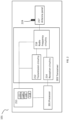
- FIG. 2 illustrates a block diagram of UE 101, having antenna panel 217 including one or more antenna elements, e.g., an antenna element 219 coupled to transceiver 203 and controlled by processor 201.
- transceiver 203 can include radio frequency (RF) circuitry 216, baseband transmission circuitry 212, and baseband reception circuitry 214.
- RF circuitry 216 can include multiple parallel RF chains for one or more of transmit or receive functions, each connected to one or more antenna elements of the antenna panel.
- processor 201 can be communicatively coupled to a memory device 211, which are further coupled to the transceiver 203.
- RF circuitry 216 is used by UE 101 to perform measurements of reference signals, and to transmit and receive data in the serving cell.
- Memory device 211 can store UE capability 112, UE state 114, the first measurement 116 and the second measurement 118.
- Memory device 211 can include instructions, that when executed by the processor 201 perform the functions to implement a handover from a serving base station to a neighbor base station described herein.
- the processor 201 can be "hard-coded" to perform the functions described herein.
- FIG. 3 illustrates an example method 300 performed by a UE to handover from a serving base station to a neighbor base station, according to some aspects of the disclosure.
- Method 300 can be performed by UE 101 as shown in FIGS. 1-2 .
- UE 101 receives a first system information from a serving base station, where the first system information includes a UE capability condition associated with a neighbor base station.
- the first system information includes a UE capability condition associated with a neighbor base station.
- UE 101 can receive the first system information 122 from base station 103, which is the serving base station.
- the first system information 122 includes UE capability condition 124 associated with a neighbor base station, e.g., base station 107.
- UE 101 determines whether a UE capability meets the UE capability condition associated with the neighbor base station. For example, UE 101 can determine whether UE capability 112 meets UE capability condition 124 associated with base station 107.
- the UE capability and the corresponding condition comprises a number of antenna ports of the UE, and can further comprise one or more of a data rate of the UE, or a latency requirement of the UE.
- UE 101 performs a first measurement of a first reference signal received from the serving base station. For example, UE 101 can perform the first measurement 116 of a first reference signal received from base station 103.
- UE 101 performs a second measurement of a second reference signal received from the neighbor base station responsive to the UE capability meeting the UE capability condition associated with the neighbor base station. For example, when UE capability 112 meets UE capability condition 124, UE 101 can perform the second measurement 118 of a second reference signal received from base station 107.
- UE 101 obtains a second system information from the neighbor base station responsive to the first measurement and the second measurement meeting a threshold. For example, when the first measurement 116 and the second measurement 118 satisfy threshold condition 126, UE 101 can obtain the second system information 128 from base station 107.
- threshold condition 126 specifies an offset between the first measurement 116 and the second measurement 118, where the offset can be specified as a difference between a signal strength of the first measurement 116 and the signal strength of the second measurement 118, e.g. as measured in decibel milliwatts (dBm).
- UE 101 When UE 101 is in an idle state and obtains the second system information 128, UE has performed the handover from base station 103 to base station 107. In an embodiment, the UE 101 does not inform the neighbor base station 107 about the re-selection.
- FIG. 4 illustrates an example sequence diagram 400 illustrating operations performed by a UE 401, a serving base station 403, and one or more neighbor base stations, according to some aspects of the disclosure.
- Sequence diagram 400 is an example of method 300 shown in FIG. 3 .
- UE 401, base station 403, base station 407, and base station 409 can form a wireless system 410, where UE 401 is a RedCap UE with only one receiver antenna port.
- Wireless system 410 is similar to wireless system 100 shown in FIG. 1 .
- UE 401 can receive a first system information 422 from serving base station 403.
- the first system information 422 includes a UE capability condition for base station 407 and a UE capability condition for base station 409.
- the UE capability condition for base station 407 specifies that base station 407 can only support a UE with at least 2 receiver antenna ports, while the UE capability condition for base station 409 specifies that base station 409 can support a UE with any capability without any restriction, including supporting a UE with only one antenna port.
- the first system information 422 includes information carried by SIB 3.
- UE 401 can determine whether a UE capability meets the UE capability condition associated with the neighbor base station. In detail, UE 401 can determine that UE 401 does not meet the UE capability condition for base station 407 because the UE capability condition for base station 407 requires at least 2 receiver antenna ports, while UE 401 has only one receiver antenna port. On the other hand, UE 401 can determine that UE 401 meets the UE capability condition for base station 409 because the UE capability condition for base station 409 does not have any restrictions and can support any RedCap UE.
- UE 401 can perform a first measurement of a first reference signal received from the serving base station 403.
- UE 401 can perform a second measurement of a second reference signal received from the neighbor base station 409 responsive to the UE capability of UE 401 meeting the UE capability condition associated with neighbor base station 409. On the other hand, UE 401 does not perform a measurement of a reference signal received from the neighbor base station 407 because the UE capability of UE 401 does not meet the UE capability condition associated with neighbor base station 407.
- UE 401 can determine whether the first measurement and the second measurement meet a threshold condition, where the threshold condition can be included in the first system information 422.
- the threshold condition may specify the second measurement of the reference signal from neighbor base station 409 to be stronger or have a higher signal quality than the first measurement of the reference signal from serving base station 403 by an offset.
- the offset can be a difference in measured signal strengths indicated the first and second measurements.
- UE 401 can obtain a second system information from the neighbor base station 409.
- UE 401 is in an idle state and obtains the second system information from the neighbor base station 409, UE 401 has performed the handover from base station 403 to base station 409. In an embodiment, the UE 401 does not inform the neighbor base station 409 about the re-selection.
- base station 407 may still broadcast system information to UE 401, but UE 401 may not perform any operations on the broadcasted system information from base station 407 because UE 401 does not meet the UE capability condition for base station 407.
- FIG. 5 illustrates an example sequence diagram 500 illustrating operations performed by UE 101, base station 103 as a serving base station, and core network 110.
- the operations in diagram 500 illustrate the registration of UE 101 having a UE capability, according to some aspects of the disclosure.
- base station 103 can broadcast the system information including a UE capability condition for base station 103, and UE 101 can receive the system information including the UE capability condition.
- the UE capability condition can be an access restriction for the base station 103.
- UE 101 can determine that the UE capability of UE 101 satisfies the UE capability condition of base station 103, and meets the access criteria. Once the UE capability condition of base station 103 is satisfied, UE 101 can register with base station 103.
- UE 101 and base station 103 can perform operations to establish a random access channel (RACH) between UE 101 and base station 103.
- RACH random access channel
- base station 103 can retrieve from core network 110 any saved UE capability for UE 101.
- base station 103 can determine that core network 110 does not have the UE capability saved for UE 101.
- base station 103 can send an inquiry to UE 101 for its UE capability.
- Computer system 600 can be any computer capable of performing the functions described herein such as UE 101, base station 103, base station 105, or base station 107 as shown in FIG. 1 and FIG. 2 .
- Computer system 600 includes one or more processors (also called central processing units, or CPUs), such as a processor 604.
- Processor 604 is connected to a communication infrastructure 606 (e.g., a bus).
- Computer system 600 also includes user input/output device(s) 603, such as monitors, keyboards, pointing devices, etc., that communicate with communication infrastructure 606 through user input/output interface(s) 602.
- Computer system 600 also includes a main or primary memory 608, such as random access memory (RAM).
- Main memory 608 may include one or more levels of cache.
- Main memory 608 has stored therein control logic (e.g., computer software) and/or data.
- a user equipment comprising: a transceiver configured to enable wireless communication with a serving base station and one or more neighbor base stations; and a processor communicatively coupled to the transceiver and configured to: receive, using the transceiver, a first system information from the serving base station, wherein the first system information includes a UE capability condition associated with a neighbor base station of the one or more neighbor base stations; determine whether a UE capability meets the UE capability condition associated with the neighbor base station; perform a first measurement of a first reference signal received from the serving base station; perform a second measurement of a second reference signal received from the neighbor base station responsive to the UE capability meeting the UE capability condition associated with the neighbor base station; and obtain a second system information from the neighbor base station responsive to the first measurement and the second measurement meeting a threshold condition.
- the first system information includes a UE capability condition associated with a neighbor base station of the one or more neighbor base stations
- determine whether a UE capability meets the UE capability condition associated with the neighbor base station perform a first
- the processor is further configured to: provide an indication of the UE capability to the serving base station.
- the processor is further configured to: receive, responsive to the UE being in a connected state, information about the neighbor base station from the serving base station, wherein the serving base station determines that the UE capability meets the UE capability condition associated with the neighbor base station; store the information about the neighbor base station; and perform the second measurement of the second reference signal from the neighbor base station responsive to the UE transitioning to an idle state.
- the neighbor base station is a first neighbor base station
- the UE capability condition is a first UE capability condition
- the first system information further includes a second UE capability condition associated with a second neighbor base station, and wherein the UE capability does not meet the second UE capability condition.
- the first system information is a first broadcast information received from the serving base station
- the second system information is a second broadcast information received from the neighbor base station.
- the first system information includes information carried by System Information Block (SIB) 3 or SIB 4
- the second system information includes information carried by Master Information Block (MIB) or SIB 1.
- the neighbor base station is a first neighbor base station
- the UE capability condition is a first UE capability condition
- the first system information further includes a second UE capability condition associated with a second neighbor base station
- the method further comprises: performing a third measurement on a third reference signal from the second neighbor base station responsive to the UE capability meeting the second UE capability condition associated with the second neighbor base station; selecting a next neighbor base station from one of the first neighbor base station and the second neighbor base station based on the first measurement, the second measurement, the third measurement, and the threshold condition; and obtaining the second system information from the next neighbor base station.
- the UE capability comprises a number of receive antenna ports or transmit antenna ports of the UE, a data rate of the UE, or a latency requirement of the UE.
- a non-transitory computer-readable medium storing instructions that, when executed by a processor of a user equipment (UE), cause the UE to perform operations, the operations comprising: receiving, from a serving base station, a first system information, wherein the first system information includes a UE capability condition associated with a neighbor base station of one or more neighbor base stations; determining whether a UE capability meets the UE capability condition associated with the neighbor base station; performing a first measurement of a first reference signal received from the serving base station; performing a second measurement of a second reference signal received from the neighbor base station responsive to the UE capability meeting the UE capability condition associated with the neighbor base station; and obtaining a second system information from the neighbor base station responsive to the first measurement and the second measurement meeting a threshold condition.
- the first system information includes a UE capability condition associated with a neighbor base station of one or more neighbor base stations; determining whether a UE capability meets the UE capability condition associated with the neighbor base station; performing a first measurement of a first reference signal received from the serving base
- the neighbor base station is a first neighbor base station
- the UE capability condition is a first UE capability condition
- the first system information further includes a second UE capability condition associated with a second neighbor base station
- the method further comprises: performing a third measurement on a third reference signal from the second neighbor base station responsive to the UE capability meeting the second UE capability condition associated with the second neighbor base station; selecting a next neighbor base station from one of the first neighbor base station and the second neighbor base station based on the first measurement, the second measurement, the third measurement, and the threshold condition; and obtaining the second system information from the next neighbor base station.
Landscapes
- Engineering & Computer Science (AREA)
- Computer Networks & Wireless Communication (AREA)
- Signal Processing (AREA)
- Databases & Information Systems (AREA)
- Computer Security & Cryptography (AREA)
- Mobile Radio Communication Systems (AREA)
Claims (15)
- Benutzergerät, UE (101), umfassend:einen Transceiver (203), der konfiguriert ist, um eine drahtlose Kommunikation mit einer bedienenden Basisstation (103) und einer oder mehreren Nachbarbasisstationen zu ermöglichen; undeinen Prozessor (201), der kommunikativ mit dem Transceiver gekoppelt und konfiguriert ist zum:Empfangen, unter Verwendung des Transceivers, einer ersten Systeminformation von der bedienenden Basisstation, wobei die erste Systeminformation eine UE-Fähigkeitsbedingung beinhaltet, die mit einer Nachbarbasisstation (107) der einen oder mehreren Nachbarbasisstationen assoziiert ist, wobei die UE-Fähigkeitsbedingung einen Parameter beinhaltet, der eine Anzahl von Empfangsantennenanschlüssen oder Sendeantennenanschlüssen des UE beschreibt;Bestimmen, ob eine UE-Fähigkeit die UE-Fähigkeitsbedingung erfüllt, die mit der Nachbarbasisstation assoziiert ist;Durchführen einer ersten Messung eines ersten Referenzsignals, das von der bedienenden Basisstation empfangen wird;Durchführen einer zweiten Messung eines zweiten Referenzsignals, das von der Nachbarbasisstation empfangen wird, als Reaktion darauf, dass die UE-Fähigkeit die UE-Fähigkeitsbedingung erfüllt, die mit der Nachbarbasisstation assoziiert ist; undErhalten einer zweiten Systeminformation von der Nachbarbasisstation als Reaktion darauf, dass die erste Messung und die zweite Messung eine Schwellenbedingung erfüllen.
- UE nach Anspruch 1, wobei die Nachbarbasisstation eine erste Nachbarbasisstation ist, die UE-Fähigkeitsbedingung eine erste UE-Fähigkeitsbedingung ist und die erste Systeminformation ferner eine zweite UE-Fähigkeitsbedingung beinhaltet, die mit einer zweiten Nachbarbasisstation assoziiert ist, und wobei die UE-Fähigkeit die zweite UE-Fähigkeitsbedingung nicht erfüllt.
- UE nach Anspruch 1 oder 2, wobei das UE bei der bedienenden Basisstation registriert ist und sich in einem Ruhezustand befindet, die erste Systeminformation eine erste Broadcast-Information ist, die von der bedienenden Basisstation empfangen wird, und die zweite Systeminformation eine zweite Broadcast-Information ist, die von der Nachbarbasisstation empfangen wird.
- UE nach einem der vorhergehenden Ansprüche, wobei die erste Systeminformation Information beinhaltet, die von Systeminformationsblock, SIB, 3 oder SIB 4 getragen wird, und die zweite Systeminformation Information beinhaltet, die von Masterinformationsblock, MIB, oder SIB 1 getragen wird.
- UE nach einem der vorhergehenden Ansprüche, wobei die erste Systeminformation die Schwellenbedingung beinhaltet und die Schwellenbedingung einen Versatz zwischen der ersten Messung und der zweiten Messung spezifiziert.
- UE nach einem der vorhergehenden Ansprüche, wobei das UE mit der bedienenden Basisstation unter Verwendung eines ersten Frequenzbands kommuniziert und das UE mit der Nachbarbasisstation unter Verwendung eines zweiten Frequenzbands kommuniziert.
- UE nach einem der vorhergehenden Ansprüche, wobei die Nachbarbasisstation eine erste Nachbarbasisstation ist, die UE-Fähigkeitsbedingung eine erste UE-Fähigkeitsbedingung ist und die erste Systeminformation ferner eine zweite UE-Fähigkeitsbedingung beinhaltet, die mit einer zweiten Nachbarbasisstation assoziiert ist, und der Prozessor ferner konfiguriert ist zum:Durchführen einer dritten Messung an einem dritten Referenzsignal von der zweiten Nachbarbasisstation als Reaktion darauf, dass die UE-Fähigkeit die zweite UE-Fähigkeitsbedingung erfüllt, die mit der zweiten Nachbarbasisstation assoziiert ist;Auswählen einer nächsten Nachbarbasisstation aus einer der ersten Nachbarbasisstation und der zweiten Nachbarbasisstation basierend auf der ersten Messung, der zweiten Messung, der dritten Messung und der Schwellenbedingung; undErhalten der zweiten Systeminformation von der nächsten Nachbarbasisstation.
- UE nach einem der vorhergehenden Ansprüche, wobei die UE-Fähigkeit ferner eine Datenrate des UE oder eine Latenzanforderung des UE umfasst.
- UE nach einem der vorhergehenden Ansprüche, wobei der Prozessor ferner konfiguriert ist zum:
Bereitstellen einer Angabe der UE-Fähigkeit für die bedienende Basisstation. - UE nach Anspruch 1, wobei der Prozessor ferner konfiguriert ist zum:Empfangen, als Reaktion darauf, dass sich das UE in einem verbundenen Zustand befindet, von Information über die Nachbarbasisstation von der bedienenden Basisstation, wobei die bedienende Basisstation bestimmt, dass die UE-Fähigkeit die UE-Fähigkeitsbedingung erfüllt, die mit der Nachbarbasisstation assoziiert ist;Speichern der Information über die Nachbarbasisstation; undDurchführen der zweiten Messung des zweiten Referenzsignals von der Nachbarbasisstation als Reaktion darauf, dass das UE in einen Ruhezustand übergeht.
- Verfahren zum Betreiben eines Benutzergeräts, UE, umfassend:Empfangen (302), von einer bedienenden Basisstation, einer ersten Systeminformation, wobei die erste Systeminformation eine UE-Fähigkeitsbedingung beinhaltet, die mit einer Nachbarbasisstation einer oder mehrerer Nachbarbasisstationen assoziiert ist, wobei die UE-Fähigkeitsbedingung einen Parameter beinhaltet, der eine Anzahl von Empfangsantennenanschlüssen oder Sendeantennenanschlüssen des UE beschreibt;Bestimmen (304), ob eine UE-Fähigkeit die UE-Fähigkeitsbedingung erfüllt, die mit der Nachbarbasisstation assoziiert ist;Durchführen (306) einer ersten Messung eines ersten Referenzsignals, das von der bedienenden Basisstation empfangen wird;Durchführen (308) einer zweiten Messung eines zweiten Referenzsignals, das von der Nachbarbasisstation empfangen wird, als Reaktion darauf, dass die UE-Fähigkeit die UE-Fähigkeitsbedingung erfüllt, die mit der Nachbarbasisstation assoziiert ist; undErhalten (309) einer zweiten Systeminformation von der Nachbarbasisstation als Reaktion darauf, dass die erste Messung und die zweite Messung eine Schwellenbedingung erfüllen.
- Verfahren nach Anspruch 11, wobei die Nachbarbasisstation eine erste Nachbarbasisstation ist, die UE-Fähigkeitsbedingung eine erste UE-Fähigkeitsbedingung ist und die erste Systeminformation ferner eine zweite UE-Fähigkeitsbedingung beinhaltet, die mit einer zweiten Nachbarbasisstation assoziiert ist, und wobei die UE-Fähigkeit die zweite UE-Fähigkeitsbedingung nicht erfüllt.
- Verfahren nach Anspruch 11, wobei die Nachbarbasisstation eine erste Nachbarbasisstation ist, die UE-Fähigkeitsbedingung eine erste UE-Fähigkeitsbedingung ist und die erste Systeminformation ferner eine zweite UE-Fähigkeitsbedingung beinhaltet, die mit einer zweiten Nachbarbasisstation assoziiert ist, und das Verfahren ferner umfasst:Durchführen einer dritten Messung an einem dritten Referenzsignal von der zweiten Nachbarbasisstation als Reaktion darauf, dass die UE-Fähigkeit die zweite UE-Fähigkeitsbedingung erfüllt, die mit der zweiten Nachbarbasisstation assoziiert ist;Auswählen einer nächsten Nachbarbasisstation aus einer der ersten Nachbarbasisstation und der zweiten Nachbarbasisstation basierend auf der ersten Messung, der zweiten Messung, der dritten Messung und der Schwellenbedingung; undErhalten der zweiten Systeminformation von der nächsten Nachbarbasisstation.
- Nichtflüchtiges computerlesbares Medium, das Anweisungen speichert, die, wenn sie von einem Prozessor eines Benutzergeräts, UE, ausgeführt werden, das UE veranlassen, Operationen durchzuführen, wobei die Operationen umfassen:Empfangen, von einer bedienenden Basisstation, einer ersten Systeminformation, wobei die erste Systeminformation eine UE-Fähigkeitsbedingung beinhaltet, die mit einer Nachbarbasisstation einer oder mehrerer Nachbarbasisstationen assoziiert ist, wobei die UE-Fähigkeitsbedingung einen Parameter beinhaltet, der eine Anzahl von Empfangsantennenanschlüssen oder Sendeantennenanschlüssen des UE beschreibt;Bestimmen, ob eine UE-Fähigkeit die UE-Fähigkeitsbedingung erfüllt, die mit der Nachbarbasisstation assoziiert ist;Durchführen einer ersten Messung eines ersten Referenzsignals, das von der bedienenden Basisstation empfangen wird;Durchführen einer zweiten Messung eines zweiten Referenzsignals, das von der Nachbarbasisstation empfangen wird, als Reaktion darauf, dass die UE-Fähigkeit die UE-Fähigkeitsbedingung erfüllt, die mit der Nachbarbasisstation assoziiert ist; undErhalten einer zweiten Systeminformation von der Nachbarbasisstation als Reaktion darauf, dass die erste Messung und die zweite Messung eine Schwellenbedingung erfüllen.
- Nichtflüchtiges computerlesbares Medium nach Anspruch 14, wobei die Nachbarbasisstation eine erste Nachbarbasisstation ist, die UE-Fähigkeitsbedingung eine erste UE-Fähigkeitsbedingung ist und die erste Systeminformation ferner eine zweite UE-Fähigkeitsbedingung beinhaltet, die mit einer zweiten Nachbarbasisstation assoziiert ist, und das Verfahren ferner umfasst:Durchführen einer dritten Messung an einem dritten Referenzsignal von der zweiten Nachbarbasisstation als Reaktion darauf, dass die UE-Fähigkeit die zweite UE-Fähigkeitsbedingung erfüllt, die mit der zweiten Nachbarbasisstation assoziiert ist;Auswählen einer nächsten Nachbarbasisstation aus einer der ersten Nachbarbasisstation und der zweiten Nachbarbasisstation basierend auf der ersten Messung, der zweiten Messung, der dritten Messung und der Schwellenbedingung; und Erhalten der zweiten Systeminformation von der nächsten Nachbarbasisstation.
Applications Claiming Priority (1)
| Application Number | Priority Date | Filing Date | Title |
|---|---|---|---|
| US202163182354P | 2021-04-30 | 2021-04-30 |
Publications (2)
| Publication Number | Publication Date |
|---|---|
| EP4084534A1 EP4084534A1 (de) | 2022-11-02 |
| EP4084534B1 true EP4084534B1 (de) | 2025-03-19 |
Family
ID=81387031
Family Applications (1)
| Application Number | Title | Priority Date | Filing Date |
|---|---|---|---|
| EP22169867.3A Active EP4084534B1 (de) | 2021-04-30 | 2022-04-25 | Mobilitätsunterstützung für teilnehmergeräte mit variierenden fähigkeiten in einem drahtlosen netzwerk |
Country Status (4)
| Country | Link |
|---|---|
| US (1) | US12513584B2 (de) |
| EP (1) | EP4084534B1 (de) |
| KR (1) | KR102938330B1 (de) |
| CN (1) | CN115278890B (de) |
Families Citing this family (3)
| Publication number | Priority date | Publication date | Assignee | Title |
|---|---|---|---|---|
| US12581566B2 (en) * | 2021-01-29 | 2026-03-17 | Beijing Xiaomi Mobile Software Co., Ltd. | Method, communication device, and storage medium for processing information |
| WO2022260200A1 (ko) * | 2021-06-11 | 2022-12-15 | 엘지전자 주식회사 | 무선 통신 시스템에서 배터리 효율을 고려하여 핸드오버를 수행하기 위한 장치 및 방법 |
| US12432753B2 (en) * | 2022-08-03 | 2025-09-30 | Qualcomm Incorporated | Configuration of multicast reception and mobility for user equipment in an inactive state |
Family Cites Families (8)
| Publication number | Priority date | Publication date | Assignee | Title |
|---|---|---|---|---|
| CN101663905A (zh) * | 2007-03-09 | 2010-03-03 | 交互数字技术公司 | 用于调整重选计时器和小区等级标准以及对服务小区的降级信号测量进行报告的方法和装置 |
| US10772021B2 (en) * | 2014-12-05 | 2020-09-08 | Qualcomm Incorporated | Low latency and/or enhanced component carrier discovery for services and handover |
| US9854496B2 (en) * | 2015-08-20 | 2017-12-26 | Mediatek Inc. | Method of high-efficiency connected mode cell re-selection |
| US9973951B1 (en) * | 2016-06-16 | 2018-05-15 | Sprint Spectrum L.P. | Use of UE-capability reporting to control UE service |
| JP2021518062A (ja) * | 2018-01-19 | 2021-07-29 | オッポ広東移動通信有限公司Guangdong Oppo Mobile Telecommunications Corp., Ltd. | セル再選択方法、装置及びシステム |
| CN111132254B (zh) | 2018-11-01 | 2022-05-10 | 华为技术有限公司 | 通信方法、装置及存储介质 |
| KR102865833B1 (ko) * | 2019-02-13 | 2025-09-30 | 삼성전자 주식회사 | 차세대 이동통신 시스템에서 비활성 모드에서 확장된 비연속 수신 모드를 수행하는 방법 및 장치 |
| WO2021245604A1 (en) * | 2020-06-04 | 2021-12-09 | Telefonaktiebolaget Lm Ericsson (Publ) | Next generation handover failure due to unsupported user equipment capabilities |
-
2022
- 2022-04-25 EP EP22169867.3A patent/EP4084534B1/de active Active
- 2022-04-28 CN CN202210469729.8A patent/CN115278890B/zh active Active
- 2022-04-29 KR KR1020220053393A patent/KR102938330B1/ko active Active
- 2022-04-29 US US17/732,972 patent/US12513584B2/en active Active
Also Published As
| Publication number | Publication date |
|---|---|
| KR102938330B1 (ko) | 2026-03-13 |
| KR20220149464A (ko) | 2022-11-08 |
| EP4084534A1 (de) | 2022-11-02 |
| US20220353762A1 (en) | 2022-11-03 |
| CN115278890B (zh) | 2025-06-27 |
| US12513584B2 (en) | 2025-12-30 |
| CN115278890A (zh) | 2022-11-01 |
Similar Documents
| Publication | Publication Date | Title |
|---|---|---|
| CN116261191B (zh) | 小区重选方法、终端设备和网络设备 | |
| EP4084534B1 (de) | Mobilitätsunterstützung für teilnehmergeräte mit variierenden fähigkeiten in einem drahtlosen netzwerk | |
| CN112566203B (zh) | 一种小区重选方法及终端设备 | |
| CN114143844B (zh) | 一种小区重选的方法、装置、芯片及模组设备 | |
| US12490258B2 (en) | Transmit power control (TPC) for uplink transmissions during a time domain window (TDW) | |
| WO2020077486A1 (zh) | 选择小区的方法及终端设备 | |
| US12550031B2 (en) | NR cell prioritization based on carrier bandwidth | |
| WO2024092763A1 (en) | Carrier specific scaling factor (cssf) determination for wireless systems with dual connectivity | |
| CN115529585B (zh) | 信息指示的方法和通信装置 | |
| US20230085782A1 (en) | Reselection of a radio access technology (rat) for a multimode user equipment (ue) | |
| EP3375211A1 (de) | Optimierung von multefire-netzwerkentdeckung | |
| CN117651317A (zh) | 一种通信的方法和通信装置 | |
| CN115499910A (zh) | 恢复用于多模式用户装备(ue)的无线电接入技术(rat)中的服务 | |
| US20240107405A1 (en) | Prioritized return to rat nr from rat gsm / rat umts through rat reselection based approach | |
| US12414117B2 (en) | Uplink transmission beam selection in a secondary cell | |
| US12598553B2 (en) | Intelligent power saving in a wireless communication system | |
| HK40073617A (en) | Method for cell reselection, and terminal device | |
| WO2024155825A1 (en) | Sounding reference signal (srs) reference signal received power (srs-rsrp) reporting in wireless systems |
Legal Events
| Date | Code | Title | Description |
|---|---|---|---|
| PUAI | Public reference made under article 153(3) epc to a published international application that has entered the european phase |
Free format text: ORIGINAL CODE: 0009012 |
|
| STAA | Information on the status of an ep patent application or granted ep patent |
Free format text: STATUS: REQUEST FOR EXAMINATION WAS MADE |
|
| 17P | Request for examination filed |
Effective date: 20220425 |
|
| AK | Designated contracting states |
Kind code of ref document: A1 Designated state(s): AL AT BE BG CH CY CZ DE DK EE ES FI FR GB GR HR HU IE IS IT LI LT LU LV MC MK MT NL NO PL PT RO RS SE SI SK SM TR |
|
| RAP3 | Party data changed (applicant data changed or rights of an application transferred) |
Owner name: APPLE INC. |
|
| REG | Reference to a national code |
Ref country code: DE Ref legal event code: R079 Free format text: PREVIOUS MAIN CLASS: H04W0048200000 Ipc: H04W0036000000 Ref document number: 602022011846 Country of ref document: DE |
|
| GRAP | Despatch of communication of intention to grant a patent |
Free format text: ORIGINAL CODE: EPIDOSNIGR1 |
|
| STAA | Information on the status of an ep patent application or granted ep patent |
Free format text: STATUS: GRANT OF PATENT IS INTENDED |
|
| RIC1 | Information provided on ipc code assigned before grant |
Ipc: H04W 8/24 20090101ALN20241015BHEP Ipc: H04W 48/12 20090101ALN20241015BHEP Ipc: H04W 36/30 20090101ALN20241015BHEP Ipc: H04W 36/08 20090101ALN20241015BHEP Ipc: H04W 8/22 20090101ALI20241015BHEP Ipc: H04W 36/00 20090101AFI20241015BHEP |
|
| INTG | Intention to grant announced |
Effective date: 20241029 |
|
| RIC1 | Information provided on ipc code assigned before grant |
Ipc: H04W 8/24 20090101ALN20241021BHEP Ipc: H04W 48/12 20090101ALN20241021BHEP Ipc: H04W 36/30 20090101ALN20241021BHEP Ipc: H04W 36/08 20090101ALN20241021BHEP Ipc: H04W 8/22 20090101ALI20241021BHEP Ipc: H04W 36/00 20090101AFI20241021BHEP |
|
| GRAS | Grant fee paid |
Free format text: ORIGINAL CODE: EPIDOSNIGR3 |
|
| GRAA | (expected) grant |
Free format text: ORIGINAL CODE: 0009210 |
|
| STAA | Information on the status of an ep patent application or granted ep patent |
Free format text: STATUS: THE PATENT HAS BEEN GRANTED |
|
| AK | Designated contracting states |
Kind code of ref document: B1 Designated state(s): AL AT BE BG CH CY CZ DE DK EE ES FI FR GB GR HR HU IE IS IT LI LT LU LV MC MK MT NL NO PL PT RO RS SE SI SK SM TR |
|
| REG | Reference to a national code |
Ref country code: GB Ref legal event code: FG4D |
|
| REG | Reference to a national code |
Ref country code: CH Ref legal event code: EP |
|
| REG | Reference to a national code |
Ref country code: IE Ref legal event code: FG4D |
|
| REG | Reference to a national code |
Ref country code: DE Ref legal event code: R096 Ref document number: 602022011846 Country of ref document: DE |
|
| PG25 | Lapsed in a contracting state [announced via postgrant information from national office to epo] |
Ref country code: RS Free format text: LAPSE BECAUSE OF FAILURE TO SUBMIT A TRANSLATION OF THE DESCRIPTION OR TO PAY THE FEE WITHIN THE PRESCRIBED TIME-LIMIT Effective date: 20250619 |
|
| PG25 | Lapsed in a contracting state [announced via postgrant information from national office to epo] |
Ref country code: FI Free format text: LAPSE BECAUSE OF FAILURE TO SUBMIT A TRANSLATION OF THE DESCRIPTION OR TO PAY THE FEE WITHIN THE PRESCRIBED TIME-LIMIT Effective date: 20250319 |
|
| PGFP | Annual fee paid to national office [announced via postgrant information from national office to epo] |
Ref country code: DE Payment date: 20250422 Year of fee payment: 4 |
|
| REG | Reference to a national code |
Ref country code: LT Ref legal event code: MG9D |
|
| PG25 | Lapsed in a contracting state [announced via postgrant information from national office to epo] |
Ref country code: NO Free format text: LAPSE BECAUSE OF FAILURE TO SUBMIT A TRANSLATION OF THE DESCRIPTION OR TO PAY THE FEE WITHIN THE PRESCRIBED TIME-LIMIT Effective date: 20250619 |
|
| PG25 | Lapsed in a contracting state [announced via postgrant information from national office to epo] |
Ref country code: HR Free format text: LAPSE BECAUSE OF FAILURE TO SUBMIT A TRANSLATION OF THE DESCRIPTION OR TO PAY THE FEE WITHIN THE PRESCRIBED TIME-LIMIT Effective date: 20250319 |
|
| PG25 | Lapsed in a contracting state [announced via postgrant information from national office to epo] |
Ref country code: LV Free format text: LAPSE BECAUSE OF FAILURE TO SUBMIT A TRANSLATION OF THE DESCRIPTION OR TO PAY THE FEE WITHIN THE PRESCRIBED TIME-LIMIT Effective date: 20250319 |
|
| PG25 | Lapsed in a contracting state [announced via postgrant information from national office to epo] |
Ref country code: GR Free format text: LAPSE BECAUSE OF FAILURE TO SUBMIT A TRANSLATION OF THE DESCRIPTION OR TO PAY THE FEE WITHIN THE PRESCRIBED TIME-LIMIT Effective date: 20250620 Ref country code: BG Free format text: LAPSE BECAUSE OF FAILURE TO SUBMIT A TRANSLATION OF THE DESCRIPTION OR TO PAY THE FEE WITHIN THE PRESCRIBED TIME-LIMIT Effective date: 20250319 |
|
| REG | Reference to a national code |
Ref country code: NL Ref legal event code: MP Effective date: 20250319 |
|
| REG | Reference to a national code |
Ref country code: AT Ref legal event code: MK05 Ref document number: 1778007 Country of ref document: AT Kind code of ref document: T Effective date: 20250319 |
|
| PG25 | Lapsed in a contracting state [announced via postgrant information from national office to epo] |
Ref country code: NL Free format text: LAPSE BECAUSE OF FAILURE TO SUBMIT A TRANSLATION OF THE DESCRIPTION OR TO PAY THE FEE WITHIN THE PRESCRIBED TIME-LIMIT Effective date: 20250319 |
|
| PG25 | Lapsed in a contracting state [announced via postgrant information from national office to epo] |
Ref country code: SE Free format text: LAPSE BECAUSE OF FAILURE TO SUBMIT A TRANSLATION OF THE DESCRIPTION OR TO PAY THE FEE WITHIN THE PRESCRIBED TIME-LIMIT Effective date: 20250319 |
|
| PG25 | Lapsed in a contracting state [announced via postgrant information from national office to epo] |
Ref country code: SM Free format text: LAPSE BECAUSE OF FAILURE TO SUBMIT A TRANSLATION OF THE DESCRIPTION OR TO PAY THE FEE WITHIN THE PRESCRIBED TIME-LIMIT Effective date: 20250319 |
|
| PG25 | Lapsed in a contracting state [announced via postgrant information from national office to epo] |
Ref country code: ES Free format text: LAPSE BECAUSE OF FAILURE TO SUBMIT A TRANSLATION OF THE DESCRIPTION OR TO PAY THE FEE WITHIN THE PRESCRIBED TIME-LIMIT Effective date: 20250319 Ref country code: PT Free format text: LAPSE BECAUSE OF FAILURE TO SUBMIT A TRANSLATION OF THE DESCRIPTION OR TO PAY THE FEE WITHIN THE PRESCRIBED TIME-LIMIT Effective date: 20250721 |
|
| PG25 | Lapsed in a contracting state [announced via postgrant information from national office to epo] |
Ref country code: IT Free format text: LAPSE BECAUSE OF FAILURE TO SUBMIT A TRANSLATION OF THE DESCRIPTION OR TO PAY THE FEE WITHIN THE PRESCRIBED TIME-LIMIT Effective date: 20250319 Ref country code: PL Free format text: LAPSE BECAUSE OF FAILURE TO SUBMIT A TRANSLATION OF THE DESCRIPTION OR TO PAY THE FEE WITHIN THE PRESCRIBED TIME-LIMIT Effective date: 20250319 |
|
| PG25 | Lapsed in a contracting state [announced via postgrant information from national office to epo] |
Ref country code: AT Free format text: LAPSE BECAUSE OF FAILURE TO SUBMIT A TRANSLATION OF THE DESCRIPTION OR TO PAY THE FEE WITHIN THE PRESCRIBED TIME-LIMIT Effective date: 20250319 |
|
| PG25 | Lapsed in a contracting state [announced via postgrant information from national office to epo] |
Ref country code: CZ Free format text: LAPSE BECAUSE OF FAILURE TO SUBMIT A TRANSLATION OF THE DESCRIPTION OR TO PAY THE FEE WITHIN THE PRESCRIBED TIME-LIMIT Effective date: 20250319 Ref country code: EE Free format text: LAPSE BECAUSE OF FAILURE TO SUBMIT A TRANSLATION OF THE DESCRIPTION OR TO PAY THE FEE WITHIN THE PRESCRIBED TIME-LIMIT Effective date: 20250319 |
|
| PG25 | Lapsed in a contracting state [announced via postgrant information from national office to epo] |
Ref country code: RO Free format text: LAPSE BECAUSE OF FAILURE TO SUBMIT A TRANSLATION OF THE DESCRIPTION OR TO PAY THE FEE WITHIN THE PRESCRIBED TIME-LIMIT Effective date: 20250319 |
|
| PG25 | Lapsed in a contracting state [announced via postgrant information from national office to epo] |
Ref country code: SK Free format text: LAPSE BECAUSE OF FAILURE TO SUBMIT A TRANSLATION OF THE DESCRIPTION OR TO PAY THE FEE WITHIN THE PRESCRIBED TIME-LIMIT Effective date: 20250319 |
|
| PG25 | Lapsed in a contracting state [announced via postgrant information from national office to epo] |
Ref country code: IS Free format text: LAPSE BECAUSE OF FAILURE TO SUBMIT A TRANSLATION OF THE DESCRIPTION OR TO PAY THE FEE WITHIN THE PRESCRIBED TIME-LIMIT Effective date: 20250719 |
|
| REG | Reference to a national code |
Ref country code: CH Ref legal event code: H13 Free format text: ST27 STATUS EVENT CODE: U-0-0-H10-H13 (AS PROVIDED BY THE NATIONAL OFFICE) Effective date: 20251125 |
|
| PG25 | Lapsed in a contracting state [announced via postgrant information from national office to epo] |
Ref country code: LU Free format text: LAPSE BECAUSE OF NON-PAYMENT OF DUE FEES Effective date: 20250425 |
|
| PG25 | Lapsed in a contracting state [announced via postgrant information from national office to epo] |
Ref country code: MC Free format text: LAPSE BECAUSE OF FAILURE TO SUBMIT A TRANSLATION OF THE DESCRIPTION OR TO PAY THE FEE WITHIN THE PRESCRIBED TIME-LIMIT Effective date: 20250319 |
|
| REG | Reference to a national code |
Ref country code: DE Ref legal event code: R097 Ref document number: 602022011846 Country of ref document: DE |
|
| REG | Reference to a national code |
Ref country code: BE Ref legal event code: MM Effective date: 20250430 |
|
| PG25 | Lapsed in a contracting state [announced via postgrant information from national office to epo] |
Ref country code: DK Free format text: LAPSE BECAUSE OF FAILURE TO SUBMIT A TRANSLATION OF THE DESCRIPTION OR TO PAY THE FEE WITHIN THE PRESCRIBED TIME-LIMIT Effective date: 20250319 |
|
| PG25 | Lapsed in a contracting state [announced via postgrant information from national office to epo] |
Ref country code: BE Free format text: LAPSE BECAUSE OF NON-PAYMENT OF DUE FEES Effective date: 20250430 |
|
| PG25 | Lapsed in a contracting state [announced via postgrant information from national office to epo] |
Ref country code: CH Free format text: LAPSE BECAUSE OF NON-PAYMENT OF DUE FEES Effective date: 20250430 |
|
| PLBE | No opposition filed within time limit |
Free format text: ORIGINAL CODE: 0009261 |
|
| STAA | Information on the status of an ep patent application or granted ep patent |
Free format text: STATUS: NO OPPOSITION FILED WITHIN TIME LIMIT |
|
| REG | Reference to a national code |
Ref country code: CH Ref legal event code: L10 Free format text: ST27 STATUS EVENT CODE: U-0-0-L10-L00 (AS PROVIDED BY THE NATIONAL OFFICE) Effective date: 20260128 |
|
| 26N | No opposition filed |
Effective date: 20251222 |
|
| PGFP | Annual fee paid to national office [announced via postgrant information from national office to epo] |
Ref country code: GB Payment date: 20260313 Year of fee payment: 5 |
|
| PG25 | Lapsed in a contracting state [announced via postgrant information from national office to epo] |
Ref country code: IE Free format text: LAPSE BECAUSE OF NON-PAYMENT OF DUE FEES Effective date: 20250425 |
|
| PG25 | Lapsed in a contracting state [announced via postgrant information from national office to epo] |
Ref country code: FR Free format text: LAPSE BECAUSE OF NON-PAYMENT OF DUE FEES Effective date: 20250519 |