EP4083802A1 - Ressourcenplanungsverfahren und -gerät, vorrichtung, speichermedium und programmprodukt - Google Patents
Ressourcenplanungsverfahren und -gerät, vorrichtung, speichermedium und programmprodukt Download PDFInfo
- Publication number
- EP4083802A1 EP4083802A1 EP22173337.1A EP22173337A EP4083802A1 EP 4083802 A1 EP4083802 A1 EP 4083802A1 EP 22173337 A EP22173337 A EP 22173337A EP 4083802 A1 EP4083802 A1 EP 4083802A1
- Authority
- EP
- European Patent Office
- Prior art keywords
- gpu
- task
- target
- computing node
- relationship
- Prior art date
- Legal status (The legal status is an assumption and is not a legal conclusion. Google has not performed a legal analysis and makes no representation as to the accuracy of the status listed.)
- Withdrawn
Links
Images

Classifications
-
- G—PHYSICS
- G06—COMPUTING OR CALCULATING; COUNTING
- G06F—ELECTRIC DIGITAL DATA PROCESSING
- G06F9/00—Arrangements for program control, e.g. control units
- G06F9/06—Arrangements for program control, e.g. control units using stored programs, i.e. using an internal store of processing equipment to receive or retain programs
- G06F9/46—Multiprogramming arrangements
- G06F9/50—Allocation of resources, e.g. of the central processing unit [CPU]
- G06F9/5005—Allocation of resources, e.g. of the central processing unit [CPU] to service a request
- G06F9/5027—Allocation of resources, e.g. of the central processing unit [CPU] to service a request the resource being a machine, e.g. CPUs, Servers, Terminals
- G06F9/5044—Allocation of resources, e.g. of the central processing unit [CPU] to service a request the resource being a machine, e.g. CPUs, Servers, Terminals considering hardware capabilities
-
- G—PHYSICS
- G06—COMPUTING OR CALCULATING; COUNTING
- G06F—ELECTRIC DIGITAL DATA PROCESSING
- G06F9/00—Arrangements for program control, e.g. control units
- G06F9/06—Arrangements for program control, e.g. control units using stored programs, i.e. using an internal store of processing equipment to receive or retain programs
- G06F9/46—Multiprogramming arrangements
- G06F9/48—Program initiating; Program switching, e.g. by interrupt
- G06F9/4806—Task transfer initiation or dispatching
- G06F9/4843—Task transfer initiation or dispatching by program, e.g. task dispatcher, supervisor, operating system
- G06F9/4881—Scheduling strategies for dispatcher, e.g. round robin, multi-level priority queues
-
- G—PHYSICS
- G06—COMPUTING OR CALCULATING; COUNTING
- G06F—ELECTRIC DIGITAL DATA PROCESSING
- G06F9/00—Arrangements for program control, e.g. control units
- G06F9/06—Arrangements for program control, e.g. control units using stored programs, i.e. using an internal store of processing equipment to receive or retain programs
- G06F9/46—Multiprogramming arrangements
- G06F9/50—Allocation of resources, e.g. of the central processing unit [CPU]
- G06F9/5005—Allocation of resources, e.g. of the central processing unit [CPU] to service a request
- G06F9/5027—Allocation of resources, e.g. of the central processing unit [CPU] to service a request the resource being a machine, e.g. CPUs, Servers, Terminals
- G06F9/5033—Allocation of resources, e.g. of the central processing unit [CPU] to service a request the resource being a machine, e.g. CPUs, Servers, Terminals considering data affinity
-
- G—PHYSICS
- G06—COMPUTING OR CALCULATING; COUNTING
- G06F—ELECTRIC DIGITAL DATA PROCESSING
- G06F9/00—Arrangements for program control, e.g. control units
- G06F9/06—Arrangements for program control, e.g. control units using stored programs, i.e. using an internal store of processing equipment to receive or retain programs
- G06F9/46—Multiprogramming arrangements
- G06F9/50—Allocation of resources, e.g. of the central processing unit [CPU]
- G06F9/5005—Allocation of resources, e.g. of the central processing unit [CPU] to service a request
- G06F9/5027—Allocation of resources, e.g. of the central processing unit [CPU] to service a request the resource being a machine, e.g. CPUs, Servers, Terminals
-
- G—PHYSICS
- G06—COMPUTING OR CALCULATING; COUNTING
- G06F—ELECTRIC DIGITAL DATA PROCESSING
- G06F9/00—Arrangements for program control, e.g. control units
- G06F9/06—Arrangements for program control, e.g. control units using stored programs, i.e. using an internal store of processing equipment to receive or retain programs
- G06F9/46—Multiprogramming arrangements
- G06F9/50—Allocation of resources, e.g. of the central processing unit [CPU]
- G06F9/5061—Partitioning or combining of resources
- G06F9/5066—Algorithms for mapping a plurality of inter-dependent sub-tasks onto a plurality of physical CPUs
-
- G—PHYSICS
- G06—COMPUTING OR CALCULATING; COUNTING
- G06N—COMPUTING ARRANGEMENTS BASED ON SPECIFIC COMPUTATIONAL MODELS
- G06N3/00—Computing arrangements based on biological models
- G06N3/02—Neural networks
- G06N3/08—Learning methods
- G06N3/098—Distributed learning, e.g. federated learning
-
- G—PHYSICS
- G06—COMPUTING OR CALCULATING; COUNTING
- G06T—IMAGE DATA PROCESSING OR GENERATION, IN GENERAL
- G06T1/00—General purpose image data processing
- G06T1/20—Processor architectures; Processor configuration, e.g. pipelining
-
- G—PHYSICS
- G06—COMPUTING OR CALCULATING; COUNTING
- G06F—ELECTRIC DIGITAL DATA PROCESSING
- G06F2209/00—Indexing scheme relating to G06F9/00
- G06F2209/50—Indexing scheme relating to G06F9/50
- G06F2209/509—Offload
-
- Y—GENERAL TAGGING OF NEW TECHNOLOGICAL DEVELOPMENTS; GENERAL TAGGING OF CROSS-SECTIONAL TECHNOLOGIES SPANNING OVER SEVERAL SECTIONS OF THE IPC; TECHNICAL SUBJECTS COVERED BY FORMER USPC CROSS-REFERENCE ART COLLECTIONS [XRACs] AND DIGESTS
- Y02—TECHNOLOGIES OR APPLICATIONS FOR MITIGATION OR ADAPTATION AGAINST CLIMATE CHANGE
- Y02D—CLIMATE CHANGE MITIGATION TECHNOLOGIES IN INFORMATION AND COMMUNICATION TECHNOLOGIES [ICT], I.E. INFORMATION AND COMMUNICATION TECHNOLOGIES AIMING AT THE REDUCTION OF THEIR OWN ENERGY USE
- Y02D10/00—Energy efficient computing, e.g. low power processors, power management or thermal management
Definitions
- the present disclosure relates to the field of the computer technology, in particular to the field of deep learning technology, and further relates to a resource scheduling method and apparatus, a device, and a storage medium.
- the current resource scheduling algorithm considers different scheduling strategies when selecting a target computing node, it cannot be guaranteed that the selected target computing node is a computing node with the best performance, and then the reasonable scheduling of GPU resources cannot be guaranteed, resulting in the slower speed of the distributed training.
- the present disclosure provides an optimized resource scheduling method and apparatus, a device, and a storage medium.
- a resource scheduling method including: acquiring a graphics processing unit (GPU) topology relationship of a cluster according to GPU connection information of each of computing nodes in the cluster; and in a case where a task request, for applying for a GPU resource, for a target task is received, determining a target computing node of the target task and a target GPU in the target computing node according to the task request and the GPU topology relationship, to complete GPU resource scheduling of the target task.
- GPU graphics processing unit
- a resource scheduling apparatus including: an acquisition module, configured for acquiring a graphics processing unit (GPU) topology relationship of a cluster according to GPU connection information of each of computing nodes in the cluster; and a determination module, configured for, in a case where a task request, for applying for a GPU resource, for a target task is received, determining a target computing node of the target task and a target GPU in the target computing node according to the task request and the GPU topology relationship, to complete GPU resource scheduling of the target task.
- GPU graphics processing unit
- an electronic device including: at least one processor; and a memory connected communicatively to the at least one processor, wherein the memory stores instructions executable by the at least one processor, and the instructions, when executed by the at least one processor, enable the at least one processor to perform the above resource scheduling method.
- a non-transitory computer readable storage medium storing computer instructions, wherein the computer instructions, when executed by a computer, cause the a computer to perform the above resource scheduling method.
- a computer program product including a computer program, wherein the computer program, when executed by a processor, implements the above resource scheduling method.
- the resource scheduling method and apparatus, the device, and the storage medium in embodiments of the present disclosure can realize the optimal scheduling of the target computing node and the optimal scheduling of target GPUs.
- the resource scheduling method on the public cloud usually includes the following two implementation schemes.
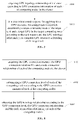
- Scheme 1 a scheduler perceives the GPU resource requirements of a training task, selects a target computing node through multiple scheduling strategies, such as the binpack strategy, the priority strategy, etc., and randomly selects a GPU by a default device-plugin on the target computing node, to complete a resource scheduling process for the task that needs to apply for GPU resources, which can refer to FIG. 1 for details.
- the target computing node selected in the actual resource scheduling process can be a different computing node that needs to interact through the CPU, resulting in the slower training speed.
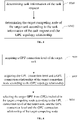
- Scheme 2 a scheduler perceives the GPU resource requirements of a training task, selects a target computing node through multiple scheduling strategies, such as the binpack strategy, the priority strategy, etc., perceives, on each target computing node including GPU resources, the GPU topology relationship of the target computing node, and selects the optimal GPU through the perceived topology relationship, to complete a resource scheduling process for the task that needs to apply for GPU resources, which can refer to FIG. 2 for details.
- the selected target computing node can also be a computing node that need to interact through the CPU. Even though the GPU topology relationship perception is performed on the target computing node, and the optimal GPU in the target computing node is selected, this is not the optimal resource scheduling scheme for the overall cluster.
- the present disclosure proposes a resource scheduling method and apparatus.
- a computing node with the best performance is selected by perceiving the topology relationship of the GPU, and the optimal GPU is selected in the GPU resource scheduling of the target computing node, so as to realize the optimal scheduling of resources.
- the subject of performing the resource scheduling method in the embodiment of the present disclosure is a resource scheduling device.
- the resource scheduling device can be a scheduler, including but not limited to an independent server, a distributed server, a server cluster, a cloud server, a smart phone, a tablet computer, a computer, a personal digital assistant (PDA), a notebook computer, an ultra-mobile personal computer (UMPC), etc.
- PDA personal digital assistant
- UMPC ultra-mobile personal computer
- FIG. 3 is a flowchart of a resource scheduling method shown in an exemplary embodiment of the present disclosure.
- the resource scheduling method shown in FIG. 3 specifically includes the following operations:
- the target computing node is selected from the computing nodes included in the cluster according to the acquired GPU topology relationship of the cluster, which can guarantee that the selected target computing node is a computing node with the best performance, and thus the selection of the GPU on the target computing node with the best performance can realize the reasonable scheduling of the GPU resources and improve the training speed of the target task.
- the GPU connection information includes a GPU connection relationship and a GPU connection manner.
- the GPU connection relationship is used to describe the connection sequence relationship between GPUs.
- the GPU connection relationship can be the connection network relationship between GPUs.
- the GPU connection relationship is GPU1-GPU2-GPU3, and at this time, GPU2 can be connected to GPU1 and GPU2 simultaneously.
- the GPU connection manner is used to describe the communication manner between GPUs.
- the GPU connection manner includes a plurality of data communication manners with different transmission performances, such as the high-speed data communication manner, the low-speed data communication manner, and the communication manner between the high and low speeds.
- the operation S301 can include the following sub-operations:
- the GPU connection level is used to represent a transmission performance between GPUs, and the node connection relationship is used to describe the connection sequence relationship of the computing nodes.
- the operation S402 can be implemented through the following process: different connection manners are scored according to the connection relationship between the GPUs, to obtain the GPU connection level; for GPUs with the connection relationship, different scores are used to represent the transmission performances, and the higher the score is, the stronger the transmission performance is.
- the GPU topology relationship of the cluster can be obtained according to the GPU connection information of each of the computing nodes in the cluster, such that the GPU topology relationship can be considered in the scheduling strategy of the target computing node and the target GPU.
- the operation S302 can include the following sub-operations:
- the task information includes a task type of the target task and/or the number of GPUs applied for, and the task type includes single-task and multi-task.
- the target computing node is determined according to the task information of the target computing node and the GPU topology relationship, and the task information is comprehensively considered under the premise of considering the GPU topology relationship, such that different scheduling strategies of the target computing node can be obtained according to different task information, and thus the resource scheduling is optimized.
- the determining the target computing node of the target task according to the task information of the task request and the GPU topology relationship includes the following three situations: Situation 1: in the case where the task type of the target task included in the task information is single-task and the number of GPUs applied for is 1, traversing each of the computing nodes according to the GPU topology relationship, and selecting a computing node with the lowest transmission performance as the target computing node.
- the scheduling strategy of the target computing node can be designed to traverse each of the computing nodes, and select a node with the lowest transmission performance as the target computing node.
- the selection of the target computing node can also be completed in combination with other scheduling strategies.
- the selected target computing node is a node with the lowest transmission performance, realizing the optimal scheduling of GPU resources and saving the GPU resources.
- the strategy for selecting the target computing node is opposite to the strategy for applying for one GPU, and it is necessary to select a computing node with the highest transmission performance. Therefore, in the scheduling strategy of the target computing node, through the GPU connection relationship and the GPU connection level in the acquired GPU topology relationship, the computing nodes are sorted according to the optimal transmission performance that can be supported, and a computing node with the highest transmission performance under the premise of satisfying the number of GPUs can be selected as the target computing node. In addition, in the selection process of the target computing node, other scheduling strategies can be combined to complete the selection of the target computing node.
- the selected target computing node is a node with the highest transmission performance, and under the premise of ensuring the GPU resources of the target task, the optimal target GPU is selected to complete the target task, realizing the optimal scheduling of the GPU resources and improving the speed of distributed training of the target task.
- the computing node with the highest transmission performance is selected as the target computing node, realizing the optimal scheduling of the GPU resources and improving the speed of distributed training of the target task.
- the target task includes 2 instances, and each of the instances needs to apply for 3 GPUs.
- the target task can be converted into a task that is single-task and applies for multiple GPUs
- the target task is converted into a task that is single-task and needs to apply for 6 GPUs, and the target computing node is selected, referring to the above situation 2.
- Implementation manner b it is determined that there are no candidate computing nodes with all GPU resources that are able to satisfy the target task, in the cluster, for each task included in the target task, a computing node, in which the number of GPUs is able to satisfy the task, is selected from the computing nodes as the target computing node, according to a descending order of transmission performances of the computing nodes.
- the target computing node can be selected orderly, such that multiple different target computing nodes can be selected to jointly complete the target task, realizing the optimal scheduling of the GPU resources.
- the target task includes 2 instances, which are the instance 1 and the instance 2, respectively, and each of the instances needs to apply for 3 GPUs.
- the target task cannot be converted into a task that is single-task and applies for multiple GPUs, for the instance 1, according to the descending order of transmission performances of the computing nodes, a computing node 1 that is able to satisfy the number of 3 GPUs is selected from the computing nodes, to perform the instance 1; for the instance 2, according to the descending order of transmission performances of the computing nodes, a computing node 2 that is able to satisfy the number of 3 GPUs is selected from the computing nodes, to perform the instance 2.
- the selected target computing nodes are the computing node 1 and the computing node 2. In this process, it is necessary to ensure that the transmission performance of the computing node 1 is the same as that of the computing node 2.
- the strategy for selecting the target computing node is designed to: all computing nodes are traversed, and it is determined whether there are candidate computing nodes with GPU resources that are able to satisfy the target task, according to the traversal result; in the case where there are candidate computing nodes with GPU resources that are able to satisfy the target task, the target task is converted to a task that is single-task and needs to apply for multiple GPU, and the subsequent process can refer to the above situation 2; in the case where there are no candidate computing nodes with GPU resources that are able to satisfy the target task, according to the number of tasks included in the target task, the computing nodes are sorted from high to low according to the transmission performance, and multiple target computing nodes with the same highest transmission performance, each of which is able to satisfy the number of GPUs for the corresponding task, are selected from the computing nodes; at the same time, the selection of the target computing nodes is completed in combination with other scheduling strategies.
- the transmission performance of the computing node in the present disclosure is determined according to the GPU transmission performance of the computing node, and can represent the data transmission speed of the computing node.
- the operation S302 can include the following sub-operations:
- the GPU connection level of the target task refers to the GPU connection level required to complete the target task
- the GPU connection level of the target computing node refers to the GPU connection level between GPUs in the multiple GPUs included in the target computing node.
- a target GPU with better performance can be selected according to the GPU connection relationship of the target computing node, so as to provide the prerequisite support for completing the binding of the target task and the corresponding target GPU.
- the GPU connection level selected for the target task is associated with each of the instances corresponding to the target task through annotations.
- the process of selecting a GPU in the operation S603 can correspond to a GPU resource scheduling process, which is a process running on each of the target computing nodes and is responsible for completing the GPU binding of the target task allocated to the target computing node.
- a corresponding target computing node is selected for each target task, and the GPU connection level is written into the annotation of the target task at the same time.
- the GPU connection level is read, and the corresponding GPU is selected as the target GPU according to the GPU topology relationship on the target computing node, and the binding process of the target task and the target GPU is completed.
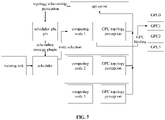
- FIG. 7 is a schematic diagram of a resource scheduling application scenario in a Kubernetes cluster shown by an exemplary embodiment of the present disclosure.
- K8s is a system for running and coordinating a containerized application program on a resource allocation device, and provides mechanisms for application deployment, planning, update and maintenance.
- Pod it is a basic unit of the Kubernetes system, is the smallest component created or deployed by users, is a combination of one or more containers, also is a resource object for running the containerized application on the Kubernetes system, and can also be called as an instance.
- Api server it belongs to a component in Kubernetes, and other components can share the state interaction through the component.
- GPU topology perception it is a resident process running on each of the computing nodes in the Kubernetes cluster; in the running course, the process perceives the connection information, specifically including the number of GPUs and the connection relationships between GPUs, of the GPUs on the computing node where the process is located, constructs the connection matrix of the GPUs, and at the same time scores different connection manners according to the connection relationships between the GPUs.
- the connection manners between GPUs include NVIDIA (NVLINK) high-speed data communication manner, a manner of performing data communication through a high-speed serial computer extended bus standard (peripheral component interconnect express (PCIe)) switch (PIX), and a manner for completing data exchange across multiple PCIe switches (PXB), etc.
- the communication speed of the NVLINK is better than that of the PIX
- the communication speed of the PIX is better than that of the PXB.
- the connection matrix is constructed, for GPUs with connection relationships, different scores are used to represent the GPU connection levels. The higher the score is, the stronger the transmission performance is.
- the GPU topology perception process reports the GPU connection information including the GPU connection relationships and GPU connection levels to the api server, and the GPU topology relationship can be seen at the control plane level.
- Scheduler_plugin it belongs to a plug-in in the scheduler, and the main function thereof is to, in the case of perceiving a task request that needs to apply for GPU resources, generate a scheduling strategy for selecting the target computing node according to the task request and the GPU topology relationship.
- Scheduler is a native scheduler or extended scheduler in Kubernetes. For example, it can be a volcano scheduler for offline batch jobs, and the main function thereof is to load the scheduling strategy in Scheduler_plugin and to perform the selection process of the target computing node.
- Kubernetes is deployed and run in the resource scheduling device in advance.
- the task request that needs to apply for GPU resources can be received through the api server.
- a pod object is created accordingly.
- a pod object corresponds to a task request, which can be understood as that a task request is received every time, a pod object is created accordingly.
- the involved single-task refers to that one pod object is trained by one deep learning distributed training
- multi-task refers to that multiple pods are trained by one deep learning distributed training, such as multiple worker nodes under the AllReduce module.
- the resource scheduling method involved in the present disclosure can be run in the native scheduler or the extended scheduler of the kubernetes through the scheduler_plugin.
- the scheduler_plugin makes the corresponding judgment according to the number of GPUs applied for and the number of tasks in the task request, to obtain the scheduling strategy of the target computing node.
- the scheduler completes the selection of the target computing node according to the scheduling strategy, and the target computing node completes the GPU binding according to the assigned target task, to realize the optimal scheduling of GPU resources.
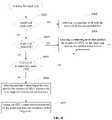
- FIG. 8 is a schematic diagram of a scheduling process of a target computing node shown in an exemplary embodiment of the present disclosure, which specifically includes the following operations: S801: in a case where the training request of the target task is received, determining whether the target task is single-task single-GPU; in the case where the target task is single-task single-GPU, performing S802; otherwise, performing S803.
- Single-task single-GPU refers to that the target task is a single pod and only needs to apply for one GPU.
- S803 determining whether the target task is single-task multi-GPU; in the case where the target task is single-task multi-GPU, performing S804; otherwise, performing S805.
- Single-task multi-GPU refers to that the target task is a single pod and only needs to apply for multiple GPUs.
- S805 determining whether the target task can be converted to single-task multi-GPU; in the case where the target task can be converted to single-task multi-GPU, performing S804; otherwise, performing S806.
- the resource scheduling method in the embodiment of the present disclosure realizes resource optimization scheduling by perceiving the GPU topology relationship. Specifically, based on the containerized environment, in the scheduling strategy of the target computing node, under the premise of perceiving the GPU topology relationship, it is ensured that the determined target computing node is a computing node with the optimal GPU connection performance. At the same time, a GPU scheduling algorithm is added on the target computing node, such that the optimal target GPU can be selected to complete the target task.
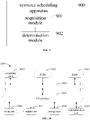
- FIG. 9 is a block diagram of a resource scheduling apparatus 900 shown in an exemplary embodiment of the present disclosure.
- the resource scheduling apparatus 900 includes:
- the GPU connection information includes a GPU connection relationship and a GPU connection manner
- the acquisition module 901 includes:
- the determination module 902 includes:
- the target computing node determination sub-module includes: a first selection unit, configured for, in the case where the task type of the target task included in the task information is single-task and the number of GPUs applied for is 1, traversing each of the computing nodes according to the GPU topology relationship, and selecting a computing node with the lowest transmission performance as the target computing node.
- the target computing node determination sub-module includes: a second selection unit, configured for, in the case where the task type of the target task included in the task information is single-task and the number of GPUs applied for is larger than 1, traversing each of the computing nodes according to the GPU topology relationship, and selecting a computing node with the highest transmission performance as the target computing node.
- the target computing node determination sub-module includes: a third selection unit, configured for, in the case where the task type of the target task included in the task information is multi-task and the number of GPUs applied for is larger than 1, traversing each of the computing nodes according to the GPU topology relationship; and in a case where a traversal result indicates that there are candidate computing nodes with GPU resources that are able to satisfy the target task, selecting a computing node with the highest transmission performance from the candidate computing nodes as the target computing node.
- a third selection unit configured for, in the case where the task type of the target task included in the task information is multi-task and the number of GPUs applied for is larger than 1, traversing each of the computing nodes according to the GPU topology relationship; and in a case where a traversal result indicates that there are candidate computing nodes with GPU resources that are able to satisfy the target task, selecting a computing node with the highest transmission performance from the candidate computing nodes as the target computing node.
- the target computing node determination sub-module includes: a fourth selection unit, configured for, in the case where the task type of the target task included in the task information is multi-task and the number of GPUs applied for is larger than 1, traversing each of the computing nodes according to the GPU topology relationship; and in a case where a traversal result indicates that there are no candidate computing nodes with GPU resources that are able to satisfy the target task, for each task in the target task, selecting a computing node, in which the number of GPUs is able to satisfy the task, from the computing nodes as the target computing node, according to a descending order of transmission performances of the computing nodes.
- the determination module 902 includes:
- the acquisition, storage, application, etc., of the user's personal information comply with the provisions of relevant laws and regulations, and do not violate public order and good customs.
- the present disclosure also provides an electronic device, a readable storage medium, and a computer program product.
- FIG. 10 shows a schematic block diagram of an example electronic device 1000 that can be used to implement embodiments of the present disclosure.
- the electronic device is intended to represent various forms of digital computers, such as laptop computers, desktop computers, workbenches, personal digital assistants, servers, blade servers, mainframe computers, and other suitable computers.
- the electronic device can also represent various forms of mobile apparatuses, such as personal digital assistants, cellular phones, smart phones, wearable devices, and other similar computing apparatuses.
- the components shown herein, their connections and relationships, and their functions are merely examples, and are not intended to limit the implementation of the present disclosure described and/or claimed herein.
- the device 1000 includes a computing unit 1001 that can perform various appropriate actions and processes according to a computer program stored in a read only memory (ROM) 1002 or a computer program loaded from the storage unit 1008 into a random access memory (RAM) 1003.
- ROM read only memory
- RAM random access memory
- various programs and data required for the operation of the device 1000 can also be stored.
- the computing unit 1001, the ROM 1002, and the RAM 1003 are connected to each other through a bus 1004.
- the input/output (I/O) interface 1005 is also connected to the bus 1004.
- a plurality of components in the device 1000 are connected to the I/O interface 1005, including: an input unit 1006, such as a keyboard, a mouse, etc.; an output unit 1007, such as various types of displays, speakers, etc.; a storage unit 1008, such as a magnetic disk, an optical disk, etc.; and a communication unit 1009, such as a network card, a modem, a wireless communication transceiver, etc.
- the communication unit 1009 allows the device 1000 to exchange information/data with other devices through computer networks such as the Internet and/or various telecommunication networks.
- the computing unit 1001 can be various general-purpose and/or special-purpose processing components with processing and computing capabilities. Some examples of the computing unit 1001 include, but are not limited to, a central processing unit (CPU), a graphics processing unit (GPU), various special-purpose artificial intelligence (AI) computing chips, various computing units running machine learning model algorithms, digital signal processors (DSPs), and any appropriate processors, controllers, microcontrollers, etc.
- the computing unit 1001 performs various methods and processes described above, such as a resource scheduling method.
- the resource scheduling method can be implemented as a computer software program that is tangibly contained in a machine-readable medium, such as a storage unit 1008.
- part or all of the computer program can be loaded and/or installed on the device 1000 via the ROM 1002 and/or the communication unit 1009.
- the computer program When the computer program is loaded into the RAM 1003 and performed by the computing unit 1001, one or more operations of the resource scheduling method described above can be performed.
- the computing unit 1001 can be configured for performing the resource scheduling method shown in FIGS. 3-5 by any other suitable means (for example, by means of firmware).
- Various embodiments of the systems and technologies described above herein can be implemented in a digital electronic circuit system, an integrated circuit system, a field programmable gate array (FPGA), an application specific integrated circuit (ASIC), an application special standard product (ASSP), a system on chip (SOC), a load programmable logic device (CPLD), a computer hardware, firmware, software and/or combinations thereof.
- FPGA field programmable gate array
- ASIC application specific integrated circuit
- ASSP application special standard product
- SOC system on chip
- CPLD load programmable logic device
- These various embodiments can include: implementations in one or more computer programs which can be executed and/or interpreted on a programmable system that includes at least one programmable processor, which can be a special-purpose or general-purpose programmable processor that can receive data and instructions from a storage system, at least one input device, and at least one output device, and transmit the data and instructions to the storage system, the at least one input device, and the at least one output device.
- a programmable processor which can be a special-purpose or general-purpose programmable processor that can receive data and instructions from a storage system, at least one input device, and at least one output device, and transmit the data and instructions to the storage system, the at least one input device, and the at least one output device.
- the program codes for implementing the method of the present disclosure can be written in any combination of one or more programming languages. These program codes can be provided to the processor or controller of a general-purpose computer, a special-purpose computer or other programmable data processing apparatuses, such that the program codes, when executed by the processor or controller, enables the functions/operations specified in the flowchart and/or block diagram to be implemented.
- the program codes can be executed completely on the machine, partially on the machine, partially on the machine and partially on the remote machine as a separate software package, or completely on the remote machine or server.
- a machine-readable medium can be a tangible medium that can contain or store programs for use by or in combination with an instruction execution system, apparatus, or device.
- the machine-readable medium can be a machine-readable signal medium or a machine-readable storage medium.
- the machine readable medium can include, but is not limited to, an electronic, magnetic, optical, electromagnetic, infrared, or semiconductor system, apparatus, or device, or any suitable combination of the above contents.
- a more specific example of the machine-readable storage medium will include an electrical connection based on one or more lines, a portable computer disk, a hard disks, a random access memory (RAM), a read only memory (ROM), an erasable programmable read only memory (EPROM or flash memory), an optical fiber, a portable compact disk read only memory (CD-ROM), an optical storage device, a magnetic storage device, or any suitable combination of the above contents.
- RAM random access memory
- ROM read only memory
- EPROM or flash memory erasable programmable read only memory
- CD-ROM compact disk read only memory
- CD-ROM compact disk read only memory
- magnetic storage device or any suitable combination of the above contents.
- the system and technology described herein can be implemented on a computer which has: a display apparatus (for example, a CRT (cathode ray tube) or an LCD (liquid crystal display) monitor) for displaying information to the user; and a keyboard and pointing apparatus (for example, a mouse or a trackball), through which the user can provide input to the computer.
- a display apparatus for example, a CRT (cathode ray tube) or an LCD (liquid crystal display) monitor
- a keyboard and pointing apparatus for example, a mouse or a trackball
- Other kinds of apparatuses can also be used to provide interactions with a user; for example, the feedback provided to a user can be any form of sensory feedback (for example, visual feedback, auditory feedback, or tactile feedback); and input from a user can be received using any form (including acoustic input, voice input, or tactile input).
- the systems and techniques described herein can be implemented in a computing system (for example, as a data server) that includes back-end components, or be implemented in a computing system (for example, an application server) that includes middleware components, or be implemented in a computing system (for example, a user computer with a graphical user interface or a web browser through which the user can interact with the implementation of the systems and technologies described herein) that includes front-end components, or be implemented in a computing system that includes any combination of such back-end components, intermediate components, or front-end components.
- the components of the system can be interconnected by any form or medium of digital data communication (for example, a communication network).
- the example of the communication network includes a local area network (LAN), a wide area network (WAN), and the Internet.
- the computer system can include a client and a server.
- the client and the server are generally remote from each other and typically interact through a communication network.
- the client-server relationship is generated by computer programs that run on respective computers and have a client-server relationship with each other.
- the server can be a cloud server, a server of a distributed system, or a server combined with a blockchain.
Landscapes
- Engineering & Computer Science (AREA)
- Theoretical Computer Science (AREA)
- Software Systems (AREA)
- Physics & Mathematics (AREA)
- General Physics & Mathematics (AREA)
- General Engineering & Computer Science (AREA)
- General Health & Medical Sciences (AREA)
- Biomedical Technology (AREA)
- Data Mining & Analysis (AREA)
- Evolutionary Computation (AREA)
- Biophysics (AREA)
- Molecular Biology (AREA)
- Computing Systems (AREA)
- Computational Linguistics (AREA)
- Artificial Intelligence (AREA)
- Mathematical Physics (AREA)
- Life Sciences & Earth Sciences (AREA)
- Health & Medical Sciences (AREA)
- Data Exchanges In Wide-Area Networks (AREA)
- Information Retrieval, Db Structures And Fs Structures Therefor (AREA)
Applications Claiming Priority (1)
| Application Number | Priority Date | Filing Date | Title |
|---|---|---|---|
| CN202110768951.3A CN113377520B (zh) | 2021-07-07 | 2021-07-07 | 资源调度方法、装置、设备以及存储介质 |
Publications (1)
| Publication Number | Publication Date |
|---|---|
| EP4083802A1 true EP4083802A1 (de) | 2022-11-02 |
Family
ID=77581320
Family Applications (1)
| Application Number | Title | Priority Date | Filing Date |
|---|---|---|---|
| EP22173337.1A Withdrawn EP4083802A1 (de) | 2021-07-07 | 2022-05-13 | Ressourcenplanungsverfahren und -gerät, vorrichtung, speichermedium und programmprodukt |
Country Status (3)
| Country | Link |
|---|---|
| US (1) | US12399745B2 (de) |
| EP (1) | EP4083802A1 (de) |
| CN (1) | CN113377520B (de) |
Families Citing this family (29)
| Publication number | Priority date | Publication date | Assignee | Title |
|---|---|---|---|---|
| US20220291956A1 (en) * | 2021-03-11 | 2022-09-15 | Nanjing University Of Posts And Telecommunications | Distributed container scheduling method and system based on shared gpus |
| CN113590301A (zh) * | 2021-09-30 | 2021-11-02 | 苏州浪潮智能科技有限公司 | 一种深度学习业务的任务调度方法及相关装置 |
| CN114359015B (zh) * | 2021-12-08 | 2023-08-04 | 北京百度网讯科技有限公司 | 数据传输方法、装置和图形处理服务器 |
| CN114201280A (zh) * | 2021-12-10 | 2022-03-18 | 北京百度网讯科技有限公司 | 多媒体数据的处理方法、装置、设备以及存储介质 |
| CN114500413B (zh) * | 2021-12-17 | 2024-04-16 | 阿里巴巴(中国)有限公司 | 设备连接方法及装置、设备连接芯片 |
| CN114490048B (zh) * | 2022-01-14 | 2025-09-09 | 北京百度网讯科技有限公司 | 任务执行方法、装置、电子设备及计算机存储介质 |
| CN114490000A (zh) * | 2022-02-17 | 2022-05-13 | 北京百度网讯科技有限公司 | 任务处理方法、装置、设备及存储介质 |
| CN114816742B (zh) * | 2022-04-18 | 2026-01-13 | 北京百度网讯科技有限公司 | 请求处理方法、装置、电子设备及存储介质 |
| CN115037747B (zh) * | 2022-05-31 | 2024-11-05 | 北京百度网讯科技有限公司 | 数据通信方法及装置、分布式系统、设备和介质 |
| CN115658284B (zh) * | 2022-09-09 | 2025-12-16 | 阿波罗智联(北京)科技有限公司 | 资源调度方法、装置、电子设备及介质 |
| CN115509749B (zh) * | 2022-09-28 | 2025-07-04 | 苏州浪潮智能科技有限公司 | 任务执行方法和装置、存储介质和电子设备 |
| KR102790978B1 (ko) * | 2022-11-11 | 2025-04-04 | 한국전자기술연구원 | 대규모 컨테이너 운용 환경에서 유연한 gpu 리소스 스케줄링 방법 |
| CN116016637A (zh) * | 2022-12-19 | 2023-04-25 | 先临三维科技股份有限公司 | 任务处理方法、装置、设备及存储介质 |
| CN116643880A (zh) * | 2023-05-06 | 2023-08-25 | 上海楷领科技有限公司 | 集群节点处理方法、系统、电子设备及存储介质 |
| CN116820897B (zh) * | 2023-08-31 | 2023-11-21 | 山东省地质测绘院 | 一种集群计算机运行调度控制方法 |
| CN116866440B (zh) * | 2023-09-05 | 2024-01-19 | 苏州浪潮智能科技有限公司 | 一种集群节点选择调度方法、装置、电子设备和存储介质 |
| CN117170812B (zh) * | 2023-09-07 | 2024-05-03 | 中国人民解放军国防科技大学 | 一种基于研发运维一体化架构的数值预报计算云系统 |
| CN117407155A (zh) * | 2023-09-22 | 2024-01-16 | 国网冀北电力有限公司信息通信分公司 | 资源方案确定方法、装置、存储介质及电子设备 |
| CN117217165B (zh) * | 2023-11-08 | 2024-01-30 | 芯砺智能科技(江苏)有限公司 | 一种芯片设计前端质量行为的执行方法、装置及设备 |
| CN118606065A (zh) * | 2024-01-25 | 2024-09-06 | 腾讯科技(深圳)有限公司 | 数据传输装置、方法、设备、介质及程序产品 |
| CN118071519B (zh) * | 2024-04-18 | 2024-07-26 | 太平金融科技服务(上海)有限公司 | 理赔请求处理方法、装置、可读介质和电子设备 |
| CN118885273B (zh) * | 2024-07-31 | 2025-10-31 | 支付宝(杭州)信息技术有限公司 | 一种gpu算力资源的调度方法、装置 |
| CN118656177B (zh) * | 2024-08-21 | 2024-12-03 | 武汉人工智能研究院 | 一种基于gpu拓扑结构的容器调度方法、装置、介质及设备 |
| CN118860673B (zh) * | 2024-09-26 | 2025-04-25 | 济南浪潮数据技术有限公司 | 资源分配方法、装置、电子设备、存储介质及程序产品 |
| CN119299397B (zh) * | 2024-09-26 | 2026-01-20 | 中国移动通信有限公司研究院 | 算力资源的调度方法、装置、设备、介质及产品 |
| CN119697038B (zh) * | 2025-02-20 | 2025-06-06 | 新华三工业互联网有限公司 | 生成集合通信拓扑图的方法、装置、电子设备及介质 |
| CN121187784A (zh) * | 2025-09-22 | 2025-12-23 | 摩尔线程智能科技(北京)股份有限公司 | 一种应用于gpu集群的资源分配系统及方法、电子设备、存储介质和计算机程序产品 |
| CN121455676A (zh) * | 2025-10-31 | 2026-02-03 | 摩尔线程智能科技(北京)股份有限公司 | 一种Kubernetes集群及其资源管理方法、电子设备、存储介质和计算机程序产品 |
| CN121597348B (zh) * | 2026-01-30 | 2026-05-08 | 之江实验室 | 一种层级拓扑域权重感知的任务调度方法及系统 |
Citations (1)
| Publication number | Priority date | Publication date | Assignee | Title |
|---|---|---|---|---|
| US20170010920A1 (en) * | 2015-07-07 | 2017-01-12 | Sybase, Inc. | Topology-aware processor scheduling |
Family Cites Families (13)
| Publication number | Priority date | Publication date | Assignee | Title |
|---|---|---|---|---|
| US10896064B2 (en) * | 2017-03-27 | 2021-01-19 | International Business Machines Corporation | Coordinated, topology-aware CPU-GPU-memory scheduling for containerized workloads |
| US10325343B1 (en) * | 2017-08-04 | 2019-06-18 | EMC IP Holding Company LLC | Topology aware grouping and provisioning of GPU resources in GPU-as-a-Service platform |
| CN110058937B (zh) * | 2018-01-18 | 2023-05-05 | 伊姆西Ip控股有限责任公司 | 用于调度专用处理资源的方法、设备和介质 |
| US10728091B2 (en) * | 2018-04-04 | 2020-07-28 | EMC IP Holding Company LLC | Topology-aware provisioning of hardware accelerator resources in a distributed environment |
| CN110096356B (zh) | 2019-03-22 | 2022-06-03 | 北京达佳互联信息技术有限公司 | 资源调度方法、装置、电子设备及存储介质 |
| CN111865630B (zh) * | 2019-04-26 | 2023-03-24 | 北京达佳互联信息技术有限公司 | 拓扑信息获取方法、装置、终端及存储介质 |
| CN110399222B (zh) * | 2019-07-25 | 2022-01-21 | 北京邮电大学 | Gpu集群深度学习任务并行化方法、装置及电子设备 |
| CN110389843B (zh) * | 2019-07-29 | 2022-04-15 | 广东浪潮大数据研究有限公司 | 一种业务调度方法、装置、设备及可读存储介质 |
| CN110647999A (zh) * | 2019-08-23 | 2020-01-03 | 苏州浪潮智能科技有限公司 | 一种基于拓扑结构提高深度学习训练速度的方法及装置 |
| CN110618870B (zh) * | 2019-09-20 | 2021-11-19 | 广东浪潮大数据研究有限公司 | 一种深度学习训练任务的工作方法及装置 |
| CN111880911A (zh) * | 2020-06-19 | 2020-11-03 | 浪潮电子信息产业股份有限公司 | 一种任务负载调度方法、装置、设备及可读存储介质 |
| CN112433844B (zh) * | 2020-10-22 | 2022-07-08 | 苏州浪潮智能科技有限公司 | 一种资源分配方法、系统、设备及计算机可读存储介质 |
| CN112988383B (zh) * | 2021-03-12 | 2024-12-31 | 中国平安人寿保险股份有限公司 | 一种资源分配方法、装置、设备以及存储介质 |
-
2021
- 2021-07-07 CN CN202110768951.3A patent/CN113377520B/zh active Active
-
2022
- 2022-05-13 EP EP22173337.1A patent/EP4083802A1/de not_active Withdrawn
- 2022-05-13 US US17/744,396 patent/US12399745B2/en active Active
Patent Citations (1)
| Publication number | Priority date | Publication date | Assignee | Title |
|---|---|---|---|---|
| US20170010920A1 (en) * | 2015-07-07 | 2017-01-12 | Sybase, Inc. | Topology-aware processor scheduling |
Non-Patent Citations (1)
| Title |
|---|
| YEH TING-AN TA YEH@LSALAB CS NTHU EDU TW ET AL: "KubeShare: A Framework to Manage GPUs as First-Class and Shared Resources in Container Cloud", PROCEEDINGS OF THE 29TH INTERNATIONAL SYMPOSIUM ON HIGH-PERFORMANCE PARALLEL AND DISTRIBUTED COMPUTING, ACMPUB27, NEW YORK, NY, USA, 23 June 2020 (2020-06-23), pages 173 - 184, XP058460360, ISBN: 978-1-4503-7052-3, DOI: 10.1145/3369583.3392679 * |
Also Published As
| Publication number | Publication date |
|---|---|
| US12399745B2 (en) | 2025-08-26 |
| CN113377520A (zh) | 2021-09-10 |
| CN113377520B (zh) | 2023-03-24 |
| US20220276899A1 (en) | 2022-09-01 |
Similar Documents
| Publication | Publication Date | Title |
|---|---|---|
| US12399745B2 (en) | Resource scheduling method, device, and storage medium | |
| US12423576B2 (en) | Method and apparatus for updating parameter of multi-task model, and storage medium | |
| US20250036920A1 (en) | Mixture-of-experts model implementation method and system, electronic device, and storage medium | |
| US20220391260A1 (en) | Method and Apparatus for Creating Container, Device, Medium, and Program Product | |
| US20210326762A1 (en) | Apparatus and method for distributed model training, device, and computer readable storage medium | |
| US20200396311A1 (en) | Provisioning using pre-fetched data in serverless computing environments | |
| US20220357990A1 (en) | Method for allocating data processing tasks, electronic device, and storage medium | |
| US20160019089A1 (en) | Method and system for scheduling computing | |
| CN113742075A (zh) | 基于云端分布式系统的任务处理方法、装置及系统 | |
| US20240005446A1 (en) | Methods, systems, and non-transitory storage media for graphics memory allocation | |
| US20250224960A1 (en) | Task execution method for large model, electronic device, and storage medium | |
| CN112558937A (zh) | 页面管理方法、装置、电子设备、介质及产品 | |
| CN112433844A (zh) | 一种资源分配方法、系统、设备及计算机可读存储介质 | |
| CN118331709A (zh) | 资源动态分配方法、装置、电子设备及存储介质 | |
| JP7265618B2 (ja) | 深層学習トレーニングタスクに向けたプロセッサメモリを最適化するための方法及び装置 | |
| CN117570991A (zh) | 一种路径规划方法、装置、电子设备和存储介质 | |
| CN114416357B (zh) | 容器组的创建方法、装置、电子设备和介质 | |
| CN114035885B (zh) | 一种小程序页面渲染方法、装置及电子设备 | |
| CN113032092B (zh) | 分布式计算方法、装置及平台 | |
| CN120218182A (zh) | 模型蒸馏方法、答复信息生成方法及装置 | |
| EP4398112B1 (de) | Vorrichtung und verfahren zur verarbeitung von daten, elektronische vorrichtung und speichermedium | |
| JP7691478B2 (ja) | データ処理装置、データ処理方法、電子機器および記憶媒体 | |
| JP7504247B2 (ja) | ノート生成方法及び装置、電子機器、記憶媒体及びコンピュータプログラム | |
| CN114090234B (zh) | 请求的调度方法、装置、电子设备和存储介质 | |
| WO2024040844A1 (zh) | 模型调试方法、装置、电子设备及存储介质 |
Legal Events
| Date | Code | Title | Description |
|---|---|---|---|
| PUAI | Public reference made under article 153(3) epc to a published international application that has entered the european phase |
Free format text: ORIGINAL CODE: 0009012 |
|
| STAA | Information on the status of an ep patent application or granted ep patent |
Free format text: STATUS: REQUEST FOR EXAMINATION WAS MADE |
|
| 17P | Request for examination filed |
Effective date: 20220513 |
|
| AK | Designated contracting states |
Kind code of ref document: A1 Designated state(s): AL AT BE BG CH CY CZ DE DK EE ES FI FR GB GR HR HU IE IS IT LI LT LU LV MC MK MT NL NO PL PT RO RS SE SI SK SM TR |
|
| STAA | Information on the status of an ep patent application or granted ep patent |
Free format text: STATUS: EXAMINATION IS IN PROGRESS |
|
| 17Q | First examination report despatched |
Effective date: 20230620 |
|
| STAA | Information on the status of an ep patent application or granted ep patent |
Free format text: STATUS: THE APPLICATION HAS BEEN WITHDRAWN |
|
| 18W | Application withdrawn |
Effective date: 20231017 |