EP4080382A2 - Verfahren und gerät zur erzeugung von erinnerungsaudios, elektronische vorrichtung und speichermedium - Google Patents
Verfahren und gerät zur erzeugung von erinnerungsaudios, elektronische vorrichtung und speichermedium Download PDFInfo
- Publication number
- EP4080382A2 EP4080382A2 EP22177994.5A EP22177994A EP4080382A2 EP 4080382 A2 EP4080382 A2 EP 4080382A2 EP 22177994 A EP22177994 A EP 22177994A EP 4080382 A2 EP4080382 A2 EP 4080382A2
- Authority
- EP
- European Patent Office
- Prior art keywords
- audio
- audio data
- reminder
- data
- cached
- Prior art date
- Legal status (The legal status is an assumption and is not a legal conclusion. Google has not performed a legal analysis and makes no representation as to the accuracy of the status listed.)
- Withdrawn
Links
Images



Classifications
-
- G—PHYSICS
- G10—MUSICAL INSTRUMENTS; ACOUSTICS
- G10L—SPEECH ANALYSIS TECHNIQUES OR SPEECH SYNTHESIS; SPEECH RECOGNITION; SPEECH OR VOICE PROCESSING TECHNIQUES; SPEECH OR AUDIO CODING OR DECODING
- G10L25/00—Speech or voice analysis techniques not restricted to a single one of groups G10L15/00 - G10L21/00
- G10L25/78—Detection of presence or absence of voice signals
-
- G—PHYSICS
- G06—COMPUTING OR CALCULATING; COUNTING
- G06F—ELECTRIC DIGITAL DATA PROCESSING
- G06F3/00—Input arrangements for transferring data to be processed into a form capable of being handled by the computer; Output arrangements for transferring data from processing unit to output unit, e.g. interface arrangements
- G06F3/16—Sound input; Sound output
-
- G—PHYSICS
- G06—COMPUTING OR CALCULATING; COUNTING
- G06F—ELECTRIC DIGITAL DATA PROCESSING
- G06F16/00—Information retrieval; Database structures therefor; File system structures therefor
- G06F16/60—Information retrieval; Database structures therefor; File system structures therefor of audio data
- G06F16/61—Indexing; Data structures therefor; Storage structures
-
- G—PHYSICS
- G06—COMPUTING OR CALCULATING; COUNTING
- G06F—ELECTRIC DIGITAL DATA PROCESSING
- G06F3/00—Input arrangements for transferring data to be processed into a form capable of being handled by the computer; Output arrangements for transferring data from processing unit to output unit, e.g. interface arrangements
- G06F3/16—Sound input; Sound output
- G06F3/167—Audio in a user interface, e.g. using voice commands for navigating, audio feedback
-
- G—PHYSICS
- G06—COMPUTING OR CALCULATING; COUNTING
- G06F—ELECTRIC DIGITAL DATA PROCESSING
- G06F9/00—Arrangements for program control, e.g. control units
- G06F9/06—Arrangements for program control, e.g. control units using stored programs, i.e. using an internal store of processing equipment to receive or retain programs
- G06F9/46—Multiprogramming arrangements
- G06F9/54—Interprogram communication
- G06F9/542—Event management; Broadcasting; Multicasting; Notifications
-
- G—PHYSICS
- G06—COMPUTING OR CALCULATING; COUNTING
- G06F—ELECTRIC DIGITAL DATA PROCESSING
- G06F9/00—Arrangements for program control, e.g. control units
- G06F9/06—Arrangements for program control, e.g. control units using stored programs, i.e. using an internal store of processing equipment to receive or retain programs
- G06F9/46—Multiprogramming arrangements
- G06F9/54—Interprogram communication
- G06F9/547—Remote procedure calls [RPC]; Web services
-
- G—PHYSICS
- G06—COMPUTING OR CALCULATING; COUNTING
- G06N—COMPUTING ARRANGEMENTS BASED ON SPECIFIC COMPUTATIONAL MODELS
- G06N3/00—Computing arrangements based on biological models
- G06N3/02—Neural networks
- G06N3/04—Architecture, e.g. interconnection topology
- G06N3/045—Combinations of networks
-
- G—PHYSICS
- G06—COMPUTING OR CALCULATING; COUNTING
- G06N—COMPUTING ARRANGEMENTS BASED ON SPECIFIC COMPUTATIONAL MODELS
- G06N3/00—Computing arrangements based on biological models
- G06N3/02—Neural networks
- G06N3/04—Architecture, e.g. interconnection topology
- G06N3/0464—Convolutional networks [CNN, ConvNet]
-
- G—PHYSICS
- G06—COMPUTING OR CALCULATING; COUNTING
- G06N—COMPUTING ARRANGEMENTS BASED ON SPECIFIC COMPUTATIONAL MODELS
- G06N3/00—Computing arrangements based on biological models
- G06N3/02—Neural networks
- G06N3/08—Learning methods
-
- G—PHYSICS
- G06—COMPUTING OR CALCULATING; COUNTING
- G06N—COMPUTING ARRANGEMENTS BASED ON SPECIFIC COMPUTATIONAL MODELS
- G06N3/00—Computing arrangements based on biological models
- G06N3/02—Neural networks
- G06N3/08—Learning methods
- G06N3/096—Transfer learning
-
- G—PHYSICS
- G10—MUSICAL INSTRUMENTS; ACOUSTICS
- G10L—SPEECH ANALYSIS TECHNIQUES OR SPEECH SYNTHESIS; SPEECH RECOGNITION; SPEECH OR VOICE PROCESSING TECHNIQUES; SPEECH OR AUDIO CODING OR DECODING
- G10L15/00—Speech recognition
- G10L15/08—Speech classification or search
- G10L15/18—Speech classification or search using natural language modelling
- G10L15/1822—Parsing for meaning understanding
-
- G—PHYSICS
- G10—MUSICAL INSTRUMENTS; ACOUSTICS
- G10L—SPEECH ANALYSIS TECHNIQUES OR SPEECH SYNTHESIS; SPEECH RECOGNITION; SPEECH OR VOICE PROCESSING TECHNIQUES; SPEECH OR AUDIO CODING OR DECODING
- G10L25/00—Speech or voice analysis techniques not restricted to a single one of groups G10L15/00 - G10L21/00
- G10L25/93—Discriminating between voiced and unvoiced parts of speech signals
-
- G—PHYSICS
- G10—MUSICAL INSTRUMENTS; ACOUSTICS
- G10L—SPEECH ANALYSIS TECHNIQUES OR SPEECH SYNTHESIS; SPEECH RECOGNITION; SPEECH OR VOICE PROCESSING TECHNIQUES; SPEECH OR AUDIO CODING OR DECODING
- G10L15/00—Speech recognition
- G10L15/22—Procedures used during a speech recognition process, e.g. man-machine dialogue
- G10L2015/223—Execution procedure of a spoken command
Definitions
- the disclosure relates to a field of artificial intelligence (AI) technologies, specifically to a field of deep learning (DL) and cloud platform technologies, and particularly to a method and an apparatus for generating a reminder audio, an electronic device and a storage medium.
- AI artificial intelligence
- a method and an apparatus for generating a reminder audio, an electronic device and a storage medium are provided.
- a method for generating a reminder audio includes: acquiring audio data; caching the audio data in response to detecting that the audio data is voice data; and stopping caching the audio data in response to detecting that the audio data is non-voice data, determining the cached audio data as a reminder audio in response to a content of the cached audio data being a reminder content, and storing the reminder audio in a disk.
- the method further includes: detecting by a voice activity detection algorithm whether the audio data is the voice data.
- the voice activity detection algorithm is a web real-time communication voice activity detection (Web RTC VAD) algorithm.
- Web RTC VAD web real-time communication voice activity detection
- caching the audio data includes:
- the method further includes:
- an apparatus for generating a reminder audio includes: an acquiring module, configured to acquire audio data; a first detection module, configured to cache the audio data in response to detecting that the audio data is voice data; and a second detection module, configured to stop caching the audio data in response to detecting that the audio data is non-voice data, determine the cached audio data as a reminder audio in response to a content of the cached audio data being a reminder content, and store the reminder audio in a disk.
- the apparatus further includes: a detection module, configured to detect by a voice activity detection algorithm whether the audio data is the voice data.
- a detection module configured to detect by a voice activity detection algorithm whether the audio data is the voice data.
- the voice activity detection algorithm is a Web Real-Time Communication Voice Activity Detection (Web RTC VAD) algorithm.
- Web RTC VAD Web Real-Time Communication Voice Activity Detection
- the cache module includes:
- the apparatus further includes:
- an electronic device includes: at least one processor; and a memory communicatively connected to the at least one processor; the memory is stored with instructions executable by the at least one processor, the instructions are performed by the at least one processor, to cause the at least one processor to perform the method for generating a reminder audio as described in a first aspect of the disclosure.
- a non-transitory computer-readable storage medium stored with computer instructions, the computer instructions are configured to cause the computer to perform the method for generating a reminder audio as described in a first aspect of the disclosure.
- a computer program product includes a computer program, the computer program is configured to perform the method for generating a reminder audio as described in a first aspect of the disclosure when performed by a processor.
- AI Artificial intelligence
- Deep Learning is a new research direction in the field of Machine Learning (ML) that learns inherent law and representation hierarchy of sample data, and information obtained in the learning process is of great help in interpretation of data such as words, images and sound. Its final goal is that the machine may have analytic learning ability like humans, which may recognize data such as words, images, sound, etc.
- ML Machine Learning
- DL makes many achievements in search technology, data mining, machine learning, machine translation, natural language processing (NLP), multimedia learning, voice, recommendation, and personalization technology and other related arts.
- NLP natural language processing
- DL enables a machine to imitate human activities such as audition and thinking, which solves many complex pattern recognition problems, and makes great progress in AI related technologies.
- a cloud platform refers to a service based on hardware resources and software resources that provides computing, network and storage capabilities.
- the cloud platform may be divided into three categories: a storage type cloud platform mainly based on data storage, a computing type cloud platform mainly based on data processing, and a comprehensive cloud computing platform in consideration of both computation and data storage processing.
- FIG. 1 is a flowchart illustrating a method for generating a reminder audio according to an embodiment of the disclosure.
- the method for generating a reminder audio in embodiments of the disclosure may include the following blocks: At S101, audio data is acquired.
- an execution subject of the method for generating a reminder audio in the embodiment of the disclosure may be an apparatus for generating a reminder audio in the embodiment of the disclosure, and the apparatus for generating a reminder audio may be a hardware device with data information processing ability and/or a software necessary to drive the work of the hardware device.
- the execution subject may include a workstation, a server, a computer, a user terminal and other devices.
- the user terminal includes but not limited to a mobile phone, a computer, a smart voice interaction device, a smart appliance, a vehicle terminal, etc.
- the audio data may be audio data collected in real time by a microphone or other recording device.
- audio data containing reminder content of the voice instruction is recorded by a microphone.
- the above audio data may include effective human voice and noise, in which the effective human voice is voice data of a user, and the noise is non-voice data.
- the audio data is cached in response to detecting that the audio data is voice data.
- detection is performed on the audio data acquired at block S101.
- the audio data is cached in response to the audio data being voice data. It needs to be noted that, detection and cache of the audio data in the embodiment of the disclosure may be performed asynchronously, and when the microphone records voice data of the user, detection and cache may be implemented at the same time.
- caching the audio data is stopped in response to detecting that the audio data is non-voice data, the cached audio data is determined as a reminder audio in response to a content of the cached audio data being a reminder content, and the reminder audio is stored in a disk.
- detection is performed on the audio data acquired at block S101, and caching the audio data is stopped in response to detecting that the audio data is non-voice data, thereby achieving extraction of the voice data from the audio data.
- the content of the cached audio data is detected by semantic parsing, and the cached audio data is determined as the reminder audio and the reminder audio is stored in a disk in response to the content of the cached audio data being the reminder content, thereby achieving exact recording of the reminder audio, so that a terminal may play a complete and accurate reminder audio at a time point set by a user, to achieve voice reminding service.
- the disk may be a storage apparatus in a vehicle terminal or other clients, which is not limited in the disclosure.
- the cached audio data is discarded in response to the content of the cached audio data being not a reminder content.
- the audio data is acquired, and the audio data is cached in response to detecting that the audio data is the voice data; and caching of the audio data is stopped in response to detecting that the audio data is non-voice data, and the cached audio data is determined as a reminder audio in response to a content of the cached audio data being a reminder content, and the reminder audio is stored in a disk.
- the voice data in the audio data is acquired and cached, and when the cached audio data is audio data including the reminder content, the cached audio data is determined as the reminder audio, and stored in the disk, thereby removing non-voice data in the audio data acquired and a non-reminder audio in the voice data, and achieving accurate recording of a reminder audio.
- FIG. 2 is a flowchart illustrating a method for generating a reminder audio according to an embodiment of the disclosure.
- the method for generating a reminder audio in the embodiment of the disclosure may specifically include the following blocks: At S201, audio data is acquired.
- block S201 in the embodiment is the same as block S101 in the above embodiment, which will not be repeated here.
- a voice activity detection algorithm is adopted to detect whether audio data is the voice data.
- the voice activity detection is generally configured to identify speech presence and speech absence in an audio signal, that is, to identify a start point and an end point of a speech or a voice from a given audio signal.
- correct and effective activity detection not only may reduce calculation amount and shorten processing time, but also may eliminate noise interference of a silence segment and enhance accuracy of speech recognition.
- a VAD algorithm is adopted to detect whether the audio data acquired at block S201 is voice data.
- a web real-time communication voice activity detection (Web RTC VAD) algorithm is adopted as the VAD algorithm for detecting the audio data.
- Web RTC VAD web real-time communication voice activity detection
- the algorithm effectively distinguishes human voice and noise through probability calculation based on a Gaussian model and a fixed frequency-band feature of the human voice, that is, effectively distinguishing voice data and non-voice data in the audio data.
- the audio data is cached in response to detecting that audio data is voice data.
- caching the audio data is stopped in response to detecting that the audio data is non-voice data, and the cached audio data is determined as a reminder audio in response to a content of the cached audio data being a reminder content, and the reminder audio is stored in a disk.
- blocks S203-S304 in the embodiment are the same as blocks S101-S 103 in the above embodiment, which will not be repeated here.
- the audio data is cached at block S203 may include the following blocks: At S301, the audio data is written into a public data queue.
- the audio data detected as the voice data at block S203 is written into a public data queue.
- the audio data is read from the public data queue.
- the audio data written into a public data queue at block S301 is read.
- the read audio data is cached.
- the audio data read at block S302 is cached.
- the method for generating a reminder audio in the embodiment may further include the following blocks:
- the cached audio data is sent to a cloud.
- the cached audio data is sent to a cloud when audio data stops being cached.
- an audio saving instruction sent by the cloud is received, the audio saving instruction is generated by the cloud in response to the cloud detecting that a content of the audio data is a reminder content through semantic parsing.
- the cloud receives the audio data, and performs semantic parsing on the received audio data, and the audio saving instruction is generated and sent to an apparatus for generating a reminder audio in response to detecting that the content of the audio data is a reminder content.
- the apparatus for generating a reminder audio receives the audio saving instruction sent by the cloud.
- the semantic parsing may be implemented by an automated speech recognition (ASR) technology and a natural language understanding (NLU) technology.
- the cached audio data is determined as the reminder audio based on the audio saving instruction.
- the apparatus for generating a reminder audio determines the cached audio data as the reminder audio based on the received audio saving instruction, and stores it in a disk. Therefore, an accurate reminder audio containing a reminding content is generated, so that the reminder audio is played to a user at the reminding time point, to achieve voice reminding service.
- the audio data is acquired, and the audio data is cached in response to detecting that the audio data is the voice data; and caching of the audio data is stopped in response to detecting that the audio data is non-voice data, and the cached audio data is determined as a reminder audio in response to a content of the cached audio data being a reminder content, and the reminder audio is stored in a disk.
- the voice data in the audio data is acquired and cached, and in response to detecting that the cached audio data is audio data including a reminder content through semantic parsing, the cached audio data is determined as the reminder audio, and stored in a disk, thereby removing non-voice data in the audio data acquired and a non-reminder audio in the voice data, and achieving accurate recording of a reminder audio.
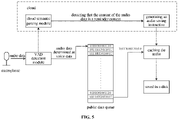
- FIG. 5 is a diagram illustrating a scene of a method for generating a reminder audio according to an embodiment of the disclosure.
- audio data is acquired by a microphone, voice data in the audio data is detected through a VAD detection module, and the audio data determined as the voice data is written into a public data queue and then cached until the VAD detection module detects non-voice data, at this time, the caching of the audio data is stopped.
- the cached audio data is sent to a cloud for semantic parsing, and the cloud generates an audio saving instruction and sends the audio saving instruction to a vehicle terminal in response to detecting that the content of the audio data is a reminder content.
- the vehicle terminal receives the audio saving instruction, determines the cached audio data as a reminder audio, and saves the audio data in a disk.
- the schematic diagram shown in FIG. 5 shows a process of generating the reminder audio by the vehicle terminal when the user initiates a voice instruction. When the user continues to initiates a next voice instruction, the above process is repeated to generate a reminder audio containing complete instruction content.
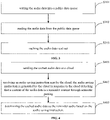
- FIG. 6 is a diagram illustrating an implementation of a method for generating a reminder audio according to an embodiment of the disclosure. As illustrated in FIG. 6 , the method for generating a reminder audio in the embodiment of the disclosure includes the following blocks: At S601, audio data is acquired.
- a VAD algorithm is adopted to detect whether the audio data is voice data.
- block S603 is performed. If no, block S605 is performed.
- the audio data is written into a public data queue.
- the audio data in the public data queue is read and cached.
- the cached audio data is sent to a cloud.
- the cloud performs semantic parsing on the audio data, and an audio saving instruction is generated and sent to a vehicle terminal in response to detecting that the content of the audio data is a reminder content.
- an audio saving instruction is received by the vehicle terminal, and the corresponding audio data is determined as a reminder audio and saved in a disk.
- FIG. 7 is a block diagram illustrating an apparatus for generating a reminder audio according to an embodiment of the disclosure.
- an apparatus 700 for generating a reminder audio in the embodiment of the disclosure includes an acquiring module 701, a cache module 702 and a storage module 703.
- the acquiring module 701 is configured to acquire audio data.
- the cache module 702 is configured to cache the audio data in response to detecting that audio data is voice data.
- the storage module 703 is configured to stop caching the audio data in response to detecting that audio data is non-voice data, determine the cached audio data as a reminder audio in response to a content of the cached audio data being a reminder content, and store the reminder audio in a disk.
- the audio data is acquired, and the audio data is cached in response to detecting that the audio data is the voice data; and caching of the audio data is stopped in response to detecting that the audio data is non-voice data, and the cached audio data is determined as a reminder audio in response to a content of the cached audio data being a reminder content, and the reminder audio is stored in a disk.
- the voice data in the audio data is acquired and cached, and when the cached audio data is audio data including the reminder content, the cached audio data is determined as the reminder audio, and stored in the disk, thereby removing non-voice data in the audio data acquired and a non-reminder audio in the voice data, and achieving accurate recording of a reminder audio.
- FIG. 8 is a block diagram illustrating an apparatus for generating a reminder audio according to an embodiment of the disclosure.
- an apparatus 800 for generating a reminder audio in the embodiment of the disclosure includes an acquiring module 801, a cache module 802 and a storage module 803.
- the acquiring module 801 has the same function and structure with the acquiring module 701 in the above embodiment, and the cache module 802 has the same function and structure with the cache module 702 in the above embodiment, and the storage module 803 has the same structure and function with the storage module 703 in the above embodiment.
- the apparatus 800 for generating a reminder audio in the embodiment of the disclosure may further include: a detection module 804, configured to detect by a voice activity detection algorithm whether audio data is the voice data.
- the voice activity detection algorithm is a Web RTC VAD algorithm.
- the cache module 802 may include a write unit configured to write the audio data into a public data queue; a read unit configured to read the audio data from the public data queue; and a cache unit configured to cache the read audio data.
- the apparatus 800 for generating a reminder audio in the embodiment of the disclosure may further include a sending module, configured to send the cached audio data to a cloud; a receiving module, configured to receive an audio saving instruction sent by the cloud, the audio saving instruction is generated by the cloud in response to the cloud detecting that a content of the audio data is a reminder content through semantic parsing; and a determining module, configured to determine the cached audio data as the reminder audio based on the audio saving instruction.
- the audio data is acquired, and the audio data is cached in response to detecting that the audio data is the voice data; and caching of the audio data is stopped in response to detecting that the audio data is non-voice data, and the cached audio data is determined as a reminder audio in response to a content of the cached audio data being a reminder content, and the reminder audio is stored in a disk.
- the voice data in the audio data is acquired and cached, and in response to detecting that the cached audio data is audio data including a reminder content through semantic parsing, the cached audio data is determined as the reminder audio, and stored in a disk, thereby removing non-voice data in the audio data acquired and a non-reminder audio in the voice data, and achieving accurate recording of a reminder audio.
- an electronic device a readable storage medium and a computer program product are provided in the disclosure.
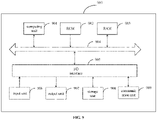
- FIG. 9 is a schematic block diagram illustrating an example electronic device 900 in the embodiment of the present disclosure.
- An electronic device is intended to represent various types of digital computers, such as laptop computers, desktop computers, workstations, personal digital assistants, servers, blade servers, mainframe computers, and other suitable computers.
- An electronic device may also represent various types of mobile apparatuses, such as personal digital assistants, cellular phones, smart phones, wearable devices, and other similar computing devices.
- the components shown herein, their connections and relations, and their functions are merely examples, and are not intended to limit the implementation of the disclosure described and/or required herein.
- an electronic device 900 includes a computing unit 901, configured to execute various appropriate actions and processes according to a computer program stored in a read-only memory (ROM) 902 or loaded from a memory unit 908 to a random access memory (RAM) 903.
- ROM read-only memory
- RAM random access memory
- a computing unit 901, a ROM 902 and a ROM 903 may be connected with each other by a bus 904.
- An input/output (I/O) interface 905 is also connected to a bus 904.
- a plurality of components in the electronic device 900 are connected to an I/O interface 905, and includes: an input unit 906, for example, a keyboard, a mouse, etc.; an output unit 909, for example various types of displays, speakers; a storage unit 908, for example a magnetic disk, an optical disk; and a communication unit 909, for example, a network card, a modem, a wireless transceiver.
- a communication unit 909 allows an electronic device 900 to exchange information/data through a computer network such as internet and/or various types of telecommunication networks and other devices.
- a computing unit 901 may be various types of general and/or dedicated processing components with processing and computing ability. Some examples of a computing unit 901 include but not limited to a central processing unit (CPU), a graphics processing unit (GPU), various dedicated artificial intelligence (AI) computing chips, various computing units running a machine learning model algorithm, a digital signal processor (DSP), and any appropriate processor, controller, microcontroller, etc.
- the computing unit 901 performs various methods and processings as described above, for example, the method for generating a reminder audio as described in FIGS. 1 to 6 .
- the method for generating a reminder audio may be further implemented as a computer software program, which is physically contained in a machine readable medium, such as a storage unit 908.
- a part or all of the computer program may be loaded and/or installed on the electronic device 900 through a ROM 902 and/or a communication unit 909.
- the computer program When the computer program is loaded on a RAM 903 and performed by a computing unit 901, one or more blocks in the method for generating a reminder audio as described above may be performed.
- the computing unit 901 may be configured to perform a method for generating a reminder audio in other appropriate ways (for example, by virtue of a firmware).
- Various implementation modes of systems and technologies described herein may be implemented in a digital electronic circuit system, an integrated circuit system, a field programmable gate array(FPGA), a dedicated application specific integrated circuit (ASIC), a system on a chip (SoC), a load programmable logic device (CPLD), a computer hardware, a firmware, a software, and/or combinations thereof.
- FPGA field programmable gate array
- ASIC application specific integrated circuit
- SoC system on a chip
- CPLD load programmable logic device
- computer hardware a firmware, a software, and/or combinations thereof.
- the various implementation modes may include: being implemented in one or more computer programs, and the one or more computer programs may be executed and/or interpreted on a programmable system including at least one programmable processor, and the programmable processor may be a dedicated or a general-purpose programmable processor that may receive data and instructions from a storage system, at least one input apparatus, and at least one output apparatus, and transmit the data and instructions to the storage system, the at least one input apparatus, and the at least one output apparatus.
- a computer code configured to execute a method in the present disclosure may be written with one or any combination of multiple programming languages. These programming languages may be provided to a processor or a controller of a general purpose computer, a dedicated computer, or other apparatuses for programmable data processing so that the function/operation specified in the flowchart and/or block diagram may be performed when the program code is executed by the processor or controller.
- a computer code may be executed completely or partly on the machine, executed partly on the machine as an independent software package and executed partly or completely on the remote machine or server.
- a machine-readable medium may be a tangible medium that may contain or store a program intended for use in or in conjunction with an instruction execution system, apparatus, or device.
- a machine-readable medium may be a machine readable signal medium or a machine readable storage medium.
- a machine readable storage medium may include but not limited to an electronic, magnetic, optical, electromagnetic, infrared, or semiconductor system, apparatus or device, or any appropriate combination thereof.
- a more specific example of a machine readable storage medium includes an electronic connector with one or more cables, a portable computer disk, a hardware, a random access memory (RAM), a read-only memory (ROM), an erasable programmable read-only memory (an EPROM or a flash memory),an optical fiber device, and a portable optical disk read-only memory(CDROM), an optical storage device, a magnetic storage device, or any appropriate combination of the above.
- RAM random access memory
- ROM read-only memory
- EPROM or a flash memory erasable programmable read-only memory
- CDROM portable optical disk read-only memory
- the systems and technologies described here may be implemented on a computer, and the computer has: a display apparatus for displaying information to the user (for example, a CRT (cathode ray tube) or a LCD (liquid crystal display) monitor); and a keyboard and a pointing apparatus (for example, a mouse or a trackball) through which the user may provide input to the computer.
- a display apparatus for displaying information to the user
- a keyboard and a pointing apparatus for example, a mouse or a trackball
- Other types of apparatuses may further be configured to provide interaction with the user; for example, the feedback provided to the user may be any form of sensory feedback (for example, visual feedback, auditory feedback, or tactile feedback); and input from the user may be received in any form (including an acoustic input, a voice input, or a tactile input).
- the systems and technologies described herein may be implemented in a computing system including back-end components (for example, as a data server), or a computing system including middleware components (for example, an application server), or a computing system including front-end components (for example, a user computer with a graphical user interface or a web browser through which the user may interact with the implementation mode of the system and technology described herein), or a computing system including any combination of such back-end components, middleware components or front-end components.
- the system components may be connected to each other through any form or medium of digital data communication (for example, a communication network). Examples of communication networks include: a local area network (LAN), a wide area network (WAN), an internet and a blockchain network.
- the computer system may include a client and a server.
- the client and server are generally far away from each other and generally interact with each other through a communication network.
- the relation between the client and the server is generated by computer programs that run on the corresponding computer and have a client-server relationship with each other.
- a server may be a cloud server, also known as a cloud computing server or a cloud host, is a host product in a cloud computing service system, to solve the shortcomings of large management difficulty and weak business expansibility existed in the traditional physical host and Virtual Private Server (VPS) service.
- a server further may be a server with a distributed system, or a server in combination with a blockchain.
- a computer program product including a computer program is further provided in the disclosure, the computer program is configured to implement the method for generating a reminder audio as described in the above embodiment when performed by a processor.
Landscapes
- Engineering & Computer Science (AREA)
- Theoretical Computer Science (AREA)
- Physics & Mathematics (AREA)
- Health & Medical Sciences (AREA)
- General Engineering & Computer Science (AREA)
- General Physics & Mathematics (AREA)
- Multimedia (AREA)
- Software Systems (AREA)
- Computational Linguistics (AREA)
- Human Computer Interaction (AREA)
- Audiology, Speech & Language Pathology (AREA)
- General Health & Medical Sciences (AREA)
- Data Mining & Analysis (AREA)
- Acoustics & Sound (AREA)
- Artificial Intelligence (AREA)
- Signal Processing (AREA)
- Mathematical Physics (AREA)
- Biomedical Technology (AREA)
- Biophysics (AREA)
- Computing Systems (AREA)
- Molecular Biology (AREA)
- Life Sciences & Earth Sciences (AREA)
- Evolutionary Computation (AREA)
- Databases & Information Systems (AREA)
- Information Retrieval, Db Structures And Fs Structures Therefor (AREA)
- Telephonic Communication Services (AREA)
- Electrically Operated Instructional Devices (AREA)
- Information Transfer Between Computers (AREA)
Applications Claiming Priority (1)
| Application Number | Priority Date | Filing Date | Title |
|---|---|---|---|
| CN202110653252.4A CN113448533B (zh) | 2021-06-11 | 2021-06-11 | 提醒音频的生成方法、装置、电子设备和存储介质 |
Publications (2)
| Publication Number | Publication Date |
|---|---|
| EP4080382A2 true EP4080382A2 (de) | 2022-10-26 |
| EP4080382A3 EP4080382A3 (de) | 2022-11-30 |
Family
ID=77811389
Family Applications (1)
| Application Number | Title | Priority Date | Filing Date |
|---|---|---|---|
| EP22177994.5A Withdrawn EP4080382A3 (de) | 2021-06-11 | 2022-06-09 | Verfahren und gerät zur erzeugung von erinnerungsaudios, elektronische vorrichtung und speichermedium |
Country Status (5)
| Country | Link |
|---|---|
| US (1) | US20220301583A1 (de) |
| EP (1) | EP4080382A3 (de) |
| JP (1) | JP7371159B2 (de) |
| KR (1) | KR20220035886A (de) |
| CN (1) | CN113448533B (de) |
Citations (1)
| Publication number | Priority date | Publication date | Assignee | Title |
|---|---|---|---|---|
| US20200328903A1 (en) * | 2019-04-15 | 2020-10-15 | Baidu Online Network Technology (Beijing) Co., Ltd. | Method and apparatus for waking up via speech |
Family Cites Families (24)
| Publication number | Priority date | Publication date | Assignee | Title |
|---|---|---|---|---|
| JPH03244000A (ja) * | 1990-02-22 | 1991-10-30 | Sanyo Electric Co Ltd | 音声記録再生装置 |
| WO1993007562A1 (en) * | 1991-09-30 | 1993-04-15 | Riverrun Technology | Method and apparatus for managing information |
| KR100739180B1 (ko) * | 2005-10-20 | 2007-07-13 | 엘지전자 주식회사 | 이동 통신 단말기의 멀티미디어 데이터를 송수신하는 장치및 그 방법 |
| US20080165287A1 (en) * | 2006-08-30 | 2008-07-10 | Daniel Doswald | Framebuffer Sharing for Video Processing |
| US8166194B2 (en) * | 2006-12-13 | 2012-04-24 | Microsoft Corporation | Lock-free shared audio buffer |
| GB2459107B (en) * | 2008-04-09 | 2012-11-14 | Ubiquisys Ltd | Access point |
| US11397462B2 (en) * | 2012-09-28 | 2022-07-26 | Sri International | Real-time human-machine collaboration using big data driven augmented reality technologies |
| JP5974903B2 (ja) | 2013-01-08 | 2016-08-23 | 株式会社ナカヨ | 予定に係る音声メモ蓄積方法 |
| US9286892B2 (en) * | 2014-04-01 | 2016-03-15 | Google Inc. | Language modeling in speech recognition |
| US20190139567A1 (en) * | 2016-05-12 | 2019-05-09 | Nuance Communications, Inc. | Voice Activity Detection Feature Based on Modulation-Phase Differences |
| US10027796B1 (en) * | 2017-03-24 | 2018-07-17 | Microsoft Technology Licensing, Llc | Smart reminder generation from input |
| US10805370B2 (en) * | 2017-06-02 | 2020-10-13 | Apple Inc. | Alarms for a system of smart media playback devices |
| US10333710B2 (en) * | 2017-09-12 | 2019-06-25 | Qed-It Systems Ltd. | Method and system for determining desired size of private randomness using Tsallis entropy |
| CN108001344A (zh) * | 2017-12-07 | 2018-05-08 | 北海市天硌打印耗材有限公司 | 一种汽车提醒装置及汽车提醒机 |
| US20190244613A1 (en) * | 2018-02-07 | 2019-08-08 | Net2Phone, Inc. | VoIP Cloud-Based Virtual Digital Assistant Using Voice Commands |
| US20200273263A1 (en) * | 2018-12-27 | 2020-08-27 | Southern Taiwan University Of Science And Technology | Smart driving management system and method |
| US11551670B1 (en) * | 2019-09-26 | 2023-01-10 | Sonos, Inc. | Systems and methods for generating labeled data to facilitate configuration of network microphone devices |
| CN111028834B (zh) * | 2019-10-30 | 2023-01-20 | 蚂蚁财富(上海)金融信息服务有限公司 | 语音信息提醒方法、装置、服务器和语音信息提醒设备 |
| CN110970054B (zh) * | 2019-11-06 | 2022-06-24 | 广州视源电子科技股份有限公司 | 语音采集自动停止的方法、装置、终端设备和存储介质 |
| CN110838296B (zh) * | 2019-11-18 | 2022-04-29 | 锐迪科微电子科技(上海)有限公司 | 录音过程的控制方法、系统、电子设备和存储介质 |
| US11055649B1 (en) * | 2019-12-30 | 2021-07-06 | Genesys Telecommunications Laboratories, Inc. | Systems and methods relating to customer experience automation |
| CN111739521B (zh) * | 2020-06-19 | 2021-06-22 | 腾讯科技(深圳)有限公司 | 电子设备唤醒方法、装置、电子设备及存储介质 |
| US12266361B2 (en) * | 2020-06-24 | 2025-04-01 | Netflix, Inc. | Systems and methods for correlating speech and lip movement |
| US11551700B2 (en) * | 2021-01-25 | 2023-01-10 | Sonos, Inc. | Systems and methods for power-efficient keyword detection |
-
2021
- 2021-06-11 CN CN202110653252.4A patent/CN113448533B/zh active Active
-
2022
- 2022-03-03 KR KR1020220027329A patent/KR20220035886A/ko not_active Withdrawn
- 2022-03-31 JP JP2022059557A patent/JP7371159B2/ja active Active
- 2022-06-09 EP EP22177994.5A patent/EP4080382A3/de not_active Withdrawn
- 2022-06-09 US US17/836,669 patent/US20220301583A1/en not_active Abandoned
Patent Citations (1)
| Publication number | Priority date | Publication date | Assignee | Title |
|---|---|---|---|---|
| US20200328903A1 (en) * | 2019-04-15 | 2020-10-15 | Baidu Online Network Technology (Beijing) Co., Ltd. | Method and apparatus for waking up via speech |
Also Published As
| Publication number | Publication date |
|---|---|
| KR20220035886A (ko) | 2022-03-22 |
| CN113448533A (zh) | 2021-09-28 |
| JP7371159B2 (ja) | 2023-10-30 |
| EP4080382A3 (de) | 2022-11-30 |
| US20220301583A1 (en) | 2022-09-22 |
| JP2022088601A (ja) | 2022-06-14 |
| CN113448533B (zh) | 2023-10-31 |
Similar Documents
| Publication | Publication Date | Title |
|---|---|---|
| US12118770B2 (en) | Image recognition method and apparatus, electronic device and readable storage medium | |
| CN114548110A (zh) | 语义理解方法、装置、电子设备及存储介质 | |
| US20230073994A1 (en) | Method for extracting text information, electronic device and storage medium | |
| US20230058437A1 (en) | Method for human-computer interaction, apparatus for human-computer interaction, device, and storage medium | |
| CN112507706A (zh) | 知识预训练模型的训练方法、装置和电子设备 | |
| US11816443B2 (en) | Method, device, and storage medium for generating response | |
| US20220147441A1 (en) | Method and apparatus for allocating memory and electronic device | |
| US20220374678A1 (en) | Method for determining pre-training model, electronic device and storage medium | |
| EP4057283A2 (de) | Verfahren zur spracherkennung, verfahren zum trainieren, geräte und intelligenter lautsprecher | |
| EP4141689A1 (de) | Verfahren und vorrichtung zum lesen von daten, elektronische vorrichtung und speichermedium | |
| US12229519B2 (en) | Method and apparatus for generating dialogue state | |
| US12361037B2 (en) | Method for processing question, electronic device and storage medium | |
| CN115292467B (zh) | 信息处理与模型训练方法、装置、设备、介质及程序产品 | |
| CN110675867A (zh) | 智能对话方法、装置、计算机设备及存储介质 | |
| CN113345472A (zh) | 语音端点检测方法、装置、电子设备及存储介质 | |
| CN117992569B (zh) | 基于生成式大模型生成文档的方法、装置、设备及介质 | |
| EP4708118A1 (de) | Datenverarbeitungsverfahren und zugehörige vorrichtung | |
| CN107729347A (zh) | 同义标签的获取方法、装置、设备及计算机可读存储介质 | |
| EP4080382A2 (de) | Verfahren und gerät zur erzeugung von erinnerungsaudios, elektronische vorrichtung und speichermedium | |
| CN117421400A (zh) | 对话交互方法、装置及电子设备 | |
| CN113553407B (zh) | 事件追溯方法、装置、电子设备及存储介质 | |
| CN115312042A (zh) | 用于处理音频的方法、装置、设备以及存储介质 | |
| CN116541494A (zh) | 模型训练方法、回复信息的方法、装置、设备及介质 | |
| CN113033179A (zh) | 知识获取方法、装置、电子设备及可读存储介质 | |
| CN113658581A (zh) | 声学模型的训练、语音处理方法、装置、设备及存储介质 |
Legal Events
| Date | Code | Title | Description |
|---|---|---|---|
| PUAI | Public reference made under article 153(3) epc to a published international application that has entered the european phase |
Free format text: ORIGINAL CODE: 0009012 |
|
| STAA | Information on the status of an ep patent application or granted ep patent |
Free format text: STATUS: THE APPLICATION HAS BEEN PUBLISHED |
|
| AK | Designated contracting states |
Kind code of ref document: A2 Designated state(s): AL AT BE BG CH CY CZ DE DK EE ES FI FR GB GR HR HU IE IS IT LI LT LU LV MC MK MT NL NO PL PT RO RS SE SI SK SM TR |
|
| REG | Reference to a national code |
Ref country code: DE Ref legal event code: R079 Free format text: PREVIOUS MAIN CLASS: G06F0016630000 Ipc: G10L0015220000 |
|
| PUAL | Search report despatched |
Free format text: ORIGINAL CODE: 0009013 |
|
| AK | Designated contracting states |
Kind code of ref document: A3 Designated state(s): AL AT BE BG CH CY CZ DE DK EE ES FI FR GB GR HR HU IE IS IT LI LT LU LV MC MK MT NL NO PL PT RO RS SE SI SK SM TR |
|
| RIC1 | Information provided on ipc code assigned before grant |
Ipc: H04W 4/12 20090101ALI20221027BHEP Ipc: G06F 3/16 20060101ALI20221027BHEP Ipc: G10L 15/22 20060101AFI20221027BHEP |
|
| STAA | Information on the status of an ep patent application or granted ep patent |
Free format text: STATUS: REQUEST FOR EXAMINATION WAS MADE |
|
| 17P | Request for examination filed |
Effective date: 20230526 |
|
| RBV | Designated contracting states (corrected) |
Designated state(s): AL AT BE BG CH CY CZ DE DK EE ES FI FR GB GR HR HU IE IS IT LI LT LU LV MC MK MT NL NO PL PT RO RS SE SI SK SM TR |
|
| STAA | Information on the status of an ep patent application or granted ep patent |
Free format text: STATUS: EXAMINATION IS IN PROGRESS |
|
| 17Q | First examination report despatched |
Effective date: 20230808 |
|
| STAA | Information on the status of an ep patent application or granted ep patent |
Free format text: STATUS: THE APPLICATION IS DEEMED TO BE WITHDRAWN |
|
| 18D | Application deemed to be withdrawn |
Effective date: 20240910 |