EP4079424A1 - Mini-core surface bonding - Google Patents
Mini-core surface bonding Download PDFInfo
- Publication number
- EP4079424A1 EP4079424A1 EP22169410.2A EP22169410A EP4079424A1 EP 4079424 A1 EP4079424 A1 EP 4079424A1 EP 22169410 A EP22169410 A EP 22169410A EP 4079424 A1 EP4079424 A1 EP 4079424A1
- Authority
- EP
- European Patent Office
- Prior art keywords
- core
- paste
- mini
- posts
- studs
- Prior art date
- Legal status (The legal status is an assumption and is not a legal conclusion. Google has not performed a legal analysis and makes no representation as to the accuracy of the status listed.)
- Pending
Links
- 238000000034 method Methods 0.000 claims abstract description 50
- 238000007598 dipping method Methods 0.000 claims abstract description 31
- 238000012546 transfer Methods 0.000 claims abstract description 14
- 239000000919 ceramic Substances 0.000 claims description 10
- 239000011162 core material Substances 0.000 description 124
- VYPSYNLAJGMNEJ-UHFFFAOYSA-N Silicium dioxide Chemical compound O=[Si]=O VYPSYNLAJGMNEJ-UHFFFAOYSA-N 0.000 description 6
- MCMNRKCIXSYSNV-UHFFFAOYSA-N Zirconium dioxide Chemical compound O=[Zr]=O MCMNRKCIXSYSNV-UHFFFAOYSA-N 0.000 description 6
- 239000004115 Sodium Silicate Substances 0.000 description 3
- PNEYBMLMFCGWSK-UHFFFAOYSA-N aluminium oxide Inorganic materials [O-2].[O-2].[O-2].[Al+3].[Al+3] PNEYBMLMFCGWSK-UHFFFAOYSA-N 0.000 description 3
- 239000012530 fluid Substances 0.000 description 3
- 239000000377 silicon dioxide Substances 0.000 description 3
- NTHWMYGWWRZVTN-UHFFFAOYSA-N sodium silicate Chemical compound [Na+].[Na+].[O-][Si]([O-])=O NTHWMYGWWRZVTN-UHFFFAOYSA-N 0.000 description 3
- 229910052911 sodium silicate Inorganic materials 0.000 description 3
- 230000015572 biosynthetic process Effects 0.000 description 2
- 238000010586 diagram Methods 0.000 description 2
- 239000000463 material Substances 0.000 description 2
- 238000012986 modification Methods 0.000 description 2
- 230000004048 modification Effects 0.000 description 2
- 238000013459 approach Methods 0.000 description 1
- 238000004140 cleaning Methods 0.000 description 1
- 230000000694 effects Effects 0.000 description 1
- 239000000945 filler Substances 0.000 description 1
Images



Classifications
-
- B—PERFORMING OPERATIONS; TRANSPORTING
- B23—MACHINE TOOLS; METAL-WORKING NOT OTHERWISE PROVIDED FOR
- B23P—METAL-WORKING NOT OTHERWISE PROVIDED FOR; COMBINED OPERATIONS; UNIVERSAL MACHINE TOOLS
- B23P15/00—Making specific metal objects by operations not covered by a single other subclass or a group in this subclass
- B23P15/04—Making specific metal objects by operations not covered by a single other subclass or a group in this subclass turbine or like blades from several pieces
-
- B—PERFORMING OPERATIONS; TRANSPORTING
- B22—CASTING; POWDER METALLURGY
- B22C—FOUNDRY MOULDING
- B22C9/00—Moulds or cores; Moulding processes
- B22C9/10—Cores; Manufacture or installation of cores
-
- B—PERFORMING OPERATIONS; TRANSPORTING
- B22—CASTING; POWDER METALLURGY
- B22C—FOUNDRY MOULDING
- B22C9/00—Moulds or cores; Moulding processes
-
- B—PERFORMING OPERATIONS; TRANSPORTING
- B22—CASTING; POWDER METALLURGY
- B22C—FOUNDRY MOULDING
- B22C9/00—Moulds or cores; Moulding processes
- B22C9/10—Cores; Manufacture or installation of cores
- B22C9/103—Multipart cores
-
- B—PERFORMING OPERATIONS; TRANSPORTING
- B22—CASTING; POWDER METALLURGY
- B22C—FOUNDRY MOULDING
- B22C9/00—Moulds or cores; Moulding processes
- B22C9/22—Moulds for peculiarly-shaped castings
-
- B—PERFORMING OPERATIONS; TRANSPORTING
- B22—CASTING; POWDER METALLURGY
- B22C—FOUNDRY MOULDING
- B22C9/00—Moulds or cores; Moulding processes
- B22C9/22—Moulds for peculiarly-shaped castings
- B22C9/24—Moulds for peculiarly-shaped castings for hollow articles
-
- B—PERFORMING OPERATIONS; TRANSPORTING
- B22—CASTING; POWDER METALLURGY
- B22D—CASTING OF METALS; CASTING OF OTHER SUBSTANCES BY THE SAME PROCESSES OR DEVICES
- B22D33/00—Equipment for handling moulds
- B22D33/04—Bringing together or separating moulds
-
- F—MECHANICAL ENGINEERING; LIGHTING; HEATING; WEAPONS; BLASTING
- F01—MACHINES OR ENGINES IN GENERAL; ENGINE PLANTS IN GENERAL; STEAM ENGINES
- F01D—NON-POSITIVE DISPLACEMENT MACHINES OR ENGINES, e.g. STEAM TURBINES
- F01D5/00—Blades; Blade-carrying members; Heating, heat-insulating, cooling or antivibration means on the blades or the members
- F01D5/12—Blades
- F01D5/14—Form or construction
-
- B—PERFORMING OPERATIONS; TRANSPORTING
- B22—CASTING; POWDER METALLURGY
- B22D—CASTING OF METALS; CASTING OF OTHER SUBSTANCES BY THE SAME PROCESSES OR DEVICES
- B22D19/00—Casting in, on, or around objects which form part of the product
- B22D19/0072—Casting in, on, or around objects which form part of the product for making objects with integrated channels
-
- F—MECHANICAL ENGINEERING; LIGHTING; HEATING; WEAPONS; BLASTING
- F05—INDEXING SCHEMES RELATING TO ENGINES OR PUMPS IN VARIOUS SUBCLASSES OF CLASSES F01-F04
- F05D—INDEXING SCHEME FOR ASPECTS RELATING TO NON-POSITIVE-DISPLACEMENT MACHINES OR ENGINES, GAS-TURBINES OR JET-PROPULSION PLANTS
- F05D2230/00—Manufacture
- F05D2230/60—Assembly methods
-
- Y—GENERAL TAGGING OF NEW TECHNOLOGICAL DEVELOPMENTS; GENERAL TAGGING OF CROSS-SECTIONAL TECHNOLOGIES SPANNING OVER SEVERAL SECTIONS OF THE IPC; TECHNICAL SUBJECTS COVERED BY FORMER USPC CROSS-REFERENCE ART COLLECTIONS [XRACs] AND DIGESTS
- Y10—TECHNICAL SUBJECTS COVERED BY FORMER USPC
- Y10T—TECHNICAL SUBJECTS COVERED BY FORMER US CLASSIFICATION
- Y10T29/00—Metal working
- Y10T29/49—Method of mechanical manufacture
- Y10T29/49316—Impeller making
- Y10T29/49336—Blade making
- Y10T29/49339—Hollow blade
-
- Y—GENERAL TAGGING OF NEW TECHNOLOGICAL DEVELOPMENTS; GENERAL TAGGING OF CROSS-SECTIONAL TECHNOLOGIES SPANNING OVER SEVERAL SECTIONS OF THE IPC; TECHNICAL SUBJECTS COVERED BY FORMER USPC CROSS-REFERENCE ART COLLECTIONS [XRACs] AND DIGESTS
- Y10—TECHNICAL SUBJECTS COVERED BY FORMER USPC
- Y10T—TECHNICAL SUBJECTS COVERED BY FORMER US CLASSIFICATION
- Y10T29/00—Metal working
- Y10T29/49—Method of mechanical manufacture
- Y10T29/49316—Impeller making
- Y10T29/49336—Blade making
- Y10T29/49339—Hollow blade
- Y10T29/49341—Hollow blade with cooling passage
Definitions
- the present invention relates to the formation of cores and, more particularly, to cores with mini-cores bonded thereto.
- mini-cores Certain high-performance turbine vane designs require numerous, very small and fragile cores, which are referred to as mini-cores, on the pressure side of the main body of the core.
- mini-cores are cast separately and subsequently bonded to the main body of the core.
- Bonding the mini-cores is typically accomplished by forming a post-in-hole joint in which a hole or recess is formed in the surface of the main body of the core where the mini-core is going to be bonded, paste is metered into the hole or recess and a post of the mini-core is inserted therein.
- This process presents multiple issues, though. Notably, it can be difficult to meter a correct amount of paste into the hole due to the viscous nature of the paste. As a result, there is frequently too much or not enough paste in the joint. This, in turn, leads to a relatively poor joint interface. In addition, manual cleaning of the bond area can be difficult, labor intensive and variable due to the area being small and inaccessible.
- a method of bonding a mini-core to a surface of a core includes providing the mini-core with an attachment device that includes a protrusion of a surface of the mini-core, dipping the protrusion into a supply of paste to transfer a fixed quantity of paste to the protrusion and affixing the protrusion to the surface of the core with the fixed amount of paste interposed between the surface and the protrusion.
- the affixing includes pressing the protrusion onto the surface to drive the paste toward forming a fillet at a base of the protrusion.
- the core is a ceramic core for forming an internal cavity of a turbine blade or vane and the surface is a pressure surface of the core.
- each mini-core includes one or more posts, studs or bumpers and a perforated plate section having a side to which the one or more posts, studs or bumpers are attached.
- the dipping includes dipping the one or more posts, studs or bumper into the supply of paste to transfer the fixed amount of paste to each of the one or more posts, studs or bumpers and the affixing includes affixing the one or more posts, studs or bumpers to the surface with the fixed amount of paste interposed between the surface and each of the one or more posts, studs or bumpers.
- the dipping of the one or more posts, studs or bumpers into the supply of paste includes simultaneously dipping the one or more posts, studs or bumpers into the supply of paste and the affixing of the one or more posts, studs or bumpers to the surface includes simultaneously affixing the one or more posts, studs or bumpers to the surface.
- the paste has a viscosity of about 400 to about 1700 centipoise (about 0.4 to about 1.7 Pa.s).
- the paste includes about 90% paste and about 10% thinner.
- a method of bonding multiple mini-cores to a surface of a core includes providing each of the mini-cores with one or more posts, studs or bumpers, simultaneously dipping each of the one or more posts, studs or bumpers of one of the mini-cores into a supply of paste to transfer a fixed quantity of paste to each of the one or more posts, studs or bumpers, simultaneously affixing the one or more posts, studs or bumpers to the surface with the fixed amount of paste interposed between the surface and each of the one or more posts, studs or bumpers and repeating the simultaneously dipping and affixing for each of the mini-cores to form a linear array of mini-cores on the surface.
- the simultaneously affixing includes pressing each of the one or more posts, studs or bumpers of each of the mini-cores onto the surface to drive the paste toward forming a fillet at a base of each of the one or more posts, studs or bumpers.
- the core is a ceramic core for forming an internal cavity of a turbine blade or vane and the surface is a pressure surface of the core.
- each mini-core includes a perforated plate section having a side to which the corresponding one or more posts, studs or bumpers are attached.
- the paste has a viscosity of about 400 to about 1700 centipoise (about 0.4 to about 1.7 Pa.s).
- the paste includes about 90% paste and about 10% thinner.
- a core and mini-core assembly includes a core including a surface, which is entirely continuous along a single plane, a mini-core including a perforated plate section having a side and one or more posts, studs or bumpers attached to and extending from the side of the plate section and paste by which each of the one or more posts, studs or bumpers is bonded to the surface.
- the paste includes, at each post, stud or bumper a portion of the paste interposed between the post, stud or bumper and a local section of the surface and a remaining portion of the paste forming a fillet about the post, stud or bumper.
- the fillet includes a substantially uniform radius about the post, stud or bumper.
- the core is a ceramic core for forming an internal cavity of a turbine blade or vane and the surface is a pressure surface of the core.
- the mini-core is provided as multiple mini-cores respectively affixed to the surface in a linear array.
- the paste has a viscosity of about 400 to about 1700 centipoise (about 0.4 to about 1.7 Pa.s).
- the paste includes about 90% paste and about 10% thinner.
- mini-cores are bonded to a core by surface bonds that are considerably simpler to accomplish than conventional bonds.
- the mini-core posts, studs or bumpers are dipped onto a surface of a paste in order to transfer a fixed amount of paste volume to the mini-core post, stud or bumper so that the fixed amount of paste can be used thereafter in a joint including the post, stud or bumper and another surface.
- relatively thin paste can be used, as the problem of shrinking in this process does not tend to cause gaps.
- the paste forms a radius at the post joint.
- the core can be a ceramic core use for forming an internal cavity of a turbine vane or blade and the surface of the core can be provided at the pressure surface side of the core.
- the method includes providing the mini-core with an attachment device, where the attachment device includes a protrusion of a surface of the mini-core and the protrusion includes a post, stud or bumper 101, dipping the protrusion into a supply of paste to transfer a fixed quantity of paste to the protrusion 102 and affixing the protrusion to the surface with the fixed amount of paste interposed between the surface and the protrusion 103.
- the affixing of operation 103 includes pressing the protrusion onto the surface to drive the paste toward forming a fillet at a base of the protrusion 1031.
- the paste can be an alumina-based, silica-based or zirconia-based aqueous or non-aqueous paste that can cure at or near room temperature within a time window of about six hours or less, four hours or two hours or less or, in some cases, on the order of minutes or about ⁇ 10- ⁇ 20 seconds.
- the paste has a viscosity of about 400 to about 1700 centipoise (about 0.4 to about 1.7 Pa.s), or about 700 to about 1200 centipoise (about 0.7 to about 1.2 Pa.s), about 800 to about 900 centipoise (about 0.8 to about 0.9 Pa.s) or about 830 centipoise (about 0.83 Pa.s).
- the paste may include about 5% to about 20% of a thinner, about 8% to about 15% of a thinner, about 9% to about 12% of a thinner or about 10% of a thinner.
- the thinner can be provided as a sodium silicate solution that is blended with the paste to achieve a desired viscosity.
- the paste can be provided as Resbond 989FS TM available from Cotronics Corporation and the thinner can be provided as A2101 fluid available from Cotronics Corporation.
- each mini-core can include one or more attachment devices and a perforated plate section having a side to which the one or more attachment devices are attached and from which the one or more attachment devices extend.
- the dipping of operation 102 includes dipping the one or more attachment devices into the supply of paste to transfer the fixed amount of paste to each of the one or more attachment devices and the affixing of operation 103 includes affixing the one or more attachment devices to the surface with the fixed amount of paste interposed between the surface and each of the one or more attachment devices.
- the dipping of the one or more attachment devices into the supply of paste can include simultaneously dipping the one or more attachment devices into the supply of paste and the affixing of the one or more posts to the surface can include simultaneously affixing the one or more attachment devices to the surface.
- the core can be a ceramic core used for forming an internal cavity of a turbine vane or blade and the surface of the core can be provided at the pressure surface side of the core. As shown in FIG. 2 , a method of bonding multiple mini-cores to a surface of a core is provided.
- the core can be a ceramic core used for forming an internal cavity of a turbine vane or blade and the surface of the core can be provided at the pressure surface side of the core. As shown in FIG.
- the method includes providing each of the mini-cores with one or more posts, studs or bumpers 201, simultaneously dipping each of the one or more posts, studs or bumpers of one of the mini-cores into a supply of paste to transfer a fixed quantity of paste to each of the one or more posts, studs or bumpers 202, simultaneously affixing the one or more posts, studs or bumpers to the surface with the fixed amount of paste interposed between the surface and each of the one or more posts, studs or bumpers 203 and repeating the simultaneously dipping and affixing for each of the mini-cores to form a linear array of mini-cores on the surface 204.
- the simultaneously affixing of operation 203 can include pressing each of the one or more posts, studs or bumpers of each of the mini-cores onto the surface to drive the paste toward forming a fillet at a base of each of the one or more posts, studs or bumpers 2031.
- the paste can be an alumina-based, silica-based or zirconia-based aqueous or non-aqueous paste that can cure at or near room temperature within a time window of about six hours or less, four hours or two hours or less or, in some cases, on the order of minutes or about ⁇ 10- ⁇ 20 seconds.
- the paste has a viscosity of about 400 to about 1700 centipoise (about 0.4 to about 1.7 Pa.s), or about 700 to about 1200 centipoise (about 0.7 to about 1.2 Pa.s), about 800 to about 900 centipoise (about 0.8 to about 0.9 Pa.s) or about 830 centipoise (about 0.83 Pa.s).
- the paste may include about 5% to about 20% of a thinner, about 8% to about 15% of a thinner, about 9% to about 12% of a thinner or about 10% of a thinner.
- the thinner can be provided as a sodium silicate solution that is blended with the paste to achieve a desired viscosity.
- the paste can be provided as Resbond 989FS TM available from Cotronics Corporation and the thinner can be provided as A2101 fluid available from Cotronics Corporation.
- each mini-core can include a perforated plate section having a side to which the corresponding one or more posts, studs or bumpers are attached and from which the corresponding one or more posts, studs or bumpers extend.
- an exemplary attachment device is post, stud or bumper 301, which is initially dipped into and removed from the supply of paste 302.
- the viscosity of the paste results in a fixed amount of paste 303 being disposed on the distal edge of the post, stud or bumper 301.
- the post, stud or bumper 301 is pressed onto the surface 304.
- This fillet 305 has a substantially uniform radius about the post, stud or bumper 301.
- the core and mini-core assembly includes a core 401 including a surface 402, which is substantially entirely continuous along a single plane P, a mini-core 410 and paste 420.
- the core 401 can be a ceramic core for forming an internal cavity of a turbine blade or vane and the surface 402 is a pressure surface side of the core 401.
- the mini-core 410 includes a perforated plate section 411 and one or more posts, studs or bumpers 412 attached to and extending from a side 413 of the plate section 411.
- the mini-core 410 can further include an upturned side 414, which is opposite the side 413.
- the upturned side 414 is generally not equipped with additional posts, studs or bumpers.
- the mini-core 410 is cantilevered to the surface 402.
- the paste 420 allows and provides for a bonding by which each of the one or more posts, studs or bumpers 412 is bonded to the surface 402.
- the paste 420 can be an alumina-based, silica-based or zirconia-based aqueous or non-aqueous paste that can cure at or near room temperature within a time window of about six hours or less, four hours or two hours or less or, in some cases, on the order of minutes or about ⁇ 10- ⁇ 20 seconds.
- the paste 420 has a viscosity of about 400 to about 1700 centipoise (about 0.4 to about 1.7 Pa.s), or about 700 to about 1200 centipoise (about 0.7 to about 1.2 Pa.s), about 800 to about 900 centipoise (about 0.8 to about 0.9 Pa.s) or about 830 centipoise (about 0.83 Pa.s).
- the paste 420 may include about 5% to about 20% of a thinner, about 8% to about 15% of a thinner, about 9% to about 12% of a thinner or about 10% of a thinner.
- the thinner can be provided as a sodium silicate solution that is blended with the paste 420 to achieve a desired viscosity.
- the paste 420 can be provided as Resbond 989FS TM available from Cotronics Corporation and the thinner can be provided as A2101 fluid available from Cotronics Corporation.
- the paste 420 includes, at each post, stud or bumper 412, a portion of the paste 420 interposed between the post, stud or bumper 412 and a local section of the surface 402 and a remaining portion of the paste forming a fillet 421 (see FIG. 6 ) about the post, stud or bumper 412.
- the fillet 421 can include a substantially uniform radius about the post, stud or bumper 412.
- the mini-core 410 is provided as multiple mini-cores 410 that are respectively affixed to the surface 402 in a linear array 415.
- This linear array 415 can be assembled all at once or with each of the multiple mini-cores 410 affixed to the surface 402 in sequence.
Landscapes
- Engineering & Computer Science (AREA)
- Mechanical Engineering (AREA)
- General Engineering & Computer Science (AREA)
- Adhesives Or Adhesive Processes (AREA)
- Turbine Rotor Nozzle Sealing (AREA)
Abstract
Description
- The present invention relates to the formation of cores and, more particularly, to cores with mini-cores bonded thereto.
- Certain high-performance turbine vane designs require numerous, very small and fragile cores, which are referred to as mini-cores, on the pressure side of the main body of the core. Currently, however, it is not possible to cast these geometries monolithically with the main body core and therefore the mini-cores are cast separately and subsequently bonded to the main body of the core.
- Bonding the mini-cores is typically accomplished by forming a post-in-hole joint in which a hole or recess is formed in the surface of the main body of the core where the mini-core is going to be bonded, paste is metered into the hole or recess and a post of the mini-core is inserted therein. This process presents multiple issues, though. Notably, it can be difficult to meter a correct amount of paste into the hole due to the viscous nature of the paste. As a result, there is frequently too much or not enough paste in the joint. This, in turn, leads to a relatively poor joint interface. In addition, manual cleaning of the bond area can be difficult, labor intensive and variable due to the area being small and inaccessible. As an example of the difficulty in creating the bond properly, it can require a skilled technician over an hour to bond only five mini-cores for a given vane. Moreover, even with this time requirement, joint detail at the base can be variable. An additional issue with the process is that the paste often has to be thickened with filler to prevent shrink in the eventual arrangement. The thickened paste is thus hard to work with and does not flow well. Consequently, slight variances in either the post or hole can cause formation of a relatively bad or unreliable joint.
- Accordingly, an improved method of bonding mini-cores to cores is needed.
- According to a first aspect of the present invention, a method of bonding a mini-core to a surface of a core is provided. The method includes providing the mini-core with an attachment device that includes a protrusion of a surface of the mini-core, dipping the protrusion into a supply of paste to transfer a fixed quantity of paste to the protrusion and affixing the protrusion to the surface of the core with the fixed amount of paste interposed between the surface and the protrusion.
- Optionally, the affixing includes pressing the protrusion onto the surface to drive the paste toward forming a fillet at a base of the protrusion.
- Optionally, the core is a ceramic core for forming an internal cavity of a turbine blade or vane and the surface is a pressure surface of the core.
- Optionally, the protrusion of each mini-core includes one or more posts, studs or bumpers and a perforated plate section having a side to which the one or more posts, studs or bumpers are attached.
- Optionally, the dipping includes dipping the one or more posts, studs or bumper into the supply of paste to transfer the fixed amount of paste to each of the one or more posts, studs or bumpers and the affixing includes affixing the one or more posts, studs or bumpers to the surface with the fixed amount of paste interposed between the surface and each of the one or more posts, studs or bumpers.
- Optionally, the dipping of the one or more posts, studs or bumpers into the supply of paste includes simultaneously dipping the one or more posts, studs or bumpers into the supply of paste and the affixing of the one or more posts, studs or bumpers to the surface includes simultaneously affixing the one or more posts, studs or bumpers to the surface.
- Optionally, the paste has a viscosity of about 400 to about 1700 centipoise (about 0.4 to about 1.7 Pa.s).
- Optionally, the paste includes about 90% paste and about 10% thinner.
- According to a second aspect of the present invention, a method of bonding multiple mini-cores to a surface of a core is provided. The method includes providing each of the mini-cores with one or more posts, studs or bumpers, simultaneously dipping each of the one or more posts, studs or bumpers of one of the mini-cores into a supply of paste to transfer a fixed quantity of paste to each of the one or more posts, studs or bumpers, simultaneously affixing the one or more posts, studs or bumpers to the surface with the fixed amount of paste interposed between the surface and each of the one or more posts, studs or bumpers and repeating the simultaneously dipping and affixing for each of the mini-cores to form a linear array of mini-cores on the surface.
- Optionally, the simultaneously affixing includes pressing each of the one or more posts, studs or bumpers of each of the mini-cores onto the surface to drive the paste toward forming a fillet at a base of each of the one or more posts, studs or bumpers.
- Optionally, the core is a ceramic core for forming an internal cavity of a turbine blade or vane and the surface is a pressure surface of the core.
- Optionally, each mini-core includes a perforated plate section having a side to which the corresponding one or more posts, studs or bumpers are attached.
- Optionally, the paste has a viscosity of about 400 to about 1700 centipoise (about 0.4 to about 1.7 Pa.s).
- Optionally, the paste includes about 90% paste and about 10% thinner.
- According to a third aspect of the present invention, a core and mini-core assembly is provided and includes a core including a surface, which is entirely continuous along a single plane, a mini-core including a perforated plate section having a side and one or more posts, studs or bumpers attached to and extending from the side of the plate section and paste by which each of the one or more posts, studs or bumpers is bonded to the surface. The paste includes, at each post, stud or bumper a portion of the paste interposed between the post, stud or bumper and a local section of the surface and a remaining portion of the paste forming a fillet about the post, stud or bumper.
- Optionally, the fillet includes a substantially uniform radius about the post, stud or bumper.
- Optionally, the core is a ceramic core for forming an internal cavity of a turbine blade or vane and the surface is a pressure surface of the core.
- Optionally, the mini-core is provided as multiple mini-cores respectively affixed to the surface in a linear array.
- Optionally, the paste has a viscosity of about 400 to about 1700 centipoise (about 0.4 to about 1.7 Pa.s).
- Optionally, the paste includes about 90% paste and about 10% thinner.
- Additional features and advantages may be realized through the techniques of the present invention. Other embodiments and aspects of the present invention are described in detail herein. For a better understanding of the present invention with the advantages and the features, refer to the description and to the drawings.
- For a more complete understanding of the present invention, reference is now made to certain exemplary embodiments by way of example only which are described in greater detail by the following brief description, taken in connection with the accompanying drawings and detailed description, wherein like reference numerals represent like parts:
-
FIG. 1 is a flow diagram illustrating a method of bonding a mini-core to a surface of a core; -
FIG. 2 is a flow diagram illustrating a method of bonding multiple mini-cores to a surface of a core; -
FIG. 3 is a graphical illustration of a dipping of a post, stud or bumper into a supply of paste and an affixing of the post, stud or bumper onto a surface of a core; -
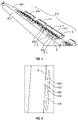
FIG. 4 is a perspective view of a core and mini-core assembly; -
FIG. 5 is a side view of the core and mini-core assembly ofFIG. 4 ; and -
FIG. 6 is a side view of the core and mini-core assembly ofFIG. 4 along a different viewing angle fromFIG. 5 . - In cases in which mini-cores are bonded to cores, the bonding paste is much stronger than the core material and forms a very aggressive bond with the core material. Thus, as will be described below, mini-cores are bonded to a core by surface bonds that are considerably simpler to accomplish than conventional bonds. The mini-core posts, studs or bumpers are dipped onto a surface of a paste in order to transfer a fixed amount of paste volume to the mini-core post, stud or bumper so that the fixed amount of paste can be used thereafter in a joint including the post, stud or bumper and another surface. In some cases, relatively thin paste can be used, as the problem of shrinking in this process does not tend to cause gaps. The paste forms a radius at the post joint.
- With reference to
FIG. 1 , a method of bonding a mini-core to a surface of a core is provided. In accordance with embodiments, the core can be a ceramic core use for forming an internal cavity of a turbine vane or blade and the surface of the core can be provided at the pressure surface side of the core. As shown inFIG. 1 , the method includes providing the mini-core with an attachment device, where the attachment device includes a protrusion of a surface of the mini-core and the protrusion includes a post, stud orbumper 101, dipping the protrusion into a supply of paste to transfer a fixed quantity of paste to theprotrusion 102 and affixing the protrusion to the surface with the fixed amount of paste interposed between the surface and theprotrusion 103. The affixing ofoperation 103 includes pressing the protrusion onto the surface to drive the paste toward forming a fillet at a base of theprotrusion 1031. - In accordance with embodiments, the paste can be an alumina-based, silica-based or zirconia-based aqueous or non-aqueous paste that can cure at or near room temperature within a time window of about six hours or less, four hours or two hours or less or, in some cases, on the order of minutes or about ~10-~20 seconds. The paste has a viscosity of about 400 to about 1700 centipoise (about 0.4 to about 1.7 Pa.s), or about 700 to about 1200 centipoise (about 0.7 to about 1.2 Pa.s), about 800 to about 900 centipoise (about 0.8 to about 0.9 Pa.s) or about 830 centipoise (about 0.83 Pa.s). In order to achieve a desired viscosity and for ease of use, the paste may include about 5% to about 20% of a thinner, about 8% to about 15% of a thinner, about 9% to about 12% of a thinner or about 10% of a thinner. The thinner can be provided as a sodium silicate solution that is blended with the paste to achieve a desired viscosity. In accordance with further embodiments, the paste can be provided as Resbond 989FS™ available from Cotronics Corporation and the thinner can be provided as A2101 fluid available from Cotronics Corporation.
- Although it is not required, each mini-core can include one or more attachment devices and a perforated plate section having a side to which the one or more attachment devices are attached and from which the one or more attachment devices extend. In these or other cases, the dipping of
operation 102 includes dipping the one or more attachment devices into the supply of paste to transfer the fixed amount of paste to each of the one or more attachment devices and the affixing ofoperation 103 includes affixing the one or more attachment devices to the surface with the fixed amount of paste interposed between the surface and each of the one or more attachment devices. In further detail, the dipping of the one or more attachment devices into the supply of paste can include simultaneously dipping the one or more attachment devices into the supply of paste and the affixing of the one or more posts to the surface can include simultaneously affixing the one or more attachment devices to the surface. - With reference to
FIG. 2 , a method of bonding multiple mini-cores to a surface of a core is provided. As above, in accordance with embodiments, the core can be a ceramic core used for forming an internal cavity of a turbine vane or blade and the surface of the core can be provided at the pressure surface side of the core. As shown inFIG. 2 , the method includes providing each of the mini-cores with one or more posts, studs orbumpers 201, simultaneously dipping each of the one or more posts, studs or bumpers of one of the mini-cores into a supply of paste to transfer a fixed quantity of paste to each of the one or more posts, studs orbumpers 202, simultaneously affixing the one or more posts, studs or bumpers to the surface with the fixed amount of paste interposed between the surface and each of the one or more posts, studs orbumpers 203 and repeating the simultaneously dipping and affixing for each of the mini-cores to form a linear array of mini-cores on thesurface 204. The simultaneously affixing ofoperation 203 can include pressing each of the one or more posts, studs or bumpers of each of the mini-cores onto the surface to drive the paste toward forming a fillet at a base of each of the one or more posts, studs orbumpers 2031. - Also as above, in accordance with embodiments, the paste can be an alumina-based, silica-based or zirconia-based aqueous or non-aqueous paste that can cure at or near room temperature within a time window of about six hours or less, four hours or two hours or less or, in some cases, on the order of minutes or about ~10-~20 seconds. The paste has a viscosity of about 400 to about 1700 centipoise (about 0.4 to about 1.7 Pa.s), or about 700 to about 1200 centipoise (about 0.7 to about 1.2 Pa.s), about 800 to about 900 centipoise (about 0.8 to about 0.9 Pa.s) or about 830 centipoise (about 0.83 Pa.s). In order to achieve a desired viscosity and for ease of use, the paste may include about 5% to about 20% of a thinner, about 8% to about 15% of a thinner, about 9% to about 12% of a thinner or about 10% of a thinner. The thinner can be provided as a sodium silicate solution that is blended with the paste to achieve a desired viscosity. In accordance with further embodiments, the paste can be provided as Resbond 989FS™ available from Cotronics Corporation and the thinner can be provided as A2101 fluid available from Cotronics Corporation.
- Although it is not required, each mini-core can include a perforated plate section having a side to which the corresponding one or more posts, studs or bumpers are attached and from which the corresponding one or more posts, studs or bumpers extend.
- With reference to
FIG. 3 , the dipping and affixing operations of the methods ofFIGS. 1 and 2 described above are illustrated graphically. As shown inFIG. 3 , an exemplary attachment device is post, stud orbumper 301, which is initially dipped into and removed from the supply ofpaste 302. The viscosity of the paste results in a fixed amount ofpaste 303 being disposed on the distal edge of the post, stud orbumper 301. Subsequently, the post, stud orbumper 301 is pressed onto thesurface 304. This causes the fixed amount ofpaste 303 to spread evenly between the distal edge of the post, stud orbumper 301 and thesurface 304 and to eventually form afillet 305 about the post, stud or bumper 301 (the final image inFIG. 3 is a side view and the other images are perspective views). Thisfillet 305 has a substantially uniform radius about the post, stud orbumper 301. - With reference to
FIGS. 4-6 , a core and mini-core assembly is provided and can be assembled by execution of the methods ofFIGS. 1 and 2 and inFIG. 3 . As shown inFIGS. 4-6 , the core and mini-core assembly includes a core 401 including asurface 402, which is substantially entirely continuous along a single plane P, a mini-core 410 andpaste 420. Thecore 401 can be a ceramic core for forming an internal cavity of a turbine blade or vane and thesurface 402 is a pressure surface side of thecore 401. The mini-core 410 includes aperforated plate section 411 and one or more posts, studs orbumpers 412 attached to and extending from aside 413 of theplate section 411. The mini-core 410 can further include anupturned side 414, which is opposite theside 413. Theupturned side 414 is generally not equipped with additional posts, studs or bumpers. As such, the mini-core 410 is cantilevered to thesurface 402. Thepaste 420 allows and provides for a bonding by which each of the one or more posts, studs orbumpers 412 is bonded to thesurface 402. - In accordance with embodiments, the
paste 420 can be an alumina-based, silica-based or zirconia-based aqueous or non-aqueous paste that can cure at or near room temperature within a time window of about six hours or less, four hours or two hours or less or, in some cases, on the order of minutes or about ~10-~20 seconds. Thepaste 420 has a viscosity of about 400 to about 1700 centipoise (about 0.4 to about 1.7 Pa.s), or about 700 to about 1200 centipoise (about 0.7 to about 1.2 Pa.s), about 800 to about 900 centipoise (about 0.8 to about 0.9 Pa.s) or about 830 centipoise (about 0.83 Pa.s). In order to achieve a desired viscosity and for ease of use, thepaste 420 may include about 5% to about 20% of a thinner, about 8% to about 15% of a thinner, about 9% to about 12% of a thinner or about 10% of a thinner. The thinner can be provided as a sodium silicate solution that is blended with thepaste 420 to achieve a desired viscosity. In accordance with further embodiments, thepaste 420 can be provided as Resbond 989FS™ available from Cotronics Corporation and the thinner can be provided as A2101 fluid available from Cotronics Corporation. - When the
paste 420 provides for the bonding, thepaste 420 includes, at each post, stud orbumper 412, a portion of thepaste 420 interposed between the post, stud orbumper 412 and a local section of thesurface 402 and a remaining portion of the paste forming a fillet 421 (seeFIG. 6 ) about the post, stud orbumper 412. Thefillet 421 can include a substantially uniform radius about the post, stud orbumper 412. - As further shown in
FIG. 4 , in accordance with embodiments, the mini-core 410 is provided asmultiple mini-cores 410 that are respectively affixed to thesurface 402 in alinear array 415. Thislinear array 415 can be assembled all at once or with each of themultiple mini-cores 410 affixed to thesurface 402 in sequence. - Technical effects and benefits of the present invention are the provision of surface bonding technique that allows a faster, easier method of bonding mini-cores to surfaces of cores, and produces a better quality radius at the foot of the post of the mini-core. Dipping the post ends just to surface contact the paste volume automatically transfers a fixed amount of paste to the joint so no precision dispensing is required. The surface bonding technique also accommodates slight core variance, is easy to automate and requires no manual post finishing touch up. A skilled technician can be able to manually make high quality bonds using this approach in about 2 minutes.
- The corresponding structures, materials, acts, and equivalents of all means or step plus function elements in the claims below are intended to include any structure, material, or act for performing the function in combination with other claimed elements as specifically claimed. The description of the present invention has been presented for purposes of illustration and description, but is not intended to be exhaustive or limited to the technical concepts in the form disclosed. Many modifications and variations will be apparent to those of ordinary skill in the art without departing from the scope the present invention, as defined in the appended claims. The embodiments were chosen and described in order to best explain the principles of the present invention and the practical application, and to enable others of ordinary skill in the art to understand the present invention for various embodiments with various modifications as are suited to the particular use contemplated.
- While the preferred embodiments to the present invention have been described, it will be understood that those skilled in the art, both now and in the future, may make various improvements and enhancements which fall within the scope of the claims which follow. These claims should be construed to maintain the proper protection for the present invention first described.
- The following clauses recite features of the invention that may or may not currently be claimed but which may serve as basis for amendment(s) and/or one or more divisional applications.
- 1. A method of bonding a mini-core to a surface of a core, the method comprising:
- providing the mini-core with an attachment device comprising a protrusion of a surface of the mini-core;
- dipping the protrusion into a supply of paste to transfer a fixed quantity of paste to the protrusion; and
- affixing the protrusion to the surface of the core with the fixed amount of paste interposed between the surface and the protrusion.
- 2. The method according to clause 1, wherein the affixing comprises pressing the protrusion onto the surface to drive the paste toward forming a fillet at a base of the protrusion.
- 3. The method according to clause 1 or 2, wherein the core is a ceramic core for forming an internal cavity of a turbine blade or vane and the surface is a pressure surface of the core.
- 4. The method according to any preceding clause, wherein the protrusion of each mini-core comprises:
- one or more posts, studs or bumpers; and
- a perforated plate section having a side to which the one or more posts, studs or bumpers are attached.
- 5. The method according to clause 4, wherein:
- the dipping comprises dipping the one or more posts, studs or bumper into the supply of paste to transfer the fixed amount of paste to each of the one or more posts, studs or bumpers; and
- the affixing comprises affixing the one or more posts, studs or bumpers to the surface with the fixed amount of paste interposed between the surface and each of the one or more posts, studs or bumpers.
- 6. The method according to clause 5, wherein:
- the dipping of the one or more posts, studs or bumpers into the supply of paste comprises simultaneously dipping the one or more posts, studs or bumpers into the supply of paste, and
- the affixing of the one or more posts, studs or bumpers to the surface comprises simultaneously affixing the one or more posts, studs or bumpers to the surface.
- 7. The method according to any preceding clause, wherein the paste has a viscosity of about 400 to about 1700 centipoise (about 0.4 to about 1.7 Pa.s).
- 8. The method according to any preceding clause, wherein the paste comprises about 90% paste and about 10% thinner.
- 9. A method of bonding multiple mini-cores to a surface of a core, the method comprising:
- providing each of the mini-cores with one or more posts, studs or bumpers;
- simultaneously dipping each of the one or more posts, studs or bumpers of one of the mini-cores into a supply of paste to transfer a fixed quantity of paste to each of the one or more posts, studs or bumpers;
- simultaneously affixing the one or more posts, studs or bumpers to the surface with the fixed amount of paste interposed between the surface and each of the one or more posts, studs or bumpers; and
- repeating the simultaneously dipping and affixing for each of the mini-cores to form a linear array of mini-cores on the surface.
- 10. The method according to clause 9, wherein the simultaneously affixing comprises pressing each of the one or more posts, studs or bumpers of each of the mini-cores onto the surface to drive the paste toward forming a fillet at a base of each of the one or more posts, studs or bumpers.
- 11. The method according to clause 9 or 10, wherein the core is a ceramic core for forming an internal cavity of a turbine blade or vane and the surface is a pressure surface of the core.
- 12. The method according to any of clauses 9 to 11, wherein each mini-core comprises a perforated plate section having a side to which the corresponding one or more posts, studs or bumpers are attached.
- 13. The method according to any of clauses 9 to 12, wherein the paste has a viscosity of about 400 to about 1700 centipoise (about 0.4 to about 1.7 Pa.s).
- 14. The method according to any of clauses 9 to 13, wherein the paste comprises about 90% paste and about 10% thinner.
Claims (15)
- A method of bonding a mini-core (410) to a surface (304, 402) of a core (401), the method comprising:providing (101) the mini-core (410) with an attachment device comprising a protrusion of a surface of the mini-core (410);dipping (102) the protrusion into a supply of paste (302, 420) to transfer a fixed quantity of paste (303, 420) to the protrusion; andaffixing (103) the protrusion to the surface (304, 402) of the core (401) with the fixed amount of paste (303, 420) interposed between the surface (304, 402) and the protrusion.
- The method according to claim 1, wherein the affixing comprises pressing (1031) the protrusion onto the surface (304, 402) to drive the paste (303, 420) toward forming a fillet (305, 421) at a base of the protrusion.
- The method according to claim 1 or 2, wherein the core (401) is a ceramic core for forming an internal cavity of a turbine blade or vane and the surface (304, 402) is a pressure surface of the core (401).
- The method according to any preceding claim, wherein the protrusion of the mini-core (410) comprises one or more posts, studs or bumpers (301, 412).
- The method according to claim 4, wherein the mini-core (410) comprises a perforated plate section (411) having a side (413) to which the one or more posts, studs or bumpers (301, 412) are attached.
- The method according to claim 4 or 5, wherein:the dipping (102) comprises dipping the one or more posts, studs or bumpers (301, 412) into the supply of paste (302, 420) to transfer the fixed amount of paste (303, 420) to each of the one or more posts, studs or bumpers (301, 412); andthe affixing (103) comprises affixing the one or more posts, studs or bumpers (301, 412) to the surface (304, 402) with the fixed amount of paste (303, 420) interposed between the surface (304, 402) and each of the one or more posts, studs or bumpers (301, 412).
- The method according to claim 6, wherein:the dipping (102) of the one or more posts, studs or bumpers (301, 412) into the supply of paste (302) comprises simultaneously dipping the one or more posts, studs or bumpers (301, 412) into the supply of paste (302, 420), andthe affixing (103) of the one or more posts, studs or bumpers (301, 412) to the surface (304, 402) comprises simultaneously affixing the one or more posts, studs or bumpers (301, 412) to the surface (402, 304).
- The method according to any preceding claim, wherein the paste (420) has a viscosity of about 400 to about 1700 centipoise (about 0.4 to about 1.7 Pa.s).
- The method according to any preceding claim, wherein multiple of the mini-cores (410) are bonded to the surface (304, 402) of the core (401), the method comprising repeating the dipping (102) and affixing (103) for each of the mini-cores (410) to form a linear array (415) of mini-cores (410) on the surface (304, 402).
- A core (401) and mini-core (410) assembly, comprising:a core (401) comprising a surface (304, 402), which is entirely continuous along a single plane (P);a mini-core (410) comprising a perforated plate section (411) having a side (413) and one or more posts, studs or bumpers (301, 412) attached to and extending from the side (413) of the plate section (411); andpaste (420) by which each of the one or more posts, studs or bumpers (301, 412) is bonded to the surface (304, 402),the paste (420) comprising, at each post, stud or bumper (301, 412) a portion of the paste (420) interposed between the post, stud or bumper (301, 412) and a local section of the surface (304, 402) and a remaining portion of the paste forming a fillet (305, 421) about the post, stud or bumper (301, 412).
- The core (401) and mini-core (410) assembly according to claim 10, wherein the fillet (305, 421) comprises a substantially uniform radius about the post, stud or bumper (301, 412).
- The core (401) and mini-core (410) assembly according to claim 10 or 11, wherein the core (401) is a ceramic core for forming an internal cavity of a turbine blade or vane and the surface (304, 402) is a pressure surface of the core (401.
- The core (401) and mini-core (410) assembly according to any of claims 10 to 12, wherein the mini-core (410) is provided as multiple mini-cores (410) respectively affixed to the surface (304, 402) in a linear array (415).
- The core and mini-core assembly according to any of claims 10 to 13, wherein the paste has a viscosity of about 400 to about 1700 centipoise (about 0.4 to about 1.7 Pa.s).
- The method according to any of claims 1 to 9 or the core (401) and mini-core (410) assembly according to any of claims 10 to 14, wherein the paste (420) comprises about 90% paste and about 10% thinner.
Applications Claiming Priority (1)
| Application Number | Priority Date | Filing Date | Title |
|---|---|---|---|
| US17/237,655 US11440146B1 (en) | 2021-04-22 | 2021-04-22 | Mini-core surface bonding |
Publications (1)
| Publication Number | Publication Date |
|---|---|
| EP4079424A1 true EP4079424A1 (en) | 2022-10-26 |
Family
ID=81345969
Family Applications (1)
| Application Number | Title | Priority Date | Filing Date |
|---|---|---|---|
| EP22169410.2A Pending EP4079424A1 (en) | 2021-04-22 | 2022-04-22 | Mini-core surface bonding |
Country Status (2)
| Country | Link |
|---|---|
| US (2) | US11440146B1 (en) |
| EP (1) | EP4079424A1 (en) |
Families Citing this family (2)
| Publication number | Priority date | Publication date | Assignee | Title |
|---|---|---|---|---|
| US11440146B1 (en) * | 2021-04-22 | 2022-09-13 | Raytheon Technologies Corporation | Mini-core surface bonding |
| US12337378B2 (en) | 2023-07-21 | 2025-06-24 | Rtx Corporation | Casting core post and socket joint |
Citations (2)
| Publication number | Priority date | Publication date | Assignee | Title |
|---|---|---|---|---|
| US20100122789A1 (en) * | 2008-11-17 | 2010-05-20 | United Technologies Corporation | Investment Casting Cores and Methods |
| US20160376989A1 (en) * | 2015-06-24 | 2016-12-29 | United Technologies Corporation | Core assembly for gas turbine engine |
Family Cites Families (10)
| Publication number | Priority date | Publication date | Assignee | Title |
|---|---|---|---|---|
| US6186217B1 (en) * | 1998-12-01 | 2001-02-13 | Howmet Research Corporation | Multipiece core assembly |
| US6637500B2 (en) * | 2001-10-24 | 2003-10-28 | United Technologies Corporation | Cores for use in precision investment casting |
| US7144220B2 (en) | 2004-07-30 | 2006-12-05 | United Technologies Corporation | Investment casting |
| US20070221359A1 (en) * | 2006-03-21 | 2007-09-27 | United Technologies Corporation | Methods and materials for attaching casting cores |
| US8302668B1 (en) * | 2011-06-08 | 2012-11-06 | United Technologies Corporation | Hybrid core assembly for a casting process |
| US9486854B2 (en) * | 2012-09-10 | 2016-11-08 | United Technologies Corporation | Ceramic and refractory metal core assembly |
| US10648668B2 (en) | 2013-07-19 | 2020-05-12 | United Technologies Corporation | Gas turbine engine ceramic component assembly and bonding material |
| US10300526B2 (en) * | 2014-02-28 | 2019-05-28 | United Technologies Corporation | Core assembly including studded spacer |
| US10987727B2 (en) | 2018-12-05 | 2021-04-27 | Raytheon Technologies Corporation | Investment casting core system |
| US11440146B1 (en) * | 2021-04-22 | 2022-09-13 | Raytheon Technologies Corporation | Mini-core surface bonding |
-
2021
- 2021-04-22 US US17/237,655 patent/US11440146B1/en active Active
-
2022
- 2022-04-22 EP EP22169410.2A patent/EP4079424A1/en active Pending
- 2022-05-06 US US17/738,531 patent/US12064836B2/en active Active
Patent Citations (2)
| Publication number | Priority date | Publication date | Assignee | Title |
|---|---|---|---|---|
| US20100122789A1 (en) * | 2008-11-17 | 2010-05-20 | United Technologies Corporation | Investment Casting Cores and Methods |
| US20160376989A1 (en) * | 2015-06-24 | 2016-12-29 | United Technologies Corporation | Core assembly for gas turbine engine |
Also Published As
| Publication number | Publication date |
|---|---|
| US12064836B2 (en) | 2024-08-20 |
| US20220339746A1 (en) | 2022-10-27 |
| US11440146B1 (en) | 2022-09-13 |
Similar Documents
| Publication | Publication Date | Title |
|---|---|---|
| EP4079424A1 (en) | Mini-core surface bonding | |
| CA2695916C (en) | Brace bar with tabbed apertures for brazing to a flow tube | |
| DE2951470A1 (en) | ACOUSTIC SURFACE WAVES (AOFW) - PRESSURE SENSORS AND ASSOCIATED CONSTRUCTION | |
| JPH05323154A (en) | Connector for optical fiber connection | |
| JP2780346B2 (en) | Mounting method of optical connector ferrule | |
| JP3455692B2 (en) | Ferrule for optical connector | |
| JP3729674B2 (en) | Manufacturing method of optical fiber terminal | |
| JP3931441B2 (en) | Optical connector assembly method | |
| JPH1131601A (en) | Chip part and manufacture thereof | |
| JPH0868917A (en) | Method for joining optical waveguide and optical fiber and optical waveguide device | |
| JP3770961B2 (en) | Optical connector and assembly method thereof | |
| JP4301426B2 (en) | External electrode forming apparatus and external electrode forming method for electronic parts | |
| JP2648208B2 (en) | Electronic component manufacturing method | |
| JPH0843641A (en) | Optical component for connection and manufacturing method thereof | |
| JPH037899Y2 (en) | ||
| JP3931440B2 (en) | Ferrule for optical connector and optical connector | |
| JP4504540B2 (en) | Ultrasonic vibrator and manufacturing method thereof | |
| JP2000147319A (en) | Hermetic structure of ferrule for optical fiber | |
| JP2019049439A (en) | Method of manufacturing measuring device | |
| JPH02288350A (en) | Bonding tool | |
| JPH0769498B2 (en) | Fuel | |
| JP3195605B2 (en) | Bonding method | |
| JP2000212517A (en) | Member bonding method | |
| JPH03167913A (en) | Seal base and production of electronic component | |
| JPH03178186A (en) | Formation of via for ceramic substrate |
Legal Events
| Date | Code | Title | Description |
|---|---|---|---|
| PUAI | Public reference made under article 153(3) epc to a published international application that has entered the european phase |
Free format text: ORIGINAL CODE: 0009012 |
|
| STAA | Information on the status of an ep patent application or granted ep patent |
Free format text: STATUS: THE APPLICATION HAS BEEN PUBLISHED |
|
| AK | Designated contracting states |
Kind code of ref document: A1 Designated state(s): AL AT BE BG CH CY CZ DE DK EE ES FI FR GB GR HR HU IE IS IT LI LT LU LV MC MK MT NL NO PL PT RO RS SE SI SK SM TR |
|
| STAA | Information on the status of an ep patent application or granted ep patent |
Free format text: STATUS: REQUEST FOR EXAMINATION WAS MADE |
|
| 17P | Request for examination filed |
Effective date: 20230426 |
|
| RBV | Designated contracting states (corrected) |
Designated state(s): AL AT BE BG CH CY CZ DE DK EE ES FI FR GB GR HR HU IE IS IT LI LT LU LV MC MK MT NL NO PL PT RO RS SE SI SK SM TR |
|
| RAP3 | Party data changed (applicant data changed or rights of an application transferred) |
Owner name: RTX CORPORATION |