EP4078760B1 - Priorisierung der stromerzeugung in einem kraftwerk, das windturbinengeneratoren umfasst - Google Patents
Priorisierung der stromerzeugung in einem kraftwerk, das windturbinengeneratoren umfasst Download PDFInfo
- Publication number
- EP4078760B1 EP4078760B1 EP20828283.0A EP20828283A EP4078760B1 EP 4078760 B1 EP4078760 B1 EP 4078760B1 EP 20828283 A EP20828283 A EP 20828283A EP 4078760 B1 EP4078760 B1 EP 4078760B1
- Authority
- EP
- European Patent Office
- Prior art keywords
- power
- generating units
- priority
- production
- power production
- Prior art date
- Legal status (The legal status is an assumption and is not a legal conclusion. Google has not performed a legal analysis and makes no representation as to the accuracy of the status listed.)
- Active
Links
Images

Classifications
-
- H—ELECTRICITY
- H02—GENERATION; CONVERSION OR DISTRIBUTION OF ELECTRIC POWER
- H02J—ELECTRIC POWER NETWORKS; CIRCUIT ARRANGEMENTS OR SYSTEMS FOR SUPPLYING OR DISTRIBUTING ELECTRIC POWER; SYSTEMS FOR STORING ELECTRIC ENERGY
- H02J3/00—Circuit arrangements for AC mains or AC distribution networks
- H02J3/001—Arrangements for handling faults or abnormalities, e.g. emergencies or contingencies
-
- H—ELECTRICITY
- H02—GENERATION; CONVERSION OR DISTRIBUTION OF ELECTRIC POWER
- H02J—ELECTRIC POWER NETWORKS; CIRCUIT ARRANGEMENTS OR SYSTEMS FOR SUPPLYING OR DISTRIBUTING ELECTRIC POWER; SYSTEMS FOR STORING ELECTRIC ENERGY
- H02J3/00—Circuit arrangements for AC mains or AC distribution networks
- H02J3/003—Load forecast, e.g. methods or systems for forecasting future load demand
-
- H—ELECTRICITY
- H02—GENERATION; CONVERSION OR DISTRIBUTION OF ELECTRIC POWER
- H02J—ELECTRIC POWER NETWORKS; CIRCUIT ARRANGEMENTS OR SYSTEMS FOR SUPPLYING OR DISTRIBUTING ELECTRIC POWER; SYSTEMS FOR STORING ELECTRIC ENERGY
- H02J3/00—Circuit arrangements for AC mains or AC distribution networks
- H02J3/004—Generation forecast, e.g. methods or systems for forecasting future energy generation
-
- H—ELECTRICITY
- H02—GENERATION; CONVERSION OR DISTRIBUTION OF ELECTRIC POWER
- H02J—ELECTRIC POWER NETWORKS; CIRCUIT ARRANGEMENTS OR SYSTEMS FOR SUPPLYING OR DISTRIBUTING ELECTRIC POWER; SYSTEMS FOR STORING ELECTRIC ENERGY
- H02J3/00—Circuit arrangements for AC mains or AC distribution networks
- H02J3/38—Arrangements for feeding a single network from two or more generators or sources in parallel; Arrangements for feeding already energised networks from additional generators or sources in parallel
- H02J3/381—Dispersed generators
-
- H—ELECTRICITY
- H02—GENERATION; CONVERSION OR DISTRIBUTION OF ELECTRIC POWER
- H02J—ELECTRIC POWER NETWORKS; CIRCUIT ARRANGEMENTS OR SYSTEMS FOR SUPPLYING OR DISTRIBUTING ELECTRIC POWER; SYSTEMS FOR STORING ELECTRIC ENERGY
- H02J3/00—Circuit arrangements for AC mains or AC distribution networks
- H02J3/38—Arrangements for feeding a single network from two or more generators or sources in parallel; Arrangements for feeding already energised networks from additional generators or sources in parallel
- H02J3/46—Controlling the sharing of generated power between the generators, sources or networks
- H02J3/466—Scheduling or selectively controlling the operation of the generators or sources, e.g. connecting or disconnecting generators to meet a demand
-
- H—ELECTRICITY
- H02—GENERATION; CONVERSION OR DISTRIBUTION OF ELECTRIC POWER
- H02J—ELECTRIC POWER NETWORKS; CIRCUIT ARRANGEMENTS OR SYSTEMS FOR SUPPLYING OR DISTRIBUTING ELECTRIC POWER; SYSTEMS FOR STORING ELECTRIC ENERGY
- H02J3/00—Circuit arrangements for AC mains or AC distribution networks
- H02J3/38—Arrangements for feeding a single network from two or more generators or sources in parallel; Arrangements for feeding already energised networks from additional generators or sources in parallel
- H02J3/46—Controlling the sharing of generated power between the generators, sources or networks
- H02J3/48—Controlling the sharing of active power
-
- H—ELECTRICITY
- H02—GENERATION; CONVERSION OR DISTRIBUTION OF ELECTRIC POWER
- H02J—ELECTRIC POWER NETWORKS; CIRCUIT ARRANGEMENTS OR SYSTEMS FOR SUPPLYING OR DISTRIBUTING ELECTRIC POWER; SYSTEMS FOR STORING ELECTRIC ENERGY
- H02J2101/00—Supply or distribution of decentralised, dispersed or local electric power generation
- H02J2101/20—Dispersed power generation using renewable energy sources
- H02J2101/28—Wind energy
-
- H—ELECTRICITY
- H02—GENERATION; CONVERSION OR DISTRIBUTION OF ELECTRIC POWER
- H02J—ELECTRIC POWER NETWORKS; CIRCUIT ARRANGEMENTS OR SYSTEMS FOR SUPPLYING OR DISTRIBUTING ELECTRIC POWER; SYSTEMS FOR STORING ELECTRIC ENERGY
- H02J2105/00—Networks for supplying or distributing electric power characterised by their spatial reach or by the load
- H02J2105/10—Local stationary networks having a local or delimited stationary reach
- H02J2105/16—Local stationary networks having a local or delimited stationary reach being internal to power sources or power generation plants
-
- Y—GENERAL TAGGING OF NEW TECHNOLOGICAL DEVELOPMENTS; GENERAL TAGGING OF CROSS-SECTIONAL TECHNOLOGIES SPANNING OVER SEVERAL SECTIONS OF THE IPC; TECHNICAL SUBJECTS COVERED BY FORMER USPC CROSS-REFERENCE ART COLLECTIONS [XRACs] AND DIGESTS
- Y02—TECHNOLOGIES OR APPLICATIONS FOR MITIGATION OR ADAPTATION AGAINST CLIMATE CHANGE
- Y02E—REDUCTION OF GREENHOUSE GAS [GHG] EMISSIONS, RELATED TO ENERGY GENERATION, TRANSMISSION OR DISTRIBUTION
- Y02E10/00—Energy generation through renewable energy sources
- Y02E10/70—Wind energy
- Y02E10/72—Wind turbines with rotation axis in wind direction
-
- Y—GENERAL TAGGING OF NEW TECHNOLOGICAL DEVELOPMENTS; GENERAL TAGGING OF CROSS-SECTIONAL TECHNOLOGIES SPANNING OVER SEVERAL SECTIONS OF THE IPC; TECHNICAL SUBJECTS COVERED BY FORMER USPC CROSS-REFERENCE ART COLLECTIONS [XRACs] AND DIGESTS
- Y02—TECHNOLOGIES OR APPLICATIONS FOR MITIGATION OR ADAPTATION AGAINST CLIMATE CHANGE
- Y02E—REDUCTION OF GREENHOUSE GAS [GHG] EMISSIONS, RELATED TO ENERGY GENERATION, TRANSMISSION OR DISTRIBUTION
- Y02E10/00—Energy generation through renewable energy sources
- Y02E10/70—Wind energy
- Y02E10/76—Power conversion electric or electronic aspects
Definitions
- the invention relates to control of power plants comprising a plurality of power generating units, particularly power plants which has one or more wind turbines and to determine prioritized power production among the power generating units of the power plant.
- the operator or owner of the power plant may have specific objectives and preferences for operating power generating units.
- the owner may have a desire to increase power production of some power generating units while decreasing power production of other power generating units, e.g. in order to prolong the lifetime or service interval of some of the power generating units by reducing the loading which is inevitably caused by power production.
- WO 2018/006920 A1 relates to a wind power plant having a plurality of wind turbine generators, a method for control wind power plant and a power plant controller arranged to communicate with the plurality of wind turbines generators, wherein each wind turbine generator in the plurality of wind turbine generators is related to a wind turbine controller and the wind turbine controller is arranged to control an active power output in its related wind turbine generator according to an active power set point received from the wind power plant controller.
- the wind power plant supplies power to a utility grid in accordance with an active power reference, such that, upon a change in the active power reference, the active power set point for each wind turbine generator is changed by a weighting factor, wherein the weighting factor for an increase of the active power reference depends on a relationship between an available active power of each wind turbine generator and an available active power of the wind power plant, and wherein the weighting factor for a decrease of the active power reference depends on a relationship between a produced active power of each wind turbine generator and an aggregated active power output of the wind power plant.
- the operator of the power generating units is able to optimize the operation of the power plant, e.g. with respect to wear and loading of the units, revenue and other power production dependent parameters, and combinations thereof such as revenue in consideration of wear.
- the method may further comprise steps of selecting the one or more power generating units of the first priority and selecting the one or more power generating units of the second priority.
- At least one, such as both, of the selections of power generating units of the first and second priorities each comprises at least two power generating units.
- the setting of the maximal allowed power production for each of the one or more power generating units of the second priority comprises,
- the method comprises selecting the one or more power generating units of the first priority and selecting the one or more power generating units of the second priority based on an operational condition of the power generating units.
- the operational condition may relate to load histories, estimated or scheduled remaining life time, remaining time to next service and/or other long term conditions, i.e. conditions which do relate to actual short term conditions.
- the selections may be performed based on the operational conditions, or based on other factors or in combination with other factors such as power tariff prices per produced power quantity.
- the selections may be performed arbitrarily, e.g. based on user preferences. For example, the operator of the power generating units may determine the selections manually.
- the selections of the one or more power generating units of the first and the second priorities are maintained for different values of the power plant reference or for variations of the power plant reference.
- the prioritizing of the power generating unit's power production is not dependent on the power plant reference, but aims at optimizing the power production over longer terms independent on variations in the power plant reference.
- the lower prioritized power generating units could be paused. However, due to wind power changes all the time or changes in incident solar power, this pausing can change to a releasing command at a next moment. These alternating changes between pausing where the power production is zero and releasing where the power production is non-zero lead to increased wear of the power generating units.
- the maximal allowed power productions of the one or more power generating units are set to given technical minimum power setpoints. Accordingly, the power generating units, such as wind turbines, are set in a power production mode, but limited to produce the smallest possible power.
- the setting of the maximal allowed power production for each of the one or more power generating units of the second priority comprises,
- the maximal allowed power production of the lower prioritized power generating units are maximized to the nominal power values to maximize the power production of the power generation units of the second priority.
- the setting of the maximal allowed power production Pmax for each of the one or more power generating units of the second priority comprises,
- the maximal allowed power productions of the lower prioritized power generating units are set according a distribution of remaining power required power production, so that the lower prioritized power generating units produces the remaining required power production, but not more, in order to allow the power generating units of the first priority to maintain the highest possible power production.
- the distribution of the first power production gap is subject to a constraint specifying that the maximal allowed power production of any one of the one or more power generating units of the second priority cannot be less than the minimum power setpoint.
- the method further comprises
- the operator of the power generating units is able to optimize the operation of the power plant over several priority levels.
- the setting of the maximal allowed power production for each of the one or more power generating units of the third priority comprises,
- the setting of the maximal allowed power production for each of the one or more power generating units of the third priority comprises,
- the maximal allowed power production of the lower prioritized power generating units are maximized to the nominal power values to maximize the power production of the power generation units of the second priority.
- the setting of the maximal allowed power production for each of the one or more power generating units of the third priority comprises,
- the maximal allowed power productions of the lower prioritized power generating units are set according a distribution of remaining power required power production, so that the lower prioritized power generating units produces the remaining required power production, but not more, in order to allow the power generating units of the first and second priorities to maintain the highest possible power production.
- the distribution of the second power production gap is subject to a constraint specifying that the maximal allowed power production of any one of the one or more power generating units of the third priority cannot be less than the minimum power setpoint.
- the method comprises operating the power generating units with the selection of the one or more power generating units of first priority, the selection of the one or more power generating units of the second priority and optionally the selection of the one or more power generating units of the third priority so that the power production of the one or more power generating units of the first priority is maximized subject to the power plant reference.
- the maximizing of the power production may comprise determination and dispatchment of power setpoints for the individual power generating units to the first priority power generating units.
- the selection of the one or more power generating units of the first priority, the selection of the one or more power generating units of the second priority and optionally the selection of the one or more power generating units of the third priority are predetermined selections.
- the priority levels of the power generating units may be determined according to known parameters such as remaining life time, load history, service interval, and other power production related parameters.
- the method comprises stopping operating the power generating units according to the method wherein the power production of the one or more power generating units of the first priority is maximized subject to the power plant reference.
- any unreasonable curtailments may be avoided. That is, whenever the central controller loses communications with any of the power generating units, the calculations of the maximal power production values may become inaccurate, so that curtailment decision from this function may become incorrect. In case the priority based procedure is stopped, normal power production control may be invoked.
- the method comprises operating the power plant in a curtailed mode where the power reference is less than a nominal plant power.
- the power plant reference, the first, second and optionally the third available power production capabilities and the maximal allowed power production represent active power levels.
- a second aspect of the invention relates to a central controller for controlling power production of a power plant which comprises a plurality of power generating units including at least one wind turbine generator, where the power plant is connected to an electrical power grid for supplying power from the power generating units to the electrical power grid, and where at the central controller is arranged to determine a maximal allowed power production and to control the power generating units according to the power plant reference, and where the central controller is arranged to perform the method according to the first aspect.
- a third aspect of the invention relates to a power plant which comprises a plurality of power generating units including at least one wind turbine generator and the central controller according to the second aspect.
- a fourth aspect of the invention relates to a computer program product comprising software code adapted to control a power plant when executed on a data processing system, the computer program product being adapted to perform the method of the first aspect.
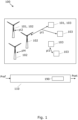
- Fig. 1 shows a power plant 100 which comprises a plurality of power generating units 101 such as wind turbines.
- the power plant 100 may be a renewable power plant comprising only renewable power generating units.
- the power generating units 101 may consist of different types of power generating units, e.g. different types of renewable power generating units such as solar power units 103 (e.g. photovoltaic solar panels) and wind turbines.
- at least one of the power producing units 101 of the power plant 100 is a wind turbine.
- the power plant 100 may comprise at least three power generating units 101 of the same or different types, i.e. a mix, of different types of power generating units.
- the power plant 100 may consist only of wind turbines 102 and in this case at least three wind turbines 102.
- the power plant 100 comprises at least two wind turbines 102 and at least one or two other power generating units 101.
- the power plant is connectable with an electrical power grid (not shown) for supplying power from the power generating units 101 to the electrical power grid.
- the power plant 100 is controlled by a central controller 110.
- the central controller 110 is arranged to control power generation from the power generating units 101 according to a power plant reference Pref which defines the desired power to be supplied to the grid from the power plant 100.
- the central controller is arranged to dispatch power set-points Pset to the power generating units, i.e. individual power set-points to each power generating unit 101 which sets the desired power productions.
- the power set-points Pset may be determined by the central controller 110 dependent on the power plant reference Pref so that the sum of power set-points Pset corresponds to the power plant reference Pref.
- the central controller 110 may in addition be configured to control the power plant's reactive power production, grid frequency control and/or other functions 190 such as determining maximal allowed power production values Pmax.
- power reference is used for the demanded power for the wind power plant, whereas power set-point is used for the demanded power for the individual power generating units.
- an objective of the central controller 110 comprised by the central controller is to ensure that the demanded power (e.g. from the Transmission System Operator (TSO)) is delivered as fast as possible, this applies both to increases and decreases in the power plant reference, Pref.
- TSO Transmission System Operator
- the wind turbine 101 may comprise a tower and a rotor with at least one rotor blade, such as three blades.
- the rotor is connected to a nacelle which is mounted on top of the tower and being adapted to drive a generator situated inside the nacelle.
- the rotor is rotatable by action of the wind.
- the wind induced rotational energy of the rotor blades is transferred via a shaft to the generator.
- the wind turbine is capable of converting kinetic energy of the wind into mechanical energy by means of the rotor blades and, subsequently, into electric power by means of the generator.
- the generator may include a power converter for converting the generator AC power into a DC power and a power inverter for converting the DC power into an AC power to be injected into the electrical power grid.
- the generator of the wind turbine 102, or other power generating unit 101 is controllable to produce power corresponding to the power set-point Pset provided by the central controller 110.
- the output power may be adjusted according to the power set-point by adjusting the pitch of the rotor blades or by controlling the power converter to adjust the power production. Similar adjustment possibilities exist for other power generating units 101.
- any reference to power such as power plant reference Pref, power set points Pset_i, available power Paval_i and other power values can define active, reactive or apparent power levels.
- the available power Paval_i of a wind turbine 102 can be determined based on the current wind speed and other parameters limiting the power production.
- the available power Paval_i may be defined as the maximum possible power output of a wind turbine under the given wind conditions.
- the available power will be close to the power output according to the power optimised power curve of a specific turbine.
- the power curve used herein is understood as the power Coefficient (Cp) optimised power curve for the specific turbine.
- the power curve represents the maximum power output of a turbine under normal operation as a function of the wind speed.
- the power generating units 101 may be arranged as selections of one or more power generating units 101 of different priorities.
- the power generating units 101 may be arranged or grouped into of selection of one or more power generating units 101 of first priority pl1, one or more power generating units 101 of second priority pl2, and optionally one or more selections of power generating units 101 of priorities from three pl3 to optionally four pl4 or higher priority levels pin.
- each selection may comprise only one power generating unit 101 so that the number of priorities equals the number of power generating units 101.
- Fig. 2 exemplifies the central controller 110 and an arrangement of the power generating units 101 into selections of priorities pl1, pl2, pl3, although the power generating units could be grouped into more priorities levels.
- the central controller 110 may be configured to dispatch power setpoints Pset_i to individual power generating units 101, where the power setpoints are used by the power controller of each power generating unit, such as a wind turbine 102, for controlling the generation of power according to the supplied power setpoint.
- the power setpoints Pset_i may be determined based on the power reference Pref and possibly other input signals such as the available power of the individual power generating units Paval_i.
- the available power Paval_i is the power available from a wind turbine 102 at the given time, calculated based on the current wind speed and other parameters limiting the power production.
- the available power Paval_i may be determined based on the incident solar power and performance characteristics of the solar panels.
- the central controller 110 is configured to determine the available power production capability Paval_pl1, Paval_pl2, ... Paval_pln, of selections of one or more power generating units 101 of different priorities ranging from the first priority pl1, to one or more higher priorities pl2,...,pln.
- the available power production capability Paval_plx of a given selection of power generating unit 101 is determined based on the available power Paval_i of individual power generating units, e.g. by summing the available power Paval_i of units 101 of a given priority group pl1,...pln.
- the central controller 110 is further configured to determine maximal allowed power production values Pmax for each power generating unit 101 in one or more selections of generating units 101 of second or higher priorities pl2,...,pln.
- the maximal allowed power production values Pmax may be provided as individual power levels for each power generating unit, or may be a common power level for two or more power generating units.
- maximal allowed power production values Pmax_pl2_i may be determined for individual power generating units of the selection of units 101 of priority pl2.
- the maximal allowed power production values Pmax are determined dependent on power production gaps Pgap1,...,Pgapn and the available power production capabilities Paval_pl2,...,Paval_pln of selections of power generating units 101 of the second or higher priorities pl2,...,pln, as described in detail elsewhere.
- the power generating units 101 have associated nominal power specifications Pnom which specify a maximal power level that the power generating unit 101 is capable of producing, a maximal power production limit, a recommended power production limit or other specification of nominal power setpoints Pnom.
- the nominal power setpoints Pnom may be provided as individual power levels for each power generating unit, or may be a common power level for two or more power generating units
- the power production of each power generating unit 101 may be constrained according to minimum power setpoints Pmin.
- the minimum power setpoints Pmin may be provided as individual power levels for each power generating unit, or may be a common power level for two or more power generating units.
- the minimum power setpoint Pmin may be given from the power production specification, i.e. the minimum power setpoint is defined by the minimum power production capability, or other defined minimum power limits such as user defined power limits.
- the minimum power setpoint may be defined according to the specifications of the solar panel.
- the minimum power setpoint Pmin represents the smallest possible power production set-point of a power generating unit 101.
- the maximal allowed power production specification Pmax of a power generating unit 101 can at least be set to the nominal power setpoint Pnom and the minimum power setpoint Pmin.
- the selections of the power generating units 101 of the first, second and/or higher priorities pl1, pl2,...,pln may be predetermined selections, or may be selected according to rules.
- the priority settings of the power generating units may be performed according to load histories, estimated or scheduled remaining life time, remaining time to next service, power tarrif prices per produced power quantity, including combinations thereof. For example, if a number of power generating units have a high accumulated load, but a relative long time to the next service, they may be given a low priority in order to limit additional loads. A power generating unit having a low scheduled remaining life time, but otherwise performs satisfactorily, may be given a high priority. Power generating units having a high tariff price may be given a high priority in order to maximize operation revenue.
- the selections are maintained.
- the selections are predetermined, e.g. determined by the operator, the selections may be maintained as long as desired. Accordingly, the selections may be maintained irrespective of the power plant reference or the power produced by the power generating units.
- the priority levels pl1,...,pln prioritizes the power generating units with respect to their active power productions.
- the power production of the one or more power generating units 101 of the first priority pl1 is prioritized over lower priorities pl2,...,pln.
- the power generation of the power generating units of the first priority pl1 may be maximized subject to the power plant reference Pref, i.e. so that they are controlled to produce as much power as possible, while lower prioritized power generating units are controlled to produce remaining power, which may not be produced by the first priority units 101, by curtailing or pausing these lower prioritized units.
- the one or more power generating units 101 of the first priority pl1 may be operated to produce a maximal power up to the power plant reference Pref.
- the priorities associated with selections of power generating units may be used for prioritizing the releasing and pausing of power generating units 101, such as wind turbines 102, during the operation where the maximal allowed power production Pmax are determined according to the priorities pl1,...pln. Accordingly, the power generating unit 101 with highest priority, i.e. a power generating unit of the selection of units 101 of first priority pl1, may be released first and paused at the latest, if needed. Oppositely, a power generating unit 101 of a selection of units 101 of lowest priority, e.g. third priority pl3, may be released latest and paused at the earliest, if needed.
- the power plant 100 is characterized by a nominal plant power Pplantnom, being the nominal power production capability.
- the power plant 100 may be operated in a curtailed mode where the power reference Pref is less than a nominal plant power Pplantnom.
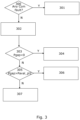
- Fig. 3 illustrates various embodiments of the invention: In step 300, it is initially determined if there is a communication fault in the communication between a power plant controller 110 and any of the power generating units 101.
- step 301 if there is a communication fault, the operation of the power generating units 101 so that the power production of power generating units 101 of the first priority pl1 is maximized subject to the power plant reference Pref is stopped.
- step 302 if there is no communication fault, the power generating units of the first priority pl1 are controlled to produce as much power as possible, up to the power plant reference Pref.
- the first available power production capability Paval_pl1 of the selection of power generating units of the first priority pl1 is determined. Furthermore, the first power production gap Pgap1 is determined as the difference between the power reference Pref and the first available power production capability Paval_pl1, i.e. Pref - Paval_pl1.
- step 303 it is determined if the first power production gap Pgap1 is greater or less than zero.
- Pgap1 the first power production gap
- step 304 if it is determined that the first power production gap Pgap1 is less than zero, or less than or equal to zero, meaning that the power generating units of the first priority pl1 are fully capable of producing power according to the power plant reference Pref, then the maximal allowed power production Pmax of the one or more power generating units 101 of the second priority pl2 is set to a minimum power setpoint Pmin, i.e. the minimum power setpoint Pmin associated with individual power generating units, where the setpoints Pmin may be different for different power generating units.
- a minimum power setpoint Pmin i.e. the minimum power setpoint Pmin associated with individual power generating units
- step 304 if there are selections of power generating units 101 having priorities lower than the second priority pl2, such as third and fourth priorities pl3, pl4, then the maximal allowed power production Pmax of power generating units of these lower prioritized selections of power generating units 101 are also set to the minimum power setpoint Pmin.
- step 305 it is determined if the first power production gap Pgap1 is greater than zero, and the second available power production capability Paval_pl2 is less than the first power production gap Pgap1, i.e. Paval_pl2 ⁇ Pgap1, meaning that the available power of the second priority selection is insufficient for the remaining power requirement.
- step 306 if step 305 is answered with a yes, the maximal allowed power production Pmax of the power generating units 101 of the second priority pl2 are set to the nominal power setpoints Pnom in order to allow the second priority power generating units to produce as much power as possible. Again, different power generating units may have different nominal power setpoints.
- step 307 if step 305 is answered with a no, because the second available power production capability Paval_pl2 is greater than the first power production gap Pgap1, meaning that the available power production capability of the second priority selection is sufficient for the remaining power requirement, the maximal allowed power production Pmax of the power generating units 101 of the second priority pl2 is set according to a distribution of the first power production gap Pgap1 among the power generating units 101 of the second priority pl2.
- Pgap1 may be equally divided among the power generating units of the second priority.
- the first power gap Pgap1 may be distributed dependent on the available power production capabilities Paval_i of individual power generating units, e.g.
- power generating units 100 having the highest available power production capabilities Paval_pl2 may be provided with higher power production levels Pmax than power generating units 100 having the lowest available power production capabilities Paval_pl2.
- the examples of distributing the first power gap Pgap1 applies equivalently to the distribution of other power gaps Pgap2,...Pgapn.
- the distribution of the of first power production gap Pgap1 among the power generating units 101 could in some situation imply that Pmax for one or more of the power generating units is set to value lower than Pmin, which is undesired.
- the distribution of the first power production gap Pgap1 may be performed so that the maximal allowed power production Pmax of any one of the one or more power generating units 101 of the second priority pl2 cannot be less than the minimum power setpoint Pmin.
- steps 302-307 provides a method wherein a maximal allowed power production Pmax is set to a non-zero value for each power generating unit in a selection of one or more power generating units 101 of second priority pl2, where the maximal allowed power production Pmax is determined dependent on whether the first power production gap Pgap1 is greater or less than zero and dependent on a comparison of the first power production gap Pgap1 with a second available power production capability Paval_pl2 of the selection of the one or more power generating units 101 of the second priority pl2.
- a second power production gap Pgap2 is determined as a difference between the first power production gap Pgap1 and the second available power production capability Paval_pl2, and it is determined if the second power production gap Pgap2 is greater or less than zero.
- the maximal allowed power production Pmax of the one or more power generating units 101 of the third priority pl3 are according to their minimum power setpoint Pmin. This follows the example in step 304, when there are selections of power generating units with priorities lower than pl2 and Pgap 1 is less than zero. Accordingly, it this case the determination of the second power production gap Pgap2 is not required since when Pgap1 ⁇ 0 if follows that also Pgap2 ⁇ 0.
- step 306 when the power plant 100 comprises a selection of power generating units of third priority pl3, since the available power Paval_pl2 of power generating units of the second priority pl2 is insufficient for satisfying the first power production gap Pgap1, the determined second power production gap Pgap2 will be greater than zero.
- step 306 if it is determined if the third available power production capability Paval_pl3 is less than the second power production gap Pgap2, meaning that the available power production capability of the third priority selection pl3 is insufficient for the remaining power requirement, the maximal allowed power production Pmax of the one or more power generating units 101 of the third priority pl3 are set to the nominal power setpoints Pnom.
- step 306 if it is determined that the third available power production capability Paval_pl3 is greater than the second power production gap Pgap2, meaning that the available power production capability of the third priority selection pl3 is sufficient for the remaining power requirement, the maximal allowed power production Pmax of the one or more power generating units 101 of the third priority pl3 are determined according to a distribution of the second power production gap Pgap2 among the one or more power generating units 101 of the third priority pl3.
- step 307 when the power plant 100 comprises a selection of power generating units of third priority pl3, since the available power Paval_pl2 of power generating units of the second priority pl2 is sufficient for satisfying the first power production gap Pgap1, the determined second power production gap Pgap2 will be less than zero. Then the maximal allowed power production Pmax of the one or more power generating units 101 of the third priority pl3 are set according to their minimum power setpoint Pmin.
- the above described principles for determining the maximal allowed power production Pmax in a situation where the power generating units comprises selections of power generating units of third priority pl3 or lower priorites provides a method wherein a maximal allowed power production Pmax is set to a non-zero value for each power generating unit in a selection of one or more power generating units 101 of third priority pl3 or lower priorites pl4,...,pln, where the maximal allowed power production Pmax is determined dependent on whether the relevant power production gap Pgap2,...Pgapn is greater or less than zero and dependent on a comparison of the power production gap with an available power production capability Paval_pl3,...Paval_pln of the selection of the one or more power generating units.
- the central controller may be configured so that the maximal allowed power production values Pmax of one or more of the power generating units may be set according to other user preferences, or may be set according to user determined maximal allowed power production values Pmax, irrespective of priorities pl1,...,pln associated with the power generating unit of interest.
Landscapes
- Engineering & Computer Science (AREA)
- Power Engineering (AREA)
- Supply And Distribution Of Alternating Current (AREA)
Claims (15)
- Verfahren zum Steuern von Leistungserzeugung aus einem Kraftwerk (100), das eine Vielzahl von Leistungserzeugungseinheiten (101) umfasst, einschließlich mindestens einer Windkraftanlage, wobei das Kraftwerk mit einem elektrischen Stromnetz verbunden ist, um Leistung von den Leistungserzeugungseinheiten an das elektrische Stromnetz zu liefern, und wobei das Kraftwerk steuerbar ist, um Leistung in Abhängigkeit von einer Kraftwerkreferenz (Pref) zu erzeugen,- Bestimmen einer ersten verfügbaren Leistungserzeugungskapazität (Paval_pl1) einer Auswahl einer oder mehrerer Leistungserzeugungseinheiten (101) erster Priorität (pl1),- Bestimmen einer ersten Leistungserzeugungslücke (Pgap1) als eine Differenz zwischen der Leistungsreferenz (Pref) und der ersten verfügbaren Leistungserzeugungskapazität (Paval_pl1),- Bestimmen, ob die erste Leistungserzeugungslücke (Pgap1) größer oder kleiner als null ist,- Festlegen einer maximal zulässigen Leistungserzeugung (Pmax) für jede Leistungserzeugungseinheit in einer Auswahl von einer oder mehreren Leistungserzeugungseinheiten (101) der zweiten Priorität (pl2) auf einen Wert ungleich null, wobei die maximal zulässige Leistungserzeugung (Pmax) abhängig davon, ob die erste Leistungserzeugungslücke (Pgap1) größer oder kleiner als null ist, und abhängig von einem Vergleich der ersten Leistungserzeugungslücke (Pgap1) mit einer zweiten verfügbaren Leistungserzeugungskapazität (Paval_pl2) der Auswahl von der einen oder den mehreren Leistungserzeugungseinheiten (101) der zweiten Priorität (pl2) bestimmt wird,
wobei das Verfahren weiter Beibehalten der Auswahlen der einen oder mehreren Leistungserzeugungseinheiten der ersten und der zweiten Priorität für unterschiedliche Werte der Kraftwerkreferenz oder für Variationen der Kraftwerkreferenz umfasst. - Verfahren nach Anspruch 1, wobei das Festlegen der maximal zulässigen Leistungserzeugung (Pmax) für jede der einen oder mehreren Leistungserzeugungseinheiten (101) der zweiten Priorität (pl2) umfasst,- wenn bestimmt wird, dass die erste Leistungserzeugungslücke (Pgap1) kleiner als null ist, dann Festlegen der maximal zulässigen Leistungserzeugung (Pmax) der einen oder mehreren Leistungserzeugungseinheiten (101) der zweiten Priorität (pl2) gemäß ihrem minimalen Leistungssollwert (Pmin), wobei der minimale Leistungssollwert einen kleinstmöglichen Leistungserzeugungssollwert der Leistungserzeugungseinheit darstellt.
- Verfahren nach einem der vorstehenden Ansprüche, das weiter Auswählen der einen oder mehreren Leistungserzeugungseinheiten der ersten Priorität und Auswählen der einen oder mehreren Leistungserzeugungseinheiten der zweiten Priorität basierend auf einem Betriebszustand der Leistungserzeugungseinheiten umfasst.
- Verfahren nach einem der vorstehenden Ansprüche, wobei das Festlegen der maximal zulässigen Leistungserzeugung (Pmax) für jede der einen oder mehreren Leistungserzeugungseinheiten (101) der zweiten Priorität (pl2) umfasst,- wenn bestimmt wird, dass die erste Leistungserzeugungslücke (Pgap1) größer als null ist und die zweite verfügbare Leistungserzeugungskapazität (Paval_pl2) kleiner als die erste Leistungserzeugungslücke (Pgap1) ist, dann Festlegen der maximal zulässigen Leistungserzeugung (Pmax) der einen oder mehreren Leistungserzeugungseinheiten (101) der zweiten Priorität (pl2) gemäß ihren Nominalleistungssollwerten (Pnom).
- Verfahren nach einem der vorstehenden Ansprüche, wobei das Festlegen der maximal zulässigen Leistungserzeugung (Pmax) für jede der einen oder mehreren Leistungserzeugungseinheiten (101) der zweiten Priorität (pl2) umfasst,- wenn bestimmt wird, dass die erste Leistungserzeugungslücke (Pgap1) größer als null ist und die zweite verfügbare Leistungserzeugungskapazität (Paval_pl2) größer als die erste Leistungserzeugungslücke (Pgap1) ist, dann Festlegen der maximal zulässigen Leistungserzeugung (Pmax) der einen oder mehreren Leistungserzeugungseinheiten (101) der zweiten Priorität (pl2) gemäß einer Verteilung der ersten Leistungserzeugungslücke (Pgap1) unter der einen oder den mehreren Leistungserzeugungseinheiten (101) der zweiten Priorität (pl2).
- Verfahren nach einem der vorstehenden Ansprüche, weiter umfassend- Bestimmen einer zweiten Leistungserzeugungslücke (Pgap2) als eine Differenz zwischen der ersten Leistungserzeugungslücke (Pgap1) und der zweiten verfügbaren Leistungserzeugungskapazität (Paval_pl2),- Bestimmen, ob die zweite Leistungserzeugungslücke (Pgap2) größer oder kleiner als null ist,- Festlegen einer maximal zulässigen Leistungserzeugung (Pmax) für jede Leistungserzeugungseinheit in einer Auswahl von einer oder mehreren Leistungserzeugungseinheiten (101) der dritten Priorität (pl3) auf einen Wert ungleich null, wobei die maximal zulässige Leistungserzeugung (Pmax) abhängig davon, ob die zweite Leistungserzeugungslücke (Pgap2) größer oder kleiner als null ist, und abhängig von einem Vergleich der zweiten Leistungserzeugungslücke (Pgap2) mit einer dritten verfügbaren Leistungserzeugungskapazität (Paval_pl3) der Auswahl von der einen oder den mehreren Leistungserzeugungseinheiten (101) der dritten Priorität (pl3) bestimmt wird.
- Verfahren nach Anspruch 6, wobei das Festlegen der maximal zulässigen Leistungserzeugung (Pmax) für jede der einen oder mehreren Leistungserzeugungseinheiten (101) der dritten Priorität (pl3) umfasst,- wenn bestimmt wird, dass die zweite Leistungserzeugungslücke (Pgap2) kleiner als null ist, dann Festlegen der maximal zulässigen Leistungserzeugung (Pmax) der einen oder mehreren Leistungserzeugungseinheiten (101) der dritten Priorität (pl3) gemäß ihrem minimalen Leistungssollwert (Pmin), wobei der minimale Leistungssollwert einen kleinstmöglichen Leistungserzeugungssollwert der Leistungserzeugungseinheit darstellt.
- Verfahren nach einem der Ansprüche 6-7, wobei das Festlegen der maximal zulässigen Leistungserzeugung (Pmax) für jede der einen oder mehreren Leistungserzeugungseinheiten (101) der dritten Priorität (pl3) umfasst,- wenn bestimmt wird, dass die zweite Leistungserzeugungslücke (Pgap2) größer als null ist und die dritte verfügbare Leistungserzeugungskapazität (Paval_pl3) kleiner als die zweite Leistungserzeugungslücke (Pgap2) ist, dann Festlegen der maximal zulässigen Leistungserzeugung (Pmax) der einen oder mehreren Leistungserzeugungseinheiten (101) der dritten Priorität (pl3) gemäß ihren Nominalleistungssollwerten (Pnom).
- Verfahren nach einem der Ansprüche 6-8, wobei das Festlegen der maximal zulässigen Leistungserzeugung (Pmax) für jede einer oder mehrerer Leistungserzeugungseinheiten (101) der dritten Priorität (pl3) umfasst,- wenn bestimmt wird, dass die zweite Leistungserzeugungslücke (Pgap2) größer als null ist und die dritte verfügbare Leistungserzeugungskapazität (Paval_pl4) größer als die zweite Leistungserzeugungslücke (Pgap1) ist, dann Festlegen der maximal zulässigen Leistungserzeugung (Pmax) der einen oder mehreren Leistungserzeugungseinheiten (101) der dritten Priorität (pl3) gemäß einer Verteilung der zweiten Leistungserzeugungslücke (Pgap2) unter der einen oder den mehreren Leistungserzeugungseinheiten (101) der dritten Priorität (pl3).
- Verfahren nach Anspruch 9, wobei die Verteilung der zweiten Leistungserzeugungslücke (Pgap2) einer Einschränkung unterliegt, die vorgibt, dass die maximal zulässige Leistungserzeugung (Pmax) einer beliebigen der einen oder mehreren Leistungserzeugungseinheiten (101) der dritten Priorität (pl3) nicht geringer sein kann als der minimale Leistungssollwert (Pmin).
- Verfahren nach einem der vorstehenden Ansprüche, bei dem im Fall einer Kommunikationsstörung bei der Kommunikation zwischen einer Parksteuervorrichtung (110) und einer beliebigen der Leistungserzeugungseinheiten der Betrieb der Leistungserzeugungseinheiten gemäß dem Verfahren gestoppt wird, wobei die Leistungserzeugung der einen oder mehreren Leistungserzeugungseinheiten (101) der ersten Priorität (pl1) in Abhängigkeit von der Kraftwerksreferenz (Pref) maximiert wird.
- Verfahren nach einem der vorstehenden Ansprüche, umfassend Betreiben des Kraftwerks in einem eingeschränkten Modus, in dem die Leistungsreferenz (Pref) geringer als eine nominale Kraftwerkleistung (Pplantnom) ist.
- Zentrale Steuereinheit (110) zum Steuern der Leistungserzeugung eines Kraftwerks (100), das eine Vielzahl von Leistungserzeugungseinheiten (101) umfasst, die mindestens eine Windkraftanlage beinhaltet, wobei das Kraftwerk mit einem elektrischen Stromnetz verbunden ist, um Leistung von den Leistungserzeugungseinheiten an das elektrische Stromnetz zu liefern, und wobei die zentrale Steuereinheit angeordnet ist, eine maximal zulässige Leistungserzeugung (Pmax) zu bestimmen und die Leistungserzeugungseinheiten (101) gemäß der Kraftwerksreferenz (Pref) zu steuern, und wobei die zentrale Steuereinheit angeordnet ist, das Verfahren nach den Ansprüchen 1-11 durchzuführen.
- Kraftwerk (100), das eine Vielzahl von Leistungserzeugungseinheiten (101) umfasst, die mindestens eine Windkraftanlage und die zentrale Steuereinheit (110) nach Anspruch 13 einschließt.
- Computerprogrammprodukt, umfassend Softwarecode, der dazu angepasst ist, ein Kraftwerk (100) zu steuern, wenn es auf einem Datenverarbeitungssystem ausgeführt wird, wobei das Computerprogrammprodukt dazu angepasst ist, das Verfahren nach einem der Ansprüche 1-12 durchzuführen.
Applications Claiming Priority (2)
| Application Number | Priority Date | Filing Date | Title |
|---|---|---|---|
| DKPA201970830 | 2019-12-20 | ||
| PCT/DK2020/050371 WO2021121511A1 (en) | 2019-12-20 | 2020-12-16 | Prioritization of power generation in a power plant comprising wind turbine generators |
Publications (3)
| Publication Number | Publication Date |
|---|---|
| EP4078760A1 EP4078760A1 (de) | 2022-10-26 |
| EP4078760B1 true EP4078760B1 (de) | 2025-02-19 |
| EP4078760C0 EP4078760C0 (de) | 2025-02-19 |
Family
ID=73855626
Family Applications (1)
| Application Number | Title | Priority Date | Filing Date |
|---|---|---|---|
| EP20828283.0A Active EP4078760B1 (de) | 2019-12-20 | 2020-12-16 | Priorisierung der stromerzeugung in einem kraftwerk, das windturbinengeneratoren umfasst |
Country Status (5)
| Country | Link |
|---|---|
| US (1) | US12261436B2 (de) |
| EP (1) | EP4078760B1 (de) |
| CN (1) | CN114902517B (de) |
| ES (1) | ES3013290T3 (de) |
| WO (1) | WO2021121511A1 (de) |
Families Citing this family (2)
| Publication number | Priority date | Publication date | Assignee | Title |
|---|---|---|---|---|
| ES3013290T3 (en) | 2019-12-20 | 2025-04-11 | Vestas Wind Sys As | Prioritization of power generation in a power plant comprising wind turbine generators |
| EP4244484B1 (de) * | 2020-11-13 | 2025-07-23 | Vestas Wind Systems A/S | Steuerung einer windenergieanlage mit windenergieanlagen bei netzfrequenzabweichung |
Family Cites Families (13)
| Publication number | Priority date | Publication date | Assignee | Title |
|---|---|---|---|---|
| CN103109085B (zh) | 2010-08-12 | 2016-06-29 | 维斯塔斯风力系统集团公司 | 风力发电站的控制 |
| US10078312B2 (en) * | 2011-03-30 | 2018-09-18 | Vestas Wind Systems A/S | Wind power plant with highly reliable real-time power control |
| EP2847457B1 (de) | 2012-05-11 | 2021-10-27 | Vestas Wind Systems A/S | Stromsystem und verfahren zum betreiben einer windenergieanlage mit einem verteilungsalgorithmus |
| US8860237B2 (en) | 2012-10-15 | 2014-10-14 | General Electric Company | System and method of selecting wind turbine generators in a wind park for curtailment of output power to provide a wind reserve |
| CA2894380A1 (en) | 2012-12-11 | 2014-06-19 | Siemens Aktiengesellschaft | Method for controlling the operation of electric energy generators and control device for performing the method |
| US9453497B2 (en) | 2014-03-18 | 2016-09-27 | General Electric Company | Method for operating a wind farm |
| KR20150124023A (ko) | 2014-04-25 | 2015-11-05 | 전자부품연구원 | 분산 에너지 자원 속성에 기초한 클러스터링을 이용한 자원 운영 방법 및 시스템 |
| WO2016078663A1 (en) | 2014-11-20 | 2016-05-26 | Vestas Wind Systems A/S | Curtailed operation of a wind power plant by deactivation of wind turbines |
| CN109416019B (zh) * | 2016-07-06 | 2020-05-05 | 维斯塔斯风力系统集团公司 | 具有多个风力涡轮发电机和发电厂控制器的风力发电厂 |
| WO2018006921A1 (en) * | 2016-07-06 | 2018-01-11 | Vestas Wind Systems A/S | A wind power plant having a plurality of wind turbine generators and a power plant controller |
| EP3533996A1 (de) * | 2018-02-28 | 2019-09-04 | Siemens Gamesa Renewable Energy A/S | Verfahren zum starten eines windparks |
| WO2019165637A1 (zh) * | 2018-03-02 | 2019-09-06 | 国网冀北电力有限公司 | 风电场群有功功率的控制方法及装置 |
| ES3013290T3 (en) | 2019-12-20 | 2025-04-11 | Vestas Wind Sys As | Prioritization of power generation in a power plant comprising wind turbine generators |
-
2020
- 2020-12-16 ES ES20828283T patent/ES3013290T3/es active Active
- 2020-12-16 EP EP20828283.0A patent/EP4078760B1/de active Active
- 2020-12-16 US US17/787,527 patent/US12261436B2/en active Active
- 2020-12-16 CN CN202080089966.0A patent/CN114902517B/zh active Active
- 2020-12-16 WO PCT/DK2020/050371 patent/WO2021121511A1/en not_active Ceased
Also Published As
| Publication number | Publication date |
|---|---|
| CN114902517B (zh) | 2026-02-17 |
| WO2021121511A1 (en) | 2021-06-24 |
| US12261436B2 (en) | 2025-03-25 |
| CN114902517A (zh) | 2022-08-12 |
| EP4078760A1 (de) | 2022-10-26 |
| US20220385065A1 (en) | 2022-12-01 |
| EP4078760C0 (de) | 2025-02-19 |
| ES3013290T3 (en) | 2025-04-11 |
Similar Documents
| Publication | Publication Date | Title |
|---|---|---|
| EP3149325B1 (de) | Windkraftanlage mit verringerten verlusten | |
| EP2227856B1 (de) | Vorrichtung und verfahren zur steuerung der blindleistung einer an ein versorgungsnetz angeschlossenen gruppe von windturbinen | |
| CN109416019B (zh) | 具有多个风力涡轮发电机和发电厂控制器的风力发电厂 | |
| EP4022735B1 (de) | Frequenzumrichter einer kraftwerksanlage mit einer elektrischen speichereinheit | |
| CN104321944B (zh) | 用于协调传统发电厂与风力发电厂之间的频率控制特性的方法 | |
| CN109416020B (zh) | 具有多个风力涡轮发电机和发电厂控制器的风力发电厂 | |
| EP3807530B1 (de) | Steuerung eines kraftwerks mit mindestens einer windturbine | |
| EP4078760B1 (de) | Priorisierung der stromerzeugung in einem kraftwerk, das windturbinengeneratoren umfasst | |
| CN114810488B (zh) | 用于控制风能设施的方法,风能设施和风电场 | |
| US11078887B2 (en) | Method for operating a wind farm | |
| EP3976958B1 (de) | Prioritätensetzung von leistungssollwerten für stromerzeugungseinheiten in einem kraftwerk | |
| US11536251B2 (en) | Prioritization of power generating units of a power plant comprising one or more wind turbine generators | |
| US11686287B2 (en) | Method of operating at least one wind turbine, and device therefor | |
| CN111433454A (zh) | 功率升降速率控制 | |
| WO2018121825A1 (en) | Frequency dependent power ramp rates for wind turbines | |
| WO2020125879A1 (en) | Levelling of fatigue levels of power generating units of a power plant comprising one or more wind turbine generators |
Legal Events
| Date | Code | Title | Description |
|---|---|---|---|
| STAA | Information on the status of an ep patent application or granted ep patent |
Free format text: STATUS: UNKNOWN |
|
| STAA | Information on the status of an ep patent application or granted ep patent |
Free format text: STATUS: THE INTERNATIONAL PUBLICATION HAS BEEN MADE |
|
| PUAI | Public reference made under article 153(3) epc to a published international application that has entered the european phase |
Free format text: ORIGINAL CODE: 0009012 |
|
| STAA | Information on the status of an ep patent application or granted ep patent |
Free format text: STATUS: REQUEST FOR EXAMINATION WAS MADE |
|
| 17P | Request for examination filed |
Effective date: 20220620 |
|
| AK | Designated contracting states |
Kind code of ref document: A1 Designated state(s): AL AT BE BG CH CY CZ DE DK EE ES FI FR GB GR HR HU IE IS IT LI LT LU LV MC MK MT NL NO PL PT RO RS SE SI SK SM TR |
|
| DAV | Request for validation of the european patent (deleted) | ||
| DAX | Request for extension of the european patent (deleted) | ||
| GRAP | Despatch of communication of intention to grant a patent |
Free format text: ORIGINAL CODE: EPIDOSNIGR1 |
|
| STAA | Information on the status of an ep patent application or granted ep patent |
Free format text: STATUS: GRANT OF PATENT IS INTENDED |
|
| RIC1 | Information provided on ipc code assigned before grant |
Ipc: H02J 3/48 20060101AFI20241011BHEP |
|
| INTG | Intention to grant announced |
Effective date: 20241105 |
|
| GRAS | Grant fee paid |
Free format text: ORIGINAL CODE: EPIDOSNIGR3 |
|
| GRAA | (expected) grant |
Free format text: ORIGINAL CODE: 0009210 |
|
| STAA | Information on the status of an ep patent application or granted ep patent |
Free format text: STATUS: THE PATENT HAS BEEN GRANTED |
|
| AK | Designated contracting states |
Kind code of ref document: B1 Designated state(s): AL AT BE BG CH CY CZ DE DK EE ES FI FR GB GR HR HU IE IS IT LI LT LU LV MC MK MT NL NO PL PT RO RS SE SI SK SM TR |
|
| REG | Reference to a national code |
Ref country code: GB Ref legal event code: FG4D |
|
| REG | Reference to a national code |
Ref country code: CH Ref legal event code: EP |
|
| REG | Reference to a national code |
Ref country code: DE Ref legal event code: R096 Ref document number: 602020046461 Country of ref document: DE |
|
| REG | Reference to a national code |
Ref country code: IE Ref legal event code: FG4D |
|
| U01 | Request for unitary effect filed |
Effective date: 20250304 |
|
| U07 | Unitary effect registered |
Designated state(s): AT BE BG DE DK EE FI FR IT LT LU LV MT NL PT RO SE SI Effective date: 20250311 |
|
| REG | Reference to a national code |
Ref country code: ES Ref legal event code: FG2A Ref document number: 3013290 Country of ref document: ES Kind code of ref document: T3 Effective date: 20250411 |
|
| PG25 | Lapsed in a contracting state [announced via postgrant information from national office to epo] |
Ref country code: RS Free format text: LAPSE BECAUSE OF FAILURE TO SUBMIT A TRANSLATION OF THE DESCRIPTION OR TO PAY THE FEE WITHIN THE PRESCRIBED TIME-LIMIT Effective date: 20250519 |
|
| PG25 | Lapsed in a contracting state [announced via postgrant information from national office to epo] |
Ref country code: PL Free format text: LAPSE BECAUSE OF FAILURE TO SUBMIT A TRANSLATION OF THE DESCRIPTION OR TO PAY THE FEE WITHIN THE PRESCRIBED TIME-LIMIT Effective date: 20250219 |
|
| PG25 | Lapsed in a contracting state [announced via postgrant information from national office to epo] |
Ref country code: NO Free format text: LAPSE BECAUSE OF FAILURE TO SUBMIT A TRANSLATION OF THE DESCRIPTION OR TO PAY THE FEE WITHIN THE PRESCRIBED TIME-LIMIT Effective date: 20250519 Ref country code: IS Free format text: LAPSE BECAUSE OF FAILURE TO SUBMIT A TRANSLATION OF THE DESCRIPTION OR TO PAY THE FEE WITHIN THE PRESCRIBED TIME-LIMIT Effective date: 20250619 |
|
| PG25 | Lapsed in a contracting state [announced via postgrant information from national office to epo] |
Ref country code: HR Free format text: LAPSE BECAUSE OF FAILURE TO SUBMIT A TRANSLATION OF THE DESCRIPTION OR TO PAY THE FEE WITHIN THE PRESCRIBED TIME-LIMIT Effective date: 20250219 |
|
| PG25 | Lapsed in a contracting state [announced via postgrant information from national office to epo] |
Ref country code: GR Free format text: LAPSE BECAUSE OF FAILURE TO SUBMIT A TRANSLATION OF THE DESCRIPTION OR TO PAY THE FEE WITHIN THE PRESCRIBED TIME-LIMIT Effective date: 20250520 |
|
| PG25 | Lapsed in a contracting state [announced via postgrant information from national office to epo] |
Ref country code: SM Free format text: LAPSE BECAUSE OF FAILURE TO SUBMIT A TRANSLATION OF THE DESCRIPTION OR TO PAY THE FEE WITHIN THE PRESCRIBED TIME-LIMIT Effective date: 20250219 |
|
| PG25 | Lapsed in a contracting state [announced via postgrant information from national office to epo] |
Ref country code: CZ Free format text: LAPSE BECAUSE OF FAILURE TO SUBMIT A TRANSLATION OF THE DESCRIPTION OR TO PAY THE FEE WITHIN THE PRESCRIBED TIME-LIMIT Effective date: 20250219 |
|
| PG25 | Lapsed in a contracting state [announced via postgrant information from national office to epo] |
Ref country code: SK Free format text: LAPSE BECAUSE OF FAILURE TO SUBMIT A TRANSLATION OF THE DESCRIPTION OR TO PAY THE FEE WITHIN THE PRESCRIBED TIME-LIMIT Effective date: 20250219 |
|
| PLBE | No opposition filed within time limit |
Free format text: ORIGINAL CODE: 0009261 |
|
| STAA | Information on the status of an ep patent application or granted ep patent |
Free format text: STATUS: NO OPPOSITION FILED WITHIN TIME LIMIT |
|
| PGFP | Annual fee paid to national office [announced via postgrant information from national office to epo] |
Ref country code: GB Payment date: 20251223 Year of fee payment: 6 |
|
| 26N | No opposition filed |
Effective date: 20251120 |
|
| U20 | Renewal fee for the european patent with unitary effect paid |
Year of fee payment: 6 Effective date: 20251223 |