EP4076552B1 - Antimikrobielle beschichtung für objekte wie etwa prothetische implantate - Google Patents
Antimikrobielle beschichtung für objekte wie etwa prothetische implantate Download PDFInfo
- Publication number
- EP4076552B1 EP4076552B1 EP20837963.6A EP20837963A EP4076552B1 EP 4076552 B1 EP4076552 B1 EP 4076552B1 EP 20837963 A EP20837963 A EP 20837963A EP 4076552 B1 EP4076552 B1 EP 4076552B1
- Authority
- EP
- European Patent Office
- Prior art keywords
- plasma
- coating
- graphene oxide
- oxygen
- hydrocarbon
- Prior art date
- Legal status (The legal status is an assumption and is not a legal conclusion. Google has not performed a legal analysis and makes no representation as to the accuracy of the status listed.)
- Active
Links
Images
Classifications
-
- A—HUMAN NECESSITIES
- A61—MEDICAL OR VETERINARY SCIENCE; HYGIENE
- A61L—METHODS OR APPARATUS FOR STERILISING MATERIALS OR OBJECTS IN GENERAL; DISINFECTION, STERILISATION OR DEODORISATION OF AIR; CHEMICAL ASPECTS OF BANDAGES, DRESSINGS, ABSORBENT PADS OR SURGICAL ARTICLES; MATERIALS FOR BANDAGES, DRESSINGS, ABSORBENT PADS OR SURGICAL ARTICLES
- A61L27/00—Materials for grafts or prostheses or for coating grafts or prostheses
- A61L27/28—Materials for coating prostheses
- A61L27/30—Inorganic materials
- A61L27/303—Carbon
-
- A—HUMAN NECESSITIES
- A61—MEDICAL OR VETERINARY SCIENCE; HYGIENE
- A61L—METHODS OR APPARATUS FOR STERILISING MATERIALS OR OBJECTS IN GENERAL; DISINFECTION, STERILISATION OR DEODORISATION OF AIR; CHEMICAL ASPECTS OF BANDAGES, DRESSINGS, ABSORBENT PADS OR SURGICAL ARTICLES; MATERIALS FOR BANDAGES, DRESSINGS, ABSORBENT PADS OR SURGICAL ARTICLES
- A61L27/00—Materials for grafts or prostheses or for coating grafts or prostheses
- A61L27/02—Inorganic materials
- A61L27/04—Metals or alloys
- A61L27/06—Titanium or titanium alloys
-
- A—HUMAN NECESSITIES
- A61—MEDICAL OR VETERINARY SCIENCE; HYGIENE
- A61L—METHODS OR APPARATUS FOR STERILISING MATERIALS OR OBJECTS IN GENERAL; DISINFECTION, STERILISATION OR DEODORISATION OF AIR; CHEMICAL ASPECTS OF BANDAGES, DRESSINGS, ABSORBENT PADS OR SURGICAL ARTICLES; MATERIALS FOR BANDAGES, DRESSINGS, ABSORBENT PADS OR SURGICAL ARTICLES
- A61L27/00—Materials for grafts or prostheses or for coating grafts or prostheses
- A61L27/50—Materials characterised by their function or physical properties, e.g. injectable or lubricating compositions, shape-memory materials, surface modified materials
- A61L27/54—Biologically active materials, e.g. therapeutic substances
-
- A—HUMAN NECESSITIES
- A61—MEDICAL OR VETERINARY SCIENCE; HYGIENE
- A61L—METHODS OR APPARATUS FOR STERILISING MATERIALS OR OBJECTS IN GENERAL; DISINFECTION, STERILISATION OR DEODORISATION OF AIR; CHEMICAL ASPECTS OF BANDAGES, DRESSINGS, ABSORBENT PADS OR SURGICAL ARTICLES; MATERIALS FOR BANDAGES, DRESSINGS, ABSORBENT PADS OR SURGICAL ARTICLES
- A61L2300/00—Biologically active materials used in bandages, wound dressings, absorbent pads or medical devices
- A61L2300/40—Biologically active materials used in bandages, wound dressings, absorbent pads or medical devices characterised by a specific therapeutic activity or mode of action
- A61L2300/404—Biocides, antimicrobial agents, antiseptic agents
-
- A—HUMAN NECESSITIES
- A61—MEDICAL OR VETERINARY SCIENCE; HYGIENE
- A61L—METHODS OR APPARATUS FOR STERILISING MATERIALS OR OBJECTS IN GENERAL; DISINFECTION, STERILISATION OR DEODORISATION OF AIR; CHEMICAL ASPECTS OF BANDAGES, DRESSINGS, ABSORBENT PADS OR SURGICAL ARTICLES; MATERIALS FOR BANDAGES, DRESSINGS, ABSORBENT PADS OR SURGICAL ARTICLES
- A61L2400/00—Materials characterised by their function or physical properties
- A61L2400/18—Modification of implant surfaces in order to improve biocompatibility, cell growth, fixation of biomolecules, e.g. plasma treatment
-
- A—HUMAN NECESSITIES
- A61—MEDICAL OR VETERINARY SCIENCE; HYGIENE
- A61L—METHODS OR APPARATUS FOR STERILISING MATERIALS OR OBJECTS IN GENERAL; DISINFECTION, STERILISATION OR DEODORISATION OF AIR; CHEMICAL ASPECTS OF BANDAGES, DRESSINGS, ABSORBENT PADS OR SURGICAL ARTICLES; MATERIALS FOR BANDAGES, DRESSINGS, ABSORBENT PADS OR SURGICAL ARTICLES
- A61L2430/00—Materials or treatment for tissue regeneration
- A61L2430/24—Materials or treatment for tissue regeneration for joint reconstruction
Definitions
- the present invention relates to an object having an anti-microbial coating. Also contemplated are methods of forming the anti-microbial coating on the object.
- Medical implants revolutionize the fields of orthopaedics and surgery by providing solutions to skeletal fractures that were not treated properly otherwise.
- Medical implants are largely made from Titanium alloys and polymers (such as PEEK).
- a fundamental requirement for medical implants is to have mechanical properties (such as Young's moduli) similar to that of bone.
- Ti is mixed with other metals to form alloys to achieve the correct value of Young modulus.
- Ti-6Al-4V is currently one of the most popular alloys for implantation.
- Al and V have been shown to be unsafe, and researchers have suggested other grades of alloys, such as Ti-30Nb-1 Fe-1 Hf, Ti-6Al-7Nb and Ti-15Sn-4Nb-2Ta-0.2Pd. All these implants materials suffer from poor integration with the human body and require extensive immune suppression process to avoid body rejection. That will escalate bacterial infection and the formation of biofilms which creates further medical complications.
- Silver and its derivatives are the most common antibacterial substance that is used currently in medical implants technology. Silver ions perform work by punching holes in bacterial membranes and bind to essential cell components like DNA, preventing the bacteria from performing basic functions. However, the actions of silver is short lived because it depends on the concentration of silver ions. While some bacteria in direct contact with silver ions would be killed, this will not prevent the growth and functioning of bacteria once the ions are depleted.
- Perrault F. et al. (“Antimicrobial properties of graphene oxide nanosheets why size matters”. ACSNano, (2015), 9, 7226 ) describes the antimicrobial activity developed by graphene oxide, specifically towards gram negative bacteria E. Coli.
- the paper observes a correlation between the dimension of the graphene oxide patches composing the surface and the antibacterial activity. This is explained as the possible penetration of the edges of the graphene oxide into the cell membrane causing irreversible damage and bacterial death. Possible release of GO flakes from the surface is unwanted. It has consequences on both the dispersion of flakes in the body where the surface is placed and on the stability of the surface on long periods.
- Ren NA et al. (“Growth and accelerated differentiation of mesenchymal stem cells on GO coated titanate with dexamethasone on surface of titanium implants”. DentMater. (2017), 33, 525 ) describe depositing a coating made by GO flakes on NaOH treated Ti. The Ti surface was subsequently functionalized by 3-APTES and GO flakes bonded to the functionalized Ti surface. A second coating was obtained by reducing the GO with hydrazine. Both the behavior of Ti + GO and Ti + rGO surface were then treated with dexamethasone (DEX) a corticosteroid generally used in all the anti-inflammatory attributes. It also possesses immunosuppression properties, and it is used as an adjuvant in antibacterial treatments.
- DEX dexamethasone
- Vaidulych M. et al. (“Deposition of Ag/a-C:H nanocomposite films with Ag surface enrichment", Plasma Proc. Polym. (2017), 1600256 ) describe an amorphous hydrogenated carbon film decorated with Ag nanoparticles to fabricate a surface possessing bactericidal properties.
- the amorphous CH film is utilized to stabilize the Ag nanoparticles and functions as a neutral matrix in which Ag nanoparticles are embedded. With time Ag ions are released form the surface thus providing bactericidal properties to the surface.
- WO 2010-094212 describes a process for functionalization of a Ti, Ti alloys or other materials used on prosthetics to induce antibacterial activity.
- the process consists in a plasma treatment utilized to deposit films, metal nanoparticles or to graft functional groups.
- Deposition of film containing metal nanoparticles e.g. Ag and Cu
- the toxic effect of prolonged release of Ag ions is also well recognised (see for example Wentong Lu et al. (Effect of surface coating on the toxicity of silver nanomaterials on human skin keratinocytes" Chem Phys Lett. 2010 487(1-3) doi:10.1016/j.cplett.2010.01.027 ), Hadrup et al.
- the applicant has addressed the problems of the prior art by providing a coating that is stable and robust, does not release toxic free-radical ions over time, and which has a significant anti-bacterial effect against a range of bacteria (Table 1).
- the coating is prepared by an initial functionalisation of the surface with an oxygen plasma to graft oxygen-based functional groups to the surface to facilitate subsequent coating of the surface with particulate graphene oxide, and then coating the graphene oxide surface with an amorphous hydrocarbon film using a hydrocarbon plasma.
- the amorphous hydrocarbon film crosslinks and therefore stabilises the graphene oxide flakes on the surface.
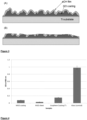
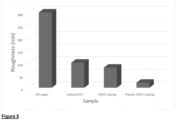
- the final step comprises etching the surface in an oxygen plasma to reduce the surface roughness ( Fig. 3 and Fig.
- the invention thus provides an anti-fouling, anti-microbial and anti-bacterial coating for object such as medical implants to prevent bacterial adhesion while being nontoxic and optionally promoting the growth and integration with bone tissue (osteo-integration), in time-controlled process.
- the carbon film is designed with precise functionalities that lead to suppression of the bacterial proliferation and growth on a time scale extended to more than 4 weeks, while encouraging the adhesion and growth of bone cells/tissue simultaneously or at a later stage (depending on the type of implants and the patient conditions).
- the coating is non-toxic and could be alternated between bacteriostatic and bactericidal effects by altering the plasma condition.
- the invention provides a method of providing an anti-microbial coating on an object, comprising the steps of:
- the anti-microbial coating may be provided on all or part of the surface of the object.
- the graphene oxide coating is deposited by coating the pre-treated object with a suspension of particulate graphene oxide.
- the amorphous hydrocarbon coating is deposited on the object by treating the object in a hydrocarbon plasma to deposit a stabilising amorphous hydrocarbon film on the graphene oxide coating by plasma enhanced chemical vapour deposition.
- the step of etching and flattening the coatings comprises treating the object in a second oxygen plasma configured to functionalise, etch and flatten the coatings on the surface of the object.
- the object comprises a metal, metal allow, or a polymer.
- the object may be formed from, or comprises a surface or part of a surface formed from, a metal or a metal alloy, or a polymer.
- the metal is titanium or a titanium alloy.
- the titanium alloy is selected from Ti-6Al-4V, Ti-30Nb-1 Fe-1 Hf, Ti-6Al-7Nb and Ti-15Sn-4Nb-2Ta-0.2Pd.
- the first oxygen plasma is obtained by feeding the plasma source with oxygen at a flow rate of 10-100, preferably 40-60 sccm, and an RF power of 200-400, preferably 250-350W. In one embodiment, the first oxygen plasma is obtained by feeding the plasma source with oxygen at a flow rate of 40-60 sccm (ideally about 50 sccm), and an RF power of 250-350W (ideally about 300W).
- the object is pre-treated in the first oxygen plasma for a period of 20 - 40 (ideally about 30) minutes.
- the suspension of particulate graphene oxide has a concentration of about 1-10, 3-5, and ideally about 4, mg/ml.
- the suspension of particulate graphene oxide is obtained by exfoliation of crystalline graphite in strong acid.
- the Hummer process may be employed to produce particulate graphene oxide ( Hummers et al. Journal of American Chemical Society. 80(6): 1339 ).
- the exfoliation process of graphite leads to the formation of a population of particulate where the mean flake dimension ranges from few nanometres up to ⁇ 30 ⁇ m, 95% of the flakes are generally in the form of monolayers.
- the graphene oxide is strongly oxidized.
- the chemical composition of GO is typically Carbon: 49 - 56%, Hydrogen: 0 - 1%, Nitrogen: 0 - 1%, Sulfur: 0 - 2%, Oxygen: 41 - 50% where about the half of the carbon atoms are typically in an oxidized from.
- the particulate graphene oxide is generally the form of an aqueous solution at a pH of 2.2 to 2.5.
- the particulate graphene oxide typically has a concentration of about 3-5 mg/ml, ideally about 4 mg/ml.
- the suspension is generally drop cast on the medical device.
- the hydrocarbon plasma is obtained by feeding the plasma source with a hydrocarbon at a flow rate of 30-150, 60-100 and ideally about 80 sccm and an RF power of 100-300, 150-250, and ideally about 200,W. In one embodiment, the hydrocarbon plasma is obtained by feeding the plasma source with a hydrocarbon at a flow rate of about 80 sccm and an RF power of about 200W.
- the object is treated in the hydrocarbon plasma for a period of 10-20, ideally about 15, minutes.
- the second oxygen plasma is obtained by feeding the plasma source with oxygen at a flow rate of 5-50,10-30, and ideally about 20 sccm and an RF power of 10-200, 50-150, and ideally about 100W. In one embodiment, the second oxygen plasma is obtained by feeding the plasma source with oxygen at a flow rate of about 20 sccm and an RF power of about 100W.
- the object is treated in the second oxygen plasma for a period ranging from 1 to 5 minutes depending on the initial surface roughness.
- the graphene oxide coating has a roughness in the micron range.
- the second oxygen plasma treatment is configured to provide a substantially flattened coating comprising in part the amorphous hydrocarbon film coating and in part the graphene oxide coating.
- substantially flattened means that the surface roughness of the substantially flattened coating is less than the surface roughness of the coating prior to the second oxygen plasma treatment.
- the object is a prosthetic implant.
- the invention also provides an object comprising an anti-microbial coating obtainable by a method of the invention.
- the invention also provides an implant having a polymer, metal or metal alloy surface and an anti-microbial coating on all or part of the surface, the coating comprising an inner film of grafted oxygen-based functional groups, a coating of graphene oxide adhered to the inner film, and a stabilising coating of amorphous hydrocarbon adhered to the graphene oxide coating, in which the coating comprises a discontinuous amorphous hydrocarbon film with pockets of exposed graphene oxide, in which the coating is etched and flattened.
- the surface of the object is or comprises a metal or metal alloy.
- the surface of the object is or comprises a titanium or titanium alloy.
- the object is a prosthetic implant.
- the term “comprise,” or variations thereof such as “comprises” or “comprising,” are to be read to indicate the inclusion of any recited integer (e.g. a feature, element, characteristic, property, method/process step or limitation) or group of integers (e.g. features, element, characteristics, properties, method/process steps or limitations) but not the exclusion of any other integer or group of integers.
- the term “comprising” is inclusive or open-ended and does not exclude additional, unrecited integers or method/process steps.
- the term "disease” is used to define any abnormal condition that impairs physiological function and is associated with specific symptoms.
- the term is used broadly to encompass any disorder, illness, abnormality, pathology, sickness, condition or syndrome in which physiological function is impaired irrespective of the nature of the aetiology (or indeed whether the aetiological basis for the disease is established). It therefore encompasses conditions arising from infection, trauma, injury, surgery, radiological ablation, age, poisoning or nutritional deficiencies.
- treatment refers to an intervention (e.g. the administration of an agent to a subject) which cures, ameliorates or lessens the symptoms of a disease or removes (or lessens the impact of) its cause(s) (for example, the reduction in accumulation of pathological levels of lysosomal enzymes).
- intervention e.g. the administration of an agent to a subject
- cures ameliorates or lessens the symptoms of a disease or removes (or lessens the impact of) its cause(s) (for example, the reduction in accumulation of pathological levels of lysosomal enzymes).
- cause(s) for example, the reduction in accumulation of pathological levels of lysosomal enzymes
- treatment refers to an intervention (e.g. the administration of an agent to a subject) which prevents or delays the onset or progression of a disease or reduces (or eradicates) its incidence within a treated population.
- intervention e.g. the administration of an agent to a subject
- treatment is used synonymously with the term “prophylaxis”.
- an effective amount or a therapeutically effective amount of an agent defines an amount that can be administered to a subject without excessive toxicity, irritation, allergic response, or other problem or complication, commensurate with a reasonable benefit/risk ratio, but one that is sufficient to provide the desired effect, e.g. the treatment or prophylaxis manifested by a permanent or temporary improvement in the subject's condition.
- the amount will vary from subject to subject, depending on the age and general condition of the individual, mode of administration and other factors. Thus, while it is not possible to specify an exact effective amount, those skilled in the art will be able to determine an appropriate "effective" amount in any individual case using routine experimentation and background general knowledge.
- a therapeutic result in this context includes eradication or lessening of symptoms, reduced pain or discomfort, prolonged survival, improved mobility and other markers of clinical improvement.
- a therapeutic result need not be a complete cure. Improvement may be observed in biological / molecular markers, clinical or observational improvements.
- the methods of the invention are applicable to humans, large racing animals (horses, camels, dogs), and domestic companion animals (cats and dogs).
- the term subject defines any subject, particularly a mammalian subject, for whom treatment is indicated.
- Mammalian subjects include, but are not limited to, humans, domestic animals, farm animals, zoo animals, sport animals, pet animals such as dogs, cats, guinea pigs, rabbits, rats, mice, horses, camels, bison, cattle, cows; primates such as apes, monkeys, orangutans, and chimpanzees; canids such as dogs and wolves; felids such as cats, lions, and tigers; equids such as horses, donkeys, and zebras; food animals such as cows, pigs, and sheep; ungulates such as deer and giraffes; and rodents such as mice, rats, hamsters and guinea pigs.
- dogs, cats, guinea pigs rabbits, rats, mice, horses, camels, bison, cattle, cows
- primates such as
- object refers to an object with a metal, metal allow or polymer surface that is suitable for treatment with plasma enhanced chemical vapour deposition to graft oxygen-based functional groups on to the surface.
- the metal may be titanium or a titanium alloy, for example Ti-6Al-4V, Ti-30Nb-1 Fe-1 Hf, Ti-6Al-7Nb and Ti-15Sn-4Nb-2Ta-0.2Pd.
- the polymer may be a polymer suitable for use as a prosthetic implant, such as polyether ether ketone (PEEK).
- the object is an implantable object, such as a prosthetic implant.
- prosthetic devices are hip and knee (and other joint) replacements used in the case of joint degeneration or for various types of arthritis, spinal fusion instruments for treatment of vertebral segments instabilities, and fracture fixation devices such as plates, screws and intramedullary rods.
- first oxygen plasma typically refers to a RF-generated oxygen plasma generated in a reactor configured to perform low pressure plasma discharges.
- the first oxygen plasma is obtained by feeding the plasma source with oxygen at a flow rate of 40-60 sccm and an RF power of 250-350W.
- plasma enhanced chemical vapour deposition refers to a vapor deposition process used to deposit thin films from a gas state (vapor) to a solid state on a substrate. Chemical reactions are involved in the process, which occur after creation of a plasma of the reacting gases.
- oxygen-based functional groups refers to a class of functional groups in which oxygen or molecule containing oxygen is present as the reactive entity.
- the oxygen-based functional groups include hydroxyl, carbonyl, or carboxyl molecules.
- the functional groups are grafted on to the object surface to develop characteristic chemical reactions with other molecules in the environment.
- the pre-treatment with an oxygen plasma leads to improvement of graphene oxide adhesion to the titanium and prevention of biological fluids permeating the graphene oxide flakes which can lead to their detachment.
- suspension of particulate graphene oxide refers to a suspension of graphene oxide particles having an average dimension of less than 1 ⁇ m.
- the suspension may be prepared by exfoliating crystalline graphite in strong acid to produce a suspension of highly oxidised graphene oxide flakes (Hummer process), and size reduction of the suspension to provide a homogenous suspension of graphene oxide. Size reducing may be performed by sieving the suspension to remove any flakes having a dimension of greater than 1m, or by sonicating the suspension to size-reduce the flakes.
- the suspension has a graphene oxide concentration of about 1-10, 3-5 or about 4, mg/ml.
- hydrocarbon plasma typically refers to plasma comprising hydrocarbon precursors that is typically generated in a reactor configured to perform low pressure plasma discharges.
- the hydrocarbon precursors may be various alkanes, for example methane and ethane. Other hydrocarbon precursors that may be employed include benzene and acetylene.
- the plasma is generally RF-generated.
- the hydrocarbon plasma is obtained by feeding the plasma source with a hydrocarbon at a flow rate of 60-100 sccm and an RF power of 150-250W.
- the hydrocarbon plasma may include non-hydrocarbon precursors, for example hydrogen to modulate the softness of the DLC coating or CO 2 to add oxygen functionalities.
- second oxygen plasma typically refers to a RF-generated oxygen plasma generated in a reactor configured to perform low pressure plasma discharges.
- the second oxygen plasma is obtained by feeding the plasma source with oxygen at a flow rate of 10 - 30 sccm and an RF power of 50-150W.
- the term "plasma reactor” as used herein typically refers to a plasma reactor configured to generate low pressure plasma discharges.
- the reactor is typically formed by a load-lock chamber to introduce the medical device into the plasma chamber for treatment.
- the load lock chamber is typically pumped down from atmospheric pressure down to 10-6 mbar.
- the evacuation of the load-lock chamber ensures a negligible degree of contaminants to enter in the plasma chamber with the introduction of the objects to be treated.
- the plasma chamber in one embodiment consists of a stainless teal ellipsoidal chamber with a diameter of ⁇ 500mm to avoid interferences of the chamber walls during the plasma treatment.
- the plasma chamber is typically equipped with a plasma source which is a commercial COPRA GTE 200 plasma source (from CCR Technology GmbH - Germany).
- the source is typically equipped with an inner matching network to couple the external RF generator, minimize the reflected RF power and optimize the transfer of the RF power to the plasma.
- the plasma source is also typically equipped with a magnetic coil. A maximum RF power is transferred to the plasma when the magnetic field is tuned to form a wave resonance (cyclotron resonance) leading to a strong increase of the ionization processes. In this configuration the plasma is generated inside the plasma source and propagated outside through the source output till to the sample surface. The samples are typically then exposed to an after-glow high density plasma but reasonably low power avoiding heat transfer during the depositions.
- the plasma reactor is typically equipped with a motorized manipulator to ensure a perfect positioning of the medical device under the plasma source.
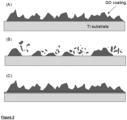
- etch and flatten refers to process in which the coating on the object is etched to flatten the surface formed by the deposited coating. This is illustrated in Figure 3 .
- the coating can be rough, the coating has peaks and troughs of differing height and depths. Etching of the surface involves many of the peaks being etched away, and in one embodiment provides a substantially flattened surface comprising the stabilising amorphous hydrocarbon coating that in parts is etched away revealing pockets of graphene oxide as illustrated in Figure 3 .
- the invention is explained through the synthesis of a multilayered coating for prosthetic implants to avoid bacterial adhesion and proliferation and promote osteo-integration.
- the deposition of the coating is composed by four steps: 1) preparation of the titanium (or other metal or polymeric based implant) based surface for the deposition of the film; 2) deposition of a first coating composed by GO; 3) deposition of a second coating of amorphous carbon/diamond like carbon with specific crosslinking properties and functional groups density aimed at stabilizing the GO on the prosthetic implant surface, and 4) further plasma treatment with different gas precursors to facilitate targeted surface functionalization.
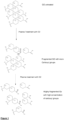
- Figure 1 shows the structure changes in GO coating after plasma treatment (fragmentation) followed by oxygen treatment to increase the concentration of carboxyl group.
- This procedure will extend the effect of "oxidative stress” that provide free radicals that leads the destruction of bacterial cells.
- Different treatment could lead to the reduction of carboxyl groups and increase the amorphous carbon content to discourage bacterial adhesion.
- the methods combined can create areas at the microscale that alternating in action or can be applied at different surfaces depending on the implant type and the required action. Hence. the coatings represent multiple anti-bacterial actions.
- the cross-linking amorphous carbon layer present bacteriostatic properties while the GO with carboxyl groups represent bactericidal effects.
- Carboxyl groups only present at the edges of the graphene oxide sheets. There density depends on the length of these GO layers. Plasma treatment can reduce the length of the GO layers by breaking them into separate smaller fragments then with oxygen plasma, it creates the environment for more carboxyl groups ( Figure 1 ).
- the plasma reactor is generally designed to perform low pressure plasma discharges.
- the reactor is typically formed by a load-lock chamber to introduce the medical device into the plasma chamber for treatment.
- the load lock chamber may be pumped down from atmospheric pressure down to 10-6 mbar.
- the evacuation of the load-lock chamber ensures a negligible degree of contaminants to enter in the plasma chamber with the introduction of the objects to be treated.
- the plasma chamber may consist of a rather big stainless teal ellipsoidal chamber with a diameter of ⁇ 500mm to avoid interferences of the chamber walls during the plasma treatment.
- the plasma chamber may be equipped with a plasma source which is a commercial COPRA GTE 200 plasma source (from CCR Technology GmbH - Germany).
- the source may be equipped with an inner matching network to couple the external RF generator, minimize the reflected RF power and optimizing the transfer of the RF power to the plasma.
- the plasma source may also be equipped with a magnetic coil. A maximum RF power is generally transferred to the plasma when the magnetic field is tuned to form a wave resonance (cyclotron resonance) leading to a strong increase of the ionization processes. In this configuration the plasma is generated inside the plasma source and propagated outside through the source output till to the sample surface. The samples are generally then exposed to an after-glow high density plasma but reasonably low power avoiding heat transfer during the depositions.
- the plasma reactor is generally equipped with a motorized manipulator to ensure a perfect positioning of the medical device under the plasma source.
- a prosthetic implant under consideration is generally made from metallic alloys based on titanium which continue to be one of the most important components for orthopaedic implants in industry due the high strength, rigidity, fracture toughness and their reliable mechanical performances.
- PEEK metals or polymers
- Prosthetic implants are medical devices used to replace parts of human hard tissue. Examples of prosthetic devices are hip and knee replacements used in the case of joint degeneration or for various types of arthritis, spinal fusion instruments solve vertebral segments instabilities, and fracture fixation devices such as plates, screws and intramedullary rods. Titanium alloys are very versatile materials due to the excellent mechanical properties and the low modulus of elasticity.
- the deposition of a graphene oxide on the surface of the titanium alloy was demonstrated to possess bactericidal and bacteriostatic properties depending on the coating process.
- Pre-treatment of the Ti alloy is a prerequisite to avoid detachment of the GO based coatings.
- an oxygen plasma treatment is performed in the low pressure plasma reactor.
- the plasma pre-treatment is intended to remove all the organic contaminations and graft favourable functional groups to stably bind the GO flakes to the Ti surface.
- the Ti surface is formed by Ti oxide which is very stable compound.
- the plasma treatment consists of an oxygen plasma obtained by feeding the plasma source with 50sccm of pure O2 at an RF power of 300W. These conditions lead to the formation of an oxygen plasma rich in oxygen radicals which are able both to eliminate the organic contaminants form the Ti surface and induce oxygen based functional group grafting on the Ti alloy surface.
- the treatment was performed for a time of 30min to optimally functionalize the alloy surface. This also ensures perfect surface homogeneity allowing optimal deposition of the GO film.
- the Graphene Oxide is generally obtained from exfoliation of crystalline graphite through a chemical processing in a strong acid solution (Hummer process - Hummers, William S.; Offeman, Richard E. (March 20, 1958). "Preparation of Graphitic Oxide”. Journal of the American Chemical Society. 80 (6): 1339. doi:10.1021/ja01539a017 .). The exfoliation process leads to a solution of strongly oxidized graphene flakes.
- the graphene is composed by a single layer of carbon atoms arranged in a hexagonal crystalline lattice.
- the graphene monolayer is a 2D material characterized by outstanding specific surface.
- the exfoliation process of graphite leads to the formation of a population of particulate where the mean flake dimension generally ranges from few nanometres up to ⁇ 30 ⁇ m, 95% of the flakes are in the form of monolayers.
- the graphene oxide appears to be strongly oxidized.
- the chemical composition of GO is typically Carbon: 49 - 56%, Hydrogen: 0 - 1%, Nitrogen: 0 - 1%, Sulfur: 0 - 2%, Oxygen: 41 - 50% where about the half of the carbon atoms are usually in an oxidized from.
- the graphene oxide is in the form of an aqueous solution at a pH of 2.2, 2.5 and a concentration of 4mg/ml. The solution is drop cast on the medical device.
- the GO coating could undergo a detachment from the Ti substrate with release of GO debris in the host biological environment.
- This case is sketched in Figure 2 .
- Ti is pretreated with an oxygen plasma as described above leading to improvement of the GO film adhesion to Ti and preventing biological fluids to permeate the GO flakes leading to their detachment.
- the GO flakes undergo screening and sieving process in order to separate the large agglomerations and large particles to keep particles under 1 micron in size.
- the pre-treatment of the Ti substrate induces an interaction between Ti and the first flakes of GO which came into contact with Ti. This treatment, however, has no effect on the topmost layers of the GO coating.
- a deposition of an amorphous hydrogenated carbon (aCH) film is made.
- the deposition of the film is performed utilizing the plasma reactor described above.
- the deposition conditions are 80sccm of CH4 precursor using a RF power of 200W for a duration of 15min.
- the pressure inside the reactor was 0.015mbar with an ion density of 1012/cm 3 thanks to the high efficient coupling between the RF excitation power and the plasma.
- the energy of the ionized species impinging the Ti surface is 15eV while the estimated current density at the Ti surface is 0.35mA/cm2.
- the plasma produced by the COPRA is quasi-neutral meaning that it is composed by roughly the same number of ions and electrons. This allows efficient deposition processes even if the conductivity of the substrates is not ensured as in the case of GO deposited Ti surfaces being GO a highly resistive material.
- the aCH coating enables the GO flakes stabilization maintaining a high biocompatibility of the Ti surface.
- Particularity of this film is the usual absence of specific polarities which make it reject the colonization of micro-organisms such as bacteria with bacteriostatic properties. This is mainly due to the difficulty of bacteria at conditioning the substrate to deposit the protein-based film (the extracellular matrix in the case of cells, the biofilm in the case of bacteria). Since no polar groups are present on the aCH surface, the interaction of this surface with proteins is rather low. To further improve the bactericidal properties of the surface, a surface etching with oxygen is performed.
- the oxygen plasma has two main effects: (1) as shown in figure 2(B) the oxygen plasma flattens the Ti coated surface.
- the plasma treatment is carefully adjusted to etch the asperities of the aCH+GO coating.
- the power and the density of the plasma (around100W, 20sccm O2).
- GO alone, or treated with N2 plasma is favourable for osteo-integration.
- an added step for surface functionalization is needed when a double effect (limiting bio films and osteo-integration) is needed.
- Crystal violet (CV) assay was used to measure biofilm formation on GO coated/uncoated glass coupons. Coupons with biofilm were washed and transferred to new plates. For fixation of the biofilms, 1 mL 99% methanol was added for 15 minutes, after which supernatants were removed and the plates were air-dried for 45 minutes. Then, 1 mL of a 0.4% (w/v) CV solution (Sigma-Aldrich, 61135-100G) was added to all wells to stain the biofilms. After 20 minutes, the excess CV was removed by washing the plates under running tap water. Finally, bound CV was released by adding 200 ⁇ L of 33% acetic acid (Sigma).
- the supernatant was added to wells of a 96-well plate and the absorbance was measured at 490 nm.
- the samples were left 10 minutes on each side under UV lights in biosafety cabinet. Finally, all steps were carried out at room temperature.
- the surface roughness was measured using an AFM technique.
- the AFM instrument was Dimension 3100 (Veeco Digital Instruments by Bruker) equipped with a NanoScope IIIa controller and Quadrex signal processor for 16-bit resolution on all 3 axes. The samples were examined under atmospheric pressure and at room temperature with the use of Tapping mode.
- MIC is defined as the lowest concentration of an antimicrobial agent that will inhibit the visible growth of a microorganism after overnight incubation. MIC was assessed for five bacterial strains including Klebsiella pneumoniae, Pseudomonas aeruginosa and PA-UHG-1, Staphylococcus epidermidis and MRSA.
- Table 1 shows the MIC results for 5 bacterial strains. (-) sign means no bacterial growth, (+) apparent bacterial growth, (0) means unchanged. This Table shows that the antibacterial process is MGO concentration dependent. But the working concentrations of 2.5 and 1.25 mg MGO/g solvents was taken into consideration when manufacturing the MGO coatings.
Landscapes
- Health & Medical Sciences (AREA)
- Chemical & Material Sciences (AREA)
- Medicinal Chemistry (AREA)
- Life Sciences & Earth Sciences (AREA)
- General Health & Medical Sciences (AREA)
- Animal Behavior & Ethology (AREA)
- Veterinary Medicine (AREA)
- Dermatology (AREA)
- Oral & Maxillofacial Surgery (AREA)
- Transplantation (AREA)
- Epidemiology (AREA)
- Public Health (AREA)
- Inorganic Chemistry (AREA)
- Engineering & Computer Science (AREA)
- Biomedical Technology (AREA)
- Molecular Biology (AREA)
- Materials For Medical Uses (AREA)
- Prostheses (AREA)
Claims (15)
- Verfahren zur Bereitstellung einer antimikrobiellen Beschichtung auf einem Objekt, das die folgenden Schritte umfasst:Vorbehandeln des Objekts in einem ersten Sauerstoffplasma, um sauerstoffbasierte funktionelle Gruppen auf die Oberfläche des Objekts durch plasmaunterstützte chemische Gasphasenabscheidung aufzupfropfen;Beschichten des vorbehandelten Objekts mit einer Suspension von partikelförmigem Graphenoxid, um eine Graphenoxid-Beschichtung auf dem Objekt bereitzustellen;Behandeln des Objekts in einem Kohlenwasserstoffplasma, um einen amorphen Kohlenwasserstofffilm auf der Graphenoxid-Beschichtung durch plasmaunterstützte chemische Gasphasenabscheidung abzuscheiden; undBehandeln des Objekts in einem zweiten Sauerstoffplasma, das zum Ätzen und Abflachen der Beschichtungen auf der Oberfläche des Objekts konfiguriert ist,wobei die Oberfläche des Objekts optional ein Polymer, Metall oder eine Metalllegierung umfasst.
- Verfahren nach Anspruch 1, in dem das Metall Titan oder eine Titanlegierung ist.
- Verfahren nach einem vorstehenden Anspruch, in dem das erste Sauerstoffplasma durch Zuführen von Sauerstoff zu der Plasmaquelle bei einer Flussrate von 40-60 sccm und einer HF-Leistung von 250-350 W erhalten wird.
- Verfahren nach Anspruch 3, in dem das Objekt in dem ersten Sauerstoffplasma für eine Dauer von 20-40 Minuten vorbehandelt wird.
- Verfahren nach einem vorstehenden Anspruch, in dem die Suspension von partikelförmigem Graphenoxid durch Exfoliation von kristallinem Graphit in starker Säure erhalten wird.
- Verfahren nach einem vorstehenden Anspruch, in dem das Kohlenwasserstoffplasma durch Zuführen eines Kohlenwasserstoffs zu der Plasmaquelle bei einer Flussrate von 60-100 sccm und einer HF-Leistung von 150-250 W erhalten wird.
- Verfahren nach Anspruch 6, in dem das Objekt in dem Kohlenwasserstoffplasma für eine Dauer von 10-20 Minuten behandelt wird.
- Verfahren nach einem vorstehenden Anspruch, in dem das zweite Sauerstoffplasma durch Zuführen von Sauerstoff zu der Plasmaquelle bei einer Flussrate von 10-30 sccm und einer HF-Leistung von 50-150 W erhalten wird.
- Verfahren nach einem vorstehenden Anspruch, in dem das Objekt in dem zweiten Sauerstoffplasma für eine Dauer im Bereich von 1 bis 5 Minuten in Abhängigkeit von der ausgehenden Oberflächenrauheit behandelt wird.
- Verfahren nach einem vorstehenden Anspruch, in dem die Graphenoxid-Beschichtung eine Rauheit in dem Mikrometerbereich aufweist.
- Verfahren nach einem vorstehenden Anspruch, in dem die zweite Sauerstoffplasmabehandlung zur Bereitstellung einer im Wesentlichen abgeflachten Oberfläche konfiguriert ist, die die amorphe Kohlenwasserstofffilmbeschichtung mit Einschlüssen von exponierter Graphenoxid-Beschichtung umfasst.
- Verfahren nach einem vorstehenden Anspruch, in dem das Objekt ein Protheseimplantat ist.
- Objekt, das eine antimikrobielle Beschichtung umfasst, die durch ein Verfahren nach einem der Ansprüche 1 bis 12 erhalten wird.
- Implantat, das eine Polymer-, Metall- oder Metalllegierungsoberfläche und eine antimikrobielle Beschichtung auf der gesamten oder einem Teil der Oberfläche aufweist, wobei die Beschichtung Folgendes umfasst: einen inneren Film von aufgepfropften sauerstoffbasierten funktionellen Gruppen, eine Beschichtung von Graphenoxid, die an dem inneren Film haftet, und eine stabilisierende Beschichtung von amorphem Kohlenwasserstoff, die an der Graphenoxid-Beschichtung haftet, in dem die Beschichtung einen unterbrochenen amorphen Kohlenwasserstofffilm mit Einschlüssen von exponiertem Graphenoxid umfasst und in dem die Beschichtung geätzt und abgeflacht ist.
- Implantat nach Anspruch 14, in dem: die Oberfläche des Objekts ein Titan oder eine Titanlegierung ist oder diese umfasst, und/oder in dem das Implantat ein Protheseimplantat ist.
Applications Claiming Priority (2)
| Application Number | Priority Date | Filing Date | Title |
|---|---|---|---|
| EP19218838 | 2019-12-20 | ||
| PCT/EP2020/086584 WO2021122854A1 (en) | 2019-12-20 | 2020-12-16 | An anti-microbial coating for objects such as prosthetic implants |
Publications (2)
| Publication Number | Publication Date |
|---|---|
| EP4076552A1 EP4076552A1 (de) | 2022-10-26 |
| EP4076552B1 true EP4076552B1 (de) | 2024-04-10 |
Family
ID=69005317
Family Applications (1)
| Application Number | Title | Priority Date | Filing Date |
|---|---|---|---|
| EP20837963.6A Active EP4076552B1 (de) | 2019-12-20 | 2020-12-16 | Antimikrobielle beschichtung für objekte wie etwa prothetische implantate |
Country Status (3)
| Country | Link |
|---|---|
| US (2) | US11857695B2 (de) |
| EP (1) | EP4076552B1 (de) |
| WO (1) | WO2021122854A1 (de) |
Families Citing this family (2)
| Publication number | Priority date | Publication date | Assignee | Title |
|---|---|---|---|---|
| EP4076552B1 (de) | 2019-12-20 | 2024-04-10 | National University of Ireland Galway | Antimikrobielle beschichtung für objekte wie etwa prothetische implantate |
| US20250262025A1 (en) * | 2024-02-16 | 2025-08-21 | King Faisal University | Antibacterial coating for dental crown and bridge fitting surface to reduce secondary caries |
Family Cites Families (2)
| Publication number | Priority date | Publication date | Assignee | Title |
|---|---|---|---|---|
| US20110046747A1 (en) | 2009-02-19 | 2011-02-24 | Kelvin Wai Kwok Yeung | Antibacterial surface and method of fabrication |
| EP4076552B1 (de) | 2019-12-20 | 2024-04-10 | National University of Ireland Galway | Antimikrobielle beschichtung für objekte wie etwa prothetische implantate |
-
2020
- 2020-12-16 EP EP20837963.6A patent/EP4076552B1/de active Active
- 2020-12-16 WO PCT/EP2020/086584 patent/WO2021122854A1/en not_active Ceased
- 2020-12-16 US US17/787,786 patent/US11857695B2/en active Active
-
2023
- 2023-05-17 US US18/319,216 patent/US12208177B2/en active Active
Also Published As
| Publication number | Publication date |
|---|---|
| EP4076552A1 (de) | 2022-10-26 |
| US12208177B2 (en) | 2025-01-28 |
| US20230043372A1 (en) | 2023-02-09 |
| US20230405182A1 (en) | 2023-12-21 |
| US11857695B2 (en) | 2024-01-02 |
| WO2021122854A1 (en) | 2021-06-24 |
Similar Documents
| Publication | Publication Date | Title |
|---|---|---|
| Chen et al. | Improved immunoregulation of ultra-low-dose silver nanoparticle-loaded TiO2 nanotubes via M2 macrophage polarization by regulating GLUT1 and autophagy | |
| Samani et al. | In vitro antibacterial evaluation of sol–gel‐derived Zn‐, Ag‐, and (Zn+ Ag)‐doped hydroxyapatite coatings against methicillin‐resistant Staphylococcus aureus | |
| Liu et al. | Antibacterial properties of nano-silver coated PEEK prepared through magnetron sputtering | |
| Berndt et al. | Antimicrobial porous hybrids consisting of bacterial nanocellulose and silver nanoparticles | |
| US12208177B2 (en) | Anti-microbial coating for objects such as prosthetic implants | |
| AU703141B2 (en) | Anti-microbial materials | |
| Liu et al. | Graphene oxide–silver nanocomposites modulate biofilm formation and extracellular polymeric substance (EPS) production | |
| Narayan et al. | Structural and biological properties of carbon nanotube composite films | |
| CN102341132B (zh) | 外科手术植入物和制造方法 | |
| CN108904893B (zh) | 一种兼具抗菌和生物相容性的复合涂层及其制备方法和应用 | |
| EP0729302A1 (de) | Antimikrobielle materialen | |
| EP1996744B1 (de) | Verfahren zur antimikrobiellen beschichtung | |
| Cui et al. | Bio‐inspired self‐renewing implant surfaces with sequential biofunctional adaptation for infectious diabetic tissue repair | |
| Streletskiy et al. | Antibacterial properties of modified aC and ta-C coatings: The effects of the sp2/sp3 ratio, oxidation, nitridation, and silver incorporation | |
| Praharaj et al. | Bioceramics for antibacterial and antiviral applications | |
| Girshevitz et al. | Solution-deposited amorphous titanium dioxide on silicone rubber: a conformal, crack-free antibacterial coating | |
| Zhang et al. | Hydrogen plasma treated-Ce-BTC nanorods enable enhanced antibacterial activity and soft tissue sealing ability | |
| Torres et al. | Stability of antibacterial self-assembled monolayers on hydroxyapatite | |
| Liu et al. | A printing-spray-transfer process for attaching biocompatible and antibacterial coatings to the surfaces of patient-specific silicone stents | |
| Prasad et al. | Nanocarbon-Polymer Composites for Next-Generation Breast Implant Materials | |
| Liu et al. | Piezoelectric-immunomodulatory electrospun membrane for enhanced repair of refractory wounds | |
| Singh et al. | Enhancing Antibacterial Properties of Titanium Implants through Covalent Conjugation of Self-Assembling Fmoc-Phe-Phe Dipeptide on Titania Nanotubes | |
| WO2021123078A1 (en) | A graphene oxide material and method for the production thereof | |
| Beltrán-Partida et al. | The promotion of antibacterial effects of Ti6Al4V alloy modified with TiO2 nanotubes using a superoxidized solution | |
| EP0875146A1 (de) | Antimikrobielle Materialien |
Legal Events
| Date | Code | Title | Description |
|---|---|---|---|
| STAA | Information on the status of an ep patent application or granted ep patent |
Free format text: STATUS: UNKNOWN |
|
| STAA | Information on the status of an ep patent application or granted ep patent |
Free format text: STATUS: THE INTERNATIONAL PUBLICATION HAS BEEN MADE |
|
| PUAI | Public reference made under article 153(3) epc to a published international application that has entered the european phase |
Free format text: ORIGINAL CODE: 0009012 |
|
| STAA | Information on the status of an ep patent application or granted ep patent |
Free format text: STATUS: REQUEST FOR EXAMINATION WAS MADE |
|
| 17P | Request for examination filed |
Effective date: 20220706 |
|
| AK | Designated contracting states |
Kind code of ref document: A1 Designated state(s): AL AT BE BG CH CY CZ DE DK EE ES FI FR GB GR HR HU IE IS IT LI LT LU LV MC MK MT NL NO PL PT RO RS SE SI SK SM TR |
|
| DAV | Request for validation of the european patent (deleted) | ||
| DAX | Request for extension of the european patent (deleted) | ||
| GRAP | Despatch of communication of intention to grant a patent |
Free format text: ORIGINAL CODE: EPIDOSNIGR1 |
|
| STAA | Information on the status of an ep patent application or granted ep patent |
Free format text: STATUS: GRANT OF PATENT IS INTENDED |
|
| INTG | Intention to grant announced |
Effective date: 20240105 |
|
| GRAS | Grant fee paid |
Free format text: ORIGINAL CODE: EPIDOSNIGR3 |
|
| GRAA | (expected) grant |
Free format text: ORIGINAL CODE: 0009210 |
|
| STAA | Information on the status of an ep patent application or granted ep patent |
Free format text: STATUS: THE PATENT HAS BEEN GRANTED |
|
| AK | Designated contracting states |
Kind code of ref document: B1 Designated state(s): AL AT BE BG CH CY CZ DE DK EE ES FI FR GB GR HR HU IE IS IT LI LT LU LV MC MK MT NL NO PL PT RO RS SE SI SK SM TR |
|
| REG | Reference to a national code |
Ref country code: GB Ref legal event code: FG4D |
|
| REG | Reference to a national code |
Ref country code: CH Ref legal event code: EP |
|
| REG | Reference to a national code |
Ref country code: DE Ref legal event code: R096 Ref document number: 602020028907 Country of ref document: DE |
|
| REG | Reference to a national code |
Ref country code: IE Ref legal event code: FG4D |
|
| REG | Reference to a national code |
Ref country code: LT Ref legal event code: MG9D |
|
| REG | Reference to a national code |
Ref country code: NL Ref legal event code: MP Effective date: 20240410 |
|
| REG | Reference to a national code |
Ref country code: AT Ref legal event code: MK05 Ref document number: 1674244 Country of ref document: AT Kind code of ref document: T Effective date: 20240410 |
|
| PG25 | Lapsed in a contracting state [announced via postgrant information from national office to epo] |
Ref country code: NL Free format text: LAPSE BECAUSE OF FAILURE TO SUBMIT A TRANSLATION OF THE DESCRIPTION OR TO PAY THE FEE WITHIN THE PRESCRIBED TIME-LIMIT Effective date: 20240410 |
|
| PG25 | Lapsed in a contracting state [announced via postgrant information from national office to epo] |
Ref country code: NL Free format text: LAPSE BECAUSE OF FAILURE TO SUBMIT A TRANSLATION OF THE DESCRIPTION OR TO PAY THE FEE WITHIN THE PRESCRIBED TIME-LIMIT Effective date: 20240410 |
|
| PG25 | Lapsed in a contracting state [announced via postgrant information from national office to epo] |
Ref country code: IS Free format text: LAPSE BECAUSE OF FAILURE TO SUBMIT A TRANSLATION OF THE DESCRIPTION OR TO PAY THE FEE WITHIN THE PRESCRIBED TIME-LIMIT Effective date: 20240810 |
|
| PG25 | Lapsed in a contracting state [announced via postgrant information from national office to epo] |
Ref country code: BG Free format text: LAPSE BECAUSE OF FAILURE TO SUBMIT A TRANSLATION OF THE DESCRIPTION OR TO PAY THE FEE WITHIN THE PRESCRIBED TIME-LIMIT Effective date: 20240410 |
|
| PG25 | Lapsed in a contracting state [announced via postgrant information from national office to epo] |
Ref country code: HR Free format text: LAPSE BECAUSE OF FAILURE TO SUBMIT A TRANSLATION OF THE DESCRIPTION OR TO PAY THE FEE WITHIN THE PRESCRIBED TIME-LIMIT Effective date: 20240410 Ref country code: FI Free format text: LAPSE BECAUSE OF FAILURE TO SUBMIT A TRANSLATION OF THE DESCRIPTION OR TO PAY THE FEE WITHIN THE PRESCRIBED TIME-LIMIT Effective date: 20240410 |
|
| PG25 | Lapsed in a contracting state [announced via postgrant information from national office to epo] |
Ref country code: GR Free format text: LAPSE BECAUSE OF FAILURE TO SUBMIT A TRANSLATION OF THE DESCRIPTION OR TO PAY THE FEE WITHIN THE PRESCRIBED TIME-LIMIT Effective date: 20240711 |
|
| PG25 | Lapsed in a contracting state [announced via postgrant information from national office to epo] |
Ref country code: PT Free format text: LAPSE BECAUSE OF FAILURE TO SUBMIT A TRANSLATION OF THE DESCRIPTION OR TO PAY THE FEE WITHIN THE PRESCRIBED TIME-LIMIT Effective date: 20240812 |
|
| PG25 | Lapsed in a contracting state [announced via postgrant information from national office to epo] |
Ref country code: ES Free format text: LAPSE BECAUSE OF FAILURE TO SUBMIT A TRANSLATION OF THE DESCRIPTION OR TO PAY THE FEE WITHIN THE PRESCRIBED TIME-LIMIT Effective date: 20240410 |
|
| PG25 | Lapsed in a contracting state [announced via postgrant information from national office to epo] |
Ref country code: AT Free format text: LAPSE BECAUSE OF FAILURE TO SUBMIT A TRANSLATION OF THE DESCRIPTION OR TO PAY THE FEE WITHIN THE PRESCRIBED TIME-LIMIT Effective date: 20240410 |
|
| PG25 | Lapsed in a contracting state [announced via postgrant information from national office to epo] |
Ref country code: PL Free format text: LAPSE BECAUSE OF FAILURE TO SUBMIT A TRANSLATION OF THE DESCRIPTION OR TO PAY THE FEE WITHIN THE PRESCRIBED TIME-LIMIT Effective date: 20240410 |
|
| PG25 | Lapsed in a contracting state [announced via postgrant information from national office to epo] |
Ref country code: LV Free format text: LAPSE BECAUSE OF FAILURE TO SUBMIT A TRANSLATION OF THE DESCRIPTION OR TO PAY THE FEE WITHIN THE PRESCRIBED TIME-LIMIT Effective date: 20240410 |
|
| PG25 | Lapsed in a contracting state [announced via postgrant information from national office to epo] |
Ref country code: PT Free format text: LAPSE BECAUSE OF FAILURE TO SUBMIT A TRANSLATION OF THE DESCRIPTION OR TO PAY THE FEE WITHIN THE PRESCRIBED TIME-LIMIT Effective date: 20240812 Ref country code: PL Free format text: LAPSE BECAUSE OF FAILURE TO SUBMIT A TRANSLATION OF THE DESCRIPTION OR TO PAY THE FEE WITHIN THE PRESCRIBED TIME-LIMIT Effective date: 20240410 Ref country code: NO Free format text: LAPSE BECAUSE OF FAILURE TO SUBMIT A TRANSLATION OF THE DESCRIPTION OR TO PAY THE FEE WITHIN THE PRESCRIBED TIME-LIMIT Effective date: 20240710 Ref country code: LV Free format text: LAPSE BECAUSE OF FAILURE TO SUBMIT A TRANSLATION OF THE DESCRIPTION OR TO PAY THE FEE WITHIN THE PRESCRIBED TIME-LIMIT Effective date: 20240410 Ref country code: IS Free format text: LAPSE BECAUSE OF FAILURE TO SUBMIT A TRANSLATION OF THE DESCRIPTION OR TO PAY THE FEE WITHIN THE PRESCRIBED TIME-LIMIT Effective date: 20240810 Ref country code: HR Free format text: LAPSE BECAUSE OF FAILURE TO SUBMIT A TRANSLATION OF THE DESCRIPTION OR TO PAY THE FEE WITHIN THE PRESCRIBED TIME-LIMIT Effective date: 20240410 Ref country code: GR Free format text: LAPSE BECAUSE OF FAILURE TO SUBMIT A TRANSLATION OF THE DESCRIPTION OR TO PAY THE FEE WITHIN THE PRESCRIBED TIME-LIMIT Effective date: 20240711 Ref country code: FI Free format text: LAPSE BECAUSE OF FAILURE TO SUBMIT A TRANSLATION OF THE DESCRIPTION OR TO PAY THE FEE WITHIN THE PRESCRIBED TIME-LIMIT Effective date: 20240410 Ref country code: ES Free format text: LAPSE BECAUSE OF FAILURE TO SUBMIT A TRANSLATION OF THE DESCRIPTION OR TO PAY THE FEE WITHIN THE PRESCRIBED TIME-LIMIT Effective date: 20240410 Ref country code: BG Free format text: LAPSE BECAUSE OF FAILURE TO SUBMIT A TRANSLATION OF THE DESCRIPTION OR TO PAY THE FEE WITHIN THE PRESCRIBED TIME-LIMIT Effective date: 20240410 Ref country code: AT Free format text: LAPSE BECAUSE OF FAILURE TO SUBMIT A TRANSLATION OF THE DESCRIPTION OR TO PAY THE FEE WITHIN THE PRESCRIBED TIME-LIMIT Effective date: 20240410 Ref country code: RS Free format text: LAPSE BECAUSE OF FAILURE TO SUBMIT A TRANSLATION OF THE DESCRIPTION OR TO PAY THE FEE WITHIN THE PRESCRIBED TIME-LIMIT Effective date: 20240710 |
|
| REG | Reference to a national code |
Ref country code: DE Ref legal event code: R097 Ref document number: 602020028907 Country of ref document: DE |
|
| PG25 | Lapsed in a contracting state [announced via postgrant information from national office to epo] |
Ref country code: DK Free format text: LAPSE BECAUSE OF FAILURE TO SUBMIT A TRANSLATION OF THE DESCRIPTION OR TO PAY THE FEE WITHIN THE PRESCRIBED TIME-LIMIT Effective date: 20240410 |
|
| PG25 | Lapsed in a contracting state [announced via postgrant information from national office to epo] |
Ref country code: EE Free format text: LAPSE BECAUSE OF FAILURE TO SUBMIT A TRANSLATION OF THE DESCRIPTION OR TO PAY THE FEE WITHIN THE PRESCRIBED TIME-LIMIT Effective date: 20240410 |
|
| PG25 | Lapsed in a contracting state [announced via postgrant information from national office to epo] |
Ref country code: CZ Free format text: LAPSE BECAUSE OF FAILURE TO SUBMIT A TRANSLATION OF THE DESCRIPTION OR TO PAY THE FEE WITHIN THE PRESCRIBED TIME-LIMIT Effective date: 20240410 |
|
| PG25 | Lapsed in a contracting state [announced via postgrant information from national office to epo] |
Ref country code: SK Free format text: LAPSE BECAUSE OF FAILURE TO SUBMIT A TRANSLATION OF THE DESCRIPTION OR TO PAY THE FEE WITHIN THE PRESCRIBED TIME-LIMIT Effective date: 20240410 Ref country code: RO Free format text: LAPSE BECAUSE OF FAILURE TO SUBMIT A TRANSLATION OF THE DESCRIPTION OR TO PAY THE FEE WITHIN THE PRESCRIBED TIME-LIMIT Effective date: 20240410 |
|
| PG25 | Lapsed in a contracting state [announced via postgrant information from national office to epo] |
Ref country code: SM Free format text: LAPSE BECAUSE OF FAILURE TO SUBMIT A TRANSLATION OF THE DESCRIPTION OR TO PAY THE FEE WITHIN THE PRESCRIBED TIME-LIMIT Effective date: 20240410 |
|
| PG25 | Lapsed in a contracting state [announced via postgrant information from national office to epo] |
Ref country code: SM Free format text: LAPSE BECAUSE OF FAILURE TO SUBMIT A TRANSLATION OF THE DESCRIPTION OR TO PAY THE FEE WITHIN THE PRESCRIBED TIME-LIMIT Effective date: 20240410 Ref country code: SK Free format text: LAPSE BECAUSE OF FAILURE TO SUBMIT A TRANSLATION OF THE DESCRIPTION OR TO PAY THE FEE WITHIN THE PRESCRIBED TIME-LIMIT Effective date: 20240410 Ref country code: RO Free format text: LAPSE BECAUSE OF FAILURE TO SUBMIT A TRANSLATION OF THE DESCRIPTION OR TO PAY THE FEE WITHIN THE PRESCRIBED TIME-LIMIT Effective date: 20240410 Ref country code: EE Free format text: LAPSE BECAUSE OF FAILURE TO SUBMIT A TRANSLATION OF THE DESCRIPTION OR TO PAY THE FEE WITHIN THE PRESCRIBED TIME-LIMIT Effective date: 20240410 Ref country code: DK Free format text: LAPSE BECAUSE OF FAILURE TO SUBMIT A TRANSLATION OF THE DESCRIPTION OR TO PAY THE FEE WITHIN THE PRESCRIBED TIME-LIMIT Effective date: 20240410 Ref country code: CZ Free format text: LAPSE BECAUSE OF FAILURE TO SUBMIT A TRANSLATION OF THE DESCRIPTION OR TO PAY THE FEE WITHIN THE PRESCRIBED TIME-LIMIT Effective date: 20240410 |
|
| PLBE | No opposition filed within time limit |
Free format text: ORIGINAL CODE: 0009261 |
|
| STAA | Information on the status of an ep patent application or granted ep patent |
Free format text: STATUS: NO OPPOSITION FILED WITHIN TIME LIMIT |
|
| 26N | No opposition filed |
Effective date: 20250113 |
|
| PG25 | Lapsed in a contracting state [announced via postgrant information from national office to epo] |
Ref country code: SI Free format text: LAPSE BECAUSE OF FAILURE TO SUBMIT A TRANSLATION OF THE DESCRIPTION OR TO PAY THE FEE WITHIN THE PRESCRIBED TIME-LIMIT Effective date: 20240410 |
|
| PG25 | Lapsed in a contracting state [announced via postgrant information from national office to epo] |
Ref country code: MC Free format text: LAPSE BECAUSE OF FAILURE TO SUBMIT A TRANSLATION OF THE DESCRIPTION OR TO PAY THE FEE WITHIN THE PRESCRIBED TIME-LIMIT Effective date: 20240410 |
|
| REG | Reference to a national code |
Ref country code: CH Ref legal event code: PL |
|
| PG25 | Lapsed in a contracting state [announced via postgrant information from national office to epo] |
Ref country code: LU Free format text: LAPSE BECAUSE OF NON-PAYMENT OF DUE FEES Effective date: 20241216 |
|
| PG25 | Lapsed in a contracting state [announced via postgrant information from national office to epo] |
Ref country code: SE Free format text: LAPSE BECAUSE OF FAILURE TO SUBMIT A TRANSLATION OF THE DESCRIPTION OR TO PAY THE FEE WITHIN THE PRESCRIBED TIME-LIMIT Effective date: 20240410 |
|
| REG | Reference to a national code |
Ref country code: BE Ref legal event code: MM Effective date: 20241231 |
|
| PG25 | Lapsed in a contracting state [announced via postgrant information from national office to epo] |
Ref country code: BE Free format text: LAPSE BECAUSE OF NON-PAYMENT OF DUE FEES Effective date: 20241231 |
|
| PG25 | Lapsed in a contracting state [announced via postgrant information from national office to epo] |
Ref country code: CH Free format text: LAPSE BECAUSE OF NON-PAYMENT OF DUE FEES Effective date: 20241231 |
|
| PGFP | Annual fee paid to national office [announced via postgrant information from national office to epo] |
Ref country code: GB Payment date: 20251215 Year of fee payment: 6 |
|
| PGFP | Annual fee paid to national office [announced via postgrant information from national office to epo] |
Ref country code: IT Payment date: 20251218 Year of fee payment: 6 |
|
| PGFP | Annual fee paid to national office [announced via postgrant information from national office to epo] |
Ref country code: FR Payment date: 20251223 Year of fee payment: 6 |
|
| PGFP | Annual fee paid to national office [announced via postgrant information from national office to epo] |
Ref country code: IE Payment date: 20251216 Year of fee payment: 6 |
|
| PGFP | Annual fee paid to national office [announced via postgrant information from national office to epo] |
Ref country code: DE Payment date: 20251229 Year of fee payment: 6 |