EP4074411A1 - Composite semi-permeable membrane - Google Patents
Composite semi-permeable membrane Download PDFInfo
- Publication number
- EP4074411A1 EP4074411A1 EP20900480.3A EP20900480A EP4074411A1 EP 4074411 A1 EP4074411 A1 EP 4074411A1 EP 20900480 A EP20900480 A EP 20900480A EP 4074411 A1 EP4074411 A1 EP 4074411A1
- Authority
- EP
- European Patent Office
- Prior art keywords
- group
- coating layer
- composite semipermeable
- semipermeable membrane
- separation functional
- Prior art date
- Legal status (The legal status is an assumption and is not a legal conclusion. Google has not performed a legal analysis and makes no representation as to the accuracy of the status listed.)
- Pending
Links
- 239000012528 membrane Substances 0.000 title claims abstract description 77
- 239000002131 composite material Substances 0.000 title claims abstract description 51
- 239000011247 coating layer Substances 0.000 claims abstract description 69
- 238000000926 separation method Methods 0.000 claims abstract description 42
- 239000002346 layers by function Substances 0.000 claims abstract description 40
- XLYOFNOQVPJJNP-UHFFFAOYSA-N water Substances O XLYOFNOQVPJJNP-UHFFFAOYSA-N 0.000 claims abstract description 31
- 239000004952 Polyamide Substances 0.000 claims abstract description 14
- 229920002647 polyamide Polymers 0.000 claims abstract description 14
- 238000001179 sorption measurement Methods 0.000 claims abstract description 12
- 108090000623 proteins and genes Proteins 0.000 claims abstract description 11
- 102000004169 proteins and genes Human genes 0.000 claims abstract description 11
- 239000000178 monomer Substances 0.000 claims description 53
- 229920001477 hydrophilic polymer Polymers 0.000 claims description 33
- -1 trimethoxysilyl propyl group Chemical group 0.000 claims description 26
- 238000004519 manufacturing process Methods 0.000 claims description 12
- 125000000217 alkyl group Chemical group 0.000 claims description 5
- 125000002947 alkylene group Chemical group 0.000 claims description 5
- 125000002496 methyl group Chemical group [H]C([H])([H])* 0.000 claims description 5
- RTZKZFJDLAIYFH-UHFFFAOYSA-N Diethyl ether Chemical compound CCOCC RTZKZFJDLAIYFH-UHFFFAOYSA-N 0.000 claims description 4
- 125000005370 alkoxysilyl group Chemical group 0.000 claims description 3
- 125000005462 imide group Chemical group 0.000 claims description 3
- 125000004435 hydrogen atom Chemical group [H]* 0.000 claims description 2
- 125000004430 oxygen atom Chemical group O* 0.000 claims description 2
- 239000000243 solution Substances 0.000 description 37
- 150000002500 ions Chemical class 0.000 description 32
- 229920000642 polymer Polymers 0.000 description 27
- KFZMGEQAYNKOFK-UHFFFAOYSA-N Isopropanol Chemical compound CC(C)O KFZMGEQAYNKOFK-UHFFFAOYSA-N 0.000 description 21
- 239000010410 layer Substances 0.000 description 20
- 239000011248 coating agent Substances 0.000 description 12
- 238000000576 coating method Methods 0.000 description 12
- 239000002253 acid Substances 0.000 description 11
- 150000001412 amines Chemical class 0.000 description 11
- 230000004907 flux Effects 0.000 description 10
- 239000000758 substrate Substances 0.000 description 9
- 235000018102 proteins Nutrition 0.000 description 8
- 125000000129 anionic group Chemical group 0.000 description 7
- 239000007864 aqueous solution Substances 0.000 description 7
- 125000002091 cationic group Chemical group 0.000 description 7
- 239000004372 Polyvinyl alcohol Substances 0.000 description 6
- 229920002451 polyvinyl alcohol Polymers 0.000 description 6
- 125000003545 alkoxy group Chemical group 0.000 description 5
- 125000004432 carbon atom Chemical group C* 0.000 description 5
- 239000005018 casein Substances 0.000 description 5
- BECPQYXYKAMYBN-UHFFFAOYSA-N casein, tech. Chemical compound NCCCCC(C(O)=O)N=C(O)C(CC(O)=O)N=C(O)C(CCC(O)=N)N=C(O)C(CC(C)C)N=C(O)C(CCC(O)=O)N=C(O)C(CC(O)=O)N=C(O)C(CCC(O)=O)N=C(O)C(C(C)O)N=C(O)C(CCC(O)=N)N=C(O)C(CCC(O)=N)N=C(O)C(CCC(O)=N)N=C(O)C(CCC(O)=O)N=C(O)C(CCC(O)=O)N=C(O)C(COP(O)(O)=O)N=C(O)C(CCC(O)=N)N=C(O)C(N)CC1=CC=CC=C1 BECPQYXYKAMYBN-UHFFFAOYSA-N 0.000 description 5
- 235000021240 caseins Nutrition 0.000 description 5
- 238000011156 evaluation Methods 0.000 description 5
- 238000000034 method Methods 0.000 description 5
- OZAIFHULBGXAKX-UHFFFAOYSA-N 2-(2-cyanopropan-2-yldiazenyl)-2-methylpropanenitrile Chemical compound N#CC(C)(C)N=NC(C)(C)C#N OZAIFHULBGXAKX-UHFFFAOYSA-N 0.000 description 4
- XDLMVUHYZWKMMD-UHFFFAOYSA-N 3-trimethoxysilylpropyl 2-methylprop-2-enoate Chemical compound CO[Si](OC)(OC)CCCOC(=O)C(C)=C XDLMVUHYZWKMMD-UHFFFAOYSA-N 0.000 description 4
- GLUUGHFHXGJENI-UHFFFAOYSA-N Piperazine Chemical compound C1CNCCN1 GLUUGHFHXGJENI-UHFFFAOYSA-N 0.000 description 4
- 230000000052 comparative effect Effects 0.000 description 4
- 238000010612 desalination reaction Methods 0.000 description 4
- 238000011033 desalting Methods 0.000 description 4
- 125000000524 functional group Chemical group 0.000 description 4
- QQVIHTHCMHWDBS-UHFFFAOYSA-N isophthalic acid Chemical compound OC(=O)C1=CC=CC(C(O)=O)=C1 QQVIHTHCMHWDBS-UHFFFAOYSA-N 0.000 description 4
- 238000005259 measurement Methods 0.000 description 4
- 239000004745 nonwoven fabric Substances 0.000 description 4
- 229920002492 poly(sulfone) Polymers 0.000 description 4
- 239000000126 substance Substances 0.000 description 4
- NIXOWILDQLNWCW-UHFFFAOYSA-M Acrylate Chemical compound [O-]C(=O)C=C NIXOWILDQLNWCW-UHFFFAOYSA-M 0.000 description 3
- OFOBLEOULBTSOW-UHFFFAOYSA-N Malonic acid Chemical compound OC(=O)CC(O)=O OFOBLEOULBTSOW-UHFFFAOYSA-N 0.000 description 3
- MUBZPKHOEPUJKR-UHFFFAOYSA-N Oxalic acid Chemical compound OC(=O)C(O)=O MUBZPKHOEPUJKR-UHFFFAOYSA-N 0.000 description 3
- HEMHJVSKTPXQMS-UHFFFAOYSA-M Sodium hydroxide Chemical compound [OH-].[Na+] HEMHJVSKTPXQMS-UHFFFAOYSA-M 0.000 description 3
- ZMANZCXQSJIPKH-UHFFFAOYSA-N Triethylamine Chemical compound CCN(CC)CC ZMANZCXQSJIPKH-UHFFFAOYSA-N 0.000 description 3
- 125000001931 aliphatic group Chemical group 0.000 description 3
- 229920001577 copolymer Polymers 0.000 description 3
- 230000000694 effects Effects 0.000 description 3
- 229960004592 isopropanol Drugs 0.000 description 3
- 229940018564 m-phenylenediamine Drugs 0.000 description 3
- 125000003566 oxetanyl group Chemical group 0.000 description 3
- 229920000139 polyethylene terephthalate Polymers 0.000 description 3
- 239000005020 polyethylene terephthalate Substances 0.000 description 3
- 239000002904 solvent Substances 0.000 description 3
- ACGJEMXWUYWELU-UHFFFAOYSA-N (2,5-dioxopyrrolidin-1-yl) 2-methylprop-2-enoate Chemical compound CC(=C)C(=O)ON1C(=O)CCC1=O ACGJEMXWUYWELU-UHFFFAOYSA-N 0.000 description 2
- WZCQRUWWHSTZEM-UHFFFAOYSA-N 1,3-phenylenediamine Chemical compound NC1=CC=CC(N)=C1 WZCQRUWWHSTZEM-UHFFFAOYSA-N 0.000 description 2
- 108091003079 Bovine Serum Albumin Proteins 0.000 description 2
- LFQSCWFLJHTTHZ-UHFFFAOYSA-N Ethanol Chemical compound CCO LFQSCWFLJHTTHZ-UHFFFAOYSA-N 0.000 description 2
- VZCYOOQTPOCHFL-OWOJBTEDSA-N Fumaric acid Chemical compound OC(=O)\C=C\C(O)=O VZCYOOQTPOCHFL-OWOJBTEDSA-N 0.000 description 2
- 229920000954 Polyglycolide Polymers 0.000 description 2
- PPBRXRYQALVLMV-UHFFFAOYSA-N Styrene Chemical compound C=CC1=CC=CC=C1 PPBRXRYQALVLMV-UHFFFAOYSA-N 0.000 description 2
- KKEYFWRCBNTPAC-UHFFFAOYSA-N Terephthalic acid Chemical compound OC(=O)C1=CC=C(C(O)=O)C=C1 KKEYFWRCBNTPAC-UHFFFAOYSA-N 0.000 description 2
- ROOXNKNUYICQNP-UHFFFAOYSA-N ammonium persulfate Chemical compound [NH4+].[NH4+].[O-]S(=O)(=O)OOS([O-])(=O)=O ROOXNKNUYICQNP-UHFFFAOYSA-N 0.000 description 2
- 150000001450 anions Chemical class 0.000 description 2
- 125000003118 aryl group Chemical group 0.000 description 2
- QMKYBPDZANOJGF-UHFFFAOYSA-N benzene-1,3,5-tricarboxylic acid Chemical compound OC(=O)C1=CC(C(O)=O)=CC(C(O)=O)=C1 QMKYBPDZANOJGF-UHFFFAOYSA-N 0.000 description 2
- 229940098773 bovine serum albumin Drugs 0.000 description 2
- 150000001768 cations Chemical class 0.000 description 2
- 238000001035 drying Methods 0.000 description 2
- 239000000835 fiber Substances 0.000 description 2
- 150000004820 halides Chemical class 0.000 description 2
- 239000000463 material Substances 0.000 description 2
- XNGIFLGASWRNHJ-UHFFFAOYSA-N phthalic acid Chemical compound OC(=O)C1=CC=CC=C1C(O)=O XNGIFLGASWRNHJ-UHFFFAOYSA-N 0.000 description 2
- 229920001707 polybutylene terephthalate Polymers 0.000 description 2
- 229920001610 polycaprolactone Polymers 0.000 description 2
- 239000004632 polycaprolactone Substances 0.000 description 2
- 229920000728 polyester Polymers 0.000 description 2
- 229920000921 polyethylene adipate Polymers 0.000 description 2
- 239000004633 polyglycolic acid Substances 0.000 description 2
- 239000003505 polymerization initiator Substances 0.000 description 2
- 229920002215 polytrimethylene terephthalate Polymers 0.000 description 2
- 238000001223 reverse osmosis Methods 0.000 description 2
- 230000035945 sensitivity Effects 0.000 description 2
- VZCYOOQTPOCHFL-UHFFFAOYSA-N trans-butenedioic acid Natural products OC(=O)C=CC(O)=O VZCYOOQTPOCHFL-UHFFFAOYSA-N 0.000 description 2
- ARCGXLSVLAOJQL-UHFFFAOYSA-N trimellitic acid Chemical compound OC(=O)C1=CC=C(C(O)=O)C(C(O)=O)=C1 ARCGXLSVLAOJQL-UHFFFAOYSA-N 0.000 description 2
- 229920003169 water-soluble polymer Polymers 0.000 description 2
- RSHKWPIEJYAPCL-UHFFFAOYSA-N (3-ethyloxetan-3-yl)methyl 2-methylprop-2-enoate Chemical compound CC(=C)C(=O)OCC1(CC)COC1 RSHKWPIEJYAPCL-UHFFFAOYSA-N 0.000 description 1
- MIOPJNTWMNEORI-GMSGAONNSA-N (S)-camphorsulfonic acid Chemical compound C1C[C@@]2(CS(O)(=O)=O)C(=O)C[C@@H]1C2(C)C MIOPJNTWMNEORI-GMSGAONNSA-N 0.000 description 1
- PXGZQGDTEZPERC-UHFFFAOYSA-N 1,4-cyclohexanedicarboxylic acid Chemical compound OC(=O)C1CCC(C(O)=O)CC1 PXGZQGDTEZPERC-UHFFFAOYSA-N 0.000 description 1
- CBCKQZAAMUWICA-UHFFFAOYSA-N 1,4-phenylenediamine Chemical compound NC1=CC=C(N)C=C1 CBCKQZAAMUWICA-UHFFFAOYSA-N 0.000 description 1
- RTBFRGCFXZNCOE-UHFFFAOYSA-N 1-methylsulfonylpiperidin-4-one Chemical compound CS(=O)(=O)N1CCC(=O)CC1 RTBFRGCFXZNCOE-UHFFFAOYSA-N 0.000 description 1
- LNWOTKRKCOXTCU-UHFFFAOYSA-N 2,3,5-triethylpiperazine Chemical compound CCC1CNC(CC)C(CC)N1 LNWOTKRKCOXTCU-UHFFFAOYSA-N 0.000 description 1
- OMEMBAXECFIRSG-UHFFFAOYSA-N 2,3,5-trimethylpiperazine Chemical compound CC1CNC(C)C(C)N1 OMEMBAXECFIRSG-UHFFFAOYSA-N 0.000 description 1
- ORCXDCBGXCHCFW-UHFFFAOYSA-N 2,5-dibutylpiperazine Chemical compound CCCCC1CNC(CCCC)CN1 ORCXDCBGXCHCFW-UHFFFAOYSA-N 0.000 description 1
- JIAOVIBEPXQRNK-UHFFFAOYSA-N 2,5-diethylpiperazine Chemical compound CCC1CNC(CC)CN1 JIAOVIBEPXQRNK-UHFFFAOYSA-N 0.000 description 1
- NSMWYRLQHIXVAP-UHFFFAOYSA-N 2,5-dimethylpiperazine Chemical compound CC1CNC(C)CN1 NSMWYRLQHIXVAP-UHFFFAOYSA-N 0.000 description 1
- IFNWESYYDINUHV-UHFFFAOYSA-N 2,6-dimethylpiperazine Chemical compound CC1CNCC(C)N1 IFNWESYYDINUHV-UHFFFAOYSA-N 0.000 description 1
- NGNBDVOYPDDBFK-UHFFFAOYSA-N 2-[2,4-di(pentan-2-yl)phenoxy]acetyl chloride Chemical compound CCCC(C)C1=CC=C(OCC(Cl)=O)C(C(C)CCC)=C1 NGNBDVOYPDDBFK-UHFFFAOYSA-N 0.000 description 1
- JOMNTHCQHJPVAZ-UHFFFAOYSA-N 2-methylpiperazine Chemical compound CC1CNCCN1 JOMNTHCQHJPVAZ-UHFFFAOYSA-N 0.000 description 1
- FNJWLOHHZVGUIX-UHFFFAOYSA-N 2-propylpiperazine Chemical compound CCCC1CNCCN1 FNJWLOHHZVGUIX-UHFFFAOYSA-N 0.000 description 1
- DOYKFSOCSXVQAN-UHFFFAOYSA-N 3-[diethoxy(methyl)silyl]propyl 2-methylprop-2-enoate Chemical compound CCO[Si](C)(OCC)CCCOC(=O)C(C)=C DOYKFSOCSXVQAN-UHFFFAOYSA-N 0.000 description 1
- HHSBHVJQXZLIRW-UHFFFAOYSA-N 3-n,3-n-dimethylbenzene-1,3-diamine Chemical compound CN(C)C1=CC=CC(N)=C1 HHSBHVJQXZLIRW-UHFFFAOYSA-N 0.000 description 1
- QNGVNLMMEQUVQK-UHFFFAOYSA-N 4-n,4-n-diethylbenzene-1,4-diamine Chemical compound CCN(CC)C1=CC=C(N)C=C1 QNGVNLMMEQUVQK-UHFFFAOYSA-N 0.000 description 1
- IJGRMHOSHXDMSA-UHFFFAOYSA-N Atomic nitrogen Chemical compound N#N IJGRMHOSHXDMSA-UHFFFAOYSA-N 0.000 description 1
- 239000004342 Benzoyl peroxide Substances 0.000 description 1
- OMPJBNCRMGITSC-UHFFFAOYSA-N Benzoylperoxide Chemical compound C=1C=CC=CC=1C(=O)OOC(=O)C1=CC=CC=C1 OMPJBNCRMGITSC-UHFFFAOYSA-N 0.000 description 1
- VEXZGXHMUGYJMC-UHFFFAOYSA-M Chloride anion Chemical compound [Cl-] VEXZGXHMUGYJMC-UHFFFAOYSA-M 0.000 description 1
- PIICEJLVQHRZGT-UHFFFAOYSA-N Ethylenediamine Chemical compound NCCN PIICEJLVQHRZGT-UHFFFAOYSA-N 0.000 description 1
- 238000012695 Interfacial polymerization Methods 0.000 description 1
- CERQOIWHTDAKMF-UHFFFAOYSA-M Methacrylate Chemical compound CC(=C)C([O-])=O CERQOIWHTDAKMF-UHFFFAOYSA-M 0.000 description 1
- BZORFPDSXLZWJF-UHFFFAOYSA-N N,N-dimethyl-1,4-phenylenediamine Chemical compound CN(C)C1=CC=C(N)C=C1 BZORFPDSXLZWJF-UHFFFAOYSA-N 0.000 description 1
- YJLYANLCNIKXMG-UHFFFAOYSA-N N-Methyldioctylamine Chemical compound CCCCCCCCN(C)CCCCCCCC YJLYANLCNIKXMG-UHFFFAOYSA-N 0.000 description 1
- 229920002292 Nylon 6 Polymers 0.000 description 1
- 239000002033 PVDF binder Substances 0.000 description 1
- 229920003171 Poly (ethylene oxide) Polymers 0.000 description 1
- 239000004696 Poly ether ether ketone Substances 0.000 description 1
- 239000004695 Polyether sulfone Substances 0.000 description 1
- 239000004697 Polyetherimide Substances 0.000 description 1
- 239000004642 Polyimide Substances 0.000 description 1
- 239000004743 Polypropylene Substances 0.000 description 1
- DBMJMQXJHONAFJ-UHFFFAOYSA-M Sodium laurylsulphate Chemical compound [Na+].CCCCCCCCCCCCOS([O-])(=O)=O DBMJMQXJHONAFJ-UHFFFAOYSA-M 0.000 description 1
- 229920002125 Sokalan® Polymers 0.000 description 1
- 150000007513 acids Chemical class 0.000 description 1
- 239000003513 alkali Substances 0.000 description 1
- 150000001408 amides Chemical class 0.000 description 1
- 125000003277 amino group Chemical group 0.000 description 1
- QGZKDVFQNNGYKY-UHFFFAOYSA-O ammonium group Chemical group [NH4+] QGZKDVFQNNGYKY-UHFFFAOYSA-O 0.000 description 1
- 229910001870 ammonium persulfate Inorganic materials 0.000 description 1
- JFCQEDHGNNZCLN-UHFFFAOYSA-N anhydrous glutaric acid Natural products OC(=O)CCCC(O)=O JFCQEDHGNNZCLN-UHFFFAOYSA-N 0.000 description 1
- 238000000418 atomic force spectrum Methods 0.000 description 1
- 150000001540 azides Chemical class 0.000 description 1
- RPHKINMPYFJSCF-UHFFFAOYSA-N benzene-1,3,5-triamine Chemical compound NC1=CC(N)=CC(N)=C1 RPHKINMPYFJSCF-UHFFFAOYSA-N 0.000 description 1
- LSYBLABVGOMOST-UHFFFAOYSA-N benzene-1,3-dicarboxylic acid;hydrochloride Chemical compound Cl.OC(=O)C1=CC=CC(C(O)=O)=C1 LSYBLABVGOMOST-UHFFFAOYSA-N 0.000 description 1
- WPYMKLBDIGXBTP-UHFFFAOYSA-N benzoic acid Chemical compound OC(=O)C1=CC=CC=C1 WPYMKLBDIGXBTP-UHFFFAOYSA-N 0.000 description 1
- 150000008366 benzophenones Chemical class 0.000 description 1
- 235000019400 benzoyl peroxide Nutrition 0.000 description 1
- 230000015572 biosynthetic process Effects 0.000 description 1
- CREMABGTGYGIQB-UHFFFAOYSA-N carbon carbon Chemical compound C.C CREMABGTGYGIQB-UHFFFAOYSA-N 0.000 description 1
- 239000011203 carbon fibre reinforced carbon Substances 0.000 description 1
- 125000002915 carbonyl group Chemical group [*:2]C([*:1])=O 0.000 description 1
- 125000003178 carboxy group Chemical group [H]OC(*)=O 0.000 description 1
- 150000007942 carboxylates Chemical class 0.000 description 1
- 238000006243 chemical reaction Methods 0.000 description 1
- 239000003795 chemical substances by application Substances 0.000 description 1
- 238000009833 condensation Methods 0.000 description 1
- 230000005494 condensation Effects 0.000 description 1
- 238000011109 contamination Methods 0.000 description 1
- 150000004292 cyclic ethers Chemical class 0.000 description 1
- XBZSBBLNHFMTEB-UHFFFAOYSA-N cyclohexane-1,3-dicarboxylic acid Chemical compound OC(=O)C1CCCC(C(O)=O)C1 XBZSBBLNHFMTEB-UHFFFAOYSA-N 0.000 description 1
- 238000007872 degassing Methods 0.000 description 1
- 125000000664 diazo group Chemical group [N-]=[N+]=[*] 0.000 description 1
- 235000014113 dietary fatty acids Nutrition 0.000 description 1
- 238000011496 digital image analysis Methods 0.000 description 1
- 229910001873 dinitrogen Inorganic materials 0.000 description 1
- LTYMSROWYAPPGB-UHFFFAOYSA-N diphenyl sulfide Chemical class C=1C=CC=CC=1SC1=CC=CC=C1 LTYMSROWYAPPGB-UHFFFAOYSA-N 0.000 description 1
- 239000012153 distilled water Substances 0.000 description 1
- 150000002019 disulfides Chemical class 0.000 description 1
- 239000010840 domestic wastewater Substances 0.000 description 1
- 239000003792 electrolyte Substances 0.000 description 1
- 125000003700 epoxy group Chemical group 0.000 description 1
- 239000004744 fabric Substances 0.000 description 1
- 239000000194 fatty acid Substances 0.000 description 1
- 229930195729 fatty acid Natural products 0.000 description 1
- 150000004665 fatty acids Chemical class 0.000 description 1
- 239000001530 fumaric acid Substances 0.000 description 1
- KWIUHFFTVRNATP-UHFFFAOYSA-N glycine betaine Chemical group C[N+](C)(C)CC([O-])=O KWIUHFFTVRNATP-UHFFFAOYSA-N 0.000 description 1
- 230000000887 hydrating effect Effects 0.000 description 1
- 239000010842 industrial wastewater Substances 0.000 description 1
- 238000012423 maintenance Methods 0.000 description 1
- VZCYOOQTPOCHFL-UPHRSURJSA-N maleic acid Chemical compound OC(=O)\C=C/C(O)=O VZCYOOQTPOCHFL-UPHRSURJSA-N 0.000 description 1
- 239000011976 maleic acid Substances 0.000 description 1
- 150000004682 monohydrates Chemical class 0.000 description 1
- 235000006408 oxalic acid Nutrition 0.000 description 1
- MPQXHAGKBWFSNV-UHFFFAOYSA-N oxidophosphanium Chemical class [PH3]=O MPQXHAGKBWFSNV-UHFFFAOYSA-N 0.000 description 1
- 238000005191 phase separation Methods 0.000 description 1
- 125000002467 phosphate group Chemical group [H]OP(=O)(O[H])O[*] 0.000 description 1
- ABLZXFCXXLZCGV-UHFFFAOYSA-N phosphonic acid group Chemical group P(O)(O)=O ABLZXFCXXLZCGV-UHFFFAOYSA-N 0.000 description 1
- 125000005496 phosphonium group Chemical group 0.000 description 1
- 239000005014 poly(hydroxyalkanoate) Substances 0.000 description 1
- 239000004584 polyacrylic acid Substances 0.000 description 1
- 229920006122 polyamide resin Polymers 0.000 description 1
- 229920000515 polycarbonate Polymers 0.000 description 1
- 239000004417 polycarbonate Substances 0.000 description 1
- 229920006393 polyether sulfone Polymers 0.000 description 1
- 229920002530 polyetherether ketone Polymers 0.000 description 1
- 229920001601 polyetherimide Polymers 0.000 description 1
- 239000011112 polyethylene naphthalate Substances 0.000 description 1
- 229920001721 polyimide Polymers 0.000 description 1
- 239000004626 polylactic acid Substances 0.000 description 1
- 229920000306 polymethylpentene Polymers 0.000 description 1
- 239000011116 polymethylpentene Substances 0.000 description 1
- 229920001155 polypropylene Polymers 0.000 description 1
- 229920002981 polyvinylidene fluoride Polymers 0.000 description 1
- 229920000036 polyvinylpyrrolidone Polymers 0.000 description 1
- 239000001267 polyvinylpyrrolidone Substances 0.000 description 1
- 235000013855 polyvinylpyrrolidone Nutrition 0.000 description 1
- USHAGKDGDHPEEY-UHFFFAOYSA-L potassium persulfate Chemical compound [K+].[K+].[O-]S(=O)(=O)OOS([O-])(=O)=O USHAGKDGDHPEEY-UHFFFAOYSA-L 0.000 description 1
- 230000002265 prevention Effects 0.000 description 1
- 238000012545 processing Methods 0.000 description 1
- 230000002035 prolonged effect Effects 0.000 description 1
- 125000001436 propyl group Chemical group [H]C([*])([H])C([H])([H])C([H])([H])[H] 0.000 description 1
- 150000003839 salts Chemical class 0.000 description 1
- 239000013535 sea water Substances 0.000 description 1
- 229940083575 sodium dodecyl sulfate Drugs 0.000 description 1
- 235000019333 sodium laurylsulphate Nutrition 0.000 description 1
- 230000003068 static effect Effects 0.000 description 1
- QAOWNCQODCNURD-UHFFFAOYSA-L sulfate group Chemical group S(=O)(=O)([O-])[O-] QAOWNCQODCNURD-UHFFFAOYSA-L 0.000 description 1
- RWSOTUBLDIXVET-UHFFFAOYSA-O sulfonium group Chemical group [SH3+] RWSOTUBLDIXVET-UHFFFAOYSA-O 0.000 description 1
- 229920002994 synthetic fiber Polymers 0.000 description 1
- 239000012209 synthetic fiber Substances 0.000 description 1
- 238000004065 wastewater treatment Methods 0.000 description 1
- 239000002759 woven fabric Substances 0.000 description 1
Images

Classifications
-
- B—PERFORMING OPERATIONS; TRANSPORTING
- B01—PHYSICAL OR CHEMICAL PROCESSES OR APPARATUS IN GENERAL
- B01D—SEPARATION
- B01D69/00—Semi-permeable membranes for separation processes or apparatus characterised by their form, structure or properties; Manufacturing processes specially adapted therefor
- B01D69/12—Composite membranes; Ultra-thin membranes
- B01D69/125—In situ manufacturing by polymerisation, polycondensation, cross-linking or chemical reaction
- B01D69/1251—In situ manufacturing by polymerisation, polycondensation, cross-linking or chemical reaction by interfacial polymerisation
-
- B—PERFORMING OPERATIONS; TRANSPORTING
- B01—PHYSICAL OR CHEMICAL PROCESSES OR APPARATUS IN GENERAL
- B01D—SEPARATION
- B01D65/00—Accessories or auxiliary operations, in general, for separation processes or apparatus using semi-permeable membranes
- B01D65/08—Prevention of membrane fouling or of concentration polarisation
-
- B—PERFORMING OPERATIONS; TRANSPORTING
- B01—PHYSICAL OR CHEMICAL PROCESSES OR APPARATUS IN GENERAL
- B01D—SEPARATION
- B01D67/00—Processes specially adapted for manufacturing semi-permeable membranes for separation processes or apparatus
- B01D67/0081—After-treatment of organic or inorganic membranes
- B01D67/0088—Physical treatment with compounds, e.g. swelling, coating or impregnation
-
- B—PERFORMING OPERATIONS; TRANSPORTING
- B01—PHYSICAL OR CHEMICAL PROCESSES OR APPARATUS IN GENERAL
- B01D—SEPARATION
- B01D69/00—Semi-permeable membranes for separation processes or apparatus characterised by their form, structure or properties; Manufacturing processes specially adapted therefor
- B01D69/02—Semi-permeable membranes for separation processes or apparatus characterised by their form, structure or properties; Manufacturing processes specially adapted therefor characterised by their properties
-
- B—PERFORMING OPERATIONS; TRANSPORTING
- B01—PHYSICAL OR CHEMICAL PROCESSES OR APPARATUS IN GENERAL
- B01D—SEPARATION
- B01D69/00—Semi-permeable membranes for separation processes or apparatus characterised by their form, structure or properties; Manufacturing processes specially adapted therefor
- B01D69/10—Supported membranes; Membrane supports
- B01D69/106—Membranes in the pores of a support, e.g. polymerized in the pores or voids
-
- B—PERFORMING OPERATIONS; TRANSPORTING
- B01—PHYSICAL OR CHEMICAL PROCESSES OR APPARATUS IN GENERAL
- B01D—SEPARATION
- B01D69/00—Semi-permeable membranes for separation processes or apparatus characterised by their form, structure or properties; Manufacturing processes specially adapted therefor
- B01D69/10—Supported membranes; Membrane supports
- B01D69/107—Organic support material
-
- B—PERFORMING OPERATIONS; TRANSPORTING
- B01—PHYSICAL OR CHEMICAL PROCESSES OR APPARATUS IN GENERAL
- B01D—SEPARATION
- B01D69/00—Semi-permeable membranes for separation processes or apparatus characterised by their form, structure or properties; Manufacturing processes specially adapted therefor
- B01D69/12—Composite membranes; Ultra-thin membranes
-
- B—PERFORMING OPERATIONS; TRANSPORTING
- B01—PHYSICAL OR CHEMICAL PROCESSES OR APPARATUS IN GENERAL
- B01D—SEPARATION
- B01D69/00—Semi-permeable membranes for separation processes or apparatus characterised by their form, structure or properties; Manufacturing processes specially adapted therefor
- B01D69/12—Composite membranes; Ultra-thin membranes
- B01D69/1216—Three or more layers
-
- B—PERFORMING OPERATIONS; TRANSPORTING
- B01—PHYSICAL OR CHEMICAL PROCESSES OR APPARATUS IN GENERAL
- B01D—SEPARATION
- B01D71/00—Semi-permeable membranes for separation processes or apparatus characterised by the material; Manufacturing processes specially adapted therefor
- B01D71/06—Organic material
- B01D71/40—Polymers of unsaturated acids or derivatives thereof, e.g. salts, amides, imides, nitriles, anhydrides, esters
- B01D71/401—Polymers based on the polymerisation of acrylic acid, e.g. polyacrylate
-
- B—PERFORMING OPERATIONS; TRANSPORTING
- B01—PHYSICAL OR CHEMICAL PROCESSES OR APPARATUS IN GENERAL
- B01D—SEPARATION
- B01D71/00—Semi-permeable membranes for separation processes or apparatus characterised by the material; Manufacturing processes specially adapted therefor
- B01D71/06—Organic material
- B01D71/56—Polyamides, e.g. polyester-amides
-
- B—PERFORMING OPERATIONS; TRANSPORTING
- B01—PHYSICAL OR CHEMICAL PROCESSES OR APPARATUS IN GENERAL
- B01D—SEPARATION
- B01D71/00—Semi-permeable membranes for separation processes or apparatus characterised by the material; Manufacturing processes specially adapted therefor
- B01D71/06—Organic material
- B01D71/76—Macromolecular material not specifically provided for in a single one of groups B01D71/08 - B01D71/74
-
- B—PERFORMING OPERATIONS; TRANSPORTING
- B01—PHYSICAL OR CHEMICAL PROCESSES OR APPARATUS IN GENERAL
- B01D—SEPARATION
- B01D71/00—Semi-permeable membranes for separation processes or apparatus characterised by the material; Manufacturing processes specially adapted therefor
- B01D71/06—Organic material
- B01D71/76—Macromolecular material not specifically provided for in a single one of groups B01D71/08 - B01D71/74
- B01D71/82—Macromolecular material not specifically provided for in a single one of groups B01D71/08 - B01D71/74 characterised by the presence of specified groups, e.g. introduced by chemical after-treatment
-
- B—PERFORMING OPERATIONS; TRANSPORTING
- B32—LAYERED PRODUCTS
- B32B—LAYERED PRODUCTS, i.e. PRODUCTS BUILT-UP OF STRATA OF FLAT OR NON-FLAT, e.g. CELLULAR OR HONEYCOMB, FORM
- B32B27/00—Layered products comprising a layer of synthetic resin
- B32B27/12—Layered products comprising a layer of synthetic resin next to a fibrous or filamentary layer
-
- B—PERFORMING OPERATIONS; TRANSPORTING
- B32—LAYERED PRODUCTS
- B32B—LAYERED PRODUCTS, i.e. PRODUCTS BUILT-UP OF STRATA OF FLAT OR NON-FLAT, e.g. CELLULAR OR HONEYCOMB, FORM
- B32B27/00—Layered products comprising a layer of synthetic resin
- B32B27/28—Layered products comprising a layer of synthetic resin comprising synthetic resins not wholly covered by any one of the sub-groups B32B27/30 - B32B27/42
- B32B27/286—Layered products comprising a layer of synthetic resin comprising synthetic resins not wholly covered by any one of the sub-groups B32B27/30 - B32B27/42 comprising polysulphones; polysulfides
-
- B—PERFORMING OPERATIONS; TRANSPORTING
- B32—LAYERED PRODUCTS
- B32B—LAYERED PRODUCTS, i.e. PRODUCTS BUILT-UP OF STRATA OF FLAT OR NON-FLAT, e.g. CELLULAR OR HONEYCOMB, FORM
- B32B27/00—Layered products comprising a layer of synthetic resin
- B32B27/34—Layered products comprising a layer of synthetic resin comprising polyamides
-
- B—PERFORMING OPERATIONS; TRANSPORTING
- B32—LAYERED PRODUCTS
- B32B—LAYERED PRODUCTS, i.e. PRODUCTS BUILT-UP OF STRATA OF FLAT OR NON-FLAT, e.g. CELLULAR OR HONEYCOMB, FORM
- B32B5/00—Layered products characterised by the non- homogeneity or physical structure, i.e. comprising a fibrous, filamentary, particulate or foam layer; Layered products characterised by having a layer differing constitutionally or physically in different parts
- B32B5/02—Layered products characterised by the non- homogeneity or physical structure, i.e. comprising a fibrous, filamentary, particulate or foam layer; Layered products characterised by having a layer differing constitutionally or physically in different parts characterised by structural features of a fibrous or filamentary layer
- B32B5/022—Non-woven fabric
-
- B—PERFORMING OPERATIONS; TRANSPORTING
- B32—LAYERED PRODUCTS
- B32B—LAYERED PRODUCTS, i.e. PRODUCTS BUILT-UP OF STRATA OF FLAT OR NON-FLAT, e.g. CELLULAR OR HONEYCOMB, FORM
- B32B5/00—Layered products characterised by the non- homogeneity or physical structure, i.e. comprising a fibrous, filamentary, particulate or foam layer; Layered products characterised by having a layer differing constitutionally or physically in different parts
- B32B5/18—Layered products characterised by the non- homogeneity or physical structure, i.e. comprising a fibrous, filamentary, particulate or foam layer; Layered products characterised by having a layer differing constitutionally or physically in different parts characterised by features of a layer of foamed material
-
- C—CHEMISTRY; METALLURGY
- C08—ORGANIC MACROMOLECULAR COMPOUNDS; THEIR PREPARATION OR CHEMICAL WORKING-UP; COMPOSITIONS BASED THEREON
- C08F—MACROMOLECULAR COMPOUNDS OBTAINED BY REACTIONS ONLY INVOLVING CARBON-TO-CARBON UNSATURATED BONDS
- C08F220/00—Copolymers of compounds having one or more unsaturated aliphatic radicals, each having only one carbon-to-carbon double bond, and only one being terminated by only one carboxyl radical or a salt, anhydride ester, amide, imide or nitrile thereof
- C08F220/02—Monocarboxylic acids having less than ten carbon atoms; Derivatives thereof
- C08F220/10—Esters
- C08F220/34—Esters containing nitrogen, e.g. N,N-dimethylaminoethyl (meth)acrylate
- C08F220/36—Esters containing nitrogen, e.g. N,N-dimethylaminoethyl (meth)acrylate containing oxygen in addition to the carboxy oxygen, e.g. 2-N-morpholinoethyl (meth)acrylate or 2-isocyanatoethyl (meth)acrylate
-
- C—CHEMISTRY; METALLURGY
- C09—DYES; PAINTS; POLISHES; NATURAL RESINS; ADHESIVES; COMPOSITIONS NOT OTHERWISE PROVIDED FOR; APPLICATIONS OF MATERIALS NOT OTHERWISE PROVIDED FOR
- C09D—COATING COMPOSITIONS, e.g. PAINTS, VARNISHES OR LACQUERS; FILLING PASTES; CHEMICAL PAINT OR INK REMOVERS; INKS; CORRECTING FLUIDS; WOODSTAINS; PASTES OR SOLIDS FOR COLOURING OR PRINTING; USE OF MATERIALS THEREFOR
- C09D133/00—Coating compositions based on homopolymers or copolymers of compounds having one or more unsaturated aliphatic radicals, each having only one carbon-to-carbon double bond, and at least one being terminated by only one carboxyl radical, or of salts, anhydrides, esters, amides, imides, or nitriles thereof; Coating compositions based on derivatives of such polymers
- C09D133/04—Homopolymers or copolymers of esters
- C09D133/14—Homopolymers or copolymers of esters of esters containing halogen, nitrogen, sulfur or oxygen atoms in addition to the carboxy oxygen
-
- B—PERFORMING OPERATIONS; TRANSPORTING
- B01—PHYSICAL OR CHEMICAL PROCESSES OR APPARATUS IN GENERAL
- B01D—SEPARATION
- B01D2321/00—Details relating to membrane cleaning, regeneration, sterilization or to the prevention of fouling
- B01D2321/281—Details relating to membrane cleaning, regeneration, sterilization or to the prevention of fouling by applying a special coating to the membrane or to any module element
-
- B—PERFORMING OPERATIONS; TRANSPORTING
- B01—PHYSICAL OR CHEMICAL PROCESSES OR APPARATUS IN GENERAL
- B01D—SEPARATION
- B01D2323/00—Details relating to membrane preparation
- B01D2323/02—Hydrophilization
-
- B—PERFORMING OPERATIONS; TRANSPORTING
- B01—PHYSICAL OR CHEMICAL PROCESSES OR APPARATUS IN GENERAL
- B01D—SEPARATION
- B01D2325/00—Details relating to properties of membranes
- B01D2325/12—Adsorbents being present on the surface of the membranes or in the pores
-
- B—PERFORMING OPERATIONS; TRANSPORTING
- B01—PHYSICAL OR CHEMICAL PROCESSES OR APPARATUS IN GENERAL
- B01D—SEPARATION
- B01D2325/00—Details relating to properties of membranes
- B01D2325/18—Membrane materials having mixed charged functional groups
-
- B—PERFORMING OPERATIONS; TRANSPORTING
- B01—PHYSICAL OR CHEMICAL PROCESSES OR APPARATUS IN GENERAL
- B01D—SEPARATION
- B01D2325/00—Details relating to properties of membranes
- B01D2325/36—Hydrophilic membranes
-
- B—PERFORMING OPERATIONS; TRANSPORTING
- B01—PHYSICAL OR CHEMICAL PROCESSES OR APPARATUS IN GENERAL
- B01D—SEPARATION
- B01D61/00—Processes of separation using semi-permeable membranes, e.g. dialysis, osmosis or ultrafiltration; Apparatus, accessories or auxiliary operations specially adapted therefor
- B01D61/02—Reverse osmosis; Hyperfiltration ; Nanofiltration
- B01D61/025—Reverse osmosis; Hyperfiltration
-
- B—PERFORMING OPERATIONS; TRANSPORTING
- B32—LAYERED PRODUCTS
- B32B—LAYERED PRODUCTS, i.e. PRODUCTS BUILT-UP OF STRATA OF FLAT OR NON-FLAT, e.g. CELLULAR OR HONEYCOMB, FORM
- B32B2255/00—Coating on the layer surface
- B32B2255/10—Coating on the layer surface on synthetic resin layer or on natural or synthetic rubber layer
-
- B—PERFORMING OPERATIONS; TRANSPORTING
- B32—LAYERED PRODUCTS
- B32B—LAYERED PRODUCTS, i.e. PRODUCTS BUILT-UP OF STRATA OF FLAT OR NON-FLAT, e.g. CELLULAR OR HONEYCOMB, FORM
- B32B2255/00—Coating on the layer surface
- B32B2255/26—Polymeric coating
-
- B—PERFORMING OPERATIONS; TRANSPORTING
- B32—LAYERED PRODUCTS
- B32B—LAYERED PRODUCTS, i.e. PRODUCTS BUILT-UP OF STRATA OF FLAT OR NON-FLAT, e.g. CELLULAR OR HONEYCOMB, FORM
- B32B2255/00—Coating on the layer surface
- B32B2255/28—Multiple coating on one surface
-
- B—PERFORMING OPERATIONS; TRANSPORTING
- B32—LAYERED PRODUCTS
- B32B—LAYERED PRODUCTS, i.e. PRODUCTS BUILT-UP OF STRATA OF FLAT OR NON-FLAT, e.g. CELLULAR OR HONEYCOMB, FORM
- B32B2262/00—Composition or structural features of fibres which form a fibrous or filamentary layer or are present as additives
- B32B2262/02—Synthetic macromolecular fibres
- B32B2262/0276—Polyester fibres
-
- Y—GENERAL TAGGING OF NEW TECHNOLOGICAL DEVELOPMENTS; GENERAL TAGGING OF CROSS-SECTIONAL TECHNOLOGIES SPANNING OVER SEVERAL SECTIONS OF THE IPC; TECHNICAL SUBJECTS COVERED BY FORMER USPC CROSS-REFERENCE ART COLLECTIONS [XRACs] AND DIGESTS
- Y02—TECHNOLOGIES OR APPLICATIONS FOR MITIGATION OR ADAPTATION AGAINST CLIMATE CHANGE
- Y02A—TECHNOLOGIES FOR ADAPTATION TO CLIMATE CHANGE
- Y02A20/00—Water conservation; Efficient water supply; Efficient water use
- Y02A20/124—Water desalination
- Y02A20/131—Reverse-osmosis
Definitions
- the present invention relates to a composite semipermeable membrane.
- Composite semipermeable membranes with porous support membranes and separation functional layers thereon are known as separation membranes for desalting, which are used as reverse osmosis membranes.
- the separation functional layer which is treated with a hydrophilic polymer or the like in order to improve the durability and fouling resistance (contamination resistance) of the composite semipermeable membranes are known.
- Patent Document 1 describes a composite semipermeable membrane in which the separation functional layer is treated with a negatively charged hydrophilic polymer containing a functional group having a positive charge and a functional group having a negative charge.
- Patent Document 1 International Publication No. 2018/124103
- the composite semipermeable membrane described in Patent Document 1 is configured by considering the improvement of fouling resistance in the presence of negatively charged foulant. Therefore, the fouling resistance of the composite semipermeable membrane described in Patent Document 1 may not be sufficient depending on the processing conditions. Therefore, stable desalination may not be possible over a long period of time.
- An embodiment of the present invention is to provide a composite semipermeable membrane having excellent fouling resistance and capable of performing a stable desalting treatment over a long period of time.
- a composite semipermeable membrane of an embodiment of the present invention includes a porous support membrane, a separation functional layer containing a polyamide disposed on the porous support membrane, and a coating layer disposed on the separation functional layer, wherein a water contact angle of a surface of the coating layer is 40° or less, and wherein a protein adsorption force of the surface of the coating layer is 0.4 nN or less.
- An embodiment of the present invention is to provide a composite semipermeable membrane having excellent fouling resistance and capable of performing a stable desalting treatment over a long period of time.
- FIG. 1 is a schematic cross-sectional view of a composite semipermeable membrane according to an embodiment of the present invention.
- a composite semipermeable membrane 10 includes a porous support membrane 5 and a separation functional layer (also referred to as an active layer or a skin layer) 2 disposed on the porous support membrane 5, as illustrated in FIG. 1 .
- the separation functional layer 2 in the present embodiment may be a separation functional layer containing primarily polyamide. More specifically, the separation functional layer 2 is a layer containing a crosslinked polyamide, preferably a layer consisting of a crosslinked polyamide.
- a coating layer 1 is disposed on top of the separation functional layer 2.
- the coating layer 1 constitutes the top layer of the composite semipermeable membrane and is a layer in direct contact with the treated water when the composite semipermeable membrane is used.
- the coating layer 1 is preferably a layer that at least partially covers the separation functional layer 2 and covers the entire surface of the separation functional layer 2.
- the porous support membrane 5 may have a substrate 4 and a porous support layer 3 disposed on the substrate 4, and the separation functional layer 2 is formed on the porous support layer 3.
- a water contact angle of a surface of the coating layer in the present embodiment may be 40° or less.
- the water contact angle may be preferably 35° or less, more preferably 30° or less, and even more preferably 25° or less.
- the coating layer has a high hydrophilicity corresponding to the water contact angle in the above range.
- the surface of the coating layer has a high hydrophilicity. Therefore, water molecules tend to preferentially adhere or bond to the surface of the coating layer, and a layer of hydrating water tends to form on the coating layer. Therefore, foulant is less likely to adhere to the surface of the coating layer.
- a protein adsorption force on the surface of the coating layer is 0.4 nN or less, and preferably 0.38 nN or less.
- the coating layer has a protein adsorption force in the range described above, and in particular, the protein or protein-like foulant contained in the treated water is less likely to adhere.
- the membrane performance of the composite semipermeable membrane can be maintained for a long period of time.
- the coating layer in the present embodiment preferably contains a hydrophilic polymer.
- the percentage of the hydrophilic polymer constituting the coating layer may preferably be 80% by weight or more, more preferably 90% by weight or more, relative to the entire coating layer, and further preferably the coating layer consists of a hydrophilic polymer.
- the polymer used in the coating layer according to the present embodiment is hydrophilic.
- the polymer is preferably water-insoluble or not easily water-soluble.
- the hydrophilic polymer is preferably amphoteric ion.
- Amphoteric ion polymers are polymers having both cationic and anionic groups within the molecule.
- a cationic group is a group that has a cation (a group with a positive charge) or a group that can have cations that change depending on the surrounding environment. Examples of cationic groups include amino groups, ammonium groups, sulfonium groups, phosphonium groups, and the like.
- an anionic group is a group that has an anion (a group with a negative charge) or a group that can have anions that change depending on the surrounding environment. Examples of anionic groups include carboxyl groups, phosphonic acid groups, sulfate groups, phosphate groups, and the like.
- the ratio of the amphoteric ion hydrophilic polymer to the entire coating layer is preferably 50% by weight or more, more preferably 60% by weight or more, more preferably 80% by weight or more, and even more preferably 90% by weight or more, and the coating layer may consist of an amphoteric ion hydrophilic polymer.
- the coating layer includes an amphoteric ion polymer, thereby increasing the surface free energy of the coating layer and increasing the hydrophilicity of the coating layer. As a result, foulant is less likely to adhere to the surface of the coating layer.
- amphoteric ion hydrophilic polymer used in the coating layer is copolymerized with a first monomer represented by the following formula (1) and a second monomer represented by the following formula (2):
- R 1 represents a hydrogen atom or a methyl group
- R 2 represents an alkylene group having 1 to 6 carbons
- R 3 and R 4 each independently represent an alkyl group having 1 to 4 carbons
- R 5 represents an alkylene group having 1 to 4 carbons
- X represents an alkoxysilyl group-containing group, a 3 to 4-membered ring ether-containing group, or an imide group-containing group
- Y represents an oxygen atom or a -NH- group.
- the coating layer can be better bonded to the polyamide separation functional layer by having the amphoteric ion polymer including the portion derived from the first monomer. As a result, peeling of the coating layer is less likely to occur and the service life of the composite semipermeable membrane can be prolonged.
- the portion derived from the first monomer in the amphoteric ion polymer can be bonded to a functional group on the surface of the polyamide separation functional layer. Therefore, a condensation agent or the like is not required when the coating layer is formed on the polyamide separation functional layer, thereby reducing the cost and labor of manufacturing the composite semipermeable membrane.
- X in the first monomer is an alkoxysilyl group
- the X may be the following functional group:
- R 6 represents an alkylene group of 1 to 6 carbon atoms
- R 7 to R 9 each independently represents an alkyl group of 1 to 4 carbon atoms or an alkoxy group of 1 to 4 carbon atoms, wherein at least one of R 7 to R 9 is an alkoxy group.
- one or more of R 7 to R 9 is an alkoxy group.
- two or more of R 7 to R 9 are alkoxy groups, and more preferably R 7 to R 9 are all alkoxy groups.
- Examples of the X of the first monomer include more specifically, a trimethoxysilyl propyl group, triethoxysilyl propyl group, methyldimethoxysilyl propyl group, methyldiethoxysilyl propyl group, or the like.
- the X is preferably a trimethoxysilyl propyl group or a methyl diethoxylyl propyl group.
- examples of the first monomer preferably include ⁇ -(meth)acryloyloxypropyltrimethoxysilane, ⁇ -(meth)acryloyloxypropyltriethoxysilane, ⁇ -(meth)acryloyloxypropyltriisopropoxysilane, ⁇ -(meth)acryloyloxypropylmethyldimethoxysilane, ⁇ -(meth)acryloyloxypropylmethyldiethoxysilane, ⁇ -(meth)acryloyloxypropylmethyldipropoxysilane, and the like.
- the X of the first monomer is a 3 to 4 membered cyclic ether-containing group
- the X may be an epoxy group-containing group or an oxetanyl group-containing group.
- the oxetanyl group is preferably used, and the oxetanyl group substituted with an alkyl group having 1 to 3 carbon atoms or unsubstituted with an alkyl group having 1 to 3 carbon atoms is more preferably used.
- the X is preferably a (3-ethyloxetane-3-yl)methyl group. That is, a preferred example of the first monomer is a (3-ethyloxetane-3-yl)methyl(meth)acrylate.
- the X of the first monomer is an imide group-containing group
- the X is preferably a substituted or unsubstituted N-succinimidyl group.
- the X is more preferably an N-succinimidyl group. That is, a preferred example of the first monomer includes N-succinimidyl methacrylate.
- the first monomer described above may be used alone or in a combination of two or more first monomers.
- (meth)acrylate refers to methacrylate and/or acrylate.
- the second monomer represented by the above formula (2) preferably includes a betaine structure.
- the second monomer include N-(meth)acryloyloxyethyl-N,N-dimethylammonium- ⁇ -N-methylcarboxybetaine, N-(meth)acryloylaminoethyl-N,N-dimethylammonium- ⁇ -N-methylcarboxybetaine, and the like.
- the second monomer may also be used alone or in a combination of two or more second monomers.
- amphoteric nature of the amphoteric ion hydrophilic polymer in the present embodiment is derived from the second monomer.
- the first monomer preferably does not include a cationic group and an anionic group.
- the weight ratio of the first monomer to the second monomer used to prepare the amphoteric ion polymers is preferably 3:97 to 95:5 and more preferably 5:95 to 75:25. If the weight ratio of the first monomer to the second monomer is 3:97 or greater, the coating layer containing the amphoteric ion hydrophilic polymer can be tightly bonded by the separation functional layer. On the other hand, if the weight ratio of the first monomer to the second monomer is 95: 5 or less, amphoteric ion portions can be sufficiently present in the polymer, thereby improving the effect of preventing foulant attachment.
- the amphoteric ion hydrophilic polymer in the present embodiment may be a copolymer of the first monomer and the second monomer, or may be a copolymer obtained by copolymerizing the first monomer, the second monomer, and a polymerizable monomer other than the first monomer and the second monomer (sometimes referred to as other polymerizable monomers).
- polymerizable monomers other than the first monomer and the second monomer include monomers having carbon-carbon unsaturated double bonds such as styrene-based monomers, carboxylate-based monomers, amide-based monomers, and the like.
- the other polymerizable monomers can be used alone or in a combination of two or more polymerizable monomers.
- the weight of the other polymerizable monomers to 100 parts by weight of all monomer may be 30 parts by weight or less, 10 parts by weight or less, or 5 parts by weight or less.
- the ratio of the number of cationic groups to the number of anionic groups in the amphoteric ion hydrophilic polymer can be 40: 60 to 60: 40, preferably 55: 45 to 45:55, even though the amphoteric ion hydrophilic polymer contains a moiety derived from other polymerizable monomers.
- the ratio of the number of cationic groups to the number of anionic groups in the amphoteric ion hydrophilic polymer becomes close to 1:1, the number of cationic groups and the number of anionic groups in the amphoteric ion hydrophilic polymer can be balanced, thereby providing excellent fouling resistance to treated water over a wide range of pH. Therefore, even if the pH of the treated water and the type of electrolyte contained therein change over time, stable desalination treatment can be performed over a long period of time.
- Polymerization initiators can be used to polymerize the first monomer, the second monomer, and optionally other monomers to obtain an amphoteric ion hydrophilic polymer.
- the polymerization initiators include azobisisobutyronitrile, azoisobutyronitrile, methyl azoisobutyrate, azobisdimethylvaleronitrile, benzoyl peroxide, potassium persulfate, ammonium persulfate, benzophenone derivatives, phosphine oxide derivatives, benzoketone derivatives, phenylthioether derivatives, azide derivatives, diazo derivatives, disulfide derivatives, and the like.
- the weight average molecular weight of the amphoteric ion hydrophilic polymers used in the present embodiment is preferably 50,000 to 500,000, and more preferably 100,000 to 200,000. Having a weight average molecular weight in the above range allows for the coating layer of sufficient thickness to improve fouling resistance and for better handling of the polymer during a coating layer formation.
- the coating layer may contain components other than amphoteric ion hydrophilic polymers.
- the components other than amphoteric ion hydrophilic polymers may be non-volatile hydrophilic components, including, for example, water soluble polymers such as polyvinyl alcohol, polyvinyl pyrrolidone, polyacrylic acid, and the like. Among them, a water-soluble polymer, particularly polyvinyl alcohol, is preferable from the viewpoint that the hydrated water layer is easily formed on the coating layer and the foulant is less likely adhered.
- amphoteric ion hydrophilic polymers can react with the non-volatile hydrophilic components. Therefore, the inclusion of the non-volatile hydrophilic components can form a strong coating layer. As a result, the chemical resistance of the resulting coating layer to acid and alkali is improved.
- polyvinyl alcohol is used as a component other than the amphoteric ion hydrophilic polymer, a composite semipermeable membrane with fouling resistance and chemical resistance can be produced at low cost.
- the amount of the non-volatile hydrophilic component may be preferably in the range of 10% by weight to 50% by weight, more preferably in the range of 20% by weight to 40% by weight, and even more preferably in the range of 25% by weight to 35% by weight relative to the total amount of the coating layer (the layer as dried) . If the amount of the non-volatile hydrophilic component is 10% by weight or more, chemical resistance to acids and alkalis can be improved. In addition, a composite semipermeable membrane can be manufactured at low cost while maintaining appropriate foulant resistance and desalting treatment performance. From the viewpoint of further improvement of foulant resistance, the amount of the non-volatile hydrophilic component is preferably 50% by weight or less.
- the ratio of the content of non-volatile hydrophilic components other than amphoteric ion hydrophilic polymer in the coating layer to the content of the amphoteric ion hydrophilic polymer is preferably 0.05 to 1, and more preferably 0.1 to 0.8.
- the method of manufacturing the composite semipermeable membrane can include forming the porous support membrane, forming the separation functional layer, and forming the coating layer.
- a substrate is prepared, and the porous support layer is formed on the substrate to form the porous support membrane.
- the substrate may be a fibrous planar structure, in particular, a woven fabric, a knitted fabric, a non-woven fabric, or the like. Of these, a non-woven fabric is preferably used.
- the type of fibers constituting the non-woven fabric is not limited, but is preferably a synthetic fiber.
- fibers include polyethylene terephthalate (PET), polybutylene terephthalate (PBT), polytrimethylene terephthalate (PTT), polyethylene naphthalate (PEN), polyglycolic acid (PGA), polylactic acid (PLA), nylon 6, polycaprolactone (PCL), polyethylene adipate (PEA), polyhydroxyalkanoate (PHA), or copolymers thereof.
- PET polyethylene terephthalate
- PBT polybutylene terephthalate
- PTT polytrimethylene terephthalate
- PEN polyethylene naphthalate
- PGA polyglycolic acid
- PLA polylactic acid
- PCL nylon 6, polycaprolactone
- PDA polyethylene adipate
- PHA polyhydroxyalkanoate
- copolymers thereof include polyethylene terephthalate (PET), polybutylene terephthalate (PBT), polytrimethylene terephthalate (PTT), polyethylene naphthalate (PEN), poly
- a polysulfone, a polyethersulfone, a polycarbonate, a polyethylene oxide, a polyimide, a polyetherimide, a polyetherether ketone, a polypropylene, a polymethylpentene, a polymethylchloride, a polyvinylidene fluoride, or the like can be used as the material of the porous support layer.
- the method of forming the porous support layer on the substrate is not particularly limited, but is formed by, for example, applying a solution obtained by dissolving the above-described material in a solvent to the substrate, generating micro-phase separation at a predetermined temperature and humidity, and then solidifying the polymer.
- the method of forming the polyamide separation functional layer on the porous support membrane is not particularly limited, but can be performed, for example, by immersing the surface of the porous support layer in a solution of a polyfunctional amine compound, followed by contacting the surface with a solvent solution of an acid halide compound to proceed with interfacial polymerization.
- the polyfunctional amine may be an aromatic polyfunctional amine, an aliphatic polyfunctional amine, or a combination thereof.
- the aromatic polyfunctional amine may be m-phenylenediamine, p-phenylenediamine, 1,3,5-triaminobenzene, or the like, or N-alkylates thereof, such as N,N-dimethyl m-phenylenediamine, N,N-diethyl m-phenylenediamine, N,N-dimethyl p-phenylenediamine, N,N-diethyl p-phenylenediamine.
- the aliphatic polyfunctional amine may be piperazine or a derivative thereof.
- aliphatic polyfunctional amines include piperazine, 2,5-dimethylpiperazine, 2-methylpiperazine, 2,6-dimethylpiperazine, 2,3,5-trimethylpiperazine, 2,5-diethylpiperazine, 2,3,5-triethylpiperazine, 2-n-propylpiperazine, 2,5-di-n-butylpiperazine, ethylenediamine, and the like.
- These polyfunctional amines can be used alone or in a combination of two or more polyfunctional amines.
- the acid halide compound is preferably an acid halide having two or more halogenated carbonyl groups per molecule, although the acid halide is not particularly limited if the acid halide compound provides a polyamide by reaction with the polyfunctional amine described above.
- an acid halide compound of a fatty acid such as oxalic acid, malonic acid, maleic acid, fumaric acid, glutaric acid, 1,3,5-cyclohexanetricarboxylic acid, 1,3-cyclohexanedicarboxylic acid, or 1,4-cyclohexanedicarboxylic acid; an aromatic acid such as phthalic acid, isophthalic acid, 1,3,5-benzenetricarboxylic acid, 1,2,4-benzenetricarboxylic acid, 1,3-benzenedicarboxylic acid, 1,4-benzenedicarboxylic acid; and the like may be used.
- These acid halide compounds can be used alone or in combination of two or more acid halide compounds.
- a solution containing the above-described amphoteric ion hydrophilic polymer for example, an aqueous solution
- a solution containing the above-described amphoteric ion hydrophilic polymer for example, an aqueous solution
- the surface of the separation functional layer is immersed in the polymer aqueous solution, followed by drying the surface to form the coating layer. Heat may be applied during drying.
- the polymer solution used to form the coating layer may preferably be in the range of 0.01% by weight to 5% by weight, and more preferably in the range of 0.05% by weight to 3% by weight.
- the concentration of the amphoteric ion hydrophilic polymer in the coating solution may also be preferably in the range of 0.01% by weight to 5% by weight, and more preferably in the range of 0.05% by weight to 3% by weight.
- the time for immersing the surface of the separation functional layer in the polymer solution may be, for example, 1 second to 10 minutes, and preferably 5 seconds to 5 minutes.
- the non-volatile hydrophilic components described above can be added to the polymer solution (coating solution) used to form the coating layer.
- the concentration of the non-volatile hydrophilic component in the coating solution is preferably in the range of 0.025% by weight to 1% by weight, and more preferably in the range of 0. 05% by weight to 0.5% by weight.
- the composite semipermeable membrane is preferably formed as a flat membrane.
- the composite semipermeable membrane in the form of the flat membrane according to the present embodiment can be preferably used in a spiral-shaped membrane module in which the composite semipermeable membrane is wound around the outside of the water collection tube in a spiral-shaped manner.
- the composite semipermeable membrane according to the present embodiment includes the coating layer covering the separation functional layer, and the surface of the coating layer has a predetermined water contact angle and a predetermined protein adsorption force. Therefore, the composite semipermeable membrane can be used continuously for a long period of time because the composite semipermeable membrane can favorably prevent the foulant, particularly the proteinaceous foulant, contained in the water to be treated from adhering.
- the composite semipermeable membranes according to the present embodiment can be widely used for the production of pure water, desalination of seawater, and desalination treatment for reuse of industrial, agricultural, or domestic wastewater because the composite semipermeable membrane can prevent the adhesion of foulants well.
- industrial wastewater treatment often requires treatment of treated water with high salt and COD concentrations.
- the composite semipermeable membrane according to the present embodiment such treated water can be treated with a high permeation volume for a long period of time. Accordingly, in a drain-free (ZLD) system or the like, stable operation for a long period of time can also be performed, and the maintenance work and cost for removal of the foulant of the separation functional membrane is also reduced.
- ZLD drain-free
- An aqueous amine solution containing 3.0% by weight of m-phenylenediamine (MPD, 0.15% by weight of sodium dodecylsulfate, 2.15% by weight of triethylamine, 0.31% by weight of sodium hydroxide, 6% by weight of camphorsulfonic acid, and 1% by weight of isopropylalcohol was applied onto a polysulfone porous support layer formed on a polyester non-woven fabric, and then an excess aqueous amine solution was removed to form an aqueous solution coating layer.
- the surface of the aqueous solution coating layer was then immersed for 7 seconds in an acid chloride solution in which 0.075% by weight of trimesinate chloride (TMC) and 0.113% by weight of isophthalate chloride (IPC) were dissolved in a naphthenic solvent (Exxsol D40, manufactured by ExxMobil).
- TMC trimesinate chloride
- IPC isophthalate chloride
- the excess solution on the surface of the aqueous solution coating layer was then removed, air dried for 20 seconds, and held in a hot air dryer at 140°C for 3 minutes to form the separation functional layer containing a polyamide resin on the porous polysulfone support layer.
- the composite semipermeable membrane in which the non-woven substrate, the polysulfone porous support layer, and the polyamide separation functional layer were arranged in this order, was formed.
- a polymer solution (a solution of amphoteric ion hydrophilic polymers).
- IPA isopropyl alcohol
- ⁇ -methacryloyloxypropyltrimethoxysilane was changed to 4.6 g of ⁇ -methacryloyloxypropylmethyldiethoxysilane, and a polymer solution was obtained in the same manner as in Example 1.
- a coating solution was obtained from the resulting polymer solution in the same manner as Example 1, and a coating layer was formed on the separation functional layer of the composite semipermeable membrane manufactured in the above manufacturing example.
- ⁇ -methacryloyloxypropyltrimethoxysilane was changed to 3.3 g of (3-ethyloxetane-3-yl)methylmethacrylate, and a polymer solution was obtained in the same manner as in Example 1.
- a coating solution was obtained from the resulting polymer solution in the same manner as in Example 1, and a coating layer was formed on the separation functional layer of the composite semipermeable membrane manufactured in the above manufacturing example.
- a coating solution was obtained from the resulting polymer solution in the same manner as in Example 1, and a coating layer was formed on the separation functional layer of the composite semipermeable membrane manufactured in the above manufacturing example.
- a coating solution was prepared in the same manner as in Example 1 except that water, isopropyl alcohol (IPA), and polyvinyl alcohol (PVA) were added to the resulting polymer solution.
- the concentration of IPA in the coating solution in this example was 10% by weight, the concentration of amphoteric ion hydrophilic polymer was 0.2% by weight, and the concentration of polyvinyl alcohol was 0.1% by weight.
- the coating solution was used to form the coating layer on the separation functional layer of the composite semipermeable membrane manufactured in the manufacturing example above.
- the spring constant and sensitivity coefficient were determined using a cantilever modified with bovine serum albumin (BSA) on an Oxford Instruments MFP-3D-SA using the force curve method with the software provided with the instrument.
- F Adsorption force
- k spring constant of cantilever
- the resulting composite semipermeable membrane was permeable to RO water (reverse osmosis membrane filtered water) at a temperature of 25°C for 30 minutes at a constant operating pressure of 1.5 MPa.
- the evaluation device used for the evaluation was an evaluation device equipped with a flat permeation cell, and the permeation was performed by a cross-flow method.
- the water permeation volume was measured and the permeation flux F1 (m 3 /m 2 /day) was calculated as the volume of permeated water (cubic meters) per day per square meter of membrane surface .
- Example 1 Contact angle [degree] Protein adsorption force [nN] Permeation flux F1 [m 3 /m 2 /day] (Before contacting casein) Permeation flux F2 [m 3 /m 2 /day] (After contacting casein) F2/F1x100 [%]
- Example 1 25 0.35 0.67 0.66 98.5%
- Example 2 25 0.36 0.65 0.64 98.5%
- Example 3 25 0.37 0.66 0.65 98.5%
- Example 4 25 0.36 0.68 0.66 97.1%
- Example 5 27 0.36 0.65 0.64 98.5% Comparative Example 1 50 0.63 0.81 0.70 86.4%
Landscapes
- Chemical & Material Sciences (AREA)
- Chemical Kinetics & Catalysis (AREA)
- Engineering & Computer Science (AREA)
- Organic Chemistry (AREA)
- Health & Medical Sciences (AREA)
- Medicinal Chemistry (AREA)
- Polymers & Plastics (AREA)
- Life Sciences & Earth Sciences (AREA)
- Textile Engineering (AREA)
- Materials Engineering (AREA)
- Wood Science & Technology (AREA)
- Inorganic Chemistry (AREA)
- Manufacturing & Machinery (AREA)
- Water Supply & Treatment (AREA)
- Nanotechnology (AREA)
- Separation Using Semi-Permeable Membranes (AREA)
- Addition Polymer Or Copolymer, Post-Treatments, Or Chemical Modifications (AREA)
Abstract
Description
- The present invention relates to a composite semipermeable membrane.
- Composite semipermeable membranes with porous support membranes and separation functional layers thereon are known as separation membranes for desalting, which are used as reverse osmosis membranes. Furthermore, the separation functional layer which is treated with a hydrophilic polymer or the like in order to improve the durability and fouling resistance (contamination resistance) of the composite semipermeable membranes are known. For example, Patent Document 1 describes a composite semipermeable membrane in which the separation functional layer is treated with a negatively charged hydrophilic polymer containing a functional group having a positive charge and a functional group having a negative charge.
- Patent Document 1: International Publication No.
2018/124103 - However, the composite semipermeable membrane described in Patent Document 1 is configured by considering the improvement of fouling resistance in the presence of negatively charged foulant. Therefore, the fouling resistance of the composite semipermeable membrane described in Patent Document 1 may not be sufficient depending on the processing conditions. Therefore, stable desalination may not be possible over a long period of time.
- An embodiment of the present invention is to provide a composite semipermeable membrane having excellent fouling resistance and capable of performing a stable desalting treatment over a long period of time.
- A composite semipermeable membrane of an embodiment of the present invention includes a porous support membrane, a separation functional layer containing a polyamide disposed on the porous support membrane, and a coating layer disposed on the separation functional layer, wherein a water contact angle of a surface of the coating layer is 40° or less, and wherein a protein adsorption force of the surface of the coating layer is 0.4 nN or less.
- An embodiment of the present invention is to provide a composite semipermeable membrane having excellent fouling resistance and capable of performing a stable desalting treatment over a long period of time.
-
FIG. 1 is a schematic cross-sectional view of a composite semipermeable membrane according to an embodiment of the present invention. - While the embodiments of the present invention will now be described in more detail, the present invention is not limited to the embodiments described herein. The content or ratio used herein is based on weight if the unit is not specified.
- A composite
semipermeable membrane 10 according to one embodiment of the present invention includes aporous support membrane 5 and a separation functional layer (also referred to as an active layer or a skin layer) 2 disposed on theporous support membrane 5, as illustrated inFIG. 1 . The separation functional layer 2 in the present embodiment may be a separation functional layer containing primarily polyamide. More specifically, the separation functional layer 2 is a layer containing a crosslinked polyamide, preferably a layer consisting of a crosslinked polyamide. - In the composite
semipermeable membrane 10 according to the present embodiment, a coating layer 1 is disposed on top of the separation functional layer 2. The coating layer 1 constitutes the top layer of the composite semipermeable membrane and is a layer in direct contact with the treated water when the composite semipermeable membrane is used. The coating layer 1 is preferably a layer that at least partially covers the separation functional layer 2 and covers the entire surface of the separation functional layer 2. Theporous support membrane 5 may have a substrate 4 and aporous support layer 3 disposed on the substrate 4, and the separation functional layer 2 is formed on theporous support layer 3. - A water contact angle of a surface of the coating layer in the present embodiment may be 40° or less. The water contact angle may be preferably 35° or less, more preferably 30° or less, and even more preferably 25° or less. In the present embodiment, the coating layer has a high hydrophilicity corresponding to the water contact angle in the above range. The surface of the coating layer has a high hydrophilicity. Therefore, water molecules tend to preferentially adhere or bond to the surface of the coating layer, and a layer of hydrating water tends to form on the coating layer. Therefore, foulant is less likely to adhere to the surface of the coating layer.
- A protein adsorption force on the surface of the coating layer is 0.4 nN or less, and preferably 0.38 nN or less. The coating layer has a protein adsorption force in the range described above, and in particular, the protein or protein-like foulant contained in the treated water is less likely to adhere. According to the present embodiment, the membrane performance of the composite semipermeable membrane can be maintained for a long period of time.
- The coating layer in the present embodiment preferably contains a hydrophilic polymer. The percentage of the hydrophilic polymer constituting the coating layer may preferably be 80% by weight or more, more preferably 90% by weight or more, relative to the entire coating layer, and further preferably the coating layer consists of a hydrophilic polymer. The polymer used in the coating layer according to the present embodiment is hydrophilic. The polymer is preferably water-insoluble or not easily water-soluble.
- Furthermore, the hydrophilic polymer is preferably amphoteric ion. Amphoteric ion polymers are polymers having both cationic and anionic groups within the molecule. A cationic group is a group that has a cation (a group with a positive charge) or a group that can have cations that change depending on the surrounding environment. Examples of cationic groups include amino groups, ammonium groups, sulfonium groups, phosphonium groups, and the like. Also, an anionic group is a group that has an anion (a group with a negative charge) or a group that can have anions that change depending on the surrounding environment. Examples of anionic groups include carboxyl groups, phosphonic acid groups, sulfate groups, phosphate groups, and the like.
- The ratio of the amphoteric ion hydrophilic polymer to the entire coating layer is preferably 50% by weight or more, more preferably 60% by weight or more, more preferably 80% by weight or more, and even more preferably 90% by weight or more, and the coating layer may consist of an amphoteric ion hydrophilic polymer.
- In the present embodiment, the coating layer includes an amphoteric ion polymer, thereby increasing the surface free energy of the coating layer and increasing the hydrophilicity of the coating layer. As a result, foulant is less likely to adhere to the surface of the coating layer.
- The amphoteric ion hydrophilic polymer used in the coating layer is copolymerized with a first monomer represented by the following formula (1) and a second monomer represented by the following formula (2):


- In the formulas (1) and (2), R1 represents a hydrogen atom or a methyl group; R2 represents an alkylene group having 1 to 6 carbons; R3 and R4 each independently represent an alkyl group having 1 to 4 carbons; R5 represents an alkylene group having 1 to 4 carbons; X represents an alkoxysilyl group-containing group, a 3 to 4-membered ring ether-containing group, or an imide group-containing group; and Y represents an oxygen atom or a -NH- group.
- The coating layer can be better bonded to the polyamide separation functional layer by having the amphoteric ion polymer including the portion derived from the first monomer. As a result, peeling of the coating layer is less likely to occur and the service life of the composite semipermeable membrane can be prolonged. In addition, the portion derived from the first monomer in the amphoteric ion polymer can be bonded to a functional group on the surface of the polyamide separation functional layer. Therefore, a condensation agent or the like is not required when the coating layer is formed on the polyamide separation functional layer, thereby reducing the cost and labor of manufacturing the composite semipermeable membrane.
- When X in the first monomer is an alkoxysilyl group, the X may be the following functional group:

- In the formula (3), R6 represents an alkylene group of 1 to 6 carbon atoms, and R7 to R9 each independently represents an alkyl group of 1 to 4 carbon atoms or an alkoxy group of 1 to 4 carbon atoms, wherein at least one of R7 to R9 is an alkoxy group.
- In the formula (3), one or more of R7 to R9 is an alkoxy group. From the viewpoint that the coating layer can form a stronger bond with the polyamide separation functional layer, preferably two or more of R7 to R9 are alkoxy groups, and more preferably R7 to R9 are all alkoxy groups.
- Examples of the X of the first monomer include more specifically, a trimethoxysilyl propyl group, triethoxysilyl propyl group, methyldimethoxysilyl propyl group, methyldiethoxysilyl propyl group, or the like. Among these, the X is preferably a trimethoxysilyl propyl group or a methyl diethoxylyl propyl group. That is, examples of the first monomer preferably include γ-(meth)acryloyloxypropyltrimethoxysilane, γ-(meth)acryloyloxypropyltriethoxysilane, γ-(meth)acryloyloxypropyltriisopropoxysilane, γ-(meth)acryloyloxypropylmethyldimethoxysilane, γ-(meth)acryloyloxypropylmethyldiethoxysilane, γ-(meth)acryloyloxypropylmethyldipropoxysilane, and the like.
- Also, if the X of the first monomer is a 3 to 4 membered cyclic ether-containing group, the X may be an epoxy group-containing group or an oxetanyl group-containing group. Of these, the oxetanyl group is preferably used, and the oxetanyl group substituted with an alkyl group having 1 to 3 carbon atoms or unsubstituted with an alkyl group having 1 to 3 carbon atoms is more preferably used. In particular, the X is preferably a (3-ethyloxetane-3-yl)methyl group. That is, a preferred example of the first monomer is a (3-ethyloxetane-3-yl)methyl(meth)acrylate.
- Also, if the X of the first monomer is an imide group-containing group, the X is preferably a substituted or unsubstituted N-succinimidyl group. Of these, the X is more preferably an N-succinimidyl group. That is, a preferred example of the first monomer includes N-succinimidyl methacrylate.
- The first monomer described above may be used alone or in a combination of two or more first monomers. As used herein, (meth)acrylate refers to methacrylate and/or acrylate.
- In addition, the second monomer represented by the above formula (2) preferably includes a betaine structure. Examples of the second monomer include N-(meth)acryloyloxyethyl-N,N-dimethylammonium-α-N-methylcarboxybetaine, N-(meth)acryloylaminoethyl-N,N-dimethylammonium-α-N-methylcarboxybetaine, and the like.
- The second monomer may also be used alone or in a combination of two or more second monomers.
- As is apparent from the above description, the amphoteric nature of the amphoteric ion hydrophilic polymer in the present embodiment is derived from the second monomer. The first monomer preferably does not include a cationic group and an anionic group.
- The weight ratio of the first monomer to the second monomer used to prepare the amphoteric ion polymers is preferably 3:97 to 95:5 and more preferably 5:95 to 75:25. If the weight ratio of the first monomer to the second monomer is 3:97 or greater, the coating layer containing the amphoteric ion hydrophilic polymer can be tightly bonded by the separation functional layer. On the other hand, if the weight ratio of the first monomer to the second monomer is 95: 5 or less, amphoteric ion portions can be sufficiently present in the polymer, thereby improving the effect of preventing foulant attachment.
- The amphoteric ion hydrophilic polymer in the present embodiment may be a copolymer of the first monomer and the second monomer, or may be a copolymer obtained by copolymerizing the first monomer, the second monomer, and a polymerizable monomer other than the first monomer and the second monomer (sometimes referred to as other polymerizable monomers). Examples of polymerizable monomers other than the first monomer and the second monomer include monomers having carbon-carbon unsaturated double bonds such as styrene-based monomers, carboxylate-based monomers, amide-based monomers, and the like. The other polymerizable monomers can be used alone or in a combination of two or more polymerizable monomers.
- When other polymerizable monomers are used in the production of amphoteric ion hydrophilic polymers, the weight of the other polymerizable monomers to 100 parts by weight of all monomer may be 30 parts by weight or less, 10 parts by weight or less, or 5 parts by weight or less.
- The ratio of the number of cationic groups to the number of anionic groups in the amphoteric ion hydrophilic polymer can be 40: 60 to 60: 40, preferably 55: 45 to 45:55, even though the amphoteric ion hydrophilic polymer contains a moiety derived from other polymerizable monomers. When the ratio of the number of cationic groups to the number of anionic groups in the amphoteric ion hydrophilic polymer becomes close to 1:1, the number of cationic groups and the number of anionic groups in the amphoteric ion hydrophilic polymer can be balanced, thereby providing excellent fouling resistance to treated water over a wide range of pH. Therefore, even if the pH of the treated water and the type of electrolyte contained therein change over time, stable desalination treatment can be performed over a long period of time.
- Polymerization initiators can be used to polymerize the first monomer, the second monomer, and optionally other monomers to obtain an amphoteric ion hydrophilic polymer. Examples of the polymerization initiators include azobisisobutyronitrile, azoisobutyronitrile, methyl azoisobutyrate, azobisdimethylvaleronitrile, benzoyl peroxide, potassium persulfate, ammonium persulfate, benzophenone derivatives, phosphine oxide derivatives, benzoketone derivatives, phenylthioether derivatives, azide derivatives, diazo derivatives, disulfide derivatives, and the like.
- The weight average molecular weight of the amphoteric ion hydrophilic polymers used in the present embodiment is preferably 50,000 to 500,000, and more preferably 100,000 to 200,000. Having a weight average molecular weight in the above range allows for the coating layer of sufficient thickness to improve fouling resistance and for better handling of the polymer during a coating layer formation.
- The coating layer may contain components other than amphoteric ion hydrophilic polymers. The components other than amphoteric ion hydrophilic polymers may be non-volatile hydrophilic components, including, for example, water soluble polymers such as polyvinyl alcohol, polyvinyl pyrrolidone, polyacrylic acid, and the like. Among them, a water-soluble polymer, particularly polyvinyl alcohol, is preferable from the viewpoint that the hydrated water layer is easily formed on the coating layer and the foulant is less likely adhered.
- The above-described amphoteric ion hydrophilic polymers can react with the non-volatile hydrophilic components. Therefore, the inclusion of the non-volatile hydrophilic components can form a strong coating layer. As a result, the chemical resistance of the resulting coating layer to acid and alkali is improved. In particular, when polyvinyl alcohol is used as a component other than the amphoteric ion hydrophilic polymer, a composite semipermeable membrane with fouling resistance and chemical resistance can be produced at low cost.
- When the coating layer contains a non-volatile hydrophilic component, the amount of the non-volatile hydrophilic component may be preferably in the range of 10% by weight to 50% by weight, more preferably in the range of 20% by weight to 40% by weight, and even more preferably in the range of 25% by weight to 35% by weight relative to the total amount of the coating layer (the layer as dried) . If the amount of the non-volatile hydrophilic component is 10% by weight or more, chemical resistance to acids and alkalis can be improved. In addition, a composite semipermeable membrane can be manufactured at low cost while maintaining appropriate foulant resistance and desalting treatment performance. From the viewpoint of further improvement of foulant resistance, the amount of the non-volatile hydrophilic component is preferably 50% by weight or less.
- When the coating layer contains a non-volatile hydrophilic component, the ratio of the content of non-volatile hydrophilic components other than amphoteric ion hydrophilic polymer in the coating layer to the content of the amphoteric ion hydrophilic polymer ( (content of the non-volatile hydrophilic component)/(content of the amphoteric ion hydrophilic polymer) ) is preferably 0.05 to 1, and more preferably 0.1 to 0.8.
- Hereinafter, a method of manufacturing the composite semipermeable membrane will be described. The method of manufacturing the composite semipermeable membrane can include forming the porous support membrane, forming the separation functional layer, and forming the coating layer.
- First, a substrate is prepared, and the porous support layer is formed on the substrate to form the porous support membrane. The substrate may be a fibrous planar structure, in particular, a woven fabric, a knitted fabric, a non-woven fabric, or the like. Of these, a non-woven fabric is preferably used. The type of fibers constituting the non-woven fabric is not limited, but is preferably a synthetic fiber. Specific examples of fibers include polyethylene terephthalate (PET), polybutylene terephthalate (PBT), polytrimethylene terephthalate (PTT), polyethylene naphthalate (PEN), polyglycolic acid (PGA), polylactic acid (PLA), nylon 6, polycaprolactone (PCL), polyethylene adipate (PEA), polyhydroxyalkanoate (PHA), or copolymers thereof. Of these, polyester, such as polyethylene terephthalate, is preferably used because of its high dimensional stability and moldability, as well as its high oil resistance.
- Further, as the material of the porous support layer, a polysulfone, a polyethersulfone, a polycarbonate, a polyethylene oxide, a polyimide, a polyetherimide, a polyetherether ketone, a polypropylene, a polymethylpentene, a polymethylchloride, a polyvinylidene fluoride, or the like can be used. The method of forming the porous support layer on the substrate is not particularly limited, but is formed by, for example, applying a solution obtained by dissolving the above-described material in a solvent to the substrate, generating micro-phase separation at a predetermined temperature and humidity, and then solidifying the polymer.
- The method of forming the polyamide separation functional layer on the porous support membrane is not particularly limited, but can be performed, for example, by immersing the surface of the porous support layer in a solution of a polyfunctional amine compound, followed by contacting the surface with a solvent solution of an acid halide compound to proceed with interfacial polymerization.
- The polyfunctional amine may be an aromatic polyfunctional amine, an aliphatic polyfunctional amine, or a combination thereof. The aromatic polyfunctional amine may be m-phenylenediamine, p-phenylenediamine, 1,3,5-triaminobenzene, or the like, or N-alkylates thereof, such as N,N-dimethyl m-phenylenediamine, N,N-diethyl m-phenylenediamine, N,N-dimethyl p-phenylenediamine, N,N-diethyl p-phenylenediamine. Alternatively, the aliphatic polyfunctional amine may be piperazine or a derivative thereof. Specific examples of aliphatic polyfunctional amines include piperazine, 2,5-dimethylpiperazine, 2-methylpiperazine, 2,6-dimethylpiperazine, 2,3,5-trimethylpiperazine, 2,5-diethylpiperazine, 2,3,5-triethylpiperazine, 2-n-propylpiperazine, 2,5-di-n-butylpiperazine, ethylenediamine, and the like. These polyfunctional amines can be used alone or in a combination of two or more polyfunctional amines.
- The acid halide compound is preferably an acid halide having two or more halogenated carbonyl groups per molecule, although the acid halide is not particularly limited if the acid halide compound provides a polyamide by reaction with the polyfunctional amine described above. As the acid halide compound, an acid halide compound of a fatty acid such as oxalic acid, malonic acid, maleic acid, fumaric acid, glutaric acid, 1,3,5-cyclohexanetricarboxylic acid, 1,3-cyclohexanedicarboxylic acid, or 1,4-cyclohexanedicarboxylic acid; an aromatic acid such as phthalic acid, isophthalic acid, 1,3,5-benzenetricarboxylic acid, 1,2,4-benzenetricarboxylic acid, 1,3-benzenedicarboxylic acid, 1,4-benzenedicarboxylic acid; and the like may be used. These acid halide compounds can be used alone or in combination of two or more acid halide compounds.
- To form the coating layer on the separation functional layer, a solution containing the above-described amphoteric ion hydrophilic polymer, for example, an aqueous solution, is prepared in advance. Then, the surface of the separation functional layer is immersed in the polymer aqueous solution, followed by drying the surface to form the coating layer. Heat may be applied during drying.
- The polymer solution used to form the coating layer (the coating solution), for example, the polymer concentration of the polymer aqueous solution, may preferably be in the range of 0.01% by weight to 5% by weight, and more preferably in the range of 0.05% by weight to 3% by weight. The concentration of the amphoteric ion hydrophilic polymer in the coating solution may also be preferably in the range of 0.01% by weight to 5% by weight, and more preferably in the range of 0.05% by weight to 3% by weight. The time for immersing the surface of the separation functional layer in the polymer solution may be, for example, 1 second to 10 minutes, and preferably 5 seconds to 5 minutes.
- For example, the non-volatile hydrophilic components described above can be added to the polymer solution (coating solution) used to form the coating layer. When the non-volatile hydrophilic component is added to the polymer solution, the concentration of the non-volatile hydrophilic component in the coating solution is preferably in the range of 0.025% by weight to 1% by weight, and more preferably in the range of 0. 05% by weight to 0.5% by weight.
- In addition, the composite semipermeable membrane is preferably formed as a flat membrane. In addition, the composite semipermeable membrane in the form of the flat membrane according to the present embodiment can be preferably used in a spiral-shaped membrane module in which the composite semipermeable membrane is wound around the outside of the water collection tube in a spiral-shaped manner.
- Thus, the composite semipermeable membrane according to the present embodiment includes the coating layer covering the separation functional layer, and the surface of the coating layer has a predetermined water contact angle and a predetermined protein adsorption force. Therefore, the composite semipermeable membrane can be used continuously for a long period of time because the composite semipermeable membrane can favorably prevent the foulant, particularly the proteinaceous foulant, contained in the water to be treated from adhering.
- The composite semipermeable membranes according to the present embodiment can be widely used for the production of pure water, desalination of seawater, and desalination treatment for reuse of industrial, agricultural, or domestic wastewater because the composite semipermeable membrane can prevent the adhesion of foulants well. In particular, industrial wastewater treatment often requires treatment of treated water with high salt and COD concentrations. However, according to the composite semipermeable membrane according to the present embodiment, such treated water can be treated with a high permeation volume for a long period of time. Accordingly, in a drain-free (ZLD) system or the like, stable operation for a long period of time can also be performed, and the maintenance work and cost for removal of the foulant of the separation functional membrane is also reduced.
- Embodiments of the present invention will be described in accordance with the following examples, but the present invention is not limited by these examples.
- An aqueous amine solution containing 3.0% by weight of m-phenylenediamine (MPD, 0.15% by weight of sodium dodecylsulfate, 2.15% by weight of triethylamine, 0.31% by weight of sodium hydroxide, 6% by weight of camphorsulfonic acid, and 1% by weight of isopropylalcohol was applied onto a polysulfone porous support layer formed on a polyester non-woven fabric, and then an excess aqueous amine solution was removed to form an aqueous solution coating layer. The surface of the aqueous solution coating layer was then immersed for 7 seconds in an acid chloride solution in which 0.075% by weight of trimesinate chloride (TMC) and 0.113% by weight of isophthalate chloride (IPC) were dissolved in a naphthenic solvent (Exxsol D40, manufactured by ExxMobil). The excess solution on the surface of the aqueous solution coating layer was then removed, air dried for 20 seconds, and held in a hot air dryer at 140°C for 3 minutes to form the separation functional layer containing a polyamide resin on the porous polysulfone support layer. Then, the composite semipermeable membrane, in which the non-woven substrate, the polysulfone porous support layer, and the polyamide separation functional layer were arranged in this order, was formed.
- 25.0 g of N-methacryloyloxyethyl-N,N-dimethylammonium-α-N-methylcarboxybetaine monohydrate, 4.4 g of γ-methacryloyloxypropyltrimethoxysilane, and 500.3 g of ethanol were charged into a 1 L volume vessel and stirred using a stirrer. After degassing by reducing the pressure in the vessel, nitrogen gas was introduced into the vessel and returned to the atmospheric pressure. Then, 2.8 g of azobis isobutyronitrile was added, the contents were aged for 8 hours while keeping the contents at 70°C, and then cooled to 30°C in a water bath to prepare a polymer solution (a solution of amphoteric ion hydrophilic polymers).
- In addition, water and isopropyl alcohol (IPA) were added to the resulting polymer solution to obtain a coating solution prepared so that the concentration of IPA was to be 10% by weight and the concentration of the amphoteric ion hydrophilic polymer was to be 0.2% by weight. The coating solution was immersed for 10 seconds on the surface of the separation functional layer of the composite semipermeable membrane produced in the examples of manufacturing the composite semipermeable membrane above. The separation functional layer was then air dried for 30 seconds and held at 120°C for 2 minutes in a hot air dryer to form the coating layer.
- γ-methacryloyloxypropyltrimethoxysilane was changed to 4.6 g of γ-methacryloyloxypropylmethyldiethoxysilane, and a polymer solution was obtained in the same manner as in Example 1.
- A coating solution was obtained from the resulting polymer solution in the same manner as Example 1, and a coating layer was formed on the separation functional layer of the composite semipermeable membrane manufactured in the above manufacturing example.
- γ-methacryloyloxypropyltrimethoxysilane was changed to 3.3 g of (3-ethyloxetane-3-yl)methylmethacrylate, and a polymer solution was obtained in the same manner as in Example 1.
- A coating solution was obtained from the resulting polymer solution in the same manner as in Example 1, and a coating layer was formed on the separation functional layer of the composite semipermeable membrane manufactured in the above manufacturing example.
- The γ-methacryloyloxypropyltrimethoxysilane was changed to 3.2 g of N-methacryloxysuccinimide, and a polymer solution was obtained in the same manner as in Example 1.
- A coating solution was obtained from the resulting polymer solution in the same manner as in Example 1, and a coating layer was formed on the separation functional layer of the composite semipermeable membrane manufactured in the above manufacturing example.
- A coating solution was prepared in the same manner as in Example 1 except that water, isopropyl alcohol (IPA), and polyvinyl alcohol (PVA) were added to the resulting polymer solution. The concentration of IPA in the coating solution in this example was 10% by weight, the concentration of amphoteric ion hydrophilic polymer was 0.2% by weight, and the concentration of polyvinyl alcohol was 0.1% by weight. The coating solution was used to form the coating layer on the separation functional layer of the composite semipermeable membrane manufactured in the manufacturing example above.
- The composite semipermeable membrane before forming the coating layer was used in Comparative Example 1.
- The water contact angle and protein adsorption force of the surface of the coating layer were measured for the composite semipermeable membranes of Examples 1 to 4 described above and Comparative Example 1. In addition, membrane performance was evaluated. The results are indicated in Table 1.
-
- (Measurement of Contact Angle)
- Static contact angle was automatically
- The spring constant and sensitivity coefficient were determined using a cantilever modified with bovine serum albumin (BSA) on an Oxford Instruments MFP-3D-SA using the force curve method with the software provided with the instrument. The adsorption force was calculated by the following equation.

- The resulting composite semipermeable membrane was permeable to RO water (reverse osmosis membrane filtered water) at a temperature of 25°C for 30 minutes at a constant operating pressure of 1.5 MPa. The evaluation device used for the evaluation was an evaluation device equipped with a flat permeation cell, and the permeation was performed by a cross-flow method. The water permeation volume was measured and the permeation flux F1 (m3/m2/day) was calculated as the volume of permeated water (cubic meters) per day per square meter of membrane surface .
- As an example of confirming the biofouling prevention effect of organic substances, after the measurement of the permeation flux, a casein aqueous solution at a concentration of 300 mg/L at a temperature of 25°C was contacted with a composite semipermeable membrane for 30 minutes at a constant operating pressure of 1.5 MPa. Thereafter, RO water at a temperature of 25°C was permeable for 30 minutes at a constant operating pressure of 1.5 MPa. The volume of permeated water obtained by this operation was measured, and the permeation flux F2 was calculated as described above.
- From the permeation flux before contacting the casein solution (initial permeated flux) F1 and the permeation flux after contacting the casein solution F2, the value of F2/F1 × 100 was calculated. This value can be called the rate of change of the permeation flux.
[Table 1] Contact angle [degree] Protein adsorption force [nN] Permeation flux F1 [m3/m2/day] (Before contacting casein) Permeation flux F2 [m3/m2/day] (After contacting casein) F2/F1x100 [%] Example 1 25 0.35 0.67 0.66 98.5% Example 2 25 0.36 0.65 0.64 98.5% Example 3 25 0.37 0.66 0.65 98.5% Example 4 25 0.36 0.68 0.66 97.1% Example 5 27 0.36 0.65 0.64 98.5% Comparative Example 1 50 0.63 0.81 0.70 86.4% - The present application is based on and claims priority of Patent Applications No.
2019-223925, filed December 11, 2019 and No.2020-172683 filed October 13, 2020 with the Japan Patent Office, and the entire contents ofJapanese Patent Applications No. 2019-223925 No. 2020-172683 -
- 1
- Coating layer
- 2
- Separation functional layer
- 3
- Porous support layer
- 4
- Substrate
- 5
- Porous support membrane
- 10
- Composite semipermeable membrane
Claims (6)
- A composite semipermeable membrane comprising:a porous support membrane;a separation functional layer containing a polyamide disposed on the porous support membrane; anda coating layer disposed on the separation functional layer,wherein a water contact angle of a surface of the coating layer is 40° or less, andwherein a protein adsorption force of the surface of the coating layer is 0.4 nN or less.
- The composite semipermeable membrane according to claim 1, wherein the coating layer contains an amphoteric ion hydrophilic polymer.
- The composite semipermeable membrane according to claim 2, wherein the amphoteric ion hydrophilic polymer is copolymerized with a first monomer represented by the following formula (1) and a second monomer represented by the following formula (2):
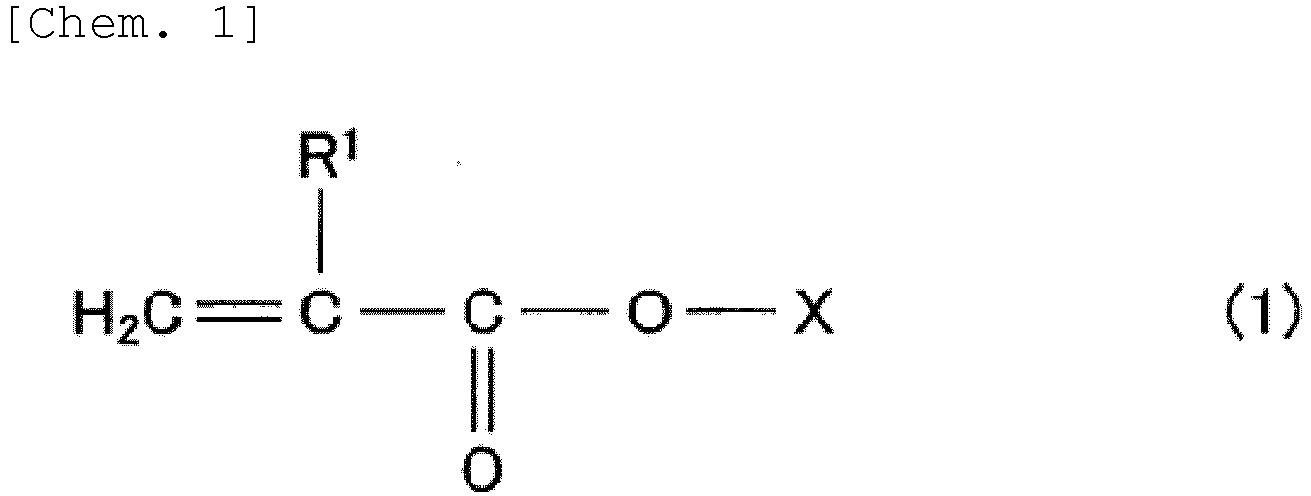

- The composite semipermeable membrane according to claim 3, wherein the X in the formula (1) represents a trimethoxysilyl propyl group, a methyldimethoxysilyl propyl group, a methyldiethoxysilyl propyl group, a triethoxysilyl propyl group, a (3-ethyloxetane-3-yl)methyl group, or an N-succinimidyl group.
- The composite semipermeable membrane according to claim 3 or 4, wherein, a weight ratio of the first monomer to the second monomer is 3:97 to 95:5.
- A method of manufacturing a composite semipermeable membrane comprising:forming a porous support membrane;forming a separation functional layer containing a polyamide on the porous support membrane; andforming a coating layer on the separation functional layer,wherein a water contact angle of a surface of the coating layer is 40° or less, andwherein a protein adsorption force of the surface of the coating layer is 0.4 nN or less.
Applications Claiming Priority (3)
| Application Number | Priority Date | Filing Date | Title |
|---|---|---|---|
| JP2019223925 | 2019-12-11 | ||
| JP2020172683A JP7622317B2 (en) | 2019-12-11 | 2020-10-13 | Composite semipermeable membrane |
| PCT/JP2020/045243 WO2021117631A1 (en) | 2019-12-11 | 2020-12-04 | Composite semi-permeable membrane |
Publications (2)
| Publication Number | Publication Date |
|---|---|
| EP4074411A1 true EP4074411A1 (en) | 2022-10-19 |
| EP4074411A4 EP4074411A4 (en) | 2023-01-25 |
Family
ID=76311316
Family Applications (1)
| Application Number | Title | Priority Date | Filing Date |
|---|---|---|---|
| EP20900480.3A Pending EP4074411A4 (en) | 2019-12-11 | 2020-12-04 | SEMI-PERMEABLE COMPOSITE MEMBRANE |
Country Status (7)
| Country | Link |
|---|---|
| US (1) | US12337286B2 (en) |
| EP (1) | EP4074411A4 (en) |
| JP (1) | JP7622317B2 (en) |
| KR (1) | KR102932077B1 (en) |
| CN (1) | CN114761110A (en) |
| TW (1) | TWI891690B (en) |
| WO (1) | WO2021117631A1 (en) |
Families Citing this family (2)
| Publication number | Priority date | Publication date | Assignee | Title |
|---|---|---|---|---|
| JP7072112B1 (en) | 2021-11-05 | 2022-05-19 | 日東電工株式会社 | Composite semipermeable membrane, spiral membrane element, water treatment system and water treatment method |
| JP7827224B1 (en) * | 2024-08-02 | 2026-03-10 | 東レ株式会社 | Composite semipermeable membrane, composite semipermeable membrane element, and fluid separation device |
Family Cites Families (14)
| Publication number | Priority date | Publication date | Assignee | Title |
|---|---|---|---|---|
| DE10228148B4 (en) | 2002-06-24 | 2006-08-24 | Saehan Industries Inc. | Selective membrane with high fouling resistance |
| JP4733471B2 (en) | 2005-08-26 | 2011-07-27 | 株式会社メニコン | Contact lens manufacturing method and contact lens obtained thereby |
| WO2011088505A1 (en) | 2010-01-19 | 2011-07-28 | Flinders University Of South Australia | Low-fouling filtration membranes |
| JP5679706B2 (en) | 2010-06-23 | 2015-03-04 | 大阪有機化学工業株式会社 | Surface hydrophilized substrate |
| KR101440971B1 (en) | 2012-01-05 | 2014-09-17 | 주식회사 엘지화학 | Reverse osmosis membrane having a excellent antifouling property and method of preparing the same |
| CN107297158A (en) * | 2016-04-14 | 2017-10-27 | 中国石油化工股份有限公司 | A kind of complex reverse osmosis membrane and its preparation method and application |
| JP7167442B2 (en) | 2016-12-26 | 2022-11-09 | 東レ株式会社 | Composite semipermeable membrane and manufacturing method thereof |
| SG11201905942WA (en) * | 2017-01-18 | 2019-08-27 | Ngee Ann Polytechnic | Hydrophilic polymer and membrane for oil-water separation and method of producing the same |
| JP7201596B2 (en) | 2017-08-10 | 2023-01-10 | 株式会社ブリヂストン | Rubber composition, manufacturing method thereof, and tire |
| CN108203510B (en) * | 2018-01-12 | 2020-02-14 | 哈尔滨工业大学(威海) | Preparation method of betaine type polyimide additive for ultramicro filter membrane modification |
| US10932828B2 (en) | 2018-01-25 | 2021-03-02 | Advanced Orthopaedic Solutions, Inc. | Bone nail |
| JP2019147879A (en) | 2018-02-27 | 2019-09-05 | 株式会社カネカ | Surface-modified porous film |
| CN109999662A (en) * | 2019-03-26 | 2019-07-12 | 黑龙江八一农垦大学 | A kind of amphoteric ion nanofiltration membrane and preparation method thereof |
| JP7285123B2 (en) | 2019-04-10 | 2023-06-01 | 上村工業株式会社 | Gold plating method and plating film |
-
2020
- 2020-10-13 JP JP2020172683A patent/JP7622317B2/en active Active
- 2020-12-04 US US17/783,677 patent/US12337286B2/en active Active
- 2020-12-04 EP EP20900480.3A patent/EP4074411A4/en active Pending
- 2020-12-04 WO PCT/JP2020/045243 patent/WO2021117631A1/en not_active Ceased
- 2020-12-04 CN CN202080085032.XA patent/CN114761110A/en active Pending
- 2020-12-04 KR KR1020227019244A patent/KR102932077B1/en active Active
- 2020-12-10 TW TW109143622A patent/TWI891690B/en active
Also Published As
| Publication number | Publication date |
|---|---|
| WO2021117631A1 (en) | 2021-06-17 |
| EP4074411A4 (en) | 2023-01-25 |
| JP2021090953A (en) | 2021-06-17 |
| CN114761110A (en) | 2022-07-15 |
| TW202124034A (en) | 2021-07-01 |
| KR20220093212A (en) | 2022-07-05 |
| JP7622317B2 (en) | 2025-01-28 |
| KR102932077B1 (en) | 2026-02-26 |
| US20230058893A1 (en) | 2023-02-23 |
| US12337286B2 (en) | 2025-06-24 |
| TWI891690B (en) | 2025-08-01 |
Similar Documents
| Publication | Publication Date | Title |
|---|---|---|
| US8528746B2 (en) | Method of manufacturing hydrophilic membrane having improved antifouling property and hydrophilic membrane manufactured by the method | |
| US7067058B2 (en) | Hydrophilic membrane and process for making the same | |
| NL8103550A (en) | COMPOSITE SEMIPERABEL MEMBRANE AND METHOD FOR THE MANUFACTURE THEREOF. | |
| US11045771B2 (en) | Composite semipermeable membrane and method for producing same | |
| US12337286B2 (en) | Composite semipermeable membrane | |
| JP2018187533A (en) | Composite semipermeable membrane | |
| EP3760302B1 (en) | Composite semipermeable membrane and composite semipermeable membrane element | |
| US20200139307A1 (en) | Semipermeable composite membrane and method for producing same | |
| US11577971B2 (en) | Composition for forming reverse osmosis membrane protection layer, method for preparing reverse osmosis membrane using same, reverse osmosis membrane, and water treatment module | |
| EP3760303B1 (en) | Composite semipermeable membrane and composite semipermeable membrane element | |
| KR102337641B1 (en) | Composite semipermeable membrane and manufacturing method thereof | |
| EP3354333A1 (en) | Water treatment membrane and method for manufacturing same | |
| KR20210105360A (en) | composite semipermeable membrane | |
| JP2017170319A (en) | Polyvinylidene fluoride porous membrane and method for producing the same | |
| JPH0790152B2 (en) | Composite reverse osmosis membrane | |
| US20230182084A1 (en) | Composite reverse osmosis membrane and production method thereof | |
| JP2024055989A (en) | Composite hollow fiber membrane module and manufacturing method thereof | |
| JP2020082034A (en) | Composite semipermeable membrane | |
| JP7283207B2 (en) | composite semipermeable membrane | |
| EP4659851A1 (en) | Composite semipermeable membrane, composite semipermeable membrane module, and fluid separation device | |
| KR101569964B1 (en) | Reverse osmosis membrane and method for manufacturing the same | |
| CN115845637A (en) | Low-pressure high-flux composite membrane and preparation method thereof | |
| WO2023176049A1 (en) | Composite reverse osmosis membrane and production method therefor | |
| JPS62216604A (en) | Semipermeable composite membrane | |
| JPH03245828A (en) | Treatment of semipermeable membrane |
Legal Events
| Date | Code | Title | Description |
|---|---|---|---|
| STAA | Information on the status of an ep patent application or granted ep patent |
Free format text: STATUS: THE INTERNATIONAL PUBLICATION HAS BEEN MADE |
|
| PUAI | Public reference made under article 153(3) epc to a published international application that has entered the european phase |
Free format text: ORIGINAL CODE: 0009012 |
|
| STAA | Information on the status of an ep patent application or granted ep patent |
Free format text: STATUS: REQUEST FOR EXAMINATION WAS MADE |
|
| 17P | Request for examination filed |
Effective date: 20220607 |
|
| AK | Designated contracting states |
Kind code of ref document: A1 Designated state(s): AL AT BE BG CH CY CZ DE DK EE ES FI FR GB GR HR HU IE IS IT LI LT LU LV MC MK MT NL NO PL PT RO RS SE SI SK SM TR |
|
| A4 | Supplementary search report drawn up and despatched |
Effective date: 20221223 |
|
| RIC1 | Information provided on ipc code assigned before grant |
Ipc: B01D 69/02 20060101ALI20221219BHEP Ipc: C08F 220/36 20060101ALI20221219BHEP Ipc: B32B 27/34 20060101ALI20221219BHEP Ipc: B32B 5/18 20060101ALI20221219BHEP Ipc: B01D 71/82 20060101ALI20221219BHEP Ipc: B01D 71/70 20060101ALI20221219BHEP Ipc: B01D 71/56 20060101ALI20221219BHEP Ipc: B01D 71/40 20060101ALI20221219BHEP Ipc: B01D 69/12 20060101ALI20221219BHEP Ipc: B01D 69/10 20060101ALI20221219BHEP Ipc: B01D 65/08 20060101AFI20221219BHEP |
|
| DAV | Request for validation of the european patent (deleted) | ||
| DAX | Request for extension of the european patent (deleted) | ||
| STAA | Information on the status of an ep patent application or granted ep patent |
Free format text: STATUS: EXAMINATION IS IN PROGRESS |
|
| 17Q | First examination report despatched |
Effective date: 20231221 |