EP4068720B1 - Procédé d'envoi électronique d'un code d'identification personnel - Google Patents
Procédé d'envoi électronique d'un code d'identification personnel Download PDFInfo
- Publication number
- EP4068720B1 EP4068720B1 EP21166387.7A EP21166387A EP4068720B1 EP 4068720 B1 EP4068720 B1 EP 4068720B1 EP 21166387 A EP21166387 A EP 21166387A EP 4068720 B1 EP4068720 B1 EP 4068720B1
- Authority
- EP
- European Patent Office
- Prior art keywords
- server
- identification code
- personal identification
- data
- personal
- Prior art date
- Legal status (The legal status is an assumption and is not a legal conclusion. Google has not performed a legal analysis and makes no representation as to the accuracy of the status listed.)
- Active
Links
Images
Classifications
-
- G—PHYSICS
- G06—COMPUTING OR CALCULATING; COUNTING
- G06F—ELECTRIC DIGITAL DATA PROCESSING
- G06F21/00—Security arrangements for protecting computers, components thereof, programs or data against unauthorised activity
- G06F21/30—Authentication, i.e. establishing the identity or authorisation of security principals
- G06F21/31—User authentication
- G06F21/33—User authentication using certificates
-
- G—PHYSICS
- G06—COMPUTING OR CALCULATING; COUNTING
- G06F—ELECTRIC DIGITAL DATA PROCESSING
- G06F21/00—Security arrangements for protecting computers, components thereof, programs or data against unauthorised activity
- G06F21/30—Authentication, i.e. establishing the identity or authorisation of security principals
- G06F21/45—Structures or tools for the administration of authentication
-
- H—ELECTRICITY
- H04—ELECTRIC COMMUNICATION TECHNIQUE
- H04L—TRANSMISSION OF DIGITAL INFORMATION, e.g. TELEGRAPHIC COMMUNICATION
- H04L63/00—Network architectures or network communication protocols for network security
- H04L63/08—Network architectures or network communication protocols for network security for authentication of entities
-
- H—ELECTRICITY
- H04—ELECTRIC COMMUNICATION TECHNIQUE
- H04L—TRANSMISSION OF DIGITAL INFORMATION, e.g. TELEGRAPHIC COMMUNICATION
- H04L2463/00—Additional details relating to network architectures or network communication protocols for network security covered by H04L63/00
- H04L2463/082—Additional details relating to network architectures or network communication protocols for network security covered by H04L63/00 applying multi-factor authentication
-
- H—ELECTRICITY
- H04—ELECTRIC COMMUNICATION TECHNIQUE
- H04L—TRANSMISSION OF DIGITAL INFORMATION, e.g. TELEGRAPHIC COMMUNICATION
- H04L63/00—Network architectures or network communication protocols for network security
- H04L63/04—Network architectures or network communication protocols for network security for providing a confidential data exchange among entities communicating through data packet networks
- H04L63/0428—Network architectures or network communication protocols for network security for providing a confidential data exchange among entities communicating through data packet networks wherein the data content is protected, e.g. by encrypting or encapsulating the payload
-
- H—ELECTRICITY
- H04—ELECTRIC COMMUNICATION TECHNIQUE
- H04L—TRANSMISSION OF DIGITAL INFORMATION, e.g. TELEGRAPHIC COMMUNICATION
- H04L63/00—Network architectures or network communication protocols for network security
- H04L63/08—Network architectures or network communication protocols for network security for authentication of entities
- H04L63/0823—Network architectures or network communication protocols for network security for authentication of entities using certificates
Definitions
- the invention relates to a method for sending a personal identification code by a first server.
- the object of the present invention is therefore to provide a method for sending a personal identification code by a first server, which is particularly fast and at the same time meets all prescribed security requirements.
- This task is essentially solved by dividing the communication from the verification of the user to the generation of the personal identification code and to send this to the user purely electronically, which enables fast processing.
- the security requirements are met in particular by the fact that a double and independent check and identification of the user or applicant for the personal identification code is carried out.
- the application or the first server essentially queries the user's customer data and compares it with customer data from the company in order to check whether the personal data entered by a user is in principle authorized to apply for such an identification code.
- it is then checked whether the current user of the end device is actually the person who, according to the first data set entered, is applying for the personal identification code.
- an identification process is used in particular, whereby the second server accesses the camera of the end device and uses it to scan personal documents such as a passport or identity card and, if necessary, compares these with a picture of the user.
- the first server advantageously accesses a first database that is provided by the company and stored on the first server or, for data protection reasons, is stored on an external, fourth server that can be accessed, for example, via a web service. It is also possible for the fourth server to correspond to the third server, so that the database is stored on the third server.
- the second database can also be identical to the first database, or the second database can correspond to the data record of the first group of personal data, which means that the second group of personal data is compared with the first group of personal data. In this case, a check is carried out to determine whether the personal data provided in the first query matches the second query, in particular using an identification procedure.
- the captured data is normalized in a preferred manner before comparison. This means, in particular, that abbreviations are spelled out, umlauts or foreign language letters are resolved, and the spelling is adapted to the specifications of the database or the company. This prevents Request fails only because the data is stored or entered in a different format.
- the first server initiates the generation of a cryptographic key on the end device as soon as the second group of personal data has also been positively verified and the user is thus clearly identified and authorized to request and receive the personal identification code.
- the cryptographic key is created on the end device and protected by a password chosen by the user.
- the public key of the cryptographic key is then sent to the first server.
- the first server verifies this public key, certifies it together with the hardware and/or software features of the end device and/or with the user's personal data, and stores the certificate in a database on the first server. With this certificate or public key, future communication with the user and their end device can be sent in encrypted form. This ensures that the encryption can only be received or opened by the end device originally used. Changing the end device is therefore not possible while the personal identification code is being requested.
- this communication is also encrypted throughout using a proprietary encryption method.
- the first server decrypts the personal identification code upon receipt from the third server and immediately encrypts it using the user's public key in the same process step. This ensures that the personal identification code is never stored unencrypted on the first server.
- the user receives the personal identification code in encrypted form from the first server and can open and view it on the end device using the previously assigned password.
- the personal identification code can be stored on the first server either at the user's request or automatically in encrypted form using the user's public key. This allows the user to retrieve the personal identification code directly from the first server in the future when using the same end device, for example, simply by entering a few identifying details.
- the advantages achieved by the invention are, in particular, that by double-verifying identity, first using general user and customer data and then using an identification procedure, particularly high security requirements can be met when sending personal identification codes.
- Security requirements are further increased by encrypting communication and also verifying the hardware and/or software features of the terminal device.
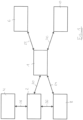
- FIG. 1 An embodiment of the method for sending a personal identification code by a first server is described in FIG. 1 described using a block diagram
- a company application on a device 2 for example, a mobile device
- the company requires the entry of a personal identification code in the application. If user 4 does not have this personal identification code, for example, because they are using the application for the first time or have forgotten the identification code, they can request that a new identification code be sent to them in the application. This request is managed and controlled by a first server 1.
- the first server 1 requests the user 4 via the application 2 via the bidirectional communication path 20 to enter a first set of personal data to identify the user 4 or to provide it in another form, for example by embedding documents or providing a visual representation via a connected camera on the terminal device 2.
- user-specific data is requested that identifies the user as a customer of the company. This can be, for example, the customer number, contract numbers, or other user data.
- the application also collects hardware and/or software-specific data about the terminal device 2, the operating system used, and the application version used. This data is also sent via the communication path 20 to the first server 2 for verification. This data is first converted into a format intended for further processing and normalized. This first set of data is then compared by the first server 1 with records in a database to check whether the user 4 or applicant is authorized to send a request to send the personal identification code.
- the database can be located on the first server 1, but is typically located on an external server 6, for example, at the company from which the user requests the personal identification code.
- an external server 6 for example, at the company from which the user requests the personal identification code.
- a second identification of the user 4 is initiated by the first server 1.
- This second identification is intended to ensure that the current user 4 of the terminal 2 is also the person for whom this user 4 entered the data in the first step.
- the first server 1 requests an identity verification from a second server 8 and, via a bidirectional communication path 24, transfers to it at least the hardware and software features of the terminal obtained in the first step so that the second server 8 can communicate directly with the terminal 2.
- This second server 8 connects to the terminal 2 via a bidirectional communication path 26 and then uses the capabilities of the terminal 2, in particular the camera, to identify the user 4.
- an official document such as an identity card
- biometric data such as a passport photo
- images and videos of the user taken directly via the camera, and other query and capture methods.
- the second server 8 Once the second server 8 has uniquely identified the user 4, it forwards this data via the communication path 24 to the first server 1 for verification.
- Data exchange via the communication path 24 can also be encrypted on both sides.
- the first server 1 in turn, normalizes the second set of personal data and checks it for consistency with the first set of electronic data and/or with the data records stored in the databases, to determine whether the person identified by the second server 8 is identical to user 4, who has requested and is authorized to request the personal identification code. If this check is positive, the first server 1 initiates the query for the personal identification code.
- the first server 1 sends a request to the terminal 2 to generate a secure environment via the communication path 20.
- cryptographic keys are generated on the terminal, which are encrypted with a key provided by the
- the corresponding public keys are sent along with the user- and device-specific data to the first server 1, which then verifies this data again and issues certificates (signed public keys with user and device data).
- the certificates are stored on the first server 1 and transmitted to the end device 2.
- the first server 1 sends a request to a third server 10 via the bidirectional communication path 30, along with a specific identifier (e.g., customer number, health insurance number, or ICCSN), to retrieve a personal identification code.
- This third server 10 generates a personal identification code using special secure hardware (HSM - Hardware Security Module) or reads it from a specially protected database of the company of the application for which the personal identification code is issued.
- HSM - Hardware Security Module special secure hardware
- the identifier is then encrypted for the first server 1 and sent to the first server 1 together with the specific identifier.
- the first server 1 decrypts the personal identification code and, in the same technical process, immediately encrypts it again for user 4 using the certificates stored for this user on the first server 1.
- the first server 1 then sends the encrypted personal identification code to the company's application on the end device 2 of user 4, checking again whether the hardware and/or software-specific data match to ensure that the personal identification code is also sent to the application on the end device 2 from which it was requested. User 4 is therefore unable to change end devices 2 during the query and generation of the personal identification code.
- the corresponding private key is then required to decrypt the personal identification code. To use this key, the password assigned by user 4 is requested.
- the personal identification code is decrypted and displayed to user 4 for further use, who can then use it for later use of the application.
- the personal identification code remains encrypted and stored on the first server 1, so that upon repeated request from user 4, the user can directly retrieve the personal identification code and decrypt it using the assigned password. Only if the chosen password is lost or forgotten User 4 must request a new personal identification code and perform double identification of his person.
Landscapes
- Engineering & Computer Science (AREA)
- Computer Security & Cryptography (AREA)
- Theoretical Computer Science (AREA)
- Computer Hardware Design (AREA)
- General Engineering & Computer Science (AREA)
- Software Systems (AREA)
- Physics & Mathematics (AREA)
- General Physics & Mathematics (AREA)
- Computing Systems (AREA)
- Computer Networks & Wireless Communication (AREA)
- Signal Processing (AREA)
- Storage Device Security (AREA)
Claims (10)
- Procédé d'envoi d'un code d'identification personnel par un premier serveur (1) comportant les étapes suivantes :- interrogation d'un premier groupe de données personnelles du destinataire (4) du code d'identification personnel à partir d'un terminal (2) par le premier serveur (1),- comparaison du premier groupe de données personnelles avec les jeux de données d'une première base de données par le premier serveur (1) pour vérifier l'autorisation du destinataire (4) à recevoir un code d'identification personnel,- si l'autorisation est vérifiée positivement, interrogation d'un deuxième groupe de données personnelles du destinataire (4) du code d'identification personnel auprès d'un deuxième serveur (8),- comparaison du deuxième groupe de données personnelles avec les jeux de données d'une deuxième base de données par le premier serveur (1) pour vérifier l'identité du destinataire,- si l'identité du destinataire (4) est vérifiée positivement, lancement d'une génération du code d'identification personnel dans un serveur tiers (10) par le premier serveur (1),- réception du code d'identification personnel généré par le serveur tiers (10) par le premier serveur (1),- envoi du code d'identification personnel généré depuis le premier serveur (1) vers le terminal (2).
- Procédé d'envoi d'un code d'identification personnel par un premier serveur (1) selon la revendication 1, caractérisé en ce que
la première et/ou la deuxième base de données permettant de comparer le premier et/ou le deuxième groupe de données personnelles est stockée dans le premier serveur (1) ou dans un quatrième serveur externe (6). - Procédé d'envoi d'un code d'identification personnel par un premier serveur (1) selon une des revendications 1 ou 2, caractérisé en ce que
le premier et/ou le deuxième groupe de données personnelles est normalisé avant d'être comparé à une base de données. - Procédé d'envoi d'un code d'identification personnel par un premier serveur (1) selon une des revendications 1 à 3, caractérisé en ce que le premier serveur (1) lance la génération d'une clé cryptographique sur le terminal (2) après comparaison positive du deuxième groupe de données personnelles.
- Procédé d'envoi d'un code d'identification personnel par un premier serveur (1) selon la revendication 4, caractérisé en ce que
le premier serveur (1) récupère du terminal (2) la clé publique associée à la clé cryptographique, la certifie et la dépose sur le premier serveur (1). - Procédé d'envoi d'un code d'identification personnel par un premier serveur (1) selon une des revendications 5, caractérisé en ce que
le premier serveur (1) crypte le code d'identification personnel avec la clé publique après l'avoir reçu du serveur tiers (10) et avant de l'envoyer au dispositif terminal. - Procédé d'envoi d'un code d'identification personnel par un premier serveur (1) selon une des revendications 1 à 6, caractérisé en ce que le code d'identification personnel est transmis du serveur tiers (10) au premier serveur (1) sous forme cryptée.
- Procédé d'envoi d'un code d'identification personnel par un premier serveur (1) selon une des revendications 1 à 7, caractérisé en ce que le destinataire (4) peut déposer le code d'identification personnel sur le premier serveur (1) pour une récupération répétée après sa réception.
- Produit de programme informatique comprenant des instructions qui, lorsqu'elles sont exécutées par un ordinateur, amènent l'ordinateur à exécuter le procédé selon une des revendications 1 à 8.
- Serveur, comprenant des moyens pour exécuter un produit de programme informatique selon la revendication 9.
Priority Applications (1)
| Application Number | Priority Date | Filing Date | Title |
|---|---|---|---|
| EP21166387.7A EP4068720B1 (fr) | 2021-03-31 | 2021-03-31 | Procédé d'envoi électronique d'un code d'identification personnel |
Applications Claiming Priority (1)
| Application Number | Priority Date | Filing Date | Title |
|---|---|---|---|
| EP21166387.7A EP4068720B1 (fr) | 2021-03-31 | 2021-03-31 | Procédé d'envoi électronique d'un code d'identification personnel |
Publications (3)
| Publication Number | Publication Date |
|---|---|
| EP4068720A1 EP4068720A1 (fr) | 2022-10-05 |
| EP4068720B1 true EP4068720B1 (fr) | 2025-05-21 |
| EP4068720C0 EP4068720C0 (fr) | 2025-05-21 |
Family
ID=75362348
Family Applications (1)
| Application Number | Title | Priority Date | Filing Date |
|---|---|---|---|
| EP21166387.7A Active EP4068720B1 (fr) | 2021-03-31 | 2021-03-31 | Procédé d'envoi électronique d'un code d'identification personnel |
Country Status (1)
| Country | Link |
|---|---|
| EP (1) | EP4068720B1 (fr) |
Family Cites Families (2)
| Publication number | Priority date | Publication date | Assignee | Title |
|---|---|---|---|---|
| DE102013108713B8 (de) * | 2013-08-12 | 2016-10-13 | WebID Solutions GmbH | Verfahren zum Verifizieren der ldentität eines Nutzers |
| US10574650B2 (en) * | 2017-05-17 | 2020-02-25 | Bank Of America Corporation | System for electronic authentication with live user determination |
-
2021
- 2021-03-31 EP EP21166387.7A patent/EP4068720B1/fr active Active
Also Published As
| Publication number | Publication date |
|---|---|
| EP4068720A1 (fr) | 2022-10-05 |
| EP4068720C0 (fr) | 2025-05-21 |
Similar Documents
| Publication | Publication Date | Title |
|---|---|---|
| EP2140391B1 (fr) | Procédé et système d'authentification d'un utilisateur | |
| DE112011100182B4 (de) | Datensicherheitsvorrichtung, Rechenprogramm, Endgerät und System für Transaktionsprüfung | |
| EP2338255A2 (fr) | Métode, produit logiciel et système d'authentification d'un utilisateur d'un réseau de télécommunication | |
| EP3748521B1 (fr) | Méthode pour lire les attributs d'un témoin d'identité | |
| EP3743844B1 (fr) | Système d'identité basé sur chaînes de blocs | |
| WO2022194658A1 (fr) | Procédé d'autorisation d'un premier participant dans un réseau de communication, dispositif de traitement, véhicule automobile et dispositif d'infrastructure | |
| EP4068720B1 (fr) | Procédé d'envoi électronique d'un code d'identification personnel | |
| EP3767513B1 (fr) | Procédé de mise en uvre sécurisée d'une signature à distance ainsi que système de sécurité | |
| EP3629516A1 (fr) | Solution décentralisée de gestion d'identité | |
| EP3298526B1 (fr) | Procédé de lecture d'attributs à partir d'un jeton d'identification | |
| CH717898A1 (de) | Server zur Abwicklung von Finanz-Transaktionen. | |
| DE102022000857B3 (de) | Verfahren zur sicheren Identifizierung einer Person durch eine Verifikationsinstanz | |
| DE102019202381A1 (de) | Verfahren zum Transfer von Daten | |
| WO2023046237A1 (fr) | Procédé d'échange numérique d'informations | |
| EP3289507B1 (fr) | Jeton id, système et procédé de génération de signature électronique | |
| DE102020134933A1 (de) | Verfahren zum Erstellen einer qualifizierten elektronischen Signatur | |
| EP4607848A1 (fr) | Procédé et dispositif de fourniture d'un attribut d'un jeton d'identification et produit programme informatique | |
| EP3323072B1 (fr) | Procédé pour lire des attributs dans un jeton id, jeton id, système informatique de fournisseur d'attribut et système informatique | |
| DE102019109343A1 (de) | Verfahren und Vorrichtung zur Übertragung digitaler Daten | |
| DE102017104916A1 (de) | Verfahren zum Bereitstellen einer Passphrase sowie biometrisches Gerät | |
| EP3432510A1 (fr) | Gestion d'un certificat numérique | |
| DE102015017060A1 (de) | Verfahren zum Lesen von Attributen aus einem ID-Token | |
| DE102015017061A1 (de) | Verfahren zum Lesen von Attributen aus einem ID-Token |
Legal Events
| Date | Code | Title | Description |
|---|---|---|---|
| PUAI | Public reference made under article 153(3) epc to a published international application that has entered the european phase |
Free format text: ORIGINAL CODE: 0009012 |
|
| STAA | Information on the status of an ep patent application or granted ep patent |
Free format text: STATUS: THE APPLICATION HAS BEEN PUBLISHED |
|
| AK | Designated contracting states |
Kind code of ref document: A1 Designated state(s): AL AT BE BG CH CY CZ DE DK EE ES FI FR GB GR HR HU IE IS IT LI LT LU LV MC MK MT NL NO PL PT RO RS SE SI SK SM TR |
|
| STAA | Information on the status of an ep patent application or granted ep patent |
Free format text: STATUS: REQUEST FOR EXAMINATION WAS MADE |
|
| 17P | Request for examination filed |
Effective date: 20230405 |
|
| RBV | Designated contracting states (corrected) |
Designated state(s): AL AT BE BG CH CY CZ DE DK EE ES FI FR GB GR HR HU IE IS IT LI LT LU LV MC MK MT NL NO PL PT RO RS SE SI SK SM TR |
|
| REG | Reference to a national code |
Ref country code: DE Ref legal event code: R079 Ref document number: 502021007506 Country of ref document: DE Free format text: PREVIOUS MAIN CLASS: H04L0029060000 Ipc: G06F0021450000 |
|
| GRAP | Despatch of communication of intention to grant a patent |
Free format text: ORIGINAL CODE: EPIDOSNIGR1 |
|
| STAA | Information on the status of an ep patent application or granted ep patent |
Free format text: STATUS: GRANT OF PATENT IS INTENDED |
|
| RIC1 | Information provided on ipc code assigned before grant |
Ipc: H04L 9/40 20220101ALI20241127BHEP Ipc: G06F 21/33 20130101ALI20241127BHEP Ipc: G06F 21/45 20130101AFI20241127BHEP |
|
| INTG | Intention to grant announced |
Effective date: 20241211 |
|
| GRAS | Grant fee paid |
Free format text: ORIGINAL CODE: EPIDOSNIGR3 |
|
| GRAA | (expected) grant |
Free format text: ORIGINAL CODE: 0009210 |
|
| STAA | Information on the status of an ep patent application or granted ep patent |
Free format text: STATUS: THE PATENT HAS BEEN GRANTED |
|
| RAP1 | Party data changed (applicant data changed or rights of an application transferred) |
Owner name: SITS DEUTSCHLAND GMBH |
|
| AK | Designated contracting states |
Kind code of ref document: B1 Designated state(s): AL AT BE BG CH CY CZ DE DK EE ES FI FR GB GR HR HU IE IS IT LI LT LU LV MC MK MT NL NO PL PT RO RS SE SI SK SM TR |
|
| REG | Reference to a national code |
Ref country code: GB Ref legal event code: FG4D Free format text: NOT ENGLISH |
|
| REG | Reference to a national code |
Ref country code: CH Ref legal event code: EP |
|
| REG | Reference to a national code |
Ref country code: DE Ref legal event code: R096 Ref document number: 502021007506 Country of ref document: DE |
|
| REG | Reference to a national code |
Ref country code: IE Ref legal event code: FG4D Free format text: LANGUAGE OF EP DOCUMENT: GERMAN |
|
| U01 | Request for unitary effect filed |
Effective date: 20250618 |
|
| U07 | Unitary effect registered |
Designated state(s): AT BE BG DE DK EE FI FR IT LT LU LV MT NL PT RO SE SI Effective date: 20250627 |
|
| PG25 | Lapsed in a contracting state [announced via postgrant information from national office to epo] |
Ref country code: ES Free format text: LAPSE BECAUSE OF FAILURE TO SUBMIT A TRANSLATION OF THE DESCRIPTION OR TO PAY THE FEE WITHIN THE PRESCRIBED TIME-LIMIT Effective date: 20250521 |
|
| PG25 | Lapsed in a contracting state [announced via postgrant information from national office to epo] |
Ref country code: GR Free format text: LAPSE BECAUSE OF FAILURE TO SUBMIT A TRANSLATION OF THE DESCRIPTION OR TO PAY THE FEE WITHIN THE PRESCRIBED TIME-LIMIT Effective date: 20250822 Ref country code: NO Free format text: LAPSE BECAUSE OF FAILURE TO SUBMIT A TRANSLATION OF THE DESCRIPTION OR TO PAY THE FEE WITHIN THE PRESCRIBED TIME-LIMIT Effective date: 20250821 |
|
| PG25 | Lapsed in a contracting state [announced via postgrant information from national office to epo] |
Ref country code: PL Free format text: LAPSE BECAUSE OF FAILURE TO SUBMIT A TRANSLATION OF THE DESCRIPTION OR TO PAY THE FEE WITHIN THE PRESCRIBED TIME-LIMIT Effective date: 20250521 |
|
| PG25 | Lapsed in a contracting state [announced via postgrant information from national office to epo] |
Ref country code: HR Free format text: LAPSE BECAUSE OF FAILURE TO SUBMIT A TRANSLATION OF THE DESCRIPTION OR TO PAY THE FEE WITHIN THE PRESCRIBED TIME-LIMIT Effective date: 20250521 |
|
| PG25 | Lapsed in a contracting state [announced via postgrant information from national office to epo] |
Ref country code: RS Free format text: LAPSE BECAUSE OF FAILURE TO SUBMIT A TRANSLATION OF THE DESCRIPTION OR TO PAY THE FEE WITHIN THE PRESCRIBED TIME-LIMIT Effective date: 20250821 |
|
| PG25 | Lapsed in a contracting state [announced via postgrant information from national office to epo] |
Ref country code: IS Free format text: LAPSE BECAUSE OF FAILURE TO SUBMIT A TRANSLATION OF THE DESCRIPTION OR TO PAY THE FEE WITHIN THE PRESCRIBED TIME-LIMIT Effective date: 20250921 |