EP4064282A2 - Zeitverzögerungsschätzung für die echounterdrückung - Google Patents
Zeitverzögerungsschätzung für die echounterdrückung Download PDFInfo
- Publication number
- EP4064282A2 EP4064282A2 EP22187478.7A EP22187478A EP4064282A2 EP 4064282 A2 EP4064282 A2 EP 4064282A2 EP 22187478 A EP22187478 A EP 22187478A EP 4064282 A2 EP4064282 A2 EP 4064282A2
- Authority
- EP
- European Patent Office
- Prior art keywords
- signal
- voice
- reference signal
- echo signal
- echo
- Prior art date
- Legal status (The legal status is an assumption and is not a legal conclusion. Google has not performed a legal analysis and makes no representation as to the accuracy of the status listed.)
- Granted
Links
Images

Classifications
-
- G—PHYSICS
- G10—MUSICAL INSTRUMENTS; ACOUSTICS
- G10L—SPEECH ANALYSIS TECHNIQUES OR SPEECH SYNTHESIS; SPEECH RECOGNITION; SPEECH OR VOICE PROCESSING TECHNIQUES; SPEECH OR AUDIO CODING OR DECODING
- G10L21/00—Speech or voice signal processing techniques to produce another audible or non-audible signal, e.g. visual or tactile, in order to modify its quality or its intelligibility
- G10L21/02—Speech enhancement, e.g. noise reduction or echo cancellation
- G10L21/0208—Noise filtering
- G10L21/0264—Noise filtering characterised by the type of parameter measurement, e.g. correlation techniques, zero crossing techniques or predictive techniques
-
- G—PHYSICS
- G10—MUSICAL INSTRUMENTS; ACOUSTICS
- G10L—SPEECH ANALYSIS TECHNIQUES OR SPEECH SYNTHESIS; SPEECH RECOGNITION; SPEECH OR VOICE PROCESSING TECHNIQUES; SPEECH OR AUDIO CODING OR DECODING
- G10L25/00—Speech or voice analysis techniques not restricted to a single one of groups G10L15/00 - G10L21/00
- G10L25/48—Speech or voice analysis techniques not restricted to a single one of groups G10L15/00 - G10L21/00 specially adapted for particular use
- G10L25/51—Speech or voice analysis techniques not restricted to a single one of groups G10L15/00 - G10L21/00 specially adapted for particular use for comparison or discrimination
-
- G—PHYSICS
- G10—MUSICAL INSTRUMENTS; ACOUSTICS
- G10K—SOUND-PRODUCING DEVICES; METHODS OR DEVICES FOR PROTECTING AGAINST, OR FOR DAMPING, NOISE OR OTHER ACOUSTIC WAVES IN GENERAL; ACOUSTICS NOT OTHERWISE PROVIDED FOR
- G10K11/00—Methods or devices for transmitting, conducting or directing sound in general; Methods or devices for protecting against, or for damping, noise or other acoustic waves in general
- G10K11/16—Methods or devices for protecting against, or for damping, noise or other acoustic waves in general
- G10K11/175—Methods or devices for protecting against, or for damping, noise or other acoustic waves in general using interference effects; Masking sound
- G10K11/178—Methods or devices for protecting against, or for damping, noise or other acoustic waves in general using interference effects; Masking sound by electro-acoustically regenerating the original acoustic waves in anti-phase
- G10K11/1781—Methods or devices for protecting against, or for damping, noise or other acoustic waves in general using interference effects; Masking sound by electro-acoustically regenerating the original acoustic waves in anti-phase characterised by the analysis of input or output signals, e.g. frequency range, modes, transfer functions
- G10K11/17821—Methods or devices for protecting against, or for damping, noise or other acoustic waves in general using interference effects; Masking sound by electro-acoustically regenerating the original acoustic waves in anti-phase characterised by the analysis of input or output signals, e.g. frequency range, modes, transfer functions characterised by the analysis of the input signals only
- G10K11/17823—Reference signals, e.g. ambient acoustic environment
-
- G—PHYSICS
- G06—COMPUTING OR CALCULATING; COUNTING
- G06N—COMPUTING ARRANGEMENTS BASED ON SPECIFIC COMPUTATIONAL MODELS
- G06N3/00—Computing arrangements based on biological models
- G06N3/02—Neural networks
- G06N3/04—Architecture, e.g. interconnection topology
- G06N3/044—Recurrent networks, e.g. Hopfield networks
-
- G—PHYSICS
- G06—COMPUTING OR CALCULATING; COUNTING
- G06N—COMPUTING ARRANGEMENTS BASED ON SPECIFIC COMPUTATIONAL MODELS
- G06N3/00—Computing arrangements based on biological models
- G06N3/02—Neural networks
- G06N3/04—Architecture, e.g. interconnection topology
- G06N3/045—Combinations of networks
-
- G—PHYSICS
- G06—COMPUTING OR CALCULATING; COUNTING
- G06N—COMPUTING ARRANGEMENTS BASED ON SPECIFIC COMPUTATIONAL MODELS
- G06N3/00—Computing arrangements based on biological models
- G06N3/02—Neural networks
- G06N3/04—Architecture, e.g. interconnection topology
- G06N3/0464—Convolutional networks [CNN, ConvNet]
-
- G—PHYSICS
- G06—COMPUTING OR CALCULATING; COUNTING
- G06N—COMPUTING ARRANGEMENTS BASED ON SPECIFIC COMPUTATIONAL MODELS
- G06N3/00—Computing arrangements based on biological models
- G06N3/02—Neural networks
- G06N3/08—Learning methods
-
- G—PHYSICS
- G10—MUSICAL INSTRUMENTS; ACOUSTICS
- G10K—SOUND-PRODUCING DEVICES; METHODS OR DEVICES FOR PROTECTING AGAINST, OR FOR DAMPING, NOISE OR OTHER ACOUSTIC WAVES IN GENERAL; ACOUSTICS NOT OTHERWISE PROVIDED FOR
- G10K11/00—Methods or devices for transmitting, conducting or directing sound in general; Methods or devices for protecting against, or for damping, noise or other acoustic waves in general
- G10K11/16—Methods or devices for protecting against, or for damping, noise or other acoustic waves in general
- G10K11/175—Methods or devices for protecting against, or for damping, noise or other acoustic waves in general using interference effects; Masking sound
- G10K11/178—Methods or devices for protecting against, or for damping, noise or other acoustic waves in general using interference effects; Masking sound by electro-acoustically regenerating the original acoustic waves in anti-phase
- G10K11/1787—General system configurations
- G10K11/17879—General system configurations using both a reference signal and an error signal
-
- G—PHYSICS
- G10—MUSICAL INSTRUMENTS; ACOUSTICS
- G10L—SPEECH ANALYSIS TECHNIQUES OR SPEECH SYNTHESIS; SPEECH RECOGNITION; SPEECH OR VOICE PROCESSING TECHNIQUES; SPEECH OR AUDIO CODING OR DECODING
- G10L15/00—Speech recognition
- G10L15/08—Speech classification or search
- G10L15/16—Speech classification or search using artificial neural networks
-
- G—PHYSICS
- G10—MUSICAL INSTRUMENTS; ACOUSTICS
- G10L—SPEECH ANALYSIS TECHNIQUES OR SPEECH SYNTHESIS; SPEECH RECOGNITION; SPEECH OR VOICE PROCESSING TECHNIQUES; SPEECH OR AUDIO CODING OR DECODING
- G10L21/00—Speech or voice signal processing techniques to produce another audible or non-audible signal, e.g. visual or tactile, in order to modify its quality or its intelligibility
- G10L21/02—Speech enhancement, e.g. noise reduction or echo cancellation
- G10L21/0208—Noise filtering
- G10L21/0216—Noise filtering characterised by the method used for estimating noise
- G10L21/0224—Processing in the time domain
-
- G—PHYSICS
- G10—MUSICAL INSTRUMENTS; ACOUSTICS
- G10L—SPEECH ANALYSIS TECHNIQUES OR SPEECH SYNTHESIS; SPEECH RECOGNITION; SPEECH OR VOICE PROCESSING TECHNIQUES; SPEECH OR AUDIO CODING OR DECODING
- G10L21/00—Speech or voice signal processing techniques to produce another audible or non-audible signal, e.g. visual or tactile, in order to modify its quality or its intelligibility
- G10L21/02—Speech enhancement, e.g. noise reduction or echo cancellation
- G10L21/0208—Noise filtering
- G10L21/0216—Noise filtering characterised by the method used for estimating noise
- G10L21/0232—Processing in the frequency domain
-
- G—PHYSICS
- G10—MUSICAL INSTRUMENTS; ACOUSTICS
- G10L—SPEECH ANALYSIS TECHNIQUES OR SPEECH SYNTHESIS; SPEECH RECOGNITION; SPEECH OR VOICE PROCESSING TECHNIQUES; SPEECH OR AUDIO CODING OR DECODING
- G10L25/00—Speech or voice analysis techniques not restricted to a single one of groups G10L15/00 - G10L21/00
- G10L25/03—Speech or voice analysis techniques not restricted to a single one of groups G10L15/00 - G10L21/00 characterised by the type of extracted parameters
- G10L25/18—Speech or voice analysis techniques not restricted to a single one of groups G10L15/00 - G10L21/00 characterised by the type of extracted parameters the extracted parameters being spectral information of each sub-band
-
- H—ELECTRICITY
- H04—ELECTRIC COMMUNICATION TECHNIQUE
- H04B—TRANSMISSION
- H04B3/00—Line transmission systems
- H04B3/02—Details
- H04B3/20—Reducing echo effects or singing; Opening or closing transmitting path; Conditioning for transmission in one direction or the other
- H04B3/23—Reducing echo effects or singing; Opening or closing transmitting path; Conditioning for transmission in one direction or the other using a replica of transmitted signal in the time domain, e.g. echo cancellers
-
- H—ELECTRICITY
- H04—ELECTRIC COMMUNICATION TECHNIQUE
- H04M—TELEPHONIC COMMUNICATION
- H04M9/00—Arrangements for interconnection not involving centralised switching
- H04M9/08—Two-way loud-speaking telephone systems with means for conditioning the signal, e.g. for suppressing echoes for one or both directions of traffic
- H04M9/082—Two-way loud-speaking telephone systems with means for conditioning the signal, e.g. for suppressing echoes for one or both directions of traffic using echo cancellers
-
- G—PHYSICS
- G06—COMPUTING OR CALCULATING; COUNTING
- G06N—COMPUTING ARRANGEMENTS BASED ON SPECIFIC COMPUTATIONAL MODELS
- G06N3/00—Computing arrangements based on biological models
- G06N3/02—Neural networks
- G06N3/04—Architecture, e.g. interconnection topology
- G06N3/044—Recurrent networks, e.g. Hopfield networks
- G06N3/0442—Recurrent networks, e.g. Hopfield networks characterised by memory or gating, e.g. long short-term memory [LSTM] or gated recurrent units [GRU]
-
- G—PHYSICS
- G06—COMPUTING OR CALCULATING; COUNTING
- G06N—COMPUTING ARRANGEMENTS BASED ON SPECIFIC COMPUTATIONAL MODELS
- G06N3/00—Computing arrangements based on biological models
- G06N3/02—Neural networks
- G06N3/04—Architecture, e.g. interconnection topology
- G06N3/048—Activation functions
-
- G—PHYSICS
- G10—MUSICAL INSTRUMENTS; ACOUSTICS
- G10L—SPEECH ANALYSIS TECHNIQUES OR SPEECH SYNTHESIS; SPEECH RECOGNITION; SPEECH OR VOICE PROCESSING TECHNIQUES; SPEECH OR AUDIO CODING OR DECODING
- G10L15/00—Speech recognition
- G10L15/06—Creation of reference templates; Training of speech recognition systems, e.g. adaptation to the characteristics of the speaker's voice
- G10L15/063—Training
- G10L2015/0631—Creating reference templates; Clustering
-
- G—PHYSICS
- G10—MUSICAL INSTRUMENTS; ACOUSTICS
- G10L—SPEECH ANALYSIS TECHNIQUES OR SPEECH SYNTHESIS; SPEECH RECOGNITION; SPEECH OR VOICE PROCESSING TECHNIQUES; SPEECH OR AUDIO CODING OR DECODING
- G10L21/00—Speech or voice signal processing techniques to produce another audible or non-audible signal, e.g. visual or tactile, in order to modify its quality or its intelligibility
- G10L21/02—Speech enhancement, e.g. noise reduction or echo cancellation
- G10L21/0208—Noise filtering
- G10L2021/02082—Noise filtering the noise being echo, reverberation of the speech
Definitions
- the present disclosure relates to the field of computer technology, in particular to the technical fields of voice processing and deep learning, and more particularly, to a method and apparatus for processing a signal, a computer readable medium, and a computer program product.
- Time delay estimation is used to estimate a delay in time of two time-varying signals.
- TDE is mainly used in a linear echo cancellation front-end, to estimate a time difference between a signal collected by the microphone and a reference signal playback by the speaker, and to guide alignment of the reference signal and an echo signal collected by the microphone.
- TDE is mainly based on correlation of signals, and has relatively high requirements on the magnitude or energy of signals, or on the linearity of signal phases.
- a method and apparatus for processing a signal, a computer readable medium, and a computer program product are provided.
- some embodiments of the present disclosure provide a method for processing a signal, the method includes: acquiring a reference signal of a to-be-tested voice, the reference signal being a signal output to a voice output device, wherein the voice output device outputs the to-be-tested voice after obtaining the reference signal; receiving, from a voice input device, an echo signal of the to-be-tested voice, the echo signal being a signal of the to-be-tested voice collected by the voice input device; performing signal preprocessing on the reference signal and the echo signal respectively; and inputting the processed reference signal and the processed echo signal into a pre-trained time delay estimation model, to obtain a time difference between the reference signal and the echo signal output by the time delay estimation model, the time delay estimation model being used to represent a corresponding relationship between the reference signal, the echo signal and the time difference.
- some embodiments of the present disclosure provide an apparatus for processing a signal
- the apparatus includes: an acquisition unit, configured to acquire a reference signal of a to-be-tested voice, the reference signal being a signal output to a voice output device, wherein the voice output device outputs the to-be-tested voice after obtaining the reference signal; a receiving unit, configured to receive, from a voice input device, an echo signal of the to-be-tested voice, the echo signal being a signal of the to-be-tested voice collected by the voice input device; a processing unit, configured to perform signal preprocessing on the reference signal and the echo signal respectively; and an estimation unit, configured to input the processed reference signal and the processed echo signal into a pre-trained time delay estimation model, to obtain a time difference between the reference signal and the echo signal output by the time delay estimation model, the time delay estimation model being used to represent a corresponding relationship between the reference signal, the echo signal and the time difference.
- some embodiments of the present disclosure provide a non-transitory computer readable storage medium storing computer instructions, wherein, the computer instructions, when executed by a computer, cause the computer to perform the method according to any one of the implementations described in the first aspect.
- some embodiments of the present disclosure provide a computer program product, comprising a computer program, the computer program, when executed by a processor, causes the processor to implement the method according to any one of the implementations described in the first aspect.
- Fig. 1 shows a flow 100 of a method for processing a signal according to an embodiment of the present disclosure.
- the method for processing a signal includes the following steps:
- Step 101 acquiring a reference signal of a to-be-tested voice.
- the reference signal is a signal output to a voice output device, and the voice output device outputs the to-be-tested voice after obtaining the reference signal.
- the reference signal is a signal output to the voice output device
- a control device such as a CPU
- the voice output device plays the reference signal to obtain the to-be-tested voice.
- An executing body on which the method for processing runs may obtain the reference signal of the to-be-tested voice in various methods, such as, communicating with an audio generator to obtain the reference signal sent by the audio generator; or, directly generating the reference signal and sending the reference signal to the voice output device.
- the voice output device is a device that outputs voice, for example, the voice output device is a speaker.
- Step 102 receiving, from a voice input device, an echo signal of the to-be-tested voice.
- the echo signal is a signal of the to-be-tested voice collected by the voice input device.
- the voice input device is a device that collects the to-be-tested voice.
- the voice input device may be a microphone.
- an echo signal may be classified as a direct echo signal or an indirect echo signal based on a difference in transmission path.
- Direct echo signal after the voice output device plays an audio signal, the voice input device directly collects the audio signal to obtain an echo signal.
- the direct echo signal is not affected by the environment, but is heavily affected by the distance between the voice output device to the voice input device and the positions of the devices, so that the direct echo signal is a linear signal.
- Indirect echo signal after the voice output device plays an audio signal, the audio signal is picked up by the voice input device after being reflected by a complex and changeable wall.
- a magnitude of the indirect echo signal is affected by the factors such as a room environment, placement of objects, and a wall absorption coefficient, so that the indirect echo signal is a non-linear signal.
- the method for processing a signal uses a time delay estimation model, which no longer depends on the linearities of the reference signal and the echo signal, and may estimate the time delay of both the direct echo signal and the indirect echo signal, which improves an accuracy of signal processing.
- Step 103 performing signal preprocessing on the reference signal and the echo signal respectively.
- performing signal preprocessing on the reference signal and the echo signal refers to processing the reference signal and the echo signal in a time domain or a frequency domain, so as to convert the reference signal and the echo signal into signals suitable for inputting into the time delay estimation model.
- signal preprocessing may include filtering, chunking, windowing and other operations, which may reduce even eliminate the impact on quality of the reference signal due to factors such as aliasing, high-order harmonic distortion, high frequency caused by the voice generator itself and the equipment that collects the voice signal.
- the performing signal preprocessing on the reference signal and the echo signal respectively includes: performing subband decomposition and catenation on the reference signal and the echo signal; and obtaining magnitude spectrograms of the catenated signals to obtain the processed reference signal and the processed echo signal.
- signal preprocessing is performed on both the reference signal and the echo signal, where the signal preprocessing includes: performing subband decomposition and catenation on each of the reference signal and the echo signal, then obtaining magnitude spectrograms of the catenated signals.
- the reference signal and the echo signal are wideband signals.
- the reference signal and the echo signal may be effectively decomposed and reconstructed, which ensures validities of the reference signal and the echo signal.
- performing subband decomposition and catenation on the reference signal and the echo signal provides an alternative method for digital signal processing, especially for wideband signal reception and processing, and facilitates the time delay estimation model to estimate a time difference between the reference signal and the echo signal.
- the performing signal preprocessing on the reference signal and the echo signal respectively includes: performing frequency domain transformation on the reference signal and the echo signal respectively, to obtain the processed reference signal and the processed echo signal.
- short time Fourier transform may be used to perform frequency domain transformation on the reference signal and the echo signal.
- STFT short time Fourier transform
- the short time Fourier transform is a general tool for voice signal processing, which defines a very useful time and frequency distribution class that specifies a magnitude of an arbitrary signal over time and frequency, where the magnitude is in the form of complex number.
- a process of computing short time Fourier transform is to divide a longer-time signal into shorter segments of a same length, and compute the Fourier transform on each of the shorter segments.
- performing frequency domain transformation on the reference signal and the echo signal provides another alternative method for digital signal processing, and facilitates the time delay estimation model to estimate a time difference between the reference signal and the echo signal.
- Step 104 inputting the processed reference signal and the processed echo signal into a pre-trained time delay estimation model, to obtain a time difference between the reference signal and the echo signal output by the time delay estimation model.
- the time delay estimation model is used to represent a corresponding relationship between the reference signal, the echo signal and the time difference.
- the time delay estimation model is obtained by training based on long-term correlation between features of the reference signal and features of the echo signal.
- the time delay estimation model may use more parameters to learn at more granularity to learn features used for estimating the time delay and a relationship between the features, so as to quickly and accurately obtain the time difference between the reference signal and the echo signal based on the correlation.
- the time delay estimation model may include: a convolutional neural network, a temporal convolutional network, and a fully connected layer, which are connected in sequence; the convolutional neural network is used to extract features of the reference signal and features of the echo signal, the features of the reference signal may represent characteristics of the reference signal, such as magnitude, energy, phase; a correlation collection module is used to determine long-term correlation between the features of the reference signal and the features of the echo signal; and a time delay extraction module is used to obtain the time difference between the reference signal and the echo signal based on the correlation.
- the time delay estimation model includes: convolutional neural networks (CNN), a temporal convolutional network (TCN), and fully connected layers (FC).
- the convolutional neural networks adopt 5 layers of sub-networks, each layer of the sub-networks is activated by a convolution layer through a Relu activation function layer and then obtained by batch normalization (Conv2D+Relu+BN).
- the convolutional neural networks are used to realize that after extracting and deeply fusing the features of the reference signal and the features of the echo signal, and the the fused features are entered into the temporal convolutional network TCN to learn the long-term correlation between the reference signal and the echo signal.
- the time delay (time difference) tx of the reference signal and the echo signal is extracted through the fully connected layers FC.
- the time difference between the reference signal and the echo signal refers to a time delay between generation of the reference signal and obtaining of the echo signal, and the time difference may provide effective guidance for an echo cancellation circuit to cancel the echo signal.
- the time delay estimation model is obtained through training operations as follows: acquiring training samples, where each training sample includes a sample signal and an echo signal corresponding to the sample signal; and performing the training operations: inputting a sample signal and an echo signal corresponding to the sample signal into a first convolutional neural network, to obtain a feature vector of the sample signal and a feature vector of the echo signal corresponding to the sample signal; inputting the feature vector of the sample signal and the feature vector of the echo signal corresponding to the sample signal into a second convolutional neural network, to obtain correlation information of the sample signal and the echo signal corresponding to the sample signal in a preset time period; inputting the correlation information of the sample signal and the echo signal corresponding to the sample signal within the preset time period into fully connected layers, to obtain a time difference between the sample signal and the echo signal corresponding to the sample signal; if the first convolutional neural network, the second convolutional neural network and the fully connected layer meet a training completion condition, using the first convolutional neural network, the
- the echo signal corresponding to the sample signal in the training sample is also marked with the time difference with the sample signal, and the time delay estimation model may be effectively trained based on the marked time difference.
- the above training completion condition includes at least one of the following: the number of training iterations of a time delay estimation network generated by the first convolutional neural network, the second convolutional neural network and the fully connected layer reaches a predetermined iteration threshold, or a loss value of the time delay estimation network is less than a predetermined loss value threshold.
- the predetermined iteration threshold is an empirical value obtained based on the loss value of the time delay estimation network.
- the predetermined iteration threshold of the time delay estimation network is 5 thousand times.
- the predetermined loss value threshold of the time delay estimation network is 0.05.
- relevant parameters in the time delay estimation network are adjusted to make the loss value of the time delay estimation network converge, and the above training operations may continue to be performed based on the adjusted time delay estimation network.
- the second convolutional neural network may be a temporal convolutional network, and the preset time in the second convolutional neural network may be determined according to a structure of the second convolutional neural network.
- the second convolutional neural network may also be replaced by a long short term memory network (LSTM), where the LSTM is improved recurrent neural networks, which may solve the problem that the recurrent neural networks cannot handle long-distance dependencies.
- LSTM long short term memory network
- the second convolutional neural network may also use a gated recurrent unit (GRU), which is a variant of the LSTM.
- GRU gated recurrent unit
- the GRU maintains effects of the LSTM while making its structure simpler.
- the method for training a time delay estimation model provided by the present embodiment, by setting the training completion condition for the first convolutional neural network, the second convolutional neural network, and the fully connected layers, may obtain an effective and reliable time delay estimation model, after the first convolutional neural network, the second convolutional neural network and the fully connected layers meet the training completion condition.
- the time delay estimation model is a main module of audio algorithm work in communication.
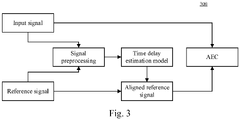
- the time delay estimation model may receive a microphone input signal (voice signal and echo signal) and a reference signal output to a speaker (the reference signal may be a signal obtained after processing the voice signal), estimate a time delay between the echo signal in the input signal and the reference signal corresponding to the echo, and use the estimated time delay to adjust the reference signal to obtain an aligned reference signal, so that the echo signal and the reference signal are aligned, and then the input signal and the aligned reference signal enter an AEC (Acoustic Echo Cancellation) module for echo cancellation.
- AEC Acoustic Echo Cancellation
- the echo cancellation in the present embodiment is mainly applied to scenarios such as speakerphone, echo cancellation of microphones and speakers in teleconferencing systems.
- the method for processing a signal provided by embodiments of the present disclosure, first, acquires the reference signal of the to-be-tested voice, the reference signal being a signal output to the voice output device, where the voice output device outputs the to-be-tested voice after obtaining the reference signal; secondly, receives, from a voice input device, an echo signal of the to-be-tested voice, the echo signal being a signal of the to-be-tested voice collected by the voice input device; then, performs signal preprocessing on the reference signal and the echo signal respectively; and finally, inputs the processed reference signal and the processed echo signal into the pre-trained time delay estimation model, to obtain the time difference between the reference signal and the echo signal output by the time delay estimation model, the time delay estimation model being used to represent a corresponding relationship between the reference signal, the echo signal and the time difference.
- the processed reference signal and the processed echo signal are input into the time delay estimation model to obtain the time difference between the reference signal and the echo signal.
- the time delay estimation model automatically calculates the signal delay between the reference signal and the echo signal, which can not only perform time delay estimation on signals with good linearity, but also perform time delay estimation on signals with poor learning linearity, thus improving the accuracy of signal processing.
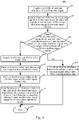
- Fig. 4 is a flow 400 of the method for processing a signal according to another embodiment of the present disclosure.
- the method for processing a signal includes the following steps:
- Step 401 acquiring a plurality of constant-amplitude sweep-frequency signals, then, performing step 402.
- the sweep-frequency signal is a signal of constant amplitude whose frequency varies periodically within a certain range.
- Sweep signal is a signal designed to test the voice output device and the voice input device. They are mainly used to test frequency characteristics of a voice output device, a voice input device, or an integral machine containing a voice output device and a voice input device.
- Step 402 inputting at least one sweep-frequency signal into the voice output device, and acquiring an output signal of the sweep-frequency signal in the voice input device, then, performing step 403.
- the sweep-frequency signal is input into the voice output device, the voice output device plays the sweep-frequency signal, the voice input device collects the signal played by the voice output device, and the collected signal is the output signal.
- Step 403 detecting whether the voice output device and the voice input device are non-linear devices, based on the sweep signal and the output signal corresponding to the sweep signal; if it is detected that the voice output device and the voice input device are non-linear devices, performing step 404; or if it is detected that the voice output device and the voice input device are linear devices, performing step 409.
- linear devices and non-linear devices are relative concepts.
- a test signal is input into a tested device, if an output signal of the tested device has large deviation relative to the input signal, that is, if the distortion is large, the tested device is determined to be a non-linear device; if the deviation of the output signal of the tested device relative to the input signal is small, that is, if the distortion is small, it is determined that the tested device is not a non-linear device, but a linear device.
- whether the voice output device and the voice input device are non-linear devices is detected based on all of the sweep-frequency signals and output signals of the sweep-frequency signals includes: determining distortions of the sweep-frequency signals, based on all of the sweep signals and the corresponding output signals of the sweep-frequency signals; if it is determined that distortions of a set ratio of sweep-frequency signals in all the sweep signals are all greater than a preset first distortion threshold, determining that the voice output device and the voice input device corresponding to the voice output device are non-linear devices; or if the distortions of the set ratio of the sweep-frequency signals in all the sweep-frequency signals are less than the preset distortion threshold, it is determined that the voice output device and the voice input device corresponding to the voice output device are linear devices;
- whether the voice output device and the voice input device are non-linear devices is detected based on all the sweep-frequency signals and output signals of the sweep-frequency signals includes: determining the distortions of the sweep-frequency signals, based on the sweep-frequency signals and the corresponding output signals of the sweep-frequency signals; sorting the distortions of all the sweep-frequency signals in the at least one sweep-frequency signal in an ascending order, if distortions of a preset number of sweep-frequency signals in the ascending order from high to low is less than the preset distortion threshold, determining that the voice output device and the voice input device are linear devices; or if the distortions of the preset number of sweep-frequency signals in the ascending order from high to low is greater than the preset distortion threshold, determining that the voice output device and the voice input device are non-linear devices.
- the determining the distortions of the sweep-frequency signals includes: for each sweep-frequency signal in the at least one sweep-frequency signal, the voice output device playing the sweep-frequency signal, and the voice input device collecting the output signal corresponding to the sweep-frequency signal, analyzing energy distribution of the sweep-frequency signal based on the output signal, and calculating harmonic distortion of the output signal; and determining the distortion of the sweep-frequency signal based on the harmonic distortion of the output signal.
- Step 404 acquiring a reference signal of a to-be-tested voice, then, performing step 405.
- the reference signal is a signal output to the voice output device, and the voice output device outputs the to-be-tested voice after obtaining the reference signal.
- Step 405 receiving, from a voice input device, an echo signal of the to-be-tested voice, then, performing step 406.
- the echo signal is a signal of the to-be-tested voice collected by the voice input device.
- Step 406 performing signal preprocessing on the reference signal and the echo signal respectively, then, performing step 407.
- performing signal preprocessing on the reference signal and the echo signal refers to processing the reference signal and the echo signal in a time domain or a frequency domain, so as to convert the reference signal and the echo signal into signals suitable for being processed by a time delay estimation model.
- Step 407 inputting the processed reference signal and the processed echo signal into a pre-trained time delay estimation model, to obtain a time difference between the reference signal and the echo signal output by the time delay estimation model, then, performing step 408.
- Step 409 calculating the time difference between the reference signal and the echo signal using a time delay estimation algorithm, then, performing step 408.
- the time delay estimation algorithm refers to determining the time difference between the reference signal and the echo signal based on the correlation of the signals.
- the time delay estimation algorithm includes: TDE algorithm and generalized cross correlation (GCC) algorithm.
- the TDE algorithm uses the correlation of the input signal and the reference signal on energy amplitude to estimate the time delay. Each frame occupies 1 bit, and 32 frames form an unsigned integer, so that the time difference can be quickly calculated with the help of computer XOR.
- GCC generalized cross correlation
- the method for processing a signal provided by the present embodiment, performs nonlinear and linear detection on the voice output device and the voice input device by setting a plurality of constant-amplitude sweep-frequency signals, so that it may be determined whether the voice output device and the voice input device can perform linear transformation on the to-be-tested voice.
- the time delay estimation algorithm is used to calculate the time difference between the reference signal and the echo signal, and the time delay of the reference signal and the echo signal may be obtained simply and conveniently by means of signal magnitude or phase cross-correlation; if the voice output device and the voice input device cannot perform linear transformation on the to-be-tested voice, the time delay estimation model is used to determine the time delay between the reference signal and the echo signal, which may solve the problem that the time delay cannot be estimated due to magnitude or phase distortion, thereby quickly and accurately estimating the time delay of low-correlation signals.
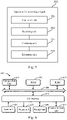
- an embodiment of the present disclosure provides an apparatus for processing a signal, and the apparatus embodiment corresponds to the method embodiment shown in Fig. 1 .
- an apparatus 500 for processing a signal includes: an acquisition unit 501, a receiving unit 502, a processing unit 503 and an estimation unit 504.
- the acquisition unit 501 may be configured to acquire a reference signal of a to-be-tested voice, the reference signal being a signal output to a voice output device, where the voice output device outputs the to-be-tested voice after obtaining the reference signal.
- the receiving unit 502 may be configured to receive, from a voice input device, an echo signal of the to-be-tested voice, the echo signal being a signal of the to-be-tested voice collected by the voice input device.
- the processing unit 503 may be configured to perform signal preprocessing on the reference signal and the echo signal respectively.
- the estimation unit 504 may be configured to input the processed reference signal and the processed echo signal into a pre-trained time delay estimation model, to obtain a time difference between the reference signal and the echo signal output by the time delay estimation model, the time delay estimation model being used to represent a corresponding relationship between the reference signal, the echo signal and the time difference.
- the apparatus 500 for processing a signal for the detailed processing and the technical effects of the acquisition unit 501, the receiving unit 502, the processing unit 503 and the estimation unit 504, reference may be made to the relevant descriptions of step 101, step 102, step 103 and step 104 in the corresponding embodiment of Fig. 1 respectively, and detailed description thereof will be omitted.
- the apparatus 500 further includes: a sweep-frequency unit (not shown in the figure), an inputting unit (not shown in the figure) and a detection unit (not shown in the figure).
- the sweep-frequency unit may be configured to acquire a plurality of constant-amplitude sweep-frequency signals.
- the input unit may be configured to input at least one sweep-frequency signal into the voice output device, and acquire an output signal of the sweep-frequency signal in the voice input device.
- the detection unit may be configured to detect whether the voice output device and the voice input device are non-linear devices, based on the sweep-frequency signal and the output signal corresponding to the sweep-frequency signal; and in response to determining that the voice output device and the voice input device are non-linear devices, control the acquisition unit 501 to work.
- the apparatus 500 further includes: a time delay unit (not shown in the figure).
- the time delay unit may be configured to, in response to determining that the voice output device and the voice input device are not non-linear devices, calculate the time difference between the reference signal and the echo signal using a time delay estimation algorithm.
- the time delay estimation model is obtained through training steps as follows: acquiring training samples, where each training sample includes a sample signal and an echo signal corresponding to the sample signal; and performing the training operations: inputting a sample signal and an echo signal corresponding to the sample signal into a first convolutional neural network, to obtain a feature vector of the sample signal and a feature vector of the echo signal corresponding to the sample signal; inputting the feature vector of the sample signal and the feature vector of the echo signal corresponding to the sample signal into a second convolutional neural network, to obtain correlation information of the sample signal and the echo signal corresponding to the sample signal within a preset time period; inputting the correlation information of the sample signal and the echo signal corresponding to the sample signal within the preset time period into a fully connected layer, to obtain a time difference between the sample signal and the echo signal corresponding to the sample signal; in response to determining that the first convolutional neural network, the second convolutional neural network, and the fully connected layer meet a training completion condition, using the first
- the processing unit 503 includes: a catenation module (not shown in the figure) and a magnitude spectrogram module (not shown in the figure).
- the catenation module may be configured to perform subband decomposition and catenation on the reference signal and the echo signal respectively.
- the magnitude spectrogram module may be configured to obtain magnitude spectrograms of the catenated signals to obtain the processed reference signal and the processed echo signal.
- the processing unit 503 may be further configured to: perform frequency domain transformation on the reference signal and the echo signal respectively, to obtain the processed reference signal and the processed echo signal.
- the acquisition unit 501 acquires the reference signal of the to-be-tested voice, the reference signal being a signal output to the voice output device, where the voice output device outputs the to-be-tested voice after obtaining the reference signal; secondly, the receiving unit 502 receives the echo signal of the to-be-tested voice from the voice input device, the echo signal being a signal of the to-be-tested voice collected by the voice input device; then, the processing unit 503 performs signal preprocessing on the reference signal and the echo signal respectively; and finally, the estimation unit 504 inputs the processed reference signal and the processed echo signal into the pre-trained time delay estimation model, to obtain the time difference between the reference signal and the echo signal output by the time delay estimation model, the time delay estimation model being used to represent a corresponding relationship between the reference signal, the echo signal and the time difference.
- the processed reference signal and the processed echo signal are input into the time delay estimation model to obtain the time difference between the reference signal and the echo signal.
- the time delay estimation model automatically calculates the signal delay between the reference signal and the echo signal, which can not only perform time delay estimation on signals with good linearity, but also perform time delay estimation on signals with poor learning linearity, thus improving the accuracy of signal processing.
- the collection, storage, use, processing, transmission, provision and disclosure of the user personal information involved are all in compliance with the relevant laws and regulations, and do not violate public order and good customs.
- embodiments of the present disclosure also provides an electronic device, a readable storage medium, and a computer program product.
- Fig. 6 illustrates a schematic block diagram of an example electronic device 600 that may be used to implement embodiments of the present disclosure.
- the electronic device is intended to represent various forms of digital computers, such as laptop computers, desktop computers, workbenches, personal digital assistants, servers, blade servers, mainframe computers, and other suitable computers.
- the electronic device may also represent various forms of mobile apparatuses, such as personal digital processors, cellular phones, smart phones, wearable devices, and other similar computing apparatuses.
- the components shown herein, their connections and relationships, and their functions are merely examples, and are not intended to limit the implementation of the present disclosure described and/or claimed herein.
- the device 600 includes a computation unit 601, which may perform various appropriate actions and processing, based on a computer program stored in a read-only memory (ROM) 602 or a computer program loaded from a storage unit 608 into a random access memory (RAM) 603.
- ROM read-only memory
- RAM random access memory
- various programs and data required for the operation of the device 600 may also be stored.
- the computation unit 601, the ROM 602, and the RAM 603 are connected to each other through a bus 604.
- An input/output (I/O) interface 605 is also connected to the bus 604.
- a plurality of parts in the device 600 are connected to the I/O interface 605, including: an input unit 606, for example, a keyboard and a mouse; an output unit 607, for example, various types of displays and speakers; the storage unit 608, for example, a disk and an optical disk; and a communication unit 609, for example, a network card, a modem, or a wireless communication transceiver.
- the communication unit 609 allows the device 600 to exchange information/data with other devices over a computer network such as the Internet and/or various telecommunication networks.
- the computation unit 601 may be various general-purpose and/or dedicated processing components having processing and computing capabilities. Some examples of the computation unit 601 include, but are not limited to, central processing unit (CPU), graphics processing unit (GPU), various dedicated artificial intelligence (AI) computing chips, various computation units running machine learning model algorithms, digital signal processors (DSP), and any appropriate processors, controllers, microcontrollers, etc.
- the computation unit 601 performs the various methods and processes described above, such as a method for processing a signal.
- the method for processing a signal may be implemented as a computer software program, which is tangibly included in a machine readable medium, such as the storage unit 608.
- part or all of the computer program may be loaded and/or installed on the device 600 via the ROM 602 and/or the communication unit 609.
- the computer program When the computer program is loaded into the RAM 603 and executed by the computation unit 601, one or more steps of the method for processing a signal described above may be performed.
- the computation unit 601 may be configured to perform the method for processing a signal by any other appropriate means (for example, by means of firmware).
- Various embodiments of the systems and technologies described above herein may be implemented in digital electronic circuit systems, integrated circuit systems, field programmable gate arrays (FPGA), application specific integrated circuits (ASIC), application specific standard products (ASSP), system on chip (SOC), load programmable logic devices (CPLD), computer hardware, firmware, software, and/or combinations thereof.
- FPGA field programmable gate arrays
- ASIC application specific integrated circuits
- ASSP application specific standard products
- SOC system on chip
- CPLD load programmable logic devices
- computer hardware firmware, software, and/or combinations thereof.
- These various embodiments may include being implemented in one or more computer programs that may be executed and/or interpreted on a programmable system including at least one programmable processor, which may be a dedicated or general programmable processor that may receive data and instructions from a storage system, at least one input device, and at least one output device, and transmit data and instructions to the storage system, the at least one input device, and the at least one output device.
- the program code for implementing the methods of the present disclosure may be written in any combination of one or more programming languages. These program codes can be provided to the processor or controller of general computer, dedicated computer or other programmable data processing device, so that when executed by the processor or controller, the program code enables the functions / operations specified in the flow chart and/or block diagram to be implemented.
- the program code can be executed completely on the machine, partially on the machine, partially on the machine and partially on the remote machine as a separate software package, or completely on the remote machine or server.
- a machine readable medium may be a tangible medium which may contain or store a program for use by, or used in combination with, an instruction execution system, apparatus or device.
- the machine readable medium may be a machine readable signal medium or a machine readable storage medium.
- the computer readable medium may include, but is not limited to, electronic, magnetic, optical, electromagnetic, infrared, or semiconductor systems, apparatuses, or devices, or any appropriate combination of the above.
- a more specific example of the machine readable storage medium will include an electrical connection based on one or more pieces of wire, a portable computer disk, a hard disk, a random access memory (RAM), a read only memory (ROM), an erasable programmable read only memory (EPROM or flash memory), an optical fiber, a portable compact disk read only memory (CD-ROM), an optical storage device, a magnetic storage device, or any appropriate combination of the above.
- a portable computer disk a hard disk, a random access memory (RAM), a read only memory (ROM), an erasable programmable read only memory (EPROM or flash memory), an optical fiber, a portable compact disk read only memory (CD-ROM), an optical storage device, a magnetic storage device, or any appropriate combination of the above.
- a display apparatus e.g., a CRT (cathode ray tube) or an LCD (liquid crystal display) monitor
- a keyboard and a pointing apparatus e.g., a mouse or a trackball
- Other kinds of apparatuses may also be configured to provide interaction with the user.
- feedback provided to the user may be any form of sensory feedback (e.g., visual feedback, auditory feedback, or tactile feedback); and an input may be received from the user in any form (including an acoustic input, a voice input, or a tactile input).
- the systems and technologies described herein may be implemented in a computing system that includes a back-end component (e.g., as a data server), or a computing system that includes a middleware component (e.g., an application server), or a computing system that includes a front-end component (e.g., a user computer with a graphical user interface or a web browser through which the user can interact with an implementation of the systems and technologies described herein), or a computing system that includes any combination of such a back-end component, such a middleware component, or such a front-end component.
- the components of the system may be interconnected by digital data communication (e.g., a communication network) in any form or medium. Examples of the communication network include: a local area network (LAN), a wide area network (WAN), and the Internet.
- the computer system may include a client and a server.
- the client and the server are generally remote from each other, and generally interact with each other through a communication network.
- the relationship between the client and the server is generated by virtue of computer programs that run on corresponding computers and have a client-server relationship with each other.
- the server may be a cloud server, a distributed system server, or a server combined with blockchain.
Landscapes
- Engineering & Computer Science (AREA)
- Physics & Mathematics (AREA)
- Computational Linguistics (AREA)
- Health & Medical Sciences (AREA)
- Theoretical Computer Science (AREA)
- Acoustics & Sound (AREA)
- Multimedia (AREA)
- Signal Processing (AREA)
- Audiology, Speech & Language Pathology (AREA)
- Human Computer Interaction (AREA)
- Evolutionary Computation (AREA)
- Artificial Intelligence (AREA)
- Biomedical Technology (AREA)
- Computing Systems (AREA)
- Software Systems (AREA)
- Biophysics (AREA)
- Data Mining & Analysis (AREA)
- General Health & Medical Sciences (AREA)
- Molecular Biology (AREA)
- Life Sciences & Earth Sciences (AREA)
- General Engineering & Computer Science (AREA)
- General Physics & Mathematics (AREA)
- Mathematical Physics (AREA)
- Quality & Reliability (AREA)
- Spectroscopy & Molecular Physics (AREA)
- Computer Networks & Wireless Communication (AREA)
- Cable Transmission Systems, Equalization Of Radio And Reduction Of Echo (AREA)
- Circuit For Audible Band Transducer (AREA)
Applications Claiming Priority (1)
| Application Number | Priority Date | Filing Date | Title |
|---|---|---|---|
| CN202111440574.7A CN114141224B (zh) | 2021-11-30 | 2021-11-30 | 信号处理方法和装置、电子设备、计算机可读介质 |
Publications (3)
| Publication Number | Publication Date |
|---|---|
| EP4064282A2 true EP4064282A2 (de) | 2022-09-28 |
| EP4064282A3 EP4064282A3 (de) | 2023-01-18 |
| EP4064282B1 EP4064282B1 (de) | 2025-08-27 |
Family
ID=80389619
Family Applications (1)
| Application Number | Title | Priority Date | Filing Date |
|---|---|---|---|
| EP22187478.7A Active EP4064282B1 (de) | 2021-11-30 | 2022-07-28 | Zeitverzögerungsschätzung für die echounterdrückung |
Country Status (3)
| Country | Link |
|---|---|
| US (1) | US12236974B2 (de) |
| EP (1) | EP4064282B1 (de) |
| CN (1) | CN114141224B (de) |
Families Citing this family (2)
| Publication number | Priority date | Publication date | Assignee | Title |
|---|---|---|---|---|
| CN116013337B (zh) * | 2023-01-10 | 2023-12-29 | 北京百度网讯科技有限公司 | 音频信号处理方法、模型的训练方法、装置、设备和介质 |
| CN118245772B (zh) * | 2024-01-26 | 2024-09-17 | 中国人民解放军军事科学院系统工程研究院 | 一种基于卷积神经网络的时频差提取方法 |
Family Cites Families (32)
| Publication number | Priority date | Publication date | Assignee | Title |
|---|---|---|---|---|
| EP1872360A1 (de) * | 2005-04-22 | 2008-01-02 | Anocsys AG | Verfahren zur nachbildung eines secondary-path bei einem aktiven geräuschreduktionssystem |
| CN102044253B (zh) * | 2010-10-29 | 2012-05-30 | 深圳创维-Rgb电子有限公司 | 一种回声信号处理方法、系统及电视机 |
| CN102118678B (zh) * | 2011-04-02 | 2014-07-23 | 嘉兴中科声学科技有限公司 | 一种使用电流传感器测量扬声器参数的方法及系统 |
| US8718275B2 (en) * | 2011-12-22 | 2014-05-06 | Google Inc. | Low complex and robust delay estimation |
| CN102780821B (zh) * | 2012-07-06 | 2014-08-13 | 歌尔声学股份有限公司 | 一种送受话端采样率偏差纠正方法和系统 |
| US9565497B2 (en) * | 2013-08-01 | 2017-02-07 | Caavo Inc. | Enhancing audio using a mobile device |
| US10720949B1 (en) * | 2015-03-19 | 2020-07-21 | Hrl Laboratories, Llc | Real-time time-difference-of-arrival (TDOA) estimation via multi-input cognitive signal processor |
| CN104994249B (zh) * | 2015-05-19 | 2017-03-15 | 百度在线网络技术(北京)有限公司 | 声回波消除方法和装置 |
| CN105847611B (zh) * | 2016-03-21 | 2020-02-11 | 腾讯科技(深圳)有限公司 | 一种回声时延检测方法、回声消除芯片及终端设备 |
| US10446166B2 (en) * | 2016-07-12 | 2019-10-15 | Dolby Laboratories Licensing Corporation | Assessment and adjustment of audio installation |
| CN106571147B (zh) * | 2016-11-13 | 2021-05-28 | 南京汉隆科技有限公司 | 用于网络话机声学回声抑制的方法 |
| CN107333018B (zh) * | 2017-05-24 | 2019-11-15 | 华南理工大学 | 一种回声时延估计及追踪方法 |
| WO2018231534A1 (en) * | 2017-06-15 | 2018-12-20 | Knowles Electronics, Llc | Adaptive acoustic echo delay estimation |
| US9947338B1 (en) * | 2017-09-19 | 2018-04-17 | Amazon Technologies, Inc. | Echo latency estimation |
| CN112534800B (zh) * | 2018-07-18 | 2021-10-15 | 谷歌有限责任公司 | 一种回波检测的方法和系统 |
| CN110891236A (zh) * | 2018-09-09 | 2020-03-17 | 广东思派康电子科技有限公司 | 一种多麦克风阵列产测的实现方法和装置 |
| CN113170024B (zh) * | 2018-11-14 | 2023-08-29 | 深圳市欢太科技有限公司 | 回声消除方法、延时估计方法、装置、存储介质及设备 |
| CN111223492A (zh) * | 2018-11-23 | 2020-06-02 | 中移(杭州)信息技术有限公司 | 一种回声路径延迟估计方法及装置 |
| CN109688284B (zh) * | 2018-12-28 | 2021-10-08 | 广东美电贝尔科技集团股份有限公司 | 一种回音延时检测方法 |
| CN109831733B (zh) * | 2019-02-26 | 2020-11-24 | 北京百度网讯科技有限公司 | 音频播放性能的测试方法、装置、设备和存储介质 |
| DE102019105458B4 (de) * | 2019-03-04 | 2021-06-10 | Harman Becker Automotive Systems Gmbh | System und Verfahren zur Zeitverzögerungsschätzung |
| CN112530450B (zh) * | 2019-09-17 | 2025-04-11 | 杜比实验室特许公司 | 频域中的样本精度延迟识别 |
| CN111524498B (zh) * | 2020-04-10 | 2023-06-16 | 维沃移动通信有限公司 | 滤波方法、装置及电子设备 |
| CN113689871A (zh) * | 2020-05-19 | 2021-11-23 | 阿里巴巴集团控股有限公司 | 回声消除方法和装置 |
| US12062369B2 (en) * | 2020-09-25 | 2024-08-13 | Intel Corporation | Real-time dynamic noise reduction using convolutional networks |
| CN112420073B (zh) * | 2020-10-12 | 2024-04-16 | 北京百度网讯科技有限公司 | 语音信号处理方法、装置、电子设备和存储介质 |
| US11063881B1 (en) * | 2020-11-02 | 2021-07-13 | Swarmio Inc. | Methods and apparatus for network delay and distance estimation, computing resource selection, and related techniques |
| CN112634923B (zh) * | 2020-12-14 | 2021-11-19 | 广州智讯通信系统有限公司 | 基于指挥调度系统的音频回声消除方法、设备、存储介质 |
| CN112289333B (zh) * | 2020-12-25 | 2021-04-13 | 北京达佳互联信息技术有限公司 | 语音增强模型的训练方法和装置及语音增强方法和装置 |
| US11508351B2 (en) * | 2021-03-01 | 2022-11-22 | Beijing Didi Infinity Technology And Development Co., Ltd. | Multi-task deep network for echo path delay estimation and echo cancellation |
| CN113160790A (zh) * | 2021-04-08 | 2021-07-23 | 维沃移动通信有限公司 | 回声消除方法、装置、电子设备及存储介质 |
| CN113192527B (zh) * | 2021-04-28 | 2024-03-19 | 北京达佳互联信息技术有限公司 | 用于消除回声的方法、装置、电子设备和存储介质 |
-
2021
- 2021-11-30 CN CN202111440574.7A patent/CN114141224B/zh active Active
-
2022
- 2022-07-25 US US17/872,909 patent/US12236974B2/en active Active
- 2022-07-28 EP EP22187478.7A patent/EP4064282B1/de active Active
Also Published As
| Publication number | Publication date |
|---|---|
| US20220358951A1 (en) | 2022-11-10 |
| CN114141224B (zh) | 2023-06-09 |
| CN114141224A (zh) | 2022-03-04 |
| EP4064282B1 (de) | 2025-08-27 |
| EP4064282A3 (de) | 2023-01-18 |
| US12236974B2 (en) | 2025-02-25 |
Similar Documents
| Publication | Publication Date | Title |
|---|---|---|
| US12597433B2 (en) | Speech signal enhancement method and apparatus, and electronic device | |
| TWI647961B (zh) | 聲場的高階保真立體音響表示法中不相關聲源方向之決定方法及裝置 | |
| EP4044175A1 (de) | Spracherkennungsverfahren und -gerät und computerlesbares speichermedium | |
| US12236974B2 (en) | Method and apparatus for processing signal, computer readable medium | |
| Li et al. | A mixing matrix estimation algorithm for underdetermined blind source separation | |
| CN106157967A (zh) | 脉冲噪声抑制 | |
| CN105872156A (zh) | 一种回声时延跟踪方法及装置 | |
| KR102657905B1 (ko) | 에코 검출 | |
| WO2020024816A1 (zh) | 音频信号处理方法、装置、设备和存储介质 | |
| CN111366813B (zh) | 一种脉冲噪声环境下的电缆故障定位方法、装置及系统 | |
| CN113470685A (zh) | 语音增强模型的训练方法和装置及语音增强方法和装置 | |
| WO2022088643A1 (zh) | 地埋式变电站的故障诊断方法、装置及电子设备 | |
| CN116540019A (zh) | 一种局放检测方法及装置 | |
| CN111048061B (zh) | 回声消除滤波器的步长获取方法、装置及设备 | |
| CN114242098A (zh) | 一种语音增强方法、装置、设备以及存储介质 | |
| CN113008361A (zh) | 一种变电站站界噪声抗环境干扰检测方法及装置 | |
| CN105674065A (zh) | 一种基于变模式分解的声发射管道漏点定位方法 | |
| CN107564512B (zh) | 语音活动侦测方法及装置 | |
| CN118351886A (zh) | 语音质检的方法、装置、电子设备、存储介质和计算机程序 | |
| CN117826754A (zh) | 一种无人机飞控信号检测方法、设备及其可读存储介质 | |
| JPWO2012105386A1 (ja) | 有音区間検出装置、有音区間検出方法、及び有音区間検出プログラム | |
| CN101806834B (zh) | 基于卡尔曼滤波器的信号实时时频谱仪 | |
| CN110648685B (zh) | 设备检测方法、装置、电子设备和可读存储介质 | |
| CN103778914B (zh) | 基于信噪比加权模板特征匹配的抗噪语音识别方法及装置 | |
| US12315526B2 (en) | Method and apparatus for determining echo, and storage medium |
Legal Events
| Date | Code | Title | Description |
|---|---|---|---|
| PUAI | Public reference made under article 153(3) epc to a published international application that has entered the european phase |
Free format text: ORIGINAL CODE: 0009012 |
|
| STAA | Information on the status of an ep patent application or granted ep patent |
Free format text: STATUS: REQUEST FOR EXAMINATION WAS MADE |
|
| 17P | Request for examination filed |
Effective date: 20220728 |
|
| AK | Designated contracting states |
Kind code of ref document: A2 Designated state(s): AL AT BE BG CH CY CZ DE DK EE ES FI FR GB GR HR HU IE IS IT LI LT LU LV MC MK MT NL NO PL PT RO RS SE SI SK SM TR |
|
| PUAL | Search report despatched |
Free format text: ORIGINAL CODE: 0009013 |
|
| AK | Designated contracting states |
Kind code of ref document: A3 Designated state(s): AL AT BE BG CH CY CZ DE DK EE ES FI FR GB GR HR HU IE IS IT LI LT LU LV MC MK MT NL NO PL PT RO RS SE SI SK SM TR |
|
| RIC1 | Information provided on ipc code assigned before grant |
Ipc: G10L 21/0208 20130101ALN20221214BHEP Ipc: H04M 9/08 20060101ALI20221214BHEP Ipc: H04B 3/23 20060101ALI20221214BHEP Ipc: G10L 21/0264 20130101AFI20221214BHEP |
|
| STAA | Information on the status of an ep patent application or granted ep patent |
Free format text: STATUS: EXAMINATION IS IN PROGRESS |
|
| 17Q | First examination report despatched |
Effective date: 20240108 |
|
| GRAP | Despatch of communication of intention to grant a patent |
Free format text: ORIGINAL CODE: EPIDOSNIGR1 |
|
| STAA | Information on the status of an ep patent application or granted ep patent |
Free format text: STATUS: GRANT OF PATENT IS INTENDED |
|
| RIC1 | Information provided on ipc code assigned before grant |
Ipc: G10L 21/0208 20130101ALN20250409BHEP Ipc: H04M 9/08 20060101ALI20250409BHEP Ipc: H04B 3/23 20060101ALI20250409BHEP Ipc: G10L 21/0264 20130101AFI20250409BHEP |
|
| INTG | Intention to grant announced |
Effective date: 20250422 |
|
| GRAS | Grant fee paid |
Free format text: ORIGINAL CODE: EPIDOSNIGR3 |
|
| GRAA | (expected) grant |
Free format text: ORIGINAL CODE: 0009210 |
|
| STAA | Information on the status of an ep patent application or granted ep patent |
Free format text: STATUS: THE PATENT HAS BEEN GRANTED |
|
| AK | Designated contracting states |
Kind code of ref document: B1 Designated state(s): AL AT BE BG CH CY CZ DE DK EE ES FI FR GB GR HR HU IE IS IT LI LT LU LV MC MK MT NL NO PL PT RO RS SE SI SK SM TR |
|
| REG | Reference to a national code |
Ref country code: CH Ref legal event code: EP |
|
| REG | Reference to a national code |
Ref country code: DE Ref legal event code: R096 Ref document number: 602022020116 Country of ref document: DE |
|
| REG | Reference to a national code |
Ref country code: IE Ref legal event code: FG4D |
|
| REG | Reference to a national code |
Ref country code: NL Ref legal event code: MP Effective date: 20250827 |
|
| PG25 | Lapsed in a contracting state [announced via postgrant information from national office to epo] |
Ref country code: IS Free format text: LAPSE BECAUSE OF FAILURE TO SUBMIT A TRANSLATION OF THE DESCRIPTION OR TO PAY THE FEE WITHIN THE PRESCRIBED TIME-LIMIT Effective date: 20251227 |
|
| PG25 | Lapsed in a contracting state [announced via postgrant information from national office to epo] |
Ref country code: NO Free format text: LAPSE BECAUSE OF FAILURE TO SUBMIT A TRANSLATION OF THE DESCRIPTION OR TO PAY THE FEE WITHIN THE PRESCRIBED TIME-LIMIT Effective date: 20251127 |
|
| REG | Reference to a national code |
Ref country code: LT Ref legal event code: MG9D |
|
| PG25 | Lapsed in a contracting state [announced via postgrant information from national office to epo] |
Ref country code: PT Free format text: LAPSE BECAUSE OF FAILURE TO SUBMIT A TRANSLATION OF THE DESCRIPTION OR TO PAY THE FEE WITHIN THE PRESCRIBED TIME-LIMIT Effective date: 20251229 |
|
| PG25 | Lapsed in a contracting state [announced via postgrant information from national office to epo] |
Ref country code: FI Free format text: LAPSE BECAUSE OF FAILURE TO SUBMIT A TRANSLATION OF THE DESCRIPTION OR TO PAY THE FEE WITHIN THE PRESCRIBED TIME-LIMIT Effective date: 20250827 |
|
| PG25 | Lapsed in a contracting state [announced via postgrant information from national office to epo] |
Ref country code: NL Free format text: LAPSE BECAUSE OF FAILURE TO SUBMIT A TRANSLATION OF THE DESCRIPTION OR TO PAY THE FEE WITHIN THE PRESCRIBED TIME-LIMIT Effective date: 20250827 Ref country code: HR Free format text: LAPSE BECAUSE OF FAILURE TO SUBMIT A TRANSLATION OF THE DESCRIPTION OR TO PAY THE FEE WITHIN THE PRESCRIBED TIME-LIMIT Effective date: 20250827 |
|
| PG25 | Lapsed in a contracting state [announced via postgrant information from national office to epo] |
Ref country code: GR Free format text: LAPSE BECAUSE OF FAILURE TO SUBMIT A TRANSLATION OF THE DESCRIPTION OR TO PAY THE FEE WITHIN THE PRESCRIBED TIME-LIMIT Effective date: 20251128 |
|
| PG25 | Lapsed in a contracting state [announced via postgrant information from national office to epo] |
Ref country code: SE Free format text: LAPSE BECAUSE OF FAILURE TO SUBMIT A TRANSLATION OF THE DESCRIPTION OR TO PAY THE FEE WITHIN THE PRESCRIBED TIME-LIMIT Effective date: 20250827 |
|
| PG25 | Lapsed in a contracting state [announced via postgrant information from national office to epo] |
Ref country code: LV Free format text: LAPSE BECAUSE OF FAILURE TO SUBMIT A TRANSLATION OF THE DESCRIPTION OR TO PAY THE FEE WITHIN THE PRESCRIBED TIME-LIMIT Effective date: 20250827 |
|
| PG25 | Lapsed in a contracting state [announced via postgrant information from national office to epo] |
Ref country code: BG Free format text: LAPSE BECAUSE OF FAILURE TO SUBMIT A TRANSLATION OF THE DESCRIPTION OR TO PAY THE FEE WITHIN THE PRESCRIBED TIME-LIMIT Effective date: 20250827 Ref country code: PL Free format text: LAPSE BECAUSE OF FAILURE TO SUBMIT A TRANSLATION OF THE DESCRIPTION OR TO PAY THE FEE WITHIN THE PRESCRIBED TIME-LIMIT Effective date: 20250827 |
|
| PG25 | Lapsed in a contracting state [announced via postgrant information from national office to epo] |
Ref country code: RS Free format text: LAPSE BECAUSE OF FAILURE TO SUBMIT A TRANSLATION OF THE DESCRIPTION OR TO PAY THE FEE WITHIN THE PRESCRIBED TIME-LIMIT Effective date: 20251127 |
|
| PG25 | Lapsed in a contracting state [announced via postgrant information from national office to epo] |
Ref country code: ES Free format text: LAPSE BECAUSE OF FAILURE TO SUBMIT A TRANSLATION OF THE DESCRIPTION OR TO PAY THE FEE WITHIN THE PRESCRIBED TIME-LIMIT Effective date: 20250827 |
|
| REG | Reference to a national code |
Ref country code: AT Ref legal event code: MK05 Ref document number: 1830953 Country of ref document: AT Kind code of ref document: T Effective date: 20250827 |
|
| PG25 | Lapsed in a contracting state [announced via postgrant information from national office to epo] |
Ref country code: SM Free format text: LAPSE BECAUSE OF FAILURE TO SUBMIT A TRANSLATION OF THE DESCRIPTION OR TO PAY THE FEE WITHIN THE PRESCRIBED TIME-LIMIT Effective date: 20250827 |
|
| P01 | Opt-out of the competence of the unified patent court (upc) registered |
Free format text: CASE NUMBER: UPC_APP_0008259_4064282/2026 Effective date: 20260227 |
|
| PG25 | Lapsed in a contracting state [announced via postgrant information from national office to epo] |
Ref country code: DK Free format text: LAPSE BECAUSE OF FAILURE TO SUBMIT A TRANSLATION OF THE DESCRIPTION OR TO PAY THE FEE WITHIN THE PRESCRIBED TIME-LIMIT Effective date: 20250827 |
|
| PG25 | Lapsed in a contracting state [announced via postgrant information from national office to epo] |
Ref country code: AT Free format text: LAPSE BECAUSE OF FAILURE TO SUBMIT A TRANSLATION OF THE DESCRIPTION OR TO PAY THE FEE WITHIN THE PRESCRIBED TIME-LIMIT Effective date: 20250827 |
|
| PG25 | Lapsed in a contracting state [announced via postgrant information from national office to epo] |
Ref country code: IT Free format text: LAPSE BECAUSE OF FAILURE TO SUBMIT A TRANSLATION OF THE DESCRIPTION OR TO PAY THE FEE WITHIN THE PRESCRIBED TIME-LIMIT Effective date: 20250827 |
|
| PG25 | Lapsed in a contracting state [announced via postgrant information from national office to epo] |
Ref country code: CZ Free format text: LAPSE BECAUSE OF FAILURE TO SUBMIT A TRANSLATION OF THE DESCRIPTION OR TO PAY THE FEE WITHIN THE PRESCRIBED TIME-LIMIT Effective date: 20250827 |
|
| PG25 | Lapsed in a contracting state [announced via postgrant information from national office to epo] |
Ref country code: SK Free format text: LAPSE BECAUSE OF FAILURE TO SUBMIT A TRANSLATION OF THE DESCRIPTION OR TO PAY THE FEE WITHIN THE PRESCRIBED TIME-LIMIT Effective date: 20250827 Ref country code: EE Free format text: LAPSE BECAUSE OF FAILURE TO SUBMIT A TRANSLATION OF THE DESCRIPTION OR TO PAY THE FEE WITHIN THE PRESCRIBED TIME-LIMIT Effective date: 20250827 |
|
| REG | Reference to a national code |
Ref country code: DE Ref legal event code: R097 Ref document number: 602022020116 Country of ref document: DE |
|
| PG25 | Lapsed in a contracting state [announced via postgrant information from national office to epo] |
Ref country code: LT Free format text: LAPSE BECAUSE OF FAILURE TO SUBMIT A TRANSLATION OF THE DESCRIPTION OR TO PAY THE FEE WITHIN THE PRESCRIBED TIME-LIMIT Effective date: 20250827 |
|
| PLBE | No opposition filed within time limit |
Free format text: ORIGINAL CODE: 0009261 |
|
| STAA | Information on the status of an ep patent application or granted ep patent |
Free format text: STATUS: NO OPPOSITION FILED WITHIN TIME LIMIT |
|
| REG | Reference to a national code |
Ref country code: CH Ref legal event code: L10 Free format text: ST27 STATUS EVENT CODE: U-0-0-L10-L00 (AS PROVIDED BY THE NATIONAL OFFICE) Effective date: 20260708 |
|
| 26N | No opposition filed |
Effective date: 20260528 |