EP4064168A1 - Versicherungsserver mit künstlicher intelligenz und verfahren zur erbringung von versicherungsdienstleistungen mit künstlicher intelligenz - Google Patents
Versicherungsserver mit künstlicher intelligenz und verfahren zur erbringung von versicherungsdienstleistungen mit künstlicher intelligenz Download PDFInfo
- Publication number
- EP4064168A1 EP4064168A1 EP20813846.1A EP20813846A EP4064168A1 EP 4064168 A1 EP4064168 A1 EP 4064168A1 EP 20813846 A EP20813846 A EP 20813846A EP 4064168 A1 EP4064168 A1 EP 4064168A1
- Authority
- EP
- European Patent Office
- Prior art keywords
- insurance
- data
- artificial intelligence
- analysis
- additional test
- Prior art date
- Legal status (The legal status is an assumption and is not a legal conclusion. Google has not performed a legal analysis and makes no representation as to the accuracy of the status listed.)
- Pending
Links
Images






Classifications
-
- G—PHYSICS
- G06—COMPUTING OR CALCULATING; COUNTING
- G06Q—INFORMATION AND COMMUNICATION TECHNOLOGY [ICT] SPECIALLY ADAPTED FOR ADMINISTRATIVE, COMMERCIAL, FINANCIAL, MANAGERIAL OR SUPERVISORY PURPOSES; SYSTEMS OR METHODS SPECIALLY ADAPTED FOR ADMINISTRATIVE, COMMERCIAL, FINANCIAL, MANAGERIAL OR SUPERVISORY PURPOSES, NOT OTHERWISE PROVIDED FOR
- G06Q40/00—Finance; Insurance; Tax strategies; Processing of corporate or income taxes
- G06Q40/08—Insurance
-
- A—HUMAN NECESSITIES
- A61—MEDICAL OR VETERINARY SCIENCE; HYGIENE
- A61B—DIAGNOSIS; SURGERY; IDENTIFICATION
- A61B5/00—Measuring for diagnostic purposes; Identification of persons
- A61B5/0033—Features or image-related aspects of imaging apparatus, e.g. for MRI, optical tomography or impedance tomography apparatus; Arrangements of imaging apparatus in a room
-
- G—PHYSICS
- G06—COMPUTING OR CALCULATING; COUNTING
- G06N—COMPUTING ARRANGEMENTS BASED ON SPECIFIC COMPUTATIONAL MODELS
- G06N20/00—Machine learning
-
- G—PHYSICS
- G06—COMPUTING OR CALCULATING; COUNTING
- G06Q—INFORMATION AND COMMUNICATION TECHNOLOGY [ICT] SPECIALLY ADAPTED FOR ADMINISTRATIVE, COMMERCIAL, FINANCIAL, MANAGERIAL OR SUPERVISORY PURPOSES; SYSTEMS OR METHODS SPECIALLY ADAPTED FOR ADMINISTRATIVE, COMMERCIAL, FINANCIAL, MANAGERIAL OR SUPERVISORY PURPOSES, NOT OTHERWISE PROVIDED FOR
- G06Q10/00—Administration; Management
- G06Q10/06—Resources, workflows, human or project management; Enterprise or organisation planning; Enterprise or organisation modelling
- G06Q10/063—Operations research, analysis or management
- G06Q10/0635—Risk analysis of enterprise or organisation activities
-
- G—PHYSICS
- G06—COMPUTING OR CALCULATING; COUNTING
- G06Q—INFORMATION AND COMMUNICATION TECHNOLOGY [ICT] SPECIALLY ADAPTED FOR ADMINISTRATIVE, COMMERCIAL, FINANCIAL, MANAGERIAL OR SUPERVISORY PURPOSES; SYSTEMS OR METHODS SPECIALLY ADAPTED FOR ADMINISTRATIVE, COMMERCIAL, FINANCIAL, MANAGERIAL OR SUPERVISORY PURPOSES, NOT OTHERWISE PROVIDED FOR
- G06Q30/00—Commerce
- G06Q30/02—Marketing; Price estimation or determination; Fundraising
- G06Q30/0201—Market modelling; Market analysis; Collecting market data
- G06Q30/0204—Market segmentation
-
- G—PHYSICS
- G06—COMPUTING OR CALCULATING; COUNTING
- G06Q—INFORMATION AND COMMUNICATION TECHNOLOGY [ICT] SPECIALLY ADAPTED FOR ADMINISTRATIVE, COMMERCIAL, FINANCIAL, MANAGERIAL OR SUPERVISORY PURPOSES; SYSTEMS OR METHODS SPECIALLY ADAPTED FOR ADMINISTRATIVE, COMMERCIAL, FINANCIAL, MANAGERIAL OR SUPERVISORY PURPOSES, NOT OTHERWISE PROVIDED FOR
- G06Q30/00—Commerce
- G06Q30/02—Marketing; Price estimation or determination; Fundraising
- G06Q30/0207—Discounts or incentives, e.g. coupons or rebates
-
- G—PHYSICS
- G06—COMPUTING OR CALCULATING; COUNTING
- G06Q—INFORMATION AND COMMUNICATION TECHNOLOGY [ICT] SPECIALLY ADAPTED FOR ADMINISTRATIVE, COMMERCIAL, FINANCIAL, MANAGERIAL OR SUPERVISORY PURPOSES; SYSTEMS OR METHODS SPECIALLY ADAPTED FOR ADMINISTRATIVE, COMMERCIAL, FINANCIAL, MANAGERIAL OR SUPERVISORY PURPOSES, NOT OTHERWISE PROVIDED FOR
- G06Q50/00—Information and communication technology [ICT] specially adapted for implementation of business processes of specific business sectors, e.g. utilities or tourism
- G06Q50/10—Services
- G06Q50/22—Social work or social welfare, e.g. community support activities or counselling services
-
- G—PHYSICS
- G16—INFORMATION AND COMMUNICATION TECHNOLOGY [ICT] SPECIALLY ADAPTED FOR SPECIFIC APPLICATION FIELDS
- G16H—HEALTHCARE INFORMATICS, i.e. INFORMATION AND COMMUNICATION TECHNOLOGY [ICT] SPECIALLY ADAPTED FOR THE HANDLING OR PROCESSING OF MEDICAL OR HEALTHCARE DATA
- G16H50/00—ICT specially adapted for medical diagnosis, medical simulation or medical data mining; ICT specially adapted for detecting, monitoring or modelling epidemics or pandemics
- G16H50/20—ICT specially adapted for medical diagnosis, medical simulation or medical data mining; ICT specially adapted for detecting, monitoring or modelling epidemics or pandemics for computer-aided diagnosis, e.g. based on medical expert systems
Definitions
- the disclosure relates to an artificial intelligence insurance server and a method for providing an artificial intelligence insurance service.
- the existing insurance subscription screening i . e ., underwriting
- the existing insurance subscription screening is carried out by considering demographic factors and factors causing accidents or diseases.
- these factors cannot be proven in many cases, and thus, it is inevitable to rely heavily on the notification statements of the insurance users, thereby having low credibility.
- subscription screening is performed based on a statistical basis of the entire population, and thus, there are cases where substantive individual risks are inaccurately determined.
- aspects of the disclosure provide an artificial intelligence insurance server that can precisely determine the individual risk of insurance users.
- aspects of the disclosure provide a method for providing an artificial intelligence insurance service that can precisely determine the individual risk of insurance users.
- an artificial intelligence insurance server includes a receiving unit for receiving input data including medical data of an insurance user, a comparison data selection unit for selecting comparison data based on the input data and deriving first analysis data by analyzing the comparison data, an artificial intelligence analysis unit for obtaining second analysis data derived by performing artificial intelligence analysis on the input data, a comparison unit for comparing the first and the second analysis data, and generating final analysis data using the first and the second analysis data and a decision-making unit for making at least one insurance-related decision using the final analysis data.
- the receiving unit determines whether the input data is sufficient, and when the input data is sufficient, transmits a progress signal to the comparison data selection unit.
- the medical data includes at least one of an X-ray, CT (Computed Tomography), a mammography image, an MRI (Magnetic Resonance Imaging) image, an ultrasound image, a pathology slide image, a tissue image, genomic data including multi-omics data, biological data, a medical report or personal health records (PHR).
- CT Computer Tomography
- MRI Magnetic Resonance Imaging
- ultrasound image a mammography image
- pathology slide image a pathology slide image
- genomic data including multi-omics data
- biological data a medical report or personal health records (PHR).
- PHR personal health records
- the comparison data includes cohort data of the insurance user selected from the input data.
- the input data includes at least one of demographic information, or information on factors causing accidents or diseases of the insurance user, and the cohort data is selected from at least one of the demographic information, or information on factors causing accidents or diseases.
- the cohort data is selected as data of a combination that is similar to the combination of the input data.
- the comparison data includes past data of the insurance user.
- the comparison data selection unit receives diagnosis data including diagnosis result of the input data, and converts the diagnosis data to first analysis data.
- the artificial intelligence analysis unit receives second analysis data for which artificial intelligence analysis is performed on the input data.
- the decision-making unit makes at least one decision on insurance product recommendation, underwriting or insurance premium discount calculation if the insurance user has not subscribed to insurance, and makes at least one decision on health care, insurance benefits payout or additional insurance product recommendation if the insurance user has subscribed to insurance.
- the decision-making unit makes at least one decision on insurance benefits payout
- the comparison unit determines whether a first additional test is needed using the first analysis data and determines whether a second additional test is needed using the second analysis data
- the decision-making unit requests the insurance user for an additional test if at least one of the first or the second additional test is determined to be needed.
- the receiving unit receives whether an additional test is carried out from the insurance user, and transmits whether the additional test is carried out to the decision-making unit, and the decision-making unit reduces insurance benefits of diagnosis for further diagnosis of the insurance user, if the second additional test is determined to be needed and the additional test is not carried out.
- the receiving unit receives whether an additional test is carried out from the insurance user, and transmits whether the additional test is carried out to the decision-making unit, and the decision-making unit determines whether an early diagnosis is made if the first additional test is determined not to be needed, the second additional test is determined to be needed, and the additional test is carried out, and pays raised amount of insurance benefits if it is determined that the early diagnosis is made.
- the comparison data selection unit requests comparison data from a database
- the receiving unit receives the comparison data from the database and transmits the comparison data to the comparison data selection unit.
- a method for providing an artificial intelligence insurance service includes receiving input data including medical data of an insurance user, selecting comparison data based on the input data, obtaining first analysis data for the comparison data, obtaining second analysis data for the input data, comparison the first and the second analysis data, generating final analysis data using the first and the second analysis data, and making at least one decision using the final analysis data.
- the obtaining first analysis data for the comparison data includes obtaining first analysis data by performing artificial intelligence analysis on the comparison data.
- the obtaining first analysis data for the comparison data includes receiving diagnosis data of a medical staff for the comparison data, and obtaining the first analysis data by converting the diagnosis data.
- the input data includes at least one of demographic information, or information on factors causing accidents or diseases of the insurance user.
- the comparison data includes cohort data selected from at least one of the demographic information, or the information on factors causing accidents or diseases.
- the obtaining second analysis data includes selecting a corresponding portion of the input data that corresponds to the comparison data, and obtaining the second analysis data by analyzing the corresponding portion.
- the making at least one decision includes at least one of insurance product recommendation, underwriting or insurance premium discount calculation if the insurance user has not subscribed to insurance, and includes at least one of health care, insurance benefits payout or additional insurance product recommendation if the insurance user has subscribed to insurance.
- the making at least one decision includes insurance benefits payout
- the insurance benefits payout includes determining whether a first additional test is needed using the first analysis data, and determining whether a second additional test is needed using the second analysis data, and requesting the insurance user for an additional test if at least one of the first or the second additional test is determined to be needed.
- the insurance benefits payout includes reducing insurance benefits of diagnosis for further diagnosis of the insurance user if the second additional test is determined to be needed, and the additional test is not carried out.
- the insurance benefits payout includes determining whether an early diagnosis is made, if the first additional test is determined not to be needed, the second additional test is determined to be needed, and the additional test is carried out, and paying raised amount of insurance benefits if the early diagnosis is made.
- a method for providing an artificial intelligence insurance service includes obtaining input data including at least one medical data of an insurance user, performing artificial intelligence analysis on the medical data and providing information on at least one of underwriting, a recommended insurance product, a predicted insurance premium, or whether an additional test is needed for the insurance user based on the artificial intelligence analysis result.
- the input data includes at least one of demographic information, or information on factors causing accidents or diseases of the insurance user.
- the providing is providing whether an additional test is needed, and the providing whether an additional test is needed includes providing information on the additional test and information on disadvantages due to not implementing an additional test if the additional test is determined to be needed.
- first the terms “first,” “second,” etc. are used to describe various elements, components and/or sections, these elements, components and/or sections are, of course, not limited by these terms. These terms are merely used to distinguish one element, component or section from another element, component or section. Accordingly, the first element, the first component or the first section mentioned below may, of course, refer to a second element, a second component or second section within the technical concept of the disclosure.
- a part is said to include “at least one of a, b or c"
- this means that the part may include only a, only b, only c, both a and b, both a and c, both b and c, all of a, b and c, or variations thereof.
- a “unit” refers to software or hardware components, and a “unit” performs a certain role. However, this does not mean that a “unit” is limited to software or hardware.
- a “unit” may be configured to be in an addressable storage medium or configured to regenerate one or more processors. Accordingly, as an example, a “unit” may include components, such as software components, object-oriented software components, class components and task components, processors, functions, properties, procedures, sub-routines, segments of program codes, drivers, firmware, microcode, circuitry, data, database, data structures, tables, arrays and variables.
- the function provided within the components and "units” may be combined of a smaller number of components and "units” or further separated into additional components and “units.”
- FIGS. 1 to 4 an artificial intelligence insurance server according to an embodiment of the disclosure is described with reference to FIGS. 1 to 4 .
- FIG. 1 is a conceptual diagram for illustrating an artificial intelligence insurance service system including an artificial intelligence insurance service according to some embodiments of the disclosure.
- FIG. 2 is a block diagram for illustrating in detail the artificial intelligence insurance server of FIG. 1 .
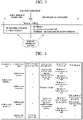
- FIG. 3 is a conceptual diagram for illustrating in detail making at least one decision before and after obtaining insurance subscription performed by the decision-making unit of FIG.2 .
- FIG. 4 is a table for illustrating a method for performing a procedure of insurance benefits payout by the decision-making unit of FIG. 2 .
- an artificial intelligence insurance service system comprises an insurance user 100, a first artificial intelligence insurance server 200, a database 300 and a medical staff 400.
- the insurance user 100 may include both a person who intends to subscribe an insurance and a person that has already subscribed an insurance through the first artificial intelligence insurance server 200. That is, the insurance user 100 may refer to anyone who is provided with insurance service through the first artificial intelligence insurance server 200.
- the insurance user 100 may transmit input data to the first artificial intelligence insurance server 200.
- the input data may include medical data of the insurance user 100, demographic information of the insurance user 100 and information on factors causing accidents or diseases of the insurance user 100.
- this embodiment is not limited thereto.
- the medical data of the insurance user 100 may include various images of the body of the insurance user 100.
- the medical data may include an X-ray, CT (Computed Tomography), a mammography (DBT) image, an MRI (Magnetic Resonance Imaging) image, an ultrasound image and a pathology slide image.
- CT Computer Tomography
- DBT mammography
- MRI Magnetic Resonance Imaging
- ultrasound image an ultrasound image and a pathology slide image.
- this embodiment is not limited thereto.
- the demographic information of the insurance user 100 may include at least one of gender, age, height, weight or income of the insurance user 100. However, this embodiment is not limited thereto.
- Information on the factors causing accidents or diseases of the insurance user 100 may include at least one of occupation, whether they drive, whether they smoke, whether they drink or medical history of the insurance user 100. However, this embodiment is not limited thereto.
- the insurance user 100 transmits the input data to the first artificial intelligence insurance server 200.
- the insurance user 100 may upload the input data from a web page or an app page that can only be accessed by the insurance user 100.
- the insurance user 100 may simply give consent to providing the input data on the web page or the app page that can only be accessed by the insurance user 100, and the first artificial intelligence insurance server 200 may pull up the input data from a medical institution, a medical artificial intelligence company, an insurance company, or the like.
- this embodiment is not limited thereto.
- the first artificial intelligence insurance server 200 may provide the insurance user 100 with a service using artificial intelligence.
- the first artificial intelligence insurance server 200 may receive the input data from the insurance user 100. After receiving the input data, the first artificial intelligence insurance server 200 may make various decisions by analyzing the input data using artificial intelligence.
- the making at least one decision may include at least one of underwriting, providing insurance premium discount information, health care, insurance benefits payout or additional insurance product recommendation. This is explained in further detail below.
- the database 300 may provide various data to the first artificial intelligence insurance server 200.
- the database 300 may retain, for example, cohort data for the input data and past data of the insurance user 100. Based thereon, the database 300 may selectively provide the first artificial intelligence insurance server 200 with data requested by the first artificial intelligence insurance server 200.
- the medical staff 400 may receive data including medical data from the first artificial intelligence insurance server 200 and perform a diagnosis thereon.
- the medical staff 400 may transmit a diagnosis result, i.e., diagnosis data, to the first artificial intelligence insurance server 200.
- FIG. 2 is a block diagram for illustrating in detail the artificial intelligence insurance server of FIG. 1 .
- the first artificial intelligence insurance server 200 includes a receiving unit 210, a comparison data selection unit 220, an artificial intelligence analysis unit 230, a comparison unit 240 and a decision-making unit 250.
- the receiving unit 210 may receive all data received by the first artificial intelligence insurance server 200. Specifically, the receiving unit 210 may receive the input data from the insurance user 100, and receive comparison data from the database 300. Furthermore, the receiving unit 210 may receive the diagnosis data from the medical staff 400. However, this embodiment is not limited thereto, and parts other than the receiving unit 210 may receive data.
- the receiving unit 210 may determine whether the input data is sufficient. If the input data is sufficient, the receiving unit 210 may transmit a progress signal to the comparison data selection unit 220. Through which, the comparison data selection unit 220 may perform subsequent actions.
- the receiving unit 210 may wait without transmitting a progress signal to the comparison data selection unit 220. In such case, the comparison data selection unit 220 does not perform a subsequent action without a progress signal, and thus, the procedure may be stopped.
- the determination may be made by considering both the qualitative factors and quantitative factors of the input data. That is, when the input data is insufficiently received, the receiving unit 210 may determine that it is insufficient. Furthermore, when the quality of the input data is poor, for example, if the data is a low-resolution image or partially damaged video data, the receiving unit 210 may determine that the input data is insufficient.
- the receiving unit 210 may select data to be used for analysis while simultaneously determining whether the input data is sufficient. That is, if data that is not needed to be analyzed is included in the input data, an action that excludes this data may be performed.
- the comparison data selection unit 220 may receive the input data from the receiving unit 210.
- the comparison data selection unit 220 may select comparison data based on the input data.
- the comparison data may be cohort data of the input data.
- the cohort data may be selected from at least one of demographic information or information on factors causing accidents or diseases included in the input data.
- At least one of data including medical data of a subject similar to the demographic information of the insurance user 100, data including medical data of a subject similar to the medical history of the insurance user 100 or data configured of a combination similar to the combination of the input data of the insurance user 100 may be selected as the cohort data.
- this embodiment is not limited thereto.
- the comparison data When the comparison data is selected as the cohort data, it may be easier to ascertain the individual characteristics of the insurance user 100 by comparing the comparison data with the input data of the insurance user 100. Through which, the first artificial intelligence insurance server 200 may make more accurate decisions.
- the comparison data may be data that was previously submitted by the insurance user 100.
- the comparison data may be the data of the same type as the input data submitted by the insurance user 100, or the data of a different type but a similar type according to an analysis.
- the comparison data may include past chest X-ray images to enable a time-sequential comparison of the lesion.
- the input data includes a mammogram image
- a time-sequential comparison with previously submitted mammogram images may be made.
- the risk of the insurance user 100 may be accurately determined using the medical data of the same insurance user 100, and thus, the accuracy of the decision-making of the first artificial intelligence insurance server 200 may be enhanced.
- the comparison data selection unit 220 may request the database 300 for comparison data. Based thereon, the database 300 may transmit the requested data to the comparison data selection unit 220 via the receiving unit 210.
- the comparison data selection unit 220 may retain an index for retained data of the database 300, or know the existence of a required scope in advance by requesting a search to the database 300. Through which, the comparison data selection unit 220 may select the comparison data.
- the comparison data may be the diagnosis data of the medical staff 400 for the input data submitted by the insurance user 100.
- the comparison data selection unit 220 may transmit the input data to the medical staff 400.
- the medical staff 400 may transmit the diagnosis data for the received input data to the receiving unit 210.
- the receiving unit 210 may transmit the diagnosis data to the comparison data selection unit 220, and the comparison data selection unit 220 may convert the diagnosis data to generate first analysis data.
- the first analysis data may be data converted so that the diagnosis data may be compared in the same manner as second analysis data.
- the artificial intelligence analysis unit 230 may include artificial intelligence for analyzing medical data therein.
- the artificial intelligence analysis unit 230 may generate second analysis data by analyzing the medical data included in the input data.
- the artificial intelligence analysis unit 230 may select a portion corresponding to the comparison data from the input data as a corresponding portion. Then, the artificial intelligence analysis unit 230 may perform artificial intelligent analysis on the corresponding portion to generate the second analysis data.
- artificial intelligence analysis refers to an action deriving a diagnosis result by analyzing medical data using an artificial intelligence algorithm.
- the artificial intelligence analysis unit 230 may perform artificial intelligence analysis on the comparison data to generate the first analysis data.
- the comparison data selection unit 220 may transmit the comparison data to the medical staff 400.
- the medical staff 400 may generate diagnosis data for the comparison data after receiving the comparison data.
- the receiving unit 210 may receive the diagnosis data and redeliver this to the comparison data selection unit 220.
- the comparison data selection unit 220 may convert the diagnosis data to generate the first analysis data.
- the first analysis data may be generated in various ways. That is, when the comparison data is the cohort data or the past data of the insurance user 100, the first analysis data may be generated by artificial intelligence analysis or diagnosis of the medical staff 400.
- the first analysis data may be generated by a simple conversion.
- the second analysis data may be generated by performing artificial intelligence analysis on the input data by the artificial intelligence analysis unit 230.
- the comparison unit 240 may compare the first analysis data with the second analysis data each other.
- the comparison unit 240 may record a value of comparison two analysis data displayed by different methods. The recorded value may later be used as learning data for the artificial intelligence analysis unit 230 or used in decision-making by being transmitted to the decision-making unit.
- the comparison unit 240 may generate final analysis data using the first analysis data and the second analysis data.
- the final analysis data may be various forms of data derived from the first analysis data and the second analysis data.
- the decision-making unit 250 may receive the final analysis data from the comparison unit 240.
- the decision-making unit 250 may make at least one decision using the final analysis data.
- FIG. 3 is a conceptual diagram for illustrating in detail making at least one decision before and after obtaining insurance subscription performed by the decision-making unit of FIG. 2 .
- the decision-making unit 250 may perform various decision-making processes according to the point of the insurance user 100 obtaining insurance subscription.
- the decision-making unit 250 may perform making at least one decision on insurance product recommendation, underwriting and insurance premium discount calculation if the insurance user 100 has not subscribed to insurance.
- Insurance product recommendation may refer to making at least one decision to recommend which insurance product to take out before subscribed to insurance.
- the first artificial intelligence insurance server 200 may recommend an insurance product suitable to the risk of the insurance user 100 to encourage subscription.
- Underwriting may refer to insurance subscription screening. That is, in order for the insurance user 100 to subscribe to an insurance, the user's current health state and health state expected in the future must be at least a specific level. Based thereon, when the health state of the insurance user 100 is precisely determined by analyzing each of the input data and the comparison data and comparing them with each other, the first artificial intelligence insurance server 200 may clearly determine whether the insurance user 100 is eligible to subscribe to the insurance.
- Insurance premium discount may refer to making at least one decision to discount the insurance premium when the health state of the insurance user 100 is at least a specific level when subscribing to insurance. That is, if it is determined that the insurance user 100 is healthier than a general case and has a low risk, the first artificial intelligence insurance server 200 may promote the sale of an insurance product through a promotion of discounting the insurance premium of the insurance user 100.
- the decision-making unit 250 may transmit underwriting information and insurance premium discount information to the insurance user 100.
- the insurance user 100 may clearly determine whether insurance subscription may be performed and the insurance premium may be discounted at the time of subscription through a precise risk determination based on artificial intelligence analysis.
- the insurance company connected to the artificial intelligence insurance server may suitably block the insurance subscription of the insurance user 100 with high risk, and suitably induce the insurance subscription of the insurance user 100 with low risk.
- the decision-making unit 250 may make at least one decision on health care, insurance benefits payout and additional insurance product recommendation if the insurance user 100 has not subscribed to insurance.
- Health care may refer to the first artificial intelligence insurance server 200 making at least one decision on recommending health care activities and associated services based on the health level and risk of the insurance user 100. Through which, the insurance user 100 may check his or her own health level, and be suitably provided the required services. In addition, the first artificial intelligence insurance server 200 may obtain additional income by providing customized services needed for the insurance user 100.
- associated services may include health examinations or additional tests. Accordingly, the first artificial intelligence insurance server 200 may provide the insurance user 100 with guidance on health examinations or suggestions on additional tests.
- Insurance benefits payout among the decisions refers to making at least one decision on the insurance benefits payout as specified in the insurance product.
- Insurance benefits may include medical expenses, insurance benefits of diagnosis and insurance benefits of outpatient/inpatient treatment. Medical expenses refer to the actual amount of hospital fees, and insurance benefits of diagnosis refer to the insurance benefits payout made as a consolation benefit at the time of being diagnosed with a disease. Furthermore, insurance benefits of outpatient/inpatient treatment refer to the insurance benefits payout per case regardless of the actual amount of hospital fees.
- Insurance benefits of diagnosis may vary depending on the type of disease, for example, 50 million won for cancer diagnosis and 5 million won for small claim cancer diagnosis, and may be set to a lower amount for early diagnosis. That is, small claim cancer may refer to the early stages of cancer.
- Insurance benefits of outpatient/inpatient treatment may be insurance benefits calculated by the time period regardless of the actual amount of hospital fees, such as '30,000 won/day of hospitalization.'
- FIG. 4 is a table for illustrating a method for performing a procedure of insurance benefits payout by the decision-making unit of FIG. 2 .
- the decision-making unit 250 may determine whether first and second additional tests are needed using the first analysis data and the second analysis data.
- whether the first and the second additional tests are needed may be one of the final analysis data generated based on a determination of the comparison unit 240. That is, the decision-making unit 250 may receive whether the first and the second additional tests are needed as final analysis data.
- this embodiment is not limited thereto.
- the decision-making unit 250 may directly determine whether each of the first and the second additional tests are needed using the first analysis data and the second analysis data.
- the procedure may be terminated.
- the decision-making unit 250 may request the insurance user 100 for an additional test. Based thereon, the insurance user 100 may transmit whether an additional test is carried out to the decision-making unit 250 via the receiving unit 210. If the insurance user 100 does not transmit whether the additional test is carried out by a certain period of time, it may be considered as transmitted that the additional test not being carried out to the decision-making unit 250.
- the procedure may be terminated.
- the decision-making unit 250 may reduce the insurance benefits of diagnosis when the insurance user 100 is diagnosed later within a certain period of time.
- the reduction of the insurance benefits of diagnosis may be a concept that includes the non-payout of the insurance benefits of diagnosis. That is, the insurance benefits of diagnosis may be reduced in the form of a penalty when the insurance user 100 does not carried out an additional test despite the first artificial intelligence insurance server 200 having suggested the need for an additional test based on the second analysis data. This reflects that it may be determined that the reason attributable to the insurance user 100 is large.
- the action of the decision-making unit 250 is determined based on whether a diagnosis is made. If a diagnosis is made, the decision-making unit 250 pays the insurance benefits, and if a diagnosis is not made, the decision-making unit 250 determines whether to pay an additional at expense.
- the additional test expense may be unpaid. This may be due to the second analysis data that has performed artificial intelligence analysis on the input data of the insurance user 100 being more reliable than the first analysis data.
- the decision-making unit 250 determines whether an early diagnosis is made. If an early diagnosis is not made, the decision-making unit 250 pays the insurance benefits as is, and if an early diagnosis is made, the decision-making unit 250 may pay raised amount of the insurance benefits. This may be due to the second analysis data being more reliable than the first analysis data as a reward of early diagnosis based on the second analysis data.
- additional insurance product recommendation from the decisions made refers to making at least one decision on recommending a different insurance product other than the insurance product to which the insurance user 100 currently subscribes.
- the decision-making unit 250 may provide a recommendation of another insurance product to the insurance user 100.
- the insurance user 100 may identify currently needed insurance products, and the insurance company connected to the first artificial intelligence insurance server 200 may gain profit therefrom.
- the first artificial intelligence insurance server 200 may efficiently make at least one decision by precisely determining the health state and risk of the insurance user 100 using artificial intelligence. Furthermore, in terms of the insurance benefits payout, the first artificial intelligence insurance server 200 according to the embodiment may provide the insurance user 100 with penalties and rewards based on information in the first and the second analysis data, so that efficient management of the insurance benefits may be achieved.
- FIG. 5 is a conceptual diagram for illustrating an artificial intelligence insurance service system including an artificial intelligence insurance server according to some embodiments of the disclosure.
- FIG. 6 is a block diagram for illustrating in detail the artificial intelligence insurance server of FIG. 5 .
- the second artificial intelligence insurance server 201 may include a database 260 therein. Based thereon, even if the comparison data is the cohort data or the past data of the insurance user 100, there is no need for the receiving unit 210 to receive the comparison data, and the database 260 may directly transmit the comparison data to the comparison data selection unit 220.
- the second artificial intelligence insurance server 201 retains a database 260 therein, so that the data may be efficiently transmitted.
- the comparison data selection unit 220 may easily determine the data retained by the database 300 during the process of selecting the comparison data, so that more rapid and efficient decisions may be made.
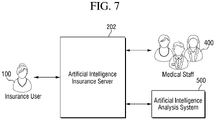
- FIG. 7 is a conceptual diagram for illustrating an artificial intelligence insurance service system including an artificial intelligence insurance server according to some embodiments of the disclosure.
- the artificial intelligence insurance service system including a third artificial intelligence insurance server 202 further comprises an artificial intelligence analysis system 500.
- the artificial intelligence analysis system 500 may receive data from the third artificial intelligence insurance server 202 to perform artificial intelligence analysis.
- the artificial intelligence analysis system 500 may transmit the data that is performed artificial intelligence analysis to the third artificial intelligence insurance server 202 again.
- the third artificial intelligence insurance server 202 may transmit the input data to the artificial intelligence analysis system 500.
- the artificial intelligence analysis system 500 may perform artificial intelligence analysis on the input data to generate the second analysis data, and may transmit it to the third artificial intelligence insurance server 202 again.
- the third artificial intelligence insurance server 202 may transmit the comparison data to the artificial intelligence analysis system 500, and the artificial intelligence analysis system 500 may perform artificial intelligence analysis on the comparison data to generate the first analysis data.
- the artificial intelligence analysis system 500 may transmit the first analysis data to the third artificial intelligence insurance server 202.
- the third artificial intelligence insurance server 202 may directly perform some artificial intelligence analysis, and the remaining artificial intelligence analysis may be performed and received through the artificial intelligence analysis system 500.
- the third artificial intelligence insurance server 202 includes at least one module for artificial intelligence analysis on the outside, so that resources needed in other actions, such as decision-making, may be carried out without deficit. Based thereon, the third artificial intelligence insurance server 202 may secure a precise result according to artificial intelligence analysis and simultaneously make efficient decisions.
- FIG. 8 is a flowchart for illustrating a method for providing an artificial intelligence insurance service according to some embodiments of the disclosure.
- FIG. 9 is a flowchart for illustrating in detail obtaining second analysis data of FIG. 8 .
- the input data may include the medical data of the insurance user 100, the demographic information of the insurance user 100 and the information on factors causing accidents and diseases of the insurance user 100.
- this embodiment is not limited thereto.
- the receiving unit 210 may determine whether the input data is sufficient. When the input data is sufficient, the receiving unit 210 may transmit a progress signal to the comparison data selection unit 220, and when the input data is insufficient, the receiving unit 210 may wait without transmitting a progress signal to the comparison data selection unit 220.
- the receiving unit 210 determining whether the input data is sufficient may be determined by considering both the qualitative factors and the quantitative factors of the input data.
- comparison data is selected S130.
- the comparison data selection unit 220 may select the comparison data based on the input data.
- the comparison data may be the cohort data of the input data or the data previously submitted by the insurance user 100.
- the comparison data selection unit 220 may request the database 300 for the comparison data. Based thereon, the database 300 may transmit the requested data to the comparison data selection unit 220 via the receiving unit 210.
- the comparison data may be the diagnosis data of the medical staff 400 regarding the input data submitted by the insurance user 100.
- the comparison data selection unit 220 may transmit the input data to the medical staff 400.
- the medical staff 400 may transmit the diagnosis data regarding the received input data to the receiving unit 210.
- first analysis data for the comparison data is obtained S140a.
- the first analysis data may be generated in various ways. That is, when the comparison data is the cohort data or the past data of the insurance user 100, the first analysis data may be generated by artificial intelligence analysis or a diagnosis of the medical staff 400. Alternatively, if the comparison data was generated by the diagnosis of the medical staff 400, the first analysis data may be generated by a simple conversion.
- second analysis data for input data is obtained S140b.
- the artificial intelligence analysis unit 230 may analyze the medical data included in the input data to generate the second analysis data.
- a corresponding portion of the input data that corresponds to the comparison data is selected S141b. Subsequently, second analysis data for the corresponding portion is obtained S142b.
- first analysis data and second analysis data are compared S150.
- the comparison unit 240 may compare the first analysis data and the second analysis data with each other.
- the comparison unit 240 may generate final analysis data using the first analysis data and the second analysis data.
- the final analysis data may be various forms of data derived from the first analysis data and the second analysis data.
- making at least one decision is performed S160.
- the decision-making unit 250 may make at least one decision on underwriting or insurance premium discount if the insurance user has not subscribed to insurance.
- the decision-making unit 250 may make at least one decision on health care, insurance benefits payout or additional insurance product recommendation if the insurance user has subscribed to insurance.
- FIG. 10 is a flowchart for illustrating in detail the insurance benefits payout during the decision-making of FIG. 8 .
- step S220 it is determined whether an additional test is needed based on first analysis data S210. If an additional test is needed, the process proceeds to step S220, and if not, the process proceeds to step S230.
- step S240 it is determined whether an additional test is needed based on second analysis data S220. If an additional test is needed, the process proceeds to step S240, and if not, the process proceeds to step S250.
- step S210 and step S220 may be notified to the insurance user 100.
- step S240 it is determined whether an additional test is carried out. Here, whether an additional test is carried out may be received from the insurance user 100. If an additional test is carried out, the process proceeds to step S260, and if not, the process proceeds to step S270.
- an additional test it is determined whether a diagnosis is made S260.
- whether a diagnosis is made may be checked by receiving the result of the additional test. If a diagnosis is made, the insurance benefits is paid S280, and if not, an additional test expense is paid S290. The reason that the additional test expense is paid if a diagnosis has not been made is because the insurance user 100 has been notified that an additional test is needed based on the second analysis data, so the insurance user 100 is not required to personally cover the additional test expense.
- step S240 it is determined whether a diagnosis is made later within a certain period of time S270. If so, the insurance benefits of diagnosis are reduced or not paid S300. If not, the process is terminated.
- Reducing or not paying the insurance benefits of diagnosis when a diagnosis is made may be a penalty for the insurance user 100 that does not carry out an additional test despite being notified that an additional test is needed based on the second analysis data.
- step S220 If an additional test is not needed in step S220, it is determined whether an additional test is carried out S250. If so, the process proceeds to step S310, and if not, the process is terminated.
- step S210 it is determined whether an additional test is needed based on the second analysis data S230. If so, the process proceeds to step S330, and if not, the process is terminated.
- step S330 it is determined whether an additional test is carried out. Here, whether an additional test is carried out may be received from the insurance user 100. If an additional test is carried out, the process proceeds to step S340, and if not, the process proceeds to step S270.
- step S340 If an additional test is carried out, it is determined whether a diagnosis is made S340. If a diagnosis is made, the process proceeds to step S350, and if not, the process proceeds to step S290.
- the disease is discovered early based on the second analysis data, and thus, may be a concept of providing the insurance user 100 with a reward based on the notification statement. Furthermore, in the case of an early diagnosis, the total sum of the insurance benefits may be decreased, and thus, it is possible for the insurance company connected to the first artificial intelligence insurance server 200 may obtain benefits.
- step S340 If a diagnosis is not made in step S340, an additional test expense is paid S290. This is because an additional test was carried out according to the determination that an additional test is needed based on the second analysis data regardless of the determination based on the first analysis data. That is, the method for providing an artificial intelligence insurance service according to the embodiment uses that the reliability of the determination based on the second analysis data is higher than the reliability of the determination based on the first analysis data.
- step S330 it is determined whether a diagnosis is made later within a certain period of time S270. If so, the insurance benefits of diagnosis are reduced or not paid S300. If not, the process is terminated.
- Reducing or not paying the insurance benefits of diagnosis when a diagnosis is made may be a penalty for the insurance user 100 that does not carry out an additional test despite being notified that an additional test is needed based on the second analysis data.
- the method for providing an artificial intelligence insurance service may efficiently perform the insurance benefits payout using artificial intelligence analysis data to induce a lower expenditure than the existing expenditure. In addition, it promotes early diagnosis, which may increase the health of the insurance user 100 to a high level and at the same time, lower the expenditure of insurance premium.
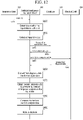
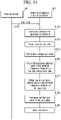
- FIG. 11 is a flowchart illustrating a plurality of components for illustrating a method for providing an artificial intelligence insurance service according to some embodiments of the disclosure.
- the insurance user 100 transmits the input data to the first artificial intelligence insurance server 200.
- the first artificial intelligence insurance server 200 determines whether the input data is sufficient S420. Then, the first artificial intelligence insurance server 200 selects the comparison data S430.
- the comparison data may be selected as first comparison data including the cohort data or the past data of the insurance user 100.
- the first artificial intelligence insurance server 200 requests the database 300 for first comparison data S440.
- the database 300 transmits the first comparison data to the first artificial intelligence insurance server 200, S450.
- the first artificial intelligence insurance server 200 obtains fist analysis data by performing artificial intelligence analysis on the first comparison data S460. Then, the first artificial intelligence insurance server 200 obtains second analysis data by performing artificial intelligence analysis on the input data S470.
- step S460 and step S470 are depicted to be consecutively performed. However, this embodiment is not limited thereto. That is, step S460 and step S470 may be performed in an opposite order, and may be performed in parallel.
- the first artificial intelligence insurance server 200 performs a comparison on the first and the second analysis data S480.
- the first artificial intelligence insurance server 200 uses this to derive the final analysis data, and make at least one decision S490.
- the method for providing an artificial intelligence insurance service includes a database 300 on the outside, and thus, that the first artificial intelligence insurance server 200 does not need to use resources in data storage, so that more rapid and accurate decisions may be made.
- the first comparison data and the second comparison data both perform artificial intelligence analysis, the first analysis data and the second analysis data are similar in form, thereby allowing easy comparison to each other and the efficiency of deriving the final analysis data may be enhanced.
- FIG. 12 is a flowchart illustrating a plurality of components for illustrating a method for providing an artificial intelligence insurance service according to some embodiments of the disclosure.
- step S410 to step S450 are identical to the description of FIG. 11 .
- the first artificial intelligence insurance server 200 transmits the first comparison data to the medical staff 400, S461.
- the medical staff 400 transmits the first diagnosis data, which is the diagnosis result for the first comparison data, to the first artificial intelligence insurance server 200 again S462.
- the first artificial intelligence insurance server 200 converts the first diagnosis data to first analysis data S463.
- a description of step S470 to step S490 hereinafter is identical to the description of FIG. 11
- the method for providing an artificial intelligence insurance service according to the embodiment may supplement specific determinations that may be insufficient in the artificial intelligence analysis by converting the diagnosis result of the medical staff for the first comparison data to generate the first analysis data. Through which, the method for providing an artificial intelligence insurance service according to the embodiment may make more accurate and efficient decisions.
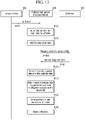
- FIG. 13 is a flowchart illustrating a plurality of components for illustrating a method for providing an artificial intelligence insurance service according to some embodiments of the disclosure.
- step S410 and step S420 are identical to the description of FIG. 11 .
- the first artificial intelligence insurance server 200 selects the comparison data S430.
- the comparison data may be selected as second diagnosis data, which is the diagnosis result of the medical staff 400 for the input data of the insurance user 100.
- the first artificial intelligence insurance server 200 requests the medical staff 400 for second diagnosis data S440a.
- the medical staff 400 transmits the second diagnosis data to the first artificial intelligence insurance server 200 S450a.
- the first artificial intelligence insurance server 200 converts the second diagnosis data to first analysis data S463a.
- a description of step S470 to step S490 hereinafter is identical to the description of FIG. 11 .
- the method for providing an artificial intelligence insurance service sets the comparison data itself as second diagnosis data, which is the diagnosis result of the medical staff 400 for the input data, to generate the first analysis data.
- second diagnosis data which is the diagnosis result of the medical staff 400 for the input data
- the analysis of the medical staff 400 and the artificial intelligence analysis on the same input data are compared, thereby supplementing the disadvantages that each method may have to generate more precise analysis data.
- the method for providing an artificial intelligence insurance service according to the embodiment may make more accurate and efficient decisions.
- FIG. 14 is a flowchart illustrating a plurality of components for illustrating a method for providing an artificial intelligence insurance service according to some embodiments of the disclosure.
- step S410 to step S430 is identical to the description of FIG. 11 .
- the second artificial intelligence insurance server 201 defines the first comparison data S450b. That is, since the second artificial intelligence insurance server 201 includes a database 260 therein, it can define the first comparison data from therein.
- a description of step S460 to step S490 hereinafter is identical to the description of FIG. 11 .
- the method for providing an artificial intelligence insurance service retains a database 260 within the second artificial intelligence insurance server 201, so that data may be efficiently transmitted.
- the comparison data selection unit 220 can easily determine the data retained by the database 300 in the process of selecting the comparison data, and thus, more rapid and efficient decisions may be made.
- FIG. 15 is a flowchart illustrating a plurality of components for illustrating a method for providing an artificial intelligence insurance service according to some embodiments of the disclosure.
- step S410 to step S430 is identical to the description of FIG. 11 .
- the second artificial intelligence insurance server 201 transmits the first comparison data to the medical staff 400 S461.
- the medical staff 400 transmits the first diagnosis data, which is the diagnosis result of the first comparison data, to the second artificial intelligence insurance server 201 S462.
- the second artificial intelligence insurance server 201 converts the first diagnosis data to first analysis data S463.
- a description of step S470 to step S490 hereinafter is identical to the description of FIG. 11 .
- the method for providing an artificial intelligence insurance service according to the embodiment may supplement specific determinations that may be insufficient in the artificial intelligence analysis by converting the diagnosis result of the medical staff regarding the first comparison data to generate the first analysis data. Through which, the method for providing an artificial intelligence insurance service according to the embodiment may make more accurate and efficient decisions.
- FIG. 16 is a flowchart illustrating a plurality of components for illustrating a method for providing an artificial intelligence insurance service according to some embodiments of the disclosure.
- step S410 to step S430 is identical to the description of FIG. 11 .
- a description of step S450b is identical to the description of FIG. 14 .
- the third artificial intelligence insurance server 202 transmits the first comparison data to the artificial intelligence analysis system 500 S464.
- the artificial intelligence analysis system 500 transmits the first analysis data, which is an artificial intelligence analysis result of the first comparison data, to the third artificial intelligence insurance server 202, S465.
- the third artificial intelligence insurance server 202 transmits the input data to the artificial intelligence analysis system 500, S471.
- the artificial intelligence analysis system 500 transmits the second analysis data, which is an artificial intelligence analysis result of the input data, to the third artificial intelligence insurance server 202, S472.
- step S480 to step S490 hereinafter is identical to the description of FIG. 11 .
- the third artificial intelligence insurance server 202 of the method for providing an artificial intelligence insurance service according to the embodiment includes at least one module for artificial intelligence analysis on the outside, so that resources needed in other actions, such as decision-making, may be carried out without deficit. Based thereon, the third artificial intelligence insurance server 202 may secure a precise result according to artificial intelligence analysis and simultaneously make efficient decisions.
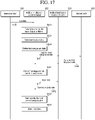
- FIG. 17 is a flowchart illustrating a plurality of components for illustrating a method for providing an artificial intelligence insurance service according to some embodiments of the disclosure.
- a description of step S410 to step S430 is identical to the description of FIG. 11 .
- a description of step S450b is identical to the description of FIG. 14 .
- a description of step S461 to step S463 is identical to the description of FIG. 15 .
- a description of step S471 and step S472 is identical to the description of FIG. 16 .
- a description of step S480 and step S490 hereinafter is identical to the description of FIG. 11 .
- the method for providing an artificial intelligence insurance service according to the embodiment may supplement specific determinations that may be insufficient in the artificial intelligence analysis by converting the diagnosis result of the medical staff for the first comparison data to generate the first analysis data. Through which, the method for providing an artificial intelligence insurance service according to the embodiments may make more accurate and efficient decisions.
- the method for providing an artificial intelligence insurance service described above may be implemented by being coupled to an apparatus, and may be implemented by a software. Accordingly, this disclosure may include an artificial intelligence insurance server for executing the method for providing an artificial intelligence insurance service described above. Furthermore, although the artificial intelligence insurance server according to various embodiments of this disclosure may be implemented by one apparatus, it may also be implemented by a plurality of apparatuses.
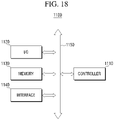
- FIG. 18 is a block diagram of an electronic system for implementing an artificial intelligence insurance server and a method for providing an artificial intelligence insurance service according to some embodiments of the disclosure.
- the electronic system 1100 may include a controller 1110, an input/output device 1120 (I/O), a memory device 1130, an interface 1140 and a bus 1150.
- the controller 1110, the input/output device 1120, the memory device 1130, and/or the interface 1140 may be coupled to each other through the bus 1150.
- the bus 1150 corresponds to a path on which data is moved.
- the controller 1110 may include at least one of a CPU (Central Processing Unit), MPU (Micro Processor Unit), MCU (Micro Controller Unit), GPU (Graphic Processing Unit), microprocessor, digital signal process, microcontroller, or logic elements that may perform similar functions thereof.
- the input/output device 1120 may include a keypad, keyboard and display device, or the like.
- the memory device 1130 may store data and/or commands, etc.
- the interface 1140 may perform the function of transmitting data to a communication network or receiving data from a communication network.
- the interface 1140 may be wired or wireless.
- the interface 1140 may include an antenna or a wired/wireless transceiver, etc.
- the electronic system 1100 may further include a highspeed DRAM and/or SRAM, etc. as an operation memory to enhance the operation of the controller.
- the fin field-effect transistor according to the embodiments of the disclosure may be provided within the memory device 1130 or provided as a part of the controller 1110 and the input/output device 1200 (I/O), or the like.
- the electronic system 1100 may be applied to a personal digital assistant (PDA), a portable computer, a web tablet, a wireless phone, a mobile phone, a digital music player, a memory card, or any electronic product that can transmit and/or receive information in a wireless environment.
- PDA personal digital assistant
- portable computer a portable computer
- web tablet a wireless phone
- mobile phone a mobile phone
- digital music player a digital music player
- memory card or any electronic product that can transmit and/or receive information in a wireless environment.
Landscapes
- Engineering & Computer Science (AREA)
- Business, Economics & Management (AREA)
- Health & Medical Sciences (AREA)
- Accounting & Taxation (AREA)
- Finance (AREA)
- Strategic Management (AREA)
- Physics & Mathematics (AREA)
- Theoretical Computer Science (AREA)
- Development Economics (AREA)
- General Physics & Mathematics (AREA)
- Economics (AREA)
- General Business, Economics & Management (AREA)
- Marketing (AREA)
- Medical Informatics (AREA)
- Entrepreneurship & Innovation (AREA)
- Biomedical Technology (AREA)
- Public Health (AREA)
- Human Resources & Organizations (AREA)
- Data Mining & Analysis (AREA)
- General Health & Medical Sciences (AREA)
- Life Sciences & Earth Sciences (AREA)
- Pathology (AREA)
- Technology Law (AREA)
- Game Theory and Decision Science (AREA)
- Primary Health Care (AREA)
- Tourism & Hospitality (AREA)
- Software Systems (AREA)
- Databases & Information Systems (AREA)
- Epidemiology (AREA)
- Artificial Intelligence (AREA)
- Molecular Biology (AREA)
- General Engineering & Computer Science (AREA)
- Computing Systems (AREA)
- Nuclear Medicine, Radiotherapy & Molecular Imaging (AREA)
- Animal Behavior & Ethology (AREA)
- Surgery (AREA)
- Evolutionary Computation (AREA)
- Radiology & Medical Imaging (AREA)
- Mathematical Physics (AREA)
- Computer Vision & Pattern Recognition (AREA)
Applications Claiming Priority (2)
| Application Number | Priority Date | Filing Date | Title |
|---|---|---|---|
| KR20190064873 | 2019-05-31 | ||
| PCT/KR2020/007054 WO2020242269A1 (ko) | 2019-05-31 | 2020-05-29 | 인공지능 보험 서버 및 인공지능 보험 서비스 제공 방법 |
Publications (2)
| Publication Number | Publication Date |
|---|---|
| EP4064168A1 true EP4064168A1 (de) | 2022-09-28 |
| EP4064168A4 EP4064168A4 (de) | 2024-01-24 |
Family
ID=73554149
Family Applications (1)
| Application Number | Title | Priority Date | Filing Date |
|---|---|---|---|
| EP20813846.1A Pending EP4064168A4 (de) | 2019-05-31 | 2020-05-29 | Versicherungsserver mit künstlicher intelligenz und verfahren zur erbringung von versicherungsdienstleistungen mit künstlicher intelligenz |
Country Status (5)
| Country | Link |
|---|---|
| US (1) | US20230012886A1 (de) |
| EP (1) | EP4064168A4 (de) |
| JP (1) | JP7680765B2 (de) |
| KR (1) | KR102554247B1 (de) |
| WO (1) | WO2020242269A1 (de) |
Families Citing this family (8)
| Publication number | Priority date | Publication date | Assignee | Title |
|---|---|---|---|---|
| KR102639317B1 (ko) | 2021-03-03 | 2024-02-21 | 삼성화재해상보험 주식회사 | 상병 판단 시스템 |
| KR20250178344A (ko) | 2024-06-19 | 2025-12-29 | 주식회사 위시드보험중개 | 인공지능을 사용한 노-코드 기반 보험 솔루션 생산 방법과, 그 장치 |
| KR20250178345A (ko) | 2024-06-19 | 2025-12-29 | 주식회사 위시드보험중개 | 보험 계약 운용 솔루션을 생성하는 서비스 제공 장치 |
| KR20250178348A (ko) | 2024-06-19 | 2025-12-29 | 주식회사 위시드보험중개 | 고객 맞춤형 보험 운영 서비스 제공 시스템 |
| KR20250178346A (ko) | 2024-06-19 | 2025-12-29 | 주식회사 위시드보험중개 | 인공지능 기반 보험 운영 시스템 구축 서비스 제공 장치 |
| KR20250178347A (ko) | 2024-06-19 | 2025-12-29 | 주식회사 위시드보험중개 | 사고 데이터 전처리 및 손해사정 자동화 서비스 제공 방법 |
| KR20250178349A (ko) | 2024-06-19 | 2025-12-29 | 주식회사 위시드보험중개 | 노-코드 기반 ai 보험 솔루션 생산 서비스 제공 장치 |
| KR102830990B1 (ko) * | 2024-09-09 | 2025-07-04 | 삼성화재해상보험 주식회사 | 보험료 할증율 산출 방법 및 장치 |
Family Cites Families (13)
| Publication number | Priority date | Publication date | Assignee | Title |
|---|---|---|---|---|
| JP2005202901A (ja) | 2004-01-15 | 2005-07-28 | Mcbi:Kk | 個人情報管理方法、健康管理方法、健康管理システム、金融資産管理方法及び金融資産管理システム |
| US8335699B2 (en) * | 2009-05-14 | 2012-12-18 | Retirement Benefit Solutions, LLC | Method of financing unfunded liabilities |
| US20150161331A1 (en) | 2013-12-04 | 2015-06-11 | Mark Oleynik | Computational medical treatment plan method and system with mass medical analysis |
| US20150235001A1 (en) * | 2014-02-19 | 2015-08-20 | MedeAnalytics, Inc. | System and Method for Scoring Health Related Risk |
| KR101737988B1 (ko) * | 2014-10-30 | 2017-05-19 | 삼성생명보험주식회사 | 헬스케어 보험상품을 제공하기 위한 서버, 사용자 단말 및 이에 대한 컴퓨터 프로그램 |
| WO2016094330A2 (en) * | 2014-12-08 | 2016-06-16 | 20/20 Genesystems, Inc | Methods and machine learning systems for predicting the liklihood or risk of having cancer |
| KR101722908B1 (ko) * | 2015-03-10 | 2017-04-10 | 안미림 | 보험 서비스 통합 장치 및 컴퓨터 프로그램 |
| JP6422582B2 (ja) | 2015-07-17 | 2018-11-14 | 株式会社日立製作所 | 保険用情報提供システムおよび保険用情報提供方法 |
| US20170083673A1 (en) | 2015-09-17 | 2017-03-23 | Thomas J. DAWSON, III | Systems and methods for estimating lifecare service costs |
| US20170212997A1 (en) * | 2015-12-01 | 2017-07-27 | James BUONFIGLIO | Automated modeling and insurance recommendation method and system |
| JP6861481B2 (ja) | 2016-07-06 | 2021-04-21 | オムロンヘルスケア株式会社 | リスク分析システム及びリスク分析方法 |
| KR101896293B1 (ko) * | 2017-01-18 | 2018-09-07 | 삼성생명보험주식회사 | 보험 상품을 제공하기 위한 방법 및 서버 |
| KR101937434B1 (ko) * | 2017-09-25 | 2019-01-10 | 천자혜 | 빅데이터 및 인공지능 기반 공공 주치의 서비스 제공 방법 |
-
2020
- 2020-05-29 KR KR1020200065500A patent/KR102554247B1/ko active Active
- 2020-05-29 JP JP2022526262A patent/JP7680765B2/ja active Active
- 2020-05-29 US US17/756,906 patent/US20230012886A1/en not_active Abandoned
- 2020-05-29 EP EP20813846.1A patent/EP4064168A4/de active Pending
- 2020-05-29 WO PCT/KR2020/007054 patent/WO2020242269A1/ko not_active Ceased
Also Published As
| Publication number | Publication date |
|---|---|
| WO2020242269A1 (ko) | 2020-12-03 |
| KR20200138085A (ko) | 2020-12-09 |
| EP4064168A4 (de) | 2024-01-24 |
| US20230012886A1 (en) | 2023-01-19 |
| JP7680765B2 (ja) | 2025-05-21 |
| KR102554247B1 (ko) | 2023-07-11 |
| JP2022550210A (ja) | 2022-11-30 |
Similar Documents
| Publication | Publication Date | Title |
|---|---|---|
| US20230012886A1 (en) | Ai insurance server and method for providing ai insurance service | |
| US12249067B2 (en) | Dynamic multimodal segmentation selection and fusion | |
| US10192640B2 (en) | Fractional flow reserve decision support system | |
| US10339650B2 (en) | Method and means of CAD system personalization to reduce intraoperator and interoperator variation | |
| US10510449B1 (en) | Expert opinion crowdsourcing | |
| US20240387045A1 (en) | Systems and methods for processing electronic images to quantify coronary microvascualar disease | |
| US20260112028A1 (en) | Methods and systems for performing real-time radiology | |
| EP2812828B1 (de) | Interaktive optimierung von scan-datenbanken für statistische tests | |
| KR102543013B1 (ko) | 전문가의 진단 능력 평가 방법, 인공지능 기반의 진단 보조 방법 및 이를 이용한 디바이스 | |
| US20140095204A1 (en) | Automated medical cohort determination | |
| WO2021067843A1 (en) | Methods and systems for management and visualization of radiological data | |
| Adida et al. | Impact of physician payment scheme on diagnostic effort and testing | |
| Koo et al. | A pilot study on deep learning-based grading of corners of vertebral bodies for assessment of radiographic progression in patients with ankylosing spondylitis | |
| Suekei et al. | Multi-modal representation learning in retinal imaging using self-supervised learning for enhanced clinical predictions | |
| Romeo et al. | The new era of advanced placental tissue characterization using MRI texture analysis: Clinical implications | |
| KR20240053271A (ko) | 온라인 인공지능 보험서비스 제공방법 | |
| US20200075163A1 (en) | Diagnostic decision support for patient management | |
| Baker | Cancer screening markers: A simple strategy to substantially reduce the sample size for validation | |
| US20260127736A1 (en) | Medical imaging device prediction and recommendation for optimal image quality | |
| US20250232884A1 (en) | Machine learning-based predictive analytics for referral diagnoses | |
| KR102877451B1 (ko) | 정신 질환 평가 정보 제공 시스템 및 그 동작 방법 | |
| US20250095800A1 (en) | Systems and methods for designing and conducting clinical trials and biomarker validation studies | |
| Sakharova et al. | Updated Models of Alzheimer’s Disease with Deep Neural Networks | |
| JP6785536B2 (ja) | 情報処理装置及び方法、並びにプログラム | |
| Tessem et al. | Choroidal nevus candidacy for monitoring in a virtual photoscreening pathway |
Legal Events
| Date | Code | Title | Description |
|---|---|---|---|
| STAA | Information on the status of an ep patent application or granted ep patent |
Free format text: STATUS: THE INTERNATIONAL PUBLICATION HAS BEEN MADE |
|
| STAA | Information on the status of an ep patent application or granted ep patent |
Free format text: STATUS: THE APPLICATION IS DEEMED TO BE WITHDRAWN |
|
| STAA | Information on the status of an ep patent application or granted ep patent |
Free format text: STATUS: THE INTERNATIONAL PUBLICATION HAS BEEN MADE |
|
| PUAI | Public reference made under article 153(3) epc to a published international application that has entered the european phase |
Free format text: ORIGINAL CODE: 0009012 |
|
| STAA | Information on the status of an ep patent application or granted ep patent |
Free format text: STATUS: REQUEST FOR EXAMINATION WAS MADE |
|
| 17P | Request for examination filed |
Effective date: 20220103 |
|
| AK | Designated contracting states |
Kind code of ref document: A1 Designated state(s): AL AT BE BG CH CY CZ DE DK EE ES FI FR GB GR HR HU IE IS IT LI LT LU LV MC MK MT NL NO PL PT RO RS SE SI SK SM TR |
|
| A4 | Supplementary search report drawn up and despatched |
Effective date: 20240103 |
|
| RIC1 | Information provided on ipc code assigned before grant |
Ipc: G06N 20/00 20190101ALI20231220BHEP Ipc: G16H 50/20 20180101ALI20231220BHEP Ipc: A61B 5/00 20060101ALI20231220BHEP Ipc: G06Q 10/0635 20230101ALI20231220BHEP Ipc: G06Q 50/22 20180101ALI20231220BHEP Ipc: G06Q 40/08 20120101AFI20231220BHEP |